

With the nation stuck at home for pancake day this year and many of us trying to occupy young children while juggling working from home and homeschooling, we’re all looking for the perfect activity to keep our children quiet for longer than 5 minutes so we can go to the toilet in peace!
This pancake day, why not keep the kids occupied with some hilarious pancakes full of fun and frivolity? With the help of our pals at Absolute Digital Media, for pancake day, here’s 6 fun and quirky sweet treat designs.
FLUFFY AMERICAN-STYLE PANCAKE RECIPE
Firstly, a fool-proof pancake recipe to get you started (not saying you’re a fool or anything, but you are just about to fashion some hair out of streaky bacon). We’re using a fluffy American-style pancake batter, as it tends to be the easiest to shape and produces the cutest faces, too.
You’ll need:
150g – Plain flour
1 tablespoon – Baking powder
225ml – Full fat milk
Pinch of sugar
Pinch of salt
25g – melted butter
1 egg
Put the flour, baking powder, salt and sugar into a bowl and make a dip in the centre using a spoon. In a separate bowl, whisk the milk and egg together, and then whisk this gradually into the flour mixture. Next, slowly add your melted butter to the mix. The batter should resemble the consistency of single cream. Leave the batter to rest a while while you gather the kids together.
For frying, a heavy non-stick frying pan about 16cm across is best – cooked over a steady medium to high heat. Simply use vegetable oil, or if you’re feeling indulgent, butter.
MAKE YOUR OWN FACE
A super fun pancake design idea is to decorate your pancake as a self portrait! Using a pancake as your face, use all your favourite yummy toppings to decorate it. You could use squirty cream or bacon for hair, strawberries for a nose, even chocolate buttons for eyes. Use your imagination and go wild!
Or, if you need inspiration, here’s one we made earlier…
BUNNY RABBIT
If eating an image of a human face is a bit traumatic for the little ones, then why not create a cute bunny, instead? Simply use one pancake for the face, add blueberries for eyes, a strawberry for the nose and sliced banana for whiskers. For the ears, you can use anything from slicked melon to bananas – be creative! Finally, why not add two small marshmallows to give the bunny teeth? Come to think of it, these are just too cute to eat…
UNBEARABLY CUTE
A fun design idea we all need to try this year is an unbearably cute bear! Using a pancake as a base, add two chocolate drops for eyes. Then, with a smaller pancake, add this to your base pancake to replicate the bear’s mouth. With either fruit of your choice or even Nutella, add a cute nose and smile for the bear. Finally, we can’t forget the ears! Why not cut a smaller pancake in half and add one half to each side? Job done.
We just love the quizzical expression of the big fella…
MAKE A MONKEY
Another adorable animal to recreate is a monkey. With this one, feel free to layer the pancakes to create a 3D feel the your work of edible art.
Start off with the pancake base, and add a smaller pancake for a mouth. Add creme fraiche for the smile, and for the eyes and ears use some chopped bananas, oranges or even smaller pancakes. Then voila, you’ve got yourself a cheeky sweet treat! Apologies to any kids reading, ours is bloody terrifying…
FELINE FRIEND
If you have a cat as a pet then we’re sure that you’ll love to recreate a pancake version of your feline friend (note to editor: eating an image of your beloved family pet? Are you sure about this?).
Yes, we’re sure. Starting out with your pancake as the base of the cat, add a layer of Nutella or peanut butter to replicate the cat’s furry face. Then, using strawberries or grapefruit pieces as ears and blueberries or raisins for the eyes, you can get creative with your fruity toppings. For the nose we would suggest either a strawberry or a circular piece of banana. Feel free to add whiskers with syrup or even sliced banana or apple for the purr-fect pancake!
Wow, we’ve impressed ourselves with these guys…
WRITE A MESSAGE
Using a pancake as your base, use all your favourite pancake toppings to create a message to someone in your home. Once you’ve all decorated your pancake and written your special message, swap pancakes and let the other person enjoy your creativity and the loving message they’ve written.
Happy Pancake Day everyone!
If you’re keen to do things a little differently this year and explore the world from the comfort of your kitchen, then check out these 10 IDEAL pancakes from across the globe.
For those who regularly hop from country to country, whether that’s for business or for pleasure, getting from A to B in the most efficient way possible is a constant concern.
In the midst of a global pandemic, things have got even tougher; commercial flights are currently running at limited capacity, and check-in and verification procedures can take a prohibitively long time. To mitigate some of these issues, an alternative option for those keen to fly independently and flexibly once various global travel restrictions are lifted would be to travel in chartered private jet flights.
According to Air Partner, the interest of people looking at and booking private jets have soared since the start of the Pandemic. The company told This is Money that it ”believes this is down to the unique safety and convenience benefits that it claims commercial airlines cannot offer” and that “the demand has been primarily from leisure travellers and critical business flights, when Zoom just won’t cut it.”
Charter flights don’t require the restriction of a timetable or the hassle of airport security. Should you be blessed with buckets of money but you’re short on time, then you could save yourself some trouble by chartering a private jet. Doing so allows you to travel at your own time and pace without the need for bookings and check-ins. With this in mind, here’s some of your questions on chartering a private plane answered.
HOW MUCH DOES IT COST?
Chartering a private jet depends largely on the size of the aircraft and the number of seats required. According to Forbes Magazine “If you are looking for the most cost-efficient solution, the type of aircraft that fits your mission is going to depend not only on number of seats, but the number of adults, children under the age of two, size of your pets, amount of luggage, and total weight. The number of seats along with weight, weather and winds will impact the type of private jet best suited for your flight.”
This is Money recently asked Air Partner how much it costs to charter a Flying from London Luton or London Stansted to a few popular European destinations, and the results were interesting:
“A party of four would pay around £11,400 for Nice, France (numbers crunched before the travel restrictions), £12,300 for Pisa, Italy – a gateway into Florence – and £20,900 for Mykonos, Greece, which is quite a bit further than the previous two destinations. Per person, this works out at £3,800, £4,175 and £5,225 respectively. When you move to a party of 12, Nice is £16,700, Pisa £19,600 and Mykonos £31,100 – or £1,392 each to France, £1,633 to Pisa or £2,592 to Mykonos. Prices include all taxes, Air Passenger Duty, insurance, catering and fixed-base operator handling. If you wish to fly from a far smaller airport, such as Farnborough, it is typically £2,000 more expensive per flight”.
WHAT’S THE AVERAGE COST?
According to AFAR Magazine, considering the average cost per hour for a chartered private jet, ‘’you can expect to pay between $1,300 and $3,000 per flying hour to charter a turboprop or smaller jet plane, which typically seats 4 to 6 passengers; between $4,000 and $8,000 per flying hour for a midsize jet, which typically accommodates up to 9 passengers; and between $8,600 and $13,000 per flying hour for larger private jets, which usually seat from 14 to 19 passengers’’.
CAN I FLY WHENEVER I WANT?
You can set the departure date and time to whatever schedule you like. However, your choices will impact the cost of the trip. Always let your provider know if your travel times are flexible – this can shave thousands of pounds of the cost of your flight.
WHAT TYPE OF PLANES ARE USED?
Charters, and the type of plane used, are generally tailored to suit passenger numbers and the route you’re flying. These planes come in all shapes and sizes – commercial airliners to regional turboprops, so it wouldn’t be wise to have your heart set on one particular type or model of plane.
WHAT DOES EMPTY LEGS MEAN?
As the guys at the Atlanta jet charter service BitLux tell us, you can save money by travelling in ‘empty leg’ flights flying to your destination. These empty leg flights refer to the return leg of a one-way flight booked by another person; essentially, this return journey would be otherwise empty, and is therefore offered at a huge discount of around 50% or sometimes more. If you’re keen to seek the security of private air travel in a post-COVID world, then this might be a sensible option.
If you travel regularly and are a regular customer of a private jet company, then it might be worth considering a membership card, which brings special discounts and perks. For instance, Jet Card membership allows you to save money by paying hourly flight rates; you can even enjoy complimentary catering and other allowances.
If you need to travel on a particular route frequently, you can avail yourself of a Fixed Route Program. In this program, you pay in advance for a fixed number of flights so that you don’t need to pay every time you travel. You also get to enjoy other perks involved in the Jet Card Membership program.
WHAT’S A QUALIFYING ROUND TIP?
Some jet card programs offer round trip discounts of up to 40%. We suggest you ask your air provider how you get this discount.
DO I HAVE TO GO THROUGH CHECK IN AND SECURITY ?
Generally, the check in and security process are expedited. This doesn’t mean you can pack a bag with contraband and glide through customs unbothered, however; you’ll still likely get caught.
WHERE CAN I FLY FROM?
Private jets can, surprisingly, access a much broader scope of airports than your regular commercial flights. As such, you can usually choose which airport you want to fly from, small or big.
WHAT ABOUT MY CARBON FOOTPRINT?
It should be pointed out here that the carbon footprint of such private aviation is huge. Should you care about your environmental impact, it might be worth investigating alternative means of travel or considering simply staying put for now.
THE BOTTOM LINE
It’s important to note that in the UK, as of 15th February, anyone entering the country must provide a negative COVID test and stay in hotel-based quarantine for ten days. To leave the country, you must have a valid, legally permitted reason to do so. Fortunately, doing business abroad could fall under this category.
If you’re keen to fly flexibly, privately and free from stress in a post-pandemic world, but don’t want the enormous financial outlay of buying a private jet, then chartering might be the best option for you. However, it’s important to consider possible COVID-19 restrictions, both here and at your destination. Bon voyage!
It’s almost 12 months since the UK government issued ‘’start working from home where you possibly can’’ instructions to the nation. So much has changed since then. Those who hadn’t done the whole working-from-home-thing before could be forgiven for thinking the day was defined by pyjamas until noon, martinis shortly after, and an afternoon spent firing off a few emails from the bath.
How differently things have turned out. In fact, it seems that away from the central office, we’re working longer hours than ever, with efficiency and productivity hard to maintain from the home office setting. Indeed, Bloomberg reported in April of last year that ‘’the pandemic workday has obliterated (our) work-life balance’’, with the average working day now three hours longer than in pre-COVID times. With the job market tighter and more competitive as 2020 wore on, we assume that the days have gotten even longer since.
It’s essential, then, for your own sense of wellbeing and worth, that you make sure you’re winding down thoroughly after work. If you’re looking for new inspiration on how to do just that, then why not try these 5 ways to de-stress after a tough day at the (home) office.
AN AFTERNOON SOAK
Is there anything better than a mid-afternoon soak? It just feels so indulgent, and gives us that chance to draw a line under the day, away from your devices and alone with our thoughts.
When it comes to baths, you can make them even more relaxing according to what you put in them. Moreover, lots of bath bubbles, foams and bombs are specifically designed to help reduce stress and soothe anxiety. We’re big fans of Lush Cosmetics 4:20 bath bomb; adding this smoky sandalwood, patchouli and cannabidiol bath bomb can help you reset after a day in the home office.
DRAW A DISTINCT DIVIDING LINE BETWEEN WORK & PLAY
Perhaps the best way to de-stress after a tough day is also the most simple; you first have to draw a distinct dividing line between work and play before you can fully settle into your evening.
This needn’t have to be a big song and dance – although, come to think of it, that would be a wicked way to transition into ‘play’ mode – but rather, a ceremonious shutting down of your laptop, a setting of your ‘out of office’ reply, and perhaps even a standing down of your home office set up for the evening. Out of sight, out of mind, and all that.
COOK YOURSELF A CHEFFY MEAL
After a busy day, another stretch spent in the kitchen doesn’t always feel appealing. During stressful times, it’s so easy to just reach for the phone and order in some comfort food for the fourth time of the week, but let’s be honest; this doesn’t serve to destress you. In fact, a diet heavy on the saturated fats, salts and sugars is probably making you feel much worse.
On the flipside, a nourishing, balanced diet, full of omega-3 rich fatty fish, avocado, nuts and probiotics, may actually help to reduce stress.
And that’s even before we even consider the therapeutic, stress-relieving properties of the process of cooking. After a tough day staring into various screens, stepping away from your devices and into the more analog, manual environment of the kitchen can be relaxing and rewarding in equal measure.
So, instead of going for a takeaway or a microwave meal, why not ask yourself; what would Nigella do? She always seems super-chilled, after all!
TAKE A MOMENT
We’re not the first to extol the many virtues of mindful meditation, and we certainly won’t be the last. But the ubiquity of the ancient Buddhist practice hasn’t dented any of its effectiveness. In fact, it’s believed that as many as 500 million people meditate globally, with one in five of those people using ‘taking a moment’ specifically for stress relief.
Meditation is a particularly powerful tool when considering work related stress; in 2018, 52% of employees offered mindfulness to their staff to help. If you’re keen to start on your journey, check out these IDEAL steps to better mindful meditation. And breathe…
SIMPLE STRETCHES
If a fully fledged 30 minutes spent doing yoga with Adrienne feels like too much of an undertaking after a tough day in the home office, then why not consider some simple stretches to enjoy similar benefits?
And if you’re keen to explore even more stress-busting strategies, then here are 5 free stress relief strategies for Winter. Don’t worry, you can apply these in Spring, too!
Despite the fact Indonesia boasts more than 18’000 islands, with a whopping 6’000 inhabited, we think it’s fair to say that Bali could rightfully claim to be its most cherished.
Instantly recognisable for its picture perfect rice paddies and beaches, blessed with geographic splendour at both mountain and sea level, and blessed with diverse religious and historical sites, there’s no chance you’re getting bored in Bali. No wonder The Last Paradise is such a popular holiday destination for young backpackers and students keen to expand their cultural horizons.
For those eager to give something back while in Bali, volunteering presents an opportunity to engage with the people and the island’s culture in a more genuine, wholesome way.
If you’d like to learn more, then read on; here are 6 important things you need to know before volunteering in Bali.
VISAS & DOCUMENTS
Firstly, the COVID disclaimers. Right now, travel in and out of Britain is massively restricted. Broadly speaking, you must not travel unless you have a legally permitted reason to do so; it wouldn’t be wise to embark on an adventure until the UK government gives it the all clear. Check out their latest updates on travel advice and rules here, and expect it to change regularly and, seemingly, with little sense.
It should also be noted that, according to Indonesian border controls, all non-Indonesian travellers are prohibited from entering Indonesia, although there are some exceptions to this ban. And if you are eligible for entry (volunteering isn’t likely to qualify you, by the way), then you’ll need to provide a negative COVID-19 PCR (swab) test issued within the specified period prior to arrival, as well as complying with quarantine measures on arrival.
Before the global pandemic (and likely to resume once it’s ‘over’, with all the usual caveats in place), you didn’t need a visa to enter Bali if you were doing so for under 30 days. Should you be planning to stay for between 30 and 60 days, you can apply for a visa-on-arrival, which costs around $35. That said, volunteering is considered to be work in Indonesian law, and doing so on a tourist visa isn’t permitted.
Instead, you’re going to need a KITAS Permit and a Temporary Stay Visa. Fortunately, the company who facilitate your volunteering should be able to apply for this permit for you. Be aware that it’s not a good idea to ‘volunteer’ casually and independently; you could well be breaking the law.
TYPES OF VOLUNTEERING PROJECT
Bali has a pretty wide variety of volunteering projects to choose from. Some of the most popular include:
Health education
Environmental education
School and Community renovation projects
Preschool and Kindergarten English teaching
Sea turtle and shark conservation projects
Teaching English in the tourism sector
Construction projects
Whatever you choose to do, it’s essential that your volunteering focuses on the needs of the people of Bali, rather than as a vehicle to enhance your CV.
VOLUNTEERING IN BALI ISN’T FOR FREE
If you are looking for a free volunteering opportunity, forget about Bali. ‘Volunteering’ in Bali actually involves paying fees – this is normal and to be expected.
Generally speaking, volunteering in Bali for a two week project (though, of course, you could do longer) should cost you between £250 and £500. This should cover various administration fees, as well as your accommodation, breakfast and dinner, and airport pick-up.
CULTURE & CUSTOMS
The Balinese are wonderfully warm and welcoming, and we hope that we’re not stating the obvious when we say that if you conduct yourself respectfully, politely and with warmth in return, you’ll get along just fine.
Bali is a very spiritual island – and Hindu is the chief religion. Religious festivals, ceremonies are processions are a part of daily life here, and it should go without saying that these should be respectfully observed. If your guide has to stop briefly for a few minutes of prayer, or the road you need to go down is blocked for a religious rite, accept this as part of what makes Bali so magical and unique. Because of the religious nature of the country and island, it’s best to dress conservatively, even in the larger urban centres, as a sign of respect.
Know that in Indonesian culture, patience is a virtue, and to show annoyance or frustration at things moving slowly is to lose face – both yours and of those around you. Take a breath, keep calm, remember you’re a guest and that you’re probably in the wrong.
A few other important things to bear in mind:
The left hand shouldn’t be used to pick things up, to shake hands, or to eat with. Generally speaking, you should always use your right hand.
Don’t point the soles of your feet at anyone – it’s considered rude. And always remember to remove your shoes when entering someone’s home, a religious building, and oftentimes, restaurants, too. As a guide, look for a collection of shoes outside the building you’re entering to let you know you should be doing the same.
Don’t point or beckon with your index finger – this should be reserved for pets. Instead, use your thumb to point, and beckon with your palm facing downwards.
When greeting someone in a senior position, in age or of authority, always bow your head slightly.
LANGUAGE BASICS
The Balinese don’t expect you to arrive speaking fluently, but learning a few phrases goes a long way. By saying key phrases in conversation, you come across as polite, respectful and friendly. Here are a few pointers:
Hello – om suastiastu
Goodbye – s’lah-mawt ting-gahl
Please – minta
Thank you – terima kasih
Yes – yaw
No – tiduk
Like anywhere, your attempts at the language will be warmly welcomed by the locals. Semoga beruntung (good luck)!
SCOOT ALONG
If you want to explore Bali, one of the best ways to do so is by scooter. The wind in your hair, the sense of freedom, the ability to traverse paths untrodden…it’s definitely worth getting over that initial fear of mounting the steel horse and just embracing the hair raising thrill of it all.
There are numerous scooter rental companies all over Bali, making them easy to come by and granting you access to the most secluded tourist locations on the island. Be warned that some of these companies are a little unscrupulous and scams involving lost or stolen bikes and extortionate charges do occur. Your volunteering company may well be able to hook you up, instead.
Hey, while you’re here you might as well see some sights, right? Don’t worry, we’ve got you covered for that, too. Here are 8 IDEAL, iconic things to do in Bali.
Insulating your conservatory is key to keeping it warm throughout the year. Indeed, because of the UK’s somewhat, shall we say, inclement weather, many conservatory owners complain of feeling cold in their conservatories during all but a couple of months of the year. That dream of basking in the bright, warm space all year round rarely meets reality, and this is often down to poor insulation.
Since conservatories are mostly made up of glass, typically a poor insulator, they lose heat fast. Simply put, glass cannot compare to bricks and mortar in terms of heat retention; the reason why even a warm winter house can still feel cold when you’re in the conservatory. But if your conservatory was made entirely of bricks, well, it would just be another part of the house, and you’d be forfeiting the pleasure of all that light and connection with your garden.
All that spiel is a roundabout way of us emphasising the need for adequate insulation in your conservatory; a must if you want to enjoy it throughout the year. If you’re keen to luxuriate in the warmth of your conservatory even in Winter, then read on; here’s our IDEAL guide to insulating your conservatory roof.
INSTALL HIGH QUALITY PANELLING
Your roof contributes to the majority of heat loss in a conservatory, which is why those who want to insulate their existing conservatory tend to start by replacing the roof.
Generally speaking a glass roof allows a considerable amount of warm air to escape. What’s more, standard UPVC external roofs don’t generally provide adequate insulation, either.
Instead, introducing an additional layer of UPVC panelling to your conservatory roof internally should provide the desired insulation and increased thermal efficiency you’re after. Internal panels are a popular choice; made from lightweight UPVC material, these can help you achieve the kind of roof insulation that you want for your conservatory.
Panels can keep heat in and noise out more efficiently than traditional polycarbonate panels, and will also reduce glare in the room, helping to keep the temperature inside your conservatory at a pleasant level so that you can relax and enjoy the room to its full potential when you are inside it.
Alternatively, exclusive metal roofing, known for its high-quality roofing solutions, offers a great alternative to standard conservatory roofing. Installing a metal roof can significantly reduce heat loss and improve thermal efficiency in your conservatory. Metal roofs are excellent insulators and provide a durable, long-lasting solution for your conservatory.
THERMAL BLINDS AND CEILING DRAPES
During the summer, conservatories can get warm to the extent that they become unbearable. Installing thermal blinds and ceiling drapes can help insulate your conservatory during the summer, and also provide a little insulation during winter; wonderful news! It is worth noting that this insulation is far less effective when compared to the panels discussed earlier.
If you do want to install blinds and ceiling drapes in your conservatory, bear in mind that it’s a fine balancing act; excessive use of blinds and ceiling drapes can make the conservatory feel claustrophobic and even, whisper it, dingy. That is the complete opposite of what you were wanting from your conservatory, right?
Although thermal blinds and ceiling drapes may be overlooked techniques of insulating a conservatory, they are cost-effective and can help in making your conservatory feel warm and cosy when deployed thoughtfully.
SOLAR CONTROL FILM
Another way you can insulate your conservatory is by using solar control film (essentially window tints), which is an affordable and effective method to keeping the heat in. Solar control film is applied to the glass windows in your conservatory and can assist in heat retention here without eliminating that sense of being in your garden and connected to nature.
The solar film blocks UV rays and reduces glare, thus ensuring heat doesn’t build up in your conservatory. This will allow you to experience sunny days inside the room without that uncomfortable, stuffy feeling which sometimes occurs during really hot spells.
When purchasing a solar control film to use, go for a high-quality version; low-quality solar films will peel off after a few years. Generally speaking, it’s worth bringing in a professional to apply the solar control film; this should only take a day or two.
Alternatively, thermal paint (prioritise a paint which has anti-mould and anti-condensation properties) can provide a level of the insulation you need, though it’s arguably considerably less effective than those layers we mentioned above.
THE BOTTOM LINE
Despite the brightness and all round sense of summer which glass windows in a conservatory brings, it has to be said that they are susceptible to heat loss. This can be caused by the entry of cold air through crevices or the loss of heat through the roof. If you’re keen to enjoy your conservatory all year round, then we hope you found our suggestions useful.
And if you’re looking to get more from your extension, then check out these 4 working from home office ideas, from garden rooms to orangeries and beyond.
Because it’s all about the in-speriences this Valentine’s day.
Valentine’s Day 2021 is just around the corner. With restaurants closed or restricted to takeaway due to the current lockdown, leading data and analytics company GlobalData anticipates an explosion of interest in romantic meal kits as people seek to create intimate, restaurant-quality dinners at home.
Throughout 2020, we saw a significant shift towards people keen to recreate out-of-home experiences within the domestic setting, and since UK consumers in 2021 are still unable to visit their favourite restaurants, we expect many will buy the next best thing – Valentine’s Day meal kits to recreate at home.
The company said; ”The changes in demand for more at-home experiential fare should be embraced by foodservice providers. The desire for novelty extends as much to meal kits and takeaways as it does cocktails; people like to engage with brands that make their at-home experience better, more exciting or funny’.
‘Restaurants, pubs and bars still have a golden opportunity to capture at-home consumption share from supermarkets and other retailers by offering something the supermarkets cannot; in-speriences will be a solid investment until the end of lockdowns and likely beyond. Innovating at-home experiences will provide a much-needed boost to local pubs and restaurants, which will be vital for their survival in 2021.”
To help make Valentine’s Day a night to remember, we’ve teamed up with Rebecca Snowden, Interior Style Advisor at Furniture And Choice, and Dimitri Marqueteau, Front of House Manager at Michelin Starred restaurant Bohemia, to reveal these 6 ways to create the IDEAL restaurant experience at home this Valentine’s Day.
ORDER IN
We’ve all seen those Come Dine With Me episodes where the guests are left twiddling their thumbs for an inordinate amount of time while the host gets increasingly flustered in the kitchen. It could happen to you…
Sure, you could cook. But if you’re spending all your evening yelling at an unpredictable souffle, setting fire to your kitchen and leaving your partner to fan the smoke alarm, it’s not exactly a fun experience for anyone.
To truly create an ideal restaurant experience at home (and avoid the washing up) why not order in from your favourite restaurant or get a takeaway? We’ve all been cooking an awful lot more than normal lately, and it could be a real treat to savour your partner’s company instead of spending the day and evening cooking.
Valentine’s Day is one of the busiest times of year for restaurants. Ordering in represents a wonderful way to show your support for a struggling industry. These are some of the best Valentine’s Day meal kits out there from top UK restaurants; do check them out!
IT’S ALL ABOUT THE WINE PAIRINGS
Any restaurant worth their pink Himalayan salt will have a decent wine list. If you’re going all-out with a gourmet meal – nibbles, starters, mains, desserts, cheeses and all – why not announce the arrival of each new course with a wine which will enhance its enjoyment?
A dry white, whether still or sparkling, for example, will pair well with a seafood starter, a deep, confident claret with red-meats or spicy mains, and Moscato, with its distinct fruitiness plus a touch of sweetness, is the ideal companion if a cheese board is rounding off your meal.
To get you in the mood, Dimitri of Bohemia, advises: “Pre-dinner drinks are the perfect way to set the mood. For romantic meals, we always recommend starting with a Lanique Rose Fizz made with Lanique – Spirit of Rose, distilled from rose petals, topped up with Prosecco or Champagne. Valentine’s is definitely the evening to drink better rather than more, so select wines you know you both like and push the boat out a bit price wise, to really feel a bit special.”
Even if you’re not great mixologists, you could try pre-mixed alcoholic cocktail brands, as well as home delivery from local bars, who facilitate experiences in the home, providing convenient emulations of the going-out experience and moments of excitement and indulgence. And that’s what this year’s Valentine’s Day is all about, right?
GET THE AMBIANCE JUST RIGHT
Rebecca says: “Candles go hand-in-hand with romance thanks to the ambience they create when the lights are turned down low. Placing as many as is safe around the dining room and on the table itself will help create a lovely atmosphere.”
Dimitri adds: “For a romantic evening, don’t forget candles, but not a scented one as this could distract from the food. The light from candles rather than harsh light from modern bulbs will set the scene and bring warmth to the room.”
We also think that music is so important when it comes to that restaurant experience at home. To go to all that effort curating the evening, only to stick The Simpsons on in the background would be sacrilege. Instead, some smooth, lowkey grooves set the tone perfectly for a night of good conversation and romance.
PAY ATTENTION TO THE LITTLE THINGS
Achieving a Michelin star involves placing painstaking attention on every last crease and crumb on the table, which means each tiny detail of the evening needs to be just right.
When it comes to setting your table, Dimitri advises: “White tablecloths are a must to create that special feeling and they must be creaseless. We achieve this by re-ironing them when laid on the table, it is the small attention to detail that will be noticed on special occasions. All cutlery should be hand polished and placed perfectly on the table.”
Do the same if you’re looking for that sense of sophistication which a fine-dining restaurant brings.
SETTING THE TABLE
Achieving an elegant dining table set-up needn’t be complicated but it can make all the difference when it comes to creating a cosy, convivial and romantic atmosphere.
Rebecca advises: “When it comes to setting the table, keeping it simple is key for an elegant feel. Avoid clutter in the room and try not to overcrowd the table so you have plenty of space while dining. In particular, steer clear of any statement centrepieces, as these can easily get in the way of you both making eye contact, or perhaps holding hands across the table.”
Ideal for those looking for a new and exciting outdoor hobby.
With the four walls of home far too familiar these days, we think it’s fair to say that the pandemic has got us looking for new ways to enjoy the great outdoors.
Look no further, we’ve found it; stand-up paddle boarding (SUP), one of the most accessible water sports out there. Yep, all you need to find is a still body of water, access to a board and the enthusiasm for an adventure, and you’re good to go!
Luckily, in England, we’re never too far from a suitable body of water – our green (and rather wet) land is home to canals, lakes and rivers aplenty, all of which are ideal for SUP. Not to mention, we’re an island surrounded by water, and SUP on the seas is very much a thing!
Aside from that ease of accessibility, there are so many other great reasons to try stand-up paddleboarding. There’s something magically meditative about being at one with nature and the water, standing tall and in control. It lets you unplug and switch off, and right now, we could all do with a bit of that, don’t you think?
What’s more, you get to enjoy the scenery from a whole new vantage point, bringing you closer to nature and far more in touch with the changing of the seasons and the movements of the outdoors than scrolling through your Instagram feed ever could.
If that’s not enough to convince you, then dig this; it’s also a really great workout, giving a variety of different muscles a workout with each and every stroke. So, where do we sign up? Here’s a start; our top 6 places to paddleboard in the UK, IDEAL for those looking for a new and exciting outdoor hobby.
BRIGHTON, EAST SUSSEX
It’s said that those who live near water are happier than those who don’t. It’s not surprising, then, that Brighton, known for its seaside views and vibrant culture, is one of the happiest places to live and work in the UK. You probably won’t be surprised to learn that paddleboarding is extremely popular here, either.
Every morning and evening, when the sea sits at its stillest, you’ll see people gliding through water as it gently laps the pebble beach. The best time to paddleboard is at sunrise at sunset, with the sky and seascape at these times something else; serene, iridescently beautiful and perfect for a picture.
Even though we’ve extolled the virtues of unplugging while paddleboarding, we recommend bringing a watertight phone case with you if you’re watching the sunset, so you can capture that shot without ruining your phonet.
The largest inlet in the UK and covering 150 square kilometres, every year Strangford Lough welcomes tourists to its waters for fishing, photography, stunning scenery and, of course, paddleboarding. The latter, in particular, benefits from Strangford Lough’s more than 70 islands and the unique, rugged routes they create.
This beautiful location is surrounded by the Ards Peninsula and has been designated Northern Ireland’s First Marine Conservation Zone, meaning the views as you glide are unbeatable. If you’re keen to explore further on dry land, it’s essential you visit Killyleagh, Sketrick Island, and the Salt Island Bothy; all spectacular sites to behold.
Should you be planning on spending a long time on your board, then consider bringing a lightweight dry bag for your phone, keys and camera. An SUP Kayak seat which can convert your SUP into a kayak, too, and is ideal for when you fancy sitting down, stretching your legs and taking a load off for a while; stand up paddleboarding makes for surprisingly exhausting work.
Additionally, a lightweight paddle will make long spells on the water easier. All of these accessories can make long spells on your paddleboard a more pleasant experience, rather than one which quickly becomes gruelling.
KINGSTON UPON THAMES, LONDON
Paddleboarding on the River Thames? Well, we certainly wouldn’t want to fall in! But conquer your apprehension over the capital’s polluted waters and Central London’s busier straits, and instead head for Kingston Quay, which offers 7.5km of paddleboarding – alongside narrowboating and even swimming! – for you to get stuck into.
In fact, this area hosts local, ultra-competitive SUP races and there are several famous paddle boarding clubs on the banks. You can even hone your craft at the Blue Chip SUP school, if you’re keen to expand your repertoire of strokes (or, more likely, simply build up your confidence on a board!).
CUCKMERE RIVER, EAST SUSSEX
Another South Coast spot, Cuckmere is one of the best destinations in the UK for beginners wanting to try SUP to see if they’ve got what it takes to turn it into a fully fledged hobby. Cuckmere is said to have come from the Old English word cwicu mere, which means fast flowing, but worry not, this is not quite the white knuckle ride that name alludes to.
The River Cuckmere, in fact, meanders through South Downs National Park and while you can reach the English Channel at Cuckmere Haven, the river is tidal up to four metres up stream, which means it’s largely unaffected by tides and currents – ideal for a calm paddle, make no mistake.
THE RIVER TAY, PERTHSHIRE, SCOTLAND
The River Tay is Scotland’s longest river, extending for 120 miles. As such, it attracts keen paddle boarders from far and wide. Be warned; this is one location that should only be tackled by experienced white water stand-up paddle boarders, as things can get hairy here, fast!
If you are keen to tackle the Tay, make sure you bring a Restube with you – essentially, an inflatable safety buoy. This lightweight safety accessory easily clips onto your clothes and is essential – for peace of mind as much as buoyancy – as sometimes the water on the River Tay is unpredictable.
More inexperienced paddleboarders can head (or board) for Tay Forest Park (situated between Dunkeld and Ballinluig Village) where the waters are more peaceful.
BURGH ISLAND, SOUTH DEVON
Burgh Island is a tidal island near Bigbury on Sea, with loads to offer keen paddleboarders. It’s particularly exciting for lovers of circumnavigation, as the 1.5km round trip is blessed with intrigue, including hidden coves and dramatic cliffs to discover. What better way to explore than by board? Some brave souls even swim Burgh Island’s circumference…but we think we’ll stay dry, for now!
Interestingly, the island was the inspiration for a couple of Agatha Christie novels, and Burgh Island itself has some great pit stops sitting on terra firma; the Art Deco Burgh Island Hotel and the Pilchard Inn, which was built in the 14th century, are must visits.
THE BOTTOM LINE
Stand Up Paddleboarding is easy to learn, huge amounts of fun to practice, and also a darn good workout to boot. Above are just six of the best places to paddleboard in the UK, but there are so many more out there just waiting to be explored! We’ll see you on the water?
Ideal for those looking for a new fitness motivation in 2021.
Current global conditions (can we get through an article without mentioning the C word?) have made us ever more reliant on digital answers to our daily questions and commundrums.
And just as no athlete would take being left behind lightly, so the fitness world has adapted to our ever changing circumstances with a nimbleness and dexterity which has left them out in front. In lieu of a communal space exercise space, fitness communities have moved their operations online, and now much of the social and motivational aspects of the gym can be found on apps.
What’s more, 2021 has seen personal trainers and coaches make their expertise available in the online sphere, and all of this has resulted in a democratisation of knowledge and motivation which has been useful for so many keen to keep fit from afar. Suddenly, the gym is for everyone, even if things do have to be done remotely and from home, for now.
If you’re looking for an app to help you up your workout game, then here are 5 essential fitness app features to look out for, IDEAL for those looking for a new fitness motivation in 2021.
ADAPTIVE TO YOUR SPECS & TRANSPARENT ABOUT YOUR PRIVACY
The first thing a legit workout app should do is ask you for your personal specifications. Because the apps that care about your fitness journey are going to need to know about your age, height, and weight, and whether you’ve worked out before or not, so they can optimise your workout routines and overall regime to suit your specific goals.
Of course, if you’re concerned that your personal data is being misused or your privacy compromised, it’s essential you scrutinise the app’s terms and conditions, as well as its privacy policy, before signing up. Any self respecting fitness app will be transparent about the way they handle and store your data, and should promise to encrypt any and all personal health records which you provide.
Back in the room! Right now, we’ve got the importance of difficulty levels to consider…
NUTRITIONAL INFORMATION
For those who take their exercise seriously, diet is as an important a component as training, if not more. Indeed, a holistic approach to fitness is, without doubt, the most effective way to reach your goals, and this means prioritising apps which take your nutritional information into account, providing appropriate feedback to you regarding meal plans, and tips regarding what and when you should be eating.
The experts at Spartan Apps tell us that by combining your fitness and nutrition details, you can optimise your workout regime to suit your goals. They say ‘’Most athletes don’t track their calories and it seems that they are not grasping how much it benefits their training, and performance’’. We couldn’t agree more.
Indeed, by providing your diet details and calories, you can have a more accurate fitness routine put in place by those experts on the other end of the smartphone, who will provide detailed analysis and advice on how you can finesse your diet to meet your macro goals and ultimately, maximise the effectiveness of your workout.
LEVELS OF DIFFICULTY
Whether you’re deadlifting over 200% of your body weight or if you’ve only just completed your first 5k, the fitness community will support you wherever you are on your fitness journey.
But these discrepancies in fitness levels, strength and stamina demand dexterity from the application you’re using, to ensure your program is tailored to suit your specific needs.
You know you’re dealing with a good app if they provide you with guidance and workouts of diverging intensity. The more advanced apps will label each workout according to its difficulty level so that you don’t take on something that doesn’t suit you, and are able to push yourself when you need to, equally.
Having levels of difficulty on your fitness app is beneficial in two ways, then; firstly, it prevents you from overextending yourself, risking injury, and secondly, it provides motivation.
PERSONALISED REMINDERS
Working out effectively from home, through an app, requires a steely focus and self-discipline if you’re going to succeed. It is something that is entirely dependent on you, and as simple as though it may sound, daily reminders can serve as genuine motivation in these strange, sometimes listless and lonely times.
We’re not talking about an obligatory 5pm ping – ‘’hey, you’re doing great!’’, sent to you even when, frankly, you’re not. Instead, personalised reminders, specifically regarding your unique fitness journey, mark out a great app from a less good one.
Even if, perhaps, we don’t want to be reminded that it’s leg day again!
TUTORIALS
If you’re to get the most from this brave new world of remote exercising, then it’s essential that you prioritise a fitness app which offers tutorial videos for individual exercises as standard. This is a great way to develop your form in the correct way, and nurture respect for technique which will set you up for life on your fitness journey.
Even better are apps which offer you the opportunity to upload videos of your workouts for a professional to view, appraise and offer tips on improving your form, posture and breathing, as well as alternative routines which might help you more.
THE BOTTOM LINE
If you open your phone’s app store and type in ‘fitness app’, you’ll be surprised at just how many options are available to you, with discipline specific communities rubbing shoulders with more generic fitness tracking options and even apps which offer tailor made, one-to-one training services, too.
Whilst choice is great, it also represents a paradox of sorts. How could you possibly know which one to pick and rely on? Look for the key 5 features we mentioned above, and you’ll be able to hone in on a trustworthy, useful app. We’ll see you back in the gym once this thing’s all over!
The stresses and strains of coronavirus have taken a heavy toll on the collective mood of the nation. The latest report from the Mental Health Foundation found that, as of the fourth week of December 2020, ‘’Over half (54%) of the adult UK population have felt anxious or worried in the previous two weeks because of the pandemic’’.
What’s more, the research suggested that the resilience of Brits was being tested, with the amount of folk feeling that they were coping well with pandemic-related stress falling as the crisis wears on.
The pressure has only been amplified by the pandemic’s impact on the UK’s mental health services, particularly those which offer face-to-face sessions, both individual and group. A joint report published by the NHS and the Centre for Mental Health has predicted that in England, upwards of 10 million people, or almost 20% of the population, will need either new or additional mental health support as a direct consequence of the crisis.
With the UK under strict lockdown measures, so many are currently feeling isolated. But it’s important to know that help is still out there, with mental health charities adapting to current conditions by moving some of their talking services online, as well as offering free advice, available via video call, phone, text or email.
If you’re in need of support, help or advice, then here are 9 free mental health support services available during lockdown.
NHS URGENT MENTAL HEALTH HELPLINE
Firstly, the NHS has a dedicated mental health helpline for urgent cases, which offers 24 hour support. You can find a local NHS urgent mental health helpline here; simply enter your age and postcode and you’ll be given a number to call. Be aware that this number is for England only.
If you feel someone’s life is at risk (for example, if they’ve taken an overdose) or you feel as though you can’t keep yourself safe, then call 999. As the NHS team say ‘’A mental health emergency should be taken as seriously as a physical one. You will not be wasting anyone’s time.’’ Don’t be afraid to seek help.
Please be aware that this service is only for England. If you’re in Scotland, call 111 and ask to speak to NHS 24. For Wales, you can call NHS Direct Wales 24/7 on 0845 4647.
SAMARITANS
Offering an open mind and a non-judgmental ear, the Samaritans operate a 24 hours a day, 7 days a week helpline, which you can call for free. If you’re struggling with loneliness or loss, stress or relationship issues, or if you simply need someone to talk to, then the Samaritans are great listeners.
You can call, free of charge and 24/7, on 116 123. Alternatively you can email [email protected], and a dedicated listener (reader? typer? or all of the above?) will reply within 24 hours. The Samaritans also have a self help app available to download.
If you prefer to text and you’re struggling to cope currently, then you can text the word ‘’Shout’’, free of charge and 24/7, to 85258. You will then receive a welcome message and the necessary terms of conditions, before you’re connected with a Shout volunteer (a person, rather than an automated response) on the other end who will listen without judgment.
Shout will usually have you chatting to someone within five minutes, although during busier times, this could be longer. Conversations generally last around an hour, and you’re free to open up about anything that’s on your mind during this time. Rest assured; all messages are completely confidential.
You can visit the Shout website to get more information, and also access some of their useful mental health resources while you’re there.
SANELINE
SANE is a leading mental health charity who offer emotional support to those in distress. Simply leave a message on their dedicated SANEline number, 07984 967 708, giving your name and contact number, and a healthcare professional or senior volunteer will get back to you for a confidential, non-judgmental chat as soon as possible. If you feel more comfortable emailing, you can message [email protected] and someone will get back to you as quickly as they can.
The UK’s leading mental health charity and a massive advocate for greater access to mental health support across the country, Mind’s Infoline 0300 123 3393 is available to call Monday to Friday 9am to 6pm (excluding bank holidays).
A little different to the Samaritans and Shout, the Mind Infoline services offers advice on the mental health support and treatment options available in your area.
You can also email or text Mind’s Infoline, on [email protected] and 86463, respectively.
The charity Mind also offer a more local, community based service, Local Minds, which supports an incredible 425’000 people a year with their mental health needs.
Their unique, local services include talking therapies, peer support and help with housing and legal issues. You may need a GP referral to access a Local Minds service; simply enter your postcode on their dedicated page to Find Mind Where you Live. Please be aware that these services only cover England and Wales.
SIDE BY SIDE ONLINE COMMUNITY
One more from Mind; the charity also boasts a large, diverse and support online community, Side by Side, where you can find peer-to-peer support in the form of forums, discussion groups and support via private, one-to-one messaging with like minded, supportive people.
The forum is open 24 hours a day, 7 days a week, and is moderated everyday between 8:30am and midnight.
Speaking of talking therapies, you may be able to access online or over-the-phone psychotherapy during this difficult time via the NHS. You can refer yourself directly (without a GP’s referral) online using the NHS’ Improving Access to Psychological Therapies platform. Do be aware that due to the coronavirus pandemic, some services are currently limited.
What’s more, some UK charities and community organisations offer free or low cost talking therapies. The charity Mental Health Matters offer several types of support across England; use their Find a Service feature to see if your area is covered.
Alternatively the UK’s leading anxiety charity, Anxiety UK, offers a Therapy On Demand service, using chat, video calls or phone conversations, with counselling offered at £50 a session. Relatively speaking, this is as affordable as it gets for private psychotherapy sessions. They also offer reduced prices for those on lower incomes.
Should you be seeking a more prolonged course of treatment and believe medication might be required, do consult with your GP first. They can then, potentially, refer you to a psychiatrist who can go through a process of diagnosis, where you’ll discuss your feelings and medical history, and potentially offer further psychoanalysis, which you can learn more about here.
SWITCHBOARD
Run by operators and volunteers who all identify as LGBT+, Switchboard is a helpline dedicated to offering advice and support to anyone who identifies as gay, lesbian, bisexual or transgender who is in need of a friendly ear.
You can call the phone line from 10am to 10pm every day, on 0300 330 0630 or email [email protected]; you’ll typically receive a reply within 72 hours.
*This article is not intended to replace medical advice, diagnosis or treatment given by a qualified mental health professional. Instead, this article only provides information, not advice. For any medical enquiries, always consult your GP first*

‘‘Second week of February, New You’’. Though our usual calendar-based catalyst for change has perhaps now passed, there are still myriad reasons why now is the perfect time for fresh starts.
The most obvious reason, of course, is that big C word hanging over all of us. When lockdowns are lifted and travel once again permitted, and after such a stretch of downtime, it’s only natural that so many are considering a drastic change career wise. We’ve all had a while to realign our ambitions and perspectives, and some will be looking for new inspiration from their job going forward.
For others, it’s a necessity. Sadly, the coronavirus pandemic has led to a rise in unemployment in the UK, with 7.5% of the working population predicted to be out of work by the middle of 2021. As such, huge numbers of people are looking to diversify their skillset and become more nimble in the job market in the tough years to come.
Fortunately, there are a variety of stimulating, sustainable jobs which don’t require heaps of previous expertise to get going on. Here are a select few of them; our 5 career choices that require minimal experience to get started, IDEAL if you’re looking to change career in 2021.
WRITING
Writing is a great way to grow both on a professional and personal level. There are companies all around the world who offer internships to people with a passion for writing, and also some who will sign you up on an article-by-article basis if you show an impressive turn of phrase and an even more impressive ability to meet a word count.
Indeed, you can find various writing jobs that don’t require any previous experience to apply for. These include copywriting, translation services if you’re bilingual, and proofreading (yep, not really writing, per se, but you catch our drift).
However, if you’re more inclined to work for yourself, we recommend preparing a portfolio of your favorite pieces that you’ll be able to send to designated clients. This way, they’ll be able to judge your skills, not on the previous experience you may not yet possess, but on the way you write your pieces. You can also start by taking on freelance jobs and being your own boss, which will allow you to build your portfolio.
DELIVERY DRIVER
If you want to become a delivery driver, then now is most certainly the time. Indeed, during the pandemic, more and more people began using on-demand food services and shopping online. Wait, what was that sound? Hang on, Amazon are at the door…
Sorry about that. Indeed, last year Hermes UK announced that they were hiring 10,000 new staff and investing £100 million to expand their operations to meet demand during lockdown. If you’re keen to get involved then you’ll of course need a valid UK driving licence, be over 18 years old, and usually be required to complete a short course called a Driver Certificate of Professional Competence (CPC), too.
You’ll also need a flexible timetable; delivery drivers rarely work within the confines of a nine to five. It’s also important to be aware that your rights as a worker are minimal, particularly in food delivery and the so-called ‘gig economy’, where you’ll be working on a freelance basis.
SALES REPRESENTATIVE
Being a sales representative carries a few hidden perks that many are unaware of. First of all, being a sales representative is a flexible job; in the majority of businesses you can decide on your own working schedule. In addition to that, should you be conducting sales via the phone, you may just realise that you don’t even have to leave your house to make a sale. Of course, this presents its own challenges; you’ll need a home office set up which is fit for purpose, for starters.
Anyway, back to those reputed perks. Did we mention that you aren’t required to have any previous working experience in the majority of cases? Talking about salaries is a complex task in this case, as sales representatives usually earn their livelihood based on commissions, which can be an unpredictable, insecure element of the job. It may not bring you gold at first, but once you understand your customers and learn how to approach them, you will be able to cash in on all those commission checks.
To get a sales representative role, it’s essential to first carve out a niche in the industry, whether this be pharmaceutical sales, striking deals on professional kitchen equipment, or representing a client who sells furniture.
A passion for the product really comes across in the call, and can translate into sales, too, so if you’re new to the sales representative game, consider applying for a role representing a product or industry which you have prior knowledge of. For instance, if you’re an out of work chef, that professional kitchen equipment sales role we mentioned earlier has your name on it!
OFFICE ASSISTANT
An office assistant is a great way to get yourself some experience in a particular business field when you don’t yet possess the qualifications to apply for your desired position. Becoming an office assistant doesn’t require you to have any previous work experience; just a willingness to learn and a dexterity in your typing fingers. Organisational skills won’t go amiss either!
The employer usually understands that every firm operates differently; thus, being responsive to the on-the-job training provided is generally more important than prior experience when adapting to an office environment.
Becoming an office assistant will let you understand how a workspace operates and teach you various aspects needed to run a business, via osmosis and a fair bit of eavesdropping, if it has to be. It is also a great way to get yourself into your desired professional field and maybe even score a promotion down the road, moving up your career ladder.
How do I become an office assistant during the pandemic when we’re not in the office we here you ask? Well, become a virtual office assistant (VA) of course.
FLIGHT ATTENDANT
This may come as a shock for some, but you’re not required to have any previous experience if you’re planning on becoming a flight attendant. Yes, you’ve heard it correctly. It makes complete sense, considering every airline operates differently, and when applying for a flight attendant job, you will go through several weeks of training to learn all the ins and outs of the profession as well as the specific airline you’re working for.
You’ll of course have to meet airline’s requirements for education and it helps if you have work experience in a related job – think working in a hotel, resort or restaurant, or a role which has previously required you to engage with the public. Having a second language is also a huge plus, though not obligatory. A lack of vertigo helps, too.
Even though the airline industry isn’t having the best of times right now, with flights down globally by 43.5% on the previous year as of January 4th 2021, once vaccinations take effect, you may be pleasantly surprised that you’ll be able to apply for a flight attendant position once again in a few months time.
And trust us when we tell you that the few weeks of on-the-job training are definitely worth it, for the various perks that will come with the job itself. Bon Voyage!
THE BOTTOM LINE
Entering the job market with not much experience to your name may be scary at first. But as the events of last year have changed the world of work forever, now might be the ideal time to change path.
Maybe getting a job that doesn’t require prior experience is just that fresh start you need…good luck!
Let’s face it, we’ve all turned into couch potatoes recently. With the world beyond our four walls so turbulent, the temptation to settle into our little spot on the sofa and escape into the TV has been tough to resist.
Yep, binge watching behaviour during the last year has gotten a little out of control. Recently, Ofcom reported that lockdown had led to a surge in TV screentime and streaming, with Brits ‘’spending an average of six hours and 25 minutes each day watching TV and online video content – a total of almost 45 hours a week, and a rise of almost a third on last year’’.
Hey, we’re not judging. We’re actually writing this from the sofa. In the background, Come Dine With Me is on its 154th episode, and we couldn’t be happier to have Geoff from Wigan for company. Even if he is a bit of an arse.
In fact, some say binge watching can sooth the coronavirus blues. We couldn’t agree more; whatever gets you through this difficult period shouldn’t be giving you guilt.
As such, we figured that one of the best gifts you can get your lover this Valentine’s Day is something that will make their TV viewing experience all the more comfortable, diverse or even delicious. And let’s face it; doing so might buy you a few minutes of peace, too!
With that in mind, for the couch potato in your life, here are 5 IDEAL gifts.
BUY THEM A STREAMING SUBSCRIPTION
Or just give them the password to your Netflix account – we all do it, after all!
In all seriousness, giving the gift of a streaming service has got to be the ultimate gift for any couch potato, bringing the present of almost infinite choice to their fingertips! What’s more, it represents a free pass for them to spend even more time watching their favourite shows from the comfort of their sofa in the future.
Though it’s not possible to buy an actual subscription for others, many streaming services offer gift cards, making it easy to pay for a membership or a gift to someone special. These gift cards can then be used as a ‘prepaid subscription’ and without wishing to state the obvious, some of the most popular platforms around include:
Netflix
Amazon Prime
Disney Plus
Hulu
HBO Max
Now TV
Sky Store
And many, many more…
Your beloved couch potato can’t have a subscription to all of the streaming services out there, can they?
A GOOGLE CHROMECAST
Whether you’re lucky enough to own a smart TV or you’re simply looking for ways to simplify your loved one’s viewing experience, the Google Chromecast could be the perfect gift for the couch potato in your life.
A Chromecast is simply a device you plug into the back of your TV (at the HDMI port) which allows you to stream films, shows, live TV, Youtube and more, directly from your smartphone, all the way to the big screen.
Why would a couch potato need one, we hear you ask?
Well, the answer is simple – it just makes streaming and watching TV easier. You don’t have to faff around with the remote, suffer adverts, tolerate terrestrial TV, or ever get up off the sofa again. We’re reminded of a Simpsons episode here…
A MONTHLY SNACK SUBSCRIPTION BOX
If today’s streaming services have taught us anything at all, it’s that TV watching is a marathon not a sprint. Indeed, binge watching is clearly an endurance sport, requiring hours of our attention, focus and concentration if we’re to notice every nuance and plot twist which happens in our favourite shows (The Wire, if you’re asking).
Like any endurance sport, you need snacks to see you through, and lots of them. Enter snack subscription boxes, which can bring a huge variety of snacks to your door, perfect for those who love to veg out on their sofas with lots of delicious edibles.
You can find a UK subscription box to suit just about any taste. Some of our favourite snack subscription boxes include Universal Yums Snack box, which delivers an international snack box from a different country every month, and the Japan Centre Pop Culture Snack Box, full of delicious Japanese snacks and confectionery.
Hey, who said you could only explore the world right now through travel documentaries? Do so with snacks, too!
A POPCORN MACHINE
Speaking of snacks, popcorn is perhaps the king when it comes to pairing screens and salty, sweet treats. While bags of popcorn are, of course, fine (are they really though? And don’t you want more than just ‘fine’?), we all know that popcorn tastes best when it’s just been freshly popped.
Enter the domestic Popcorn Machine. The Independent have rounded up some of the best popcorn machines out there, so why not treat your loved one to the gift of perfect cinematic snacks this Valentine’s Day? If you want a popcorn machine to look the part – this is still your living room after all, not some sordid TV bingeing den – then VonShef sells a decent retro popcorn machine for just £19.99.
TV DINNERS
Stock your beloved Couch Potato’s fridge and freezer up with a whole load of TV dinners if you want to give them a good feed whilst they watch the entirety of Friends for the fifth time.
Let’s face it, when you want to catch your favourite TV show at 6pm, whipping up a weeknight dinner can be a bit of a scramble. Enter the queen of convenience – the frozen ready meal. Ready meals are big business these days and the choices are limitless. What’s more, they’re getting much healthier, which is welcome news, indeed.
If you want to fill up your loved one’s freezer on the cheap, Iceland is, of course, your first port of call. However, if you’re looking for something a little more premium, then your supermarket of choice should be Marks and Sparks; they’ve got loads of the frozen good stuff, thoughtfully sourced, prepared and easy to heat up, too.
When it comes to brand names, we’re fans of Charlie Bighan’s and Gressingham ready meals. Last year, Higgidy entered the premium ready meal market with a range of vegetarian and vegan options, including the delicious sounding ‘Mac ‘n’ Super Green with Crispy Kale & Pumpkin Seed Crumb’, as well as a ‘Mushroom & Puy Lentil Cottage Pie with Kale & Butter Bean Mash’, amongst several other plant based options. Count us in!
Or, instead of buying ready meals, why not make your own? There’s nothing quite like a home cooked meal to really show that you care; for your loved one who spends too much time on the sofa, it’s almost definitely a healthier option, too! And to avoid it feeling like a care package for a Couch Potato who has taken things too far, consider making your own personalised cardboard packaging for your homecooked TV dinners.
Phew; we feel listless and lethargic just reading all of that. If you’re keen to inspire a little exercise in your companion after all that TV, then check out these 5 IDEAL ways to encourage yourself to exercise.
Ideal if you want to drop some serious hints about the type of ring you want.
Walking down the aisle in your dream wedding dress, friends and family standing shoulder to shoulder and looking on proudly…it doesn’t exactly seem likely in the foreseeable future.
That shouldn’t put you off getting engaged to the love of your life, though. Giving you something to focus on and the whole family a lift, agreeing to tie the knot might even provide some hope (and distraction!) during this difficult time. With all that extra time on your hands to plan and save, you might be eyeing up some spectacular engagement and wedding rings to really make a statement.
If you’re looking for inspiration, then celebrity engagements have always encouraged certain ring trends. In fact, tracking the rise (and fall) of particular styles is a fascinating insight into the fashions and faux pas of the time. Here, we look back at 5 of the most famous engagement rings that wowed the world, IDEAL if you want to drop some serious hints about the type of ring you want.
LADY DIANA SPENCER
Now adorning the hand of the Duchess of Cambridge, “the Commoner’s Ring” was first selected by the late Diana, Princess of Wales. The 18-carat white-gold ring is set with a dazzling 12 carat, oval Ceylon sapphire surrounded by 14 diamonds.
Diana reportedly selected the ring because she loved it, but as it was for open sale by Garrard and not custom made – amazingly, it was a stock item – it earned the nickname of being ‘common’.
Charles reportedly purchased the ring for $37’000, and it’s now worth $500,000. Pretty funny definition of ‘common’, if you ask us. No wonder the Royals are so often considered out of touch with the common person…
JACKIE KENNEDY-ONASSIS
Jackie O’s famous engagement rings (yep, that was a double barreled name you noticed above) symbolise her status as a true style icon. Her first, given to her by John F. Kennedy, was an art deco inspired ring that boasted a 2.9 carat diamond and 2.8 carat emerald set within a delicate floral design; a ring certain to wow wedding guests, don’t you think?
Not to be outdone by a famously handsome president, her second, gifted by Aristotle Onassis, was a whopping 40-carat marquise cut Harry Winston diamond that she only wore twice and stored in a bank vault. ‘’If you’ve got it, don’t flaunt it’’, as the old saying should go.
JENNIFER LOPEZ
When Ben Affleck gave Jennifer Lopez a 6.10 carat Harry Winston pink diamond engagement ring in 2002, it set a new trend for coloured-stone engagement rings. Reportedly costing the actor a staggering $1.2million (£934,000), the memory of the impressive ring unfortunately lasted longer than “Bennifer” did. Just four days before their planned wedding day, the couple called it quits and never made it down the aisle. Perhaps the ring and J-Lo are still on Affleck’s mind in all those memes of the actor we’ve been seeing lately.
KIM KARDASHIAN
Though they are reportedly heading for divorce, rapper Kanye West has presented reality TV star and media personality Kim Kardashian with some dazzling engagement rings in the past. Designed and created by legendary jeweller Lorraine Schwartz, both of Kardashian’s engagement rings feature head-turning diamonds. Her first ring showcased a 15-carat cushion-cut diamond on a delicate pave band. The second, gifted to Kim in 2016, was a 20-carat emerald-cut diamond that was later stolen in Paris.
ELIZABETH TAYLOR
One of history’s most renowned diamond lovers, no list of famous engagement rings (or rather, famous diamond ring owners!) would be complete without a mention of Elizabeth Taylor. In 1969, Richard Burton gifted the actress with the show-stopping 68 carat Cartier diamond, having previously presented her with the 33 carat Krupp diamond. Renamed the Taylor-Burton diamond, the actor had the diamond reset into a necklace for Taylor to wear to cover her tracheotomy scar. Lovely stuff.
The couple married twice (and divorced twice) with Taylor declaring that she ‘’so happy you can’t believe it. This marriage will last forever!’’ Well, they say even a broken clock is right twice…
This year, are you whipping up a fancy three course meal for a loved one, nude aside from your ‘kiss the cook’ apron? Or, is Valentine’s Day 2021 more a case of a pot noodle and a walk, and back in time for the Sunday afternoon footy?
However you choose to spend your Valentine’s Day, one thing that is consistent for the whole country…this year, it’s going to be spent at home. Whether you’re enjoying the occasion as a cohabiting couple or you’re doing things remotely with your lover via screens, a special bottle of wine can make the day a whole lot more memorable.
With restaurant cellars in need of a clear out and premium wine purveyors looking to diversify, the choice and quality of wines available for delivery right now is better t han ever before. As such, we’re spoilt for choice when it comes to wine pairings with your Valentine’s Day meal.
To impress your date, we’ve considered some of the most popular Valentine’s day meals, and have asked Lukasz Kolodziejczyk, Head of Fine Wine at Cult Wines, to offer his pairing suggestions. With that in mind, here are 7 expert wine pairings for the UK’s favourite Valentine’s Day dinners.
What to drink with steak depends on the cut of the steak and how it’s cooked, but traditionally, steaks are paired with red wines, and for good reason. The right red wines have both tannins and higher alcohol levels that can help bring out the richness of the steak. Although we cannot have a restaurant-style cut of ribeye, we can sear it at home and pair it with Lukasz’s suggestions:
“Just the mention of this dish makes me dream about a juicy medium-rare cut of ribeye at Hawksmoor. Although this sadly cannot happen this Valentine’s Day, I do have two great suggestions for a home-cooked meal.
First, the Mondavi family’s Napa Valley Continuum 2013 forms an excellent partner to steak. Its layered tannic structure binds with the meat’s proteins, highlighting the wine’s generous blackcurrant and cassis aromas that are seasoned with blackcurrant leaves and charcoal mineral flavours.
Another great option is Porseleinberg Syrah from Swartland region of South Africa. The vines here are grown on blueschist soils that brings a mineral intensity to the wine, which balances with the blueberry and red berry flavours and earthy, black pepper notes. I recommend decanting for an hour before your meal so that the wine’s body and texture perfectly harmonises with your preferred cut.”
Now you’ve got your wine sorted, you best make sure that you’re cooking that steak just right. We’re here to help with that, too; check out these 8 IDEAL steps to the perfect steak.
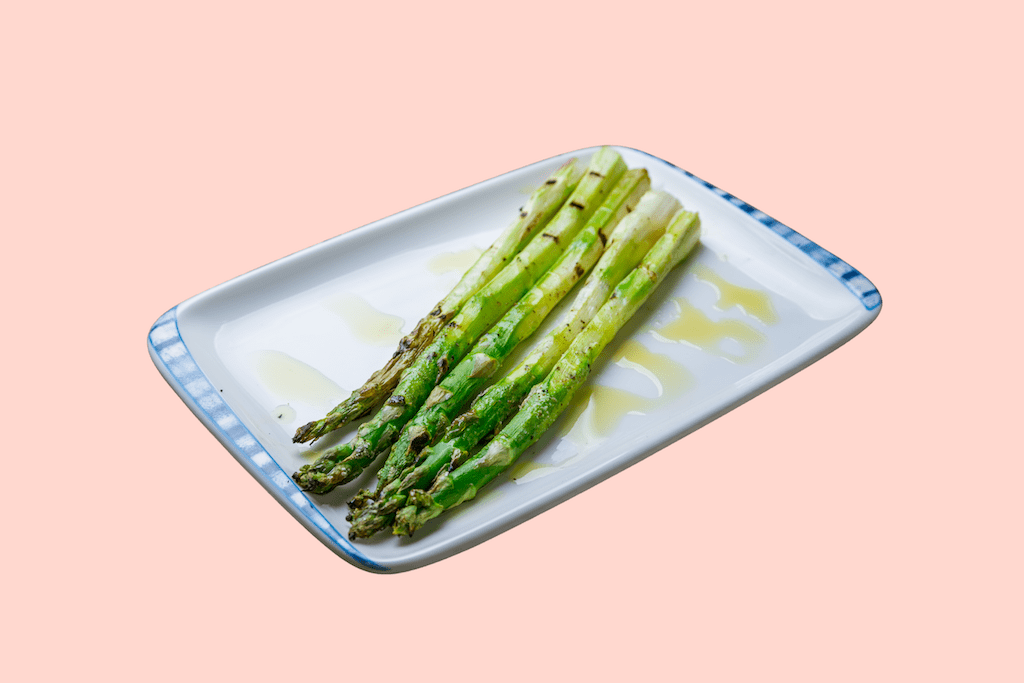
ASPARAGUS
Whilst not in season in Britain right now, asparagus is available year-round in UK supermarkets and is a popular choice as a side for that steak dinner.
The beloved speared vegetable isn’t only delicious; it also has some rather romantic associations. Indeed, during the renaissance, it was forbidden to eat asparagus because it was considered a food with aphrodisiac properties. Nowadays, it is the perfect nutritious side dish for your extravagant Valentine’s Day meal. Whether blanched, grilled, sautéed or even enjoyed raw, Lukasz provides his wine pairing suggestion:
“Asparagus calls to mind two contrasting but equally-wonderful world-class Sauvignon Blancs. If you have a Coravin system, why not have a glass of each? Loire Valley is home to Sancerre Le Chêne Marchand by Lucien Crochet. Grown on a mix of limestone and granite soils, this wine brings a mineral intensity with cut grass, passion fruit and fresh citrus that enhance the purity of asparagus. The zippy acidity perfectly refreshes your palate between bites of hollandaise sauce.
The second option would be Seifried Estate Aotea Sauvignon Blanc from the Nelson region of New Zealand. Grown on volcanic rock, this pure and zesty wine is bursting with pronounced nettle, grape juice and citrus flavours that will dance on your palate without overpowering the green, vegetal flavour of asparagus.”
Speaking of food believed to have aphrodisiac properties, white wine, sparkling or still, is the classic pairing with oysters. According to CBS News, ‘’Oysters are extremely rich in zinc, which is essential for testosterone production and maintenance of healthy sperm. And even though women have much less testosterone than men, it also plays a key part in the female libido’’.
Regardless of whether that claim holds validity, oysters are delicious and bring with them a real sense of occasion, perfect for a Valentine’s Day spent indoors. The high acidity and naturally crisp style of white wine, sparkling of still, pairs perfectly with fresh seafood. As such, it’s best to avoid avoid pairing our oysters with a wine that is heavily oaky or tannic. Lukasz provides his light sparkling wine suggestion which won’t overwhelm the glorious ingredient:
“A classic aphrodisiac, this…deserves something extraordinary, and I can’t imagine anything more suitable that the 2008 Comtes de Champagne by Taittinger. The 2008 vintage is deservedly regarded as exceptional. Its punchy pure citrus fruit alongside a mineral freshness forms a perfect marriage with the saline, seawater flavours in the oysters. There may be many fish in the sea, but there is only one 2008 Comtes de Champagne!”
SEA BASS
If you’re planning for a light dinner (leaving ‘’room for dessert’’, and all that) then Sea Bass is the UK’s favourite fish supper choice for Valentine’s Day.
For delicate, fresh fish like Sea Bass, you need crisp, unoaked white wines. Due to its higher acidity, white wine is a better complement for fish, and a squeeze of lemon juice can really bring out the flavours of the seafood (and the wine), too. For Lukasz, matching fish with wine is a joy and he shares his top fine wine suggestion:
“Fine fish, deserve fine wine. And most agree the finest white wines are found in Burgundy. Based in Nuit St Georges, Domaine Tawse Chassagne Montrachet 1er Cru Abbaye de Morgeot from 2017 offers an intense and extremely fresh wine with grapefruit, green apple and vanilla flavours highlighted by mineral-lead acidity. This match will be ideal as any butter or lemony flavours in your sea bass dish will connect to the wine’s citrus and light oaky vanilla notes.”
Despite the inclement weather, consider firing up the coals for a Winter barbeque. A whole seabass works particularly well on the grill, we think. Check out our tips for grilling whole fish on the BBQ here, for more.
SPAGHETTI CARBONARA
Though serving up a Spaghetti Carbonara might feel like you’re phoning in the Valentine’s Day dinner somewhat, there’s still an art to cooking this iconic dish from Rome.
Sure, it may be relatively easy to prepare, but you might have difficulty choosing which wine to pair with it. Lukasz’s suggestions pair well with the complexity of the dish’s flavours – the unctuous egg yolk, the fatty consistency of pork guanciale, the freshly ground pepper and powerful Pecorino Romano:
“There’s nothing wrong with a bit of cheekiness on Valentine’s Day so here I offer a bit of a rebellious suggestion. Unlike traditional Gavi di Gavi or Soave, I’d pair a carbonara dish with a wine from sunny Santorini, specifically Hatzidakis Cuvée No.15 from 2018. A rich and creamy pasta dish just loves a fresh, mineral wine that can match its intensity but is also light and capable of refreshing and cleansing your palate. Made from the Assyrtiko grape, this wine is nuanced and complex with a long and invigorating ending. Visiting Santorini is impossible now, so why visit through its unique wines.”
STRAWBERRIES
Strawberries. especially when covered in cream and chocolate, just scream romance. Historically, that romantic connection dates back to Ancient Rome where the fruit was associated with Venus, the goddess of love. Due to their bright red colour, strawberries have remained an enticing dessert option for Valentine’s Day. Lukasz suggests pairing this sweet treat with a German classic:
“There are many fantastic sweet wines out there, but a Johann Josef Prüm, Graacher Himmelreich Kabinett 2018 forms an ultimate Valentine’s Day treat.
Established in 1911 by Johann Josef Prüm, this producer brings a wealth of experience and excels with this off-dry style of Riesling from the Mosel region’s heat-trapping blue and red schist soils. The result is a memorable wine of extreme purity, accurate and precise flavour with refreshingly sweet peaches, quinces and apricots that will make a beautiful pairing to the strawberries’ natural sweetness. The wine’s crisp mineral acidity will enhance the freshness of the cream.”
CHOCOLATE
When we think of Valentine’s Day, we think of chocolate. The two are simply inseparable – unless you manage to curdle your chocolate when cooking dessert, that is.
Whether it be a box of chocolates or a molten lava dessert, chocolate symbolises affection, luxury, passion and sensuality. Historically, a bride and groom would drink hot chocolate to celebrate but Lukasz recommends celebrating with a chocolate dessert and port instead:
“As Albert Einstein taught us ‘Love is light, that enlightens those who give and receive it.’ I strongly believe our quality of life is directly connected to the quality of the moments we share with our lover. And nothing captures a moment in time better than vintage Port paired with chocolate. No matter if you are born in the 1920s, the 2000s or anywhere in between, you can find a vintage from the birth year of your loved one. Port’s dense and rich character resembles those found in chocolate, and its natural freshness helps to clean your palate. “
For many Brits, a house just isn’t a home until when there are pets around. Picture a happy domestic scene; there might be a fluffy kitten sat on a child’s lap, or a friendly dog greeting its owner as they return home. And what a warm welcome it is; pets can provide companionship and fun, and during these tough times, having a furry friend around has raised morale across the country.
In fact, the chief executive of Pets At Home, Peter Pritchard, has recently said that ‘’Pet ownership in the UK is going through a so-called “baby boom” with the Covid-19 pandemic seeing a surge in new owners’’.
So far, so fluffy.
But sometimes, people opt for a different type of pet. And though it may not be able to greet you at the door, nuzzle in for a cuddle, or prowl the perimeters deterring would-be-burglars, it’s still a wonderful companion to have around…
Yep, we’re talking about snakes. For those keen on a low-maintenance pet who doesn’t demand constant attention, then this slithery, slippery reptile might just be for you. Low maintenance though they may be, there are still some essentials to bear in mind before buying one; here are 6 things you should know before owning a pet snake.
THE MOST POPULAR TYPES OF PET SNAKE
For newcomers to the snake ownership game (we’re assuming you’re a beginner, since you’re here), it’s important to know that in the UK, there are three types of snake which make the most popular, easiest to care for pet; the corn snake, the ball python and the milk snake.
According to the specialists behind mysnakepet.com, it’s the corn snake which is the best seller for first time owners, largely due to ‘‘their beauty and docile nature’’, as well as the fact that they don’t grow as large as some of the other popular varieties here in the UK.
HYGIENE IS IMPORTANT
People should only buy snakes from reputable breeders and sellers. If they don’t, they risk their new pet having issues with parasites or carrying diseases. Once a purchase has been made, the new owner should always take the reptile straight to the vet for a check-up.
We’ll discuss snake-handling next, but snake owners should always wear gloves when touching the pet or removing its faeces. This is because snakes carry the salmonella bacteria, which can be especially harmful to people with compromised immune systems. It’s also particularly dangerous for children aged under five, so always handle with care (and gloves).
HANDLE WITH CARE
No, not because they’ll bite you. But rather, because snakes, for all their fearsome reputation, are actually surprisingly delicate creatures.
Your new pet should be left untouched during its first few days of feeding. This will allow it time to start settling in. Anyone who picks up a snake and holds it near their neck or face will risk the pet reacting defensively; this will rarely be a bite, but rather, snakes emit an unpleasant musky smell when they are picked up by people they don’t recognise. Fortunately, this won’t be an everyday experience and they’ll soon get used to you.
What’s more, be aware that there are also specific times when a person shouldn’t handle their reptile. They include feeding times and when they are shedding their skins, in particular.
THEY MAINLY EAT RODENTS
If you love snakes but hate mice or rats, this could be a real issue and one to weigh up carefully before you decide to buy a pet snake. Whilst some breeds will eat insects and eggs, most snakes prefer rodents, including baby mice.
Live animals can actually bite snakes while they are being eaten. For this reason, the food will need to be pre-killed and stored in the freezer. Make sure this will be okay with everyone in the house; you wouldn’t want anyone getting a nasty surprise when they open the freezer for some late night munchies!
The popular corn snake’s favourite food is mice, though rats and quail are also acceptable. Snakes will eat their food whole, so ensure that the rodent or small bird is completely defrosted and no greater than 1.5 times the widest part of your snake’s body.
SNAKES NEED PLENTY OF ROOM
It’s one thing to own a rabbit or hamster in a cage, but it’s another to have a snake. Whilst they may begin small, they can end up several feet long and several inches wide. Pet snakes can grow to weigh over 45 kg (the average weight of a 12 year old child!) and will need plenty of space to stretch themselves out.
For the sake of the snake’s health, the temperature and humidity levels of their tank will need to be consistently maintained; though it’s breed specific, a humidity of around 60% is normally required, with a temperature range of between 24 and 29℃. Some will require additional UV lighting to help them with their vitamin D production, too.
It’s also important to understand that snakes are skilled escape artists. They should therefore be kept in a sealed enclosure at all times. It’s all the more crucial when there are children or other pets in the home – or if the breed is venomous.
IT’S A LONG TERM COMMITMENT
These reptiles can live for 15, 20, or even 30 years, so it’s therefore essential to be sure there will always be someone who can look after your snake. Anyone who is more advanced in their years or who is about to have children should think carefully before embarking on this long, slithering journey.
THE BOTTOM LINE
Whether it’s companionship, shock value or simply the aesthetic splendour they bring, having a snake in the house isn’t an easy undertaking. But when a snake is stewarded well, it can provide many years of happiness and be a talking point with friends and visitors, too. Good luck!
Ideal for those looking to synergise the seasons with their style.
Whether it’s your blood or your collar that’s blue, this calming colour looks truly flattering on just about skin tone. Indeed, incorporating blue into your wardrobe in diverse shades ranging from arctic to indigo ensures your colour palette is an endless resource, all year-round.
And that diversity is ideally suited to the ever changing mood of Winter, when one moment we’re battening down the hatches ready for the Beast from the East, and the next we’re flinging open the curtains to ever lighter mornings and the prospect of Spring.
As such, you’re going to need to harness all the versatility of this great colour to be Winter war(drobe) ready and to see out these rest of the season in style.
Rather than talk ‘till we’re blue in the face, let’s cut to the chase; here are 5 shades of blue to wear this winter, IDEAL for those looking to synergise the seasons with their style.
NAVY
Navy blue is one of the easiest colours to wear in the Winter months, and is now so ubiquitous, it’s practically considered a neutral tone. That’s why navy blue suits have been such a big trend in recent years; the colour somehow manages to act as both a bold statement and a blank slate for other colours to flourish next to.
You can wear navy blue in just about any setting, too. Of course, the only current setting is the home – but navy will look good whether your Zoom call is an important work appraisal or a Friday night ‘pub’ quiz with pals.
Generally speaking, fashionistas recommend choosing solid navy for large outerwear pieces like winter coats and jackets, paired with more brightly patterned statement pieces for dresses or jumpsuits. Or, a stark white shirt or T-shirt paired with a navy jacket, shirt, or cardigan harnesses the power of contrast skilfully.
If you’re keen to brighten up your outfit in the face of Winter’s gloom, then doing your patterns subtly is best; a simple pocket in paisley, a funky tie inspired by Jon Snow (whilst we’d love to make a joke about Winter is Coming, we actually mean the journalist) or even some trousers in a more daring shade all complement an outfit based primarily around navy.
MILLENNIAL BLUE
Millennial blue is a pastel, powder blue that might be traditionally assigned to the Spring season. But because this shade of blue (along with millennial pink) has become so popular in recent years, its usefulness has reached backwards, beyond the Spring months and into the latter stages of Winter.
And why not? This powdery blue tone is the perfect mix of muted and icy to work in your Winter wardrobe, and feels somewhat symbolic, heralding the clear, crisp skies which define the season’s transition into Spring.
To work millennial blue into your own unique style, the colour looks particularly good in soft, cosy materials, such as Cashmere sweaters and loose fitting satin shirts.
Popularised by Kate Middleton, pea coats in millennial blue are the perfect outerwear to help you see through the remainder of Winter. These coats pair wickedly well with neutrals. Throw on a white top, some dark jeans, and a pair of nude heels and you’ll be feeling like a million bucks.
This shade also makes for great accessories like purses and shoes. If you’re not ready to jump in the deep end with pastels during winter, then this is a good way to utilise the trend without it being front-and-centre of your fashion choices.
CLASSIC BLUE
In 2020, classic blue was Pantone’s colour of the year. Each year, Pantone chooses a colour that it feels represents the global culture of that moment. It reflects art, fashion, and the overall mood of the here and now. So when Pantone chose classic blue, it felt like a real statement – previous winners have been esoteric shades like Cerulean, Sand Dollar, and Rose Quartz and Serenity – of the public’s desire for comfort and consistency in turbulent times.
Classic blue is a straight and true blue, and speaks of a certain trustworthiness in the wearer. It’s familiar, comforting and easy on the eyes. Because it isn’t too vibrant, it’s easy to incorporate this colour into your Winter wardrobe smoothly. To deepen the colour and mute it slightly for the season, consider wearing it under darker layers or with other dark pieces.
Shop for a classic blue top and throw a black jacket or cardigan over it; yep, that old satorial diktat about blue and black not belonging together has been widely dishonoured in recent years.
Dress head to toe in classic blue and pair it with chunky dark accessories. Or, you can flip that on its head and dress in darker shades with classic blue accessories thrown in; classic blue looks great on a pair of shoes, don’t you think? If you’re ready to buck tradition, you can brighten things up by pairing classic blue with a contrasting orange-yellow. The colours will boost each other’s vibrancy without clashing.
COBALT
Cobalt blue is a deeper gem tone blue. Unlike cerulean (which we’ll introduce shortly) it doesn’t have any green tint, and is more skin to navy, but with the volume turned up. It’s bright, it’s eye-catching, but it’s dark; a juxtaposition well suited to a sunny Winter morning, don’t you think?
This shade of blue was huge on the runways for Fall/Winter 2020-2021 and we expect cobalt to be massively popular for a while yet.
For a show-stopping look, shop for dresses and oversized coats in this shade, instantly taking any outfit from “average” to “all eyes on you.” It’s a powerful colour, and wearing it as your main colour is not for the faint of heart, but when deployed tastefully, there’s no stopping cobalt’s charm.
If you’re not ready to go all-in for cobalt blue, it’s also a great colour for accessories. These can be bags, jewellery, shoes, or even socks. If you’re thinking of incorporating some blue socks into your winter look, specifically, then No Cold Feet’s complete guide has a lot of good tips. With cobalt, a little really can go a long way.
CERULEAN
Speaking of that esoteric Cerulean, it’s actually a gorgeous, rich gem stone teal shade of our beloved blue. And you guessed it, the colour works brilliantly as a defining Winter hue!
Gemstones during the Winter months are a given, and the great thing about deploying them in this shade is that it feels bright and vibrant while still being dark enough for the restraint required from a Winter wardrobe.
This particular colour seems to be very popular on the runway, specifically for dresses or suits, as it holds its own in a head-to-toe look. And because it’s a deep, rich tone, it’s still gentle on the eyes, even when worn full-body. While you can find accessories and coats in cerulean blue, it’s not common as an accessory colour. Instead, stick with larger pieces that really showcase the colour in all its splendour.
THE BOTTOM LINE
With so many great shades of blue to consider, and a generous diversity at the heart of the colour, you can find something in blue for every occasion. Yep, blue boasts variety ranging from the deep and rich to the light and powdery; use it, and your Winter wardrobe’s fashion credentials all but azured.