Home Blog Page 254

5 MUST VISITS IN YOUR IDEAL FOODIE TOUR OF SRI LANKA

The ‘pearl of the Indian Ocean’ is having a foodie moment on these shores right now, make no mistake. Yep, Sri Lankan food has surged in popularity in recent years, with the average Jo now conversant in the merits of various hopper, the correct way to slap roti, and which sambol packs the most potent punch.

But rather than simply heading to Central London to try the finest Sri Lankan food, why not instead go all out, and travel directly to the source for your next foodie fix? The country’s ecosystem is varied and diverse, and combined with a rich amalgamation of regional and past-colonial influences (Indians, Arabs, Malays, Portuguese, Dutch and English tastes all play a part), this makes for a heady, intoxicating cuisine best enjoyed where it was born.

A close proximity to India means that the food shares similar traits and parallels, but don’t write this off as simple curry-mile fare. No, Sri Lankan cuisine really is like no other, and so much more than that. With this in mind, here are 5 must visits in your IDEAL foodie tour of Sri Lanka.

MINISTRY OF CRAB, COLOMBO

Colombo is Sri Lanka’s largest city and centre of commerce. As such, it’s likely you’ll be touching down here (at Colombo International Airport, sometimes called Bandaranaike International Airport, roughly 30km north of Colombo). For keen seafood lovers, make the Ministry of Crab in the heart of Old Colombo your first stop for a feed.

Housed in the Old Dutch Hospital within gorgeous colonial architecture, this superb restaurant is widely regarded as one of the country’s finest (it was recently voted #35 on the prestigious Asia’s 50 Best Restaurants List), and not surprisingly, the focus here is crab.

You can even order a 2KG ‘Crabzilla’, cooked in a variety of ways, including with garlic and chilli, a signature. The one consistent is the flavour of the wok; fires from a row of them lick the ceiling of the open kitchen. Amazing theatre with food to match.

A KANDY COOKING CLASS

Because you want to take home more than just souvenirs, right? How about returning with a few new dishes in your repertoire, learnt from those who understand Sri Lankan food implicitly? Sounds like just the ticket to us and the recipe for a dream foodie trip.

Perhaps the best place to take a Sri Lankan cookery class is in Kandy. Surrounded by mountains and tea plantations, the city’s unique surrounding biodiversity and cultural clout lends itself to a thriving, full throttle food scene. With the gorgeous tropical modernist design of much of the accomodation in Kandy, a stay in this famous city getting to grips with the country’s cuisine is a must.

NUWARA ELIYA TEA PLANTATION

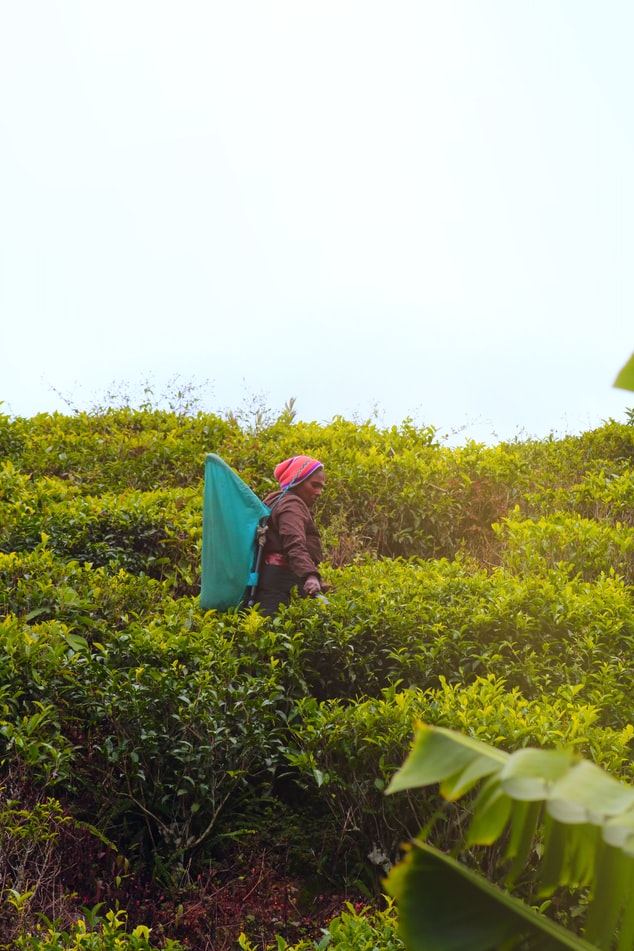
Sri Lanka is well-known around the world for its tea, and if you’re a tea-lover, visiting Nuwara Eliya is essential. It’s the heart of Sri Lanka’s tea industry and is often referred to as the ‘Little England’ of Sri Lanka. Here, you can sample teas, visit tea estates, see waterfalls and enjoy nature. Two and a half hours south of Kandy, the journey itself is as worthwhile as the destination, taking in the spectacular beauty of the Sri Lankan countryside from your train seat.

Ceylon Tea is perhaps the island’s most famous export and has accessible plantations in Nuwara Eliya, as well as Kandy and Uda Pussellawa. The views from these plantations, the former in particular, are usually located on elevated points of the island and are always fantastic. 
MAIN FISH MARKET, NEGOMBO

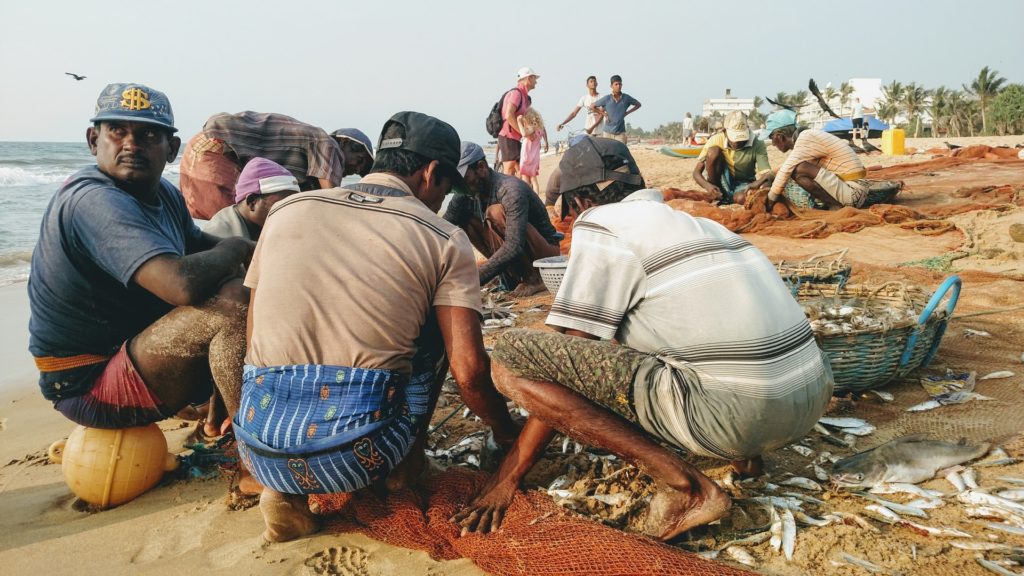
Open-air food markets in Sri Lanka are an amazing opportunity to try to diverse, delicious food of the country. It’s a cuisine which just feels right in this setting; free from the frippery of restaurant attempts to modernise what is a complex, refined cuisine anyway. 

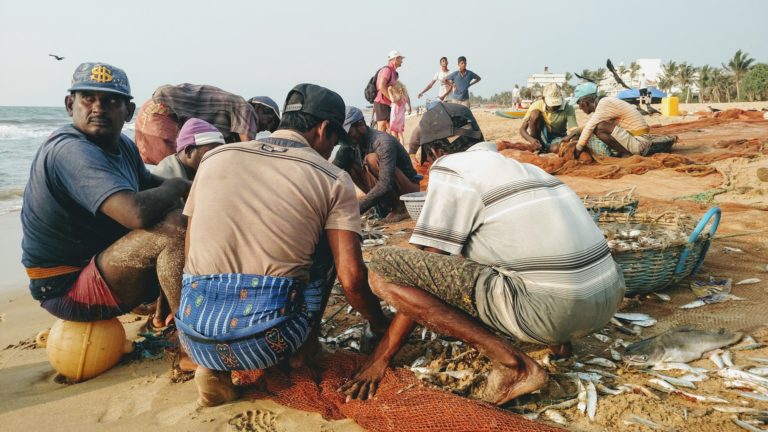
The laid back town of Negombo, on Sri Lanka’s west coast and just 15 minutes from Colombo International Airport, boasts a bustling fish market (Lellama to the locals), with the catch of the day being bartered over from the moment the sun comes up. It’s actually the second largest in Sri Lanka, and the surrounding shacks and street food stalls are a great place to pitch up and eat. That, or you can buy fish fresh from the market and take it to a local restaurant who will happily turn it into something delicious for you.

THE BEACHES OF THE SOUTH WEST

Visitors to Sri Lanka keen on sand, surf and seafood tend to head to the country’s South Westerly beaches. Holidaymakers usually make for Bentota, a town replete with stunning vistas and perfect white sand. Here, there’s some seriously good seafood to be found. Keep a particular eye out for candied shrimp curry (as good as it sounds) and ambul thiyal, a traditional fish curry made sour with tamarind. 

Don’t stop there; make sure you seek out the famous pol sambol, a sort of condiment designed to give the meal that extra special kick. While there are lots of different sambols, pol sambol is perhaps the country’s best. Made from grated coconut mixed with red chillies, onions, salt and maldive fish, it’s so addictively good that it’ll bring you to tears knowing you can’t eat it every day back home. Or is that the chili making your eyes water? 

5 REASONS TO HIRE A PROFESSIONAL WINDOW INSTALLATION COMPANY

Yep, we’re with you; that sense of accomplishment – not to mention the money saved – in doing home DIY can feel pretty great. As such, perhaps the idea of trying to install windows is currently appealing to your can-do and can’t-spend sensibilities. 

Sorry to burst your bubble (all that washing up liquid to clean up, grrr…) but this can sometimes lead to costly mistakes and delays. Though you probably won’t like to admit it, there are limits to the layperson’s DIY skills and often, a window installation project is a stretch too far. 

Instead, hiring a professional window installation company can give you confidence that the installer has expertise and experience to do the job right. If you’re still not convinced to hang up the home tools this time, then read on; here are 5 reasons to hire a professional window installation company.

THE DISADVANTAGES OF DIY WINDOW INSTALLATION 

Let’s cut to the chase; some DIY projects, especially if they concern big renovations, may affect the overall value of your home if they cause structural damage. 

What’s more, some material manufacturers will likely not honour a warranty on materials that have not been installed by a professional or certified contractor. Simply put, if you do a new window replacement by yourself, the material warranty might be regarded as null and void. 

Window installation isn’t quite the same as building a spice rack or bleeding a radiator. It requires expertise, in materials, technique and delivery, and for this reason, deferring to the professionals on this one may actually save you time and money in the long run.

FAMILIARITY WITH THE LATEST INDUSTRIAL CHANGES

Being a homeowner with a life to lead, it’s unlikely you’re following recent trends in the windows industry. There’s just so many more pressing concerns at hand.

Deciding to go DIY, then getting into a project and suddenly realising you don’t have the right skills or experience to complete it can be one hell of a blow to the ol’ ego. More importantly, it might give you poor results. 

No one’s expecting you to know how to optimise a new window’s full potential for efficiency, beauty, energy, and comfort. Instead, reputable, reliable companies such as Advanced windows are available to make sure your home has the right windows and doors fitted to high spec and with knowledge of the latest trends in the industry. 

For instance, today, energy efficiency is a compelling concern when considering window replacement. Expert window installers can recommend the proper materials that can make your home energy-efficient and better placed to cope with modern changes in climate and consciousness. 

Some of these materials include advanced weatherstripping and insulated frames. A proper assessment of the local climate and the architectural design of your home is required to determine the type of installation most suitable for your home. We certainly don’t fancy making that call ourselves.

WARRANTY & PROTECTION

Most contractors offer you warranty on their work which will help you in case of unexpected issues with the installation. Even better, many reputable local window companies work with window and door suppliers who provide warranty on their materials, too, in case defects are discovered.

Because of this, you don’t have to spend more money when there is a need for replacement of these materials or repairs, should a problem occur within the covered period of the warranty. Should you decide to install new windows or doors yourself, all these guarantees might not be honoured. In fact, they’ll likely not be in place from the start.

PROPER TOOLS FOR THE PROJECT

Come on, stop bluffing; that hastily assembled tool box of yours is filled with Christmas cracker screwdrivers and one hammer your dad left behind when he helped you move in. 

Since this is a project which walks on broken glass and flirts with other hazards, the right tools are essential in proper completion of the task. Window installation requires some pretty niche kit including specific types of sealant and expert contractors like GT Sealants will have the right equipment and tools to make sure that the project is successful. They’ll also know how to use these tools safely and efficiently.

PRIORITISE THE SAFETY OF YOUR FAMILY & HOME

The set up and clean up of a big home renovation project is for many an obstacle too far in ever getting started. Construction projects can be messy, but an expert window installer takes the responsibility on, to take away the debris and leave the work site as clean as possible. They can also dispose of your old doors and windows if you want so you don’t have to take a trip to the local skip.

THE BOTTOM LINE

The good news is that there are equipped, informed window installers out there. When choosing one, make sure you seek referrals and references regarding their previous work, as well as doing your due diligence online and comparing reviews of local companies. 

When considering window installation at home, it’s best to put your faith in the professionals.

5 IDEAL OUTDOOR ACTIVITIES IN PORT D’ALCUDIA, MAJORCA

We just love a bit of Majorca in the UK. So much so, in fact, that we anglicised the name and slipped a Double L in there for good measure. That’s that llove with a two L’s right there. With over 2.3 million British tourists flocking to the island last year, accounting for a quarter of the entire tourist industry, it’s safe to say that this is an adoration set to endure into the new decade.

Yep, Majorca has the rare skill of appealing to adventurers and beach lovers alike, with something for both those who love high octane and those who like it low, slow and languid. The lively, welcoming town of Port D’Alcudia, on the North East of the island, encapsulates this spirit perfectly, with activities aplenty for all the family. With that in mind, here are 5 IDEAL outdoor activities in Port D’Alcudia, Majorca.

SOAK UP SOME SUN ON PLAYA DE ALCUDIA

It’s said that the beaches of Majorca are so popular that 25 tonnes of sand is taken away each year in shoes, bags, hair and other crevices. That’s not to say that all of the island’s beaches are packed to the rafters with peeling tourists; there are still plenty of secluded spots to discover. More than 200, in fact, with at least 60 coming with Blue Flag accreditation to boot.

Port D’Alcudia boasts one of the island’s finest, longest stretches of sand, Playa De Alcudia, and if you’re staying in the town, you’re not going to miss it; the place is built around its elegant curve. Not that you’d want to miss it, either; it’s the largest beach in the Baleariac islands, stretching over 7km, from the Port to Playa de Muro. Though it can get busy at the port end, if you stroll a little south you’ll find some spots of seclusion.

HIT THE SLIDES AT HIDROPARK

Port D’Alcudia enjoys predictable, reliably pleasant weather for the majority of the year. Perhaps that’s why us Brits love it so, with our own climate being so inclement and inconsistent. 

Indeed, from March to mid November (that’s nearly half the damn year), it’s T-shirt weather, with temperatures rarely dropping below 20°C, with an average of 300 days or more are around 21°C or higher. That, combined with the consistently humid climate, means that sea swimming is do-able (and enjoyable) throughout the year. 

But if you fancy some more adrenaline than that breaststroke in the bay is providing, the town’s Hidropark might be for you. This enjoyable water park an easy stroll from the town centre comes complete with slides, rides and more. A must visit if you’ve got the kids in tow!

GO DOLPHIN WATCHING IN THE BAY OF ALCUDIA

The Bay of Alcudia is a beaut, there’s no doubt about it. The bay’s most famous local residents seem to agree, popping up for a smile and a play with those who venture out deep enough. Yep, we’re talking about dolphins.

Between May and October you can take a boat trip out into the bay to see the frolicking take place first hand. The best company providing this are No Frills Excursions, with the three and a half hour trip starting early (don’t worry, breakfast is served!) to capture the glorious sunrise across the Meditterenean Sea. 

PLAY A ROUND AT ALCANADA GOLF CLUB

Because not all outdoor activities in Port D’Alcudia revolve around the beach. Indeed, the Alcanada Golf Club (just a ten minute drive west) is considered one of Spain’s finest courses, with 18 holes overlooking Alcudia bay and providing stunning views with every swing. Designed by the revered English-American architect Robert Trent Jones, this is a stunning site; lush, verdant and pristinely manicured. If you take your holiday golf seriously, this one’s for you.

WANDER THE SCULPTURE PARK AT SA BASSA BLANCA MUSEUM

For something more cultural but no less outdoorsy, it’s to the Sa Bassa Blanca Museum we head. The Museum itself is gorgeous, based on traditional Moroccan design aesthetics and housing a 15th century wood panelled ceiling. 

But we’re writing this article with no roofs over our heads, so onwards to the sculpture garden, which overlooks the sea and has pieces by Ben Jakober and Yannick Vu, as well as a separate rose garden, A stroll here is the perfect way to round off your active, outdoorsy day in Port D’Alcudia.

7 TIPS ON HOW TO AVOID OVERWORKING YOURSELF

7 TIPS ON HOW TO AVOID OVERWORKING YOURSELF

Ideal for those wanting to redress their work/life balance.

Work. Huh, yeah. What is it good for? Actually, rather a lot it turns out. Research last year suggested that work is indeed good for you. But here’s the caveat; only if you’re working for one day a week. Yep, British scientists have suggested that eight hours a week is the optimum amount of work for happiness and contentment. 
Of course, this is the dream, and a distant one at that. But there are ways to take control of your time a little better, and get the most from your job without becoming burdened by stress and pressure. Here’s how; our 7 tips on how to avoid overworking yourself, IDEAL for those wanting to redress their work/life balance.

KEEP AN EYE ON THE SIGNS

Telltale signs that you’re overworking yourself can be easy to miss if you’re not careful. Working too hard generally leads to stress, and stress affects your entire body. Therefore, keeping an eye out for signs of excessive workplace stress will help you identify when it’s time to slow down. 

Stress often leads to trouble sleeping, mood variations, excessive worrying, brain fog, and general feelings of being overwhelmed. Being overwhelmed in particular is something you should pay attention to. If just looking at your schedule fills you with desperation and anxiety, it might be time to make some changes in your life.

Some of the physical signs to look out for include:

  • Dermatological disorders (breakouts and general skin problems)
  • Frequent headaches or migraines
  • Bleeding gums
  • Hair loss
  • Upset stomach (constipation or diarrhoea)
  • Weight loss
  • Muscular tension
  • Fatigue
  • High blood pressure

KEEP JOURNAL TO IDENTIFY STRESS TRIGGERS

It sounds simple on paper, and as such, it should be on paper. Being able to identify which situations at work cause you to feel overwhelmed is the first step taken to reduce and hopefully eradicate that feeling. So, keep a workday journal of times when you felt particularly under pressure, what caused it, and whether you were able to resolve it. 

Note down your feelings, thoughts and any information about the situation, including who else was involved, the physical setting and the circumstances. Keep track of your own reaction as well; did you get angry and raise your voice? Retreat from the situation and go for a walk? Head to the canteen for a quick snack? By keeping a journal, you’ll be able to identify triggers and the best ways to avoid them.

TAKE REGULAR BREAKS

If you must work intensely for a long period of time, then it’s important to factor in regular breaks to your schedule and to respect the time your body and mind need to rest every day.

Remember, being overly productive right now may feel necessary, but if your workload is draining and crushing you, that productivity you covet will ultimately be affected detrimentally. Regular breaks will help you survive in the long run.

The alternative is pushing hard with no breaks, which will lead to a crash sooner or later. A crash that will leave you burned out at best, or in a hospital at worst, as chronically stressed people are in the risk group for a large number of medical conditions.

TAKE CONTROL OF YOUR SCHEDULE

One of the best ways to prevent overwork is to allow yourself the time you need in order to complete each task. Try not to take on more tasks than you can reasonably handle, and learn to say no.

In other words, you can avoid overworking by working less. Work smarter, not harder, as they say. Which sounds obvious, but when half a dozen people are asking you to do things for them, it’s easy to get carried away and say yes to too much. Especially if those requests are coming from your boss or your loved ones.

This is where a good schedule comes in. A well organised, strictly adhered to schedule will help you track how much of your time is already booked, allowing you to spot when you are getting close to your upper limit. You may also need to work on learning how to negotiate and how to say no in order to protect yourself from work being unfairly imposed on you.

SET BOUNDARIES

Speaking of learning to say no….

The shrinking of the world had led to a massive rise in expectations regarding when and where we should be working. Evenings, weekends, even when we’re on holiday; nothing is off limits now in terms of when you should be available and ‘on’. But you need to set boundaries, both for yourself, and your colleagues and bosses.

This could be a rule to not answer the phone during dinner or when out with friends, or not allowing yourself to check emails at the weekend. Everyone will have different opinions when it comes to blending office and home life but drawing a few red lines in the sand will prevent work-life conflict and the stresses that come with it.

MASTER RELAXATION TECHNIQUES

Phew, you’ve honed the art of saying no. You’ve got your breaktime rhythmic and sensible and you’ve learnt how to identify the signs and triggers of stress. Now, you can help yourself better handle pressure and work by learning some simple relaxation techniques. 

Mindful meditation, breathing exercises, medical hypnosis, and activities like yoga have all been shown to help people relax.

GET ACTIVE

Exercise is one of the key elements to living a healthy lifestyle, physically and mentally, and as such, it can have a hugely positive impact on your workplace wellbeing, too. However, if you’re sat at a desk all day (the risks of such a sedentary lifestyle are well documented) it can be difficult to incorporate exercise into your workplace. 

Right now, with so many working from home, it can feel even harder to keep fit during the working day. Don’t be defeated; check out our 5 IDEAL tips for working out at home and feel the burn today!

5 IDEAL WAYS TO BRING THE SIGHTS, SOUNDS & SCENTS OF PHILADELPHIA TO YOUR SOFA THIS SPRING

Located on the East Coast of the U.S., Philadelphia is rich in history, arts and culture, vibrant neighbourhoods, tax-free shopping and more. For those keen to show some kinship with the City of Brotherly Love this spring, you can now visit many of the city’s famous cultural institutions and attractions from the comfort of the sofa. And we’re all after moments of escape right now, hey?

Virtual travellers can delve into the crumbling cell blocks of the prison that once incarcerated Al ‘Scarface’ Capone with a tour of the Eastern State Penitentiary, learn about American history during an online tour of the Museum of the American Revolution, and remotely view several of the city’s art museums. 

What’s more, online holidaymakers with an appetite for local dishes can also recreate a traditional Philadelphia cheesesteak at home with help from the family run sandwich shop Campo’s Deli and listen to the sound of Philadelphia’s musical masterminds via a dedicated Spotify playlist. So, with that in mind, here are 5 IDEAL ways to bring the sights, sounds and scents of Philadelphia to your sofa this spring.

FOR VIRTUAL ‘DARK TOURISTS’: TOUR THE CELL BLOCKS OF EASTERN STATE PENITENTIARY

Opened in 1829, Eastern State Penitentiary in Philadelphia was once the world’s most famous and expensive prison until it closed in 1971. The notorious gangster Al ‘Scarface’ Capone was once incarcerated within the prison, and it is now offering online tours that highlight several cell blocks, the baseball field, and other locations throughout the historic site, both as they stand today and also as they looked in 1998. From one set of four walls to another, huh? For more information visit www.easternstate.org

FOR HISTORY BUFFS: LEARN ABOUT U.S. HISTORY AT THE MUSEUM OF THE AMERICAN REVOLUTION

Philadelphia is known as the ‘birthplace of America’ following its vital role in the American Revolution and is home to the UNESCO World Heritage Site of Independence Hall, where the Declaration of Independence and the Constitution were drafted, debated and adopted. 

The Museum of the American Revolution explores the story of the colonial revolt through a fascinating exhibition of Revolutionary-era weapons, personal items, letters, diaries, and works of art. 

For those interested in learning more about the history of America from their home, the museum  boasts a robust online tour, which navigates through the museum’s immersive galleries and incredible replicas via 360-degree, high-resolution images. For more information, visit www.amrevmuseum.org.

FOR ART ENTHUSIASTS: BROWSE THE CITY’S ESTEEMED MUSEUMS

The masterpieces that fill Philadelphia’s museums are certainly worth seeing in person, however many of the city’s institutions are now offering online tours, including The Barnes Foundation, which is allowing virtual visitors to navigate one of the greatest collections of impressionist, post-impressionist, and early modernist paintings in the world. 

What’s more, those keen to remotely view and learn more about Philadelphia’s impressive collection of outdoor art can enjoy a virtual tour of Philadelphia’s Magic Gardens and virtual art experiences from Mural Arts Philadelphia amongst other organisations via the Association of Public Art.

FOR FOODIES: RECREATE A PHILADELPHIA CHEESESTEAK FROM CAMPO’S DELI

For those craving a classic Philadelphia cheesesteak, Campo’s Deli in Old City is a family run sandwich shop that has been making cheesesteaks, hoagies and other speciality sandwiches since 1947. If you’re looking to try your hand at cooking the perfect cheesesteak at home during lockdown, Campo’s has provided a recipe to help bring the taste of Philadelphia to the kitchen:

Ingredients (makes one cheesesteak):

  • 1/4 onion, chopped
  • 150g shaved rib-eye steak, sliced to approximately 1/8th inch thickness
  • 2 cheese slices
  • 2 tbsp olive oil
  • 9-inch Italian roll or soft roll subs
  • Salt and pepper to taste

Cooking Instructions:

  • In a large sauté pan or on a griddle, add oil and heat to medium-high.
  • Add onion followed by a pinch of salt and pepper. Cook onions until soft (5 minutes), stirring occasionally.
  • Add rib-eye and a pinch of salt and pepper. Let each slice cook for roughly 45 seconds, then flip and cook for another 30 seconds.
  • Add slices of cheese on top of steak and cover to melt cheese (10 seconds).
  • Transfer steak, onions and cheese onto sliced Italian roll and enjoy! 

For more information on Campo’s Deli, visit www.camposdeli.com.

FOR MUSIC FANS: BRING THE SOUND OF PHILADELPHIA HOME

Let’s get properly immersed in Philly’s unique vibe, we thought we ought to soundtrack things, too. Fortunately, you can listen to music from some of the region’s most iconic performers via Philadelphia CVB’s “Philadelphia From Home” Spotify playlist. The playlist includes music from homegrown artists such as Will Smith, Meek Mill and Boyz II Men, plus the timeless anthem, Bill Conti’s ‘Gonna Fly Now’, which featured in the Rocky film while Sylvester Stallone ran up the iconic steps of the Philadelphia Museum of Art. 

Those with a more classical taste can stream several albums by the Philadelphia Orchestra or view a recent performance of Beethoven Symphonies Nos. 5 and 6 at Verizon Hall online. 

For more remote moments, virtual travellers can follow the #VisitFromHome and #PhillyFromHome hashtags on Twitter. For more information on Philadelphia, visit the Philadelphia Convention & Visitors Bureau’s website, www.discoverPHL.com. And when this thing’s over, perhaps we’ll share a proper hug in the City of Brotherly Love?   

5 IDEAL TIPS ON HOW TO LOOK AFTER YOUR CAR DURING LOCKDOWN

First things first; stay at home. That means no jaunts to let off steam. No road trips to the coast to recline on the sand. And no countryside cruises to find an appropriate beauty spot to forget about the madness of the present. 

That said, some driving will be essential. There’s the weekly shop to be done. Essentials and supplies to be delivered to those in need. And if you’re an essential worker during this time, then of course, getting to work safely is a priority. Even if your car is more stationary then usual, deterioration can occur, even as it simply sits in the garage gathering dust. Avoid the worst of it, with these 5 IDEAL tips on how to look after your car during lockdown.

DRIVE CAREFULLY 

If you’re living in an urban area (actually, if you’re anywhere in the UK, for that matter) there are high chances that you may face road bumps and potholes while you’re driving. With less people on the road the temptation may be there to drive a little faster, to get to your destination quicker, but resist it. Drive cautiously and carefully to avoid an unwelcome, unnecessary trip to the mechanics.

AVOID A FLAT BATTERY 

Perhaps the most important way to look after your car during lockdown is to keep your battery healthy. Unfortunately, lots of short trips flatten your battery faster than usual, so follow government guidance to travel only if necessary and as little as possible. 

Should yours be on the blink, use a battery or trickle charger. And if you’re lucky enough to have two cars, make sure you use them in alternating trips. Or, you could just walk, if possible.

CHECK THE TREAD OF YOUR TYRES 

It’s also important to keep on top of that tyre health. So, check the tread depth of your car tyres regularly. Tread depth is important as it keeps the outer layer of the tyre safe from damage caused by unwanted materials that come in contact with the tyre. 

Tread depth should be a minimum of 1.6 mm according to UK vehicle laws. The thickness of that tread depth determines how well the rolling resistance of your tyres performs on the road.  

On top of this, you should also look at the quality of your tyre’s ribber. If the tyres you buy are made of good rubber, then you can expect an excellent rolling resistance. Accordingly, you’ll save yourself from the hassle of unexpected punctures. It’s therefore important that you buy tyres from a well known tyre dealer in your town. If you’re in need of a new set, arrange to get your new tyres in London and nearby from garages like DAT Tyres (0208963030).

CHECK THE PRESSURE OF YOUR TYRES 

Tyred of us talking about tyres yet? Sorry. But one further check is imperative to ensure safety; you should check their pressure. If your tyres have well-maintained air pressure, it will not only save you cost on fuel but will also save you time since over inflated tyres have a higher chances of bursting if they come into contact with a sharp item or potholes on the road. In turn, you’ll be reducing your chance of an accident. Therefore, a regular air pressure check is vital.

A MONTHLY ONCE OVER

Since your car won’t be seeing its usual action, a monthly once over is imperative to make sure it’s all good below the hood. To maintain your car’s safety and performance, these simple checks are essential:

  • Check the level of oil in the engine and ensure it’s between the maximum and minimum marks on the dipstick.
  • Check for sufficient liquid in the cooling system. Top up as necessary, and include antifreeze in the mixture, both in winter and in summer. This helps protect against overheating, as well as frost damage.
  • Give the car a good wash and polish to keep the paintwork in top condition.
  • Watch for the first signs of rust forming and have it treated before it gets worse. Look for signs of water leaks inside. Check tyre tread depths and look for signs of uneven wear, hinting at possible suspension problems.

5 UK STAYCATION HOTSPOTS FOR 2023

As travel has been put on hold for the time being, we’re instead looking ahead to next year and making plans for where might be fun for a fantastic staycation in 2021. The UK offers some fantastic destinations for holiday-goers, whether you’re looking for an action-packed city break or a relaxing weekend at the seaside, there truly is something for everyone. What better time to start planning for that future getaway than now? Because we’re all in need of a little escapism right? With that in mind, here are 5 UK staycation holidays for 2023.

IDEAL FOR A CITY BREAK: LONDON

It just has to be the Big Smoke, right? There aren’t many city breaks on the planet which pack more of a punch than London, with the variety of activities, entertainment, food and nightlife unrivalled in the UK. 

If you enjoy hustle, bustle and a breakneck speed, England’s capital has got you covered. There’s culture by the bucketload here, too, and the majority of the art galleries and museums are free to enter.

The restaurant scene is also incredibly diverse and exciting, with 67 Michelin stars and several top notch food markets. Any cuisine you can think of, and the capital has got you covered.

If you’d like a sneak preview of some of London’s top tourist attractions, check out our guide to 10 landmarks you can visit virtually, from the safety of behind your screen.

IDEAL FOR AN ADVENTURE HOLIDAY: THE SCOTTISH HIGHLANDS

For the thrill seekers, you may (scrap that; you definitely will) want to take a trip to the Highlands, where mountaineering, hiking, cycling, kayaking and sailing (amongst many more activities) are all on your doorstep. 

The stunning scenery and wildlife on offer in Scotland are unrivalled – the world over, according to a 2017 survey by Lonely Planet, which named Scotland as ‘the world’s most beautiful country’ – and provide the perfect backdrop to those looking for an adventurous holiday. 

You can stay in local B&B’s, take a tent and pitch as you go, or even look to stay in one of the local Bothies dotted across this most gorgeous of landscapes.

IDEAL FOR A BEACH BREAK: THE JURASSIC COAST, DORSET

Despite what you may have heard (or lived through) about the Great British gloomy weather, there are some fantastic places around the UK for that perfect relaxing beach break. 

The stunning Dorset coast makes for a truly beautiful holiday destination, with some incredible scenery and plenty to do. The UNESCO World Heritage Jurassic Coast gives it that extra edge over other beach breaks, offering fun for the whole family with a day out fossil hunting. 

Taking in the famous chalk stacks of Old Harry’s rocks on a clifftop walk, with fine views of the English Channel and Isle of Wight visible for its duration. Reward yourself upon its completion by indulging in some fish and chips on the beach of Swanage Town. The Fish Plaice, arguably the best chippy in the area, does all the simple things just right, or if you’re looking for a sit-down meal, the Top Deck Oyster and Seafood bar has stunning views overlooking the bay.

There are plenty of places to stay in the area, whether you want to stay in traditional Dorset holiday cottages, a luxury sea view apartment, or even in a caravan, Dorset offers something for everyone. 

IDEAL FOR A COUNTRYSIDE ESCAPE: THE LAKE DISTRICT

Endless rolling hills, the peaceful sounds of surrounding nature and a wealth of natural beauty – what’s not to love? If you’re looking for the perfect countryside escape, then the Lake District could be just the place for you in 2021. 

With spectacular scenery and places to explore, along with quaint towns and villages to amble through, it offers a slower pace of life to the cut’n thrust of urban Britain. There are B&Bs and luxury hotels available, so you won’t be short of somewhere to stay; but if you’re a lover of wildlife, why not research the best wild camping spots and take a tent for the ultimate country experience. 

IDEAL FOR HISTORY BUFFS: CHESTER, CHESHIRE

The UK is steeped in heritage with many so many of its towns and cities having cemented their places in the history books. The popular town of Chester is definitely one not to be missed if you’re a history buff. It offers plenty of medieval architecture, from the ancient city walls to a Roman Amphitheatre and a 1000-year-old cathedral with some incredible Medieval carvings. There are also plenty of shops, restaurants and things to do, to make the stay extra special. 

So, there you have it, some incredible spots to consider around the UK for your 2023 staycation. There’s so much to see and do, whilst travel isn’t possible right now, it’s definitely worth thinking ahead and picturing the places you don’t want to miss out on next year!

10 IDEAL VIRTUAL TOURS OF LONDON LANDMARKS

10 IDEAL VIRTUAL TOURS OF LONDON’S TOP TOURIST ATTRACTIONS

Dunno about you, but those images of an empty London doing the rounds online don’t speak of peace and serenity to us. Sure, we can joke about dolphins returning to the Thames, but the Big Smoke bereft of activity and buzz is a sad sight to us. We miss the rich tapestry of London life, the restaurants and bars, and even though they decline to greet us with a cheerful ‘Good Morning’, we miss the people! 

So, while a day out in London isn’t an option right now, an appreciation of our favourite city is easy from behind your screen. In fact, you can take a tour of tourist hotspots online which as a London resident, you may not have ever taken the time to truly appreciate. With that in mind, we’ve rounded up the best virtual tours of London. Here are 10 IDEAL virtual tours of London landmarks.

VISIT LONDON VIRTUAL TOUR

The augmented reality experts Visualise have teamed up with Visit London to bring us a 360 virtual tour of London’s most iconic sites. And might we compliment them on their timing; our longing for escapism from the four walls of lockdown living knows no bounds right now. 

Read: 7 uses for VR headsets beyond the world of gaming

All you’ve got to do is click on locations in the picture marked with ‘360’ icons and zoom in to explore them. View on your iPad for best results and click the gyro button for full interaction as you move the tablet around.  

Take the tour here

VIRTUAL TOURS OF LONDON’S TOP TOURIST ATTRACTIONS

NATURAL HISTORY MUSEUM 

The closest you’ll get to frolicking in nature and history right now, we think. The Natural History Museum is home to 80 million items detailing botany, entomology, mineralogy, paleontology and zoology. Get up close and personal (whilst maintaining proper social distancing, of course) with the famous Dippy, a massive skeleton of a Diplodocus Carnegii in the main hall.

Take the tour here

MUSEUM OF LONDON 

If you can’t physically explore the capital, then you can at least delve into its history via a virtual tour of the Museum of London. In such a topsy turvy present, the turbulent past of our beloved city somehow seems even stranger.

Take the tour here

BRITISH LIBRARY 

‘And they provide a perfect form of escapism’…although books are brilliant at delivering just that, if you want to imagine there’s a secret tunnel hidden behind your bookcase which leads to somewhere even more exciting, try out the British Library’s online collection of exhibits.

Discover all the books here

BUCKINGHAM PALACE 

The official royal residence can also be explored online. Some of Buckingham palace’s staterooms where the King and members of the Royal family receive and entertain their guests for state, ceremonial and official occasions – including the White Drawing Room, The Throne Room and the Blue Drawing Room – can be viewed online via a full-circle, full-swivel tool. And who doesn’t love a 360 virtual tour, hey?

And while the doors are shut, you can also enjoy the Royal collection here: www.rct.uk 

VIRTUAL TOURS OF LONDON’S TOP TOURIST ATTRACTIONS

HOUSES OF PARLIAMENT 

Take a visit to the halls of power on this virtual tour of the House of Commons, the House of Lords and the spaces in between, allowing virtual visitors in to explore some of Parliament’s most famous rooms. Though you won’t be able to chastise those in charge for underfunding the NHS on this tour, there’s still some fun to be had in role-playing it.

If you do want to have your actual voice heard, make sure you sign this petition calling for an increase in pay for NHS health workers.

Take the tour here

TOWER OF LONDON 

The Tower of London has a story spanning hundreds of years, and at times the script gets just a little bit gruesome. The Tower was used as a prison and for executions throughout history, but today, it’s a popular tourist attraction and home to the dazzling Crown Jewels; a collection of diamonds and gems that are sure to wow you if you’re a fan of bling.

Take the of the tower tour here

VIRTUAL TOURS OF LONDON’S TOP TOURIST ATTRACTIONS

10 DOWNING STREET 

Though you should be keeping away from here right now, with all the viruses going around (Dominic Goings, am I right, guys?!), you can still take a virtual tour of the Prime Minister’s crib online. Just make sure you carry some disinfectant with you.

Get inside 10 Downing Street here

ROYAL ALBERT HALL

The iconic auditorium plays host to some truly dazzling spectacles. While the curtains are drawn, you can still take a look inside this most distinctive, beloved building.

Have a look inside Albert Hall here

HAMPTON COURT PALACE 

Since we’ve all grown a little tired of staring at the walls of our own place, why not go and have a shifty around someone else’s? Hampton Court Palace is usually pretty packed with visitors; here’s your chance to appreciate it without the crowds. 

Take the tour here

And if you want to continue your curiosity on the continent, here’s some more IDEAL escapism; virtual tours around 10 amazing European museums.

5 IDEAL ACTIVE HOLIDAYS FOR KEEP-FIT FANS

My body’s not a temple, it’s an amusement park. Though Antony Bourdain certainly had that right, for those who spend so much of the year maintaining peak physical fitness, the idea of a holiday spent lounging around doing very little may not appeal.

Better to opt for a sojourn which balances socialising, sunning and that all important daily physical activity, we think, enabling you to kick back whilst also kick on with your exercise regime.

A little research reveals that there are holidays to suit practically any pastime and even if you’re not heading off until next year, it’s never too early to weigh up your options. With that in mind, here are 5 IDEAL active holidays for keep-fit fans.

SURFING IN PENICHE, PORTUGAL

Beyond the beaches, the golf and the pasta del nata, Portugal’s best offering is perhaps shaped by the wind and water – the world beating waves for all year round surfing. Indeed, the surf in Portugal is as good as it gets and attracts some of the planet’s best. 

It’s a 365 days a year activity in Portugal, with a diverse and natural coastline, exceptional climate, and pristine water offering waves of every kind for every skill level.

Peniche, in particular, and the sea are inseparable. It’s one of the largest traditional fishing ports in Portugal and a major Atlantic hub for maritime-tourist activities. The town is the home of Supertubos – arguably Portugal’s most famous wave.

The “Supertubos” (super tubes) beach is known for its large tubular waves and is a perfect spot for experienced surfers. If you’re a beginner, the Cantinho da Baia beach is a better bet.

BOXING, CUBA

Cuba’s amateur boxers are in a class of their own – had they been permitted to turn pro by their native political system, many experts believe that elite fighters such as Teofilo Stevenson and Felix Savon would have cleaned up in the professional ranks.

If you’re a keen boxer, it’s possible to attend an amazing Cuba Boxing & Fitness boot camp where you’ll stay in a comfortable Havana villa and train during the day with some of the Caribbean island’s best contemporary fighters. 

Whether you participate in boxing training because it’s the ultimate workout or you actually compete back home, this unique experience will keep you fighting fit and sharpen your competitive edge.

MOUNTAIN BIKING, SCOTLAND

Scotland has been voted the world’s most beautiful country several times and if you’re fanatical about mountain biking, you can see some of its most stunning spots while tearing down terrific trails on two wheels. 

There are organised mountain bike routes at gorgeous locations like Glentress, Kingussie, Aviemore and elsewhere, but it’s probably best to take some expert advice before heading into the Highlands under your own steam – terrain can get rough and safety always comes first. Take a look at this mountain biking guide from Visit Scotland for the lowdown.

SKIING, FRANCE

A few hours on the piste skiing or snowboarding can burn a couple of thousand calories and after a week on the slopes, your legs will be more toned than ever, as anyone who’s nursed some sores during apres-ski will surely attest.

There are plenty of resorts to choose from worldwide, but French Alps resorts like Chamonix and Val d’Isere are absolutely beautiful and offer outstanding apres-ski and comfortable accommodation to boot.

If you haven’t been before, book a ski package from NUCO Travel and you’re taken care of by people who are passionate skiers themselves – hence they’re dedicated to ensuring you have the time of your life. 

HIKE THE LAVA FIELDS OF ARENAL, COSTA RICA

90km northwest of Costa Rica’s capital city San Jose lies the active Arenal Volcano and its surrounding national park, complete with a jungle, hot springs, a waterfall, lake and all the adventure activities you’d expect from such a diversity of landscape. Here you can indulge in some of the most thrilling hiking you’ll ever lay feet on.

You’ll want to head for the town of La Fortuna first, which acts as the gateway to the National Park. Even though it primarily caters to tourists, the backdrop of Arenal Volcano towering over the town is jaw-dropping, to say the least, and worth the visit alone. 

In the National Park itself, you can go on several trails and hikes which pass through lava fields, and those brave enough to get a little closer will, at night, still see lava flowing down the volcano’s sides. Fear not, the park is well patrolled and the volcano monitored by expert wardens; should an eruption be imminent, the National Park will be closed for everyone’s safety. An absolute must-visit on anyone’s Costa Rican itinerary, this one.

6 IDEAL WAYS TO SATISFY YOUR WANDERLUST DURING LOCKDOWN

Trips have been cancelled. Plans put on hold. Even our afternoon stroll is under threat. Escapism; it’s all we’ve got right now. But how exactly do you see the sights of unexplored, exotic destinations from the sanctity of your living room? How do you recreate the flavours of your favourite far flung places in your home kitchen? How do you interact with new cultures with that warmth and openness which travelling nurtures so beautifully?

Here’s a start; our 6 IDEAL ways to satisfy your wanderlust during lockdown.

COFFEE TABLE TRAVEL BOOKS

Sure, there was once a time when we would’ve scoffed at huge, photographic tomes of travel snaps, tastefully positioned on a coffee table. But these are unprecedented times. Suddenly, we’re finding great comfort and wonder in professional travel photography; seeing the world rendered so beautifully makes us feel much closer to the other side of it. Check out the Independent’s tips on the 15 best travel coffee table books for inspiration!

For something a bit more purposeful (and a little less pretentious, perhaps), have you considered recipe books of exciting, exotic cuisines doubling up as a coffee table travel book? David Thompson’s brilliant book Thai Street Food has some spectacular photography of street scenes in the Land of Smiles and Spice, and is just beautiful. Or, for something a little closer to home, Nuno Mendes’ love letter to Lisbon, ‘Lisboeta; Recipes from Portugal’s City of Light’ captures the majesty of one our favourite foodie cities on the planet.

COOK THE GLOBE

Those cooking books shouldn’t satisfy only your aesthetic needs. Indeed, now is the perfect time to flex those culinary muscles and get to grips with some new recipes, cuisines, and ultimately, cultures too. 

With more time on our hands, lockdown life can offer its own sense of escapism at meal times. Why not try out a new country’s cuisines a couple of times a week? We understand that finding esoteric ingredients is tough right now, and some of the more obscure kitchen equipment from across the globe will be hard to get your hands on, but with diligent recipe reading and one-shopping-trip-a-week planning, you can have yourself a trip around the globe via your tongue instead.

A learning experience and adding new dishes to your repertoire; what’s not to love?

TRAVEL ON TV

For now, much of the joy of discovering new cultures is going to be confined to our screens. We particularly love both Parts Unknown and No Reservations by the late, great Anthony Bourdain, who shows a compassionate touch exploring the world through its food. He’s so sorely missed, but you can still watch Bourdain’s food travel shows on Amazon Prime and feel connected to cultures and people on the other side of the world. 

David Attenborough’s exploration of the natural world is also, of course, much needed when the most nature we’re currently interacting with is our pot plants. Fortunately, there’s a huge collection of his nature documentaries, from Blue Planet to Planet Earth, on BBC iPlayer available right now.

VIRTUAL TOURS

Tourism has taken a huge hit in recent weeks, with the world’s top attractions currently closed and an eerie silence descending on cities worldwide. Fortunately, you can still visit many of the world’s great museums, art galleries and other landmarks virtually. For now, that’s the best you can hope for. 

Just a few we’re particularly enjoying right now:

We’re also fans of the youtube channel Rambalac which offers virtualesque videowalk tours; there’s no talking or intrusive faces, just videos of walking through various places in Japan.

LEARN A NEW LANGUAGE

Because when you’re unleashed on the world, you’re going to want to compare lockdown experiences with new friends from across the globe, right?

Though of course there’s nothing wrong with just kicking back during this time and coping, if you do feel inclined to make use of the time productively, why not learn the language of the first place you’re planning to visit when you get out. There are apps to help with this, like Duolingo and Rosetta Stone, which have revolutionised, the way we learn languages. It’s no surprise that they’ve gotten so popular in recent years; they’re a quick, efficient way to learn the basics and pick up some useful phrases. 

What’s more, these apps usually have free versions, which although limited in scope and reach, provide an opportunity to get some beginner words under your belt. Unfortunately, they don’t offer much in the way of more advanced learning, like grammar and conversational skills, but if you’re looking for a simple and cost-effective way to start learning a new language, then download away.

In the downtime, with the added bonus of interacting with real people on the other side of the world, one of the best ways to practice your chosen language is via a ‘language exchange’ session online; you share some English conversation over Skype (other platforms do exist) with a partner, and in return, they engage in a little conversation in the language you covert.

Social learning at its finest, we think, and the worst thing that can happen is you’ll make a new friend. Here’s 9 of the best free language exchange websites.  

PLANNING

We all need something to look forward to when this thing’s over, right? Just because we can’t travel right now doesn’t mean we can’t keep the wanderlust alive through planning dream tips to come.

You could start penning your dream trip’s itinerary in anticipation of freedom, and even make an effort at learning the language of your destination, researching the cultural hotspots or maybe reading through online travel blogs to determine your perfect itinerary. Some light at the end of the tunnel, for sure.

In the spirit of that planning, check out the 7 IDEAL destinations we can’t wait to visit once this thing’s all over.

THE IDEAL GOOEY CHOCOLATE ORANGE PUDDINGS WITH A ‘CREAM EGG’ FILLING

Yep, that title got us salivating too. Pass us a tissue.

This one is an awesome, indulgent treat for Easter but let’s face it, this guy could be eaten all year round with no objections. Get ahead by making the puddings several hours in advance or even the day before.  

  • Preparation time: 25 minutes + chilling
  • Cooking time: 15 minutes
  • Total time: 40 minutes + chilling
  • Serves: 6

WHAT YOU’LL NEED

200g pack Waitrose Belgian White Chocolate, broken into pieces
6 tsp orange curd
65g unsalted butter, very soft, plus extra for greasing
250g Waitrose Continental Plain Chocolate, broken into pieces
65g light muscovado sugar
Finely grated zest of 1 orange
4 medium Waitrose British Blacktail Eggs
50g plain flour
Cocoa powder, for dusting
Chocolate mini eggs, to decorate
 

WHAT YOU NEED TO DO

1. Melt the white chocolate in a bowl resting over a saucepan of gently simmering water, making sure the base of the bowl is not in contact with the water.

Place 6 double-thickness paper fairy cake cases on a plate and spoon two-thirds of the chocolate into the cases. Make a dip in the centre of each with the back of a teaspoon and fill with 1 tsp of orange curd. Freeze for 10 minutes to firm up, leaving the remaining chocolate over the pan of hot water. Spoon this into the cases to cover the orange curd and return to the freezer while making the puddings.

2. Preheat your oven to 180°C, gas mark 4. Grease 6 x 175–200ml individual metal pudding tins. Melt the plain chocolate as above. Beat together the butter, sugar, orange zest, eggs and flour using a hand-held electric whisk. Beat in the melted plain chocolate.

3. Spoon two-thirds of the mixture into the tins. Unwrap the frozen white chocolate shapes and press one down into each of the puddings. Spoon the remaining pudding mixture on top and level the surface. Place on a baking sheet and bake for 15 minutes. Remove from the oven, loosen the edges with a knife and leave to stand for 5 minutes.

4. Invert the puddings onto serving plates and shake them gently to loosen. Lift away the moulds and arrange a few mini eggs on each before dusting with cocoa powder to serve.

Recipe courtesy of Waitrose.


THE IDEAL BEGINNER’S GUIDE TO GROWING YOUR OWN PRODUCE

If one of your resolutions this year was to eat more veggies, then growing your own could be the route (or should we say root?) to a sense of purpose, project and most importantly, deliciousness. We’ve teamed up with Online Horticultural Expert Nicky Roeber to give you the IDEAL beginner’s guide to growing your own produce.

PRODUCE YOUR OWN MOTIVATION

If you thought you should be eating five portions of fruit and veg a day, then it might be time to think again: according to some recent studies, we should actually be aiming for twice that amount. While the jury’s still out on the exact number, one thing is for certain: the more fruit and veg in your diet, the better.

If you need a little extra motivation to eat your greens, growing your own produce is just the way to nurture it; satisfying, fun, and surprisingly easy to do. And, because all you need to get things started is a few seeds and some inexpensive equipment, growing your own can be much cheaper than buying fruit and veg from the supermarket.

GET THE BASIC EQUIPMENT READY

Although a number of people still assume that you need a whole load of pricey equipment to cultivate a flourishing garden, this simply isn’t the case: you can still get great results with just a few essentials. Before you get started, make sure you’ve got the following basics:

  • A trowel.
  • Gardening gloves.
  • A rake.
  • Seeds or seedlings for your favourite vegetables.
  • Bamboo stakes to support your vegetables as they grow. Certain varieties, like vine tomatoes or climbing peas, will need something to grow against — you can find out whether your plants will need support on the packaging.
  • Some compost, to prepare the ground where you’re planning to plant your veggies. You can buy compost that’s formulated specially for growing vegetables.
  • A watering can with a fine sprinkler head. You can also use a hose pipe for this.

Once you’ve got the basic equipment ready, it’s time to start digging. But before you get out there in your wellies, tweed jacket and the frozen ground won’t budge, you should bear in mind that it’s best to wait until the weather warms up a little bit: late March or early April is usually a good time to start planting most veggies, as there’s less risk of frost.

FIND ROOM FOR YOUR VEGETABLE PATCH

Most vegetables love the sunshine so, for most crops, you’ll want to pick the sunniest spot you have available in your garden. The majority of varieties will need at least six hours of sun a day, but if you don’t have any sun spots in your garden, then don’t worry. There are still plenty of vegetables that will grow in partial shade, including salad greens, beetroot, radishes, and beans.

Once you’ve found a sunny spot for your veg patch, you’ll need to get the ground ready; break it up with a spade or trowel, and make sure that you remove any weeds or large rocks. Then, you should mix in some compost or soil enricher, as this will provide your vegetables with the nutrients they need to grow.

The ordinary soil found in most gardens is usually fine for growing veg this way but, if you find that you have especially rocky or stony ground, then you might get better results by building a raised bed. This is a small area with wooden borders, which is then filled with compost. If this sounds like the right option for your garden, then take a look at DIY Network’s step-by-step guide to building a raised bed.

DECIDE WHAT TO GROW

When it comes to deciding what you’d like to grow, it all comes down to personal preference and how much space you’ve got to work with. If you’re new to gardening, it’s probably better to limit yourself to two or three crops to begin with. It’s better to have a small but flourishing garden than a large one that’s struggling. Peas, broad beans, spinach, beetroot and tomatoes and are all easy varieties to grow, so they’re ideal if you’re a novice in the gardening game. The Royal Horticultural Society has a brilliant grow your own guide that will tell you everything you need to know about each plant.

If space in your vegetable patch is limited, consider what you could grow in containers in other areas of the garden. Blueberries make a great crop for pots — just make sure you plant them in a compost with ‘ericaceous’ on the label, as this will help them to thrive. Potatoes are another great space saver, as they’re a reliable crop which can be grown in a bag or sack: take a look at this guide from Gardening Know How to learn more.

In fact, the internet is a pretty wonderful resource where growing tips are concerned, with tips on everything from how to make corn grow faster to why your blueberries are so sour.

There are always helpful, welcoming forums of amateur and professional gardeners alike, all willing to share their knowledge. Perhaps the most popular and active is The Grapevine forum by Grow Your Own Magazine. Do check it out!

TEND AND PROTECT YOUR CROPS

Once your vegetables have sprouted, you’ll need to keep an eye on them and provide the care that they need to grow strong and healthy. The exact requirements of veggies will depend on the type of plants you’ve chosen, but as a rule of thumb, all vegetables will need sunlight and plenty of water to thrive.  This is especially important during hot or dry weather, so regular watering is a must during late spring and summer. If your plants start to droop as they grow, they may need to consider staking to help them grow upwards.

You’ll also need to keep your patch free from weeds, and take precautions against pests that will try to eat your crop. There are plenty of pesticides designed for use on edible crops that will help to repel insects without altering the taste of your vegetables. Mulching — applying a layer of organic matter and bark to the ground around your veg — can also help, as spiders and other pest-eating bugs will take up residence there. A good layer of mulch can also help to suppress weeds, and add nutrients to the soil as it decomposes. To learn more about mulching, take a look at this guide from the RHS.

Growing your own crop of veggies is surprisingly easy, and harvesting your own produce is deeply satisfying. As long as you take these tips on board, you can look forward to tending a flourishing vegetable garden that produces plenty of nutritious, tasty food.

5 IDEAL TIPS ON KEEPING YOUR BUSINESS VAN SAFE

As a wise business person once said, ‘‘time is the only commodity we deal with which cannot be counterfeited, stolen or placed in inventory. Remember, time is irreplaceable’’.  

But when Zig Ziglar made that pertinent point, we’re not sure he had business van owners in mind. Because sadly, time and time again, business vans are a target for opportunistic thieves. And in some professions, losing your van can spell real trouble for the day-to-day running of your business. While sometimes this is just the luck of the draw, there are some things you can do to help your case and make things more secure. Here’s 5 IDEAL tips for keeping your business van safe.

ALARMS 

First things first; it’s imperative that you make sure your van has an alarm installed. A specialist van alarm can be a serious deterrent to most thieves, as well as alerting the authorities, the owner or passers by to an incident, hopefully meaning the thief is likely to scarper once they realise they’ve been heard. 

Go further; advertise loud and clear the fact that you have an alarm installed. Put some stickers on the van confirming that it is indeed protected. Thieves are looking for easy targets, and rely largely on opportunism; they certainly don’t want to be hanging around in the area for too long. Indeed, they’re often looking for reasons to move on to an easier target.

It’s also important to ensure that your driver remains safe at all times. Devices like lone worker alarms can ensure that the driver has the option of quickly calling for help and are tracked via GPS at all times so an external team can keep an eye on them

PARKING 

For heaven’s sake, lock your van when you leave it! You’d be surprised how many times people just pop to the shop or nip back to collect something from the house and don’t lock the van. Even worse, drivers may sometimes leave their keys in the ignition. We don’t need to spell out why that’s a bad idea, do we? 

Where you park at night also has a huge impact on the likelihood of a break in. Try and leave your van in a well-lit, well populated area. Industrial estates and public car parks are so often the scene of the crime as they tend to be badly lit with little in the way of comings and goings when the sun goes down. 

That’s not to say that all vehicle crime occurs after hours. In the daytime park close to a store if you are popping in to get something, and never leave your van tucked away out of sight where it’s hard to see.

INTERNALLY

A partition or bulkhead from a company like Van Demon set behind the cab area is useful, firstly, as a precautionary measure; should you have an emergency or accident, the contents of the van do not crash forward into the driver and passenger. However, it also helps to deter thieves, as they cannot see what is in the van by looking through the front window. So, if you haven’t got a partition, get one fitted. 

Consider what else might be visible. Particularly expensive tools and equipment should be secured in lockable storage boxes which can be bolted to the floor of the van. This means that even if a thief does manage to break into your van, getting away with your valuables in a hurry is going to be much harder. The same goes for cash in transit, a cash safe is the best way to reduce the risk of cash theft in a vehicle.

In addition to physical measures, safeguarding sensitive information stored within your business van is crucial. Implementing a security command centre can help you monitor and manage your data, ensuring that any potential breaches are addressed swiftly and effectively. Always encrypt data and use secure passwords to protect valuable information from unauthorised access while on the road.

EXTERNALLY

Be careful with branding your vehicle too overtly. Yes, we know, advertising your business is important and signwriting on vans is a common way to do this. But it can also act as a ‘come and get me’ sign for thieves since it suggests expensive equipment and tools lie in the van. 

Any equipment carried on the exterior of the van also needs to be well secured. Ladders get stolen all the time from the roof, primarily due to the complacency of the driver. Don’t be that guy; you can get lockable clamps to ensure the ladder is not easy to remove. Copper also has a high value so if you carry copper piping or other copper products you should use pipe tubes, and again, they should be lockable.

TRACKING

Finally, satellite tracking or GPS location is perfect for keeping an eye on your vehicle. It might not stop a break-in as such but if your van is stolen, it can be more easily located. You’ll get it back quicker with far less hassle. What’s more, car insurance premiums and comprehensive coverage can sometimes depend on such software being installed.

Further road-based headaches? Check out these 4 IDEAL ways businesses can overcome road works.

6 AMAZING VEGETARIAN PLACES TO CHECK OUT IN BERLIN

0

Ideal for those searching for a delicious, creative plant based meal.

No longer just lettuce and carrots, vegetarian food has exploded in tasty and exciting ways across major cities all over the world in the last decade. Despite not always being easily accessible or particularly good everywhere you go, there is one city in Europe where you’re more than guaranteed a delicious vegetarian or vegan meal: Berlin.

Not just a gay-friendly haven, or a party paradise, Berlin has a rich history, fascinating architecture, and, despite misconceptions about German food, a properly buzzing culinary scene. Though you could simply follow your nose, it certainly doesn’t hurt to follow a few recommendations, too.

With that in mind, we’re here to help; here are 6 amazing vegetarian places to check out in Berlin, IDEAL for those searching for a delicious, creative plant based meal.

MOMOS

Very different from the more on trend, hipster restaurants so commonly found in Berlin, Momos has more of a fast food/pick up and order from the counter vibe, with affordable prices and quick service. Oh, and the food? Outstanding. 

Small dumplings packed with all sorts of delightful fillings are the order of the day here, including spinach and cheese, broccoli and mushroom, potato and carrot, eggplant and onion, and so much more. 

You can pair them with flavoursome dips like spicy tomato, lemon and mint, or sesame and soy. A real treat for the taste buds and great for a quick lunch or dinner; keep your eye out for the daily specials, too!. As Biomes points out, there are still vegetarianism pros and cons to consider, but if you are going to adopt a plant based diet, Momos may well become a dear friend.

VAUST BRAUGASTSTATTE

While this restaurant started out as ‘just’ vegetarian, it’s now switched to full vegan, and has become an essential restaurant in the Paper City.

We’re talking handmade ravioli with kale and potato, tempeh mushroom slices, coconut and cauliflower soup, and even currywurst (one of the city’s most popular meals) that certainly rivals any meat version found elsewhere in Berlin. They also have a tonne of home-brewed craft beers that are fantastic and totally vegan. Visit once, and becoming a regular is all but guranteed.

COOKIES CREAM

Despite the name, this isn’t an indulgent ice cream shop with cute branding and a devoted teenage following. Instead, it’s one of Europe’s finest, most highly regarded vegetarian restaurants. If you’re going to have one blowout while you’re here, make it Cookies Cream. 

The speakeasy feel of the entrance, where you enter through back streets and a car park before finally knocking on a back door/fire exit, feels properly illicit. The clublike doorway shouldn’t come as a surprise; the owner learnt his trade running underground raves, and the vibe indoors is industrial, too.

The food, however, is refined, sophisticated and fun to boot. The shiny Michelin star which hangs above the door (metaphorically, of course, this place is way too cool for any of that mainstream, showboating stuff) is testament to the superb veggie food being served here. A must visit.

ZOLA

Although it’s not strictly vegetarian, Zola arguably makes the best pizzas in town. Wood fired, sourdough pizzas in the Neapolitan tradition are the order of the day here, the crusts arriving blistered and burnished, just as they should be, with toppings restrained, just as they should be. 

For groups where it’s necessary to placate meat-lovers and vegetarians alike, Zola is a good choice. For the latter group, you’ve got margherita, marinara, bufalina, vegetariana, and the Zola special (tomato, pears, walnuts, fior di latte, and gorgonzola) to choose from. Not an easy decision, we realise, but in the words of Marlo Stanfield, it’s ‘one of them good problems’. Your meat loving friends might just leave vegetarian.

SHISO BURGER

Another great “in-between” option for all kinds of diets, Shiso has been a revelation in the Berlin burger world. Not your typical American cheeseburger (and all the better for it), Shiso has the skills to turn wonderful vegetables into proper, ‘dirty’ feeling burgers with dexterity.

The Veggie burger is tofu, grilled eggplant plus all the regular trimmings, while the Toad burger (better than it sounds) is portobello mushroom with blue cheese and all that good stuff like lettuce, tomato, and red onion. If all that wasn’t enough, the sweet potato fries plus kimchi on the side somehow manage to feel indulgent yet healthy. And that’s what it’s all about, right?

LUCKY LEEK

Cookies Cream isn’t the only vegetarian ‘fine dining’ experience in Berlin. Nope, Lucky Leek uses the finest local, seasonal produce to create stunning, deceptively simple dishes which are a joy to eat regardless of your dietary leanings. 

It’s a hugely popular hang out, so booking is highly recommended to avoid disappointment. Once you do bag yourself a table, prepare for one of the finest meals of your life! Desserts are particularly indulgent here; jasmine tea mousse with praline shard anyone?

Hungry for more culinary globe trotting with a plant based bent? Check out these tips on 5 of the most vegan friendly cities in the world.

THE IDEAL GUIDE TO THE BEST HOUSEPLANTS TO BUY BASED ON YOUR ZODIAC SIGN

We know what you’re thinking. ‘IDEAL magazine, you’ve finally lost it. This isn’t an astrology publication. Go back to making food lists, pronto’. But we could all do with a little escapism right now, we think. And regardless of whether you believe that libras are well balanced and sagittarius are sociable, the science backing up the power of plants is difficult to refute.

Allow us a little fun here guys.

Indeed, the guys over at NASA have revealed that houseplants can remove up to 87% of air toxin within 24 hours. What’s more, nbcnews.com claim that studies have proven that indoor plants improve concentration and productivity by up to 15%, reduce stress levels and boost mood – making them perfect for not just your home but your work space too. Right now, seeing as that’s both, the addition of a few houseplants seems a very savvy move indeed.

With so many to choose from, why not let the stars decide. We’ve teamed up with FarawayFurniture.com who have decided to give everyone a helping hand by matching a houseplant to the personality traits of each zodiac sign. 

With that in mind, here’s the IDEAL guide to the best houseplants to buy based on your zodiac sign.

SIGN: ARIES (MARCH 21 – APRIL 19)

Houseplant: Calathea

Bold and ambitious rams love to be number one – the centre of attention some would say – which is why Calathea (also known as “Prayer Plants”) make a great fit. The mix of rich purple, green, pink and red leaves in a Calathea plant put on a show that the eye can’t miss. 

SIGN: TAURUS (APRIL 20 – MAY 20)

Houseplant: Ponytail Palm

Bulls enjoy relaxing in serene, rustic environments, which makes the Ponytail Palm the perfect houseplant for this sign. The slow-growing Ponytail Palm loves nothing more than basking in the sunlight (lockdown life is taking its toll on Taurus, for sure). Pop on the windowsill for maximum effect. 

SIGN: GEMINI (MAY 21 – JUNE 20)

Houseplant: Bromeliad

Gemini is a busy sign that some say needs a clone of itself in order to get everything done. Well, the Bromeliad plant does exactly that! The long-lasting plant produces pups (or side shoots) that will replace the original plant. 

SIGN: CANCER (JUNE 21 – JULY 22)

Houseplant: Asparagus Fern

Those under the Cancer sign are intuitive and sensitive, which means they effortlessly pick up on energy around the home. An Asparagus Fern is similar in that it can tolerate a lot and can adapt to both bright spots and darker corners. 

SIGN: LEO (JULY 23 – AUGUST 22)

Houseplant: Yucca

This spirited fire sign is known to bask in the sunlight, with a theatrical and intense passion; much like the Yucca plant! The recipe for a happy Yucca is sun, sun, and more sun. Plus, its woody stems and spiky leaves convey vivacity – just like a Leo. 

SIGN: VIRGO (AUGUST 23 – SEPTEMBER 22)

Houseplant: Begonia

This earth sign presents practical, perfectionist qualities which suit the Begonia plant. The perfectly beautiful blooms only require an occasional drink, and even less water in the winter. This makes it a great houseplant for Virgo, plus, it comes in a variety of colours and patterns so no need to worry about a clash with décor. 

SIGN: LIBRA (SEPTEMBER 23 – OCTOBER 22)

Houseplant: Peace Lily

Libras champion harmony and equilibrium, which makes them perfectly suited to the Peace Lily. Not only is the Peace Lily great for detoxifying the home, it’s beautiful to look at too. With enough light, this houseplant will produce tranquil white and off-white flowers in the early summer and continue to bloom throughout the year. 

SIGN: SCORPIO (OCTOBER 23 – NOVEMBER 21)

Houseplant: Cast-Iron Plant

Scorpio is a powerful sign that takes great strength from emotion. The Cast-Iron Plant mirrors this power. Surviving low light, poor quality soil and a wide range of temperatures, the Cast-Iron Plant is a formidable asset to the home. 

SIGN: SAGITTARIUS (NOVEMBER 22 – DECEMBER 21)

Houseplant: African Violets

This sign is known for having a quest for knowledge, chasing after geographical, intellectual and spiritual adventures. In African Violets this sign finds a good match; African Violets are, after all, one of the most popular houseplants around the world, found in homes far flung. And what’s more adventurous than that?

SIGN: CAPRICORN (DECEMBER 22 – JANUARY 19)

Houseplant: Guiana Chestnut

Mythological Capricorns are skilled at navigating both the material and emotional realms, which makes them perfectly suited to Guiana Chestnut (also known as “Money Trees.”) For the material realm, many people believe the trunk braid and leaves of the money tree bring good luck and financial success. For the emotional realm, the vibrancy of this plant’s lively green leaves will soothe any soul. 

SIGN: AQUARIUS (JANUARY 20 – FEBRUARY 18)

Houseplant: Air Plant

This humanitarian sign is thought to be representative of a mystical healer who bestows water, or life, upon the land. An Air Plant makes a great fit for this sign. Air Plants are epiphytes, which means that in nature they grow on other plants – not in soil – breathing new life into everything they touch. Immerse them in water for about 2 or 3 hours every 10 days to help them thrive at home. 

SIGN: PISCES (FEBRUARY 19 – MARCH 20)

Houseplant: Jade Plant

Pisces is a water sign that reflects constant division between fantasy and reality. Step forth South African native, the Jade Plant. Dormant if they don’t get enough water and generous in growth when rehydrated, the Jade Plant echoes the divisive nature of the Pisces sign.

Check out our tips on 5 of the best air purifying plants for your home office to keep the green vibes going.