
Home Blog Page 59

The Best Restaurants In Rhodes, Greece

Rhodes, the largest of the Dodecanese islands and one of Greece’s most popular tourist destinations, is not only steeped in history and blessed with sun-drenched beaches but also boasts a culinary scene that is as rich as its heritage. 

From traditional Greek tavernas to sophisticated Mediterranean restaurants, Rhodes offers a dining experience to suit every palate. Here, the narrative thread that runs through pretty much anywhere of note on the island is without doubt the superb local ingredients that truly deserve celebrating.

With that in mind, and only visiting the places that celebrate them to their full potential, here are some of the very best places to eat in Rhodes.

*Please do note that many of the best places to eat in Rhodes are seasonal restaurant, are usually close for the winter season. Check opening times in advance of visiting!*


Tamam, Rhodes Town

Ideal for gently refined yet traditional Greek food…

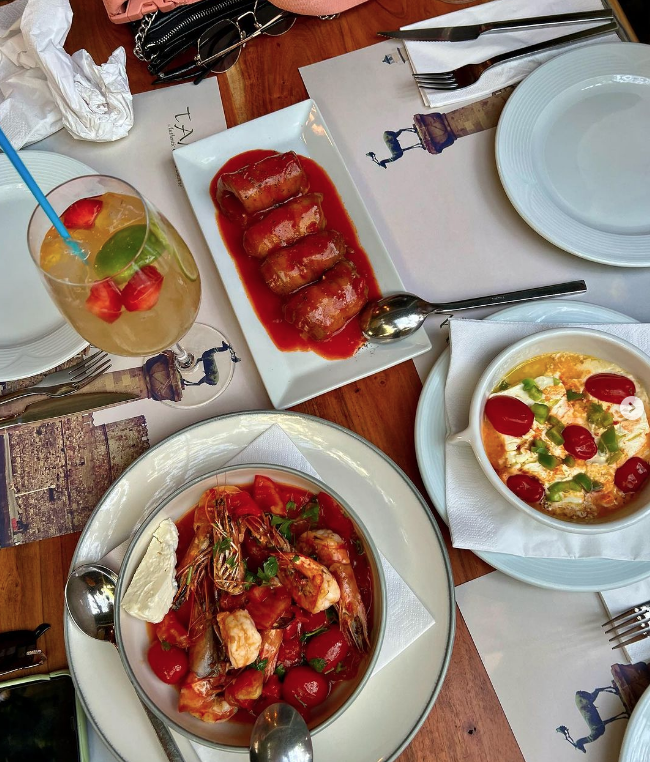
In the heart of Rhodes Town and therefore a little saturated by pretty mediocre tourist-facing gyros and souvlaki stands, the restaurant Tamam stands out with its charming ambience and a menu that pays homage to Greek cuisine, all with a gently modern twist. Housed in a restored building, the restaurant’s stone walls and vintage decor provide a warm and inviting atmosphere that ultimately lets the food do the talking.

Start your meal with a selection of meze (how else), with the spoon-tender braised octopus, grilled feta, bar marked and almost-bracing, and the creamy, piquant tzatziki, all particularly good. For the main course, the slow-cooked lamb kleftiko, tender and infused with local wild oregano and rosemary, is a revelation. 

Pair your meal with a carafe of eminently drinkable house wine. Amorgiano is the dominant local variety of red, and is pleasingly refreshing and light on tannins when served cold, as they do here. Make sure to save room for the Greek version of baklava, rich with melted butter and hefty chunks of walnut – a sweet ending to a delightful dining experience.

Please note that Tamam is temporarily closed for the off season, and when operating, opens at 3pm daily.

Website: tamamrhodes.com

Address: Leontos 1, Rodos 851 00, Greece

Read: 6 IDEAL foodie tips for your next trip to Greece


Mavrikos, Lindos

Ideal for dining under the stars with the stars…

Located in the picturesque village of Lindos, Mavrikos is a culinary institution that has been serving up traditional Greek dishes since 1933. The restaurant’s legacy is evident in its time-honoured recipes and the passion for food that is passed down through generations of the same family.

Now helmed by brothers Dimitris and Michalis Mavrikos, known locally as the ‘Knights’ of Rhodes gastronomy, the menu at Mavrikos is a testament to the island’s produce, with dishes like the grilled sea bream or the stuffed vine leaves showcasing Rhodes’ freshest ingredients. 

No where else is this better showcased than the cuttlefish ink risotto, perfumed with local sweet Moschato wine – truly superb. The almond-crusted feta is a standout appetiser, too, the nuts offering a crunchy contrast to the soft cheese within. The fact you can see almond trees growing so close to the restaurant hammers home those hyperlocal credentials.

Dining under the stars (possible with the stars, as everyone from David Gilmour to Barbara Streissland has dined here) in the restaurant’s courtyard is an enchanting experience that is quintessentially Greek.

Address: Lindos 851 07, Greece


Ronda, Niohori

Ideal for beachfront dining on seafood specials…

For those who prefer their meal with a view, Ronda is a beachfront gem that should not be missed. Situated on the sands of Tsambika Beach, this eatery offers a panoramic view of the Aegean Sea, making it the perfect spot for a romantic dinner or a leisurely lunch.

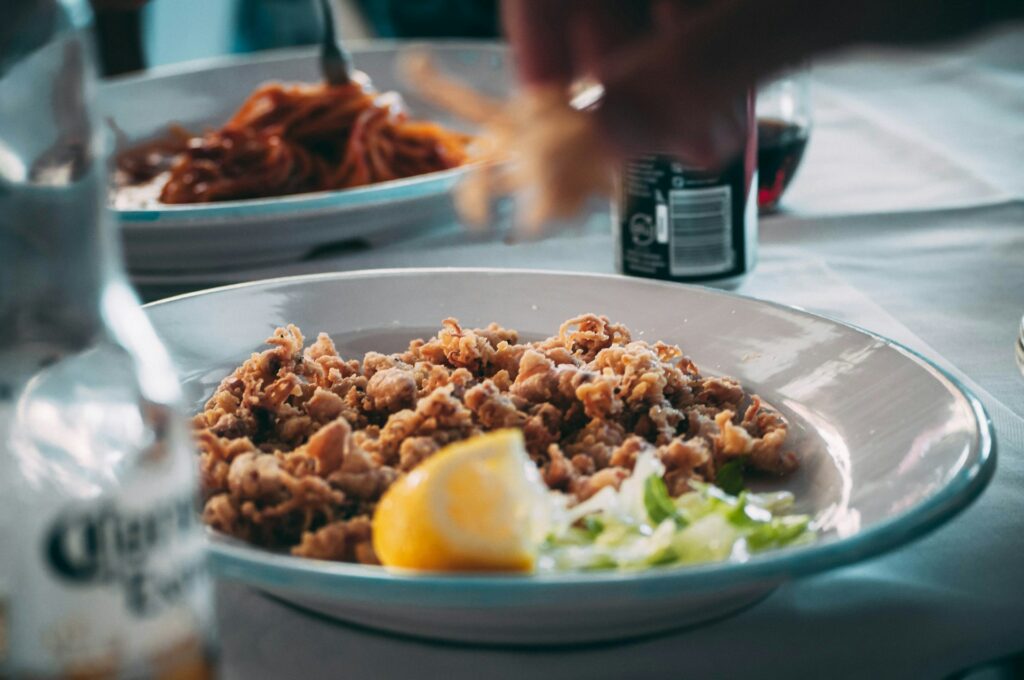
Unsurprisingly for a restaurant with such an esteemed location, the seafood here is the star of the show, with the grilled calamari and the lobster spaghetti knockout. For those on a more globetrotting tip, the maki rolls may not be as expertly assembled as in Tokyo – a little looser, the rice a touch over-vinegared – but the freshness of the seafood within is undeniable.

As the sun sets, sip on a chilled ouzo and let the cracking of claws and the sound of the waves be the soundtrack to a memorable dining experience. Or, you know, the unfortunate, pumping ‘beach chill house’ playlist coming from the restaurant…

Website: Pl. Kountourioti 6, Rodos 851 00, Greece

Address: ronda.gr


Marco Polo Café, Rhodes Town

Ideal for a menu of fusion food done well…

Nestled within the medieval walls of Rhodes Town, Marco Polo Café is a fusion of East meets West, reflecting the island’s historical position as a strategic position on the trade routes between Europe and Asia, and, therefore, a crossroads of cultures. 

Situated in a beautifully restored medieval building and boasting a lush garden setting that provides a tranquil escape from the bustling streets, Marco Polo features a fusion of Mediterranean and international flavours, ensuring there’s something to satisfy every palate (except those who think they came up with the line ‘Fusion? Confusion, more like!’, that is…).

The menu is an adventurous blend of Mediterranean and Far East Asian flavours, which, despite the restaurant’s billing, does lean much more heavily on the former than the latter, the Chinese and Japanese flourishes restrained and interesting rather than jarring.

Try the teriyaki glazed salmon loin is well-judged, the toasted sesame seed crust bringing the necessary texture to a fish that can sometimes be a little unctuous in all the wrong ways. Better still, the shrimp ravioli that you could easily call a dumpling if you wanted to continue that particular narratives, arrives plump and bouncy, its bisque-adjacent dressing anointing rather than flooding the pasta. Perfectly judged.

Part of the same building, Marco Polo Mansion is also one of the island’s conveniently positioned hotels, though it should be noted that facilities here are rather basic. Given the impeccable variety of accommodation on offer on the island, it’s hardly surprising that many families choose to rent a villa in Rhodes instead.

Website: Agiou Fanouriou 37, Rodos 851 00, Greece

Address: marcopolomansion.gr



GranCaffe, Rhodes Town

Ideal for laid-back all-day dining and local specialities…

A stone’s throw from the bustling centre of Rhodes Town, GranCaffe has been quietly going about its business since 1991, save for a brief hiatus for renovation in 2017. What emerged is a refreshingly unfussy establishment that manages to be all things to all people – café, wine bar and deli rolled into one – with a keen focus on sourcing and without compromising on quality.

The real draw here is their selection of regional specialities, with generous platters that read like a greatest hits of Greek charcuterie and cheese. Don’t miss the nouboulo (a prosciutto-style cured meat) from Corfu or the piquant arseniko cheese from Naxos. The mortadella sardinella from Drama in northeastern Greece is worth seeking out too, especially when paired with a glass from their thoughtfully curated wine list – do inquire about the rosés from the nearby Alexandris winery, which are pert and briny, and just perfect with a local cheese or too.

For something sweeter, the traditional spoon sweets from Syros that they serve at GranCaffe offer a lovely counterpoint to all that salt-aged satisfaction. Breakfast and brunch are equally well-handled, with everything from protein bowls to properly done farmhouse eggs. It’s telling that you’ll find as many locals as tourists here, particularly during the morning coffee rush – though with doors open from 8am until late at 11:30pm Monday through Saturday (closed Sundays), there’s really no wrong time to visit. Those staying nearby might appreciate their delivery service, too.

Address: Grigoriou Lampraki 43, Rodos 851 00, Greece


To Steno, Rhodes Town

Ideal for a truly traditional taverna experience…

Another ‘hidden gem’ tucked away in a narrow alley of Rhodes Town, To Steno is an ode to the authentic Greek taverna experience. This family-run joint exudes a rustic charm, with its cobblestone floor, simple wooden tables, and open-armed welcome from the matriarch/maitre d’.

The menu is a celebration of Greek comfort food – the contemporary, globetrotting flourishes of previous paragraphs left just there. To Steno’s moussaka, with its layers of olive oil laden aubergine slices, minced lamb that verges on the funky, and a béchamel sauce that’s souffled skywards due to the addition of an egg, is a hearty choice indeed. 

For something lighter, the grilled sardines are a delight, especially when paired with a crisp Greek salad and even crisper glass of local Athiri. 

All that said, the souvlaki is the signature here – it feels like every other table is ordering a skewer or five – and jolly nice it is, too. For those visiting Greece on something of a budget, To Steno is just the kind of place you should be dining at night after night.

Address: Ag. Anargiron 29, Rodos 851 33, Greece


Hatzikelis Restaurant, Rhodes Town

Ideal for some of Rhodes’s most upscale dining…

Hatzikelis Restaurant offers a more knowingly ‘upscale’ dining experience, perfect for special occasions or a romantic evening out. Specialising in Greek seafood dishes, the restaurant boasts a menu that highlights the best of what the Aegean Sea has to offer.

Here, diners can expect expertly prepared dishes that are as pleasing to the palate as they are to the eye, but that’s not to say the deceptively simple seafood dishes are too extortionately priced. You’ll eat very well here for under €100 a head. The sea urchin linguine, a signature and our go-to order at Hatzikelis, is an eminently reasonable €20, for instance.

With a family vineyard part of the offering here and over 100 wine labels in a stacked cellar, Hatzikelis is the perfect place for getting more familiar with Rhodes’ revered wine culture, too. Enjoy a glass (or several) in the restaurant’s courtyard, which boasts dramatic views of the ruins of the Church of the Virgin. And yes, we realise how cumbersome the previous sentence looked – so much ‘the’.

Website: hatzikelis.com

Address: Solomou Alchadef 9, Rodos 851 00, Greece


Auvergne Cafe Bar Restaurant, Rhodes Town

Ideal for communal, alfresco dining in the heart of Rhodes old town…

Forgive the cumbersome, all-hospitality-venues-to-all-people name, and settle into one of Rhodes’ most amiable eating experiences. The dining ‘room’ here is in fact the old town’s Great Alexander Square, the tables so close they’re pretty much communal and all the more convivial for it. The nightly live performances of traditional demotiko certainly does nothing to dampen these vibes…

…On the menu, it’s an all-day grazing kind of affair, as well suited to a morning coffee and a pastry as it is a more comprehensive feast to see out your evening. Or, you know, you could do both; this is one pretty place to while away the hours, it has to be said. 

Instagram:auvergne_cafe_rhodes

Address: Great Alexander Square, Rodos 851 00, Greece


The Bottom Line

Whether you’re seeking a romantic dinner by the sea, a family meal in a traditional taverna, or an innovative fusion of flavours, Rhodes’ restaurants offer something special. Each establishment mentioned here not only serves delicious food but also provides an atmosphere that captures the essence of Greek hospitality and that much cherished spirit of siga siga

So, when in Rhodes, indulge in the local cuisine and let your taste buds embark on a journey they won’t soon forget. Kalí óreksi! (Bon appétit!)


How To Deal With A Break-Up Or Divorce Without Losing Your Head

Everyone deals with a divorce or break-up in their own way. Whether it’s ended with animosity or things are left amicably, there’s no correct, certified way to get through the pain or celebrate a new found freedom.

Though recent news reports of a fall of 29.5% in divorce applications between 2021 and 2022 (the latest figures) rather put paid to the notion that COVID-19 would lead to a breaking-up epidemic, there were still around 80’000 divorces in 2022. And that’s before we consider all of the break-ups, conscious uncouplings, falling outs and any other term you can throw at the painful process of splitting with a partner.

Divorce is an emotional time, regardless of exactly what those emotions are, with the most protracted often the most painful, and administration related issues being hurdles to happiness, without fail.

It can be something as mundane as the divvying up of your shared fridge’s contents or as complex as the bureaucracy of the actual divorce; either way, it’s best to prevent things getting messy if you’re to get through this thing in one piece. With our sensible hat on, here’s how to deal with a divorce or break-up without losing your head.

Remind Yourself Why You’re Doing This

It’s only natural that doubt over whether you actually want to get divorced will surface, usually when the finality of things dawns on you.

However, it’s important, through all the rushes of emotion and feelings of longing, to remember what brought you to this situation in the first place. You and your spouse felt that this was the right way to go and that likely hasn’t changed in the time it’s taken to move through the divorce process.

Though couples can have a change of heart and end up staying together, this rarely works out. Ask yourself what you want to get out of the process. Maybe it’s just a clean break from that part of your life, or it’s something physical – a house, a pet – that you both owned and now need clarification over. It’s a good idea to go through this with yourself, your lawyer and, ultimately, your ex-spouse to get the best outcome for everyone.

Keep Yourself Busy

Simply put, if you’re going to get through the trials and tribulations of divorce in one piece, then it’s important to confine the past to the past.

In the modern, always-online world, this starts by making huge efforts to avoid cyberstalking your ex-partner, constantly checking up on what they’re up to and who they’re spending their newly single life with.

A better, more productive idea than flicking through endless photos of the past is to keep yourself busy on things your relationship may have otherwise prevented you from doing. Hit the gym or the library, see your close friends more or get really stuck into your career. Keeping busy and spending some time on yourself is a great way to draw a line under the past.

Keep Those Thumbs Idle

We have become known as the ‘Tinder generation’ for good reason. Take a straw poll of how couples met and the answer is now almost always the same. In fact, according to a 2022 article in The Knot, ”dating apps are the most common ways couples meet”.

Yep, having new partners at the swipe of a screen is now so commonplace and convenient, and that’s generally no bad thing. But the temptation after a break-up or divorce is to dive straight back into the endless pool of singles for some pain relief. It’s not always the best idea, believe us. Avoid the hard and fast rebound and just take your time.

Embrace A New Social Circle

That said, new platonic relationships can truly help keep your head clear and distracted. After divorce, you may feel like the odd one out amongst your happily married friends. If you were married for a long time, a lot of your friends might also be friends of your spouse, which can be an awkward proposition at social gatherings.

Making new friends who are yours and yours alone will help you move on instead of being reminded of the past. Going to a class or trying out a new hobby is a great way to meet new people, whether you want to try your hand at yoga, go on a cooking course or express yourself at an art or craft club. And even if you don’t click with anyone, you’ll have learned a new skill or discovered a new favourite pastime!

Don’t Drink & Dial

Booze may help you forget for a few hours, but a renewed melancholy with added headache will meet you in the morning if you’re prone to drunk dialling or reeling off a raging email detailing all of your complaints after a couple of wines. We’re not saying monk-like abstinence is required, but it’s a good idea to take it fairly easy on the alcohol as your adjust emotionally to your life post-divorce.

Read: Do divorces have to be messy?

Look After Your Wellbeing, First & Foremost

Going through a breakup or divorce can bring about such a shake up in your everyday structure and sense of normality that it can completely throw you off kilter, both mentally and physically, if you let it.

Suddenly you’re forgetting to eat, neglecting the gym regime and finding yourself in your pyjamas way past the closing credits of Good Morning Britain. Worse still, you’re finding yourself increasingly attracted to Richard Madeley. That is a sign, more than any, that you need to sort yourself out.

It’s vital if you’re to keep control of the spiralling situation to stick to a routine. It needn’t be the same as the one you used to follow with your former partner, but having some semblance of normality and discipline in this difficult time can be really reassuring.

Sort Out The Money Stuff

Let’s be honest – nobody likes talking about finances, but getting your monetary affairs in order is crucial when you’re splitting up. One thing many couples overlook is getting a financial consent order. Think of it as your financial full stop – it makes your money split legally binding and stops your ex from making claims against you years down the line (yes, even after the divorce is finalised).

Without one, you could find yourself sharing that lottery win or inheritance with your former spouse, even if it comes years after you’ve gone your separate ways. It might seem like an extra expense when you’re already juggling solicitor’s fees, but consider it an investment in your future peace of mind. Besides, it’s far cheaper than dealing with an unexpected financial claim from your ex when you’re finally back on your feet.

The courts won’t automatically sort this for you during the divorce process – you need to arrange it separately. So pop it on your to-do list, somewhere between ‘delete their Netflix profile’ and ‘figure out who gets to keep the fancy coffee machine’.

Do What Makes You Feel Happy

Ok, sensible hat off now, the best approach to dealing with a divorce without losing your head is to do whatever makes you feel happy. A break-up can be a traumatic, lonely time. So, within reason, do whatever you need to raise your spirits. Get out there. Eat well, drink well, go on a shopping splurge, have a fling, don’t. It’s up to you!

*This article offers general guidance and tips based on common experiences. Everyone’s situation is unique, and divorce or separation can involve complex legal and financial matters. For specific advice about your circumstances, particularly regarding financial settlements and legal proceedings, please consult a qualified legal professional or financial advisor. This article is not intended to replace professional legal counsel.*

10 Sometimes Simple, Sometimes Innovative Storage Ideas For Your Home Office

Trust us when we say; we know what it’s like…

What it’s like to be using your ironing board as a makeshift desk. What it’s like to have your laptop precariously balanced on a stack of cushions in lieu of a proper stand. What it’s like to be confusing vital documents with your kid’s latest ‘drawing’, losing your phone and your mind under piles of papers, and struggling to get things done because of a complete lack of organisation in your home office.

Yep, we know what it’s like…

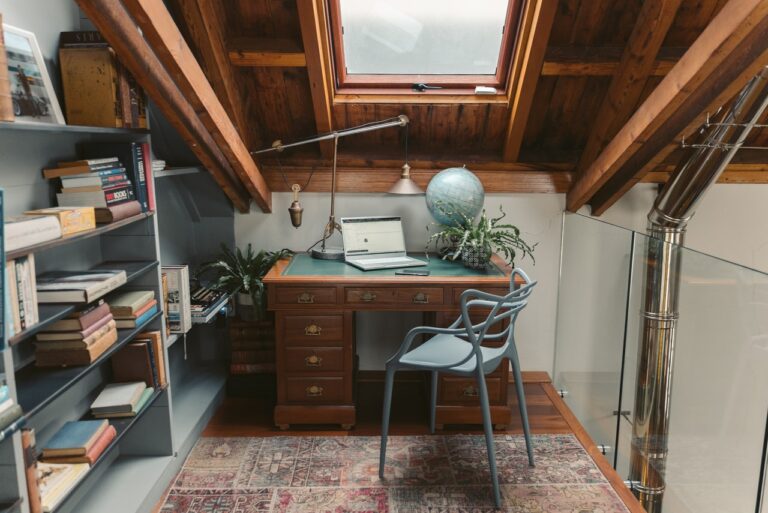
‘’Tidy desk, tidy mind’’, as they say, and this curious mantra is only amplified when working from home. It’s safe to say that finding true workplace contentment and, in turn, delivering great results, isn’t always easy from a hastily arranged home office, particularly when your organisation and storage is found wanting. 

But we’re here to help clear things up, both physically and metaphorically; here are 10 sometimes simple, sometimes innovative storage ideas for your home office.

Slim Shelving Units

If you don’t have much space to work with (and we know you don’t; that’s why you’re here), then slim shelving is a great choice to organise lightweight items, such as boxes, small pieces of tech, smaller files and other items. 

These shelving units offer a smart and cost-effective solution to help you store a high quantity of items without wasting valuable space. This allows you to maximise your storage space and maintain an organised and effective working environment. 

Under Desk Storage

Under desk storage can be helpful in gaining extra space for general storage and filing. In general, most people tend to choose an under desk pedestal, as it can fit under most office desks.

These units are often referred to as ‘mobile storage’ and often feature two or three drawer options. This allows employees to store a variety of items and office accessories.

Alternatively, if you’re the kind of desk dweller who likes to kick back and keep their feet elevated while working, you could invest in a footstool with storage space within it; talk about killing – or kicking! – two birds with one stone – or, erm, one stool. 

Talk about kicking two birds with one stool. Nah, that doesn’t work. Let’s move on…

Other ‘Dead’ Space Storage Ideas

Come out from under your desk and think outside the box here. Or, rather, think outside the office. Because there is plenty of organisational acumen to be flexed away from your actual home office space.

Indeed, even in the tightest, most compact of rooms you should be able to eke out ample storage space within. There are nooks, crannies, shelves and spaces lurking in every home; you just have to know where to look. 

Beds with built-in storage are particularly useful here for office-related items you don’t need immediate access to, as are Ottoman storage chests at the end of the bed; both provide an answer to those pesky storage conundrums posed by a small home office. 

And for those bulkier items you only need seasonally – like trade show displays or reference materials – a small self storage unit can be a cost-effective way to keep your home office clutter-free while maintaining access to everything you need.

Tambour Cupboards

Tambour storage options are the perfect home office product to combine space-saving and style. Instead of opening large doors outwards and into a room with limited space, a side-sliding tambour door may be a better choice. These guys require little space directly in front of them, which can be a real space-saver. 

Moreover, they have the added benefit of security, as it is possible to lock them fully at the end of the day. This means that you can keep all of your important files and documents neat, tidy, and secure, away from the pesky hands of young family members and pets! With a large capacity and a sturdy platform, their contemporary design will look stylish and sleek in your home office.

Desk Organiser

Hey, let’s go back to basics for a minute and satisfy that word ‘simple’ from the title. A desk organiser will help you keep important supplies within reach and organised. The top tray can usually be moved around, which will allow them to stack their items and save space. 

At the bottom, there may also be a pull-out drawer where you can store post-its, glue, tape, and even a calculator (dream big my friend!). As there is plenty of space available, this storage unit can be customised to separate and organise stationery based on usage. 

Desk Monitor Stand Riser

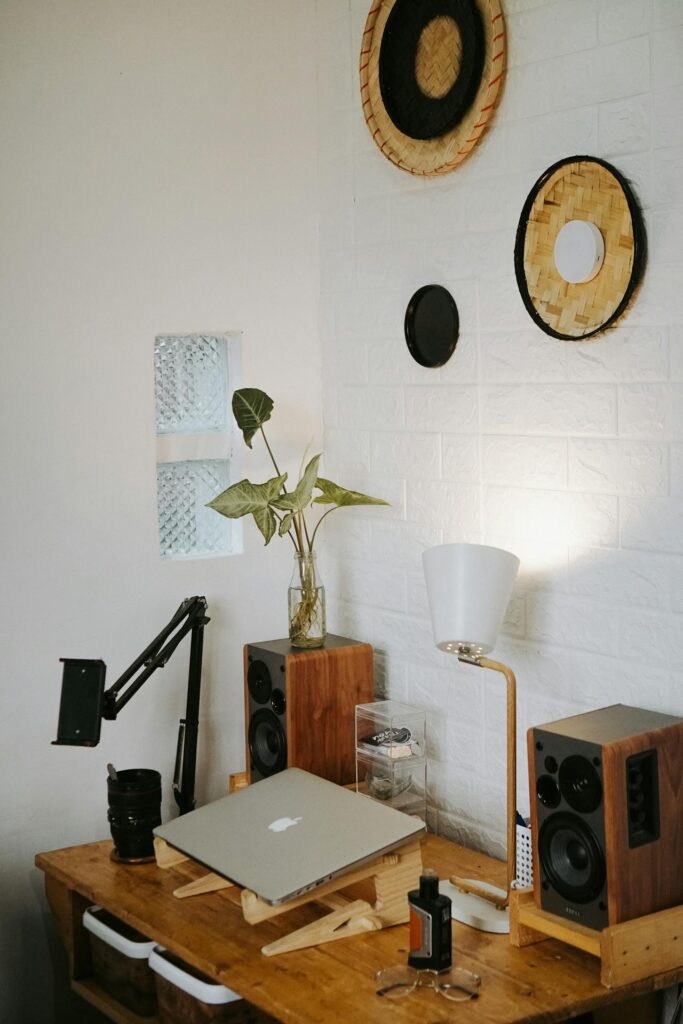
This is another great storage solution suitable for any computer, laptop, monitor, or notebook. Typically, a desk monitor stand riser consists of two departments, which can be used to keep a phone, iPad, pens and other office essentials. 

Moreover, the nook on top is removable, which makes it simple to clean and arrange items faster. Alongside this, it will raise the monitor to just the right height, which will ensure there is no additional strain on the body and help prevent subsequent issues caused by bad posture.

Wall Mounted Storage

A great way to maximise your office space is to incorporate an over-the-door hanging organiser. It is an attractive and elegant storage solution, which offers many benefits. This option can save you plenty of floor space, as you can store pens, highlighters and post-its instantly. 

Most hanging wall organisers also feature durable pockets, which makes it easy to manage your office organisation in the long run. Wall organisers are made with high quality metal materials and they offer strong metal construction. Moreover, you can easily label the different pockets and classify your papers clearly. 

Printer Stand

Finally, whilst many home office workers may baulk at the idea of integrating a printer into a tight domestic space, others will have had to make adjustments for this most essential of items.

A useful solution to accommodate your printer and its various accessories, including printing paper, highlighters, ink, and staplers, is a printer stand with storage. It is easy to place it on top of any desk, shelf, or cabinet, acting as an extension to the storage in your office, making printing and scanning even faster. 

Tech Hub Station

In 2025’s hybrid work environment, managing multiple devices and their connections is crucial. A dedicated hub station combines charging, connectivity, and tech organisation in one sleek solution. Look for a hub that includes wireless charging pads for your phone and earbuds, USB-C ports for laptops and tablets, and cable management features to keep everything tidy.

Many modern tech hubs also include built-in Bluetooth device management and even small display screens showing connection status and battery levels of your various devices. Some units come with additional storage compartments for dongles, adapters, and spare cables, making them a perfect all-in-one solution for the tech-heavy home office. Position your tech hub where you can easily access it – either on your desk surface or mounted to the wall – to keep all your devices charged and ready for your next video call or collaborative session.

Or, Relocate Outside

Or, instead of making room in your home by decluttering and putting your belongings into self-storage, why not make some extra room by creating a ‘shofice’? Of course, you’ll need a garden for this one, but it might be a smart investment to relocate your home office to the garden shed. Remember any furniture or equipment installed into the building, such as desks and shelving units, can be claimed back on tax relief. Food for thought, indeed.

The Ideal Radiator Style Guide For 2025

Isn’t it funny how the items in our home that tend to do the most work keeping us safe, warm and comfortable are also those that we tend to place the least aesthetic emphasis on?

Okay, not exactly haha funny, but you catch our drift; whether it’s the locks on our door, the frames on our windows or the radiators on our walls, straightforward function and striking form don’t always correlate seamlessly in the domestic setting.

Today, we’re considering the latter of those three examples; radiators.

We think it’s fair to say that homeowners often look at radiators as a domestic essential with no aesthetic purpose. But let’s be honest here; you have radiators in every room, so it’s important that they look attractive and in keeping with the overall flow of the rest of your home’s design.

Indeed, it’s possible for a radiator to be versatile and decorative, and command attention in a room for all the right reasons, rather than the fact it’s making that troubling gurgling sound again.

Though reasons for seeking a stylistic change may differ, the current top trends in the world of radiators remain surprisingly resolute. With that in mind, here’s our IDEAL radiator style guide for 2025.

Flat Panel Vertical Radiator

Vertical flat panel radiators are a step up aesthetically from your usual white convector radiators. The manufacturing process of this radiator leaves it with an extra modern and smooth finish, the perfect modern spruce up for any home. 

Flat panel vertical radiators usually consist of a large thin container which fills with hot water, while a double-panel is two of these containers back to back. These have a real, ultra-modern edge, and look great if your home has a more minimalist design.

Photo by Jilbert Ebrahimi on Unsplash

Oval Panel Horizontal Radiator

These radiators are unique in style with oval panelling on the front and back. They are the perfect go-to choice for rooms that don’t lack in space; due to the oval design they stand-out more than other radiators and do require a few extra square metres of room-based real estate to really pop. These radiators can be used on all UK heating systems, whether they’re tank fed or sealed systems. 

Read: How you can double your boiler’s lifespan

Column Radiator

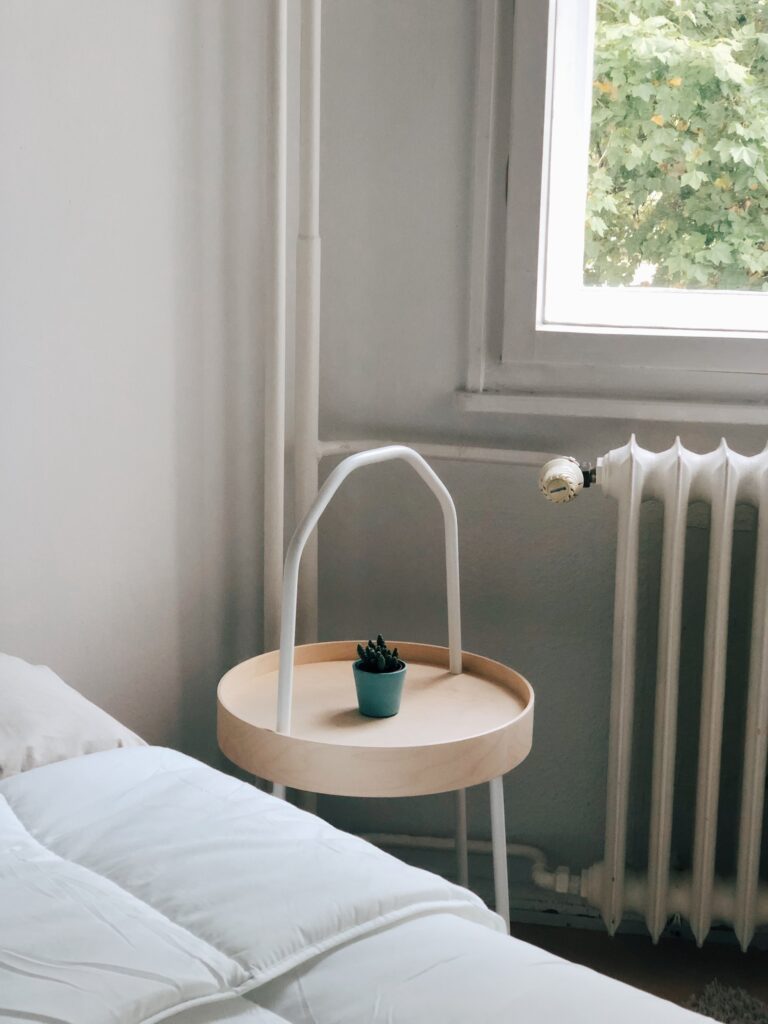
Next, column radiators are the most traditional looking, with long tubes connecting at the top and bottom. 

These will suit a more traditionally styled – even, whisper it, old fashioned – home, providing the perfect visual fit for those who don’t like to push the envelope aesthetically. Anyway, with the aid of radiator covers, the seamless integration into the chosen theme of your space is simple.

Column radiators are ideal for larger spaces with high ceilings as they produce a lot more heat than some of the other radiator options, due to their large surface area.

Read: How to improve the heating efficiency of your home

Towel Radiators

Never underestimate the luxury of a towel radiator, suitable for not only heating a room but also keeping your towels warm and fluffy. 

For more on these indulgent though surprisingly efficient additions to the bathroom, do check out our guide on 5 things to consider when buying heated towel rails. You can thank us the next time you’re slipping into the most snuggly of towels! 

Aluminium Radiators

Aluminium radiators are gaining traction in 2025 for good reason; they’re incredibly efficient heat conductors and significantly lighter than their steel counterparts. These radiators heat up quickly and cool down fast, making them perfect for rooms that require responsive temperature control. Though they might cost a little more upfront, their excellent heat output and energy efficiency often make them a smart long-term investment.

Moreover, aluminium radiators can be manufactured in sleek, contemporary designs that work particularly well in modern spaces. Their versatility in terms of finish options – from brushed metal to powder-coated colours – means they can either stand out as a design feature or blend seamlessly into your existing décor.

Designer Cast Iron Radiators

For those seeking a statement piece that combines historical charm with modern functionality, designer cast iron radiators are experiencing something of a renaissance. These heavyweight heroes of heating offer unparalleled heat retention, continuing to warm your space long after your heating system has switched off.

While traditional cast iron radiators often feature ornate Victorian-style designs, contemporary versions now come in stripped-back, architectural styles that wouldn’t look out of place in a modern art gallery. Their robust construction means they’re built to last, and many homeowners find that they actually appreciate in value over time – making them as much an investment piece as they are a practical heating solution.

The Bottom Line

When choosing a radiator in 2025, it’s no longer a case of simply picking the most practical option. Today’s market offers an exciting array of choices that combine efficient heating with striking aesthetics, meaning your radiators can enhance your interior design, whether it’s in the bathroom, bedroom, basement or loft, rather than detract from it. Whether you opt for sleek aluminium, traditional column, or contemporary vertical panels, there’s a radiator style out there that will complement your space while keeping you cosy through the cooler months.

5 Luxury French Canal Cruise Ideas For 2025

When someone mentions they’re off to France, you might be forgiven for expecting selfies at the foot of the Eiffel Tower or snaps of sun-kissed skin in Saint Tropez. But for many Francophiles tired of crowds, cameras and cliché, the real France is defined by its waterways and the land it serves. Here, the pace of life is slow, the produce premium and the vistas both panoramic and peaceful.

France boasts over 8’000 km of navigable canals and rivers, enabling travellers to enjoy the experience of being on the move whilst simultaneously kicking back. Negotiating the country at this refined, regal pace will help travellers see France at its best, and if you’re looking for 5 luxury French canal cruise ideas for 2025, then here they are.

Fine Wine Tasting On The Canal De Bourgogne

To traverse the canals of rural France, breathing in the scents of your surroundings and tasting the terroir first hand, has to be one of life’s greatest pleasures. And when the local wine is widely considered the world’s finest? You can’t get much more luxury than that…

The Canal de Bourgogne cuts a swathe through the Burgundy region of east-central France, a part of the world defined by the quality of its plonk. Beginning in Migennes and ending in Saint-Jean-de-Losne, there are several revered vineyards both at the start and close to the canal route’s conclusion that simply have to be seen (and tasted!) to be believed. 

Towards the beginning of the Canal de Bourgogne, in the heart of Yonne, you’ll pass close to both the Chablis and Tonnerre vineyards, which cover over 4500 hectares and offer plenty of opportunities for touring and tasting.

Just a half hour’s drive from the final docking destination of Saint-Jean-de-Losne is Burgundy’s wine capital Beaune. Here, you’ll find Château de Pommard, a winery with three centuries’ worth of expertise and a strong passion for low intervention, biodynamic wine. We just love it.

Of course, you could also take a few bottles back to your luxury boat, put your feet up, and enjoy the ever changing views from on deck.

While the wines steal the spotlight, the Canal de Bourgogne offers another sublime luxury: its legendary locks. The canal boasts 189 locks along its route, each one a masterpiece of engineering and an opportunity to pause and soak in the surrounding beauty. Many luxury cruises arrange for local chefs to board at these stops, preparing traditional Burgundian dishes like boeuf bourguignon or coq au vin right on deck, paired perfectly with your newly acquired wines.

Enjoy The Height Of French Gastronomy On The Canal De Garonne

The Canal de Garonne, opened in 1856, connects two of France’s truly great gastronomic cities, Toulouse and Bordeaux (the canal actually ends in Castets-en-Dorthe, but you can follow the Garonne River the rest of the way to Bordeaux).  

The culinary credentials of the canal and river route aren’t solely defined by those two cities, however; along the stretch of water there are several superb stop-offs to sample the incredible produce and restaurants of the region. On offer are Garonne eels and river pike, prunes from the ‘Capital of Prunes’ Agen, melons and cherries from the nearby Quercy hills and, of course, the famous Toulouse sausage at the final port of call.

In Toulouse, it would be rude not to disembark and dine out. The city boasts 11 Michelin starred restaurants (we did say this was a luxury French canal cruise, after all), but if you’re looking for an ultra modern, refined take on the food of the city and region, then we just love chef Pierre Clément’s cooking at Py-r in Toulouse’s old town. Do check it out.

Between meals, the canal presents a feast for the eyes as well as the palate. The route passes through medieval bastide towns, their distinctive grid-pattern streets and central squares telling stories of France’s rich history. Many luxury cruises now include guided tours of local markets, where you can learn the art of selecting the finest produce and perhaps even join the chef in preparing the evening’s meal using your carefully chosen ingredients.

Luxuriate In Literature, History & Art On The Canal D’Arles À Fos

‘Luxury’ isn’t all about opulence and out-of-hand spending. On the Canal d’Arles à Fos in Southern France, connecting the Rhône near Arles with Fos-sur-Mer, the term has a very different context; it’s all about an appreciation of fine art, literature and history.

In fact, to cross a portion of the 31km canal, visitors must walk over the Langlois Drawbridge, which was painted by Vincent van Gogh in 1888.

This makes the city of Arles a must-visit when docking along the route; Van Gogh went through a period of artistic freedom when he lived on the banks of Rhone River in the town. Here, he painted some of his most celebrated works, including Bedroom in Arles. You can visit the Foundation Vincent Van Gogh Arles, a museum dedicated to his life and paintings.

But that’s not all there is to enjoy for culture lovers; the old town of Arles has, in fact, been designated a UNESCO World Heritage Site because of its ancient Roman sites and ruins, including Arles Amphitheatre, the Roman Theatre of Arles, the Roman Forum and the Alyscamps. Incredibly, some of these monuments date back to the 1st century B.C.

You can also find underground crypts and the Thermes de Constantine, the ruins of ancient baths with a fantastic view of the Rhone, in the city. Wow!

Beyond the well-documented historical sites, the canal route offers glimpses into the everyday Provence that inspired countless artists. Local guides can point out exact locations where Van Gogh set up his easel, and some luxury cruises even arrange for local artists to board and lead watercolour workshops, helping you capture the golden light that has drawn creators to this region for centuries.

Straddle Borders On A Rhine River Cruise In Strasbourg

We couldn’t leave without traversing Europe’s longest river, the Rhine, one last time. Whilst most river cruises of the Rhine take you from Amsterdam to Basel (or vice versa) and through six countries along its waters, we’re staying in France for this one, and heading to Strasbourg.

It’s a remarkable town, straddling the French and German border and blending the two’s architectural styles to visually striking and instantly identifiable ends.

A visit here is to gain an insight into historical relations between the two countries; a relationship that has defined Europe, some might say. In fact, the city changed nationality four times between 1870 and 1945, and is symbolic of postwar European unity and the forging of intracontinental alliances. If modern history is your idea of luxury, this could be the place for you.

Organising your Rhine River cruise through Strasbourg requires careful consideration of the seasons. Whilst summer brings warm evenings perfect for dining on deck, winter transforms the city into a festive wonderland, home to one of Europe’s oldest Christmas markets. The city’s unique position makes it an ideal base for day trips into both the French region of Alsace and Germany’s Black Forest, with luxury cruises often incorporating excursions to both sides of this fascinating cultural divide.

Explore The Venice Of Province, L’Isle-Sur-La-Sorgue

We couldn’t write a guide to the great luxury canal cruises of France without mentioning a place so beautiful that it’s garnered the nickname ‘’the Venice of Provence’’. This place is L’isle-Sur-la-Sorgue, a tangle of canals and branches of the Sorgue River that boast some of the most relaxed, regal waterways in all of the country.

But that’s not all the town itself is famous for; it’s also one of the antique capitals of the world. If you love to shop, then you’ll love L’isle-Sur-la-Sorgue’s weekly antiques market and twice yearly International Antiques Fair. The next one takes place in April, which is also one of the most beautiful (and least crowded) times of year in Provence. This thing writes itself!

The town’s ancient water wheels, dating back to the 12th century, still turn lazily in the current, providing a hypnotic backdrop to your explorations. Whilst the antique markets draw the crowds, savvy visitors know to venture down the quieter canals, where local artisans still practise traditional Provençal crafts in workshops that have remained largely unchanged for generations. Many luxury cruises arrange private viewings of these workshops, offering an intimate glimpse into the region’s living heritage.

From the contained to the expansive, from the regal to the rushed; next up check out these 5 multi-country adventures that you can do in a single week! What a trip that sounds…

Grow It, Brew It, Drink It: 7 Herbal Teas & Their Health Benefits

The herb garden has always been part pharmacy, part kitchen. Long before supermarket tea aisles and supplement shelves, people grew what they needed and brewed it themselves. That tradition hasn’t disappeared – it’s just been forgotten by most of us.

Growing herbs for tea isn’t complicated, and the results are genuinely useful. A few pots on a windowsill or a small patch of garden can supply you with year-round remedies for everything from sleeplessness to stomach trouble. Here’s what to grow, how to brew it, and what it’s actually good for.

Lemon Balm

This vigorous member of the mint family has been cultivated as a medicinal herb since at least the Middle Ages, when it was grown in monastery gardens across Europe. Lemon balm leaves release a bright, citrusy scent when crushed – hence the name.

Growing: Lemon balm thrives in partial shade and moist, well-drained soil. It spreads enthusiastically, so give it a dedicated pot or be prepared for it to colonise your borders. Harvest leaves in the morning for the strongest scent, and cut regularly to prevent early flowering.

Brewing: Steep a small handful of fresh leaves (or a tablespoon of dried) in just-boiled water for five to ten minutes. The flavour is mild and citrusy – pleasant enough to drink without sweetening.

What it’s good for: Lemon balm has been used for centuries to ease tension and encourage sleep, and modern research suggests there’s something to it – it may help with both anxiety and low mood. One trial on patients recovering from heart surgery found improvements in sleep quality after just one week.

Do be aware that it can interact with thyroid medications and sedatives. Indeed, lemon balm side effects are rare, but they’re certainly worth knowing about.

Chamomile

The ancient Egyptians dedicated chamomile to their sun god and used it to treat fevers. The name comes from the Greek for ‘earth apple’ – a nod to its gentle, fruit-like fragrance. It remains one of the most popular herbal teas in the world, and one of the best studied.

Growing: German chamomile is an annual that loves full sun and light, sandy soil – ideal for windowsills and raised beds. Pick the flower heads when fully open and dry them gently, spread on a tray somewhere warm and airy rather than using heat, which destroys the calming compounds.

Brewing: Use two teaspoons of dried flowers per cup, steeped for five minutes. The tea has a gentle, apple-like sweetness.

What it’s good for: Chamomile’s reputation as a calming tea may be well earned. Studies suggest it can help with generalised anxiety, with benefits potentially lasting months rather than wearing off quickly. The flowers contain apigenin, a compound that binds to the same brain receptors as some anti-anxiety medications – which might explain why a cup before bed seems to work for so many people. If you’re allergic to ragweed or daisies, approach with caution.

Peppermint

A natural hybrid of watermint and spearmint, peppermint has been used medicinally for thousands of years. The ancient Greeks and Romans crowned themselves with it at feasts, believing it would prevent intoxication. It didn’t, but they were onto something about its digestive benefits.

Growing: Peppermint grows aggressively and will take over any bed you plant it in, so a large pot is the safest approach. It prefers bright light and consistent moisture. Harvest continuously throughout the growing season to encourage bushy growth.

Brewing: A generous handful of fresh leaves or a tablespoon of dried, steeped for five to seven minutes. The flavour is strong and cooling.

What it’s good for: If you’re only going to grow one herb for digestive issues, peppermint is a good bet. Research suggests it may help with IBS, bloating, and general stomach discomfort – the menthol relaxes the muscles in your gut. It’s also sometimes used for tension headaches, though applying diluted oil to your temples seems to work better than drinking the tea for that. One caveat: if you suffer from acid reflux, peppermint can make it worse.

Lavender

Lavender’s name derives from the Latin ‘lavare’ – to wash – reflecting its long history in bathing rituals. The Romans scented their baths with it; Victorian ladies used it to ward off fainting spells. Today it’s one of the most widely used aromatherapy oils, but the dried flowers also make a surprisingly drinkable tea.

Growing: Lavender demands excellent drainage and full sun. It hates wet feet and heavy clay, so raised beds or pots with gritty compost work best. In colder climates, containers you can move under cover in winter are wise. Harvest flower stems just before they fully open for the most potent aroma.

Brewing: Use one to two teaspoons of dried flowers per cup, steeped for five minutes. The flavour is floral and slightly perfumed – divisive, but those who like it tend to love it.

What it’s good for: Lavender isn’t just for pillow sprays. Taken orally, some studies suggest it may be as effective as certain prescription anxiety medications – without the sedation or addiction risk. A lavender oil preparation is actually licensed as an anxiety treatment in several European countries. The tea is milder, but may still help with winding down. Keep intake moderate if you’re pregnant or giving it to children.

Read: The hidden stressors in your home (& how to fix them)

Lemon Verbena

Native to South America, lemon verbena was brought to Europe by Spanish explorers in the 17th century and quickly became a favourite for perfumes and tisanes. The French call it ‘verveine’ and drink it after dinner the way the British drink builder’s tea – constantly and without ceremony.

Growing: This tender perennial needs warmth, full sun, and protection from frost. In the UK, it’s best grown in containers that can overwinter indoors or in a sheltered spot. It responds well to regular trimming, which keeps it bushy and productive. Leaves can be harvested throughout the growing season and dried for winter use.

Brewing: Use a small handful of fresh leaves or two teaspoons dried, steeped for five to ten minutes. The flavour is intensely lemony – brighter and sharper than lemon balm.

What it’s good for: Less studied than some of the herbs here, but early research is promising – it may help with anxiety and sleep, and could aid muscle recovery after exercise. It’s gentle enough to drink daily and combines beautifully with chamomile for an evening blend.

Rosemary

The herb of remembrance has a history stretching back to ancient Greece, where students wore rosemary garlands while studying for exams. Shakespeare referenced its connection to memory in Hamlet – “There’s rosemary, that’s for remembrance” – and it turns out the old associations weren’t just folklore.

Growing: Rosemary is a Mediterranean native that thrives on neglect. It wants full sun, sharp drainage, and not much else – overwatering and rich soil will kill it faster than drought. Established plants are surprisingly hardy, though severe winters can damage them. Harvest sprigs year-round; the flavour is strongest just before flowering.

Brewing: Use a small sprig of fresh rosemary or a teaspoon of dried leaves, steeped for five to ten minutes. The flavour is resinous and piney – an acquired taste on its own, but it blends well with lemon or honey.

What it’s good for: Rosemary does seem to have some effect on memory and focus – though interestingly, more isn’t better; low doses appear to work while high doses may have the opposite effect. It’s also been linked to reduced anxiety and improved sleep with regular use. Worth trying as a morning cup when you need to concentrate, or blended with other herbs in the evening. Pregnant women and those with high blood pressure should use it sparingly.

Fennel

Fennel has been cultivated for so long that its wild origins are unclear – it may have come from the Mediterranean, or possibly Asia. The ancient Greeks called it ‘marathon’, after the famous battlefield, which was named for the fennel that grew there. They believed it conveyed courage and longevity.

Growing: Fennel is a hardy perennial that grows tall – up to two metres in good conditions. It prefers full sun and well-drained soil, and will self-seed prolifically if you let it flower. For tea, you want the seeds: allow some plants to flower and harvest when the seed heads turn brown.

Brewing: Lightly crush a teaspoon of seeds to release the oils, then steep in boiling water for ten minutes. The flavour is sweet and anise-like.

What it’s good for: Fennel is the after-dinner tea – it’s been used for digestive complaints for thousands of years, and research suggests it may help with bloating, gas, and gut discomfort. If you’ve overdone it at dinner, this is the one to reach for. It’s also traditionally used to support breastfeeding, though evidence there is limited. Because it contains oestrogen-like compounds, those with hormone-sensitive conditions should be cautious.

The Bottom Line

Growing herbs for tea connects you to a tradition that predates modern medicine by millennia. These plants won’t replace proper medical care for serious conditions, but they may offer support for everyday complaints: stress, poor sleep, digestive discomfort, mental fog.

Start with what appeals to you. A pot of peppermint on the kitchen windowsill. A few chamomile plants in a sunny corner. The investment is minimal, the maintenance straightforward, and the reward is a supply of potential remedies you grew yourself.

7 Travel Insurance Mistakes That Could Cost You Thousands

In an era where travel plans can change in an instant, travel insurance has become less of a luxury and more of a necessity. Yet many travellers continue to make costly mistakes when purchasing and using their coverage. Here are 7 critical errors that could leave you facing substantial out-of-pocket expenses.

Mistake #1: Waiting Too Long To Purchase Coverage 

The perfect time to buy travel insurance isn’t the day before your departure – it’s within 14-21 days of making your first trip payment. Why? Many valuable benefits, including pre-existing condition waivers and cancel-for-any-reason coverage, are only available during this early booking window. Wait too long, and you’ll miss out on these crucial protections.

Mistake #2: Choosing Coverage Based Solely On Price 

While it’s tempting to opt for the cheapest policy, budget coverage often comes with significant limitations. Look beyond the premium to understand what you’re really getting. A policy that costs a few dollars more per day might offer substantially better protection for trip cancellation, medical emergencies, or lost baggage. Remember: the true cost of insurance isn’t what you pay for the policy – it’s what you might have to pay without adequate coverage.

Mistake #3: Overlooking Medical Evacuation Coverage 

Many travellers don’t realise their standard travel insurance may not cover medical evacuation or the international repatriation of remains – expenses that can exceed $100,000 in remote locations. This coverage becomes particularly crucial when visiting destinations with limited medical facilities or engaging in adventure activities. Don’t assume your regular health insurance will cover you abroad; most domestic policies offer limited or no international coverage. 

Mistake #4: Ignoring Activity Exclusions 

Planning to go skiing in Switzerland or scuba diving in Thailand? Your standard policy might not cover these activities. Many insurance policies exclude what they consider “high-risk” activities, and their definition of high-risk might surprise you. Some policies even classify snorkeling or hiking above certain altitudes as adventure sports requiring additional coverage. Review your planned activities and ensure your policy covers them explicitly.

Mistake #5: Misunderstanding Pre-Existing Condition Coverage 

That minor heart condition you’ve been managing? It could void your entire claim if not properly declared. Many travellers assume pre-existing conditions are automatically covered or, worse, deliberately omit them to save money. Most policies offer pre-existing condition waivers, but you must meet specific requirements to qualify, including purchasing the policy within a set timeframe of your first trip payment and insuring the full cost of your trip.

Mistake #6: Relying Solely on Credit Card Travel Protection 

While credit card travel insurance can provide valuable coverage, it typically offers less comprehensive protection than standalone policies. Credit card coverage often has lower benefit limits and may only apply to expenses charged to that specific card. Additionally, these policies rarely cover medical emergencies abroad – a crucial gap in protection that could prove catastrophic.

Mistake #7: Poor Documentation 

Even the best insurance policy won’t help if you can’t prove your claim. Many travellers fail to keep essential documentation: medical records, police reports, receipts, and correspondence with travel providers. Start documenting the moment something goes wrong. Take photos, get written statements, and keep all receipts – even for small expenses. Insurance companies require evidence to process claims, and the burden of proof lies with you.

Beyond The Basics: Additional Considerations

While avoiding the major pitfalls of travel insurance is crucial, seasoned travellers know that true peace of mind comes from understanding the finer details of their coverage. Even if you’ve mastered the basics, there are several nuanced aspects of travel insurance that deserve your attention. 

Coverage Gaps You Might Not Expect 

While most travellers focus on major emergencies, smaller incidents can also disrupt your trip. Standard policies often have surprising gaps in coverage for events like missed connections due to traffic, weather-related delays that don’t meet minimum time requirements, or problems with rental car insurance. For example, many policies won’t cover rental car damage unless you decline the rental company’s coverage – a detail buried in the fine print that catches many travellers off guard.

The Impact Of Current Events 

Global situations can affect your coverage in ways you might not anticipate. Some policies now include specific provisions for pandemic-related cancellations, civil unrest, or natural disasters. However, these events must typically be unforeseen at the time of purchase. If you’re traveling to a region with known risks, standard coverage might not be sufficient.

Understanding Coverage Timing 

The timing of when incidents occur can affect your coverage. Many travellers don’t realise that coverage typically begins at midnight on the day after purchase. Additionally, most policies have specific requirements about when losses must be reported – sometimes as quickly as 24 hours after an incident. Missing these deadlines can invalidate otherwise valid claims.

Working With Travel Insurance Providers 

Building a good relationship with your insurance provider can make a significant difference in how smoothly claims are processed. Keep these tips in mind:

  • Store your policy number and emergency contact information in multiple places, including offline
  • Download your insurance company’s app if available – many offer direct claim filing and real-time assistance
  • Consider working with a travel insurance broker who can compare multiple policies and explain subtle differences
  • Keep a digital copy of your policy documents in your email or cloud storage
  • Set calendar reminders for key deadlines, like the last day to add cancel-for-any-reason coverage

The Bottom Line

In the end, travel insurance is only as good as your ability to use it when needed. The savvy traveller knows that successful claims begin long before an incident occurs. Before your next trip, create a simple ‘travel documentation kit’ with your policy information, emergency contacts, and a basic system for organising receipts and records. 

Consider including a small notebook for documenting incidents and a basic translation app for medical terms in your destination’s language. While we all hope never to use our travel insurance, being prepared can make the difference between a minor setback and a major financial burden.

Remember, the goal isn’t just to have insurance – it’s to have coverage that truly protects you when you’re far from home. Take the time to understand your policy, prepare your documentation, and stay informed about your coverage. That way, you can focus on what really matters: enjoying your journey with peace of mind.

Want A Pay Rise? Here’s What Not To Say To Your Boss

Let’s be honest – asking for more raise is awkward. But with living costs through the roof, more of us than ever are having to bite the bullet, pluck up the courage, and rap-tap-tap on our boss’s door, ready to pop the question.

Yep, we’re all feeling the squeeze, and more of us are making plans and devising strategies to ask the boss for more cash. But hold up before you march into that office all guns blazing. Because apparently, we’re all doing it wrong.

“Most people mess this up before they even start,” says Rob Phelps, a career expert at Social Media Jobs, who’s seen it all, from requests bumbled and bags fumbled all the way to more positive outcomes to the question, “can you pay me what I’m worth, please?”.

But with companies aiming to keep a tight grip on their purse strings while still posting decent profits, getting this conversation right matters more than ever.

The Words That’ll Sink Your Chances

First up, let’s talk about what not to do. You know that urge to tell your boss about your sky-high energy bills or the fact that your rent’s just gone up? Fight it. Seriously. Your boss may be dealing with the same inflationary headaches you are – and you risk losing the argument in their eyes from the off with this approach.

“Telling your boss you need more money because of rising living costs might seem logical, but it actually undermines your professional leverage,” Phelps explains. “Instead, frame your request around your value to the company, backed by concrete achievements and data.”

DON’T SAY: “I need more money because my living expenses have gone up.”

TRY INSTEAD: “I’ve taken on X responsibilities over the past year, and achieved X results, which have contributed X value to the company, so I’d like to discuss a pay adjustment.”

Read: 5 ideal tips for getting a pay rise

Being Too Casual

Another common mistake is the casual approach – the impromptu “Can I have a pay rise?” conversation, perhaps three pints deep and punctuated by a knowing giggle. This seemingly innocent query can signal a lack of preparation and professional judgment. Instead, experts recommend scheduling a dedicated meeting and arriving armed with evidence of your contributions.

DON’T SAY: “Can I have a pay rise?” (while catching them by the coffee machine)

TRY INSTEAD: “I’d like to schedule a meeting to discuss my salary. I’ve put together some information about my contributions and achievements, and how they’ve impacted the business.”

It’s also wise to avoid phrases like “I think” or “I feel”. These weaken your argument, as you should have a solid enough case to know you deserve a pay increase, not just think.

The Office Politics Trap

Here’s another classic blunder: “But Sarah in accounting gets paid more than me!”

Even if you’re right (and even if Sarah told you herself), bringing up your colleagues’ salaries is never a good move. “Office relationships are complex enough without introducing pay comparisons into the mix,” notes Phelps. “It’s far more effective to reference industry benchmarks and market rates for your role.”

Do your homework on what people in your industry are making; it will be seen as more professional and won’t land you in hot water with Sarah at the next office party. While pay transparency is increasingly mandated by law, creating new dynamics in workplace compensation discussions, experts maintain that individual negotiations should still focus on personal merit rather than internal comparisons.

The Power of Preparation

For those considering asking for a raise, the message is clear: preparation, professionalism, and precise language are your strongest allies. Here’s what you need to do:

  • Schedule a proper meeting rather than attempting corridor conversations
  • Come armed with concrete evidence of your achievements and contributions
  • Know your numbers – both what you’ve achieved and what you’re asking for
  • Research industry standards and market rates
  • Practice your pitch (yes, in front of the mirror if necessary) and anticipate counter-arguments
  • Have a plan B if they say no and prepare a professional response to rejection (hint: it’s not storming out). Stay professional, and ask for feedback on what you could do to have your request granted in the future. Don’t just give up, and ask if you can set another meeting at a later date to revisit your request.

More Conversation Tips

DON’T SAY: “If you can’t give me a pay rise, I’ll have to quit.”

TRY INSTEAD: “I really value my career here and what I can add to the team’s success. Can we discuss ways to ensure my compensation reflects my role and contributions to the business’s growth?”

DON’T SAY: “It’s not fair – I work much harder than everyone else!”

TRY INSTEAD: “Based on my research of industry benchmarks, I believe there’s an opportunity to discuss my current pay. Can we talk about how my salary aligns with my role and achievements?”

DON’T SAY: “I should get a pay rise because I’ve been here for years.”

TRY INSTEAD: “Over the past X years, I’ve worked on [specific achievements] and developed [specific skills] which have allowed me to achieve [goals and results]. I’d like to discuss how these contributions align with a potential salary increase.”

The Bottom Line

It’s 2025, and the work world is evolving rapidly. Remote work means competing with talent globally, normalizing cross-regional pay scales. Meanwhile, artificial intelligence is reshaping job roles faster than ever. Understanding how to advocate for your worth has become essential.

The surge in searches for pay rise advice suggests we have a workforce that’s increasingly aware of its worth but uncertain about how to capture it. As Phelps notes, the people who get pay rises aren’t necessarily the ones who work the hardest – they’re the ones who can demonstrate exactly how they’ve added value to the company and aren’t afraid to speak up about it.

So stop hoping your boss will notice your hard work and magically shower you with cash. And if you get turned down? Keep it professional. Ask what you need to do to get that ‘yes’ next time. After all, you’re playing the long game here.

Remember: it’s not about what you need – it’s about what you’re worth. Now go get that money conversation right. Your bank account will thank you.

The Best Ramen Restaurants In Soho

With a thriving Japanese community of around 32’500 residents in Greater London as of October 2023, it’s no surprise that the city has become well-regarded for its Japanese food, both delicious and experimental. And it’s in the latter camp that the country’s beloved noodle soup ramen tends to tumble…

Whilst so much of Japanese food follows a rigid, quasi-religious formula, ramen is often the outlier, interpreted any which way the chef wants, leading to a unique personality from each individual purveyor of the good stuff, from Tokyo to Toyota and all the way to London. 

Here in the capital, Soho has emerged as the go-to neighbourhood for ramen lovers, offering a variety of options to satisfy all of your salubrious and sordid cravings, whether you’re seeking a bowl of comfort after a hard day at the Central London office, or a brunch-time hangover cure after a night on the tiles.

Today, we’re exploring the top ramen restaurants in Soho, showcasing the diverse range of flavours and styles available. With this expression of personality through broth and noodles firmly in mind, here are top picks for the best ramen restaurants in Soho, London. 

Shoryu Ramen

The moment you step into Shoryu Ramen, you’re greeted with the warm, inviting aroma of their signature tonkotsu broth. Their rich, creamy pork bone soup is simmered for over 12 hours, resulting in a velvety texture that clings lovingly to the Hakatu version’s signature thin, straight noodles.

For those living beneath a soy sauce marinated egg, Shoryu Ramen is a popular Japanese ramen restaurant chain totalling 9 in London as well as outposts in Oxford and Manchester, and was founded by Tak Tokumine, a native of Fukuoka city and a man with bone broth seemingly running through his veins. 

Along with his partner Kanji, the duo are dedicated to championing their hometown’s local specialty, Hakata tonkutsu ramen, which is thick, rich and heavily porcine in its delivery, and hard to find outside of Japan’s southern island of Kyushu. Or was hard to find…

Tokumine’s passion for ramen led him to open his first restaurant in 1980 within the Brewer Street building that also housed Mark Hix’s Soho flagship before its sad closure in 2020, with expansion quickly following.

Today, its Soho homes are in Kingly Court and Denman Street. There’s also one a gyoza’s throw away in Covent Garden, and the inaugural Shoryu also close to chopstick-clutching hand on Regent’s Street. You can even buy their famous ramen in take-home kits from the The Japan Centre on Leicester Square. Tokumine, incidentally, serves as CEO of both Shoryu Ramen and that famous cultural hub for all things Nippon. 

His ambition is undeniable; the name “Shoryu” translates to “rising dragon,” reflecting the founders’ lofty aim to elevate the ramen experience for London customers and bring the beloved noodle soup to the masses. And we’re so glad they did…

Don’t miss their Miso Tonkotsu ramen, which comes with tender slices of soy marinated braised kakuni pork belly, nori seaweed, and a perfectly jammy soft-boiled egg. Heaven.

Their Spicy Goma Tan Tan, a plant-based ramen, is a rich and deeply flavoured tonyu soy milk affair, its sesame and miso broth topped with soya mince marinated in garlic and chiu chow chilli. It’s lip-smackingly good.

Almost of equal billing – almost – is Shoryu’s supporting act gyoza – delicious, fried dumplings. The finest found here are filled with pork, further enhancing the piggy credentials of this must-try ramen joint.

Now, where did that hangover go?

Address: 3 Denman St, London W1D 7HA, United Kingdom

Website: shoryuramen.com


Kanada-Ya

If you’re searching for superb soup slingers in Soho, then look no further than Kanada-Ya. This ramen joint was originally founded in 2009 in Yukuhashi, Japan, by Kazuhiro Kanada, an ex-cyclist who became a ramen chef after a paralysing accident.

The London outpost, which opened in September 2014 under the stewardship of Aaron Burgess-Smith and Tony Lam, has been serving authentic Tonkotsu ramen to the delight of Londoners ever since, the 18 hour pork bone broth giving extra-meaty oomph, the noodles silky smooth. 

Burgess-Smith and Lam have played a significant role in the brand’s international expansion, taking chef Kanada’s comforting bowls well beyond both the original branch in Yukuhashi and England’s capital city. With their dedication to maintaining the authenticity of the dishes, Kanada-Ya continues to win the hearts of ramen lovers across the globe, with outposts in Spain and Hong Kong, and more reportedly in the pipeline.

Back in Soho (on the outskirts of Covent Garden, if you’re looking for a verbal pin drop) the top order is their Authentic Tonkotsu Ramen, which features springy noodles and succulent chashu pork belly in a rich, umami-packed pork and chicken broth. Customise your bowl by choosing your preferred noodle firmness (‘hard’ is spot on, in our view) and level of spice. With monthly specials keeping things interesting and us coming back, we can’t wait to see where Kanada Ya crops up next.

Address: 28 Foubert’s Pl, Carnaby, London W1F 7PR, United Kingdom

Website: kanada-ya.com


Bone Daddies

Bone Daddies undeniably serves some of Soho’s most captivating and creative bowls of wheat noodles in broth. The restaurant is the vision of Australian chef Ross Shonhan in 2012, who wanted to revolutionise London’s casual Japanese dining scene, introducing some of the more grungy, graffiti-led elements of Tokyo’s backstreet ramen-ya.

That aim was realised aptly, with Shonhan building a dining experience that combined delicious ramen with a lively, rock ‘n’ roll atmosphere. The restaurant quickly gained popularity for its ‘dialled up to eleven’ ethos, both in the tunes playing and, more importantly, for its homemade broth, chewy noodles, and a great line in fried chicken, to boot.

Although Shonhan announced his departure from the group in 2020, Bone Daddies continues to thrive, staying true to its original mission of serving high-quality, accessible Japanese cuisine in a vibrant and energetic setting.

With its rocking vibe and inventive menu, Bone Daddies has become a Soho institution somewhat in keeping with the area’s cultural heritage of (it was in Soho that the first rock club in all of Europe opened, as well as it hosting The Golden Mile of Vinyl), with its aim to infuse Japanese ramen joints with a ”Western twist” very much realised.  

Their T22 Ramen, named after the legendary chicken shop in Austin, Texas, that ”tumbles” its chicken a spicy coating 22 times, features a soy-based broth with tender pulled chicken, marinated soft-boiled egg, and bamboo shoots.

For something even more punchy, try their Curry Ramen, which pairs fried chicken with padron peppers and a spicy curry-infused broth that will leave your taste buds dancing and your lips tingling. Oh, and the Daddies also do crazy collaborations producing even crazier concoctions – think cheese ramen that uses award-winning Village Maid Cheese. Don’t knock it until you’ve tried it.

Address: 31 Peter St, London W1F 0AR, United Kingdom

Website: bonedaddies.com

Read: Where to eat vegan food in Soho


Ippudo

With its flagship location near St Giles, Ippudo has brought its globally-renowned take on ramen to London with characteristic Japanese precision. The restaurant’s philosophy that ‘ramen is a cosmos created in a bowl’ might sound a little (a lotta) lofty, but they certainly deliver on their promise of thoughtfully crafted noodle soups.

Their signature Shiromaru Classic is a premium £16, sure, but it showcases the restaurant’s mastery of tonkotsu ramen, featuring a creamy pork bone broth that’s rich without being overwhelming. The thin, straight noodles – which diners can specify the firmness of – come topped with pork belly chashu, sesame kikurage mushrooms, and spring onions. For those seeking something with more punch, the Akamaru Modern builds on the original with an umami-rich miso paste and fragrant black garlic oil.

The menu extends beyond ramen with an impressive selection of sides. The Hirata buns are pillowy soft and filled with a pleasing variety of options including pork belly chashu and chicken katsu. Their Ippudo Kara-Age (£5-£12.50) – Japanese-style fried chicken – has earned its own devoted following though, for us, it’s always a bit hit or miss. Which is quite surprising for one of the world’s most all-conquering chains, but anyway…

In true Japanese fashion, the service is attentive and full throttle. You’ll get that enthusiastic ‘irasshaimase!’ greeting as you walk through the door, even if you’ve got your hood pulled up and a face like funder on. The multi-level space can get quite lively, but that only adds to its faithful ramen-ya atmosphere.

Address: 3 Central Saint Giles Piazza, St Giles High St, London WC2H 8AG

Website: ippudo.co.uk


Tonkotsu

Next up, we’re heading to Tonkotsu, whose namesake noodle dish is one of the finest in the city, let alone just Soho.

Opened in 2012 by co-founders Ken Yamada and Emma Reynolds, the restaurant is the result of the duo’s painstaking (and futile) search for great ramen in London. Because, as the ancient Japanese proverb intones, ‘’if you want something done properly, do it yourself, innit?’’.

Prior to opening Tonkotsu, Ken and Emma ran a series of pop-up ramen events at their sushi and katsu joint, Tsuru, for six months. Their dedication to authenticity led them to make their own noodles in-house, setting them apart from other ramen shops. Today, the successful Tonkotsu brand has expanded to multiple locations across London, Brighton (one of our favourite bowls of noodles in the city), and Birmingham.

The team at Tonkotsu takes pride in their homemade noodles, which are crafted daily using their custom-made noodle machine and a precision pH level that’s top secret. Their Classic Tonkotsu Ramen is, of course, the must-try here, with its silky pork bone broth, slices of fatty but tender roast pork belly, and noodles cooked for 32 seconds. Yep, this is meticulous work indeed, but it’s still a bowl that bears plenty of its soul; the perfect balance, we think.

Keep an eye out for the restaurant’s guest chef collaborations, usually released to celebrate Tonkotsu’s birthday in the capital. Recent rippers have included Jose Pizzaro’s Iberico pork ramen with piquillo peppers, served with a shot of sherry, and, last year, chef John Chantarasak’s ramen/khao soi mash-up.

Address: 63 Dean St, London W1D 4QG, United Kingdom

Website: tonkotsu.co.uk


Ramo Ramen Soho

Ramo Ramen Soho, a one-of-a-kind dining experience in the heart of London, is the brainchild of Omar Shah and Florence Mae Maglanoc. Along with chef Budgie Montoya of Sarap and the excellent supperclub LUTO, the dynamic duo are helping change perceptions of Filipino food in the city by introducing a unique fusion of Filipino and Japanese flavours through their innovative ramen dishes.

A standout here is the Chicken Sopas – a traditional Filipino breakfast dish whose broth incorporates both dairy and chicken fat is given the ramen treatment to magnificent effect, its base intensely savoury and rich, its pulled chicken tender and giving. Crispy chicken skin and jammy eggs top it all off because, well, why not?

We’re arguably even more enamoured by the heady and intoxicating Sinigang Ramen here, its rust-coloured, properly pert tamarind base given extra heft via roasted tomatoes. The whole grilled king prawns almost feel like window dressing before you squeeze their head juices into the broth and stir. Then you know…

With its innovative menu, stylish ambiance, and central location, Ramo Ramen Soho has quickly become one of the most interesting restaurants in Central London, and a fine purveyor of ramen to boot. And that’s why you’re here, after all.

Address: 28 Brewer St, London W1F 0SR, United Kingdom

Website: ramoramen.com


Tenmaru

Since opening its doors in Finsbury Park in 2019, Tenmaru has carved out a distinctive niche in London’s ramen scene with its innovative takes on the classic noodle soup. Now with a second location near Oxford Circus, they’re bringing their creative approach to a wider audience.

Unlike many ramen spots that focus solely on pork-based broths, Tenmaru specialises in chicken-based ramen, with their Tori Paitan (priced at £16.50, as seemingly all ramen is in London in 2025) leading the charge. The bowl arrives with tender sous-vide chicken chashu, a perfectly jammy seasoned egg, black fungus, and spring onions in a rich chicken broth that rivals any tonkotsu in depth of flavour.

Where Tenmaru truly sets itself apart – for better or for worse – is with its more experimental offerings. The Lemon Ramen might raise traditionalists’ eyebrows in either curiosity or curiosity, but the citrus adds a brightness to the chicken broth that does admittedly make sense. Even more intriguing is their Basil Ramen, which successfully marries Japanese and Italian flavours with its pesto-enriched broth. This one doesn’t work for us, we’ve got to say, but we’ve got friends who swear by it.

The restaurant’s commitment to innovation extends to their vegan options, which aren’t mere afterthoughts but fully realised dishes in their own right. The interior strikes a balance between modern and traditional Japanese design elements, creating a welcoming atmosphere that works equally well for quick solo lunches or longer evening meals with friends.

While walk-ins only might deter some, the quality and creativity of Tenmaru’s offerings make it worth any potential wait. It’s exactly the kind of place that demonstrates how London’s ramen scene continues to evolve beyond simple imitation into something uniquely its own.

Address: 50 Margaret St, London W1W 8SF

Website: tenmaru.co.uk

Where To Eat In Lincoln: The Best Restaurants

The historic East Midlands city of Lincoln may not be the first you think of for a gastronomic getaway in the UK. But to dismiss this charming cathedral city’s culinary chops would be to miss out on a place of rich food heritage, deeply rooted in its agricultural traditions and superb local produce. 

From medieval times, Lincoln’s fertile lands have provided an abundance of fresh vegetables, grains and meats, forming the backbone of the local diet and dishes. Over the centuries, the region’s agricultural prosperity has introduced iconic products such as the coarse-textured Lincolnshire sausage, the rich and marbled Lincoln Red beef, and the award-winning Lincolnshire Poacher cheese to the culinary canon. These ingredients, along with traditional dishes like Lincolnshire plumbread, haslet and stuffed chine, have become synonymous with the region’s cuisine. Personally, we can’t get enough of it!

But where to find the best restaurants in Lincoln, the ones that reflect the region’s rich culinary history? Here’s where; in our guide on where to eat in Lincoln.

The Bronze Pig

Sitting pretty right in the heart of Lincoln, in a narrow strip of terraced housing on Burton Road, and something of a focal point for the local foodie community, The Bronze Pig looks a little incongruous on the approach – kinda domestic, kinda residential.

Don’t be put off or think you’re in the wrong place; The Bronze Pig is Lincoln’s best restaurant, in our view, making its mark with its dedication to locally sourced and sustainable ingredients, but delivered in interesting, inventive ways. The meats and vegetables come from local farms, and seafood is sourced from British shores, on day boats whenever feasible, ensuring freshness and quality in every dish. 

Sure, the the whole-wall murals might call to mind a particularly terrifying DMT breakthrough, but on the plate, it’s pure harmony. There are two menus to choose from here, which run concurrently; one steak, and the other a regularly changing, themed tasting menu. 

Right now, and running until the end of October, the latter focuses on ‘La Dolce Vita’, and for £52 you can enjoy a textbook bowl of cacio e pepe, a swordfish and champagne number, and much more. It all concludes with tiramisu, just as it should be. The wine pairing is an extra £36, meaning, all-in, you’re not going to be topping £100 a head for a real treat of a meal.

That wine selection includes both Old World and New World varieties, perfect for the thematic elements of the taster. And should you overdo it, the Bronze Pig also has 15 uniquely designed boutique en suite bedrooms for guests looking to extend their visit. Or, you know, simply roll into bed after a thoroughly good feed. 

The Bronze Pig is the only restaurant that’s made the influential Good Food Guide, with a rating of ‘Good’ for their food. 

Address: 6 Burton Rd, Lincoln LN1 3LB 


The Rising Café

Hidden behind the grand exterior of Alive Church in Newland, just a short walk north of Lincoln’s High Street, The Rising Café has rapidly become one of Lincoln’s most cherished spots, earning its place as TripAdvisor’s top-rated café in the city (whether or not that means anything is up for some debate). But what makes this venue truly special goes far beyond its hearty food and 1940s-inspired décor.

The Rising Café is part of Betel UK, a Christian charity offering free, often life-transforming support to those struggling with addiction and homelessness. Operating without government funding, the charity sustains its vital work through businesses run by residents themselves. The café is staffed entirely by an extraordinary team who have faced their own battles with homelessness, addiction, and life-controlling issues, with every penny earned going directly back into Betel UK’s mission of helping others find freedom from addiction. It’s a remarkable example of how a café can be both a stellar dining destination and a beacon of hope for those seeking to rebuild their lives.

Step inside and you’re transported to a whimsical world where vintage suitcases serve as shelves, wartime memorabilia adorns the walls, and the aroma of freshly baked goods fills the air. Most of the decorative items were discovered by gardeners and donated during the café’s setup, lending the space an authentic, lived-in charm that perfectly matches its ethos of restoration and renewal.

The menu here is a testament to careful consideration and skilled execution. Their Korean fried chicken, crispy and light with a coating that actually stays put, comes with pickled cucumber that cuts through the richness perfectly. The Niçoise salad, generously portioned with premium tinned albacore tuna and perfectly cooked, jammy Jersey Royals, could give any French bistro a run for its money.

Apart from the ol’ philanthropy, the café is particularly known for its burgers, with their signature Original – a smashed patty with American cheese, pickles, and their secret burger sauce – setting you back just £10.99. For the adventurous, their ‘Mac ‘n’ Cheese Burger’ combines two comfort food classics into one gloriously messy handful.

Image via @risingcafelincoln

Not to be overlooked are their homemade cakes and scones, baked fresh daily. The afternoon tea service has become something of a local institution, with their innovative American and Mexican variations offering unique twists on the British classic. They’ve also thoughtfully included plenty of vegan, vegetarian and gluten-free options across their menu.

Open Tuesday through Saturday (closed Sundays and Mondays), this cash-only establishment serves from 11am to 3:30pm (10:30am start on Saturdays). While you might have to queue at peak times, the wait is worth it – not just for the excellent food and warm service, but for the knowledge that every penny spent goes towards changing lives for the better.

Address: Alive Church, Newland, Lincoln LN1 1XD

Website: risingcafe.co.uk


Washingborough Hall Hotel

Publicans Edward and Lucy Herring have transformed the former nightclub Washingborough Hall Hotel into a premier dining destination since its acquisition a decade ago.

Far removed from the beer-soaked carpets of its previously incarnation, the Washy (as it’s affectionately known round these parts) is now a country-chic hotel, wedding venue and restaurant. We’re here for the latter, and under the experienced hand of joint head chefs Mark Cheseldine and Anthony Smith, the kitchen here has excelled.

So much so, in fact, that Washy Hall now holds two AA Rosettes, which is an accolade that’s certainly not to be sniffed at. In the words of the AA, this equates to “higher standards, better consistency, greater precision and obvious attention to the selection of quality ingredients”.

After trying the skilfully cooked sea bass fillet – crisp skin, tender flesh, you know the story – with gnocchi and king prawn bisque on a recent visit, we couldn’t agree more with that assessment, particularly the ‘precision’ part. Whilst it’s one of Lincoln’s more prestigious eating experiences price-wise (that sea bass main will set you back £27, for instance) it’s well worth those extra few coins for a special occasion.

The hotel’s charming ambiance – all football pitch perfect green lawns, manicured hedges and the kind of gravel path entrance that feels a bit like a red carpet – makes it the ideal Lincoln location for a celebration, while the relaxed bar area provides a perfect spot for more casual dining. 

Befitting a hotel and restaurant with such a rarified air, there’s also an acclaimed afternoon tea service, priced at £28.95 a head. 

Address: Church Hill, Washingborough, Lincoln LN4 1EH  


The Jews House Restaurant

Okay, we promised a little history and heritage from our guide to the best restaurants in Lincoln. So, next up we’re heading to the Jews House Restaurant, one of Lincoln’s most historically significant dining venues, housed in a building dating back to 1170-1180. 

Just down the cobbled road from the awe-inspiring Lincoln Cathedral, and as one of the oldest surviving domestic buildings in England, it offers a unique dining atmosphere that combines medieval architecture with relatively contemporary culinary flourishes.

Back to that building, though, which is as striking as it comes, showcasing a Norman style with thick stone walls and rounded arches. It is a rare remnant of medieval Jewish life in England, reflecting the once-thriving Jewish community before their expulsion in 1290. Now a Grade I listed building, this remarkable setting provides the backdrop for a tasting menu-only affair that shoots for the stars and largely hits them.

images via. @jewshouserestaurant

Available in either four or six course (for the whole table) at £99 or £125 a person respectively, dishes like roast saddle of lamb, sourced from Lavinton farm, with pastilla of shoulder, smoked chickpeas and anchovy dressing, show the ambition and skill of the kitchen here. A ‘cheese course’ of aged gouda with beetroot and liquorice shows their playful side, which is refreshing in such esteemed surrounds. 

Interestingly, the restaurant’s wines by the glass are poured via the Coravin system, an ingenious method that allows access to wine without pulling the cork. Instead, a needle pierces that cork, enabling the removal of the wine while replacing it with argon, an inert gas. This process keeps the wine fresh without interrupting the ageing process and, most importantly for diners, helps the restaurant offer premium wines from the cellar by the glass, without them having to splurge on the whole bottle. Accordingly, the by-the-glass wine list is affordable, expansive and full of surprises. 

The Jews House Restaurant is only open for dinner, and is closed on Sundays, Mondays and Tuesdays.

Address: 15 The Strait, Lincoln LN2 1JD 


Ole Ole Tapas Bar & Restaurant

It doesn’t all have to be tasting menus, vintage wines and hushed tones when eating out in Lincoln, though. Indeed, there are two thoroughly decent tapas bars in the city, too, both just a short walk from Lincoln’s 100 hectare West Common, and close to some of Lincoln’s main student accommodation. Unsurprisingly, the restaurant is popular with student parties, adding to the busy, vibey atmosphere here.

Images via @oleoletapasbar

Of the two, we start at Ole Ole Tapas Bar & Restaurant, who do the simple things right, with tapas classics delivered just as they should be, and plenty of outdoor seating both out front and out back for the warmer evenings when you want to fantasise about being on the Costa Blanca. 

It’s hard not to like this place; it’s got an extensive tapas menu (the patatas bravas are particularly good) with pretty much everything under a tenner, and it’s open all day (well, between midday and 9:30pm) daily. Ole Ole is, accordingly, just the type of place you sink into for a late and leisurely lunch and find you’re still there at closing time, still grazing and definitely not still sober. We wouldn’t have it any other way.

Address: The Lawn 3 Ingleman Place, Union Rd, Lincoln LN1 3BU


Olivares

If you can tear yourself away from Ole Ole, then perhaps we might interest you in a tapas crawl of Lincoln? 

Granted, ‘crawl’ might be a bit of a grand way of saying there’s a second great Spanish restaurant in this cathedral city just a two minute walk away, but hey, after all the sangria you’ve been having, you might well be crawling…

Authenticity is the hallmark of Olivares, though the interiors here channel the somewhat cosier vibes of the Pyrenees or San Sebastien, rather than sunkissed Seville, say. Not to worry, we’re in England after all, so settle into the rug adorned, woodclad booths and order a round of marinated anchovies, tortilla (onions? check. oozing? check.) and albondigas, here the meatballs made with both beef and fatty pork, and the texture just the right side of bouncy. So good, so satisfying, and so hard not to order a second round.

Don’t leave without trying the crema catalana for afters, here presented with a little flourish and theatre. We won’t spoil the surprise!

Address: 3 Castle Hill, Lincoln LN1 3AA


The Pyewipe

Despite having a name that sounds like a playground insult, the Pyewipe is anything but juvenile. A family-run establishment since 1998, this traditional Lincoln inn offers a quintessential British pub experience but with contemporary amenities (as in, you won’t be flushing the toilet with a bucket or dining, involuntarily, by oil lamp).

Located along Britain’s oldest man-made waterway, the Pyewipe provides a picturesque setting for dining on a familiar roster of gastropub staples like breaded prawn with aioli, chicken liver parfait, slow cooked pork belly (skin crackled), sage and cider sauce and mash potatoes. Sure, there are no big surprises on the plates here, but sometimes, that’s just the point. Low on frippery but big on flavour, the Pyewipe knows what people want to eat after a couple of Old Speckled Hens.

The addition of the Lodge and Big Hat Tipis makes the Pyewipe a popular venue for weddings and special events, and moves the focus outdoors, which is a wise move as the pub’s extensive outdoor seating right next to the slow-moving, peaceful Fossdyke Canal is its strongest suit.

Though the Pyewipe is a little out of Lincoln city centre, the 45 minute waterside walk to the pub is one of the loveliest ways to spend a morning working up your appetite. And, a fine excuse to walk off your lunch afterwards, too. 

Address: Saxilby Rd, Lincoln LN1 2BG 


Bunty’s Tea Room

Bunty’s Tea Room offers a nostalgic journey back into the arms of traditional Lincolnshire hospitality, doilies, floral chintz china, pinkies in the air, and the rest. 

Serving as something of a pit stop on Lincoln’s famous Steep Hill (clue’s in the name), and specialising in all-day afternoon tea, the tearoom serves a delightful range of homemade cakes, scones, and light lunches like the famous local plum bread with butter. The tea for two is particularly popular, featuring an assortment of sandwiches and freshly baked scones that coat the roof of your mouth so thoroughly that you won’t be able to argue about whether cream or jam goes on first.

The staff’s passion for what they do is evident in the attentive, gentle service and the homebaked quality of the food, making Bunty’s a beloved spot for both regulars and first-time visitors. Just saying the word ‘Bunty’s’ is kind of fun, too!

Address: 18 Steep Hill, Lincoln LN2 1LT 


Hobbsons Pie Shop

Hobbsons Pie Shop, another on the historic Steep Hill, has been a cherished Lincoln dining spot for decades. Formerly known as Browns, the restaurant is renowned for its traditional hand-pressed pies, each crafted to showcase the best of Lincolnshire’s produce. 

From Lincoln Red beef and Doom Bar ale pies to haslet sausage rolls, the menu offers something for everyone. The building’s history, once home to Lawrence of Arabia and later an antique shop, adds to the charm and allure of the dining experience here. Whether dining in or taking away, Browns Pie Shop delivers local comfort food at its finest, and is one of the best places in town to get a taste of true Lincolnshire culinary tradition.

Address: 33 Steep Hill, Lincoln LN2 1LU 


Thailand No.1

All that pastry has got us craving something spicy and vital, and so it’s to Thailand No.1 that we’re turning. Thailand No.1 – one of three branches across the East Midlands, with one also in Nottingham and one in Matlock – brings that much-needed invigoration that only Thai food can deliver after a page of pies, cakes and sarnies, with the selection of salads here giving you just what you need at this gluten-heavy juncture. 

Go for the laab gai – that spicy, refreshing minced chicken salad that hails from the North East but is eaten all across the Kingdom. Chase it with a plate of gai yang (grilled chicken), some sticky rice and a cold Singha, ideally enjoyed over ice, just as it should be, and you’ve got yourself a well-rounded meal that will put the hairs back on your chest and give you enough energy for one final cheese course. 

Address: 80-81 Bailgate, Lincoln LN1 3AR


The Cheese Society

The Cheese Society does just what it says on the tin – it delivers a unique dining experience centered around local cheese, and feels like the perfect way to conclude our roundup of the best restaurants in Lincoln. 

This small, 16-seater café specialises in classic cheese dishes and offers an impressive selection of artisan, farmhouse cheeses. The menu includes favourites like double baked cheese soufflé, raclette, and macaroni cheese, all served using local cheese. 

There have even been international awards. Voted UK Cheese Shop of the Year for 2019/20, and, in June 2022, awarded the title of Inspirational Cheese Retailer 2022 by Le Gruyere AOP of Switzerland and Speciality Food Magazine UK, the Cheese Society also provides cheese deliveries, allowing customers to enjoy their products at home. 

The combination of a light, airy café setting and high-quality cheese makes it a must-visit for cheese enthusiasts. Be sure to check out their cheese and wine pairing nights to truly enjoy the full, immersive experience here.

Address: 1 St Martin’s Ln, Lincoln LN2 1HY 

And with that, we’re off for a much deserved lie down – we can feel food congealing in our stomach.

9 Clichéd But Romantic Things To Do In The City Of Love, Paris

Every year, Paris welcomes millions of tourists from around the globe, all looking to be enticed by the sensual magic of the city. Visitors could easily spend a week, if not more, exploring everything this diverse and culturally fascinating place has to offer.

For those searching for an especially romantic getaway in Europe, Paris is always first choice. It’s no coincidence that it’s known as the City of Love; indeed, the Eiffel Tower is one of the most popular proposal spots in the world.

Every couple will return with their own top tips of what to do and where to go in Paris, and here’s ours; these 9 clichéd but romantic things to do in the City of Love, Paris.

Wine & Dine Like A Parisian

A plethora of patisseries, bountiful boulangeries and delicious delicatessens, cute cafes and Michelin starred options twinkling on every corner; when it comes to food in Paris, there’s just so much to eat. And for those on a romantic holiday, the city offers opportunities to wine and dine in just about every conceivable setting, price point, and level of intimacy.

We’d recommend a good blend of down to earth (we love historic, cheap as frites Chartier), mid-range (Les Cocottes is splendid) and maybe one blow out or two. And of course pastries; lots and lots of pastries.

If music be the food of love, then play on, and all that…

Go On A Romantic River Cruise

Discover the hidden corner of Paris’ waterways with a beautiful river cruise. It joins the Eiffel Tower on the list of most popular proposal spots in the capital, with many couples opting for an evening cruise to experience the city at its most twinkly and enchanting. No wonder Paris is also known as the City of Light, hey?

Not only that, but you can also take in the city at a leisurely pace and gaze at the various landmarks from different perspectives, glass of bubbly in hand… What could be more romantic?

See A Show At The Moulin Rouge

Although located in one of the less touristy areas of the city, the spectacular Moulin Rouge is not a site to be missed. Simply marvel at the outside and take a few pictures, or splash out on a unique show at the world-famous theatre.

Even if cabaret isn’t your thing, the spectacle is something to behold. Be sure to put on your glad rags or you’ll feel underdressed; a show here is still something that people still consider a special occasion and the perfect environment for a sophisticated date, too.

Visit The Hidden Passages Couverts

Step back in time through Paris’ stunning 19th-century covered arcades. These hidden shopping galleries, with their glass roofs and ornate ironwork, offer a enchanting glimpse into the city’s elegant past. The Passage des Panoramas and Galerie Vivienne are particularly charming, with their vintage boutiques, antique bookshops, and cosy tea rooms. Hold hands whilst wandering beneath the decorated ceilings, stopping to peer into antiquarian windows or share a pot of tea in one of the atmospheric cafés.

These passages are especially magical on rainy days, when the gentle patter of raindrops on the glass ceiling creates an intimate atmosphere perfect for lovers.

Picnic In The Luxembourg Gardens

For a truly Parisian romantic experience, pack a hamper and head to the magnificent Jardin du Luxembourg. These manicured gardens, created in the 17th century, provide an idyllic setting for an afternoon of leisure. Grab some fresh baguettes, cheese, and wine from local shops, then find a quiet spot near the central fountain or under the shade of a chestnut tree. Watch sailboats drift across the central pond, admire the perfectly pruned flowerbeds, or simply people-watch whilst sharing sweet macarons.

The garden’s collection of sculptures and the grand Luxembourg Palace create a spectacular backdrop for your outdoor feast. During summer months, you might even catch a free classical music concert in the bandstand, adding an extra touch of romance to your picnic. Copy

Stroll The Seine

A stroll along the Seine is archetypal Paris at its finest; romantic, public, casual but classy. You’ll see countless others enjoying the same; hand in hand with a loved one will turn the cliché levels up to eleven, but such a city demands a certain stereotype, we think. For those keen to learn more about the area’s rich history, visiting free walking tours in Paris – yep, free; you can just drop in! – is an excellent way to discover hidden gems along the riverbank with a knowledgeable local guide. Just make sure to pack a coat if you visit in winter; it gets chilly.

Shop Along The Champs-Élysées

Arguably Paris’ most famous street, the Avenue des Champs-Élysées is a fashion lover’s mecca. Some time spent window shopping (or actually shopping, if your pockets are deep enough) is the perfect way to whittle away an afternoon in the city. From jewellery to shoes, handbags and the finest chocolate, it’s all available on the Champs-Élysées. Take your partner there and surprise them with a gift, if you’re feeling particularly generous!

Take In The Art

If you needed any more reasons to visit, Paris is also known as the art capital of the world! With world renowned museums like the Louvre, Rodin Museum and Musée d’Orsay, there’s no shortage of romantic afternoons to be spent amongst some of the most mesmerising paintings and sculptures. 

Indeed, the artistic movement Romanticism began in France, largely as a rejection of the stifling rules of neo-classicism, although it should be noted that the most famous paintings within the movement don’t necessarily depict scenes of passion, allure and whimsy. That said, back at The Louvre, you’ll find arguably the most famous kiss rendered in all of sculpture; Canova’s Psyche Revived by Cupid’s Kiss.

Or, you could go and recreate Robert’s Doisneau’s iconic photo Le Baiser de l’hôtel de ville, which captured a moment of passion outside the Hôtel de Ville, situated in the city’s Right Bank.

Check Out The Wall Of Love

What could be more romantic than a single wall dedicated for love? The Wall of Love is a hotspot in Montmartre, with the words ‘I love you’ plastered over the wall in 250 different languages. It’s the perfect spot for a romantic selfie, and the ideal way to seal our romantic tour of Paris with a kiss.

Should you be looking for somewhere romantic to stay in Paris, then check out our hotel review of Jules et Jim, the IDEAL setting for a love story.

Pack Like A Pro: Essential Space-Saving Secrets Of Frequent Flyers

0

The art of packing is rather like life itself – a delicate balance between what we want and what we truly need. In an age where travelling light has become both a practical necessity and something of a virtue, mastering the perfect pack has never been more essential. Gone are the days of lugging enormous suitcases through crowded terminals; today’s savvy traveller knows that less truly can be more.

Whether you’re jetting off on a dreamy holiday to a beach somewhere or you’re tackling business ventures closer to home, packing strategically is your golden ticket to a smooth and stress-free experience. We’ve all stood before an open suitcase, playing that familiar game of travel tetris, wondering how to squeeze in ‘just one more thing’. But perhaps we’re asking ourselves the wrong question. Instead of “How can I fit more in?”, we should be pondering “How can I pack smarter?”

You’ve Gotta Roll (& Fold) With It

Are you a roller or a folder? The answer, like most things in life, isn’t black and white. Think of your clothes as individuals, each requiring its own approach. Those lightweight cotton t-shirts? They’ll thank you for a gentle roll, transforming into neat little cylinders that slip perfectly into the crevices of your case. But that treasured silk blouse or structured blazer? Show them the respect they deserve with careful folding, perhaps with tissue paper between the layers – a small gesture that will save you hours of ironing later.

Young blonde woman in beige pants, white blouse and eyeglasses walks with yellow suitcase. Attractive girl moves near airport.

Orchestrating Your Suitcase

Packing a suitcase is rather like conducting an orchestra – every element needs to come in at precisely the right moment. Begin with your heaviest players: shoes, wrapped thoughtfully in shower caps or cling film to protect their neighbours. These form your bass notes, if you will. In the spaces between, sprinkle your smaller items – socks, underwear, chargers – like musical grace notes filling the gaps in a melody.

Your mid-section comes next: rolled clothes creating a steady rhythm, punctuated by carefully positioned toiletries (double-bagged, naturally – no one needs a shampoo symphony mid-flight). Crown your composition with the delicate items, those pieces that need to hold their shape and arrive crease-free. This isn’t just about aesthetics – it’s about creating a balanced, stable case that won’t collapse into chaos the moment it hits the baggage carousel.

Magic Numbers For Minimal Packing

Here’s where we introduce our secret weapon: the 5-4-3-2-1 rule. Rather like a countdown to travel success, this simple formula ensures you’ll have everything you need without excess baggage. Five pairs of socks and underwear, four tops, three bottoms, two pairs of shoes, and one jacket. It sounds minimal, but when each piece harmonises with the others, you’ll find yourself with more outfit combinations than you might imagine.

Versatility Is Key

Smart packing isn’t about deprivation – it’s about clever choices. A large scarf becomes a blanket, a beach cover-up, or an elegant wrap for evening adventures. A lightweight waterproof jacket can be both practical rainwear and a smart layer for evening strolls. Think of each item as an actor capable of playing multiple roles in your travel story.

Keeping Things Fresh

Nobody wants their holiday wardrobe to smell like it’s been trapped in a suitcase for days. Enter our secret weapon: Bounce brand dryer sheets, tucked between layers like little freshness fairies. Not only do they keep your clothes smelling divine, but they also have the added bonus of deterring insects. For those who like to travel light but stay fresh, a travel-sized bottle of fabric freshener can work wonders, breathing new life into well-loved holiday pieces.

Mastering Digital Organisation

In this digital age, our devices and their accompanying cables can create quite the tangled web in our luggage. Create a dedicated tech kit: use old sunglasses cases for cables, mark your chargers with coloured tape for easy identification, and always pack a lightweight power bank. Remember to download your entertainment before you travel – it’s better to use your precious luggage space for clothes than heavy books.

Squeeze More In, Pack Less Out

Compression bags are the modern traveller’s secret weapon. Not just for vacuum packing winter coats, these cleverly designed bags can reduce the volume of your clothes by up to 50%. The key is to roll clothes tightly before placing them in the bag, then squeeze out excess air. Just remember to pack a travel-sized bottle of wrinkle release spray – it’s a small price to pay for the extra space you’ll gain.

Mindful Preparation

While last-minute packing might give you an adrenaline rush, it rarely results in a well-packed case. Instead, treat packing as a mindful activity. Begin three days before departure – not with the physical packing, but with the mental preparation. Plan your outfits with the precision of a chess player, considering each move and its consequences. When you finally begin to pack, you’ll find the process flows with surprising ease.

Remember, the best-packed suitcase isn’t the one that’s bursting at the seams – it’s the one that contains everything you need, with just enough space left for those unexpected treasures you’ll discover on your travels. After all, some of the best souvenirs are the ones we don’t plan for.

The art of packing isn’t about restriction – it’s about liberation. When you pack thoughtfully, you free yourself to focus on what really matters: the adventures that await at your destination.

7 Tried & Tested Ways To Prepare For A Perfect Night’s Sleep

Ideal if you’re looking for inspiration for your own soothing bedtime ritual…

Not another article on sleep hygiene, we hear your cry…or, did you just think it, inside that sleep deprived brain of yours? Too tired to tell? We feel ya.

But if you’re tired, so very tired, then rest (hmmm, perhaps not the right word) assured that you’re not alone; in fact, it was reported last year that one in three Brits are suffering from insomnia, with the other two thirds probably just too tired to fill in the questionnaire. 

Like we said, we feel ya; some of us here at the IDEAL haven’t always been the best sleepers either, and are constantly tinkering our diets, daytime habits and bedtime routines in search of a good night’s sleep. To share some insight on what we’ve learnt along the way, here are 7 tried and test (it’s us; we are the testers) ways to prepare for a perfect night’s sleep.

Enjoy A Sleepy Tea 

If you’re in need of a helping hand to get you off (editor: does that sound a little dodgy?) to the land of nod, look no further than a sleepy tea. Not only is a mug of the good stuff the perfect accompaniment to a bedtime read, but sleepy tea can also help foster a calming bedtime experience that promotes sleepiness in tandem. 

Then, of course, there’s the ingredients, some of which are said to have a soothing, relaxing effect on body and mind. Modern research backs up these claims, with common inclusions like chamomile, valerian root and lemon balm shown to have some potential in inducing those Zzzeds.

If you want to try the ritual of a warming herbal cuppa before bed, here’s a few tried and tested recommendations that we’ve currently got on rotation…

– We’re fans of ‘Clippers Organic Sleep Easy Infusion’, which is a distinctive mix of cinnamon, chamomile, valerian and other natural herbs. The inexpensive bags have a great price point and are ideal for everyday use. 

– Another inexpensive bag is ‘Night Sky Calm by Dragonfly Tea’. Its blend of chamomile, valerian and lemon balm, with a touch of lavender thrown in for good measure, is just dreamy. Genuinely, dreamy.

– We’re also huge fans of Teapigs’ ‘Snooze’ sleepy tea. While perhaps on the more expensive side of the sleepy tea spectrum, its natural mix of chamomile, sweet apple and ‘knock you out lavender’ really does deliver a calming cup of tea.

Read: A beginner’s guide to selecting the best loose leaf tea

Set The Mood

Not just for hotels, this one, but a quick tidy and a turndown can set the mood for relaxation and sleep at home, too. The main purpose of providing such a service is to ensure that guests feel the highest level of comfort before and during sleep.

Indeed, a turndown service is the hallmark of a luxury hotel, so why not bring this touch of luxury to your everyday? You will, of course, have to do it yourself, but you’ll be grateful when you slip into those carefully curated sheets.

So, make your bedroom environment more conducive to sleep with your very own turndown service. Start with turning on the bedside lights – low lighting creates the right mood for sleep and sets the tone for a gentle transition into night time. Draw the curtains, and fill a fresh carafe of water for your bedside table; you don’t want to be getting up in the night in search of water. Finally, turn down the bed, too, removing any decorative and extra pillows so you can slip under the covers effortlessly when the time comes. 

A quick tidy up is also important. Let us introduce you to the ‘end of day clothes box’; if you don’t want your day’s outfit to go straight into the laundry basket, then this is simply a box to put the clothes you’ve been wearing at the end of the day, ready for wearing again tomorrow, instead of having them strewn all over the place.  

If you don’t have much storage space, a bed with sliding storage could work for such an occasion. This brings us to our next point – pyjamas… 

Pyjamas  

For so many, a fresh pair of pyjamas signifies an important step in the day’s winding down routine and that all important transition from day to night. 

But did you know that good pyjamas can actually help you sleep, too? Guy Meadows, Clinical Director of the Sleep school, tells Who What Wear that “What you wear can affect your sleep because of the role of temperature in sleep regulation.”

He continues to say that ‘’A slight drop in core body temperature at the start of the night helps us to fall to sleep, whilst a similar rise helps to wake us up in the morning. Having the right clothes can therefore help to regulate your temperature and ensure a good night’s sleep.”

Picking pyjamas to help support shut-eye is all about choosing the right kind, then. You need soft fabrics that let your skin breath and don’t chafe you during the night. What’s more, your pjs need to be loose; there’s nothing worse than skinny-fit sleepwear, after all!

Bedtime Skincare

We love to delve into our bedtime skincare routine, luxuriating in the process as much as the result. It also represents a symbolic marker that the day is done, as you clean away its accumulated dirt and prepare for a night of rejuvenation. Rather than give you the redacted version here, we’ll let you in on some of our top skincare secrets by redirecting you to our tips on how to refresh your skincare routine, IDEAL for a glowing complexion. 

Aromatherapy Via Pillow Spray & A Roller Ball

The link between aroma and relaxation has long been documented. In fact, many essential oils have been used in aromatherapy to help with stress relief for generations, with studies crediting lavender oil, bergamot oil and lemongrass essential oil as being particularly potent forces in the world of soothing smells.

If you’ve read IDEAL Mag much before, then you’ll know that we’re huge fans of taking a relaxing bath before bedtime. Indeed, aromatherapy oils such as bergamot, lavender, roman chamomile and marjoram dropped in a warm bath, just before bed, can be really soothing and get you geared up for sleep. However, for the sake of saving water, this isn’t something we can do every night. 

To get our fix of these oh-so relaxing smells, a spritz of pillow spray can nurture a chilled out, sleep-conducive mood. Chamomile and lavender scents are particularly evocative of peace and tranquillity, and are also found in roller balls, which can be applied to pressure points like the wrists and temples to promote relaxation.

Read: The quintessential guide to relaxing aromas for every room in your home

Find A Soothing Story

For many of us, as soon as our heads hit the pillow, we’re asleep. However, for the unfortunate few (well, not that few) amongst us, the opposite happens. As soon as our weary head meets the soft, sumptuous pillow, that wonderful fog of slumper disappears. Suddenly, we’re thinking of a faux pas that we made seven years ago, or wondering if we left the fridge door open, or even whether we forgot something from our online Asda shop. 

Instead, before you turn off the lights, why not recall the great sleeps of your childhood and find a soothing bedtime story to enjoy? There are plenty of bedtime stories for adults on podcasts apps and in audiobooks, specifically created to help you fall asleep. 

Meditation apps like Headspace and Calm also offer relaxing sleep casts and sleep stories, respectively, which mimic the comfort of a childhood story. The latter app boasts guest readers ranging from the dulcet tones of Matthew McConaughey to the soothing voice of Mandy Moore, all the way to hearing Harry Styles narrate your nodding off. It’s not often you get to bed down with one of them, hey?

Modern Solutions To Sleep Problems

Gone are the days when counting sheep was our only recourse against those frustrating nights of tossing and turning. These days, science has gifted us with some rather clever ways to help us drift off to dreamland, and we’ve been testing them out (someone’s got to do it, right?). 

At the forefront of sleep innovation is red light therapy (RLT), which, unlike the sleep-disrupting blue light from our phones and laptops, actually helps regulate our circadian rhythm – that’s your body clock to you and me. Studies suggest that exposure to red light before bedtime can increase melatonin production (your sleep hormone), with just 20 minutes of exposure making a noticeable difference to your slumber quality.

The tech world hasn’t stopped at lighting, mind you. Smart sleep tracking has revolutionised how we understand our night-time habits, with everything from rings to under-mattress devices monitoring our sleep cycles and waking us at the optimal moment (no more jarring alarms when you’re in deep sleep, thank goodness). These clever bits of kit can even sync with your smart home, adjusting your room’s temperature and lighting throughout the night for optimal kip conditions. And speaking of temperature, the latest cooling mattress toppers and temperature-regulating duvets are doing their bit to help maintain that perfect sleep environment.

Beyond the gadgets, there’s a whole world of sophisticated soundscapes that make your old white noise machine look positively prehistoric. We’re talking brown noise, pink noise, and even ‘binaural beats’ – special sound frequencies that supposedly help your brain ease into sleep mode. Some of the latest sleep apps create personalised soundscapes that adapt to your heart rate and breathing patterns, though if you’re anything like us, you might find that your gran’s tried-and-tested bedtime cocoa still does the trick just as well. 

After all, in the pursuit of perfect sleep, it’s worth trying anything once… except sleeping upside down like a bat, that’s where we draw the line!

The Bottom Line

Routine is crucial to your body clock getting into the right rhythm for sleep, and such predictability will inevitably lead to a more relaxed, replenished and rested version of you. If you’re struggling to catch your daily 8 hours, then we hope you find some solace in some of the above tips. Good night!

12 Ideas For Unusual Plants & Produce To Grow In Your Garden This Year 

In the miserable January days, summer seems like a lifetime away. But have hope, the world keeps turning, and until those warm rays start breaking through the clouds, you can distract yourself by preparing for brighter days.

As such, now could very well be the time to start using any new gardening gifts you received for Christmas and thinking about what you want to grow in your garden in 2025. There are many reasons why you should get your hands dirty in the garden: helping the environment, keeping yourself active, saving a little money on produce, and creating a beautiful space that benefits both wildlife and your wellbeing

But aside from the staple vegetables like cabbage and carrots, or familiar flowers like marigolds and pansies, how can you add a little excitement and intrigue to see you through ’till summer? 

Here’s how; our 12 ideas for unusual plants and produce to grow in your garden this year – from quirky vegetables that’ll revolutionise your cooking to show-stopping plants that’ll be the envy of your neighbours.

Allium ‘Globemaster’

Want to add a touch of the spectacular to your garden? These architectural stunners produce enormous purple spherical blooms that look like they’ve landed from outer space. Standing tall and proud on sturdy stems, Globemaster alliums create a dramatic display that even the most seasoned gardeners will envy. 

Plant the bulbs in autumn in well-drained soil, sit back, and watch these beauties emerge in late spring. They’re absolutely perfect for contemporary gardens and, better still, they’re completely deer and rabbit resistant. Once established, they’ll return year after year, bringing their otherworldly charm to your borders.

When to sow: September-November 

When to reap: May-June (the rewards of your patience)


Strawberry Spinach (Chenopodium Capitatum)

The quirky strawberry spinach plant produces edible and vibrant red berries from its spinach-like leaves, which when ripe can have a flavour akin to watermelon. It can be sown directly from March and benefits from moist soil with plenty of sunshine. If you leave a few of the fruits on the plant as they come to the end of the season, they’ll also self-seed for next year. Result!

When to sow: March-April 

When to reap: June-August (the fruits of your labour)


Crown Prince Squash

A keen favourite among seasoned growers, the crown prince isn’t necessarily as well-known to the majority of us. This product, with its steel blue skin and bright orange flesh, has a nutty, honey-like depth and smooth, pudding-esque flesh. Much like many of its siblings in the squash family, it’s perfect to add to any roast. Plant it in May and have it ready to harvest in August/September time. Oh yes.

When to sow: April indoors, May out 

When to reap: August-September (your royal harvest)


Hellebores

Fondly known as the ‘Christmas Rose’ (though they’re not actually roses at all, and Christmas is now behind us), hellebores are the garden heroes of winter. When everything else is looking rather sad and sorry for itself, these magnificent plants burst into bloom with flowers in shades of white, pink, purple, and even slate-black. 

Plant them in dappled shade beneath deciduous trees, and they’ll reward you with nodding flowers from January through to spring. They’re particularly brilliant for naturalising in woodland gardens, and their evergreen foliage provides year-round interest. Top tip: plant them where you can see them from your windows – they’ll cheer up even the dreariest winter morning.

Hellebores

When to sow: June-August 

When to reap: December-March (winter’s hidden treasure)


Echinacea ‘Green Jewel’

Fancy something a bit different from the usual purple coneflowers? ‘Green Jewel’ is your answer. While this variety might sound exotic, it’s actually readily available from specialist suppliers’ collections like the Johnson’s flower seeds range, and easy to grow in UK gardens. This unusual variety sports lime-green petals surrounding a matching green cone, creating a sophisticated, almost ethereal presence in the garden.

Beyond its obvious ornamental value, it’s also a brilliant addition to your herb garden – echinacea has been used for centuries for its immune-boosting properties. Plant in full sun in well-drained soil, and you’ll have a steady supply of flowers from July through to autumn. The seedheads look spectacular with a frost coating too, so leave them standing through winter.

When to sow: February-March indoors 

When to reap: July-October (your green fortune)


Borage

If you’re thinking about growing herbs, basil and coriander probably come to mind first; safe, delicious and versatile, there’s certainly no harm in these ever presents. But might it be interesting in 2025 to switch things up a little? If that appeals to you, then consider borage.

Perfect for adding to summer drinks and becoming an increasingly trendy ingredient in fancy restaurants across the country, you can freeze this edible flower into an ice cube and drop it in your favourite cocktail. Also known as ‘bee bread’ or ‘starflower’, this bright blue flower is equally suited to salads thanks to its salty flavour and cucumber-like odour.

When to sow: March-May 

When to reap: June-September (your blue bounty)


Wok Broc

Broccoli is a staple in good ol’ fashioned British roast dinners, but why not add a bit of Cantonese cuisine to your plate by the way of wok broc? Also known as Chinese broccoli, all parts of this quick-growing Asian delight are edible and perfectly suited to a salad — they have a similar taste to broccoli but carry a hint of kale, too. 

Better still, why not start growing them in the winter in your greenhouse and throw them into a stir fry, seasoned with oyster and soy sauce, with lots of red chilli and ginger? Delicious. From planting to plate in eight to 10 weeks; now those are some quick returns!

When to sow: Year-round 

When to reap: 8-10 weeks after sowing (your speedy success)

Read: A beginner’s guide to professional-level stir-frying


Cucamelons

Quirky af cucamelons are also referred to as ‘mouse melons’ and can vine up anything vertical, growing to eight feet high on occasion. Getting its name from looking like a small watermelon, this fruit has a crunchy texture and refreshing mouthfeel perfect for pickling.

It’s important to plant these guys in a sunny spot shielded from wind. Also, be sure not to leave them on the vine too long as this can make the skin become tough. It’s also worth noting their health benefits; cucamelons are rich in the heart-improving antioxidant lycopene, as well as vitamin K, E and C!

When to sow: April indoors 

When to reap: July-October (your miniature marvels)


Red Rubine

Brussel sprouts are another staple on our roast dinners, especially around Christmas, and seem to be enjoying a moment of well earned popularity right now. But why not bring something different to the table with red rubines? These sprouts pack a deep reddish-purple colour, making them a very ornamental figure in the veg garden. Ideally, you’d grow these in beds and borders with access to plenty of sunshine.

When to sow: March-April 

When to reap: October-December (your purple prizes)


Digitalis ‘Illumination Pink’

Here’s something to get excited about – forget everything you know about traditional foxgloves! This stunning hybrid combines the best of both worlds with exotic-looking blooms in peachy-pink shades that flower for months on end. 

Unlike its wild cousin, ‘Illumination Pink’ is sterile, which means it puts all its energy into flowering rather than setting seed. The result? A foxglove that blooms from June right through to October. Plant in partial shade or full sun in rich, well-drained soil, and prepare to be dazzled. It’s particularly brilliant for adding height to cottage garden borders and works beautifully with roses and salvias.

When to sow: February-March indoors 

When to reap: June-October (your towering triumph)


Persicaria ‘Red Dragon’

Looking for something to add drama to a shady spot? Meet Persicaria ‘Red Dragon’, a foliage plant that packs such a punch you won’t miss flowers one bit. Its purple-red leaves are marked with a distinctive V-shaped chevron pattern, creating interest from spring right through to the first frosts. 

This tough cookie will grow practically anywhere (yes, even in that tricky north-facing border), forming neat clumps that suppress weeds and provide groundcover. In late summer, it produces delicate sprays of tiny white flowers, but let’s be honest – it’s those amazing leaves we’re after. Perfect for adding a tropical feel to your garden without any of the tropical tantrums!

When to sow: Spring division 

When to reap: Year-round foliage (your endless entertainment)


The Bottom Line

Growing something a bit different in your garden isn’t just about being quirky – it’s about discovering new flavours, creating unexpected beauty, and bringing a sense of adventure to your growing space. 

Whether you’re harvesting peculiar purple sprouts for your Sunday roast, freezing bright blue borage flowers for your G&T, or watching in wonder as your Allium ‘Globemaster’ creates an architectural display worthy of the Chelsea Flower Show, these unusual varieties will transform your garden from ordinary to extraordinary. 

The joy of gardening lies not just in the harvesting or the flowering, but in the whole journey of nurturing something unique. So this year, why not step out of your comfort zone? Your garden (and your dinner guests) will thank you for it.

How To Introduce Bali-Inspired Design Into Your Home

Are you tired of this chilly, January-based limbo and wondering when you might feel the warmth and humidity of a tropical paradise again? Are you reminiscing over old holiday pictures of your last trip to Bali, hankering for another? While we batten down the hatches again in the face of the bitter cold of the British winter, bringing the magic of Bali into our homes sounds like just the ticket.

When it comes to unique interior design, the island of Bali has so much to offer aesthetically and functionally. From ancient temples and lush jungles to light, ergonomic environments with green credentials at heart, there’s plenty to be learnt from the Last Paradise.  

Though it’s certainly unique, bringing the Balinese design aesthetic to your home isn’t as hard as you might think. Channelling earth-toned colour palettes with plenty of greens, a varied selection of plants, sustainable materials, lanterns and handicrafts, here are some top tips on how to introduce Bali-inspired design into your home.

Plenty Of Plants

If you want to bring the essence of Bali to your home, then start with plants. The serenity that the green, tropical foliage brings to your home can be soothing and rejuvenating in equal measure in the relative drab of Britain. While it’s hard to replicate Bali’s lush tropical landscape, filled with gorgeous green foliage and a vast array of brightly coloured flowers, rest assured that there are some vibrant indoor tropical plants that can flourish indoors here.  

Instead of pots, use weaved rattan baskets. Or, go further and install a living wall. If house plants tend not to survive for long under your care (we’ve all been there!), then tropical wall paper is in vogue and an easy route to a similarly visually arresting aesthetic.    

Because most palm leaf wallpaper is highly detailed and abundant with beautiful patterns, it’s important to practice contrast and restraint here; no one wants every wall to channel those tropical vibes. Instead, employ a single, eye-catching feature wall; palm leaf wallpaper looks best surrounded by walls with a contrasting colour to emphasise distinction rather than appear crowded.  

Rattan Rules Alongside Bamboo & Teak Furniture

Nothing says island life like bamboo furniture and homeware made from rattan and bamboo canes. Eco friendly, sustainable and oh-so chic, it’s the perfect way to bring the outdoors in. In Indonesia, lots of natural materials are used, with solid teak coffee tables, carved wooden furniture, intricate doors and more, all fashioned from reclaimed or recycled materials.

Home accessories made from rattan are a must when it comes to bringing a Balinese vibe to your home. Think woven mirror frames, floor lamps, lampshades and lanterns made from the naturally growing, wicker weaved vine.

Rattan garden furniture has become increasingly popular for its durability in outdoor settings while maintaining that relaxed, tropical aesthetic. Should you be looking to channel the food of the island (or any food for that matter!) consider a rattan dining set, ideal for the garden but equally adept at bringing interiors to life, too.
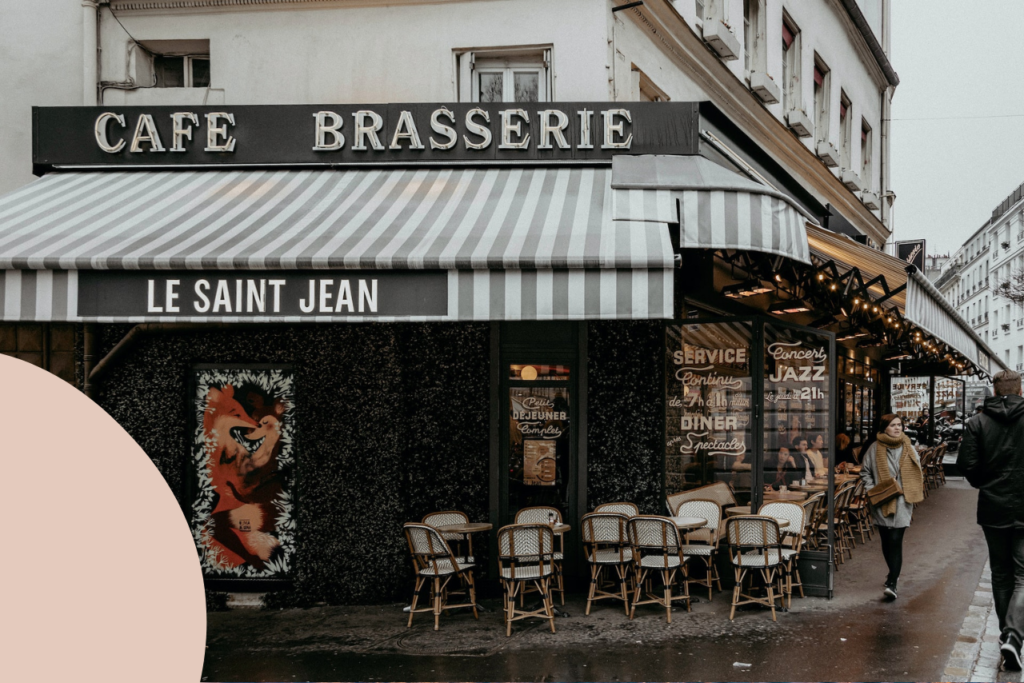
Bedroom Bliss

Perhaps one of the easiest ways to channel a Balinese vibe is in your bedroom. Think of those balmy nights in Bali, under the mosquito net, and the sense of cosy safety it brings. Perhaps you could introduce your own net, even if it’s purely cosmetic? A mosquito invasion is a rare occurrence on these shores, after all. 

If that seems a little excessive, sheer white linen curtains add a summery touch to your space, even if you layer them with heavy drapes so needed in this country during both lighter mornings and colder nights. Crisp white cotton sheets and crochet covered cushions and pillows give it that tropical, five-star hotel touch, and perhaps even one of those rattan or seagrass baskets for storing and organising things left at the end of the bed installed to complete the look.   

Local Art & Handcrafted Carvings

The Indonesians are known for their high quality craftsmanship, with skills often passed down through generations and secrets of the trade kept in house, within families, for as long as anyone can remember. Lots of these pieces are richly infused with spirituality, with Buddhist and Hindu motifs and emblems tastefully included in the design. 

Every time we go to Bali, we can’t resist the Ubud Art market, where you can buy a huge selection of handcrafted trinkets. Consider hanging some dark wooden and exquisitely detailed wooden panels to your walls to add warmth and a timeless elegance to your space.   

Garden Gorgeousness

We’re thinking ahead to next year’s summer months already, and honestly, who can blame us? As such, we’re extending our Bali inspired interior design into the garden space to really ramp up those tropical vibes. 

Balinese architecture channels the power of pavilions beautifully – build a Balinese baronial in the garden, adding a cabana frame to really emphasise the structural integrity of the project. 

Consider a pond showing off the lilies so beloved of the country, perhaps even with some Koi Carp swimming within, if you’re to push the boat out as far as it can go!

The Bottom Line

Tropical interiors can help us feel like we’re on vacation, and while we may never be able to grow a coconut in our chilly climate, we can evoke the tranquillity of the tropics and breathe some vigour and vibrancy into our homes with these few simple steps.