Home Blog Page 263

5 IDEAL WAYS TO BEAT THE JANUARY BLUES

0

January can be a gloomy time. Cold, dark days reign supreme, escapism is at a minimum and a blank social calendar can often lead to the winter blues kicking in, leaving you feeling glum and miserable.

But the goods news is this; we’ve already hopped the hurdle of January 20th, the most depressing day of the year according to experts. Evenings are getting lighter, and we’ve got just over a week to go until a new month and hopefully, a new perspective.

Fear not. Until then, there are ways you can lighten your mood and feel more positive. With that in mind, we’ve teamed up with Medical Herbalist Katie Pande, to bring you these; our 5 IDEAL ways to beat the January blues.

EAT CHOCOLATE

What we eat has a huge impact on our mood. In fact, eating itself can often make us feel cheery. Ever experienced ‘hanger’? Then you’ll know the feeling of joy when you finally feast on some food.

Chocoholics rejoice! Our favourite sweet treat is on the list of happy foods. In fact, it’s the cocoa in chocolate that is said to improve moods and enhance the feelings of pleasure as it boosts levels of serotonin – the ‘happy hormone’ – great for beating winter blues.

Of course, we aren’t encouraging you to eat bar after bar of milky or white chocolate; the latter isn’t even real chocolate, so they say. Instead, aim to eat chocolate that contains at least 70% cacao, as this not only means more of the mood-boosting theobromine but also, it tends to contain less sugar. Too much sugar might temporarily make us feel happy as we float on a sugar high, but it’s soon followed by a crash, which can dampen our mood, ruin our concentration and leave us feeling stressed, anxious and irritable.

Other mood boosting foods to munch on include bananas, turkey, salmon, strawberries and lentils. Perhaps not altogether of course; that sounds like a bizarre dish right there.

CUT BACK ON THE COFFEE

Your oat milk capp might seem like the only way to get through a busy morning but coffee, much like sugar, can leave you anxious and wired, which can soon turn to a coffee ‘crash’. And the result of this? The opposite effect to what you were seeking; tiredness and a slump.

Instead, opting for matcha tea is a great way to still get the caffeine hit without that subsequent crash as it contains a compound called L-theanine. This amino acid helps to increase the mood-boosting hormones serotonin, dopamine and gamma-aminobutyric acid (GABA) in the brain.

GET MOVING

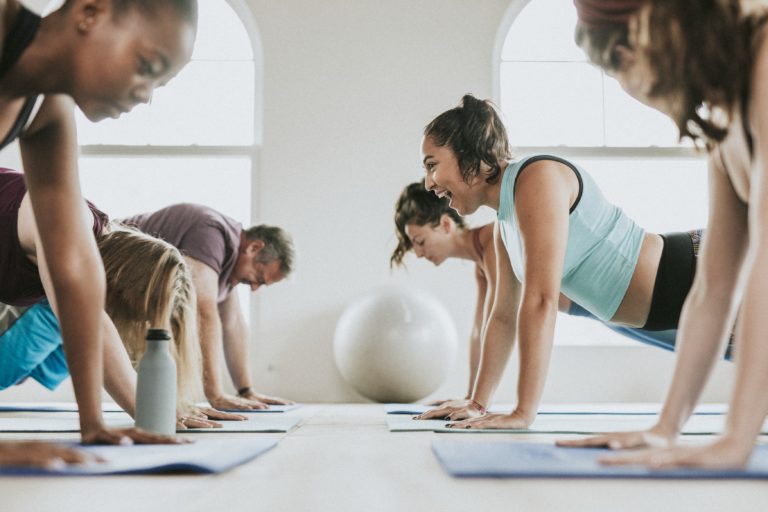
The key to ditching the winter blues, we think. But exercise doesn’t have to mean pounding a treadmill for hours, or spending every morning in the gym. Really, just a 30-minute brisk walk outside is all you need to trigger the production of endorphins – making us feel happy whilst lowering stress levels in the process.

If the weather is intent on keeping you indoors, try yoga or pilates, which can help balance the mind and body, or if you’re short on time, take a lunch break while it’s light outside. Apps such as ‘Seven -7 Minute Workout’ (free from the App Store or Google Play) provide great at-home guided sessions, and even Youtube is a good source of workout videos.

LOVE YOUR GUT 

It’s been dubbed the second brain, and for good reason, as your gut is home to trillions of bacteria. Our gut microbiota, which have been said to potentially impact brain function, aid the immune system and provide nutrients for the body. As such, eat a diet rich in fibre and include plenty of fermented foods such as kefir and kimchi, for an easy gut boost.

Sebastian Pole, Pukka Herbs’ Medical Herbalist and co-founder explains, ‘by supporting good digestion and the body’s detoxification processes, it is possible to increase our resilience to modern lifestyles and regain vitality. Herbs including aniseed, fennel, cardamom and turmeric are perfect to boost the digestive system and liver.

PRIORITISE SLEEP  

A bad night’s sleep can inevitably lead to low energy levels and over time, stress. Avoid that pesky caffeine after midday and try to have your final meal at least a couple of house before heading to bed so your food has time to settle. Prepare for the next day before going to sleep – maybe pack your bag for work, or lay out your chosen outfit, so you aren’t worried about the morning rush.

Making time to unwind before hitting the sack is also important (check out our 5 IDEAL steps to the perfect bedtime routine over here). Whilst a drink too soon before sleep can cause you to wake up in the night needing the toilet, sipping on a tea made with nature’s best nighttime herbs can help to soothe, calm and ground your body and mind. Chamomile, lavender, oat flower and valerian – a sleep-supporting herb with natural sedative and anxiety-relieving properties – can help to drift you into a deep slumber.

5 IDEAL TYPES OF WELLNESS TO EMBRACE IN 2020 

The term wellness is now part of the popular vernacular, and is a trend that is going to continue being talked about, make no mistake. As we learn more about our needs, and the importance of self investment and care, increasing numbers of vital health-focused services are coming into existence. With the help of COCRÉATEUR, an event, project management, and business development service headed by French creative entrepreneur and yogi Julia Perez, here are 5 IDEAL types of wellness to embrace in 2020.

EXPERIENTIAL WELLNESS 

Wellness is not just an appointment anymore. It’s an event, an experience,and something that you’ll want to incorporate into your every day life. Fitness, beauty and wellness services are all on the move, expanding and growning holistically, and bringing the individual out of their comfort zone, both metaphorically and literally, in the process. We’ve especially seen a boom in Wellness festivals. Fearne Cotton is set to host her second Happy place festival the summer which is all about unlocking inner happiness; we can’t wait! 

SLEEP HYGIENE

As simple as it may be, sleep is one of the most common barriers to living a healthy and productive life. Stress, poor sleep hygiene (as its now termed) and increased work pressures are limiting the time we’re spending getting our zeds, leading to a surge in products and services to counter this. Expect to see an increasing amount on the market which encourage better sleeping habits this year, such an apps which provide meditation and bedtime stories, all rolled into one.

EMOTIONAL WELLNESS 

Emotional wellness will be one of the biggest focuses of 2020. The ability to express yourself and acknowledge your feelings is a huge contributor to positive emotional and mental health. Expect a huge expansion on the concepts of opening up and talking about feelings, particularly in encouraging men to do so. After all, it’s okay not to be okay. 

WORKPLACE WELLNESS  

The wide-ranging benefits of wellness in the workplace are finally being understood. Some offices are even actively encouraging an atmosphere of openess about mindfulness, meditation, yoga, counselling, and discussion of mental health issues. Perhaps this is driven by a cynical motivation; it’s not just employees who benefit from a happy, healthy workplace, but the employers, too, who enjoy plenty of benefits including greater productivity and satisfaction. Regardless of what’s driving the shift, it’s a welcome change to stale corporate mindsets.

INTEGRATIVE HEALTH 

Integrative health; meditation, breathing, visualisation and guided imagery all boost emotional wellness and promote physical and mental healing. This approach to health is a great complement to modern medicine, making it particularly popular with today’s health conscious professional. Go get it.


5 IDEAL WAYS A PERSONAL TRAINER CAN HELP YOU GET FIT FASTER 

0

Contrary to popular belief, personal training isn’t about barking orders like a Drill Sergeant, thank the lord. Nope, it’s about breaking down barriers to help you achieve your personal goals through motivation, expert knowledge and goals. With the help of Nuffield Health personal trainer Stephen Macconville, here are 5 IDEAL ways a personal trainer gets you fit faster. 

A CONSTANT POINT OF CONTACT

PTs provide a constant point of contact to motivate, inspire and support you. Whatever your questions, goals or concerns, they will provide an educated and qualified answer to help you move forward successfully. And having a PT is a great way to make sure you get out the door in the first place, as most people feel more of a sense of responsibility to attend the gym if they have booked an appointment with one.

THE HEALTH MOT

PTs are not only qualified fitness professionals; they also undertake additional clinical training in order to assess your overall health and wellbeing (if you’re up for that, of course). A key part of this is the Health MOT, which measures key information like your body mass index (BMI), resting heart rate, sugar levels and blood pressure. These are then used to give you a ‘Health Score’ with the objective being to increase this Health Score during your time as a member of a gym or programme. A repeat Health MOT every three months will help track your wellbeing progress. If there isn’t an improvement, your PT will be able to assess why and help you get back on track.

A TAILORED AND EVOLVING PROGRAMME

A PT will consider your lifestyle, any injuries you may have or any concerns about your physical health, all before developing a programme to suit your life. You can reassess your programme at any time if you feel like you’re getting bored or you’d like to challenge yourself more. This ever-evolving aspect can be a superb motivator in your fitness journey.

EXERCISING THE RIGHT WAY

Your form when exercising can have a huge effect on how effective that exercise is and also on your safety. The worst thing you can do is copy what other people are doing in the gym because, after all, who is to say that they know what they are doing? They may also be performing exercises specific to their own requirements that don’t match with your own.

A PT will set a programme that is tailored to you and ensure you perform the exercises correctly. They will also get you using fitness equipment you wouldn’t necessarily use, broadening your scope for improvement and perhaps giving some unloved muscles the attention they’re craving.

CLEVER MOTIVATION 

People often struggle with motivation after the first few weeks in a gym but your PT will help you set achievable goals for each stage of your training. One of the most common mistakes people make is setting their overall goal without also setting mini-goals along the way.

But achieving these mini-goals spurs you on as you continue your training and will make you more likely to succeed. Your PT will be able to break down your goals and monitor your progress along the way, offering helpful advice if you’re falling behind and lavishing you with praise if you’re doing well. Lovely stuff and essential to a fulfilling, successful fitness journey.

5 IDEAL TIPS ON HOW TO INCORPORATE CLASSIC BLUE INTO YOUR HOME

Savvy style interior enthusiasts will have already spotted 2020’s Pantone colour of the year creeping its way onto Pinterest boards and interior blogs alike, but how can the everyday homeowner (or renter) incorporate this year’s must-have shade into their home?

Solid and dependable, much like the bricks and mortar of our home, classic blue leaves us with a sense of stability as we look forward to the new decade, making it the perfect shade to bring into the security of our nests. What’s more, classic blue is just that, classic, so you can be sure your home interior will remain timeless when including this shade into your colour palettes. With the help of Serenata Flowers, the UK’s leading online florist, here’s 5 IDEAL tips on how to incorporate classic blue into your home.

BRAVE A BLUE STATEMENT PIECE

Adding a burst of blue through a statement piece of furniture, such as a sofa, will give your living room a focal point to build your on-trend oasis around. What’s more, a bold piece of furniture is sure to brighten up generic cream painted walls that frequent rented apartments. Look to complementary colours such as yellow, orange and pastel pink for accessories and throw cushions.

TAKE ON AN UPCYCLE PROJECT

Renovating a vintage or pre-loved piece of furniture is a great way to add a touch of Classic Blue to your home. Opt for an art deco drinks cabinet or cocktail chair for a nod to the new age roaring 20’s. A lick of blue paint or a quick reupholstering is a cost-effective way to include 2020’s colour of the year in your home, whilst remaining eco conscious.

ADD AN ACCENT

Unsure about investing in a large statement piece of furniture? Adding accents of Classic Blue through homeware accessories is a noncommittal way to infuse your home with this year’s must-have colour. Blue china vases, soft throws for chairs or beds, and bouquets of fresh blue hydrangeas are all simple interchangeable ways to add hints of Classic Blue into your home.

DON’T FORGET APPLIANCES

True trend seekers will be searching for unusual Classic Blue pieces to add to their homes. Guests will be pleasantly surprised to see a burst of Classic Blue in the kitchen, so why not choose a colourful appliance or kitchen gadget? Be daring with a Classic Blue range or a bright coffee machine or mixer.

MAKE A STATEMENT WITH WALLPAPER

If colour blocking isn’t for you, go for a Classic Blue patterned wallpaper to add a stylish feature wall to your home. Dramatic wallpaper adds depth to any room, showcasing the personality of the home’s inhabitants. Team with furniture, accessories and flowers in pastel shades to create a contrasting composition.

6 IDEAL THINGS TO CONSIDER BEFORE BUYING A SECOND HAND CAR

HINGS TO CONSIDER BEFORE BUYING A SECOND HAND CAR

So, you’ve made the decision to go second hand with your next car purchase? May we compliment you on your choice. Since they say that a new car loses nearly half of its value in its first year, and with environmental issues demanding more investments are ‘circular’, buying a used vehicle is certainly a prudent move. That said, and despite the reduced price, it’s not a decision to be taken lightly. With that in mind, here are 6 IDEAL things to consider before buying a second hand car.

RESEARCH LIKE YOU MEAN IT

The internet is omnipotent. It sees everything. It knows everything. So, when it comes to your second hand car purchase, we suggest you do your homework with all the enthusiasm of a modern day grade A student. When researching, consider the car type that you want, the particular brand and the reputation it carries. Check reviews keenly, particularly if this is a car with longevity and durability, since it’ll be used. There’s no harm in being meticulous and fussy when it comes to your investments.

HINGS TO CONSIDER BEFORE BUYING A SECOND HAND CAR

THE IDEAL DEALER

Nope, not the kind who makes your Glastonbury a little more special. Instead, it’s vital you track down a reputable and reliable used car specialist here. With so many dealers and websites out there for you to consider – some scrupulous, some less so – start by seeking out a seller who you can trust, one with a sound reputation who’ll be honest when doing business with you. 

The AA website, for instance, features thousands of used cars from a network of reputable dealers from every corner of the country. When you find the right dealer, you’re ready to begin checking out some cars and to do this thoroughly, this needs to be done face-to-face. 

SET A LIMIT ON YOUR BUDGET

It is essential to have a fixed budget for the car that you want to purchase. Otherwise, costs may run away with you, should you fall in love with a vehicle out of your price range. So, set aside a certain amount of money and trust your judgement accordingly. If you happen to be on a tight budget and it will be financially painful to pay outright, you can negotiate with the dealer about other financing options. There are plenty of sites out there, such as www.carfinancegiant.co.uk, offering financing alternatives to a single payment, depending on your capabilities and credit score, of course.

HINGS TO CONSIDER BEFORE BUYING A SECOND HAND CAR

USE AND MAXIMISE YOUR CONNECTIONS

Social media is an excellent platform to seek recommendations regarding the best choices when purchasing a used vehicle. Trusted source’s experiences about dealerships—may it be positive or negative—will help you in getting to your final decision.

You can also leverage your contacts and links in your neighbourhood and community to find better deals. ‘It’s not what you know, it’s who you know’ never sounded so succinct. Think of it as similar to searching for employment; you need to turn on your networks because someone in your circle could guide you in scoring your perfect set of wheels.

DON’T NEGLECT PROMOTIONS AND REBATES

There are dealers out there that provide exclusive deals and incentives that you can take advantage of. Keep your finger on the social media button, particularly Facebook and Twitter, since dealers may post rebates, online discounts, and promotions that they have not advertised anywhere else. And when you find one that suits your needs, pounce.

EXPLORE YOUR OPTIONS

Love at first sight; it can be an impulsive, pesky business. You might want to take home the car once you test it, but it’s more sensible to check other options to compare which is better. Not all first times fit perfectly, and some cars will only reveal their true potential after a while in your company, so explore various options, do a thorough assessment of each, and pay particular attention to factors like size, transmission, mileage, engine, equipment and features.

That deeper dive we just suggested? Your pool of knowledge is right over here, at our 5 IDEAL questions to ask before buying your next car.

5 IDEAL QUESTIONS TO ASK BEFORE MOVING HOUSE AFTER RETIREMENT

Ah, the glory days. How things were different back then. Indeed, you can track life’s every changing story by thinking back to the different places you’ve lived. The shared student house, the bachelor(ette) pad, the first family home, the bigger family home…needs change and so do walls. But now you’ve entered your autumn years, perhaps a change of location is required? To be closer to family, nearer amenities, or simply to downsize to make things more manageable. 

Just as some regions are more suited to seniors than others, so the physical properties of a house matter for those looking for a switch to enjoy old age. We’re looking at the latter today, and prior to the big move, it’s important to do your due diligence to find the best possible place for you. Here are some things to think about; our 5 IDEAL questions to ask before moving house after retirement.

HOW BIG IS THE HOUSE?

Trust us, when you get older, size matters with your home. There’s a reason why more and more people seem to be downsizing; it just makes sense. After all, you can only be in one room at one time, right? You may have needed a 5-bedroom detached home twenty years ago, but if the kids have moved on and it’s just the two of you, maintaining unnecessary, superfluous space isn’t going to bring any joy in retirement. 

Of course, we’re not suggesting you move into a one-bedroom flat and discard all of the possessions you’ve accumulated over a rich and varied life. This is unlikely to suffice, as you will have visitors. But, somewhere smaller and more comfortable should certainly not be overlooked. When making your decision, always keep one eye on the maintenance side of things; though you may have more time on your hands, you’re less likely to have more energy.

HOW ABOUT THE GARDEN?

In truth, those same rules apply to the garden. You may have had green fingers for much of your life, and a little gardening in your dotage can be a fantastic way to keep sharp and active, but there can be times when a large outdoor space can be too big to manage and get a little unruly and overwhelming.

There’s no hard and fast rule on how large or small your backyard needs to be, but it’s wise to think beyond size when considering a potential property’s garden. If there are lots of different areas to it, all requiring different forms of maintenance, it adds to the job and can make it even more unmanageable. Better to prioritise a clean, unified space, we think.

WHAT ABOUT STAIRS?

It’s a truth we all have to face; you may well become less mobile as you grow older. This is where you need to seriously think about your new property’s stairs, and whether or not you actually want them in your next home at all. Bungalows may have once been utterly unfashionable, but they can be practical for some age groups and don’t carry the same, silly stigma they once did. Though your choices will be limited if you sway this way, later down the line, a bungalow may well turn out to be a sensible choice.

WHAT ABOUT THE SURROUNDING AREAS?

During any diligent property inspection, it’s not only the bricks and mortar you’re checking out; it’s also the surrounding area. Some regions are better than others, depending on the age group that you fall into. But it’s also crucial to consider your potential new home’s immediate surroundings if you’re to get the most out of retirement. Are you at the top of a giant hill? Is access to amenities going to be an issue? How is the topology of the area; is it more prone to the adverse effects of the weather? All of these factors impact you a little more as you grow older, so give them the time of day they deserve.

IS THE HOUSE BUILT SPECIFICALLY FOR RETIREES?

Some houses – often referred to as ‘aging in place’ homes – are designed and built specifically for elderly people to continue living at home and independently for as long as possible. In these properties, ergonomic considerations dictate the fine details of daily life; counters sit at a few different heights to make access easier, flooring is slip-resistant, windows and blinds are controlled remotely, lighting is bright and even specifics regarding the amount of force (2 kg) required to access anything in the home are deployed in the design. Perhaps such a pad is the answer to all your needs? 

Should you be wanting to explore the best areas in the UK for spending your autumn years, check out our 4 IDEAL retirement hotspots in England.

5 IDEAL FAMILY FRIENDLY PLACES TO STAY IN KRABI, THAILAND

Krabi, a province on the west coast of Southern Thailand, is characterised by idyllic islands, crystal clear waters perfect for snorkelling, golden sands and of course, plenty of seafood.

Aside from its outstanding natural beauty, Krabi has some superb tourist attractions, including the Ao Luk mangroves, Klong Thom hot springs and Tiger Cave Temple (Wat Tham Sua). With so much to see and do, and sublime streetfood on every corner, all that’s left is for you to find a great place to call home. We’re here to help; here are 5 IDEAL family friendly places to stay in Krabi, Thailand.

KO PHI PHI DON

Of all the islands belonging to Krabi, Ko Phi Phi Don is perhaps the most spectacular. The Don, indeed. It’s the largest of the famous Phi Phi cluster of six islands, and as such, is probably the one best suited for children as there are plenty of amenities and child-friendly activities here. It’s only accessible by boat (from Krabi’s Klong Jilad Pier to Phi Phi’s Tonsai Pier) but the ride itself is as scenic as it comes, and an enjoyable way to spend a couple of hours.

The location is famous for its turquoise waters and verdant natural landscapes. The long stretches of serene beach have several elegant hotels and guesthouses nearby, as well as restaurants that serve plenty of local delicacies. The whole island is pedestrianised, making it extremely family friendly. A great choice for a relaxing few days, that’s for sure.

Just be warned that some parts of the Phi Phi Leh island are closed due to overcrowding. Check with locals before you make the journey for the most up-to-date information.

AO NANG BEACH

Back to mainland Krabi, and to Ao Nang beach. This lovely stretch of sand is just 20 minutes from Krabi town and will only set you back around 100 baht (£2.50ish) by taxi. Here, you’ll find gorgeous accommodation for family, as well as places perfect for couples or even those travelling solo. The beach and surrounding Ao Nang resort town are excellent places for relaxation and unwinding. From there, you can catch long-tail boats if you want to visit the neighbouring islands and do a spot of snorkelling; the turquoise waters just offshore are perfect for that.

KRABI TOWN

If you’d like to be among the action a little more, then Krabi town has a buzz which belies its laid back look. Though it’s the first place tourists visit before heading off to different attractions or nearby islands, it’s worth spending a few nights here in its own right. Check out Wat Kaew Korawaram, a huge temple in the downtown area, to experience ancient and modern Thailand juxtaposed, and the two fresh markets which open every day. The mountainous backdrop brings visual intrigue, and this is where the Krabi region’s finest food options are found.

Restaurant Frog & Catfish is beloved of locals and expats alike for their spicy Thai salads and dishes making use of the Adaman sea’s bounty. If it’s street food you’re after, Krabi Walking Street, open on Friday evenings, sees a whole host of small stalls open up for business, slinging fresh as you like, spicy as you like Thai dishes to the crowds. Delicious.

TONSAI BAY

Tonsai is something of a hidden gem. A bay on the mainland (not to be mistaken with Tonsai beach, on Phi Phi island) which sits around half an hour southwest of Krabi Town, the vibe here is laid back and leisurely. Apart from the tranquil, unspoilt beaches, most people who stay in Tonsai are here for rock climbing and hiking. For a more family friendly approach, there are a handful of resorts providing excellent services. From there you can catch a boat, or even walk (it’s only 40 minutes) to popular Railay beach……

RAILAY

Railay is one of the most exciting locations to stay in Krabi, and attracts thousands of visitors each year, there for picture perfect beaches set against the backdrop of dense jungle. Perhaps the best beach – subjective, of course – is Phra Nang Cave Beach, and because of this, it does get a little crowded. For something more peaceful, take an island hopping tour from one of the many long tail boats moored along the shore. And if your family are fans of wildlife watching, you don’t have to venture far inland to catch a sight of the area’s most famous resident; the wild monkeys which love to lounge around Railay Beach.

If you’re continuing your adventures in Southern Thailand, then Phuket, particularly the Old Town, should be on your list. It’s just a couple of hours from Krabi (by boat, coach or taxi) and in our humble opinion, this is where some of the finest food in the whole country is found. And that’s saying something. Check out our tips for the 10 IDEAL things to eat in Phuket Old Town to really get your tummy rumbling!


5 IDEAL THINGS WE’RE INTO THIS WEEK 17.01.2020

Here at IDEAL we realise that there’s more to this crazy dance than the accumulation of ‘stuff’. A life of accruing possessions will only accrue dust. Oiling the Capitalist wheels with your wallet won’t bring clarity, of that there’s no doubt….

But who can deny the positivity that a bit of pampering brings? There’s nothing wrong with taking a look inwards from time to time, letting go and just spoiling yourself. But with the collective consumerism out of control and bringing the climate to its knees, it’s high time our purchases prioritised sustainability. So, we’re sharing a few things bringing us a little peace of mind right now which won’t harm the planet; our own spot of retail therapy, if you will, with these 5 IDEAL things we’re into this week. Go on. You deserve this.

BEE GREEN WRAPS 

‘Single-use’ may have been the Collins Dictionary’s ‘Word of 2018’, but that hasn’t stopped people using the phrase, and the item, more than ever before. One of the worst culprits is cling film; more than 1.2 billion metres (or 745,000 miles) of the stuff is used by households across the UK each year – enough to go around the world 30 times! 

Fortunately, there are now many great alternatives to single-use plastic out there, so there’s no excuse to continue buying zip-lock bags, cling film, and plastic bags. What’s more, being plastic-free can be stylish, practical and good for the planet. That’s where Bee Green Wraps come in; a clever, plastic-free alternative to cling-film. 

Reusable, organic and 100% natural, each wrap is made from beeswax, jojoba oil and cotton. The wraps are produced on a small-holding near Sydney from organic Australian beeswax, then imported by boat to keep their carbon footprint to a minimum. Not only practical for reducing cling film and foil consumption, Bee Green Wraps have stylish limited edition prints, too. 

Unlike other brands, Bee Green Wraps use dammar oil rather than pine resin, making them more durable and avoiding the wax ‘bobbling’ found on other beeswax wraps after washing. Simple and easy to use, if properly cared for each wrap should last around a year – and when they run out of life, simply bury them in your garden to compost! What’s not to love?

Available at beegreenwraps.co.uk from£4.99 to £25.49.

ECO WARRIOR BY THE LITTLE SOAP COMPANY

Plastic-free, vegan, sustainable, biodegradable and recyclable; ECO WARRIOR by the Little Soap Company (£4/100g) is changing the way we cleanse forever, with a collection of six thoughtful, high impact, job-specific bar soaps, each with its own distinct use and bespoke essential oil blend (no synthetic fragrances here, thank you very much).

ECO-WARRIOR is helping to eliminate untold single use plastic bottles, tubs and tubes from sinks, bathrooms and wash bags across the country. We’re fans of their exfoliating bar – made with citrus essential oils and oatmeal (a superfood for skin and a natural exfoliant) to help reduce excess oil and soothe skin irritation and itching. 

For those with skin prone to outbreaks, their sensitive facial bar is made from a blend of chamomile and calendula essential oils. This ultra-nourishing facial bar is gentle enough to use even on really sensitive skin; result! Oh, and lets not forget their shampoo bar. Containing orange and ginger essential oils and pink clay, this solid bar cleanses, conditions and moisturises the hair whilst also negating the need to plastic. Why take two bottles into the shower when one bar will do?


Available at www.littlesoapcompany.co.uk for £4.00

STOJO BROOKLYN’S POCKET & BIGGIE CUPS

No more judgmental eyes from the local barista or other coffee shop patrons, Stojo allows you to expand and collapse that takeaway cup of yours into a leak-proof disc, perfect to pop in your pocket or bag and take on-the-go. What’s more, Stojo features a sleeve to protect your fingers from the heat of the hot brew, but still gives you that nice warm feeling to wrap your hands round in the winter; perfect. Biggie has the same features as the Pocket Cup, but gives you 33% more room for your drink, plus comes with a reusable straw, perfect for your iced drinks and smoothies (you can borrow it for your post-work drinks, too!). 

With an RRP of £11.99 for the Pocket Cup and £14.99 for the Biggie, after a few weeks of taking your homebrewed morning coffee to work with you, your Stojo will have paid for itself and you’ll have helped save our planet from those wasteful single-serve cups in the process. Each Stojo is designed for thousands of uses, plus is free of BPA’s, phthalates, leads or glues, and it’s top-rack dishwasher safe.  

Available from John Lewis, Oliver Bonas and Selfridges, or online at www.auteurlimited.co.uk

BAMBOO TOOTHBRUSH FROM THE HUMBLE FOUNDATION 

Dental professionals advise you to replace your toothbrush every three months, but christ is that a lot of plastic going in the bin every quarter of a year. Indeed, it’s estimated that 3.6 billion plastic toothbrushes are used worldwide every year and the average person uses 300 in their lifetime. 

Enter the world’s top selling bamboo toothbrush. Made from 100% biodegradable bamboo and sustainable bamboo –  and also vegan friendly – the Humble Brush is the most sustainable way to keep those teeth clean.

What’s more, with every Humble Brush purchased, a proportion goes to funding the Humble Smile Foundation, a cause dedicated to preventing oral disease in areas that need it most around the world. Their humble vision is to prevent suffering caused by oral disease, not only achieved by providing the toothbrushes and toothpaste that we all take for granted but also by providing education and urgent care to vulnerable children around the world. Do your bit to give back by buying an eco-friendly and socially responsible toothbrush today.

Available from Boots, Co-Op, Superdrug, Holland & Barrett, Waitorise, Co-op and other retailers. 

‘HOW TO GIVE UP PLASTIC’ BY WILL McCALLUM 

Not content with your purchasing power? Want to get educated too? Then ‘How To Give Up Plastic: Simple Steps to Living Consciously on our Blue Planet’ is well worth a read.  Written by Will McCallum, Head of Oceans Greenpeace, this British book is at the forefront of the anti-plastic movement and offers tips on all those tiny, daily changes you can make to your routine which make a huge difference to your environmental impact. This is one which, once you’ve read, you should definitely pass along to a friend.

Available from www.penguin.co.uk for £6.99


While you’re here, do check out our tips on 5 IDEAL ways to reduce your plastic use.


5 IDEAL WAYS TO EVOKE A TRADITIONAL KITCHEN DESIGN IN 2020

With the world seemingly collapsing in on us, chaos reigning supreme, and interconnectivity only making matters worse, sometimes you have to ask yourself if modernity really has made things better. Do you really need your smart home hub to roll up her sleeves and bake you a cake? ‘Alexa, extinguish the fire in my oven’, indeed.

Yep, often older is better, and nowhere is this truer than the kitchen, where traditional recipes respected and spaces kept clean and simple so often produce the best food, and even better conversation. With that in mind, here are 5 IDEAL ways to evoke a traditional kitchen design in 2020.

A NATURAL SOLID OAK DINING TABLE 

The kitchen is the heart of the home, and food its lifeblood, but what role does the kitchen table play? Stretching the metaphor a little, it’s the most vital part of all, the left atrium and ventricle, working to pump the good stuff around the body. 

As such, you’ll want to take great care of that table, and treat it with pride and respect; it’s going to see a whole lot of action down the years after all. For a dining table with real character and evocative of that ‘traditional’ vibe oh so succinctly, you’ll want one fashioned from natural solid oak; sturdy, satisfying to touch, and worthy of being the focal point of the entire home.

ADD AN AGA

We say ‘add’ as if this is some frivolous purchase, but really, an aga is a massive investment, make no mistake. You’ll be looking at an initial outlay of at least £5000, not to mention the real estate they demand within the kitchen space. And if precision is your thing, then this isn’t for you; there’s no temperature controls, rather spaces designated rather obliquely for ‘boiling’ or ‘simmering’ on top, and ‘roasting’ and ‘slow cooking’. 

But you’re not thinking about how they cook food, right? It’s all about the aesthetics here, and damn do they look attractive. If it’s ‘traditional’ you’re looking to evoke, and that sense of homeliness and domesticity which seems to come bundled up with the term, then the introduction of an aga is a surefire way to get there. 

That’s not to say they don’t have benefits in practical terms. The aga’s cast iron frame means it conducts heat brilliantly; it’s always on, warm and ready to go. Temperatures inside remain steady and consistent, which leads to reliable cooking. And the famous oven has benefits beyond the realm of food, too; that warmth does a fine job of heating the kitchen, and with the right aga accessories you can even dry clothes above the hot plates.

CHESS BOARD FLOOR TILES

Perhaps it’s the sound of heels hitting off the ceramics, or the cool feel under foot, but if it’s traditional kitchen flooring you’re after, it has to be chessboard tiles. The black and white checkered pattern manages to be expressive of a bygone era – a simpler time – whilst not looking dated. In the right hands, and when pared thoughtfully with strikingly coloured appliances, the look can even be chic and contemporary.

HANG COPPER POTS

Nothing screams tradition, both in the kitchen’s visual appeal, and in the cooking, like carefully deployed hanging copper pots. The warm, autumnal tones fit so succinctly with the natural oak and aga aesthetic we’ve already mentioned, and when on display there’s an implicit suggestion that they’re ready for action and often used.

And used they should be; copper pots are the finest heat conductors out there for stove top cooking, meaning cooking is consistent. It’s nimble, too, and great for delicate work as they’re ideal for heating and cooling super fast. Hang these in your kitchen, and expectations about that dinner you’re preparing will be sky high.

HANG A SHEILA MAID 

Yep, we know that Sheila Maid goes out with her mate stella. But if you’re to bring her home, and into the kitchen space, your traditional kitchen look is complete. Remarketed as the ‘eco way to dry each day’, this traditional clothes airer, activated via pulley, might end up smelling of your breakfast’s smoked bacon, but really, we’re just here for channeling those old school aesthetics, right? And Sheila does that job just perfectly.

Now you’ve got the look down, let’s think about practicality. If you want to optimise your workflow and make cooking a great meal as effortless as possible, then feast your eyes on these; our tips on how to improve the functionality of your kitchen.

5 STYLISH WALLPAPERS IDEAL FOR GIVING YOUR HOME A FRESH NEW LOOK  

With the new year now in full swing, we think it’s safe to say that many of us are feeling the urge for an overhaul. For a fresh start. For rejuvenation and rebirth. And now Dry January has got our liver’s unpickled, our brains full of clarity, and resolutions getting some semblance of abs visible again, we’re turning our attention to the domestic space. 

The good news is that achieving that fresh, clean feel synonymous with new beginnings needn’t be expensive. The quickest route to success? We think it’s there, written on the walls. With that rather cryptic segway dispensed, here are 5 stylish wallpapers IDEAL for giving your home a fresh new look.

MARBLE

At first, the thought of marble wallpaper spins our whole spatial awareness on its head. Is that our bathtub we see on the ceiling? But the beauty of marble wallpaper is its ability to create a calming, spa-like vibe in bathrooms. And if you’ve got those Caesar fantasies (what, you too?) going on, such walls make you feel as though you’ve stepped back in time to the days of the Roman Empire and you’re spending the afternoon at your local bathhouse. Now that’s escapism.

But it’s not only confined to the closed door of the bathroom. When adorning kitchen walls, marble creates a crisp, clean and modern feel. And when installed alongside natural wood shelves and countertops, marble wallpaper exudes that raw, stylistic feel. It’s also easily wipeable; perfect for splashes of bolognese boiled too vigorously. Ideal for bathroom accidents and all. 

TERRAZZO

Terr-who-o? Don’t worry, all will become clear. Completely unique and on-trend, terrazzo is a spin on that marble (it’s actually a composite material made of marble, granite, glass and more) we already mentioned; dashes of marbled gems scattered across white or grey backdrops, to be precise.

Terrazzo style wallpaper comes in a range of colours which you can use to complement the style of your chosen room. If your terrazzo effect wallpaper has a white background, for instance, pair with burnt orange, teal and black speckles, choose a teal velvet sofa, blood orange cushions, a white carpet and black hairpin leg furniture. Amazing. Or, if you love the minimalist Scandi look, opt for natural wood décor and subtle room accessories. 

CHILDREN’S

How’s this for an understatement; it can be tough to make your child’s bedroom stylish. Of course, in an ideal world, we’d rather not have an entire room dedicated to Peppa Pig or Paw Patrol, but sacrificing stylistic control is all part of the job, we’re afraid to say. We’re not afraid to say, however, that there’s still room for a bit of a personality injection, even here.

A fun children’s wallpaper feature wall, such as one of these from wallsauce.com, could be the easy answer to bringing your child’s room to life. There are children’s wallpapers suitable for those as young as one month old all the way up to the grumpy teenager years.

We all know children grow up fast and tastes change faster than shoe sizes. Accordingly, do make sure you choose a versatile wallpaper that stands the test of time. Better still, purchase peel-and-stick wallpaper that’s self adhesive and removable. Once your child outgrows their wallpaper mural, you can gently peel it off without causing any damage to the wall. Then, you can buy a completely new peel and stick wallpaper to replace their old one.

PALM LEAF

Tropical palm leaf wallpaper might sound like a bad idea, particularly in gloomy old Britain, but this style is extremely on-trend right now. A bit Kardashian, a little Love Island, perhaps, but there’s no fighting fashion sometimes. Fortunately, there’s more versatility than you might expect in its deployment; you can find deep forest greens, bluey emerald or even bright lime green palm leaf wallpaper prints out there.  

That said, it’s important to practice contrast and restraint here; no one wants every wall to channel those tropical vibes. Instead, employ a single, eye-catching feature wall; palm leaf wallpaper looks best surrounded by walls with a contrasting colour. 

Keep the surrounding décor natural and subtle, or the effect will be jarring. Because most palm leaf wallpaper is highly detailed and abundant with beautiful patterns, simple furniture is a must. Choose white or natural wood chairs, tables and white soft furnishings such as duvet covers and cushions. Add a touch of bronze or rose gold pieces as well, such as a lamp or tealights, to add to the on-trend feel of the palm leaf room.

EXPOSED BRICK

The urbanite’s dream, this one. Or, it’s conceivable in the rural setting too, for those who would adore a rustic and cosy cottage with exposed wooden beams and brick walls. Both looks are totally different, but together they embrace the brick wall look with open arms. Seeing as it’s a messy job to chisel off plaster, it’s best to either seek the help of professionals here. Or, to achieve this stylish look without intervention, consider a brick-effect wallpaper.

We’re not talking a cheap, plastic facade beloved of a bygone area, but rather a more modern version which really does require close inspection to discern it’s not the real deal. Consider this for your kitchen for best effect.

And with that, we’ll see ourselves out. But before we go, we noticed your garden looking a little, shall we say, unkempt, on the way in. Check out our tips on how to make your garden a sanctuary in time for Spring and get yourself ready for better, brighter times ahead.

6 TIPS ON HOW TO CHOOSE THE IDEAL WEDDING VEIL 

Every bride imagines how they’ll look on their wedding day – most of us before we’ve even found ‘the one’! From the style of your dress to the height of your heels, you’ve probably had a clear idea of what you’ll wear for longer than you’d like to admit. But with your big day on the horizon, and wedding planning in motion, it’s time to start turning those ideas into reality.

One aspect of your look that you’ve perhaps overlooked is your veil. So, to help you choose the ‘cherry on top’ of your bridal outfit (not an actual cherry, mind, that would look weird), here are 6 tips on how to choose the IDEAL wedding veil.

LOVE THE LENGTH 

Whether you want to make a statement in a floor-sweeping veil or keep things more modest with one that sits delicately on your shoulders, the length of this essential piece is an important decision to make. Consider your dress when choosing, and work out which length will best compliment the overall style of your outfit.

For minimal, modern dresses, shorter veils are usually better suited – think anything from thigh length and up. For traditional gowns, floor-length veils are the typical choice and suit the more formal dress. You can even take things up a notch with a floor-sweeping chapel or cathedral length look. 

DON’T FORGET THE WIDTH

You might not think it, but the width of your veil can make a big difference to your whole look. Narrower veils usually fall behind the dress, making them ideal for showing off bridal gowns with intricate straps or front detailing. 

A wider veil will fall completely over the arms and shoulders and usually works best with a strapless dress, otherwise the look can be a little much. Want something in the middle? Then go for it; this is your big day, after all. A medium width veil will give you the best of both worlds, covering your arms but still letting your dress take centre stage.

HOW MANY TIERS?

Nope, we’re not referring to the cake here. If you’re doing things traditionally, a veil can be created with up to three tiers. A one-tiered veil is a more modern choice; simple, sophisticated, and undeniably chic, it’s probably the most popular choice out there. If you’re going for a more formal look, a multiple tiered veil will usually cover the face, ready for your partner to lift it off once you’ve made your way down the aisle. For couples who love traditional ceremonies, this is the conventional choice.

CONSIDER THE COLOUR 

If you thought the colour choice of your veil would be easy, think again. Not only are there a multitude of shades of white to pick from, but there are also more modern shades out there, ranging from blush to grey-blue, giving you a whole lot of options. Consider whether you want to match your dress or create a contrasting look. If you’re going with the latter, your best bet is to try on different colours whilst wearing your gown to see what works for you.

You can also pick to have a regular, matte finish, or a crystal finish which adds a touch of shimmer to your veil. Decisions, decisions!

THE DEVIL’S IN THE DETAIL 

This is the really fun part – adding the unique details to your veil that will truly make it your own. As such, it’s time to get creative. From adding an intricately embroidered trim to creating a pattern on the tulle of the veil itself, there’s so much you can do to bring your veil to life and pull together your outfit.

When deciding on the details, it’s a great idea to have your whole outfit in mind – from your dress to your jewellery and even the flowers you’ll be carrying. You could match details from your other pieces to create a flow to your bridal outfit and make sure everything works perfectly together. On the flipside, you could leave the detailing out completely and opt for a chic, minimal look with a layer of tulle – it’s a stylish option that may be simple but is certain to stand out. 

GET OUT THERE 

Once you’ve worked out a rough idea of what you want – or, maybe you know exactly what you’re on the hunt for – it’s time to get out there and start searching. If you can, bring your dress along when trying on your veils; it’ll give you a much better idea of how they’ll work together. If you can’t, ask for fabric samples from veils you like to bring home and compare to your dress.

The author of this great piece, Sarah Bates, is the founder of Britten Weddings, wedding accessory suppliers specialising in hand crafted wedding veils, hair accessories, bridal jewellery and more.

5 IDEAL QUESTIONS TO ASK BEFORE YOU RENT A HOUSE IN 2020

It’s a tale as old as time itself. You see a property online, you fall in love with it, you speak to the landlord, agree on a rental amount and sign the contract. Happily Ever After ensues. If only it were that simple. In fact, there’s work to be done at every turn; from researching the right neighbourhood to hiring the right agent, paying the security deposit and finding a van big enough for moving day. 

To make things go as smoothly as possible, it’s vital to be prepared, primed and ready to pose the right questions. With that in mind, and with the help of Langford Russel, estate agents in Bromley, here are 5 IDEAL questions to ask before you rent a house in 2020.

FIND OUT IF YOUR LANDLORD ACCEPTS A ZERO DEPOSIT SCHEME

A zero deposit scheme basically allows you to pay only one week’s rent as a deposit to the company running that scheme after which you can rent a property. This works out better financially since you don’t have to pay 4 to 6 weeks rent as the initial deposit, which can be quite a punch to the bank balance when there are lots of other expenses associated with moving house. 

While the zero deposit scheme is of course beneficial to tenants, you’ll need to find out if your landlord accepts such an option instead of a traditional deposit. Keep in mind that the deposit under the zero deposit scheme is non-refundable at the end of the tenancy. However, this scheme allows you to safeguard your rights as a tenant since all the disputes are settled by The Dispute Service (usually referred to as TDS).

PET PEEVES?

Some landlords are open to having pets in the property while others can be finicky about it. Find out from the off which side your landlord’s toast is buttered. Instead of falling in love with a property, negotiating the terms and conditions of a contract, settling on a monthly deposit amount and then having your landlord tell you about the ‘no pets’ rule, it’s better that you bring up this question right in the beginning.

If your landlord is not okay with pets in the house, your estate agent can easily help you look for another place with that essential clause respected. Fortunately for animal lovers everywhere, recently announced government plans suggest that soon renters will be given rights to keep pets in all rental properties. 

WHAT IS THE TOTAL COST?

When it comes to renting, there’s a danger in assuming that the cost of the initial deposit and the monthly rental is the total you’ll be paying. Unfortunately, the cost of renting is much higher than this, and you should budget accordingly. 

You need to take in the fee of the real estate agent, the cost of the utility bills – this includes electricity bills, wifi bills, water bills, your TV licence, as well as council tax and maintenance fees which may not fall under the jurisdiction of the landlord. Then, there’s the cost of hiring a moving company to transfer all your stuff from your former home to the new property on moving day. Also, let’s not forget that some landlords might even charge a contract renewal fee at the end of the lease, while some may also charge an early exit fee. So, before you make the big move, make sure you factor in all these additional costs.

IS THIS THING ON?

Cursory inspections, with an estate agent breathing down your neck and the pressure to get back to work looming, are the normal way of doing things when checking out rental properties. But if you’re to take things to the next stage, and the property you’re checking out has potential, then it’s vital you check everything is in working order. In doing so, you can get those requests in to fix and update things while you still hold the cards.

Is there enough water pressure? Is the air conditioning working? Are there any broken light fixtures? Are there any leaky faucets? Are all the appliances working properly – this includes the microwave, refrigerator, television, toaster, mixer etc. Is there any mould on the walls? Are there any stains on the couch or carpets? Do the walls have any stains or peeling paint? Is the property clean?

If you find any faults or damages, make a list of the problems and ask the landlord to fix them before you move in. If you move in without making a note of these current damages, the chances are that the landlord might cut the cost of repair from your initial deposit. 

CAN I SCRUTINISE THE TENANCY AGREEMENT IN A LITTLE MORE DETAIL?

Finally, it’s imperative that you do your due diligence and thoroughly scrutinise the rental contract prior to moving in, to check everything is in order and above board. Your estate agent will be able to help with that. 

Ask if the name of the person renting the house to you the same as the name of the owner in the contract? What date does the tenancy begin? Are the details of the monthly rent, the date which rent is to be paid and any proposed rental increase all mentioned in the agreement? What appliances come with the property? Is there a detailed inventory of the property which has been verified by both you and the landlord? Does the agreement have an address of the landlord where notices regarding repair can be sent?

If there is anything in the contract that you don’t agree with, then ask your landlord to change those terms and conditions before signing. If the landlord does not agree, it is better that you find a new property instead of signing a legally binding document. 

Once you’re all settled, it’s time to give your new pad some charisma. Check out our 5 IDEAL ways to bring some personality to your rental home for inspiration!

5 IDEAL THINGS TO CONSIDER WHEN TEACHING ENGLISH AS A FOREIGN LANGUAGE IN SPAIN

Teaching English as a foreign language (TEFL for short…phew) might just be the greatest career you’ve never considered. The perks and positives of this much overlooked employment choice are many; there’s a sense of freedom in being able to work anywhere in the world; the money, if you get your location right, can be lucrative; and it can be a rewarding, fulfilling and sociable job to boot. That said, it isn’t simply a matter of putting on a shirt and reciting your A,B,Cs; the job requires confidence, professionalism and dedication to succeed.

If the living abroad aspect of TEFL particularly appeals to you, and the idea of putting down roots on the continent in the land of Sangria and siesta has got you boning up on your future perfect continuous tense, then read on; our 5 IDEAL things to consider when teaching English as a foreign language in Spain.

TAKE YOUR TEFL COURSE IN SPAIN

To teach English as a foreign language anywhere in the world, you’ll often (though not always) need a Bachelor’s degree from university – this is usually for visa purposes, rather than an explicit demand of the language school – as well as an ESL qualification, such as a CELTA or TEFL. These qualifications are much the same, and most educational institutions across the world will accept either.

The good news is that in order to teach English as a foreign language in Spain, you don’t need a degree. And if you haven’t yet taken the necessary qualifications to teach English in Spain on home turf, then why not embark on that study programme where you want to live?

There are many TEFL courses in Spain that offer teacher training courses to help you along your way, gaining you the necessary qualification and skills, as well as helping you acclimatise to the weather, culture and new way of life in the country. Doing it this way round will help you put your best foot forward when you first enter the classroom.

PUNCTUALITY…

Now you’ve earned your qualifications, it’s time to earn your stripes in the classroom. But beware; discipline and dedication take very different forms in the TEFL world, particularly as you’ll usually be teaching adults, and most certainly be educating with an ‘extra curricular’ hat on.

Spanish timekeeping tends to be a bit looser than the tardiness we expect in Britain, and as such, you’ll need to make it plain from the offset that you expect punctuality from your students. Otherwise, things will be lax from day dot, and a tone will be set not conducive to study.

Ultimately, the key is consistency – if they turn up late once and things go smoothly in class regardless, then they’ll never arrive on time again.

…& SPONTANEITY

That said, the Spanish value (and thrive on) spontaneity, so be prepared to be flexible in your teaching style. Don’t stick too rigidly to those lesson plans, and move, groove and adapt to the needs of the class as you go. The students will appreciate this approach and respond to it positively.

Though this might mean your lesson plans take a looser look, with room for deviations backwards, sideways and in front, once you’re accustomed to this style of teaching, you’ll find it suits the Spanish learning style perfectly. Strike a fine balance between control and fluidity and both you and the students will be richly rewarded.

There are various tools you can use, from a Spanish homeschool app for kids to online platforms like Quizlet that gamify revision, which can help implement a system of rewards for learning in a fun and fluid way.

DIFFERENT DIALECTS & LANGUAGE NEEDS

Catalan, Basque, Galician, Andalusian…there are more different dialects in Spain than you can count on one hand, and each region has a personality and pride all of their own. Learning styles, study methods, and particularly, pronunciation will vary hugely. It’s important to be aware of the quirks of the Spanish language which will interfere with their English learning and the regional and dialectical concerns which could affect students’ language acquisition.

Pay particular attention to the overuse of ‘how’ when forming questions (in place of ‘what’ and ‘which’), as well as plenty of countable/uncountable noun confusion, and issues with ‘ing’ and ‘ed’ adjectives. These are just a couple to look out for, rather than an exhaustive list, but it’s important to be aware of common errors of Spanish learners and to bone up on some foreign language learning facts before taking your first class.

FINANCIAL MATTERS

Though English teaching jobs in Spain offer a decent quality of life, fantastic cuisine, lively culture and more, it’s important to be realistic about the money involved. The average wage for a TEFL teacher in the country is between 12 and 16 euros, and the cost of living much higher than many other countries which attract thousands of English language teachers each year. As such, it would be foolish to head to Spain to teach English thinking you’ll be living the lap of luxury; a savvy approach to budgeting is a must. In adopting a conservative approach to your finances, you’ll be able to enjoy an amazing country with enthusiastic students for years to come. Good luck!

7 IDEAL QUIRKY & CURIOUS UK TRADITIONS

0

Although the UK is made up of just four small countries, the island has a rich and long history that has spawned plenty of idiosyncratic traditions. While many of our overseas cousins may laugh at our eccentricities, they’re ours so we might as well make the most of them. Here are 7 IDEAL quirky and curious UK traditions. 

FENWICK’S WINDOW 

In 1971, Fenwick’s, an upmarket department store, decided to display an annual festive spectacle for North East shoppers. This display has become a hugely popular tradition. Nowadays, the windows which line Northumberland Street in Newcastle Upon Tyne are adored by people of all ages, and crowds arrive hours ahead of the big reveal day.  

In the past inspiration has been taken from children’s books such as Beatrix Potter and Peter Pan, and each and every year proves to be more outstanding than the last. While many people associate Geordies and Christmas time with night’s spent revelling in sub—zero temperatures (without a coat!), Fenwick’s fairytale window is perhaps an even more celebrated tradition of the toon.

KIRKWALL BA

Further north, since 1650 Orkney’s capital Kirkwall has seen ‘Ba’ play particular importance in the festive calendar. Described as more like a civil war than a game of football, on Christmas Eve and Hogmanay the town is divided into two teams, the ‘Uppies’ and ‘Doonies’. In the past the two squads were decided thanks to where they were born in relation to the towns Cathedral. 

Here’s how the game goes; a leather ball stuffed with cork is played through the town’s alleyways and back streets while opposing sides compete to get it in the net. There are referees who control the general flow of the game and ensure anyone who lands on the ground is picked up again, but apart from that, the game is effectively without rules. It relies, more simply, on honour. And we could all do with a bit of that in modern times, hey?

HAGGIS HURLING

Staying in Scotland, Haggis itself is specific to Caledonia. However, eating the sheep’s pluck delicacy is quite a commonly known tradition, with the 25th January Burns Night celebrations centering around a feast of haggis, neaps, and tatties.

However, a lesser known tradition in Scotland is the annual ‘Haggis Hurling’ event. Originating in the 17th century, when men were working in the fields during the day, their wives would cook them a haggis for their lunch and throw it across the river. The man would then use the front of his kilt as a cushion to soften the blow of the meat and prevent it from landing on the ground. 

Fast forward to the present day and ‘Haggis Hurling’ has established itself as a competitive sport where judges score the competition depending on how far the delicacy has travelled and whether it can still be eaten afterwards. Extra points are not awarded, however, for those wearing no underwear under their kilt.

THE WELSH LOVESPOON 

Gift a bunch of flowers, buy a box of chocolates, or even send a GIF on messenger….all accepted ways to display affection, for sure. In Wales, however, if you’re trying to win the heart of someone, a spoon is often used as a present. Okay, so it isn’t just your standard teaspoon, but it is a spoon nonetheless; it usually features a symbol which translates into a meaning, such as an anchor for safety or dragon for protection. This tradition is alive and well today, and such spoons are available in many of the country’s gift shops. Why not give it a try next time you fall in love?

BALMORAL SHOW

In a country steeped in agricultural history, it shouldn’t be a surprise that one of Northern Ireland’s largest annual events is an agri-food show. Starting in 1894, the Balmoral Show has in recent years relocated to the site of the Old Maze Prison camp. With more than 115,000 annual visitors, the show includes showjumping competitions, sheep shearing time trials, and a best in show category for livestock and equine. The three-day festival, which offers something for everyone, is a fine, immersive display of a certain side of Northern Irish culture. 

THE PADSTOW OBBY OSS

May Day in Cornwall is celebrated in a rather different fashion to the rest of the UK. The Obby Oss Festival traces back further than the 1820’s, with historians believing it holds links to the Celtic festival of Beltane. The small Cornish town transforms into a feast of festive frolics and colour as locals spend the evening of the 30th April decorating the streets with flags and flowers, before two “osses”, one blue and one red, make their way through the streets, cheered on by onlookers joining in with the celebrations. After that, a right good knees up begins. 

PETER PAN CUP

Open only to the experienced members of the Serpentine Swimming Club who have qualified throughout the season to guarantee a place in the event, the Peter Pan Cup pits swimmers against one another in a 100-yard race in what are often near freezing cold waters. The event occurs on Christmas Day in Hyde Park and has been going since 1904, when its inaugural race saw James Matthew Barrie donate the Peter Pan Cup to competitors of the Christmas day swim through Hyde Park following the debut of his play on the London stage. That’s more than 100 years of history right there. Wow.

5 IDEAL OLD SCHOOL FASHION ITEMS MAKING A COMEBACK IN 2020

Black is the new black is the new grey is the new charcoal, wasn’t it? Indeed, what’s cool, uncool, old school or novel seems to be in a constant state of evolution. The only thing predictable here is the unpredictability. As such, we’re focusing on those timeless items which started their life with a different purpose but have since been appropriated by the fashion world: trainers are no longer just for running, nor are jumpsuits for jumping, and the sartorial world evolves accordingly.

Yep, fashion is unruly and should be celebrated as such. With that in mind, here are 5 IDEAL old school fashion items making a comeback in 2020.

TRAINERS

When trainers were first conceived, no one had fashion in mind. The earliest forms of trainers were plimsolls and their rubber design featured no distinction between the right and left foot. These primitive trainers were purely utilitarian, the fact that they were cheap and wearable was prioritised over aesthetics.  

But James Dean’s trainer debut in the hit film Rebel Without a Cause helped the popularity of ‘fashion trainers’ grow, and many clothing companies jumped on the sportswear-as-streetwear bandwagon. Gola’s iconic Harrier trainer, for example, was originally launched as a general training shoe geared towards squash, badminton and other sports. This design has since become a streetwear staple, with classic trainers looking set to be hugely popular once again in the new decade.

JUMPSUITS AND BOILERSUITS

In recent years, jumpsuits and boilersuits have seen a surge in popularity on the high street. And their ubiquity is only going to grow in the coming decade. Despite their current status as fashion must-haves, their origins were entirely practical. Designed by a Florentine designer in 1919, jumpsuits were created, as their name suggests, for jumping. More specifically, they were made for parachuters or skydivers making jumps out of planes. After this, they also became popular with race car drivers, aviators and even astronauts. 

When you think about it, jumpsuits were iconic fixtures of the twentieth century. From Rosie the River on the wartime “We Can Do It!” poster to the disco dancing of ‘70s Saturday Night Fever, and even the 1969 moon landing, they were always around. They gradually transcended their pragmatic origins to become fashion statements and are now essential items in every fashionista’s arsenal.

BUM BAGS

The bum bag is an unlikely item that has made a roaring comeback among festival goers over recent years. Whether this fashion comes from a place of post-modern ‘uncool’ irony, or the necessity for keeping your stuff in one place when spangled, or from a genuine appreciation, the bum bag is here to stay.

We can trace its origins back to 1962, when the first prototype was designed by Australian Melba Stone. However, the concept of a pouch held around the waist by string goes much further back. As bags predate pockets, people needed somewhere secure and close to their person to store their most valuable items. A pouch held at the waist seemed to be the perfect solution, and this gave us the ‘chatelaine’, a bum bag forerunner. In Scotland, the equivalent was the traditional ‘sporran’, which was a small pouch normally made from animal fur, worn over a kilt.

Although we haven’t yet seen the sporran or the chatelaine become a festival essential, bum bags are worn with vigour. Whether tied around the waist or slung over the shoulder, these items bring fashion and practicality together (with a pinch of ‘middle aged tourist’ irony thrown in for good measure). Look out for Taylor Swift rocking hers on the stage of Glastonbury 2020 later this year!

HIGH NECK DRESSES

High neck dresses found huge popularity in the 60s, and surged back into the public consciousness through TV hit series Mad Men, when the fictional advertising agency Sterling Cooper’s New York setting saw the glamorous and fabulous donning these iconic dresses regularly. 

The modern high street followed suit, with IT girls of the present day channeling this swinging 60s look succinctly. With retro, nostalgic fashion looking set for another bumper decade, expect to see high neck dresses worn in formal settings to great effect.

DOUBLE DENIM

Double denim. Cut off sleeves. Exposed muscles. Bandana. Style icon and silver haired heartthrob Bruce Springsteen has been an unofficial spokesman for double denim for decades, and suddenly, it seems, the whole world wants to catch up. Where once this was a fashion faux pas up there with socks and sandals or combining a brown belt with black shoes, now the whole catwalk is at it with enthusiasm. So make it a new year’s resolution; in the 2020s you’ll give double denim another go.

Bringing back clothes from a bygone era is a fantastic excuse for re and upcycling; great for the environment just as much as it is for your wardrobe. Check out our other tips for avoiding fast fashion now, and save the planet whilst still looking great.