If only things were simple. We’d all love to enter our bathrooms, enjoy the right type of moisture, and not endure the unwanted kind. But when bathrooms accumulate condensation, exacerbated by humidity, problems can occur such as mould, damp and structural damage.
Let’s face it, the bathroom is the place most prone to these issues, largely because when water vapour from the shower comes into contact with colder surfaces like mirrors and windows, it forms droplets of condensation. And from there, issues arise.
Those 9 Simple Steps To Help Avoid Condensation In Your Bathroom
While it’s next to impossible to eliminate all condensation from bathrooms, there are things you can do to mitigate the build up. These are those; our 9 simple steps to help you avoid condensation in your bathroom.
Ensure Proper Ventilation
Ensuring proper ventilation while showering is the single most important thing homeowners can do to prevent condensation buildup. If it’s warm out, just open the window. In cooler climates, or should you not have windows in your bathroom, it may well be worth installing an exhaust fan.
Replace Leaky Fixtures
A leaky bathtub or shower enclosure can intensify existing moisture problems and create the perfect breeding ground for mould and mildew. It’s recommended that you prioritise replacing an ageing fixture as a matter of some urgency, as water damage can be insidious. Rectify issues before it’s too late.
Wiping down windows and mirrors after taking a shower might seem like a pain, but it can save homeowners struggling with excess condensation a headache in the long run. There’s no need to keep things bone-dry; just wipe down glass surfaces and solid countertops after each shower or bath if they look wet, and encourage the rest of the family to do the same. Eventually, it will become a habit and second nature post soak.
Use A Dehumidifier
Dehumidifiers are designed to pull moisture from the air and condense it back into water, which is then stored in the bottom of the machine to be disposed of when it’s convenient. As such, running one while taking (and in the minutes after) a shower can substantially reduce moisture problems.
They can be a bit pricey and tend to use up a considerable amount of electricity, though, so homeowners should still install extractor fans and determine whether there are other underlying problems that could be contributing to the excessive moisture before investing in one. If all conclusions lead to buying a dehumidifier, then the experts at ebac.com suggest choosing one with the right capacity for your bathroom size and energy-efficient features to keep running costs manageable.
Warm Up The Walls
Cold surfaces attract more condensation, part of the reason why so many water droplets accumulate on bathroom windows during winter. What’s more, bathrooms with walled ceramic tiles can also develop droplets on the walls. Underfloor heating – which not only warms the floor but also the walls – can help to heat the bathroom and reduce problems with condensation on the walls and is less expensive than you might think.
Use Anti-Condensation Paint
Anti-condensation paint is designed to be used in places like bathrooms, where excess condensation can wind up causing water damage if left unchecked.
It’s a simple process; paint the ceiling of the bathroom first and if the walls get cold enough to cause problems with condensation, this special kind of paint can be applied to them, too. Homeowners can buy it in most hardware stores and apply it themselves if they want to save some money.
Buy A Demistable Mirror
Demistable mirrors feature heating pads that run along their backs to keep the mirrors above a temperature considered dew point. This prevents condensation from forming on their surfaces, which reduces the amount of moisture introduced to the bathroom during showers.
Demistable mirrors also make it easier for residents to see what they’re doing while getting ready following a long, hot morning shower. And we all want that, right?
Invest In A Quality Shower Enclosure
Last but certainly not least, consider the power of a well-designed shower enclosure. A top-notch shower enclosure does more than just define the aesthetics of your bathroom; it acts as a barrier, trapping moisture and steam within its confines. This means less water vapor escapes into the rest of the bathroom, significantly reducing the risk of condensation on other surfaces.
With a variety of modern designs available, you can choose an enclosure that complements your bathroom’s style while providing a practical solution to moisture control. It’s a smart investment that pays off by protecting your bathroom from the pervasive issues caused by excess humidity. So, upgrade your bathroom with a shower enclosure that promises to keep the moisture where it belongs—inside the shower.
The Bottom Line
Preventing condensation isn’t just about creating a more comfortable, beautiful bathroom space. Excess moisture can lead to mould growth, which can cause structural damage and pose a danger to residents’ health, too. It’s important, then, to take some simple steps to reduce this condensation where possible.
In an era where personal data has become the new currency, businesses face unprecedented challenges in balancing effective digital marketing with growing privacy concerns. From the Cambridge Analytica scandal to recent high-profile data breaches, consumers have become increasingly wary of how their personal information is handled. This seismic shift is fundamentally reshaping digital marketing strategies and transforming the relationship between businesses and their customers.
Consumer Trust & Data Transparency: The New Marketing Currency
Today’s consumers are remarkably savvy about their digital footprint. Recent digital marketing insights show that most UK consumers harbour serious concerns about their data privacy, with a significant majority believing companies aren’t doing enough to protect their personal information. This heightened awareness stems from numerous high-profile data breaches, including incidents at major British companies that resulted in substantial GDPR fines.
Transparency has evolved from a mere buzzword to a fundamental business imperative. Modern consumers expect to understand exactly how their data is being used and want control over their personal information. Companies like Marks & Spencer have led the way with clear cookie consent processes and detailed privacy centres, seeing measurable increases in customer trust as a result.
The Regulatory Landscape: Navigating The New Normal
The UK’s privacy framework presents unique challenges for marketers, combining the reformed UK GDPR with existing regulations like the Privacy and Electronic Communications Regulations (PECR). This regulatory environment has fundamentally changed how businesses approach data collection and marketing practices. Gone are the days of pre-ticked boxes and implied consent; organisations must now obtain clear, affirmative consent for each type of data processing.
The stakes are high, with potential fines reaching £17.5 million or 4% of global turnover. However, compliant organisations are discovering that strong privacy practices can become a competitive advantage, helping them build stronger relationships with their customers.
First-Party Data: The Future Of Digital Marketing
The impending death of third-party cookies has sparked a revolution in data collection strategies. First-party data has emerged as the cornerstone of effective digital marketing, offering greater accuracy and reliability than third-party alternatives. Forward-thinking companies are developing sophisticated yet privacy-compliant methods to gather customer data directly, often through value exchange mechanisms that benefit both parties.
Successful businesses are finding creative ways to collect first-party data through engaging customer interactions. Whether through personalised shopping experiences, tailored content recommendations, or loyalty programmes, these companies are proving that it’s possible to gather valuable customer insights while respecting privacy preferences.
Privacy-First Marketing Innovation
The most innovative marketers are turning privacy constraints into opportunities for creativity. Contextual targeting has seen a renaissance, with sophisticated algorithms analysing page content and user intent rather than personal data. This approach often delivers comparable or better results than traditional targeting methods while maintaining user privacy.
Privacy-preserving analytics are also gaining traction, with new measurement approaches that balance detailed insights with user privacy. These technologies allow businesses to understand their marketing effectiveness without compromising personal data protection.
Building Trust Through Transparency
The future of digital marketing lies in building genuine trust through transparent, ethical data practices. This means moving beyond mere compliance to embrace privacy as a core brand value. Successful companies are proactively communicating their privacy practices, making it easy for customers to understand and control their data, and consistently delivering on their privacy promises.
This approach requires a fundamental shift in mindset, treating customer data not as a commodity to be exploited, but as a valuable asset to be protected and respected. Companies that make this shift are finding that customers are more willing to share information when they trust it will be handled responsibly.
Looking Ahead: The Privacy-First Future
As digital marketing continues to evolve, privacy considerations will only grow in importance. Successful organisations will be those that embrace this change, investing in privacy-enhancing technologies and building their marketing strategies around respect for customer data.
The key to success lies not in finding ways to circumvent privacy restrictions, but in developing innovative approaches that deliver marketing results while protecting customer privacy. This might mean exploring new technologies, refining targeting strategies, or finding creative ways to engage customers who are increasingly protective of their personal information.
The Bottom Line
The future of digital marketing belongs to organisations that can build trust through transparent, ethical data practices. By focusing on quality first-party data, implementing robust privacy measures, and maintaining honest communications, businesses can create more meaningful relationships with their customers.
This privacy-first approach isn’t just about compliance—it’s about building sustainable, trust-based relationships that will drive business success in an increasingly privacy-conscious world. Those who embrace this change now will be best positioned to thrive in the privacy-first future of digital marketing.
The Mod movement, born in the coffee houses and jazz clubs of late 1950s London, wasn’t merely a fashion statement—it was a cultural revolution. Young working-class Britons, inspired by Italian tailoring, French New Wave cinema, and American jazz, crafted a distinctive style that would define an era. Today, the Mod aesthetic continues to influence fashion with its sharp silhouettes and meticulous attention to detail.
The Foundation: Suits & Tailoring
At the heart of Mod style lies the suit—but not just any suit. A proper Mod suit tells a story of precision and sophistication through its details. The jacket should be slim-fitting, featuring narrow lapels and three buttons, with sleeves cut slightly shorter to reveal the perfect amount of shirt cuff.
The trousers complete the narrative: trim but never skinny, with a clean, straight leg that breaks perfectly at the shoe. Amongst the cognoscenti, mohair suits in charcoal grey or navy were particularly coveted for their subtle sheen and durability, marking the wearer as someone who understood the finer points of style.
The button-down shirt serves as the foundation of any serious Mod’s wardrobe. The most discerning enthusiasts favour Ben Sherman’s iconic gingham checks and Oxford cloth button-downs, with collars measuring precisely three inches—a detail that speaks volumes to those in the know. The fit must be immaculate: slim through the body with a box pleat at the back allowing for movement, particularly important when dancing to the latest American R&B imports at all-night clubs.
The Fred Perry tennis shirt holds an equally hallowed position in the Mod wardrobe. Its laurel wreath logo has become synonymous with the movement, but it’s the fit that matters most—trim but never restrictive, with the sleeve band sitting perfectly at mid-bicep. In crisp white or pale colours, it bridges the gap between casual and smart with effortless grace.
Outerwear: Protection With Style
No piece of Mod outerwear carries more cultural significance than the military fishtail parka. Originally adopted as practical protection for expensive suits during scooter rides, it evolved into a defining symbol of the movement. The M-51 style, with its fur-trimmed hood and olive green fabric, remains the platonic ideal. It should fall below the knee, creating a dramatic silhouette that’s both practical and striking.
For milder weather, the G9 Harrington jacket offers a lighter alternative that’s no less significant. Its tartan lining and two-tone ribbed trim represent a perfect marriage of British and American influences. Whether in natural tan or navy, it’s a piece that works as well with tailoring as it does with more casual attire.
Footwear: The Foundation
A Mod’s shoes tell you everything about their commitment to the culture. The Cuban-heeled Chelsea boot reigns supreme, its pointed (but never exaggerated) toe and mirror-shine finish demonstrating an understanding that style requires effort. The heel should hit that sweet spot of around 1.5 inches—enough to make a statement without sacrificing sophistication.
For those occasions requiring something different, the penny or tassel loafer steps in admirably. Bass Weejuns were the original choice, and their classic design remains unimpeachable. The shine should be immaculate, reflecting both street lights and a dedication to perfection.
The Art Of Layering
Mastering the art of layering separates the true Mod from the mere enthusiast. Begin with a crisp button-down or polo, perhaps adding a fitted V-neck jumper in fine merino wool. A tailored jacket comes next, and finally, weather-appropriate outerwear. Each layer should complement the others, creating a harmonious whole that looks effortless despite the careful thought behind it.
The Off-Duty Evolution
While the suited-and-booted aesthetic defines classic Mod style, the movement’s later years saw the emergence of more casual elements. The men’s vintage t-shirt became a surprising addition to the Mod wardrobe, particularly those featuring bold geometric prints or simple striped designs. Original 1960s examples are highly sought after today, with their distinctive slim cut and slightly shorter sleeves perfectly complementing high-waisted trousers.
This casual turn wasn’t a departure from Mod principles but rather an expansion of them. Even when wearing something as simple as a t-shirt, the same rules of fit and proportion applied. The collar should sit perfectly flat, the sleeves should hit at mid-bicep, and the length should allow for a subtle tuck into trousers. When paired with slim-cut chinos and Chelsea boots, these vintage pieces bridge the gap between smart and casual while maintaining that essential Mod sharpness.
True Mods live by a precise code of dress. While some fashion rules are made to be broken, these principles are considered sacred:
Every garment must be immaculately pressed and stored properly – no excuses for wrinkles
Shoes should be polished daily with proper attention to the welts and edges
Trousers must break exactly at the shoe – any longer looks sloppy, any shorter appears affected
Shirt cuffs should extend precisely half an inch beyond jacket sleeves
Ties should never exceed two inches at their widest point
Suits must be dry cleaned regularly but not excessively – roughly every four to six wears
All elements of an outfit should work in harmony – no single piece should dominate
Colours must complement rather than match exactly – coordination shows sophistication
The Bottom Line
Today’s Mod style allows for thoughtful evolution while respecting its roots. Contemporary tailoring might be slightly slimmer, and technical fabrics might offer modern performance, but the core principles remain unchanged. The key is understanding which elements are sacred and which can be subtly updated for modern life.
Remember: True Mod style isn’t about slavishly copying the past, but rather understanding and respecting its principles while making them work for contemporary life. It’s an approach to dressing that prizes quality, attention to detail, and the confidence that comes from knowing every element of your outfit has been carefully considered. In a world of fast fashion and casual dress, the Mod aesthetic remains a powerful reminder that style is about more than just clothes—it’s about culture, identity, and the pursuit of perfection.
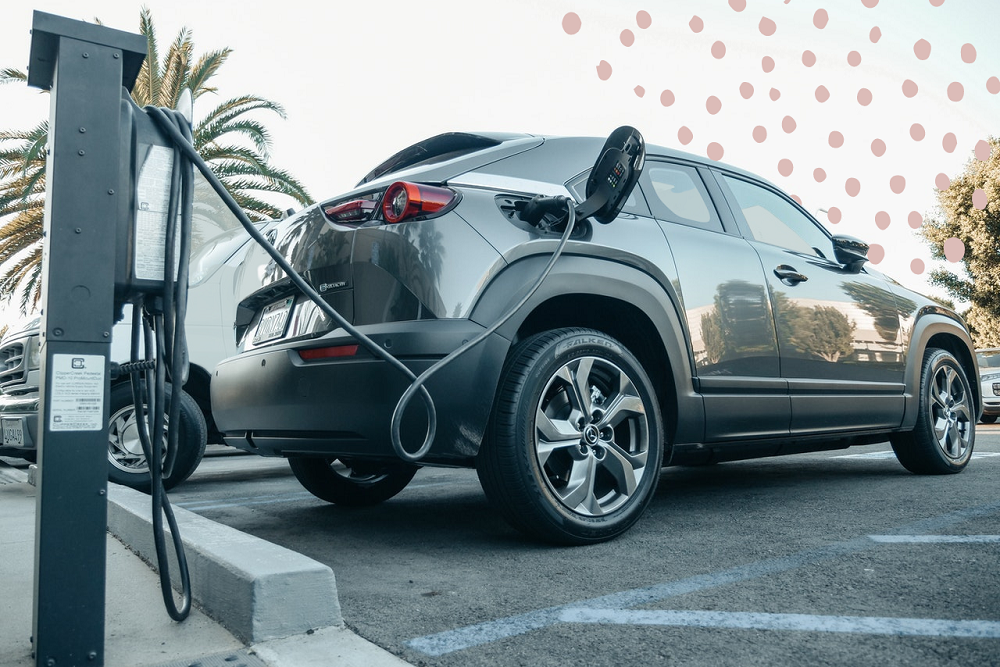
Ten years ago, taking an electric vehicle on a long journey felt like preparing for an expedition – a test of nerve, patience and meticulous planning. Today, while the landscape has shifted dramatically in favour of electric travel, crossing the country in an EV still demands a different mindset from traditional driving. The challenges haven’t disappeared entirely; they’ve simply evolved.
This evolution of electric travel represents a fascinating shift in how we approach long journeys. Where once we thought in terms of fuel stations and quick pit stops, we now navigate a new world of charging networks, range management and strategic breaks. For those willing to embrace this change, the rewards can be significant – but success lies in understanding and preparing for the unique challenges ahead.
Smart Route Planning Makes All The Difference
The first challenge of any EV journey is mapping your charging points effectively. While apps like PlugShare make finding DC fast chargers straightforward, choosing the right stops requires careful consideration. The difference between a stressful journey and a smooth one often comes down to how well you’ve planned your charging strategy.
Most modern EVs now come with built-in navigation systems that can plot charging stops, but it’s worth cross-referencing these with dedicated apps. They often have more up-to-date information about charger status and user reviews that can alert you to potential issues before you arrive.
Understanding Your Range
Your car’s stated range is just the starting point. Motorway speeds, hills, temperature – they all play their part in how far you’ll actually get. The key is to be realistic. Build in a buffer, especially on unfamiliar routes, and resist the urge to push your range to its limits. Better to stop while you’re still comfortable than crawl into a charging station on your last electrons.
Cold weather can reduce range by up to 30% in some cases, while driving at 70mph versus 60mph might cost you 10-15% of your range. Getting to know these patterns in your specific vehicle makes planning much easier.
Making The Most Of Charging Stops
Even with DC fast chargers, you’ll spend more time charging than you would filling up with petrol. The trick is to make these stops work for you. Some of the best charging locations are at service stations with decent coffee shops or near local restaurants. Some pubs and restaurants even have their own dedicated charging stations! A 30-minute charge is just enough time for a proper break – something most of us should be taking on long drives anyway.
Remember that charging speed drops significantly after 80% on most EVs. Unless you absolutely need the extra range, it’s usually more time-efficient to charge to 80% and make an extra stop later.
When Things Don’t Go To Plan
Charging points can be busy, broken, or occasionally blocked by thoughtlessly parked cars. Having backup options isn’t just sensible – it’s essential. Keep at least one alternative charging location in mind for each planned stop, particularly in remote areas.
Consider joining multiple charging networks. While it might seem excessive, having backup options can be invaluable when your preferred network is having issues.
Temperature Management
One often-overlooked aspect of EV road trips is battery temperature management. Most modern EVs will pre-condition their battery when you set a DC fast charger as your destination – this ensures optimal charging speeds when you arrive. Make use of this feature by always having your next charging stop in your navigation system.
For longer trips in cold weather, try to park in covered areas overnight if possible. A cold-soaked battery charges more slowly and provides less range.
Payment & Access
Different charging networks have different payment systems. Some require apps, some take contactless payments, and others need RFID cards. Before setting off, make sure you have:
Relevant charging apps installed and accounts set up
Payment cards registered
RFID cards for networks that require them
A backup payment method, just in case
The Social Side Of Charging
Unlike petrol stations, charging points often become impromptu meeting places for other EV-heads. Don’t be surprised if you find yourself in conversations about routes, cars, and charging strategies, as well as slapping each other on the back for your environmentally-conscious purchase decisions. These exchanges can be valuable sources of local knowledge and tips.
Meeting The Challenges Head-On
Long-distance EV travel presents distinct challenges, from managing range anxiety to finding reliable charging points. But with proper preparation and the right approach, these challenges become entirely manageable. The key lies in understanding your vehicle’s capabilities, planning thoroughly, and remaining flexible when things don’t go exactly to plan.
The charging infrastructure continues to improve rapidly, with new high-speed charging hubs opening regularly. What seems like a significant challenge today might be remarkably straightforward in just a few months’ time. Meanwhile, careful planning and a practical mindset can transform potential obstacles into manageable parts of your journey.
We’ve all been there; wolfing down our packed lunch at 10am from a mix of boredom and hunger. And we’ve all felt the shame and emptiness that follows. Indeed, eating well and healthily in the office is tough, with temptation lurking at every turn, with the excuse to head to the staff room and open the fridge for a little break just too appealing. And you wanted to come back empty handed, hey? You’d blow your cover…
The answer? Healthy, affordable snacks to keep the wolf from the door until lunchtime or give you a much-needed energy boost to get you through until you click ‘Shut Down’. With that in mind, here are 11 of the best healthy office snacks, IDEAL for when hunger strikes at your desk and you’re a long way from lunch or dinner.
Popcorn
A bowl of popcorn is arguably one of the most satisfying snacks around. Though a big box wolfed down at the cinema seems like the antithesis of a ‘healthy snack’, popcorn does, in fact, fall in the ‘good-for-you’ category if you avoid all that added sugar and salt found in many supermarket versions.
As Medical News Today explains “popcorn can either be good or bad for a person’s health, depending on what goes into making it. On its own, without any added sugar or salt, popcorn makes a nutritious, healthful snack”.
So, instead of buying the pre-popped type, buy some kernels and pop them in the office’s microwave by using a microwave-safe bowl and plate. And instead of salt or sugar, you can try adding some chilli or paprika for flavour. Result!
Edamame
Edamame beans are young soybeans that are often served in their pods and lightly salted. Sprinkled in a healthy dose of flakey sea salt, they’re even better.
Anyway, they are a fantastic source of protein, fiber, and essential vitamins and minerals such as vitamin K and folate. Edamame is also rich in antioxidants and has been linked to various health benefits, including a lower risk of heart disease and improved bone health.
For a convenient office snack, you can find them pre-cooked and ready to eat. Just pop a handful for a satisfying crunch and a boost of energy.
Rice Cakes With Avocado
Rice cakes topped with mashed avocado are a simple yet incredibly satisfying office snack that’s become a modern workplace staple. The rice cakes provide a light, crispy base that’s low in calories, whilst the avocado brings healthy monounsaturated fats, fibre, and a creamy texture that makes the snack feel indulgent without the guilt.
Avocados are packed with potassium (even more than bananas!), vitamin E, and B vitamins, making them brilliant for sustained energy throughout the workday. The healthy fats help keep you fuller for longer, preventing those mid-afternoon slumps that send you reaching for the biscuit tin.
For the best experience, bring a ripe avocado to the office and mash it fresh when hunger strikes – just add a squeeze of lemon juice to prevent browning. If your office is equipped with the latest vending machine technology, you might even find pre-packaged versions that are kept perfectly fresh until you’re ready to enjoy them.
Want to jazz it up? Add a sprinkle of chilli flakes, a twist of black pepper, or some cherry tomatoes on top. It’s the sort of snack that’ll make you feel like you’re treating yourself to something fancy from a café, whilst actually being incredibly healthy and budget-friendly.
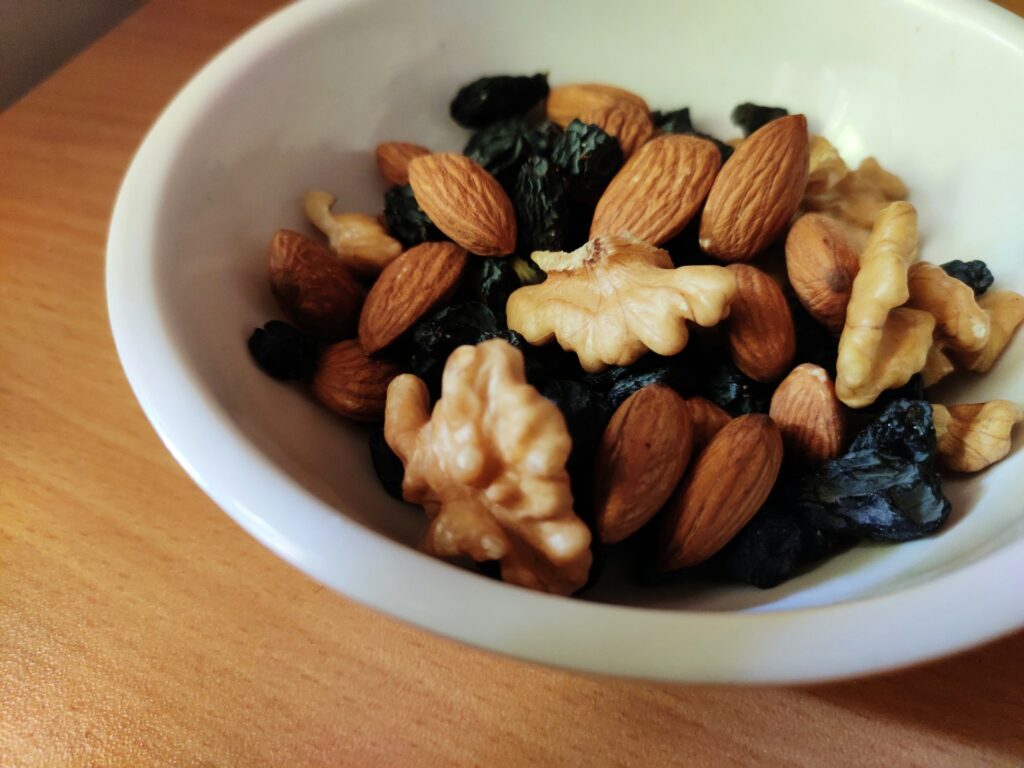
Unsalted Nuts
Unsalted nuts are a great snack in between the meals, as they’re great at satiating that nagging hunger every office worker seems to suffer from on a daily basis. This is because they’re high in protein and polyunsaturated fats, which are known to suppress appetite. But remember that even though they’re healthy (and damn delicious, we might add) the calories they contain can quickly add up to a rather big number. For instance, 1 ounce of almonds, which is around 23 almonds, contains 163 calories. Resist the urge to overindulge!
Whilst we’re on the subject, if you’re having a slice of toast in the office, why not adorn it with a natural nut butter, such as peanut or almond butter?
This is a great healthy snack option (when paired with brown bread, of course) since one portion of peanut butter contains 8 grams of protein and around 3 grams of fibre; great for curbing a growling appetite. Of course, the vehicle makes it more enjoyable, but it doesn’t have to be bread. Instead, you could spread the butter on rice cakes or a slice of apple.
Dried Fruits
Psychologically, dried fruit just seems more ‘snackable’ than the fresh stuff. And that’s just fine; they contain minerals and vitamins just as their fresh versions do, but are much easier to store and can be preserved for much longer.
Some of the most popular dried fruits include apricot, dates, raisins and figs; ideal for having on the desk for a little pick-me-up in that mid-afternoon slot when your focus always seems to slip.
When shopping for dried fruit, remember to choose those without added sugar and don’t eat too much of it. As Holland & Barret explain, “on one hand, dried fruit can improve the quantity of fibre and nutrients you get in your diet. However, dried fruits also contain large amounts of sugar and the number of calories in dried fruits is often higher”.
Whole Grain Crackers With Cottage Cheese
Whole grain crackers paired with cottage cheese make for a balanced snack that’s rich in fiber and protein. The whole grains provide a steady source of energy, while the cottage cheese offers a creamy texture and is packed with casein protein, which is known for its slow digestion, keeping you fuller for longer. Opt for low-fat cottage cheese to keep the calorie count in check. You can also add a sprinkle of herbs like dill or chives for extra flavor.
Roasted Chickpeas
Roasted chickpeas are a crunchy, nutritious snack that’s high in protein and fiber. They’re also a great source of iron, magnesium, and potassium. You can easily make them at home by tossing canned chickpeas in a bit of olive oil and your favourite spices, then roasting them in the oven until crispy. They’re perfect for stashing in your desk drawer and munching on when you need a savory snack that won’t weigh you down.
Nature’s Candy AKA Fruit
Yep, fruit is nature’s ready-made snack. Sweet and fullof vitamins and other nutrients, it’s ideal to reach for when you need a pick me up.
Bananas are perfect if you have a craving for something sweet, since they’re cheap, healthy and super tasty, in contrast to a bar filled with sugar and unhealthy fats. Bananas contain significant amounts of vitamins B6 and C, as well as fibre and potassium, so not only do they keep you full through ‘till lunch, but they can also do wonders for your skin, keep your blood pressure on the right level and get rid of the excess of cholesterol. Basically, is there anything a banana can’t do?
Grapes, or as we like to call them, ‘nature’s candy’, are another ideal snack for the office. As Healthline explains, “When you bite into a grape, you get more than a burst of juicy, sweet, goodness. You also get a dose of nutrients and antioxidants that may help you stay well”.
They go on to explain that grapes are “low in calories and virtually fat-free”. Result.
Ideal tip: If you want a bit more of a substantial snack, try topping a crostini with peanut butter and grapes – it’s a little PB&J, but with grapes instead of jam.
Vegetable Sticks With Hummus
Hummus and vegetables are a great source of the nutrients that your body needs. Due to hummus boasting high levels of good fats provided by olive oil, and all the goodness which chickpeas bring (a good source of iron, protein, calcium and fibre), it’s one of those snacks which tastes unhealthy but is actually quite the opposite.
Just watch the salt levels in shop-bought versions, and if you can, make your own. As one dietitian told the Independent, “Not all hummus is created equally…the quality of commercial hummus varies widely and not everything you see on the store shelves is traditionally made. Some have excess oil and sugar”.
And for the dipping? There are so many veggies you can choose from – carrots, celery, bell peppers…something crunchy and long enough are the only prerequisites. Raw and adulterated, this is a fantastic way to rack up your five-a-day, fast.
It’s good to keep yoghurt in your office’s fridge, to be enjoyed over cereal or on its own, as it is high in calcium and protein as well as probiotics, potassium and magnesium. Also, the ‘good bacteria’ it contains can aid digestion, promote positive gut health and whose presence is increasingly being linked with a much improved overall health.
Be mindful of overly sweetened yoghurts and instead opt for a lighter Greek yoghurt or a bottle of Yakult, which turns those probiotics up to the max.
Dark Chocolate With Almonds
For those moments when you’re craving something sweet (that would be all the time, then) but still want to keep it healthy, a small portion of dark chocolate with almonds is an excellent choice. Dark chocolate is rich in antioxidants and can improve brain function, while almonds add crunch and are full of healthy fats, protein, and fiber. Choose a dark chocolate that’s at least 70% cocoa to maximise the health benefits and keep added sugars to a minimum. Remember, moderation is key with this indulgent snack.
Looking for a dependable family car that won’t let you down? We’ve put these motors through their paces to bring you our top picks for 2025…
When it comes to choosing a family car, reliability isn’t just about avoiding breakdowns—it’s about peace of mind. After all, nobody fancies being stranded on the hard shoulder with a boot full of shopping and restless children in the back. That’s why we’ve compiled this list of the most dependable family cars available in 2025, with a particular focus on models that combine practicality with that all-important reliability factor.
The Premium Pick: BMW 3 Series Touring
The BMW 3 Series Touring proves that practical family motoring can still be engaging. Its dynamic handling and premium interior set it apart from mainstream rivals, while the well-designed boot space and folding seats offer genuine versatility. The latest model includes BMW’s excellent iDrive system and a range of efficient powertrains to choose from.
Long-term ownership experience typically proves positive, though maintenance costs tend to be higher than mainstream alternatives. The good news is that BMW’s dealer network is extensive, and independent specialists are well-versed in keeping these cars running smoothly. The B47 diesel engine, in particular, has proven itself to be remarkably robust when properly maintained.
Be prepared to dig deeper into your pockets though, with prices starting from £37,000.
Japanese Reliability: Mazda6
The Mazda6 continues to impress with its blend of reliability and driver engagement. The elegant exterior design disguises a practical family car with a comfortable, well-built interior. Mazda’s naturally aspirated engines might be unfashionable in today’s turbocharged world, but they’ve proven incredibly reliable and still deliver respectable performance and economy.
Mazda’s approach to engineering pays dividends in the ownership experience, with the 6 consistently ranking highly in reliability surveys. The brand’s SkyActiv technology may require specific grades of oil and parts, but the payoff comes in the form of excellent fuel efficiency and minimal unscheduled maintenance. Many owners report trouble-free motoring well into six-figure mileages.
Starting at £28,000, it offers a compelling alternative to the usual suspects.
The Hybrid Hero: Toyota Camry
The Toyota Camry Hybrid combines the brand’s legendary reliability with impressive fuel efficiency. Its refined hybrid powertrain delivers smooth performance and excellent economy, regularly achieving 50mpg in real-world driving. The spacious interior features high-quality materials and impressive sound insulation, making it a peaceful place for family journeys.
The latest model starts at £32,000.
The Electric Pioneer: Tesla Model 3
The Model 3 demonstrates that electric family motoring needn’t mean compromise. Its impressive range and rapid charging capabilities make it practical for most families, while the minimalist interior and huge touchscreen create a modern, tech-focused environment. The latest updates have improved build quality and refinement significantly.
Prices begin at £39,990, but factor in the reduced running costs when making your calculations.
The Executive Favourite: Volkswagen Passat
The Volkswagen Passat has long been the go-to choice for families seeking German engineering without the premium price tag of its more luxurious compatriots. With a cavernous 650-litre boot and premium interior materials throughout, it offers impressive practicality alongside refined comfort. The 2.0-litre TDI engine delivers that sweet spot between performance and economy, while advanced safety features like adaptive cruise control make long journeys a breeze.
Maintenance costs remain reasonable for a car in this class, particularly when you know what to look for. According to AUTODOC, the preferred battery brands for Passat are VMF, BannerPool, ROCKET, and BTS TURBO that guarantee durability and high performance of the battery. This attention to component quality is typical of Volkswagen’s approach to engineering, ensuring reliable starts even in the coldest winter months.
Prices start from £34,000.
The Sensible Alternative: Skoda Superb
The Skoda Superb brings similar underpinnings to the Passat but with even more space and a lower price point. Its enormous boot and limousine-like rear legroom make it perfect for growing families, while the build quality remains impressive throughout. The latest model also features a sophisticated infotainment system and advanced driver assistance features that rival more expensive alternatives.
When it comes to running costs, the Superb continues to live up to its value proposition. Service intervals are generous, and parts costs remain reasonable despite the premium feel of the car. The diesel variants are particularly popular among high-mileage drivers, with many examples sailing past 100,000 miles with nothing more than routine maintenance.
Starting at £30,000, the Superb offers exceptional value for money.
The Value Champion: Hyundai i40
The i40 might lack the badge prestige of some rivals, but it compensates with incredible value and Hyundai’s impressive 5-year warranty. The comfortable ride and spacious interior make it ideal for family duties, while the comprehensive standard equipment list includes features that would cost extra in more premium models.
Starting at £25,000, it’s one of the more affordable options in its class.
The French Flair: Peugeot 508
The Peugeot 508 brings distinctive Gallic style to the family car segment. Its striking fastback design turns heads, while the innovative i-Cockpit dashboard layout and high-quality materials create an upmarket feel. Practicality hasn’t been sacrificed for style though—the boot offers a generous 487 litres of space, and the efficient engines deliver impressive fuel economy.
With prices starting at £33,000, it sits comfortably among its German rivals.
The Bottom Line
When it comes to reliable family cars, there’s never been more choice. Whether you’re after the tried-and-tested excellence of the VW Passat, the value proposition of the Skoda Superb, or the futuristic appeal of the Tesla Model 3, there’s something to suit every family’s needs and budget.
Remember, reliability isn’t just about choosing the right car—it’s about maintaining it properly too. Regular servicing, timely MOTs, and addressing small issues before they become big problems will help ensure your family car provides years of trouble-free, fuel-efficient motoring.
So, what’ll it be? The reassuring solidity of German engineering, the practical value of Czech manufacturing, or perhaps the innovative approach of American electric mobility? Whatever you choose, any of these cars will serve as a dependable family companion for years to come.
All prices are approximate and based on base model configurations as of October 2024.
The COVID-19 pandemic fundamentally altered how we eat. Research from the UK found that during lockdown, households purchased around 280 extra calories per adult each day, with significant increases in takeaway consumption and snacking. The pandemic saw many of us turning to comfort foods during successive lockdowns, ordering more takeaways than ever before, and developing unhealthy habits around sugar, salt and alcohol consumption.
Now, as we move further away from those difficult times, it’s the perfect moment to reassess our eating habits. However, before we dive into specific changes you can make, it’s worth noting that the latest government reports on UK diets found that in England, although there were some encouraging signs in the nation’s diets, eating excessive sugar, salt and saturated fats were still all a cause for concern. The NHS concur, stating that ‘Most people in the UK eat and drink too many calories, too much saturated fat, sugar and salt, and not enough fruit, vegetables, oily fish or fibre.’
We all know that it can be hard to follow a healthy, balanced diet at the best of times. When you’re trying to pivot towards a healthier diet, it’s tempting to try and make huge, sweeping changes right away. We tell ourselves that today is the day that everything will be different. But as anyone who has tried to execute a complete diet shake-up right off the bat will tell you, it’s gradual, incremental changes that work much better. With that in mind, here are 9 small, sustainable diet changes to help you eat healthier.
Rethink Your Snack Time
Ah, snacking. We all know exactly where we’re going wrong with our snacks, but we just can’t resist them. It’s no secret that things like chocolate, crisps, biscuits and pastries are loaded with things that are bad for us. And sure, the occasional treat is absolutely fine; we all deserve an indulgence or two, after all.
But if you find you’re turning to the hard stuff more and more frequently, to help cope with stress or to distract you from the tedious monotony of life, then perhaps it’s time for a rethink?
One of the main reasons we get into these unhealthy snacking habits is convenience. You’re never going to find it difficult to find a chocolate bar or a pack of crisps, and they require absolutely no preparation or clean-up. They’re easy, and that’s why their habitual consumption can be so tricky to shake. If you want to introduce healthier snacks to your routine to replace the bad ones, then you need a plan of action.
Prepare some sliced carrots, celery or cucumber first thing in the morning (or the night before if you’re not a morning person!) so it’s ready to go when you get snacky. Make sure that you have plenty of fruit around so there’s no excuse for skipping your five a day. If that’s not convenient, think about picking up some packets of dried fruits and nuts for satisfying that ‘just need a nibble on something’ moment.
Breakfast Is Still Important
We all know the saying that breakfast is the most important meal of the day. And when we were commuting into work every morning back in the halcyon days of 2019, a pre-tube bowl of cereal was just a natural part of our routine.
But one of the trickier aspects of working from home has been the loss of structural discipline when it comes to mealtimes. When you’re rolling out of bed in a bleary haze and immediately firing up your laptop to check in with the office, the most important meal of the day can quickly become sidetracked or forgotten.
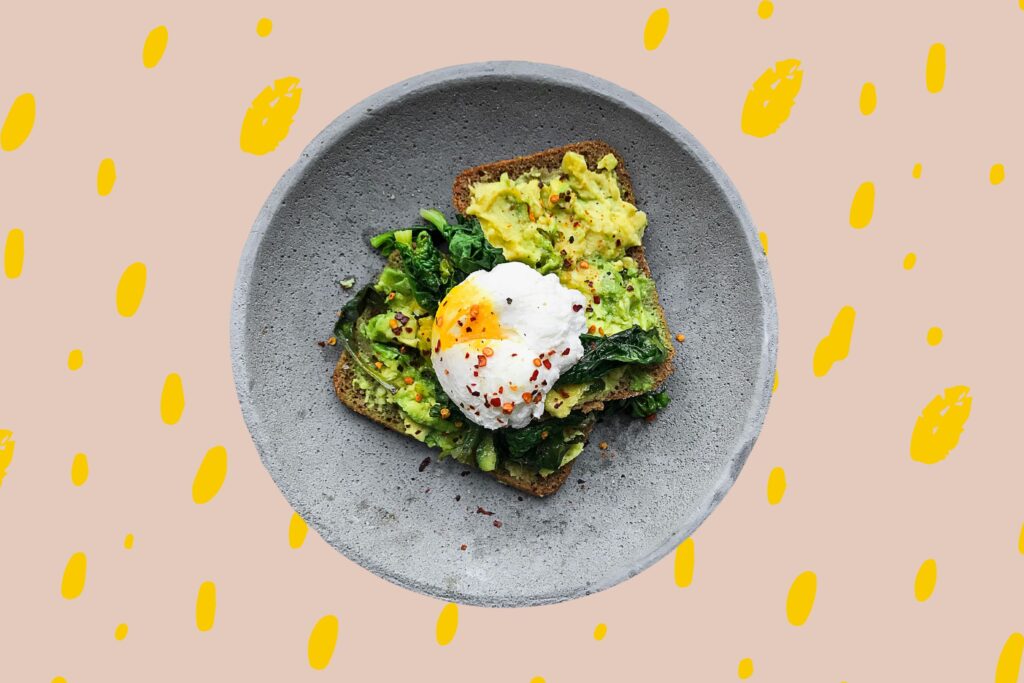
If you want to make sure that you are cutting down on snacking through the morning, then eating breakfast is essential. It’s not enough to have a cup of coffee and start work. A sugary bowl of cereal or a pastry might give you a quick jolt of energy, but a crash will follow. Instead, make a nutritious choice in the morning with something like a bowl of muesli or porridge, topped with a little low fat yoghurt and some fresh seasonal fruit, or the much-maligned but still delicious avocado on toast with a poached egg. This should see you through until lunchtime.
Identify Any Potential Allergies Or Intolerances
We often assume food issues would have been identified in childhood, but it can take years to realise we’ve developed a new problem. The huge increase in awareness about gluten intolerance is a prime example.
As the experts at Repose Healthcare recommend, if you’re suffering recurring pain or discomfort after eating, investigate further. A food sensitivity test is a simple way to find out if you have any allergies or intolerances.
Cut Down On Your Alcohol Intake
The drastic rise in alcohol use during the pandemic was hardly surprising given the mental health challenges many faced. Even if you’re a casual drinker, it’s worth examining how much you consume weekly.
Beyond the obvious health implications, alcoholic beverages are loaded with empty calories. Remember too that alcohol is a depressant. If your mood suffers after a glass of wine, consider drinking less or cutting it out completely.
Drink Caffeine In Moderation
We all need a boost sometimes, but remember that after the caffeine high comes the crash. Your energy levels will drop in an hour or two, affecting your mood. Try replacing at least one caffeinated beverage with a caffeine-free alternative. Your sleep patterns might improve too.
Learn The Facts On Fats
To sustain a healthy diet, it’s important to know something about the nutritional values of food. That said, there’s so much confusion over nutrition, and time and time again the lines are redrawn about what may or not be healthy.
Intelligence regarding fat, particularly, has shapeshifted, with science now recommending doing away with a daily ceiling being put on fat consumption, and instead focusing on replacing ‘bad’ fats with ‘good’ ones – or saturated with unsaturated.
Simple swaps can be made regarding fat which can help you manage your weight. These include: swap whole milk for skimmed, prioritise low fat instead of full fat cheese, swap butter for low fat spreads or extra virgin olive oil, switch the sour cream for low fat crème fraîche, and use rapeseed oil or extra virgin olive oil for frying with a spritzer to control the amount you use.
Generally speaking, doctors and nutritionists regard monounsaturated and polyunsaturated fats as being considerably more healthy than the saturated kinds. You’ll find monounsaturated fats in oily fish, walnuts, and some seeds, while polyunsaturated fats are found in nuts and avocados, especially.
Stay Hydrated Throughout The Day
Many of us mistake thirst for hunger, leading to unnecessary snacking. The NHS recommends six to eight glasses of fluid daily. Proper hydration supports metabolism, aids digestion, and helps you feel fuller. Keep a reusable water bottle with you and take regular sips. If plain water bores you, add lemon, cucumber, or mint.
Practice Mindful Eating
It’s easy to eat whilst distracted by phones or televisions. Research suggests that mindful eating helps you develop a healthier relationship with food. Sit down without distractions, chew slowly, and savour each bite. This practice helps you eat less whilst enjoying food more. Check in with yourself before eating: are you truly hungry, or just bored or stressed?
Plan Your Meals In Advance
Planning meals ahead is one of the most effective ways to maintain a healthy diet. Without a plan, you’re more likely to reach for convenience foods or takeaways. Set aside time each week to plan your meals and create a shopping list.
Batch cooking is another excellent strategy. Prepare larger portions and freeze individual servings, so you’ll always have a nutritious home-cooked meal available.
The Bottom Line
Though drastic dietary changes may feel easier, quick fixes rarely work. Making small, incremental changes is the most sustainable approach to better health.
The pandemic taught us lessons about our eating habits, both good and bad. Don’t berate yourself for past choices; focus on the positive changes you can make moving forward.
You don’t need to implement all nine changes at once. Start with one or two that feel most achievable, and gradually build from there. For more inspiration on healthy living, you know what to do.
That innocent-looking loofah in your shower is harbouring a dirty secret. Or rather, several million of them. These bathroom staples might feel like they’re giving you a proper clean, but research shows they’re actually perfect breeding grounds for bacteria, mould, and mildew. The warm, damp environment of your shower combined with the loofah’s dense mesh of fibres creates an ideal environment for microorganisms to multiply. Even worse, as you scrub, you’re potentially spreading these bacteria across your skin, along with dead skin cells that get trapped in the loofah’s layers.
The environmental impact isn’t great either. Most modern loofahs are made from plastic mesh, adding to our planet’s mounting plastic problem. And while natural loofahs exist, they still need replacing every few weeks to avoid bacterial buildup – hardly sustainable for daily use.
But here’s the good news: the world of body scrubbers has evolved. We’ve researched and tested the most innovative alternatives that promise cleaner, greener, and more effective ways to keep your skin glowing. Here’s what actually works.
Why Exfoliation Matters
Before we lather ourselves up and scrub ourselves down, ready for the alternatives, let’s talk about why we’re bothering with body scrubbers in the first place. Your skin naturally sheds dead cells every day, but this process slows as we age. Without regular exfoliation, these cells build up, leaving skin looking dull and feeling rough. Proper exfoliation doesn’t just reveal fresher skin underneath – it also helps prevent ingrown hairs, improves circulation, and allows your moisturiser to penetrate more effectively.
But here’s the crucial bit: over-enthusiastic scrubbing can do more harm than good. Those aggressive, daily sessions with a rough loofah might feel satisfying, but they can damage your skin barrier, leading to irritation and sensitivity. The key is finding tools that provide consistent, gentle exfoliation rather than sporadic intense scrubbing. This is where our loofah alternatives really shine.
Silicone Scrubbers: The Ultimate Upgrade
Think of silicone scrubbers as the sophisticated evolution of shower accessories. They’re antimicrobial, meaning bacteria bounce right off them instead of setting up camp. Unlike traditional loofahs that need replacing every few months, these clever tools last ages – just chuck them in the dishwasher when they need a refresh. The gentle nubs provide just the right amount of exfoliation without feeling harsh, and they work brilliantly with your regular shower gel or soap.
While silicone offers high-tech appeal, sometimes the classics deserve another look. Modern washcloths join the ranks of trusted bathroom staples like soap sponges, offering a perfect balance of gentle cleansing and exfoliation. Today’s versions are incredibly soft yet effective, making them suitable for all skin types. The key advantage? You can keep a few in rotation, chuck them in with your regular laundry, and always have a clean one ready to go. Plus, they dry quickly between uses, cutting down on that bacteria-friendly moisture that makes loofahs so problematic.
Sea Sponges: Natural Luxury
For those seeking a more natural approach, sea sponges offer a sustainable solution that feels properly luxurious. They’re sustainably harvested and come with built-in enzymes that naturally fight off bacteria – nature’s own cleansing innovation. The texture hits that sweet spot between gentle and effective, though they do need proper care to stay in top form. A quick rinse in diluted tea tree oil once a week keeps them fresh, and when properly maintained, they can last several months.
Exfoliating Gloves: Full Control
Sometimes you want to really get stuck in with your scrubbing, especially for those rough patches that need extra attention. That’s where exfoliating gloves come in. They let you tackle every angle with proper precision, especially brilliant for sorting out rough elbows and heels. The full-hand coverage means you can adjust the pressure easily, and unlike loofahs, you can pop them straight in the washing machine to keep them hygienic.
Konjac Sponges: Gentle Touch
If your skin throws a strop at the mere thought of exfoliation, try a konjac sponge. Made from plant root, they’re incredibly gentle but still effective. They start off firm but soften beautifully with water, giving you a proper cleanse without any aggro. When they’ve done their time (usually about a month), they break down naturally – no plastic guilt here. They’re particularly brilliant for facial use too, making them a versatile addition to your shower routine.
Making Your Choice
Picking a new shower tool isn’t rocket science, but it is personal. Think about what matters most to you – are you after something that’ll last forever like silicone? Need something that won’t set off sensitive skin? Or maybe you’re focused on cutting down bathroom plastic? Consider your shower routine too – do you prefer a quick scrub or a longer, more luxurious experience?
The truth is, loofahs had a good run, but we’ve moved on. Your skin deserves better than a bacteria-laden scrubber, and now you’ve got options that are better for both you and the planet. Each alternative offers its own unique benefits, whether you’re after something sustainable, hygienic, or gentle on sensitive skin.
Try something new. Your shower routine might just become the best part of your day.
Here at IDEAL, we believe that the kitchen is the most important room in the house. It’s where the good stuff goes down; where we cook for our friends, eat with our family, and test our baking skills. Not only is it the home’s beating heart, but it’s also a place that should nourish your body and your soul.
As such, it should be a space you enjoy spending time. If you feel as though your kitchen isn’t always playing to its full potential, then it may be in need of a facelift. Worry not; you don’t have to spend a fortune do to so. Instead, here are 9 ways to refresh your kitchen that won’t break the bank.
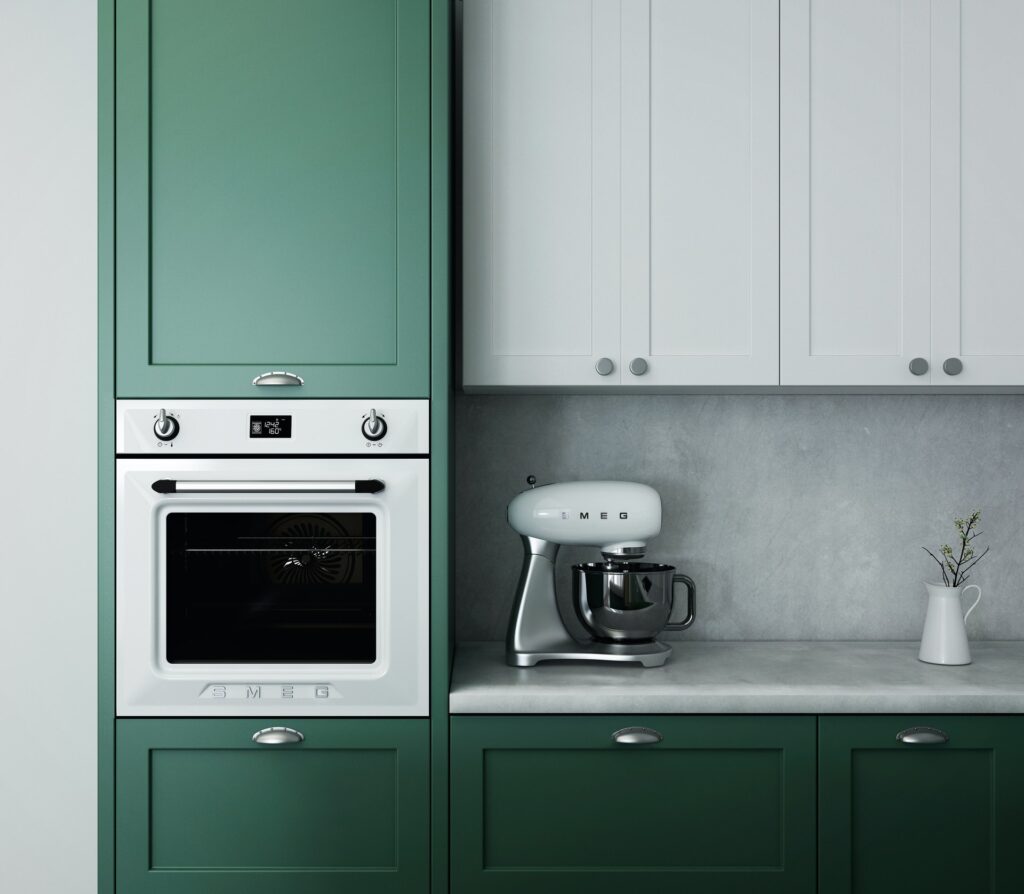
Change The Kitchen Cupboards
It’s possible to give your kitchen a completely new look by simply replacing the cupboard doors. There are many different colours, styles, and materials to choose from, whether you want to spice up the look or just inject some style with a variety of colours and textures.
Another option is to repaint the doors you’ve already got. Wooden doors will need to be primed before painting, or the finished look will be ruined. If you’re not that good with a paintbrush, there is also the option of using plastic film wraps. Simply peel off the plastic back and stick it on. This type of surface is very easy to clean and when you get fed up with it, peel it off and stick on another one.
If you want to make an even smaller, but still very effective change, you could change the door handles. Most handles can be unscrewed and replaced with something fresh feeling. It could be a different colour, style or type of material; something small that makes a big difference!
Update Your Window Treatments
Never underestimate the power of natural light and how you choose to frame it. Your kitchen windows aren’t just portals for sunlight; they’re opportunities to add personality and style to your space. Updating your window treatments is a cost-effective way to transform the look and feel of your kitchen while potentially improving its functionality.
Consider swapping out heavy, dated curtains for modern Roman shades in a water-resistant fabric, or install sleek roller blinds that can be easily wiped clean. If privacy isn’t a major concern, café curtains that cover just the bottom half of your windows can add charm while still letting in plenty of natural light. For a more minimalist approach, simple roller shades in a neutral tone can provide a clean, contemporary look that won’t compete with other design elements in your kitchen.
Don’t forget about the hardware – switching out old curtain rods or blind fixtures for something more current can make a significant impact. Brass or matte black hardware can tie in with your other kitchen fixtures, creating a cohesive look throughout the space. And if you’re feeling particularly bold, choose window treatments in one of 2024’s trending kitchen colours, like sage green or warm terracotta, to make a statement without committing to painting entire walls.
Replace Your Worktops
Ok, so this change costs a little more than replacing the cupboard doors, but it is one change that makes it look like your whole kitchen has been renovated.
Worktops have the power to make or break the finish of your kitchen so choose very wisely. Be aware that there are a wide range of options when it comes to replacing your worktops, and the difference in price can be quite significant; check out this guide to the pros and cons of both granite and quartz worktops for a little more insight.
If you desire a sleek, ultra-modern aesthetic, then another option, as the team at Lawcris tell us, could be metal laminate worktops, which represent a robust and stylish choice. Available in finishes like stainless steel and brushed copper, metal laminates add a touch of industrial chic to your kitchen while being incredibly durable and easy to clea
Invest In New Lighting
When it comes to a kitchen, the right lights are important. Indeed, good lighting can improve a kitchens functionality no end, while a poorly lit kitchen can lead to all sorts of mishaps; salt instead of sugar, for instance, or the loss of a finger whilst chopping. Moreover, good lighting can add to the ambiance of the kitchen and create a more welcoming space for friends and family.
Changing the lighting can be a very effective way to transform the atmosphere in your kitchen. Pick the right lights, and they can set the mood, define your style and attract the eye towards any other details in the kitchen. It’s also possible to make a room look much bigger than it actually is by making use of various lighting tricks.
Bear in mind that when you’re changing the lighting, there are certain areas of the room you need to concentrate on. For example, the areas where you prepare food, eat, and relax should be lit accordingly. Also, think about the changing light levels during the day. There may be areas of your kitchen that need to be illuminated most of the day. If you want to illuminate specific areas such as your kitchen worktops or an island, recessed downlighting brings more focus.
Open Plan Shelving
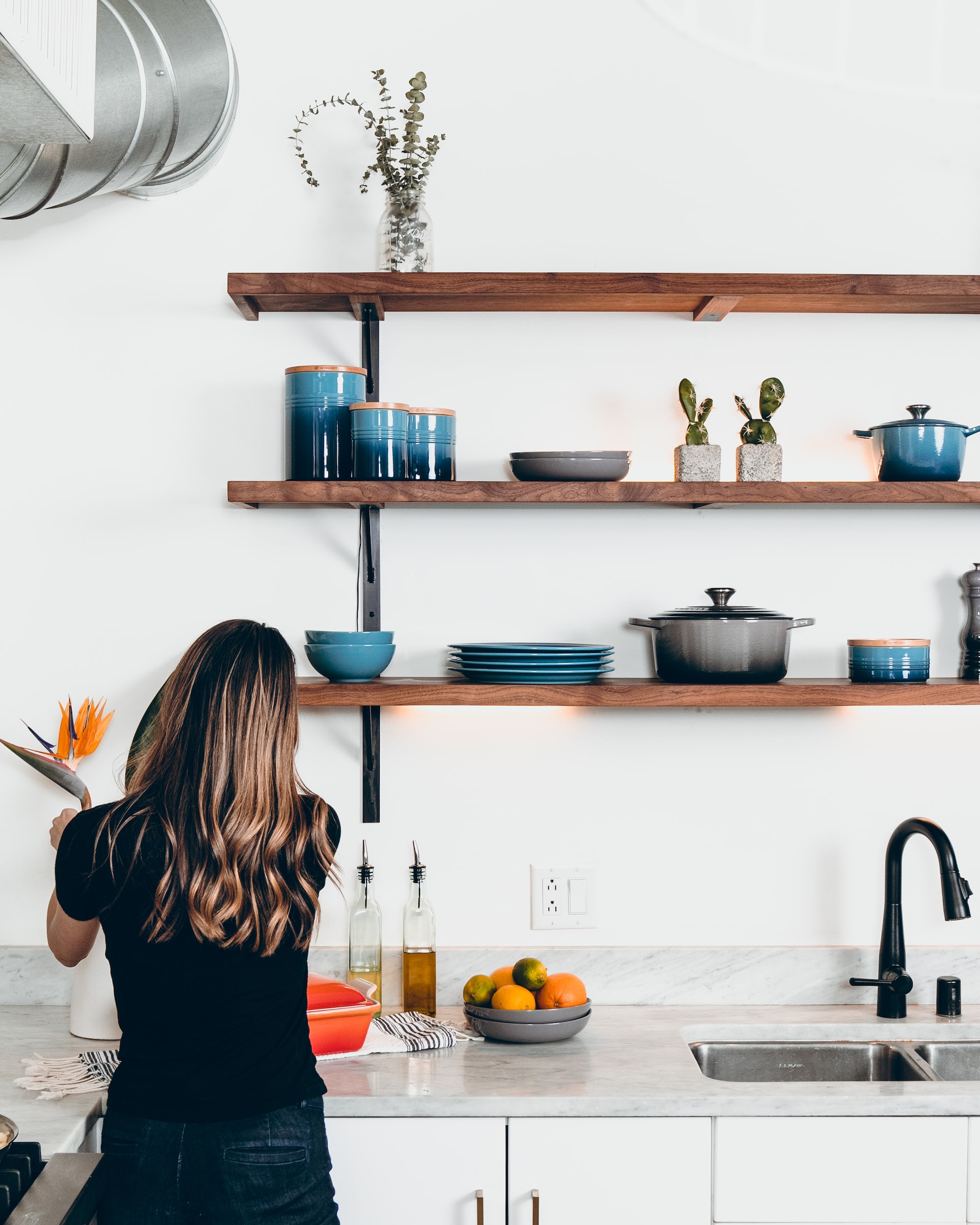
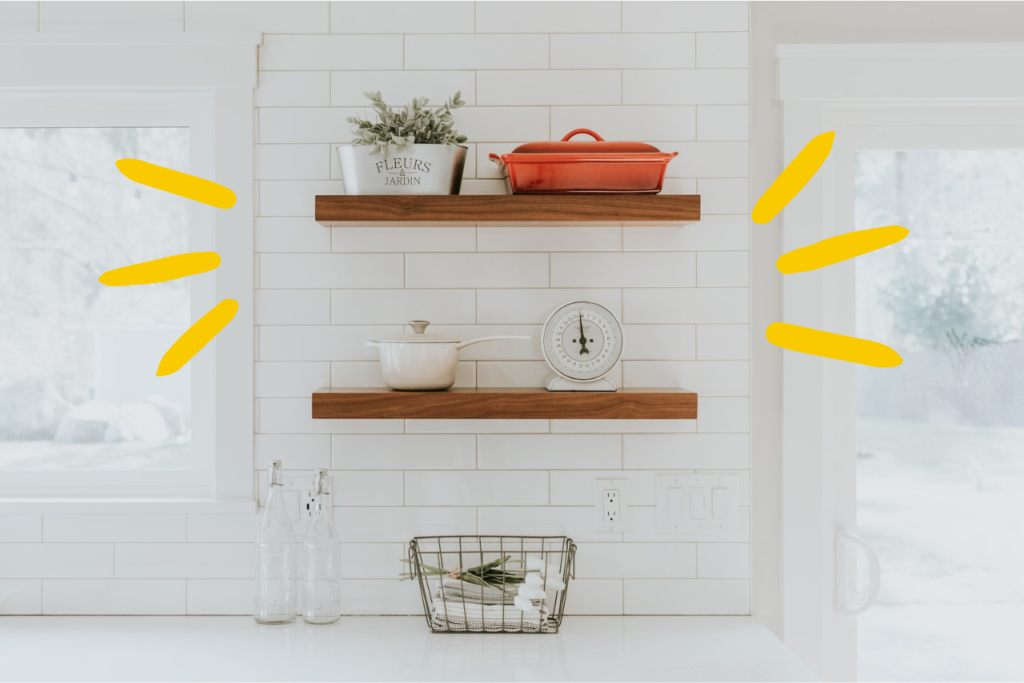
If you want to make your kitchen appear larger than it is, you should introduce open plan shelving. It provides you with an opportunity to show off any fancy plates, bowls or crockery you might have, but it also makes items easier to reach. No more fumbling at the back of a cupboard or standing on tiptoes while you try to reach your favourite cup.
Open plan shelving also makes your kitchen more inviting, pulling disparate elements together. To create a cohesive look, consider pairing your shelving with white slim shaker cabinets for a clean, minimalist base that balances the openness of the shelves with timeless structure below
You could consider adding a little greenery to your open plan shelving. Placing plants and cut flowers to your kitchen is a great way to liven up the space and emphasise that fresh, natural feel synonymous with great food as well as ambience. Go one step further and place them in bright pots and vases for extra style points (though don’t over do it or you’ll be advising guests to bring sunglasses on their next visit).
Repaint The Kitchen
For many people, this is the cheapest and quickest option. After all, who doesn’t like a room when it’s had a fresh coat of paint. Paint the walls and the ceiling if you want a completely new look. Otherwise, you could choose to paint a feature wall or add a chalkboard. Try a little experimenting and let your creative side loose. If you don’t like what you’ve done then simply paint over it and start again!
In 2024, kitchen colour trends cover a vast range of hues. Particularly in fashion right now are nature-inspired greens, bold blacks and charcoal greys, sunny yellows, and rich, earthy tones such as terracotta, according to Dulux.
Alternatively, consider wallpapering. Kitchen wallpaper is specially designed to withstand water, heat, and grease as well as being easy to clean.
Add Colour With Accessories & Appliances
If you aren’t confident about painting the walls and adding a lot of colour to your kitchen in one go, kitchen accessories, appliances and gadgets are ideal. They hint at individualism and self expression without going the whole hog and ruining the kitchen’s colourscape. Opting for colourful tea towels, oven gloves, and a few pots to keep your utensils in can really brighten up your space without being too overbearing.
You could even recover or replace the cushions on your dining room chairs to bring that feel of the fresh. You may even want to consider moving away from those cool silvers and greys that have become so popular by introducing some warmer metallics into the design. Items like brass kitchen taps can add a pop of golden warmth into your space – match it with some brass cabinet hardware and you’ll wonder why you didn’t abandon all that chrome and brushed steel years ago!
Replace Kitchen Tiles
Tiles can be used to great effect if you want your kitchen to reflect your personality and taste. You could decide to opt for a completely new look and replace all of them. Alternatively, focus on the splashback and just change those. If you’re not too keen on such a job, it is possible to paint your tiles and create a new look. There are a range of different colours to choose from, and if you use a white grout pen, it adds another dimension.
Improve Your Storage
It’s usually when you renovate a room that you appreciate how much you’ve accumulated over the years. No more so than in your kitchen when there always seems to be a new product or gadget on the market. Take an afternoon and reorganise your kitchen cupboards, putting the things you use the most at the front. Finding space to pack away the items on your worktops will also improve the look of your kitchen and make it feel more spacious.
And with that sense of spaciousness in our soul and a song in our heart, we’re off to cook lunch in our sometimes beautiful, sometimes messy kitchen!
Congratulations! Be careful! You’ve decided to dip your toes in the waters of digital nomadism and a life of intrepidation, transformation and transience awaits. For better and for worse, we might add.
Because the life of a digital nomad isn’t all liquid lunches, poolside emailing and spending more time on your tanline than your deadlines.
And as much as the romantic notion of digital nomadism depicts heading off into the world with nothing more than a laptop and a sense of adventure, the prep, planning and admin involved is actually pretty complex if you’re to do this thing right.
Perhaps the most important preparatory step concerns the life you lead behind when you set off to travel the world. Leading a life as a digital nomad is all about minimalism; you can’t travel the world with all your worldly possessions, after all. However one of the biggest challenges is figuring out what to do with all of the things you’re leaving behind. We’re here to help with that; here’s a short guide on how and where to store your belongings as a digital nomad.
Take Stock Of Your Belongings
First things first, before you consider where to store all your belongings, consider both the value of your items and their utility.
If you’re already considering hiring a self storage unit (more on that later), ask yourself if you might end up paying more for a long-term storage unit than your things are worth? If it’s cheaper to sell your old items before your trip and buy new ones later when you return, rather than putting them in storage, then that’s something well worth considering.
Life as a digital nomad offers a sense of liberation and now could well be the time to liberate yourself of your belongings. Which brings us to our next point…
Sell & Give Away
The nature of work as a digital nomad is unpredictable and unreliable, and income is rarely steady. Getting into debt can sharply and suddenly spell the end of this lifestyle, and it’s something you” have to avoid if you want longevity in this new life of yours. Selling your surplus items and putting the money in an emergency fund account is a way to kill two birds with one stone, in a sense; you don’t have to pay for excessive storage and you have a backup bank account if/when things go wrong.
Alternatively, you could invest your money in technology that will make your life as a digital nomad more comfortable and your work more efficient.
Make Use Of Your Family’s Attic & Basements
Sorry mums and dads, but we understand that it’s super hard to get rid of all of your belongings before your adventure. As Inc explains, “The objects you struggle to get rid of are likely tied to your self-worth, according to a 2011 study published in the Journal of Consumer Psychology. Rather than viewing those objects as “mine,” you may think of them as “me.”’’
This leads to a level of attachment disproportionate to the worth of the item involved. But if you’re attached to your belongings (like most of us are), then consider asking your close relatives if they have space to store things for you.
If you’re storing things in an attic, then there are two factors you should consider – temperature and humidity. Indeed, attics are exposed to extreme temperature fluctuations and humidity levels, so be sure to pack your items into plastic boxes with snug-fitting lids to prevent damage.
If we’ve worried you about those heat and humidity levels damaging your belongings,self-storage might be a useful option for larger items. Be assured that self storage offers more security than storing stuff in your parent’s attic or basement. By accessing a dedicated facility, you’ll have peace of mind when you’re travelling so you can fully embrace life as a digital nomad. You also won’t have to travel with that nagging concern that all your stuff is irritating your folks, either.
As mentioned before, the life of a digital nomad can be unpredictable and you may not know exactly how long you’ll be away for (if you bought a return ticket, are you even a digital nomad?). Most storage providers offer a heavily discounted introductory discount (50% of x amount of weeks). If you know how long you’re going to be away for, say, a year, then take advantage of long stay discounts offered by storage providers.
Perhaps you have a friend who loves plants and can actually keep them alive? Ask if they would be able to look after your plants. Or, maybe you have a friend who has just moved into a new flat that’s unfurnished or has bought a new house – perhaps they’d like to use your furniture for a while? It can be pretty costly to outfit a new home right away so you may be doing them a favour.
Maybe your buddy is an aspiring chef, and would love access to your treasure trove of old cookery books? Hey, this thing writes itself! We wish it did actually, then we could clock off for the day…
Digitise What You Can
Before you start boxing up your life, consider which of your belongings can be converted into digital format. Those photo albums gathering dust? Scan them. That collection of important documents, receipts, and warranties? Create a secure cloud backup. Your DVD and book collections? Many can be accessed through streaming services or e-readers for a fraction of the storage space and weight.
This isn’t just about reducing physical clutter – it’s about making your memories and important information accessible from anywhere in the world. Services like Dropbox, Google Drive, or external hard drives can store decades worth of photos, documents, and media in something that fits in your pocket. Plus, digitising reduces the risk of losing irreplaceable items to fire, flood, or simply misplacing boxes during moves. The initial time investment pays dividends when you’re halfway across the world and need to access that insurance document or want to show new friends those embarrassing childhood photos.
Create An Inventory System
Here’s something most digital nomad guides won’t tell you: you’ll forget what you stored and where you stored it. Six months into your travels, you’ll have a nagging feeling about that winter coat or wonder if you kept those hiking boots or sold them.
Create a detailed inventory of everything you’re storing, complete with photos and locations. Use a simple spreadsheet or apps like Sortly or MyStuff2 to catalogue your belongings. Note where each item is stored (Mum’s attic, storage unit B, friend Sarah’s garage), its approximate value, and when you might need it again. This isn’t just organisational busywork—it’s practical insurance documentation if anything goes wrong, and it helps you make smarter decisions about whether to keep paying for storage or finally let go of that bread maker you haven’t used since 2019.
Can You Sublet Your Flat?
If you own your home, great! Move on, there’s nothing to see here. You can rent your house out furnished and store big items like furniture there.
However, if you’re currently renting, you may be able to sublet your home with your landlord’s written permission, solving the storage problem in a single, simple swoop. Do be warned that if you sublet your home without permission, you are likely in breach of your tenancy agreement.
This is a bit of a murky area. Citizens Advice explains “You can’t lawfully sublet all of your home. If you do, you lose your status as a secure tenant and your landlord can evict you.”. In short, it’s not worth the risk, but if your landlord agrees to the process, then you won’t need to worry about storage while on your travels.
Check your tenancy agreement, speak to your landlord, and see if you can sublet your flat.
Did someone drop the C Bomb? Sure, October may still be on its last, gasping breaths, but as the first strains of Jingle Bell Rock ring out across the local Primark, Christmas is no longer avoidable. In fact, it’s starting to dominate pretty much all our thoughts…
When the festive season rolls around, we know that your grandpa would probably be happy with nothing more than a hug and a homemade card. But he deserves a little more generosity don’t you think, particularly after the two years we’ve all had! Make this festive season extra special; here are 9 gifts to give your grandpa this Christmas.
A Digital Photo Frame
One thing that grandpas love more than anything is showing off pictures of their family. Rather than having them shuffle through a stack of printed photos or squint at a tiny phone screen, why not gift them a digital photo frame this Christmas?
These modern frames can display an endless slideshow of cherished family moments, and many models allow family members to send new photos directly to the frame through WiFi. This means you can keep adding fresh pictures of the grandkids, family gatherings, and special moments throughout the year – making it a gift that keeps on giving long after the holiday season ends. Some frames even come with built-in storage for thousands of photos and simple touch controls that are perfect for tech-shy grandparents.
Christmas Socks
Giving and receiving socks as a gift is as much a part of Christmas tradition as the pigs in blankets and the Queen’s speech. We know, they have a bad rep as a boring and oh-so predictable gift. As such, they have become their own festive punchline; “another pair of socks”, Dad sighed. However, if there’s any group of people who love socks, it’s grandpas, the ultimate lovers of the functional gift, don’t you think?
Better than simply getting him some socks, why not gift some personalised socks that feature his face on, or for something a little more classier, his initials – a slightly creative take on a classic gift and a winner all round.
A Rolex Watch Winder
Is it just us or does every other grandad covet a Rolex watch? Indeed, it seems to be largely a generational thing but most grandpas simply love these classic timepieces.
It’s easy to see why. It’s a brand that’s respected, admired, valued, and known across the globe. If you’re looking to really treat your grandfather to an expensive present, you could invest in a major brand, like Rolex, though the cost might be something of a stumbling block.
If a Rolex is a little out of your price range or your grandpa already owns one, then consider gifting a watch winder instead. For the uninitiated, watch winders are devices that keep automatic watches running even when they’re not worn – the ones from WOLF have a particularly good reputation.
They also add an element of convenience since they’ll always be ready to be worn without having to wind them or adjust the time and date. And if there’s anything your grandpa loves more than a functional gift, it’s a convenient one!
A Day Out
At this point in their life, your grandparent has probably amassed everything they need. In terms of material things, that is. So, instead of gifting another item destined for the attic, why not take grandpa out and treat him? Consider treating them to a concert, afternoon tea, or a meal out..whatever they might enjoy. The best part is that your grandparent will have the pleasure of your company, as well, which is the ultimate gift of all.
A Virtual Reality Headset
Help your grandfather travel from the comfort of their armchair. As National Geographic explains “technology innovations and a lockdown-led surge in interest suggest virtual travel”.
And the technology keeps getting better and better, offering genuinely immersive experiences. With a VR headset, your grandfather can travel pretty much anywhere in the world. They can pretend they are on a plane and take two-hour virtual reality experience, ‘travelling’ to cities such as Paris and New York without actually ever actually taking off.
A Bottle Of Spirit
No, we don’t mean bottling up your jovial Christmas spirit to give as a gift. Although we’re sure he’d love the sentiment, he’d probably prefer a bottle of the good stuff.
If your grandfather is partial to a little tipple, then get him a bottle of spirits to enjoy this festive season and beyond. If whiskey is his thing, consider a whiskey tasting set – the ideal gift for whiskey connoisseurs this Christmas.
The beauty of this is that your old, old man will get several small bottles of whiskey and a set of tasting cards to go with them, enabling them to be able to try different products side by side, refine their palate and reflect on which they like – a great activity come cold, bleak January, don’t you think?
Christmas and New Year is a time for TV watching; there’s specials and reruns a plenty to watch. Moreover, January and February are pretty bleak, and an increased amount of time spent indoors, staring at the TV, is a given for any age group.
Improve your grandfather’s viewing experience by giving him an armrest organiser this Christmas. He can keep everything to hand and organised, including snacks, TV guides, books, remote controls and everything else needed for an afternoon on the sofa
There are some great online guides on how to make your own armchair pouches should you wish to give him something homemade.
A Snack Subscription Box
One of the best things about going around to your grandparent’s house is that they always seem to have a drawer full of chocolates or sweets. The worst? When the snack drawer runs dry.
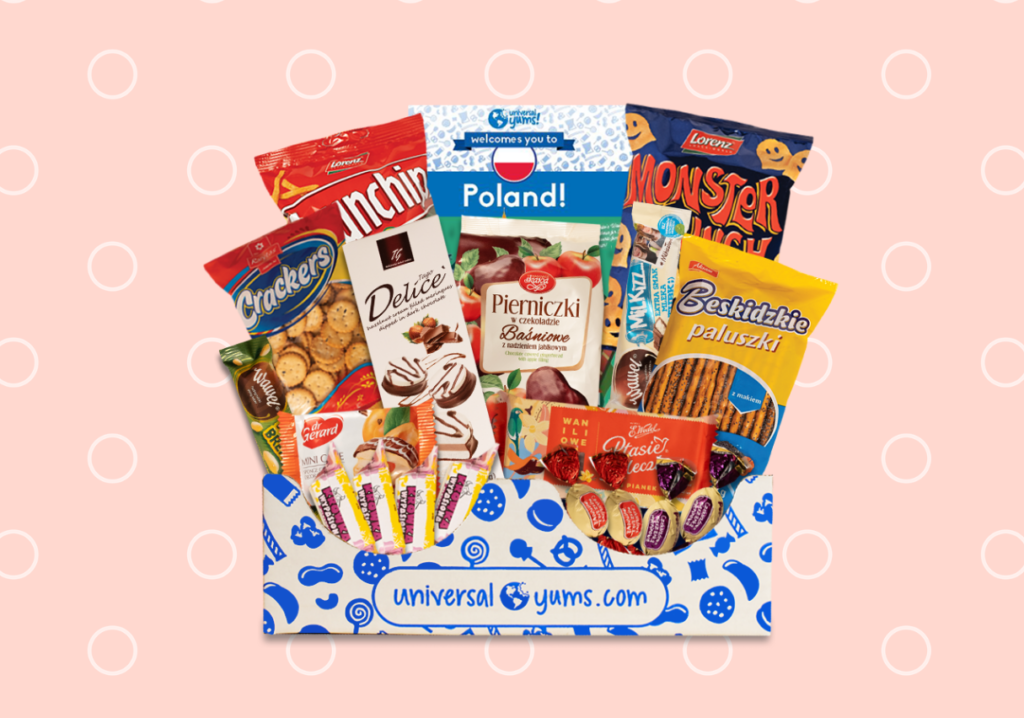
Consider a Graze box as the perfect gift for your grandpa this Christmas. Each month your grandfather receives a box of treats which you can tailor towards their specific tastes and preferences. Alternatively, if you want to expand their snack horizons, consider a Universal Yums Snack box, which delivers an international snack box from a different country every month; ideal for those not able to travel as much due to their advancing years, we think.
Or, on a similar note, if your grandpa has a sweet tooth (hey, whose grandpa doesn’t?), then consider a bespoke collection of sweets. You can personalise your selection to suit your beloved grandpa’s tastes, with the company offering a delectable array of everything from pick ‘n’ mix, retro sweets, traditional sweets and American classics, right though to chocolate bouquets and other favourites. Perfect!
Or, if grandpa doesn’t have a solely sweet tooth (a rare thing, we must admit), then Christmas food hampers come in all shapes and sizes, with many leaning just as heavily on the artisan cheese and wine side of things as they do the sugary snacks. Result.
A Mugwarmer
Picture this; your grandfather settles down with a steaming cup of tea in front of the TV, only to nod off. When they wake up to take a sip, their tea is stone cold. Sounds like a familiar scene for grandpas up and down the country. The solution? A mug warmer, of course. A mug warmer will keep their brew nice and warm until they are ready to drink it, and what better gift could you gift than the perfect cup of tea? We certainly haven’t found it!
If you haven’t heard of CHEEEZ Self Portrait Studio on Tottenham Court Road, you might just be missing out on one of London’s best-kept secrets. Inspired by the wildly popular self-portrait studios in South Korea, CHEEEZ offers Londoners the change to take professional-quality self-portraits using a remote control…
Say Cheeez!
Ever scrolled past those impossibly good Instagram photos and wondered how people get them? Well, there’s a new spot in London that’s about to become your best-kept secret: CHEEEZ.
Tucked away on Tottenham Court Road, this self-portrait studio is everything those stuffy professional photoshoots aren’t. Think of it as your own private photography playground, complete with perfect lighting and backdrops that would make any influencer jealous.
The concept? It’s brilliantly simple. CHEEEZ took what makes Korean self-portrait studios so addictive and brought it to London. No photographers telling you to “say cheese” or awkward poses you’d never naturally pull. Just you, professional cameras, and the freedom to take as many shots as you want until you get the one that makes you go “that’s the one!”.
If you’ve never heard of them, A Korean self-portrait studio is a unique photography concept where individuals or groups can take self-portraits using professional equipment and backdrops set up within a studio. These studios are designed to provide high-quality photography without the need for a professional photographer. You’re in charge of the shoot and you can snap as many photos as you want and take your time to perfect each shot. It’s all about capturing your true self, on your terms. The best bit is that you get them printed on the spot, then and there.
Let’s be real – we’ve all been there, trying to get that perfect shot with a phone propped against a water bottle or asking strangers to take our photo (and dying inside as they cut off half your head). At CHEEEZ, those days are over. You’re in charge of your own shoot, and trust me, it’s way more fun than it sounds.
The space itself is gorgeous – think minimalist cool rather than stuffy studio vibes. And if you’re worried about not knowing what you’re doing, don’t be. The staff are there to help you figure out the equipment, but they won’t hover over you like that one aunt at family gatherings who thinks she’s a professional photographer.
Ideal For… Pretty Much Everything
Whether you’re celebrating something big (hello, graduation photos that don’t look like everyone else’s), need a LinkedIn photo that actually looks like you, or just want some epic shots for the ‘gram, CHEEEZ has got you covered. You could even create photos for your own unique birthday cards.
The best part? You don’t need a special occasion to visit. Having a good hair day? Pop in. Want something fun to do after dinner with friends? This beats another pub night. Need new dating app photos that aren’t bathroom selfies? You get the idea.
In a city where everything’s been done before, CHEEEZ is offering something different. It’s professional photography without the pressure, creative freedom without the crazy price tag, and most importantly, it’s just really, really fun.
So next time you’re around Tottenham Court Road, pop in and see what the fuss is about. Just don’t blame us when you get addicted to having photos you actually want to share.
Your vehicle’s wheel alignment is one of those essential maintenance aspects that often goes unnoticed until problems become apparent. Proper alignment ensures your tyres meet the road at the correct angle, your wheels point straight, and your steering wheel is centred when driving.
When these angles fall out of specification, it can lead to uneven tyre wear, poor handling, and increased fuel consumption. Understanding the warning signs of misalignment can save you money on premature tyre replacement and keep your vehicle performing safely.
The Steering Wheel Test
One of the most obvious indicators of alignment issues is the behaviour of your steering wheel. When driving on a straight, flat road, your steering wheel should sit perfectly centred with minimal input from you. If you notice the wheel is tilted to one side whilst the car travels straight, or if you’re constantly making small corrections to maintain a straight line, your alignment is likely off.
This misalignment occurs when the angles of your wheels don’t match the manufacturer’s specifications, causing the vehicle to naturally pull to one side. Interestingly, it can even affect air quality negatively.
Pay attention to how the steering wheel feels in your hands. A properly aligned vehicle should track straight with light, responsive steering. If the wheel feels loose or if there’s excessive play before the car responds to your input, alignment problems could be contributing to the issue, though this might also indicate worn steering components that require inspection.
Vehicle Pulling Or Drifting
Perhaps the most common symptom of poor alignment is when your car pulls or drifts to one side whilst driving. Test this on a quiet, level road by briefly loosening your grip on the steering wheel. A properly aligned vehicle should continue travelling straight ahead. If the car immediately veers left or right, your alignment needs attention.
It’s worth noting that slight pulling can sometimes be caused by road camber (the intentional slope built into roads for drainage). However, if your vehicle consistently pulls in the same direction regardless of which side of the road you’re on, alignment is the likely culprit. This pulling forces you to constantly correct the steering, which can be tiring on long journeys and potentially dangerous in emergency situations.
Uneven Or Rapid Tyre Wear
Your tyres provide valuable clues about your vehicle’s alignment status. Inspect all four tyres regularly for unusual wear patterns. With correct alignment, your tyres should wear evenly across the entire tread surface. Misalignment typically causes specific wear patterns that can help diagnose the problem.
If the inside or outside edge of your tyres is significantly more worn than the centre, this suggests a camber issue (the angle at which your tyres sit relative to the road surface).
Feathering, where the tread appears smooth on one side but sharp on the other, often indicates a toe problem, referring to whether your tyres point inward or outward when viewed from above. Cupping or scalloping (dipped areas around the tyre’s edge) can result from a combination of alignment issues and suspension problems.
Regular tyre inspections not only help you catch alignment problems early but also maximise the life of your tyres, which represents significant savings over time. New tyres are expensive, and misalignment can reduce their lifespan by thousands of miles.
When To Seek Professional Assessment
Whilst these indicators can alert you to potential problems, proper wheel alignment requires specialised equipment and expertise. Modern vehicles use precise angles measured in degrees and minutes, which can’t be accurately assessed by eye or feel alone. Book professional wheel alignment at Dexel Tyre & Auto Centre for smoother drives, where computerised equipment can measure your vehicle’s alignment angles and make necessary adjustments to manufacturer specifications.
Several situations warrant having your alignment checked even if you haven’t noticed obvious symptoms. After hitting a substantial pothole or kerb, an alignment check is advisable, as the impact can knock your wheels out of specification. Similarly, if you’ve been involved in any collision, even a minor one, the forces involved can affect alignment. When replacing suspension components or getting new tyres fitted, it’s wise to have the alignment checked to ensure optimal performance and longevity of the new parts.
The Vibration Factor
Whilst vibrations can stem from various sources (including unbalanced wheels, worn suspension components, or brake issues), misalignment can contribute to steering wheel vibration, particularly at higher speeds. If you notice your steering wheel shaking or vibrating whilst driving, especially in conjunction with other alignment symptoms, it’s worth having the alignment checked alongside a general inspection of your steering and suspension systems.
The Financial Impact Of Neglecting Alignment
Ignoring alignment problems might seem like a way to save money in the short term, but it proves costly over time. Misaligned wheels create uneven tyre wear, potentially requiring replacement thousands of miles earlier than properly maintained tyres. Poor alignment also increases rolling resistance, which means your engine works harder and burns more fuel to maintain speed. Proper alignment can improve fuel efficiency by as much as 10%, which adds up to substantial savings over a year of driving.
Beyond tyres and fuel, misalignment places additional stress on suspension components, potentially accelerating wear on ball joints, bearings, and other parts. The handling and safety implications also shouldn’t be overlooked (a vehicle that pulls or has compromised steering response is more difficult to control in emergency situations).
Prevention & Maintenance
Whilst some alignment issues are unavoidable, particularly if you frequently drive on poorly maintained roads, certain practices can help maintain proper alignment longer. Avoid potholes and road debris when safely possible, approach speed bumps and kerbs carefully, and don’t mount kerbs unless absolutely necessary. Regular suspension inspections can catch worn components before they affect alignment, and maintaining proper tyre pressure reduces stress on suspension systems.
Most manufacturers recommend having your alignment checked annually or every 12,000 to 15,000 miles, though this can vary based on your driving conditions and vehicle type. If you frequently drive on rough roads or your area experiences harsh winters with significant road damage, more frequent checks may be prudent.
The Bottom Line
Your vehicle’s wheel alignment plays a crucial role in handling, safety, tyre longevity, and fuel efficiency. By staying alert to the key indicators (steering wheel position, vehicle pulling, uneven tyre wear, and vibrations), you can address alignment issues before they become costly problems.
Regular inspections and prompt attention to symptoms will keep your vehicle driving smoothly and safely whilst protecting your investment in tyres and mechanical components. Don’t wait until your tyres are ruined or your fuel bills have noticeably increased; make wheel alignment checks a regular part of your vehicle maintenance routine.
Chicago is a city that refuses to be summed up in a neat little package. Sprawling along Lake Michigan’s shore like a metropolis from a future past, it’s a place where world-class architecture meets Midwestern charm, where culinary innovation sits comfortably alongside classic hot dog stands, and where blues music still wafts from basement bars into the evening air.
First-time visitors often make the mistake of treating Chicago like a smaller New York – it’s not. The Windy City (a nickname that, surprisingly, refers more to the city’s historically boastful politicians than its weather) moves to its own distinctly Midwestern rhythm.
While guidebooks might send you scrambling between tourist spots, the real Chicago reveals itself in the spaces in between – in neighbourhood diners, local music venues, and quiet lakefront spots where the skyline takes your breath away. Here’s your insider’s guide to experiencing the city like a proper Chicagoan would show their favourite cousin around – mixing essential landmarks with those secret spots that make this city truly special.
Start Your Day At The Bean (But Do It Right)
Cloud Gate, universally known as ‘The Bean’, is Chicago’s most photographed artwork – a massive, mirror-polished stainless steel sculpture that looks exactly like, well, a giant bean. It perfectly reflects the city’s skyline and has become the unofficial symbol of modern Chicago. Yes, it’s touristy, but here’s the secret: arrive at 7am with a coffee from Intelligentsia on Randolph (their oat milk latte is worth the queue). You’ll have the whole place to yourself for photos, and watching the sunrise reflect off the sculpture is genuinely magical. Plus, you’ll dodge the Instagram crowds who arrive by the busload after 9am.
Get Lost In The Art Institute, But Skip the Obvious
Housing over 300,000 artworks, the Art Institute of Chicago spans 5,000 years of human creativity. Everyone rushes to American Gothic (you know, that famous painting of the stern farmer with his pitchfork), but head straight to the Modern Wing’s top floor instead. The city views through the massive windows are spectacular, and the Gerhard Richter collection is mindblowing. Pro tip: Thursday evenings are free for Illinois residents, and the crowd is mostly art students and locals.
Do Deep Dish, But Make It Pequod’s
First, let’s talk about Chicago deep dish pizza. Unlike its thin-crust Italian cousin, this is a beast of a different order – imagine a two-inch-deep crusty bowl filled with rivers of molten cheese, chunky tomato sauce, and whatever toppings you fancy. It’s more like a pie than a pizza, and it’s a Chicago institution.
Whilst the popular tourist traps Giordano’s and Gino’s East are certainly good, they get a little busy and aren’t perhaps the finest you’ll find in the city. Instead, head to Pequod’s in Lincoln Park, which serves the city’s best version with its signature caramelised cheese crust that’s worth the inevitable queue. Go at 4pm to avoid the worst of the wait, and order the pan pizza with sausage and giardiniera (Chicago’s beloved spicy pickled vegetable mix – it cuts through the richness perfectly).
Take That Architecture Cruise (But Choose Wisely)
Chicago is essentially an open-air museum of 20th-century architecture, where legendary architects like Frank Lloyd Wright, Mies van der Rohe, and Louis Sullivan left their mark. The Chicago Architecture Center’s cruises are worth every penny—specifically their 5:30pm summer tour when the light hits the buildings perfectly.
The 90-minute journey takes you down all three branches of the Chicago River, passing over 50 significant buildings, from art deco masterpieces to ultra-modern skyscrapers. Avoid the cheaper knockoffs; CAC’s volunteer docents are actual architects and architecture historians who know their stuff. Grab a seat on the port (left) side of the boat for the best photo ops.
Hit Big Star In Wicker Park for Taco Tuesday
In a city famous for its Mexican population (over 1.5 million in the metro area), choosing where to get tacos can be overwhelming. This converted petrol station serves the city’s best tacos al pastor (marinated pork sliced from a vertical spit and served with pineapple), and their whiskey list is extraordinary.
Sit on the patio, order the queso fundido with rajas (melted cheese with roasted poblano peppers), and watch the neighbourhood’s endless parade of characters go by. The queue can be mad, but the bar next door, Violet Hour (behind the unmarked door), makes the perfect waiting spot – it’s one of the spots that kicked off America’s craft cocktail revival in the early 2000s.
Experience Teatro ZinZanni’s Spectacular Circus Dinner Show
Teatro ZinZanni offers something distinctly local – a blend of cirque-style acrobatics, classic Chicago speakeasy vibes, and a four-course feast. Housed in the historic Cambria Hotel in the Loop, this intimate venue puts you right in the middle of the action. The performers interact with diners throughout the evening, and the vintage spiegeltent setting makes you feel like you’ve stepped back into Chicago’s roaring twenties. Book the early show – the later one can run past midnight, and you’ll want to savour every moment.
Similarly theatrical, and among the most unique fun things to do in Chicago, Cirque du Soleil’s performances transform the city’s historic venues into otherworldly spaces. Whether they’re taking over the United Center (where the Bulls play basketball during regular season) or gracing the ornate Chicago Theatre with their presence, Cirque brings something special to the Windy City. The shows feel different here – maybe it’s the way the acrobatics echo off the Theatre’s 1920s French Baroque architecture, or how the lake wind sweeps around the United Center’s plaza before you step into their magical world. Unlike touring stops in other cities, Chicago performances often enjoy extended runs, allowing for more elaborate staging and rigging setups.
Book tickets well in advance – locals snap up the best seats months ahead, especially for winter shows when everyone’s looking for indoor entertainment. Pro tip: the seats in the first few rows of the mezzanine often offer better views of the aerial acts than the ground-level premium seats.
Catch Jazz At The Green Mill
The Green Mill isn’t just another jazz club – it’s a living piece of Chicago history. Built in 1907, this art deco time capsule was Al Capone’s favourite hangout during Prohibition, and if you know where to look, you can still spot the escape tunnels the mobsters used during raids. The spittoon-lined bar and vintage booths remain unchanged since the days when Charlie Chaplin performed here.
Sunday night’s Poetry Slam (the oldest in the country) is a Chicago institution, but the real magic happens during Tuesday’s jazz sessions when local legends drop in for impromptu performances. Get there early to snag one of the original wooden booths – they’ve been there since opening night.
Browse Myopic Books, Then Hit Stan’s Donuts
Independent bookshops are increasingly rare, but Myopic Books keeps the flame burning bright. This three-floor literary labyrinth in Wicker Park stays open until midnight and houses over 70,000 books, arranged in a charmingly chaotic system that encourages serendipitous discoveries. Their poetry section is unmatched, and the creaky wooden floors and resident shop cat (named Pages) make it properly atmospheric.
Afterwards, walk five minutes to Stan’s for their pocket doughnuts filled with Nutella. They’re best eaten on the Blue Line platform while watching trains rumble past – a quintessential Chicago moment.
Experience Logan Square’s Food Revolution
Ten years ago, Logan Square was just another working-class neighbourhood. Now it’s the epicentre of Chicago’s culinary renaissance. Skip River North’s overpriced restaurants and head northwest.
Start at Mini Mott for their legendary burger (originally a secret menu item at their sister restaurant that became so popular it needed its own venue), then bar-hop down Milwaukee Avenue.
End at Lula Cafe, a neighbourhood institution that pioneered farm-to-table dining in Chicago long before it was trendy. Their Monday night farm dinners are the stuff of local legend – each week’s menu is entirely different and based on what arrived that morning from local farms.
Get Local At Montrose Point Bird Sanctuary
Navy Pier might top the tourist lists, but locals know the real magic happens here. This hidden spot, nicknamed ‘The Magic Hedge’ by locals, offers the best skyline views in the city. Originally a Cold War Nike missile site, this 15-acre peninsula has been transformed into a crucial stopover for migratory birds. It’s where serious photographers catch sunrise over the lake, and during spring migration, you might spot rare warblers among the trees. Bring a thermos and watch the morning rowing crews glide past.
End Your Night In Pilsen’s Art District
Pilsen, Chicago’s heart of Mexican-American culture since the 1950s, is living proof that street art can rival anything hanging in galleries. This vibrant neighbourhood is home to some of the city’s most stunning murals – massive, building-sized works that tell stories of immigration, resistance, and celebration.
Start at 16th and Blue Island to see the best street art, then head to Thalia Hall, an 1892 opera house modelled after Prague’s State Opera House. End your night with mezcal cocktails at Caminos de Michoacan, where the jukebox plays nothing but vintage Mexican vinyl and the bartenders can tell you the story behind every bottle.
Local Know-How
The Ventra app for public transport is essential, but keep a physical backup card—phone batteries die at the worst moments
Chicago winters are brutal. That ‘Windy City’ nickname might refer to politicians, but -20°C with windchill is no joke
Join the Chicago Architecture Center as a member if you’re staying more than a few days—the walking tours alone make it worth it
The 606 elevated trail (Chicago’s answer to New York’s High Line) is lovely, but go early (before 9am) on weekdays to avoid the lycra-clad crowd
Always carry cash—many of the best local spots still don’t take cards, particularly the old-school jazz clubs
‘The Loop’ refers to the elevated train loop downtown, not the whole city centre as some guides claim
Don’t ask for ketchup on your hot dog at classic stands like Hot “G” Dog – it’s considered sacrilege in Chicago
Remember: Chicago’s not just about ticking off tourist spots—it’s about finding your own corner of the city to fall in love with. These recommendations aren’t exhaustive, but they’ll help you start exploring like a local rather than following the herd. And unlike many American cities, Chicago’s neighbourhoods are well connected by the ‘L’ train system, so you can easily explore beyond downtown without needing a car.
As you step off the Eurostar at St Pancras International, or perhaps whilst waiting for your train to Paris, Brussels, or Amsterdam, you’ll find yourself in one of London’s most remarkably transformed neighbourhoods. The £3 billion redevelopment of Kings Cross, just north of Central London, has been comprehensive and staggering. Once an area with a reputation for destitution, drugs, and homelessness, as well as being known as one of the city’s main red light districts, there has been a concerted effort to reinvigorate the area in recent years.
Some of London’s top architects were employed to transform 27 hectares of underused industrial wasteland to create a new area of London with its very own brand new postcode – N1C. As the Guardian writes, “Of all the remarkable transformations in super gentrified London, that of Kings Cross is the most astonishing.” Its salubrious past has been well and truly left behind, make no mistake.
For better or for worse, these efforts have paid off. Gone is the edgy, rebellious spirit which defined King’s Cross — it was considered the epicentre of the “second Summer of Love” and boasted a huge rave scene and culture — and in its place, the HQs of Google, Louis Vuitton and Universal Music, as well as 145 new and distinctive canalside apartments and penthouses in gasholder flats.
St Pancras International stands as a magnificent Victorian Gothic masterpiece, serving as London’s gateway to continental Europe. Whether you’re a weary traveller seeking sustenance after your journey across the Channel, a commuter with time to spare before your train, or simply someone looking to experience some of London’s finest dining, the area surrounding the station has evolved into a genuine culinary destination.
Not just home to the new offices of some of the world’s heavy hitters, the area around St Pancras International has become a shopping and eating destination in its own right. The Granary, built in 1851, is at its centre. Here, you’ll find fancy boutique shops in old coal sheds and an adjacent, attractive square. The station itself houses several excellent eateries under its magnificent glass roof, but venture just a few steps outside and you’ll discover some of London’s most exciting restaurants.
Should you find yourself with a spare couple of hours before your Eurostar departure, or perhaps you’re looking for your first proper London meal having just arrived, then rest assured, the area around St Pancras has some fantastic restaurants, all within walking distance of the railway station. Many of these emerged during the recent makeover, and can be found in the Granary Square and the new shopping and food-friendly development, Coal Drops Yard.
So whether you’re craving a proper English breakfast before heading to Paris, seeking a leisurely lunch ahead of your Brussels-bound train, or celebrating your arrival in London with dinner, here are the best restaurants near St Pancras International.
Hoppers, Pancras Square
The third iteration of the hugely popular Sri Lankan small plate restaurant arrived in Kings Cross’ Pancras Square in early 2020, not long before the global pandemic forced restaurant closures across the country. Fortunately, during the summer of that year, Hoppers Kings Cross had time to find its feast, honing its family-style, seafood lead menu in style.
Inspired by the much travelled Sri Lankan coastal road from Colombo to Galle, Hoppers Kings Cross deviates from the previous two outposts, in Soho and St. Christopher’s Place, by focusing a little more heavily on the sea. As a result, the blue swimmer crab kari and BBQ black pepper prawns are absolute must-orders.
Though we’re huge fans of the former two, this might be our favourite Hopper yet, not harmed by the bright and airy room where natural light flows freely, showing that beautifully formed hopper, oozing egg yolk and all, in its very best light.
Perched atop The Standard Hotel, Decimo offers one of London’s most premium dining experiences. The restaurant occupies the entire tenth floor of the hotel (hence its name), providing panoramic views across London’s skyline through floor-to-ceiling windows. The journey begins with a now-infamous ride in the building’s external scarlet pill-shaped lift – worth the visit for the theatrical entrance alone, if that’s your kind of thing. Is it a comment on getting high? Who knows?
Anyway, this is the first London venture from Peter Sanchez-Iglesias, the chef who earned Michelin stars at both Casamia and Paco Tapas in Bristol. Here, he skilfully fuses Spanish and Mexican cuisines, creating a menu that feels both occasionally innovative and broadly rooted in tradition. The result is a collection of dishes that have quickly become cult-classics with those who can afford them: whole turbot cooked over coals, quail with mole sauce, caviar-topped tortilla (yours for £80), and their signature trio of aguachile.
The space itself is a triumph of 1970s-inspired design, with warm terracotta tones, curved leather banquettes, and statement lighting that manages to nurture something of an intimate atmosphere despite the room’s impressive scale. Architect Shawn Hausman’s vision perfectly complements the building’s brutalist architecture whilst creating something altogether more luxurious. The central bar, crafted from warm copper and wood, acts as the restaurant’s beating heart, serving exceptional cocktails with a focus on rare mezcals and tequilas.
What sets Decimo apart from London’s other high-rise, high-end restaurants is its commitment to substance over style. Yes, the views are spectacular, and the design is Instagram-worthy, but the food remains the star. The open kitchen allows diners to watch as traditional Spanish parrilla grills impart smoky flavours to premium ingredients. Small plates like the gambas rojas (head-on red prawns with garlic and chilli) and mushroom bomba rice demonstrate Sanchez-Iglesias’s mastery of Spanish techniques, while dishes such as the duck tacos with mole negro showcase his grasp on complex Mexican flavours.
The restaurant operates with different energies throughout the day and week. Weekend brunches are bright and buzzy affairs, with DJs and creative takes on morning classics (the masa pancakes with cajeta are a highlight). Evening services build in atmosphere as the sun sets, with late-night ‘Sombremesa’ sessions on Thursday through Saturday seeing the bar scene takes centre stage, complemented by live music, guest DJs and some truly delicious late night food – the pig’s head carnitas feel even more indulgent than usual at 2am, with a Hisbisco Martini in hand.
Just a, erm, coal’s throw away from London St Pancras International, Coal Drops Yard stands as one of Central London’s most significant recent architectural transformations. Originally built in the 1850s to handle coal deliveries from northern England, these Victorian buildings have been reimagined by designer Thomas Heatherwick. The 2018 redevelopment aimed to maintain the site’s historic charm, all whilst introducing modern elements, including a striking sinuous roof that connects the two main buildings.
You could argue that the development – not without controversy recently – was a whole lot of effort just to install several increasingly ubiquitous mini-chains, but there you go…
…You’re here to eat not to moan, I guess, so let’s eat. Perched on the upper level of Coal Drops Yard, Parrillan offers a unique DIY dining experience that pays homage to Spanish parrilla (grill) culture. Each marble-topped table comes equipped with its own miniature charcoal grill, allowing diners to cook premium cuts of meat, seafood, and vegetables precisely to their liking. The menu features carefully sourced ingredients, from plump, sweet red prawns and beautifully marbled Iberico pork to seasonal vegetables, all prepared with a light marinade that comes alive (spits and sputters, let’s be honest) over the hot coals.
The restaurant’s terrace setting provides a lovely backdrop for this interactive style of dining, particularly during the warmer months when the space takes on a distinctly Mediterranean atmosphere. You wouldn’t expect anything less from the team behind Parrillan – the Hart Brothers, who together bestowed Barrafina on London all those years ago. Unsurprisingly, then, there’s a welcome list of classic tapas here, too.
Now the weather’s cooling down, it’s time to move inside, off that terrace. Not to worry; expansive windows offer stunning views of the surrounding Coal Drops Yard. Sadly, you can’t quite get the right angle on the departures board over at St Pancras International. Now, there’s an idea…
One of London’s most beloved restaurants, exemplified by the huge queue snaking around the corner into Eversholt Street pretty much anytime of day, any day of the week, Roti King enters its second decade on a new wave of popularity. Now with three more sites in Battersea Power Station and Waterloo (as well as a sister restaurant, Gopal’s Corner, in both Victoria and Canary Wharf), it’s at the OG in Euston that the very best roti slapping and kari mopping goes down.
Roti King’s menu is a celebration of Malaysian roti canai culture, which sees flaky, crisp roti served with a small bowl of kari (here, it’s chicken, lamb, fish or dahl) for dipping and dredging. There’s also several other fantastic dishes on the menu with the nasi lemak here particularly good, given lift-off by a punchy, funky sambal that throbs with the undulating heat of pounded chillies and the depth of shrimp paste. The seafood laska, with a strong chilli and shrimp kick, is one of the best noodle soups in London.
All that said, the roti itself really is the star of the show here, with chef and founder Sugen Gopal’s upbringing in Ipoh breathing tradition and technique into every layer of the gorgeously laminated bread. Be warned; you will have to queue and you won’t have much elbow room once inside, but the wait will be worth it.
Another walk-in only restaurant close to St Pancras International, with a cult following that’s richly deserved, is Dim Sum & Duck. The clue’s in the name here; this pint-sized powerhouse specialises in Cantonese cuisine and, more specifically, dim sum. And duck…
Picture this: a Wednesday evening, the sun casting tangerine and lilac hues down King’s Cross Road, and you, seated outside this tiny BYOB Cantonese restaurant, about to indulge in some of the finest dim sum in town.
What a glorious place to be indeed, but do have a little further patience, as the xiao long bao – a must order – are almost guaranteed to burn the mucous membrane right out of your mouth if you tuck in too quickly, the famous soup dumpling’s liquid interior hotter than lava unless you let it cool. Good things come to those who wait though, and these are as good as any you’ll find in London, including those world famous ones over at Din Tai Fung.
On to the second part of the eponymous menu, and the roast duck arrives already shredded, but pleasingly crisp and lacquered in an aromatic copper-coloured glaze. House pancakes are just the right thickness for wrapping. Don’t stop there, as the menu is pretty expansive and features some fine stir-fry dishes, too.
Yep, this is food that seriously touches the heart, and though the queue is even more impenetrable than Roti King, this is some of the very best Cantonese food in town, and well worth the wait.
On the edge of Coals Drop Yard is Sons and Daughters. The brainchild of James Ramsden and Sam Herlihy, who ran the amazing Pidgin in Hackey before the sad announcement of its closure in August 2024, some have suggested that S+D do the best sandwiches in London.
In a slick, metal decked room which feels almost clinical – kinda what you want from your sandwich place, right? – you can sample a globetrotting array of bits between bread, including a fantastic Merguez sausage baguette, piquant from dry spice and pickles, or an egg salad sarnie, which uses premium Burford Brown eggs, and brings the funk with both miso mayo and truffle crisps. The latter eats as well as it reads; trust us.
True to sandwich shop form, you can add fries and a can of something fizzy to your sarnie order for a couple of extra quid. Now that’s a meal deal we’d be proud to be eating on our way to Paris.
From BAO’s ever expanding stable of accessible, visually arresting Taiwanese street food restaurants comes Cafe BAO, a slightly different (but no less delicious) proposition to its predecessors in Soho and Fitzrovia. This new outpost channels the aesthetic and food of Taipei’s ‘Western-style’ cafes – expect to see those familiar pillowy buns alongside playful takes on Chicken Kiev (XO sauce spills out of the centre) and a ham hock and puff pastry pie, here filled with a particularly luscious congee.
The decor seems to echo a similar first-class-waiting-room spirit to that of the sadly now defunct XU from the same team, which is appropriate for the setting so close to London St Pancras. What a restaurant that was, by the way.
Here, the vibe is indulgent but easy going, and just a little bit naughty, too; the aged beef over rice is topped with not just a luxurious cheese sauce but also an egg yolk which oozes all over the sizzling cast iron plate when punctured. Superfluous? Perhaps. Delicious? Most definitely. The best restaurant near London King’s Cross? Quite possibly.
Cocktails possess the same ‘go big or go home’ energy with the Melon Floatini milky sweet and a vibrant green, but packing a punch with both Midori and Toki whiskey to remind you it’s a cocktail, not a desert.
And the icing on the cake (or should that be glaze on the bun?)…Cafe BAO is open for breakfast on Saturdays and Sundays. Their dedicated breakfast menu features a breakfast bao bun of sausage and hash brown, as well as a set egg custard with seasonal fruit, for those who prefer their day to start sweetly. Bravo!
Rejoice, then, as there’s now a second branch of this awesome no-frills Taqueria just a few minute’s walk from St Pancras International. Here, owner Walter Optiz is doing pretty much the same thing as at his inaugural joint south of the river, right down to the Sunday free-for-all, when several specials – often family favourites and lesser known Mexican dishes – get served.
On any other day of the week, and though the tacos el pastor is the headlining dish and one that’s ordered by pretty much everyone here, we’re even more enamoured with the taco de suadero, which sees beef brisket slow cooked in its own fat until melting adorning a doubled-up, gossamer thin and homemade corn tortilla. It’s a fatty, insanely flavoursome bite (or two) and one which will inevitably end up ruining your favourite T-shirt. Once you’re covered in beef fat and salsa roja, there’s no going back, so you might as well order another round!
These are fine, faithful Neapolitan pizzas make no mistake, spending only a minute or two in the restaurant’s huge central wood-fired pizza oven, and retaining an integrity of refined, elegant toppings as a result. Nope, you won’t see any caramelised cheese here; the buffalo mozzarella on the margherita buffalo is as fresh and milky as it comes, and the marinara sauce simmered gently rather than reduced to a metallic rust. All of this leads to a wonderfully fresh and digestible pizza that we can’t get enough of (we’ve even been known to order a second!).
During bouts of warmer weather, there’s terrace seating for those who enjoy their pizza in the sunshine, ideally with a crisp Fatto Amici pale ale, brewed in Brighton especially for the restaurant group. The beer element of the pizzeria is a major draw, with 8 locally brewed drops on the menu and the tagline that ‘beer’s a perfect accompaniment to Neapolitan pizza’ undeniable.
Dishoom Kings Cross is one of ten outposts of the cult Bombay street food restaurant found across the country, and you know what? True to form, it might just be the best breakfast you’ll find within walking distance of London St Pancras International. Indeed, if you’re heading to the continent on the Eurostar with a morning to spare, then the restaurant’s famous bacon naan roll is essential to fill you up for your onward journey.
The all day menu will satisfy those with a little more time on their hands, too, with the restaurant group’s headline acts – black bean dahl, keema pau, and mattar paneer – all present and correct. On a hot day, we can’t resist Dishoom’s mango kulfi to finish; just delicious. Fortunately, when considering these all day feasting options, the restaurant boasts a massive central clock, ready to remind you that your train’s departure is fast approaching.
The ‘big sister’ restaurant to Bought Market’s El Pastor, Casa & Plaza Pastor repeats the winning formula of its sibling, serving up tortillas made daily for a range of tacos, quesadillas and tostadas, freshly made guacamole and salsas, slow cooked meat and plenty of mezcal.
Part of the same hugely successful restaurant group run by Sam and Eddie Hart that gave us Parillan from several paragraphs previous, the vibe here is as boisterous and convivial as ever, with a large alfresco area (the plaza) perfect for summer get togethers with a large group of amigos. The highlight here has got to be the beef short rib sharer, which comes with pickled red onion, salsa and an optional extra of roasted bone marrow. Bring a friend, roll your sleeves up, and a good time is guaranteed.
Trains, trains, trains, trains, trains… Let’s take one north a bit to Highbury and Islington, for more food. Care to join us? I guess not; we’re getting a bit boring now.