Every luxury travel list you’ve read this year includes the same names. Santorini. The Amalfi Coast. Ibiza, for some reason, again. These are fine places to spend a lot of money, but spending a lot of money has never been the same thing as travelling well. The most interesting corners of Europe right now are the ones coasting on neither reputation nor hype. They have the hotels, the food, the landscape and the cultural weight to back up their prices, and they haven’t yet been flattened by the sheer volume of people trying to photograph them.
That distinction matters more than ever. According to the 2026 Virtuoso Luxe Report, two thirds of luxury travel advisors surveyed expect demand to rise this year, with more than half predicting higher spending per trip. More money chasing the same handful of destinations doesn’t make those destinations better. It makes them busier, more expensive, and increasingly indistinguishable from one another. The smartest travellers in 2026 aren’t looking for the most famous postcode. They’re looking for the places where the density of exceptional experiences still outweighs the density of other tourists.
With all that in mind, there are five European destinations that earn the word luxury in 2026, rather than just charging for it.
Pantelleria, Italy
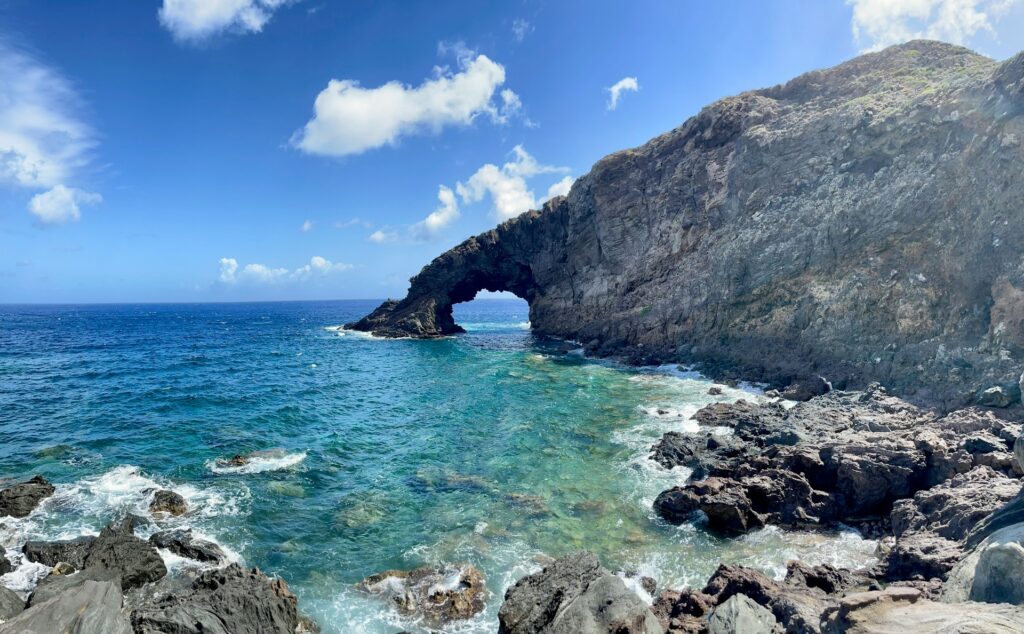
If you’ve never heard of Pantelleria, that’s rather the point. This volcanic speck sits in the strait between Sicily and Tunisia, closer to North Africa than to mainland Italy, and it has spent decades being the retreat that Italy’s most discerning travellers keep to themselves. Giorgio Armani has a place here. So did Truman Capote. The island doesn’t have sandy beaches, it doesn’t have a club scene, and it doesn’t try to be the next anything. What it does have is exclusivity born from geography rather than a velvet rope: black lava cliffs dropping into cobalt water, natural thermal pools fed by volcanic springs, and a craterous inland lake called Specchio di Venere, the Mirror of Venus, where you can coat yourself in mineral-rich mud and bake in the sun like a Roman senator.
What you do on Pantelleria is eat, swim, drink and not much else, and every element of that routine is exceptional. The cuisine fuses Sicilian and Arab traditions, built around wild capers considered among the finest in the world and fresh seafood served simply in harbour-front restaurants. The local Zibibbo grapes produce Passito di Pantelleria, a sweet amber wine whose cultivation method carries UNESCO protection, and you’ll drink it cold on a terrace watching the sun drop behind Tunisia.
The accommodation matches the island’s character: most visitors stay in converted dammuso houses, thick-walled cubes of volcanic stone with domed roofs originally designed to collect rainwater, now fitted out as private villas that feel less like holiday rentals and more like permanent expressions of the landscape. Indeed, Pantelleria asks nothing of you except that you slow down, and in 2026 that feels like the most radical luxury proposition going.
Istria, Croatia
Croatia’s northwestern peninsula has been building a case as a serious luxury destination for years, and 2026 is when the evidence becomes difficult to ignore.
Start with the food, because that’s what Istria leads with. The truffle hunting here, both black and white, rivals anything coming out of Piedmont. The olive oil regularly wins international awards. The peninsula’s winemakers are producing Malvasia and Teran that compete with bottles from far more established regions, and the farm-to-table dining culture operates without any of the performative nonsense that phrase usually implies. Meneghetti Wine Hotel, set among its own vineyards near Bale, holds a Michelin recommendation and feels closer to a Tuscan estate than anything you’d expect on the Croatian coast.
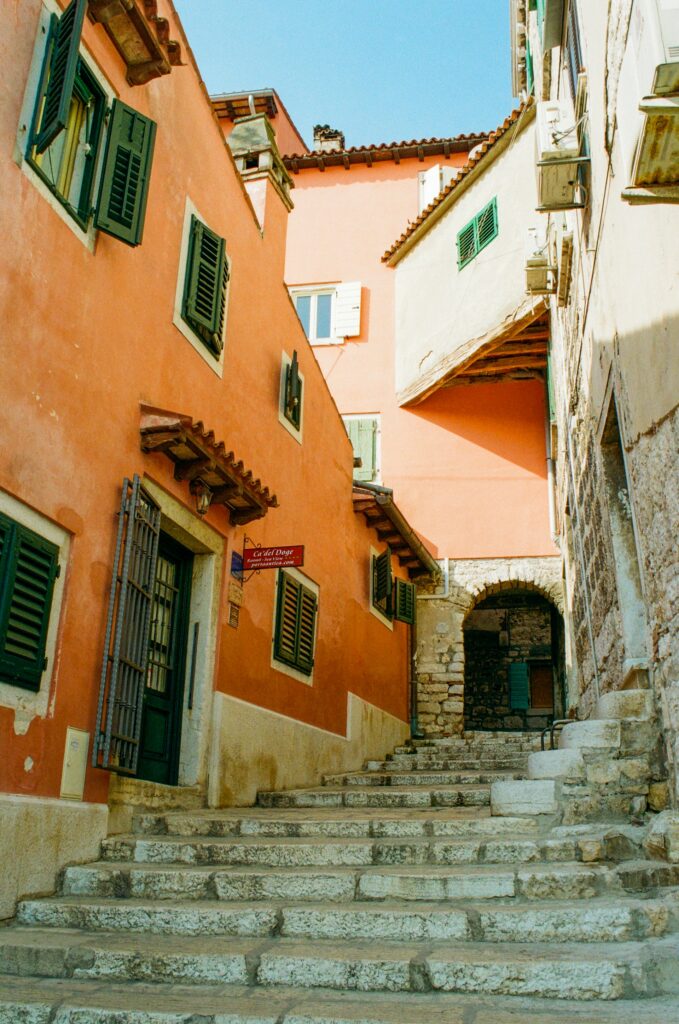
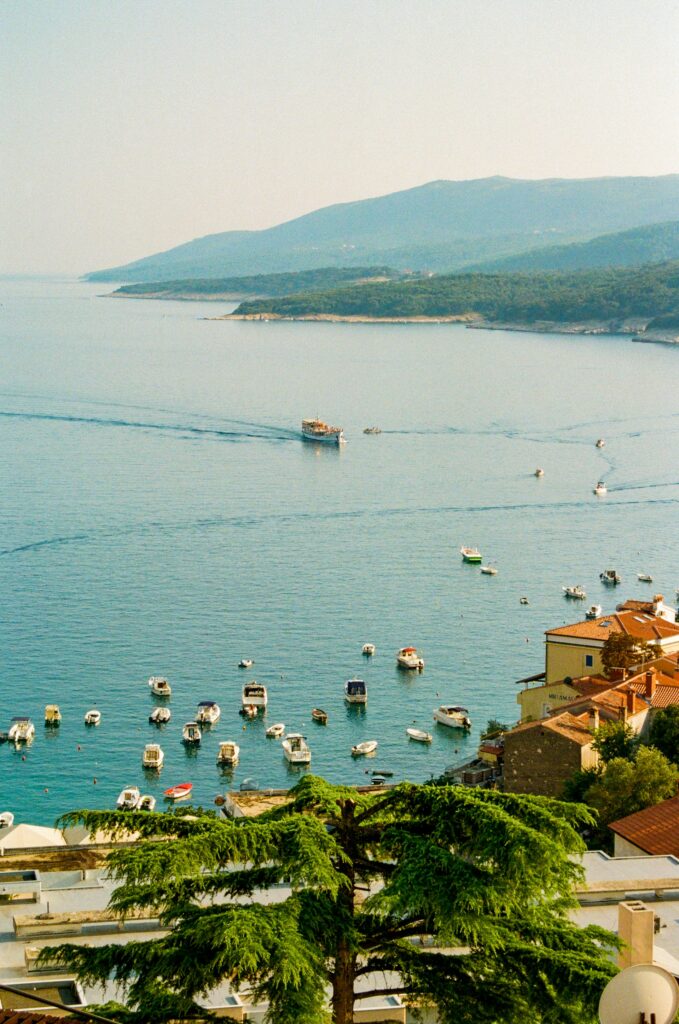
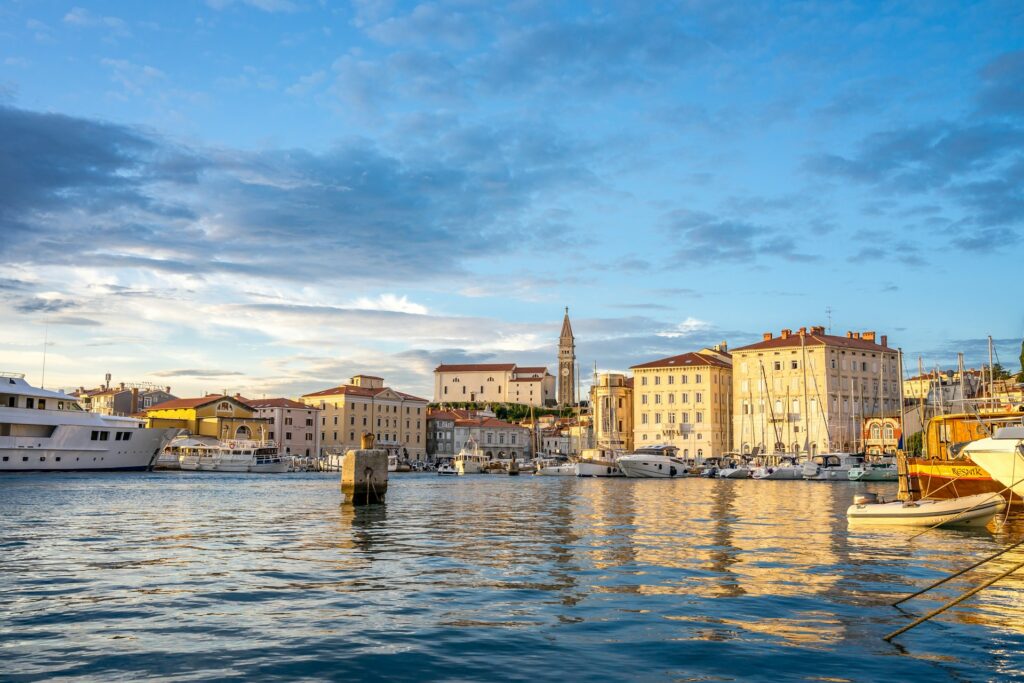
That food culture sits within a landscape that compresses the best of southern Europe into a single compact peninsula: hilltop medieval towns, Adriatic coastline, rolling interior farmland thick with olive groves. Rovinj, perched on its own promontory, draws inevitable comparisons to Venice, but the comparison flatters the wrong city. Venice lost its living food culture decades ago, but Rovinj’s is thriving.
The hotel infrastructure is now catching up to all of this. San Canzian in Buje is expanding in 2026 with new stone-built villas set among car-free lanes and olive groves. Anantara is arriving at Adriatic Istria Resort near Savudrija, marking the Thai luxury brand’s first Croatian property. And a massive new Pical Resort in Porec, backed by 200 million euros of investment and featuring Croatia’s first ESPA spa centre, is also due to open this year. The raw material in Istria has always been exceptional. The infrastructure is finally matching it.
The Alentejo, Portugal
Portugal’s luxury conversation has been dominated by Lisbon and the Algarve for years. The Alentejo, the vast, sparsely populated region stretching south of the Tagus to the Algarve border, remains largely off the radar for British travellers. This is a mistake, and one worth correcting before everyone else does.
The region’s appeal starts with scale. This is one of the least densely populated corners of western Europe, and that emptiness is the luxury. You can walk a pristine Atlantic beach for an hour without seeing another person. You can drive for twenty minutes between vineyard estates without passing another car. The landscape is huge and open: golden plains of wheat and cork oak forest, marble quarrying towns where the stone is so abundant it gets used for doorsteps and kerbs, fortified hilltop villages that look out across empty countryside toward Spain. In a continent where exclusivity is increasingly manufactured, the Alentejo’s comes from the land itself.
The hotel scene reflects that character. Sao Lourenco do Barrocal, a restored 200-year-old farming estate near Monsaraz set among ancient holm oaks and vineyards, is widely regarded as one of the finest rural hotels in Europe, and it earns that reputation through restraint rather than extravagance. Sublime Comporta, where the Alentejo meets the coast, sits among rice paddies and pine forests near white-sand beaches.
The food ties everything together: built around black Iberian pork, bread-based dishes like migas and acorda, fresh seafood from the coast and local olive oil, it’s among the most satisfying regional cooking in southern Europe. A bottle of excellent Alentejo wine costs what a glass does in the Algarve. The value here isn’t about being cheap. It’s about getting more substance for your money than almost anywhere else on the continent.
Oslo, Norway
Scandinavia rarely features in luxury destination roundups, and the reasons for that are largely outdated. Oslo has spent the past decade transforming itself into one of Europe’s most architecturally ambitious and culturally rich cities, and the result is a destination that offers something no Mediterranean rival can: world-class urban culture with immediate, uncrowded access to genuine wilderness.
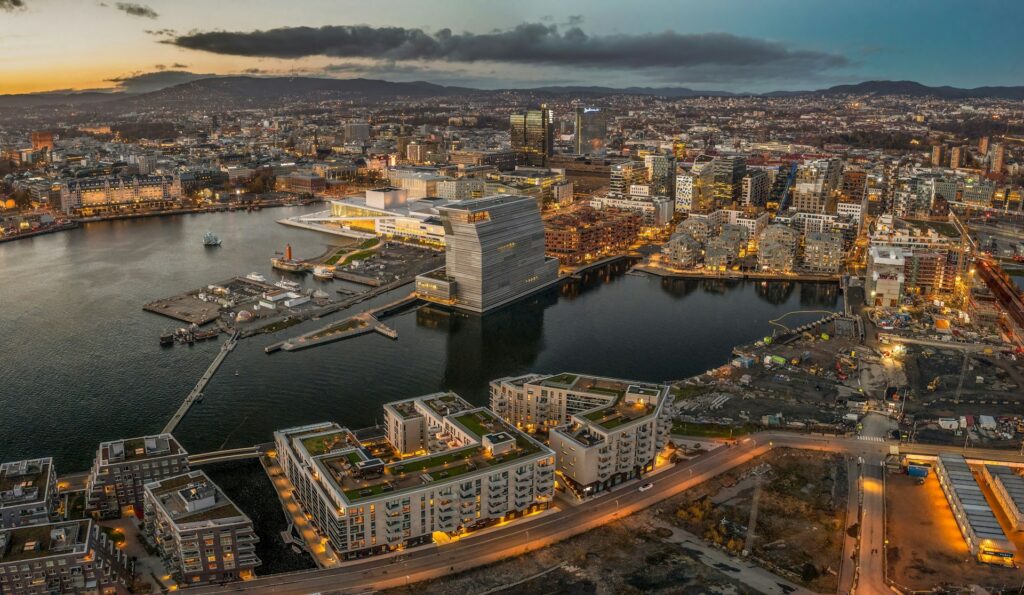
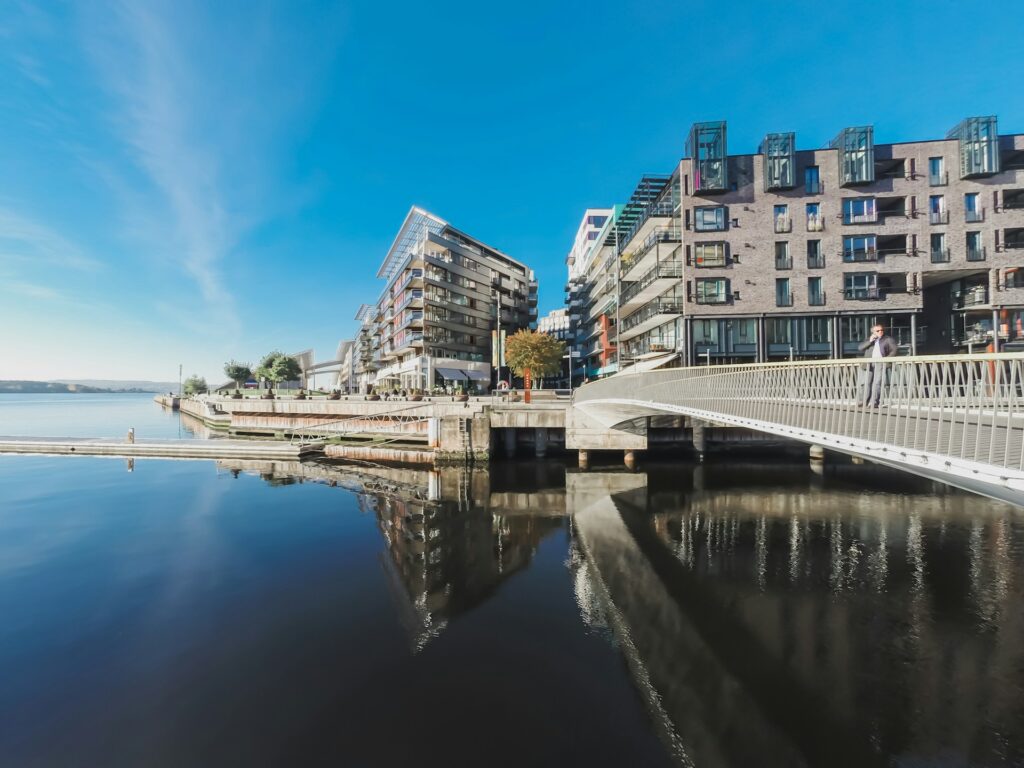
The waterfront tells the story most clearly. The Bjorvika district, anchored by the angular Oslo Opera House and the Munch Museum, has reshaped the city’s entire orientation toward the fjord. The National Museum, the largest art museum in the Nordic countries, sits across the water. The restaurant scene runs at a level that would surprise anyone whose impression of Norwegian food stops at smoked salmon.
The hotel offering has caught up. Sommerro, housed in a restored 1930s Art Deco building in the Frogner district, opened with 231 rooms, seven restaurants and bars, a rooftop pool, and a gilded theatre, and it functions less as a hotel than as a self-contained cultural quarter. The Thief, positioned on its own peninsula at Aker Brygge with over 400 original artworks and panoramic fjord views, remains the city’s most design-forward address.
But Oslo’s strongest card is what sits just beyond the city limits. A private boat from Aker Brygge takes you into the Oslofjord’s pine-clad archipelago within minutes. In summer, the light barely fades. You can swim in a sheltered cove, eat lunch on deck, and be back in a Michelin-level restaurant for dinner. That combination of metropolitan polish and immediate natural grandeur is something no amount of money can buy on the Cote d’Azur, because it simply doesn’t exist there.
Everyone goes to the islands. The Cyclades get the magazine covers, the Ionians get the family bookings, Crete gets the package deals. Meanwhile, the Peloponnese, the vast peninsula that hangs off southern mainland Greece, contains more concentrated historical significance than anywhere else in Europe and a food and wine culture that runs as deep as anything in the islands, without the crowds or the markup.
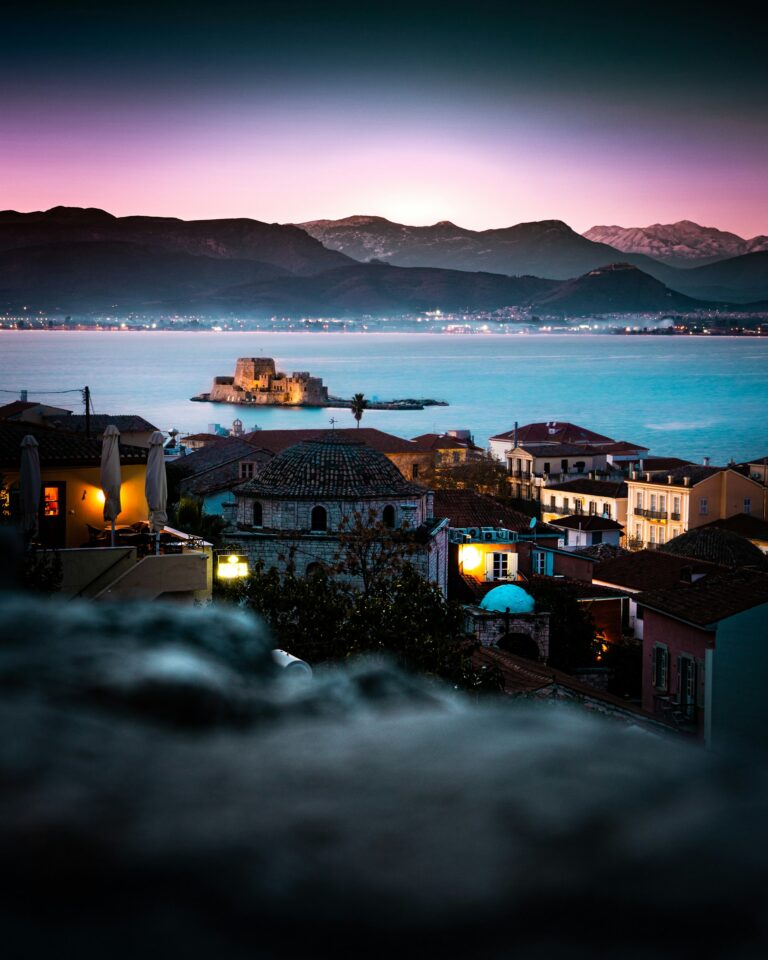
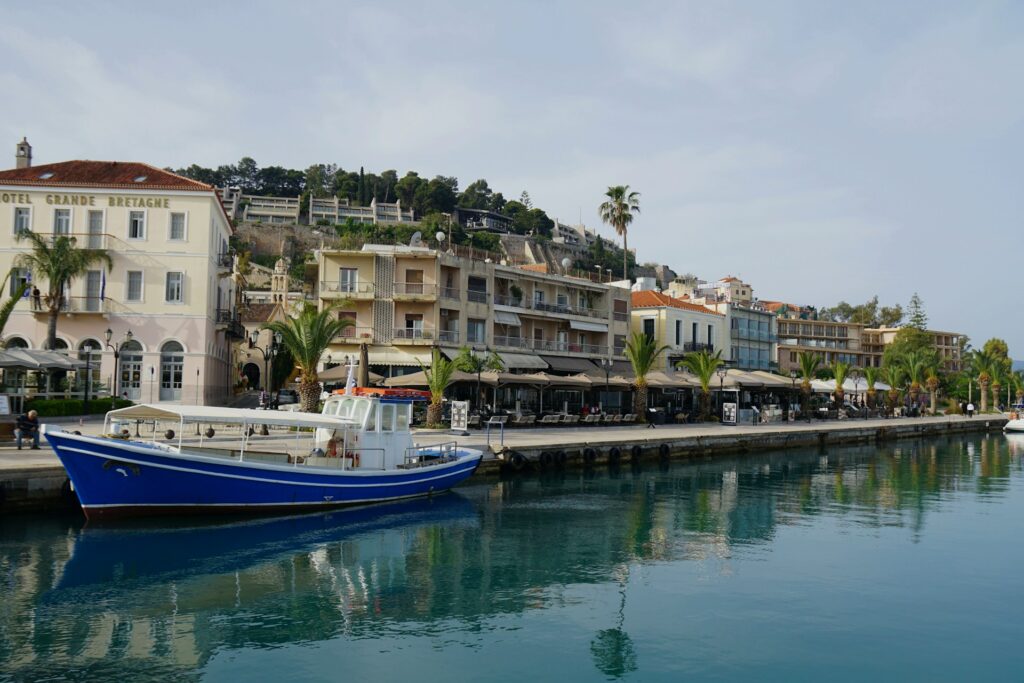
Nafplio, the first capital of modern Greece, is a handsome port town with Venetian architecture and a hilltop fortress. Ancient Olympia, Mycenae, Epidaurus and Mystras are all within reach. The Mani, the remote, tower-studded finger of land at the peninsula’s southern tip, has its own microculture and a stark beauty that feels more like the edge of the world than a two-hour drive from Athens. Between these anchor points, the landscape shifts from olive groves and vineyards to mountain villages and coastal swimming spots, all connected by roads that remain mercifully free of tour buses.
The accommodation anchoring the region is at the highest tier. Amanzoe, set on a hilltop near Porto Heli, is arguably the most prestigious hotel address in Greece: a modern Acropolis of pavilions and villas, each with a private pool, looking out over olive groves to the Aegean. Costa Navarino clusters four branded resorts on the west coast, including a Mandarin Oriental and a W, around championship golf and a long stretch of Ionian coastline. Kinsterna near Monemvasia occupies a restored Byzantine-era estate where the food and wine come directly from the property’s own land.
Those after full privacy over a hotel setting can look to specialists like Villas In Luxury, who curate standalone properties across the peninsula and beyond. It’s a different rhythm to hotel life: your own pool, your own kitchen, your own terrace overlooking whichever stretch of coastline or olive grove you’ve chosen, without sharing any of it with other guests.
What ties all of these options together is the destination itself: the Peloponnese offers a depth of history, landscape and cuisine that island-hopping, by its nature, cannot. You can spend a week here and still feel like you’ve only begun.
The Bottom Line
The places that genuinely reward a luxury traveller in 2026 aren’t the ones fighting for space on Instagram. They’re the destinations with food traditions measured in centuries, landscapes that haven’t been smoothed out for mass consumption, and hotel scenes built on substance rather than name recognition. Capri and St Tropez aren’t going anywhere. But if you’re spending serious money on a European holiday this year, you might as well spend it somewhere that gives you something back.
Once upon a time, Ealing Broadway was where you went to catch the Central line into town, perhaps grabbing a jamon beurre from Pret on your way through. How times have changed.
The opening of Crossrail has transformed this corner of West London into an actual, bonafide dining destination, with the gleaming, somewhat soulless Dickens Yard development acting as a magnet for ambitious restaurateurs who’ve spotted an opportunity to bring Central London sensibilities to Zone 3 prices.
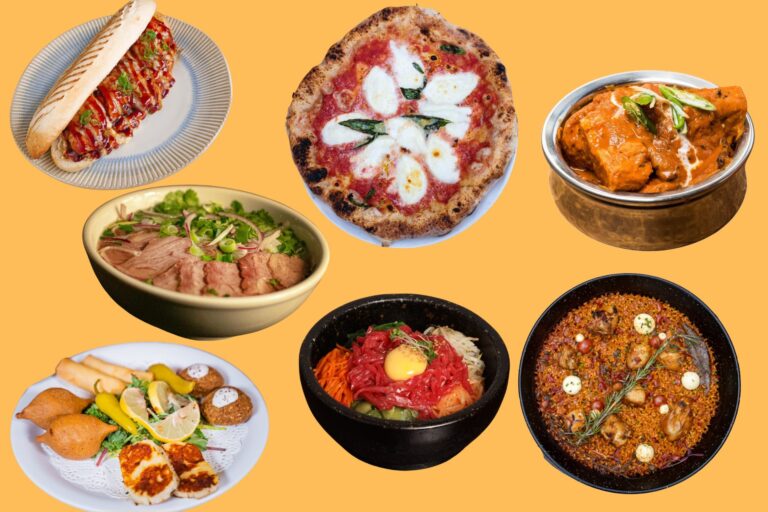
The area’s culinary revolution has been swift and decisive. Here, you’ll discover Spanish fine dining that had Giles Coren purring (ewww), Japanese izakayas run by sake dynasties, and family-run Vietnamese joints that put Shoreditch in its place. Even better, you can actually book a table without planning three months ahead. Sometimes…
The local demographic helps too. Ealing’s mix of media types who’ve decamped from Notting Hill, young professionals priced out of Clapham, and long-established international communities creates the perfect conditions for culinary diversity.
Transport links remain excellent – the Elizabeth line whisks you to Bond Street in 11 minutes, while the District and Central lines provide backup options. But increasingly, Londoners are making the reverse journey, heading west for dinner. Join us as we do just that; here are the best restaurants in Ealing Broadway.
Rayuela, Dickens Yard
Ideal for superb Ibero-American cuisine at Zone 3 prices…
In January 2024, The Times restaurant critic Giles Coren ventured to Ealing Broadway (basically like flying halfway around the world, for him) and found something rather special; Ealing Broadway’s restaurant scene is alive and kicking. His review of Rayuela had him reaching for superlatives rarely deployed in the suburbs, and for good reason.
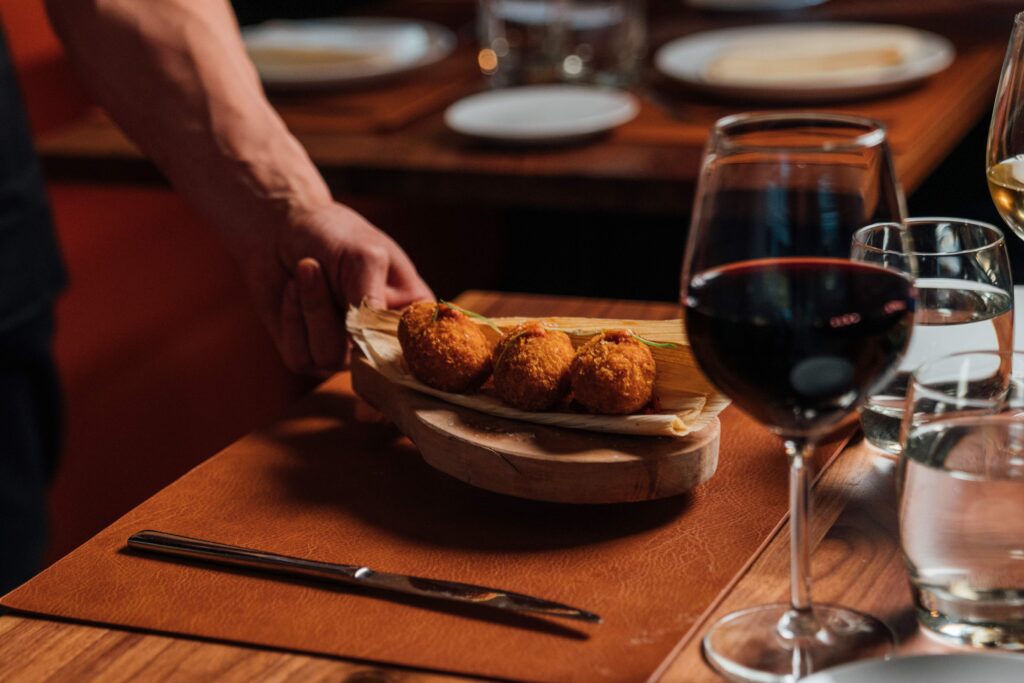
This Ibero-American restaurant occupies prime real estate in Dickens Yard, bringing serious Iberian and South American credentials to W5. The kitchen understands the crucial difference between jamón serrano and jamón ibérico de bellota, and isn’t afraid to charge accordingly for the latter.
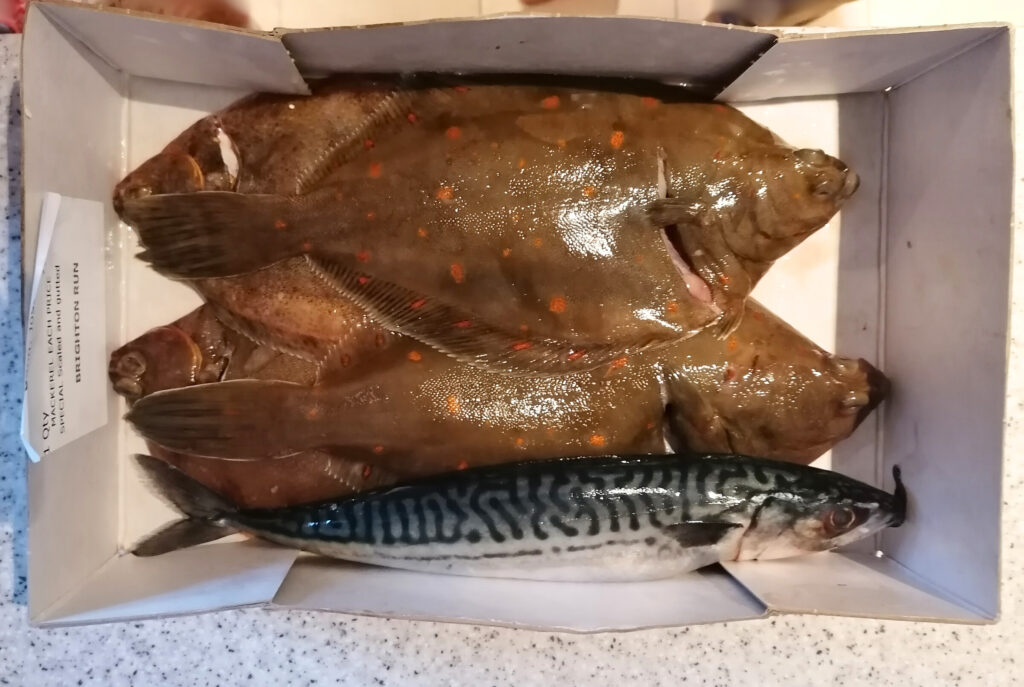
Start with their selection of ceviches – the mackerel version with cucumber tiger’s milk and corn could easily hold its own against London’s best Peruvian restaurants. The Iberian pork presa arrives grilled to the kind of blushing perfection that might have some sending it back to the kitchen, served with chimichurri that packs genuine punch rather than the bruised green sauce often passed off under that name.
Their weekday lunch set menu (Wednesday to Friday) offers excellent value at £36 for two courses or £42 for three, while the full carte runs to £54 for three courses or £59 for four. The wine list leans heavily Spanish, with some exceptional finds from lesser-known regions. The real draw is their partnership with Lustau for sherries – the only winery producing across all three cities in the sherry triangle. Six different sherries are available by the glass, served chilled in correct copitas rather than tiny thimbles.
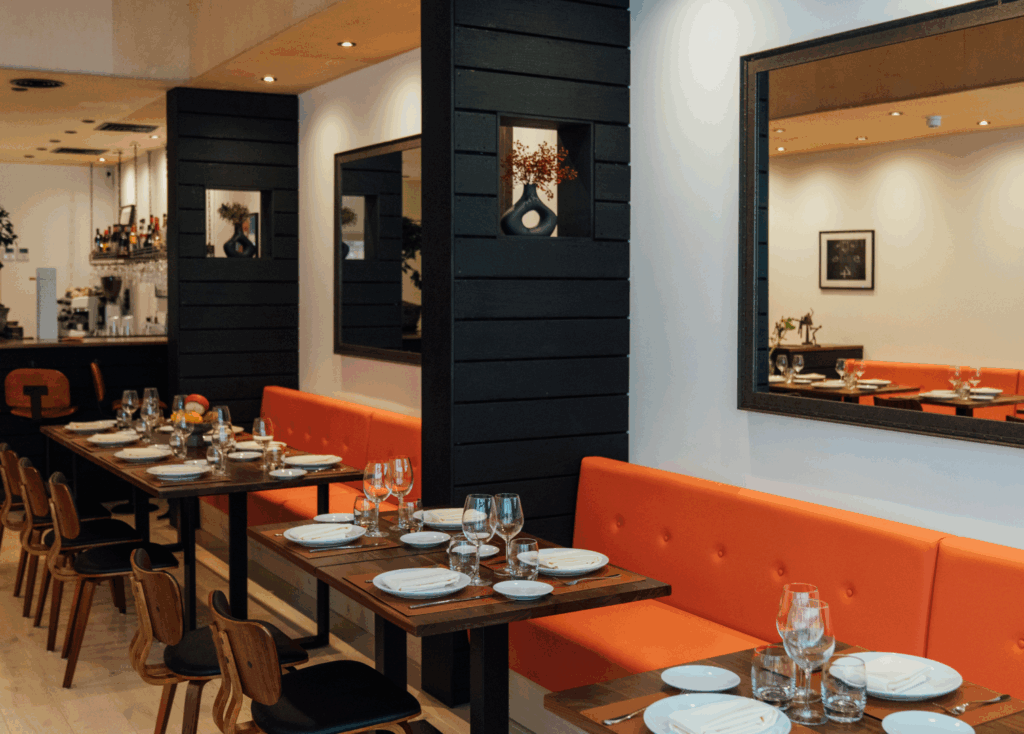
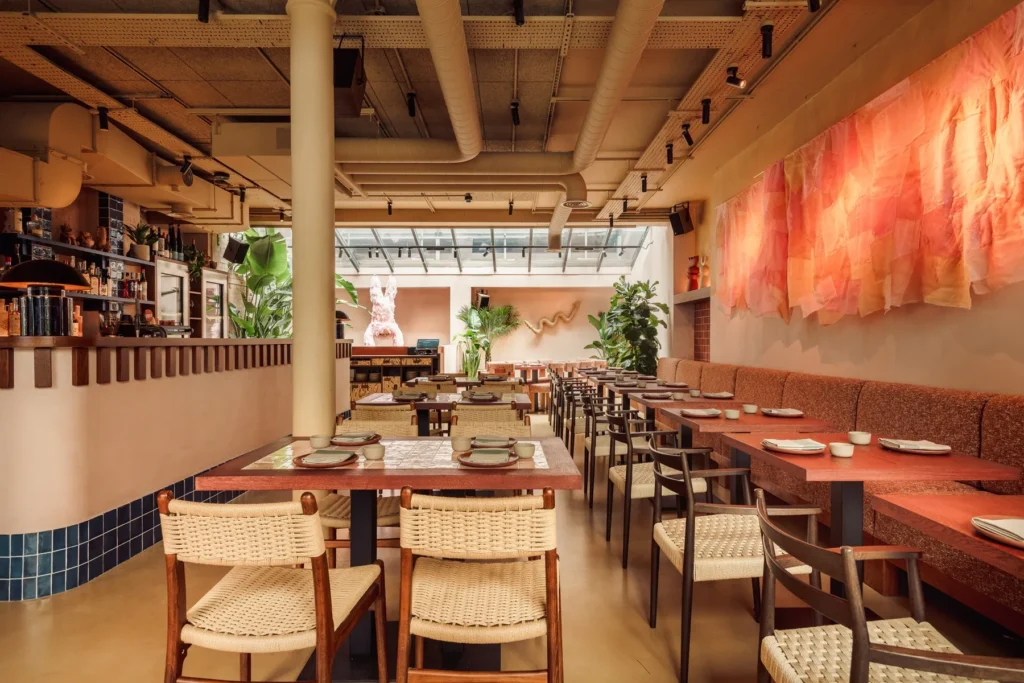
The dining room itself avoids the tired exposed brick and Edison bulb clichés, instead striking an appealing balance with its warm terracotta banquettes, contemporary artwork, and clean lines. It’s sophisticated enough for special occasions yet relaxed enough for a random Wednesday 4pm booze up. What’s not to love?
Ideal for generous Syrian family feasts and warm hospitality…
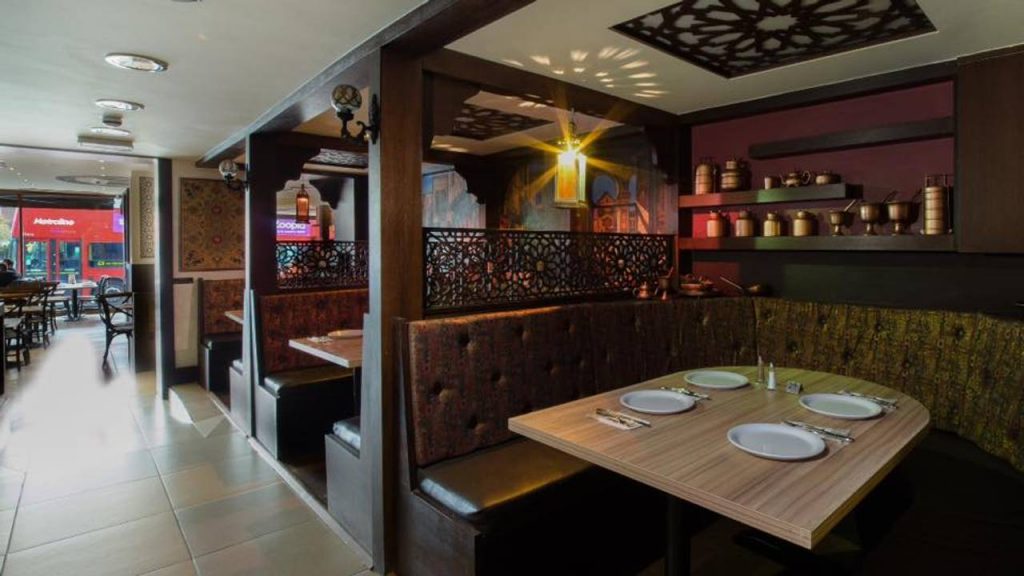
Squeezed between a dry cleaner and a mobile phone shop on Uxbridge Road, Abu Zaad is the kind of place you’d walk past without noticing, were it not for the smell of freshly baking saj wafting out every time the door opens. Step inside and you’re in a Damascus family home, complete with traditional artwork and, unexpectedly, a dedicated children’s play area with its own projector.
This represents wonderful Syrian hospitality in full effect – three-year-olds are as welcome as their grandparents, and nobody minds when your toddler reorganises the cushions. Or, indeed, gets on first-name terms with those same cushions…
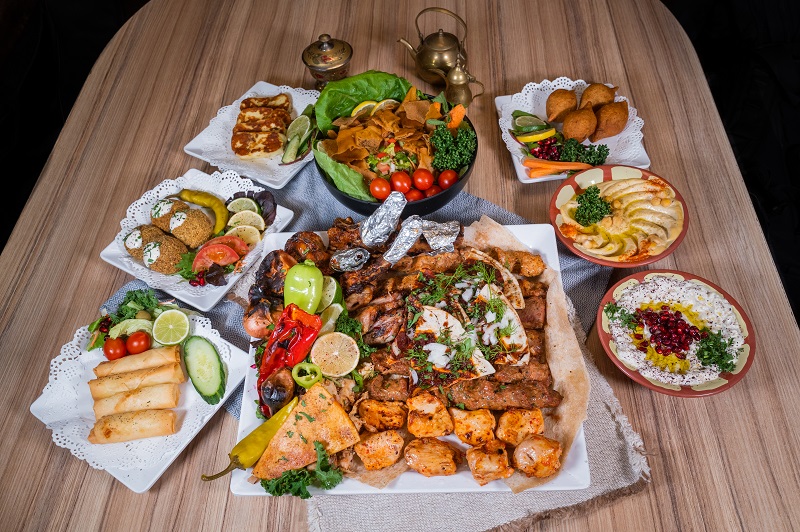
The mixed grill is the move here, available for two (£32.50) or four people (£62.50). The generous spread includes lamb fillet, lamb kofta, shish taouk, jawaneh (chicken wings), and shawarma, all charred just so and served with chips and rice – it’s a carnivore’s fantasy that easily defeats most appetites.
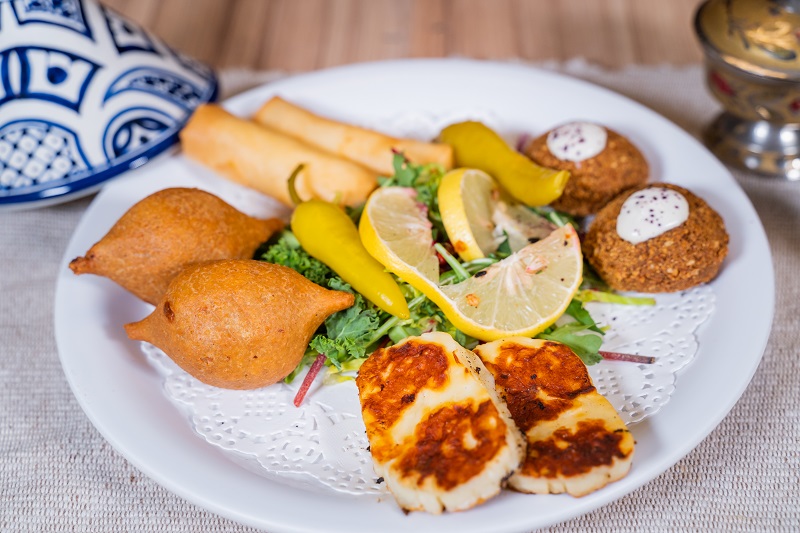
The kibbeh shamieh, those football-shaped bulgur parcels stuffed with spiced meat and pine nuts, reveal filling so perfectly seasoned you begin to understand why the correct way to salt and spice these guys is being debated on several tables around you.
Their set meals offer excellent value for groups. The set for two (£43.99) includes houmous, fattoush, a Damascene hot appetizer, and the mixed grill for two. Scale up to the family set for four (£84.99) and you add moutabal, an extra hot appetizer, and the family mixed grill – it’s a feast that draws families from across West London. Arrive hungry and pace yourself – this is marathon eating.
The Syrian tea, served in istikan glasses, as it should be, and sweetened to dental-threatening levels, again as it should be, costs less than a Costa coffee and provides infinitely more comfort.
Ideal for an immersive nautical adventure with the freshest seafood in West London…
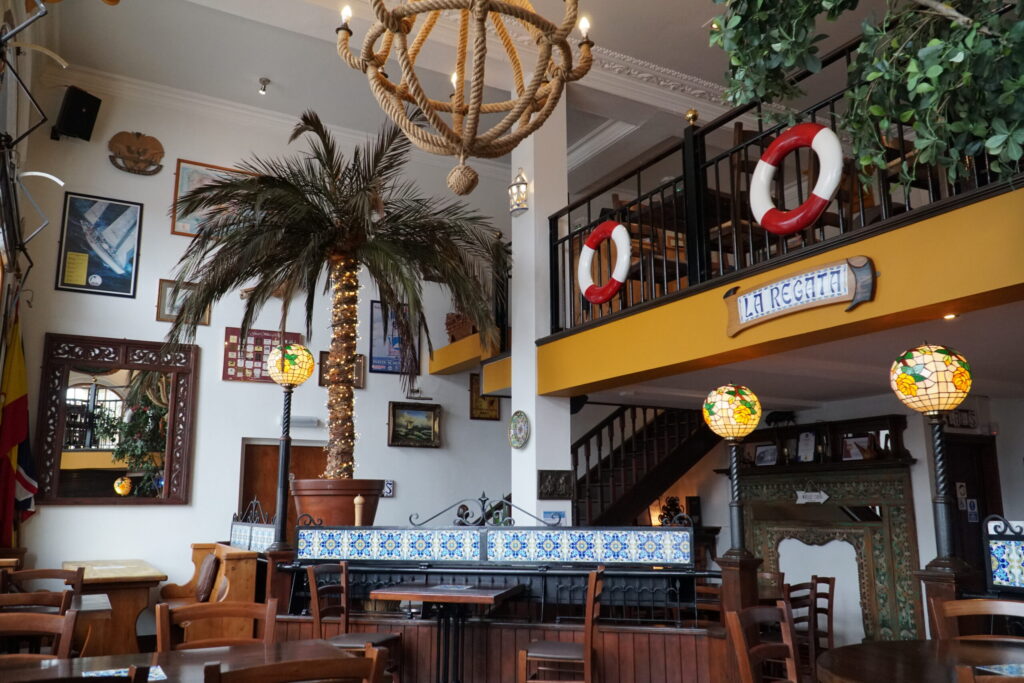
If Poseidon opened a restaurant in Ealing, it would look exactly like Bronek’s. This isn’t subtle theming – fishing nets drape from every inch of ceiling, ship wheels and boat propellers dot the walls, and the whole pla(i)ce feels less like a restaurant and more like a sarpa salpa-induced hallucination. It’s wonderfully bonkers, and the seafood is genuinely exceptional.
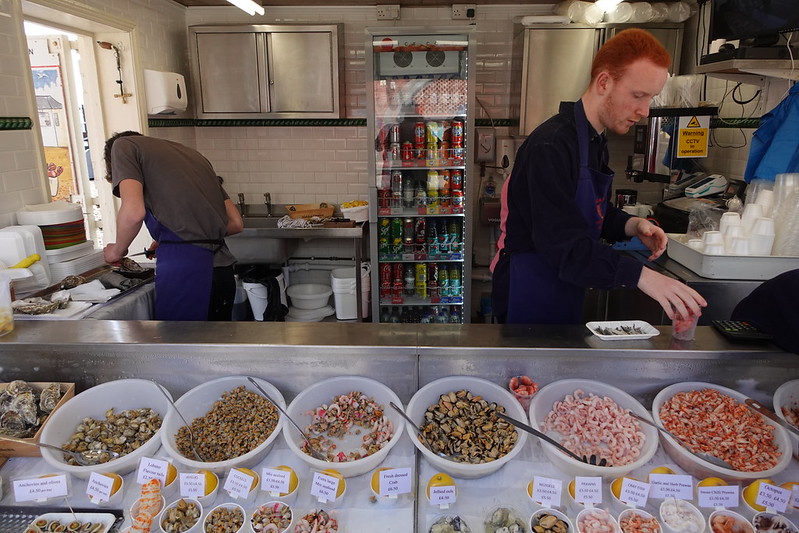
The genius behind this maritime madness is Bronek himself, an Ealing celebrity who runs the place with the enthusiasm of someone who genuinely loves fish. The venue functions as a fishmonger until noon, which means the seafood on your plate that evening was probably swimming (or, at least, reclining on ice) that morning. This is as fresh as it gets without chartering a trawler and doing the whole reeling in yourself.
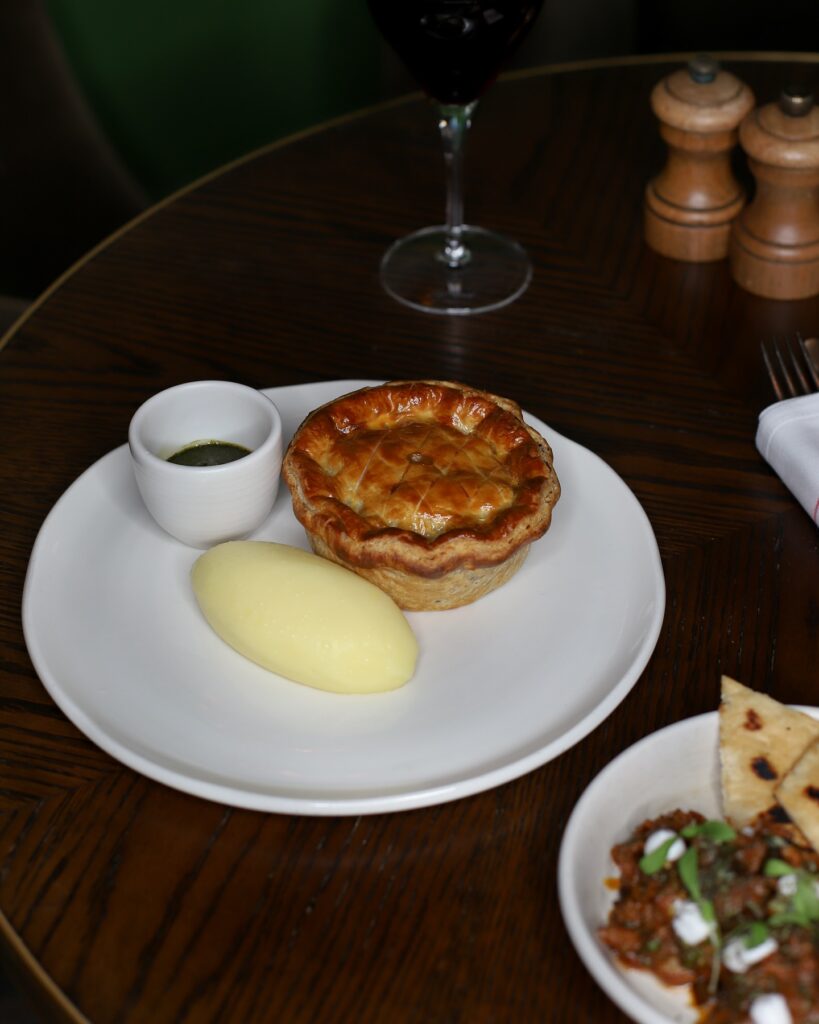
Forget the menu – it’s merely a suggestion. Bronek prefers to have a proper chat about what’s good that day, then creates bespoke seafood platters based on the catch and your preferences. Expect lobster thermidor, octopus cooked Greek-style, Madagascar prawns, and whatever excellent bream or grouper came in on the morning delivery. The platters arrive on multiple tiers, almost comically abundant, leaving diners stumbling out in a happy seafood stupor. Alongside a recent special of chargrilled tuna steak came perfectly spherical scoops of mashed potato – clearly formed with an ice cream scoop – which added a whimsical touch to proceedings.
Speaking of stupors, the BYOB policy makes this already reasonable spot even better value, and also creates a vibe of chaotic conviviality. Premium seafood without London wine markups? Bring your own bottle and save the extra for a second round of oysters. Don’t expect to swan in without a booking, though – this 40-cover spot fills up fast, especially at weekends when West Londoners descend for their seafood fix.
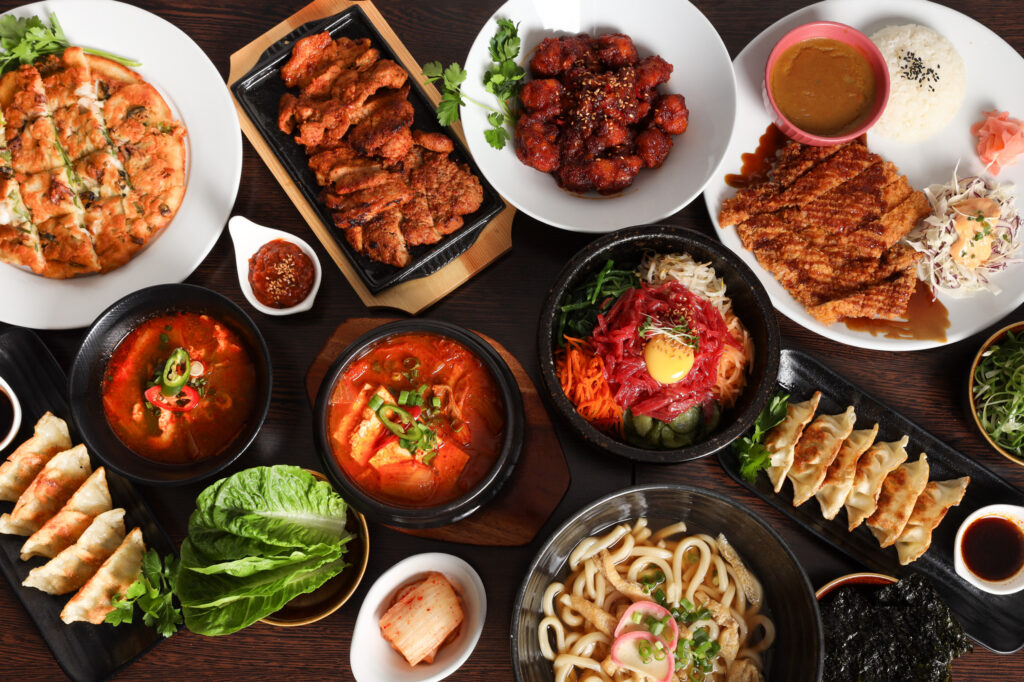
Overlooking The Green with Walpole Park beyond, Park’s Kitchen somehow remains under the radar, known mainly to homesick Korean students and those lucky enough to stumble upon it. Park’s Kitchen occupies a bright, jolly space with exposed brick walls and pendant lighting. It might sound uncharitable to deem it ‘functional’, but it kinda is. Not to worry; when your bibimbap arrives in a heated stone bowl, still sizzling and popping, your eyes aren’t on the interiors.
The kitchen excels at fermentation, of course, the cornerstone of Korean cuisine. The house kimchi has a lovely fizz and funk, the kind that makes you wrinkle your nose before complete addiction sets in. You can curate your own selection of banchan – those small dishes that appear at every meal’s start, orbiting a bowl of freshly steamed rice. The seasoned spinach, sweet-salty dried fish, and bean sprouts with enough chilli to wake the dead should all be on your table.
Order the kanpoongi for a different angle on the now ubiquitous Korean fried chicken. This isn’t the gloopy, over-sauced stuff from American chains taking a stab at diversifying their demographic. Park’s version arrives crisp as autumn leaves, the coating so shattering you can hear it across the room, the meat beneath still juicy. The sweet chilli and garlic sauce is applied with restraint – enough to flavour, not enough to compromise that crunch.
Vegetarians will feel well catered for here. The kimchi pancake, crisp outside and molten within, studded with fermented cabbage and spring onions, is a spicy savoury treat. The soft tofu stew (sundubu-jjigae) arrives bubbling like a small volcano.
There is Korean lager, soju and plum wine, as well as a few bottles of wine hovering around the £30 mark. You can feast here quite happily, and totter out tipsy, for around £75 for two people.
Ideal for pizza that takes its DOC status seriously…
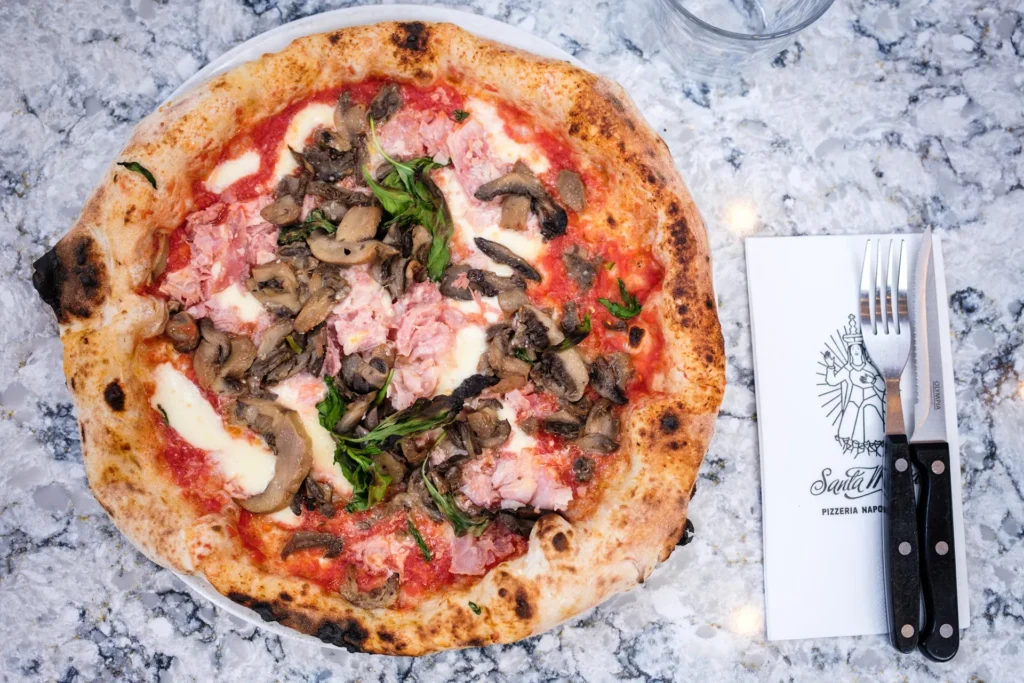
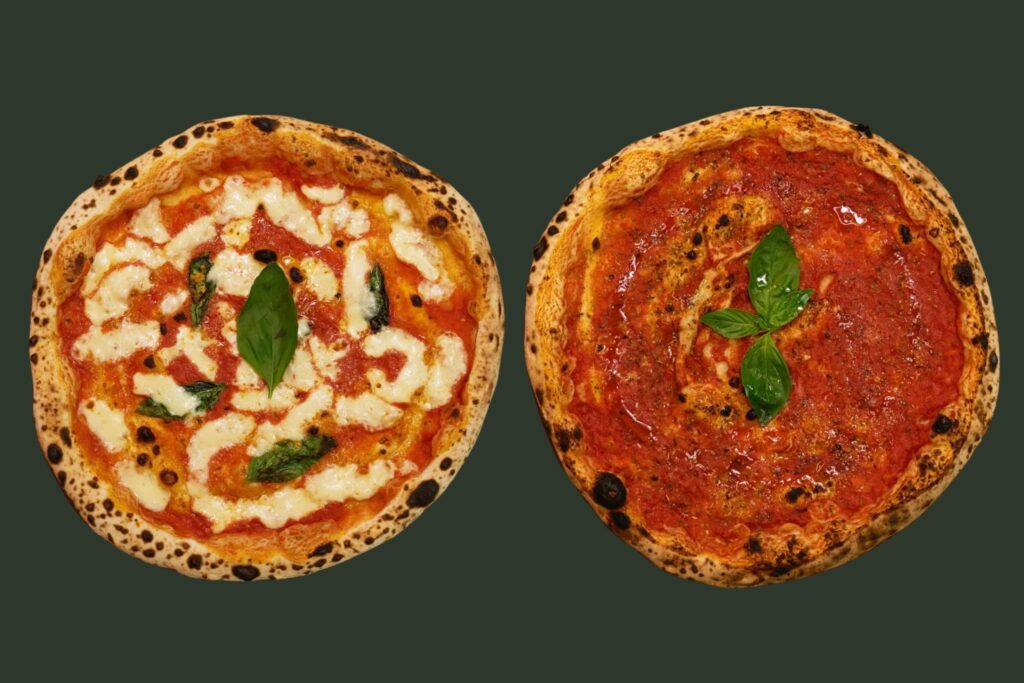
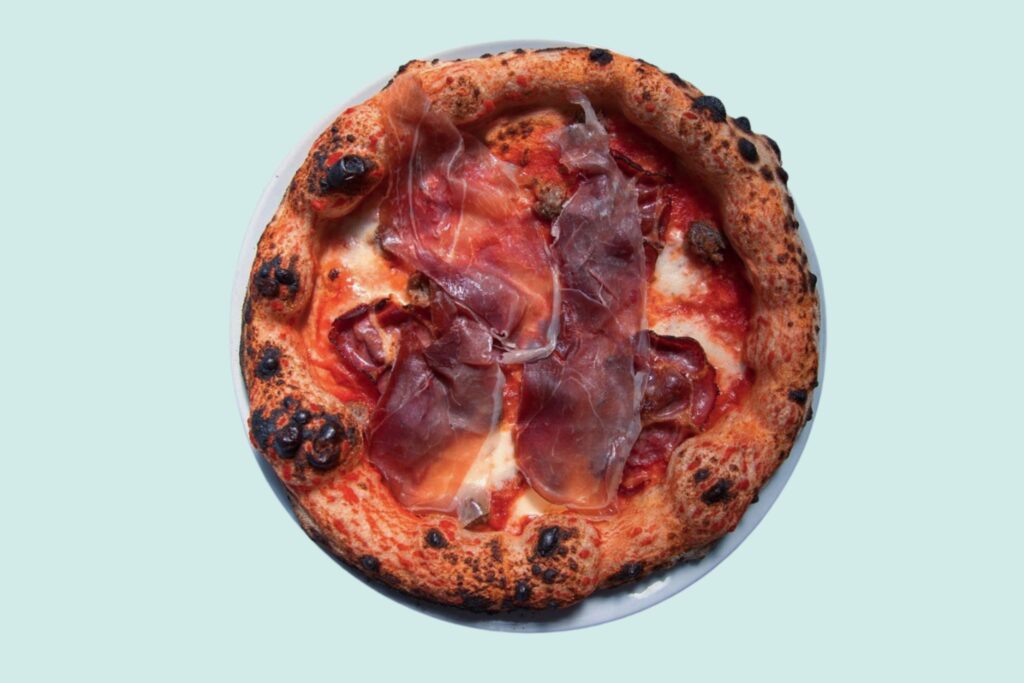
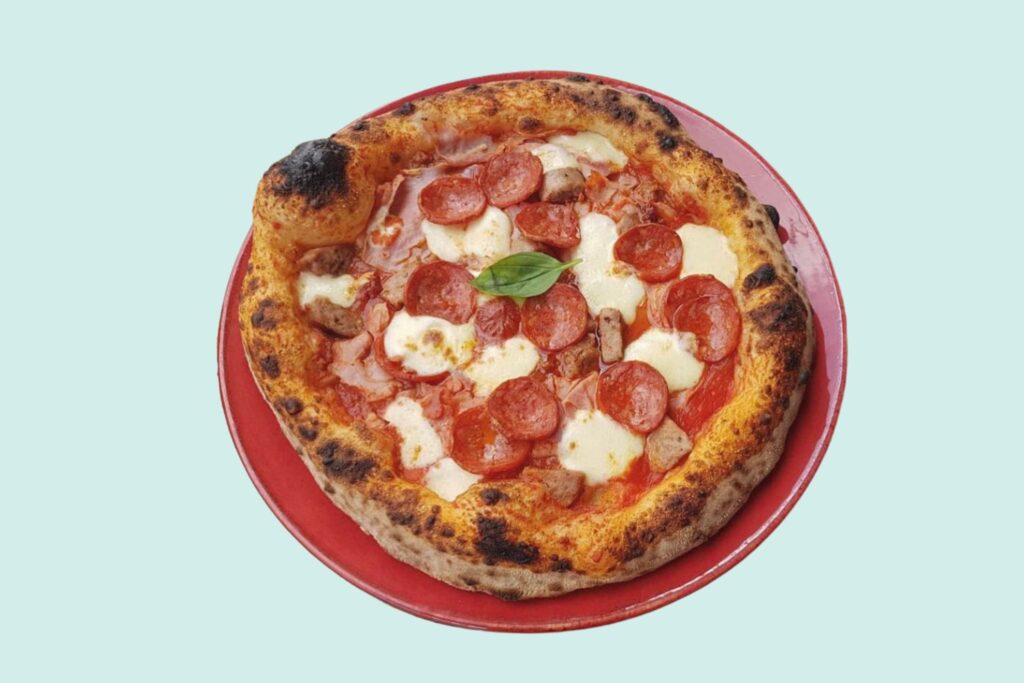
Santa Maria doesn’t mess about. This is Neapolitan pizza as the Associazione Verace Pizza Napoletana intended: 48-hour fermented dough, San Marzano tomatoes, fior di latte mozzarella, and a wood-fired oven hot enough to reduce most things to ash in seconds.
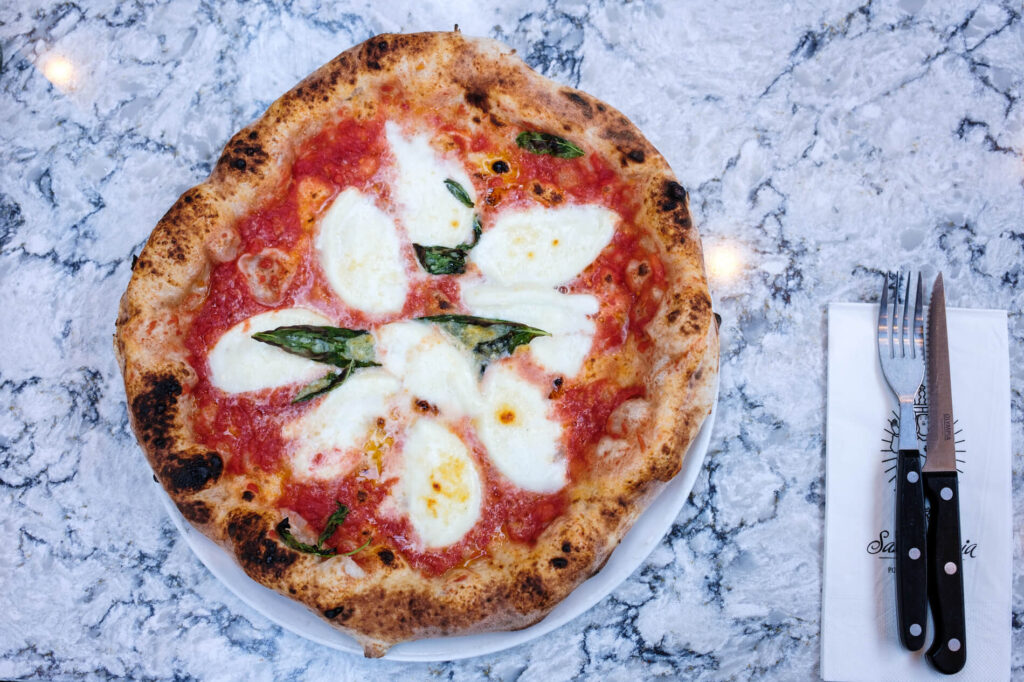
Pizzas emerge in 90 seconds flat, the crust puffed and charred in all the right places (those leopard spots pizza obsessives love), the centre just yielding enough to require the traditional fold-and-dangle technique.
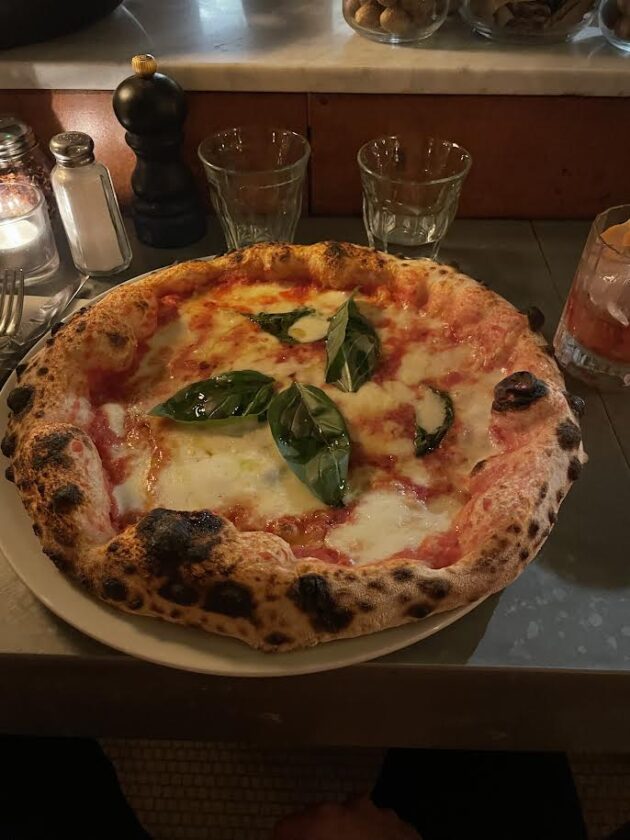
The margherita serves as any serious pizzeria’s litmus test, and Santa Maria’s passes easily. The tomato sauce tastes like concentrated sunshine. The mozzarella, shipped twice weekly from Campania, melts just a little into creamy pools. The basil, added post-cook, wilts just enough to release its oils. This is pure poetry on the plate, and we want a pizza now.
The nduja pizza brings Calabrian heat, the spicy spreadable sausage melting into cheese to create addictive orange oil you’ll mop up with any leftover crust. The white pizzas showcase cheese quality, particularly the quattro formaggi which deploys gorgonzola with admirable restraint.
The room buzzes with genuine excitement about food. Families with bambini, couples on dates, solo diners at the bar – everyone united in appreciation of real pizza. Italian staff help, their animated, infatuated discussions about Scott McTominay adding the requisite authenticity to Ealing’s answer to Naples.
The wine list sensibly sticks to crowd-pleasing southern Italian table wines that won’t break the bank, though honestly, nothing beats a cold Peroni with a sloppy pizza.
Ideal for railway-themed Indian dining and spectacular sharing platters…
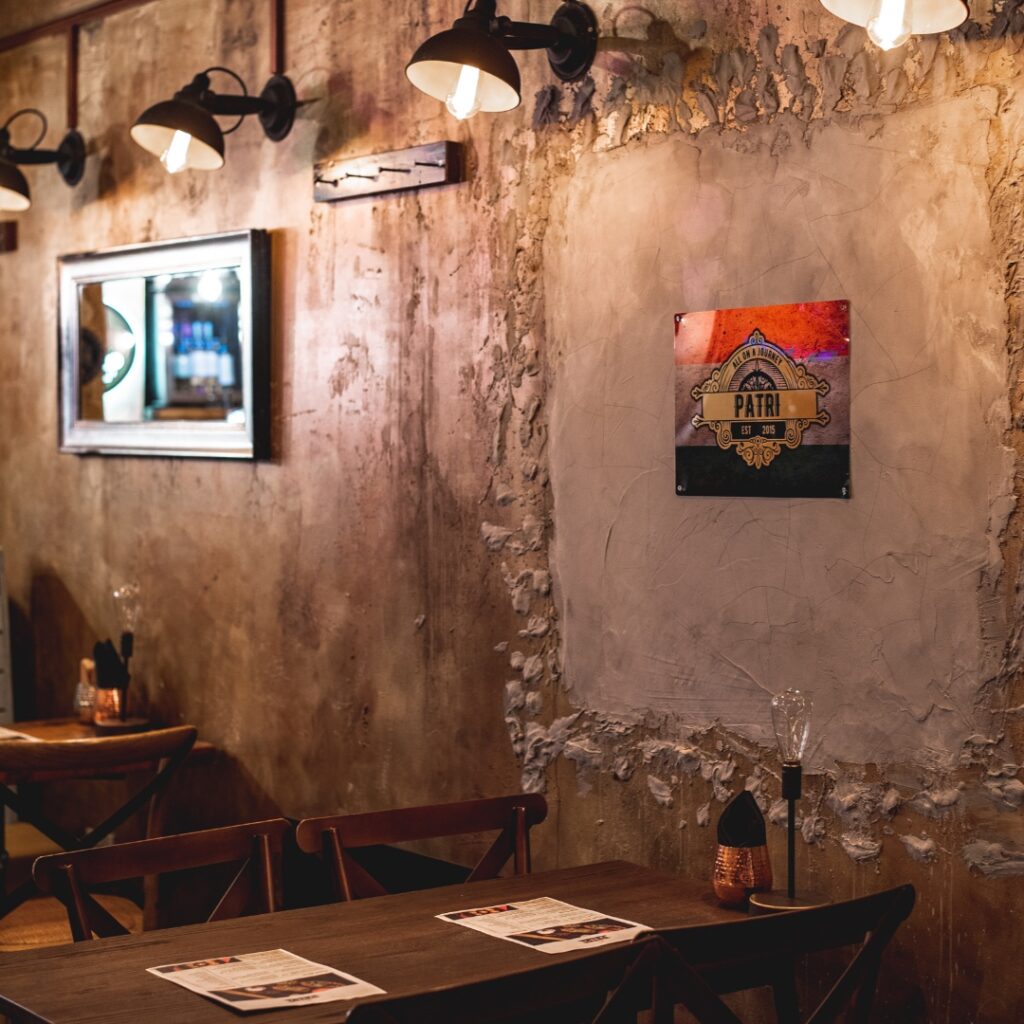
The name means ‘track’ in Hindi, and Patri runs with railway themes through bench seating, beaten metal and enough industrial chic to satisfy Londoners with a very myopic vision of cool. But this isn’t style over substance – the cooking here would impress regardless of how made up the room is.
Puneet Wadhwani spent his childhood at New Delhi railway station where his family ran a business. Those memories – vendors shouting wares, meals grabbed between platforms, the organised chaos of Indian rail travel – inform every aspect of this restaurant.
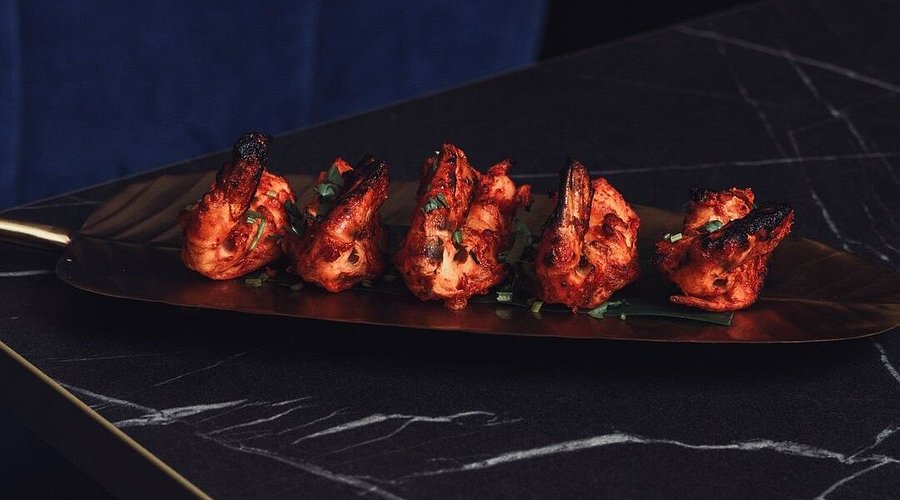
The Railway Mix Grill (for two, it’s £24.95, for three, £34.95) arrives on cast iron platters still sizzling from the kitchen. The lamb seekh kebabs have perfect char-to-juice ratios, the malai tikka (chicken marinated in cream and cheese) is indecently rich, the tandoori prawns sweet and smoky. It’s the kind of sharing plate that tests friendships – you’ll eye that last lamb piece like a circling vulture.
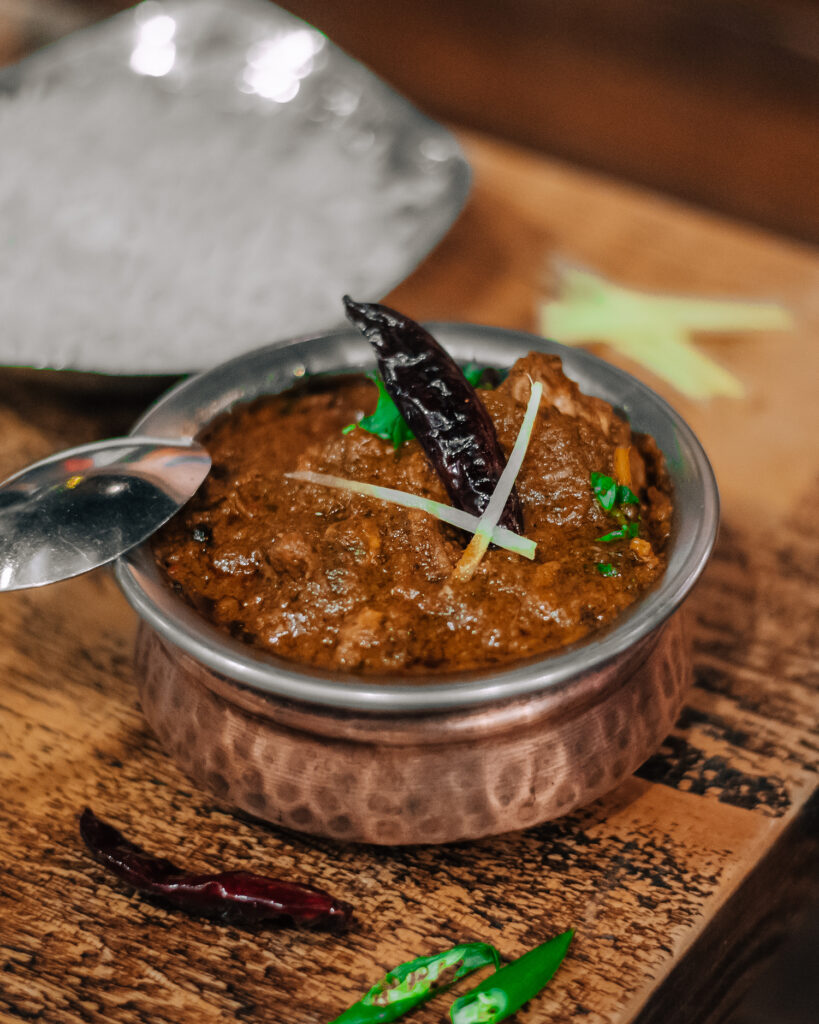
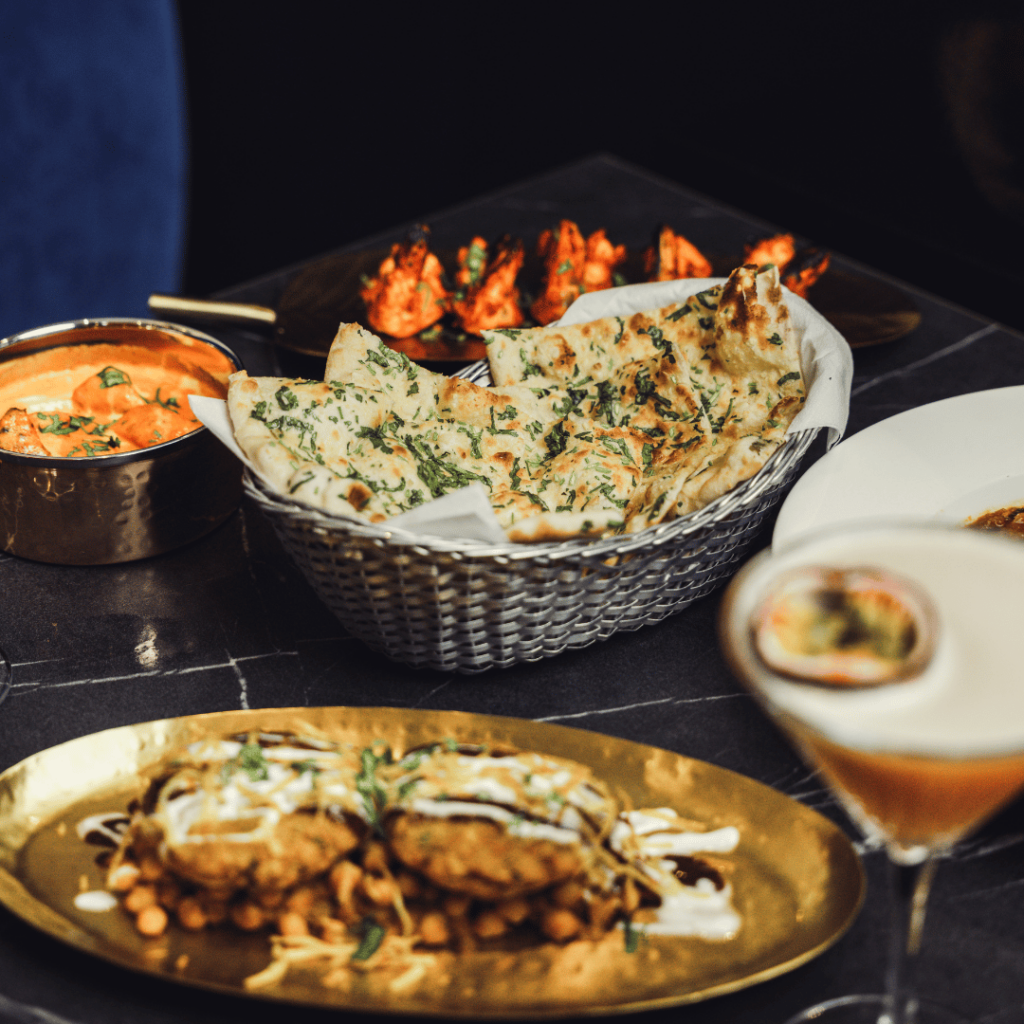
Their butter chicken receives the respect this much-maligned curry house staple deserves. The chicken, marinated three times before meeting the tandoor, arrives tender enough to cut with spoons. The sauce, rich with butter and cream but balanced with complex spicing, keeps you interested bite after bite. Mop it up with exemplary naan, charred and bubbled from the tandoor.
The street food section best captures Patri’s spirit. Old Delhi Pani Puri arrives as DIY projects – crispy wheat balls filled with spiced chickpeas and potatoes, waiting for tangy mint water, chutneys and mango. First-timer faces when that sweet-sour-spicy-cold explosion hits? Priceless.
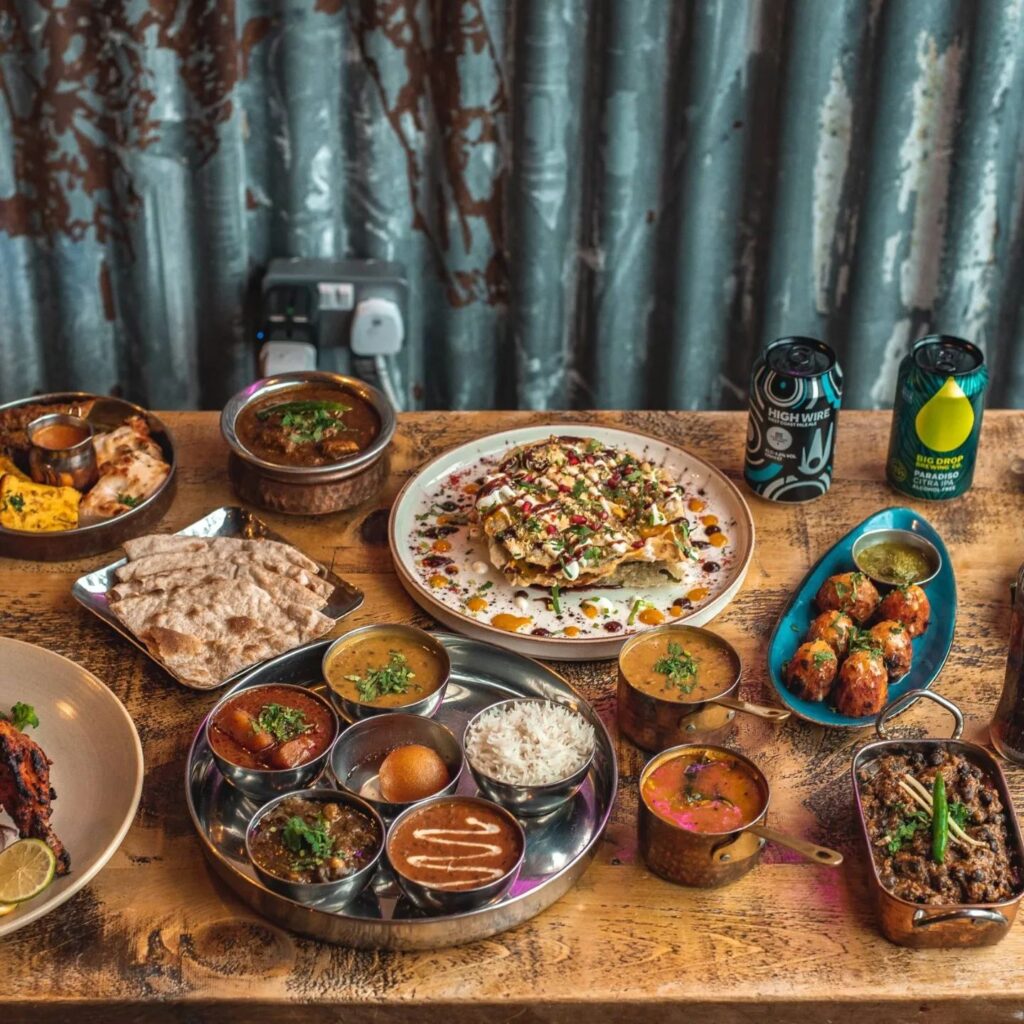
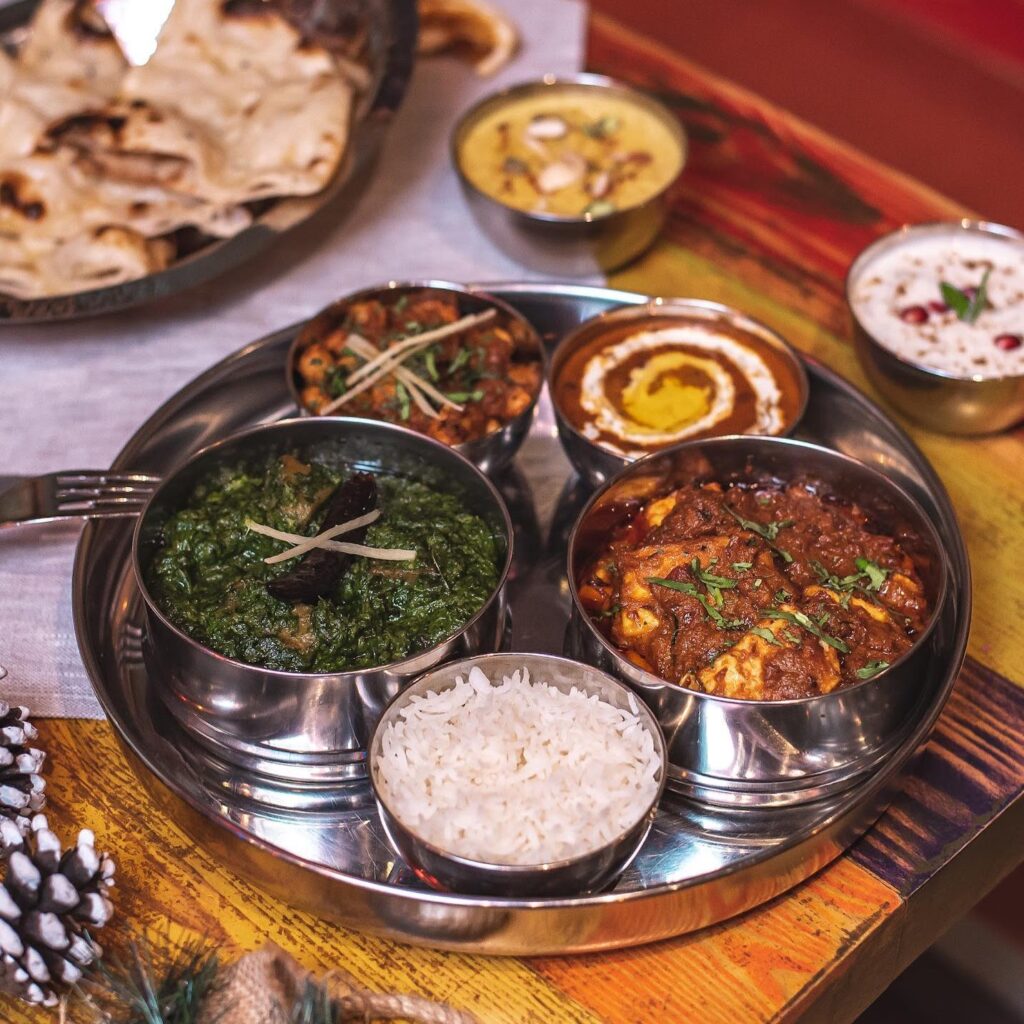
The Grand Thali represents the full Patri experience – described as “The UK’s Largest, Never Seen Never Done Selection” it serves up to five people. At £138 for vegetarian, £148 for mixed, or £158 with seafood, it’s a satiate-until-surrender affair, with new dishes appearing just as you think you’re done. Book it for special occasions and arrive really hungry.
A Monday-to-Thursday happy hour (12.30–1.30pm and 5.30–6.30pm) brings 2-for-1 cocktails, wines by the glass and beers on tap – dangerously easy to extend lunch or dinner into an increasingly louche afternoon or evening. The craft gin selection reads like a connoisseur’s wishlist – Monkey 47, Gin Mare, Silent Pool – while traditional touches like proper masala chai and mango lassi keep things grounded. Cheers to that.
Ideal for Vietnamese family recipes and 24-hour pho…
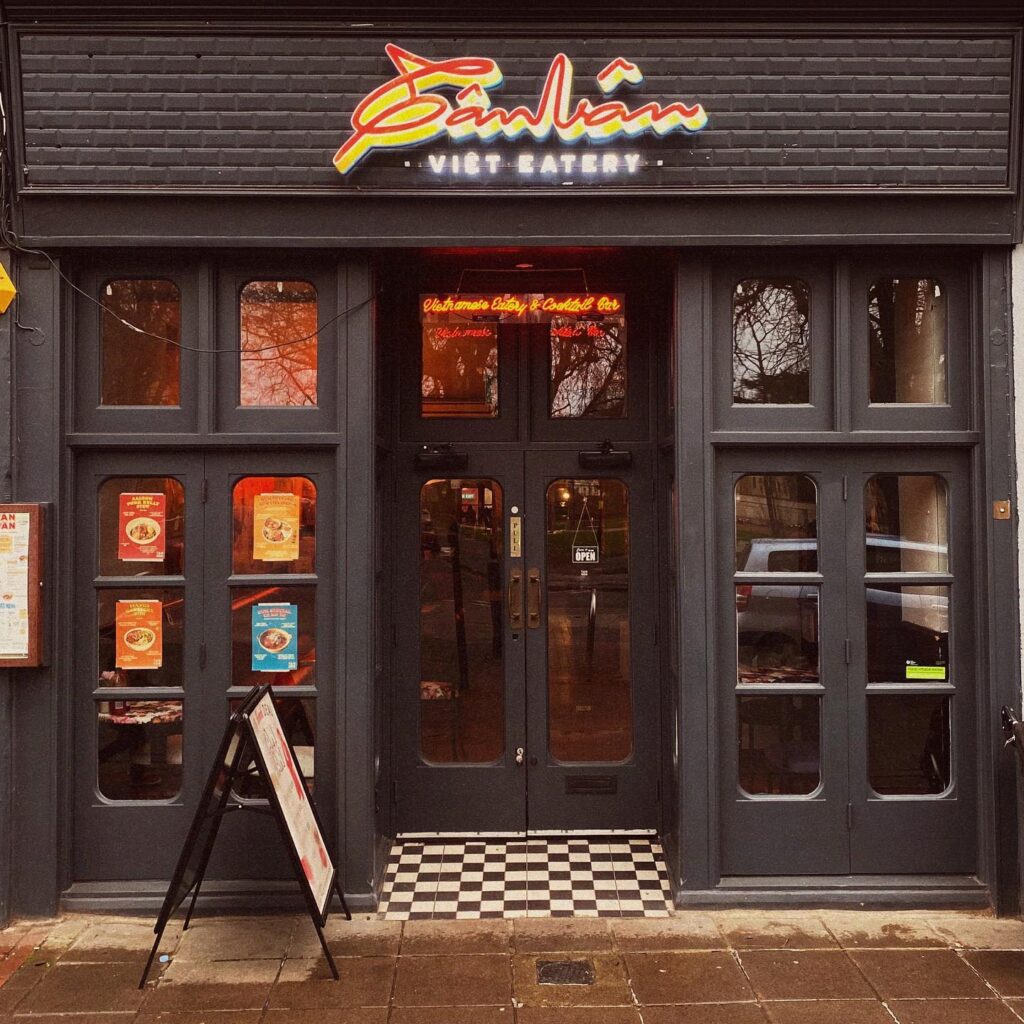
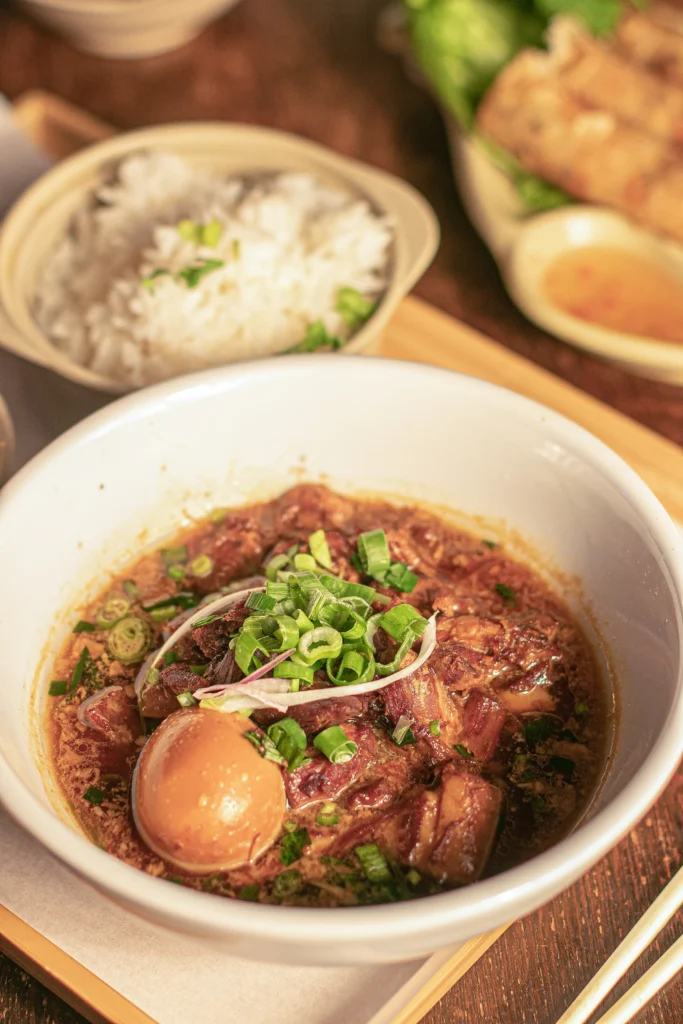
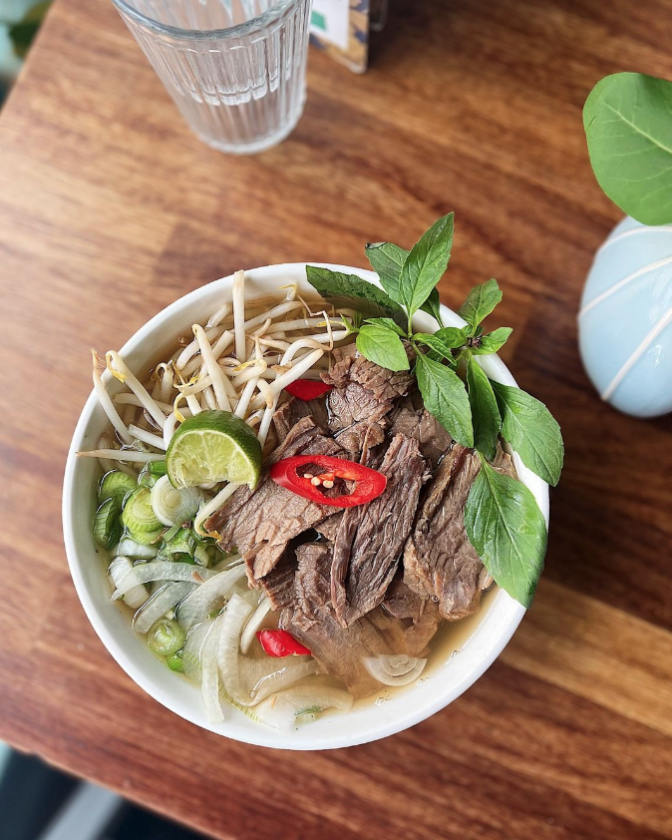
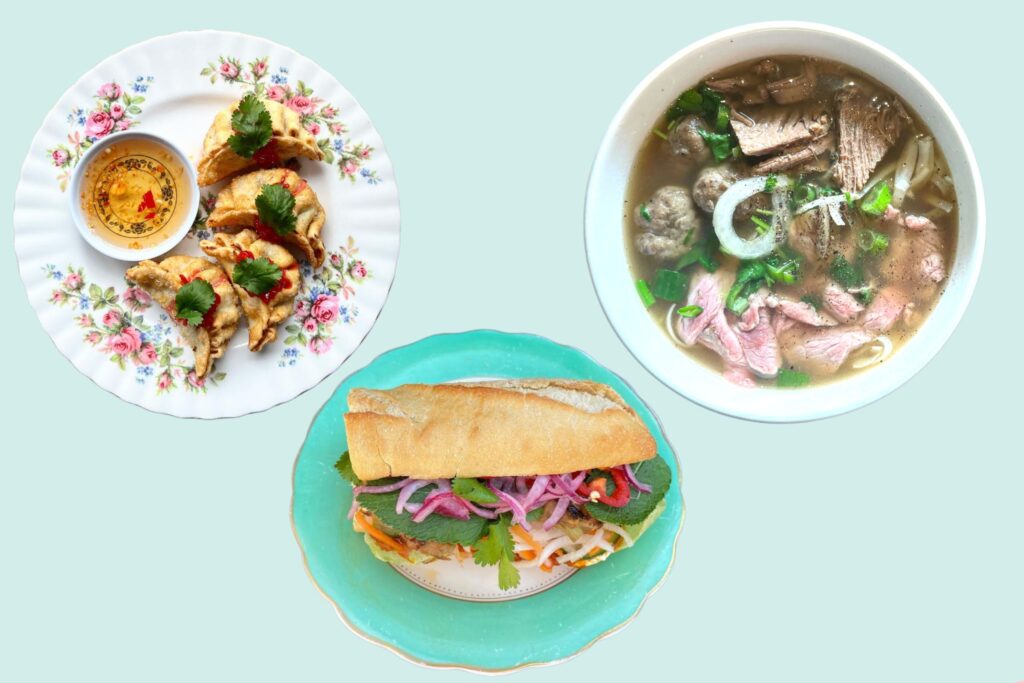
Named after their late grandfather, TânVân channels the cooking of sisters Erika, Elysia and Eva’s mother, who ran her own Vietnamese restaurant for 24 years before passing the torch. The pho alone – 24 hours in the making, the broth a masterclass in clarity and depth – would justify the W5 journey. But stopping there misses so much.
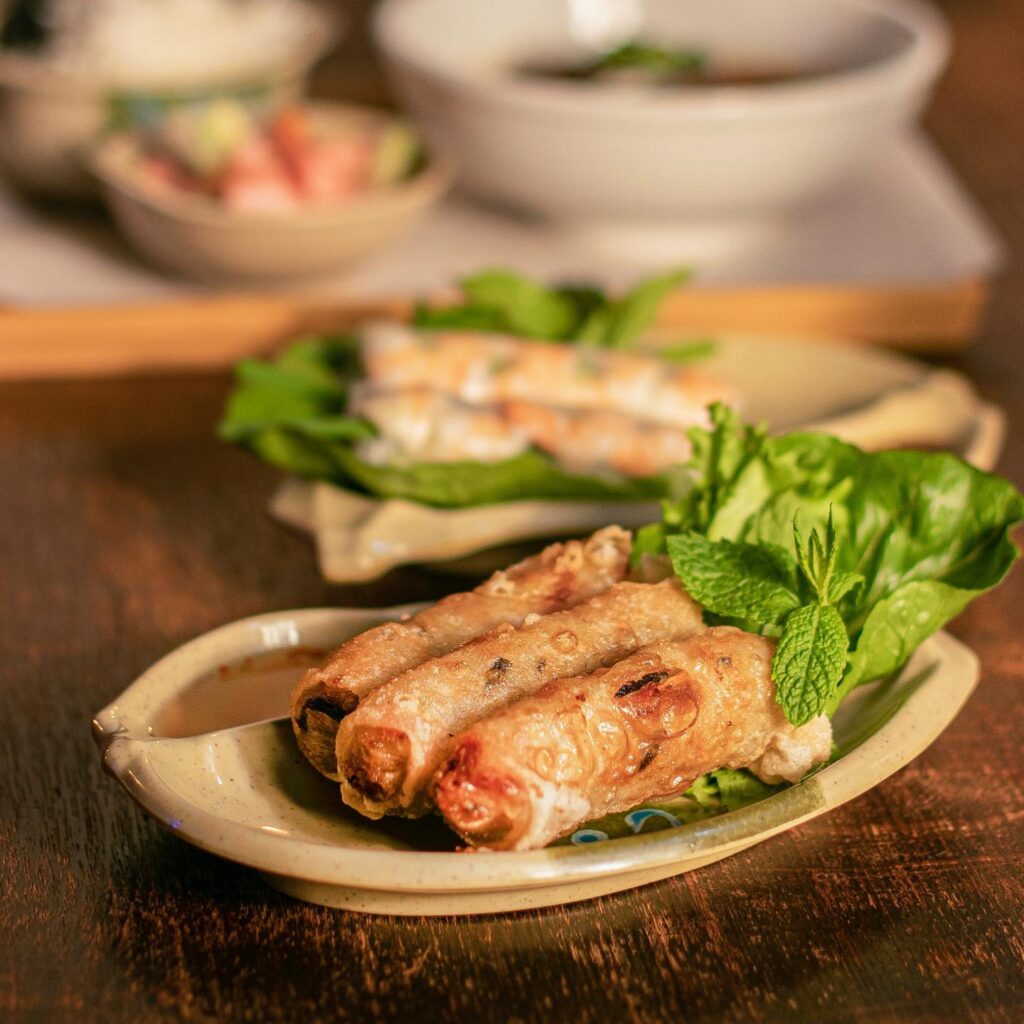
Summer rolls arrive tight and architecturally perfect, ingredients visible through translucent rice paper wrappers like flowers in ice. The accompanying peanut hoisin sauce has real depth, sweet and savoury with enough chilli heat to maintain interest.
The bánh xèo – a turmeric-tinted crepe stuffed with prawns, pork and bean sprouts – arrives crisp as old banknotes, ready to be torn into pieces, wrapped in lettuce with herbs, and dipped. It’s interactive eating at its best, tables comparing wrapping techniques and arguing over optimal herb ratios. Dipping sauce runs down forearms and into T-shirt sleeves.
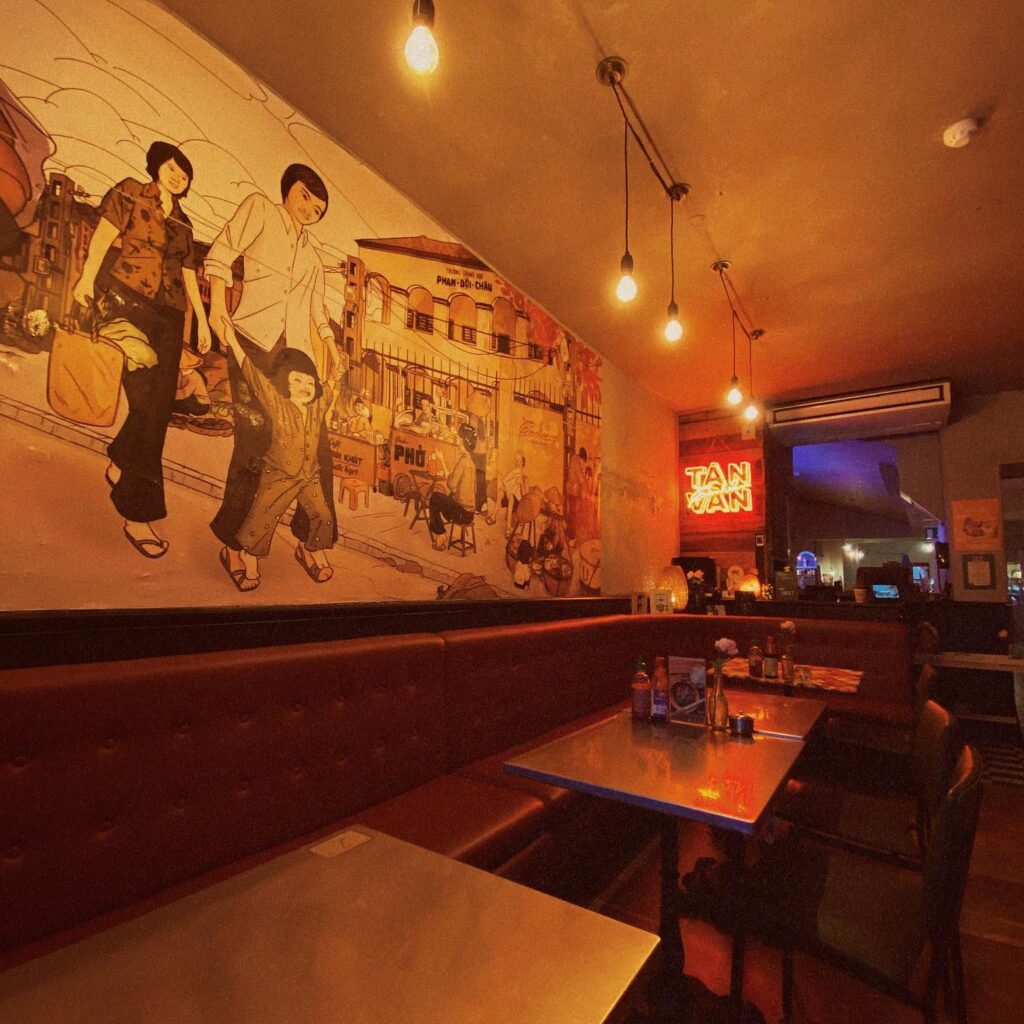
The room is gorgeous, too. Heritage murals nod to Vietnamese culture without flirting with theme restaurant territory, while the soundtrack – Vietnamese soul and jazz during lunch, something housier come evening – is transportive, sure, to Hanoi in the daytime and the wild streets of Saigon at night.
There’s a Vietnamese coffee ‘Cà Phê Martini’ that is so good we won’t even bother mentioning the other drinks here. We will mention that happy hour runs from 4pm to 6pm daily, and offers two-for-one.
Disembark at London’s Liverpool Street Station and the bright and bustle of the big city can at first overwhelm. People jostle and shimmy, police vans congregate, and all the buses come at once, defying both attempts to cross the road casually and a certain London saying. It’s bedlam out here, make no mistake.
Sure, you could retreat back into a station once known as the Dark Cathedral, taking refuge under its atrium vaulting, the golden arches of McDonalds or in a box of Krispy Kremes, but to do so would be to miss out on all the fantastic restaurants just a short stroll from Liverpool Street.
So, pull yourself together, engage your appetite, shoulders back and smash it; here’s where to eat near Liverpool Street Station, our favourite restaurants in Bishopgate and Liverpool Street.
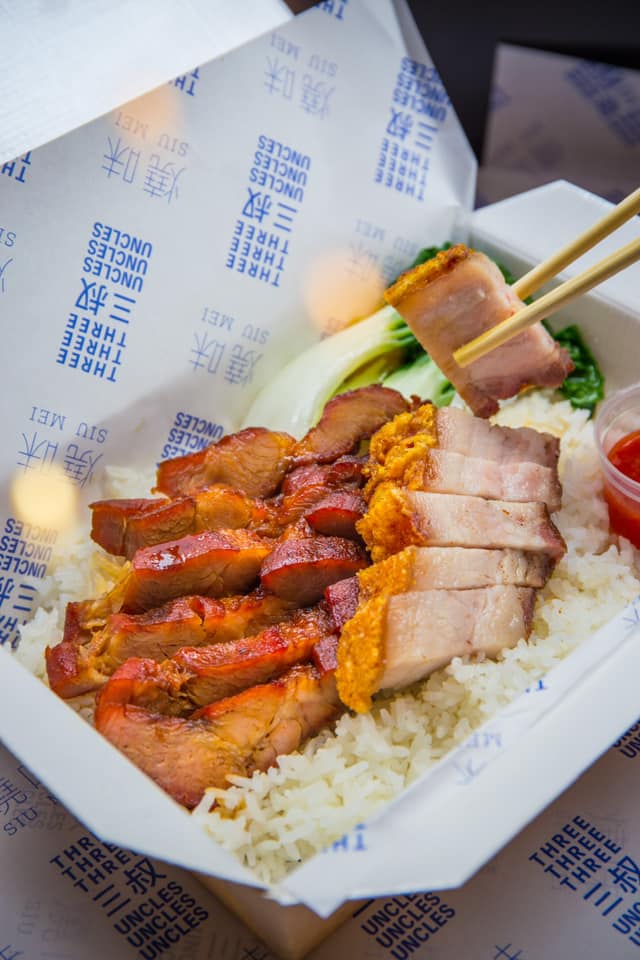
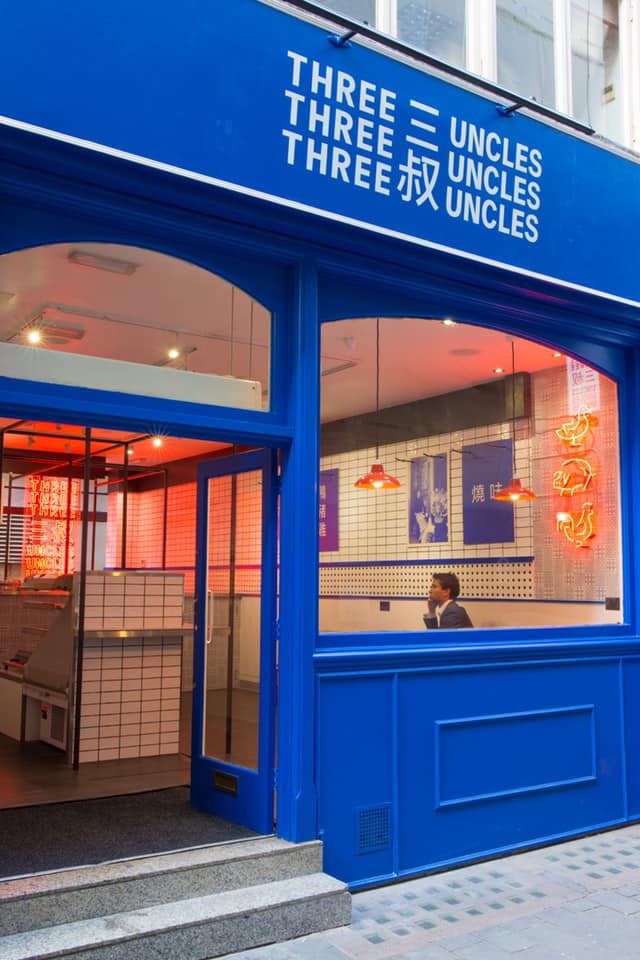
Three Uncles, Devonshire Row
The ideal place to enjoy traditional roast Cantonese meats over rice…
After that flustered introduction, who’s going to firmly but fairly tell us to get a grip? Not one, not two, but three of our favourite uncles, that’s who.
So, it’s to Three Uncles we’re heading first (leave the station, cross Bishopsgate, pass the Bull and Last on your left, and you’re pretty much there) which celebrates traditional roast Cantonese meats over rice.
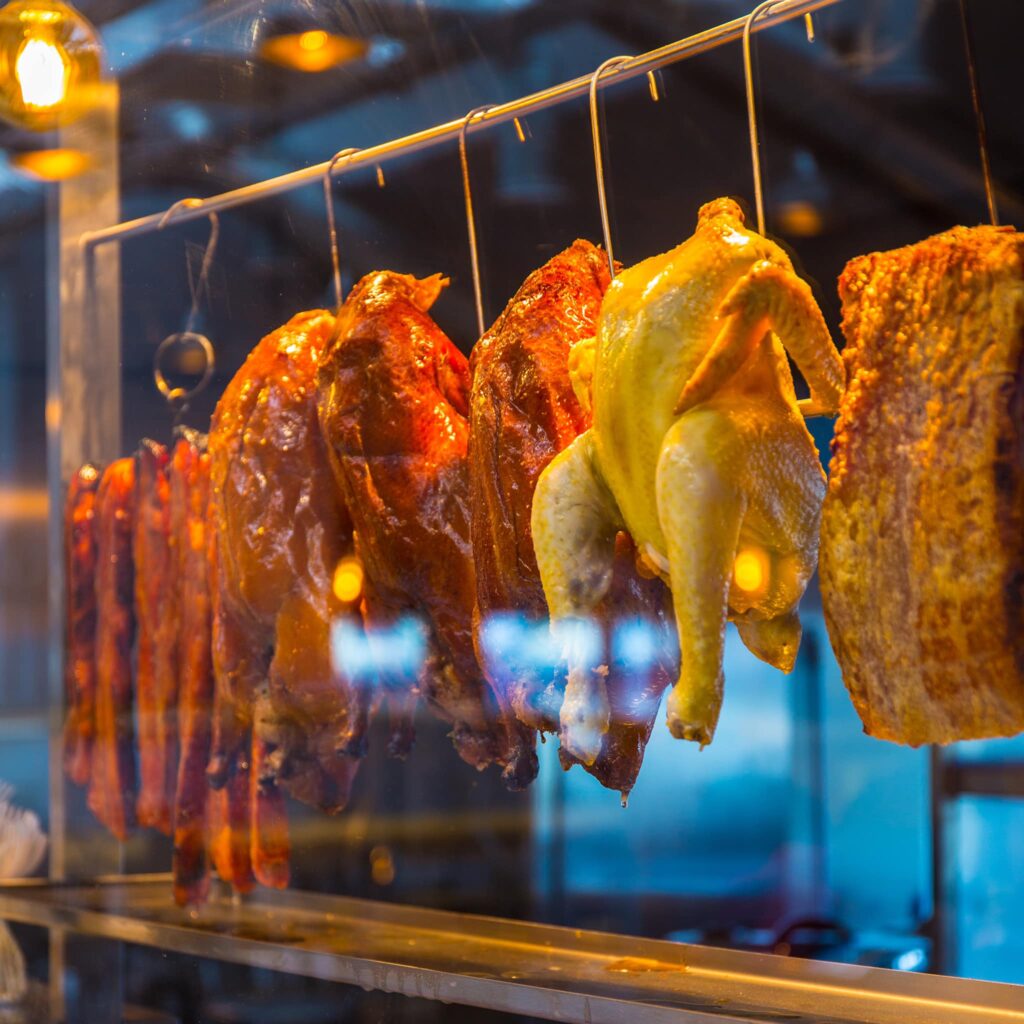
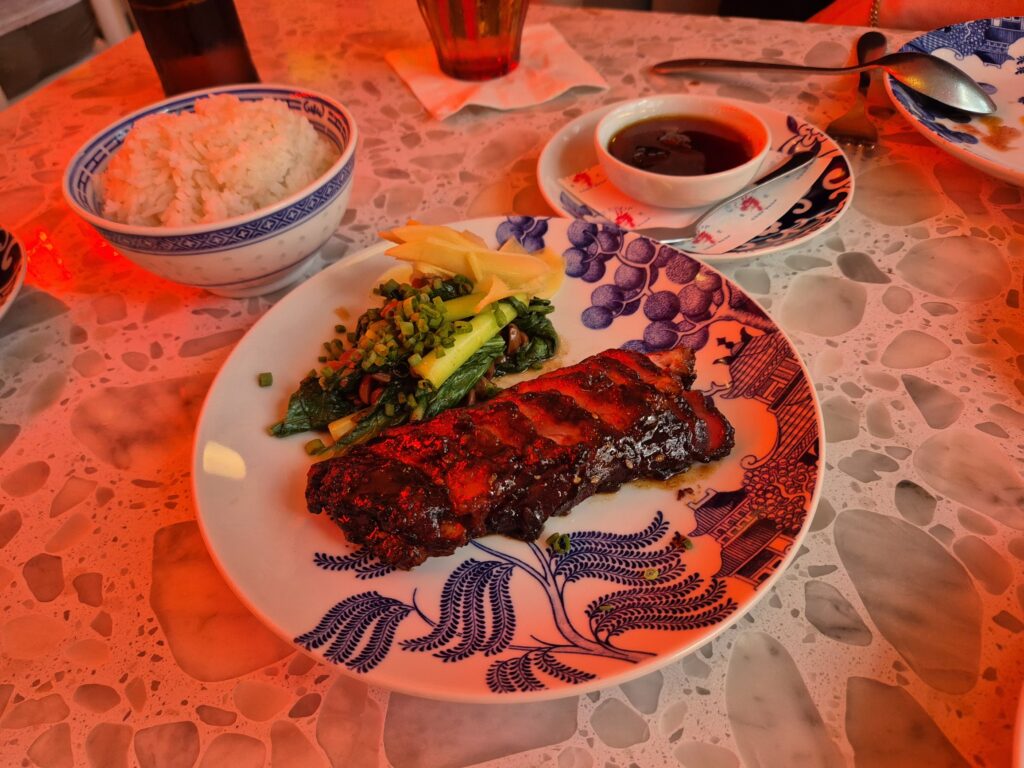
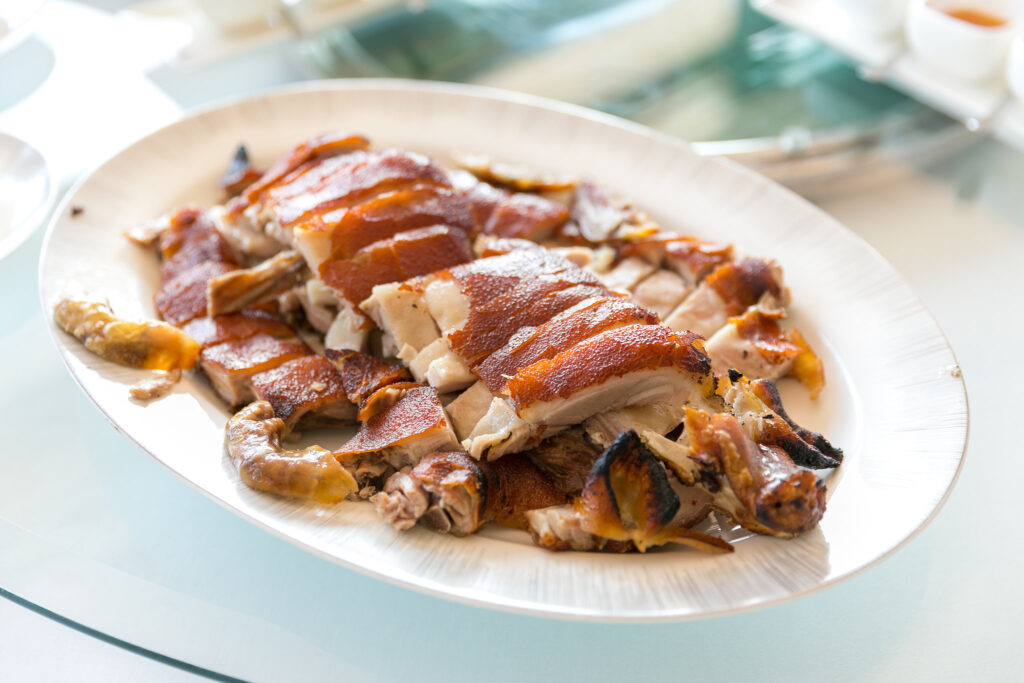
Just the ticket after a train journey, whether you’ve come from Cambridge or Tottenham Court Road, you’ll see slabs of crispy pork and whole roast ducks hanging over the counter at this modest shop, making it hard not to order both. Fortunately, the ‘any two meats over rice’ (complete with iron-rich, steamed pak choi) offer is as generous as you like, and a steal in the City for just £14.50.
Grab a stool at one of the two outside tables and watch the world go by, or head back to Liverpool Street Station for your departing train; you’ll be the envy of the whole carriage.
Needing little in the way of introduction, Fergus Henderson’s St. John Bread & Wine is arguably even better than the Smithfield mothership, with the stark, ascetic interiors, stark, ascetic plates, warm hospitality, and yes, plenty of offal, all present and correct here.
Whilst you won’t always find the bone marrow and parsley salad on the menu at Bread and Wine (grilled sardines often stand in), there’s plenty of nourishing, generous dishes to get very excited about. We’re often found stalking Commercial Street, waiting for the doors to swing open at noon; a Bread & Wine kedgeree, a chilled glass of St. John Blanc, and a big ol’ plateful of warm madelines… Could it be the best ‘brunch’ in all of London? We certainly think so.
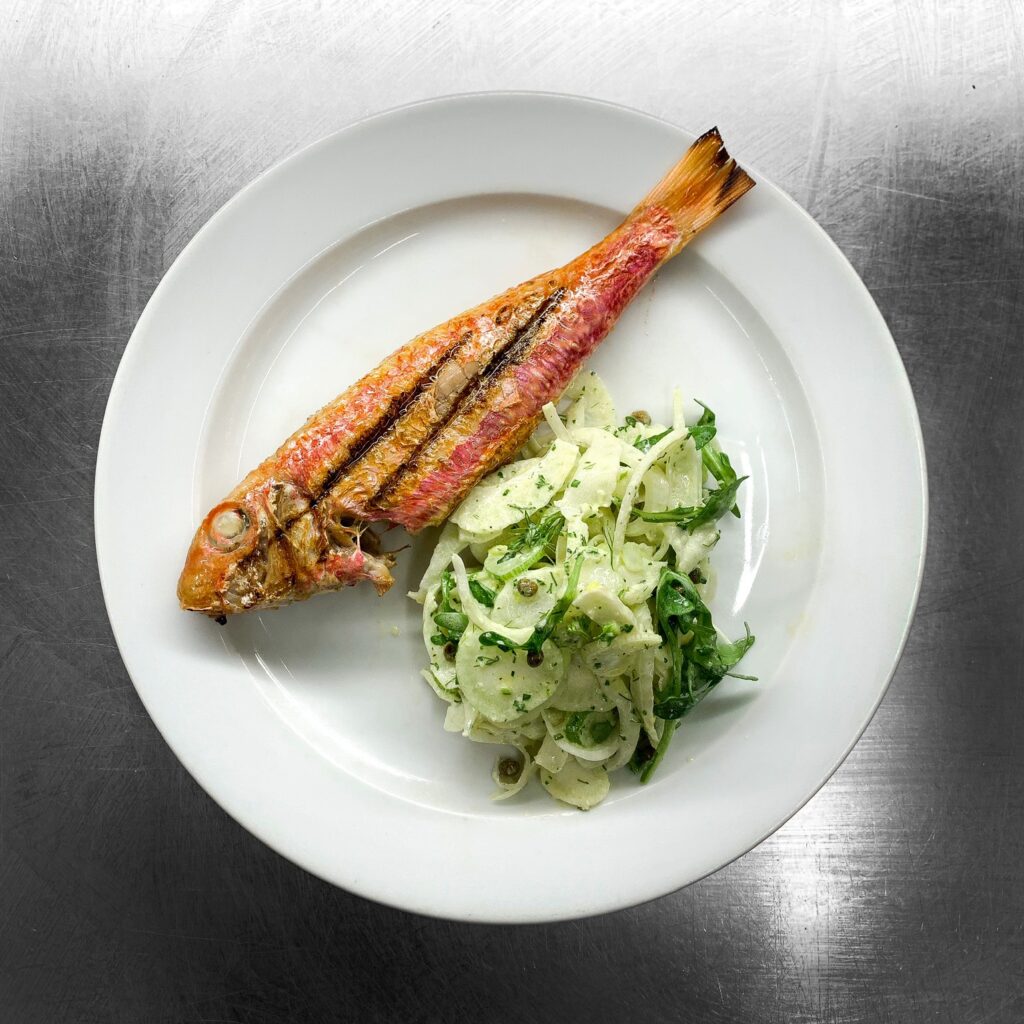
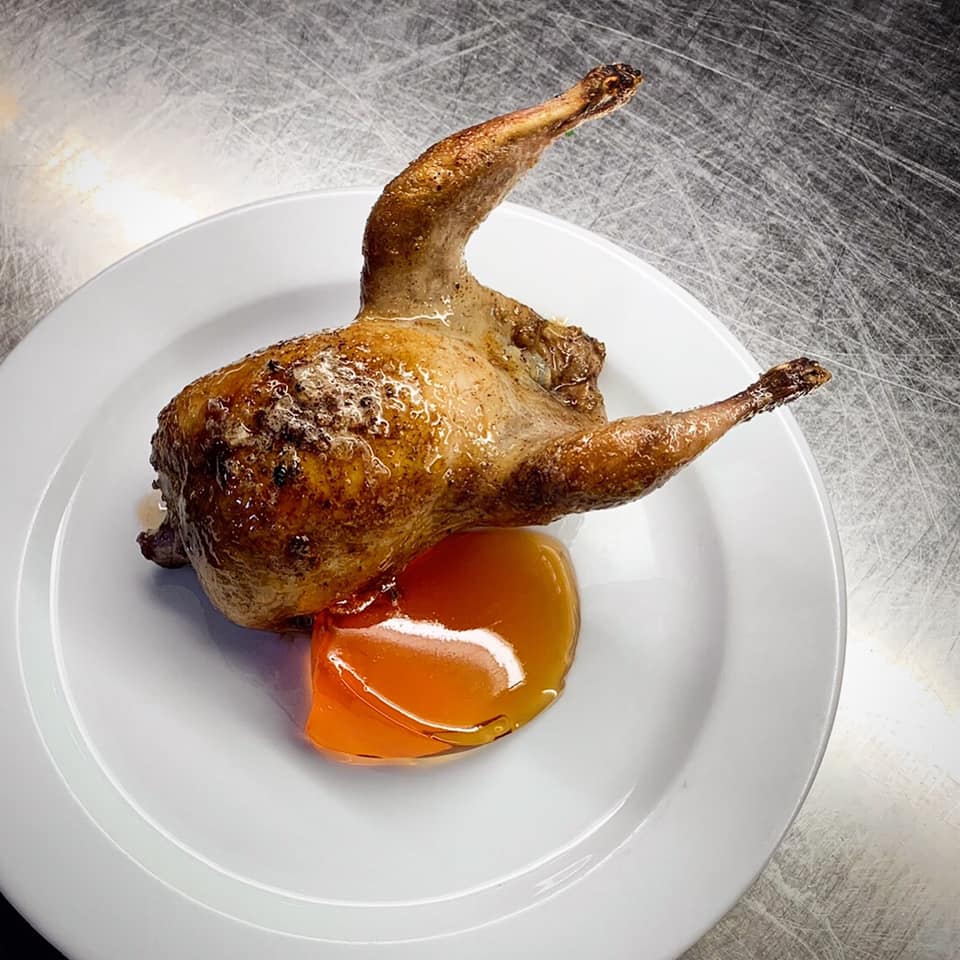
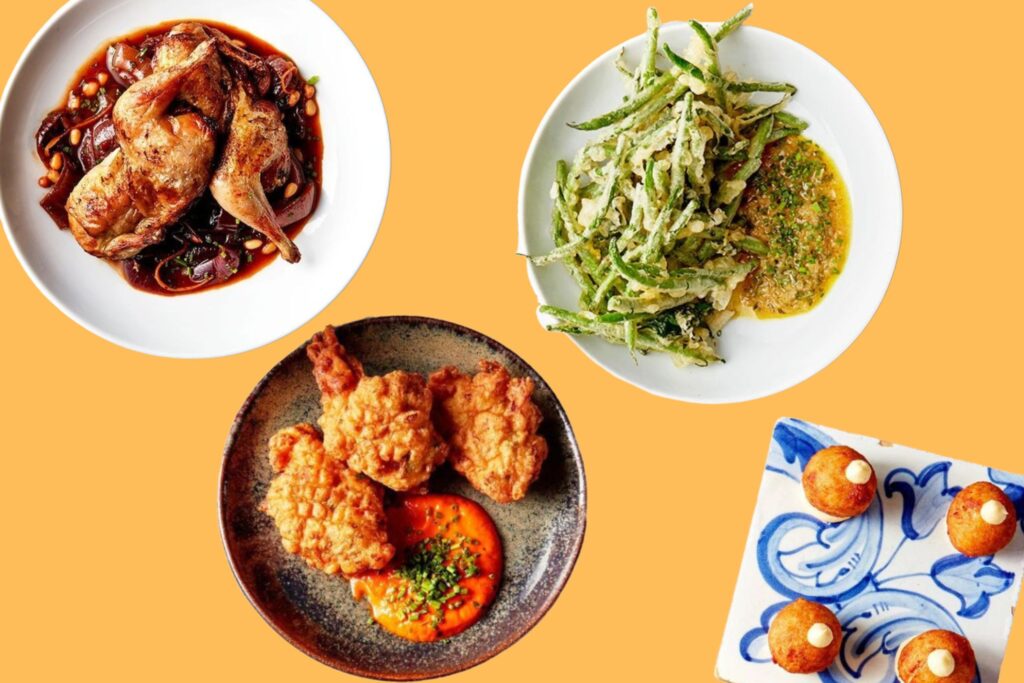
Stay for lunch, for a dish of upmost simplicity; a whole roast quail with a little jelly, or grilled red mullet with a fennel salad. Upfront, straightforward, and all the more delicious for it.
And if you can’t wait ‘till midday, the restaurant’s iconic bacon sarnie is available for takeaway only between 9am and 11am. Be prepared to queue.
Ideal for some seriously sensational Sri Lankan food…
In the new, long-teased development of Norton Folgate, on pretty, cobbled Blossom Street, Kolamba East is positioned as the sophisticated, slightly more premium sibling of the acclaimed Soho restaurant Kolamba. Whilst it’s only been open for a a year and a half, the restaurant is already on form, and is a great option for a spicy, invigorating feast close to Liverpool Street.
Introduced to the London dining scene by husband and wife duo Eroshan and Aushi Meewella in 2019, Kolamba was conceived from their memories of growing up in the Sri Lankan capital Colombo and the incredible food of the city.
Kolamba settled into Soho fast, earning several rave reviews in the national press. The announcement of a second act with loftier ambitions, then, piqued our interest something substantial, so we’re alighting at Liverpool Street once again, and heading five minutes down the road to the second outpost.
What first strikes you is the design here. Kolamba East is one handsome building, its 90-cover dining room a homogenous, harmonious single entity. Designed in partnership with Annie Harrison of FARE INC, it’s all plush booth seating, an attractive central bar, and some truly gorgeous lanterns, the latter of which cast a blanket of warming sepia over the whole space. It’s a beautifully designed room and one that really feels like you’re travelling on a private jet, for some reason.
Roasted Pineapple
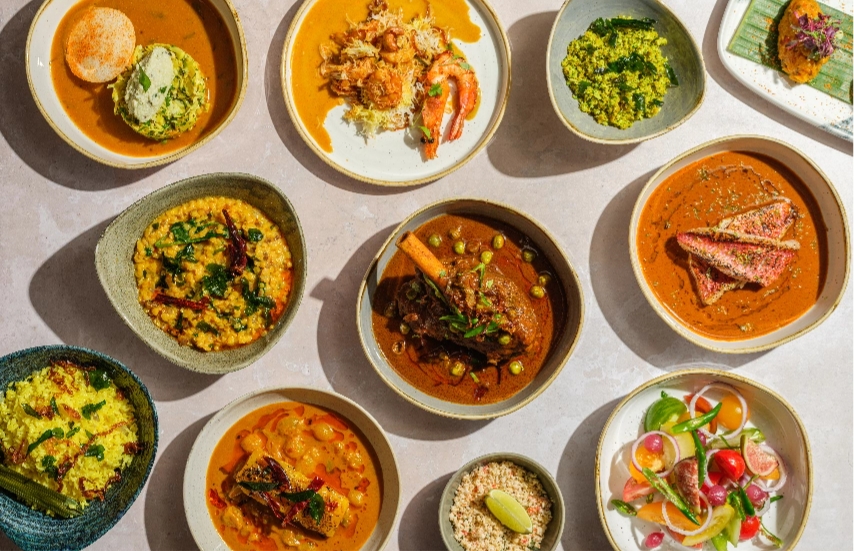
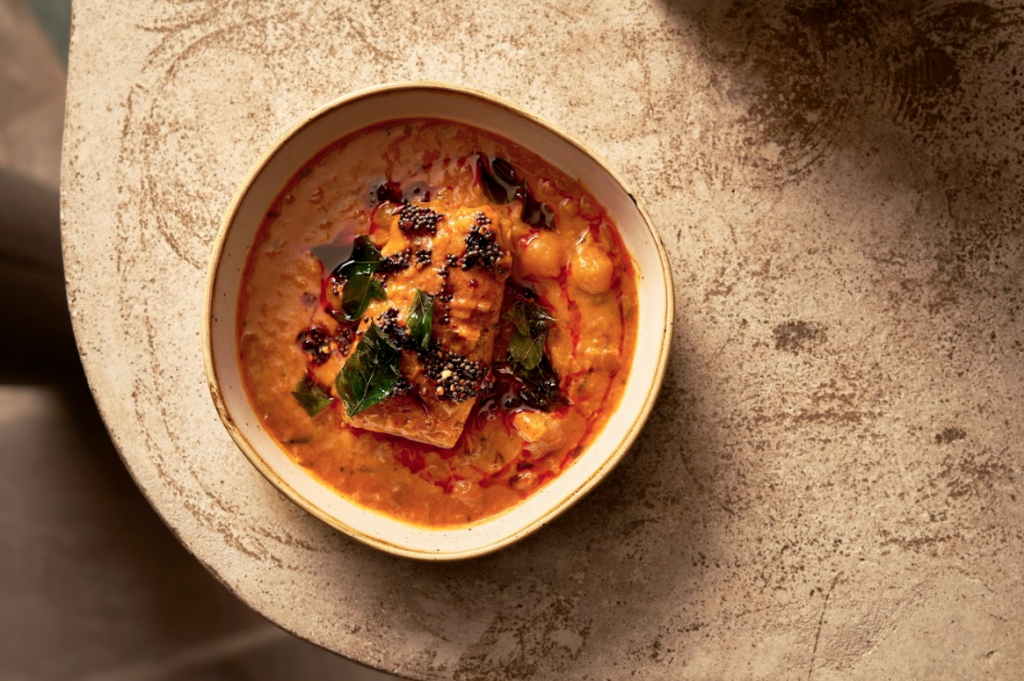
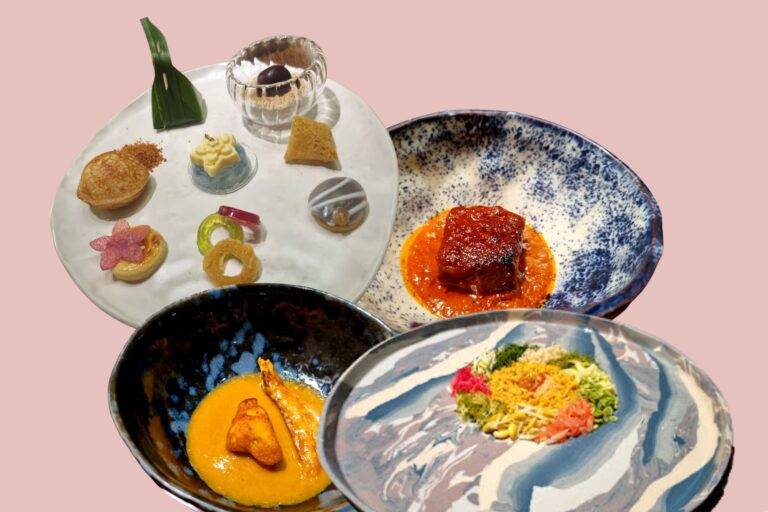
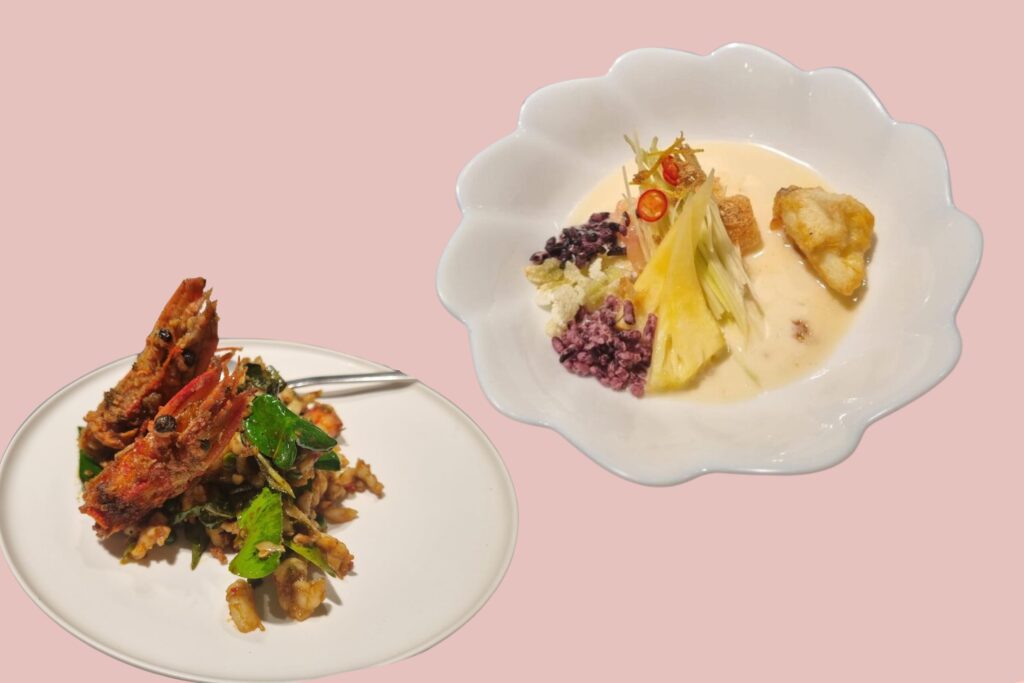
When you come back down to earth, fold yourself into plates of Sri Lankan ‘homecooking’ with a few flashes of finesse from executive chef Imran Mansuri and team, perfectly exemplified in the string hopper king prawn biryani, which comes with a small jug of intensely flavoured, delicately spiced shellfish stock. Pour that jug over the tangle of thread like noodles, squeeze the prawn brains into the mix, and muddle; inside, it’s heady, oceanic alchemy. Alongside, and whatever you do, order the roasted pineapple; it’s one of the best things we’ve eaten this year.
If you prefer your conversations to be conducted in hushed, reverent tones, you might be better off seeking shelter elsewhere. But if you’re looking for one of the best restaurants close to Liverpool Street Station, however, you’ve found it here.
Because Manteca, the ‘Britalian’ restaurant from chefs Chris Leach and David Carter, is a brimming, boisterous affair, and impossibly hard to book since moving to its permanent location in Shoreditch.
Once named by Time Out London as the second best restaurant in the city, and receiving a slew of fawning national reviews, the nose-to-tail small plates here are as satisfying as they come, the energy both in the dining room and on the plate totally irresistible.
Whilst the brown crab caico e pepe is arguably the restaurant’s most talked about dish, it’s the pig head fritti that truly had us cooing. Or should that be ‘oinking’? Served alongside a burnt apple purée, Sunday lunch this ain’t. Rather, it’s a refined, deeply savoury bite, offset perfectly by the purée.
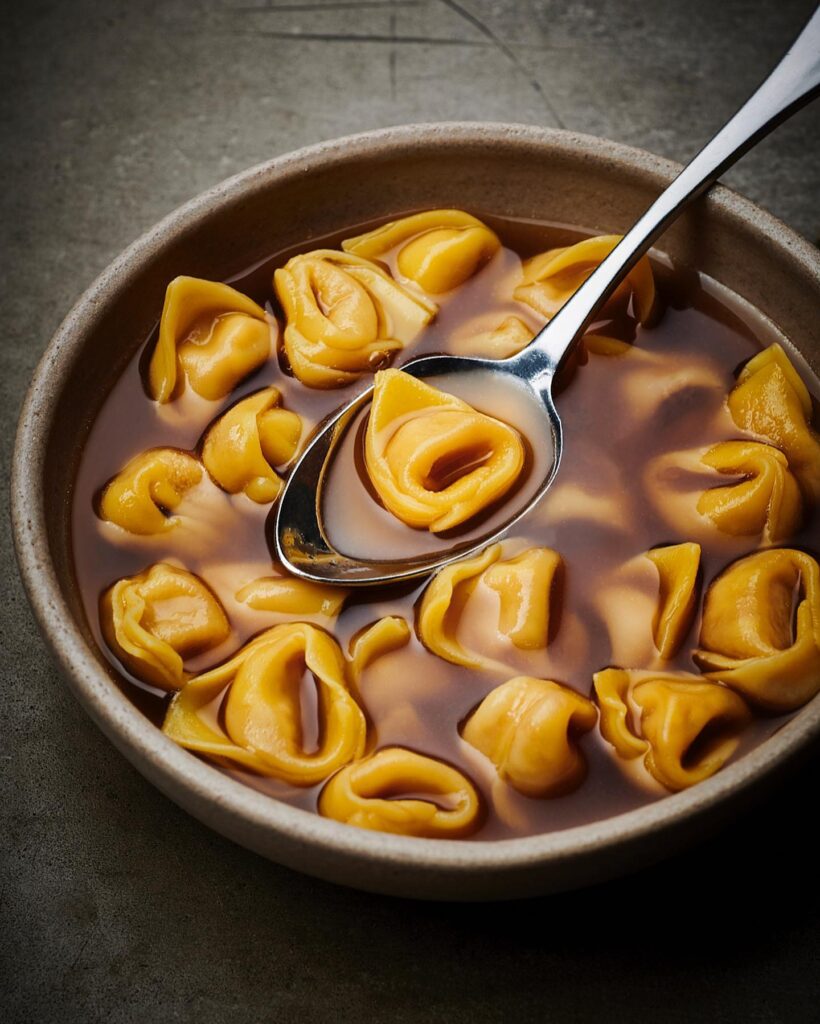
Equally fine when it’s on the menu is the tortellini in brudo, the pasta parcels filled with a mortadella mixture that’s both light and umami-heavy. The broth glistens, the tortellini bounces, and everything feels right with the world.
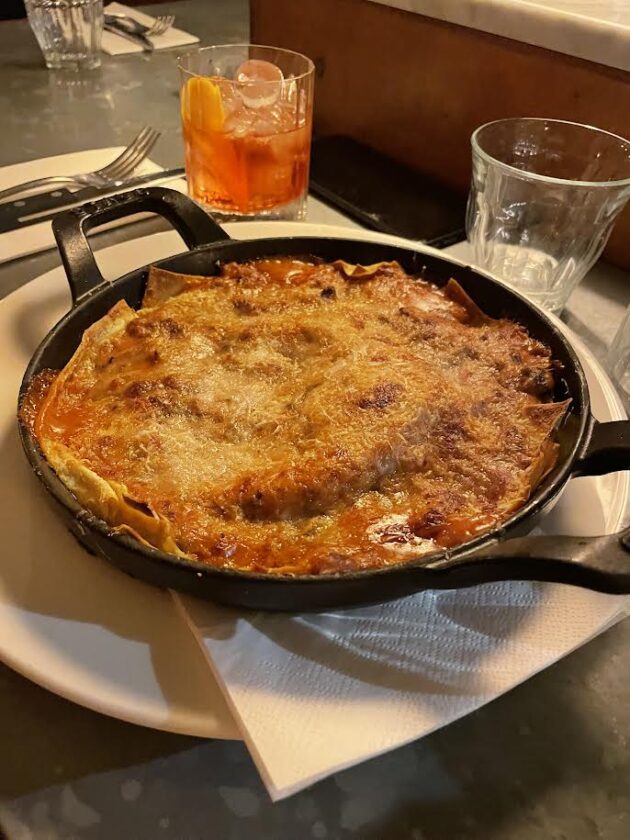
Speaking of Sunday lunches, incidentally, Manteca observes the lord’s day in true Bolognese fashion, with a celebratory lasagna verde (here, using belted galloway beef and rarebreed saddleback pork), all finished in the restaurant’s wood-fired oven. Only available on the Sabbath, it’s a worthy match to a more traditional Sunday roast in the city.
Anyway, Manteca truly is a class act, and somewhere you’ll want to return to again and again (and that’s coming through a writer who has now made their way through the entire menu here!).
By some estimates, there are around 50’000 Portuguese nationals living in London, with the majority living in South Lambeth, the city’s so-called ‘Little Portugal’, and, more specifically, Stockwell, which is home to the biggest concentration of Portuguese outside of the Motherland.
Unsurprisingly, then, that to eat great Portuguese food in London, it’s wise to head into SW9. That said, north of the river, in the rather bromidic surrounds of Finsbury Avenue Square, some of the best Portuguese food we’ve ever had – Lisbon, London or anywhere – is being served at Bar Douro City.
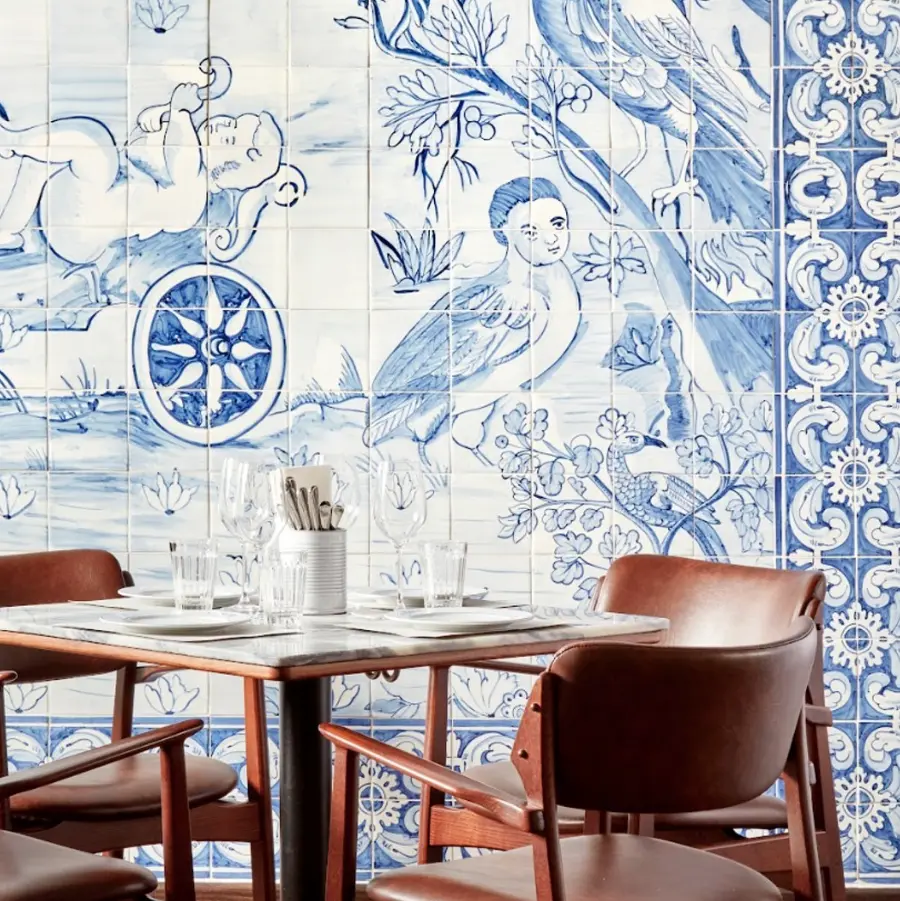
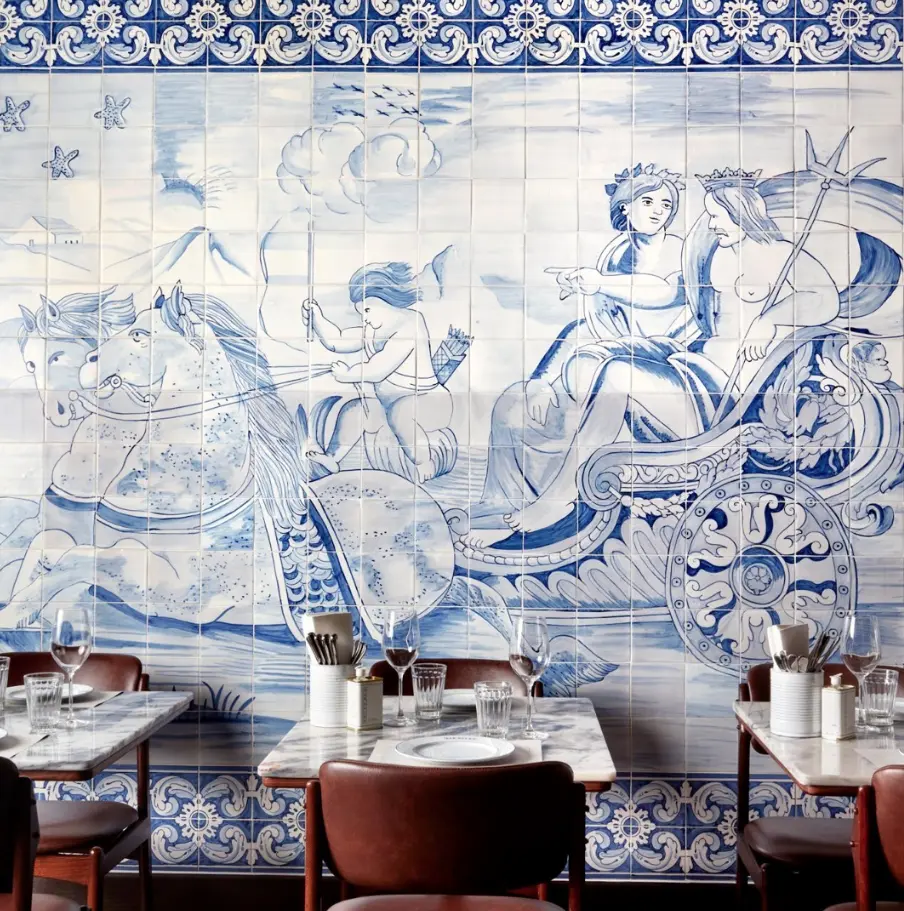
In a dining room that might better be described as a particularly well-appointed corridor, with intricate blue-and-white azulejos-tiles lining one wall, and a bar and open kitchen on the other. From here, a procession of generous, gutsy Portuguese small plates are served with the kind of flourish that whisks you far away from the soulless City and to somewhere altogether more sincere.
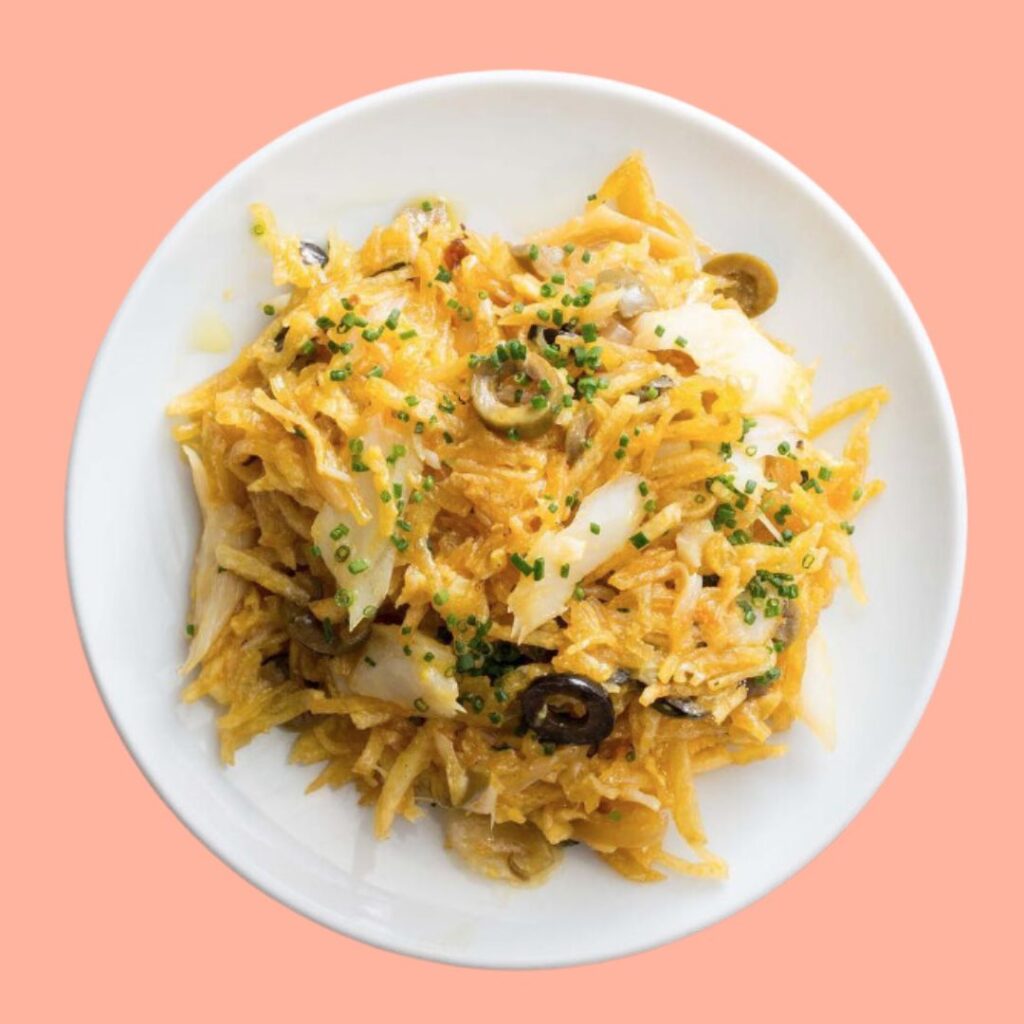
Start with the croquetes de alheira – circular croquettes filled with a sharp, spicy smoked sausage and topped with a dab of aioli that hit all the right notes with your first crisp glass of Super Bock, the only beer you need here. An exemplary bacalhau à brás pulls off that delicate balancing act that only the best versions do, of being both crunchy and creamy, its top end seasoning moreish rather than parching, as long as you’ve another Super Bock to hand.
From the larger ‘land’ based dishes, the secretos de porco preto alentejano (grilled black pig) is a highlight, the highly prized cut from around the pig’s shoulder served blushing pink and beautifully marbled. The accompanying Montanheira salad features segments of orange that lift and cleanse. This has got to be one of the best dishes you’ll eat close to Liverpool Street Station, and well worth delaying your train for.
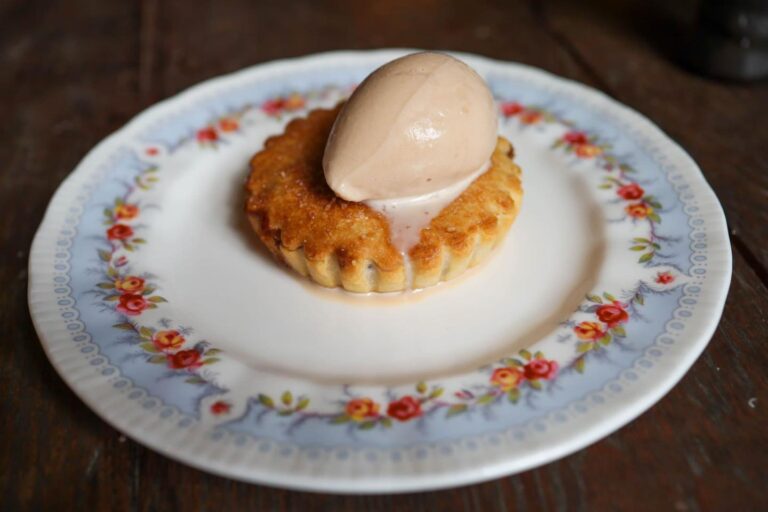
Round things off, naturally, with a pastel de nata. Bar Douro’s is served with a cinnamon ice cream which at first feels superfluous, but is so well made – smooth and rich rather than dusty – that you have to remove your purist hat and succumb.
Bar Douro is also one of the best places in London for large groups, its dining room able to accommodate 16 people with a sharing menu that clocks in at just £49.75 (just call it £50, guys!) a head. Woof.
JKS Restaurants – the group behind Gymkhama, Sabor, and Trishna – runs this Indian barbecue and beer hall in a former banking hall at ten minute walk from Liverpool Street station. And they run it with a certain chaotic precision, make no mistake. The space holds 240 covers across two floors, with ceiling fans, colonial-era fittings, and multiple screens showing live sports, and it gets rowdy. But that doesn’t mean you’re left checking your watch as you wait for your sizzling lamb chops. Quite the opposite; things happen smoothly here, but with enough kinetic energy to keep things interesting.
The menu divides between small plates – Punjabi vegetable samosas, goat belly vindaloo samosas, Indo-Chinese chilli paneer lettuce cups – and larger grills and kebabs meant for sharing. Tandoori lamb chops come as half or full rack, methi chicken chops arrive with fenugreek marinade, and the mixed grill sizzler serves two with guinea fowl, lamb chops, and prawns. Biryanis are substantial: dum beef shin and bone marrow serves two, as does the tawa prawn version. The wood oven turns out dishes like Sikandari kid goat shoulder with lacha paratha, and wood-roasted sea bream pollichathu, and the whole place smells like smoke. Alongside, the house IPA is brewed in Bermondsey specifically for the restaurant, designed to work with the char and spice coming off the sigri grill and tandoor. It’s the only drink you need here.
Monday nights bring a curry club thali for £30 per person: chicken tikka butter masala or paneer butter masala, house daal, garlic naan, rice, and a Cobra lager. Saturdays offer a sports menu with two hours of free-flowing Cobra (‘let me dance away forever’ on repeat, please), Tanqueray gin cocktails, and Paul John Nirvana whisky drinks for £35, alongside a £35 feast that includes a chicken tikka club sandwich and mixed grill pilau. When major cricket or rugby fixtures are on, expect the room to shift from restaurant to sports bar – tables book out early and the atmosphere gets considerably louder. It’s all part of the fun.
Open Monday to Saturday from midday until half past ten, closed Sundays.
A Yiddish term of endearment akin to ‘sweetheart’, this vegetarian restaurant on the peripheries of Spitalfields takes inspiration from the cafe and casual dining scene in Tel Aviv. Put simply, Bubala is as charming as they come.
Whilst at lunch the menu is a la carte, at dinnertime it’s a ‘Bubala Knows Best’ set menu only affair, which at £39 per person isn’t necessarily cheap, until you see just how much you get for that figure; with over ten courses, this certainly isn’t a meal for watching yours.
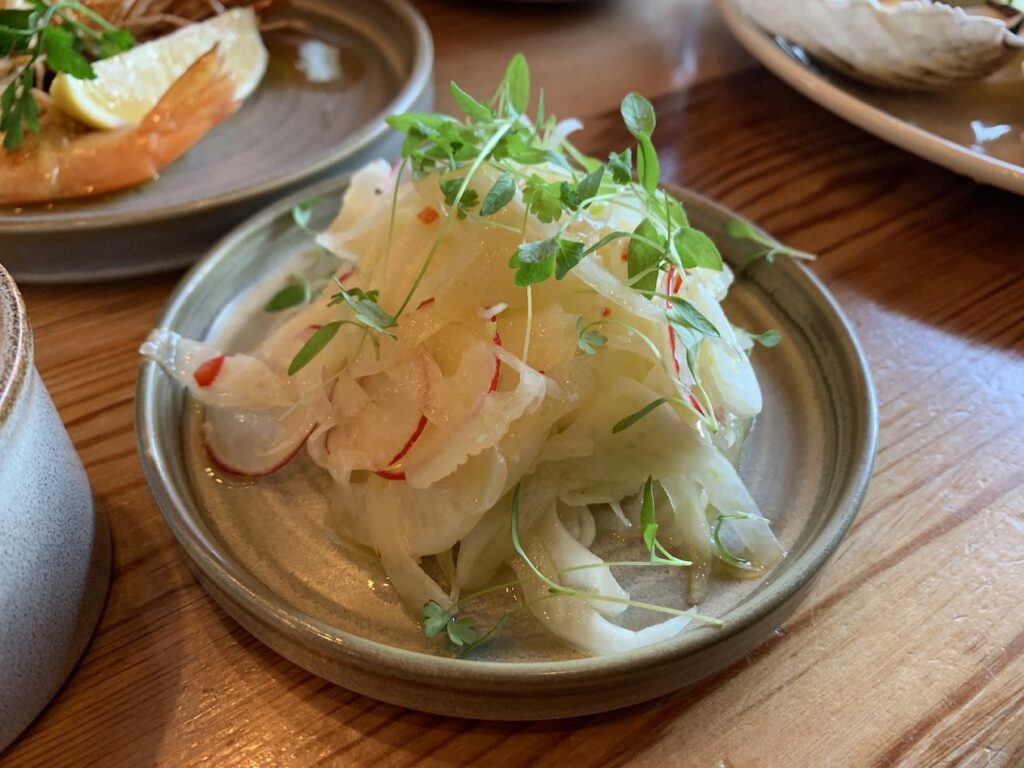
Whether you’re here for lunch or dinner, the brown butter hummus is essential (and all present and correct on the Bubala Knows Best evening set). But the headlining act for us is the fennel with saffron caramel and rose harissa, whose impossibly heady top notes are smoothed and sedated by a piquant yet cooling yoghurt. Just superb.
Ideal for cinnamon, spice and all food ridiculously nice…
Fittingly located in the historic East India Company spice warehouse and just a two minute walk from Liverpool Street, Cinnamon Kitchen is the perfect spot to escape the hustle and bustle of the City.
With Chef Vivek Singh at the helm, the restaurant and all-weather covered terrace serves his signature modern Indian cuisine with the best of British ingredients for lunch and dinner. The restaurant also does one of London’s spiciest dishes – the perfect way to dust yourself down after a long day, we think.
The Cinnamon Collection celebrates its 25th anniversary in 2026, and throughout the year Cinnamon Kitchen City is offering a special three-course menu for £25 to mark the occasion.
Ideal for sophisticated all-day dining in the heart of The City…
Nestled in the heart of London’s historic/soulless Square Mile, this European restaurant pays homage to its much-loved forefather, The Wolseley, by retaining the ‘all-day’ offering intrinsic to its DNA, with food served in one way or another from 7am to 11pm, daily (except Sundays, which ends at 5pm) – pretty useful if you’ve missed your train and need somewhere to pitch up for a while, we think.
The ‘City’ version of this much cherished restaurant is a place where British (and London) heritage meets contemporary broadly-French cuisine, creating a dining experience that’s both casual and elegant, glamorous but grounded.
Upon entering, you’ll be greeted by the graceful design details of the interior, which was once a bank and later a department store before being transformed into the capacious dining room you’re just about to settle into. Of course, twinkling, meandering jazz plays at just the right volume…
With the scene set, it’s time to tuck in, and the menu at The Wolseley City is a continent-spanning rundown of European classics. The snails done in the Bourguignonne-style, as in, swimming in plenty of garlic and herb butter, with a lick of pastis to liven them, are particularly good. Pack chewing gum for that onward train journey.
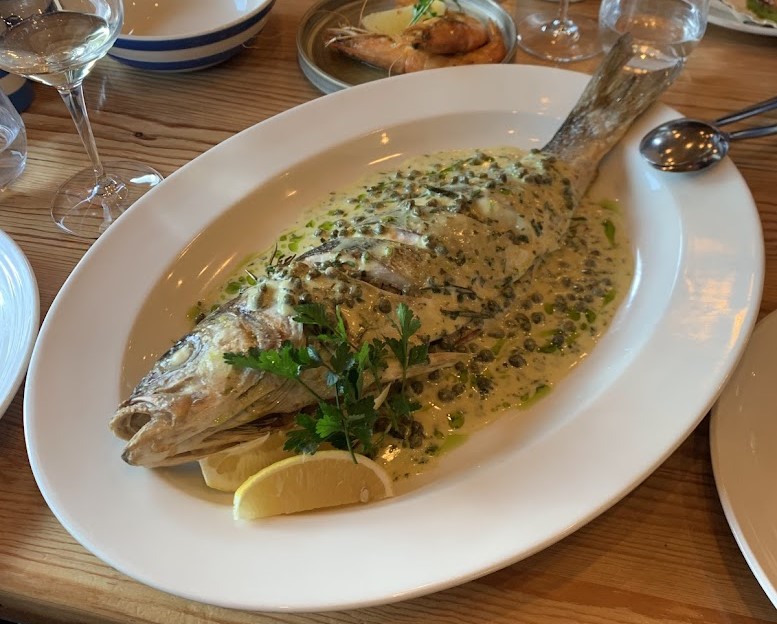
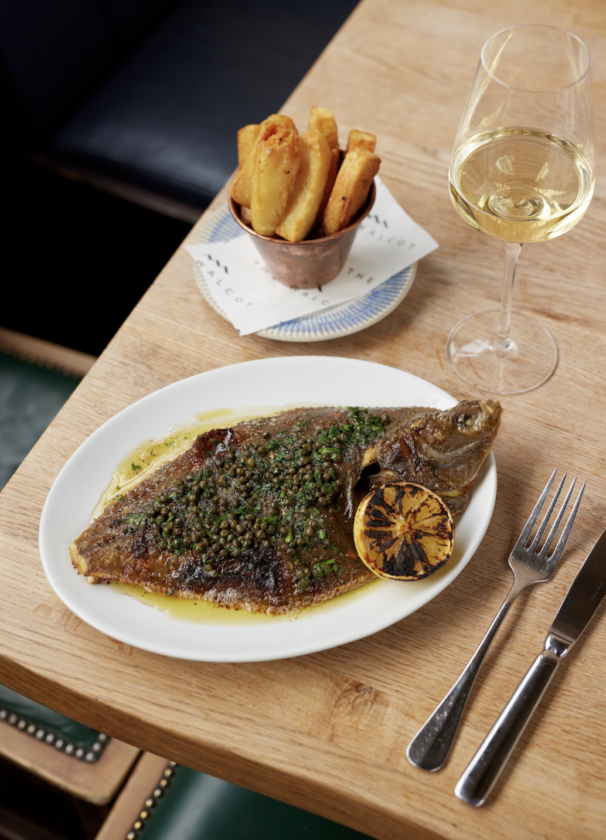
Even better – the highlight, in fact – is a tranche of turbot ‘Grenobloise’. Here, the pearlescent, expertly cooked fish arrives positively bathed in a lemon-spiked brown butter, capers dotted across its surface. You’ll want a side of frites with this one. Sure, £44.50 for a fairly small piece of fish – king of the sea or otherwise – might feel pretty extortionate, but the place is heaving with boorish bankers who wouldn’t bat an eyelid at the price tag, so fair fucks. Veal sweetbreads, all crisp exteriors and buttery centres, are served with a pleasingly light soubise sauce and pleasingly rich veal bone reduction, creating a ying and yang effect that complements those butch yet delicate offaly bits perfectly.
Desserts are decent, too, the apple strudel with a strident calvados chantilly cream hitting all the markers you want from your sweet course – caramelised sugar, giving fruit, and a soothing but boozy cream. Lovely stuff.
Located just a stone’s throw away from Monument Station, The Wolseley City is an accessible place to dine, making it the ideal choice for those looking for a grand dining experience without venturing too far from Liverpool Street.
Ideal for Indian small plates that pack heat and flavour…
Duck down Artillery Lane (sadly no relation to the whole Gunpowder thing; the restaurant is named after a famous spice mix), and you’ll find Gunpowder holding court in a tight space that feels like someone’s front room in terms of the cheek-to-jowl nature of things.
Five minutes from Liverpool Street Station, this tiny space has been buzzing with interest since day one, the room enveloped in a thick miasma of blooming spices that promises a good meal before you’ve even had the chance to get properly across the menu. These days you can actually book a table (a recent change from their famous no-bookings policy), though they do still keep some spots for walk-ins. Sure, you might be practically sitting on your neighbour’s lap, but nobody seems to mind when the food starts arriving. Hey, you might even enjoy that kind of close proximity…
The spicy venison and vermicelli doughnut sounds like something dreamt up after too many pints, but it works brilliantly. The meat’s been spiced judiciously, and the doughnut is light and grease-free, adding richness that’ll have you licking your fingers without shame (perhaps avoid doing so whilst looking into your neighbour’s eyes, though). Order the Gunpowder chaat for contrast – these crispy Norfolk potato fingers come dressed in yoghurt and tamarind, creating the kind of sweet-sour-spicy balance that the subcontinent does so well.
It’d be madness to stop after snacks. Instead, go for the grilled pork ribs arrive lacquered in a crimson Nagaland glaze that’s got a pleasing punch. These aren’t your Sunday pub ribs – they’re sticky, funky, and hot enough to make you grateful for the lassi you’ve almost knocked over several times. Speaking of heat, approach the bhel puri with caution if you’re spice-sensitive. What looks like an innocent puffed rice salad will absolutely blow your head off, though in the most delicious way possible.
The intimate space still creates a buzzy, energetic vibe, even if queues have been reduced by the new allowance for reservations. Perfect for a pre-train feast or a lunch that’s anything but boring.
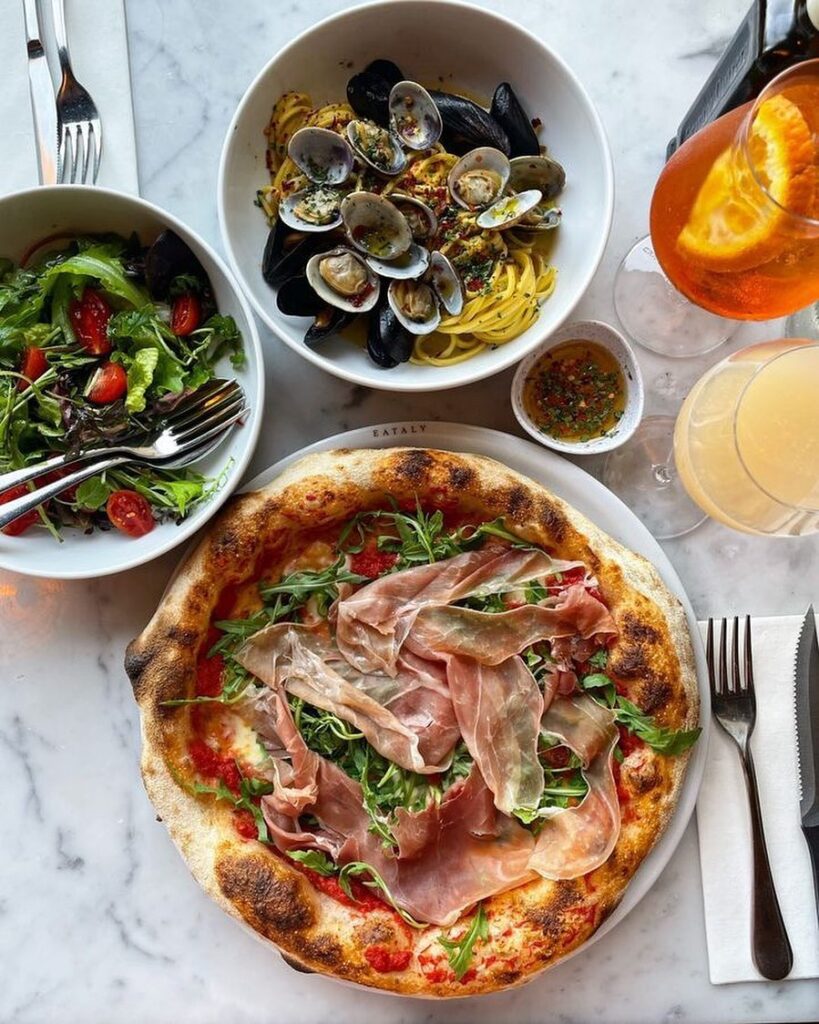
A fair amount of scepticism existed about the opening of the juggernaut Italian ‘marketplace’ Eataly just moments from Liverpool Street Station, and the first to land here in the UK.
Did we really need a sprawling food court and Italian deli in London, when affordable pasta joints were proliferating faster than the time it takes to boil some freshly rolled angel hair? Would the self-proclaimed premium ingredients appeal to a British market often more concerned with convenience than quality? Was a whopping 42’000 square feet of eating, shopping and learning strictly necessary?
Nearly five years in, and it turns out we did and it was. With over 5’000 food products and 2’000 wines – the largest collection in London – all under one roof, including some seriously good charcuterie, cheeses, and sweet stuff (the cannoli here is ace), Eataly has thus far been a massive success.
It’s also a great place to spend an afternoon, with samples, tastings and trials all available at the various retailers. Just make sure you bring a large bag and a larger credit limit; it’s impossible to leave this place empty handed!
There’s also decent pasta and pizza in Eataly’s three dedicated restaurants, for those looking to take a load off for a while.
The ideal destination for some of the best hand-pulled noodles in the Capital…
If you prefer your noodz hand-pulled rather than pasta machine rolled, then over on Commercial Street you’ll find one of the very best restaurants near Liverpool Street Station; Xi’an Biang Biang Noodles.
A sister restaurant to the much celebrated Xi’an Impression, one of our favourite places to eat in Highbury and Islington, the food is equally as good here. Visually akin to a canteen, all white walls and clinical lighting, and with straightforward service to match, the food is anything but impersonal; noodles have just the right amount of bite and spring, sauces (and subsequently, shirts) are slicked with chilli oil, and garlic lingers for days after dining here.
Some good news for those devoted to central; Xi’an Biang Biang Noodles now have a second branch in Covent Garden, and two more have recently opened, close to Gloucester Road and London Bridge.
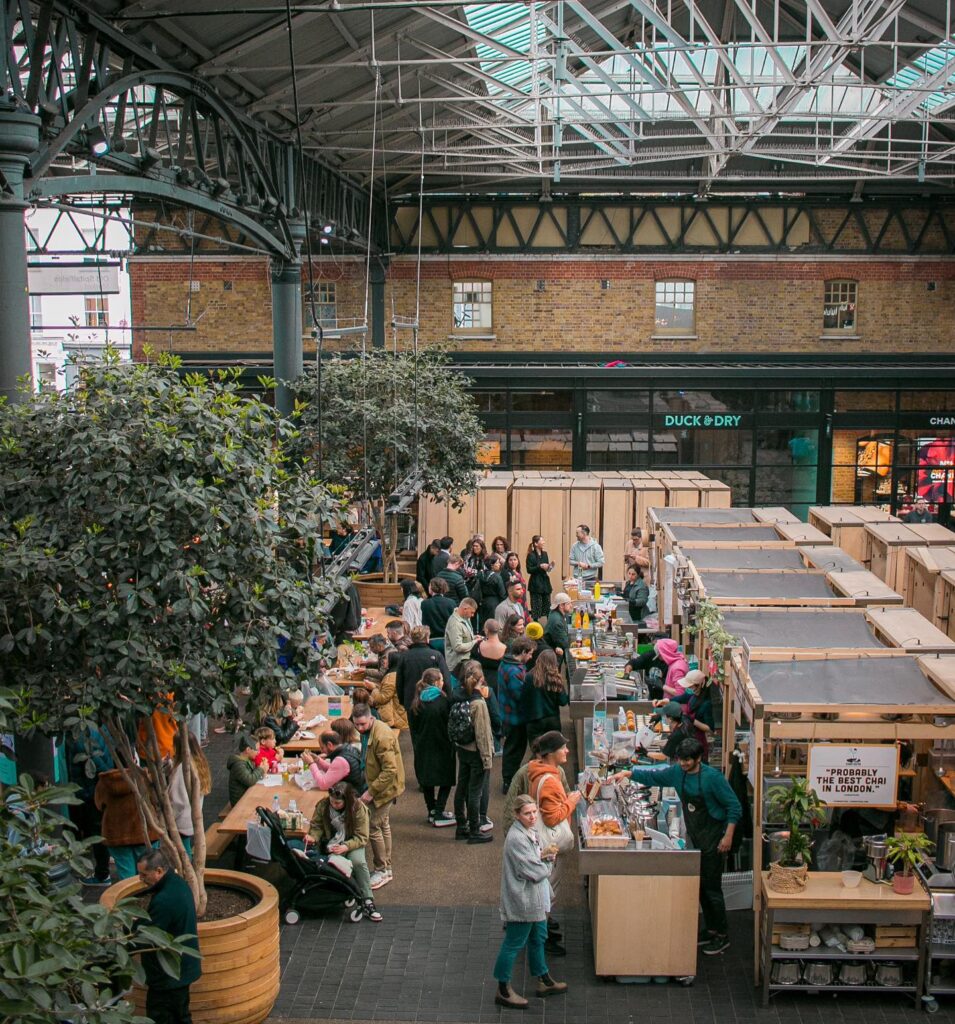
Spitalfields Market has a slicker, smoother feel than some of the more cobbled together markets in the city, but that’s not to its detriment at all. It’s large, covered (great for sheltering from the ever present London rain) and has a great variety of the good stuff, both in stall and fully-realised- restaurant form.
Indeed, there are plenty of Spitalfields restaurants to choose from and the much renowned Galvin Brothers have two places here if parking your bottom and taking your time is more your thing. If snacking, shopping and switching cuisines does it for you, then Smokoloko, The Duck Truck and Ebby’s are particular favourites.
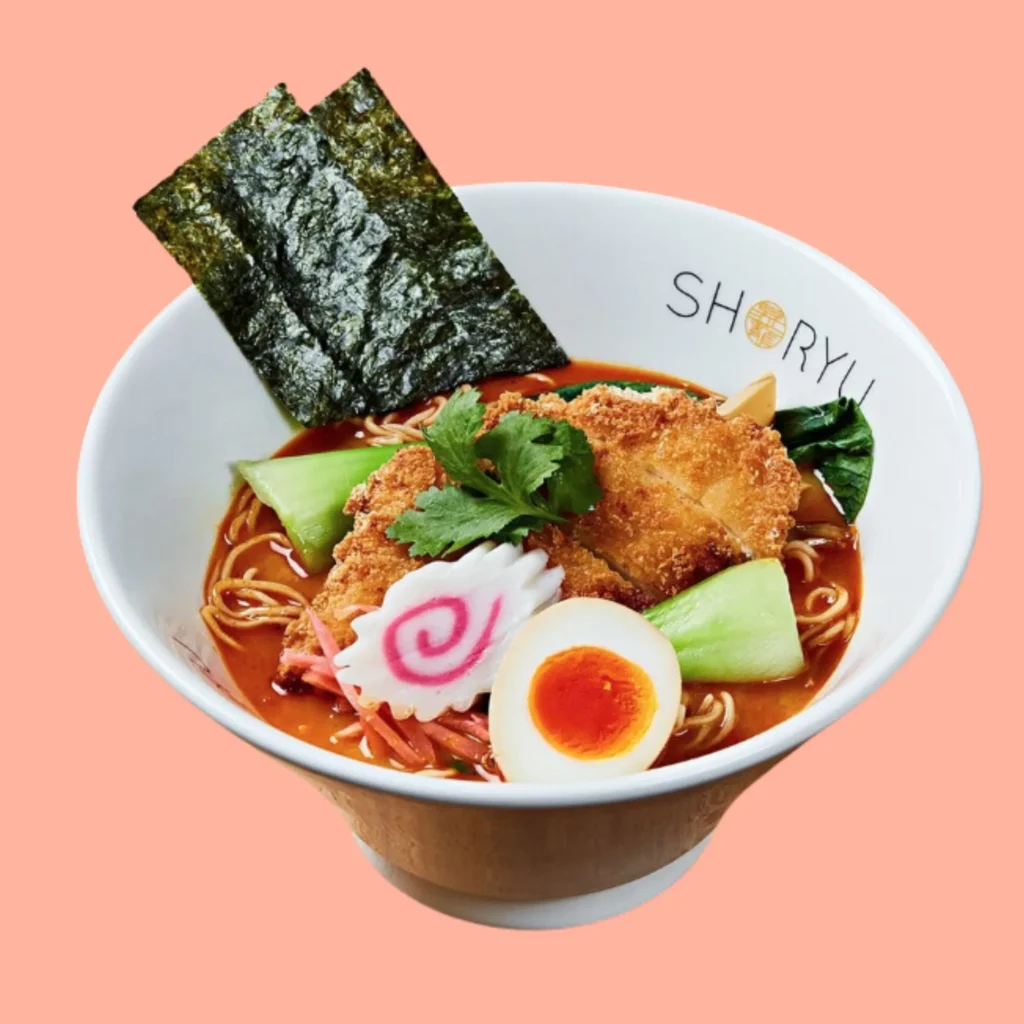
Sure, Shoryu Ramen may be pretty ubiquitous by now, with the chain boasting 9 London outposts, as well as more across the UK, but that shouldn’t detract from the quality of the milky thick, rich, heavily porcine tonkotsu broth that has become the restaurant’s signature.
Founded by Tak Tokumine, a Fukuoka city native who might bleed bone broth if you cut him open with a Nakiri knife (weird image), the aim when opening Shoryu was simple; to bring the unique flavour of Fukuoka’s Hakata tonkutsu ramen, hard to find outside of Japan’s southern island of Kyushu, to London and beyond.
A noble aim indeed and one that has been embraced by ramen-loving Londoners. At the glass-fronted Shoreditch branch, a brisk 10 minute walk from the station, in a rather functional space, the usual lofty standards remain; the char siu barbecue pork is as tender as ever, the 12-hour broth is so enriched with pork fat it’s become opaque, and the dappling of chilli oil across its surface brings a curious sort of respite.
It’s bloody fantastic, though perhaps not one for your lunch break; your white shirt is sure to get splattered and your energy levels may well be tanked. Best save this glorious bowl for after work, we think.
Idealfor regional Thai dishes and fruity cocktails that still both pack a punch…
The boozy and brilliant Som Saa has been such a foodie fixture since its Shoreditch opening back in the heady days of 2016 that it’s easy to forget how groundbreaking the restaurant felt at the time.
A wildly successful pop-up that became a crowd-funded bricks and mortar restaurant, Som Saa’s introduction to the world was one of regional Thai food that wasn’t only liberal with the chilli, but also didn’t hold back on the cuisine’s funkier elements. Shrimp paste, fermented fish sauce and entrails, fresh durian and more all made an appearance on the big sharing tables that defined Som Saa’s convivial, cacophonous vibe.
Som Saa is now celebrating a decade in Shoreditch, and the whole of London suddenly feels conversant in the difference between Isaan’s pla raa and Sai Buru’s nahm bu du, with the city’s capsaicin tolerance at an all time high, and some of Som Saa’s more unfamiliar dishes now very much part of the fabric of food culture here.
That decade hasn’t been without drama, mind. A kitchen fire in 2025 forced the restaurant to close for six months, but the team used the downtime productively, travelling, rethinking, and returning with a refreshed interior (designed by A-rnd Studio, who also fitted out sister restaurant Kolae over in Borough Market), a new bar snacks menu and a revamped cocktail list that includes a Green Negroni made with pandan-infused gin and clarified Campari.
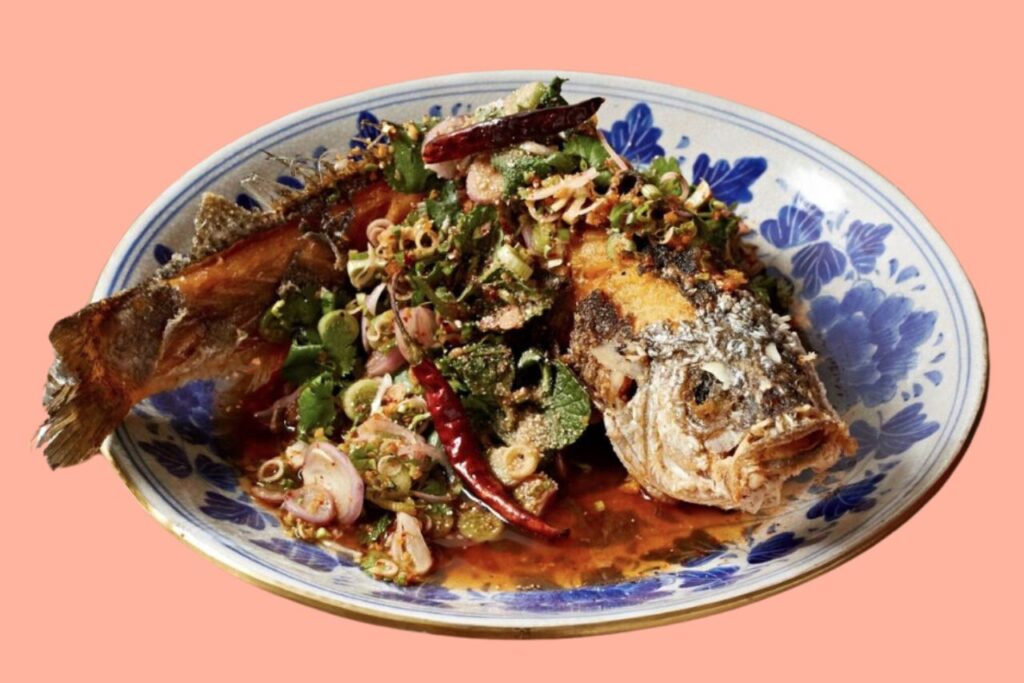
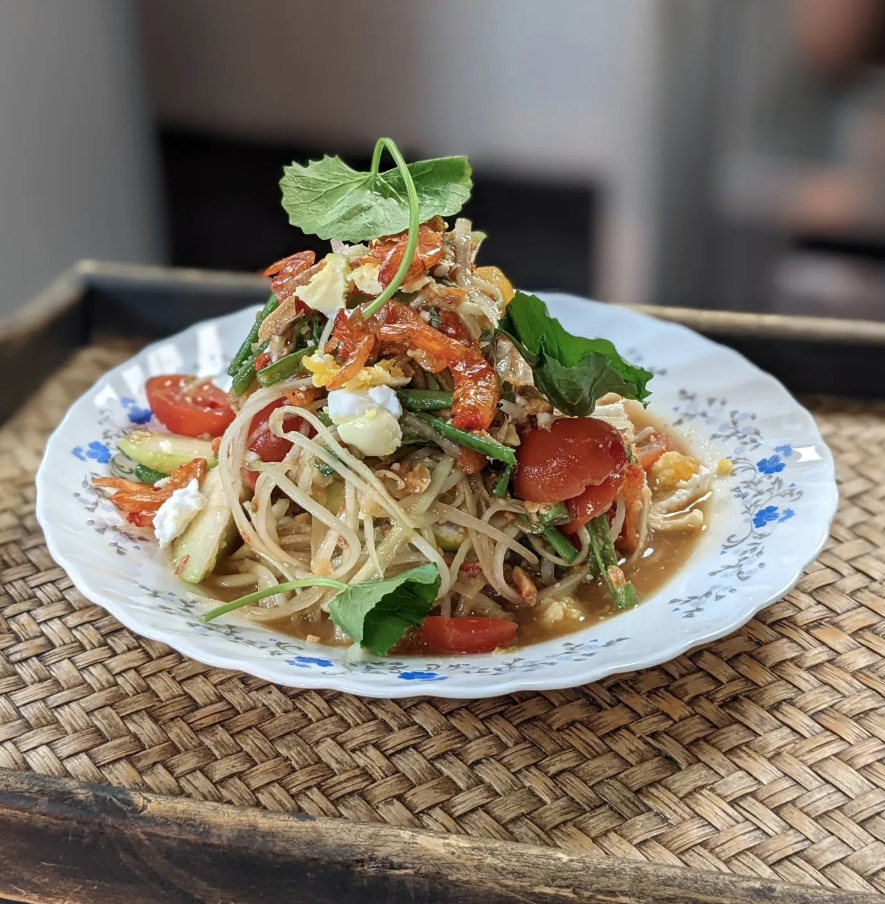
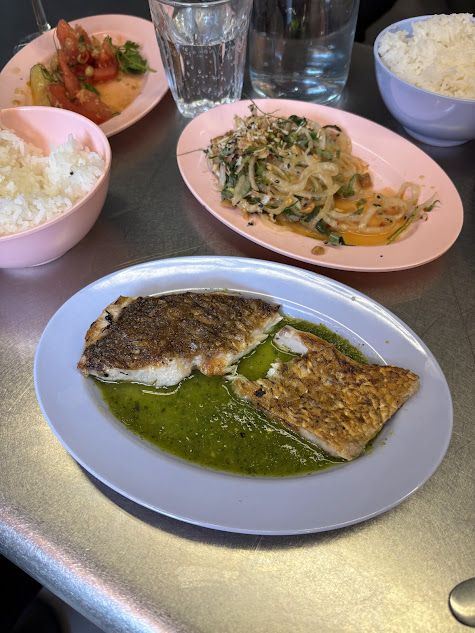
Back at the mothership on Commercial Street, the whole deep-fried seabass is still as crisp and herbal as ever, the rotating cast of som tam still pounded to order each and every time, and the coconut cream for the restaurant’s excellent curries is still getting freshly pressed daily.
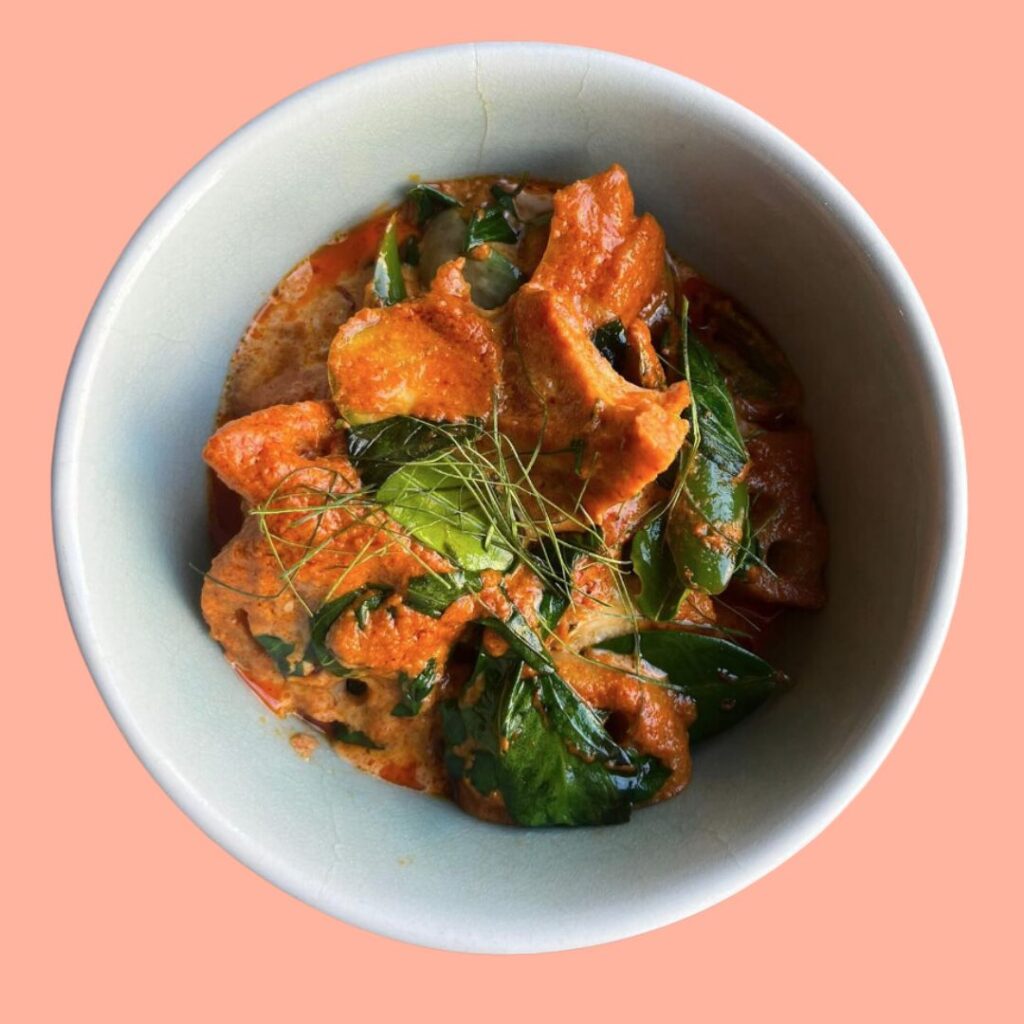
It’s a labour of love that bears delicious fruit in a current red curry of crispy tofu and Thai basil, a thick, fresh and fragrant affair that undulates gently with the smoky background note of a complex dried red chilli paste. Equally good is the menu stalwart of stir-fried to order seasonal greens, with black cabbage, asparagus and mushrooms boasting huge amounts of wok hei.
This is a place where you’ll want to come for a full sharing spread. Indeed, each dish’s interplay with its neighbour feels just as important as its flavour profile when standing alone. Som Saa’s ‘tem toh’ menu is designed with this interaction and balance in mind; a spread of 5 or 6 complementary dishes, plus rice and dessert, is priced for £40 per person.
A couple of the restaurant’s signature cocktails (mine’s the Siam Sling – a long, floral number flavoured with Thai basil and makrut lime – if you’re asking) sees that sharing menu on its way beautifully.
In April 2026, Som Saa marked a decade in Spitalfields with a week-long nod to its Climpson’s Arch residency, reviving dishes from those early days and offering the signature deep-fried seabass at its original 2015 price of £14. A fitting way to toast ten years of pushing London’s Thai food conversation forward.
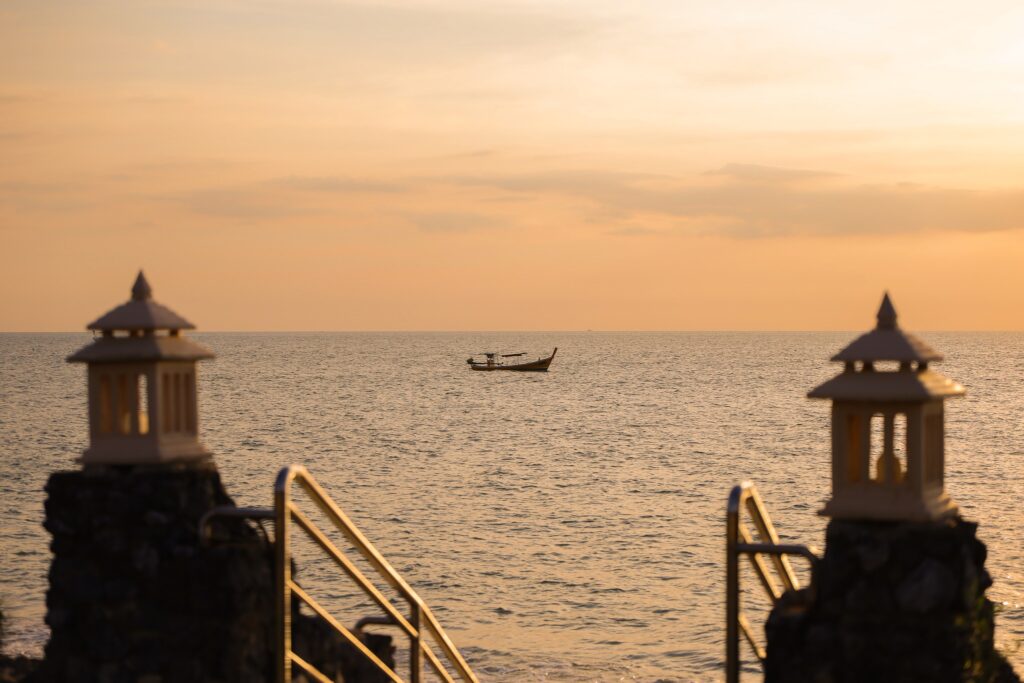
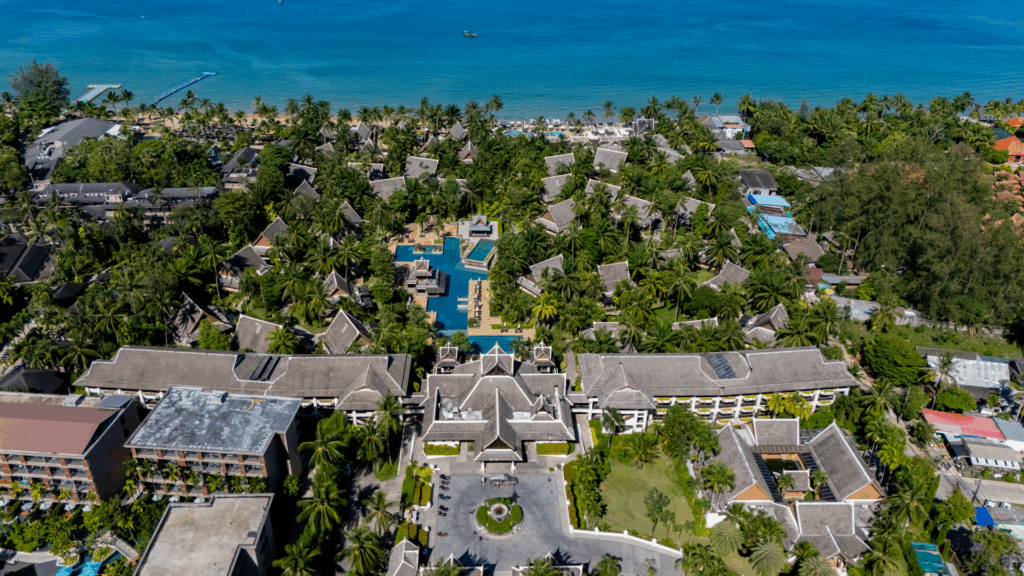
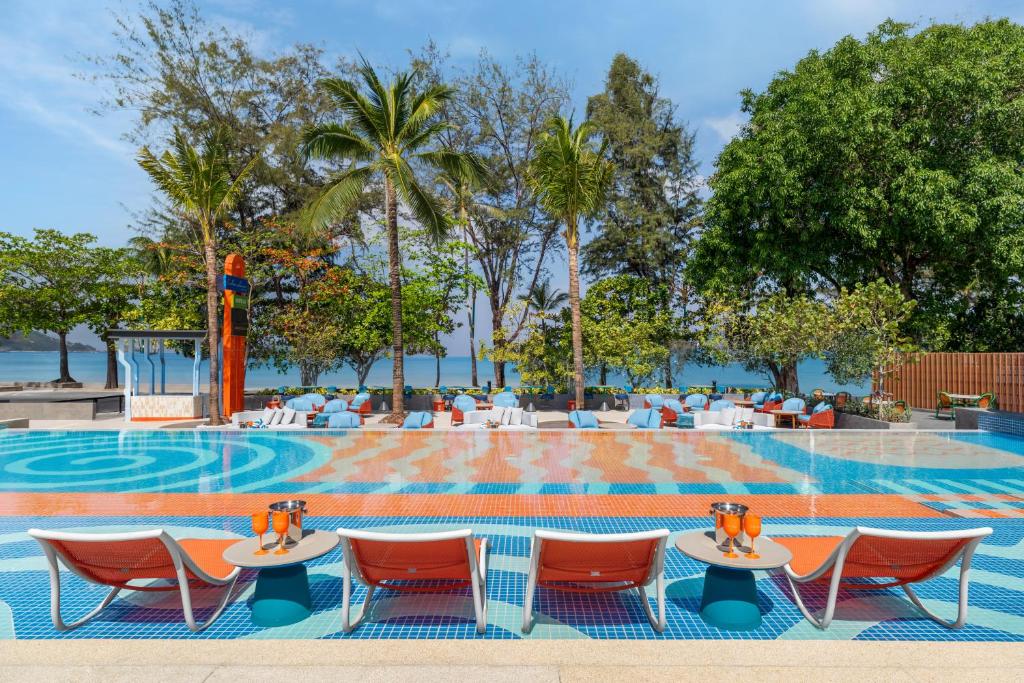
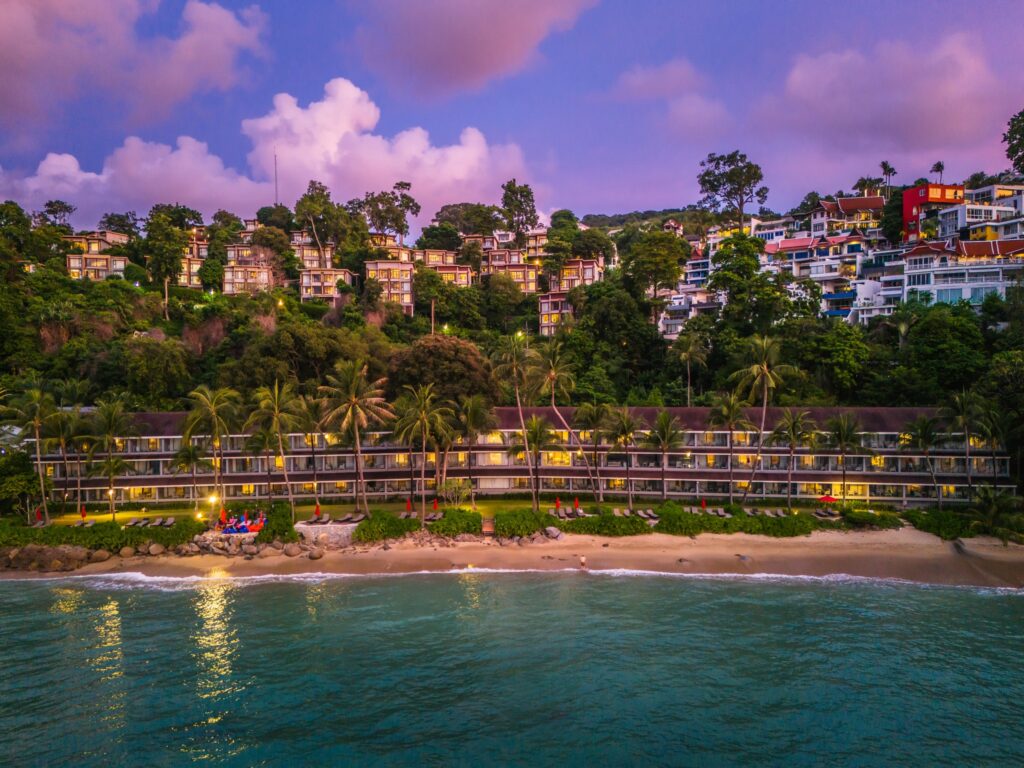
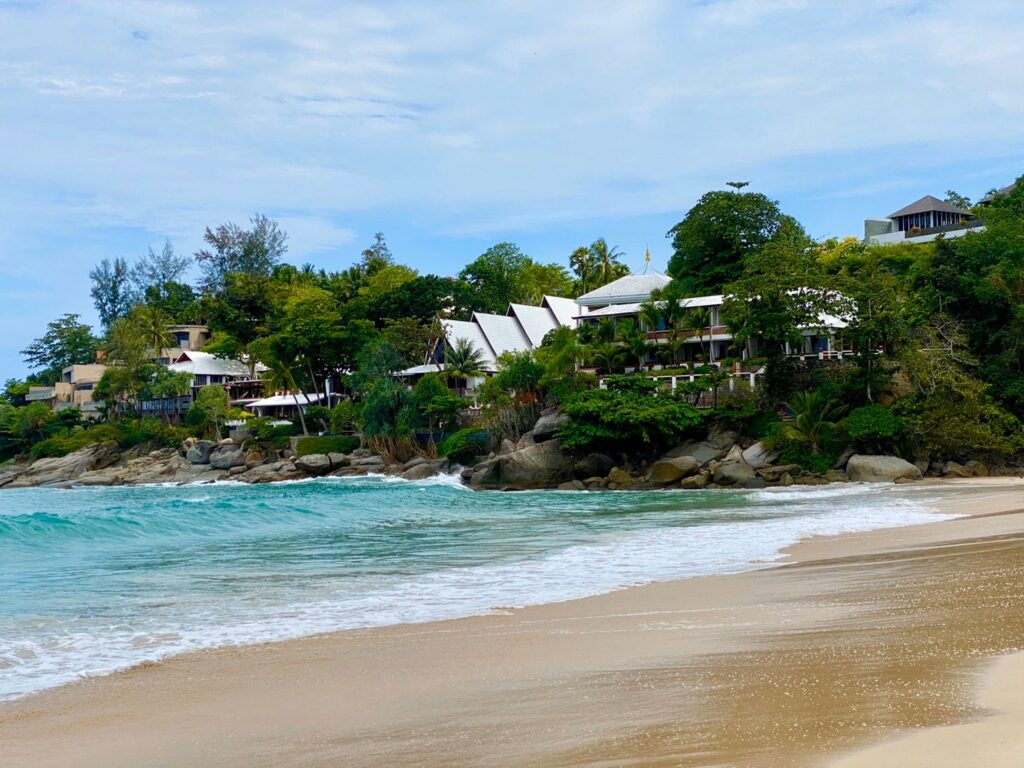
The sun does not so much rise over Bang Niang Beach as advance on it, sliding down from the forested hills behind Khao Lak and out across the sand in a long, warming wash that reaches the Andaman by mid-morning. Before noon it’s casting bright, hot light over the beach and the sea has shifted from pale glass to a flat, saturated blue. By six the whole western horizon is given over to the kind of lilac sunset that people fly halfway across the world to experience first-hand.
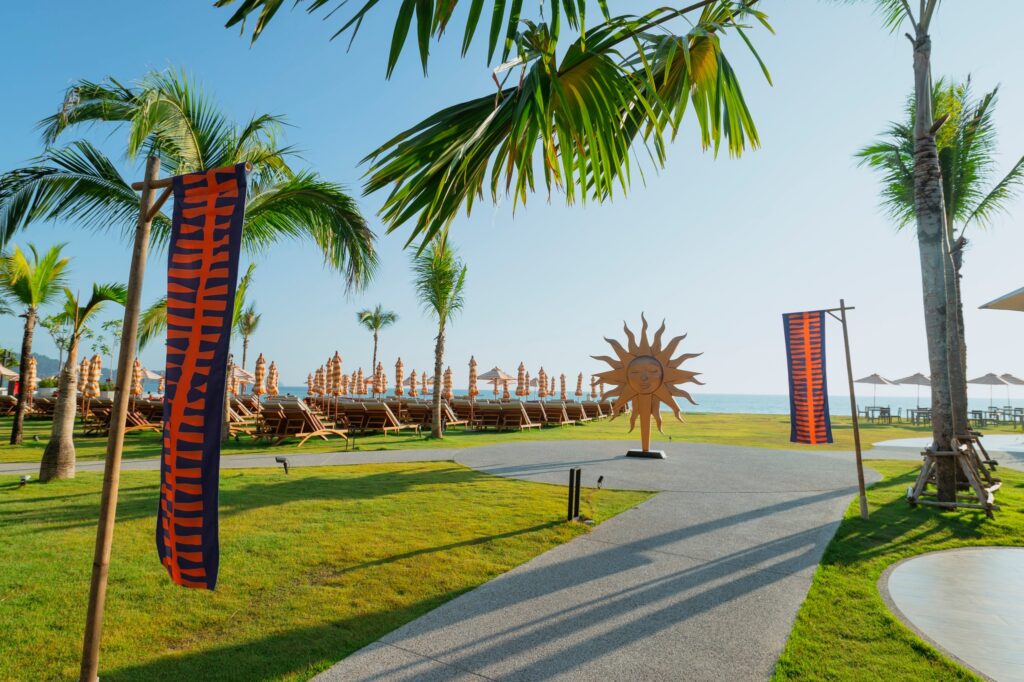
La Solaya – derived from the Spanish for sun – takes its name from the thing it spends all day arranging itself around. The name is a manufactured one, Spanish in feel and flavour rather than in any dictionary sense, but its meaning is plain enough. It’s the etymology that lends it connotations of radiance, warmth and energy. Whatever the meaning, La Solaya is drenched in it. The resort faces it, rooms are oriented towards it, terraces wait for it, and the staff, when you arrive, greet you with something closer to warmth than glare.
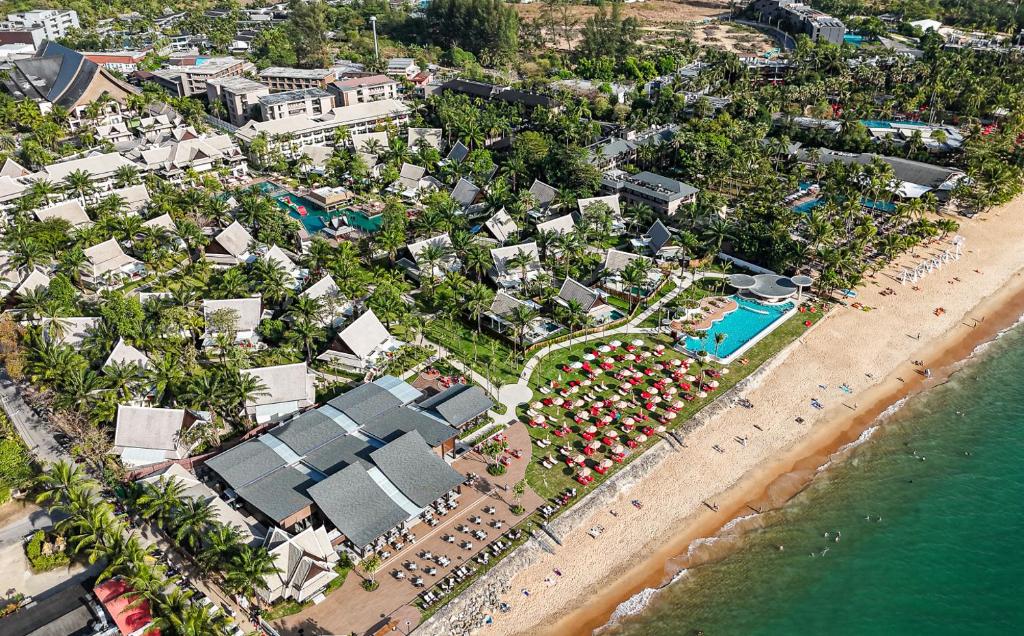
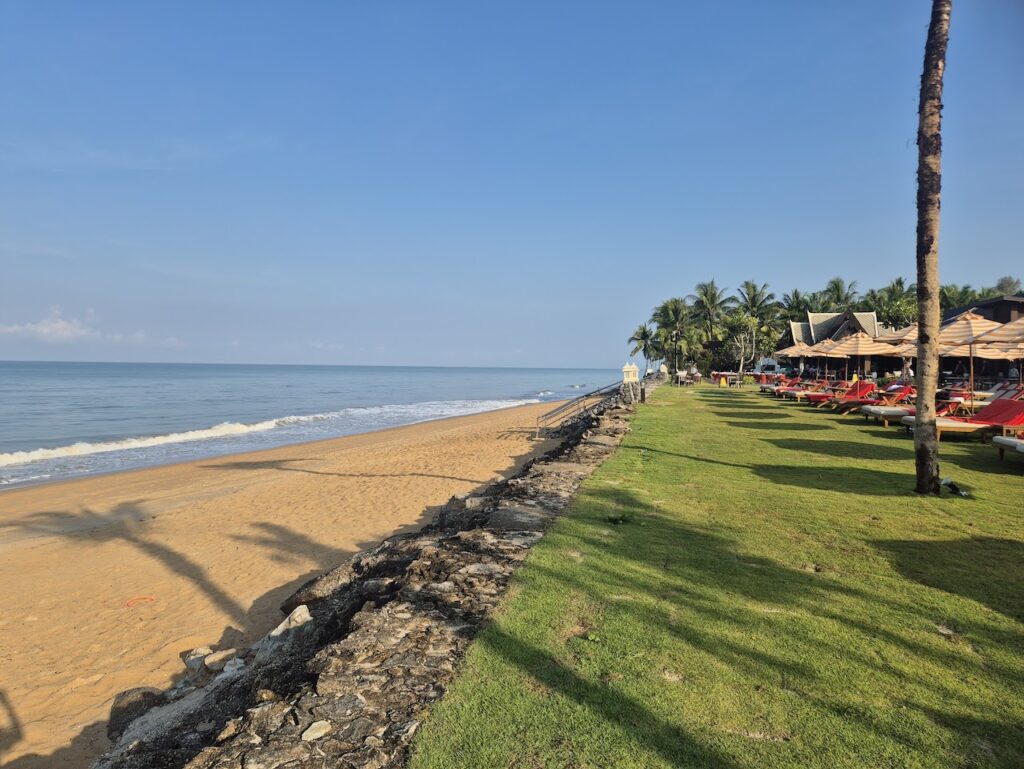
The sun does most of the work in this part of the world, and the resort knows it. It helps that Khao Lak gives the sun a proper stage to perform on. There are still parts of the Thai coast where a hotel can sit directly on the sand without competing for space or skyline, and La Solaya is one of them. An hour north of Phuket and a generation behind it in development terms, this stretch of the Andaman has stayed greener, quieter and more generously proportioned than the island most travellers fly into. The beaches are longer. The light is better. And a week here passes in a warm blur, the days taking their shape from the light.
Location
Khao Lak has long existed in Phuket’s shadow, drawing a quieter, more considered type of traveller; the sort who would rather have a beach to themselves than share one with a DJ. La Solaya occupies the spot where Bang Niang Beach Road meets the sand, planted at the seaward end of the busiest (though this is all relative, of course) stretch of the resort area.
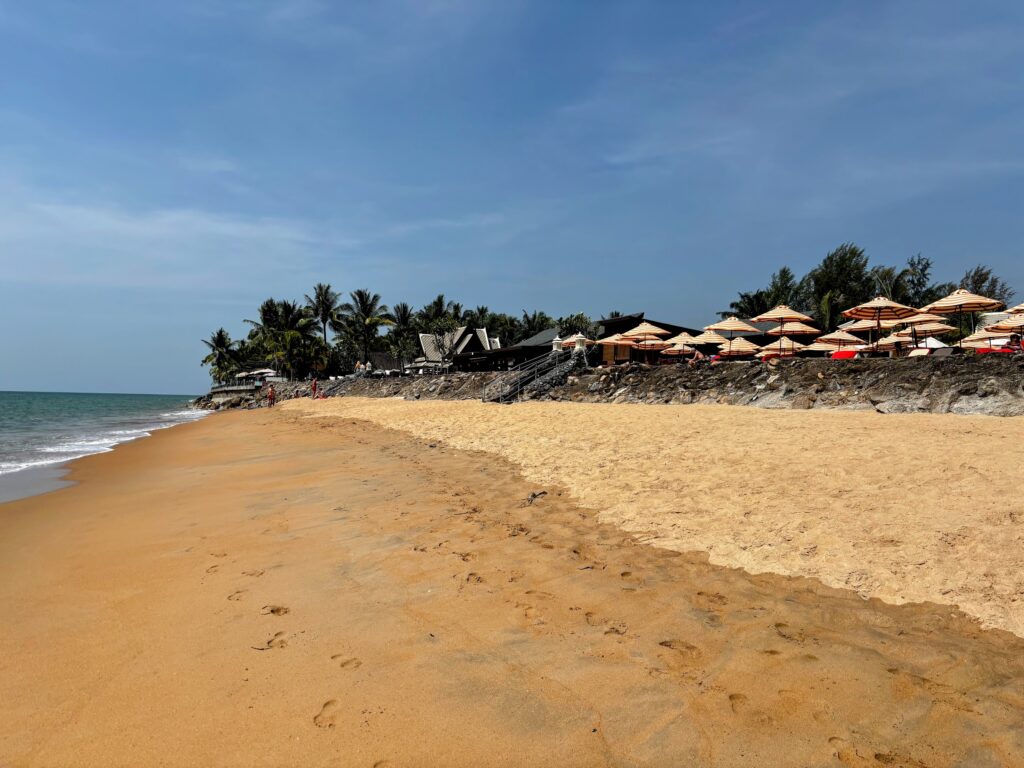
Bang Niang beach itself stretches for a couple of broad, uninterrupted kilometres, the sand pale and fine and ideal for long walks at low tide. Thailand has prettier beaches, but few that swim this well.
Bang Niang Beach Road is the main artery of Bang Niang life, running for a kilometre or so back from the shore to the Phetkasem Highway and lined the whole way with restaurants, bars, and the kind of unfussy Thai eateries that have been feeding tourists for decades. Step out of the resort and you’re immediately in the thick of it, and it’s an eminently agreeable drag to be in the thick of.
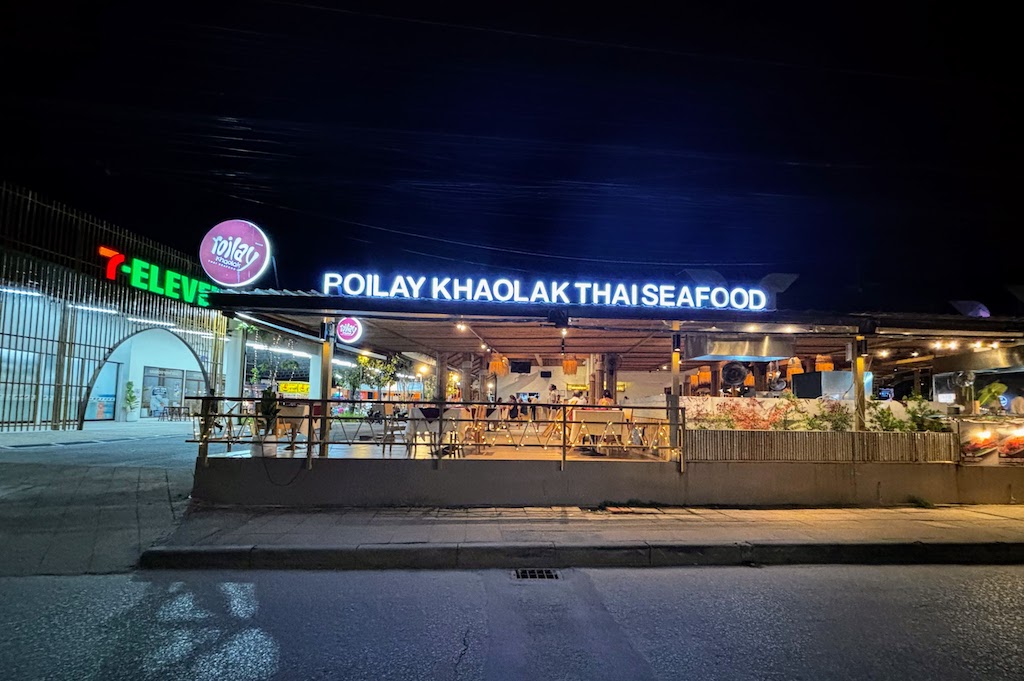
That position cuts both ways, of course. Sitting at the foot of a working tourist strip rather than in splendid isolation, the trade-off is a property where local life is genuinely accessible. The immediate neighbours are worth knowing: Chong Fah Restaurant sits practically on the resort’s doorstep and boasts a primetime sunset view if not the food to match. Sunset Boulevard – a Thai-German bikers bar that has attracted tourists for years – sits a few doors up and is reliable for a rollicking time. Or, just some capably cooked schnitzel. Roilay, a long-running Southern Thai restaurant by the La Flora Group, sits just a few hundred metres up the road. It’s the best place for Thai food on the strip by quite some distance.
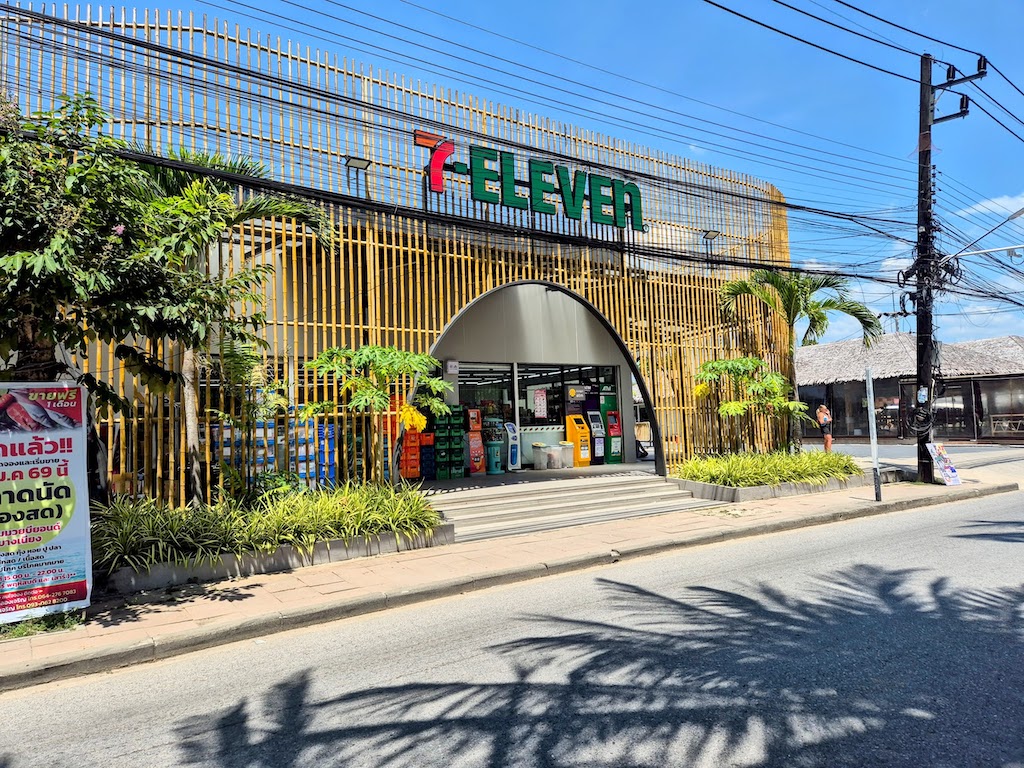
Day-to-day convenience is equally well catered for with a nearby pharmacy, massage parlours and souvenir shops. Sitting next door to Roilay, the road’s 7-Eleven deserves a mention in its own right. Its bamboo façade, has earned something of a cult following as one of the most beautiful branches of the chain anywhere in the world, according to the good folk of TikTok. In a country that takes its 7-Elevens seriously, that is no small claim.
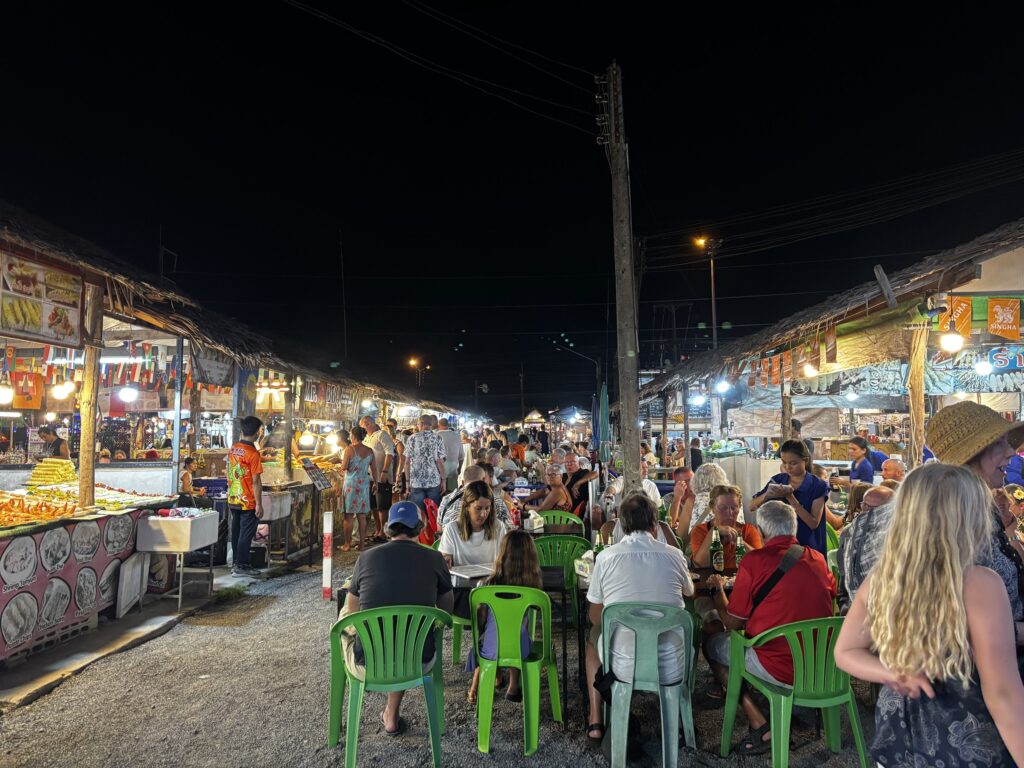
Walk five minutes up the road and you’re at Bang Niang Market, one of the area’s liveliest evening destinations. Open four nights a week, it comes alive from late afternoon onwards with street food, cold drinks, local crafts and the kind of good-natured atmosphere that makes it easy to lose a couple of hours.
The resort is in the same orbit as the rest of the La Flora Group’s Khao Lak properties, with La Flora Khao Lak itself a short walk south along the same beach. Casa de La Flora is also nearby and home to La Aryana, one of our favourite restaurants in this part of the world.
Day trips run from the beach in front of the resort: catamaran sunset cruises and Similan boat transfers operate directly off the sand, which removes the early-morning pier scramble that usually comes with island-hopping in this part of Thailand.
For Sundays, the resort runs a shuttle to Takua Pa’s Old Town and walking street, a weekly spectacle of local food stalls (including some excellent Thai sweets), produce and street performance that ranks among the area’s genuine pleasures and shouldn’t be missed.
Character & Style
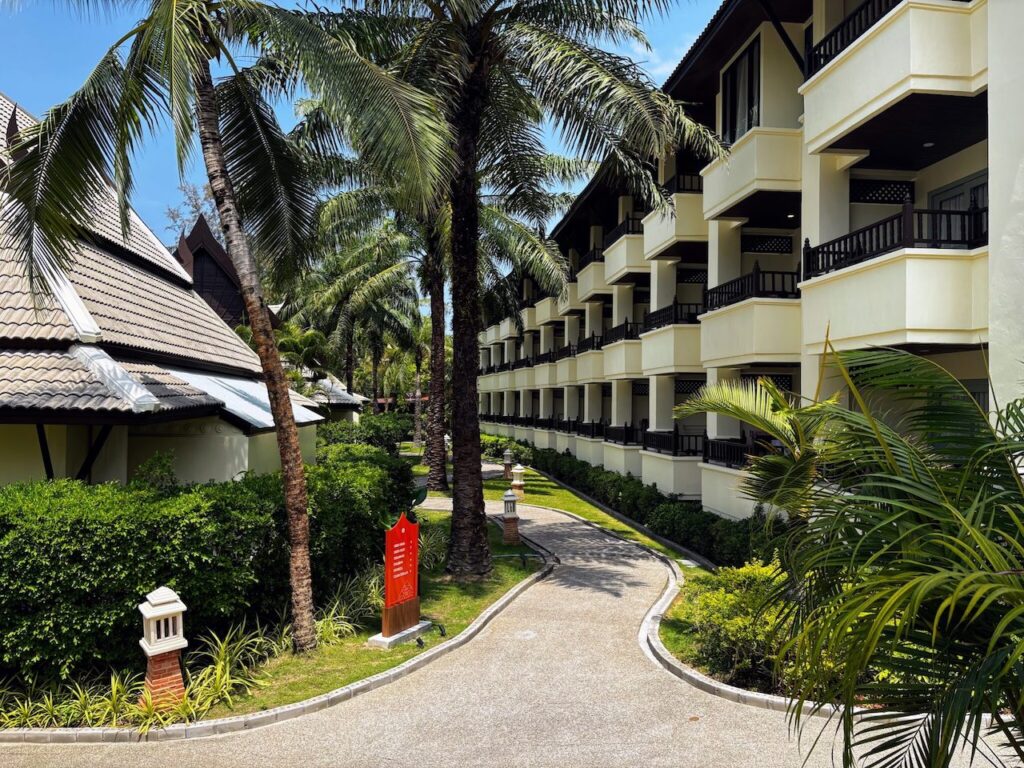
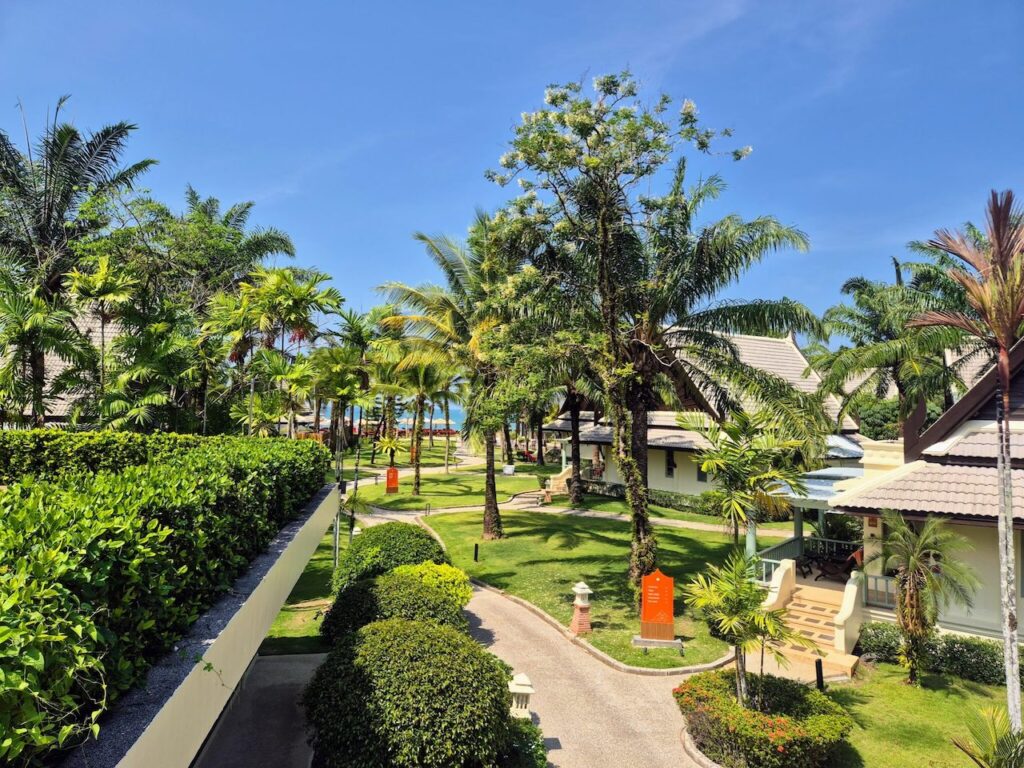
It is not, on paper, the kind of hotel you would expect to open in Khao Lak in 2026. Fifteen acres of landscaped gardens, a couple of hundred rooms, infinity pool, beachfront restaurant; the specs read like those of a resort built in the boom years, before quieter, smaller, more boutique-minded properties became the going register on this coast.
The resort looks vast on approach but inside it manages to feel considerably more contained. Indeed, La Solaya is making an unfashionable case for scale, and making it persuasively. The argument runs roughly as follows: a big resort can still feel considered, provided someone has bothered to consider it.
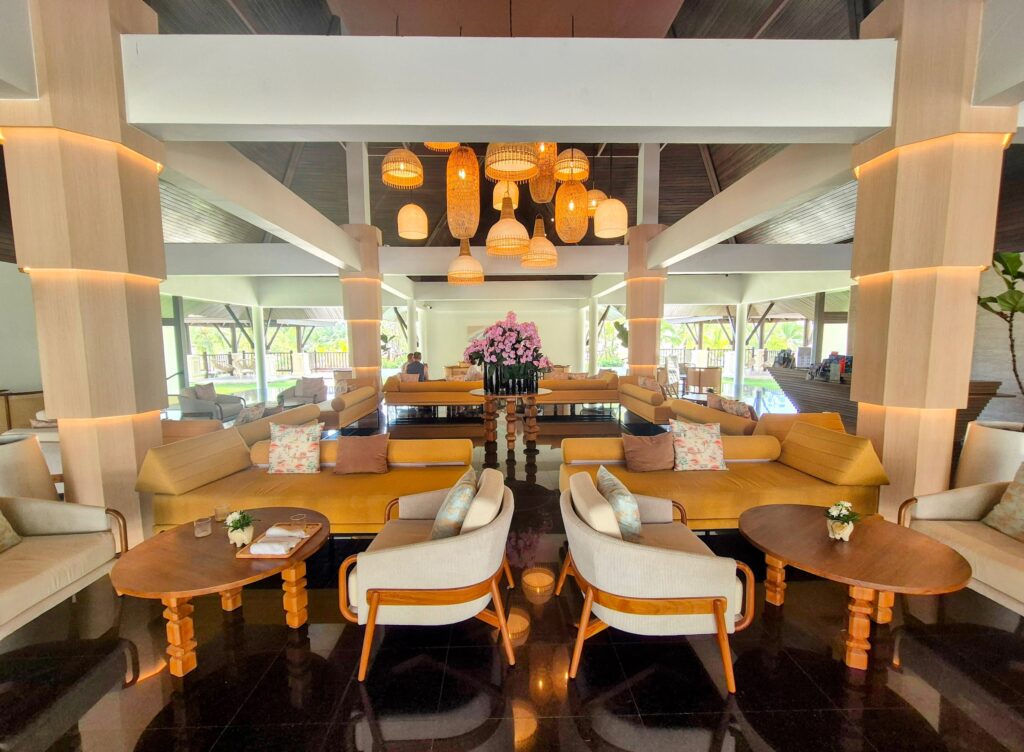
The open-sided lobby pavilion is impressive – light, bright and unmistakably Thai in its bones, the dark timber ceiling, pitched roofline, rattan pendants, and Thai cushions scattered across the seating grounding the whole thing just enough to remind you where you are. Yet the palette tells a different story: blonde wood cladding, mustard velvet daybeds, oatmeal armchairs. It’s a neat encapsulation of the resort’s broader character: Thailand refracted through a certain global ‘Aperol spritz’ sensibility, all without losing its core identity.
That coherence isn’t accidental. La Solaya is the latest addition to the Thai-owned La Flora Group and a thorough reimagining of the former Mukdara Beach Villa & Spa Resort. Only a few months old, the place carries none of the hesitancy of a new opening. The staff move with the kind of ease that usually takes years to develop; the rhythms of check-in, breakfast service and poolside housekeeping have the feel of a well-worn routine. It runs, in short, like a hotel that has been here for decades, except everything is shiny and new.
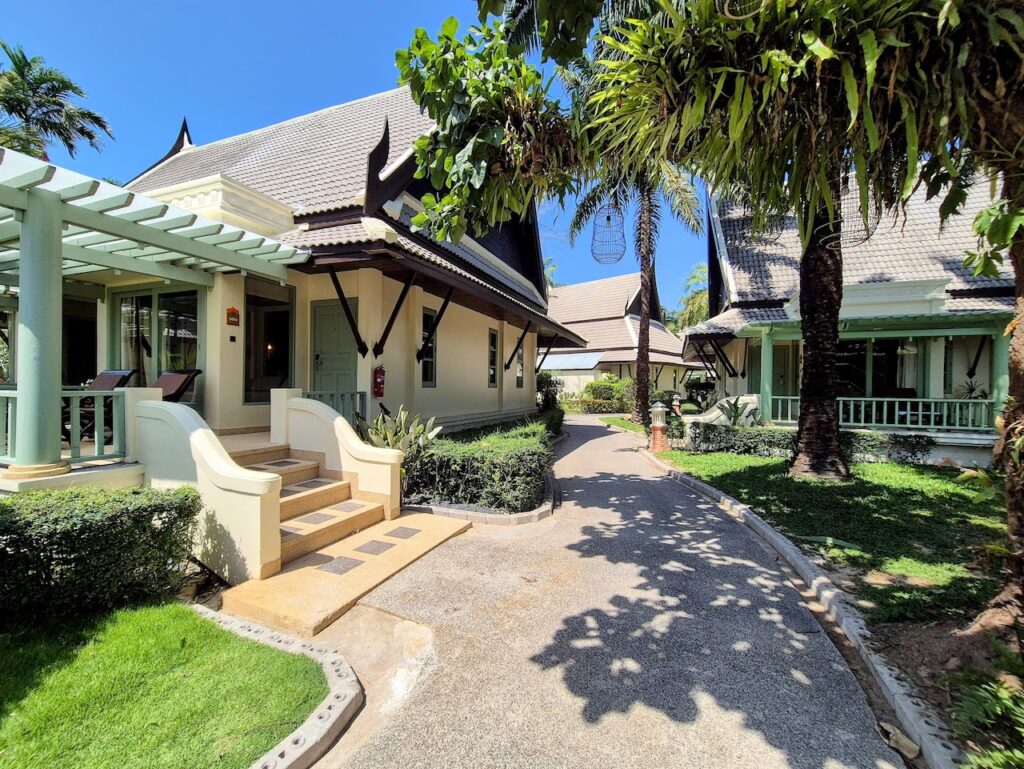
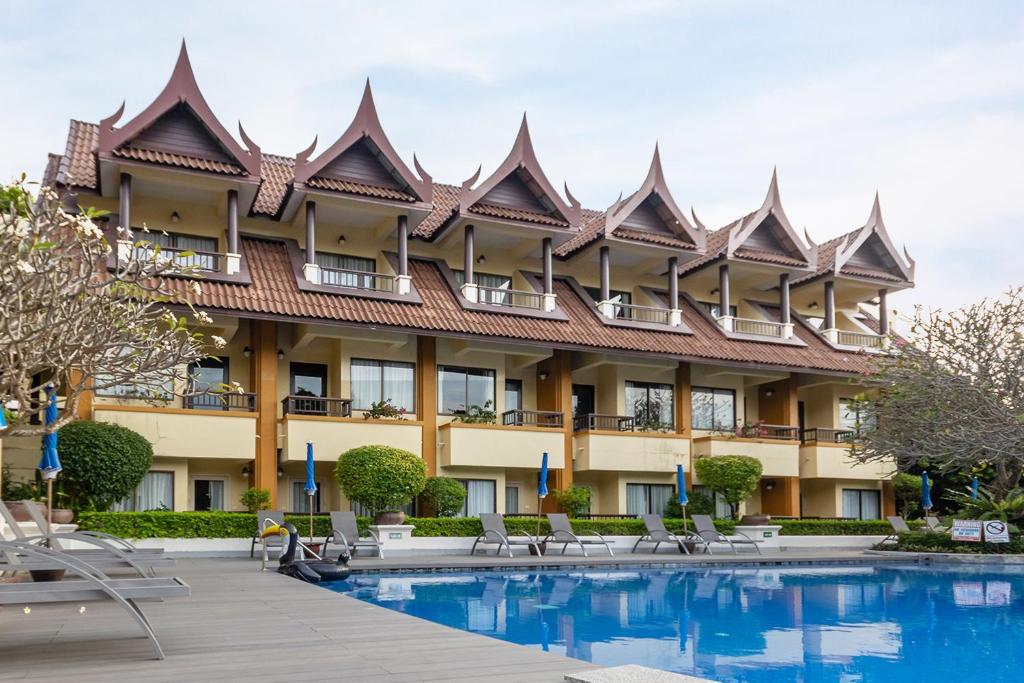
Part of the appeal is the architecture, which draws on classic Thai forms rather than the pared-back international modernism that dominates so much of Southeast Asia’s luxury hotel market. The villas carry the pitched rooflines and structural detailing of traditional Thai design; the lobby is clustered with local artefacts and curios. You are reminded, repeatedly and pleasantly, that you are in Thailand. That sense of place is exactly what you (sorry, shouldn’t assume, I) want from a hotel.
The resort has also dressed itself distinctively, in a cool pistachio green that runs through interiors, lobby furnishings and design details. Where so many Southeast Asian resorts default to safe sandy neutrals, this is a fresh alternative, and one that gives the property a visual identity guests actually remember. Black squirrels dart between the gardens and the odd cat roams the grounds, adding a streak of life to the landscaping that no designer could have planned.
Rooms
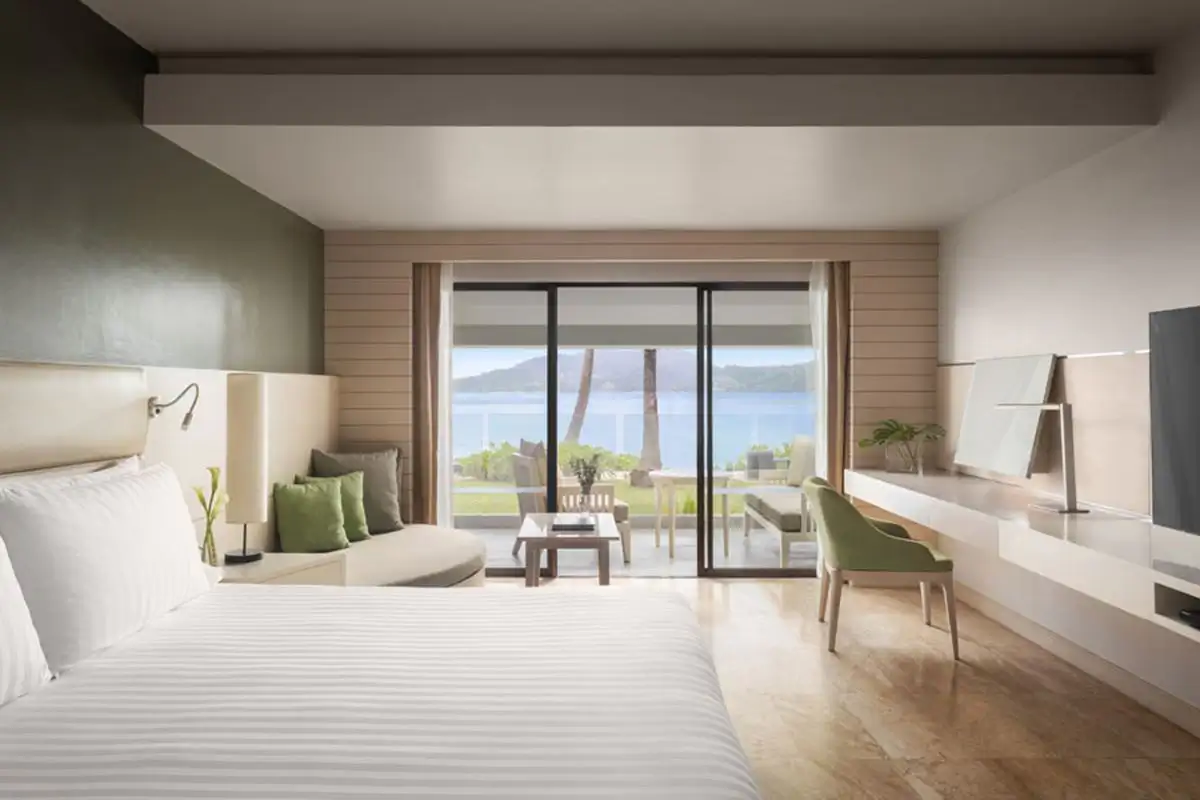
The accommodation runs from Deluxe Rooms through Deluxe Villas and Family Villas to Pool Villas, and that pistachio palette that characterises the public spaces carries through into the private ones. We stayed in a Deluxe Villa, set back in the gardens. From outside, the villas are traditional – timber-clad gables and deep eaves. Look up at the apex of the side elevation and you’ll catch a small wooden sun motif cut into the gable end: a radiating burst that’s easy to miss if you’re not looking up.
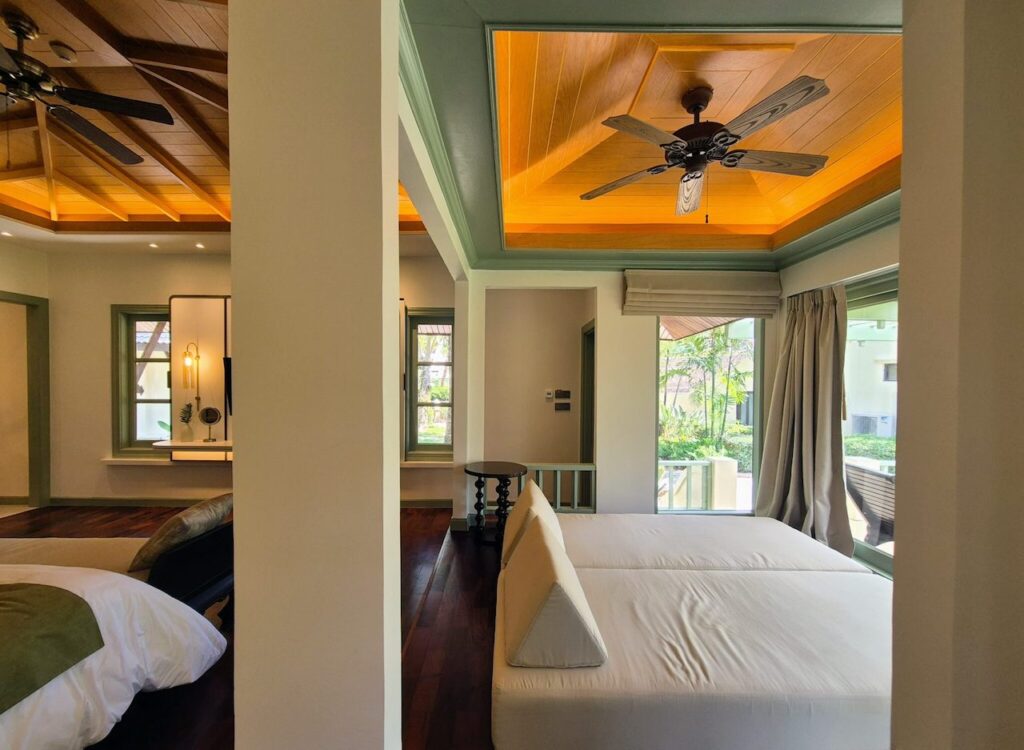
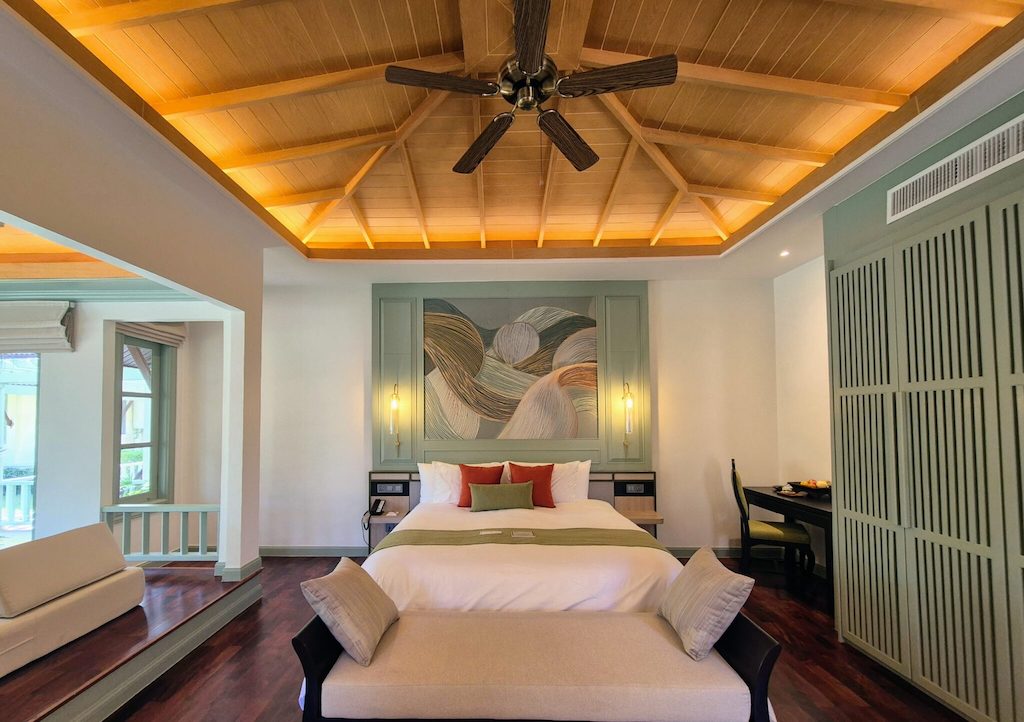
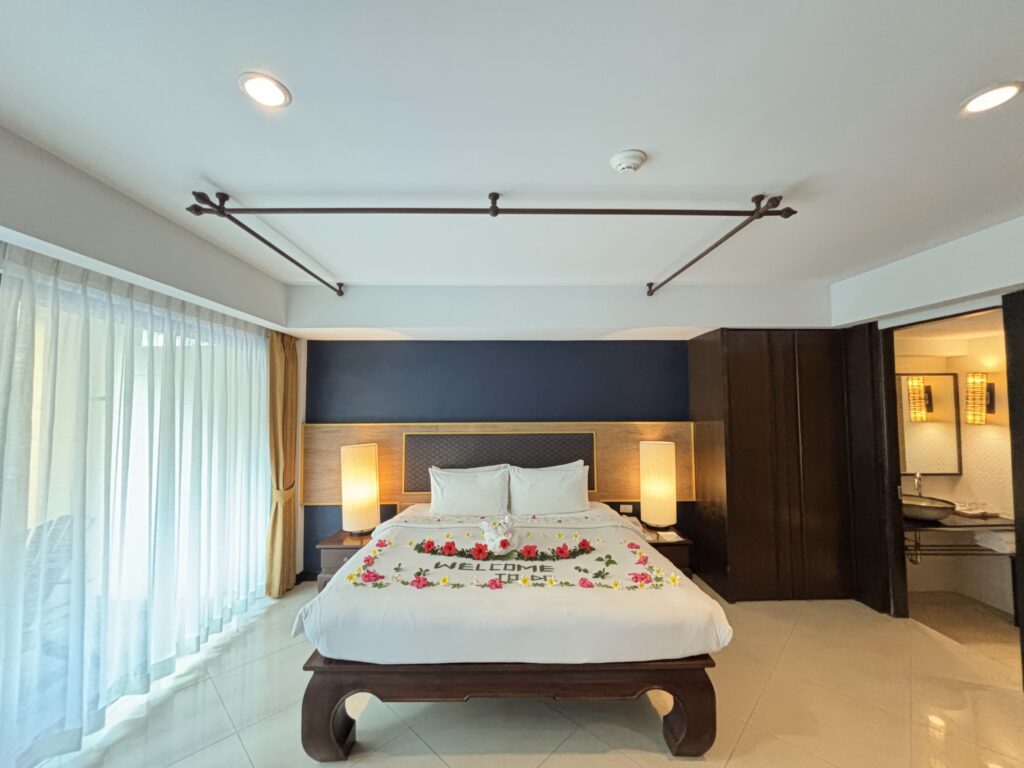
Inside, it’s unexpectedly grand. The ceiling is the giveaway: a high, pitched timber-clad affair with exposed beams running into a kingpost, lit warmly from above and cooled by a slow-moving ceiling fan. It lifts the room out of standard hotel territory and into something closer to a Thai pavilion. Lacquered antique flooring gives the space a timeless feel, and it sounds bloody satisfying underfoot.
There’s a gorgeous area for lounging just inside the bay window, with triangle cushions inspired by the traditional mon khwan style you’ll instantly recognise.
The rooms are stocked with the small details that reveal a hotel that has thought carefully about what guests actually use. Cupboards are sized precisely for a compact suitcase, an obvious piece of design that a surprising number of hotels overlook. Hangers are plentiful. A proper desk sits to one side, decent enough for a few hours’ work if the WiFi pulls you back in. Nothing is fussy, and nothing feels missing. Perfect.
The architects have thought carefully about morning light. In some villas, the right-hand window is positioned so that the sun arrives across the bed in warm slats; sliding the panel across the window, rather than fighting with curtains, becomes a small daily pleasure. In others, the porch faces east so the light arrives on the terrace rather than through the glass. Either way, the day starts gently rather than all at once, so you can fold into it slowly, with a gentle ease.
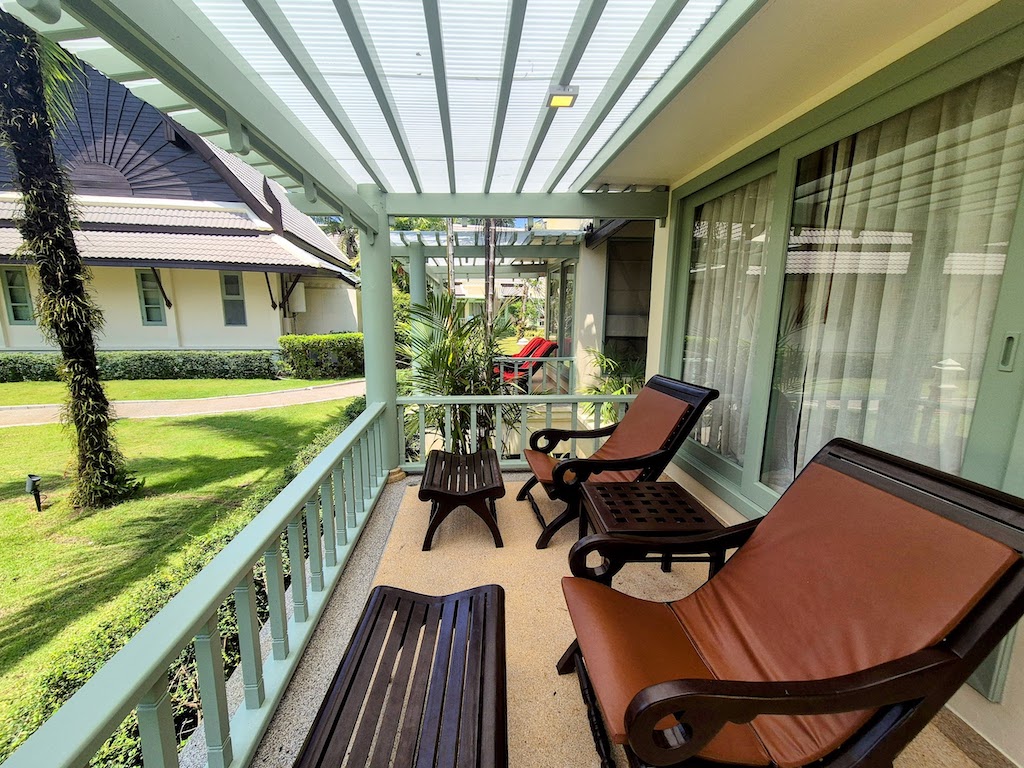
The terrace itself is home to a pair of deeply reclined planters’ chairs and their own footstools, making a compelling argument to spend the afternoon curled up with a book. Ours was in shade and the ideal place to retreat after a day spent on the resort’s loungers by the beach. A bird had nested in the bush right in front of our terrace. We wondered what its bill would be at check-out.
Facilities & Spa
There are two pools, each offering something quite different.
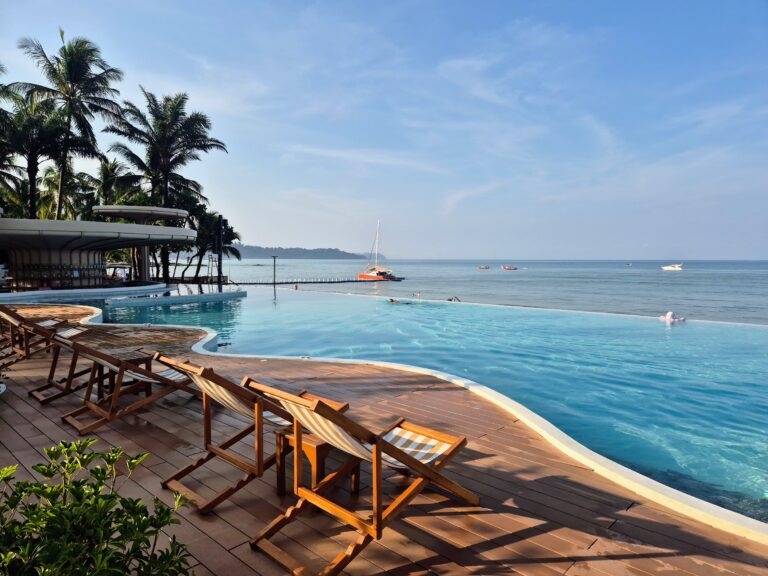
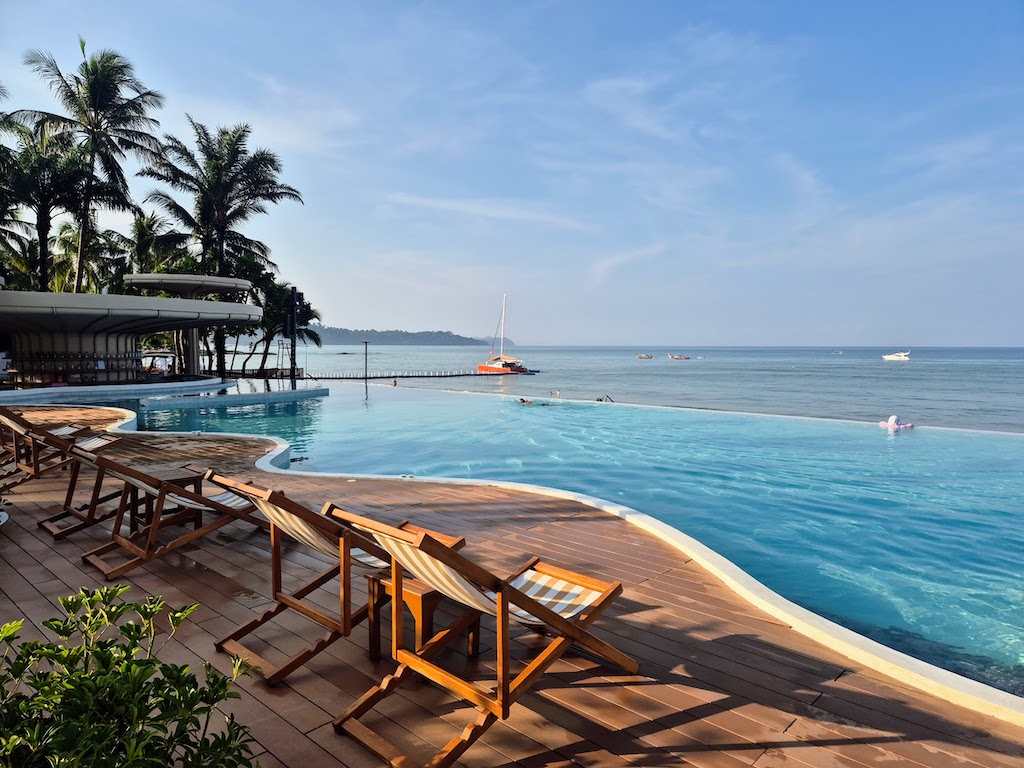
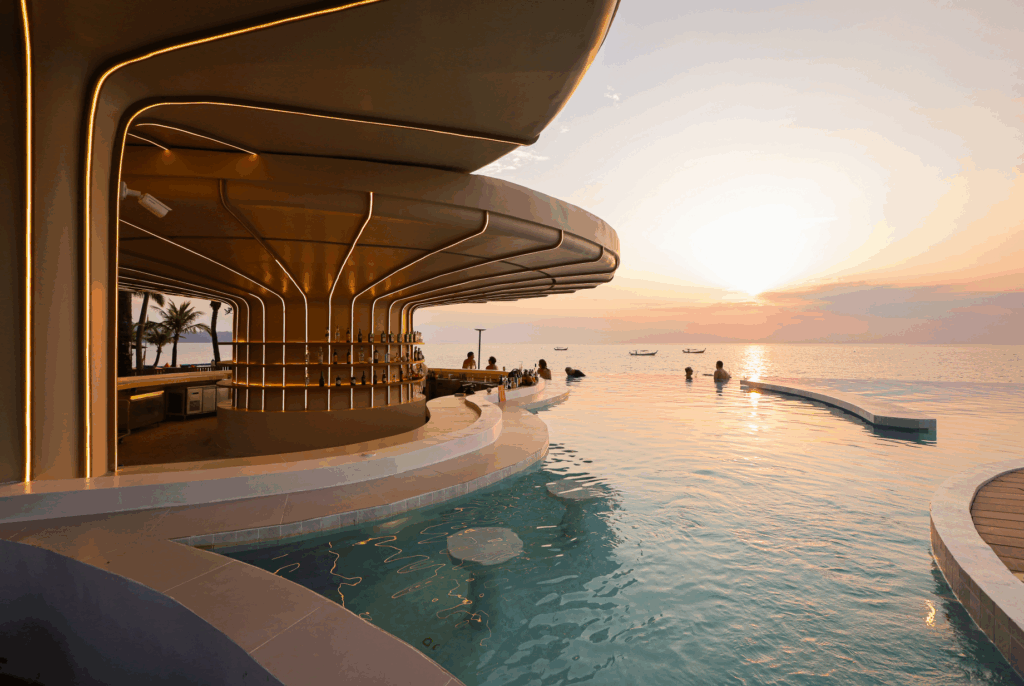
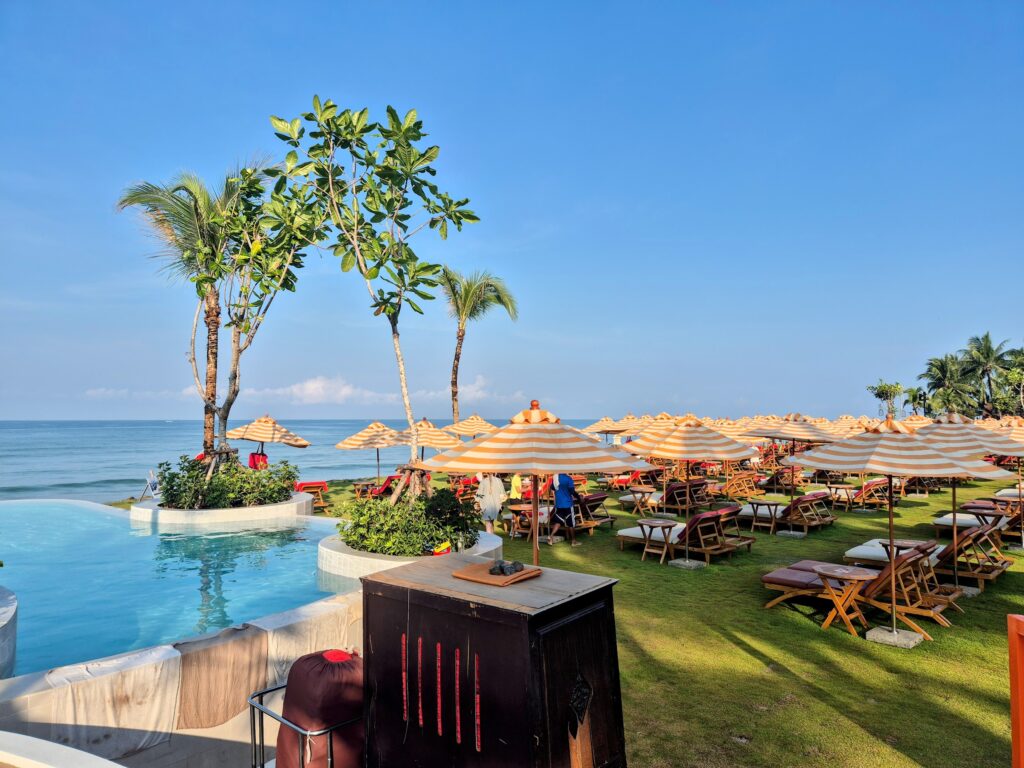
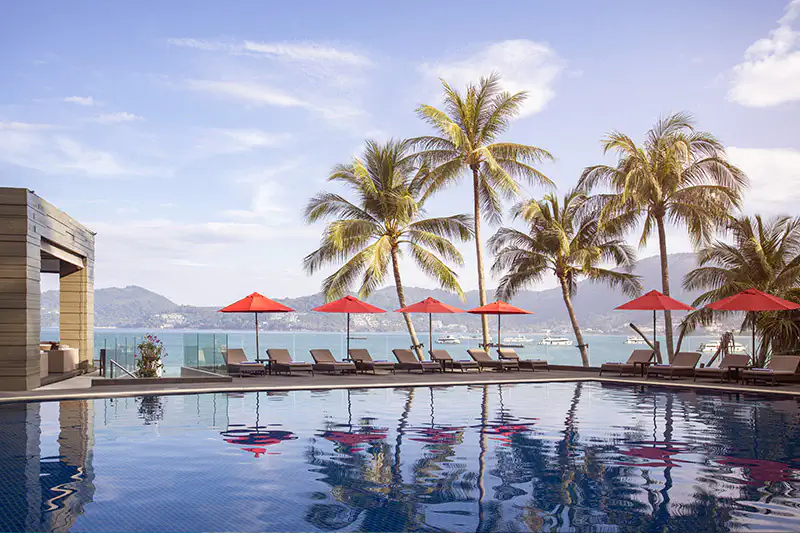
The infinity pool faces the ocean head-on, and is stunning – truly stunning – in the mid-afternoon light. SolBar sits alongside looking a little like Star Trek’s USS Voyager. Suddenly, the smoothie on the menu called Beam Me Up makes a lot more sense. If you want something stronger, it’s the ideal place to sip a rum-charged piña colada as the afternoon slides on. It’s also fabulous for a sundowner. Hey, you could have both; you’re on holiday, after all.
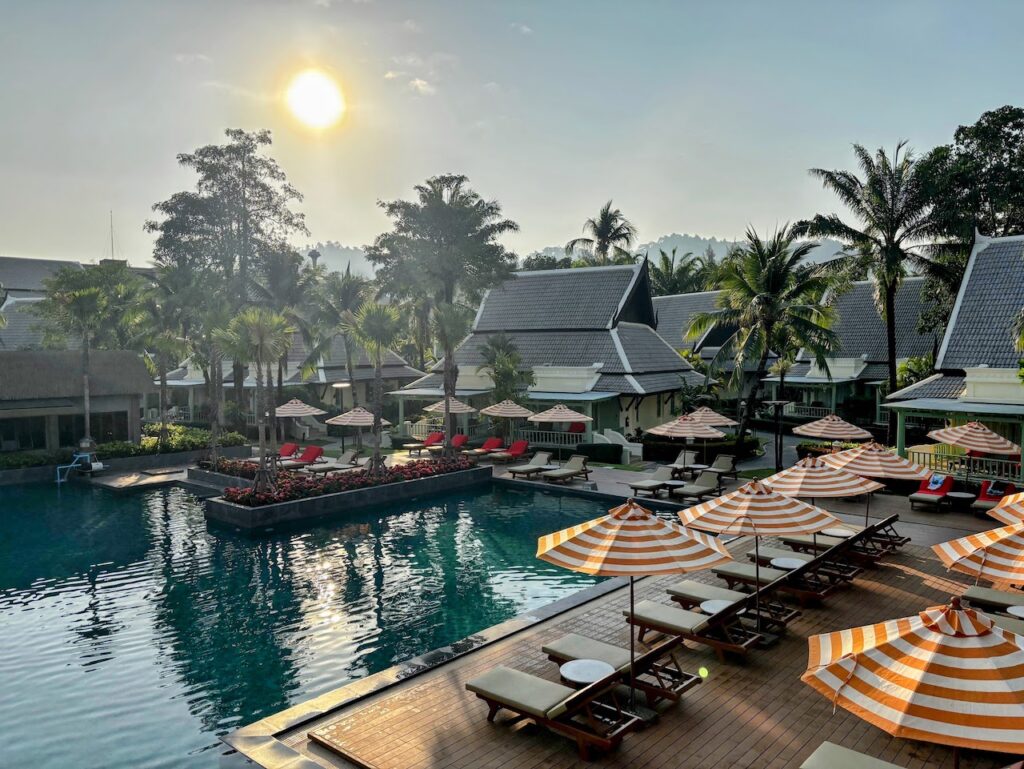
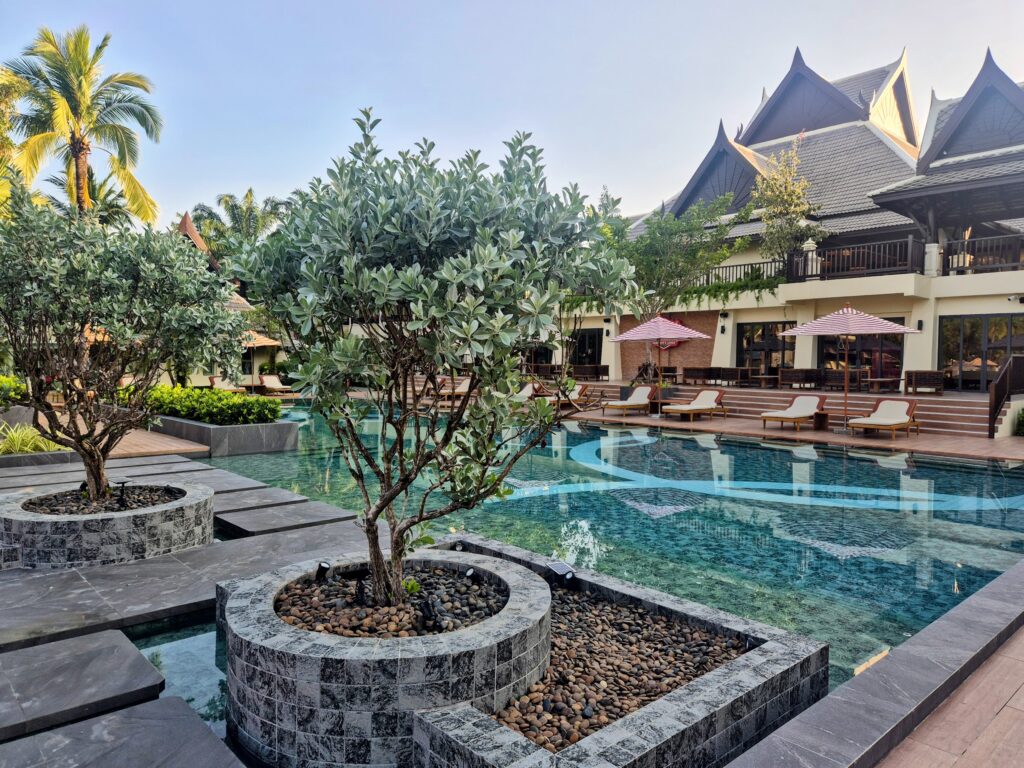
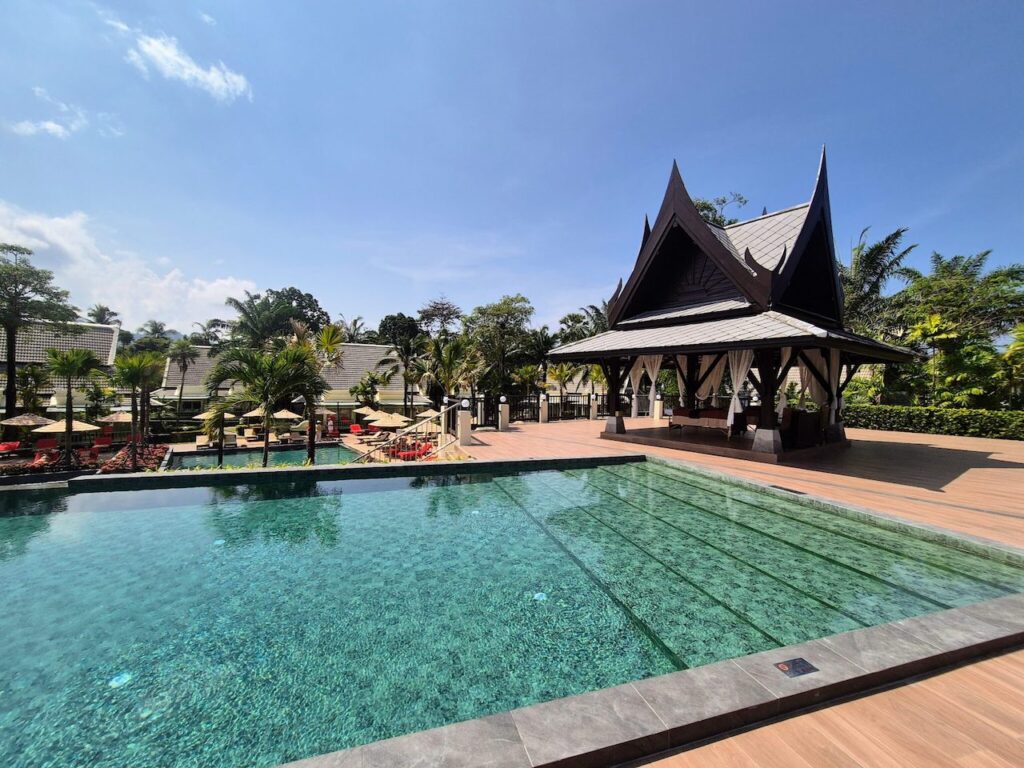
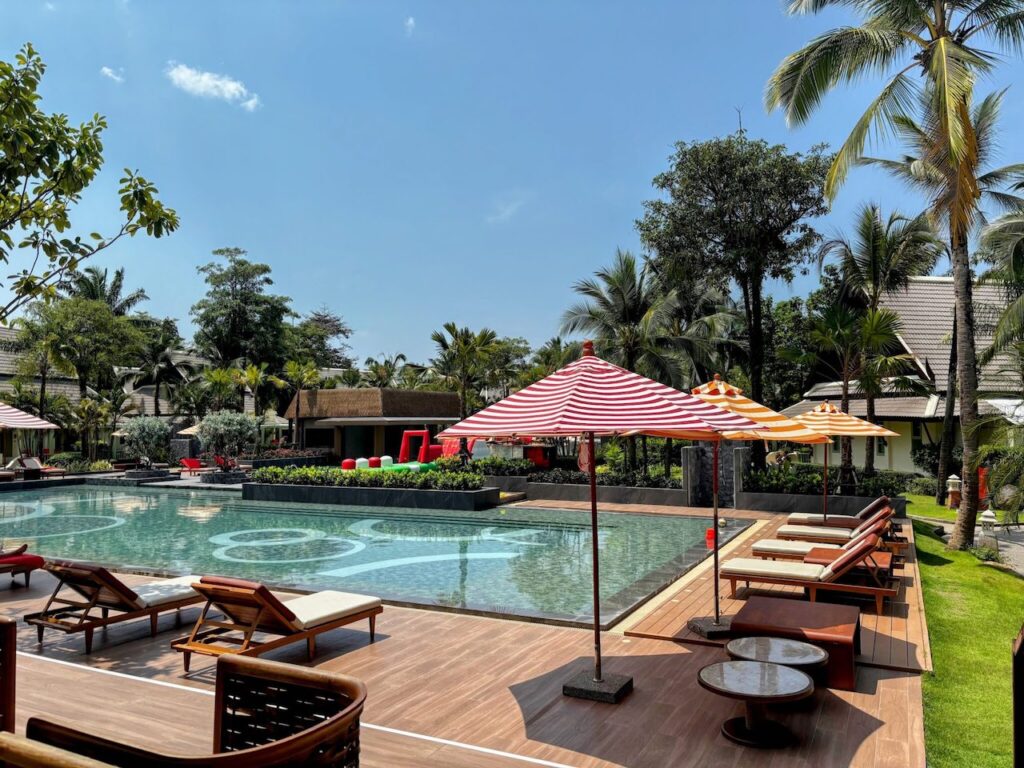
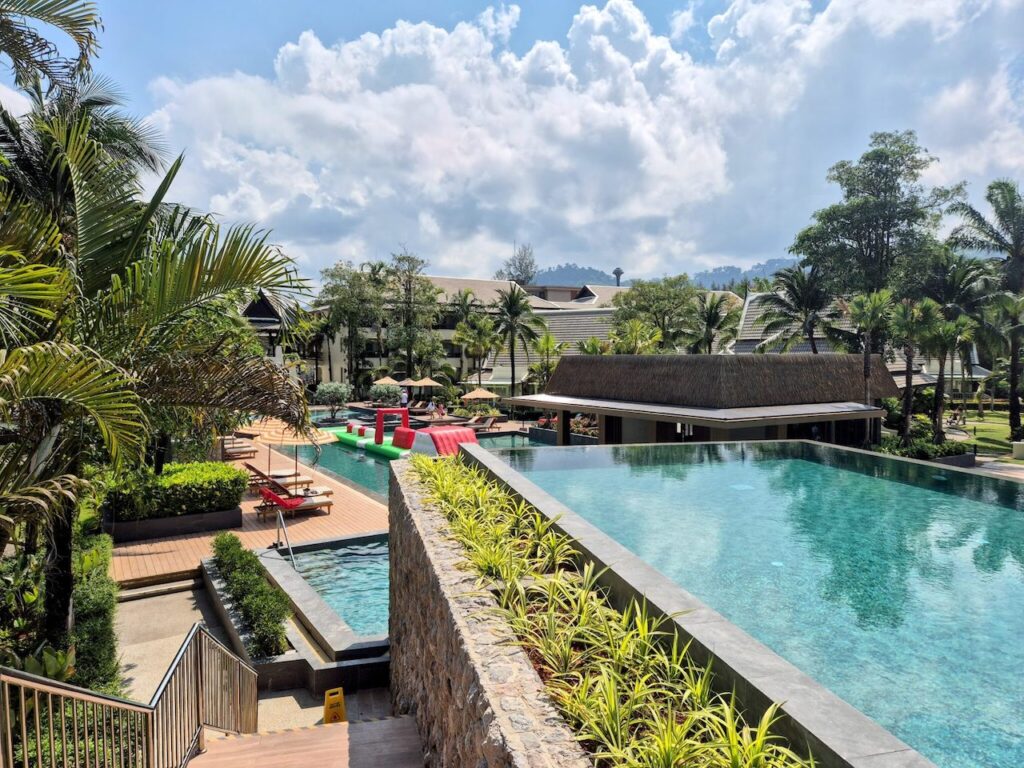
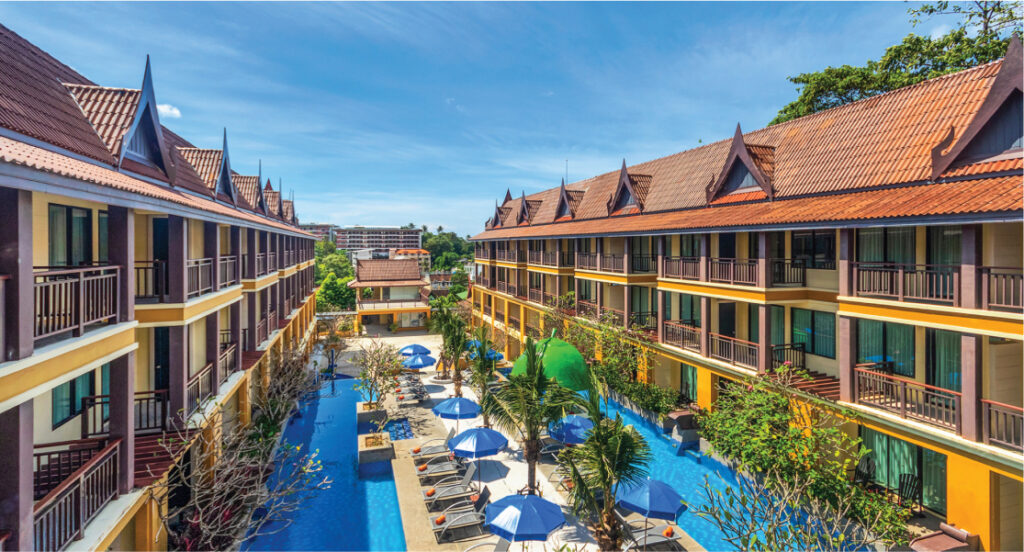
A second pool area sits inland, the second sun around which the hotel orbits – a sprawling complex with several connected pools at different elevations, the planting thick around it and the atmosphere noticeably slower than the infinity pool on the beachfront.
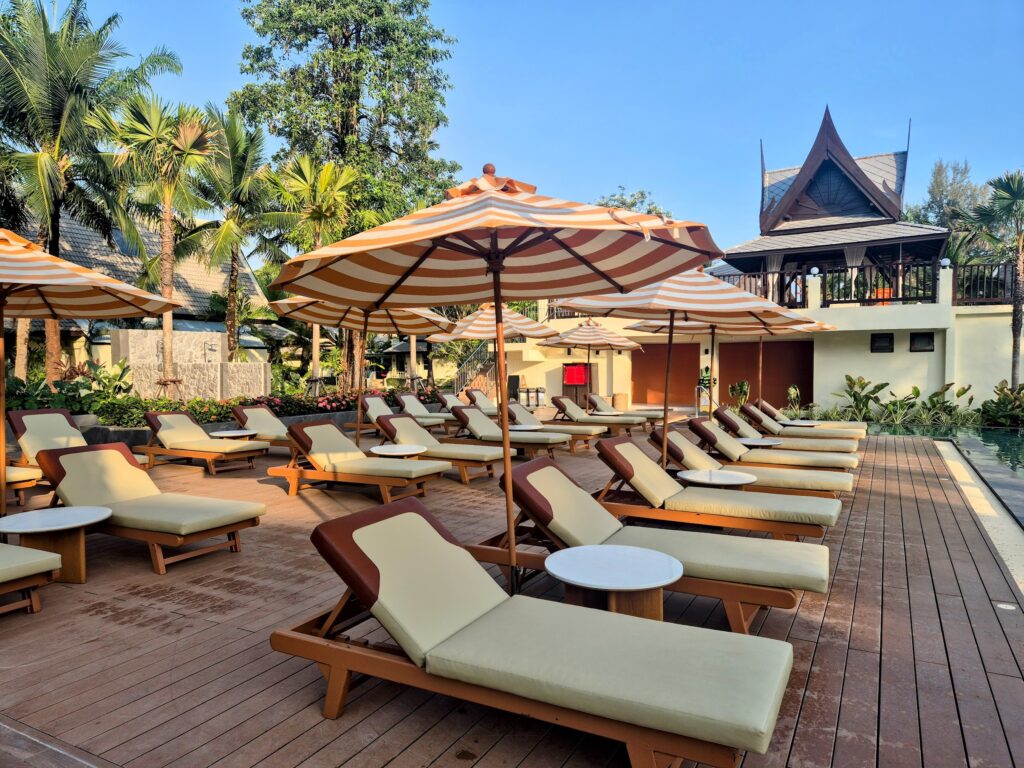
It’s beautifully done. So are the sun loungers, styled with enough intention that they read as design features rather than afterthoughts, giving the poolside a cohesion that larger resorts often sacrifice to sheer scale. Part of it is fitted out with floating toys, another side of it bordered by a vast swim-up bar, the two extremes completing the picture rather than clashing. Our favourite is the one hidden at the top next to the massage sala (more on that in a moment).
It’s a clever piece of design in a resort of this size, where the pool area can so easily become the most chaotic part of the property, the part you actively avoid. Here it does the opposite.
But the real draw is the rows and rows of deckchairs strung out along the sand itself, just beyond the infinity pool. There’s always one spare. Slather on the sunscreen and settle in, and you have the makings of a day.
The wellness offering at La Solaya operates across two complementary layers. On-site – or near enough to count – is Spa Floranica, located at La Flora Khao Lak, the sister resort a short walk away, where traditional Thai therapies and modern treatments are available to La Solaya guests. For something more structured, there is La Vita Sana: a standalone wellness centre billed as the largest of its kind in Khao Lak, sitting under the La Flora Group’s umbrella and reached by free shuttle from the resort.
La Vita Sana runs the La Flora Group’s three-day Wellness Sanctuary programme, built around a doctor consultation each morning with treatments tailored to what comes out of it. Depending on the programme chosen – sleep recovery, stress relief, or body detoxification – guests might move through herbal milk baths, acupuncture, shirodhara, sound baths, jade stone facials, Chinese cupping, or time in the onsen. It’s a considered framework, closer to a medical wellness retreat than a hotel spa in the conventional sense.
And there’s a case to be made that it’s exactly what a Khao Lak holiday sometimes calls for: sun-drenched days have a way of accumulating – endless barbecues, long afternoons at the bar, the pleasant inertia of doing very little – and La Vita Sana is a well-timed antidote to all of it. Even without committing to the full programme, the à la carte treatment menu is worth a look on a slow, hot afternoon. Yoga classes and a health-conscious restaurant are there for those spending longer on site.
The off-site shuttle model won’t suit everyone, and it’s worth being clear-eyed about that: this isn’t a resort where you can drift down to the spa in a robe. But for guests willing to make the short journey, the depth of what’s on offer is well beyond what most comparable properties can put together in-house.
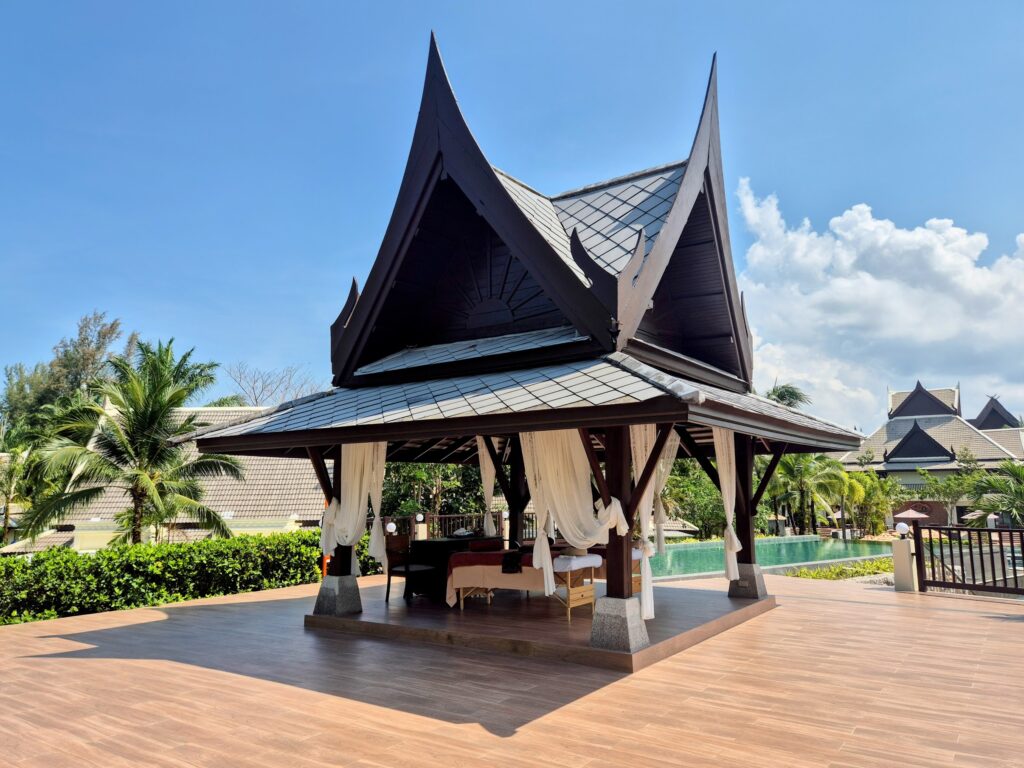
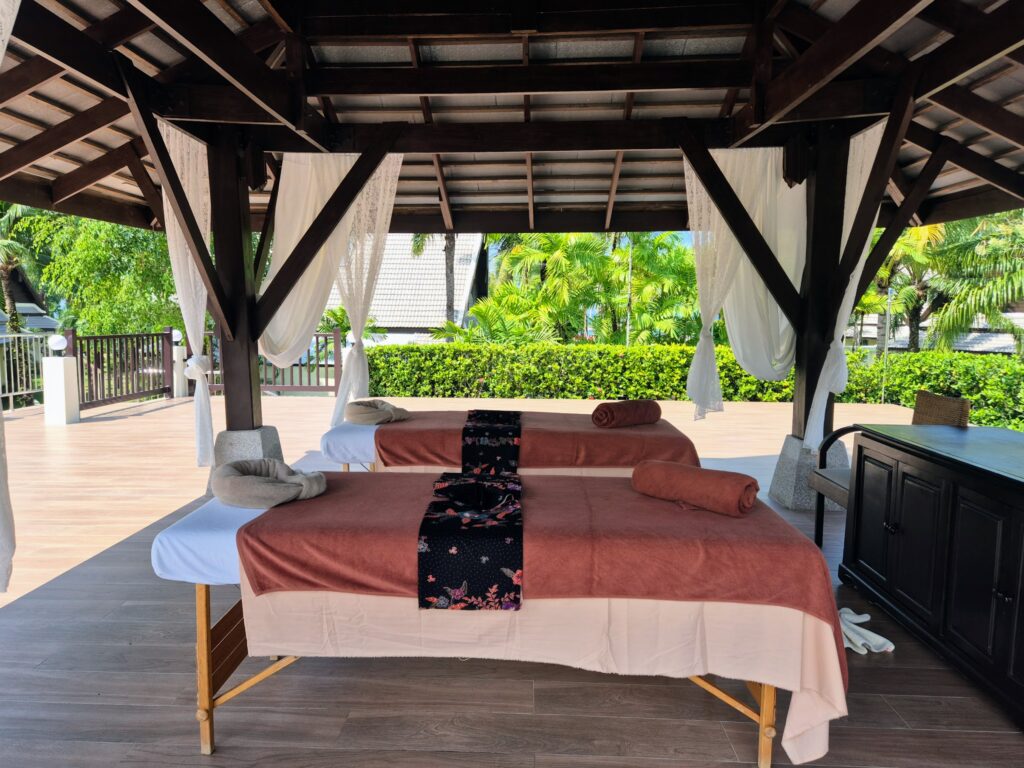
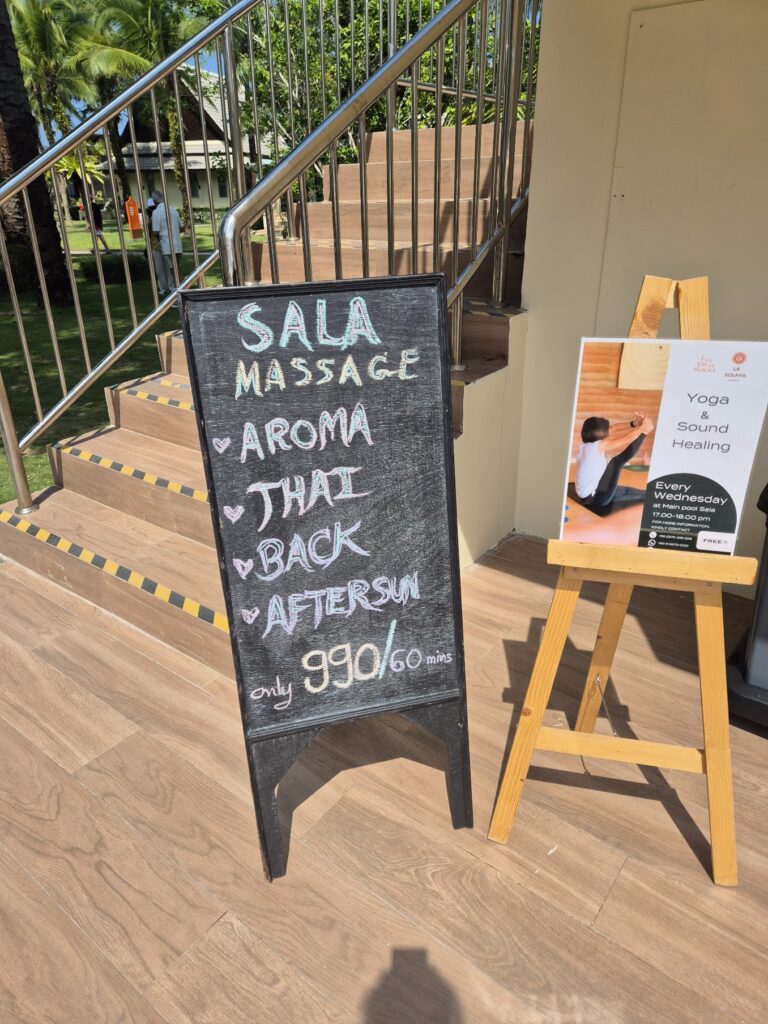
All that said, there is a massage sala on site at La Solaya, hosted by the main courtyard pool where treatments can be taken in the open air. There’s a treatment called aftersun designed to soothe and hydrate the skin, which we certainly found useful after basking by the beach all day.
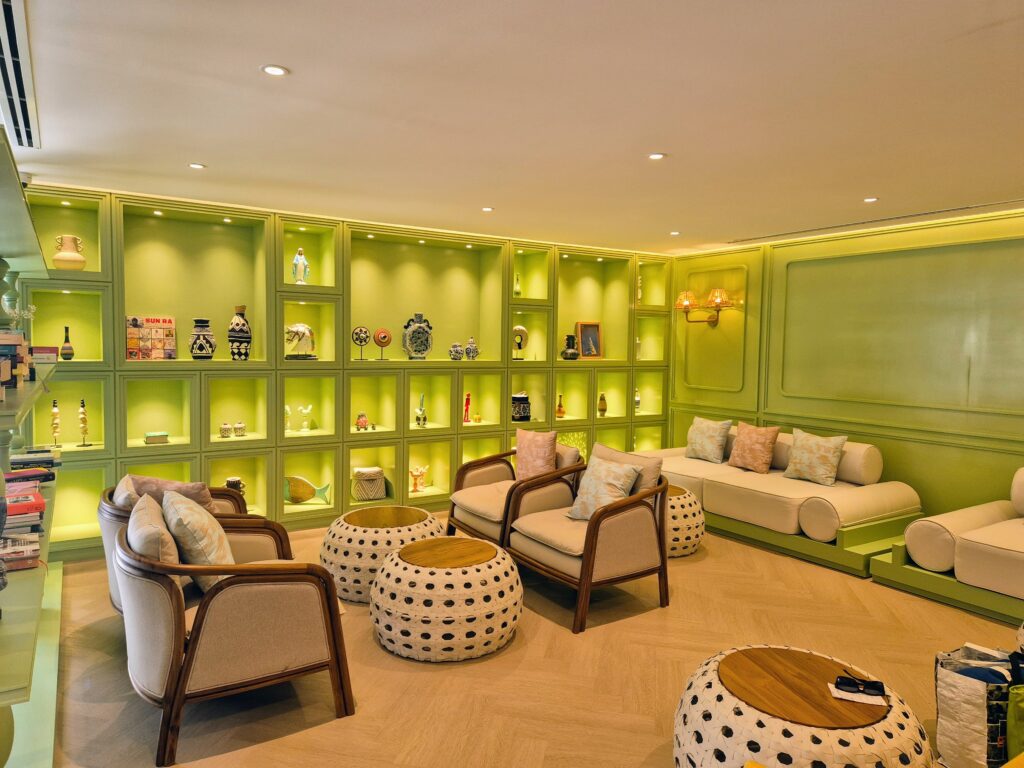
When you’ve had enough of being in the sun and want a change of scene, the lobby lounge leans into the resort’s cool pistachio palette and stays open around the clock, stocked with books, staffed for late arrivals, and complete with a couple of private pod rooms that make it a surprisingly effective co-working space for guests who can’t fully switch off. A coffee machine loaded with Starbucks pods will see you through.
There are shelves upon shelves of Thai trinkets and novelties alongside pieces from across the world. It could almost double as a small art gallery. A book on the album cover art from El Saturn Records – an American record label founded in 1957 by Alton Abraham – sits next to a mushroom that looks like a disco ball. There’s a horse’s head too, and a statue of Jesus presiding over the folk extending their out-of-offices. Likely just for fun, but your guess is as good as ours.
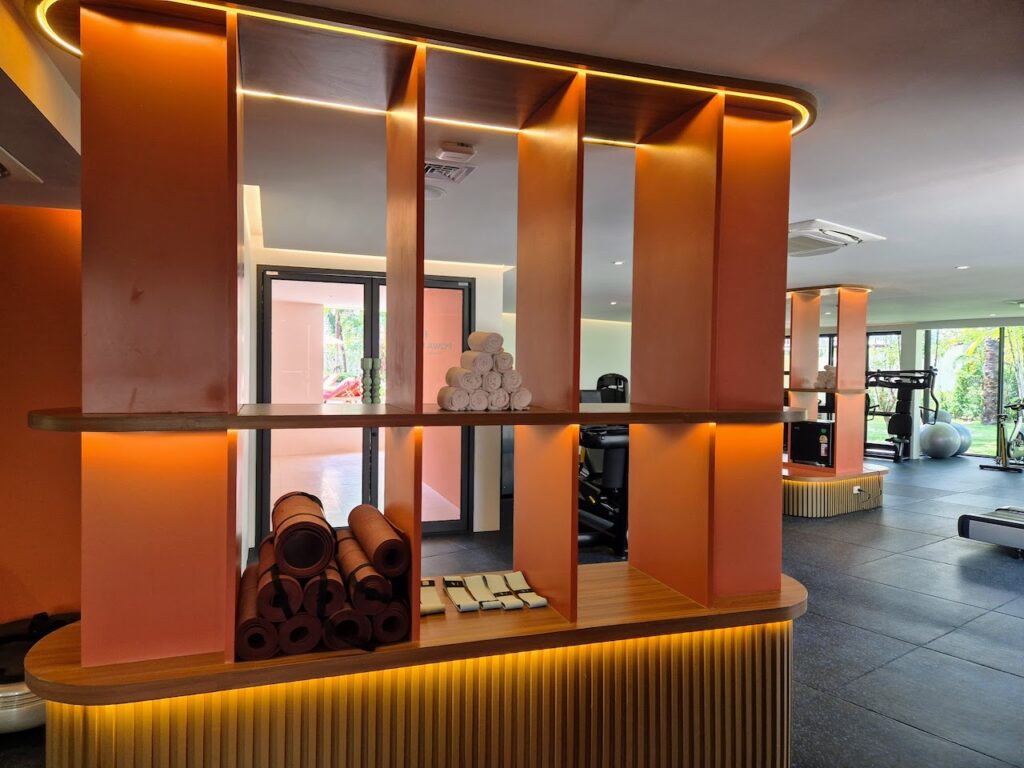
The Powa Fitness gym is one of the hotel’s strongest suits. Most hotel gyms are an afterthought, a treadmill and a set of dumbbells tucked into a windowless room somewhere near the laundry. This is something else entirely. Dressed in warm terracotta tones with curved, backlit shelving stocked with rolled yoga mats and fresh towels, it has the feel of a space that has been genuinely designed rather than merely installed. The kind that you might pay several hundred pounds a month membership for in LA or Cape Town.
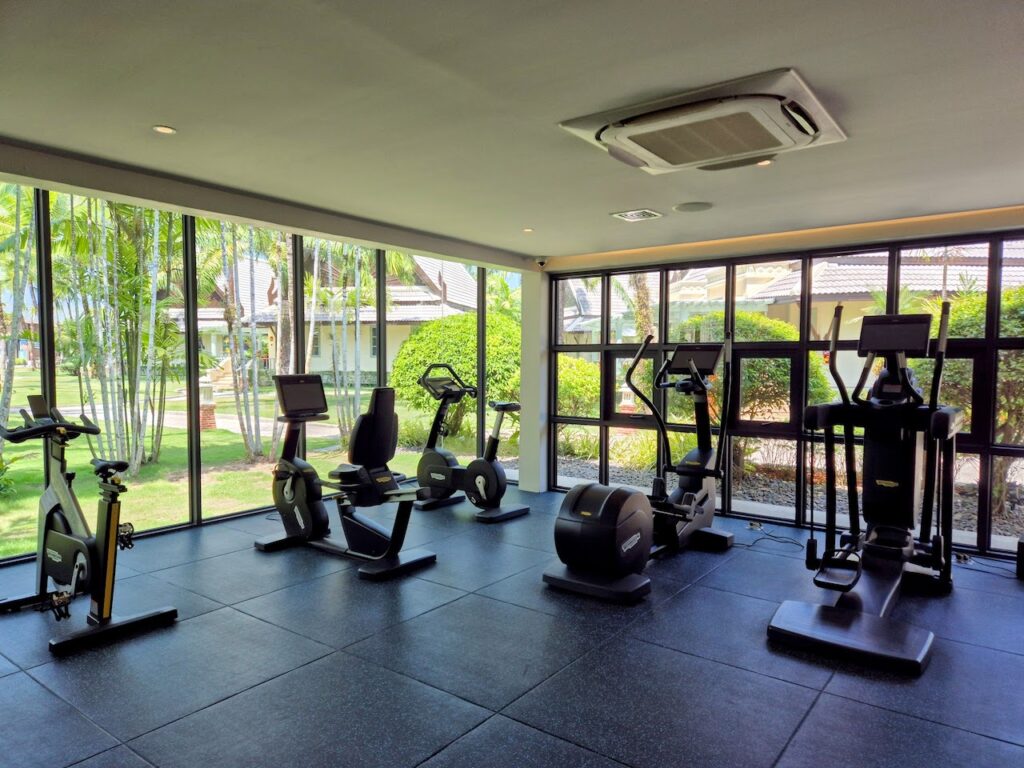
A full suite of resistance machines lines one side; spin bikes and cardio equipment face floor-to-ceiling windows that look out over a sweep of tropical gardens toward the Andaman beyond, the blue of the sky and sea framed between the palms as you pedal, which does rather take the edge off the effort. It is, to our mind, the most handsome hotel gym on the Andaman coast, and we’ve been to most of them.
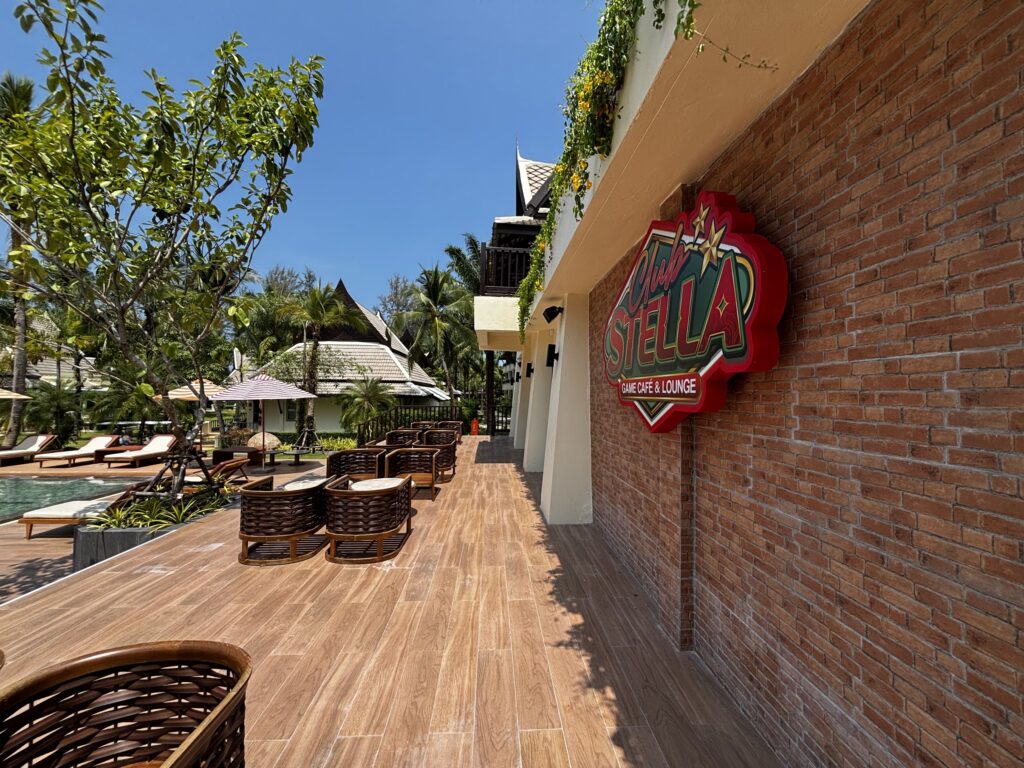
Club Stella, tucked indoors and air-conditioned against the afternoon heat, is the resort’s other surprise. Pool table, foosball, a shelf of board games and a short drinks list make it the obvious move on the kind of day when the sun has done quite enough work for one afternoon, or for parents looking to entertain teenagers for an hour without resorting to screens. Or, indeed, arguing.
Food & Drink
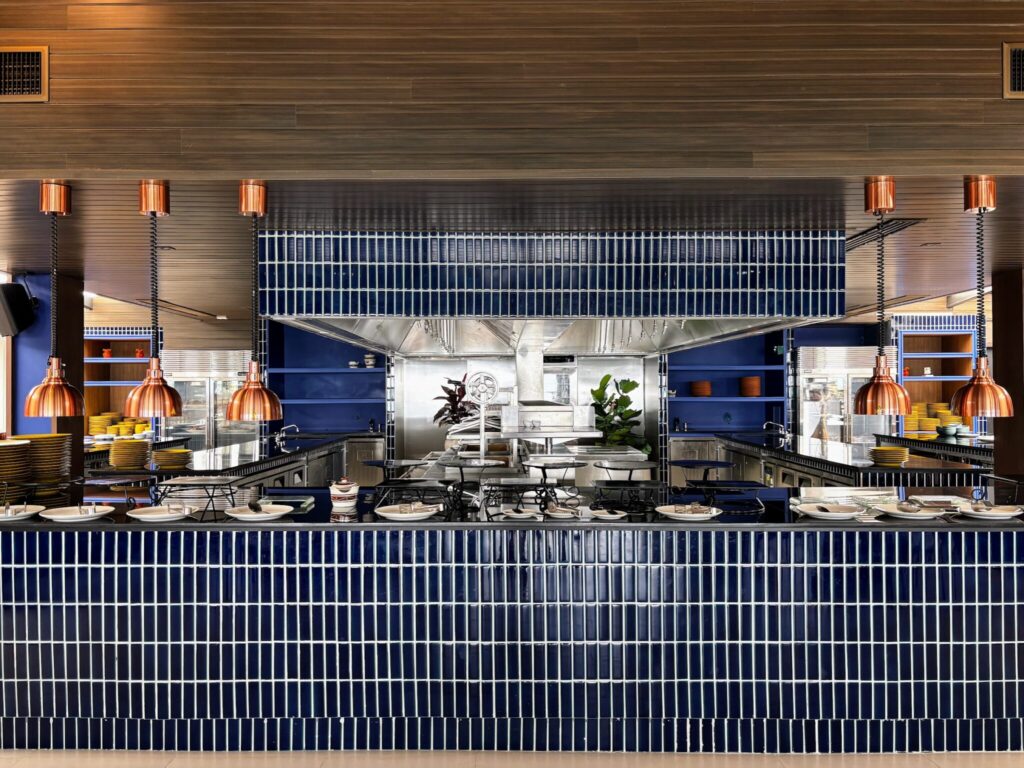
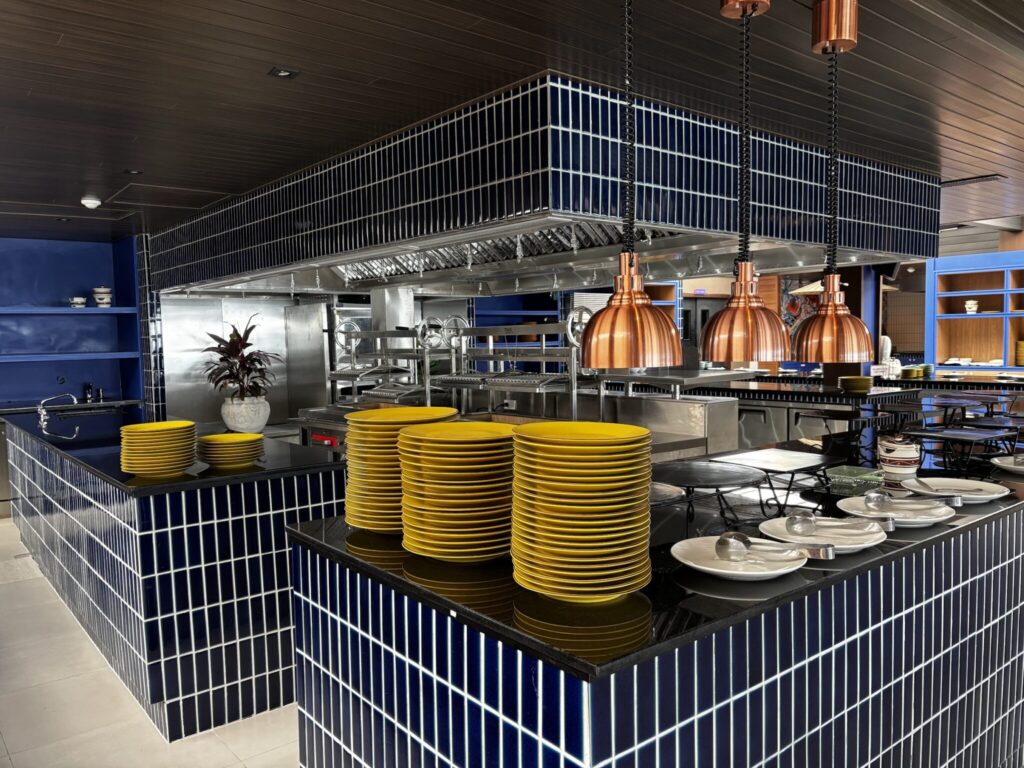
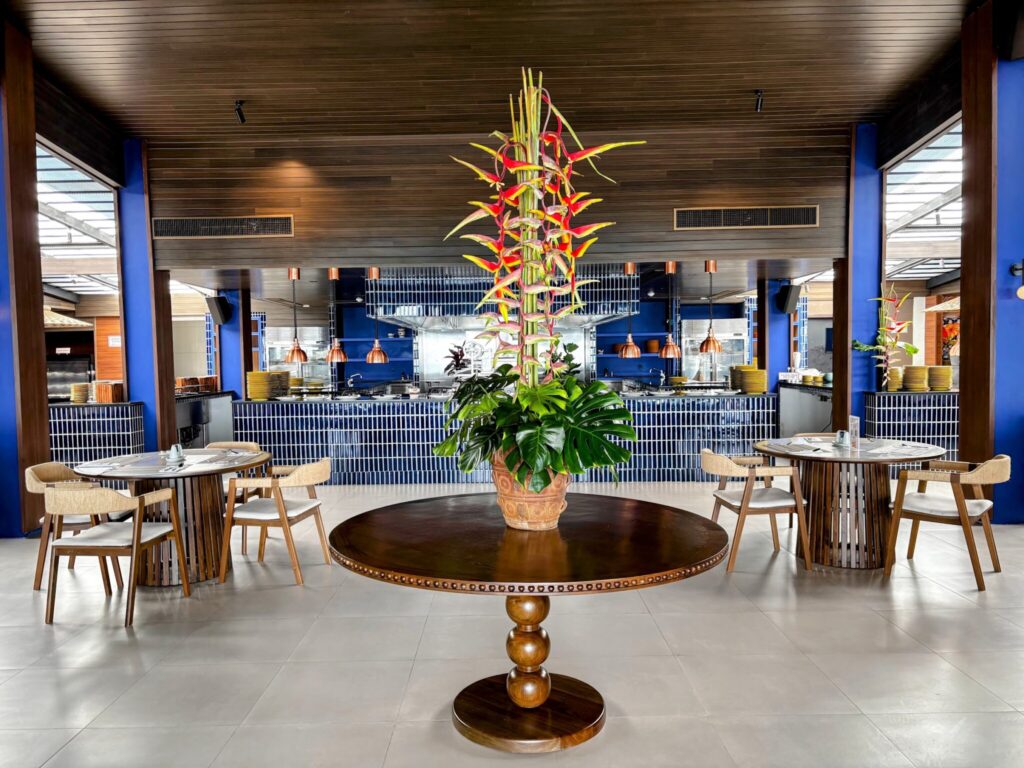
The resort’s chief restaurant SolMare leans into the Mediterranean theme with a tagline of “a taste of the sun, a table by the sea”, and it certainly delivers, dressed in oranges and blues with a glimmering demeanour, just like its neighbour the sea. Everything here has a sunny disposition – the décor, the crockery, the staff.
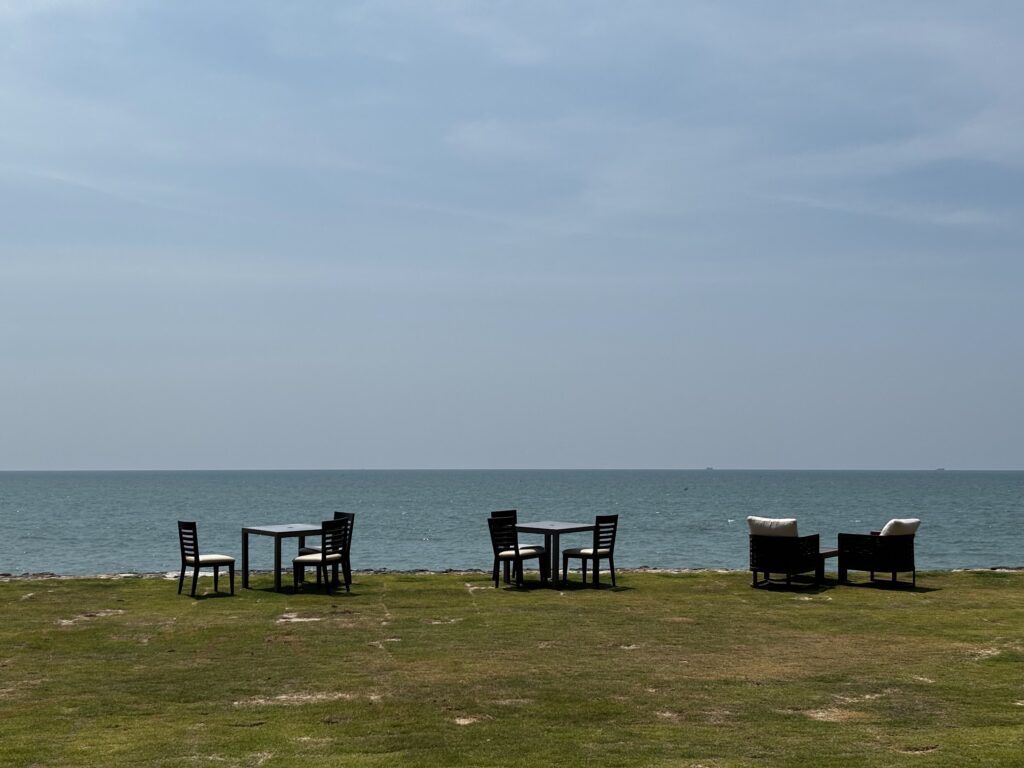
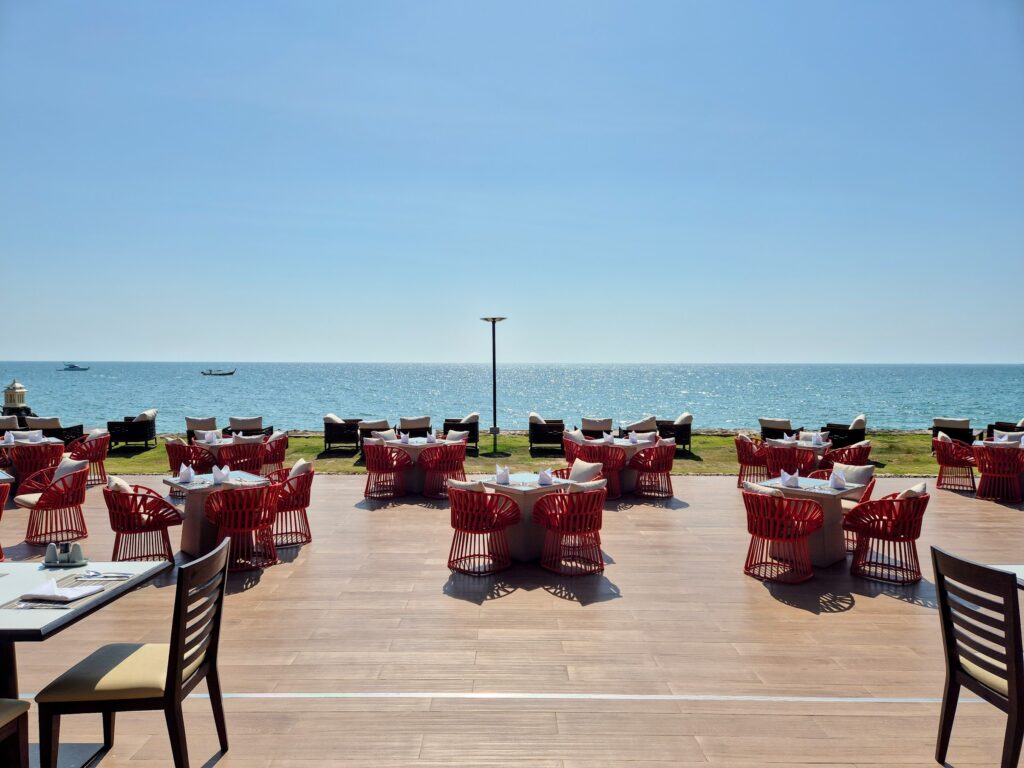
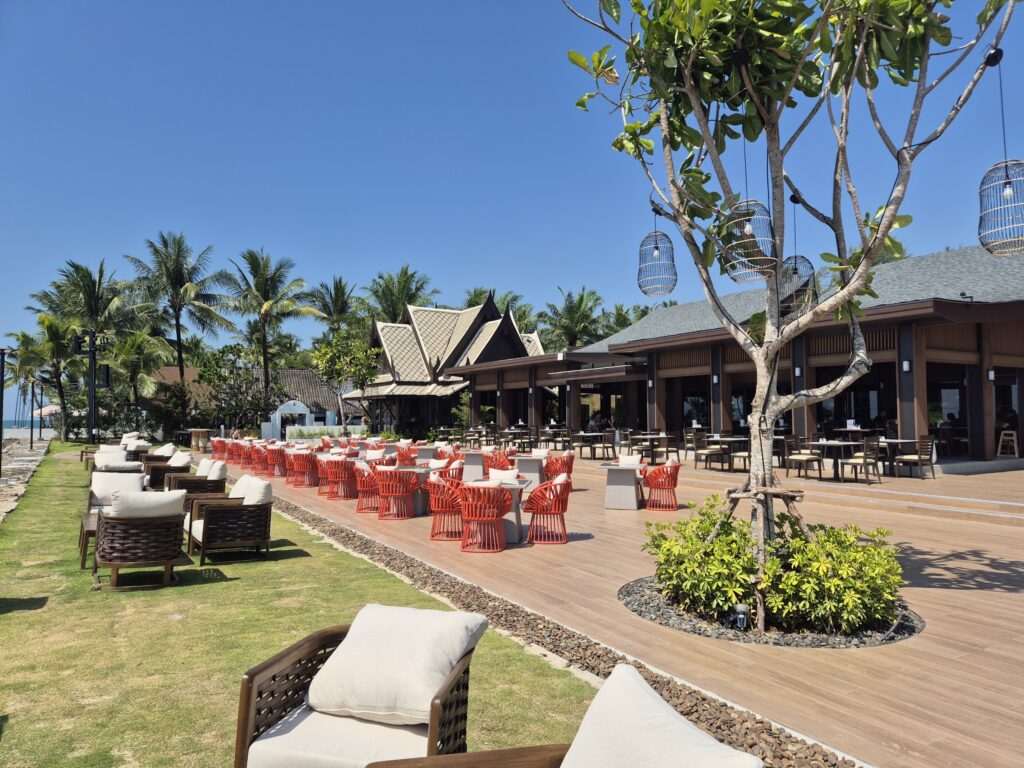
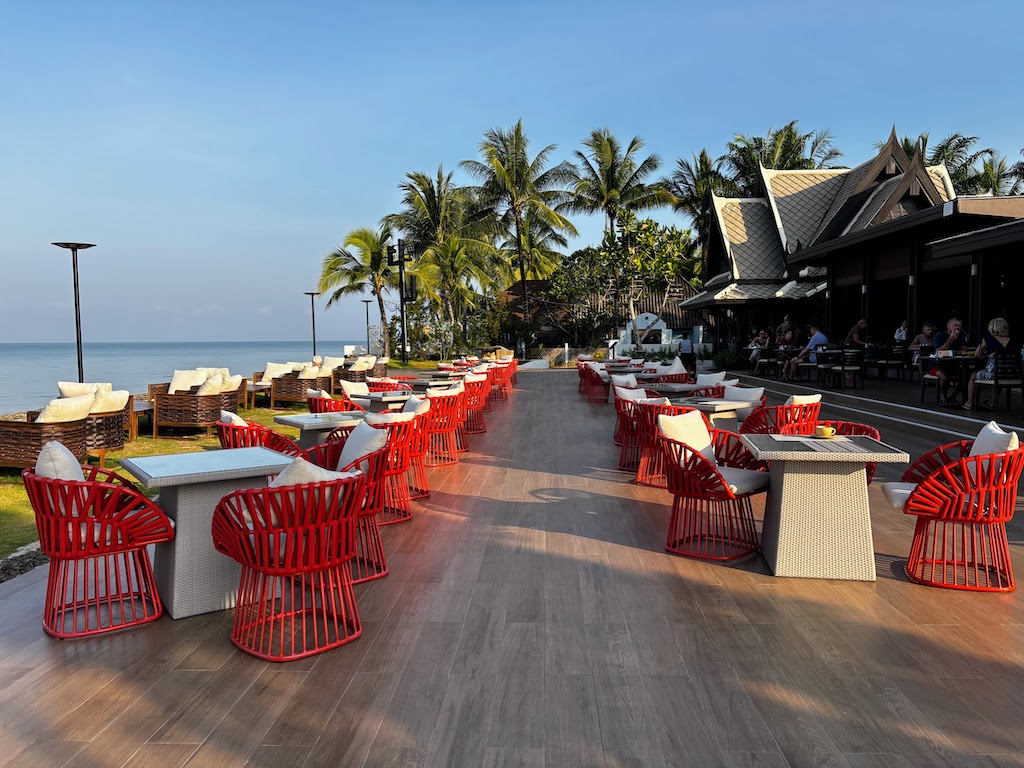
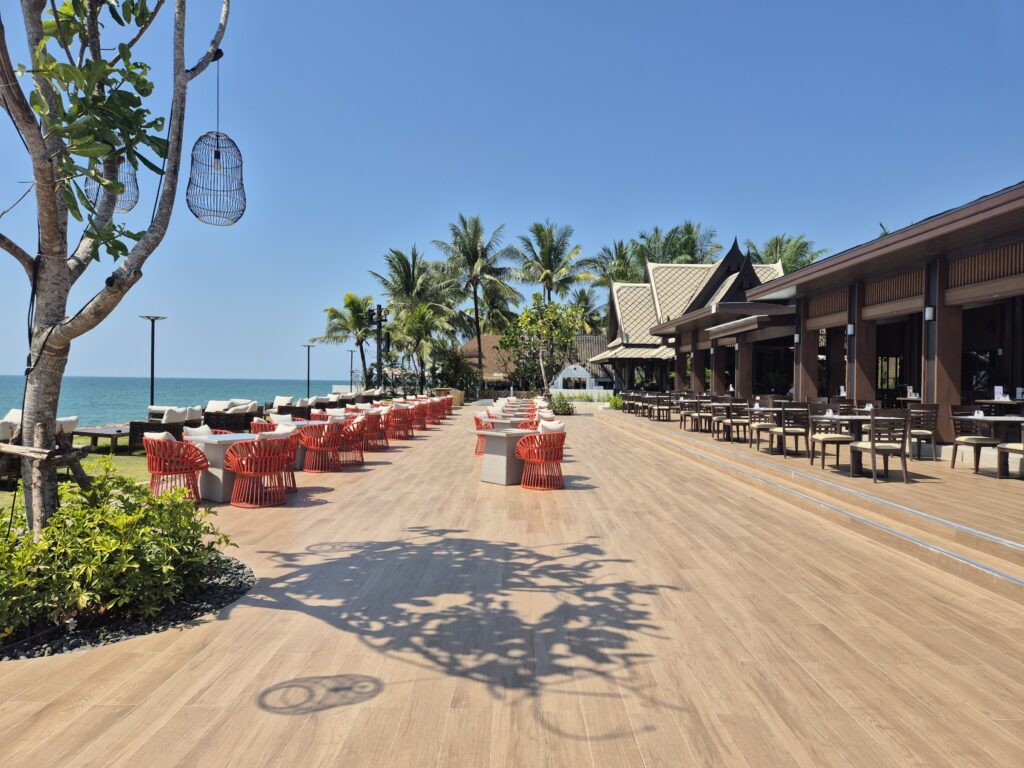
The restaurant faces the ocean head-on, its broad timber deck lined with coral-red chairs and tables, an uninterrupted view of the Andaman laid out flat to the horizon. The open kitchen offers those same views – I started fantasising about attending culinary school just to cook in a kitchen with such an amazing backdrop. But I’m here to eat, not cook, and the comfy, sinkable chairs that line the front make a compelling case for staying on this side of the pass – a prime spot perfect for having your food seasoned by the sea breeze.
This is also where breakfast is served. Come early and get a table outside as the morning light creeps in, before it gets too hot to eat on the deck. Breakfast at SolMare is served on yellow-glazed plates, in wide-rimmed cups the colour of milky coffee. You’ll find yourself covetous of the crockery. It’s the kind of tableware that makes food taste better simply by association, a far cry from the thin white porcelain that does the rounds at lesser properties. And yes, with the whole sun-soaked setting, you will absolutely end up humming Sabrina Carpenter’s song into your espresso cup.
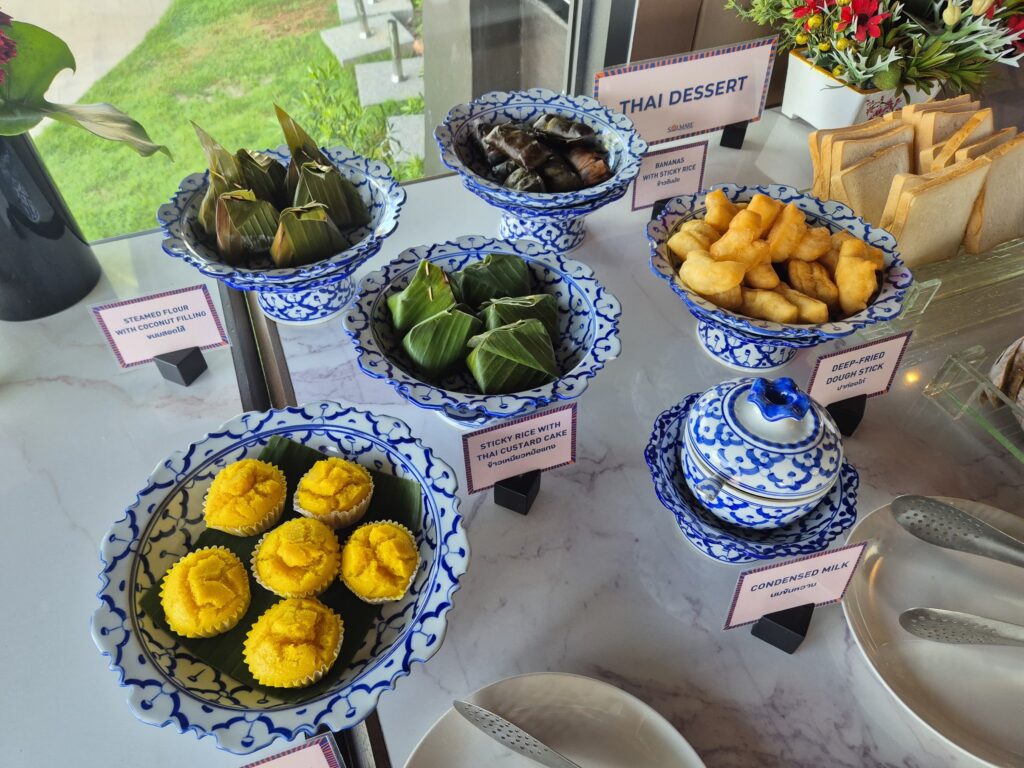
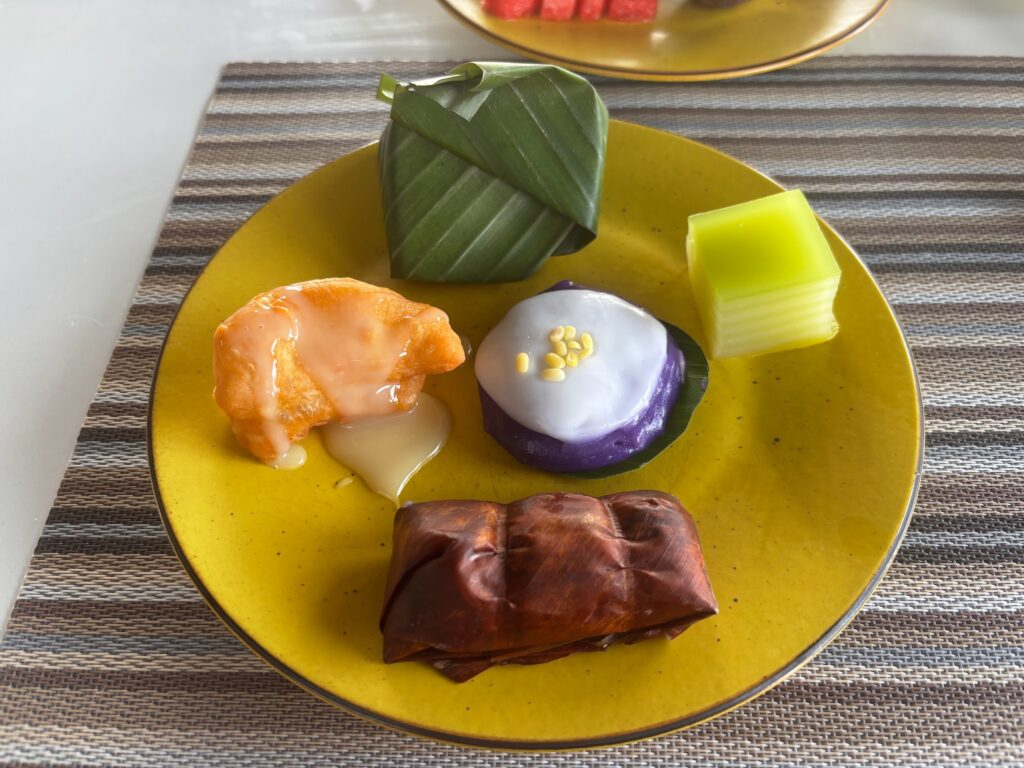
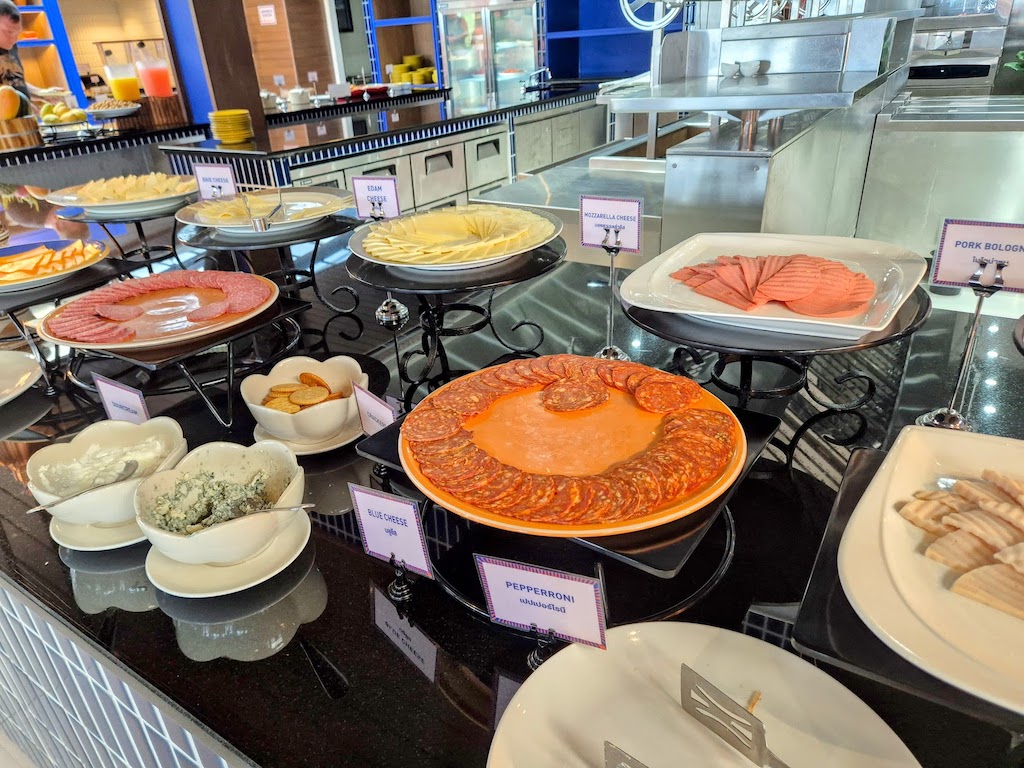
The breakfast highlight isn’t the eggs made-to-order or the freshly baked croissants. It is the khanom wan, Thai sweets sourced from the local market and brought in fresh, changing each morning to keep things interesting. It’s a small touch, but one that signals intent. This is a kitchen with its eyes open to what’s around it. Elsewhere the kitchen counter is lined with a display of cheeses, salamis and meats – everything well sourced.
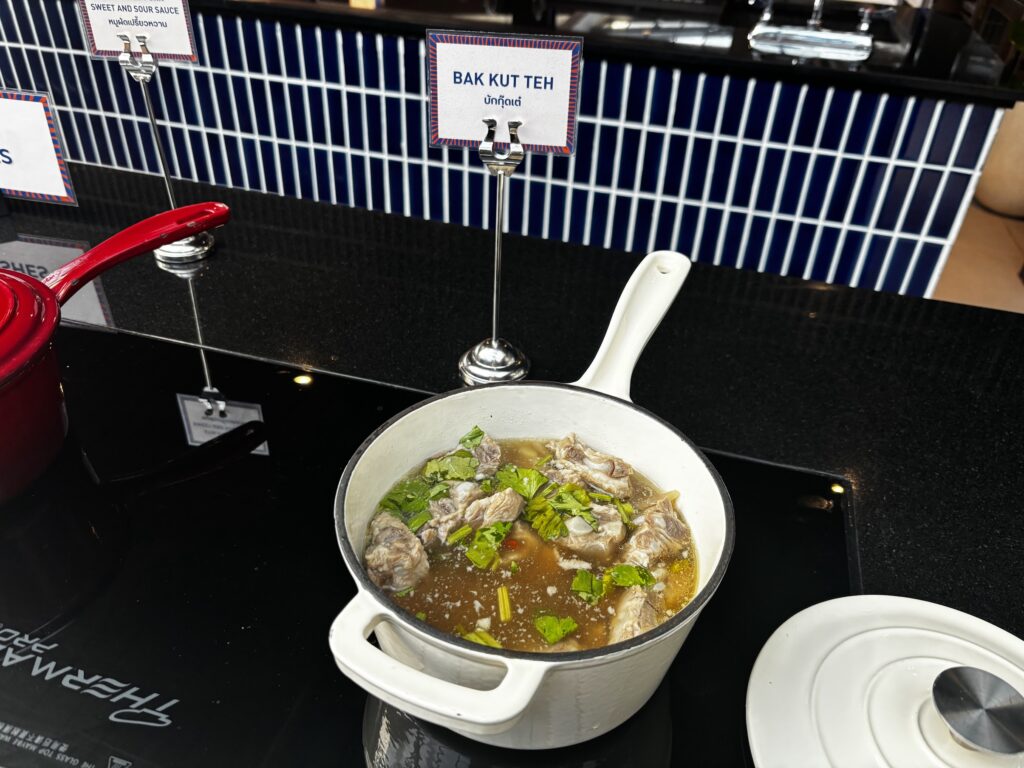
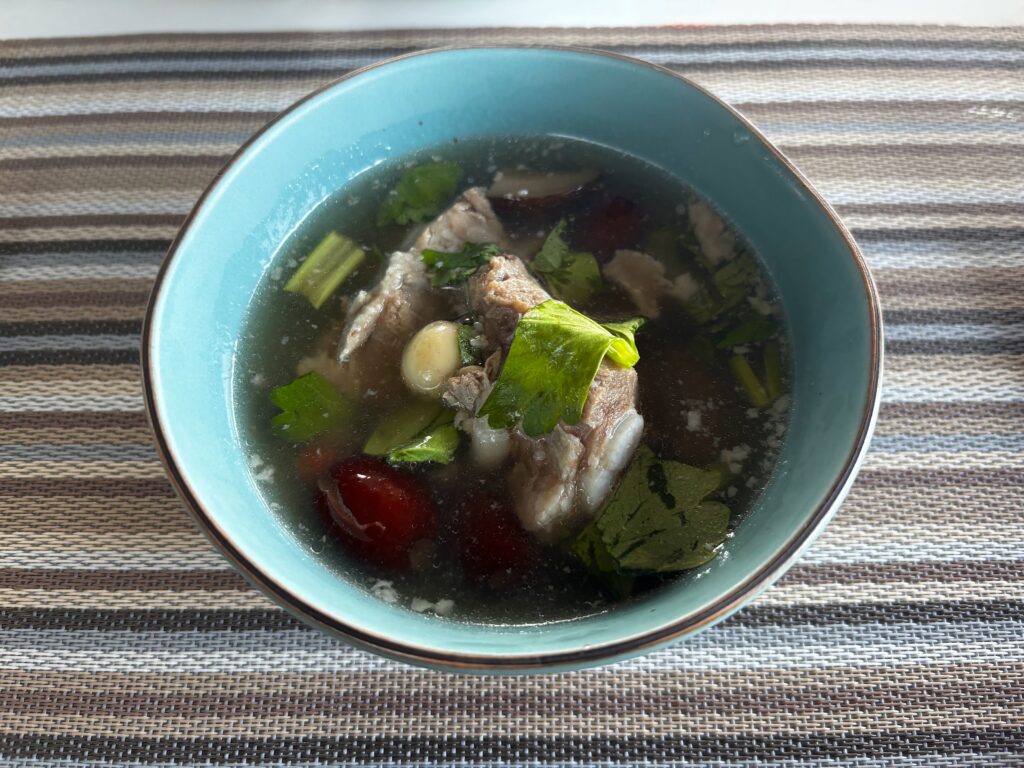
There are also local specials like a replenishing pork rib soup, bak kut teh, and a Japanese corner serving sushi rolls and fried chicken. There was even a cheese toastie station one morning, inexplicably gone the next, its fleeting nature only adding to the charm. Hey, I know a good cheese toastie chef if they need someone more permanent (it’s me, I’m the chef).
It’s such a pleasant setting that you won’t feel ashamed about not having left the hotel for lunch. Come this time of the day, the sun is beating down on the resort. Sitting inside with the air conditioning running and the Andaman unfolding behind glass so clear it barely registers (yep, that was me walking straight into it), it makes a compelling case for itself as one of the better spots for a midday meal in the whole of Khao Lak.
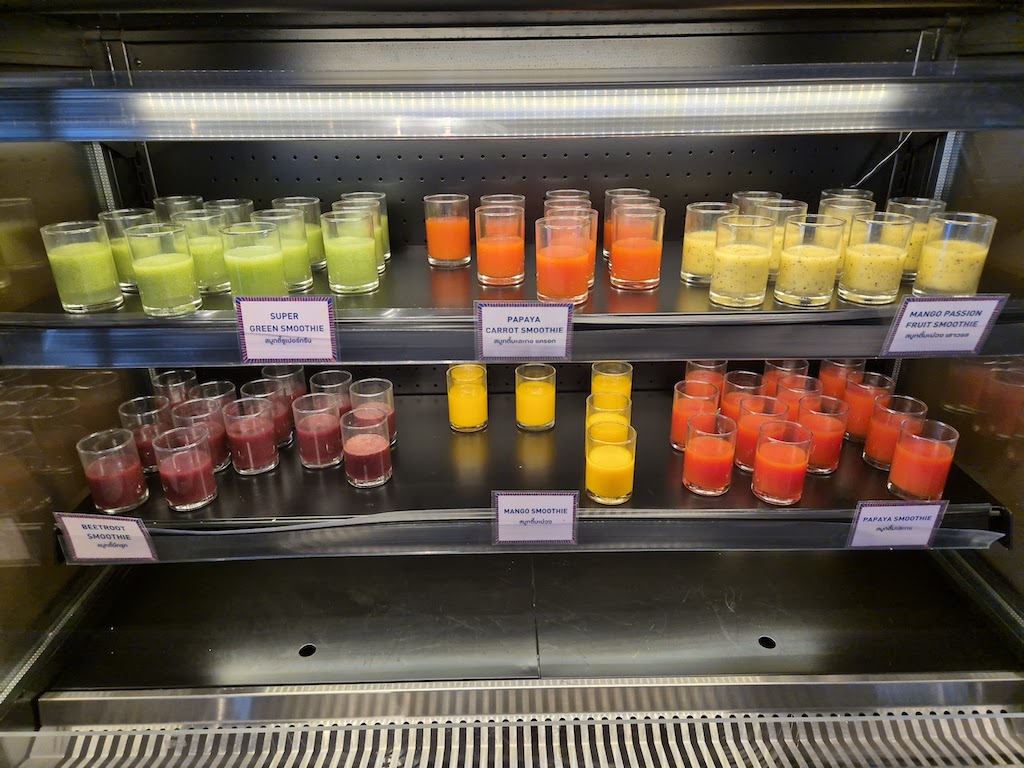
The midday heat on this stretch of coast is unsparing, and the combination of a cool interior, a strong smoothie menu – the Perfect Smoothie (banana, green apple, pineapple, mango and mixed berries) lives up to its name – and an unobstructed sea view is hard to argue with.
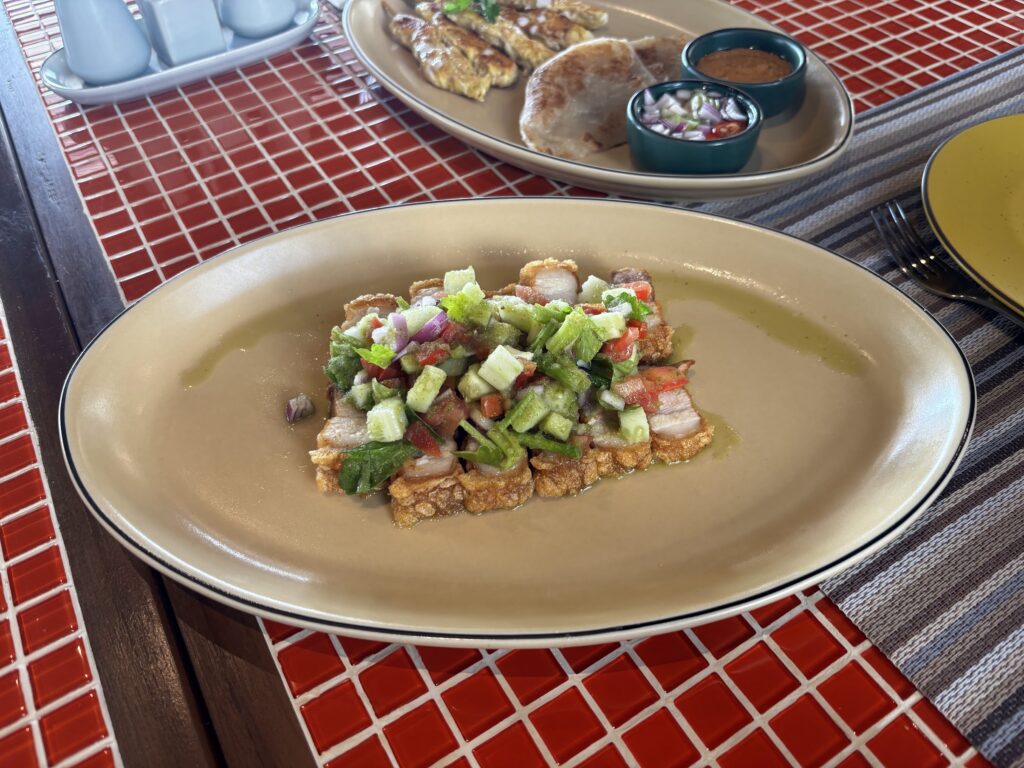
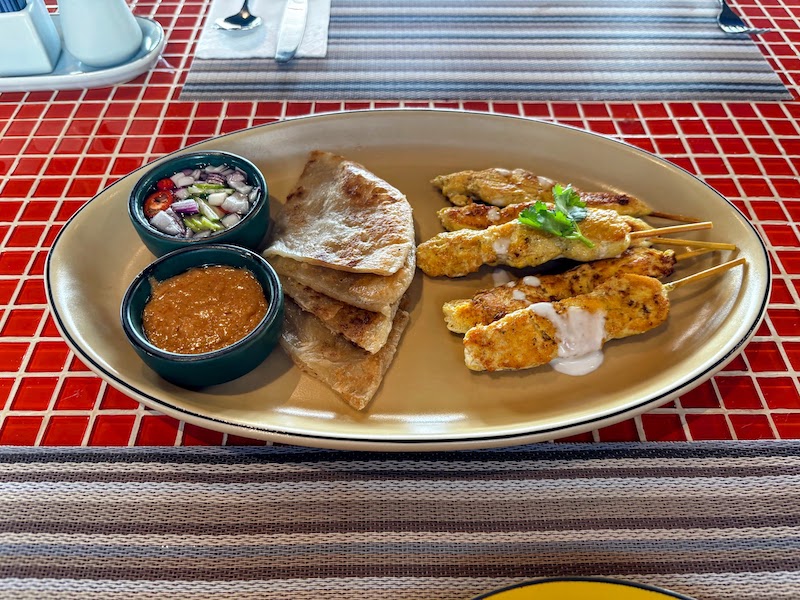
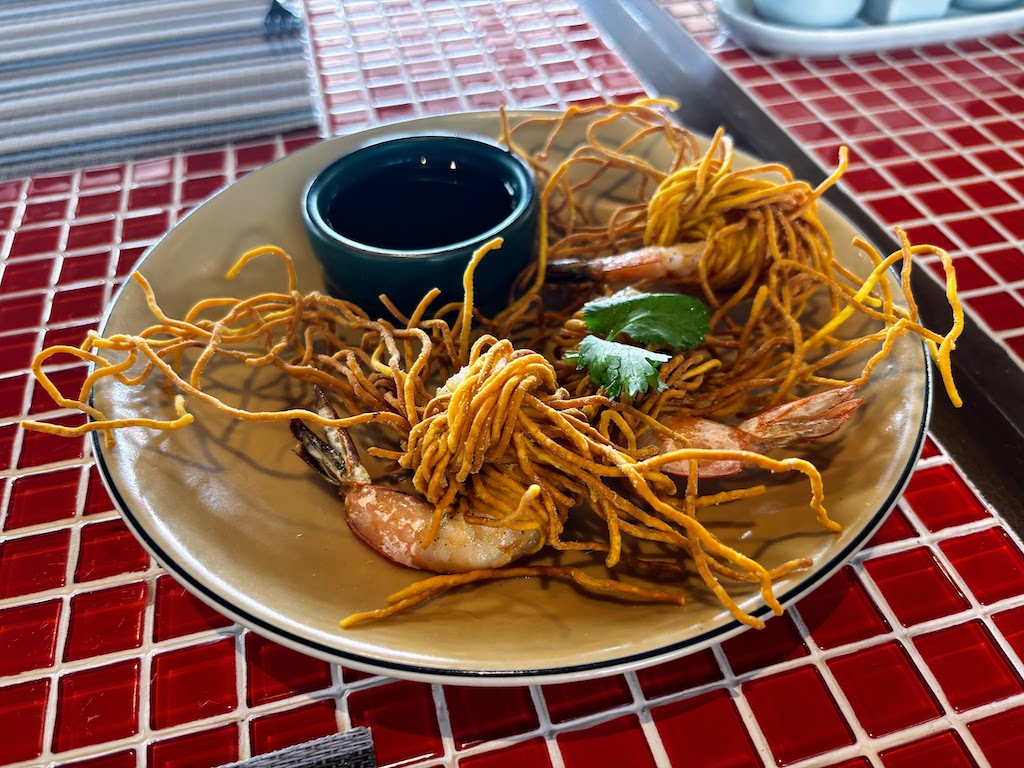
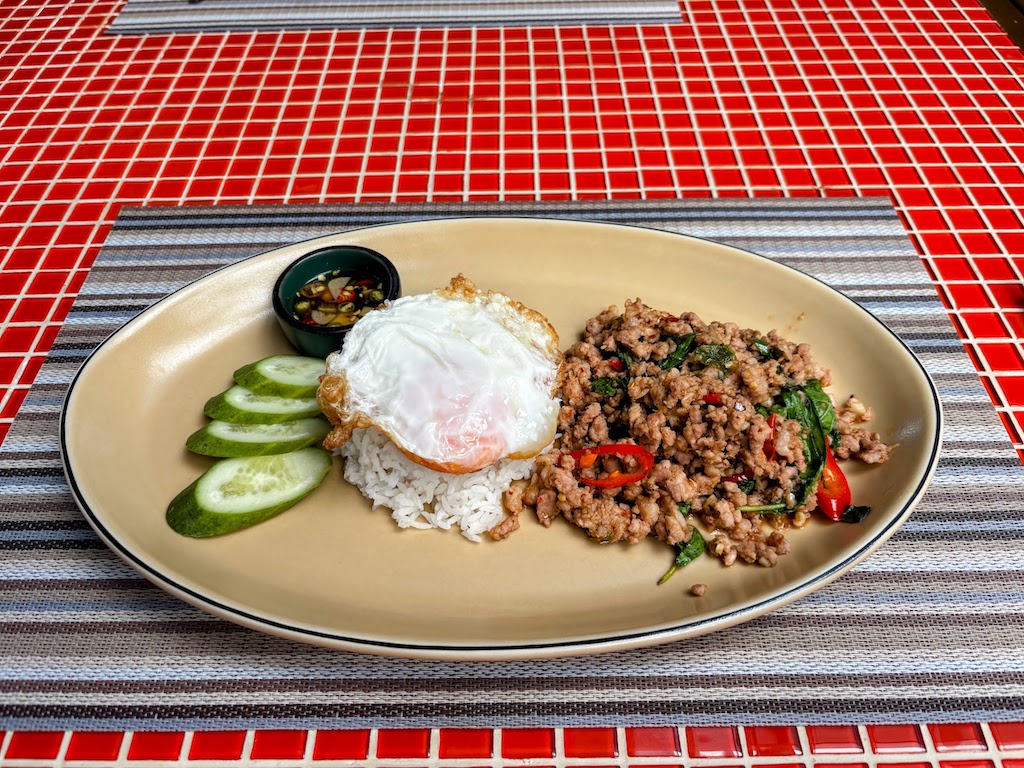
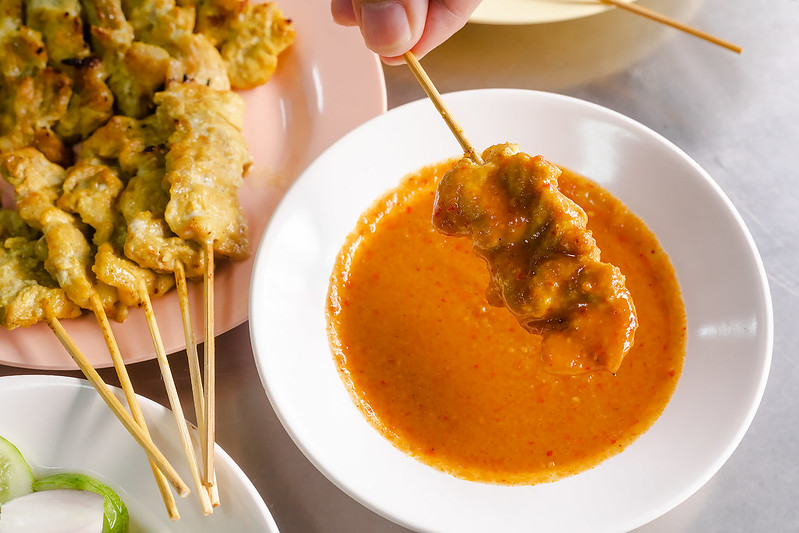
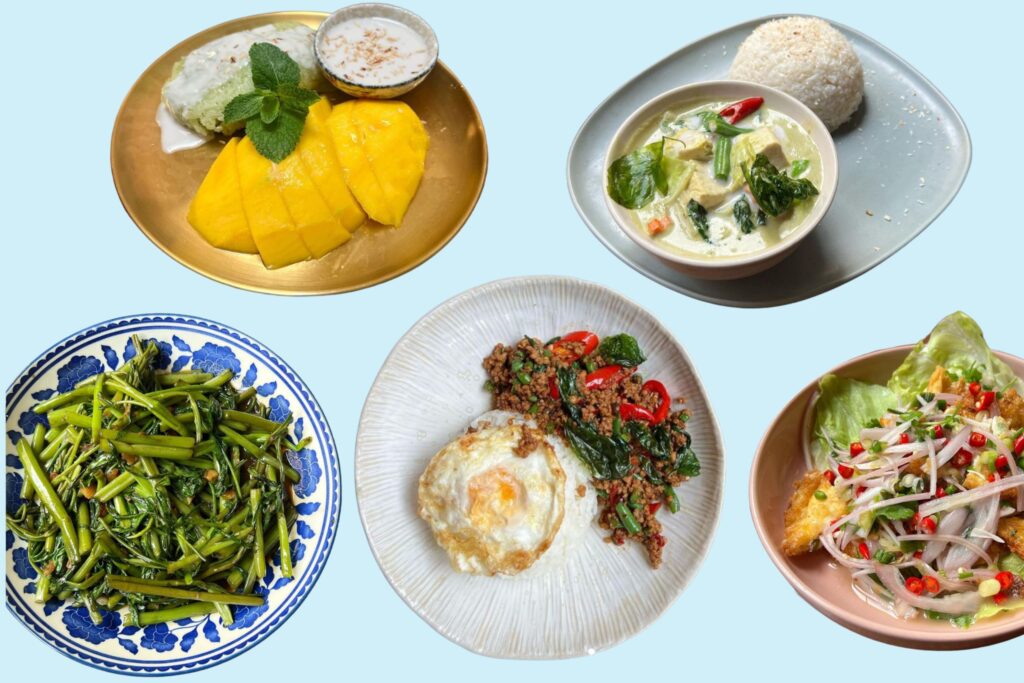
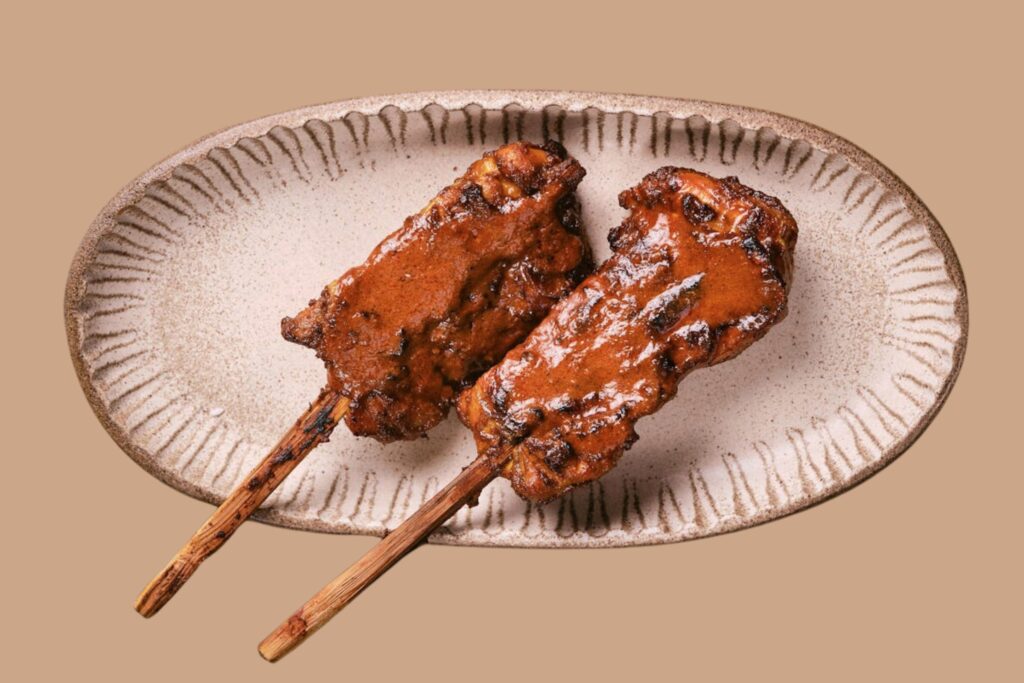
The move for lunch is to share some small Thai plates from the starters menu. We had a gorgeous yam moo krob – crisp pork belly with herbs tossed in a zingy lime and chilli dressing. Alongside, chicken satay with freshly grilled roti and goong sarong – prawns wrapped in crispy egg noodles. Or, if you want something to yourself, the pad krapow is a particularly good version. No concessions have been made on spice levels, no erroneous filler of snake beans, no Thai basil standing in for holy, and it was all the better for it. Prik nam plaa was served on the side, just as it should be.
In the evening, it’s an international affair with a menu of crowd pleasers, taking inspiration from Thailand, the Mediterranean and beyond. If you’re leaning western, don’t miss the potato fries corner, where spuds come in every way you can imagine: seasoned battered fries with Cajun seasoning, crispy waffle fries, potato tots to keep the kids happy, that kinda thing. Or if you want to enjoy your typical ‘sun-drenched flavours of the Mediterranean’, then the grilled seabass served with lemon and potato is unfussy and satisfying. On the Thai side, La Solaya rice is a decadent bowl of fried rice with shrimp paste, crab meat, prawns and salmon roe; a taste of the coast and a signature dish.
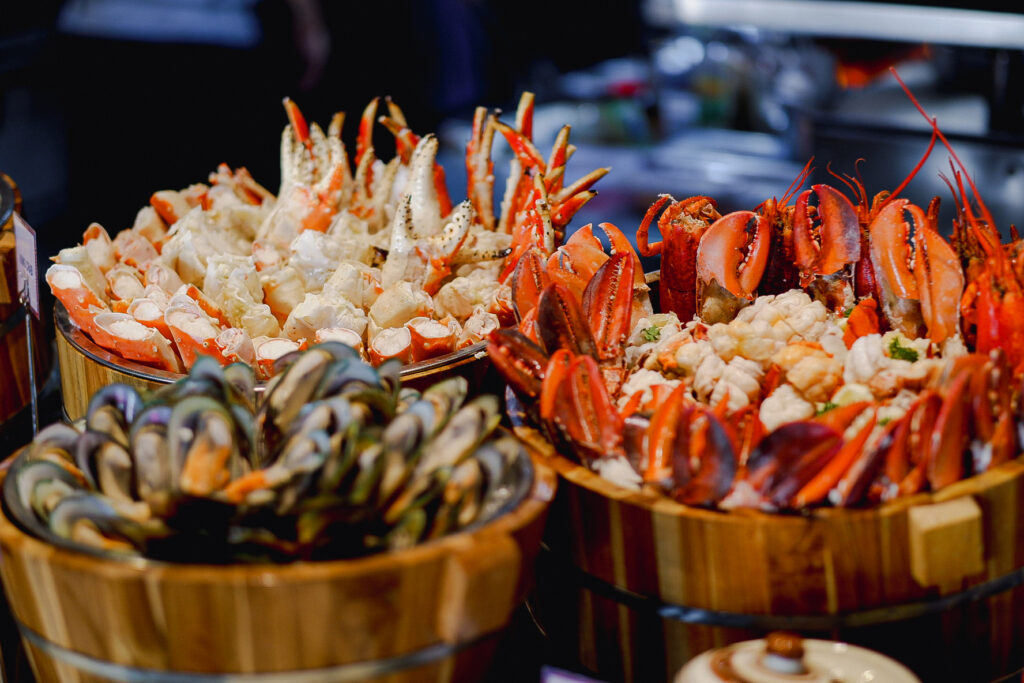
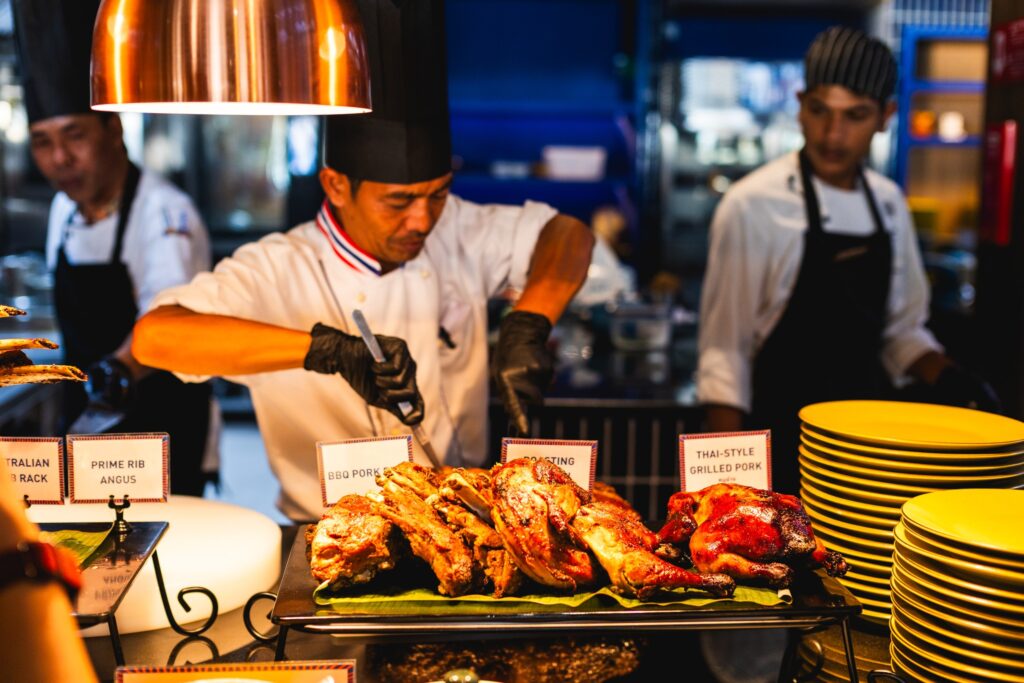
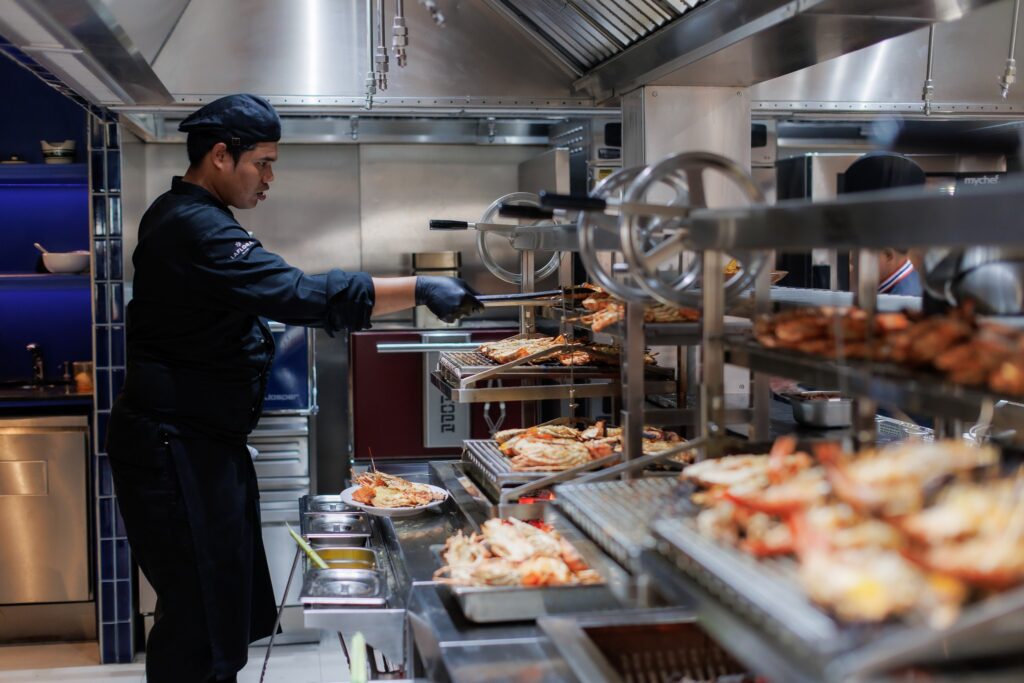
If you time it right, there’s also a ‘Claws and Coals’ buffet every Thursday and Sunday (though do be aware that schedule can vary – latest info on the hotel’s Facebook page). This type of opulent spread speaks of good holidays, and SolMare’s is rich in premium Josper-grilled meats and a full spread of fresh seafood. Begin by attacking the crab legs, plump and oh so sweet. Then turn to the mussels – meaty and mineral. Next comes the grilled meats – Thai-style grilled pork, BBQ pork ribs, gai yang and Phuket lobster, all infused with the taste of the grill.
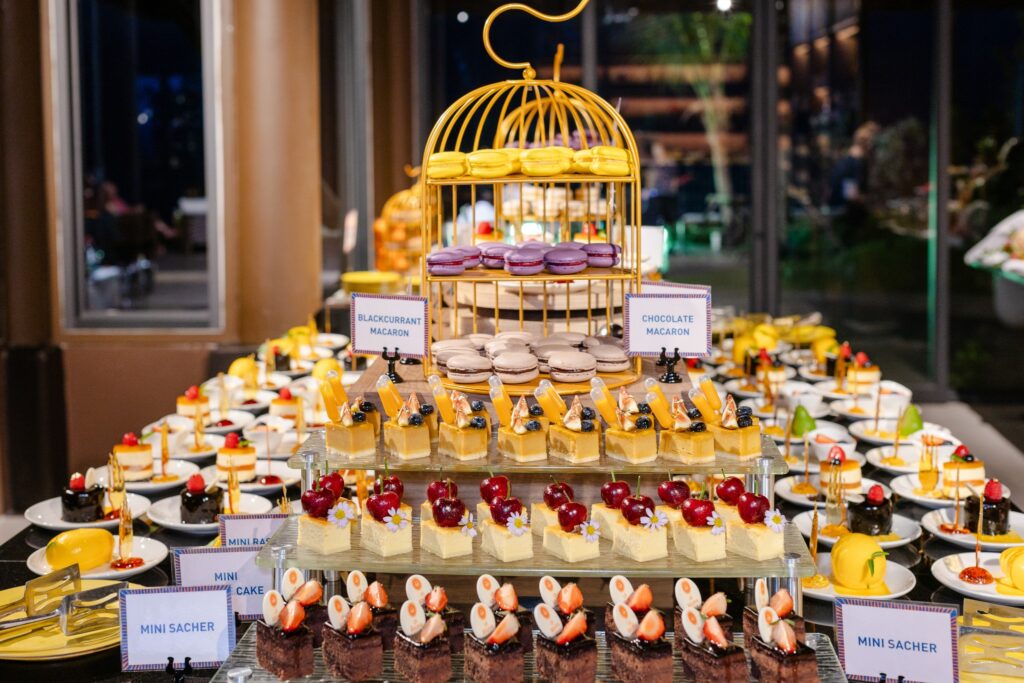
A dessert table holds a Thai bird cage full of macarons, and there’s an assortment of dainty cakes. You can see and taste how much work goes into this table of sweets, which shouldn’t come as a massive surprise after your keen appraisal of the breakfast spread earlier.
Ideal For…
Sunseekers. The resort is named for the sun and arranges itself accordingly – rooms angled for the morning light, terraces calibrated for the afternoon, and a west-facing horizon that delivers the sunset you booked the flight for.
Swimmers. Bang Niang is one of the better swimming beaches in the country – long, gently shelving, generally calm, and not so crowded that you have to negotiate a path between bodies to reach the water.
Couples after a beach holiday with life around it. Khao Lak is an hour up the coast from Phuket and a generation behind it in development terms. La Solaya puts you on the sand with restaurants and bars on the doorstep, without the noise.
Families in search of space. Fifteen acres of gardens absorb a great deal of noise. The Family Villas are sized for the obvious arithmetic, and Club Stella offers an air-conditioned answer to the question of what to do with teenagers in the middle of the afternoon.
Wellness travellers after something more considered. The La Vita Sana programme gives the spa a three-day shape rather than the usual à la carte drift, and the gym is good enough to make exercise feel less like a concession.
Less suited, perhaps, to those after true seclusion: La Solaya sits at the foot of a working tourist strip, which is a virtue rather than a flaw, though one worth noting in advance.
Why Stay?
There is a reason humans once organised their days around light. At La Solaya, that old rhythm reasserts itself with a kind of gentle insistence – the Andaman swallowing the sun in slow ceremony each evening, the morning returning it soft and gold over the treetops, and the hours in between asking nothing of you beyond presence. A walk at sunrise, breakfast at SolMare, a swim, a long lunch on the beachfront, the heat of the afternoon waited out in the shade of the villa, a seat reclaimed at six for the sunset.
Holiday, at its best, is not an escape from life. It is a return to the rhythm life was always supposed to have. La Solaya helps you settle back into that beat as if it were the most natural thing in the world.
Rooms at La Solaya Khao Lak start from around 3,300 baht (£75) per night in low (green) season, rising to around 12,800 baht (£284) per night in high.
When the bard William Shakespeare wrote, “If music be the food of love, play on,” he may not have been referring to Stratford-Upon-Avon’s dining scene, yet his words resonate perfectly with the town’s current culinary landscape.
This picturesque medieval market town, set in the heart of England’s Shires, has long welcomed tourists keen to immerse themselves in the history of the world’s most famous playwright, and with such footfall, fine food naturally follows.
From quaint country pubs and cosy tea rooms all the way to Michelin-starred restaurants, each establishment narrates a poetic tale of taste and texture.
Shakespeare himself said that “Good company, good wine, good welcome, can make good people”, and in Stratford-Upon-Avon, you can expect to find all this and much more.
With that in mind, here’s where to eat in Stratford-upon-Avon.
Woodsman
Ideal for sophisticated game dining in a historic Tudor setting…
You could argue that the Woodsman is the restaurant that most embodies the spirit of Stratford-upon-Avon’s historical roots, all while offering a contemporary dining experience. It’s quite the proposition.
Sitting pretty on Chapel Street, the restaurant is reminiscent of the character Nick Chopper from the play The Woodsman. This character, a mortal woodsman cursed by the Wicked Witch of the East, is a symbol of resilience and determination, much like the building which houses the restaurant, which is Grade II listed and has been standing in this spot since 1500.
The mind behind the menu here is chef and restaurateur Mike Robinson, whose work with wild British game and fish has earned him a string of accolades at the Harwood Arms in London and the Elder in Bath. That’s some serious pedigree, and the premise is similarly straightforward here; sustainably sourced produce cooked with an almost prosaic precision.
Right now, with game season in full swing, the Woodsman is on song. Fallow deer sourced from the prestigious Bathurst Estate, is cooked until blushing, and served with a sticky, sumptuous faggot of the brilliant beast’s liver and heart. An attitude of no-waste, nose-to-tail permeates the menu, with a tartare of that same deer an option on the starters. Paired with a spiced peach ketchup, it’s a one-two punch of deer-based deliciousness that feels like a must-order.
Perhaps unsurprisingly for a restaurant in thrall to protein, the Sunday roasts here are excellent and quite possibly the best in Stratford-upon-Avon. They’re excellent value, too, with starters (that tartare is currently an option), the main event – a choice of rare Hereford beef rump, roast Bantham chicken or slow roast Berkshire pork belly, plus all the trimmings – and dessert clocking in at just £55 per head. If the apple and blackberry crumble is on, do not miss it!
Ideal for refined countryside dining worth the short drive from town…
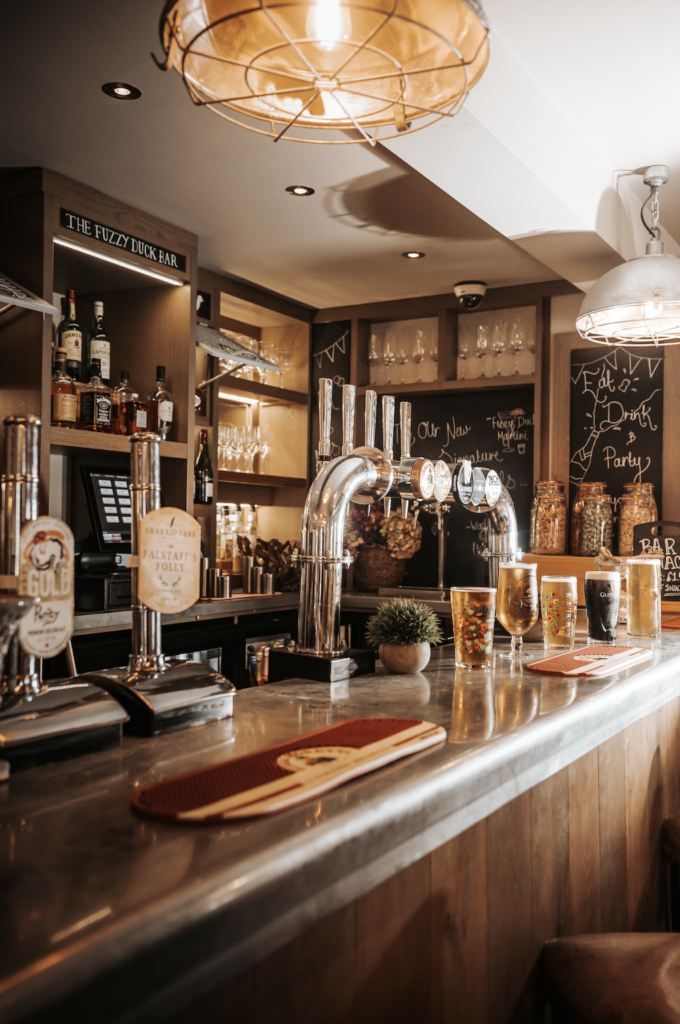
Just a short drive from Stratford-upon-Avon, nestled in the chocolate-box hamlet of Armscote, The Fuzzy Duck offers a rather different proposition to the town’s urban eateries. Owned by Adrian and Tania Slater – the latter being the creative force behind luxury soap company Baylis & Harding – this beautifully renovated country pub strikes that rare balance between sophisticated dining destination and cosy village local.
Since its transformation in 2013 from what they playfully refer to as an ‘Ugly Duckling’, the restaurant has established itself as one of Warwickshire’s most charming dining spots. Recognised with 2 AA Rosettes and a mention in the Michelin Guide, the menu here celebrates the flavours of the Cotswolds with both finesse and accessibility – exactly what you want from a modern country pub.
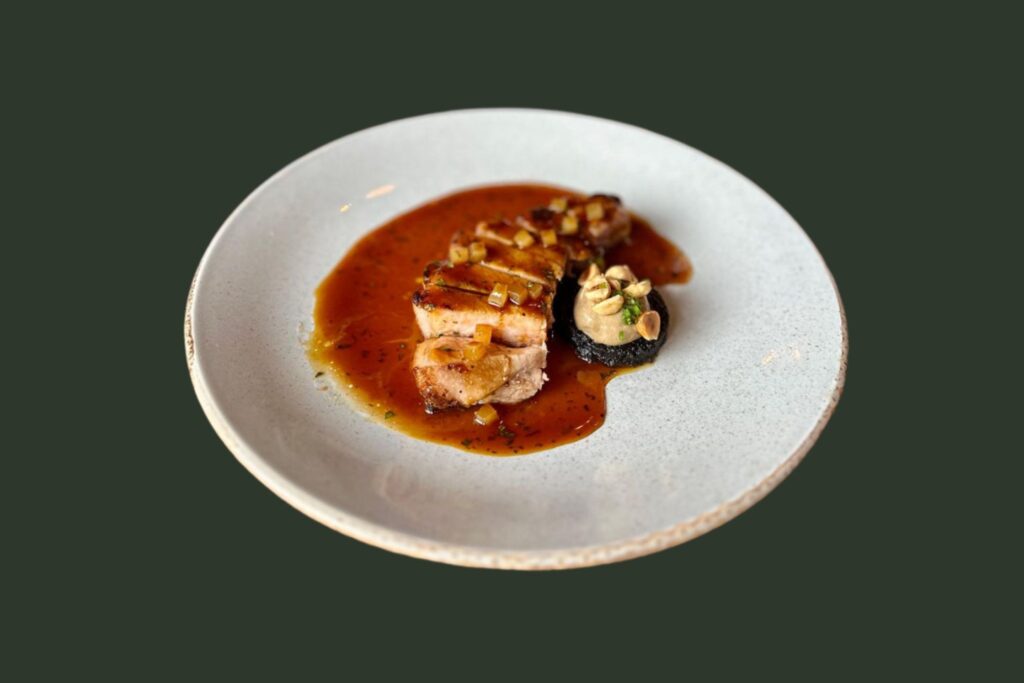
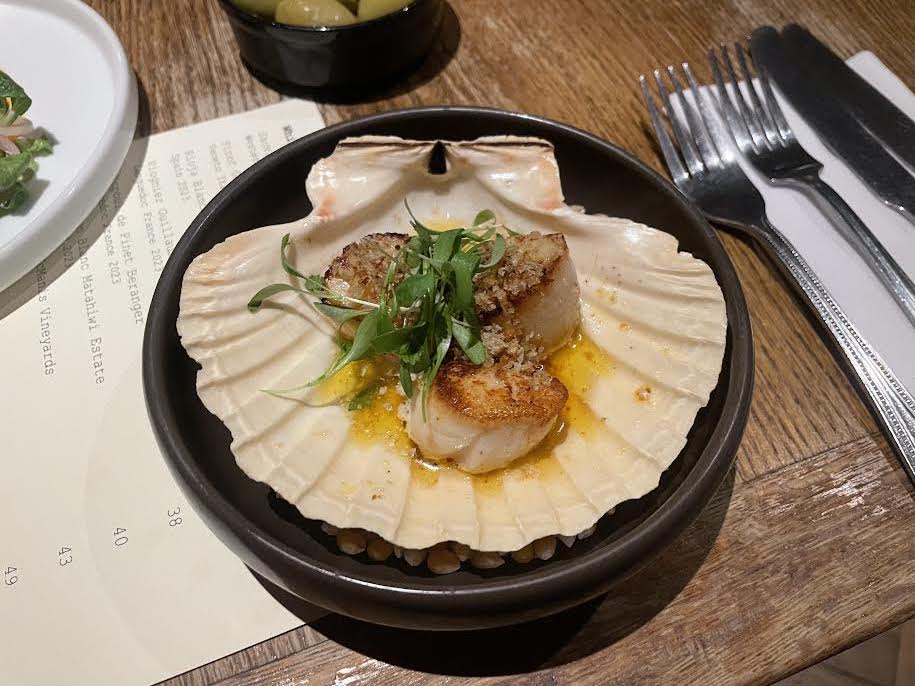
Currently, the kitchen team is turning out some properly accomplished cooking. A starter of pan-seared scallops with roasted celeriac purée and orange butter shows real refinement, while the Fuzzy Duck’s chorizo scotch egg with café de Paris mayonnaise offers a sophisticated take on a pub classic. Warming to a theme here, the braised pig cheek with parsnip purée and black pudding croquette is a masterclass in nose-to-tail cooking that would make Fergus Henderson proud.
Main courses maintain this high standard, with locally-sourced meat taking centre stage. The rack of lamb, served with hasselback potatoes and a roasted cauliflower purée, is a particular triumph. Meanwhile, the kitchen’s treatment of Todenham Manor Farm’s 8oz sirloin – accompanied by all the classic steakhouse trimmings – demonstrates their respect for prime local ingredients. The Sunday roast here has a fine reputation, too.
Leave room for pudding if you can – the Baked Alaska with raspberry ripple ice cream and Italian meringue is worth the indulgence, while the blackberry panna cotta with poached blackberries and stem ginger cookie offers a lighter, equally accomplished finale. For coffee and booze lovers (almost everyone, then), the affogato – featuring vanilla ice cream, an espresso shot and your choice of premium liqueur from the likes of Kahlua, Amaretto, or Cotswolds distillery cream – provides a particularly sophisticated way to round off your meal.
What sets The Fuzzy Duck apart is its ability to be both a destination restaurant and a welcoming local pub, with attention to detail apparent in seemingly innocuous details like the satisfying weighty steak knives and fine selection of locally brewed beers. It’s these thoughtful touches that make The Fuzzy Duck worth spreading your wings for.
Ideal for elegant pre-theatre dining with river views…
Sitting directly opposite the Royal Shakespeare Company theatres, No 44 Brasserie at The Arden Hotel presents refined dining with a theatrical flair. Having earned 2 AA Rosettes, this elegant waterside restaurant manages to strike that delicate balance between special occasion destination and relaxed local favourite.
The setting is undeniably impressive; housed within the sophisticated Arden Hotel, the restaurant benefits from a prime position on the banks of the River Avon. A recent refurbishment in 2019 has given the space a fresh, contemporary feel, while the addition of an all-weather terrace means you can dine al fresco whatever the British weather throws at you.
Head Chef Chris Butler’s menu pays homage to modern British cuisine with a French accent. His cooking demonstrates both technical skill and restraint, perhaps best exemplified in dishes like the signature Arden ‘mille feuille’ fish pie – a refined take on the humble comfort classic. The kitchen’s commitment to seasonal, local produce shines through in plates like the Cotswold lamb, while vegetarians are well-catered for with considered options like a fine, funky wild mushroom gnocchi.
Pre-theatre dining is, naturally, a speciality here. The kitchen’s three-course offering at £30 represents excellent value, especially considering the calibre of cooking. Better still, theatre-goers can pop back post-performance to indulge in their dessert – a civilised touch that feels very Stratford.
For something a bit different, the restaurant’s ‘shareables’ concept encourages a more sociable style of dining. The idea is simple: order 5-6 small plates between friends and share the lot. It’s a clever way to explore the menu without committing to a single main course, and perfect for those who suffer from chronic menu envy.
The Champagne Bar adds a dash of sparkle to proceedings, making No 44 an equally appealing spot for a celebration or pre-show tipple. Throw in the restaurant’s views over the RSC theatres and river, and you’ve got yourself one of Stratford’s most complete dining packages.
Ideal for a charmingly authentic 1940s afternoon tea experience…
Back in Stratford-Upon-Avon proper, and just 50 metres from the renowned Royal Shakespeare Theatre, The Fourteas offers something utterly unique in Stratford’s dining landscape – a chance to step back in time to 1940s Britain. Housed in a remarkable 500-year-old townhouse, this isn’t merely another themed café; it’s an immersive experience that manages to hit all the right notes without falling into pastiche.
The authenticity here is striking. The restaurant’s carefully curated 1940s memorabilia creates an atmosphere that’s both nostalgic and genuinely atmospheric, while staff in period dress add to the theatrical experience – fitting, given the proximity to the RSC. The gentle sounds of The Andrews Sisters and Judy Garland provide a perfect backdrop to what is undoubtedly one of Warwickshire’s most characterful dining spaces.
The menu, cleverly presented as a ration book, belies the austerity of its inspiration. The kitchen’s flagship offering is the Ivor Novello Afternoon Tea (£31), a generous spread that includes an expertly curated selection of sandwiches – from classic smoked salmon and cream cheese to coronation chicken and the delightfully English cucumber and dill. A homemade fruit scone with strawberry preserve and proper Cornish clotted cream follows (they serve it the Cornish way here, cream on top – though they diplomatically note the Devonian preference for cream under the jam!).
Alongside, their exclusive house blend tea is a proper cuppa, while the selection of loose-leaf options shows real dedication to their craft. For special occasions, you can upgrade your afternoon tea with a glass of Prosecco (£38) or Champagne (£44) – because who says rationing can’t be glamorous?
For something more substantial, the all-day dining menu offers some genuine delights. The Croque Monsieur is a proper affair – fresh local ham and Emmental cheese on toasted white bloomer, topped with a mustard cheese sauce and served with mixed leaf salad and fries. The Lancaster Bomber Burger is another triumph, featuring a 5oz beef brisket smash burger loaded with cheese, chargrilled tomato chutney and streaky bacon.
Breakfast here is equally accomplished. The Full Monty’s Breakfast (£15) is everything you want from a morning feast – two Barry’s sausages, two slices of bacon, baked beans, flat mushroom, two hash browns, grilled tomato, toast, and your choice of eggs. There’s a well-considered vegetarian version too.
The restaurant’s Spitfire Room upstairs offers a VIP lounge experience for groups of 10-22, popular for everything from birthday celebrations to post-wedding gatherings (the registry office is conveniently just 500 metres away). The attention to dietary requirements is noteworthy too, with gluten-free scones, cakes and sandwiches available throughout service.
What makes The Fourteas truly special is its ability to maintain its theme without compromising on quality. This isn’t just a gimmick – it’s a properly good tea room that happens to transport you to a different era. Whether you’re catching their ‘Vera Lynn Cream Teas’ (including both sweet and savoury variations at £9.50) or settling in for a full afternoon tea service, The Fourteas offers a dining experience that’s both unique and genuinely accomplished. In a town that trades heavily on its history, here’s a relatively modern addition that feels like it’s been here forever.
Ideal for casual European dining with broad appeal…
A local favourite that always pulls in the day trippers too, Loxley’s offers a mix of British and European gastropub-adjacent cuisine that’s got enough variety to satisfy all members of the squad.
Named in Open Table’s Top 100 UK Restaurants in recent years, the restaurant’s interiors are as eclectic as the menu, with plenty of foliage and flora (both painted and real!) defining the dining room.
On the plate, the eclecticism is there again, though committed with good taste and refinement; Welsh rarebit rubs shoulders with tempura prawn tacos on a menu of appealingly light, vibrant dishes. For something even more laid back, the lunch menu takes the form of a relaxed bistro, with moules frite, steak burgers and caesar salad all served Mondays to Saturdays, 12 to 4pm.
If you are settling in for the evening, however, Loxley’s wine bar adds a sophisticated touch, making it an ideal spot for a romantic dinner or sophisticated debrief with friends over the restaurant’s popular Mediterranean sharing board.
Ideal for family-friendly Mediterranean fare in Tudor surroundings…
Sitting pretty in the heart of Stratford-Upon-Avon on historic Sheep Street, and housed in one of the town’s oldest buildings dating back to the early sixteenth century, possibly during the reign of Henry VIII, Lambs Restaurant is something of a Stratford institution.
Boasting original features and open beams, it’s a lovely dining room to settle into, and that’s before the fresh, broadly southern Mediterranean fare hits your table. Go for the salt cod fritters with saffron aioli to start, providing a saline, rusty kick that pairs beautifully with a glass of white Alvarinho. Follow with a herb crusted rack of lamb, served blushing, and adorned with a glossy rosemary jus, and you’ve got yourself a gorgeous meal.
Lambs is a great place to take the kids, with a children’s menu of affordable, satisfying options (the sausage and mash is a crowd pleaser), and attentive staff who can deal with a boisterous dining room with grace. One of Stratford-upon-Avon’s most treasured restaurants, make no mistake.
Ideal for authentic Neapolitan pizza from genuine Italian pizzaiolos…
The best pizza in Stratford-upon-Avon is without doubt found over at Corte Campana. Only open for a couple of years, the restaurant has already established itself as a firm local favourite due to their authentic Neapolitan pizzas, the work of restaurateur Christian Porzio, from Naples, and his two esteemed pizzaiolo, Vincenzo Crudele and Sergio Boschetto, hailing from Bari and Naples respectively.
Available by-the-slice (only when ordering Margherita, Marinara, Diavola or Bianca), as a proper pizza, or as a ½ or full metre affair, toppings are restrained and elegant, with the Bufalina perhaps our favourite order. With a puffed, airy crust and gently sloppy base, it’s a delight.
Ideal for family-run Italian dining with regional specialties…
We’re sticking around in Stratford’s very own Little Italy for a fully blown Italian meal next, just a minute’s walk from Corte Campana, at Sorrento. This family-run restaurant is well known locally for its regional Italian dishes, friendly service, and cosy atmosphere. The pasta, in particular, is ace.
Established in 1984 on Ely Street, Sorrento is just a short four-minute stroll from the Royal Shakespeare Theatre, making it the ideal spot for a pre-theatre bite. At the helm of Sorrento’s kitchen is father and son duo, Antonino and Adriano De Angelis. The pair take immense pride in crafting fresh, ingredient-led dishes, exemplified by the excellent salads and antipasti served here.
Particularly good is the house bresaola, aged for 3 months especially for the restaurant in the Italian village of Valtellina, and topped simply with rocket, sun dried tomatoes and generous shavings of top-quality parmesan. It would be rude not to follow with some pasta, and the line-up here is reassuringly compact and confident. During summer, there are fewer better dishes in town than Sorrento’s spaghetti alle vongole; a briny, slippery delight of a bowl. All you need alongside is a glass of the house Pinot gris and a seat on the patio, and there are fewer more pleasant places to be on the planet.
Ideal for comforting bistro classics at neighbourhood-friendly prices…
When a neighbourhood bistro has garnered a ubiquitous pet name, you know it’s a place that will welcome you in with open arms and feed you capably. And so it is at The Opposition, known locally – affectionately – as the Oppo.
From the same team that gave us Lambs from just a few paragraphs earlier, and found on the same Sheep Street, there’s no sense of rivalry between the restaurants. In fact, the Oppo’s menu is a little more homely and comforting, with the cakey, sliceable lasagna a hit with just about everyone who tries it. The double-carb completer of a side of garlic focaccia certainly does no harm before a cheeky finisher of sticky toffee pudding truly finishes you off.
With mains rarely topping £20 and a set-lunch and pre-theatre menu of three courses clocking in at just £26.50, the Oppo is an inclusive place to dine, which is exactly what you want from your cherished neighbourhood restaurant. Just don’t make us choose between here and Lambs!
Ideal for generous Greek feasting with market square views…
Whilst Stratford-upon-Avon is undeniably picturesque, it’s always nice to be transported to the Mediterranean once in a while, and that’s the proposition over at El Greco on Rother Street.
This Greek restaurant, nestled in one of the town’s most beautiful historic buildings, offers delightful views over the Market Square and Minories. A family-affair, chef Patron Dimitrios is at the stoves here, with his wife running the dining room and son also currently learning the trade, peeling spuds and washing glasses.
image via @el.greco.stratforduponavon
The move here is so obvious that dining in El Greco is an effortless, decision free experience; for just short of £30, the restaurant’s 22 course signature menu, of mezze, moussaka, souvlaki and so much more, is a table-filling dream. You’ll need a dining companion, as this one’s available for two people at a minimum, but let’s be honest; who’s tucking into a feast this expansive solo, anyway?
Ideal for plant-based refreshments near Shakespeare’s birthplace…
After all that feasting, we end somewhere a little more wholesome – dietarily speaking, at least. Centrally located right next to Shakespeare’s Birthplace, the Plantarium Cafe is a great place to refuel after exploring the town (or eating your way through Stratford-upon-Avon’s best restaurants, as we just have!).
It’s all plant-based here, food and milk-wise, with a selection of filling sandwiches defining the menu. The caramelised onion and stringy vegan cheese toastie is a favourite. The made-fresh-daily cake selection is great, too.
And it’s on that rather nourishing note that we will bid you farewell; we’re in need of a lie down!
Whether you’re a Shakespeare enthusiast or a foodie, Stratford-upon-Avon has something for everyone. That said, if you came here looking for where to eat in London’s Stratford, then we’ve got you covered for that, too.
Zoom out on a map of Phuket’s west coast and three bays curve southward in undulating waves: Patong, Karon and Kata. They sit close enough that you could drive between the first and the last in twenty minutes, but each has its own character, and the one you choose to sleep in will shape the holiday beyond your bedroom door.
Patong is the loudest, the hub Phuket built its tourism industry on, and the one that often feeds its shadier reputation, with Bangla Road as its hot, neon-lit core, and a rather more agreeable beach and family-friendly southern fringe that doesn’t get talked about as often.
Karon, immediately south, is its calmer sibling, with a four-kilometre stretch of unusually fine quartz sand that famously squeaks underfoot, plus a workmanlike town that gets incrementally more agreeable with each concentric ring back from the beach road. Kata and Kata Noi are softer again; lower-rise, shaded, less amped-up, the kind of beaches where you might actually want to get in the water rather than navigate an obstacle course of jetskis and parasails.
Across the three, the hotels span the island’s full spectrum. There are heritage-leaning design properties trading on Phuket’s Sino-Portuguese past, sprawling family-friendly resorts catering to Marriott Bonvoy collectors, hillside hideaways built for couples who’d rather not see another guest all week, and oceanfront villa retreats designed to be debated over another round of mai tais.
We’ve spent considerable time in all three districts over repeated visits across the past few years. The eight properties below are, to our minds, the standouts in this stretch; we’ve stayed in all of them, alongside others that didn’t make the list, whether because the rooms hadn’t kept pace with the prices, the location oversold its proximity to the beach, or the whole thing felt like it could have been lifted from any coastline in Southeast Asia.
The beach is never far from any of them. The difference is in what’s waiting when you get back.
Avista Grande Phuket Karon
Ideal for design-led couples, food-focused stays, and travellers who want their hotel to have something to say…
Most luxury hotels on Phuket gesture at the island’s Sino-Portuguese tin-mining heritage with a few archways and some warm render in the lobby. Avista Grande Phuket Karon does it at the structural level, and the difference is felt the moment you arrive. Five storeys of terracotta-red arched balconies run the building’s full width, the rhythm of the facade echoing the colonnaded shophouses of Phuket Old Town.
The ‘five-foot ways’, the covered walkways that line the front of every original shophouse on Thalang Road, are here repeated and stretched into corridors that run the length of each floor. Sightlines flow uninterrupted through those corridors, lobbies and communal spaces, pulling the Andaman Sea on one side and the forested hills on the other directly into the building, in keeping with the Thai sala tradition of open-sided pavilions that frame a landscape rather than wall it off. It is the rare Phuket resort where the architecture itself is the strongest argument for staying.
The track record bears it out. The hotel won Best Design Hotel at the Thailand Tourism Awards in 2021 and has since taken Thailand’s Leading Boutique Hotel at the World Travel Awards three years running (2022, 2023, 2024). Across 159 rooms and suites, every category starts at 53 sqm, the largest in Karon Beach by the hotel’s own claim and not one we’d dispute. Lower-floor rooms come with pool access and the option of a floating breakfast; upper floors offer mountain, garden, pool or sea views. Everyone’s a winner, basically.
Food and drink is, unusually for a hotel of this scale, genuinely strong. Portosino, the all-day flagship, has held the TripAdvisor number-one spot in Karon Beach and serves a Sino-Portuguese-leaning menu of Royal Thai, Southern Thai and Indian dishes with a breakfast spread that ranks among the best we’ve found in Thailand. Dim Sun, the rooftop bar (a play on words rather than a dim sum reference), is the best sundowner spot in Karon by some margin, while CHAR’D Grill, which the hotel claims as Thailand’s first dine-on-water concept, encourages you to eat charcoal-grilled steaks with your feet in the pool and your inhibitions left back on the plane.
The Pearl Spa swept the 2025 REVE Luxury Awards with three category wins, including Best Luxury Beauty Spa globally, and the property holds Green Globe certification, with sustainability commitments threaded through small details like the Thai-grown minibar snacks and ethically sourced spa products. Yes we realise that’s a lot of listing awards, but they’ve won a lot of awards, and it deserves mentioning.
Karon Beach is a five-minute walk down the hill, and Karon Viewpoint, with its panoramic vista over the three southern bays, is fifteen minutes by scooter. That said, this is a hotel that makes it difficult to leave.
Rooms start from around 4,300 baht (£100) per night in low season, rising to roughly 15,800 baht (£367) at peak.
You can read our full review of Avista Grande Phuket Karon here.
Ideal for honeymooners, multi-generational groups travelling together, and anyone with a taste for sleek modern design…
Kata Rocks bills itself as the world’s first superyacht-inspired resort. We wouldn’t blame you for skipping to the next hotel after reading that, but give it a paragraph, because the conviction of the premise will likely win you over, as it did us.
The architects came from superyacht design, and the Sky Villas are arranged along the headland between Kata and Kata Noi to resemble the bows of yachts breaching the shore – clean white lines, sharp prows pointing out to the Andaman, the whole composition reading as a fleet at anchor. The headland itself was bent to accommodate the vision; founder Richard Pope demolished the first attempt for not meeting it, and the rock faces were resheared to accommodate both the villa angles and the safe inclines for the buggies that ferry guests up and down. It is, by any reasonable measure, a folly. It is also genuinely impressive.
The yacht logic carries through the operation. Each December the resort hosts the Kata Rocks Superyacht Rendezvous, the leading superyacht gathering in Asia, drawing actual Feadships and seventy-metre vessels into the bay below, their owners staying in the villas above. The rest of the year, the property continues to function as a kind of land-based annexe to the yachting world, with charter agents, brokers and design houses passing through with the rhythm of the season. If that demographic isn’t yours, none of this is a problem; the resort is no less hospitable for it. But it gives the architectural decisions a logic that the building alone doesn’t fully explain.
The 34 villas, ranging from one to four bedrooms across 90 rooms, each come with their own private infinity pool, a fully fitted European kitchen with Snaidero cabinetry and De Dietrich and Siemens appliances, and home automation throughout. At the top end, the Four Bedroom Sky Pool Villa Penthouses stretch to 460 sqm with their own 14-metre pools and swim-up bars. The kitchens are a useful detail for anyone planning a longer stay or travelling as a group; this is one of the few places in Phuket where you could realistically not eat a single meal in a restaurant for a week and still feel like you’d been on holiday.
Front and centre is the resort’s 35-metre oceanfront infinity pool, with The Kata Rocks Clubhouse strung along its edge serving Mediterranean cuisine alongside Thai dishes from breakfast through to dinner. The Lounge and Bar, the resort’s sunset spot, curates 24 wines by the glass alongside bespoke cocktails, while the Wine Cellar holds 250-plus labels and seats 16 for private tastings or chef’s-table dinners.
Dining on the Rocks, a single table perched on the headland itself, is the resort’s signature romantic option, regularly used for proposals and anniversaries. KR Hangout, a deli-inspired café added more recently, fills in the gap for casual all-day dining. The Infinite Luxury Spa runs eight treatment rooms and swept three categories at the 2025 World Luxury Awards, including Best Luxury Boutique Spa in South East Asia, contributing to a property tally of more than 70 international property and hospitality awards.
Kata Beach is a short walk down the hill, though the climb back up in the heat is the kind of thing you do once and then start resigning yourself the buggy. There’s no shame in that. Interestingly, nine out of ten of the service team are Thai, which matters more than it might sound; in this part of Phuket, where a lot of luxury properties have leant heavily on imported management, it gives the place a level of genuine warmth that keeps it from tipping into the clinical despite the design-magazine sheen.
Rooms start from around 18,700 baht (£435) per night in low season, rising to roughly 28,600 baht (£666) at peak.
Ideal for honeymooners, foodies, and anyone for whom Patong’s energy is best experienced in homeopathic doses…
The word hideaway has been worked over so thoroughly by the travel industry that it’s largely lost its meaning, but Avista Hideaway is doing a damn fine job of earning it back. Tucked into a hillside above Patong, with the road climbing steeply up through dense rainforest as you arrive, it occupies its own pocket of the island, far enough above the noise that Patong might as well be on a different one.
Across 150 rooms and suites in ten categories, the design language leans into Thai motifs, deep blues and rich local woods, and garden-view rooms vanish behind tropical planting so abundant the rooms themselves feel half-buried in jungle. Suites and villas come with private plunge pools or whirlpools, and a floating breakfast can be arranged, if you truly want to hide away until later in the day.
There are three pools (the hillside one is adults-only), an extensive complimentary wellness programme covering sunset yoga and Thai cooking classes, and a lobby ceremony involving a Sukhothai-inspired mosaic Radiant Sun sculpture that, on Mondays, Wednesdays and Fridays, plays host to fire performers after dark.
The crowning glory is the food. Tambu and Sizzle, both featured in the Michelin Guide, sit on the rooftop and are, quite simply, two of the best restaurants in Patong, perhaps in all of Phuket. Tambu serves progressive Indian charcoal cuisine inspired by the tented palaces of the Mughal emperors, with Iron Chef Thailand winner Saurabh Sachdeva at the helm; Sizzle leans into premium grills and Spanish-influenced fire cooking under chef Alvaro de la Puerta. The two, both doing excellent sundowners and with incredible sunset views to boot, make a strong case for spending your evenings ensconced in the warm embrace of the hotel. Vista, the all-day workhorse, serves breakfast worth getting out of bed for; the wood-fired pide is a particular highlight.
The nearest beaches are Tri Trang, a 20 minute walk or 5 minute tuktuk ride. Freedom Beach, recently named #27 on the World’s 50 Best Beaches list (is there anything they won’t ’50 Best’ anymore?), is a 700-metre jungle hike away and worth the climb back. A complimentary shuttle runs to Patong proper, five minutes away, for those who want to dip into the chaos and retreat again afterwards to have a cold shower.
The whole place is calibrated, from the layout to the food to the deliberately unhurried pace, to make staying put feel less like inertia and more like the smartest decision you’ll make all holiday.
Rooms start from around 3,950 baht (£92) per night in low season, rising to roughly 8,770 baht (£204) at peak.
You can read our full review of Avista Hideaway Phuket Patong here.
Ideal for families, first-timers to Phuket, and couples who want proximity to the action without being swallowed by it…
Patong’s reputation precedes it, and not always favourably. Parents, especially, tend to steer well clear, but in doing so, they miss something, because the southern end of the bay can work brilliantly for families with the right base.
The Courtyard is that base. Sitting on a 21-acre site directly across the road from the beach, with around ten acres of mature tropical garden inherited from the Patong Merlin (which operated here for decades before Marriott took over in late 2023), it offers a footprint unusually large for this stretch of coast. The thick 40-year foliage soaks up the noise from Bangla Road’s surrounding tributaries, and it leaves the inner pathways feeling more like a neighbourhood than a hotel.
Nine room categories cover a wider spread than you’d expect from a Courtyard, starting at 31 sqm Guest Rooms and scaling up through Premier and Pool Access categories (which carry a 13-and-over age minimum) to a 50 sqm Family Room with two bedrooms and a living space, and an Executive Suite at the top of the scale. Four pool areas absorb the resort’s scale easily, with a dedicated children’s pool screened by planting, a Serene Pool with its own swim-up bar, and a kids’ club running daily for ages 5-12.
The food operation is more serious than the brand suggests. Smokestack BBQ & Grill, run by California Culinary Academy graduate Christopher Tuthill, turns out wood-fired short rib and grain-fed wagyu of a quality rarely found in a hotel restaurant on this stretch; Goodfellas, with chef James Gargiulo working out of a brick oven, is among the best Italian restaurants on the island. Endless Summer Beach Club anchors the beachfront with DJs, live music and fire shows several nights a week but never gets out of hand in a way the postcode implies, and the Phuket Eatery handles a sprawling buffet breakfast.
The taxi rank at the front, in a part of Phuket where transport can be famously chaotic, is genuinely useful, and the on-site OTOP Night Market behind the resort gives families a low-stakes evening out right on the doorstep. Patong Beach is directly across the road; Freedom Beach, quieter and more scenic, is a short longtail boat ride south.
Rooms start from around 4,860 baht (£113) per night in low season, rising to roughly 11,000 baht (£256) at peak.
You can read our full review of the Courtyard by Marriott Phuket, Patong Beach Resort here.
Ideal for couples wanting beachfront seclusion at the edge of the action, and travellers loyal to the ONYX Rewards stable…
Amari Phuket has been on its headland at the southern tip of Patong Bay since 1984, when it opened as Coral Beach Resort, which in terms of Phuket tourism makes it an institution.
Patong’s transformation into the neon-lit hub it is today happened largely in the decades after; the Amari predates most of it, and the private cove and headland position it secured back then are the kind of thing no new property could now replicate on this stretch. The site became Amari Coral Beach in 2004, joined ONYX Hospitality Group in 2010, took its current name in 2013 with the addition of Samutr Bar, and added the Ocean Wing in 2015. The result is a property with the generous, faintly rambling scale of an older resort – sloping gardens, multiple wings, the kind of layout that demands a buggy service – wrapped around a bay that newer arrivals have to reach by shuttle.
The 380 rooms and suites are split across two wings: the Ocean Front Wing, where most of the action sits, and the more exclusive Ocean Suites Wing, with its own Coral Lounge offering daily breakfast and all-day appetisers and beverages for guests in upper categories. Floor-to-ceiling windows let in the daylight, with balconies across most categories and views ranging from garden to ocean front.
The dining operation is broad, built up incrementally over the property’s four decades. La Gritta, the property’s award-winning Italian restaurant under chef Giordano, is one of Patong’s most romantic tables, with an impressive Italian wine list and a balcony built for sundowners; Rim Talay handles all-day Thai and international from breakfast onwards, and runs themed buffet nights through the week, with Tuesday’s Thai feast (complete with traditional dance show) and Saturday’s Andaman Seafood among the highlights.
Samutr Bar handles handcrafted cocktails and light bites with panoramic sea views, while The Jetty (closed during rainy season) and the canopy-set TreePods offer an atmospheric, intimate setting; the latter’s Earth & Ocean chef’s table is an intimate live-cooking format that certainly needs to be tried at least once. Breeze Spa, the FIT Centre, a kids’ club and Club Pakarang for guests in Club categories round out the facilities. A complimentary shuttle runs into the centre of Patong, but most guests find they don’t bother.
The trade-off, particularly in upper categories, is that some of the room interiors carry the décor sensibility of their last refurbishment rather than the absolute cutting edge – but for the price relative to a comparable headland position elsewhere in Patong, that reads to most guests as a fair exchange.
Rooms start from around 3,950 baht (£92) per night in low season, rising to roughly 7,780 baht (£181) at peak.
Ideal for couples after Thai elegance over generic luxury, and gourmet travellers willing to plan a stay around dinner…
In a part of Phuket, of Thailand even, where the resorts can tend toward the soulless, Mom Tri’s Villa Royale is idiosyncratic in the best possible way.
To stay at Mom Tri’s Villa Royale is to stay inside the personal world of one of the most influential figures in Phuket’s modern hospitality history. Mom Luang Tridhosyuth Devakul, a descendant of King Mongkut Rama IV, trained at Dartmouth and Harvard’s Graduate School of Design before returning to Thailand and shaping much of what Phuket’s luxury landscape looks like today. The original Club Med on Kata Beach in the 1980s was his; so were the Royal Phuket Yacht Club at Nai Harn, Le Méridien Phuket, and Trisara. Villa Royale is the headland summerhouse he built for himself somewhere in the middle of all that, originally a single-storey thatched bungalow, expanded incrementally over years into a collection of buildings, and which, after 25 years hosting the annual Baan Kata Arts Fest at the site, he opened to paying guests.
We’re so glad he did. The result is a property that feels, accurately, like a private estate where you happen to be an invited guest. There’s real personality in the forty-two suites, which are spread across twelve distinctive styles; the design language leans into authentic Thai antiques, art and natural materials, with bamboo screens, terracotta tiles, wood ceilings and rattan furniture running through the property. Crisp, clean and no carpets.
Each suite is different: different shape, different paintings, different feel. Suite Four was Mom Tri’s own bedroom, dominated by a six-panel painting above the bed. The Pool Suite, the most exclusive of the categories, comes with a 3 x 5.5m private pool overlooking Kata Noi; the smallest sits at a perfectly comfortable 57 sqm. A working gallery on site, the VR Gallery, shows Mom Tri’s own paintings.
Mom Tri’s Kitchen, the on-site fine-dining restaurant, is the gravitational centre of the property. Multi-level outdoor terraces drop down towards Kata Noi Bay; the menu blends contemporary Thai with Mediterranean and European influences; and the wine cellar, run by long-serving French wine director Georges Ciret, holds more than 400 labels from 19 countries, kept at a careful, constant 17°C. There is also an Owner’s Table, a private air-conditioned dining room with its own wine selection hand-picked by Mom Tri and Ciret, available to guests of up to eight by reservation.
A private path leads down to Kata Noi Beach, a sheltered bay generally regarded as among the most beautiful on the island, and Kata Noi town is a five-minute walk away. The whole place feels lifted out of time, in the best possible way; if you want a hotel that looks like every other glass-and-marble Phuket resort, this isn’t it. And that’s why Mom Tri’s Villa Royale deserves a place on our list.
Rooms start from around 6,280 baht (£146) per night in low season, rising to roughly 9,850 baht (£229) at peak.
Ideal for couples and families on a mid-range budget, and longer stays where home comforts matter…
Sitting on the hillside between Karon and Kata, Diamond Cottage Resort & Spa is, of all the properties on this list, the one most squarely pitched at travellers who want the location and the facilities without the five-star price tag.
It’s a Thai-owned, family-run operation that has been on this stretch of coast since well before the international chains arrived in volume, and it shows in the way the place is run. Since 2016 it has sat under the umbrella of the Aikwanich family’s White Sand Blue Sea Group, with sister properties in Kamala, Karon and Khao Lak. Diamond Cottage is the group’s Kata foothold, and it has the settled feel of a property that has been steadily maintained and refreshed over the years rather than torn down and rebuilt. The grounds carry mature tropical planting throughout, a sign of continuity in a place so transient, with rooms blending traditional Thai woodwork with gently contemporary fittings. It all comes together into something pleasingly consistent.
Six room categories cover most travel scenarios: 30 sqm Superior Pool View, 40 sqm Superior and Deluxe Pool Access (both with direct pool entry from your terrace), 40 sqm Deluxe Pool View, 40 sqm Cottages with garden views and a Thai-villa feel, and a 120 sqm Executive Suite with two bedrooms that sleeps up to eight, useful for larger families. Two pools sit at the centre of the site: the multi-tiered Bounty Bay Pool and the Maprow Pool, the latter with a waterslide for kids and adults alike.
Manow Bistro & Bar handles Thai and international dishes daily from 10.30am to 11.30pm, with the poolside Bounty Bay Bar and Coconut Bar filling in light meals and cocktails through the day. The Cottara Spa offers aromatherapy massages and body treatment packages, with hours posted at reception. They’ve recently been rolling out an alfresco massage option in the late afternoons when the weather cools and the pace slackens. It’s well worth a go after an inexplicably exhausting day of sprawling on the sand.
The location is the practical sell: a short walk to either Karon or Kata beaches, with the wider restaurant and shopping infrastructure of both towns within easy reach. The site sits at the top of a steep hill, which can be a workout in the heat, though the resort runs golf buggies up and down for guests who’d rather not.
The property holds Trusted Thailand certification, and the wider group has been active in local community work, including a recent THB 5,000,000 donation to Thalang Hospital for advanced medical equipment. None of this gives Diamond Cottage the architectural or culinary heft of the headland properties further down the road, and it isn’t trying for that. What it offers, and what it does really well, is a well-located, well-staffed, well-priced base for a holiday where you’re out the door by nine and not back until the sun has set over the Andaman.
Rooms start from around 1,200 baht (£28) per night in low season, rising to roughly 4,600 baht (£107) at peak.
Ideal for families, repeat Phuket visitors, and couples who want a private cove without moving up to the very top of the price scale…
If the Courtyard down the road is Patong’s family-oriented base in the thick of things, Phuket Marriott Resort & Spa, Merlin Beach is its more secluded counterpoint, and not coincidentally so; both properties trace back to the Merlin Group, the Thai company that developed this stretch of coast long before Marriott arrived. Merlin Beach opened in 2001 as the Merlin Phuket Hotel, took on the Marriott flag after a major renovation in the mid-2010s, and has spent the years since quietly building one of the more substantial conservation programmes attached to any resort in Phuket.
In partnership with the International Union for Conservation of Nature, an arrangement now more than a decade old, the property runs the on-site Merlin Butterfly Sanctuary (established 2017) and a Reef Education Centre (established 2016) covering the house reef directly off the beach, both of which won the Tourism Authority of Thailand’s Responsible Thailand Award in the Marine, Nature & Heritage category in 2018. More than 30 butterfly species have been observed in the sanctuary, and the IUCN’s marine team rates the house reef as one of the healthiest near-shore reefs in Phuket. The wider Marriott-IUCN partnership, which extends across Thailand, has restored over 16 hectares of mangrove forest since 2013.
Set across 12 acres of tropical gardens overlooking the Andaman Sea, the property occupies its own private stretch of Tri-Trang Beach, a sheltered bay just south of Patong, with the undeveloped mountain preserve behind it that feeds the local biodiversity. The 414 rooms and suites are spread across low-rise blocks, with private balconies and direct pool or beach access for guests in upper categories; the largest Grand Ocean View Suite stretches to nearly 120 sqm. Patong itself is a few kilometres north, reachable via the resort’s free shuttle four times a day, or via a short Grab otherwise.
Three pools (one with a swim-up bar), a kids’ club, a 24-hour fitness centre and a spa keep guests of all ages occupied. Ten food and beverage outlets cover most cravings: Merchant Kitchen, the all-day flagship beside the lagoon pool, handles breakfast, lunch and dinner; Beach Grill works the beachfront with seafood and rum cocktails; D.O.C.G. is the property’s stylish Italian; Kanpai is a casual loft-style izakaya with sushi, sashimi and Japanese grills; and Chang Thai is the highlight, serving intricately spiced, extravagantly presented Royal Thai dishes to happy punters.
Phuket Coffee Co., a Starbucks-branded café, handles morning coffee runs; The Lounge, the Pool Bar, the rum-and-reggae-themed Rum Shack and an ice-cream bar called The Sweet Spot fill in the gaps. Happy hours run staggered across the Pool Bar, Rum Shack and The Lounge.
The trade-off is the location relative to Patong itself. Anyone wanting to be in the centre of the action will find the shuttle-based access mildly inconvenient; anyone wanting to be genuinely away from it will find the proximity ideal. The 8,000 square feet of event space, including one of Phuket’s largest ballrooms, also draws weddings and conferences in volume, but the site is big enough to handle it all without sunlounger becoming hard to find or tables at the restaurants unavailable on a whim.
Rooms start from around 5,800 baht (£135) per night in low season, rising to roughly 17,400 baht (£405) at peak.
Could there be a more fitting place for fish, chips, pickled cockles and the rest than Brighton? A quintessential seaside town, but with a food scene and collection of restaurants to rival any city on these shores, if it’s fish you’re after, fine dining or folksy, then this is the place for you. We’ve filled our bellies with the good stuff (it’s a hard life) to narrow down our recommendations to just a handful; our favourite places to eat seafood in Brighton and Hove.
Riddle & Finns, The Lanes
A Brighton institution, this one. Established in 2006 and this year marking two decades in the business, Riddle and Finnas draws inspiration from high end, counter seating oyster bars in New York. Nominally a ‘champagne and oyster bar’, it’s actually far more than that. The menu is globetrotting; there’s bouillabaisse, risotto, cerviche, sashimi and a carpaccio (from Venice) with a Thai dressing…hmmm. Fortunately, the vibe inside is unfussy; think white marble countertops easy to wipe down between sittings.
Accordingly, we think, it’s best to stick to the ‘traditional’ stuff, like their ‘fruit de la mer’, including cockles, whelks and clams from local waters. It’s a particularly enticing prospect in the evening, where from outside you can see the chefs at work and the whole place is illuminated with flickering candles which beckon you in. If you can’t get a table here, they also have a second joint Riddle & Finns On The Beach, sitting atop Shelter Hall on the beachfront.
Head towards the big blue from the city’s famous Lanes, get to sea level and next to the pebble beach you’ll find a collection of tables and chairs, a statue of a portly, bearded fisherman, and Brighton Smokehouse. With the mise en scene set so succinctly, and the smell of smoked fish permeating the outdoor seating area, it’s time to refer to the specials chalkboard for what’s good.
For us, nothing beats a smoked kipper roll and a fresh lemonade from the adjoining shop on a crisp, sunny day. We’ve also heard good things about the fish finger sandwiches from a neighbouring diner. It’s that kind of place; convivial and relaxed, and the perfect seaside brunch.
English’s is Brighton’s oldest seafood restaurant, and like a fine wine (or an ikejime mackerel hung in a salt chamber), it’s only getting better with age.
Sitting pretty across three former fishermen’s cottages in the city’s iconic Lanes, English’s has been helmed by the Leigh-Jones family since 1945, and there’s a keen sense of history in these walls. Huge paintings in the dining room, depicting fancily dressed frivolity from years gone by, set the scene beautifully for a seafood feast.
On the plate, old school classics like lobster thermidor and sole à la meuniere feel like the most appropriate order, and both arrive perfectly conceived, the sole in particular a glorious specimen, pulling away from the bone to reveal the very lightest of pinks, just as it should be, and needing little more than a squeeze of lemon and a sprinkle of parsley to send it on its way.
Owing to its position right in the mix of things, you’ll want to book ahead if you’re keen to get a lunchtime table at English’s, when the bulk of the Brighton Lanes footfall is galloping through, hungry for a taste of the sea. They’ll find it here.
Address: 29-31 East St, Brighton and Hove, Brighton BN1 1HL
From the same team as the Salt Room, and though first and foremost a steak restaurant, the chefs at the Coal Shed have a wicked way with fish too, the restaurant’s charcoal grills used to glorious effect on thick tranches of bar-marked brill or monkfish tail on the bone; the best way to cook such a cut, make no mistake.
Both seafood and flame are just as well celebrated on the Coal Shed’s smaller plates, with a recent visit revealing the dish of the day to be the restaurant’s pile of shell-on grilled wild prawns, all blistered and burnished and dressed in a tumble of peanut XO, coconut and coriander. Roll your sleeves up, as this one gets messy!
Though the restaurant has since relocated to shinier, swankier venue a little further set back from the seafront, the good value of its predecessor remains, with set lunch, pre-theatre and ‘Charcoal Lunch Grill’ menus all providing options that clock in at under £30 for a generous, wholesome meal.
Address: Clarence House, 30-31 North St, Brighton and Hove, Brighton BN1 1EB
Consistently named Brighton’s best restaurant, though actually in Hove, chef and owner Duncan Ray has created a glorious homage to everything seafood in this small but sophisticated 20 cover restaurant. Be warned; the restaurant is closed Sundays and Mondays, with dinner-only service midweek and lunch joining the offer from Thursday to Saturday, and you’ll need to book well in advance to secure a coveted seat, but the effort is well worth it. That’s because it’s only the finest, freshest fish, sourced as locally as possible and cooked with the respect you’d expect. It’s a no choice tasting at around the £85 mark, but the price tag is fair. There’s also a shorter, cheaper lunch menu, priced at just £35.
Already the proud owner of 3 AA rosettes, a Michelin star surely isn’t far away.
The best part of the sojourn to Brighton? Finding a seafood shack or two. You just love to see it when satiating your appetite beachside. Brighton Shellfish and Oyster Bar isn’t a ‘bar’ in the sense of cocktails and blokes wearing loafers with no socks, but rather a beach shack doing lots of traditional British seaside treats that any seafood lover lusts after.
Flogging cockles, whelks and winkles and more, all shellfish is laid out and visible in tubs and on ice, and the place feels as old school as it gets. Just lovely. Accordingly, dressings sit on a metal table to the side of the till, with Tabasco, vinegar, gherkins et al for dressing your oysters to your own requirements. You did order the oysters, right?
Equally, the £7 lobster roll or bap with gherkin and cayenne pepper mayo is an absolute steal. They have seats to the left, perched on the pebble beach, making this a great choice for a picnic with a cool (not cold) beer in a plastic pint glass from nearby pubs seeming the perfect accompaniment.
On the same stretch as Brighton Shellfish and Oyster Bar you’ll also find Sea Haze, another seafood shack that peddles all the good briny things, as the undulating waves soundtrack your experience and the aroma of the sea breeze makes it all nostalgic. Part of a local fishmonger opposite, there are a few wooden tables here and a view of the sea to keep things interesting. What more could you want?
You can’t miss the place – there’s a giant lobster out front who goes by the name of Larry. He beckons you in with those fit-for-purpose pincers, and it’s impossible to resist. It’s a family run affair here, with a good selection of different types of seafood including whelks, cockles, mussels, oysters – all plump, sweet and salty. You can also get your fix of jellied eels here, and sometimes you’ll even find octopus, simply boiled for three minutes and pickled in white vinegar.
The seafood shack boasts a proud heritage in the United Kingdom, selling affordable seafood across the country, designed to be eaten on the go with nothing more than a toothpick as crockery. If you’re fond of seafood and salty air, Brighton’s seafood shacks should be on your list. Don’t be fooled by this particular shack’s tiddly size; they offer some of the freshest seafood in town. Just watch out for circling seagulls, who’d love a whelk or two given half the chance.
Family owned and family focused, this one, with secret batter recipes discussed in hushed tones but the clatter of kids (drawn in by a great children’s menu) decidedly not hushed. We love this kind of place. There’s a takeaway, ‘express’ menu and also a lengthier, restaurant one – expect to see 15 types of fish on the restaurant menu at any one time – and a devoted dedication to sustainable sourcing. It’s a 5 minute walk from the beach if you’d like to enjoy your fish’n’chips to the sound of the lapping sea, but if the inclement bluster or threat of seagulls puts you off, there’s also ample indoor seating.
They are the previous winner of the prestigious Fish and Chips awards and as one of the top 25 chippies in the UK.
Housed in a residential area in a working class part of Hove, this is still no doubt a pub acting as the neighbourhood living room, but just with a sterling focus on doing really interesting shellfish dishes.
There’s two menus. One, an evergreen, with seaside town favourites like potted shrimp, oysters with pickled, brunoise shallot, and a quarter pint of cockles. The other lets the chef’s creativity (and love for travel) run wild, with lots of South East Asian flourishes.
On our last visit, Malaysian prawns with lentils caused orange stains on the finger nails and purrs of appreciation on the lips, and clams in a clear dashi broth was clean and lively. Staying true to their pub (formerly the Bell) origins, they have a microbrewery in the basement which results in their own beer ‘Larrikin’ on tap. If it doesn’t tickle your fancy, there are around 120 other beers to choose from. An absolute gem.
The Salt Room’s website claims it as ‘Brighton’s best seafood restaurant’; a bold claim, indeed, but it’s not far off. Part of a group of three – the Coal Shed in Brighton and one of the same name in London – this is a place which ticks all the boxes for great fish cookery; sustainable sourcing and simplicity. The menu resists the urge to globe-trot, and this time, we think that’s welcome.
Inside, it’s a surprisingly cavernous space with a good buzz and young, enthusiastic staff. The restaurant is compartmentalised neatly and cleverly, with lots of different spaces and areas, so the buzz carries through the restaurant and acoustically it works.
Anyway, we’re here to talk about fish, right? The grill is used liberally and it’s all the better for it; good news for the whole fish destined to be blistered and burnished on it. Saying that, perhaps the best thing on the menu is the salt cold fritters with whipped cod’s roe; yep, as saline as that sounds, and delicious too.
Keep an eye out for Burnt Orange, another restaurant from the group found in The Lanes. Here, it’s all about grown up drinks and small plates that have been kissed by the grill, with the flamed sea bream already garnering plaudits from Brighton’s foodies.
The restaurant is currently closed for a full refurbishment and reopens on 22 May 2026 with a fresh look, a new central bar, a 60-cover weather-glazed seafront terrace, an open kitchen, and a reworked, section-led menu. Executive Chef Kim Woodward, the first female head chef of the Savoy Grill in its 126-year history, will lead the reopening, with a daily fish board priced by weight and sourced through Brighton & Newhaven Fish Sales at Shoreham Harbour.
There are fewer better places to sit back and have a cold one and a plate of calamari than Cafe De La Mer, which sits right on Brighton’s beachfront, overlooking the pebbles and within earshot of the live music playing at the Brighton Music Hall.
Whilst a cover version of Valerie rings out across the promenade, tuck into freshly fried, flour dusted whitebait with nothing more than a squeeze of lemon, or a plate of scampi with a ramekin of ketchup and a side order of sea air. Whilst this isn’t necessarily the best seafood in Brighton, it’s certainly one of the best times you’ll have here, and a true, quintessential seaside experience. Cheers to that!
Whilst it might feel a little eccentric to name a fishmonger that’s a bracing hour’s walk along the esplanade from Brighton beach proper as one of Brighton’s best places to eat seafood, it would remiss of us not to mention Brighton and Newhaven Fish Sales, such is the quality of their produce.
An absolute class act of a fishmongers and an asset to any city, BNFS supplies many of the region’s top restaurants (including several on this list) with some of the freshest seafood you’ll find anywhere in the country.
With a fleet of over 50 fishing vessels (including seven exclusive to the shop) and 200 fishermen landing their catch 24/7, this is seafood at its most direct. Their quayside shop, located at the eastern end of Shoreham Harbour near Hove Lagoon, gives you unprecedented access to the day’s catch, from Dover sole and plaice to brill, turbot, and seasonal specialties like cuttlefish.
What sets BNFS apart is their deep connection to the local fishing community, dating back to the 1970s when a Brighton fisherman established the business to ensure fair prices for the local fleet. Today, they maintain that ethos while operating one of the most impressive sustainable fishing operations on the South Coast.
While it might be a sometimes windy walk from the city centre, it’s worth the journey to see the fishing boats coming in and to pick up whatever’s best that day. The onsite shop also sells some excellent smoked trout and eel, boquerones, dressed crab and marinated octopus, perfect for a picnic on the pebbles. You know what? We might just join you for that one…
Address: Basin Rd S, Brighton and Hove, Brighton BN41 1WF
For a city of its size and cultural capital, Southampton’s restaurant scene feels criminally underrated.
Sure, this might be the city where Jane Austen celebrated her 18th birthday and wrote Sense and Sensibility. And yes, it is the place where both the iconic Spitfire and the Titanic had their maiden voyages (the former more successful than the latter, of course), but ask most Sotonian about their culinary heritage, and it’s Clarence Birdseye, the founding father of fish fingers, that might first come to mind.
You can probably guess where this one is going; as locals and proud Saints, we hope we’re not taking the partisan position when we say that Southampton’s restaurant scene is thriving, with national acclaim and awards recognition surely around the corner.
If you’re in the city and wondering where to eat, then here are the very best restaurants in Southampton.
The Jetty, Ocean Village
Idealfor finely done seafood with views of the marina…
From your mum’s kitchen to a place with Michelin-starred aspirations, The Jetty manages to straddle fun and fine dining with grace, and is our favourite high-end restaurant in Southampton, hands down.
It’s a seafood-forward menu here, brought to life not only by veteran chef Alex Aitken, but also by the light and airy dining room, which boasts panoramic views across swanky Ocean Village Marina, and a terrace that always seems to be bathed in Solent sunshine and on the receiving end of the most gentle of sea breezes.
Phew, we could sit out here all day, but the kitchen’s pass-spanning display of freshly caught local fish laying proudly over ice has enticed us back inside. Though there’s a keenly priced set menu at £35 for three courses, we prefer to run roughshod over the a la carte offering – mainly because that’s where the funky, umami-heavy crab croquettes are found.
After that, for the ultimate seafood experience it has to be – and always is – the mixed fish grill, which sees the catch of the day grilled on the bone, served alongside a handful of tiger prawns, a marinière featuring clams, cockles and mussels, and, of course, some aioli, here positively humming with roasted garlic. For £37.50, it’s an absolute steal, though do be warned that it’s not always on the menu.
The restaurant is open everyday except Monday for lunch and dinner, closing a little earlier on Sundays.
Ideal for a contemporary take on the food of South East Asia…
Another fantastic restaurant in Southampton’s Ocean Village is Blue Jasmine, a place doing contemporary, tapas-inspired (hence the really bad pun in the name) takes on East Asian cuisine with real flair and imagination.
Though we’re usually a little cautious of ‘refined’ takes on regional cooking (isn’t it refined enough already?), there’s so much to love about the food at Blue Jasmine, with some seriously show-stopping dishes bringing some much needed spice and vitality to this corner of the quayside.
The kitchen here is now being led by promising young chef Anthony Vito, who fuses memories of growing up in the Phillipines and cooking Indonesian nasi goreng with some of Hampshire’s finest produce. The results are spectacular, whether that’s in the Hampshire lamb chops with sambal, diced Hampshire beef fillet with black peppercorn sauce, or the restaurant’s signature imperial crispy duck with pancakes. All of these clock in at £20, which is smart value in this swanky part of town.
Image via Blue Jasmine
If you’rekeen to sample the broadest range of Blue Jasmine’s innovative takes on East Asian food, then the Chef’s Choice menu (£60 for two) is a winner, with around 10 sharing dishes filling the table and complementing each other beautifully. Keep an eye on the restaurant’s partnership with Hampshire winery Hattingley Valley – they have several excellent sparkling wines on the menu.
Address: Unit 3-4, Alexandra Wharf, Maritime Walk, Ocean Way, Southampton SO14 3QS
The Pig In The Wall, City Centre
Ideal for a tiny restaurant with big flavours from a revered local restaurant group…
If you’ve ever dined at New Forest destination restaurant The Pig, who proudly source 80% of their ingredients from within a 25 mile radius, then you’ll already be well aware of the quality of the cooking at this restaurant group, which now numbers 8 in total.
One of those is found tucked away in the mediaeval walls of Southampton. ‘’The smallest of the litter’’ (their words, not ours), The Pig In The Wall more than makes up for its apparent Napoleon complex with big, bold flavours, even if this is more self-proclaimed ‘deli-dining’ than the usual finer side of things that we’ve come to expect from Hutson and co.
Hell, they even call it ”supper” rather than dinner, and the place closes at 8pm, but in those slightly reduced hours you’ll find plenty to enjoy on the Pig In The Wall’s dinner (sorry, supper) table. Go for the comforting cottage pie with a side of garden kale, followed by an apple crumble which has caught in all the right places. Pouring cream is mandatory.
Or, for something lighter, the deli bits are beautifully composed; the Hampshire pork pie, in particular, is a thing of majesty. With glasses of perfectly drinkable plonk available for under a fiver – the easy drinking La Vigneau at £4.75 is a particular steal – this rendition of The Pig is a great way to try the restaurant group’s famed hospitality without having to leave the city or open your wallet too wide. Result!
Address: 8 Western Esplanade, Southampton SO14 2AZ, United Kingdom
La Regata, Town Quay
Ideal for old-school Spanish tapas in kitsch setting…
If you’re after the kind of Spanish restaurant that eschews modern (or even kinda recent) gastro-pretensions in favour of time-honoured tapas traditions, then La Regata is your spot. Having held court near the waterfront for almost three decades, this place has earned its stripes as one of Southampton’s most beloved dining institutions.
The setting alone is worth the visit – housed in a Grade II listed building from the 1860s, the restaurant spans two characterful, kitschy floors with an impressive mezzanine overlooking the main dining room. The decor hits all the right notes of rustic Spanish charm, from the blue traditional tiles to the dark wooden furnishings, but there are also a few nautical flourishes to remind you where you are; if you didn’t smell the industrial sea breeze as you pitched up, the ornamental life buoys will anchor you in Southampton rather than Seville. Bringing you back to the latter, the fairy light-draped palm tree centrepiece adds an unexpected touch of whimsy to proceedings.
But you’re here for the food, and Regata does its thing quite capably in this department. The menu is a love letter to classic Spanish cuisine, with tapas plates that would make any Madrileño feel right at home. The tuna salad with potatoes and peas might sound simple, but it’s executed perfectly, while the fresh grilled sardines further showcase the kitchen’s deft hand with seafood – pleasing when considering how close you are to the water.
For the full experience, gather a group and order across the menu – three to four dishes per person is the sweet spot, but we’re sure you know how tapas works. Make sure the fried squid with aioli makes an appearance (it’s some of the best we’ve had this side of Barcelona), and don’t skip the Cantabrian cheese-stuffed dates, which strike that perfect balance between sweet and savoury, and basically work perfectly as a dessert/cheese course hybrid.
Unsurprisingly, Spanish wines dominate the winelist. Whether you’re in the mood for a crisp Albariño or a robust Rioja, there’s plenty to explore by the bottle or glass for around a fiver, which is cracking value in this economy. And if you’re feeling festive, the house sangria, available by the glass or jug, is dangerously drinkable.
Ideal for award-winning, Francis Benali-approved Indian food…
We couldn’t discuss the best restaurants in Southampton without paying lip service to everyone’s favourite curry house, Kuti’s, which is now under new management and with a new name; Royal Palace.
We’re pleased to report standards haven’t slipped here, with a recent meal at Royal Palace delivering the goods. It’s not just the restaurant’s long-serving association with Southampton FC legend Francis Benali that makes this place a cult favourite among the city’s curry fans; the food here is genuinely excellent, and its new location at the entrance to the Royal Pier illustrious.
In fact, Kuti’s was named as the UK’s Top Indian Restaurant in 2018 at the International Indian Chef Awards, and it was an accolade that felt well-deserved to those who have enjoyed the restaurant’s famous Adraki lamb chops or Kashmiri king prawn rogan josh.
Sure, this isn’t a modern ‘small sharing plates of Indian street food’ kind of place, with its very particular type of pink and yellow colourscheme and curious placement of full-size rickshaws. Rather, it’s a curry house in the Anglo-Indian tradition of the British high street, with ornate gold trim on the banquette seating and a purple hue to the evening dining that Prince would feel at home basking under. The menu hasn’t changed dramatically since the name did, with beloved classics like those lamb chops still very much in place.
With Cobra King Malabar IPA on tap and the poppadoms free-flowing, there’s no place we’d rather be, particularly post-St. Mary’s, while we dissect a famous Saints victory over some delicious Indian food.
Address: The Royal Pier, Mayflower Park, Town Quay, Southampton SO14 2AQ
Dancing Man Brewery, Town Quay
Ideal for pub classics and gorgeously hoppy beers…
Just a minute’s walk from the Royal Palace and into Town Quay proper, you’ll find some of the best food in Southampton at Dancing Man Brewery, with a pint of the brewpub’s award winning, hop-heavy Jack O’Diamonds in one hand and a double DMB cheeseburger in the other.
This gorgeous pub, housed in a mediaeval woolhouse defined by timber beams and a freestone facade, is a place for incredibly complex, invigorating beer first and foremost, but the food found on the menu (fresh out of a newly refurbished and reimagined kitchen) is eminently satisfying, too, with nourishing pub classics the order of the day – every day – here. It’s the perfect way to end a perfect day exploring Southampton’s top restaurants.
Address: Town Quay, Southampton SO14 2AR, United Kingdom
Hartnett Holder & Co, Lyndhurst
Ideal for refined Italian-British fusion in luxurious New Forest surroundings…
Just a short drive from Southampton proper, in the heart of the New Forest, sits what might be Hampshire’s most impressive culinary collaboration. When Michelin-starred Angela Hartnett joined forces with Lime Wood’s Luke Holder, the result was something rather special indeed – a restaurant that marries Italian soul with British produce in the most elegant of settings, the aforementioned Lime Wood Hotel.
The dining room, reimagined by designer Martin Brudnizki, strikes that perfect balance between casual and refined – think panelled dark-oak bar, flattering lighting that can make even a plate of pasta look fancy, and corner sofas that you’ll want to linger in.
The menu here is a constantly evolving celebration of Hampshire’s abundant produce, with many ingredients coming from the hotel’s own grounds and smokehouse. The kitchen’s partnership with Four Acre Farm in Ringwood (a no-dig farm just down the road) means the menu changes not just with the seasons, but sometimes daily, depending on what’s been pulled from the earth that morning. Breathe in that damp, earthy aroma of the woodland, and prepare for a sense of seasonality to match.
The spring a la carte features Chalk Stream trout with Yorkshire rhubarb, Dartmoor venison tartare with truffle aioli and a Fluffet’s Farm egg yolk, and white asparagus with blood orange and sauce Maltaise. The pasta dishes, as ever, are where the kitchen really flexes; keep an eye out for the double agnolotti of smoked ricotta and Four Acre Farm chard with brown butter and pine nuts, the Glenarm Estate short rib lasagne with parmesan fonduta, or the silky spaghetti with Isle of Wight lobster and chilli, a dish that perfectly encapsulates the restaurant’s Anglo-Italian approach and connects the restaurant to not only the surrounding pastures but also the nearby coast.
Mains such as steamed Cornish cod with globe artichoke and spring vegetables (£45) and Yorkshire white pork with New Forest asparagus and confit garlic (£42) are typical of the kitchen’s confident, produce-led approach.
For the full experience, round things off with the tart tatin to share and some freshly baked madeleines. And while the tome-like wine list might feel overwhelming at first, the knowledgeable staff are more than happy to guide you through their impressive selection of organic and biodynamic options – including the restaurant’s own Hartnett Holder & Co wines, produced in collaboration with the Fertuna Estate in Maremma, Tuscany.
With three AA Rosettes under its belt and a string of historic accolades including Restaurant of the Year at the Hampshire Food & Drinks Awards over a decade ago, Hartnett Holder & Co proves that some of Southampton’s best food can be found just beyond the city limits. Just make sure to book ahead (and to book a bed, too) – this is one restaurant that’s worth planning your evening around.
Ideal for a refined, farm-to-table tasting menu at Southampton’s most Michelin-friendly restaurant…
The son of three Michelin-starred, Southampton-born Simon Rogan, Daniel Rogan has created something uniquely his own in the heart of the city. It’s a family affair here, with the name AO simply the initials of Rogan junior’s two children. Lovely stuff, but that’s enough about the lineage, we’re hungry…
Following the success of AO’s original 2022 opening at Sunnyfields Farm – which earned recognition from the Michelin Guide and accolades including Best Newcomer and Best Restaurant in Hampshire – Rogan has relocated to a Victorian building dating back to 1846 on Oxford Street, just a few doors down from his other venture, Album. The intimate 32-cover dining room has been designed by Rogan himself, all anthracite greys, oak tables and tanned leather seating; it’s understated but undeniably handsome.
The Michelin aspirations remain apparent in the refined but unfussy plates celebrating just a couple of key ingredients, the reaffirming of AO’s sustainability chops with every dish’s arrival, and the hyper-seasonality of the whole thing. Indeed, you’ll be on first-name terms with the restaurant’s producers and growers by the end of the tasting menu, whether that’s Chalk Stream trout from near Romsey or monkfish from Brixham.
The menu is available as a seven-course tasting experience (£85, Wednesday to Friday) or a ten-course option (£125, Wednesday to Saturday) at both lunch and dinner, with a more accessible five-course menu (£55) for those shorter on time. Current highlights include a roasted Jerusalem artichoke given depth and savouriness from black garlic, while a dish of cured Chalk Stream trout finds unexpected harmony with wild garlic, cucumber dashi and dill.
Scottish langoustine arrives with Dorset chorizo, Berryhill squash and tarragon, and milk-cured beef from the New Forest is paired with purple sprouting broccoli and barley. Dry-aged lamb saddle comes with a playful ‘Shepherd’s Pie’ element, comfort food reimagined with precision, which is where we think AO shines most brightly.
In a major development for the restaurant, AO has recently been brought into Simon Rogan’s Umbel Restaurant Group, joining a portfolio that includes three Michelin-starred flagship L’Enclume in the Lake District and restaurants in Manchester, London and overseas. In late April, the move was marked by a one-off Rogan x Rogan collaboration, with father and son cooking together in Southampton for the first time. It’s a statement of intent from a restaurant that’s only getting more ambitious, and we expect to hear much more from AO as 2026 progresses.
The transformation of Bath’s restaurant scene, from one dominated by chains and tea rooms to one of the South’s culinary powerhouses, has been nothing short of astounding.
Just a decade ago, only those hungry punters craving a Cornish pasty, sausage roll or scone would have been truly satisfied, but recent years have seen a slew of independent, forward-thinking eateries opening in the city, and we’re very much here for it.
No, really, we’re very much here, strolling the honeyed streets in search of a good feed. If you’re in the city centre doing the same, then you’ve come to the right place, cause we’ve got a whole twenty recommendations here for you, some fancy some frugal, but all very much delicious. Here are our favourite places to eat in Bath; our roundup of the best restaurants in Bath.
Upstairs At Landrace, Walcot Street
Ideal for light yet generous plates of produce-led Britalian dishes…
Yep, we said that many of Bath’s best restaurants are relatively recent additions to the city, and this is certainly true for Upstairs at Landrace, which emerged during lockdown, found its feet fast, and, thankfully, appears to be sticking around for the long haul.
Housed above the excellent Landrace Bakery, which specialises in sourdough bread made using stoneground British grains, the kitchen up that winding staircase is led by former Brawn and Quality Chop House chef Rob Sachdev, who brings a similarly straightforward sensibility to the cooking here.
The menu comprises a handful of snacks and starters and a couple of larger plates, with the cheddar fritters from the former section already reaching something close to cult status. It’s easy to see why; pillowy, giving and nestled under blankets of finely grated local cheese, they are seriously, seriously addictive. One plate simply isn’t enough.
From the larger dishes, deceptively simple, perfectly-cooked portions of fish are paired with hyper-seasonal veg; on our last visit, and as a bright early summer day lifted the mood in the city, a dish of monkfish, fennel and salsify felt apt. For something packing a touch more heft, rump steak or pork chops regularly appear on the ever-rotating rundown, the latter served as a whopping (and pleasingly pink) chop, complete with bone for gnawing. The new season broad beans, tender enough to be served still in their pods, reminded us that warmer times were just around the corner.
There’s a focus on whole-animal butchery here too, the beast broken down out the back and featuring several times in different forms on the menu. That Gothelney Farm Tamworth pork might appear not only as a chop, but also a hock and head terrine, a leg and shoulder ragu, and as a faggot of its livers. Waste not, want not!
Desserts are exemplary, with the skills of the now even more ambitious bakery below on full display. Should there be a tart on the menu – recently it was a blood orange and almond number – order it. That bakery, incidentally, was named in the Good Food Guide’s 50 Best British Bakeries 2026, further cementing Landrace’s status as one of the most important food businesses in the South West.
All in all, Upstairs at Landrace manages to be both light and breezy, and eminently satisfying. Right now, it’s our favourite restaurant in Bath, and long may that continue.
PS. You’re in for a real surprise when you visit the toilet!
You can read our full review of the restaurant here.
Ideal for Marco Pierre White-approved fish and chips…
Though nominally a fish and chips restaurant, the Scallop Shell, on Bath’s Monmouth Place, is so much more than that. Opened a decade ago and already superchef Marco Pierre White’s favourite restaurant in the area, this place is always packed and it’s easy to see why; fish is sourced sustainably, cooked simply yet thoughtfully, the vibe is cheerful and the service smooth. That’s all you could ask for, right?
And though their fish’n’chip offerings are certainly delicious, there’s also a regularly updated menu of other, arguably more interesting, options; whole fish (a whopping sea bass for two on our last visit) blistered and burnished by the grill and bathed in anchovy butter, steamed mussels or clams depending on the catch, grilled scallops in their shell, all served swimming in garlic butter, smoked sardines on toast… You get the picture.
Also of note, during weekday lunches diners can enjoy the restaurant’s ‘Fisherman’s Lunch’, which sees a portion of fish and chips, homemade mushy peas, tartare sauce and nice big mug of Yorkshire tea priced at a keenly priced – really, really keenly priced – £15. Yes, just £15.
All in all, it’s a top, top place for seafood lovers and one we can’t stop returning to for our fix of fresh fish.
If you’re in Bristol, the Scallop Shell now has a sister restaurant there. Called Noah’s, it’s already made it onto our list of the best restaurants in Bristol. And, in summer of last year, the team opened a new restaurant and bar next door to the Scallop Shell, called Sydney’s. Considering their track record for gorgeous, approachable places to eat, we’ve got high hopes for this one.
Ideal for fire-led cooking in a setting that’s far less stuffy than its postcode might suggest…
There’s something disarming about Emberwood, the restaurant tucked into the corner of the Francis Hotel on Queen’s Square. From the pavement, peering through the windows at what appear to be white tablecloths, the crystal glassware temporarily blinds you as it catches the light, and you’re sure you can see a whole load of blue rinse bobbing about in the dining room.
Settle in, though, and you’ll discover those tablecloths are actually slabs of white marble, the room is wonderfully boisterous, and dinner here goes on rather later than the location might suggest. Wonderful, all round.
Front and centre, both literally and figuratively, is the open hearth, a handsome, manly piece of kit that anchors the dining room. The branding of a ‘hearth’ in restaurants like this is often complete bollocks, a gas-fired affectation behind a panel of glass, but at Emberwood, it’s the real deal. The room smells of woodsmoke rather than the fusty, lobby-adjacent perfume of a four-star, and the cooking benefits enormously for it.
The fish of the day is the move here. We had a beautifully blistered tranche of brill on our recent visit, the flesh just yielding, the skin lacquered and crisp, the smoke working its way right down to the bone in that elusive way that’s so hard to fake. Just as memorable was a side of grilled kale, charred at the edges, nicely bitter and reduced to something far more compelling than a leaf has any right to be. We could have eaten three plates of it, and on reflection probably should have.
Executive Chef Dave Hazell, formerly of Bristol’s Clifton Lido and Paco Tapas (where he was part of the Michelin-starred team), has built a menu that lets the fire do the talking. Coal-roasted scallops in their shells, ex-dairy côte de boeuf, Cornish hake from Wings of St Mawes, whole monkfish tail wrapped in lardo. There’s a confidence in the simplicity of it all, and the kitchen has the technique to back the simplicity up.
Save room for the dessert trolley, which is wheeled to the table with just the right amount of theatre. Cheesecake, charlotte cake, a yuzu choux bun, all from chef pâtissier Dominique. There’s a martini trolley too, if you want to start how you mean to go on and get off your, erm, trolley. What they really need to provide is a trolley to wheel you on home after all of this. Perhaps that’s what the rooms upstairs are for, hey?
Ideal for vegetable-forward cooking that doesn’t feel like compromise…
The team behind Root have been doing the veg-led thing since 2017 – back when putting vegetables centre stage still felt like a hard sell – when they opened their first restaurant in Bristol’s Cargo development. A second site in Wells followed in 2022, and both hold Michelin Bib Gourmands. So when they announced they were taking over the former Jamie’s Italian site in Bath (vacant since 2019, if you can believe it), expectations were high. We’re pleased to report that they’ve been met. Emphatically.
This is Bath’s best restaurant opening for quite some time. What makes Root interesting isn’t that it’s vegetarian – it isn’t, strictly speaking. There’s a handful of fish dishes and usually one meat option on the menu. But vegetables are unquestionably the stars here, with the protein playing a supporting role. It’s a reflection of how people actually eat now, increasingly, with the full-on veganism of a few years ago giving way to something more flexible. The kitchen, led by Joe Fowler (formerly head chef at Root Bristol), treats its produce with real intelligence, and there’s a brightness and acidity running through the dishes that keeps everything exciting rather than worthy.
From the snacks, Marmite cheese puffs with Old Winchester and apple ketchup are moreish little things, salty and tangy and perfect with a glass of Pilton keeved cider, while grilled scallops with soy, butter and chives offer a preview of how deftly the kitchen handles the non-veg stuff. They arrive mi-cuit but with just two pronounced bar marks from the grill, straddling the two platonic ideals of a scallop with breezy confidence. They’re cooking cleverly here, no doubt about it.
Deeply roasted Jerusalem artichokes are paired with hazelnuts and a raisin and chilli dressing, the sweetness of the root offset by gentle heat. Texturally, it’s a triumph, the ‘chokes fudgy and close to collapse, the hazelnuts a toasted interlude. Celeriac pastrami – something of a Root signature across all three sites – comes with bread and butter pickles and Russian dressing, the vegetable transformed into something smoky, savoury and deeply satisfying.
It’s the standout dish until the grilled carrots with whipped feta, dukkah and harissa hit the table. They’re buried under a tangle of raw strands of carrot that initially looks like it could drown the dish and render everything cold and thudding. They turn out to be pickled, with a welcome zip that’s just lovely against the undulating charcoal flavours of the dish. It’s a knockout.
The ground floor, with its open kitchen and handful of tables, feels a touch utilitarian – functional rather than somewhere you’d linger. Head upstairs, though, and it’s a different story: a bright, generous dining room with views towards the Abbey and that lovely curved yellow booth seating that’s so pleasing for a couple dining side by side. We can imagine it’s beautiful for a summer lunch, too; we’ve only had the chance to visit in winter so far, but the warmth of the welcome more than compensated. We’ll be back in brighter times, make no mistake.
Ideal for regionally faithful Cantonese and Sichuan cooking, all so close to the station…
Bath doesn’t have a Chinatown, nominal or designated, owing to its size and sensibility, but there are several excellent, regionally faithful Chinese restaurants in the city, the high quality likely a result of the large number of Chinese students here.
Perhaps the best Chinese restaurant in the city, serving signature dishes from the Cantonese, Sichuan and Northern canon of Chinese cooking, is East meets West, its name thankfully just a reference to its location rather than a warning of the flashes of fusion within.
There are two menus here, an English menu and a Chinese version. These descriptors (theirs) don’t describe the language used, as both are presented in the Queen’s, but rather, the likely target demographic of each. Whilst the former has your usual Kung Pao, roast duck with plum sauce, and a range of chicken, cashew and pineapple preparations, it’s in the Chinese menu where things get interesting.
Here you’ll find a hefty rundown of properly spicy, numbing dishes from the Sichuan province, bubbling, rust dappled hotpots centered around tripe and stomach, and the odd preserved egg dish thrown in for good measure. This is exactly what you want on a wet and windy West Country night with winter in full swing.
The numbing dishes served cold are particularly good at East meets West, with a plate of hot and spicy ox tongue a revelation on our last visit. A cold poached chicken in simple spring onion broth – cloudy, piquant and complex – was superb too, as was the signature mapo tofu, which we saw the staff enjoying a huge bowl of out back. Always a good sign…
With Chilli Family Noodles (also on our list) visible out of the restaurant window, the whole thing would have been transportive were it not for the discarded Sainsbury’s bag blowing about folornly in the rain opposite.
Perhaps the best dish of all here, though, was actually one which could be found back on the English menu – slabs of soy braised pork belly that arrived in a sheen of molasses black sauce and quivered when nudged with a spoon. Sitting on top some much-needed pickled mustard greens as the perfect foil, it tasted amazing. None of these dishes top £15.
Pair it all with a Tsing Tao or two, priced at a decent £3.90 a bottle, let the buzz of a busy dining room wash over you, and luxuriate in some of the most effective escapism that a few notes can buy. That, or it’s a £600 flight to Chengdu Shuangliu International. You decide…
Ideal for an elegant, invigorating curry experience…
Though we’re sure that the Dishoom cookbook is out back, with certain pages turmeric stained and curry splattered, we’re also pretty sure that Bandook is Bath’s best Indian restaurant, its gently refined take on Bombay streetfood classics has been a really welcome introduction to the city since opening in 2019.
From the team behind the acclaimed Mint Room in the city, and the winner of ‘best restaurant’ at the Bath Life Awards in 2024, Bandook is open for lunch and dinner seven days a week, with its light and airy dining room chiming perfectly with the restaurant’s intentions to be a place for relaxed, all-day drinking and feasting.
Start with the signature pan puri, those photogenic, enlivening bites of puffed semolina shell filled with chickpeas, tamarind chutney and sharp, invigorating jal jeera water. The version here is exemplary, all crisp exterior giving way to soothing, spiced chickpeas and the energising lift of the chutneys. It’s the perfect way to start a meal.
On the other end of the spectrum, the umami-heavy keema pav is ace, too. It’s a heady affair, with the curried minced lamb possessing enough funk to surely be mutton, and its buttery, pillow bed of brioche bun the perfect foil.
Unsurprisingly, the curries are awesome too, tasting like a true labour of love in their depth and complexity, but with a pleasing lightness at the same time. We could happily bathe in their old style Delhi butter chicken, though we could only dream of coming up for air as smooth and silky. Weird image aside, it’s such a luxurious bowlful.
Though a frothy Kingfisher might feel tempting and appropriate, we love to pair this one with a refreshing Limca soda, which chimes succinctly with the effervescent feel of the whole Bandook package. Cheers to that!
Oh, and Bandook’s resident jazz band, The French Connection, play every Thursday from 7pm to keep you entertained while you eat with their live rendition of swing-jazz.
Ideal for all-day dining and drinking in Bath’s creative quarter…
Just when you think you’ve got Walcot House figured out – is it a restaurant? A wine bar? A brunch spot? – you realise that’s precisely the point. This impressively versatile venue, set in the beating heart of Bath’s artisan quarter (bit of a grand term for a street with some graffiti and a flea market, admittedly), seamlessly transitions from refined dining room to sophisticated drinking den without missing a beat.
The transformation of this former bakehouse mirrors Bath’s own culinary evolution. Where once there were Jägerbombs, student nights and rugger folk downing pints, now sits one of the city’s most accomplished venues, spanning three distinctly different floors. The main restaurant, flooded with natural light through an industrial glass pitched roof, serves food you just want to eat.
A brigade of passionate chefs works with produce from carefully selected local farmers, with meat coming from their own Green Street butchers just around the corner (and just a few paragraphs below), where native breeds are dry-aged on the bone. Go peer through the window and gawk at some seriously handsome stuff.
A recent dinner brought paw-sized, hand-dived scallops with that beautifully caramelised crust but off-raw centre that would have Masterchef judges cooing. Its accompaniments were just the right side of interesting; pretty florets of heritage cauliflower, and a caper and raising purée that balanced sweet and saline notes with precision. What a great dish this was.
Perhaps even better was a main of local fallow deer, its loin served thickly sliced to reveal a perfectly blushing, wall-to-wall pink, the meat rich and deep but not mealy, clearly having benefited from that close relationship with their butchers and the proper hanging it deserved. A lovely little slab of celeriac dauphinoise – nutty, buttery, but surprisingly light – sealed the deal. So that’s that; the main dining room is most certainly a winner.
Downstairs, the intimate Bread & Jam bar crafts some of Bath’s most intriguing cocktails. Their seasonal list shows real invention – a winter Sérol Spritz blends No. 3 gin with nectarine and grapefruit sherbet, while their house negroni gains complexity from a measure of bitter-orange Pampelle. The bar menu – back at street level – matches this creativity and offers a fine focal point for a graze and a gossip: rich, almost sensual wild mushroom arancini arrive under a snowfall of pecorino, while the buttermilk fried chicken has enough nooks, crannies and crevices to be massively satisfying to crunch into.
The wine list is as inclusive as the venue, reading like a careful study of both classic and emerging regions. Many are available by the glass thanks to deployment of a Coravin, and they’ve even collaborated with South African winemaker Pieter Walser of BlankBottle to create ‘Flavour Zone’, a characterful Mourvedre-Shiraz blend that captures the creative spirit of the place.
Mornings bring excellent coffee and house-baked pastries in the Dilly Bar, a space that transforms from daytime café to evening wine bar. Fuck me; you could get lost in here after a few. The breakfast menu shows the same attention to detail as dinner service, from a Full English featuring Green Street’s own sausages and bacon to wild mushrooms with truffle on sourdough. A keenly priced set lunch (£20 for two courses) offers one of Bath’s better-value fine dining experiences.
And that, we think, covers this all-things-to-all-people operation that manages to keep everyone satisfied – no mean feat in such a discerning city.
Though Bosco bills itself as a Café Napoletana, the vibe inside is, quite frankly, more New York hotel bar, with plenty of marble counter seating, dark leather stools (you might want to see a doctor about that), and low filament lighting casting shadows over the more intimate corners of the dining room. This is one of the city’s most romantic spots for an evening date, that’s for sure.
On the plate are some excellent (on their day) pizzas alongside deep fried snacks, bruschetta, Italian meats and cheeses, pasta and a couple of larger plates for good measure. Though the quality of the pizza here has been erratic on a couple of previous visits, the pasta dishes are particularly well realised, with the veal lasagna genuinely excellent, its structural integrity intact, as it should be, but its bechamel sauce positively piquant and oozing.
If you’re looking to graze while you drink in the dining room’s amorous vibe (as well as the excellent house negroni), then the cicchetti section of the menu is where you’ll feel most at home. We’ve been known to base a whole meal around their taleggio arancini, fried zucchini and bouncy but giving polpette in the past. Bolster the spread with a little coppa and gorgonzola dolce, imported from Lombardy, and you’ve got yourself the finest Italian feast in the city.
A Bath institution and a restaurant of much seniority compared to many of the others on our list, Nepalese restaurant Yak Yeti Yak is one of the city’s longest serving restaurants for a reason.
Head down the staircase to this inviting, stone-cobbled room and – immediately after you’re hit with the intoxicating aroma of incense and black cardamom – you’ll be met with a warm welcome like you’re one of the family. Generous portions of intricately spiced, instantly-likeable Nepalese dishes follow.
Though the vibe is certainly snug and intimate here, the cooking certainly isn’t what you’d call ‘homely’; there’s some real flair on display in the nimble but keenly seasoned momos, whilst the signature Yak Yeti Yak chicken – inspired by Katmandhu’s hole in the wall bars – is delicate and sophisticated in flavour.
Don’t miss the regal, saffron-infused Kesariko dhai – a yoghurt dish with origins in the kitchens of Himalayan royalty – which sends you on your merry way back up that flight of stairs and onto street level a very satisfied diner indeed.
The restaurant also runs the YYY Foundation, which does excellent work on long-term community projects in Nepal, including raising money for women’s hygiene products and contributing to the rebuilding of several primary schools. Do check it out.
Ideal slurping bowls of spicy, nourishing noodles…
You wouldn’t perhaps expect to find a bowl of seriously nourishing, Sichuan-pepper laden noodles in a tightly-packed dining room tacked onto the back of a public toilet…
Scrap that last sentence; that’s exactly where you might expect to find a bowl of seriously nourishing noodles were you in one of the worlds street food capitals such as Guangzhou or Bangkok, but Bath, let’s be honest, isn’t exactly known for rugged, rough and ready dining.
That’s what makes Chilli Family Noodles all the more special, and, in our view, one of the best restaurants in Bath. It’s not just us who think so, either. Josh Barrie, writing for The New World, recently called it one of the best restaurants in Britain, with Marco Pierre White visiting in the same piece. And in a move that says a lot about the esteem in which the restaurant is held locally, Upstairs at Landrace invited the Chilli Family team up to Walcot Street for a one-night-only collaboration that sold out in seconds.
Here, and despite what at first appears to be an expansive menu, the choices are simple; choose between stewed beef, minced chicken, spare ribs or tofu, choose from flat, fat or thin noodles (or rice), and prepare for a mouth-numbing, lip-tingling bowl of pure heaven, and all for just £12.50, whichever way you choose to fill your bowl.
Though the restaurant name and menu quite rightly steer you in that direction, regulars to Chilli Family Noodles will know that the real highlights lie in the ‘something extra’ section of the menu, with the mouth-watering chicken (served cold) a real winner whether you’re looking for something refreshing in summer or nourishing in winter. It really ticks all the boxes.
And with a row of wok-burners out back, you know you’re in for that all-important ‘hei’ from the stir-fries, too. Mine’s a pak choi with extra garlic, if you’re getting them in.
Do be aware that the restaurant only takes cash, though you’ll be very well fed indeed for under £30 for two (there are several cash points just across the road).
For a similar vibe, we’re big fans of Noodle Bath (just off Kingsmead Square), too.
Ideal for the best Vietnamese food in the South West of England…
Vietnamese cuisine isn’t particularly well represented in the city, but Noya’s Kitchen is doing its best to change that with fresh, zippy Vietnamese food served at a variety of special events, lunches and supper clubs.
We’re particularly here for Noya’s Pho, Curry & Noodle nights, which run Tuesdays, Wednesdays, Thursdays and Saturdays, when bowls of the famous noodle and broth dish are devotedly served alongside a rotating cast of South-East Asian curries. A must order are Noya’s crispy pork with ginger and water chestnut dumplings topped with a blob of homemade chilli cranberry jam. They are divine.
You know when you’ve eaten one too many beige, protein-defined meals? In a sometimes beige, often protein-defined city, Noya’s the place to head for some respite.
In the summer, see if you can get a seat out in the popular garden; sunny, pretty and decorated with colourful parasols, it’s the ideal place to be on a summer’s day. The staff know their bun cha from their bun bo hue and are as charming as they come. You’ll leave here feeling happy, content and with a spring in your step.
Good news: recently, the team have started offering banh mi for takeaway, Tuesday to Friday from midday to 2pm. Available in lemongrass pork or crispy tofu for £9.50, they make for a superbly generous lunch.
Ideal for fine wines and the perfect drinking food…
Beckford Bottle Shop has made serious waves during its decade on Saville Row, picking up a hugely coveted Bib Gourmand award from Michelin and some fawning reviews in the national press. We certainly concur with that validation; the formula is one so very hip in London right now, of a wine bar which just happens to serve some really enticing small plates. It’s less ubiquitous here, which makes this bottle shop all the more enjoyable.
Two recent visits brought with them plates of precise seasonality and a keen sense of place. On the first outing, highlights included some superb devilled livers on toast, as well as Bath chaps – slow braised pig cheeks, pressed, breadcrumbed and deep fried – with a rustic, rough apple puree, and a decadent, dark chocolate mousse finished with pumpkin seed.
Even better on a more recent visit, a buttery, invigorating anchovies on toast was lifted by gently pickled shallots, whilst the now obligatory order of courgette fritti was texturally satisfying, its exterior crisp, its centre tender and giving. The accompanying aioli managed to be both delicate and decadent; a fine balancing act, indeed.
Both dishes – salty and satisfying – felt like the perfect drinking food in elegant Bath, and the accompanying Melissaki orange wine (available by the carafe), its texture dense and acidity gentle, was the ideal foil for the food.
Seemingly warming to a theme, a plate of salt cod brandade on toast was gorgeous, too, the wine now slipping down a little too easily. From the meatier side of the menu, a few blushing pink, thick slices of venison loin sat on a sharp tomatillo puree, a menu outlier but one which worked brilliantly well. The Nebbiolo d’Alba matched it with aplomb.
To end, an affogato of burnt butter ice cream, the restaurant’s own rum caramel, and a strong, bitter espresso, was the perfect way finish everyone off.
Ideal for a light-hearted atmosphere and gentle re-interpretations of classic British fare…
Part of the same acclaimed restaurant group as the Beckford Bottle Shop from just a few yards up the road, Beckford Canteen has only been open for just shy of four years, but it’s already become a fixture of (admittedly, increasingly predictable) national restaurant reviews and awards.
To be fair, it’s easy to see why Beckford Canteen is enjoying such precocious praise, of being one of the best restaurants in Bath already. First off, the dining room (set in a former Georgian greenhouse) is airy and easy-going, with plenty of window seating for watching the hustle and bustle of Bartlett Street go by. Service here, as with the bottle shop north up Saville Row, is flawless, cheery and mellow, a great encouragement to settle in for the afternoon.
The menu echoes this light-hearted atmosphere, with gentle re-interpretations of British classics like a sweet and verdant pea and mint soup, and the restaurant’s already iconic rarebit crumpet ticking all the right boxes. Better still is the pork jowl terrine, ensconsed in a translucent, giving jelly that tastes of the best ham hock stock.
On a recent visit, a panisse topped with wild garlic and trout roe was ordered three times – all you need to know – and the restaurant’s signature, impossibly crisp layered potatoes seemed to be on every table. If there is a whole fish, cooked on the bone and doused in brown butter with shrimp, then that is another must order on a menu full of them.
With every bottle on the tight but carefully composed wine list also available by the glass – the restaurant’s house Picpoul de Pinet, at £7.50, is crisp and refreshing – this is a meal that needn’t break the bank, too, the inclusivity of the ‘canteen’ moniker feeling wonderfully fitting.
The restaurant has recently announced via their Instagram a new lunchtime set menu. Running Wednesday through Friday, it will be keenly priced at £25 for two courses, or £30 for three.
The thoroughfare that takes in Kingsmead Square, Saw Close and Barton Street is perhaps Bath’s buzziest, full of hens and stags, seagulls and pigeons, waifs and strays, and three of the restaurants on our roundup of Bath’s best – The Oven, Chaiwalla, and our latest entry, the Persian mezze and charcoal kebab specialists at Baba’s Mezze.
Opened with little fanfare in October of 2024, you might be tempted to call Baba’s Mezze something of a ‘hidden gem’, were it not for the inviting smell of charcoal, smoke and caramelising fat that wafts out of the always open door and onto Barton Street whenever you walk past.
If that nostalgic aroma isn’t even to beckon you in like a freshly baked apple pie on a cartoon windowsill, then instead be enamoured by a glimpse of the twinkling Souk-inspired lighting and the warmth of the Persian rugs – a kind of curated, thematic dining room, sure, but one that promises a great feed.
And so it delivers. Ignore the piratical, tea-stained treasure map of a menu. Instead, admire its brevity, a refreshingly short and confident affair with seven cold and seven hot mezze, and a handful of larger items ‘from ‘the firepit’. From the former section, the signature baba ganoush is superb; roughly hewn rather than pureed, and smoky as you like. The yoghurt-based mezze mast o khiar is an exemplary version, too, given its characteristic perfume from dried mint and rose powder. Drag the restaurant’s grilled, butter anointed flatbreads through both and luxuriate.
And then, onto the main event; the kebabs. For us, a koobideh kebab – that heady, fatty minced lamb number wrapped around thick metal skewers and gently grilled – is always irresistible, and Baba’s is a fine rendition; not charred and gnarly, but rather, tender and full of the flavour of lamb fat. Its liberal basting of saffron butter certainly hasn’t harmed its immaculate texture.
The wine list is an interesting affair too, with the majority of bottles hailing from Greece, Turkey and Lebanon. That said, the Georgian Tbilvino Saperavi (£38) was just the ticket with that lamb koobideh, its deep, dark ruby colour and a rich bouquet of dark berries and subtle spicing, alongside robust tannins and well-balanced acidity, complemented the overtly succulent nature of the lamb brilliantly.
It shouldn’t come as a huge surprise that Baba’s Mezze has hit its stride so quickly. The owners here, Ben Shayegan and Ben Goodman (one Persian and one Greek), have extensive experience in Bath’s dining scene, with the Shayegan family owning several restaurants in the vicinity, including The Oven, Raphael and Amarone. The head chef here, Mehdi Paratesh, hails from Tehran and boasts 15 years of experience working the charcoal grill. We’re so glad they’ve brought that expertise to Barton Street.
The Chequers has long been one of Bath’s best pubs, standing on its humble, residential spot close to the Royal Crescent and the Circus for close to 250 years. A great place for pints since forever, it’s only recently started gaining very well-deserved traction for its food too.
Pull open the door and you’re immediately hit with that waft of a great pub welcome. Nope, not the smell of stale beer and flatulence but, rather, the din of chatter, chiming glasses and clinking cutlery. Stride up to the welcoming central bar that’s the beating heart of the dining room and order a stout if you’re so inclined, as the Chequers is still proudly a pub, but if you’re lucky enough to have nabbed a dinner reservation (booking ahead is highly recommended, particularly for their excellent Sunday Roast), you’ll be richly rewarded with a rundown of pub classics given the odd reinvention or twist.
A case in point is the current menu staple of crispy lamb, which here sees shoulder cooked down until giving and pull-able, and pressed into a terrine mould with plenty of ultra-gelatinous stock set around it. It’s then breaded and deep-fried, because everything tastes better than way. A bright, delicately spiced carrot and cumin puree mellows everything out. What a dish this is – yours for just £9.50.
You could order from the mains section of the menu, with dishes like Wiltshire venison loin, blackberries, cavolo nero and celeriac certainly singing of the seasons, but really, the highlight of a meal at the Chequers is stuff on the special’s blackboard just to the right of the bar, which lists a couple of big beefy bits (a tomahawk for two on our list visit), as well as dayboat fish, cooked simply and sympathetically, as produce this good always should be.
A late September visit brought with it a whole brill with sea vegetables and pickled shrimp, which was excellent, but even better was a skate wing so thick it looked more like a chop, that came anointed with a generous lashing of deep, brooding peppercorn sauce. A scattering of crispy sage leaves sealed the deal; this was a lovely dish. The accompanying triple-cooked chips will get pressed and mashed into that sauce if you know the move.
Yes, it’s that kind of place, of tradition and classical cooking with just a little innovation, which is often what you want from your gastropubs, don’t you think? Not that The Chequers would want to be called a ‘gastropub’, we’d wager. A pub will do just fine.
And yes, of course there’s a crackling fire to gather around in the depths of winter. We think we might stay here a while, actually…
With an enviable vantage point presiding over Bath and the Charlcombe Valley below, the Hare and Hounds isn’t just a pint with a view; they also serve fantastic food here.
Work up an appetite for it with a calf-stretching upwards climb to the pub (700 feet above sea level, if you’re asking) along Lansdown Road, your breathtaking walk rewarded with breathtaking vistas and a fine feast at the summit.
Get your name down for the famous Hare and Hounds lamb scotch egg while you’re ordering your first pint, as this one often sells out. After a bite, you’ll understand why. Do a bit of zero waste ordering and go for the lamb sweetbreads next, crisp and golden and served with a braise of warm lamb’s lettuce (no relation to the sheep you’ve been working your way through) and peas.
You could be properly weird and order the Sri Lankan lamb shank for mains, but the fish and chips are really, really good here, all lacy bronze beer batter and perfectly steamed Cornish hake within. Chunky chips, a chunky tartare sauce and a chunky (huh?) lemon wearing its best muslin cloth jacket seals the deal.
When the weather is kind, there’s no better place to dine al fresco than the Hare & Hound’s terrace, admiring the Somerset landscape and rewarding yourself with another cloudy cider for the road. You did earn this one, after all.
Ideal for pleasingly old school dining at a pleasingly old school price point…
Back down at street level, and the views are almost as gorgeous from Chez Dominique’s dining room, this time looking out over Pulteney Weir and its roaring waters (cue a conversation about whether you could survive being dropped into it, naturally).
Back in the room and eyes on the menu, and it’s not perhaps quite as Francophile as the restaurant’s name suggests, with gochujang mayonnaise, curried lentils, chimichurri and a whole host of other apparent interlopers making their way onto the table. That mayo forms part of a very agreeable starter, in fact, bringing vigour and succour to slices of ox tongue.
There’s something reassuringly old school about Chez Dominique. From the mahogany furniture and blue glassware all the way to the frivolous font on the menu, it’s the kind of place where you order your own starter, main and dessert without fear of being corrected with the old “let me explain how our menu works”. From the mains, a skillfully roasted chicken breast, crisp skinned and tender fleshed, comes with creamed leeks and a sauce poivrade, a gently acidic, black pepper-heavy sauce that’s thickened with a roux rather than cream. It coats that chicken just right.
With several very drinkable wines in the mid-twenties for a bottle (and just £13.50 for a carafe), and a lunch menu that’s just £29.50 for three courses, Chez Dominique is also one of Bath’s best value restaurants. A truly fabulous place to spend an evening.
Ideal for Bath’s finest 100% vegetarian dining experience…
A chic vegetarian restaurant just a Bath stone’s throw from the Abbey, Oak posits itself as something of a collaborative experience, with a team of ‘grocers, growers and cooks’ behind the gorgeously inviting menu here.
Formerly known as Acorn and honestly even better as its iteration as Oak, the restaurant is one of the first plant-based (pedants; fuck off) joints in the country to be listed in the Michelin guide and holds a green star for 2026 too. It’s easy to see why. Delicate but generous seasonal dishes like smoked ricotta agnolotti with asparagus and wild garlic not only deliver on flavour and freshness, but also on price point; dishes hover around the tenner mark, with nothing going above £12.95. For food of this quality, it’s an absolute steal.
That sense of value is exemplified by Oak’s five course tasting menu, a veritable feast for just £55, with wine pairing an almost philanthropic £27. In 2026’s eating out climate, you’ll rarely find a bottle for that price, let alone a bespoke pairing situation. Salut!
Ideal for a truly authentic, elbow-to-elbow tapas bar in the heart of Bath…
When on the hunt for the best tapas in Bath, we’re big fans of Pintxo, just a few doors down from the Theatre Royal. But a more recent discovery and, for our money, even better, is Ole Tapas, a tiny, first floor tapas bar that’s impossible to find and almost as impossible to snag a stool in. Incidentally, it’s only just around the corner from Pintxo and on the same street as the Gin Bar (just sayin’), if you do need to wait for a perch.
Whilst we’re loathe to use the word ‘authentic’ about a tapas bar in a Roman city in England, Ole is about as authentic as it comes, all tight seating and knocking elbows with your neighbour, noisy chatter, noisier flamenco music, and some great small plates designed for picking over as the cañas are kept flowing.
Ole’s berenjenas con miel are a fine version indeed, these salty, sweet batons of deep fried aubergine dressed in just the right amount of cane honey reduction. They are just the thing with a few cold ones, as is the croquette of the day, on our visit the classic ham; runny, gooey and just a touch tacky, as it should be. The classics keep coming; plump, pert boquerones that aren’t dressed too sharply, patatas bravas blanketed in a wellmade, viscous salsa brava rather than a ketchup/mayo mash-up, and albondigas with the requisite bounce.
Another cañas slides over to your space on the counter, and you conclude that this is the best tapas you’ll find in Bath. The city’s residents seem to agree, but fortunately, you can book Ole Tapas. Doing so a week or two in advance is highly recommended.
This little corner of South West England isn’t too blessed with seriously good pizza options, so we’re ending our tour of our favourite restaurants in Bath in The Oven.
The oven in question, central to the restaurant not only in name but in its prime position in the dining room, is manned by pizzaioli Fabrizio Mancinetti, with the pizzas here loosely based on the Neapolitan canotto style.
Translating as ‘dinghy’ and defined by their imposing, inflated crusts, the dough at The Oven boasts the requisite heft to carry some generous toppings, whether that’s the Sicilian sausage, mushrooms and toasted walnuts, or the goat’s cheese, caramelised red onion, rocket and pine nuts. Yes, nuts on a pizza; trust us, it works. While this won’t be the best pizza of your life, it’s a good spot with quick, efficient service.
Honourable Mention: Green Street Butchers, Green Street
Ideal for a taste of Bath’s best sandwich…
Okay, we accept that it’s not a restaurant, but if you’re looking for some of the best food in Bath, then we simply had to give a shout out to the sandwiches served at these esteemed butchers on Green Street.
You can get a sense of the quality here by perving on the various cuts of beef hanging in the window, all dry-aged, barked, and marbled to perfection. Inside, the presence of house cured guanciale in the fridge and freshly-baked focaccia on the shelf further points to the premium nature of the place.
So, to those sandwiches. You have a choice of three at Green Street Butchers; rotisserie chicken, roast beef or porchetta. The latter is particularly good (it turns out the butchers here are Italian, and it shows), with a thick, single slice of tender pork-stuffed pork and the most bubbly of cracking bedded between a bap, its accoutrements of tarragon salsa verde and celeriac remoulade bringing the whole thing to life. Incredible, and almost impossible not to order a second.
Ideal for one of the best falafel wraps in the UK…
It might seem hyperbolic to dub somewhere so small and unassuming as a Bath institution (or even, as it happens, a ‘restaurant’ as there are no seats) but this cheap and cheerful spot is more than deserving of that title.
The smell alone as you wander by this hole-in-the-wall, takeaway only operation in Kingsmead Square should tell you everything you need to know; inside, the cooks are doing incredible things in the most humble of spaces.
There’s a reason rail travel has been having something of a renaissance across northern Europe. Trains here are punctual, comfortable, often cheaper than flying once you factor in airport faff, and considerably easier on the conscience. But the real argument for taking the train across the Nordics has nothing to do with carbon footprints or seat pitch. It’s the windows.
From Norway’s fjord country to Swedish Lapland and the snow-bound forests of Finland, the region has built some of the most spectacular railway journeys anywhere. These are routes that climb through mountain passes, skirt cliff edges, cross the Arctic Circle and deliver scenery that you’d struggle to take in any other way. You can’t, sadly, traverse the entire Nordic region by rail in one go. The Baltic Sea sits between Sweden and Finland, and a ferry crossing is required to bridge the two networks. Iceland, meanwhile, has no passenger rail at all. But what is connected is connected magnificently.
Below, five of the finest train journeys the region has to offer, from short scenic showpieces to overnight sleepers into the Arctic.
The Bergen Line, Norway
Oslo to Bergen is the obvious starting point, and with good reason. Over roughly seven hours, the Bergen Line covers around 308 miles and climbs to 1,237 metres at Finse, making it the highest mainline railway in northern Europe. The route crosses the Hardangervidda plateau, a vast, treeless expanse of lakes, lichen and snowfields that feels closer to the Arctic tundra than anything you’d associate with mainland Europe. In winter, the train becomes one long white-out broken only by the occasional red-painted hut.
The descent into Bergen brings the scenery back to scale: pine forests, waterfalls and finally the harbour itself, with its UNESCO-listed Bryggen wharf. Plenty of travellers break the journey at Myrdal to connect with the Flåm Railway (more on which shortly), or at Voss for hiking and summer paragliding.
Booking ahead pays off significantly: minipris fares can drop below £30 if you’re flexible. The line itself is a feat of late-Victorian engineering, blasted through gneiss rock between 1894 and 1909 by crews working with dynamite and hand tools, and the achievement still impresses more than a century later.
The Flåm Railway, Norway
If the Bergen Line is the long, slow argument for Nordic rail travel, the Flåm Railway is the elevator pitch. Just 20 kilometres long, the Flåmsbana takes around 50 minutes to descend from Myrdal to the village of Flåm on the Aurlandsfjord, dropping 866 metres on a gradient that makes it one of the steepest standard-gauge railways in the world.
What it lacks in length it makes up for in density of scenery. Twenty tunnels, hairpin bends carved into the mountainside, the Kjosfossen waterfall (where the train pauses for passengers to step out), and the gradual unfolding of the Aurlandsfjord below. The train itself is a handsome thing, all polished wood and deep green livery.
It’s not a secret, and in summer the carriages are full. The shoulder seasons, particularly late September and early October when the birch turns, reward the visit considerably. Most travellers do it as part of the Norway in a Nutshell route, combining it with the Bergen Line and a fjord cruise. Sceptics may find that hard to forgive, but the scenery does the convincing on its own.
The Inlandsbanan, Sweden
Sweden’s Inland Railway is the route that rewards patience. Running 1,300 kilometres from Kristinehamn in central Sweden to Gällivare deep inside the Arctic Circle, the Inlandsbanan covers ground that road and air both skip. The line operates only between June and August, and most travellers take the better part of three days to complete the Sweden rails route via overnight stops along the way.
What you get for your time is something quieter and stranger than the postcard fjords: dense pine forest, glacial rivers, herds of reindeer crossing the line, the Sami heartlands of Jokkmokk, and the UNESCO-listed Laponian area near journey’s end, which the track actually passes through. The train moves slowly enough that you can take the landscape in properly, and frequent stops let you stretch your legs at lakeside stations where the only sound is the wind. The midnight sun in June and July adds a peculiar element to the experience, with the train rolling north through landscapes that never properly darken. It’s not a journey for travellers in a hurry, but then nothing about the Inlandsbanan is.
The Iron Ore Line, Sweden To Norway
Built in the late 1800s to haul iron ore from the mines at Kiruna to the ice-free port of Narvik, the Malmbanan (and its Norwegian extension, the Ofotbanen) was an engineering feat of its era and remains one of the most spectacular railways in Europe. Travellers usually pick it up in Stockholm, riding overnight north on SJ’s sleeper service before the line crosses into Lapland and climbs through Abisko National Park.
Abisko itself is worth pausing for. The park sits inside a rain shadow that gives it some of the clearest skies in Scandinavia, making it one of the best places in the region to see the aurora borealis between September and March. The train then carries on west, crossing into Norway and descending dramatically toward the Ofotfjord, with the peaks of the Lofoten Islands visible in the distance on a clear day.
The full Stockholm-Narvik run is around 18 hours, often taken as an overnight. Many travellers split it, basing themselves at Abisko or Kiruna for hiking, dog sledding or aurora chasing before completing the descent to Narvik. The contrast between the boreal forest at the start and the Arctic fjord at the end is genuinely difficult to overstate.
The Santa Claus Express, Finland
Finland’s overnight sleeper from Helsinki to Rovaniemi is the rare train journey that has earned its branding. Officially the Santa Claus Express, run by VR, the service leaves Helsinki in the evening and arrives at the gateway to Lapland the following morning, covering roughly 800 kilometres while you sleep. The double-decker carriages are modern and quiet, with private cabins, en-suite options and a restaurant car.
It’s the arrival that does the work. Rovaniemi sits on the Arctic Circle, and in winter the journey delivers you into proper subarctic conditions: snow-laden pines, frozen rivers, husky farms, the chance of aurora overhead. The town itself has the Arktikum museum and the Santa Claus Village a short way out (the latter best taken in the spirit it’s offered, which is to say with children or a sense of humour).
The VR website handles tickets, timetables and onward connections through Lapland, and a quick look across the wider Finland trains network is worth doing before you book. Booking the cabin upgrade is worth the modest premium, particularly in winter when you’ll want to wake up to the view rather than a fluorescent corridor.
The Bottom Line
The Nordics make a strong case for putting away the boarding passes and sitting down with a window. None of these journeys are secrets, exactly, but each one delivers something genuinely difficult to find elsewhere: the slow reveal of a landscape that aviation skips entirely. Pick one as the spine of a longer trip, or string several together with a rail pass and a loose itinerary, and enjoy a once-in-a-lifetime trip far removed from the usual TikTok trail. Settle in, then; the trains, on the whole, will do the rest.
Ah, the age-old conundrum of splitting assets in a divorce – it’s like trying to divide a pizza when one person claims they did all the cooking, and the other says they bought all the ingredients. And when it comes to pensions and the rest of what a couple has built together, the law in England and Wales has a unique recipe for slicing up that financial pie.
Now, let’s sprinkle in some statistics. According to most estimates, 42% of marriages in the UK end in divorce. Considering that there are around 20 million married individuals in the UK, that’s a whole lot of pensions, properties and business interests being split like a financial game of Jenga. Using, erm, KitKat fingers, if we’re dragging out the extended metaphor to its natural conclusion…
Anyway, let’s first clear up a common misconception: contrary to popular belief, the process of divvying up assets is not as simple as a 50-50 split, particularly in the case of complex, high net worth divorces.
The courts have considerable discretion, weighing length of marriage, financial resources on each side, future needs, and the needs of any children. Pensions in particular follow their own rules, and there are three used by the family courts to determine who gets what from a pension pot, alongside other essential factors. With all that in mind, here’s how to approach a high net worth divorce in 2026.
Offsetting
Picture this as a game of Monopoly, where you trade assets instead of properties. One spouse keeps their entire pension, while the other gets assets of equivalent value, such as property, investments or a stake in the family business. This method can be useful if one party is particularly attached to their hotel on Mayfair (or, you know, their house). For larger or more complex pots, an actuarial calculation is usually wiser than a back-of-envelope swap, since pensions and other assets don’t behave alike over time.
Pension Sharing
This is the most common approach in terms of pensions and divorce, and the closest we get to that fabled 50-50 split. A percentage of the pension is allocated to each spouse, creating a clean break. Imagine taking a pair of scissors to your pension pot and snipping it into two separate pieces. Just remember, unlike cutting a cake, there’s no going back for seconds once the decision is made.
This method involves dividing the pension pot between the two parties. It can be done in a number of ways, such as transferring a portion of the pension to the other spouse’s pension fund or creating a new pension fund for them. This option can be particularly appealing if one spouse has little to no pension savings of their own or the parties are close to retirement age.
Pension Earmarking
A slightly less popular option, pension earmarking, means that one spouse receives a portion of the other’s pension when it starts being paid out. Think of it as a “pension IOU” – you’ll get your share, but only once your ex starts reaping the benefits of their retirement fund. The downside? If your ex-spouse dies before claiming their pension, you might be left high and dry.
What’s Actually On The Table
Where wealth is more complex, the first question is often what’s even in scope. Family trusts, inheritances, pre-marital assets, gifts from parents, holding companies and offshore structures all raise the same basic question: is this a shared marital asset or something separate?
The honest answer is that it depends. The courts will generally look at how assets have been acquired and treated during the marriage, whether they’ve been mingled with shared finances, and how long the marriage has lasted. A long marriage tends to blur the lines between his, hers and ours; a shorter one may leave more room to ring-fence what came in from outside. The courts have also shown they will look behind corporate structures and trust arrangements where appropriate, so simply parking wealth somewhere seemingly clever rarely keeps it out of reach and can have adverse consequences.
Business assets sit in a category of their own. Where one or both spouses hold stakes in a company, the value of that business, its income stream, and any future potential all come into the calculation. Valuing a privately held business is rarely a tidy exercise, and disputes over methodology can become a major point of contention. Forced sales tend to be avoided where possible since they destroy value for everyone, but the settlement still needs to reflect what’s actually there.
Beyond The Pension Pot
Pensions are only one piece of the financial puzzle that needs to be solved during a divorce. Property, investments, savings accounts and any business interests all need to be considered too. There may also be other factors at play, such as child support arrangements that need working out such as school fees order alongside the financial settlement for the parties themselves.
Lifestyle & Spousal Maintenance
In higher value cases, lifestyle becomes a major factor in how things are split. The courts will often consider the standard of living established during the marriage when looking at future needs, which can include things like private schooling for the children, multiple properties, household staff, and regular travel. That assessment feeds directly into spousal maintenance, which is often the central financial issue in these cases rather than a side note. Where one spouse has stepped back from a career to raise children or support the other’s business, or where wealth significantly outstrips the immediate needs of both parties, the maintenance question can dominate proceedings.
When The Border Matters
Jurisdiction can change everything where there’s an international dimension. England and Wales is widely considered a generous jurisdiction for the financially weaker spouse, which is why London has gained something of a reputation as the divorce capital of the world. If you and your spouse have connections to more than one country, where proceedings are issued can radically alter the outcome, and the window to make that decision is sometimes a narrow one. This is firmly territory for expert family solicitors with experience in cross-border cases rather than a general high street firm.
Prenups, Postnups & Keeping Things Private
Prenuptial and postnuptial agreements, once viewed with suspicion by the English courts, are now broadly upheld where freely entered into with both parties having a full appreciation of what they’re signing. They’re not bulletproof, but they offer meaningful protection and certainty where there’s family wealth, a business, or significant pre-marital assets on the table.
Privacy has also become an increasingly important consideration. Court proceedings can attract press attention, and certain procedural choices, including arbitration and private financial dispute resolution hearings, can keep matters out of the public eye. For those with reputations, businesses or family interests to protect, the difference between a private and a public process is often material to how a case is run from day one.
Settlements Aren’t Always Set In Stone
One thing to keep in mind is that divorce settlements can sometimes be revisited where certain financial claims are left open to variation. If circumstances change down the line, it may be possible to make adjustments. For example, if one spouse experiences a significant change in income or health status, this could impact their ability to pay spousal maintenance or child support. Capital settlements are generally final except in very limited circumstances, but the ongoing financial arrangements have a bit more give in them.
Be Transparent, Get Advice Early
It’s crucial to be transparent about your assets during a divorce. Hiding them is not only sneaky but could land you in hot water with the courts, since the duty of full and frank financial disclosure applies regardless of the size of the pot. It’s also wise to seek early professional guidance, particularly where trusts, businesses or international elements are involved. The decisions made in the first few weeks tend to shape the entire process, so waiting until things have escalated rarely pays.
The Bottom Line
At the end of the day, the goal of any divorce settlement should be to reach a fair and equitable resolution for both parties. While splitting assets can be a messy and emotional process, it’s important to approach it with a level head and seek out professional advice if needed.
Just remember: even if love doesn’t last forever, a well-negotiated settlement just might.
This article isn’t intended to constitute legal or financial advice. It is only intended to entertain. Always consult a qualified professional for legal or financial advice tailored to your circumstances.
Firstly, let’s address the Thai elephant in the room with a cheery ‘’sawadee krap’’ and an acknowledgement; Bangkok could give you the meal of your life on just about any street corner or down any soi, all for the cost of a Snickers bar back home.
But in such a sophisticated city – and cuisine – chock-full of decadence and deliciousness, it would be rude not to consider the fine dining side of things from time to time, with a whole host of world class restaurants here offering a truly Thai take on haute cuisine that’s elegant yet playful, precise but intuitive.
With 19 Thai restaurants in the city earning starred status in the latest Bangkok Michelin Guide, the options for eating out at the finer end of the spectrum can be overwhelming.
Well, we’ve done the hard work so you don’t have to, ascending the Scoville Scale and feeling the breath of the wok on our necks, to bring you these; the best Thai fine dining and Michelin-starred restaurants in Bangkok.
Samrub Samrub Thai
Ideal for meticulously researched, creatively composed modern Thai dining…
Is this intimate, counter-only, impossible to book restaurant/private kitchen the best Thai restaurant/private kitchen in the world? Whatever you want to call it and whichever superlatives you wish to throw at Samrub Samrub Thai, it is seriously good and worthy of all of them.
The master at the stoves of this compact, counter-dining affair is chef Prin Polsuk, who has some serious pedigree in the world of Thai fine dining, having been the head chef at Nahm in London when it won its Michelin star, the first Thai restaurant in the world to have been bestowed with the honour.
He has an encyclopaedic knowledge of his country’s cuisine, and at Samrub, he seems to have his heart set on expanding it even further, with the dishes here sourced from a veritable vault of historic scripts, tomes and chapters.
The results, whether in the buttery, tender-as-you-like grilled beef dressed in delicate Satay-like sauce or intricately stuffed sweetcorn, filled with minced chicken and baby corn then reconstructed, are nothing short of spectacular. Oh, and you’re allowed to ask for seconds!
That generous sentiment exemplifies the family-style nature of this brilliant restaurant, with Polsuk’s wife Mint running the front of house operations and chef Prin working the counter, doling out shots of homemade banana liquor and soliloquies on the history of some of the dishes he’s just set in front of you. Often, their young son will join diners too, crawling across the counter and generally charming everyone in his wake!
In short, Samrub may well be the world’s best Thai restaurant…
Ideal for trying Thailand’s hottest, most difficult to secure reservation…
Or, is it? And speaking of impossible to book, chef Supaksorn Jongsiri’s love letter to the farmers, fishermen and producers of Southern Thailand is reportedly the most coveted reservation in the Kingdom, and it’s easy to see why.
Though it’s only been open for seven years, this place has been the talk of the town – no, country – for nearly as long. Proudly sourcing ‘99.9%’ of their ingredients from the south, and supporting countless farmers and fishermen in the process, as well as cooking most of the food in clay pots, you’d be forgiven for thinking this traditional ethos wouldn’t translate into a 22 course tasting menu of fine dining.
You’d be wrong; this, quite simply, is some of the finest Thai food out there, period. You’ll have to run over hot coals to get a table, but if you’re lucky enough to do so, it’s worth burning your feet for. And mouth; the food is spicy, and all the better for it. Than hai im, na khrap!
Ideal for familiar Thai dishes delivered in surprising, highly innovative ways…
Even before chef Chudaree “Tam” Debhakam became the world’s first Thai female chef to be awarded two Michelin Stars, she was a famous face across the country, having emerged victorious on the inaugural season of Top Chef Thailand.
It’s an immense credit to the chef’s skills and vision that those two massive accolades don’t even prepare you for the culinary journey at her pioneering restaurant Baan Tepa. Close to the Rajamangala National Stadium in Bang Kapi, you get a sense of anticipation building as you enter the restaurant, which is housed in an elegant villa that’s owned by Chef Tam’s grandmother, Lady Suwaree Debhakam. The space still retains many of its original features, along with its warming, welcoming spirit. Out back, there’s a large garden which feeds the kitchen’s inventive dishes with its living library of organic flowers, herbs and spices.
Yep, there’s a sense that this meal will nourish the soul as well as invigorate the senses, and so it turns out; despite plenty of ‘cheffy’ flourishes and ultra-modern tekkers, there’s a familial, grounding narrative running through the 9 (and then some) course tasting menu.
Expect on-the-surface familiar dishes that come with a surprise or two, such as the ‘Fishtake’ – a play on the beloved Thai fish cake, here featuring giant Trevally fish and Shiitake mushrooms (we won’t spoil the surprise), or the whimsically named ‘Crab Crab Crab!’, which showcase the chef’s talent for blending familiar ingredients in creative ways. Again, we won’t spoil the surprise.
Later on, the highlight ‘Anatomy of a River Prawn’ dish shows off an enormous specimen sourced from Ayutthaya, blessed with a massive pool of its smoked head juices, and served with arguably the best nahm jim seafood we’ve ever tasted. It’s this anchoring of ultra-modern technique with recognisable, faithfully delivered elements that makes Baan Tepa so captivating. Those two Michelin stars, we think, are richly deserved.
An update for May: Baan Tepa has shut its doors for a full refurbishment, with a planned reopening on 26 August 2026 and what chef Chudaree “Tam” Debhakam has billed as “a new chapter” for the restaurant to follow. A pop-up at a separate venue is in the works for July, though specifics are still under wraps. Keep tabs on Baan Tepa’s website and social feeds for the reopening reservations release.
Ideal for a taste of one of the world’s most influential Thai restaurants…
Aussie chef and Thai food oracle David Thompson’s Nahm earned a Michelin star, a first for Thai cooking, when in its previous incarnation in London, and the Bangkok version rightly followed suit in Michelin’s inaugural Bangkok guide at the end of 2017.
Though Nahm London closed due to the lack of quality fresh Thai ingredients in the capital, and the compromise that forced on the cooking, there’s no danger of the produce being found wanting at the Bangkok rendition.
Here, the premium ingredients used shine through, whether that’s the wagyu beef used in the enthusiastically seasoned stir fry, the peppery wild ginger deployed across the menu, or the freshly pressed coconut cream that defines this luxurious style of Thai cooking.
Though David Thompson has since moved on (more of that in a moment), the iconic restaurant remains in very capable hands, with revered chef Pim Techamuanvivit now in the (very) hot seat, keeping the flavours bold, robust and refined, but giving the dishes her own spin, recalling childhood memories of special meals and the joy of sharing with family.
Should you be keen to sample the complexity of the Nahm kitchen but for a fraction of the price of the normal dining experience here, then the khanom jin lunch deal is a steal.
The full Nahm experience comes via the Heritage tasting menu, priced at ฿3,900 per person (around £88), with an optional tailor-made wine pairing for an additional ฿2,900. It begins with a selection of canapés before moving through two shared entrées, an individual choice of soup, and a procession of relish, curry and stir-fried sharing dishes that range across regions and registers, from a white curry of smoked Australian beef brisket to a southern turmeric curry of blue swimmer crab with betel leaf and calamansi lime. Dessert is a personal choice, perhaps the textures and tastes of pandan, or ‘dew of the hive’ built around honey.
Served family-style and intended for the whole table to share, it’s a reminder that for all the antiquarian research and aristocratic recipe books underpinning the cooking here, Nahm at its heart remains a celebration of Thai food’s most generous instincts.
Ideal for sampling the latest fine dining venture from the ‘Godfather of Thai food’…
No writer worth their Red Boat fish sauce could faithfully pen a paean to fine dining in The Kingdom without mentioning chef David Thompson. And whilst we realise you’re already acquainted with him from the brief mention above, at Aksorn, the acclaimed Aussie oracle on all things Thai food seems to have found his most succinct expression yet on what makes the cuisine so profoundly delicious.
Here (fittingly housed in an old bookstore) the chef combs through historic recipe books – mainly from a defining period in Thai culinary history between 1940 and 1970 when the cuisine was going through seismic changes of modernisation and cross-cultural influence – to source inspiration for Aksorn’s dishes, with some menu items unheard of outside of this very special kitchen on Charoen Krung Road.
All that said, it’s often the most simple dishes that land the knockout blow. On a previous visit, stir fried sugar snap peas were sweet and smoky, managing to straddle a freshness and umami-heft brilliantly. They wore their stir fry sauce as you might the lightest linen jacket – so good.
And as with any David Thompson restaurant, a procession of superb desserts pick up star billing. The man sure does have a sweet tooth; not that we’re complaining when the coconut cream is this luxurious, the jasmine candle’s perfume just the right amount of pervasive, and the sweet/salty balance familiar to any Thai sweet lover so intricately poised.
With a regularly changing menu reflecting a different era, recipe book or chef, we can’t wait to see where Aksorn goes next.
For properly old school, refined and regal Thai fine dining, with all the bells, whistles, pomp and ceremony of the Royal courts of The Kingdom as a backdrop to your evening, you can’t do much better than Methavalai Sorndaeng, a Phra Nakhon institution still going strong after six decades.
It’s a real special occasion sort of place for Thai folk of a certain age, and you’ll see old married couples, suited, booted and moonlight-silver haired, enjoying timeless preparations of dishes like rich red curry of duck and pineapple, or intricate tartlets of diced potato, carrot and sweetcorn, that still somehow manages to come up tasting decidedly Thai.
The gold embroidered furniture and crooner louchely leaning on a grand old piano to serenade the dining room only serve to emphasise the vibe here. Resign yourself to its charms; it’s irresistible.
For all these opulent associations with royalty and glamour, Methavalai Sorndaeng is an eminently affordable Michelin-starred experience, with larger dishes rarely pushing past the 500 THB mark (around £12) and many considerably cheaper. With very drinkable wine served simply – just choose between red or white, and always by the glass – the value for money here is striking.
Oh go on then, we’ll stay for just one more song…
*Sadly, Methavalai Sorndaeng lost its star in the 2024 Thailand Michelin Guide, and didn’t regain it in the 2025 version. In fact, they’ve been unceremoniously culled from the red book entirely on latest inspection. Oh well; they’re always stars in our eyes.*
Ideal for a truly exceptional Thai tasting menu experience…
Thai food aficionados were devastated when, at the height of the COVID crisis, Duangporn ‘Bo’ Songvisava and Dylan Jones announced they were closing Bo.lan after more than a decade of defining contemporary Thai restaurant food, citing the financial toll of the pandemic as a major driver in their decision.
But in the greatest comeback since Lee Zii Jia’s remarkable win at the Thailand Open in 2022, Bo.lan is back, bookable and – whisper it – better than ever. And there’s more excellent news; in the latest Bangkok Michelin Guide (announced in late November 2025), Bo.lan has won back its Michelin star, marking a triumphant return to starred status after nearly four years.
For a fixed price of 4’800 THB, guests can once again enjoy the zero-waste, zero-compromise cooking of these two very talented chefs, running Thursday through Monday.
The setting remains delightfully unchanged – a warming timberclad converted home (the swimming pool on the way to the loos always feels tempting after a few Nonthaburi meads) set back from the unrelenting intensity of Sukhumvit Road, adorned with traditional Thai decorations that set the perfect scene for what’s to come.
A recent visit, some seven years on from our last meal there, found the kitchen on song and in perfect harmony. Bo.lan is still one of the best culinary-focused evenings you can have in the Thai capital. Wholesome, nourishing, at times even educational without being annoying, the cooking is homely but precise, refined without being ‘elevated’, and always, always delicious,
Highlights from the most recent Kingdom-spanning menu included a Southern style curry of Tankun chicken, clams and cashews, all murky depth and assertive complexity, and a funky black Khorat beef stir-fried in shrimp paste relish. Even the rice options show a deep respect for the primary product, with both organic Gaba rice from Sri Saket and jasmine rice 105 from Yasothorn the star around which the six or seven sharing dishes orbit.
Their signature drinks programme also maintains a distinctly local character, featuring house-infused ya dong (traditional Thai herbal liquor) and Thai cremant rubbing shoulders with more Old World selections.
There’s a well-orchestrated but pleasingly casual sense of flow to the evening, too, transitioning you through the restaurant’s different spaces just when you might be feeling restless. Things start in a separate lounge with a welcome drink, and petit fours (free flowing, generous and endless) are served back in that lounge at the end of the meal.
It’s a meal bookended by booziness, too: It starts with honey mead made in Thailand and ends with a complementary shot of the ya dong, proffered as you make your way for the door, leaving a taste of something special lingering long after Bangkok’s signature humidity has once again begun to stick to your shirt.
With opening hours still tight, some forward planning is required to land a table. If you’re not able to get a seat, then all is not lost; Bo.lan’s more casual sister restaurant Err is just around the corner, close to Thong Lor BTS station. All the Err signatures are here; expect whole crispy chicken skin, the finest grilled naem this side of Nakhon Phanom, and cute as you like pickled garlic cloves. Yes!
Ideal for a progressive menu of Thai-Chinese fare from one of Asia’s hottest chefs…
Heads up for late May & early June 2026 bookings: Potong is closed for renovation from 19th May to 15th June 2026, as confirmed by Chef Pam, with the team set to reopen on 16th June. As Chef Pam put it: “Every ending is a form of beginning.”
At this restaurant, family and building legacy hangs proudly in the air. It can be tasted in the fermentation jars and felt on every plate of Chef Pichaya ‘Pam’ Soontornyanakij’s incredible tasting menu of innovative Thai-Chinese cuisine, of which there are a whopping 20 dishes. Instead of keeping you here, check out our full restaurant review of Potong. Be prepared to have your appetite teased and tempted!
It’s been a busy couple of years for chef Pam, who was named World’s Best Female Chef 2025 by The World’s 50 Best Restaurants, the first Thai woman to receive the honour, capping a period that has also seen Potong climb to No.25 on Asia’s 50 Best Restaurants.
Her second restaurant, Khao San Sek, is now fully up and running just a five minute walk from Potong, offering a more approachable, build-your-own format built around Thailand’s five essential ingredients: fish sauce, palm sugar, chilli, rice and coconut. It’s already earned a place on the Michelin Guide Thailand 2026 as a MICHELIN Selected restaurant. A third venture, Ra-u, a Thai grill house at Siam Paragon, is also in the works.
Now, after all that fine dining here are our picks of the best street food in Bangkokfor those keen to get in touch with the other side of Bangkok fine dining.
There’s no thoroughfare in the world’s most visited city™ quite as intoxicating as Yaowarat Road. Nope, you’re not high off exhaust fumes, of which admittedly there are many. It’s not spliff smoke that’s got you giddy either, billowing out from a side soi’s so-called dispensary. There’s something more intangible in the air here – a sense of possibility, a kinetic energy and, above all else, the allure of a damn good meal.
But just as the promise of something special can so often evaporate before it’s had time to crystallise, so the experience of eating on Bangkok’s Yaowarat Road and the wider Chinatown area can be fraught with missed opportunities, closed shophouses, underseasoned plates and overwrought metaphors.
Underneath a neon sky thick and hazy – incense, woks and petrol all accounted for – you do have to work (or, at least, walk) for a truly brilliant meal in Yaorawat. Strangely for a district with so many famed options for your supper, there are an equal number of duds ready to trip you up. That’s if a stray stool, extended selfie stick, or the fact that it’s a Monday don’t get there first.
Time, then, to take your eyes up off your phone and look where you’re going – it’s busy out there.
Anyway, enough breaking of the fourth wall and, instead, let’s make a proper impact on our appetites. Here are the best places to eat in Bangkok’s Chinatown (Yaowarat).
Chop Chop Cook Shop
It might feel like we’re raising the white flag before we’ve even got going by beginning indoors, in a proper restaurant, but there’s a good reason our list starts here. It’s because Chop Chop Cook Shop opens from midday right on through ’till late, making it one of the few places in the neighbourhood you can kick back with a beer and a bite during that strange Bangkok barren spell between around 2 and 5pm.
The striking space was designed in collaboration with designer Apirak Leenharattanarak. It could easily have gone full theme-park with its nods to the building’s goldsmith showroom history, but instead, it’s tastefully done, a marriage of mid-century American diner aesthetics – terrazzo floors and pastel-hued booths – with red neon Chinese characters and decorative dragon motifs that reference its position at the symbolic dragon’s back of Yaowarat Road.
It’s a stylish space that doesn’t swerve jarringly into pastiche, with the constant clatter of woks and the sweet, heady hum of smoked meat grounding you firmly in Bangkok rather than on some designer’s mood board.
So, slip inside and settle into one of those window booths, allowing you to gaze out over the Yaorawat Road traffic without being too immersed in it. The perfect setting, we think, for chef David Thompson’s homage to Thailand’s historic and much-misunderstood ‘cookshop’ cuisine – a culinary time capsule from the 1920s to 1970s that had nearly vanished into the mists of time that tees up Teochew, Chinese, Thai, and Western influences. It all feels decidedly old school, a little kitsch, but delivered with the requisite sleight of hand that lightens and lifts the load.
Of course you’ll want to order rounds of the roast meat – the barbecued pork and the roast duck both available over noodles or as standalone items – but don’t let a myopic vision on the main event distract you from the excellent starters; the drunken clams and spring rolls are particularly good, the bak kwa (a kind of sweet, sticky pork jerky) even better.
For dessert, the deceptively simple ginger milk curd is a refreshing conclusion, making you question how something so basic can taste so complex. Wash it all down with a Singha or two, and launch back into Chinatown refreshed and replenished.
Buried deep down one of Yaowarat’s alleyways where you may well lose GPS signal but certainly not your sense of place, Lim Lao Ngow has turned fishball-making into something far greater than the sum of its parts.
The crowds here aren’t gathered in pursuit of mediocrity – these springy, perfectly seasoned spheres of fish bob around in a broth so clear you could check your reflection in it. The textural contrast between the tacky fishballs (the factory bounce is spot on) and noodles with just the right amount of chew is as good as it gets in the city. And that’s saying something.
If your reflection doesn’t need checking, order this one ‘haeng’ (dry) for a different eating experience – more salad-y and, arguably, even more satisfying. Whether wet or dry, do remember to season judiciously to your taste using the tabletop condiments – the baseline here is fairly bland (intentionally so), letting the quality of the fish balls do all the talking.
Their chicken satay skewers – gnarly and burnished – aren’t an afterthought. Though they don’t quite feel at place alongside a fishball soup, these supporting actors could easily star in their own show.
When a place has been ladling the same soup (not actually the same soup, but you know what we mean) for half a century and was bestowed a MICHELIN Bib Gourmand in the process, you know they’ve cracked the code.
Now in the hands of the founder’s son (no pressure there, mate), Guay Jub Ouan Pochana’s rolled noodle soup is just so cleansing, its backbone of pork stock light and silky, its pepperiness assertive but well-judged.
Though it’s now been unceremoniously removed from the big red book for some reason, the quality is, to us at least, unwavering. There’s perfect chewy resistance to the noodles here; noodles that are, admittedly, damn hard to lift with your chopsticks without sending soup splashing up all over the place. Still, it’s worth the work. And, indeed, the wash.
The slivers of pork offal are handled with such care you’ll forget you’re eating parts that usually make tourists squirm. Not feeling adventurous? The basic pork version still delivers.
No wonder Guay Jub Ouan Pochana is considered one of Chinatown’s best places to eat.
In the gladiatorial arena of Yaowarat’s eye-catching seafood joints – where tanks of live creatures put on their most seductive swimwear display for passing tourists – T&K Seafood reigns supreme.
The sidewalk seating drops you centre-stage in Chinatown’s nightly theatre, with front-row seats to flames leaping from woks and the symphony of motorbike exhaust at cutlery level, seasoning your plate of clams stir-fried in chilli jam with a miasma distinctly Bangkoian.
Order a couple of outsized Singhas, get a pitcher of ice, and suddenly that plastic stool feels like the best seat in Bangkok – especially when you inevitably strike up a conversation with a neighbouring table and everything afterwards gets a little hazy.
You can read more of our thoughts on T&K seafood here, by the way.
Hidden deep in Chinatown’s labyrinthine backstreets, where even Google Maps throws up its hands in surrender, Tai Heng operates from what is essentially someone’s converted garage – a space where two randomly placed marble tables anchor this family-run joint.
Tai Heng has somehow mastered two completely different dishes that rarely share menu space: khao man gai and Thai sukiyaki – a dual specialisation that we still don’t quite understand. What we do know is that both dishes are gold-standard versions, and certainly rub along nicely on the same table.
Their khao man gai features chicken poached to that slightly pink tenderness that’s just so good over rice that’s been properly pampered with chicken fat. The sukiyaki is where the magic happens, though – order it ‘haeng’ (dry) and witness a homogenous tangle of glass noodles with just enough char to flirt with burning but never commit, seafood and egg forming a sticky, unified whole that sings with wok hei.
The distinctive shocking-pink dipping sauce – sharp, rich and weirdly energetic – provides the perfect counterpoint. The peaceful backstreet location offers something nearly extinct in Yaowarat – actual serenity – making it the ideal refueling stop before plunging back into Chinatown’s beautiful chaos.
Interestingly, in the three or four times we’ve been to Tai Heng, we’ve been the only ones dining here. Which makes us wonder if it is, in fact, just a family home, and they’re simply too polite to turn us away.
Affectionately dubbed the ‘musical chairs curry shop’ for its constant rotation of diners on red plastic stools, at Jek Pui the entire culinary orchestra plays out streetside, with massive pots of curry lined up invitingly, their surfaces hypnotically dappled with beads of separated coconut cream, just as it should be.
Everything’s served at that perfect Bangkok room temperature – not hot enough to burn when you inevitably spill some on your lap, but warm enough to show the curry’s nuance and depth to its full potential. Their yellow curry with pork is the undisputed headliner and the must-order here – rich, salty and sweet, it’s fabulous.
The pro move? Add some crispy fried Chinese sausage on top for textural contrast and a good whack of MSG. Yes, you’re perched on a plastic stool that’s threatening to buckle under the weight of your enthusiasm, and also yes, you’ll need to surrender your seat while still chewing on your last bite, but with curry this transcendent, comfort comes in the bowl, not on the bottom.
This proud street-side operation – with its prominently displayed Michelin badges from 2018 and 2019 (they are still listed in 2025’s addition, by the way) – has turned the humble act of frying dough into something of a public performance.
The stall’s centrepiece, a giant bronze wok of bubbling oil that could confidently double as a satellite dish, sits boldly on the pavement itself, forcing pedestrians to navigate a careful path behind the operation as if participating in some delicious, highly dangerous obstacle course.
Under the watchful eye of dexterous cooks in branded aprons, the pa tong go emerges with a crisp shell that shatters at suggestion of a first bite, revealing an interior so fluffy it defies the laws of dough physics, which is a subject we’d go back to university for, come to think of it.
Somehow these deep-fried delights emerge suspiciously grease-free, as if they’ve negotiated some deal with the oil. The accompanying pandan custard elevates what would already be an exceptional snack into something truly magnificent; so moreish that you’ll be burning your mouth right off as you dive back in for seconds too soon.
Join the inevitable cluster of waiting customers who’ve been drawn in by both the Michelin recognition and the hypnotic sight of perfectly executed frying tekkers happening right on Bangkok’s bustling streets.
In the cutthroat battlefield of rolled noodle vendors (we’re wondering if they roll up their defeated competitors in a big sheet of rice noodle, a la a thousand gangster film tropes), Nai Ekk holds its own against Ouan Pochana from a few yards west and a few paragraphs previous with a broth so peppery it should come with a warning label. Or, at least, a few tissues to deal with the resultant sneezing.
Their not-so-secret weapon? Perfectly prepared pig’s offal that lands on just the right side of firm and bitter (you won’t find blushing pink offal much in Thailand – which, come to think of it, is the right way to be).
The crispy pork belly brings much needed textural contrast to the slippery, sticky noodles and offal-y bits. Whilst we’d hesitate to ever suggest crackling and fat brought relief, it kind of does here.
The dining room (yep, this one is to be enjoyed with a roof overhead) is pure shophouse chic – all tiles and stainless steel that haven’t changed since your grandparents’ first date (those are some cool grandparents) – but nobody’s here for the interior design awards. It’s that soup, swimming with rasping complexity, that keeps the regulars waiting for their turn on those wobbly metal stools.
You’ll also find roast pork and braise goose over rice here, if you’re looking to eat beyond the restaurant’s eponymous dish.
Part of a gorgeously restored shophouse on Chinatown’s increasingly groovy Soi Nana (the good Nana, not the hellscape one), Ba Hao has perfected the art of making boozing feel culturally enriching.
The ground floor opens out into studied vintage Chinese aesthetics – red neon that bathes everyone in flattering light, antique tiles that have seen things, and wooden furniture that creaks with stories.
But let’s cut to the chase – while the Chinese-inspired cocktails might lure you in, the food makes Ba Hao worthy of a place on our roundup of Yaorawat’s best restaurants. Seeing as this is drinking food, it’s in the ‘small bites’ section of the menu that you’ll be most rewarded. Freshly fried spring onion pancakes, sesame shrimp toast with a pleasing recoil, and deep fried spinach and prawn wantons all hit the spot with a cold one.
Whatever you do, don’t sleep on the Sichuan nuts – they’re totally addictive with one of the bar’s signature baijiu-based concoctions that make this notoriously brutal spirit feel nuanced and complex. Cheers!
Heads up for late May & early June 2026 bookings: Potong is closed for renovation from 19th May to 15th June 2026, as confirmed by Chef Pam, with the team set to reopen on 16th June. As Chef Pam put it: “Every ending is a form of beginning.”
Standing proudly in the heart of Chinatown, Potong is Chef Pichaya ‘Pam’ Soontornyanakij’s love letter to her family heritage. Set within a beautifully renovated 120-year-old Sino-Portuguese shophouse that once housed her family’s Chinese medicine business, the restaurant blends history with culinary innovation. The five-story building has been meticulously restored over two and a half years, with each floor offering a distinct experience – from the ground-floor Potong Sino Bar to the atmospheric Opium Bar on the upper levels.
Chef Pam’s progressive Thai-Chinese tasting menu showcases her exceptional talent, earning her accolades including a Michelin star, a spot on Asia’s 50 Best Restaurants list, and the title of World’s Best Female Chef 2025. The 20-course culinary journey balances tradition with modernity, with highlights including the extraordinary 14-day aged duck (complete with brain served in its skull), innovative Pad Thai interpretation, and dishes that honour the five elements of cooking: salt, acid, spice, texture, and Maillard reaction. Each plate tells a story, drawing on Pam’s family recipes while incorporating modern techniques learned during her time at Jean-Georges in New York.
While the tasting menu (priced around ฿6300 – around £145 – per person) places it firmly in special occasion territory, the unique combination of heritage, innovation, and Chef Pam’s personal connection to the space makes Potong one of Bangkok’s most compelling dining destinations and certainly one of the best restaurants in Yaorawat. Reservations are essential and should be made months in advance.
You can check out our full review of Potong here, by the way.
Just off Yaowarat Road, this century-old institution has made Teochew-style suckling pig its speciality. The preparation is quite the sight — whole piglets on spits are brought from kitchen to street, where a chef rotates them over charcoal drums, continuously basting with an oil-soaked cloth. Even if you’re ‘just browsing’, the show will stop you in your tracks. And, the aroma of caramelising pig fat will have you following the scent into the restaurant like a cartoon character smelling a freshly-baked apple pie on a windowsill.
When the pig achieves that perfect golden crackling, it’s carried back inside to appreciative nods from the dining room. A skilled chef then carefully removes the crisp skin, portions it into bite-sized pieces, and arranges it back atop the pig. The dish is then delivered to your table with suitable ceremony.
The pig is served in two distinct stages — first the crackling skin with pancakes, cucumber, spring onions and hoisin sauce (rather like Peking duck), then the meat returns transformed into a garlicky stir-fry. You’ll need a group of about six to properly enjoy a whole pig, which makes it ideal for a communal dinner. The fluorescent lighting might not create the most intimate atmosphere, but it emphasises that this is faithful culinary tradition rather than something designed purely for social media.
Nai Mong Hoi Thod has spent the last three decades perfecting a single dish with such devotion that it’s garnered a Michelin Bib Gourmand and the title of “best oyster omelette in the universe” (according to legendary chef David Thompson, who’s not one for casual hyperbole).
This unassuming shophouse is non-descript from the outside—the universal sign that something brilliant awaits inside. The cooking station is a spectacle of controlled chaos—a hulking charcoal-fired battlestation with a makeshift fan system that sends sparks dancing around the unfazed chef like fireflies at dusk.
You face two delicious dilemmas: crispy (‘awlua’) or soft (‘awsuan’) style, and mussels or oysters. The crispy version shatters gloriously under your fork, while the soft version stretches with a gooey, cheese-like elasticity from the sticky rice flour batter. Both sit atop a bed of crunchy bean sprouts, making a futile attempt to soak up the magnificent oils. While the oyster version features plump specimens lounging like royalty on their golden thrones, the mussels bed down more directly into the mixture. Decisions, decisions.
Regardless of how you play it, accompanying chili-vinegar sauce cuts through the richness with electric sharpness, creating a perfect marriage of flavours. Yes, it’s perhaps pricier than your average street food joint (blame the shiny Michelin recognition), but you’re still paying less for a fully formed meal here than you are for a single oyster at one of Sukhumvit’s wine bars.
Planted defiantly in the heart of Yaowarat’s rushing river of humanity, Krua Porn Lamai’s take on rad na is one of the best in town. What began as a humble two-table operation 25 years ago has blossomed into a street-side empire that now commands around 20 tables sprawling across most of Plaeng Nam Road – a testament to Bangkok’s meritocratic food scene where quality trumps all else, and where customers vote defiantly with their feet.
Wide rice noodles get stir-fried with Chinese broccoli and your protein of choice before being dramatically doused in a rich ‘lava gravy’ that creates enough steam to mist up the glasses of onlookers. Their signature addition of a crispy fried egg on top might make traditionalists clutch their pearls, but when that perfect runny yolk breaks and mingles with the gooey gravy, creating a creamy coating that transforms each mouthful, you’ll wonder why everyone doesn’t do it.
The sizzling hot skillets ensure your last bite is as hot as your first – a rare achievement in thw world of outdoor dining. Yes, eating here means sharing pavement space with Bangkok’s notorious traffic, but the vehicles navigate carefully around the tables in an unspoken agreement that food this good deserves respect and right of way.
For the best experience, arrive early or prepare to wait – locals pack this place nightly until its 2 AM closing time, making it perfect for a late-night feast after exploring Chinatown.
In a neighbourhood seemingly in thrall to soups and gravy-laden noodles, Ann Guay Tiew Kua Gai takes a different path – one paved with dry wok-charred rice noodles that crackle underfoot with smoky intensity.
This decades-old shophouse on Thanon Luang is one of Bangkok’s chief guay tiew kua gai purveyors – wide rice noodles stir-fried with chicken over flames so aggressive they’d make health and safety inspectors (and do make diners) a little nervous. Accordingly, the noodles boast that elusive wok hei in good measure,
The mix – more of a homogenous raft of noodle than something disparate and slurpable – arrives dry, dressed simply with dark soy sauce, a little lettuce, tender chicken, a few squares of very industrial ham and a runny egg yolk. The overall sensation, rather strangely, is of eating a ham and cheese croissant. It tastes very ‘Western’, but it keeps you intrigued and beguiled until the final bite.
Season at the table with the usual condiments to move it back into Chinatown territory.
Walking into Hua Seng Hong is like stepping into the Chinatown dining experience that exists in collective nostalgia — complete with chattering aunties who won’t hesitate to tell you you’re ordering wrong or that you’ve put on weight even though it’s the first time you’ve met.
You can’t miss the place — just look for the massive red storefront with its cartoonish chef logo proudly hoisting a steaming dish, flanked by glass cases displaying an array of plumply appointed dim sum baskets and seafood, and a row of woks powered by jet burner. Those woks flame skywards with theatrical abandon and singe off eyebrows all over the shop, and dim sum trolleys navigate between tables with the confidence of a Bangkok TukTuk driver sashaying through the Asoke intersection.
The menu divides neatly into two specialties: daytime dim sum and evening seafood. For lunch, their extensive dim sum selection draws crowds, sure, but it’s the evening seafood menu that truly establishes Hua Seng Hong as a Chinatown institution.
The steamed sea bass in soy sauce is a standout — the fish arrives glistening, fragrant with sesame oil and topped with perfectly julienned ginger and spring onions. Crab features prominently on the menu in various preparations: try the crab meat in yellow curry for something rich and aromatic, or the crab fried rice where each grain is individually coated in egg and studded with sweet crabmeat.
Don’t miss their sour seafood soup (potak talay) — a sophisticated relative of tom yum that arrives bubbling dramatically over a flame. The broth balances sour, spicy and umami notes as only Thailand can do with quite such precise dexterity, all without overpowering the essence of the seafood.
The dining room — round tables with lazy Susans for family-style dining, lighting that errs on the side of clinical rather than ambient, and red and gold decorations that haven’t changed in decades – all remind you exactly where you are. For dessert, explore their Hong Kong-influenced sweet menu, from delicate crepe cakes to traditional Chinese dessert soups, the latter wonderfully refreshing in the choking heat of the city.
Just 20 metres from Wat Mangkon MRT outside Wat Mongkol Samakhom, where tourists are busy photographing the temple’s golden splendour, a humble stall represents three generations’ dedication to dumpling perfection.
The proprietor crafts what might be Bangkok’s tiniest, most perfect shumai – each no larger than a coin but packed with more flavour than items triple their size. A shower of crispy fried garlic and house-made chilli sauce finishes these bite-sized marvels that prove once and for all that size really doesn’t matter.
Each dumpling represents a century-old recipe preserved with the kind of reverence usually reserved for religious artefacts (appropriate location, then), making this not just a meal but an experience rooted in history.
The makeshift kitchen – essentially just a steaming vessel under the ornate entrance of a Chinese temple – is so vividly evocative it has you questioning if you’re dreaming. There are a couple of randomly placed schoolchairs, but these are always occupied by a patriarch or two, sipping tea and discussing serious matters we wish we understood. For us, leaning against the wall is just fine because inside our polystyrene tray we have our shumai. A toothpick is all you need to ferry these home.
Follow the bright yellow banner, the inevitable queue of people (and accordant line of luminous tuk tuks ready to scoop them up), and the stacks of distinctive bright yellow boxes with the owners’ portraits prominently displayed, to find Yaowarat’s famous stuffed buns.
Inside a bustling street-side stall, workers in red uniforms with white aprons and protective gloves meticulously prepare each cloudlike creation, toasting them to order on large metal griddles and filling them with your choice of custard, from old-school traditional egg to more modern Thai milk tea or sweet chilli.
The take-away yellow boxes have become almost as iconic as the buns themselves – a symbol of tradition that signals to those in the know that you’ve found the real deal among Chinatown’s many pretenders. Worth every minute of the wait, which, let’s be honest, gives you time to decide which flavour combinations you’ll try on your inevitable return visit tomorrow.
With a distinctive two-tier seating arrangement that’s catnip for Tik Tokers, randomly dispersed fake cherry blossom trees, and occasionally lurid dim sum sets, there’s a worry that, superficially, Lhong Tou Cafe is going to be all style, no substance. You’ll find those fears unfounded; Lhong Tou Cafe bridges old and new Chinatown both architecturally and culinarily to beautiful ends.
Their modern interpretations of dim sum classics deserve equal billing with the photogenic interior – egg lava buns that deliver on their slightly dusty molten promises (and destroy the inner lining of your mouth if you’re too hasty) and some seemingly sun-seeking prawn spring rolls that showcase how traditional techniques can be made Insta-pretty without losing their soul.
This is the rare place where the food lives up to the aesthetics, proving you can indeed judge a book by its cover sometimes.
In the midst of a neighbourhood famous for its dedication to the old school, not-to-be-fucked-with recipes, Yuan Yuan Man Man does things a little differently. This innovative spot serves vegan-friendly tofu ice cream so creamy it should be scientifically impossible – enough to convert even the most dedicated dairy disciples.
Their black sesame bua loy dumplings provide that perfect chewy resistance that makes you work just enough for your dessert, while crushed ginger cookies add warmth and spice that cuts through the subtle tofu base.
Images via @yuanyuanicecream
It’s the rare vegan dessert that doesn’t announce its plant-based credentials like it’s expecting a round of applause from numb hands – it simply delivers flavour and refreshment.
Next up we’re heading to bustling Plaeng Nam Road, where motorbikes part pedestrians like Moses with the Red Sea. Here, an unassuming shophouse has perfected the deceptively simple art of chicken rice, with meat poached to that precarious point of tenderness, where flavour reaches its zenith.
The rice – the true test of any khao man gai joint – is generously infused with chicken fat and aromatics, creating grains that demand to be eaten individually rather than shovelled in desperately. Sure, it might take you a whole afternoon to actually do that, but what an afternoon you’ll have.
Their house-made chilli sauce, sharp with ginger and garlic and humming with umami from fermented soy bean paste, ties everything together. It’s a dish that proves simplicity, when executed with religious precision, can outshine complexity every time.
In the confusingly named Soi Texas, Chinatown’s emerging food frontier where young chefs come to make their mark, Ba Hao Tian Mi represents the neighbourhood’s evolution in dessert form.
A sister of the aforementioned cocktail connoisseurs over on Soi Nana, their black sesame soy pudding with boba offers a modern interpretation of bubble tea that’s somehow even more satisfying than the original.
It’s tradition with just enough contemporary flair to avoid the museum-piece feeling of some older establishments, maintaining the comforting essence of Chinese dessert soups while acknowledging that taste evolves. The minimalist, design-forward space might seem at odds with Chinatown’s usual aesthetic chaos, but it represents the new wave of Yaowarat entrepreneurs – respectful of tradition while refusing to be handcuffed by it.
With our sweet tooth only growing with age, we’re off to another dessert shop next; Sweetime, which specialises in traditional Chinese desserts with subtle Thai twists. Their black sesame dumplings in ginger tea are the signature here – warming, nutty, and achieving that perfect balance of sweetness and simplicity that refreshes rather than overwhelms.
It’s the ideal pit stop between the neighbourhood’s more substantial offerings, a palate reset that somehow manages to feel both indulgent and restorative simultaneously. The no-frills setting with its handful of tables means you might end up sharing space with locals who’ve been coming here for decades – the ultimate endorsement in an area (and city) where loyalty is earned through consistency, not trends.
A Yaorawat institution serving satay so expertly grilled you’d think the chefs had thermometers built into their fingertips, at Jay Eng each skewer emerges with perfectly imperfect char marks, the meat still impossibly juicy inside – that mythical balance that home barbecuers spend lifetimes pursuing without success.
The peanut sauce is a revelation that makes every other version seem like watered-down pretenders, thick enough to cling to the meat but not so heavy it overwhelms. Their subtle location, practically hidden behind a lamppost and a couple of parked motorbikes, means many walk past without noticing – all the better for those in the know who don’t want to share this treasure with the masses. That said, there are a collection of colourfully-tiled tables inside if you’re keen to take a load off a while.
Come hungry, leave smelling like smoke, and don’t wear white unless you enjoy living dangerously.
Somewhere in the tangle of alleys off Charoen Krung, in the same shophouse where he was born, Mr Jok has been cooking Thai-Chinese seafood for longer than most restaurants in this neighbourhood have existed. He started with a single table. Word spread the way it does in Bangkok food circles, slowly and then all at once, and the Michelin guide eventually found its way here too.
The lunch menu is just four items on a laminated sheet, but each one has been buffed and polished to perfection. The shrimp dumplings (100 THB) are made fresh each morning with whole prawn, punchy with pepper and finished with crispy fried garlic, and they’re as good as anything you’ll eat in Yaowarat at any price. The thick, viscous fish maw soup has a broth with real depth to it, and if you’re feeling fancy, the abalone upgrade (180 THB) pushes it into something properly indulgent.
Behind it all is Mr Jok, born in this same building, a seafood exporter-turned-chef who grew up absorbing the great Thai-Chinese kitchens of Bangkok and who started cooking for friends before word got out. For those wanting to go further, a pre-booked banquet spread exists, advertised on the wall, built around whatever he decides to cook that day.
You know what? This feels like as good a place to finish as any. We want to be left alone with this soup…
A word of warning! Be aware that many of the restaurants on this list close intermittently for holidays, both personal and national. The majority also don’t start serving immediately after opening. Many also sell out well in advance of their listed closing time. Always have a back up (or two). Monday is ‘cleaning day’ in Bangkok’s Chinatown, and many of the street food places are closed.
Oxford Street, the brash, bustling heart of London’s shopping scene, attracts tens of millions of visitors each year with its impressive array of over 300 shops (299 of which are American candy purveyors) and a whole host of iconic landmarks to boot.
As Europe’s busiest shopping destination, it boasts a daily footfall of around half a million people, outgunning other popular European streets such as Madrid’s Gran Via and Paris’ Champs-Elysées.
Served by four tube stops (the busiest of which is Oxford Circus), 270 buses an hour, and that famously high volume of shoppers – some hungry, many hangry, and more still simply needing a place to rest their weary feet a while – it’s no surprise that diners of all tastes and temerities are catered to here.
And whilst that luxury of options is certainly welcome for many, for others, the paradox of choice can grip as tightly as a parent’s hand as their child steps aimlessly into the path of a big red bus. Fear not, we’re here to guide you, away from the trains and traffic, and into the best restaurants near Oxford Circus, London.
Chishuru, Great Titchfield Street
Ideal for modern West African dining from one of the city’s most celebrated new chefs…
From fish-and-chip cart in Nigeria, to cooking competition winner in Brixton, to a shiny Michelin star in a shiny new establishment just off Oxford Street, it’s been quite the journey for self-taught chef Adejoké Bakare, chef-patron of the modern West African restaurant Chishuru.
The UK’s first black female chef to be awarded a Michelin star, it’s a story of tenacity, sure, but it’s also one of unstoppable, undeniably delicious cooking, a kind of ‘refined’ (for want of a better term) take on West African food that’s anchored in generosity and perfectly judged spicing. You’ll find both in a starter of fermented rice cake, pleasingly spongy and reminiscent of lo bak go, with thick slices of heirloom tomato and a sharp, close-to-fierce chilli and clementine sauce. Gorgeous stuff.
You’ll find it, too, in the crisp yet tender bean fritters, the centre a tacky textural delight. Served with a fermented rhubarb dressing that arrives lurid pink and tastes even more vivid than its colour promises, it’s superb.
Best of all from the current menu, a guinea fowl thigh, its skin blistered and burnished from the grill, is served dusted with smoky yaji spice and an incredible caramelised onion and lemon puree, its layers of heat and pungency coming at you in undulating waves, the sweetness of the onion soothing things just enough to keep you coming back for more.
Right now, that menu (it’s a set, no-choice affair with a vegetarian alternative) will set you back £55 at lunch and, for a longer version, £105 in the evening. An adjacent wine flight is available for £56, and is definitely worth going for, the complexity of Bakare’s cooking deserves thoughtful drinks pairing.
Only open weekdays, do make sure you book in advance, as Chishuru is quite rightly packed Monday through Friday. Yep, this is, for us, the best place to eat near Oxford Circus. Nab a table while you still can.
Ideal for refined Mexican ‘home cooking’ with a British accent…
Santiago Lastra, the chef behind Michelin-starred KOL, is becoming an increasingly ubiquitous presence, not only at Michelin awards ceremonies and World’s 50 Best galas, but also on the pages of Vogue and Esquire, his chiselled good looks and easy charm making him something of a crossover star even before he won his at KOL.
So, when it was announced in September 2024 that a London follow-up to KOL was on the horizon, and that it was going to be in Mayfair, assumptions (fears?) of something bank balance-busting and fancy af were only natural.
In actuality, Fonda is a slightly more ‘relaxed’ second act, bringing the warmth and conviviality of Mexico’s family-run mom-and-pop spots found across Mexico to a pink-washed corner of Mayfair. The restaurant takes its name from these humble establishments though admittedly, this interpretation is rather more polished than its inspiration might suggest.
The L-shaped dining room, awash in dusky pinks and terracottas, is gorgeous, sure, but also has the textures of a finger nail scratching across a chalkboard, somehow. That said, the woven chairs, handcrafted Mexican art pieces, and a giant agave-crafted monkey presiding over proceedings, certainly bring character. At its heart sits the comal – a traditional clay griddle that serves as both literal and metaphorical hearth of the operation. It’s where to exceptional house tortillas are on forever rotation.
Lastra’s commitment to British ingredients (there’s still no avocado or lime in sight) carries through from KOL, though here it feels more playful than prescriptive. Take the Sikil Pak, a clever take on guacamole that swaps out avocado for a silky mousse of toasted pumpkin seeds and pine oil. Or the Baja fish taco, where Cornish cod gets an umami boost from a touch of Marmite in the batter before being paired with a bright pistachio and mint sauce that almost makes you forget all about missing citrus. The Costra – a dish of aged ribeye topped with melted Swaledale cheese on a flour tortilla – exemplifies Lastra’s approach: Mexican soul, British ingredients, precise technique.
Perhaps the mission statement goes out the window a bit with the drinks list, leaning heavily into agave spirits, with a dedicated Paloma section that includes clever riffs like a rhubarb and gooseberry version made with Ocho Blanco tequila. There’s also a strong selection of natural wines that pair well with the food’s complex spicing. It’s all very delicious, if not just a touch subdued.
With Fonda Signatures running £22-46 (the pork shoulder carnitas for two sits at the top end), tacos and tostadas in the £9-19 range, and snacks from £4, Fonda is certainly more accessible than its elder sibling KOL, though still firmly in special occasion territory for most. But then again, with cooking this accomplished and surroundings this convivial, special occasions are exactly what Fonda was built for.
Ideal for elevated pub grub fare in classy, retro-inspired surrounds…
Sitting just a five minute stroll from Oxford Circus and ideal for taking a load off after a long morning’s shopping, The Wigmore is a luxurious gastropub that’s perfect for both perfectly poured pints and plates of poise and precision. Or both; here, the two aren’t mutually exclusive, but can be, if you simply fancy a swift half before moving on to your third UNIQLO of the day…
Billing itself as a modern British Tavern that’s full of surprises, the menu features reimagined pub fare curated by Michel Roux Jr., holder of 2 Michelins stars for many years at Mayfair’s Le Gavroche before the restaurant’s closure in 2024.
Diners can expect British boozer classics with a little French flair thrown in for good measure, exemplified by the buttered then XXL Stovetop 3 Cheese & Mustard Toastie, which features three cheeses – Montgomery cheddar, Ogleshield and Raclette – and a lingering pungency from mustard and sliced onion. Arriving blistered and burnished in all the right places, it is, according to Observer food writer Jay Rayner, ‘’the best cheese toastie in town’’.
Housed in a historic banking hall, The Wigmore is part of the luxury Langham hotel, with a sense of prestige and pedigree palpable in the simple, leather-and-wood clad dining room. That’s not to say it’s forgotten its pub roots; there’s also outdoor seating and a pub quiz held every Monday evening.
Anyway, that sense of pedigree continues onto the plate. Aside from that toastie, there’s a superb cheeseburger, given the French gastronome treatment with a completely unnecessary but totally irresistible slice of pressed, grilled ox tongue.
A scotch-egg which comes spiced with masala and encased in fine vermicelli pasta instead of breadcrumbs (and touching down on the table looking like a porcupine, quite honestly) is another classic pub dish delivered with a Wigmore spin. It’s bloody delicious.
The indulgent takes on snacks continues. Toasted crumpets – here topped with a generous tangle of white crab meat held together with a brown crab mayo – arrive sitting in a pool of positively pelagic butter. Though your GP might not approve, by Christ we do.
Pair it with a pint or two (sorry doc) of the Wigmore’s signature house Saison, and you’re in for a real treat. No wonder the Wigmore and bar manager Andre Ferreira took home the prestigious Cateys Award for Best Pub and Bar in 2022.
Just don’t expect to return to the shopping with the same enthusiasm you had before lunch…
Address: 15 Langham Pl, London W1B 3DE, United Kingdom
It seems like you can’t escape Nieves Barragan, the former head chef of Barrafina, right now, whether it’s because of her appearances as a judge on Masterchef or because Sabor, her Michelin-starred, Andalusian-inspired tapas bar on Heddon Street, is regularly being named as people’s favourite London restaurant on the ‘gram. The Barragán star count just doubled, too, with her latest restaurant Legado earning a Michelin Star of its own in the 2026 guide.
Ubiquity has certainly not dampened the quality at Sabor, whichever level you choose to pull up a stool. On the ground floor, you’ll find a horseshoe-shaped counter where regional Spanish classics with a focus on fresh fish are served with finesse. Do not miss the txistorra tortilla, an unctuous, oozing spanish omelet filled and topped with paprika-spiked Basque sausage.
On the first floor, El Asador, things are really taken up a notch, with a selection of larger sharing dishes cooked in a traditional wood-fired oven from Castile. Whilst the brooding seafood rice is certainly a crowdpleaser, the headlining act here is without doubt the Segovian sucking pig, available in quarter, half or whole portions.
Though the full beast will set you (and hopefully some friends!) back £320, it’s an incredible piece of work, all hyaline skin shattering when you breathe on it and fatty, tender flesh beneath. The wait staff arrive to portion it with a plate, just to emphasise its succulence. It’s a lovely, silly slice of theatre. Do your own cutting through with a dry, citrusy rioja blanco – the Solar de Randez does the job perfectly – and you’ve got yourself one of London’s finest lunches.
Indeed, just a five minute stroll from Oxford Circus, we’d go as far as to say Sabor is our favourite restaurant close to Oxford Street.
Ideal for bouncy bao buns and other Taiwanese treats…
As if it needed any introduction except to say you can reach the restaurant from Oxford Street in just five minutes, the Lexington Street outpost of beloved Taiwanese restaurant BAO was founded by Erchen Chang, Shing Tat Chung, and Wai Ting Chung in 2015, a trio whose background in art and design has translated to the instantly recognisable aesthetics here (see the famous ‘Lonely Man’ logo’) and the uber-Instagrammable signature dish.
That’s not to say it’s all style over substance at BAO. Quite the opposite, in fact; the headlining ‘Classic’ bao bun, which features a slice of tender braised pork belly, peanut powder, coriander and fermented mustard greens, is as good as New York chef David Chang’s iconic version at Momofuku Noodle Bar. If not, whisper it, even more satisfying…
The lamb shoulder bao, which can only be found exclusively at this BAO branch, is another one not to be missed. Inside those headlining pillowy buns, slow cooked lamb is perfectly paired with a coriander sauce, garlic mayonnaise and soy pickled chilli. It’s a dreamy combination.
That said, you’d be foolish to remain safely ensconced in the pillowy embrace of the bao bun for the entirety of your meal. As any seasoned BAO aficionado knows, it’s in the Xiao Chi section of the menu that the real kicks are found, whether you’re elbows deep in the hard fried Taiwanese chicken with a truly piquant little hot sauce, or you’re making friends with a slab of peppery pig’s blood cake, topped with a soy-cured egg yolk that envelops and enraptures.
Finish with a fried Horlicks ice cream sandwich, and be on your merry way.
BAO Lexington Street has held a prestigious Bib Gourmand award from the Michelin Guide since 2016. Oh, and if you’re keen to cook some of their classic dishes yourself, then the BAO cookbook was released recently and is ace.
Address: 53 Lexington St, Carnaby, London W1F 9AS, United Kingdom
Ideal for Istanbulite cuisine and terrific Turkish hospitality…
Located just off Carnaby Street, Zahter is a culinary gem led by the talented chef Esra Muslu that aims to reinterpret traditional Turkish cuisine.
With previous at Ottolenghi Spitalfields as well as a spell serving as executive chef at Istanbul’s Soho House, Muslu has made a name for herself in the culinary world for her forward-thinking Turkish cooking that explores hyper-seasonal, homestyle cooking far removed from the kebabs and flatbreads most associated with the country’s cuisine.
Esra opened Zahter in October 2021 after a successful Carousel residency in March 2018, earning rave reviews from critics and a full dining room ever since. It’s a mezze-focused affair, with hot and cold mezze making up the vast majority of the single page menu, the four protein-focused ‘platters’ feeling like almost an afterthought among the fresh vibrancy of the smaller plates.
Accordingly, Zahter is one of the best places for vegetarians to dine well in all of Central London, whether they’re getting stuck into Enginar Dolması – a whole artichoke flower presented as if in bloom and accompanied by spiced rice – or the insanely moreish Odun Ateşinde Patates – potatoes that are close to collapsing from the heat of the wood-fired grill, dressed in punchy gremolata.
The restaurant also boasts an impressive cocktail list, with our go-to order the Zahter’s Night, a visually pleasing drink inspired by Istanbul’s sunsets. This unique concoction features butterfly pea tea, gin, elderflower cordial and fresh lemon juice, creating a mesmerising kaleidoscopic effect when mixed.
In fact, the whole experience is an intoxicating one, particularly if you’re perched at the bar that sweeps elegantly around the wood-fired oven, swivelling in your stool trying to avoid getting too much smoke in your eyes as natural light streams in from all sides, watching the cooks at work. On a bright and breezy day in London, there’s no place we’d rather be…
Address: 30 – 32 Foubert’s Pl, Carnaby, London W1F 7PS, United Kingdom
Ideal for vegetable-forward cooking with fire and ferment at its heart…
Yotam Ottolenghi’s name on a restaurant practically guarantees a certain kind of experience: bold spicing, generous use of herbs, vegetables given centre stage. ROVI, his Fitzrovia outpost just north of Oxford Street, takes these signatures and runs them through a wood-fired grill, with a fermentation programme adding depth and funk to proceedings.
The 90-seat dining room is handsome; pale wood, travertine surfaces and floor-to-ceiling windows flooding the space with light. A large curved wooden bar dominates the centre of the room, its horseshoe shape allowing diners to perch and watch the action unfold. Above it precariously hangs a striking circular rack of glassware, while the seating – speckled black-and-white chairs that look like they’ve been attacked by a Dalmatian – adds a playful note. Enormous jars of house pickles and ferments line the shelves, hinting at the kitchen’s obsessions before you’ve even opened a menu.
The celeriac shawarma remains the signature dish, and rightly so: thick slabs of root vegetable, slowly roasted until yielding, served with bkeila and a punchy fermented tomato sauce. Elsewhere, beetroot pastrami borrows the spicing and curing techniques of the deli classic to brilliant effect, while cauliflower stem goujons – made from off-cuts across the Ottolenghi empire – are compulsively snackable. Those needing protein should look to the red gurnard skewer with tatbila sauce.
Small plates sit between £12-17.50, with larger sharing dishes at £35-70. Not cheap, but portions are generous, and flavours perfectly poised.
Ideal for delightful Damascene dishes that are perfect for sharing…
Next up, we’re ducking into Kingly Court and heading up several flights of stairs to Imad’s Syrian Kitchen, not only one of the best restaurants close to Oxford Circus, but one of our favourite places to eat in London, full stop.
The story of the restaurant has been well documented; restaurateur Imad Alarnab’s three successful restaurants in Syria’s capital Damascus ended up a victim of the cruel war being fought there, seeing Alarnab flee the country in search of a new life. He found it in London, where his Syrian Kitchen has been thriving, garnering praise from national critics and a coveted Bib Gourmand from the Michelin Guide.
It’s easy to see why; Imad’s Syrian Kitchen is a hugely likeable place, with the big man working the room with grace and warmth, and the hearty, generous (it’s very easy to over order) flavours of his homeland finding their way onto every plate here.
As Imad told Vice in a 2017 interview; “In Syria, we don’t do plates. We don’t ask, ‘What do you want to eat?’ We just serve lots of food and you can eat whatever you like, whenever you like. It’s like family”.
So come here with your nearest and dearest and order everything. Tear off a chunk of the restaurant’s house pita, drag it through the roughly-hewn hummus that’s been dusted generously in sumac, get stuck into the complex, no-one-bite-is-the-same fattoush, and prepare to feel very well-looked after, indeed.
Address: 2.14 Top Floor, Kingly Court, Carnaby St, London W1B 5PW, United Kingdom
Ideal for authentic Portuguese piri-piri chicken in an elegant setting…
Following the runaway success of their London Bridge original, Casa do Frango’s Piccadilly outpost brings their celebrated Algarvian cooking to the heart of the West End. The bare-brick, light-filled dining room, adorned with traditional Portuguese tiles and verdant greenery, sets the perfect stage for what is, quite simply, some of the finest Portuguese cooking in central London.
While the restaurant’s name translates to ‘house of chicken’, reducing Casa do Frango to just its perfectly charred, subtly spiced piri-piri chicken (half chicken £14) would be doing it a disservice. Yes, that chicken is superb – grilled over wood charcoal and brushed with their secret piri-piri blend – but there’s so much more to discover here.
The menu reads like a love letter to Portuguese cuisine – start with the bacalhau fritters, their crisp exterior giving way to a creamy salt cod filling that’s perfectly complemented by a bright lemon aioli. The African-influenced corn ribs with roasted piri-piri sauce are another must-order, providing a masterclass in texture and heat.
For the lunch crowd, they offer an excellent value weekday special at £14, featuring either their signature piri-piri chicken or a charred cauliflower alternative, both served with hispi slaw and crisp though, admittedly, slightly anaemic fries. It’s one of the better lunch deals in the area, especially given the quality – and at just £2 for their excellent house-made pastel de nata, – those most beloved of Portuguese custard tarts – you’d be mad not to add a dessert. Go on; have a second.
The wine list is a careful curation of Portuguese varieties, starting at just £5.50 a glass for the Terra Franca from Bairrada, ranging through to some serious bottles from the likes of Howard’s Folly (a Vinho Verde which is excellent, as it should be for £49 a bottle). Their cocktail menu puts creative spins on classics – their Piri-Piri Margarita, spiked with chili, is a particular triumph.
For those seeking a more intimate experience, two private dining rooms – Sol and Mar – offer a familial setting for groups, while the hidden Green Room bar downstairs channels vintage Portuguese charm. On warmer days, the street-side terrace provides one of central London’s most pleasant spots for al fresco dining. You know what? A third pastel de nata might be in order…
Ideal for Spanish-Italian small plates and exceptional wines in Soho’s beating heart…
Taking its name from the Spanish word for ‘woodland pasture’ (where black-footed Iberian pigs roam free), Dehesa brings together the best of Spanish and Italian aperitivo culture in a warm, convivial setting just off Carnaby Street. Part of the Salt Yard Group – the same talented team behind Opera Tavern in Covent Garden and Ember Yard in Soho – this charcuterie and tapas bar has earned its stripes (and a Michelin Bib Gourmand, which it then inexplicably lost) by doing the simple things exceptionally well.
The jamón ibérico and manchego croquetas (£9) have achieved near-legendary status – crisp shells giving way to an impossibly creamy filling that somehow captures the essence of both cheeseboard and charcuterie plate in a single, umami-laden bite. They’re the kind of thing you’ll find yourself ordering a second round of before you’ve even finished the first (and then regretting that follow-up, as they’re deceptively filling).
Head Chef Marcin Ciesielski’s menu changes with the seasons, but certain dishes have become permanent fixtures due to popular demand. The courgette flower stuffed with goat’s cheese and drizzled with blossom honey (£8.50) is one such creation – a perfect balance of sharp and sweet whose tempura batter exemplifies the kitchen’s lightness of touch. The Puglian burrata with heritage tomato is another standout, while the pil pil tiger prawns with roasted garlic and red chilli oil demonstrate the team’s ability to let superior ingredients shine without unnecessary flourishes. You get the picture here at Dehesa, and they’re painting it beautiful in broad brushstrokes using only the finest paint. Christ that’s a laboured metaphor…
It’s all designed to pair very well with wine, that’s for certain, and the wine list at Dehesa delivers – it’s an oenophile’s playground that spans both Italy and Spain’s finest regions. Start with a crisp Valimnor Albariño (£14.50 by the glass) from Rias Baixas, or dive into their Italian offerings with a robust Campogiovanni Brunello di Montalcino (£155 a bottle) if you’re feeling flush. The staff, particularly their on-site sommelier, show genuine enthusiasm in helping you navigate the extensive list.
Grab a spot on their heated corner terrace – one of the largest in Soho – and work your way through the small plates, or descend to their bijou wine cellar for a more intimate experience. The latter, which seats up to 14, offers an exceptional setting for private dining and wine tastings.
Ideal for a taste of Sri Lanka and creative cocktails served with a side order of energy…
Hoppers comes from London’s masters of playful, perfectly realised ‘theme’ restaurants, the Sethi family, and their JKS group. The list of places under their stewardship reads like your Instagram Explore highlights reel; there’s BAO, Gymkhana, Lyle’s, Trishna, Kitchen Table, Bibi, Brigadiers, Berenjak, Plaza Khao Gaeng, Speedboat Bar, Ambassadors Clubhouse and, of course, Hoppers. That is some roll call; success and good taste is basically guaranteed.
Hoppers St. Christopher’s continues the rich run of form so popular at the inaugural Frith Street restaurant and doesn’t mess with the formula; Sri Lankan curries, dosas, the hopper itself and more – all of intoxicating, heady, just-off-centre spicing and playful delivery.
Check out our full review of Hoppers St. Christophers here.
Address: 77 Wigmore St, London W1U 1QE, United Kingdom
Ideal for one of the best burgers in the whole of London…
Arguably the only thing that our next entry shares with Sketch is its proximity to Oxford Street, but if you’re looking for a straight-up quality burger served swiftly and with minimal fuss or fanfare, then Honest Burgers is as good now as when it burst on to the scene more than a decade ago.
The secret behind Honest Burgers’ success lies in the commitment of founders Tom Barton and Phillip Eeles (two university graduates who share a passion for high-quality British burgers) to carefully-sourced and house-processed ingredients.
Indeed, the beef here is butchered in-house and chopped (rather than minced) daily, a method Honest say retains more flavour and gives the patties a texture closer to steak. Their signature patties are made from chuck and rib cap, which are skimmed off a rib-eye steak in the pursuit of juicier burgers with a ‘good bite.’
You can taste those efforts to ensure quality in the signature Oxford Circus Burger, featuring that Honest beef, smoked British mozzarella, honey and British nduja mayo, shoestring fries, rocket, and pickles. It’s banging. To go alongside, the fennel battered onion rings served with a side of bacon gravy for dipping is something we never regret ordering.
The restaurant also offers a selection of craft beers from local breweries personal to each restaurant, staying true to Barton’s childhood growing up in a country pub. It’s that down-to-earth, unswerving dedication to locality that keeps Honest Burgers growing (the chain has just passed 45 restaurants across England and Wales, with a further wave of openings underway following the acquisition of 12 former GBK sites), with even this most central of Central London restaurants offering its own unique identity and flavour. We just love it.
Address: 4 Market Pl, London W1W 8AD, United Kingdom
Ideal for spicy and complex Southern Thai food found in the Arcade Food Hall…
We end at Arcade Food Hall, close to Tottenham Court Road Station. Housed in the Centre Point building on New Oxford Street, and just a few second’s stroll from Tottenham Court Road station, Arcade Food Hall offers a veritable feast of global cuisines, with nine restaurant concepts currently operating here, and a fully-fledged Southern Thai joint on the mezzanine above the communal dining area.
That Southern Thai restaurant is Plaza Khao Gaeng, which has spread to three London sites in the four years since opening here, doing some of the most faithfully composed, fiery food from The Kingdom anywhere in the city. It’s one of our favourite Thai restaurants in London, and as good a place as any to bid you farewell.
Heads up for May & June 2026 visits: the Tottenham Court Road site is closed for refurbishment from Monday 4th May, with a reopening pencilled in for June. Happily, Luke Farrell’s third Plaza Khao Gaeng opens on 5th May at 6 Bedford Street in Covent Garden, with the grill taking on a more prominent role this time and dishes drawn from Thailand’s deep south, including the not-to-be-missed gai gorlae chicken skewer. Plaza’s Borough Yards outpost is also up and running in the meantime.
Address: 103-105 New Oxford St, London WC1A 1DB, United Kingdom
We all know the drill by now; there’s much, much more to Thai food than fluorescent green curries, teeth-achingly sweet phad Thai, and heaps of chilli.
It’s become something of a tired old refrain to repeat and reframe this fact, usually followed by a riff on the diverse regionality of the country’s cuisine, the breadth of its flavour profile beyond that much-trotted ‘spicy, sour, sweet, salty’ metric, and something about David Thompson’s influence on Thai restaurants and British chefs in the city.
Instead, let’s just get into it, and take a look at our favourite Thai food in the city, whether you’re looking for faithfully recreated, note-perfect food from the Kingdom or British takes on Thai cuisine using seasonal ingredients. Either way, it’s here, in our guide on where to find the best Thai food in London, and the best Thai restaurants in the city.
Singburi, Shoreditch
Ideal for London’s most sought-after booking and the purest Thai flavours in the capital…
So much has been written about the original Singburi in recent weeks that it feels almost trite at this stage to head on over to Leytonstone once again to relive the moo krob.
It’s clear that Singburi 2.0 is a different beast with different intentions. Only the original signage and a couple of prints from the old days remain. What you’ll find instead, in this seemingly tacked-on, glass-fronted space in Montacute Yards, is something that feels both fresh and familiar – the same brilliant mind behind the stoves, a more focused menu, perhaps, and occasional hints at the experimentation to come once everyone has bedded in here and got settled.
Chef Sirichai Kularbwong has joined forces with Nick Molyviatis (formerly of Kiln) and Alexander Gkikas (Catalyst Cafe), and, unsurprisingly for a trio of that calibre, the results are steady, satisfying and sometimes scintillating.
The custom-built live fire grill dominates the open kitchen, and a busy team of five or so all work around it, shimmying past chef Sirichai, who is in his own zone, smoking, charring and coaxing flavours that, at their best, feel charged with electricity.
The menu changes daily, sometimes twice, but riffs on themes remain. The aubergine pad phet has become something of a signature already – double-fried so the flesh is fudgy, then tossed with wild ginger and chilli until it becomes vital. It’s impossible to imagine anything so humble could taste so extraordinary.
The lamb riblets, though not perhaps so traditional, showcase the kitchen’s ability to apply Thai techniques to British ingredients with enjoyable results. The meat arrives fatty and funky, its tamarind glaze pitched perfectly somewhere between sweet and sour. A sprinkle of khao khua gives everything a pleasing nuttiness.
Indeed, it’s the dishes that are less dogmatic, less faithful to their original recipes, that are the most successful. A slab of grilled seabream fillet sits swimming in a soup of nahm jim seafood, the beloved Thai green dipping sauce here served in generous quantities rather than the usual dinky bowls you constantly need to re-up.
The khua kling – the fiery Southern Thai dry curry most commonly made with pork – was, on our visit, made with coarsely minced haddock. It arrived as an intensely spicy, wonderfully fragrant homogeneous mass, as close to a Thai relish in make-up as it was a dry curry. It was superb with plenty of soothing jasmine rice.
The monkfish cheek green curry, meanwhile, demonstrated a more delicate touch, the delicate orbs of just-poached fish swimming in a sweet, coconut-forward curry sauce that vibrated with energy.
The transformation from cash-only BYOB chaos to this slick operation is of course noteworthy. There’s now a proper wine list (natural, low-intervention bottles that rub along nicely with the spicing), and cocktails that wouldn’t look out of place in Shoreditch’s hipper cocktail bars. You can, in theory, book online, though the sheer demand for seats means that’s proving difficult.
The space itself is industrial chic delivered aptly: terrazzo floors, clay-pink tiles, and towering windows that flood everything with light. The counter seats around the open kitchen are the place to be, lent on your elbows ordering another round of whiskey sodas in lieu of dessert, and admiring Kularbwong’s myopic focus on flavour.
Yes, the new Singburi is pricier than the Leytonstone days, but dishes start at £6.50 and don’t top £20, meaning it’s still good value for this city. The Michelin Guide agrees. Earlier this year, Singburi was awarded a Bib Gourmand, a deserved nod to the quality and value on offer at this still-young Shoreditch incarnation.
It’s been pretty impossible to miss the buzz surrounding the JKS-backed Arcade Food Hall since it opened in April of 2022.
Housed in the Centre Point building on New Oxford Street, and just a few second’s stroll from Tottenham Court Road station, Arcade Food Hall offers a veritable feast of global cuisines, with 8 restaurant concepts currently operating here, and a fully-fledged Southern Thai joint on the mezzanine above the communal dining area.
That Southern Thai restaurant is Plaza Khao Gaeng, which does some of the most faithfully composed, fiery food from The Kingdom anywhere in London.
Though much has been written about the fearsome chilli levels on display here, it’s the vivacity of the ingredients that really shine through. The coconut cream in the massaman and chicken curries tastes freshly pressed (a labour intensive process that’s rare to find in the capital), the sour curry sparkles with garcinia fruit as opposed to just lime and tamarind, the khua kling’s green peppercorns bring rasping heat alongside the undulating presence of various fresh and dried chillies. It’s magic. Our only complaint? More elbow room on the tables, please; because it’s impossible not to order every dish on the menu.
Plaza Khao Gaeng opened a second site at Borough Yards at the tail end of last year, and early reviews are strong. Set beneath the Victorian railway arches on Stoney Street, the 80-seater brings an expanded menu focusing on lesser-known southern Thai provinces, with new dishes including kha muu paloh (slow-cooked pork hock), gaeng gati puu bai cha plu (whole Dorset hen crab in coconut curry with wild betel leaves), and pad phet pla tord (whole sea bass in red jungle curry). Much of the produce continues to come from Luke Farrell’s Ryewater Nursery in Dorset.
Heads up for May & June 2026 visits: the Tottenham Court Road site is closed for refurbishment from Monday 4th May, with a reopening pencilled in for June. Happily, Luke Farrell’s third Plaza Khao Gaeng opens on 5th May at 6 Bedford Street in Covent Garden, with the grill taking on a more prominent role this time and dishes drawn from Thailand’s deep south, including the not-to-be-missed gai gorlae chicken skewer. Borough Yards is, of course, also up and running in the meantime.
Ideal for a taste of Phuket without the 14 hour flight…
Thai cooking in the capital doesn’t always have to be enjoyed through the prism of ‘nu’ or ‘hip’. It needn’t always be Tik-Tok touting small plates and interiors designed more for the stories of Instagram than for the comfort of the diner. And so we find ourselves in Kings Cross, at Supawan, an elegant, understated spot whose flavours are very much not (the latter).
Here, chef and owner Wichet Khongphoon brings the food of his native Phuket to the table in a space so florally-appointed that it might have you sneezing even before the chilli and white pepper does. Not to worry; it looks beautiful and seems to chime with the fruity, flowery cocktail descriptions of which you’ll soon be sipping (mine’s a hibiscus infused, guava spiked number called Love Don’t Be Shy, I’m Super Shy, naturally).
Start with the miang Phuket, the definitive Thai hor d’oeuvre. Bringing the whole sweet-salty-spicy-sour thing together into a single bite, Supawan’s version sees grilled prawns, a galangal caramel and intricate dice of ginger, lime, peanuts and more, all perched atop a wild piper leaf. Wrap, fold, scrunch… Whatever you want to do, this guy goes down in one. The intricacies develop on the tongue long after it’s gone.
Though chef Khongboon has called London home for more than two decades, we’re so glad that the food memories of his southern Thai upbringing still linger with such clarity. It’s an absolute joy that you can order pla thu yud sai here. A Phuket seafood dish rarely found in the rest of Thailand let alone in the UK, this one is a complex preparation of deboned, hollowed out mackerel that’s then stuffed with a mixture of its minced flesh and red curry paste before being grilled. The kids might praise the ‘tekkers’ – we’ll just call it bloody delicious. Similarly, the stuffed chicken wings show off the same dexterity.
If it’s on the menu, do not miss out on the signature ‘Dad’s beef curry’, which has thankfully been conceived by Khongboon’s father, not by yours or ours. A thick and fragrant, coconut-defined red curry, it’s a soulful bowl that reveals the flavours of fresh galangal and toasted coconut in the curry paste once it’s cooled to Phuket room temperature. Best enjoyed with a side of stir fried morning glory that feels like it could cure whatever ails you and plenty of rice, this is one to luxuriate over. So, sit back, order another Singha, and give the chef his flowers. You won’t have to go far to find some.
Ideal for a poetic meeting of British soil and Thai soul…
There’s something rather poetic about AngloThai’s location on a quiet Marylebone backstreet, where Georgian townhouses whisper of British heritage while the restaurant’s frontage, rendered in Royal Thai purple, hints at something more glamorous within. After years of pop-ups that had London’s food cognoscenti practically vibrating with anticipation, John and Desiree Chantarasak have finally given their vision a permanent home.
And just over a year in, it’s safe to say that AngloThai is a roaring success, with positive reviews and a Michelin star announced in February of last year. That makes it the only Thai restaurant in the capital (and one of just a handful in Europe) to hold a star.
Inside, Thai-American designer May Redding has created something that seems to pay lipservice to both heritage and modernity – think whitewashed pannelling that could be either colonial Bangkok or contemporary Notting Hill, handcrafted Chamchuri wood tables that tell stories of Thai craftsmanship, and lighting that makes everyone look like they’ve been kissed by the Andaman sunshine. The open kitchen ricochets with the whoosh of proper turbo wok burners and the pok-pok of the pestle and mortar; a soundtrack that also speaks to the kitchen’s commitment to doing things right.
The mission statement here is to to take Thai cooking and reimagine it through a purely British lens – pearled naked oats stand in for jasmine rice, Suffolk-grown holy basil replaces its Thai cousin, and native-breed meats and line-caught fish take centre stage. There’s not a single imported tiger prawn in sight. Highlights from a recent tasting menu, priced keenly at £125, included a snack of tempura banana pepper that’s been filled with a riff on Thai sai ua sausage, and a perfectly balanced massaman curry of Launceston hogget and quince that boasts the warming complexity of the finest versions in Bangkok.
The drinks offering is equally considered, with the sea-buckthorn margarita a real showstopper – bracing, puckering and knock-your-block-off potent. The wine list, curated by Desiree, leans heavily on Austrian and European biodynamic producers, including their own label made in partnership with Nibiru – wines chosen specifically to dance with rather than dominate the complex spicing.
What’s most impressive about AngloThai is how it creates something genuinely new without feeling forced. Yes, the prices reflect the prime Marylebone location and premium British ingredients, but there’s serious skill and thought behind every dish. This isn’t fusion for fusion’s sake – it’s a carefully considered exploration of what happens when Thai cuisine is viewed through a purely British lens.
Chef John has been everywhere in spring 2026, appearing on both Great British Menu and MasterChef in the same week, wowing the judges with his bold but refined palate. If you thought getting a weekend table here was hard before, good luck now.
Ideal for hip, wholesome Thai food close to London Bridge…
Meaning ‘eat and drink’ in Thai, the restaurant’s name is a gentle, straightforward invitation that seems to translate to the wholesome plates, plant tonics and general easy-going vibe at Kin + Deum.
It’s a family-run affair. Led by three stylish Thai siblings from the Inngern family, there’s a real focus on nutrition and balance here; the restaurant doesn’t use refined sugars or MSG (for better or worse) and it’s a 100% gluten-free affair to boot. The paired back but gorgeous interiors of the restaurant further reflect this.
The recipes here are nominally based on dishes heralding from Bangkok, though really the menu spans the whole country, with laap salad from the North East, khao soi curry noodle soup from the North, and panang from the deep south of Thailand. Hey, there’s even a katsu curry, Kin + Deum style, if you’re hankering for it.
Regardless of origin, the cooking here is fantastic; though there’s a lightness of touch in the dishes, that isn’t in the name of sacrificing chilli heat or punchy acidity. Nope, it’s all here, and it’s all very delicious, indeed.
The opening of Kolae in Borough Market was one of the most hyped in recent years, with every other reel on the ‘gram seemingly a walkthrough of a room in various shades of cameo and a breathy description of a pickled mango dirty martini. Flame and chili emojis naturally followed.
Even if you have been sheltering under a half coconut husk for the last year, we’ll spare you the usual spiel about Kolae being from the same team as critically acclaimed Som Saa. We’ll only briefly mention this time the cooking method that gives the restaurant its name – that is, a style of grilling popular in Southern Thailand that sees skewers marinated in a thick coconut cream curry before meeting the coals. At Kolae, this is most often used on mussels, chicken and squash, that marinade catching and caramelising to a gorgeous, irregular rust. Squeeze on some calamansi and get messy.
But really, it’s not just the eponymous, headlining dish you should be focusing your order on. More than anything, Kolae is a celebration of coconut milk. Not the UHT, uncrackable stuff, mind. Rather, the freshly pressed variety, which Kolae do each and every day, its luscious sweetness unmatched. Luxuriate in that coconut cream in a fragrant, turmeric heavy curry of prawns and cumin leaf, pungent from shrimp paste and fruity-sharp from heaps of pounded mouse shit chillies in the paste.
Of course, a complete Thai table is also a balanced one, so temper those richer notes with something piquant and perky, the sour curry of grey mullet being just the guy for the job. It’s acidic not only in its use of both lime and tamarind as souring agents, but also in that it’s spicy to the point of hallucinations, just as it should be. Freshly steamed jasmine rice should be flowing by now.
You’ll want to be doing all this tripping with a view of the action; Kolae’s open kitchen throbs with activity, with pestles pounding and wok flames licking the ceiling. Pull up a pew on stools that look so much like Cadbury’s Dairy Milk Buttons (you might want to see a doctor about that) that it’s distracting, and relish the onslaught of deeply nuanced, deeply delicious flavour that’s to come.
It’s a well-trodden path to restaurant success – earn fans through supper clubs and pop-ups before crowd-funding your way into permanent premises, but Som Saa did this well-trodden path in some style. £700’000 was pledged by friends, fans and financers and a place on a busy, East London street secured, all on the back of some superbly grilled chicken, pounded-to-order som tam salads, vibrant laap and other assertive dishes largely (but not exclusively) from Thailand’s north.
It’s no wonder this place is so confident in their delivery; the two chef/founders were schooled by Thai food deity David Thompson, and it shows. Flavours are bold but balanced, ingredients well-sourced, and spice levels prevalent and assertive.
Arrive early and enjoy a drink at the bar with some of Som Saa’s excellent snacks; we’re absolute suckers for their naem (grilled fermented pork served with ginger and peanuts) and would happily come here only for a few plates of it.
That said, to do so would be to miss out on the restaurant’s iconic deep fried seabass with herbs and roasted rice powder, which has never left the menu due to its enduring popularity. It’s easy to see why; it’s delicious.
To mark Som Saa’s 10th anniversary in Spitalfields, the team are serving that seabass at its original 2015 Climpson’s Arch price of £14 from 20th to 26th April, alongside revived favourites from the residency that started it all. We can’t wait!
We’ve been huge fans of Smoking Goat since its raucous, ramshackle days on Brewer Street, Soho. Rest assured; since the Thai barbeque restaurant’s move to Shoreditch, the vibe remains rowdy, the chill levels still Scoville baiting, and the aroma of smoke even more pervasive, in the best possible way of course.
This is food designed to reinvigorate. Though the fish sauce chicken wings have gained deserved cult status, and their Tamworth pork chop with spicy jaew dipping sauce is a real crowd pleaser, it’s the restaurant’s work with the offal which keeps us coming back.
With liver, heart and kidney featuring heavily in various laap, you could go to the Goat and dine very well on these intoxicating Laotian/Thai salads alone. With several rounds of sticky rice, a som tam salad and a couple of cold ones, it’s the ideal meal, any time of day in the city.
The food here is ultimately excellent Thai drinking food. As such, the drinks and cocktail list at Smoking Goat is thoughtfully curated to complement. Order a ‘Tray of Joy’ which features globetrotting, esoteric liquors including a a Coco Leaf Liqueur from Amsterdam, a watermelon Liqueur from Serra Di Conti and, of course, Mekhong from Bangkok.
Ideal for a celebration of the best of British ingredients, told through a Thai lens…
The second restaurant from the aforementioned Ben Chapman, Kiln is quite the spectacle, with bar seating overlooking flames, coals and clay pots. The vibe transports you right out of central London and to somewhere altogether hotter and more rustic.
The restaurant works proudly with a close clutch of suppliers, with fish sourced directly, daily, from fishing boats in Cornwall and heritage vegetables earning equal billing on the menu to protein. During game season, that menu comes alive with jungle curries of wood pigeon or wild mallard and minced laab salads of raw venison (whose season begins in April through October, incidentally).
But even better, and on more consistently throughout the year, is cull yaw, a type of mutton from retired female ewes that has been fattened with high degrees of welfare in mind. The meat has an incredible depth of flavour, and has been making appearances on the menu of several acclaimed London restaurants in recent years. At Kiln, it’s often served as a collar chop accompanied by a spicy dipping sauce, or in grilled skewers with a little sprinkle of cumin. Just so damn delicious.
Ideal for a taste of one of Bangkok’s most iconic dishes…
This neon-lit gem, which opened its doors in September 2022, is the brainchild of talented, Thai-food obsessed British chef Luke Farrell, who has been exploring the cuisine of the Kingdom for years while bouncing between Dorset, London and Thailand.
His first restaurant, Plaza Khao Gaeng (you’ll recognise that one from a few paragraphs prior) which opened in collaboration with the increasingly omnipresent JKS, was an instant smash, garnering rave reviews from basically all the national newspaper critics soon after its opening in spring of 2022.
Farrell’s second, Speedboat Bar, followed later in the year, and it’s safe to say that his ode to Bangkok’s Chinatown has hit the ground running. Or, rather, hit the river speeding…
Speedboat Bar takes its inspiration from the flashing lights of Bangkok’s Chinatown and the thrilling sport of speedboat racing along the canals (klongs) of the city. The two-story restaurant’s main dining areas features a utilitarian, stainless steel design reminiscent of a Thai-Chinese shophouse, while the upstairs clubhouse bar is adorned with signed portraits of speed boat racers and blasts of Thai pop, turbo folk, and molam music through the speakers. It’s almost impossible not to neck a few jelly bias while you’re up there – be warned.
With many of the native Thai ingredients and herbs used in the dishes cultivated and grown at Farrell’s Dorset nursery, Ryewater, there’s an veracity to the flavours here, whether that’s in the chicken matchsticks (essentially chicken wings halved lengthways) with a pert tangle of shredded green mango salad, or the clams stir fried in nahm prik pao, a staple dish of Bangkok Chinatown institutions like the imitable TK Seafood.
The signature here is a tribute to the iconic Jeh O Chula, which sits on the outskirts of Yarowat, and, more specifically, her legendary Tom Yam Mama Noodles. Having eaten the original more times than we’d care to confess in print, we can honestly say that Speedboat’s version is up there, on a par.
Save space for the pineapple filled pie which is a nod to the Ezy Bake pies that you can get from 7/11s across Thailand. Be warned; these flaky babies sell out, so get your order in at the beginning of the meal if you’ve got a sweeth tooth.
Basically, if you don’t have the time to take a plane to Thailand in the coming months, Speedboat Bar is arguably the next best thing this side of the Chao Phraya.
Following the success of the Soho original, Speedboat Bar opened a second location in late 2025 at The Electric on Portobello Road. The Notting Hill outpost brings the same neon-lit, Bangkok Chinatown energy to West London, with the signature Tom Yam Mama Noodles and pineapple pies present and correct.
Sitting pretty behind a vivid pink façade in Hammersmith, 101 Thai Kitchen stands out as one of London’s most faithful purveyors of regional Thai cuisine. Specialising in dishes from Isaan, the northeastern region known for its bold use of spice and fermentation, and Southern Thailand, famed for its coconut cream and seafood numbers, this King Street stalwart offers an experience that’s notably different from the capital’s more mainstream Thai establishments.
The dining room, though modest, creates an immersive atmosphere with portraits of Thai nobility adorning the walls, a small television quietly broadcasting Thai cookery programmes, and Thai aunties gossiping on the table closest to the kitchen every time we’ve visited. It’s lovely, and a setting that puts the focus squarely where it belongs: on the food.
The menu is extensive and uncompromising in its authenticity. Their Isaan sausage (£8), fermented onsite so the chefs can monitor when the pork reaches a perfect tang, delivers a a lip smacking sour-saltiness that exemplifies the region’s distinctive flavour profile.
The tom sab, a hot and sour tamarind-based broth with pork ribs (£12), demonstrates the kitchen’s masterful handling of bruising but somehow still balanced spicing. It’s a dish we’ve eaten many times in actual Isaan, and is a great version of a classic here. Sending diners to the other end of the country, 101’s interpretation of Hat Yai fried chicken (playfully dubbed ‘HFC’) comes garnished with crispy fried shallots and plenty of crunch, and is excellent with a few bottles of imported Chang.
The som tum (papaya salad) section alone offers seven variations, including the traditional som tum Thai with dried shrimp and peanuts, and the more pungent – and infinitely more delicious! – tum pu plaa raa with salted crab (all £12). Some more esoteric Southern Thai specialities are also present and most welcome on the dinner table spread – the gaeng tai plaa, a spicy, herbacious curry made with fermented fish guts, is a highlight.
101’s drinks menu is thoughtfully curated, featuring a solid wine list with bottles ranging from £22 to £40, including options like the Shucker’s Shack Sauvignon Blanc from New Zealand (£9 for 175ml, £35 bottle). Traditional Thai refreshments include iced tea, pink milk, and various herbal drinks. The restaurant also sports an impressive gin selection, and there’s Chang beer too, for those seeking something more casual. Which, in this spot, you probably should be.
Beyond the à la carte offerings, a blackboard of daily specials; though not at the Singburi level of intrigue, it rewards return visits. Despite its relatively peripheral location, 101 Thai Kitchen has established itself as an essential destination for anyone serious about exploring the true breadth and depth of Thai cuisine in London.
Ideal for comforting, invigorating Thai food in North London…
Thai food in the capital is now so popular that the usual explanatory diatribe seems unnecessary; you probably know farang means foreigner, dishes are designed to be shared, everything revolves around rice, the food of the country is hugely different from region to region……
But just because we’re all now so well versed in the vernacular, it shouldn’t overshadow just how splendid the cooking is at Farang. Their gai prik – deep fried chicken wings with a sweet fish sauce glaze – are simply divine, and the larger, sharing curries, cooked low and slow, consistently pack a huge punch of depth and verve, whilst remaining resolutely comforting.
Just make sure you order a side of turmeric and roasted garlic butter roti to mop up all the sauce! Bliss.
Located on Peckham’s foodie strip Bellenden Road, the Begging Bowl uses Thai street food to form gorgeous small plates of zest and fire. The building is beautiful and airy, adding to the buzz this place generates even on a weeknight.
On the menu, dishes boast real clarity and punch, with excellent sourcing evident in the precision of flavour. The jasmine rice, so fragrant and nourishing, is limitless. A real treat.