
Home Blog Page 30

8 Things To Do In Val Thorens Beyond The Slopes

Perched at 2,300 metres, Val Thorens holds the distinguished title of Europe’s highest ski resort. But whilst the powder hounds and piste enthusiasts flock here for its legendary slopes, there’s a whole world of alpine adventure waiting beyond the skis and boards. 

A ski holiday in Val Thorens offers far more than you might expect. Much like exploring the French Alps’ neighbouring resort villages, this high-altitude haven offers experiences that extend far beyond traditional winter sports.

Whether you’re a non-skier travelling with friends, taking a well-earned rest day, or simply seeking to explore the resort’s more unexpected offerings, Val Thorens delivers experiences that go far beyond downhill runs. Here are eight fantastic things to do when you’re ready to give the slopes a miss.

Embrace The Thrill Of France’s Longest Toboggan Run

The CosmoJet toboggan run represents one of Val Thorens’s most popular non-skiing attractions, and with good reason. This 6-kilometre course starts from the top of the Funitel Péclet at 3,000 metres and winds its way down 700 vertical metres to the resort below. The journey takes approximately 45 minutes of pure sliding joy, featuring banked turns, straightaways, and the occasional tunnel to add an extra element of surprise.

What sets this toboggan experience apart is its accessibility. Children as young as five can participate when riding tandem with an adult, whilst those aged nine and above with a height exceeding 1.25 metres can tackle the run independently. 

The resort provides both the toboggan and helmet, and evening descents on Wednesday to Friday evenings come with the added bonus of mulled wine or hot chocolate and Beaufort cheese at the finish. 

Tickets start from £20 per run, representing excellent value for three-quarters of an hour of entertainment. Just remember to dress warmly, as temperatures can plummet on the descent, particularly during evening sessions.


Longest Toboggan Run

Soar Through The Sky On Europe’s Highest Ziplines

For those seeking an adrenaline rush without strapping on skis, Val Thorens offers two spectacular zipline experiences that’ll have your heart racing. 

The Bee double zipline starts from the top of the Moutière chairlift, suspending thrill-seekers 65 metres above the snow as they hurtle down 1,800 metres of cable at speeds that’ll make your eyes water. What makes this experience particularly special is the tandem setup, allowing you to share the stomach-dropping excitement with a friend or family member as you fly through the crisp mountain air.

For the truly intrepid, however, the Bouchet Zipline takes things to another level entirely. Launching from a dizzying altitude of 3,230 metres at the top of the Bouchet-Orelle chairlift, this solo zipline sends riders screaming across the Glacier du Bouchet at speeds reaching 100 kilometres per hour. The 1,300-metre descent lasts approximately 90 seconds of pure, unadulterated exhilaration, with panoramic views of the Three Valleys spread out beneath you. 

Both ziplines operate in winter and summer, making them accessible year-round attractions for those brave enough to take the plunge.

Discover Serenity On Snowshoe Excursions

For those seeking a more contemplative mountain experience, snowshoeing offers the perfect antidote to Val Thorens’s more frenetic activities. The tourist office provides maps for several planned itineraries ranging from 2 to 6 kilometres, allowing you to explore at your own pace whilst soaking up the pristine alpine environment. The beauty of snowshoeing lies in its simplicity – with minimal equipment required, you’re free to disappear into nature, following trails that take you to vantage points most skiers will never see.

For a more immersive experience, consider booking a guided snowshoe excursion with one of Val Thorens’s activity companies. These range from half-day adventures to full-day expeditions, with some even offering night-time outings under the stars. 

The evening snowshoe to the Village Igloo is particularly popular, combining the tranquillity of a twilight mountain walk with the novelty of arriving at one of the resort’s most unique destinations. All equipment and transport are typically included in guided tours, and the pace is deliberately gentle, making this an ideal activity for families or those simply seeking some peace away from the busier parts of the resort.


Snowshoe
woman snow
snow shoe

Indulge In World-Class Wellness & Spa Facilities

After days filled with mountain activities, Val Thorens’s wellness facilities provide the perfect space for recovery and relaxation. The resort offers comprehensive spa experiences, with the centrepiece being Le Board Sports Centre, a 7,500 square metre facility that underwent a complete rebuild and reopened in December 2022.

The centre features swimming pools, including a heated indoor fun pool and two 20-metre swimming lanes, alongside a dedicated wellness area reserved for those aged 16 and over. The wellness area itself is a sanctuary of relaxation, featuring two balneotherapy pools, three saunas, a hammam, and a cold water well for those brave enough to embrace the invigorating benefits of temperature contrast therapy. 

Treatments and massages are available for guests aged 18 and over, whilst the centre also offers aqua gym, aqua bike, and swimming lessons for those wanting to stay active. Many of Val Thorens’s hotels also boast their own luxury spa facilities, often open to non-guests, providing further options for those seeking pampering and relaxation amidst the alpine splendour.

Experience An Unforgettable Night In An Igloo Village

Perhaps Val Thorens’s most distinctive offering is its Igloo Village, a 180 square metre ice structure located on the Combe de Thorens green slope. This remarkable construction takes ten days to build each season and features hand-carved ice sculptures created by professional artisans. During the day, the igloo is open from 10am to 5pm, allowing visitors to explore the ice caves and marvel at the year’s thematic sculptures whilst enjoying refreshments at the ice bar.

However, the real magic happens after dark. On Tuesday, Wednesday, and Thursday evenings (plus Fridays during school holidays), the igloo transforms into a restaurant serving traditional Savoyard fondue. Guests embark on a guided snowshoe walk from the resort to reach the igloo, where they’re greeted with aperitifs before settling down to a convivial meal surrounded by walls of ice and snow. 

Three fondue dinner options are available: the basic option at €25 includes Savoyard fondue and water; the premium option at €39 adds charcuterie and wine or soft drinks; whilst the prestige option at €59 (approximately £50) includes prosecco or a cocktail, charcuterie, dessert, wine, hot drinks, and a digestif. Children’s meals are available for €19, though prices are subject to seasonal variation. 

For the truly adventurous, overnight stays are available in private igloos accommodating two to four guests, equipped with expedition-grade sleeping bags to ensure a comfortable night despite the sub-zero surroundings.

Savour Exceptional Dining In The Mountains

Exploring Val Thorens’s culinary scene deserves its own mention. The resort has evolved considerably from its utilitarian beginnings, now offering sophisticated dining options that rival the best mountain restaurants across the Alps. Le Diamant Noir is featured in the Michelin Guide and showcases innovative cuisine using locally sourced ingredients, whilst La Maison Val Thorens serves hearty Savoyard specialities in a cosy alpine atmosphere.

For those interested in French gastronomy beyond the mountains, Val Thorens provides an excellent introduction to regional Alpine cuisine. The resort’s altitude and position mean many restaurants offer spectacular panoramic views to accompany your meal, transforming dinner into a multi-sensory experience. Several establishments also feature sun-soaked terraces perfect for lunch, allowing you to bask in that exceptional high-altitude sunshine whilst enjoying everything from traditional tartiflette to contemporary French cuisine.

Hit The Ice At Val Thorens’s Rink & Bowling Alley

When weather turns inclement or you simply fancy some indoor entertainment, Val Thorens offers several options to keep boredom at bay. The ice rink at Place Péclet provides over 400 square metres of skating space on completely natural ice, creating a magical atmosphere enhanced by carefully orchestrated sound and light displays. Open throughout the winter season, it’s an ideal activity for families seeking a break from the more demanding mountain pursuits.

Just a stone’s throw from the ice rink, you’ll find Val Thorens’s bowling alley, housed in what feels like a traditional mountain chalet. Open daily from 2pm until 2am, this eight-lane facility also features billiards tables and screens showing sports matches, making it a popular après-ski destination. The bowling alley is suitable for children as young as four or five, with automatic barriers ensuring even the youngest visitors can enjoy knocking down pins without embarrassment.

Take Flight With Paragliding Adventures

For an entirely different perspective on the Three Valleys, paragliding offers the chance to soar like a bird above this spectacular landscape. Several companies operate tandem paragliding flights from Val Thorens, allowing even complete novices to experience the thrill of free flight with an experienced instructor handling the technical aspects. Launches typically take place from various points around the resort, with flights lasting anywhere from 15 minutes to over an hour depending on thermal conditions and the package you select.

The sensation of running off a mountain and suddenly finding yourself airborne is genuinely extraordinary, and the views across the valley, with skiers looking like tiny ants on the slopes below, provide memories that’ll last a lifetime. 

Val Thorens’s dramatic terrain and exceptional altitude make it one of the most technically impressive mountain venues in the Alps. Microlight flights are also available for those seeking powered flight, offering a more stable platform from which to take photographs whilst still enjoying that incredible sense of freedom that only comes from flying.


paragliding

The Bottom Line

Val Thorens has successfully evolved from a simple ski resort into a comprehensive mountain destination offering experiences for every taste and energy level. Whether you’re seeking the adrenaline rush of hurtling down a zipline at 100 kilometres per hour, the contemplative tranquillity of a snowshoe expedition at sunset, or the unique novelty of sleeping in an igloo at 2,400 metres, this alpine wonderland delivers. 

The resort’s commitment to providing world-class facilities for non-skiers means that mixed-ability groups and families can all find their own mountain magic, even when interests diverge dramatically.

The beauty of Val Thorens beyond the slopes lies in its ability to combine adventure with comfort, offering everything from extreme sports to luxurious spa treatments within a compact, easily navigable resort. 

As Europe’s highest ski resort continues to innovate and expand its off-slope offerings, it’s becoming increasingly clear that you don’t need to strap on skis to fall completely in love with this remarkable corner of the French Alps

Whether you’re a committed non-skier or simply seeking variety during a longer stay, Val Thorens demonstrates that the mountains offer far more than just downhill thrills.


Your Guide To Mastering Sleep When The Clocks Change

0

As the clocks prepare to go back on Sunday, that extra hour in bed might sound appealing, but for many of us, even this seemingly generous adjustment can wreak havoc on our sleep patterns. The twice-yearly clock change, whilst only shifting time by 60 minutes, can disrupt our finely-tuned internal body clocks in ways that leave us feeling groggy, irritable, and out of sorts for days or even weeks.

Understanding how to navigate these transitions smoothly can make all the difference to your wellbeing. Much like adjusting to new sleep patterns when travelling, the clock change requires thoughtful preparation. Here’s how to keep your sleep on track when the clocks change.

Understanding Your Circadian Rhythm

Your body operates on a 24-hour internal clock called the circadian rhythm, which regulates everything from your sleep-wake cycle to hormone production, body temperature, and even digestion. This sophisticated system is primarily controlled by a ‘master clock’ in your brain that responds to environmental cues, most importantly, light and darkness.

When we suddenly shift our clocks, even by just an hour, we’re asking our bodies to override millions of years of evolutionary programming. The result? Symptoms remarkably similar to jet lag: difficulty falling asleep, trouble waking up, daytime fatigue, reduced concentration, and even digestive issues.

The autumn clock change, when we ‘fall back’ and gain an hour, is generally considered easier to adjust to than the spring change. However, the darker evenings that follow can still disrupt your natural rhythms, particularly if you’re sensitive to light changes or already struggle with seasonal effective patterns.

Start Adjusting Gradually

Rather than expecting your body to adapt overnight, sleep experts recommend a gradual transition. In the week leading up to the clock change, shift your bedtime and wake time by 15 minutes every few days. This incremental approach gives your circadian rhythm time to recalibrate without shocking your system.

For the October clock change, this means going to bed slightly later each night and waking up slightly later each morning. By the time Sunday arrives, your body will already be partially adjusted to the new schedule, making the transition far less jarring.

Consistency is key here. Try to maintain your adjusted schedule even on weekends, as irregular sleep patterns can make adaptation more difficult.

Harness The Power Of Light

Light exposure is perhaps the most powerful tool you have for resetting your internal clock. When the clocks go back and evenings become darker earlier, it’s crucial to get plenty of bright light exposure during the day, particularly in the morning.

Natural sunlight is ideal. Try to spend at least 15-20 minutes outside in the morning, even if it’s cloudy. This helps suppress melatonin production and signals to your brain that it’s time to be alert. If getting outside isn’t practical, sitting near a window or using a light therapy box can provide similar benefits.

Equally important is managing your light exposure in the evening. As darkness falls earlier after the clock change, you might find yourself exposed to artificial lighting for longer periods. Dim your lights in the hours before bed, and consider using warm-toned bulbs rather than harsh white lighting. This helps trigger your body’s natural melatonin production, preparing you for sleep.

Mind Your Evening Screen Time

The blue light emitted by smartphones, tablets, and computers is particularly disruptive to your circadian rhythm. It mimics daylight and can suppress melatonin production, making it significantly harder to fall asleep.

In the weeks around the clock change, when your body is already working to adjust, it’s especially important to minimise screen exposure in the two hours before bed. If you absolutely must use devices, enable night mode settings or wear blue-light-blocking glasses.

Instead of scrolling through social media, consider establishing a screen-free wind-down routine. This might include reading a physical book, gentle stretching, meditation, or listening to calming audio content through a pillow speaker that uses bone conduction technology, allowing you to enjoy audiobooks or sleep sounds without disturbing a partner or wearing uncomfortable earbuds.

Rethink Your Meal Times

Your digestive system has its own internal clock that’s closely linked to your sleep-wake cycle. Research suggests that adjusting your meal times in tandem with your sleep schedule can significantly ease the transition during clock changes.

Start shifting your breakfast, lunch, and dinner times by 15-minute increments alongside your sleep adjustments. This helps synchronise all of your body’s internal clocks, rather than just addressing sleep in isolation.

Avoid eating large meals close to bedtime, as this can interfere with sleep quality regardless of the clock change. If you need an evening snack, opt for something light and easily digestible. Also be mindful of your caffeine intake, that afternoon coffee might need to be consumed earlier than usual during the adjustment period.

Exercise At The Right Time

Physical activity is a powerful regulator of circadian rhythms and can significantly improve sleep quality. However, timing matters enormously when you’re trying to adjust to a new schedule.

Morning or early afternoon exercise can help shift your body clock earlier and increase alertness during the day. The natural increase in body temperature and cortisol that comes with exercise helps reinforce wakefulness at the appropriate times.

Conversely, intense exercise close to bedtime can make falling asleep more difficult, as it raises your core temperature and stimulates your nervous system. If you prefer evening workouts, try to finish at least three hours before you plan to sleep, and consider gentler activities like yoga or walking closer to bedtime.

Create The Ideal Sleep Environment

Your bedroom environment plays a crucial role in sleep quality, and this becomes even more important during periods of adjustment. The ideal sleeping space is cool (around 16-18°C), completely dark, and quiet.

Invest in blackout curtains or a sleep mask to block out light pollution, particularly important as darker mornings might tempt you to sleep later than intended. Keep your room well-ventilated and consider using a fan for both cooling and white noise benefits.

If you share a bed with a partner who has different sleep needs or schedules during the adjustment period, consider personal sleep aids that won’t disturb them, such as individual reading lights, separate bedding for temperature control, or personal audio devices for relaxation content.

Photo by Tracey Hocking on Unsplash

Avoid Sleep Aids & Alcohol

When struggling with the clock change, it might be tempting to reach for sleep aids or alcohol to help you drift off. However, both can actually worsen sleep quality and make adjustment more difficult.

Alcohol might make you feel drowsy initially, but it disrupts your sleep architecture, reducing time spent in restorative deep sleep and REM sleep. This leaves you feeling unrefreshed even after a full night in bed.

Over-the-counter sleep medications can create dependency and often leave you feeling groggy the next day. If you’re considering melatonin supplements, consult with your GP first, as timing and dosage are crucial for effectiveness, and they’re not suitable for everyone.

Establish A Consistent Bedtime Routine

A predictable pre-sleep routine signals to your body that it’s time to wind down, making the transition to sleep easier. This becomes particularly valuable during periods when your internal clock is recalibrating.

Your routine might include a warm bath or shower (the subsequent drop in body temperature promotes sleepiness), gentle stretching, reading, journaling, or listening to calming music or guided meditations. The key is consistency, performing the same activities in the same order each night trains your body to recognise these as sleep cues.

Keep your routine to 30-60 minutes and avoid anything too stimulating. This isn’t the time for checking work emails, watching action films, or having difficult conversations.

Don’t Fight Your Chronotype

Some people are naturally morning larks, whilst others are night owls, this is your chronotype, and it’s largely determined by genetics. Trying to force yourself into a sleep schedule that doesn’t align with your natural tendencies makes adaptation to clock changes even more challenging.

If you’re a natural night owl, the autumn clock change might actually suit you better, allowing you to wake later without feeling guilty. Morning people, conversely, might find it easier to maintain their preferred early schedule. Work with your natural preferences rather than against them when planning your adjustment strategy.

Consider The Longer-Term Effects

Whilst the immediate effects of the clock change typically resolve within a few days to a week, the associated shift in daylight patterns can have longer-lasting impacts on sleep and mood. The darker evenings following the October clock change can trigger or worsen seasonal affective symptoms in some people.

Continue prioritising morning light exposure even after you’ve adjusted to the new time. Consider vitamin D supplementation if you’re spending less time outdoors, and maintain your sleep hygiene practices throughout the winter months.

If you find that sleep problems persist beyond two weeks, or if you’re experiencing significant daytime impairment, it’s worth consulting with your GP or a sleep specialist. Chronic sleep issues can have serious impacts on physical and mental health and deserve professional attention.

The Bottom Line

The seasonal clock changes, whilst seemingly minor, can significantly disrupt our sleep patterns and overall wellbeing. However, with thoughtful preparation and the right strategies, you can minimise their impact and maintain healthy sleep throughout the transition.

Start adjusting gradually in the week before the change, leverage the power of light exposure, maintain consistent meal and exercise times, and create an optimal sleep environment. Perhaps most importantly, be patient with yourself, your body needs time to adapt, and that’s perfectly normal.

Remember that quality sleep isn’t just about the hours you spend in bed, it’s about synchronising your body’s internal rhythms with your external environment. By respecting your circadian rhythm and supporting it through these biannual transitions, you’ll not only sleep better but feel better too. For more ways to achieve uninterrupted sleep, explore our comprehensive sleep guides.

Sweet dreams, and may this October’s clock change be your smoothest one yet.

12 Essential Cyber Security Tips For Travellers

Yep, we know the score, and we’ve been there too. We’ve stood firmly in your shoes (or more likely flip flops) and felt the same feeling of abandon, freedom and frivolity that travelling brings. The story the world over is the same; being abroad and on holiday is a time to let your hair, and your guard, down.

And just as technology has made travel so much easier, it’s also made cyber security when you’re on the go a very real concern. With this in mind, here are 12 essential cyber security tips for travellers.

Be Cautious With Digital ATMs & Card Readers

When traveling, you’ll likely need to withdraw cash or make card payments at unfamiliar locations. Criminals often target tourist areas with card skimming devices and fake ATM fronts. Before using any ATM, inspect it carefully for any suspicious attachments, loose card readers, or unusual keypads.

If possible, use ATMs inside banks rather than standalone machines on the street. When making payments at restaurants or shops, try to keep your card in sight and consider using contactless payments where available. It’s also wise to regularly monitor your bank statements while travelling and set up banking alerts for unusual transactions. This way, you can quickly detect and report any suspicious activity on your accounts.

Exercising Caution With Qr Code Menus In Restaurants

The COVID-19 pandemic has accelerated the adoption of QR codes in various industries, including the hospitality sector. Many restaurants now embrace contactless menus powered by QR codes. These codes can help streamline a restaurant’s operations somewhat, but also pose risks.

However, cybercriminals have taken advantage of this trend by creating malicious QR codes that redirect users to phishing websites or download malware onto their devices. To safeguard against such threats, it’s first essential to learn how to safely scan QR codes. Travellers should only scan QR codes provided by reputable establishments and verify the URL before proceeding. Additionally, using a reliable QR code scanner app with built-in security features can help detect and block malicious links.

Public WiFi Precautions

Without the energy or desire to invest in a SIM card, plus a whole lot of time spent on the move, a certain reliance on public wifi becomes the norm when travelling. But just because you’re on it more, or the necessity grips you, doesn’t mean all norms of secure browsing should go out of the window. Indeed, you should be extremely cautious about using public wifi with reckless abandon. Check your emails, sure, your Insta too, but leave anything transactional, balance checking, or online banking-based to a safer, password-protected, non-shared connection.

Other precautionary measures apply; verify that the website you’re visiting is HTTPS before visiting (look for the padlock icon that indicates a valid SSL certificate) and consider using a VPN to enable public WIFI connections to be made private. If you run a business online and are working abroad, consider carrying out a security audit on your website before travelling to make sure everything is as secure as possible.

Disable Bluetooth & Autoconnect

Following on from the above, it might also be wise for those on the move to disable Bluetooth and WiFi auto-connect. Plenty of much-loved holiday destinations have places aplenty offering public WiFi, which doesn’t require a password, so if you’re not careful, your device will constantly be connecting to new spots as you stroll. Understanding what a VPN is used for is crucial here – it encrypts your internet traffic and masks your online identity, protecting your data from potential eavesdroppers on these unsecured networks. Again, as caution is the watchword, it’s important to disable Bluetooth too, as it’s also susceptible to spying, remote access and malware.

Never Charge Your Phone Via USB Publicly

Sure, you might need to give your phone enough juice to make an important call to the guy you met at the full moon party the previous night, but if you’re not near your hotel, it might be wise to simply let your device lay dormant. Charging via U.S.B in a public place is extremely risky. Hotels which aren’t your own, coffee shops and bars could all have malware lurking on their computers which can make access to your device really quite simple. Just say no and protect yourself online. 

Avoid Constant Location Updates

Sure, it might be great to keep all of your friends, family, and followers posted on your every movement; where you ate, stayed, drank and stuff….but oversharing – apart from simply being really bloody annoying – can give unscrupulous individuals all the information they need to get access to your things, both physically and online.

Of course, this applies to not letting the world know that you’re travelling and your home is unoccupied (and an easy target). But more than that, any information on where you’ve spent money recently can help a criminal validate their identity when posing as you. 

So, in the name of social media cyber security, no more ‘’just had a great meal at Pizza Napoli’’, no ‘’trainers are sooo cheap in Bangkok’’, and certainly no photos of bills, receipts and the rest.

Consider Making Your Number Private

When travelling internationally, you may need to make calls or send messages to local contacts, hotels, or tour operators. While giving out your number is often necessary, there are situations where you might prefer to keep it private – particularly when calling unfamiliar businesses, booking services through third-party platforms, or dealing with street vendors or touts who ask for your contact details.

Before travelling, learn how to make your number private when making calls by using your phone’s caller ID blocking features. On most smartphones, you can hide your number by prefixing calls with #31# or 141, depending on your carrier and location. Alternatively, consider using internet-based calling apps like WhatsApp, Skype, or FaceTime, which allow you to communicate without revealing your actual phone number.


For added privacy, you might also look into purchasing a local SIM card or using a travel eSIM with a temporary number specifically for your trip. This way, you can keep your primary number separate and simply dispose of the temporary number once you return home.

Set Up Google Find My Device

A lost or stolen phone could put your trip in serious jeopardy. Google’s Find My Device is a crucial tool for travellers, providing peace of mind and security for their smartphones. This service allows users to locate their device on a map, displaying its current or last known location.

If the phone is nearby, the ring feature can play a loud sound for 5 minutes, even if it’s set to silent or vibrate. In case of theft or loss, the lock feature enables users to secure their device with a PIN or password, while the erase function can remotely delete all data stored on the device. By utilising Find My Device, travellers can safeguard their personal information and minimise the negative impacts of a lost or stolen phone, such as identity theft or fraudulent activities.

Regularly Back Up Data

As reported by USA Today, 29 million phones vanish each year and “only 50 percent of people back up the data on their devices, and 28 percent of users said if they lost their gadget they would never be able to recover the data on it”.

Don’t be one of those people.

In case a device is lost, stolen, or compromised, having a recent backup of essential data can save travellers from significant stress and inconvenience. Travellers should regularly back up their data to a secure cloud storage service or an external hard drive, especially essential travel documents, including copies of passports, flight tickets and visas. 

The best software for backing up travel documents is cloud storage services like Google Drive, Dropbox, Microsoft One Drive or Apple iCloud. These platforms provide secure, easily accessible storage for files, allowing you to access and share documents from any device with internet connectivity, ensuring peace of mind during your travels.

Password Protect Diligently

Naturally, when you’re on the move and getting loose as you go, stuff is going to get lost. That’s normal and an accepted part of the process. What’s not normal is leaving your various items of technology – smartphones, laptops, tablets – without proper password protection. 


Getting unfiltered, unfettered access to your device is a criminal’s dream; your itinerary, personal information, and sometimes even credit card details can all be found there. Your password should be super strong and unique for maximum security.

For an added layer of security, consider investing in firewall software which is designed to prevent unauthorised access to your computer and ensure strong network security. Serving as a virtual fence, firewalls can stop those pesky cyber criminals from gaining access to your personal information. 

Enable Two-Factor Authentication

Two-factor authentication (2FA) adds an extra layer of security to online accounts by requiring users to verify their identity through a secondary method, such as a text message or fingerprint scan. Enabling 2FA on essential accounts, such as email and banking, can significantly reduce the risk of unauthorised access.

When traveling, this additional security layer becomes even more crucial as you’re likely accessing accounts from unfamiliar networks and locations. Consider using authentication apps like Google Authenticator or Authy instead of SMS-based 2FA, as these are more secure and don’t rely on cellular service, which might be limited abroad. Before your trip, make sure to save backup codes for your important accounts in a secure location, as these can be lifesavers if you lose access to your authentication device while traveling.

Keep Software & Apps Updated

Outdated software and apps can contain security vulnerabilities that cybercriminals exploit to gain unauthorised access to devices. Travellers should ensure that their operating systems, antivirus software, and apps are up-to-date to minimise potential risks.

It’s particularly important to check for updates before embarking on your journey, as you may not always have reliable internet access to download and install updates while travelling. Pay special attention to your device’s security features, VPN software, and banking apps, as these are critical for maintaining your digital security abroad.

Consider enabling automatic updates when connected to trusted networks to ensure you’re always protected with the latest security patches. Additionally, it’s wise to remove any unnecessary apps from your devices before travelling, as this reduces potential security vulnerabilities and saves storage space for your travel photos and documents. 

And with that, we’re off to search for our passport. Our flight leaves in a couple of hours!

The Best Sunday Roasts In Brighton

The city of Brighton, both quintessentially British and proudly progressive, hosts a collection of Sunday roasts that are, well, also fitting of those two descriptors.

Here in the so-called London-by-the-Sea, you’ll find traditional meat-and-a-few-veg roast dinners, sure. But you’ll also find full-on vegetarian Sunday lunch menus, as well as those inspired by the USA’s deep south and some cooked entirely over coals. 

With such an idiosyncratic range of roasts, you’ll need a trusted guide to take your hand and show you a good time if you’re to satisfy your own specific cravings when it comes to a Sunday lunch in the city. We are that guide – at least, digitally speaking. With that in mind, here are the best Sunday roasts in Brighton.

The Chimney House

Ideal for a traditional, affordable Sunday roast with a side order of community spirit…

We start our exploration of Brighton’s best roasts with a growling stomach and a desire for something both traditional and tasty af. The natural place to land, then, is in Preston Park’s Chimney House, an old school boozer with beer mats on the wall, Harvey’s in the taps, the satisfying click-clack of wooden floorboards under foot, and an exemplary Sunday roast on the dinner table. 

This charming pub sits at a prominent corner with elevations to both Upper Hamilton Road and Exeter Street. The building, a two-storey red brick public house adorned with pitched tile roofs, hanging sash windows and decorative plasterwork, is as quintessentially ‘neighbourhood local’ as it comes, the blue signage and actual three chimneys visible for several hundred metres on the approach. 

The Chimney House has retained its architectural integrity and continues to serve the community, contributing significantly to the character of this largely residential area. Inside, the vibes are immaculate and the scene set for a fine Sunday lunch.

You’re nursing a hangover – we know you are – so start with a glass of Bloody Ben’s Bloody Mary (£9.50), served with a double shot of vodka as standard. It’s straight on to the main event next – it’s easily generous enough and, besides, there are no starters on the Chimney House’s Sunday menu. Not that we’re complaining; there’s the big four meats available here, with the lamb rump (£19), flavoured enthusiastically with garlic and mint and cooked to a perfect pink, the pick of the bunch. 

Showing that the vegetarian and vegan diners of Brighton (of which there are many) are no afterthought, there are not one but two plant-based roast options – a Mediterranean vegetable tart, and a butternut squash and feta wellington no less. We’re told the latter was excellent.

Alongside it all, a serious set of sides – roast potatoes, seasonal greens, a lovely carrot and swede puree, spiced red cabbage, roasted parsnips, homemade Yorkies and a proper meat gravy. A vegan gravy is also available. 

Interestingly, the menu proudly states that the gravies are gluten-free, meaning no flour has been used to thicken the sauce. Instead, it’s rich and viscous from its homemade stock base and a diligent effort at skimming and reducing. It’s banging, and you’ll chase it across the plate with your finger. For an extra fiver, there’s also cauliflower cheese and pigs in blankets. Yes, we agree with you; this is a pub that takes real pride in serving a proper roast dinner, just as God intended it.

And with that, we collapse into our sticky toffee pudding with a perfect scoop of vanilla ice cream (£10), thankful that it’s downhill all the way back into Brighton town, because we’re getting rolled all the way down.

When: The Sunday Roast at the Chimney House runs from midday until 6pm, with the roast beef and trimmings (the most expensive of the roasts here) priced at £20.

Website: thechimneyhousebrighton.co.uk

Address:: 28 Upper Hamilton Rd, Brighton and Hove, Brighton BN1 5DF


The Coal Shed

Ideal for a Sunday feast with theatrical, fire-led flair…

The Coal Shed’s recent move to its expansive new home in Clarence House seems to have dialled in to what made it so special first time around – that irresistible combination of fire-cooking expertise and suave-as-silk hospitality, now served with an extra dash of drama.

Inhabiting one of Brighton’s most striking Georgian buildings on North Street, the restaurant has evolved into a 142-seat city-centre destination that blends industrial chic with period grandeur – the perfect environs for a big ol’ lunch, we think. The Sunday offering revolves around their 35-day salt-aged rump cap of beef (keenly priced at £25, we think), a masterclass in careful ageing and precise cooking that arrives at the table with a dark, flavourful crust giving way to tender pink meat within. There’s a smokiness to it all, sure, but one that gently envelops rather than brutalises with the scent of lighter fluid.

The kitchen team, led by executive chef Lee Murdoch, the kind of muscular, tatted chap who always seems to be typecast for this role, lets the quality of their ingredients shine through. Heritage carrots are brightened with burnt orange notes, the roast potatoes take on a golden hue from garlic and thyme, while buttered garden greens provide welcome freshness. The Yorkshire puddings rise proud and true, and the pan jus brings everything together with deep, clear flavours built from the restaurant’s hallmark fire-cooking methods. Always a crowd-pleasing addition any Sunday roast, an order of the cauliflower cheese is a must. With a garlic crumb and tangy fondue cheese, this next level cauli arrives bubbly and golden – just like your good self after a spell on the pebbles with a bottle of Prosecco.

For those seeking alternatives to beef, the fore shoulder of salt marsh lamb makes a compelling case for itself, as does the Sussex herb-fed chicken – the latter arriving fragrant with young sage and Meyer lemon. Plant-based diners aren’t forgotten; the Sussex celeriac roast has been lavishly basted in a mixture of rosemary, Manuka honey and umami-rich kombu until glazed and giving. You know what? It might be the best thing on the menu.

The dining room itself, with its expert blend of industrial-chic and Georgian grandeur, adds to the sense of occasion. Curved booths and intelligent spacing mean conversations stay private despite the bustle. The standalone bar, staffed by a skilled cocktail team, makes an ideal spot for a pre-lunch Dill Pickle Martini (£11.50) or perhaps something from their impressive wine list – maybe a glass of Initial de Desmirail Margaux (£18) or, if you’re feeling celebratory, the Château Mouton Rothschild 2006 from their carefully curated Library Vintages selection.

When: Sunday roasts are served from midday until 9pm, with individual roasts starting from £28 and the sharing option for two at £32.50 per person.

Website: coalshed-restaurant.co.uk

Address: Clarence House, 30-31 North Street, Brighton BN1 1EB


The Ginger Pig 

Ideal for a roast dinner that’s big on flavour and low on frippery…

We’re heading into Hove next, down Denmark Villas, towards the sea and into The Ginger Pig, one of East Sussex’s most acclaimed gastropubs and just the place for another stellar Sunday roast.

The pub is one of four venues from the prolific restaurant group behind the Ginger Man, Ginger Fox and the Flint House, and if you’ve ever dined at one of those places before, you’ll know that the Ginger way of cooking is big on flavour and low on frippery. 

Originally owned by Tamplin’s brewery from 1916 until 1963, the two-storry, early 20th century inn with its distinctive three gable ends has housed the Ginger Pig (not to be confused with the acclaimed London butchers of the same name) since 2011, with the gastropub recognised in the Michelin Guide just months after opening. It’s still in the little red book, 13 years later.

Stylish and comfortable, it’s a wonderful place to sink into of an afternoon (really, the teal dining chairs are very sinkable indeed), order a Gingerman house lager or even a lovely little glass of local Sussex fizz in the from the excellent Ridgeview wine estate, chase it down with half a dozen oysters with shallot vinegar (£21), and simply luxuriate in the experience.

There are capable starters on the Sunday menu if you’re keen to luxuriate for as long as possible, with the chicken liver parfait and quince jelly a winner. That said, the roast alone will see you right, even if you’ve come with quite the appetite.

Alongside the usual roast sirloin of beef, there are a couple of more interesting options; the pork showing here comes in the form of a perfect round of roast porchetta, its crackled border blissfully bubbled. The lamb option is slow roasted shoulder. Served almost collapsing, its healthy covering of fat has fully melted into the meat, basting it naturally and leading to a tender finish. Gorgeous stuff. For the veggies, a nut roast does the trick. All of these come with all the usual trimmings, plus both Yorkies and cauliflower cheese as standard.

As if the paradox of choice wasn’t already weighing too heavy, there’s even a grilled whole plaice on the Sunday menu, served not with roasties but with Jersey royals. A caper and parsley butter will be your gravy. It’s a light, bright change for those who don’t actively enjoy the cool, clammy embrace of a meat coma.

For those that do, the Ginger Pig has rooms.

When: The Sunday Roast at the Ginger Pig runs from 12:30pm until 8pm, with the roast beef and trimmings (the most expensive of the roasts here) priced at £23.

Website: thegingerpigpub.com

Address: 3 Hove St, Hove BN3 2T


Read: The best restaurants in Brighton


Embers

Ideal for a roast dinner kissed with smoke…

Only a year into clouding Brighton’s famous Lanes with a thick miasma of woodfire smoke, and Embers are already making waves by the coast, with an inclusion in the Michelin Guide and a regularly heaving dining room reward for a clear concept delivered with both panache and precision.

The work of two well known faces on the Brighton culinary scene, Dave Marrow (ex Terre à Terre head chef ) and Isaac Bartlett-Copeland (former chef-patron of now sadly closed Isaac At), here everything is cooked on a specially designed multi-rack grill that sits pretty in the centre of the dining room, bringing a touch of theatre to proceedings as its glowing embers crackle and flare up as fat and glaze drip invitingly.

On the day of rest, you’ll be pleased to hear that Embers doesn’t suddenly extinguish the flames, fire up the combi oven and phone in their roast dinners. Nope, just as it is for every other service here, everything is cooked on the grill, the resulting Sunday roast thoroughly seasoned by wood, smoke and fire, whether you go for the ember roasted Sussex beef rump horseradish, the smoked chicken with bread sauce, or the ember baked onion, which has been stuffed with roasted beetroot and pumpkin seed. 

Either way, it all comes with skillet roasted potatoes, cauliflower cheese purée and wood-fired summer vegetables, as well as a protein-appropriate jus. Order a few of the restaurant’s seasonal small plates alongside if you know what’s good for you; the cured sea treat with creme fraiche is especially gorgeous.

And just in case the theme hadn’t been hammered home quite enough yet, then even Ember’s cocktails are also a smoke-laden affair. The Cadillac Joe Margarita, already blessed with the inherent smokiness of mezcal, is infused with an extra lick of flames just before being served. Cheers!

When: The Sunday roast at Embers runs from midday until 7pm, with the wood fired sharing platters of either pork, beef or chicken, plus all the trimmings, priced in the mid twenties. There’s also a ‘four beast feast’ for £33. 

Website: embersbrighton.co.uk

Address: 42 Meeting House Ln, Brighton and Hove, Brighton BN1 1HB


The Roundhill

Ideal for Brighton’s best vegan roast…

As any vegetarian or vegan will tell you, Sunday lunch can sometimes be a dreary affair, reduced to pushing a couple of roasties around a dry plate whilst fellow diners gorge on several rounds of meat. 

Not so here. A community-driven pub offering an excellent, eclectic plant-based menu, The Roundhill is the perfect spot for those seeking a hearty Sunday roast that’s 100% vegan.

This family-run establishment prides itself on sourcing ingredients from local suppliers and farms, with the pub placing fourth in the BRAVO restaurant awards’ Best Sunday Roast category recently. 

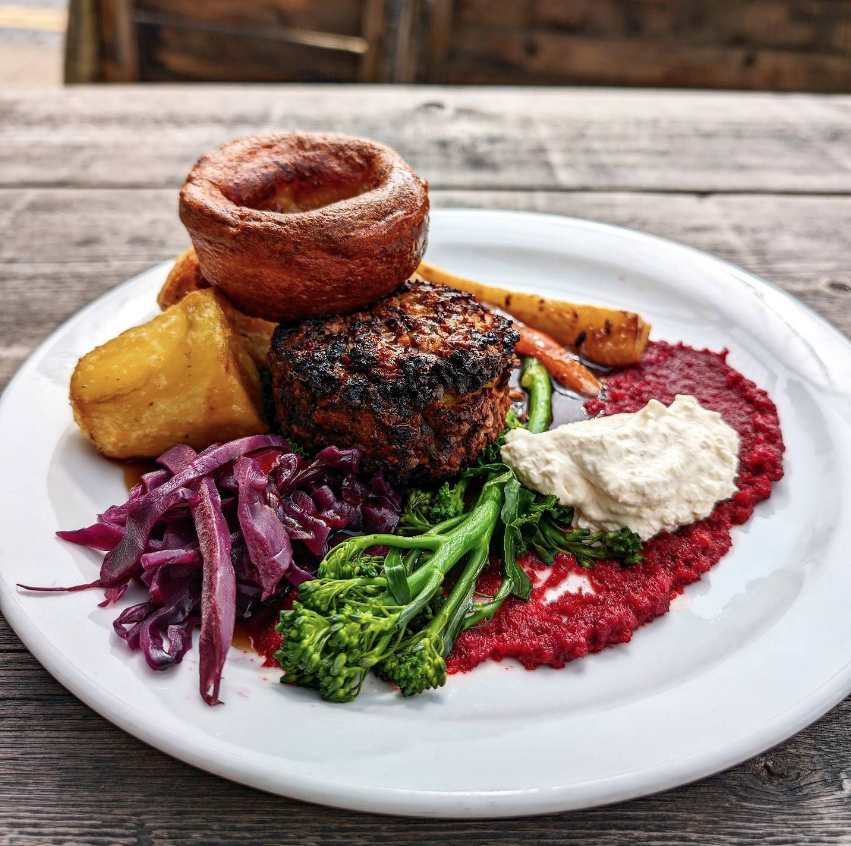
It’s easy to see why the Roundhill’s roast dinner is so acclaimed; there are spreads here to satisfy both the ‘missing meat’ crowd and those who simply love their vegetables. For the former, the seitain roast ‘beef’ comes with two thick slabs of wheat meat alongside an appealing swipe of coarse, vibrant beetroot puree, confit potatoes, Yorkies and a red wine gravy. There’s also the more predictable but no less delicious squash, sage and cashew nut roast, and an expertly conceived beetroot and mushroom wellington.

That’s your Sunday savouries covered, but what about dessert? You’ll be in capable hands with The Roundhill’s sweet stuff too, which are, again, 100% vegan and 0% afterthought. Go for the rhubarb crumble with immaculate soy custard if you know what’s good for you. Seeing as you’re vegan, you probably do…

Finally, on to the booze. The Roundhill has seven craft tabs with two that change weekly to celebrate local breweries and their most exciting vegan ranges. There are also some great sustainable wines here from the team at Sustainable Wine Solutions whose bottles are returned, cleaned and reused to create a zero waste network.

For those who enjoy their Sunday lunch with a side order of sea breeze, the Roundhill has a charming little outdoor space, ideal for alfresco afternoons that nourish both body and soul. It’s all very Brighton, and it’s all very delicious.

When: The all vegan Sunday roasts at The Roundhill run from midday until 7pm, and are priced between £15.50 and £16.50 for the main event and all the trimmings.

Website: theroundhill.co.uk

Address: 100 Ditchling Rd, Brighton, Brighton and Hove


The Cricketers

Ideal for an old school Sunday roast in the Lanes…

The Cricketers is a place every visitor to Brighton has likely passed on their way from the Lanes down to the beach, its terrace seating out front always heaving with revellers, but the promise of the ocean on the horizon sometimes meaning the pub, Brighton’s oldest, is passed by in favour of the pebbles.

On a Sunday, why not step inside instead, for a great Sunday roast with a side order of history – the pub dates back to 1547. With a diverse selection of Sunday roasts at some of the most affordable prices in town, this historic pub caters to all, including vegetarians, who can get stuck into a squash, walnut and mushroom wellington.

For the carnivores, the beef and lamb are sourced from farms on the South Downs, whilst the pork comes from Dingley Dell over in Suffolk. This commitment to quality is reflected in a gold-standard traditional Sunday lunch, which is given an extra dose of seasoning by the Cricketers’ old school interior, all red velvet seating, quirky ornaments, and a nostalgic smell of stale beer.

By Adam Bruderer

Whichever way you play it, make sure to add a side of their pork and apricot stuffing balls, which are a textural delight. Prepare to be wowed, too, by the crisp roasties and gravity-defying Yorkies, the latter of which sits atop its meaty throne like a crown. That’s a bit of a weird sentence, but we’re sticking with it.

When: The Sunday roasts at The Cricketers run from midday to 5pm, with the roast beef and trimmings (the most expensive of the single meat roasts here) clocking in at £18.95. You can also get a four meat roast option for £25.95.

Website: cricketersbrighton.co.uk

Address: 15 Black Lion St, Brighton and Hove, Brighton BN1 1ND


Petit Pois

Ideal for a Sunday roast a la Française…

Petit Pois is arguably the number one purveyor of traditional French fare in the city, and one of Brighton’s best restaurants, period. 

Whilst the weekdays are more broadly defined by snails and bouillabaisse, on Sundays the Petit Pois ‘Sunday roast a la Française’ comes into play alongside the usual menu, with a Gaelic take on a Great British tradition served up on this most narrow of Brighton streets. 

In all honesty, the only nod to the influence of our cousins across the Channel is the serving of red wine jus instead of thick (sometimes lump) gravy, and a few superfluous pea shoots scattered across the plate. 

Aside from that, the Sunday roast at Petit Pois errs on the more traditional side, with expert meat cookery and hearty, homely sides. Still, it’s refreshing to see the sometimes neglected cut of lamb breast making a welcome appearance. Here, it’s been rolled and braised for hours until tender and wobbly in all the right places, whilst still holding its shape in a pleasing puck. It’s gorgeous.

Alongside, duck fat roasties, honey roasted carrots, swede mash, mixed greens, a light-as-you-like Yorkshire pudding, and that glossy, viscous jus. Hmmm, we hate to admit it, but the French might just have this whole Sunday roast thing nailed.

Another thing Petit Pois has nailed is their desserts. Could there be anything better than sinking into an expertly made tarte tatin a Sunday evening, knowing that the only thing that follows is a good lie down? We certainly haven’t found it! 

When: The Sunday roast ‘a la Française’ at Petit Pois is from midday until it sells out, which is often by 4pm (regulars often call in advance and reserve theirs if they’re planning to dine in the evening). Prices hovering around the £20 mark for whichever meat takes your fancy. There is an option to have pork, lamb and beef all on one plate. 

Website: petitpoisbrighton.co.uk

Address: 70 Ship St, Brighton and Hove, Brighton BN1 1AE

Stick around in Brighton with us, and head this time for the city’s best Italian restaurants. Can we just say your appetite is impressive?

Is Fine Wine A Worthwhile Investment? 7 Beginner’s Tips

Hey you! Yes, you there, squinting into the screen and searching for meaning. Since you’re here, may we pay you a compliment? Ok, here goes; like a fine wine, you just seem to get better with age. But what if that compliment could, well, pay you?

In recent years, discussion of fine wine has moved from the mouths of sommeliers, claret connoisseurs and part time plonkers and into the vernacular of the serious investor, regardless of the latter’s grasp of bouquet, grape and noble rot.

Though you may be conservant in the terminology, the process of investing in fine wine can be complex. Whilst not everyone has a nose for quality wine, if you’re able to sniff out a good deal, then this could be for you.

The scarcity and quality of fine wine will appreciate as time passes, and so will its value. As such, it is possible to purchase wine bottles, store them, and then sell them for a higher price in the future. Of course, it’s not that simple, but if you’re wondering whether fine wine is a worthwhile investment, then here are 5 beginner’s tips.

Types Of Fine Wine Investment

Fine wine investment isn’t restricted to simply buying a few more expensive bottles, stashing them in the back of a cupboard and hoping for the best a few years down the line. In fact, that would be one of the more limiting approaches in this increasingly lucrative field.

There are several fine wine investment opportunities available, depending on your budget, level of commitment, and knowledge of both wine and, perhaps more importantly, investing. For example, investors can choose from wine-specific investment funds, stock exchanges, storage solutions for aging bottles, and more, all in the name of generating a pretty profit.

Beyond wine itself, the broader spirits investment market has also gained significant traction in recent years. Whisky, in particular, has emerged as a high-performing alternative asset, with rare bottles showing returns of up to 322% over the past decade.

Some investors are even exploring cask investment services, which allow them to purchase entire casks of maturing whisky directly from distilleries, offering the potential for substantial appreciation as the spirit ages. There are also plenty of options when it comes to buying and selling assets. The most popular for more small-time, hobbyist investors is the gradual building of an investment portfolio of fine wines which are most likely to accrue value over time and are, also, the least risky to store over the necessary, extended period of time without depreciating in quality and value.

If all of that sounds a little complicated and you’re purely in this thing for the money, then there is a simpler solution, too. A person can rely on a wine investment company for purchasing the wine and storing it on their behalf. This helps individuals invest in wine without having to deal with the headaches and hangovers related to constructing a wine cellar.

wine tasting

Storage Smarts

Storing fine wine correctly, in the hope of it appreciating value over time, is one of the key elements of successful fine wine investment. In some situations, a person does not even have to possess the bottle of wine purchased to gain its accrued value. Instead, they can have them stored in specialist facilities for as long as they need, for a price, of course. This ensures the wines remain safe and in pristine condition until a profit can be made. Alternatively, if someone is not interested in collecting and storing wine, they can consider making an investment in blue-chip wine stocks and funds, which is another viable market.

But on the more hobbyist side of things, investing in proper wine storage is absolutely essential to ensure the value of bottles appreciates rather than depreciates, and is integral to any fine wine investment actually being financially viable. Fortunately, we’ve got just the article to help you with that; check out these 5 IDEAL tips for storing your wine to guarantee longevity

Benefits Of Wine Investment

Making moves into the world of fine wine can be a profitable investment option, whether it’s a simple, singular transaction or a way of further diversifying a large, varied portfolio. 

When considering the benefits of investing in wine, it should be noted that fine wine has a low correlation with a stock market currently performing somewhat lethargically.

Reports show that the fine wine market has outperformed most exchange-traded funds and global equities in these increasingly volatile times. Indeed, the Liv-ex Fine Wine index, which tracks the daily price movement of the most heavily traded commodities in the fine wine market, consistenly shows wine seriously outperforming more traditional forms of investment, showing that luxury consumables are resistant to the broader volatile markets’’. Food, or rather, drink for thought, indeed.

It’s this sense of stability which should appeal to new investors, particularly when gold and real estate are currently so unpredictable. In fact, at the end of last year, the Telegraph reported that fine wine had surged 200% in the last decade, with its price particularly resistant to the market swings of a global pandemic and Brexit.

…& The Risks

So, why wouldn’t you invest? Well, as with any investment in a perishable product, there are some pretty big risks here. Perhaps the largest concerns the risk of fraud, which is rife in the upper echelons of the fine wine world. 

A particularly high profile case involving the relabelling of basic bottles with highly sought after vintages garnered widespread media attention in 2016; there’s even been a Netflix documentary, Sour Grapes (reviewed strongly on Rotten Tomatoes, the parallel names amusing us), about the protagonist Rudy Kurniawan, who amassed a fortune, selling $24.7 million worth of wine at a single auction in 2006. Though this is an extreme example, scams of a similar nature aren’t particularly rare in the fine wine investment game, and do represent a risk.

It should also be noted that short term gains are very rare. Anyone hoping to make profit from fine wine investment needs to be playing the long game. Since wine doesn’t actually produce any returns whilst it’s in storage (and storing and insuring your bottles will cost you), you’ll only see financial gains when you sell your bottle. As such, you need a fair amount of capital and patience to make this thing a success.

Understanding Investment Grade Wine

Several key criteria determine whether a wine qualifies as investment grade. First and foremost is aging potential; the wine must be capable of improving in the bottle for decades, not just years. Production volume matters too – wines must be scarce enough to be desirable but produced in sufficient quantities to create a liquid market for trading. Provenance is paramount; bottles must have impeccable storage history and documentation to command top prices. Finally, consistent critical acclaim and a proven track record of price appreciation are essential indicators that a wine will continue to perform well as an investment.

The Classics: French Dominance

This category is dominated by classic French wines, especially 1855 classification Bordeaux reds, Grand Cru Burgundy, and Rhône Valley wines. The 1855 Bordeaux classification, created for the Exposition Universelle de Paris, remains the gold standard of investment grade wine nearly 170 years later. This ranking system classified the region’s châteaux into five tiers, with First Growths (Premiers Crus) representing the pinnacle of collectability.

The ‘Big Five’ First Growths – Château Lafite Rothschild, Château Latour, Château Margaux, Château Haut-Brion, and Château Mouton Rothschild (elevated to First Growth status in 1973) – consistently command the highest prices and offer the most stable returns. Particular vintages, such as 2000, 2005, 2009, 2010, and 2015, are especially sought after by collectors and investors alike.

In Burgundy, the Grand Cru vineyards represent less than 2% of the region’s production, making them inherently scarce and valuable. Domaine de la Romanée-Conti (DRC) produces some of the world’s most expensive wines, with bottles regularly fetching five and six-figure sums at auction. Other notable Burgundy producers include Domaine Leroy, Domaine Armand Rousseau, and Domaine Leflaive.

The Rhône Valley’s contribution to investment grade wine centres largely on Hermitage and Côte-Rôtie, with producers like Domaine Jean-Louis Chave and Maison Guigal commanding serious premiums for their top bottlings.

Beyond France

Italy’s ‘Super Tuscan’ wines – so called because they initially defied traditional Italian wine laws by blending international grape varieties – have carved out their own investment niche. Sassicaia, Ornellaia, and Masseto regularly feature in investment portfolios, with certain vintages appreciating significantly over time.

California’s Napa Valley has produced genuine investment grade wines, particularly Cabernet Sauvignon from cult producers. Screaming Eagle, Harlan Estate, and Opus One have all demonstrated strong secondary market performance, though they remain somewhat more volatile than their European counterparts.

Emerging Markets

Whilst traditional European regions still dominate, savvy investors are keeping a close eye on emerging investment grade wines. Champagne, particularly prestige cuvées from houses like Dom Pérignon, Krug, and Cristal, has shown impressive appreciation in recent years. Spain’s Vega Sicilia Único and Pingus have also gained traction in investment circles.

Perhaps most intriguingly, certain producers from Australia (Penfolds Grange), Chile (Almaviva), and even England’s sparkling wines are beginning to demonstrate the consistency and secondary market liquidity that could see them classified as investment grade in the coming years. However, these remain speculative plays compared to the established French classics, and should constitute a smaller portion of any serious wine investment portfolio.

Building A Balanced Wine Portfolio

Much like traditional investment portfolios, a well-constructed wine collection requires thoughtful diversification to maximise returns whilst mitigating risk. The temptation for newcomers is often to chase the most prestigious names or the latest ‘hot’ vintage, but a strategic approach will serve you far better in the long run.

Investment advisors typically recommend that 60-70% of your wine portfolio should consist of ‘core holdings’ – established, blue-chip wines with proven track records. This means First Growth Bordeaux from strong vintages, top-tier Burgundy Grand Crus, and other classics that have demonstrated consistent appreciation over decades. The remaining 30-40% can be allocated to ‘growth wines’ – slightly more speculative investments like Second Growth Bordeaux, cult California Cabernets, or highly rated wines from emerging regions.

Avoid concentrating too heavily in any single region or vintage, regardless of how promising it seems. A balanced portfolio might allocate 40% to Bordeaux, 25% to Burgundy, 15% to Italian wines, 10% to Champagne, and 10% to other regions. Similarly, mix highly rated vintages with ‘good’ vintages from top producers, which often represent better value.

Where possible, invest in full cases rather than individual bottles – they command premiums at auction and are far easier to sell. However, keep some smaller lots for flexibility when you need to liquidate portions of your portfolio. Not all wines should have the same investment timeline either; stagger your holdings so some are suitable for selling within 5-7 years whilst others should be held for 15-20 years to realise their full potential.

Review your portfolio annually and rebalance as needed. Research suggests allocating around 5-10% of an overall investment portfolio to fine wine can improve stability and enhance long-term returns. The goal isn’t just to own impressive wines; it’s to build a collection that generates returns whilst managing risk effectively.

Timing Your Exit

Knowing when to sell your wine is just as crucial as knowing what to buy. The interval between when a wine is ready to drink and when it starts to go downhill is known as its drinking window, and savvy investors aim to sell when demand from collectors is at its highest but with sufficient time remaining to ensure the wine is still of optimum quality to drink.

Market conditions matter, too. Pay attention to significant anniversaries – milestone vintages often see price spikes as collectors seek out birth-year bottles or wines from historically important years. Similarly, critical re-ratings or the passing of a renowned winemaker can trigger sudden increases in demand and value.

Avoid selling during summer or winter months when possible, as adverse weather conditions increase the risk of damage during shipping, potentially affecting both the sale price and the wine’s condition upon arrival. The spring and autumn months typically offer more stable conditions for wine transport.

Finally, keep a close eye on your wine’s drinking window. Once a wine passes its peak, values can drop precipitously. Better to sell a year early than a year too late – in the wine investment game, timing truly is everything.

The Bottom Line

Once the preserve of wealthy elites, fine wine investment now represents a savvy, stable financial move in a market so volatile and unpredictable. Cheers to that!

Perhaps you’ll be starting your investment journey in the famous French wine region of Champagne? Check out our guide on taking a luxury holiday in the region here, and make sure you pack some Gaviscon!

8 Autumn Day Trip Ideas 2 Hours From London

If you’re living in the Big Smoke and keen for an escape, even if it’s just for a day, then rest assured that there’s huge variety just a short train ride or drive away. The beauty of living in London is having such diverse destinations within easy reach.

Fancy fresh oysters by the sea? A wander through ancient university cloisters? Perhaps a proper countryside ramble with deer and wild ponies? Each of these spots has its own distinct character, and all are perfectly accessible for a spontaneous day out or a carefully planned weekend escape.

From beachside breaks to strolls deep in the countryside, here are 8 autumn day trip ideas 2 hours from London.

Whitstable, Canterbury

Whitstable could be the quintessential British seaside town, full of quirky art, independent shopping opportunities, beach huts in pastel shades and most importantly, fish!

Yep, oysters, in particular, are big business here, and you’ll find the freshest, plumpest ones at The Whitstable Oyster Company, Wheeler’s Oyster Bar and The Forge, to name but a few great places. Or, head to the source; Whitstable Fish Market, on the East Quay, looks over trawlers bringing in the bacon (not real bacon) each and every day. It’s been closed for the past year due to a fire, but it’s slated to reopen in the first quarter of 2026 – we can’t wait. Wash it all down with a pint and some chips at The Old Neptune, which sits right on the pebbles. 

End your day with a hyper-seasonal, ridiculously reasonable Michelin-starred meal at The Sportsman, just an hour’s walk along the beach front away. This place is a favourite of chefs from across the globe and relies firmly on the land and sea surrounding the pub, and the bounty available here, from the Thames estuary, salt marshes and of course, the ocean, is of pristine quality and freshness. Most of the ingredients are actually visible from the pub itself; you can’t argue with that for quality.

How long will it take? About an hour and a quarter by train and just over two hours from Central London by car.

Oxford, Oxfordshire

The historic town of Oxford needs little in the way of introduction. From the famous dictionary to celebrated colleges made even more iconic by Harry Potter, Oxford is a household name around the globe. 

It’s a visually arresting city, with golden stone buildings, majestic spires, Gothic Revival museums and a fair few cobbled stone backstreets to stumble along. When on a trip to Oxford, don’t forget to visit Christ Church College, which Hogwarts was largely based on, and the Bodleian Library, one of the world’s oldest and most iconic libraries, housing over 12 million items and supplying the knowledge and inspiration which gave us the internet, the Hobbit and the unification of quantum theory and general relativity. 

A pint in one of the world’s most iconic pubs, the Turf Tavern, is a must, where everyone from Stephen Hawking to CS Lewis has imbibed. In fact, it’s here that in 1963 the future Australian PM set a World Record, downing a yard of ale in just 11 seconds. 

The city has an intriguing, diverse food scene, too. Check out our tips on 5 of the best restaurants close to the Bodleian Library (which is in the city’s centre) for more on that.

How long will it take? Just 45 minute on the train from Paddington and around an hour and 45 minutes drive from Central London.

New Forest, Hampshire

If you’re looking to pull on your wellies, perhaps even don some tweed and enjoy a seriously restoring country walk, then the New Forest National Park will see you right. There are seven train stations to aim for, but for unadulterated, untouched rural beauty, we’d recommend Brockenhurst, the largest village in the New Forest and also one of the most convenient from London. That, or you could rent one of London’s thousands of Zip cars – temporary car insurance for just a few hours or a day can be more economical than a full-year policy, making it perfect for spontaneous trips like this.

From Brockenhurst, you can stroll through gorgeous forests and over streams to Lyndhurst, and onto the Lyndhurst Parish Circular Walk, which is a total of ten miles and takes in views of deer, horses, ponies and more; so far removed from London you’ll forget the rat race for the day, of that we can gurantee. 

How long will it take? Around a two hour drive from Central London or an hour and a half’s train ride to Brockenhurst (one of seven train stations within the New Forest).

Stonehenge & Salisbury, Wiltshire

For a small city, Salisbury packs one hell of a punch culturally. There’s Salisbury Cathedral, which boasts the tallest church spire in the UK and the second tallest in Europe, and the gorgeous surrounding grounds, which author Bill Bryson called ‘the most beautiful space’ in England. What’s more, inside the cathedral you’ll find the best preserved copy (there are just four) of the groundbreaking document Magna Carta, which has sat in the cathedral’s Chapter House since 1215.

Perhaps the highlight here is Stone Henge, just 9 miles away – a fifteen minute drive or 20 minute bus ride from just outside the train station. Head there to ponder the mysteries surrounding the prehistoric monument in person, and follow it with lunch at the superb, Michelin starred gastropub the Red Lion Freehouse, which is just another 15 minute drive north of the world famous site.

How long will it take? Around two hours by car. Or, you can catch the train from Clapham Junction which will take an hour and fifteen minutes, and then take a short bus ride to Stonehenge from Salisbury station. 

Read: The best restaurants in Salisbury

Winchester, Hampshire

The cathedral city of Winchester can be reached in under an hour from London, and the centre retains a laid back, unspoilt charm just perfect for a spot of strolling and shopping. At the weekend, the narrow streets are alive with shoppers, markets and street performers, and if the crowds get too much, the world famous medieval cathedral is just off the high street. The longest Gothic cathedral in the world and one of the largest cathedrals, full stop, in Europe, it’s open daily from 10am from 4pm, and well worth a look. The sizeable grounds are also a peaceful place to catch your breath and soak up some autumn sun away from the high street’s ever present throng.

If you’re keen on further deep dives into the past, then Winchester’s Great Hall is just around the corner, the last surviving part of Winchester Castle and now a museum. Amazingly, King Arthur’s round table, where the King and his knights congregated, is reported to have been hosted here. You’ll find an imitation in the Great Hall to this day.

How long will it take? Under an hour on the train from Waterloo or around an hour and 45 minute drive from Central London.

Read: The best restaurants in Winchester

Hove, East Sussex

Because every Londoner is already conversant in Brighton day trips, right? Well, neighbouring Hove has something different to offer, away from the Pier, Teddy Pickers, Rock and the rest. Here, the vibe is more laid back, with some superb cafes, eateries, and a gorgeous seafront promenade and lawns.

Before heading to the pebble beach, pick up some fish’n’chips at Bankers on Western Road, one of the South’s most celebrated chippies. Or, if you’re looking for a proper sit down meal, cutlery, crockery and all, the Little Fish Market on Upper Market Street is one of the country’s best fish-only fine dining experiences. It’s tiny, so booking is highly recommended.

Hove has a fantastic, independent cafe culture, too. Look out for Small Batch Coffee, a local chain who do superb, house-roasted coffee with a few outposts dotted around Hove. For something a little stronger, Bison Beer on Church Road or The Urchin on Belfast Street are both craft beer connoisseurs with great food to match.

Visit late autumn and you’ll also see mesmerising murmurations of starlings. These birds visit from further north in the continent, seeking out the relative warmth we offer. Huge flocks gather along Brighton and Hove’s seafront to roost on the pier, and it’s a sight to behold. The best time to see catch them swirling in the skies is just before sunset.

How long will it take? Just over an hour on the train from Victoria or a two and drive from Central London.

Deal, Kent

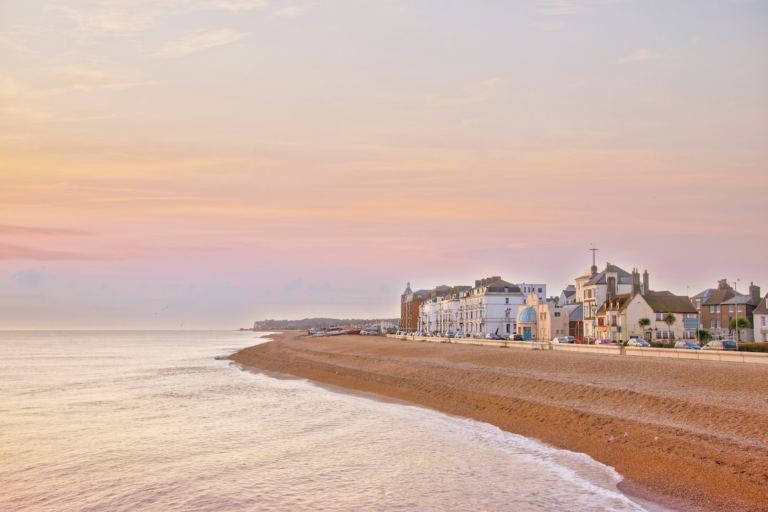
Hey, perhaps we’re biased (add an ‘I’ and you have our favourite word of all), but Deal is beginning to eclipse its more famous neighbour Margate as every Londoner’s favourite seaside escape. 

Here’s the deal with Deal; the pebble beach is pretty as a picture, there’s a brilliantly preserved castle (built by Henry VIII), a buzzing art scene and best of all, fresh seafood everywhere you look.

Should you be heading here at the weekend, then the Deal Saturday Market is great fun, with pop-up wine shops, local charcuterie and cheese and loads of vintage goodies to unearth. You’re blessed with some fancier options for dinner, too. To our mind, it has to be Frog & Scot; unfussy yet refined fare celebrating the region’s produce, just a short stroll from the station. Oh, and it’s run by a former chef of The Sportsman, from a couple of paragraphs earlier!

How long will it take? About an hour and a half by train from St Pancras or a two and a half hour drive from Central London.

Cambridge, Cambridgeshire

Oxford’s historic rival, Cambridge offers its own brand of architectural splendour and academic prestige, all wrapped up in a more intimate, navigable package. The city’s honey-coloured colleges line the River Cam, where punting remains a quintessentially Cambridge experience, particularly atmospheric during autumn when the trees along the Backs turn golden.

King’s College Chapel is the jewel in the crown here, with its fan-vaulted ceiling and stained glass windows creating one of England’s most breathtaking interiors. The college grounds are open to visitors, and wandering through the courtyards feels like stepping back several centuries. For a different perspective, climb the tower of Great St Mary’s Church for panoramic views across the city’s famous skyline of spires and turrets.

Cambridge’s food scene has evolved considerably in recent years. Midsummer House, a two Michelin-starred restaurant set in a Victorian villa overlooking the Cam, offers tasting menus that showcase British ingredients at their finest. For something more casual, the historic Eagle pub is where Watson and Crick announced their discovery of DNA’s structure, and it serves excellent gastropub fare alongside its famous history.

Don’t miss the Fitzwilliam Museum, one of Britain’s finest regional museums, housing everything from Egyptian antiquities to Impressionist paintings, all with free admission. The surrounding Botanic Garden is particularly stunning in autumn, with 40 acres of plantings showing off their seasonal colours.

How long will it take? Just under an hour by train from King’s Cross or around an hour and a half drive from Central London.

The Bottom Line

Whether you’re drawn to coastal charm, historical intrigue or peaceful countryside, these autumn escapes prove you don’t need to venture far from London to find something special. Each destination offers its own rewards, from Michelin-starred meals to medieval marvels, and with journey times under two hours, they’re all perfectly feasible for a spontaneous day out. Pack a jacket, check the train times, and rediscover just how much variety sits right on London’s doorstep.

Just What Is Reformer Pilates & Can I Do It At Home?

You’ve seen it all over Instagram. Celebrities swear by it. Your friend who’s suddenly got incredible posture won’t stop banging on about it. But what actually is reformer Pilates, and more importantly, can you do it without joining an eye-wateringly expensive studio?

If you’ve ever walked past a Pilates studio and glimpsed what looks like medieval torture devices through the window, you’ve seen a reformer. These peculiar contraptions seem to belong somewhere between a working gym and a Victorian sanatorium, yet they’re having a serious moment in the wellness world. The question is whether all the hype is justified, or if this is just another fitness trend that’ll be forgotten once the next thing comes along.

Let’s cut through the wellness jargon and get to the good stuff.

So What’s the Deal With Reformer Pilates?

Right, let’s properly explain this. A reformer is a piece of exercise equipment invented nearly a century ago by Joseph Pilates (yes, that’s actually his surname). Picture a wooden or metal frame about the size and shape of a single bed. Inside this frame sits a padded platform called a carriage that slides back and forth on wheels, a bit like a rowing machine but horizontal.

Here’s where it gets interesting: attached to one end are a set of springs – usually between two and five of them – that create resistance when you push or pull the carriage. There’s a footbar at the same end (which you can push against with your feet or hands), and at the other end, there are straps with handles that you can hold or put your feet into. Some reformers also have shoulder blocks to stop you sliding off, and a headrest for comfort.

The genius of the design is that unlike mat Pilates where you’re working against gravity and your own body weight, the reformer adds variable resistance that you can adjust to suit your fitness level. Want more of a challenge? Add more springs. Need to ease off? Remove a spring or two.

The beauty of it? You’re in total control. Those springs can make exercises easier or harder, depending on how you set them up. One minute you’re doing what feels like an elegant leg press, the next you’re trying not to look like Bambi on ice whilst balancing on one foot.

It’s low-impact, which means it’s kind to your joints, but don’t let that fool you. A proper reformer session will have your muscles shaking in ways you didn’t think possible. Your core, legs, arms, and back all get a thorough workout, and because you’re moving in multiple planes of motion, you’re building functional strength that actually translates to real life. You know, like being able to pick up heavy shopping bags without looking like you’re training for the Olympics.

Read: 8 cardio machines perfect for a whole body workout at home

reform pilates
Reform pilates

The Benefits That Actually Matter

Forget the wellness buzzwords for a second. Here’s what reformer Pilates genuinely does for you:

It sorts out your posture. If you spend your days hunched over a laptop (who doesn’t?), reformer work strengthens the muscles that keep you upright and counteracts all that slouching. Your back will thank you.

It builds strength without bulk. You’re working with resistance, but in a way that creates long, lean muscle tone rather than making you look like you’ve been hitting the weights hard. It’s about functional strength and control, not just size.

Flexibility comes as standard. Many exercises take you through a full range of motion, so you’re getting stronger and more flexible at the same time. It’s like getting two workouts in one, which sounds far too efficient for something this enjoyable.

Your balance improves. The instability of the moving carriage forces your stabilising muscles to work overtime. Before you know it, you’re standing on one leg without wobbling like a toddler.

Can You Really Do It At Home?

Here’s where it gets interesting. Yes, you absolutely can set up a reformer practice in your home gym, but let’s be realistic about what that involves.

First, the elephant in the room: reformers aren’t small. They’re about the size of a single bed, so you’ll need dedicated space. If you’re in a shoebox flat, this might be a dealbreaker. But if you’ve got a spare room, garage, or even just a corner of your bedroom that you’re willing to sacrifice, it’s entirely doable.

The investment isn’t small either. A decent home reformer starts at around £500 and can go up to several thousand for studio-quality equipment. But before you close this tab in horror, consider that a single studio class can cost £25-40. If you’re planning to practise regularly, that reformer pays for itself surprisingly quickly.

Once you’ve got the reformer itself sorted, the real game-changer comes from adding reformer Pilates accessories for personalised workouts. These additions transform your practice from basic to brilliant, letting you customise your sessions to target exactly what your body needs on any given day. Think of them as the supporting cast that makes your reformer the star of the show.

Kitting Out Your Home Practice

Once you’ve got your reformer sorted, it’s worth investing in a few key accessories that’ll take your practice from “I’m just mucking about” to “I actually know what I’m doing.”

A proper reformer mat isn’t just about comfort (though that’s lovely). It provides grip, hygiene, and just enough cushioning to keep you focused on your form rather than the hard surface beneath you. Trust us, your knees will appreciate it during kneeling exercises.

Roll-up poles are brilliant for adding an extra challenge to your balance work. They create instability that forces your core and smaller stabilising muscles to work harder. Think of them as the bit of chaos that makes your workout more effective.

A jumpboard is where things get properly fun. It converts your reformer into a low-impact cardio machine, letting you add jumping movements that get your heart rate up without the joint-jarring impact of actual jumping. It’s surprisingly addictive once you get the rhythm down.

Building A Routine That Actually Works

The mistake most people make when designing their home workouts is thinking they need to recreate an entire studio class every time. You don’t. Twenty minutes of focused, intentional movement beats an hour of going through the motions any day.

Start with the basics. Get comfortable with footwork, leg circles, and basic arm exercises. Master your breathing pattern (exhale on effort, always). Once these feel natural, start layering in more complex movements.

The secret to balancing strength and flexibility? Do them in the same session. Begin with resistance-based exercises when your muscles are fresh, then move into deeper stretches whilst everything’s warm. Your body responds better to flexibility work when it’s already engaged, and you’ll notice the difference in your range of motion.

Listen to your body, but also don’t coddle it. If something feels too easy, adjust the springs. If you’re wobbling all over the place, that’s actually good – it means you’re challenging your stability. The reformer is remarkably good at giving you instant feedback about where you need to focus.

Making It Sustainable

Here’s the thing nobody tells you about home workouts: the biggest challenge isn’t the exercise itself, it’s showing up consistently when Netflix is right there.

Set yourself up for success. Keep your reformer somewhere visible, not hidden away in a cupboard that requires a Tetris championship to access. Schedule your sessions like proper appointments. Lay out your kit the night before if you’re planning a morning workout.

And here’s a revolutionary idea: your sessions don’t all need to be intense. Sometimes a 15-minute stretch session focused purely on flexibility is exactly what you need. Other days, you’ll want to challenge yourself with jump work and heavy resistance. Both are valid. Both are valuable.

The beauty of having your reformer at home is that you can hop on for ten minutes between meetings if that’s all you’ve got. You can practise in your pyjamas at 6am or 11pm without judgement. You can repeat the same exercise 47 times until you finally nail it, without feeling like you’re holding up a class.

The Bottom Line

Reformer Pilates isn’t some mystical wellness trend that only works if you’re doing it in a pristine studio whilst wearing £90 leggings. It’s an effective, adaptable form of exercise that absolutely can be done at home if you’ve got the space and inclination.

Will it transform your body overnight? No, because nothing does (sorry). But practise consistently for a few months and you’ll notice genuine changes in your strength, flexibility, posture, and how your body moves through everyday life. You’ll develop that elusive core strength that makes everything else easier.

Is it for everyone? Probably not if you hate controlled, precise movement and prefer your workouts chaotic and sweaty. But if you want to build functional strength whilst improving your flexibility and body awareness, it’s genuinely brilliant.

The home setup requires investment – both financially and in terms of space – but it gives you the freedom to practise on your own terms, at your own pace, without the pressure of keeping up with anyone else.

And honestly? Once you’ve had that moment where you finally nail an exercise you’ve been struggling with for weeks, you’ll understand why people get so evangelical about it. Just try not to become that friend who won’t stop banging on about it.

8 Top HR Tools That Improve Workplace Productivity & Employee Happiness

HR is no longer just about hiring and payroll – it’s about nurturing culture, streamlining systems, and helping teams thrive. In today’s hybrid and high-pressure work environments, there are a host of platforms, apps and tools that play a pivotal role in ensuring employees stay productive and fulfilled.

In today’s hybrid and high-pressure work environments, HR solutions in Cambridge, Peterborough, or wherever you may work, play a pivotal role in ensuring employees stay productive and fulfilled. If your organisation is looking to invest in tools that support both performance and wellbeing, this guide covers some of the most effective HR platforms and how they help people – not just processes – flourish. 

Performance Management Platforms

Performance reviews don’t have to be dreaded. Modern HR software makes continuous performance tracking intuitive and transparent.

Tools like:

  • Lattice: Helps managers set goals and provide ongoing feedback.
  • 15Five: Focuses on weekly check-ins and employee sentiment.
  • Clear Review: A UK-based platform designed for real-time conversations.

These platforms remove the awkwardness of annual appraisals and replace it with a culture of ongoing professional development. Employees feel heard, and managers get clearer insights into who needs support – and who’s ready to level up. 

Employee Engagement Tools

Disengaged employees aren’t just unproductive – they’re often on their way out the door. Engagement tools help measure morale, increased output and build better connections.

Top platforms include:

  • Officevibe: Anonymous pulse surveys to understand how your team really feels.
  • Peakon: Tracks engagement trends and recommends management actions.
  • Culture Amp: Combines feedback, development and diversity insights.

Used regularly, these tools empower HR teams to address problems early and keep morale high – particularly during change or restructuring.

Wellbeing & Mental Health Apps

Wellbeing is no longer a ‘nice to have’. It’s a business essential. Companies using mental health support tools see improvements in focus, loyalty, and even reduced absenteeism.

Consider integrating:

  • Headspace for Work: Meditation and mindfulness for teams
  • Unmind: A UK-based platform with clinical backing
  • Spill: On-demand therapy via Slack, tailored for startups and SMEs

Encouraging staff to prioritise mental health – and giving them the tools to do so – shows that wellbeing is more than just a policy.

HRIS Systems That Do It All

Human Resources Information Systems (HRIS) combine multiple functions – from onboarding and benefits to time tracking and compliance.

Popular HRIS platforms in the UK include:

  • BambooHR: Known for user-friendly design and integrations.
  • CharlieHR: Built for small UK businesses, offering holiday tracking and policy storage.
  • HiBob: A newer player with a focus on culture and growth metrics.

Having everything in one place reduces admin and ensures consistency across the employee lifecycle.

Learning & Development Platforms

When employees feel they’re growing, they’re more likely to stay. L&D tools make learning accessible, fun and relevant.

Top platforms include:

  • Udemy for Business: A vast catalogue of online courses
  • Learnerbly: A UK-based learning marketplace tailored to employee preferences
  • LinkedIn Learning: Integrated with LinkedIn profiles and career paths

Providing access to learning signals that a company is invested in its people – not just their output.

Diversity, Equity & Inclusion (DEI) Tools

DEI shouldn’t be an afterthought. Specialist tools can help track representation, ensure inclusive hiring, and surface hidden biases.

Examples include:

  • Equally.ai: Accessibility and inclusion auditing
  • Included: Uses AI to remove bias from decision-making
  • Diversio: Analytics-based tool focused on measurable DEI outcomes

Recognition & Reward Systems

Acknowledging a job well done boosts morale and encourages high performance.

Consider platforms like:

  • Bonusly: Peer-to-peer recognition with points and rewards
  • ThanksBox: A UK-based system for public shout-outs and team culture
  • Perkbox: Offers rewards, discounts and wellbeing content

Regular recognition helps people feel valued, especially in remote or dispersed teams.

Automation & Workflow Tools

Streamlining repetitive tasks frees up HR teams to focus on strategic work.

Tools like:

  • Zapier: Connects apps to automate onboarding, surveys, and more
  • Workato: A more advanced integration platform for larger companies
  • Trello or Asana: Great for workflow tracking and HR project planning

Automation reduces manual error and gives your team breathing space to focus on people, not paperwork. 

Making HR Tech Work for Your Team

It’s not about having every tool on the market – it’s about choosing what fits your culture and goals, and helps strengthen overall HR strategy. Here’s how to make the right decisions:

  • Ask your team what support they want
  • Prioritise tools with UK compliance built in
  • Trial before you buy – most platforms offer demos or pilots

When your HR tools reflect your values, employees feel it. They work better, stay longer, and contribute more. 

The Bottom Line

Great HR solutions aren’t just about ticking boxes – they’re about building a workplace where people want to be. Whether it’s managing performance, encouraging wellbeing or recognising great work, the right tools can transform how your business functions.

*This article is intended for general information only and does not constitute legal or HR advice. For support tailored to your organisation, consult a qualified HR or legal professional.*

Make Your New House Feel Like A Home In 7 Simple Steps

Look up the difference in definition between ‘house’ and ‘home’ in the dictionary, and the divergence in description is telling. The former is defined, simply, as ‘a building for human habitation’. It’s functional and formal, and let’s face it, doesn’t sound particularly welcoming. But ‘home’ is described as ‘the place where one lives permanently, especially as the member of a family’. That sense of stability and love just leaps off the page, don’t you think? 

Have you recently moved into a new house that doesn’t yet feel like a home? That shift from functional to familial doesn’t happen without work, let’s make that clear. Though time and memories, of course, play a part, you need to take an active role in shaping the decor and ambience of your place before it becomes more than just walls, a door and a roof.

Whether it’s Birmingham, Bradford or Bristol conveyancing solicitors, the advice remains reassuringly resolute. With that in mind, here’s how to make your new house feel like a home in 7 simple steps.

Personalise Your Property

First things first, your new property is never truly going to feel like it’s your home until you add some personal touches. This means putting your own stamp on it and making it look and feel like a place that resembles your unique personality.

Start personalising your property by surrounding yourself with trinkets that you’ve collected on your travels. Hang paintings from your favourite artist. Throws, pillows and rugs always give a homey feeling as do shelves full of books, so carefully curate a bookcase with your favourite reads – the sooner the books are on the shelves, the quicker you can settle in with a good read and a glass of wine.

Recreate The Feel Of Your Childhood Home

Another way to personalise your property is to recreate the feel of your childhood home. No matter where you live in your adult life, your childhood home will always feel like your true home. There’s no place like it, after all.

This is the place where your first memories were formed, and if those memories are positive ones, then introduce some elements of your family home to evoke nostalgia and that warm sense of belonging in your new house. You can achieve this by displaying items that you remember from your childhood. This could be a teddy bear, old photographs, or even a dated piece of furniture which your parents have let you adopt.

Now, if someone could just bottle that smell of your childhood home, we might just make a fortune selling it back to you.

Aromatherapy

Speaking of which, every house has its own distinctive smell; some inviting, some not so. To evoke a welcoming, peaceful vibe in your new home, make sure you channel the energy of aromatherapy.

Smell should also play a big part in any home sanctuary setting. Amping up aromatherapy and optimising your olfactory sense can help you gain that inner calm. Chamomille and lavender scents are particularly evocative of a peaceful space, but it’s important you find an aroma which reflects your sense of individuality, whether that’s incense, the smell of freshly baked bread or even of freshly done laundry, which you can now buy in diffuser form.

Focus On The Heart Of The Home

There’s one narrative thread with runs through so many of the best homes; that the kitchen is the hub of the house and the heart of the home. This is where bread is baked and broken, where families draw their faces away from screens for a short while and actually make eye contact. Relationships are nurtured and souls are nourished in the kitchen, so it’s a good idea to focus your initial efforts here after moving in. 

The good news is that it’s also one of the easiest rooms to get right, simply by adding a few accessories which even a dictatorial (aren’t they all?) landlord couldn’t object to. This could be as basic as putting in a hanging rack for utensils, or having your spice collection on display, to using brightly colour crockery to add a new, confident colour scheme to the overall aesthetic of your home.

The sooner you get your kitchen sorted, the sooner you can have friends and family around and start creating the first memories in your new house.

Adopt A Pet

Ok, we know this seems like a big step, but adopting a pet can be a great thing to do if you’re struggling to settle into your new home. Though, of course, a pet isn’t just for Christmas, taking one into your house which needs shelter and love can imbue a real sense of family into your new gaff, helping you nurture a loving atmosphere within. 

Not only will this help mark a new era for you in your life, but it’ll also inject your home with a much-needed sense of warmth. That furry companion waiting at the door for you each day? That’s domestic, comforting and homely.

Increase The Flow Of Natural Light

As SAD sufferers will reliably attest, natural light can lift your mood immeasurably. It can increase the level of warm energy running through your home, give you a nice dose of vitamin D and a much-needed boost of serotonin. And we all need a legally permitted dose of that right now. 

You’ll never settle into your new home if your living space feels moody and dreary. In fact, natural light has consistently been found to lift the mood and improve a sense of wellbeing. If you want to start feeling comfortable in your new house, make sure you do your utmost to increase the natural light within it. You can achieve this by:

  • Investing in more mirrors and objects that reflect natural light
  • Opting to paint and decidorate your home in a lighter colour palette
  • Painting your window overhangs white
  • Installing larger windows and doors
  • Washing your windows on a regular basis
  • Adding skylights
  • Installing solar tubes
  • Using reflective backsplash tiles
  • Trimming the trees that stand outside your windows and door

After investing so much of your hard earned money into your property, you want to start feeling comfortable within it as soon as you possibly can. If you put the above advice into practice, your new house will start feeling home in no time.

Get It Clean From The Get Go

Even if end-of-tenancy cleaners were employed to clean the property before you’ve just moved into, there’s nothing quite like giving it a good scrub from top-to-bottom yourself to make it feel like your own. There’s something symbolic about washing away the residue of previous tenants with your own hands, allowing you to start fresh in your new space and create your own home.

*This article is for general guidance and inspiration only. For legal advice during the property purchase process, consult a qualified solicitor or conveyancer.*

Life After Divorce: How To Embrace (& Even Enjoy) This New Chapter Of Your Life

Divorce can hit you like a ton of bricks. It can bring up all sorts of emotions, from anger and sadness to confusion and uncertainty. Even if you were the one who instigated the divorce, it’s all too easy to get swept up in dealing with a divorce lawyer and making dramatic changes to arrangements in your life that were once familiar. Doing so can mean you don’t give yourself the time to process this major change properly.

Being a spouse can feel like an integral part of your identity, as one half of a team that made decisions together, enjoyed the good times and perhaps even raised children together. And when you suddenly find yourself on your own, you may question who you are outside of your marriage and not know how to navigate this new territory.

While solicitors in Stafford, Stoke-on-Trent, or wherever you may live, often support people through some of life’s hardest transitions, the legal side of separation is only part of the picture. For many, the emotional toll is just as heavy, if not heavier. That said, divorce offers an opportunity to reconnect with yourself, and while it won’t all be rainbows and unicorns, it can still be an exciting, enjoyable and incredibly liberating experience.

With that in mind and with eyes firmly looking on the bright side, here’s how to embrace (and maybe even enjoy) life after divorce.

You Don’t Need To Reinvent Yourself

Most of us know someone who went through a breakup and completely transformed themselves. They might have channelled their loss into getting fit at the gym or completely changed their hairstyle.

Why do we do this? When a relationship ends, it’s easy to feel a total lack of control, so changing your appearance is a way to claim authority over what’s happened. It might also be a way to express your newfound freedom or disassociate yourself from the person you were when you were in the relationship.

But you don’t need to get out the hair dye or buy a gym membership to reinvent yourself after divorce. Instead, spend some time getting to know you. Marriage is all about compromise, but a divorce gives you the freedom to do what you want. That hobby you took part in because your spouse loved it, even though you secretly hated it? You don’t need to do that anymore!

Think about what you enjoy, and embrace it with vigour. Create a perfect date night for yourself. Go out and see a movie on your own. Take yourself to that new restaurant you wanted to go to but couldn’t because your spouse didn’t like seafood. Or simply stay in and binge the TV series that’s caught your eye while enjoying your favourite takeaway. These are days for a little indulgence. And when combined with that gym membership…well, you know what they say about variety being the spice of life?

Wreck Your Wedding Dress (Yes, Really!)

Dress wrecking is an empowering act that began as a post-wedding photography trend, where newlyweds would pose for photos while splattering their wedding attire in paint. But now, divorcees are destroying their wedding dresses to celebrate the start of a new journey, too. 

Much like screaming or destruction therapy, wedding dress wrecking can be cathartic. Last year, Anna O’Neill, a mum from Kent, enlisted her friends to help ruin her £1,200 designer wedding dress. How? By filling 12 water guns with paint and coloured flares!

About her decision to host a paint fight, she said: “I wanted to do it for other parents going through divorce, which can be tough, and who are holding the fort together.’

‘The most important message is that things get better, and we can turn it around.”

Many women who choose to turn heartbreak into something beautiful find it a therapeutic and liberating experience. Whether you decide to get out the paint, grab a pair of scissors or set your dress on fire, wrecking your wedding attire can be a powerful way to embrace your new future.

Just remember to dispose of the debris responsibly at the end of the process. Or, frame it!

Read: How to deal with a divorce or break-up without losing your head

Make New Friends

After divorce, you may feel like the odd one out amongst your happily married friends. If you were married for a long time, a lot of your friends might also be friends of your spouse, which can be an awkward proposition at social gatherings. 

Making new friends who are yours and yours alone will help you move on instead of being reminded of the past. Going to a class or trying out a new hobby is a great way to meet new people, whether you want to try your hand at yoga, go on a cooking course or express yourself at an art or craft club. And even if you don’t click with anyone, you’ll have learned a new skill or discovered a new favourite pastime!

Know That It Won’t Be Forever

Being told “as one door closes, another opens” doesn’t provide much comfort on a lonely night. You might even feel that things will never be the same again. The truth is, things will be different, at least for a while, but that isn’t necessarily a bad thing. 

Being on your own can be scary at first, but time does heal, and it won’t be long before you find yourself enjoying your new freedom once again. You might find love again (even if dating is the furthest thing from your mind right now), or you might come to genuinely love being single and find yourself fiercely protective of your independence.

Going through a divorce and coming out the other side is the hardest step. You’ll still have days where painful memories resurface, and that’s okay — allow yourself to feel. It may be a cliche, but that doesn’t make it any less true: with each day, things will get a little bit better.

*This article offers general wellbeing guidance and does not constitute legal advice. For matters relating to divorce and legal rights, consult a qualified solicitor.*

5 Delicious Things To Do With Your Leftover Onions & Shallots

Wondering what to do with a glut of onions or shallots? You’d only need to have a passable interest in cooking to have experienced a vegetable drawer so stocked, stacked and burgeoning with alliums that decisive action is required. Fortunately, both onions and shallots lend themselves incredibly well to preserving, in doing so saving them from the compost heap and turning them into a superb and versatile condiment. Here’s our favourites; our 5 delicious things to do with leftover onions and shallots.

Pickled

Pickling is a diverse tool to have in your cooking arsenal, whether you’re quick pickling, going for a longer pickle, brining or sousing. Then, there’s all the flavours you can add to the pickle, usually in the form of dried spices and their seeds, but also determined by your choice of vinegar, and the addition of fresh herbs and supplementary vegetables. It’s that diversity which makes this such a great preserving method, and onions and shallots are some of the greatest beneficiaries of the age-old technique.

Perennially popular, particularly on home turf in Britain, is to pickle onions whole; peeled, pickling (sometimes called pearl or baby) onions or round shallots are salted overnight in a colander, ensuring crunch in the final product. A mix of malt vinegar and sugar (or honey) at a ratio of 3:1, with added coriander and mustard seeds, is then warmed until thoroughly dissolved, and poured over the onions, which have been packed in a sterilised jar. The finished pickled onions are ready in around a month. Once they’ve been opened, keep them in the fridge. These are absolutely delicious with cheese, particularly as part of a Ploughman’s lunch, or with fish and chips.

Alternatively, you can quick pickle sliced onions or shallots in a Vietnamese style. Here, you should simply combined vinegar and sugar in a bowl (the ratio is up to your personal preference of sharp against sweet) and then add your sliced onions and perhaps some thinly sliced chilli. Mix thoroughly and let sit for around 15 minutes. These are enjoyed straight away; perfect in a chicken salad or as part of the intricate flavour and texture building of a fine banh mi sandwich.

Lacto-Fermented

Lacto fermenting is a complex and diverse term, but here we’re talking about preserving onions in a salt brine solution, in an anaerobic environment, in order to add crispness to their texture, a delicate, delicious sour flavour, and to unleash the onion’s probiotic potential in the process. 

This method is particularly rewarding if you’ve been growing your own onion plants and find yourself with more than you can use fresh, as they last for several months when properly fermented and stored in the fridge. Simply pack sliced onions or shallots into a sterilised Kilner jar, add water to cover and then weigh the jar. Calculate 2% of that weight, and convert that amount into salt. Say your Kilner jar, water and onions weighed 1000g, then that’s 20g of salt.

Mix everything together in a scrupulously clean bowl, then add back to the Kilner jar. Fill a ziplock bag with water, making sure there’s no air inside, and use it to weigh down the brine and onion mix, to keep the vegetables submerged, and close the lid. With the hard work done, you simply leave the fermentation to occur, opening the lid each day and removing the weight to ‘burp’ the mixture. After roughly a week, you’ll have a complex and versatile condiment which is superb on burgers or in hot dogs, as well as added to salads. 

Deep Fried & Crispy

Crispy shallots are a hugely popular addition to a vast array of curries, salads and dips in South East Asia, though they’re so moreish we could well eat them on their own as a snack, or even a meal. Ok, maybe not a meal, that would be weird. 

Anyway, slice your shallots against the grain thinly, though not quite gossamer style, and dry them thoroughly on paper towel. Starting in cold oil, add your shallots and bring the pan up to medium heat. Stir regularly in a clockwise motion (perhaps it’s an old wive’s tale, or maybe it does indeed elimate the pockets of colder and hotter oil, but it works for us) noticing the delicate change in colour. 

Once the shallots are golden, but a shade down from what you’re hoping the finished product to look like, remove them from the oil with a slotted spoon onto more kitchen towel. Be warned that this is a delicate business and the residual heat will take the shallots through to the perfect colour once they’re out of the oil; take your eye off the ball and in a blink, they’ll be overdone and bitter. Store the crispy shallots in an airtight container in a cool, dark place, preferably with a silica gel bag added to soak up any excess moisture, for up to five days.

These are amazing as a garnish for Thai coconut based curries, as a topping for traditional Danish hotdogs or baked potato, and added to various Vietnamese soups, salads and dumplings. 

Chutney 

No cheese board would be complete without it, right? Needing little in the way of introduction, an onion chutney is indispensable alongside goat’s cheese particularly, as well as with cold cuts of meat or even on a pizza. 

Simply slice or dice (depending on the texture you’re looking for) a good couple of kilos of red onions thinly and fry gently, with a bayleaf added, for at least half an hour, but preferably even longer, until sticky and caramelised but not burnt.

Add 500 grams of muscovado sugar, and 250ml of balsamic and 500ml of red wine vinegar, as well as a generous pinch of salt, and simmer on a low heat, letting it bubble gently for an hour or so, until thickened and jammy. If in doubt, run a spoon through the middle of the pan; a good few seconds should pass before the mixture meets again.

Once you’re satisfied with the consistency, spoon into sterilised jars and allow to cool. This guy will keep in the fridge pretty much indefinitely.

Onion Soup

Use up a glut of white onions in style by making a big batch of this French bistro classic, and keeping what you resist eating the first time round in the freezer. Whilst we’d love to sit around talking about onions, we’ll let the don Raymond Blanc play us out on this one. Check out his recipe for a classic French onion soup over here. And with that, happy cooking!

Next up, we’re tackling our glut of chillies. Fermented hot sauce, anyone?

2025’s Top Wedding Suit Trends: A Groom’s Guide To Getting It Right

This year has brought an exciting evolution in wedding fashion, with men’s trends bringing about bold, innovative tailoring and fresh colours that allow grooms to express their individuality like never before. From earthy tones that celebrate nature to luxurious textures that demand attention, 2025’s wedding suit trends offer something for every style-conscious groom ready to make his mark on the aisle.

The Rise Of Earth Tones & Nature-Inspired Hues

This year is definitively the year of earthy tones and pastels. Bright shades like sage green, and richer ones like chocolate brown, are taking centre stage. These nature-inspired hues work beautifully for outdoor celebrations, creating a harmonious connection with natural settings whilst maintaining sophisticated appeal.

Green suits are perfect for rustic, outdoor weddings. This versatile shade is ideal for country barn weddings, matching seamlessly with nature’s landscape. Deep emerald and burgundy are particularly striking choices for autumn ceremonies, offering richness and depth that photographs beautifully against changing foliage.

For spring and summer celebrations, soft, gentle pastels with pops of bright colours synonymous with warmer months have gained significant traction. These lighter tones bring a fresh, contemporary feel to traditional wedding attire whilst remaining elegant enough for formal venues.


The Timeless Appeal Of Black Tie

Whilst bold colours and relaxed styles dominate many trends, the classic black tuxedo remains an undisputed champion of wedding elegance. Tuxedos never go out of fashion, so it’s no surprise they remain a go-to choice for grooms and groomsmen this year.

There’s been a surge in popularity in black tie weddings, and there’s no escaping the timeless appeal of a monochrome wedding party, perhaps enhanced with pops of vivid colours and accessories.


Double-Breasted: The Vintage Revival

Double-breasted suits have made a major comeback, appearing everywhere from the runways to weddings this year. Modern versions of this style feature slimmer cuts that flatter all body types, making it a versatile option for contemporary grooms.

The double-breasted silhouette works particularly well for grooms seeking a distinguished, authoritative presence. It’s an excellent choice for formal church ceremonies or grand ballroom receptions where traditional elegance is paramount. After years of slimmer, single-breasted cuts dominating wedding attire, the double-breasted jacket has made a triumphant return.


Texture Takes Centre Stage

Velvet and mohair are amongst the fabrics making waves this year. Grooms are experimenting with rich textures like velvet, tweed, and jacquard to add depth to their look. Velvet suits, in particular, are perfect for winter weddings, offering luxurious appeal in deep jewel tones like midnight blue or emerald green.

For those planning cooler weather ceremonies, tweed brings a sophisticated country elegance that pairs beautifully with traditional venues. Meanwhile, jacquard fabrics offer intricate patterns woven directly into the material, creating visual interest without overwhelming boldness.

This year, texture has taken centre stage, adding depth and dimension to the groom’s attire. Velvet and tweed have made a stylish return for fall and winter weddings, offering a luxurious and cosy feel.


The Sustainable Groom

Eco-friendly suits are no longer a niche choice; they’ve become incredibly desirable. Wedding suits made of sustainably-sourced wool, cotton, and even bamboo fabrics are hugely popular this year and this trend continues to grow.

Eco-friendly suits feature modern, high-quality designs and craftsmanship that rivals traditional bespoke tailoring. Designers are using organic cotton, recycled materials, and innovative fabrics derived from renewable sources, proving that conscious choices can be incredibly stylish.


Statement Accessories & Personal Touches

Accessories have become the primary way for grooms to inject personality into their wedding look without compromising overall elegance. There’s been a notable shift toward statement accessories, particularly jewellery, this year, but unique bow ties, exaggerated sizing, and vintage timepieces are all also leading the charge.

Popular choices include swapping the traditional boutonnière for a bold brooch that reflects personal heritage or style. Vintage pocket watches add a nostalgic twist perfect for timeless elegance, whilst colourful or patterned socks provide a pop of personality. Custom cufflinks featuring initials, wedding dates, or sentimental symbols are particularly popular, offering a subtle way to commemorate the special day whilst adding refined detail.

Photo by Alvin Mahmudov on Unsplash

The Three-Piece Renaissance

Three-piece wedding suits continue to captivate grooms who favour a more traditional look. These suits offer a level of versatility and formality that’s hard to match, allowing the wearer to transition smoothly from the ceremony to the reception by simply shedding a layer or two.

The waistcoat adds structured sophistication whilst providing practical versatility throughout the day. There is an unspoken rule that you should only wear a waistcoat if the month has an ‘r’ in it. However, if you’ve got your heart set on a waistcoat for a summer celebration, lighter fabrics will ensure comfort without sacrificing the polished three-piece aesthetic.


Relaxed Elegance For Modern Ceremonies

Grooms have increasingly embraced a more relaxed approach to formalwear this year, especially for outdoor or destination weddings. Unstructured blazers, softer fabrics, and more casual cuts that maintain sophistication without the stiffness of traditional wedding suits have become increasingly popular.

For destination and outdoor weddings, linen and lightweight wool suits are in high demand. Unstructured blazers paired with tailored trousers offer a stylish yet comfortable look, perfect for a laid-back celebration.


Monochrome Mastery

Whether driven by the rise in popularity of minimalism or contemporary aesthetic preferences, monochrome-clad grooms are having a moment. This trend offers sophisticated simplicity, allowing grooms to create striking visual impact through tonal variations rather than contrasting colours.

Monochrome looks offer a clean, uncluttered, and understated kind of elegance, appealing to those who prefer simplicity and refinement.


Large Lapels & Statement Details

Modern grooms are embracing bold design elements to elevate traditional looks. From bold contrasting colours to intr

icate embroidery and unconventional shapes, statement lapels are redefining the modern groom’s look. These details ensure grooms stand out whilst maintaining refined sophistication.


The Year Of Individual Expression

Wedding suits aren’t just clothing — they’re part of the celebration. And whether you choose a breezy two-piece for a summer garden ceremony or a sleek black tuxedo for a glamorousevening affair, what matters most is that it feels like you.

The trends that have emerged this year reflect this balance perfectly, offering grooms the opportunity to express individuality whilst respecting wedding tradition. This shift represents a fundamental change in how grooms approach their wedding day attire.

Today’s groom understands that his wedding day is an opportunity to showcase not just love for his partner, but his own sense of style and sophistication. With these trends as inspiration, this year has become one where grooms step confidently into the spotlight, looking every bit as spectacular as the love they’re celebrating.

9 Great Ways To Boost Kerb Appeal & Add Value To Your Property

They say you should never judge a book by its cover, but when making judgements on the quality of a house, that facade you see from the kerb really does matter. 

In fact, a survey of over 2,000 UK adults by the HomeOwners Alliance, conducted by YouGov, revealed that 68% of homebuyers consider kerb appeal to be important when purchasing a property. The research found that the most significant features were well-maintained windows and a roof in good condition, followed by a well-maintained front garden, pathways and fences.

Indeed, how your home looks from the outside can create a great first impression or, equally, turn homebuyers off. With that in mind, here are 9 excellent ways to attract viewers and add value by boosting your property’s kerb appeal.

Revamp Your Front Door

Your front door is the entrance to your home and what homebuyers will see when arriving for a viewing. How your front door looks can say a lot about your property as a whole. 

This means it may be time to revamp it. You want viewers to feel welcomed from the beginning, and improving your front door is essential in creating a good first impression.

If you don’t have the money to replace your front door, a fresh coating of paint can work just as well. According to Country Life, blue and green are the best front door colours for selling a house; just make sure any colour you do choose complements the overall aesthetic of your home’s facade. 

Go further and get rid of any dirty spots or rust, which is easily done with metal polish and a little elbow grease. You want your front door to add character to your home, so make sure you think about this before viewings commence. 

Go even further, and consider a wall-mounted mailbox, which can offer a sleek, modern touch or a classic, traditional look depending on the style you choose. A stylish wall-mount mailbox not only serves a practical purpose but also acts as an accessory to your home’s exterior. Select a mailbox that matches the finish of your door hardware or lighting fixtures to create a cohesive look. Because that sense of cohesion is what it’s all about, don’t you think?

Read: 5 different types of door for your home explained

Photo by Jocelyn Erskine-Kellie from Pexels

Transform Your Front Garden

When it comes to boosting your home’s kerb appeal in a way that attracts viewers and adds value, you shouldn’t neglect your garden in the process. As you show prospective home buyers around your outdoor space, they’ll want to envisage themselves making the most of it, and a chaotic garden full of debris will likely present an obstacle, both tangible and metaphorically, to viewers picturing themselves living in your property. 

There are lots of things you can do to your garden to make it more visually appealing, such as maintaining trees and shrubs, adding decking, or even installing a patio.

Many homeowners install verandas in their gardens, too, in order to add aesthetic appeal. These structures can protect you from the sun, extend your outdoor living space, and make your garden look more pleasing to the eye. 

Add a Glass Roof Pergola

A glass roof pergola can be a game-changer when it comes to elevating your property’s kerb appeal and overall value. Unlike traditional pergolas with slatted roofs, glass-roofed versions offer a sleek, contemporary aesthetic that catches the eye immediately. They create a sophisticated focal point in your garden whilst providing practical shelter from the elements.

The beauty of a glass roof pergola lies in its ability to blend indoor comfort with outdoor living. Natural light floods through the transparent canopy, creating a bright, airy space that potential buyers can easily imagine themselves enjoying year-round. Whether used as an outdoor dining area, a relaxation spot, or simply as an architectural feature, a well-positioned glass roof pergola demonstrates that your property offers more than just four walls—it provides a lifestyle.

When selecting a glass roof pergola, consider how it complements your home’s existing architecture. Modern properties benefit from clean lines and frameless glass options, whilst more traditional homes might suit pergolas with decorative support posts. The investment not only adds visual appeal but also extends your usable outdoor space, which is increasingly valuable to today’s homebuyers.

Install New Windows

There is a whole host of reasons why you should consider installing new windows before viewings get started. This project will not only increase your kerb appeal, but it can also reduce noise from the outside, lower utility costs, and contribute to your home being more energy-efficient. If your windows are looking a little dated, homebuyers will take note of this, make no mistake.

Many homebuyers like to move into a property that’s close to perfect, meaning they don’t have to tackle major projects. Therefore, if your windows are old and don’t align with how the rest of your home looks, installing new ones could well benefit your property in terms of added value and ease of sale. 

Photo by Claire Sauvin on Unsplash

Tidy Up Your Drive

One of the quickest and most straightforward ways to boost your home’s kerb appeal is by making sure your driveway is clean and pristine. A simple power wash can work magic on the route to your front door by getting rid of stains and dirt. If there are any pesky weeds growing, make sure you remove them before homebuyers rock up. 

Creating easy access from the street to the entrance of your home is particularly crucial. Cracked paving stones not only look unsightly; they’re a health hazard too, so ensure they’re replaced. There’s no quicker way to torpedo a house sale than by a prospective buyer tripping up and injuring themselves in your drive. Just sayin’.

Read: How to jazz up your driveway to make the best first impression

Maintain Your Front Garden

As well as getting your driveway in good order, you need to maintain your front garden, too. When buyers pull up, a well-maintained exterior can fill them with excitement and anticipation about what’s behind the front door. However, if your front garden is overgrown, this won’t create that same impression. 

Firstly, trim back shrubbery and weed diligently, mulch flower beds, prune, and make sure the whole area is ready for some finessing. Then, you can set about introducing hanging baskets, window boxes, and planting new flower beds.

PVC window boxes are a great option here. Not only do they look fantastic, but they’re also easy to maintain and can last for years with minimal care. They add instant charm and character to any home, no matter what the style.

If you have a lawn, make sure you’re watering it deeply but infrequently to guarantee a verdant green, preferably early morning or late evening to reduce the opportunity for evaporation. Mow regularly but not so obsessively that your lawn looks like it’s balding. Once a year, make the effort to dethatch your lawn, using a specialist rake. Experts suggest early Spring as the best time to do so, aerating the grass and leaving it a clean run at growing healthily. 

Invest In A Quality Carport

Whilst many homeowners focus on gardens and front doors, the area where you park your vehicle deserves equal attention. A well-designed carport can significantly boost your property’s kerb appeal whilst adding genuine practical value. Unlike enclosed garages, which can appear bulky and dominating, carports maintain an open, welcoming aesthetic whilst still protecting vehicles from harsh weather.

A carport demonstrates to potential buyers that you’ve thought about the practicalities of modern living. It shows your property can accommodate vehicles safely without compromising on style. If you’re looking for quality options that blend functionality with design, a carport from Tuinmaximaal offers solutions that cater to various architectural styles, from sleek contemporary designs to more traditional structures.

When installing a carport, positioning is key. It should integrate naturally with your driveway and not obstruct views of your home’s facade. Choose materials and colours that complement your property: matching the carport’s finish to your window frames or roofing can create a cohesive, well-planned appearance. A thoughtfully installed carport signals to buyers that your property has been carefully maintained and improved, potentially adding thousands to your home’s value.

Hide Your Bins

Something as simple as keeping your bins out of sight can do wonders for creating a good first impression. No one wants to arrive for a property viewing to find bins overflowing with rubbish. Not only does it not look appealing, but there may also be all kinds of foul odours that won’t set the right tone.

If you can, it’s wise to place your bins at the side of your home. If you don’t have any space to do this, buying a bin shed is a wise move. Other ideas you can look into to hide your bins include using slatted style fence panels. If you cannot hide your bins before a viewing, just ensure that they’re not full to the brim with rubbish.

Check Your Gutters

Checking your gutters for any wear and tear is essential before opening your home up to viewers. Over time your gutters can get filled with leaves and debris, resulting in water retention, which in turn can lead to structural damage. You don’t want something as basic as clogged gutters to be the reason homebuyers look elsewhere, so now may be the time to clear them

The Bottom Line

When homebuyers arrive at your property, you’ll want to greet them and see smiling faces, rather than trepidation. How your home looks on the outside can say a lot about what’s behind the front door, and this means you need to pay close attention to your home’s kerb appeal. Transforming your outdoor space can boost value, impress buyers, and get your property off the market quicker. 

Superfood Sources Of Antioxidants: 7 Of The Best Foods To Eat

Free radicals; you’ve probably heard them mentioned by health food experts and nutritionists, but perhaps never sought further explanation. Or, maybe you’re like us, and assumed they were a cool band you ought to investigate…

In actuality, free radicals are molecules that are produced in the body, and are used for cellular processes like digestion. However, when we’re exposed to pollution, and when we drink, smoke and eat unhealthy foods excessively, our body produces too many of these free radicals. This excessive production of free radicals has been linked to a harmful process called oxidative stress, and to premature ageing and a host of diseases, in turn. 

So far, so gloomy. The good news is that this oxidative stress is best counteracted (as is always the case) by a healthy, wholesome diet, rich in antioxidants that are believed to prevent some of the damage caused by free radicals by neutralising them

So, what superfood sources of antioxidants should you be eating as part of a balanced diet? Let’s find out.

Blueberries 

Considered the king of all antioxidant fruit and vegetables, several studies have found that blueberries boast the highest amount of antioxidants of all the fresh ingredients out there. Particularly rich in anthocyanins, blueberries have been shown to lower LDL cholesterol levels and blood pressure.

Whether you’re sprinkling a handful over your morning cereal or enjoying a small bowl as an afternoon snack, blueberries make for one of the most healthy dietary additions around. One of the easiest and most delicious ways to incorporate blueberries into your daily routine is through smoothies. Their naturally sweet flavour pairs beautifully with banana, spinach, or Greek yoghurt, while their antioxidant power remains fully intact when blended.

Photo by Eva Elijas from Pexels

Dark Chocolate

Rejoice! Celebrate! Party! Crack out a bar of the 70% stuff and indulge a little. That’s right; dark chocolate also contains important antioxidants, including polyphenols, catechins and flavanols, the latter of which also contains anti-inflammatory properties. As if we needed an excuse…

Of course, owing to its high sugar and fat content, dark chocolate should be enjoyed in moderation. The maximum recommended daily allowance for adults with no health problems is between 30 and 50 grams a day, which is roughly equivalent to 5 squares of the good stuff. Again, everything in moderation seems a sensible approach here.

Read: Why does chocolate make you happy? 4 IDEAL reasons to indulge

Cranberries

A study into the antioxidant properties of 20 common fruits found that cranberries contain the highest levels of phenols, a key antioxidant. But that’s not all; cranberries also boast anthocyanins, another important antioxidant. Because of this, research has looked into the possibility that cranberries may help protect against liver disease by potentially detoxing the liver, as well as improving eyesight and cardiovascular health, and lowering blood pressure.  

Cranberries are fantastic for keeping your urinary tract healthy, too. Cranberry juice is great for preventing bladder infections, as it acts as a natural antibiotic and anti-inflammatory agent. 

Photo by olia danilevich from Pexels

Green Tea

Green tea has been used for centuries, not only as a refreshing drink, but also as a detoxifying force. Green tea contains a type of catechin, EGCG, which acts as an antioxidant and reduces the formation of free radicals in the body. EGCG is a powerful compound, and its presence is what gives green tea its medicinal properties

Of course, it’s not just the properties of green tea that are so good for you. Though it isn’t an antioxidant, water is one of the body’s only scientifically proven tools that genuinely help with ‘detoxification’. Water does this by removing waste products from the body through urination, breathing and sweating. Do remember to drink at least 6 cups a day. 

Beans

Beans, beans, the musical fruit, the more you eat the more you, erm, mute. Free radicals, that is…

That didn’t quite work as a rhyme or a joke, but what does work in terms of giving your body the best chance to counter free radicals is the consumption of beans. Pinto, red, black, cannellini, haricot, kidney, broad, green…beans are some of the vegetable world’s best sources of antioxidants. Enough to tolerate a little extra wind for, don’t you think?

Read: 5 IDEAL recipes if you’re in the mood for butterbeans

Artichokes

Another wind inducing vegetable that’s also considered a superfood because of its antioxidant properties is the humble artichoke. This delicious cruciferous vegetable is particularly high in the antioxidant chlorogenic acid, which has been linked to a reduced risk of developing type 2 diabetes. Interestingly, this component is also found in coffee.

Two of our favourite food and drink items in a single paragraph? You’re really spoiling us.

Read: How to take your coffee game to the next level in 7 simple steps

Dark Green Leafy Vegetables

Finally, another reason to eat your greens…

Dark green leafy vegetables, such as spinach and kale, have long been heralded as a superfood, and one of the reasons for this is their antioxidant properties. Interestingly, red variants of green vegetables are thought to be even more rich in these antioxidants, with red Russian kale boasting twice the amount as the green stuff. A similar ratio occurs between red and green cabbage, too. 

This is because, as Healthline explains, ‘’red varieties of kale contain more anthocyanin antioxidants as well as several other antioxidants that give them their vibrant color.’’.

Speaking of colour, it’s often posited by nutrition experts that the most healthy diet isn’t one that just focuses on consuming superfoods to excess. This could, in fact, be harmful. Instead, it’s recommended that a healthy diet is often one with the brightest and most varied range of colours. 

In plants, different pigments and shades indicate the presence of different antioxidants that your body needs, so if you’re looking for an easy, simple way to enjoy more ingredients with antioxidant properties, ‘’eating the rainbow’’ is likely to be a more wholesome, sustainable way to do things than by focusing only on superfoods. 

*This article is not intended to replace dietary, nutritional or medical advice, diagnosis or treatment given by a qualified professional. Instead, this article only provides information, not advice. For any medical enquiries concerning your diet, always consult your GP or a qualified nutritionist first*

9 Tips For Planning The Ultimate UK Family Road Trip

Because we’ve all got our eyes on summer right now, and, much like the open road, we can hear the sound of endless possibility calling…

But wait. What’s that whining? Are we there yet? A baby crying? Mum, I’m bored. And what’s that other sound? Yep, that’s the sound of your dream ride of fun and freedom, loose morals and looser plans, shattering. It shouldn’t have to be this way, though.

You can still have a great adventure, a more fulfilling one even, with the little ones in tow. And here’s how; our 8 tips for planning the ultimate UK family road trip.

Lock Down The Budget

Trying to establish a budget for a trip so reliant on spontaneity and the thrill of the open road may feel counterintuitive, like plucking a number out of thin air. But when the little ones are involved, it’s important to be practical in your approach. Use a dedicated online holiday budget calculator to understand the costs prior to setting off. In doing so, there’ll be no nasty surprises waiting for you round the bend.

Decide On Your Destination

Choosing the location can be equally mind-boggling. As a starting point, try and think of common interests that you all share as a family. Does everyone love beaches? Or perhaps the family are more interested in historically significant destinations?

Whilst the UK is relatively small in comparison to other countries, you are unlikely to get much done within the space of a week. You can drive from top to bottom within a day but all you’ll get to see is the motorway.

We’d suggest deciding where you’d most like to visit beforehand and try making your way from the top of the country to the bottom or vice versa. You won’t want to overexert yourself by driving hours on end each day, particularly if you’re travelling with a young family.

Take a few days to properly relax and see the sites in each city or town. We’d recommend visiting Stonehenge, Bath, Harrogate, York and Edinburgh if you can but the choice is totally up to you!

Should all else fail you could use this list of the UK & Ireland’s best road trips for inspiration. Whatever you decide on, when the kids are involved it’s vital to have an itinerary locked down. Which brings us to…

Read5 places in Yorkshire to visit with your kids

Have A Firm Plan In Place…

Are we there yet? It’s a tough question to field and an even tougher kid to placate if you have no bloody clue of the answer. With kids, we’re sorry to say, the rules are somewhat changed on being impromptu and carefree.

It’s essential to have a plan of attack in place, including a detailed knowledge of where you’ll be staying and the nearby entertainment, activities, medical provisions and kid-friendly food available. This will take huge amounts of stress away from the trip, and allow you more quality time with your family. And that’s what it’s all about, right?

ReadThe best UK road trips to do with the kids before they grow up

…But Be Flexible

Yep, we know we’ve just extolled the virtues of meticulous planning, but it’s also important to leave a little room for flexibility on your trip. Military precision is all well and good, but it can ruin the vibe of the holiday entirely if you ignore your kids’ sudden desire to have a dip in a lake or picnic in the forest just because your hostel check-in specifies 6pm on the dot. So, when booking accommodation and activities in advance, make sure you click that oft-ignored ‘cancellation insurance’ button and opt for places which allow free cancellation or date and time flexibility wherever possible.

By Kate_sept2004 from Getty Images Signature

Pack A Comprehensive Car Care Kit

Ensuring you have a well-stocked car care kit can be a lifesaver on a family road trip, especially when travelling with little ones. Here are some essential items to include:

  • Tyre Repair Kit: A puncture can happen at any time, so having a reliable tyre repair kit is crucial. Consider the Slime Smart Spair Emergency Flat Tyre Repair Kit, which is easy to use and can get you back on the road quickly.
  • Jump Leads: A flat battery can ruin your day, but with a set of jump leads, you can get a boost from a friendly passer-by.
  • Spare Bulbs and Fuses: It’s always a good idea to carry spare bulbs and fuses for your vehicle. The Ring Automotive RCT5 Car Bulb Kit is a comprehensive set that covers most needs.
  • Basic Tool Kit: A small tool kit can help with minor repairs. The Halfords Advanced 30 Piece Socket Set is compact yet versatile, perfect for handling a variety of small fixes.
  • Engine Oil and Coolant: Keeping a litre of engine oil and some coolant in the car can help you top up if levels get low. Brands like Castrol GTX for oil and Prestone Coolant/Antifreeze are reliable choices.
  • Clutch Kit: If you’re driving a manual car, having a spare clutch kit can be invaluable.
  • Duct Tape and Cable Ties: These can be used for temporary fixes on a variety of issues, from securing loose parts to patching up minor leaks.
  • First Aid Kit: While not strictly for car repairs, a first aid kit is essential for any road trip. The St John Ambulance Car First Aid Kit is comprehensive and compact.

By packing these items, you’ll be well-prepared to handle minor car troubles, ensuring your family road trip remains as smooth and enjoyable as possible.

Protect Your Vehicle’s Interior

Family road trips can be tough on your car’s interior, with constant snacking, drink spills, muddy boots, and sandy beach visits taking their toll. Between ice cream drips, juice box accidents, and the inevitable trail of crumbs, your vehicle’s flooring takes a serious beating during a multi-day adventure with kids.

One simple way to minimise damage is investing in quality, washable car mats. Whether you drive a compact vehicle and need car mats for a Nissan Juke or have a larger family SUV, protective mats are a small investment that pays dividends. Look for all-weather mats that can handle whatever your kids throw at them – literally. Rubber or heavy-duty carpet mats with deep grooves are particularly effective at trapping dirt, sand, and liquids before they reach your car’s original carpeting.

It’s also worth considering seat protectors for the back seats and a boot liner if you’re planning beach stops or countryside walks. These can be easily removed and cleaned at the end of your trip, saving you hours of intensive interior cleaning and helping maintain your car’s resale value.

Choose Your Accommodation & Ride Carefully

One of the best things about a road trip is the freedom to stay in many different places. While there are options for every budget including Airbnb, hotels and even camping, there is, of course, one way to skip this step all this: hire an RV or trailer. This option gives your family full flexibility and best of all, your pets could even come with you.  

You will also want to carry out the necessary checks on your vehicle before embarking on a long journey, including the tyre pressure, tyre tread depth, oil level and engine coolant fluid. Having your car examined is the best way to make sure you have full peace of mind when driving and reduces the chances of a breakdown occurring.

ReadHow to prepare your car for a family road trip

Take Plenty Of Entertainment For Adults & Kids

Boredom can lead to plenty of backseat infighting so it’s best to come prepared with entertainment to keep the little ones occupied during the more boring stretches of road and scenery. Make sure all electronics are fully charged and films downloaded. Agree set times for screens before you set off to encourage family members to look up from their devices and take in the scenery.

A family playlist is a great idea, too, with contributions and choices from all members, as this avoids unseemly squabbles about what to listen to and can conjure up wonderful memories once the trip is over. An audiobook that appeals to everyone is also a great way to pass the hours on the open road.

family holiday

Pack Light But Pack Well

Kids need stuff. And so much of it. But your trip will be vastly improved by packing light and only bringing with you what you absolutely need. Of course, medical necessities, snacks, and entertainment are essential, but does the little one really need his lightsaber, superman cape and doll’s house in the back of the car? We think – nope we’re sure – that a cramped, uncomfortable car will elicit more moaning than a couple less toys being present on the journey.

The Bottom Line

A family road trip across the UK doesn’t have to be a recipe for chaos and stress. With careful planning, the right preparation, and a balance between structure and flexibility, you can create an adventure that everyone will remember fondly for years to come. Yes, it requires more forethought than a spontaneous solo jaunt, but the reward – quality time together, shared discoveries, and the joy of watching your children experience new places – makes every bit of effort worthwhile.

So lock down that budget, map out your route, pack smart, and protect your vehicle. Then hit the open road with confidence, knowing you’ve set yourselves up for success. The memories you’ll make together are priceless, and isn’t that what family holidays are really all about?