The British beauty industry employs over 250,000 people in the UK, and with many considering a career change post-pandemic, there is clearly something attractive and lucrative in this industry.
The COVID-19 outbreak may have made some people think twice about joining this industry, but if post-lockdown demand has taught us anything, it’s that there is a huge appetite for beauty treatments.
Whether you’re a hairstylist or a nail technician, there are numerous benefits to working in the beauty industry. In this guide, we will explore some of the top benefits that draw people to this sector year after year. Let’s dive in.
UNLEASH YOUR CREATIVE SIDE
There are few industries in the world where you get to be this creative on a daily basis. Of course, some people might come to you with requests that seem quite boring (just a trim, plain red nails, etc) but you still have an opportunity to put your creativity to work.
And the best part is that your creativity is going to make someone feel really good about themselves. If you have a naturally creative soul and want to be able to put your artistry to work in everything you do, you should consider a career in beauty. In this industry, no two days are the same, and there’s a lot to be said for that after the last 18 months of monotony.
ENJOY WORK-LIFE BALANCE
Salon workers will often work shifts, but if you are a freelancer and you rent a chair in a salon, you’ll be able to set your own hours. Need the afternoon off? That’s fine, you simply block off that time and don’t accept any appointments.
You also have the option to work extra hours one week to be able to take time off the following one. In the run-up to Christmas, for instance, this can be a real saviour as we all need a little extra money around this time. And in the summer, when you want to take time off, you can easily do this without coming back to a backlog of work.
Of course, there are also downsides to the nature of this type of work, but for some, particularly those with other commitments, this level of flexibility can be liberating.
GET HIGH TECH
If you like your gadgets and technology, you have the opportunity to get your fill in a salon, learning, adapting and modernising your skillset to keep up with the changing times.
Within the beauty industry, you can optimise the way you work using the latest technology and you could see significant increases in your profit and reach. The guys at Salon Iris salon software tell us that by harnessing the power of apps, you can manage everything on one platform, allowing you to check appointments, order salon supplies, send appointment reminders and schedule your next email blast. If you like working smarter, not harder, a beauty career could be just right for you.
TAKE CONTROL OF YOUR EARNINGS
Many beauty salon workers are self-employed freelancers. This means that they rent a chair or work station in the salon and can take control of their earnings. You can set your own rates, drive more sales with discounts, or even offer specialist services like wedding and prom makeup. Essentially, you’ll be working for yourself, which is the dream for so many.
When you work in a normal 9-5 job, you know that your earnings will be the same every month. You might get the occasional pay rise and promotion, but these could be few and far between. Of course, the stability of this is greatly appealing in an uncertain age, but for some, the flexibility of taking complete control of your earnings can be useful. In the beauty industry, this option is always there.
WORK WITH PEOPLE
If you’re a people person, there can be no better role for you than working in the beauty sector. You will work directly with new people every single day, helping to change their life in some small way.
Cutting hair and doing nails might seem like a small change, but this could give someone the confidence boost they need. If you enjoy working with people, you will love working in the beauty industry. It can also help to boost your confidence if you don’t feel you’re a naturally forward person. After a few weeks in a salon, you’ll be able to strike up a conversation with anyone!
CONTROL YOUR PERSONAL BRAND
A huge part of working in the beauty industry is about establishing your personal brand. Everyone has a personal brand, whether they’d like to admit it or not, but it’s all about how you use it to your advantage. In the beauty industry, there’s every opportunity of capitalising on yours.
You could focus on your social media presence and become an influencer in your field. If you’re happy to share photos and videos of your best work, you could become an inspiration for stylists all over the world. If you’d like to take things further, working in the beauty industry allows you to build up a portfolio of your work, attracting a more diverse set of clients in the process.
FREE PRODUCTS
If you enjoy getting freebies and samples, this is one of the perks of working in a salon. Companies are always looking for salons to take on their products, so they will send sample sets for you to try out. There’s no obligation to order from them, but you could find some incredible products that your customers will love. And even if you decide not to stock or use them, you still get to try the latest beauty products for free.
And with that, we’re off to the salon to get our nails done. See you in there?
Divorce is widely regarded as one of the most stressful life events one can endure. Ending a marriage certainly isn’t easy, and when there are children involved, it can become even more complex to untangle two lives.
That said, no couple should ever have to stay together just because the alternative is complicated or the life admin involved seems too daunting. While getting divorced is certainly a stressful, time-consuming event, it doesn’t have to be messy. Here’s how to avoid acrimony.
FIRSTLY, WHAT IS THE DIVORCE PROCESS?
The first step to avoiding an acrimonious divorce and keeping things amicable is to understand the timeline of the process. Both parties being informed and aware of the facts prevents surprises; and when one member of the divorce process is blindsided, they might feel deceived. This inevitably leads to tension.
It takes around 4-6 months to dissolve a marriage if both parties agree to the terms. If there are bumps and disagreements along the way, this process can take much longer. To start the proceedings, however, an individual must first determine if there are grounds for divorce.
It isn’t currently possible to simply dissolve a divorce because you both agree to it. Instead, someone must take the blame for the breakdown of the marriage. Generally speaking, there is only one rock solid reason used as grounds for divorce, whether that’s reasonable and responsible or rancorous, and that is that the divorce has ‘irretrievably broken down’. The petitioner (the person seeking the divorce) must prove this to the court, citing one of the following five reasons:
Adultery – it’s recommended that the other parties involved in adultery are not mentioned by name in the petition, to avoid acrimony.
Unreasonable behaviour – the terms and accusations here should be agreed by both parties prior to the petition being filed, in order to prevent things getting messy, contested, and the process becoming drawn out. ‘Unreasonable behaviour’ is now the most common reason cited for divorce.
Desertion – very rarely used.
Separated for two years, with mutual agreement – the most amicable reason, usually.
Separated for five years, with no agreement needed – this can be used without the other party’s consent.
One spouse petitions the court for a divorce and provides evidence for one of the above reasons. If satisfied, the court will grant a decree nisi. This is the first step in securing a divorce.
The couple must then wait six weeks and one day before they can apply for a decree absolute. This dissolves their marriage. Before the decree absolute is signed, the couple must agree to things like a financial settlement and childcare arrangements.
WHEN DO DIVORCES GET MESSY?
There are a number of ways a divorce can go off the rails and get messy. The first hurdle is determining the grounds for divorce. If no party is at fault and the couple decide they want to divorce, the only way to achieve this is by separating for two years. This isn’t practical for many reasons.
To speed up the process, the couple can lay blame on one party. But this can cause animosity between the couple and lead to feelings of contempt further down the line. One spouse would have to admit to either adultery, unreasonable behaviour or desertion.
The next issue that many couples face is in untangling their finances. Joint bank accounts, homes and even shared businesses can cause a lot of conflict in a divorce. Deciding who is entitled to what after a divorce can be very difficult, particularly if one spouse isn’t entirely honest about their finances.
And finally, debates over children and custody are another reason for a divorce to get ugly. While some couples manage to land on the perfect arrangement for their children straight away, others may feel they should be entitled to more time with their children or more support from their ex-spouse.
Often, it is not one issue but a combination of problems that makes a divorce more difficult. For example, a disagreement about money may spill over into childcare arrangements. And when feelings are hurt when one spouse has to take the blame for the divorce, this can also damage the smooth running of proceedings.
COULD A NO-FAULT DIVORCE HELP?
A straightforward way to avoid a messy divorce is to allow couples to end their marriage amicably. At the moment, this is only possible after a two-year separation. However, the introduction of the option of a no-fault divorce on 6th April 2022 could help couples to keep things friendly.
This would remove the need for couples to place blame for the breakdown of their marriage, and instead focus on untangling their lives in the fairest way possible. Couples would apply for such a divorce jointly, with no option to contest the divorce once the process begins. This path to divorce would also include 26 weeks of reflection to ensure they are not throwing in the towel prematurely. All of this is designed to prevent acrimony, animosity and drawn out legal proceedings.
A big home renovation project represents one of the most ambitious, aspirational undertakings a property owner can make. But words like ‘ambitious’ also hint at the difficulties involved; nothing aspirational ever came easy, after all.
Home renovations can be a costly and time-consuming affair, full of unforeseen obstacles and hurdles that seem to get forever higher, which is why families are often hesitant to commit to one.
However, while renovations may be complicated, there are plenty of good reasons to allow the prospect of one to percolate, ready to be consumed by the whole family when you present them with these 8 great reasons to renovate your home.
MAKE THE HOME WORK FOR YOUR INTERESTS
From the outside, the average home is the same in many parts of the world – four walls, a few windows, a front door. Hey, it’s even one of the first things a child can draw capably; suggestive of just how identikit properties are.
While we all tend to do much of the same things in a house – cooking, eating, sleeping, socialising, working from home, quietly comprehending the ending of it all – not everyone uses a room in the same way. Everyone has different interests and hobbies and we think that the inside of your home should reflect this.
Living in a space that reminds you of your hobbies and what you love to do most can help embed your hobby into your everyday life, transforming your lifestyle.
Maybe you love to rock climb and would like to renovate the outside of your home a create a rock climbing wall (hey, we did mention ambition earlier)? Or perhaps you’re a keen cook and need space to display all your cookbooks and have somewhere to store your expansive larder of cooking ingredients? Or maybe you’re a musician. In that case, a room designed with acoustics in mind might be a good idea. Tailor your renovation aspirations to your hobbies and you’ll reap the benefits.
EMBRACE BIOPHILIC DESIGN
Biophilic design in architecture has been gaining increasing traction in interior design circles for some time now and its influence in modern home design is only set to continue.
As explained by Homes and Gardens, “Biophilic design plays on our evolutionary need to be close to the natural world, and is often described as ‘architecture of life’.’’
By increasing our connection with nature, biophilic design could even make us happier and healthier. It’s said to improve our wellbeing and expedite healing, enhance creativity and improve clarity of thought…and who doesn’t want that?
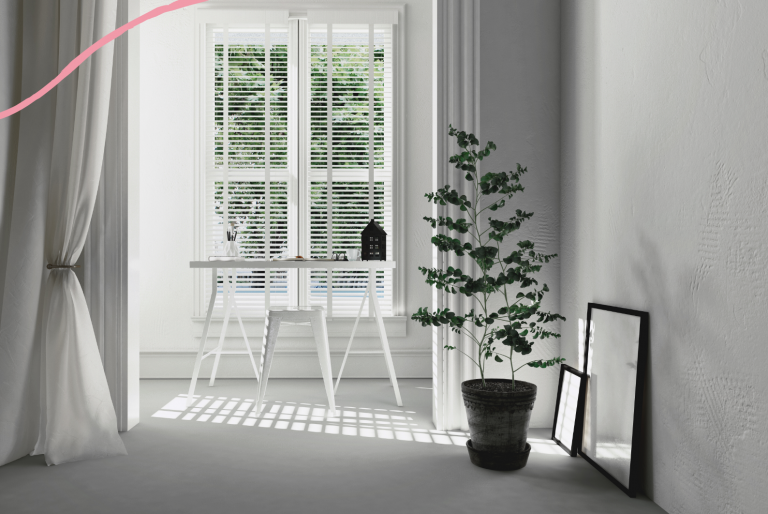
So how can you incorporate biophilic design into the architecture of your home? By renovating it to have good natural light and ventilation is a good place to start. This can be achieved via the additions of windows, skylights and doors. You could also add a living wall indoors, adding that sense of green nourishment to your home.
HELP THE ENVIRONMENT
Reducing our carbon footprint is, quite plainly, something we all should be doing. Urgently. Indeed, we all should be rapidly ramping up our efforts to minimise our individual impacts on the climate crisis.
One of the best ways you can do this begins domestically. Not only is an eco-friendly house good for the environment, but it also saves you money, too.
Improving your house’s insulation, investing in renewable energy options like installing solar panels, or introducing rainwater collection buckets to your roof and garden are just three ways you can do this. Making the house more energy or water efficient may also end up paying for itself in a few years, and all of these investments are good for the environment on top of being good for your wallet. Now that’s an aspirational home renovation project we can get on board with.
Most people spend their entire lives living in roughly the same interior style. If their home is contemporary when they move in, it stays that way for the duration of their stay. But for some, a change could be just the thing to breathe new life into the home.
Changing the style of your home, though, is a great reason to renovate and pulls together disparate ideas and desires into one clean focal point. Just think of the opportunities! You could add Danish sideboards, new drapes, or even Georgian windows.
When you change the style of your home, you also change how you feel when you live in it. Don’t be afraid to experiment with trends that reflect your spirit and values.
ADAPT TO CHANGES & FUTURE PROOF YOUR HOME
A renovation can also be used to make your home more kid-friendly, more accessible to the elderly, or make it function better as a home-office environment. In other words, if you have a major life change coming up such as kids or an elderly relative moving in, making relevant renovations can help make the transition a lot smoother.
Forward planning and foresight should also be a consideration when renovating your home. It should be as adaptable as possible to accommodate the inevitable yet unpredictable lifestyle changes that the passing of time brings. Should you be playing the long game, then particularly important is to consider the concept of ‘Aging in Place’ and making your home more livable for your golden years.
And while the over specialisation of your house can make it harder to sell later, with some patience you will be able to find a buyer willing to pay a premium for a home that already comes with these adaptations.
Over the past eighteen months, working from home has been assimilated into our lives. If you are planning to remain a remote worker or are switching to a hybrid model of working, then tweaking your home to create a more work friendly environment has many benefits.
We’re not just talking about setting up a permanent desk in the corner of your home, but rather making some structural changes that will make working from home more enjoyable.
When it comes to working from home, light and bright is best. To make your home office as productive a space as possible, then you should consider adding a whole new source of natural light. While knocking through a section of wall or installing a new window is a big job, make no mistake, it also represents a smart move in the long run.
Or perhaps you can convert an unused loft space into an office, which can add value to your home. Speaking of which…
IMPROVE THE VALUE
Renovations both big and small can also be made in preparation to sell the property. Repairs and changes that improve the property’s kerb appeal, add an extra room or amenity, or simply modernise an existing space, can all be used to improve the sale value of the house.
Cleveland home buyers Favour Home Solutions tell us that a cellar or loft conversion can boost a property’s value by up to 30%. Other home renovation projects worth investing in include a kitchen renovation or extension and a bathroom refit.
Online house ads are much more common these days too, so it’s good to make changes that make the house look good in pictures, such as improving the interior lighting and adding a few pieces of decoration here and there, can have a big impact.
From improving fire safety to dealing with structural problems, all the way to getting rid of mould or damp, there are plenty of safety concerns that warrant renovating a room or even an entire house.
You may find that you can easily get rid of mould in the kitchen while changing the fixtures, or that it’d be easy to replace old support beams in the basement while waterproofing it. The more you can get done while you have people working on renovations, the better. In the long run, the investment will likely save you money.
Also consider burglar-proofing your home, by installing new locks and alarms. We’ve got more on that here. Do check it out!
Gardening is perhaps one of the best hobbies you can try. It helps keep you active, provides you with a daily dose of sunshine, and lifts up your mood. If you’re a gardening newbie, there’s nothing more fulfilling than having your own green space to cultivate and harvest fresh produce. But before starting your planting journey, there are a few things to keep in mind to have the best and most ideal greenhouse set-up.
With this useful guide, a novice grower can weed out unnecessary worries and stresses in kickstarting their planting project.
DECIDE HOW MUCH SPACE YOU NEED
Whether you’re planning to build your own, or if you intend to buy a greenhouse kit, the first step in your greenhouse gardening journey must be made by deciding how much space you need. Consider long-term goals rather than focusing on the ‘now,’ as you may be bound to regret your decision later.
In most cases, those who decide to build a conservatively-sized greenhouse end up having to build another one. So, as much as possible, add an extra allowance of space to your original plan.
CHOOSE THE RIGHT BUILDING TYPE
Once the space requirement has been identified, a newbie grower should choose the most ideal structure for the greenhouse. Check out these do-it-yourself greenhouse building plans and try to find which material is best for your space and climate:
Metal Greenhouses
These structures often come with an aluminium frame, making them equally strong yet lightweight. Capable of carrying loads many times their weight, metal greenhouses are ideal for newbies who don’t have a vast planting area and want to optimise their green space.
Polycarbonate Greenhouses
For newbie gardeners on a budget, polycarbonate may be the best solution. It’s the cheapest of the lot yet packs durability and flexibility. Greenhouses made from this material enjoy better light diffusion than glass and enhanced protection from ultraviolet rays. Generally speaking, polycarbonate makes the best small greenhouses, because of the material’s adaptability and pliable nature.
Wooden Greenhouses
A well-controlled environment is key to a successful greenhouse. A wooden structure allows for great absorption of heat and light during the day. Additionally, it can retain heat when the temperature drops. With wood, you can ensure that the plants are well insulated, warm, and safe, even during the winter season.
BUILD YOUR OWN VS. GREENHOUSE KITS
After choosing the best greenhouse building material, it’s time to decide whether you’re up for building your own greenhouse. While building your own greenhouse structure may be a more appealing option, this would require carpentry and crafting skills.
You may be great at cultivating a living organism, but if you’re not handy with drills, hammers, and other power tools, it may be best to skip creating a greenhouse building and choose to buy a kit. There’s a great range at UK retailer South West Greenhouses here that you should check out, especially if you’re near the area.
As you can see, there are greenhouse kits available for just about anyone, depending on the size, material, and design. With so many options available, it can be challenging to choose a few greenhouses that best fit your requirements.
The kit comes complete with everything a newbie needs. As such, you can assemble your very own structure within a few hours, even if you’re not a skilled do-it-yourself woodworker. All you have to do is connect and snap the parts and pieces together.
Size and style aside, the key to having one of the best greenhouses is to efficiently manage the elements that impact plant growth. A greenhouse needs to have a controlled environment in order for the plants to thrive. For these, you need to know the must-have greenhouse tools for beginners.
Additionally, here are a few ways to manage your greenhouse environment for optimum plant growth:
Heat
Too much and too little heat are definitely a no-no for your greenhouse garden. If you live in areas where it can get too hot or too cold, think about the style and location of your structure before kickstarting your project. What’s more, you need to invest in additional temperature-regulating tools to make your plants happy.
Greenhouses located in cold environments, for instance, need to have heaters. This ensures that they remain warm even while it’s freezing outside. Conversely, greenhouse structures positioned in warm climates could use some shade and roll-up covers to reduce heat retention.
Water
Position your greenhouse near a water source because plants grown in these special spaces require more fluids. That said, it can be easy to overwater your greenhouse plants. In order to prevent too much water from eventually choking up your vegetation, consider installing a drip irrigation system to control watering times more appropriately.
Air
Proper ventilation is crucial to your plants as it helps regulate temperature, moisture levels, and air circulation—particularly the exchange of carbon dioxide and oxygen. That’s why the best greenhouses come with natural ventilation through design or add-in features such as adjustable roofs or sidings. If you have money to spare, invest in electric vents that can automatically open and close, depending on the ambient temperature.
Adequate airflow can also promote pollination in plants such as rice, corn, and oats. So, improving your greenhouse’s ventilation means you’ll be hitting two birds with one stone.
Light
Sunlight supplies the energy needed for photosynthesis—the process by which plants produce their own food and give off oxygen as a by-product. That said, you’d want your greens to have access to natural sunlight even during the winter.
In order to make gardening an all-year-round chore, don’t let the absence of sunlight stop you. Hang a grow light inside your greenhouse to ensure your plants stay healthy, no matter the season.
Plants
No greenhouse is ever complete without plants. So, as a newbie gardener, choose easy-to-grow herbs, vegetables, and fruits, as well as flowers, to make up for an enjoyable experience.
Start by planting herbs that you often use in the kitchen, such as basil, parsley, and oregano. For vegetables, greenhouse staples include lettuce, broccoli, tomatoes, carrots, and pepper. Berries, lemons, and oranges, as well as roses, petunias, and violets, are likewise worth cultivating.
Put The Green In The House
Choosing the right greenhouse structure and the things that go with it can be frazzling for a newbie; but not if you know the basics of what makes a functional greenhouse.
From the size, style, and key components, a greenhouse is also an investment if you’re serious about your gardening hobby. And speaking of investment, you’d better make sure that your hard-earned cash is well-spent by choosing not only the best but the most ideal greenhouse for your needs and plant preference.
Hey, we don’t wish to be presumptuous here, but since you’ve alighted at this article, we’re going to be. Perhaps you’re here because your home desperately needs some repairs and renovations? Maybe some fresh front-lawn flowers, windows, or a new roof to enhance its function and appeal could do the trick? Or, will a fresh lick of paint be all that’s required?
Although these changes may be beneficial for the home, enabling you to increase its value, it’s important to look at the flip side, too; not implementing safe and visually satisfying exterior design could inadvertently reduce your home’s value. To ensure that this doesn’t happen, you need to know what to avoid. So, what common exterior design mistakes are undermining your renovation efforts? Here are 5 major exterior design mistakes and how to avoid them.
CHOOSING YOUR PAINT COLOURS FIRST
Colour plays a significant role in improving the exterior layout of your home; however, it isn’t the first thing you should prioritise, even if you’re in the famously vibrant Notting Hill, Bristol’s Clifton or the gorgeous Portmeirion in Wales.
Instead, you may want to consider some factors such as the theme of your home, its architectural style, and its location, prior to arriving at the potential colour of the facade.
Before picking a colour, be sure to reconsider the other elements, if possible, leaving painting until the final stages of any renovation process to ensure you make the right choice and everything looks synergetic.
A BOLD, EXAGERRATED OUTDOOR SPACE
Understandably, you’ll want your outdoor space to look stylish. However, this desire can lead many homeowners to incur expensive costs as they go overboard to achieve a bold and exaggerated outdoor space, which offers little ROI as such a singular style can be unappealing to potential house buyers.
Instead, a more subtle design is more likely to attract positive attention and enhance that all important kerb appeal.
GETTING STUCK IN THE PAST
Manchester based property development gurusSalboy tell us that ‘’older buildings that have been refurbished and renovated to be more modern and appealing’’ tend to be attractive to property investors, as you can enjoy the character of a period property and the functionality of a more modern home simultaneously.
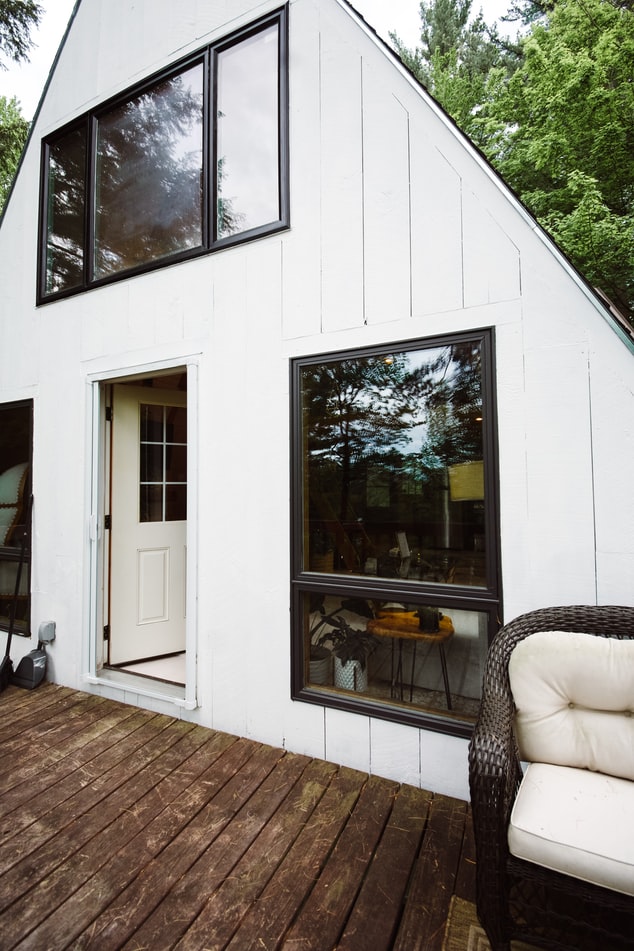
A common mistake homeowners make is to get stuck in the past, refusing to renovate the exterior of their property because they are keen to retain its character and charm. Sadly, this can lead to structural issues going unattended and worsening.
INCONSISTENT HEADER HEIGHTS
It may not seem like much, but having varying heights can affect the appeal of your home and its value. Many homeowners underestimate how vital it is to ensure the header of your doors, windows, and transom heights complement each other to create a unified appearance. Inconsistent header heights make your home look skewed and unpresentable.
APPLYING STONE VENEER IN WRONG PLACES
A standard exterior design mistake that homeowners tend to make is placing stone veneers in the wrong places. Make sure that the stone has a corner to allow for a more natural look. Without a corner, the stones look too superficial and unappealing. To be safe, it would be helpful to find stone pieces with three corners to run perfectly along other planes and sides of the building. To make your stone veneer even more appealing, be sure you stick to one pattern and type of stone instead of integrating multiple materials and styles, the latter of which can look mismatched.
Now that you know the mistakes you should avoid, what have you got to lose? There are so many creative ways to renovate your home’s exterior to increase its appeal and value. Good luck!
You know what they say about people in glasshouses, right? Those stones should certainly be left unthrown. Or, that to be truly progressive, you have to smash the glass ceiling. Or, as Tennesse Williams put it; ‘’When you look at a piece of delicately spun glass you think of two things: how beautiful it is and how easily it can be broken.’’
With all this talk of fragility, it feels like glass is being done something of a disservice. But have you ever stopped to consider just how many things are made from the magic, typically transparent material? From windows to bottles, tables to whole structures, this ancient material is one of the world’s most widely used due to its incredible formability, versatility, and, despite its reputation for breaking, its incredible safety record. Glass is non-reactive, non-leaching and completely impermeable to both liquids and gases.
Take a look around the room now; suddenly, you’ll notice that the material is everywhere. Hey, it even forms the screen that you’re reading these very words on! Considering the amazing versatility of glass, here’s why it is such an important material in design.
CAPTIVATING WINDOWS
Talking about windows in relation to design may seem strange, as most windows are very simple affairs consisting of nothing more than a sheet of glass encased in a wooden frame.
However, all of this changes when you consider the stunning stained glass windows that grace countless churches and cathedrals across the world, as well as public buildings and stately homes.
Whatever your religious beliefs, or lack thereof, there are few things as relaxing as sitting down in a shadowy stone church and resting your eyes on a beautiful, colourful window. Try it for yourself, next time you have the chance, or if you’re feeling bold, install a stained glass window design into your own property.
GLASSES
Are we talking about the tumblers you drink your water from? Or the things you wear on your face to help you see? Such is glass’s ubiquity that some items are simply named after the material.
The glasses that people wear to help them see more clearly are a particularly fascinating example of the material’s versatility because they are not only transparent, but also scratch resistant and can be designed to be incredibly thin, presenting a more attractive option than plastic lenses.
BRIGHT OFFICES
Glass, in combination with iron or steel, has long been a very popular choice of material for architects designing the exterior of office buildings and other public buildings, from the pioneering Crystal Palace of 1850s London to the many skyscrapers, such as the Gherkin in Westminster, Dubai’s Burj Khalifa, or Shanghai Tower in China. These structures have redesigned countless cities’ skylines in the 20th and early 21st centuries, and without glass, many urban centres would be unrecognisable today.
More recently, glass walls and partitions have become a popular choice for office interiors too, as designers seek to brighten up workplaces while maintaining a degree of organisation and focus, which cannot be achieved with basic open-plan spaces.
With so many offices being made of glass both on the inside and on the outside, demand for commercial glass repair is bound to increase, and some companies have started glass work apprenticeships for young people interested in this craft. A career working with glass? It’s certainly clear that there’s a future in the industry. Move over, drab office walls – your time is up!
TABLEWARE
One of the most common uses of glass is, of course, tableware. Glass is obviously employed to make tumblers and jars, vases, carafes, oven dishes, bottles, bowls, and those vessels we love to sip a decent claret or cocktail from, but tableware is where this material truly shines within an interior design setting.
A staple of Scandinavian interior design, glassware is an easy and economical way to add cosiness to your living space. The fact that it reflects natural light makes it the ideal choice for those centrepieces that live at the intersection of decoration and functionality. Add a glass bowl filled with fruit, a glass candle holder, or a glass vase filled with colourful flowers to your kitchen, dining, or coffee table and watch the whole room brighten up!
CURIOUS ORNAMENTS
Finally, no discussion of the role of glass design would be complete without mentioning the weird and wonderful glass ornaments which adorn mantlepieces and windowsills around the country and the world.
From funky ornamental fish to tennis players. all the way to panthers and clowns, it appears that you can buy figurines of almost any kind crafted using the traditional glass blowing technique perfected in Murano, Venice, over the centuries. Just keep your glass treasures well away from your toddler, as they cost a pretty penny.
Can I sell a car with outstanding finance? It’s a question many have pondered. First things first; doing so without telling the buyer of the vehicle that the debt isn’t yet paid off is illegal.
Do so, and you’ll be committing fraud. And this goes for cars purchased using outstanding hire purchase (HP) finance and outstanding PCP finance. This is because the lender is the legal owner of the car until that finance is settled.
But if you bought the car with a personal loan, you’re well within your rights to sell it, as you are the legal owner of the vehicle.
Phew, things got pretty serious back there. But if everything is above board and you bought the car with a personal loan, then you’ve come to the right place; here’s the IDEAL guide to selling a financed vehicle.
GET AN ONLINE EVALUATION
As we mentioned in that sometimes snappy, sometimes ominous introduction, if you bought the car with a personal loan, you can sell it, even before you’ve paid off that loan.
That doesn’t mean that selling it is the best option you have; you first need to find out if this is a financially viable, sensible decision. The easiest way to see the bigger picture here is to get an online evaluation so you have an estimate in terms of the current value of your vehicle, the state of your loan repayments, and what you might stand to lose or gain when selling a financed car.
Research and potential costing values should be one of the first things you check before going forward, all in order to avoid a costly sale instead of a profitable one.
BUDGET TO PAY THE SETTLEMENT AS SOON AS YOU SELL
To avoid causing yourself any financial problems, you need to budget to settle your debt as soon as possible so that you don’t end up with more costs at hand. Factor the money you’ll receive for the sale into your loan payments, making sure there’s plenty left over to cover interest, any time you lose and travel costs you accrue conducting the sale, as well as any charges for early repayment of the original personal loan, too.
Then, ready the lump sum to settle that loan the moment you sell your vehicle, to avoid any further interest payments.
DETERMINE THE MARKET VALUE
From a profit and loss perspective, determining the market value of your vehicle is in your best interests, allowing for you to negotiate from a position of strength (or know that you’re coming from one of weakness, and planning accordingly).
No one wants to walk out of a car finance deal with less than they paid in the first place or needing to end up paying more, for that matter, just for the deal to go through. Try and get the best evaluation possible in the market without being scammed into selling at a lesser value than it is worth.
CALCULATE YOUR PROFITS
After calculating your profits, you will at least have a way forward with selling your car, allowing you to plan for your next move, whether it is getting another car immediately or saving up while shopping around for a new or used vehicle that suits your current needs and state of pocket.
MAKE YOUR DECISION
After getting the online evaluation, budgeting to pay your settlement as soon as you sell, determining the market value, and calculating your profits, your decision will be much more transparent and easier to make as all of these factors will contribute towards making an informed one.
This is not an overnight process, and patience is required. That said, there are some obvious advantages; for one, it’s a fairly simple, hands off affair that doesn’t require much of your involvement, since most of the proceedings will be handled by the dealership. What’s more, most financed vehicles are generally still in excellent condition, and when combined with ways to reduce vehicle depreciation, facilitating a sale is straightforward.
As such, if you are on the buying end of things, you are also not getting a run-down vehicle. There is usually positive equity on the car for the buyer, which will make your life easier when you are taking it over. Another thing to consider is to make sure that whatever amount you are selling the car for is not less than whatever you owe, and you are not left with a hefty payment still to give the bank.
*This article is not intended to replace financial advice, but rather, to inform and entertain. For any financial advice, always consult a qualified accountant first*
Ideal if you’re looking for a fun date night in the capital.
Those first few dates with a potential love interest can be stressful. With both sides feeling their way, testing the water, and trying their hardest to show their good side, some of the more traditional first date venues actually make the least sense.
Many fear the prospect of sitting across from each other in a restaurant, attempting to strike up a friendly, flirty conversation in an environment akin to a job interview. Others find it understandably difficult to get that initial spark to ignite when sitting in silence in a cinema, theatre or concert. Indeed, it’s any wonder traditional relationships ever got off the ground when conducted in such romance-sapping settings.
Instead, for those first, second or third dates, why not try a more relaxed or unconventional setting? Dates with a little competition involved are always fun and frivolous, and represent a great litmus test for any chemistry between you.
Moreover, they provide natural breaks and prompts in conversation, awkwardness is easier to navigate, and the spirit of rivalry fosters a connection between the two that naturally leads to flirting.
You can also see how someone reacts to winning and losing, which is hugely important – if they scream in your face and do a little dance or victory lap…well, perhaps ghosting is allowed on this occasion.
Yep, dates with a little healthy competition can be a very good thing. So without further ado, here are some competitive date night ideas for Londoners.
SWINGERS CRAZY GOLF – IDEAL FOR MINI GOLF AND EXCELLENT STREET FOOD
Get your head out of the gutter; we’re not talking about that kind of event. A little too niche a suggestion for a first date, perhaps…
Nope, swingers it’s all about crazy golf and a playful place to take your date. Indeed, the spirited nature of the game can put those date night nerves to bed, fast. What’s more, it’s easy to be coy and flirtatious when you’re playing a game of crazy golf….’show me how to perfect that swing’ and all that.
At Swingers, it takes around 30 to 40 minutes to play 9 holes. This means that if a date isn’t going well, you have the opportunity to leave after a round and exit a bad date early, no questions asked. On the other hand, if the date is going well, you can suggest a quick bite to eat…
Amazingly for a crazy golf venue, you’ll find some of the best street food vendors in town here; Patty & Bun, Breddos Tacos, Pizza Pilgrims, Made of Dough and Hackney Gelato are all under one roof, feeding hungry swingers. They also do pretty darn good cocktails with a menu featuring over 40 alongside premium beers, wine, mocktails and soft drinks.
Swingers has two central London locations, one in the West End on Prince Street and one in the heart of the city in Browns Buildings. A recent study revealed that the top choice of dates for twentysomethings was mini-golf, so if you’re in this age group, this date night idea suggestion will probably go down well.
THE CLASSIC PUB QUIZ – IDEAL FOR GETTING YOUR FRIENDS’ APPROVAL
Let’s get quizzical! If the first couple of dates have gone well and you’re looking to introduce your newfound love interest to your friends, then consider the classic pub quiz, which is a tried-and-tested ice breaker and heaps of fun, too.
What’s more, a pub quiz offers you a chance to show off your smarts; that is, provided you’re good at trivia and have any! You can also figure plenty about your partner at their suggested team name ideas; any with derogatory undertones should be a red flag, for a start.
Some of the best pub quizzes in London include:
The Lexington, Islington
The Spread Eagle, Homerton
The Pineapple, Kentish Town
Vaulty Towers, Waterloo
The Star of Bethnal Green
The Boogaloo, Highgate
That said, there are pub quizzes, usually hosted on a Monday or Tuesday night, all over London, meaning you won’t have to cross several zones to get to a good one!
And if you exit the competition early, why not bring a pack of custom printed playing cards along with you and organise a game while you finish off your drinks? Card games and pubs go together like beer and salty snacks after all.
If you forget your pack of cards — or your date doesn’t show — there’s always solitaire on your phone to pass the time.
BOUNCE AT OLD STREET – IDEAL FOR PING PONG
Bounce, with venues in Old Street and Farringdon, has become something of a London Institution, with friends, couples, blind daters and first timers heading here for a few rounds of ping pong and cocktail or two, every night of the week.
Interestingly, the Farringdon outpost occupies the basement site where the game of ping pong was first trademarked, but it’s the Old Street venue we love the most, with its rows of ping pong tables conducive to competition and courting. Indeed, Bounce is a pretty noisy venue (all those balls bouncing…) which offers you an excuse to scooch closer to your date and whisper in their ear. Perfect!
The food here is a fantastically fully loaded carb-fest – which after a few rounds of ping pong, you’ll feel like you’ve earned. The menu is mainly about pizzas – for many, the perfect sharing date food and much more intimate than having your own individual plates.
Moreover, since you can eat a pizza slice with just one hand, the other hand is free for holding over the table. If you don’t like pizza (not everyone does) then there’s some loaded nachos and fried chicken for you to get messy with. Sides include gorgeously crispy potato puffs and some popcorn cauliflower with a BBQ glaze. Perhaps don’t wear white, hey?
Oh, you can even play beer pong here, too! And if that sounds like your kind of thing, you could head on to Belushis, which has sites in Hammersmith, Greenwich, Camden and Shepherd’s Bush, and beer pong at each of them.
Booking a table in advance for Bounce is essential, by the way; it gets busy.
SIMPSON’S-IN-THE-STRAND – IDEAL FOR ENGLISH FARE & A GAME OF CHESS
After something more grown-up? Well, let us introduce you to Simpson’s-in-the-Strand, an altogether different type of London institution. This is the historic “home of chess” and was once London’s greatest chess club.
It’s also home to one of London’s oldest and most iconic restaurants, and dinner here is a spectacle. Victorian silver domed carving trolleys are wheeled to your table and provide the most tender slices of meat; a choice between roast rib of Scottish beef or Welsh lamb, with all the fixings included, of course.
The tradition of carving meat tableside here began as a way to not disturb chess players mid-game, and continues to this day. That said, after a renovation of both decor and menu in 2017, the restaurant has updated its menu slightly; you can now have Beef Wellington with your sliced beef.
Joking aside, there’s some lighter touches on the menu if you’re keen for your date to stay on the sharp side of sluggish; the sea trout with Scottish mussels and samphire is particularly good.
After dinner, move on to the bar, complete with chess-themed decor. Though chess boards aren’t provided, you could bring your own mini travel chess set and have a game of speed chess. You don’t want to upset the bartender with a 7 hour tactical struggle, after all.
And if you’re still peckish, order their signature roast beef and Yorkshire pudding sandwich while you play.
Right now, Simpson’s in the Strand is temporarily closed, but we hope to see them reopen later in the year.
VISIT A BOARD GAME BAR – IDEAL FOR SENDING YOUR HUGGING HORMONE SKY HIGH
Did you know that playing a board game with a romantic partner releases oxytocin which is associated with trust, sexual activity and relationship building? In fact, often referred to as the “love hormone or “hugging hormone ”, levels of oxytocin increase during hugging and orgasm.
But that’s not all; a study found that couples who play board games have an improved love life, with research suggesting that couples who play board games interact more because they are competing and talking about the game, and with more interaction, more oxytocin is released.
So now you know this invaluable piece of scientific research, you’re probably wondering where to play board games in London, right?
Well, in Haggerston you’ll find London’s first dedicated board game cafe, Draughts. There’s also one in Waterloo on Leake Street. With opening hours of 10 am until 11 pm, you can get truly immersed in the fun and frolics of an old school board game here, and this kind of date is ideal for one of London’s many, many rainy days.
The collection at Draughts is extensive, with stone-cold classics like Monopoly and chess rubbing shoulders with more esoteric options like Killer Bunnies and the Quest for the Magic Carrot. The food menu is all cleverly curated finger food (Korean chicken wings, tacos….) and is perfect to pick at while never breaking stride on the board.
Perhaps the best part, though, is that this back-to-basics gaming will cost you only a £5 entry fee, after which play is unlimited. The beers, sadly, aren’t free.
Other great board game bars where you can play games on the table and footsie under it include:
Loading Bar, Stoke Newington and Peckham
The Library Pot, Richmond
The Ludoquist, Croydon
Escape Bar, Stratford, Sherpherd’s Bush and Dalston
Scooter Cafe, Waterloo
ALL STAR LANES – IDEAL FOR AN AMERICAN INSPIRED DATE
First things first; dates should be fun, not full of friction and failing conversation. And let’s state the obvious here for a moment; bowling is fun.
Whilst it might feel a bit presumptuous to be kicking off your shoes and getting cosy on a first date, All Star Lanes might just be the most fun you can have donning borrowed shoes.
You can also check out your date’s socks, which we feel offers something of a glimpse into their soul. Are they matching? Mismatched? Holes in them? Or are they wearing some god awful novelty socks with Sponge Bob Square pants on them? Or worse, they’re mismatched and novelty, with Homer Simpson on one sock and Thomas the Tank on the other. Hmmm, this sounds like we might be speaking from experience. Let’s move on…
At All Star Lanes, you can pay £35 per person for their Drink, Dine and Bowl package, which includes two courses from their American diner inspired menu, a cocktail, and of course, an hour’s worth of bowling. Otherwise, it’s £15 for a lane and a regular game.
Hey, you can even do a spot of karaoke while you’re here. What’s not to love?
There are four locations in London; White City, Brick Lane, Holborn and Stratford. Though booking a lane in advance is highly recommended, they do keep a few free for walk-ins. Do be aware that during peak times, lanes are reserved for those who are dining.
THE BOTTOM LINE
Is there anything better for encouraging banter and bonding than a competitive date? We haven’t found it. And hey, if things go well, maybe the loser can pay for the next date?
A lot of people dream about building their ideal home. Even if you’ve never mixed cement or studied an architect’s plans, the desire to create something from nothing is appealing.
The stats back up this thesis statement. According to a survey carried out by the NaCSBA and the Building Society Association (BSA), 32% of people in England are interested in building their own homes.
However, of those people, only 9% said they could actually see themselves doing it. Generally, this is because most people don’t have the necessary knowledge, skills or experience required to undertake a self-build project. That’s some serious work and we don’t all have Kevin McCloud on speed dial, after all.
Indeed, once you scratch the surface of what’s required, you’ll see that there are so many potential pitfalls and stumbling blocks, ready to turn that dream build into a nightmare faster than you can say ‘timber!’
Of course, the majority of people who build their own homes don’t actually get their hands dirty; the concept of ‘build’ here is more a metaphorical one, with delegation from the sidelines more likely.
Since you’ll likely not doing the building work yourself, you’ll need to employ the right people to get this done. Then, of course, there’s the planning process.
Firstly, you need an architect. Then, you’ll need to liaise with local planning officers and manage the project. Throw in electricians, plumbers, gas safety engineers, and a whole host of other legal requirements, and things are going to get complicated. And we all know what ‘complicated’ means in this context, right? Yep, expensive.
Basically, even if you don’t want to get your hands dirty, it’s going to be a stressful, time-consuming experience. But with modern innovations like 3D printing leading to a growing number of different options for home building, nothing is impossible anymore.
Today, we’re exploring prefab – or flatpack – homes, and how to build your own home without any construction experience. Let’s dive in…
CONSIDERING CUSTOM BUILDS
Building your own house shouldn’t necessarily mean getting your hard hat on and your soft hands dirty. Increasingly, those looking for fast, simple solutions to the traditional hurdles of a new-build are opting for a custom-made home, such as those available at Moncasa granny flats.
A custom-build will ease the stresses and strains involved in planning your ideal home from scratch as you have a preplanned design to work with – blueprints and all. This mitigates a huge amount of the potential cost of material mix-ups, extra labour and the inevitable going over budget and schedule that blights so many projects of this kind.
OFFSITE BUILDING MAKES LIVE ONSITE EASIER
So what are the most common types of custom-build out there? Well, self-builders are increasingly turning to prefabricated structures and modular units to make things easier.
Instead of relying on builders to construct things from scratch, you can use premade products tailored to your specifications and drop them into place, with prefabricated homes able to deliver to a building site in an almost complete state.
Clients are able to discuss their preferences with a company’s architect who will then apply them to one of the standard modular frames used by the team. The house then gets built in a factory, shipped to the appropriate location, and dropped in place. No messy building sites, no unexpected snags. Just the home you ordered, ready to go.
OPTIONS, OPTIONS
This strategy of using prefabricated builds doesn’t have to stop when you move inside. In fact, the potential for prefab homes goes far beyond the foundational.
Bare bones – much like an IKEA chest of drawers, the structural elements of the home (such as the walls, doors and floors) are delivered, and you, the homeowner, has to assemble them.
Basic build – the structure of your home are constructed by a company, but you are responsible for fitting the rooms and decorating.
A turnkey project – everything is done for you, including individual rooms.
Regardless of the option you choose, you will need to own the land you are building on. You will also need to pay for any land excavation and new foundational elements required for the build, obtain planning permission, and cover the connection of all amenities, such as gas, electricity and communications.
For those basic build projects we mentioned, the homebuilder does have a fair amount of autonomy over the style and type of room they have installed.
Hydrodiseño, leaders in prefabricated bathroom pods based in Spain, tell us that you can also now get prefab rooms built, with customers specifying the style of their bathroom or kitchen unit or choosing a stock design. Then, everything is made in a specialist factory and shipped, ready to be installed onsite. Ultimately, this is likely to save the homeowner time, work and money.
PREMADE REDUCES YOUR FINANCIAL AND TIME COSTS
So how does this type of building save you money? Well, let’s take a prefab bathroom pod’s price as an example.
Though it may sound cutting edge and complex, using a prebuilt design can actually work out cheaper because you save on a variety of hidden costs. When you build a bathroom from scratch, you need a plumber for the pipework and units. You’ll also need a carpenter, an electrician, a flooring specialist, and a tiler, at the very least.
As well as the cost of employing these skilled tradespeople, you need to coordinate them, which isn’t easy. Therefore, even with something as small as a bathroom, the time and financial costs can stack up.
On the flipside, prefabricated bathroom pods come with all the necessary pipework, tiles, flooring, and units, and a prefab bathroom pod’s price starts from as little as £1,000. An entire unit of a prefab, multi-bedroom log cabin or annexe begins in the region of £25’000. Wow!
THE BOTTOM LINE
Half the battle with building your own home is time management and hidden costs, and this is why prefabricated structures and units are becoming increasingly popular.
With the advent of 3D printing and other modern manufacturing techniques, building a home from scratch has become increasingly straightforward and affordable. Long may it continue!
Every dog owner will know first hand the heartbreak of seeing their dog feeling unwell. Indeed, us canine lovers only want what’s best for our pets, and an integral part of their wellbeing is related to diet.
It’s also an element of a dog’s wellbeing that is the complete responsibility of the pet owner, so you’ve got to make your decisions count. But if your puppy experiences health conditions, or if you’re looking for an alternative to regular kibble, you may be curious about a raw dog food diet.
A raw dog food diet is designed to feed your pet the way their ancestors ate. Raw food is considered by some to be biologically appropriate for dogs because of their genetic makeup, with supporters of the diet suggesting its potential benefits include giving your dog a glossier coat, less smelly poos, higher energy levels, healthier skin and cleaner teeth.
That said, a raw food diet for your dog isn’t without its risks and detractors, with some vets concerned about the sometimes unbalanced nature of such a diet, the potential for choking on whole bones, and the bacteria found in raw meat threatening both the dog’s and human health. Because of this, it’s not recommended for a dog who shares a home with immunocompromised residents to be on a raw food diet.
Because of these risks, the veterinary charity PDSA recommends that ‘’If you do choose a raw diet after consulting your vet, always choose a commercially prepared one’’. With that in mind, today we’re considering some commercially prepared raw dog foods on the market.
TOP RECOMMENDED RAW FOOD PRODUCTS FOR DOGS
Switching to a raw diet can be tricky and doesn’t happen overnight. The right balance of meat, vegetables, and superfoods is key to ensuring that your canine gets the proper nutrients it deserves. Additionally, you need to consider factors such as your pet’s age, size, activity levels, and the presence of any food intolerances.
It also helps to familiarise yourself with the different types of raw dog food on the market. These include frozen, freeze-dried, and dehydrated raw dog food. Unlike frozen food, freeze-dried options don’t need to be kept in the freezer. Meanwhile, dehydrated raw dog food is usually mixed with water, so it returns to its natural state.
Anyway, without further ado, here are the best commercially prepared raw dog food products reviewed.
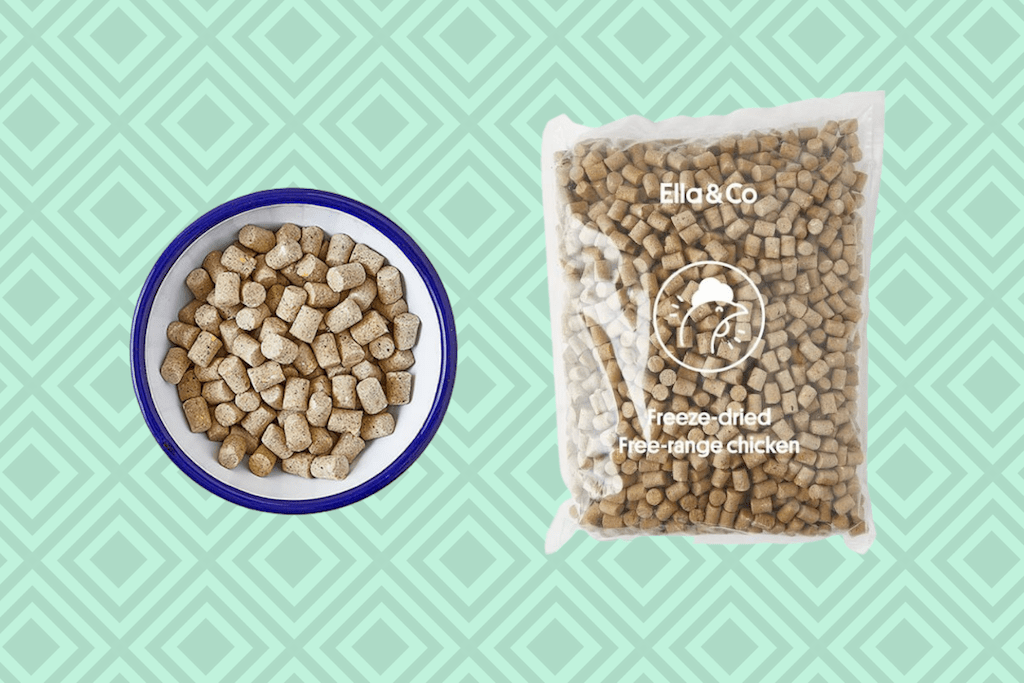
Ella & Co comes in three flavours – freeze-dried chicken, beef, and cold-pressed fish. They use human-grade ingredients (meat, fruit, veggies) without any fillers, preservatives, or grains.
Interestingly, the company offer a 14-day trial with free shipping (and 25% off their normal prices) so you can figure out if this option is suitable for your canine. It should be noted that, depending on the size and activity levels of your dogs, a subscription to Ella & Co is at the top end of the price range; two weeks worth of food for an adult dog weighing 30kg will cost you just shy of £50. Food fit for royalty, indeed.
Nature’s Menu
The frozen raw range from Nature’s Menu includes beef, turkey and duck, all of which are 80% meat and are delivered as nuggets that you count out and then let thaw. Their recipes are bone free (mitigating the choking hazard we previously mentioned), do not use meat meals, are grain free and great for dogs with sensitive tummies.
Their recipe sticks to whole meat without any hidden ingredients; reassuring for those concerned about their dog’s digestion. What’s more, the formula includes vitamins A, D, and E to help boost your furry friend’s immunity and healthy skin, too. Result!
The price point is fairly modest here (1kg of their succulent duck range, for instance, will set you back £5.49). If you have a medium or large sized dog, this is a very reputable company with an excellent product. They even offer next day delivery.
Poppy’s Picnic
One of the UK’s biggest raw dog food companies around and with a successful Dragon’s Den appearance under their belt (or should that be ‘collar’?), Poppy’s Picnic offers balanced food that contains all that your dog needs for optimal health.
The company offer 14 different products which use high quality meat from fourth generation butchers in Wiltshire, including liver and kidney, as well as bone, veggies and herbs to make sure your dog’s needs are met. In fact, these guys are FEDIAF certified as being nutritionally balanced, which will be reassuring for pet owners.
That said, a subscription to Poppy’s Picnic is the most expensive on our list. As an example, for a fairly active, 30 kg adult dog, you’ll be paying £65 every 12 days for their Mighty Mince range.
The guys at Poppy’s Picnic also do cat food, by the way.
ROCKETO
ROCKETO offers a tried and true approach to canine nutrition and wellness, stocking a wide range of dehydrated raw organic food and treats with 100% human-grade ingredients. Every product is nutritionally balanced and vet-approved, meeting the requirements set by the European Pet Food Industry Federation (FEDIAF) without having to resort to synthetic fortification methods.
This is achieved by patent-awarded technology; the ingredients are air-dried at 40°C to preserve all nutrients. Unlike some other options in your local pet shop, ROCKETO offers food that is free from toxins, low-carb, 100% natural, clean, and convenient.
On top of all that, air-dried food weighs four times less than fresh food options, so it’s more affordable than the others on our list – two weeks worth of the company’s Organic Chicken range will set you back £23.99, for instance.
The only downside is that the product takes 5 working days for delivery, though if you have a subscription plan in place, this isn’t a problem, as the company will send out the product in advance of your desired day of arrival.
THE BOTTOM LINE
You don’t have to limit your dog to homemade raw meals that take time to prepare; not the ideal option if you lead a busy lifestyle, and not recommended by vets, either.
Instead, pre-made raw dog food is not only convenient, but you also know that your pet eats a quality, healthy diet. Not all raw food products can address every dog’s issues, so picking one tailored to their palate and condition is essential to keep your dog happy and healthy.
Though it might feel a little strange for a mass of land and water to accumulate awards (just imagine a hulking mountain ambling up to the stage to collect a commemorative plate), in its 70 years of being a designated national park, the Lake District has done just that.
But it’s that expansiveness, all 2’362 square kilometres of it, that makes planning a holiday here something of a challenge. Instead, it’s sensible to narrow down your options when visiting the Lake District into just one area. Boasting fantastic accommodation options, an abundance of activities for families and some serious fine dining options, today we’re heading to the North Lakes.
While you’re there, here are the top things to do on your visit to the North Lakes, the Lake District.
WHERE TO STAY?
Keswick is the obvious focal point of the North Lakes area of the Lake District. With a population of around 5’000, a market that dates back 800 years held every Thursday and Saturday, and the town itself just a short stroll from Derwentwater Lake, Keswick is a bustling, agreeable place to base yourself.
What’s more, you’ll be spoilt for choice for hotels in Keswick and the surrounding area, with a range of accommodation options available, including four-star Scandinavian style lodges at Keswick Bridge, and family run guesthouses like the Inn on the Square, the Edwardene and Hazeldene Bed and Breakfast.
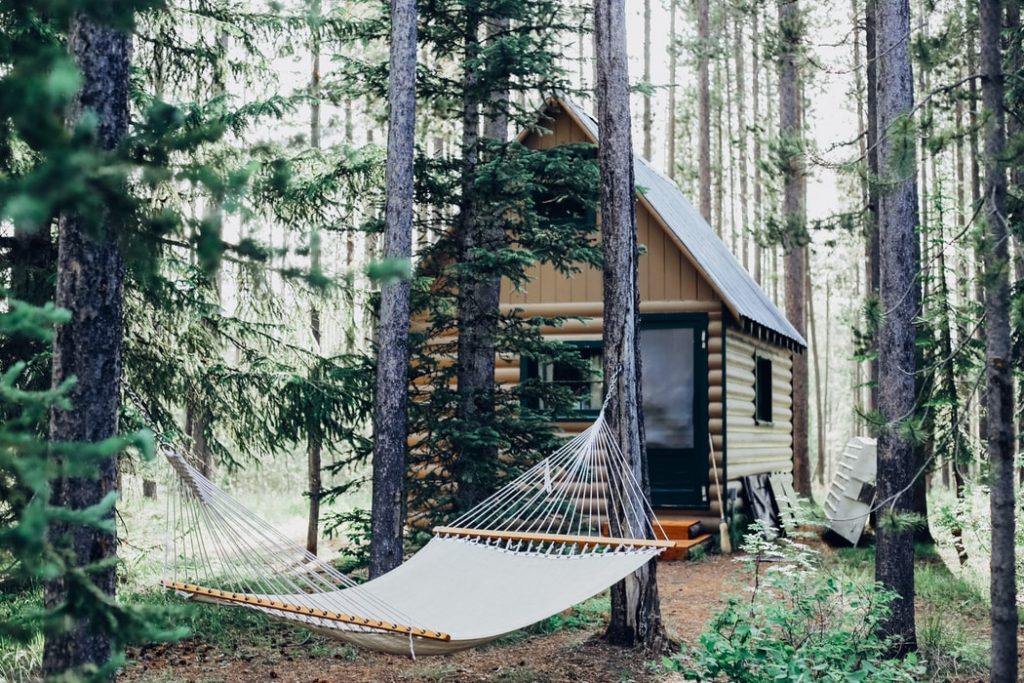
Alternatively, if you’re looking to enjoy the last vestiges of summer al fresco, you can bring your tent along and check into one of Keswicks many closeby campsites, the Keswick Camping and Caravanning Club, the Derwentwater Camping and Caravanning Club Site, and Castlerigg Hall Glamping Park, to name but a few. Do check the weather before you decide to pack your tent, of course!
The ancient market town of Cockermouth contains the North Lake’s other main cluster of hotels and guesthouses. The birthplace of William Wordsworth, it’s an incredibly attractive place to spend some time, defined by Georgian architecture and the majestic spire of All Saints Church. Though it doesn’t quite match Keswick’s close proximity to any lakes, Cockermouth is just a half hour’s drive to St. Bees Beach.
WHAT TO DO IN THE NORTH LAKES
If it’s activities you’re looking for, you’ll certainly have a wide choice if you stay around Keswick, Borrowdale, Ullswater, and Derwentwater, the North Lake’s centrepiece area.
Watersports
For water lovers, there are plenty of opportunities to get out on the lakes and enjoy activities both serene and sprightly. Take a leisurely lake cruise across Derwentwater to see some of the unique views of Catbells, Skiddaw and the ‘Jaws of Borrowdale’ up close.
Or, on Ullswater, England’s second largest lake, you can try out surfing in the wake of a speed boat at the brilliant Ullswater Wake & Surf. They also offer paddleboarding opportunities for those looking for something more laid back.
On the same lake, the guys at Adventure Vertical host half or full days of kayaking lessons and explorations, all for just £25, which feels like a bargain to us.
Walking, Hiking and Climbing
The Borrowdale Valley, just three miles south of Keswick and sitting on the south shore of Derwentwater Lake, boasts some incredible hiking opportunities. In fact, England’s tallest mountain, Scafell Pike, can be reached through Borrowdale’s Corridor Route, a 15km, four hour ascent of tough but rewarding terrain. It’s worth it for the stunning vistas of the Lakes along the way.
If you prefer to clamber rather than hike, Borrowdale is considered one of England’s best locations for rock climbing. Little Chamonix in Shepherd’s Crag is the pick of the bunch, but this isn’t one you want to tackle without a guide. Fortunately, Keswick Mountain Adventures in Seathwaite, just a mile from Borrowdale, is open 7 days a week, 8 am to 6 pm, and offers rock climbing instruction.
Should you be keen on a more pleasant stroll, there are many tourist routes, paths and climbs you can take around Catbells, to catch a sight of Glenthara and the surrounding fells.
Art Galleries and Museums
If there’s time, you could spend a happy afternoon in the museums and galleries of Keswick, too. The Keswick Museum & Art Gallery, the Derwent pencil museum, the Puzzling Place (full of amazing optical illusions!) and the Cars of the Stars motor museum are just some of the many cultural points of interst to visit in the town.
For arts fans, there’s Gallery 26, the Northern Lights Gallery, the Cook House Gallery and the Treeby & Bolton Gallery & Cafe, too.
Enjoy a Spa Day
If that all seems a little too frantic for what is supposed to be a holiday, then rest assured there are places where r’n’r is the only aim, and the North Lakes is blessed with plenty of opportunities for a relaxing spa day.
You can enjoy a facial treatment, sauna and massage at the Armathwaite Hall, Langdale Hotel & Spa, the North Lakes Hotel & Spa, the Lingholm Estate and Lodore Falls Hotel & Spa, all within a 10 mile radius of Keswick. Result!
Explore Cumbria’s Famous Food Scene
Cumbria and the Lake District’s food scene is going through something of a moment right now, with several Michelin starred restaurants opening here in recent years.
Just 4 miles west of Keswick in the gorgeous Whittaker Forest, you’ll find the Cottage in the Wood, a sophisticated, ingredients led restaurant that celebrates the finest produce of Cumbria and the Lake District.
The menu, titled ‘Taste Cumbria’, features dishes representing the ‘stream’, ‘sea’, ‘woodland’, ‘coast’, ‘fells’, ‘farm’ and ‘forest’ of the county’s diverse landscape.
The ‘forest’ course uses douglas fir and blackberries foraged from just outside the restaurant to intoxicating effect, whilst the ‘fells’ main course utilises Herdwick hogget, a breed of domestic sheep native to the Lake District and famed for its deep flavour. What better way to explore Cumbria’s food scene than that?
If you’re after something more humble for your supper, Cumbria is the county that brought us the Cumberland sausage and sticky toffee pudding. You’ll find both on the menu at many of the Lake District’s local pubs.
THE BOTTOM LINE
The North Lakes offer the escapism and tranquillity of the Lake District without the crowds of the more famous Lake Windermere and Ambleside town. As such, the area and its main town of Keswick represents a wonderful break for all the family.
We’re sure we don’t have to tell you twice, so we’ll just say it once; one of the most important things that anyone can do to remain happy and healthy is to sleep well. Getting your regular dose of Zzeds can bring myriad health benefits, ranging from keeping your heart in good shape to reducing stress and so much more.
And sure, we all seem to discuss bedtime routines, morning rituals, tactics to fall back to sleep and the best time to wake up until we’re blue in the face. But what’s perhaps less often covered – at least on the pages of IDEAL magazine – are the benefits and drawbacks of various sleeping positions. Until today, that is…
When it comes to sleeping, there are just a handful of common sleeping positions that we all default to. Some will sleep on their backs, others will instead choose their side, and some even opt to sleep on their fronts.
Sometimes referred to as the prone position, if you do sleep on your stomach, there are a few things you can do to make your sleeping experience as high-quality as possible, and these are those; here’s how to sleep better if you’re a stomach sleeper.
GET A BETTER MATTRESS
One of the best things you can do for your body as a stomach sleeper is to invest in the right mattress; one that offers enough support but is also comfortable to sleep on.
There are different types of mattresses that work best for different types of sleeping positions, and if you are truly dedicated to sleeping face down, then you ought to be on the lookout for the best mattress for stomach sleepers to ensure you’re not doing your night’s rest any undue harm.
As a stomach sleeper, you should look for a mattress that is both firm and supportive. If the mattress allows for too much sinkage (especially around the midsection), it can lead to a poor quality sleep and potentially affect your posture detrimentally. However, too firm a mattress can be uncomfortable as well, as stomach sleeping tends to flatten your spine’s natural curve. Finding a happy medium like a hybrid mattress is a good idea for stomach sleepers.
Be sure to test a few in-store to make sure one works and feels right before you commit to purchase.
USE A FLATTER PILLOW
Sleeping on your front can also cause an unnatural turning of the neck to accommodate the pillow. As such, the pillow you use, especially as a stomach sleeper, is critical to how well you sleep.
While some people might like a thick and plush pillow, this generally isn’t the best idea for stomach sleepers. If a pillow is too thick, it can put your head and neck at an uncomfortable angle that can lead to pain and/or injury over time. That, or waking up with a dead arm every night as you’ve been using it to prop your head up.
Keep your pillow flat, and try not to sleep with your head fully turned to one side, if at all possible. While sleeping face down isn’t comfortable for everyone and generally not a good idea, if you are to do this, some sleep experts suggest propping your forehead up with a smaller pillow, which eases the pressure on your upper vertebrae.
While some like a flat pillow, some people who sleep on their stomach even prefer to sleep using no pillow at all, so don’t hesitate to try that out, too.
Another sensible thing to keep in mind when sleeping on your stomach is to try and make an effort to keep your back in a neutral position. This takes a ton of pressure off of your spine and ensures you wake up well-rested and feeling great, not sore. A great way to get this neutral position is by sleeping with a pillow under your pelvis.
STRETCHING SMARTS
Finally, stretching every morning after you wake up can be a good idea if you prefer to sleep in the prone position. There are specific stretches that benefit all sleeping positions, so simply do the ones that correlate to stomach sleeping. This can help to strengthen the muscles that support your body, while also helping to align your body properly.
Sri Lanka is having a moment, even by its lofty standards. The ‘pearl of the Indian Ocean’ is aiming to double its number of tourists to five million by 2020 as part of its development strategy, and as such, expect to see friend’s and family’s’ insta feeds alive with gorgeous photos of golden sand and tropical rainforests this year and the next.
The country’s ecosystem is varied and diverse, and combined with a rich amalgamation of regional and past-colonial influences (Indians, Arabs, Malays, Portuguese, Dutch and English tastes all play a part), this makes for a heady, intoxicating cuisine.
A close proximity to India means that the food shares similar traits and parallels, but don’t write this off as simple curry-mile fare. No, Sri Lankan cuisine really is like no other, and with this in mind, here are 12 IDEAL dishes to try in the country.
HOPPERS
These fermented rice and coconut laced pancakes are enjoying a well deserved spell of fame in England right now. Hoppers are so popular that a restaurant in London has even called itself after them, and a damn good restaurant it is too. The batter is shaped like a bowl in a special wok and is generally served alongside fragrant curries and spicy relishes. Oh, and there’s a runny yolked egg cracked in the middle. Splendid!
The cooking technique in its small, high-sided wok like pan produces a wicked combination of textures – crunchy on the outside, slightly spongy on the inside; pliable, crisp, moppable yet yielding. These edible bowls are insanely good.
In Sri Lanka, rice and curry dishes are nearly always served with a helping of sambol – a sort of condiment designed to give the meal that extra special kick. While there are lots of different sambols, pol sambol is the most famous .
Made from grated coconut mixed with red chillies, onions, salt and maldive fish, it’s so addictively good that it’ll bring you to tears knowing you can’t eat it every day back home. Or is that the chili making your eyes water? Either way, Sri Lankan food – just like the people – is convivial in nature, with plenty of tearing, sharing and scooping, and a redolent pot of pol sambol is right at home in this environment.
Showcasing Sri Lanka’s diverse cuisine is Lamprais. The dish is influenced by the Dutch Burgher, a small Eurasian ethnic group in the country.
Loosely translated as a packet of lump rice, this complexed dish is an amalgam of different components wrapped in a banana leave. Some of the fillings you’ll find are yellow rice, cutlets, curry, fried plantains, deep fried golden egg, sambol, wambatu mojo; loads, really.
The result? A fragrant delicacy that’s spicy, salty and sweet – all at the same time. When you open up the parcel, the suggestive aromas cause things to get a little pavlov. The idea is to mix all the ingredients so you get all the different flavours with each bite, creating a complex, stimulating eat.
No to be confused with hoppers, idiyappam are nests of rice vermicelli noodles known as string hoppers that are often eaten at breakfast or for dinner (lunch, it seems, is missing out). Kiri Hodi, otherwise known as coconut milk gravy, is the perfect accompaniment to string hoppers, as is Pol Sambol. Sweet or savory, early or late, these are a wonderfully versatile vessel beloved of the Sri Lankans.
By Ralph Navarro via Canva
POLOS AMBULA
Polos is the Sri Lankan name for baby jackfruit and ambul means sour; the linguistic procreation resulting in a jackfruit curry heavy on citrus and zing. Cooked for around two hours on a low heat, the meaty and tender jackfruit takes on the spices of the dish but retains its unique texture and ripe taste. An absolute must for vegetarians and carnivores alike.
PITTU
If you’re in search of something tasty to start your day, look no further than Pittu. Originally from the Kerala region of India, it’s become a popular breakfast dish in Sri Lanka. This one’s made from grated coconut and coarsely ground rice flour mixed together; the mixture then placed in the cylinder tube of a pittu steamer and steamed until solid. This coconut-rice combination is best enjoyed with thick, warmed coconut milk.
By Mahi Rayan from Getty Images via Canva
DIWUL KIRI (WOOD APPLE JUICE/SMOOTHIE)
Wood apple juice is everywhere in Sri Lanka – you just need to use your nose to find it. Like the durian fruit so notorious (and beloved) in South East Asia, it has a pungent aroma that is unmissable. The fruit itself has a tough shell with a brownish pulp on the inside and small white seeds. Sri Lankan’s love to mix it with coconut milk to create a wood apple smoothie.
KOTTU ROTI
This is a traditional Sri Lankan street food that you’ll hear before you can smell or see it. The unmissable loud and distinctive rhythmical beat of metal blades clashing against heated hot plates announces that Kottu Roti is near – just follow your ears.
The Sri Lankan’s equivalent to bubble and squeak, it’s more or less a stir fry of leftovers. Roti from the day before is mixed with vegetables, meat and different spices like ginger and garlic and chopped – Kottu means chop chop. The result of this theatrical preparation is a moreish pile of leftover messy goodness.
Bu Pasindu Sandanayake From Getty Images via Canva
WAMBATU MOJU
Wambatu Moju – in other words, spicy eggplant pickle – does indeed have a whole load of mojo. It’s one of the most classic Sri Lankan side dishes, and swaggers on to any table, small but perfectly formed. A bit like a caramelized pickle, it has layers of different flavours and spices, giving curries and other dishes an extra kick, as if they needed any more boot.
PARIPPU
Parippu is one of Sri Lanka’s most basic but delicious dishes. It’s a dhal curry where lentils are mixed with spices and coconut milk. The flavour and colour of the dahl is never quite the same from one place to the next, and the appearance can change by using different ingredients – no matter how it’s cooked. Each rendition is an expression of the day’s mood and the chef’s ever present personality, and that makes it an irreplaceable staple of the country.
By DipaliS From Getty Images via Canva
WATALAPPAN
Like the crème caramel of France, this is Sri Lanka’s classic custard dessert. A rich and creamy coconut custard with a hint of warming spices including nutmeg, cardamom and cloves, it’s insanely good. The sweet is steamed and glazed in palm sugar and often topped with cashew nuts for some texture and crunch. Watalappan is particularly loved by Sri Lanka’s Muslim community who typically serve it at weddings, festivals and feasts. It’s a pudding very much deserving of this pedestal.
Pssssst. Hey you, sweet tooth! If desert is your thing, then don’t leave the island without trying Pani Pol – sweet coconut pancakes.
MALU AMBUL THIYAL
Sour fish curry doesn’t get better than this. Originating in the South of the country, Malu Ambul Thiyal is the quintessential Sri Lankan curry that everyone should try to get a flavour of the competing yet harmonised influences of the island.
Made with coconut, chili and dried gorka (a tamarind like fruit), which gives a tart flavour so distinctive to the dish, it’s completed with the best white-fleshed catch of the day. If that doesn’t rock your day boat, we don’t know what will.
Should the urge for philanthropy, benevolence and altruism course through your veins, and no amount of volunteering and donating can slow its flow, then maybe you’ve considered starting your own charitable endeavour?
Kudos to you; it’s an honourable thing to even consider, let alone see it to completion. But let’s pose the searching questions straight off the bat; is starting a charity really the best option for you?
The searching’s not done yet; if you’re thinking of starting a charity, here are 5 questions you should ask first.
IS THERE ALREADY A CHARITY DOING THE SAME THING?
With over 160,000 charities already registered in England and Wales, you may find that an organisation committed to your chosen cause already exists. Rather than going through the effort of setting up your own charity, it might make more sense to get involved with an already established charity.
You can find out exactly what charities are currently out there by searching the government’s charity register by charity name, objects, activities, classifications or other keywords.
Should you find that a charity already exists that helps a cause close to your heart, contact them directly to see how you can help.
DO YOU KNOW THE PROCESS OF STARTING A CHARITY?
There are various legally required measures to take when establishing a charity in order for it to be classified as an official charity and registered on the above government database. All charities with a gross annual income of £5’000 or more must register as a Charitable Incorporated Organisation (CIOs) with the Charity Commission.
Being registered has several advantages; firstly, your charity may be able to claim grants. Secondly, being registered legitimises your charity, making it more appealing to volunteers, donators and philanthropists. Finally, a registered charity may claim tax relief, enjoy reduced business rates, and reclaim tax on donations via Gift Aid.
On top of that, other processes may be required if you intend to establish a limited company and collect earnings in addition to your charitable contributions. If this is the case, you’ll need to consider a ltd company registration service to make sure everything’s registered and above board.
DO YOU KNOW WHAT YOUR CAUSE WILL BE?
A charity needs to have a focused cause. This should be something you are sincerely passionate about, otherwise, it can be hard to maintain the drive to run such a stressful and time-consuming endeavour. Many people establish charity as a result of their own experience with r injustice. A personal cause like this may keep you motivated while running your charity.
Don’t start running a charity simply for a few brownie points in the local community; doing so is hard work.
DO YOU KNOW HOW TO RAISE FUNDS FOR YOUR CHARITY?
You will only be able to help your cause if you fundraise. There are numerous methods for raising charitable money. These are some examples:
Creating a website and social media pages where people can donate voluntarily
Organising crowdfunding events (e.g. bake sales, concerts, village fetes)
Membership systems which encourage contributors to make monthly donations
Collaboration with businesses that can donate a portion of their profits on a regular basis
Creating a charity product that contributors can purchase
Encouraging people to put spare change in a charity box or bucket
Directly collecting donations through advertisements, emails, and letters
It is essential to have a fundraising strategy for your charity, just as it is to run your charity like a business; even the largest charitable organisations cannot survive only on donations alone. It may be worthwhile to meet with financial consultants who may be able to assist you in increasing the amount of prospective money you’re planning to raise. Marketing teams may also be able to help you in promoting your charity in order to boost donations. Finally, every charity needs a detailed business plan to succeed.
DO YOU HAVE THE TIME?
To listen to me whine….
Only joking. Running a charity will likely consume your life, taking up the bulk of your time. In addition to organising and operating fundraising efforts, you will need to preserve accounting records, manage team members and so much more. Before you sign or apply for anything, consider carefully whether you have enough spare time to devote to this.
It’s possible that you’ll be able to persuade others to donate their time to your cause. Building a team of dedicated volunteers is not always easy, but it may be necessary for easing some of the stress and helping you in organising larger fundraising projects.
And with all of that due diligence in place, we wish you the best of luck!
People who love traveling need a lot of items at their disposal. If you want to gift something meaningful to a travel-enthusiastic couple, then check out this article.
Choosing the right gifts for a couple, whether it’s for a wedding, a shared birthday celebration, a thankyou or just because you’ve decided to be nice, can be challenging. If both of them have similar interests, however, choosing something appropriate becomes a little easier.
If you’re looking for a unique, interesting gift for travel lovers that won’t break the bank, then you’ve come to the right place; here are 8 IDEAL gift ideas for couples that love to travel.
UNIVERSAL YUMS SNACK BOX
None of us have been able to travel much over the last year and a half. Here’s an interesting way to explore the world; through its snacks!
The Universal Yums Snack Box allows subscribers to enjoy a different country’s favourite snacks each month, and is a fascinating insight into how the world grazes.
For the August just gone, subscribers travelled to Taiwan and discovered a whole island’s worth of flavour in snack form: fruity yuzu, nutty taro, and creamy bubble tea. In July, you were transported to Greece to enjoy baklava and moustokouloura cookies – also known as grape must cookies. Oh, and all the way back in January, subscribers went to The Netherlands and discovered Stroopwafels, Kruidnoten cookies and speculaas.
For the couple who love to travel but haven’t been able to recently, the Universal Yums Snack Box is a playful, joyful way to see the world. Boxes start from £11.60 (plus around £3 shipping) for a single box of 7 snacks and a booklet of trivia. Or, a full year’s worth of monthly snack boxes will set you back around £127.
AIRBNB GIFT CARD
Hey, you’ve heard of Airbnb, right? Needing little in the way of introduction, the company now has over 5.6 million places available to stay worldwide, not to mention tens of thousands of experiences.
An Airbnb gift card, then, is perhaps the most welcome, genuinely appreciated gift a travel loving couple could receive. And if you’re worried that travel options are a little limited right now, fear not; an Airbnb gift card never expires.
What’s more, the company keeps expanding beyond its more traditional parameters, adding some truly exciting accommodation options to its offering. Whether it’s castles, treehouses, log cabins or submarines, there really is a dwelling out there purpose built to suit all manner of esoteric tastes. Oh, and as part of your gift, tell your travel-obsessed friends to check out our article on 7 IDEAL Airbnb rentals for a unique stay away in the UK.
Gift cards can be bought in any amount between $25 and $2,000, and are available in stores or online. Right now, only USA residents can buy them, but the company are rolling out their gift cards to the UK this year.
WHERE CHEFS EAT BY JOE WARWICK
One of the joys of travelling as a couple is sharing a meal together and discovering new cuisines and, as such, cultures. We’re huge fans of the guide “Where Chefs Eat”, a global bible of amazing restaurants, cafes, street food stalls and more, all given a world class chef’s seal of approval.
Whether you’re heading to Sushi Zendai in Tokyo on the recommendation of Rene Redzepi or Edinburgh’s The Fishmarket after reading Tom Kerridge enthusing about it, Where Chefs Eat is the little black book that your foodie friends will love. For couples, the book can provide endless inspiration to the age old question of ‘so, what do you want to eat tonight?’.
They also have an app which comes free when you buy the book. Or, you can just pay for a download, priced at £9.99.
MATCHING NORDACE SIENNA BAGS
Here at IDEAL, we’re huge fans of Nordace. If you love travelling, you’ve probably seen their advertising on some platform; they’re doing a wicked job of getting their admittedly excellent products noticed.
For us, it’s the Sienna bag on Instagram that lured us in. After going down a rabbit hole of Youtube reviews, it actually does seem to fit in everything it claims to, allowing you to pack for a weekend away purely in a backpack. For this reason, the Sienna backpack is a gift any travel loving couple will adore.
ANTLER CHELSEA COMPRESSION CUBES
Travelling and sharing a suitcase is something that many couples do. However, without travel cubes and organisation, things can soon get out of hand and, let’s face it, quarrels can happen.
Quarrel, no more; compression cubes make saving (and designating) space a breeze, allowing couples to keep their belongings separate in a single suitcase, saving room in the process.
If your travel-loving friends are keen bucket list tickers, then a scratch map could make the ideal gift for them. Here’s how it works; once you’ve visited a country, you ‘scratch’ off the place on the map (in a similar way to a scratch card) to reveal the country and some interesting facts underneath it.
It’s the ideal present for the globetrotting couple in your life that always have their next trip in mind. Scratch maps come in a range of colours and sizes, perfectly suited for framing and hanging up on the wall or carrying around with you as you travel.
For climate-conscious couples who love to eat street food when exploring the world, some eco-friendly travel cutlery may be just the gift they need.
We’re fans of the portable bamboo cutlery set from World of Bamboo, which weighs only 87 grams and comes complete with a knife, fork, spoon and a specialist cleaning brush to keep this eco tableware clean. Moreover, there’s room in the accompanying pouch to fit a pair of 23cm chopsticks – ideal for eating their way around Asia, don’t you think?
This one can save a relationship – really! As everyone who’s struggled and juggled their luggage knows, normal travel pillows are just too big to carry for long trips. However, the TRLT pillow is significantly smaller and provides the same amount of comfort. With this fantastic gift, your friends can arrive at their destination refreshed, rested and ready to explore.
Gifting a travel-loving couple a pair of TRLT neck pillows may save them a lot of grumpy, grouchy arguments. Perhaps they’ll even thank you in their wedding speech?
THE BOTTOM LINE
Everyone loves to receive a gift, big or small, grand or humble. But if that gift is unique and personal, it becomes even more precious. For the travel loving couple, there’s so much on the market that needn’t cost you a fortune; we hope you’ve found some inspiration above.