
Home Blog Page 83

For Brits Moving To Marbella: Discover The Resort’s Different Neighbourhoods

Marbella, considered by some to be the crown jewel of Spain’s Costa del Sol, is a place famed for its luxury/gaudiness (depending on how you look at it), its sun, and its abundant Mediterranean charm. 

With its golden beaches, upscale lifestyle, and a climate that promises over 300 days of sunshine a year, it’s no wonder that Marbella has become a magnet for Brits seeking a sophisticated yet relaxed way of life. This Andalusian gem offers more than just glitz and glamour; it’s a city rich in history, culture, and culinary delights, all wrapped up in a package that’s surprisingly accessible.

For those contemplating a move to this coastal paradise, here’s a guide to some of Marbella’s most appealing neighbourhoods, where the allure of Spain is palpable and the dream of an elegant life under the Spanish sun is within reach. Welcome to Marbella, or as you might soon call it, ‘Marbella la Hermosa’.

Old Town (Casco Antiguo): The Historic Heart

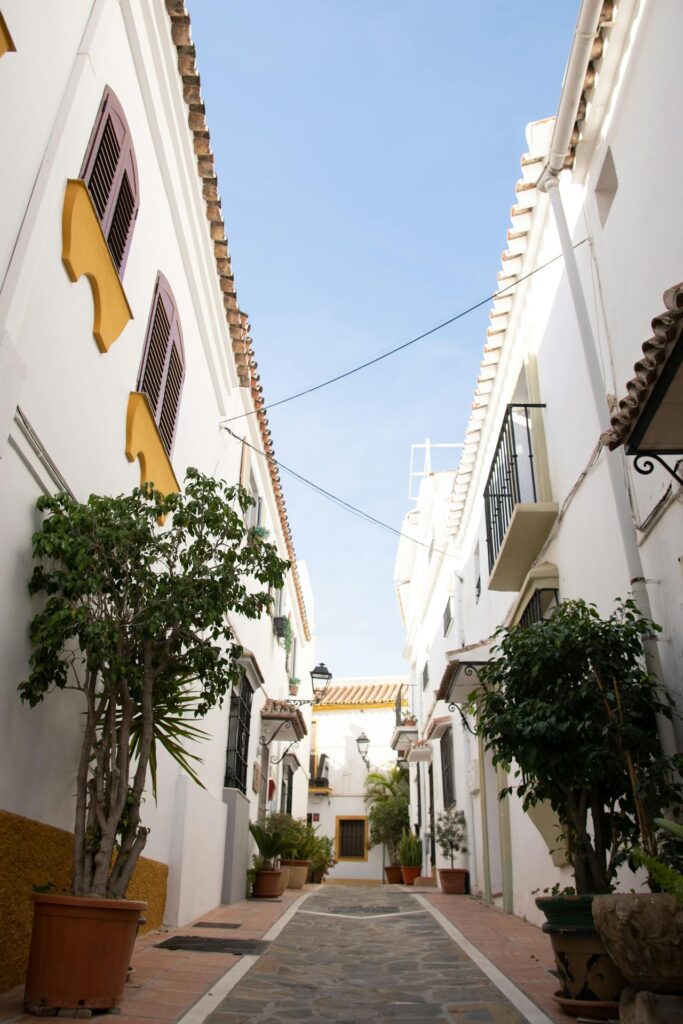
Marbella’s Old Town, with its labyrinth of narrow streets and whitewashed buildings, is a district that breathes history. This charming area is famous for its picturesque plazas, vibrant displays of bougainvillaea, and the iconic Orange Square (Plaza de los Naranjos).

Ideal for the history buff with a love for tradition: Casco Antiguo is perfect for those who appreciate the blend of historical architecture and modern amenities. It’s a place where every corner tells a story, and the community is warm and welcoming.

Cost of Renting: €€ In the Old Town, you can find charming apartments with character. A one-bedroom apartment typically rents for around €1200 a month according to Numbeo, a fair price considering the unique atmosphere and central location. 

Local’s Tip: Enjoy a leisurely coffee at one of the cafes in Plaza de los Naranjos and soak in the ambiance. It’s a quintessential Marbella experience.

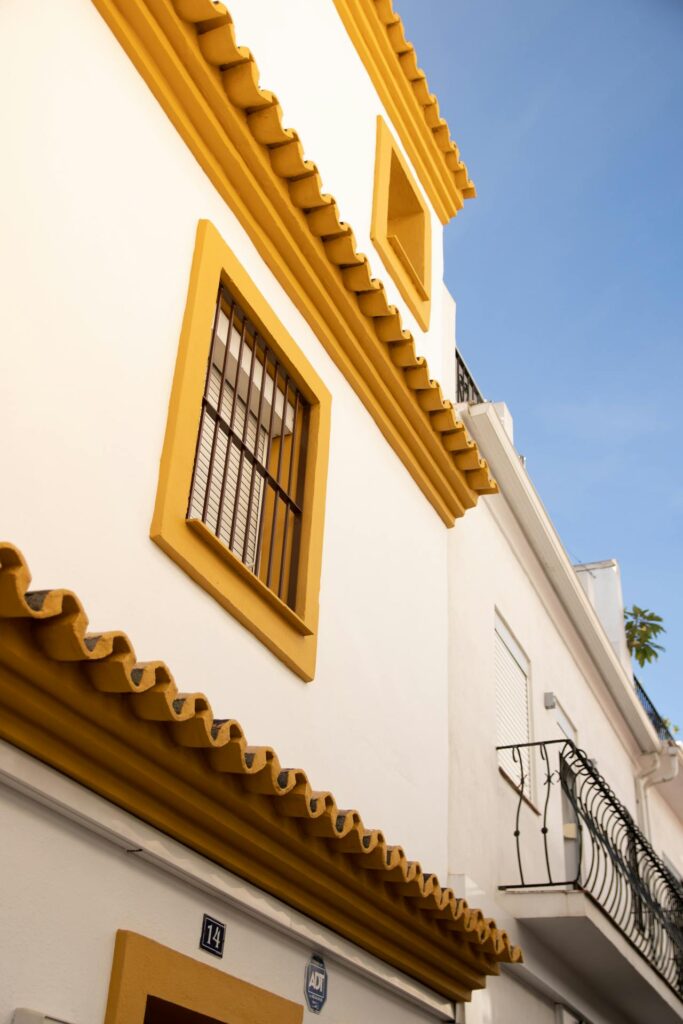
Nueva Andalucía: The Golf Valley

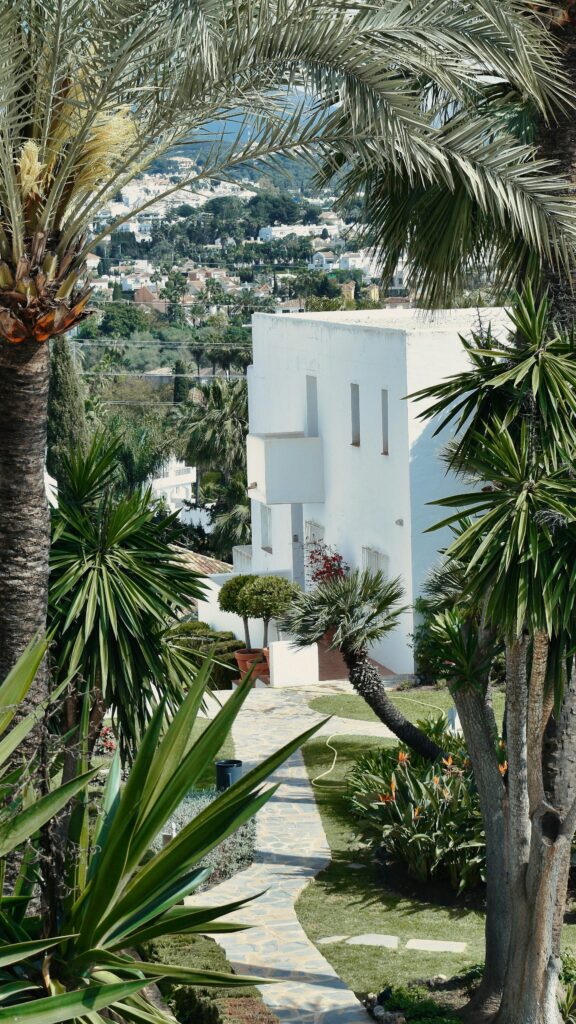
Often referred to as the Golf Valley, Nueva Andalucía is a lush, green area dotted with some of the best golf courses in Spain. It’s a residential neighbourhood that offers a tranquil yet sophisticated lifestyle.

Ideal for the golf enthusiast: Nueva Andalucía is perfect for those who love the sport and want to live in a serene environment. It’s a place where you can enjoy the outdoors and the community is friendly and international.

Cost of Renting: €€€ This neighbourhood offers a range of properties, from modern apartments to luxurious villas. A one-bedroom apartment rents for around €2000 a month.

Local’s Tip: Take advantage of the numerous golf courses in the area, such as Aloha Golf Club and Las Brisas, for a world-class golfing experience.

Puerto Banús: The Glamorous Marina

Puerto Banús is synonymous with luxury. This world-renowned marina is lined with high-end boutiques, gourmet restaurants, and a nightlife that attracts the international jet set.

Ideal for the luxury lover: Puerto Banús is the place for those who enjoy the finer things in life. It’s a hub for luxury yachts, designer shopping, and upscale dining.

Cost of Renting: €€€€ The exclusivity of Puerto Banús comes with a higher price tag. Expect to pay at least triple (if not significantly more) than Marbella Old Town for a one-bedroom apartment here, reflecting the premium lifestyle on offer. You’ll find the majority of premier Marbella real estate agents in and around the port, indicative of the vibe here.

Local’s Tip: Visit the marina at sunset for a stunning view and a chance to spot some of the world’s most impressive yachts.


San Pedro de Alcántara: The Family-Friendly Choice

San Pedro de Alcántara, just a short drive from Marbella, is a charming town that has retained its Spanish authenticity. It’s known for its family-friendly atmosphere, beautiful beaches, and vibrant local life.

Ideal for families and those seeking a quieter life: San Pedro is perfect for those who want to enjoy a more laid-back lifestyle while still being close to Marbella’s amenities.

Cost of Renting: € to €€ San Pedro offers great value for money, with rental prices lower than in central Marbella. A one-bedroom apartment can be found for around €1000 a month.

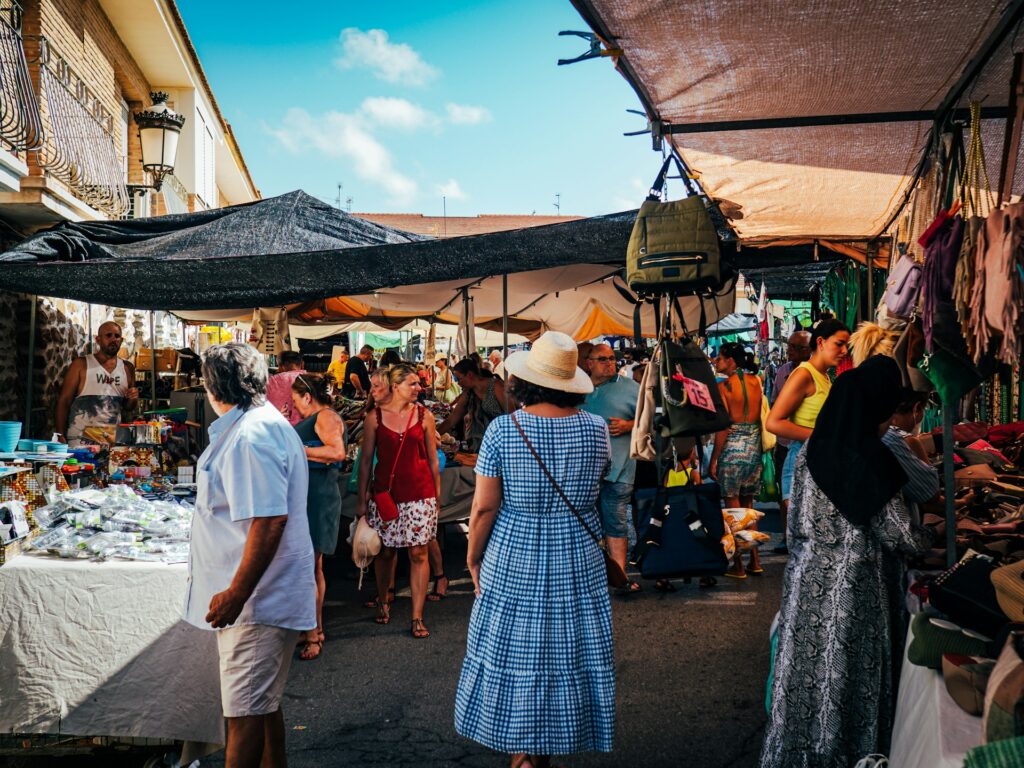
Local’s Tip: Visit the weekly market on Thursdays for fresh produce and local crafts. It’s a great way to immerse yourself in the local culture (and try plenty of freebies, too!).
La Campana: The Hidden Gem

Located just a short drive from central Marbella, La Campana is a neighbourhood that offers a blend of city-adjacent convenience and local charm. This area is known for its welcoming community, local shops, and a variety of dining options that cater to all tastes.

Ideal for the community-minded expat: La Campana is perfect for those who want to experience authentic Spanish life while still being close to the amenities of Marbella. It’s a place where neighbours know each other, and the pace of life is relaxed.

Cost of Renting: € to €€ La Campana offers some of the most affordable rents in the Marbella area. A one-bedroom apartment can be rented for as little as €1000 a month, making it an excellent choice for budget-conscious expats.

Local’s Tip: Visit the local tapas bars for a taste of traditional Spanish cuisine. The area is known for its vibrant food scene, with many hidden gems waiting to be discovered.

Read: Where to eat the freshest seafood in Marbella and Fuengirola

Las Chapas: The Family-Friendly Haven

Las Chapas, located to the east of Marbella, is a residential neighbourhood that’s perfect for families. It’s known for its excellent schools, green spaces, and a strong sense of community.

Ideal for families: Las Chapas is perfect for those looking for a safe and welcoming environment to raise children. The area offers a variety of amenities, including parks, sports facilities, and family-friendly restaurants.

Cost of Renting: € to €€ Las Chapas provides good value for money, with rental prices lower than in central Marbella. A one-bedroom apartment can be found for around €1000 a month, making it an attractive option for families.

Local’s Tip: Explore the nearby Dunas de Artola, a natural reserve with stunning sand dunes and walking trails. It’s a perfect spot for a family day out in nature.

A Few Practicalities

Navigating Residency Post-Brexit: Since Brexit, British citizens must navigate new rules for living in Spain. For stays longer than 90 days, you’ll need a visa. The Non-Lucrative Visa is popular among retirees, while the Golden Visa suits investors. Start this process early by contacting the Spanish consulate in the UK or a local gestor (administrative assistant) in Marbella for guidance.

Healthcare in Marbella: Register with the local health centre (centro de salud) once you have your residency. If you’re working and paying social security in Spain, you’ll have access to state healthcare. Otherwise, consider private health insurance. Hospital Quirónsalud Marbella and HC Marbella International Hospital are two reputable private healthcare providers in the area.

Setting Up a Bank Account: For day-to-day finances, open an account with a bank like Banco Sabadell or CaixaBank, which offer services tailored to expats, including English-speaking staff. You’ll need your NIE (Foreigner’s Identification Number), passport, and proof of address.

Understanding Local Taxes: In Spain, you’re a tax resident if you spend more than 183 days a year in the country. As a resident, you’ll pay income tax on worldwide income to the Agencia Tributaria. Seek advice from a local asesor fiscal (tax advisor) to navigate the double taxation treaty between the UK and Spain.

Language Barrier: While Marbella is cosmopolitan, with many English speakers, learning Spanish is invaluable. The University of Marbella offers Spanish courses for foreigners, and there are numerous language schools like Marbella International University Centre and Enforex.

Driving in Marbella: If you’re bringing a car, you’ll need to register it with the Spanish traffic authority (DGT) and pay the corresponding taxes. You don’t need a car to get around smoothly, though; consider the ‘Tarjeta de Transporte’ card for discounts on buses and the metro. Marbella’s transport system is extensive, with the Avanza bus network connecting you to other cities.

The Bottom Line

Marbella is a city that offers a rich tapestry of experiences, from its luxurious marina to its historic old town. It’s a place where every day feels like a holiday, and for Brits looking for a new chapter, it’s a city that feels like home. Choose your barrio, embrace the Andalusian charm, and you’ll soon be living the dream in ‘Marbella la Hermosa’. ¡Bienvenidos a Marbella!
Roads, Rides & Risotto: Italy’s Ultimate Motorbike Adventures

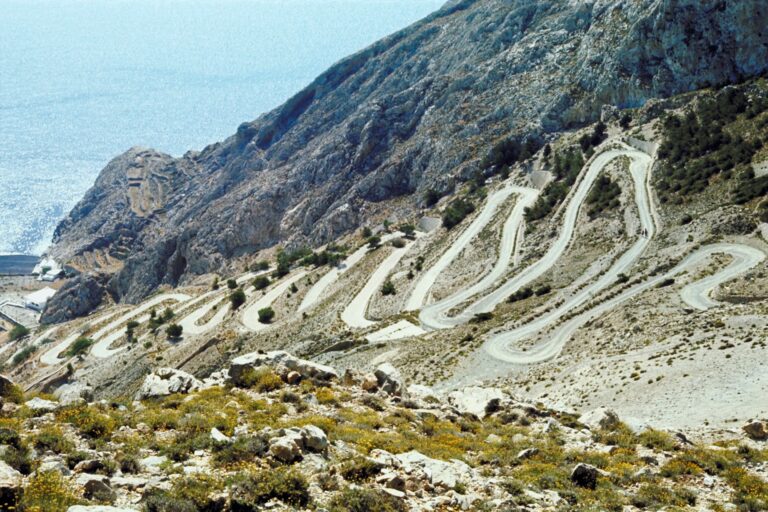
From the winding roads of the Amalfi Coast to the rolling hills of Tuscany and the dramatic landscapes of the Dolomites, Italy is a motorcyclist’s dream. Indeed, its twisty roads are fun for motorbikes, bringing a new surprise and amazing views every minute. Feeling the curves of the landscape and witnessing the country’s vast and varied terrain by bike is one of the best ways to get to know this incredible country. Moreover, shots of fiendishly strong espresso and deliciously carbohydrate-rich pasta and risotto provide the ideal fuel for the road.

For those eager to explore Italy on two wheels, here are some of the best motorbike trips in this captivating country, some short, some long, and all of them amazing.

The Amalfi Coast Ride 

Route: Sorrento to Salerno 

Distance: Approximately 60 km 

Duration: 1 day

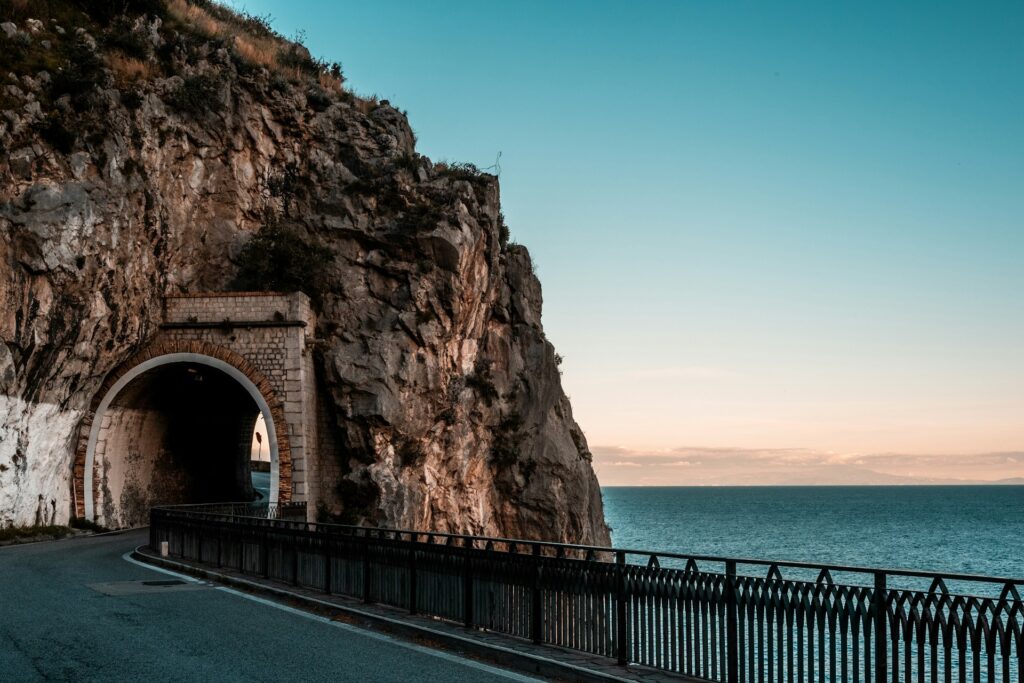
We had to start here. The Amalfi Coast, with its stunning coastal roads and breathtaking views, is a must-ride for any motorbike enthusiast.

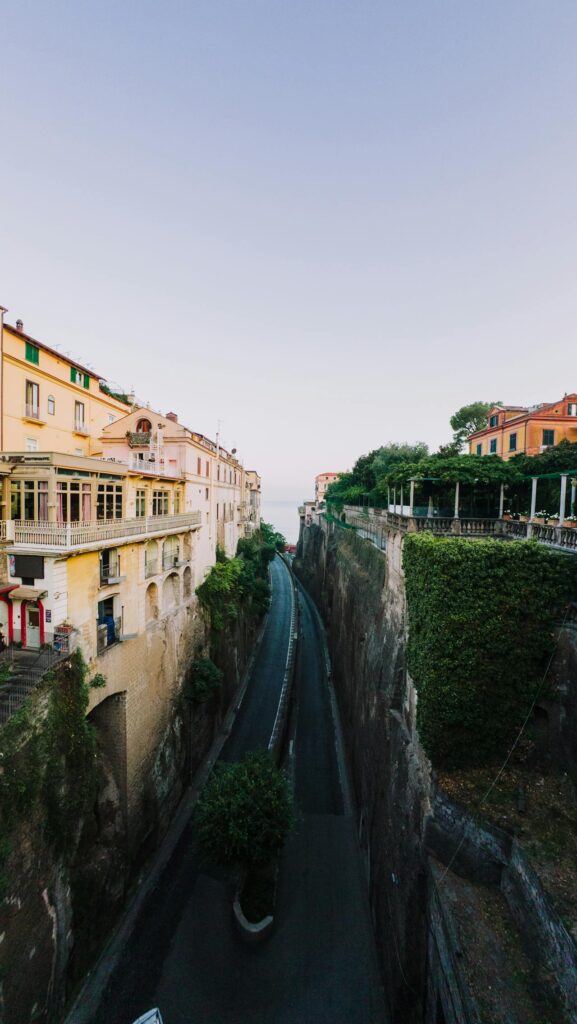
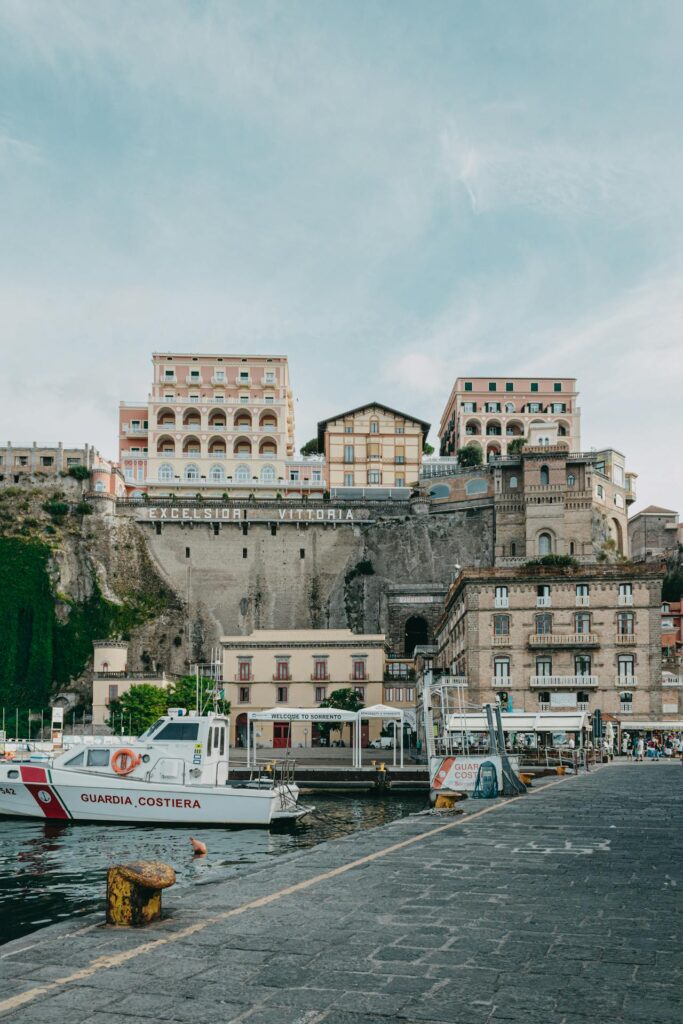
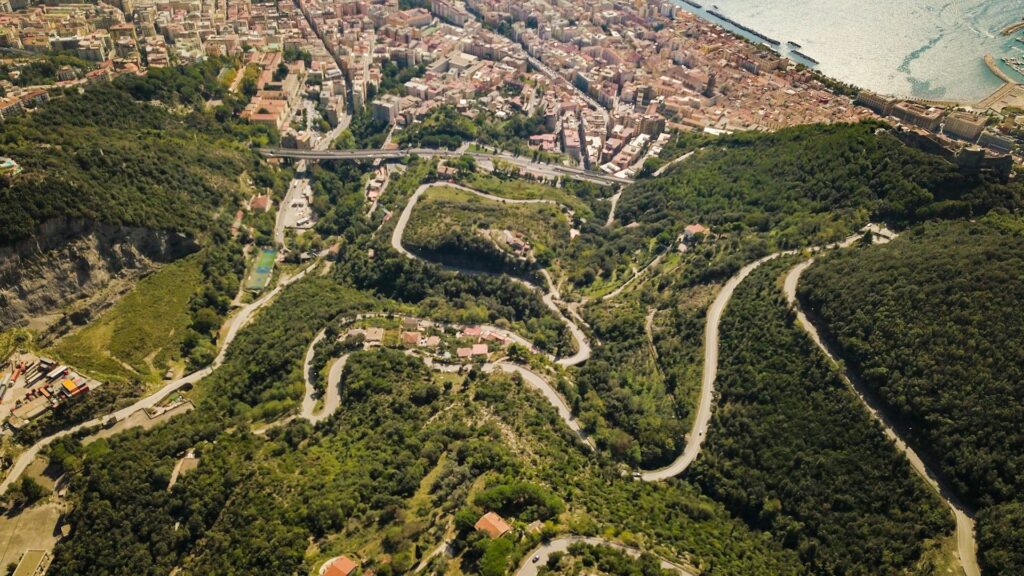
Starting in the charming town of Sorrento, the route takes you along the SS163, a road that hugs the cliffs and offers panoramic views of the Tyrrhenian Sea. The ride ends in the historic city of Salerno. The route is relatively short but packed with twists and turns, making it a thrilling ride for experienced motorcyclists. The start of October is the best time to take on this, any earlier and you’ll likely melt in your leathers.

IDEAL for: Scenic Ride Lovers and Coastal Enthusiasts. The Amalfi Coast Ride is perfect for those who enjoy dramatic coastal scenery and picturesque towns.

Key Dish to Try: Savour a plate of Spaghetti alle Vongole, a classic Italian dish featuring fresh clams, garlic, and white wine, capturing the flavours of the sea.

Best Wine of the Region: Campania wines, particularly the white Falanghina, are known for their crisp and refreshing qualities, making them a perfect match for the region’s seafood dishes. We’re only going to say this one, but any wine should be enjoyed only at the end of a day’s riding, when all that’s left afterwards is rest and relaxation.

Montanara at Niburti, Salerno (Italy)

Highlights Along The Way

Positano: A picturesque town with colourful houses cascading down the cliffs. 

Amalfi: Visit the stunning Amalfi Cathedral and enjoy a stroll through the historic centre. 

Ravello: A hilltop town known for its beautiful gardens and stunning views. 

Salerno: Explore the medieval old town and the beautiful seafront promenade.


The Tuscany Hills Ride 

Route: Florence to Siena 

Distance: Approximately 75 km 

Duration: 1-2 days

The rolling hills of Tuscany, with their vineyards, olive groves, and charming villages, offer a quintessential Italian motorbike experience.

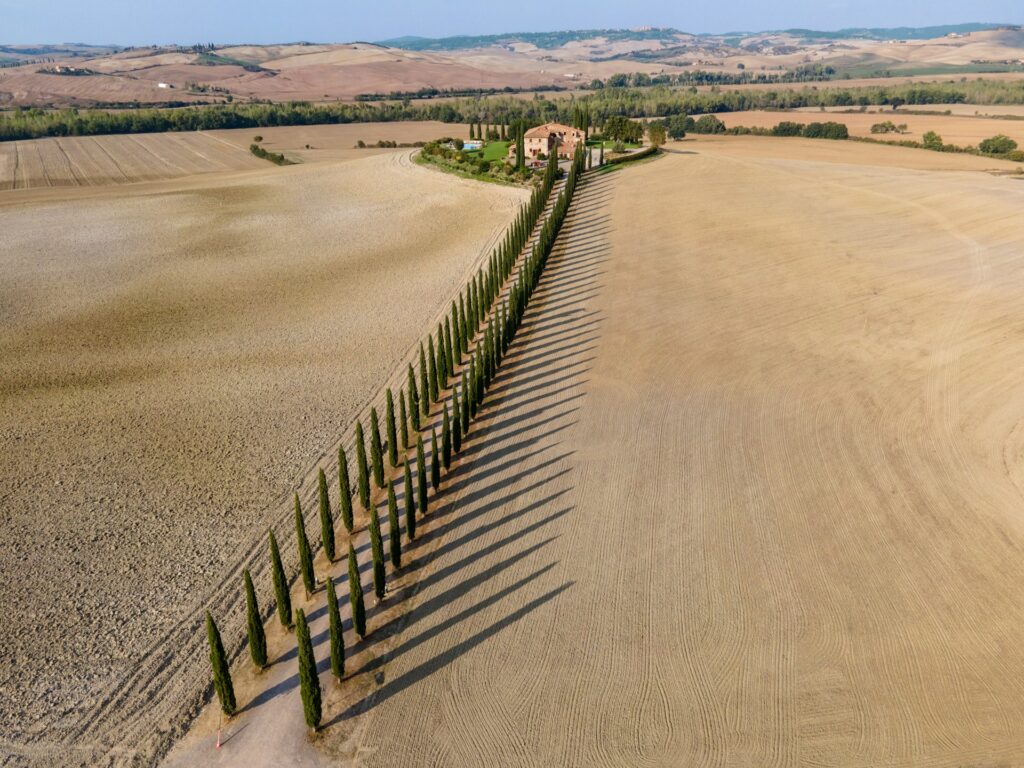
Begin your journey in the Renaissance city of Florence and follow the SR222, also known as the Chiantigiana, through the heart of the Chianti wine region. The route takes you to the medieval city of Siena, known for its stunning architecture and rich history. This ride is relatively easy and can be enjoyed at a leisurely pace, with plenty of opportunities to stop and explore.

IDEAL for: Wine Lovers and History Buffs. The Tuscany Hills Ride is ideal for those who appreciate fine wine, historic towns, and beautiful landscapes.

Key Dish to Try: Refuel on Bistecca alla Fiorentina, a traditional Tuscan T-bone steak, typically grilled and served with a drizzle of olive oil.

Best Wine of the Region: Chianti Classico, a robust red wine made from Sangiovese grapes, is a must-try. Pair it with similarly robust local dishes for a true taste of Tuscany.

Highlights Along The Way

Greve in Chianti: Visit the main square and enjoy a wine tasting at one of the local enotecas. 

Castellina in Chianti: Explore the medieval town and its ancient Etruscan tombs. 

Monteriggioni: A perfectly preserved walled town with stunning views of the surrounding countryside. 

Siena: Visit the magnificent Siena Cathedral and the famous Piazza del Campo.


The Dolomites Loop 

Route: Bolzano to Cortina d’Ampezzo 

Distance: Approximately 150 km 

Duration: 2-3 days

For those seeking a more challenging and adventurous motorbike trip, the Dolomites in northern Italy offer some of the most spectacular mountain roads in Europe.

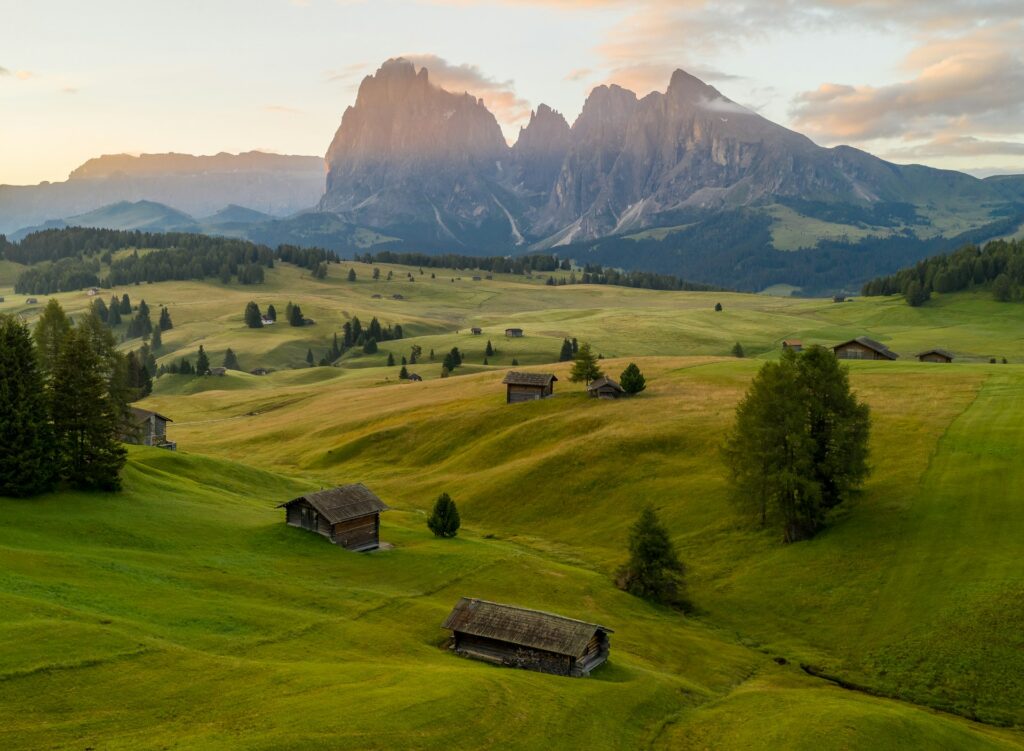
Starting in the city of Bolzano, the route takes you through the heart of the Dolomites, with its dramatic peaks, alpine meadows, and winding roads. The ride ends in the glamorous ski resort town of Cortina d’Ampezzo. The route is well-marked but can be challenging due to the steep climbs and sharp bends, so it’s best suited for experienced riders.

IDEAL for: Adventure Seekers and Mountain Enthusiasts. The Dolomites Loop is perfect for those who enjoy challenging rides and the opportunity to explore one of Italy’s most beautiful natural landscapes.

Key Dish to Try: Try Canederli, traditional bread dumplings often served in a rich broth or with a hearty meat sauce, perfect for refuelling after a day on the road.

Best Wine of the Region: Alto Adige wines, particularly the white Gewürztraminer, are known for their aromatic qualities and pair well with the local cuisine.

Highlights Along The Way

Val Gardena: A stunning valley known for its beautiful landscapes and outdoor activities.

Passo Pordoi: A high mountain pass offering breathtaking views of the Dolomites. 

Cortina d’Ampezzo: Explore the chic town centre and enjoy the stunning mountain scenery. 


The Lakes of Lombardy Ride 

Route: Milan to Lake Como 

Distance: Approximately 80 km

Duration: 1 day

The lakes of Lombardy, with their serene waters and picturesque towns, offer a relaxing and scenic motorbike ride.

Begin your journey in the bustling city of Milan and head north towards Lake Como, one of Italy’s most beautiful lakes. The route takes you through charming villages and along the shores of the lake, offering stunning views and plenty of opportunities to stop and explore. This ride is relatively easy and can be completed in a day, making it perfect for a leisurely exploration of the region.

If you’re keen to go further, continue from Como to the San Marco Pass, which offers a more challenging ride with breathtaking alpine scenery, perfect for experienced cyclists looking to test their skills and enjoy the majestic landscapes of the Italian Alps.

IDEAL for: Relaxation Seekers and Nature Lovers. The Lakes of Lombardy Ride is ideal for those who enjoy gentle rides with plenty of opportunities to appreciate the natural beauty of the region.

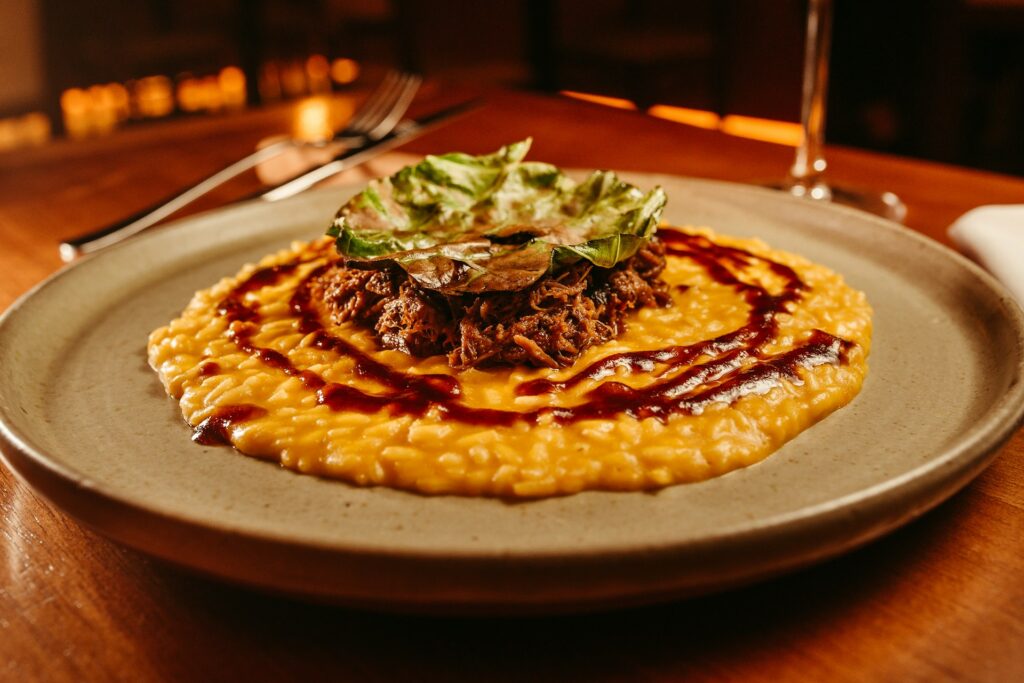
Key Dish to Try: Enjoy a plate of Risotto alla Milanese, a creamy risotto flavoured with saffron, a speciality of the region.

Best Wine of the Region: Franciacorta, a sparkling wine from the Lombardy region, is perfect for celebrating a day of riding.

Highlights Along The Way

Bellagio: A picturesque town known as the “Pearl of Lake Como,” with beautiful gardens and stunning views. 

Varenna: A charming village with narrow streets and a beautiful lakeside promenade. 

Villa del Balbianello: A historic villa with beautiful gardens and stunning views of the lake. 

Como: Explore the historic town centre and enjoy a boat trip on the lake. 


A Couple More Epic Italian Motorbike Adventures For Good Measure

Italy’s diverse landscapes and rich cultural heritage make it an ideal destination for extended motorbike journeys. For those seeking to immerse themselves in the beauty and history of this captivating country, here are a couple of longer rides that promise unforgettable experiences over several days.

The Grand Italian Tour

Route: Milan to Rome
Distance: Approximately 600 km
Duration: 5-7 days

Embark on a grand tour that takes you from the fashion capital of Milan to the historic heart of Rome. This route offers a perfect blend of urban exploration, scenic countryside, and cultural immersion. We’ve only included around three hours of driving a day, so you could comefortably complete this one in half the time if you were happy to spend more hours on the road.

Day 1: Milan to Parma
Start your journey in Milan, exploring its iconic landmarks such as the Duomo and the Sforza Castle. Head south towards Parma, a city renowned for its culinary delights. Savour the famous Prosciutto di Parma and Parmigiano Reggiano cheese.

Day 2: Parma to Bologna
Continue your ride to Bologna, the gastronomic capital of Italy. Enjoy the vibrant atmosphere of the city and indulge in traditional dishes like Tagliatelle al Ragù (Bolognese sauce).

Day 3: Bologna to Florence
Ride through the picturesque Emilia-Romagna region to Florence, the cradle of the Renaissance. Spend a day or two exploring its art, architecture, and history. Don’t miss the Uffizi Gallery and the Ponte Vecchio.

Day 4: Florence to Siena
Head into the heart of Tuscany, riding through the Chianti wine region to the medieval city of Siena. Explore the stunning Piazza del Campo and the magnificent Siena Cathedral.

Day 5: Siena to Orvieto
Continue south to Orvieto, a charming hilltop town in Umbria. Visit the impressive Orvieto Cathedral and enjoy the local Orvieto Classico wine.

Day 6: Orvieto to Rome
Conclude your journey in the Eternal City of Rome. Spend a couple of days exploring its ancient ruins, vibrant neighbourhoods, and world-class museums. Highlights include the Colosseum, the Vatican, and the Trevi Fountain.

IDEAL for: Culture Enthusiasts and Food Lovers. The Grand Italian Tour is perfect for those who want to experience Italy’s rich history, art, and cuisine.

Key Dish to Try: In Rome, try the classic Roman dish Cacio e Pepe, a simple yet delicious pasta made with Pecorino Romano cheese and black pepper.

Best Wine of the Route: In Tuscany, enjoy a glass of Brunello di Montalcino, a prestigious red wine known for its depth and complexity.


The Southern Italy Odyssey

Route: Naples to Palermo
Distance: Approximately 800 km
Duration: 7-10 days

Explore the rugged beauty and rich history of Southern Italy on a journey from Naples to Palermo. This route takes you through some of the most stunning and lesser-known parts of Italy.

Day 1: Naples to Sorrento
Begin your adventure in Naples, a city known for its vibrant street life and delicious pizza. Ride along the coast to Sorrento, a charming town with stunning views of the Bay of Naples and plenty of great boat trips from the town’s two marinas.

Day 2: Sorrento to Matera
Head inland to Matera, a UNESCO World Heritage site famous for its ancient cave dwellings. Spend a day exploring the Sassi di Matera and the rock-hewn churches.

Day 3: Matera to Alberobello
Ride through the picturesque countryside of Puglia to Alberobello, known for its unique trulli houses. Wander through the narrow streets and enjoy the local cuisine.

Day 4: Alberobello to Lecce
Continue south to Lecce, often referred to as the “Florence of the South” due to its stunning Baroque architecture. Explore the historic centre and visit the Roman amphitheatre.

Day 5: Lecce to Reggio Calabria
Ride along the Ionian coast to Reggio Calabria, the gateway to Sicily. Visit the National Archaeological Museum, home to the famous Riace Bronzes.

Day 6: Reggio Calabria to Taormina
Cross the Strait of Messina to Sicily and ride to Taormina, a beautiful town perched on a hill overlooking the sea. Visit the ancient Greek theatre and enjoy the stunning views of Mount Etna.

Day 7: Taormina to Palermo
Conclude your journey in Palermo, the vibrant capital of Sicily. Spend a couple of days exploring its rich history, bustling markets, and diverse architecture.

IDEAL for: History Buffs and Adventure Seekers. The Southern Italy Odyssey is perfect for those who want to explore the less-travelled paths and discover the unique charm of Southern Italy.

Key Dish to Try: In Palermo, try Arancini, delicious rice balls stuffed with various fillings and fried to perfection.

Best Wine of the Route: In Sicily, enjoy a glass of Nero d’Avola, a robust red wine known for its bold flavours that reflect the island’s unique terroir.

These extended motorbike adventures offer a unique way to experience the diverse landscapes, rich culture, and delicious cuisine of Italy. Whether you’re riding through the heart of Tuscany or exploring the rugged beauty of Southern Italy, these journeys promise unforgettable memories and thrilling experiences.

The Bottom Line 

Motorbike trips in Italy offer a unique way to experience the country’s diverse landscapes, rich culture, and delicious cuisine. Whether you’re looking for a coastal ride, a vineyard tour, a mountain adventure, or a lakeside escape, Italy has got you covered. 

If you’re looking for a convenient way to explore Italy on two wheels, consider Hertz Ride. With a wide range of motorcycles available, Hertz Ride can help you find the perfect bike for your adventure so that you can cruise through Italy in style.

Is It Easy To Climb Kilimanjaro? Things We Wish We’d Known Before Attempting It

As travel writer Tim Moore once wrote, “There are two stories about what it’s like to climb Kilimanjaro: the one people tell their friends after they get home, which has the benefit of inspiring others to tackle the world’s highest free-standing mountain, and the one they tell each other at the summit, which has the benefit of being true”. 

Mount Kilimanjaro, Africa’s highest peak, stands at a staggering 5,895 metres (19,341 feet) above sea level. Its snow-capped summit and diverse ecosystems attract thousands of adventurers each year. But is it easy to scale the dizzy heights of Kilimanjaro? The short answer is no, but the long answer is far more nuanced. Here are some things we wish we’d known before attempting this iconic climb.

The Myth Of The ‘Walk-Up’ Mountain

One of the most pervasive myths about climbing Kilimanjaro is that it’s a ‘walk-up’ mountain, implying that it’s a simple trek requiring minimal effort. While it’s true that Kilimanjaro doesn’t require technical climbing skills, this doesn’t mean you can simply rock up in your joggers and T-shirt and saunter up to the ascent. The altitude, weather conditions, and physical demands make it a challenging endeavour by anyone’s standards.

The Invisible Foe Of Altitude Sickness

You’ll likely experience shortness of breath, head pain, vomiting unexpectedly, fatigue and nosebleeds. 

Altitude sickness is the most significant challenge climbers face. As you ascend, the air becomes thinner, and your body struggles to get enough oxygen. Symptoms can range from mild headaches and nausea to severe, life-threatening conditions like High Altitude Pulmonary Edema (HAPE) or High Altitude Cerebral Edema (HACE). Either way, it’s not fun to feel this way when you’re on terra firma and ground zero, let alone several thousand feet in the sky.

What We Wish We’d Known: Acclimatisation Is Crucial

Acclimatisation is the process of allowing your body to adjust to lower oxygen levels at higher altitudes. Proper acclimatisation can significantly reduce the risk of altitude sickness and increase your chances of reaching the summit. Here are some tips and suggestions for acclimatising effectively:

Choose a Longer Route: Opt for routes like the Lemosho or Northern Circuit, which allow more time for your body to adjust to the altitude. These routes typically take 7-9 days, providing a more gradual ascent and better acclimatisation opportunities.

Practice High-Altitude Hiking: In the UK, you can train on peaks like Ben Nevis in Scotland, which stands at 1,345 metres (4,413 feet), Snowdon in Wales at 1,085 metres (3,560 feet), and Scafell Pike in North England at 978 metres (3,209 feet). While these elevations don’t compare to Kilimanjaro, they offer challenging hikes and a chance to experience higher elevations. 

Near Kilimanjaro, consider climbing Mount Meru in Tanzania, which stands at 4,562 metres (14,968 feet), or trekking in the Ngorongoro Crater Highlands, where altitudes range from 2,200 to 3,600 metres (7,218 to 11,811 feet). These locations provide excellent acclimatisation opportunities and stunning views.

Follow The ‘Climb High, Sleep Low’ Principle: This principle involves hiking to a higher altitude during the day and then descending to sleep at a lower altitude. It helps your body adjust to the altitude more effectively.

Stay Hydrated & Eat Well: Proper hydration and nutrition are essential for acclimatisation. Drink plenty of water and eat a balanced diet rich in carbohydrates to fuel your body.

Listen To Your Body: Pay attention to how your body feels and don’t ignore symptoms of altitude sickness. If you experience severe symptoms, descend immediately and seek medical attention.

Consider Medication: Some climbers use medications like acetazolamide (Diamox) to help prevent altitude sickness. Consult with your doctor before your trip to see if this is a suitable option for you.

It’s More Than Just A Hike, So Physical Preparation Is Crucial

Climbing Kilimanjaro is a multi-day trek that requires a good level of physical fitness. You’ll be walking for 5-7 hours a day, often on steep, uneven terrain. The summit night is particularly gruelling, with a midnight start and a 6-8 hour climb in freezing temperatures.

What We Wish We’d Known: Start Training At Least Three Months Before Your Trip 

Focus On Cardiovascular Health: Engage in activities like running, cycling, or swimming to improve your heart and lung capacity. Aim for at least 30-45 minutes of cardio, 3-4 times a week. This will help you cope with the reduced oxygen levels at high altitudes.

Simulate Different Conditions: Practise hiking with a weighted backpack to mimic the conditions you’ll face on Kilimanjaro. Start with a lighter load and gradually increase the weight. Train on varied terrain, including hills and rocky paths, to build strength and endurance.

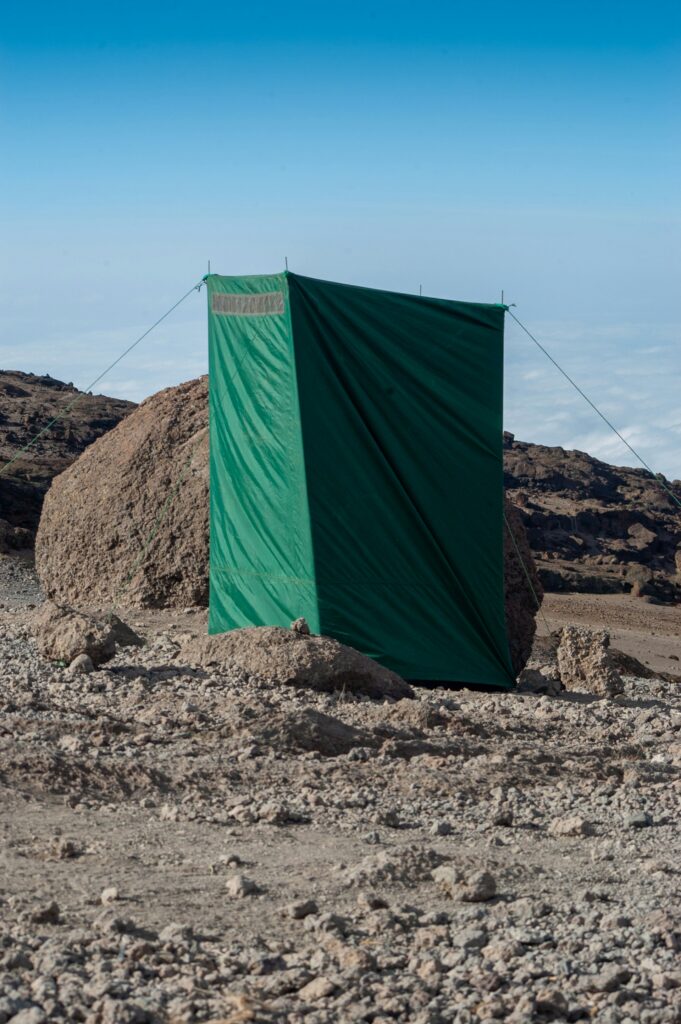
The toilet tent at the Kilimanjaro base camp

The Importance Of Having The Right Gear

Having the right gear can make or break your Kilimanjaro experience. The weather on the mountain is unpredictable, and you’ll need to be prepared for everything from scorching sun to freezing winds.

What We Wish We’d Known: High-Quality Gear Makes A Huge Difference

Layering System: The key to staying comfortable on Kilimanjaro is mastering the art of layering. The weather can change rapidly, and having a flexible layering system allows you to adjust your clothing to stay warm and dry. Your base layer should wick moisture away from your skin, the mid-layer should provide insulation, and the outer layer should protect you from wind and rain. Don’t forget to bring a warm hat, gloves, and a buff or neck gaiter to protect your extremities from the cold.

Footwear & Foot Care: Your feet will be your primary mode of transportation (hopefully your only mode – you’re not going to be crawling!), so taking care of them is paramount. Invest in high-quality, waterproof hiking boots with good ankle support. Make sure to break them in well before your trip to avoid blisters. 

Additionally, bring multiple pairs of moisture-wicking socks and consider using liner socks to reduce friction. Pack a small foot care kit with blister treatment supplies, such as moleskin, blister pads, and antiseptic ointment, to address any issues promptly.

Mental Fortitude Is As Crucial As The Physical Stuff

The mental challenge of climbing Kilimanjaro is often underestimated. The long days, physical exertion, and altitude can take a toll on your mental state. Staying positive and motivated is crucial.

What We Wish We’d Known: The Climb Is A Mental One, Too

Prepare mentally by setting realistic expectations and understanding that there will be tough moments. Develop a mantra or mental strategy to keep yourself motivated. Remember, the climb is as much a mental challenge as it is a physical one.

The Role Of Guides & Porters

Your guides and porters are the unsung heroes of your Kilimanjaro climb. They carry your gear, set up camp, cook meals, and provide invaluable support and encouragement. Tipping is customary and an important part of their income, so budget accordingly. Of course, it’s essential that you learn a few Swahili phrases to show your appreciation and build camaraderie.

What We Wish We’d Known: Bring Extra Gear & Supplies To Donate To Local Organisations

Ethical Treatment & Fair Wages: When selecting a tour operator, it’s essential to ensure that they adhere to ethical practices and provide fair wages and working conditions for their guides and porters. Many porters face challenging conditions, carrying heavy loads with minimal gear and inadequate food. 

Lone porter carrying bags on head up mountain path.

Supporting companies that are members of the Kilimanjaro Porters Assistance Project (KPAP) or similar organisations can help ensure that porters receive fair treatment, proper equipment, and sufficient food and shelter. By choosing an ethical operator, you contribute to the well-being and dignity of the local workforce.

Supporting Local Communities: Beyond fair wages, consider how your climb can positively impact the local communities. Some tour operators partner with local charities and community projects, directing a portion of their profits to support education, healthcare, and environmental conservation initiatives in the region. 

You can bring extra gear, clothing, or school supplies to donate to local organisations, further supporting the people who make your adventure possible.

The Summit: Just A Moment Of Triumph

It’s true, reaching the summit of Kilimanjaro is an unforgettable experience. The sense of accomplishment, the breathtaking views, and the camaraderie with your fellow climbers make it all worthwhile.

What We Wish We’d Known: The Summit Is Just The Halfway Point! 
Of course, we knew that in the back of our minds, but perhaps hadn’t quite levelled with the physical demands on the ascent mentally until we had actually reached the summit. Indeed, descending can be just as challenging, so conserve your energy and stay focused. Take time to savour the moment and capture it in photos, sure, but also be mindful of the time you spend at the summit due to the altitude.

Final ascent to the top of Kilimanjaro or Uhuru Peak. A line of hikers stepping over snow. Mount Mawenzie in the distance looking down on the clouds.

The Bottom Line

Climbing Kilimanjaro is a challenging but incredibly rewarding experience. It’s not easy, but with the right preparation, mindset, and support, it is achievable. The journey will test your limits, but it will also provide you with memories and a sense of accomplishment that will last a lifetime.

So, is it easy to climb Kilimanjaro? No. But is it worth it? Absolutely.

Anyway, all that hiking has made us hungry. Back at sea level, we can’t wait to feast on Tanzania’s most delicious local dishes. Care to join us?

What Food Is Madrid Most Famous For? 9 Of The Best Eats & Where To Enjoy Them

Madrid, a city that has long been the political and cultural epicentre of Spain, now also stands as a culinary powerhouse, with 3 Michelin-starred temples of modernist gastronomy rubbing shoulders with tightly packed tapas bars where you, erm, can’t help but rub shoulders with fellow food aficionados.

Here, the gastronomic landscape is as intricate as the masterpieces that adorn the walls of the Museo del Prado, each dish a brushstroke on the capital’s vibrant canvas.

As the city awakens to the clatter of morning commutes and the golden hue of sunrise kissing the grand facades, there’s a knowing cleverness in the way Madrileños embrace their day. It begins, perhaps, with a breakfast steeped in tradition, a nod to the city’s culinary and cultural past. This is a place where the echoes of history are heard not just in the reverent halls of grand monuments but also in the bustling bars and historic taverns where the city’s heart truly beats.

From the hearty embrace of Cocido Madrileño to the maritime whisper of Bocadillo de Calamares, all the way to the layered legacy of Tortilla Española and the sweet embrace of Churros con Chocolate, Madrid’s dishes are a dialogue between the ages—a culinary conversation that has been ongoing for centuries. Each recipe is a testament to survival, innovation, and celebration, a reflection of the city’s spirit.

With all that mind, here’s the food that Madrid is most famous for, and some suggestions on where you might find the best version in Spain’s capital city.

Cocido Madrileño – The Quintessential Madrid Stew

By Plateresca via Canva

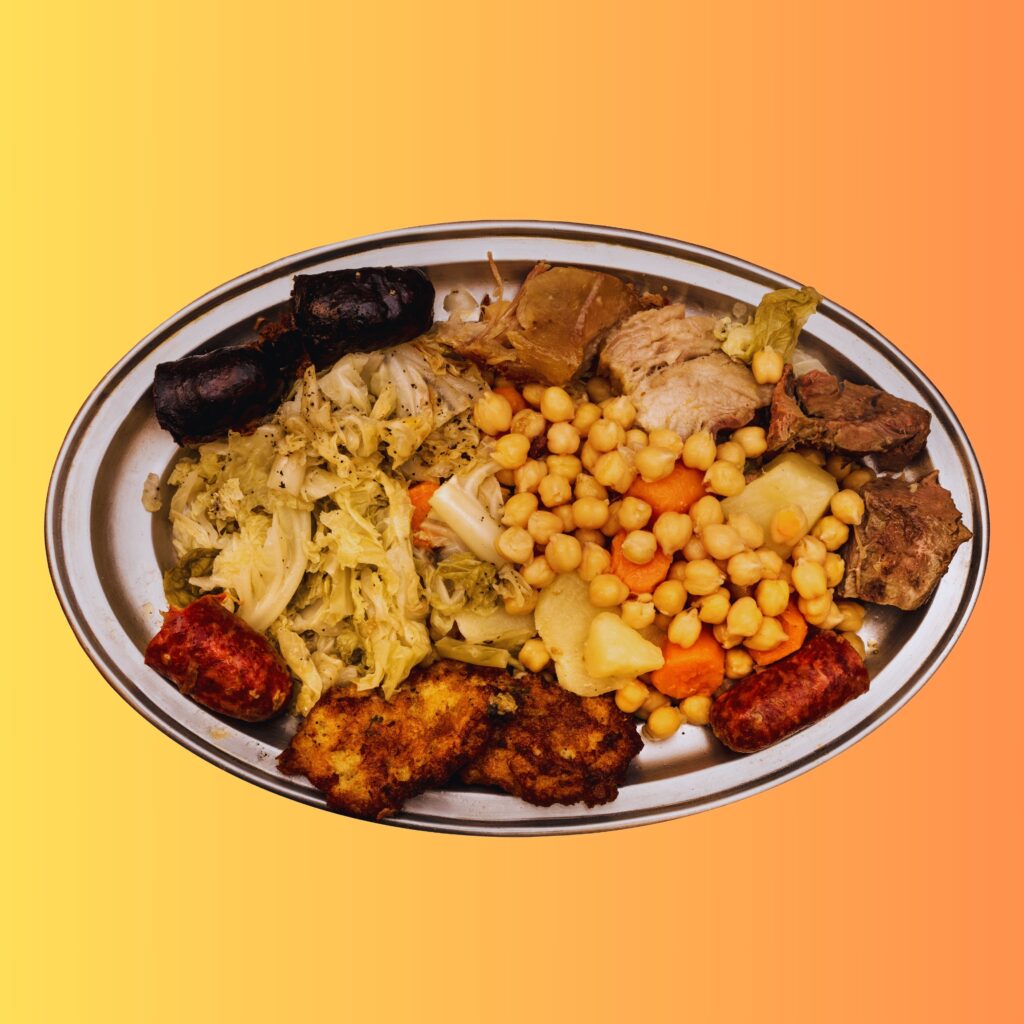
What it is: Cocido Madrileño is a traditional chickpea-based stew that is synonymous with Madrid’s culinary identity (the name literally translates as ‘Madrid Stew’). It’s a hearty dish that combines vegetables, meats, and sausages, cooked slowly to perfection.

The History: Cocido Madrileño is not just a dish; it’s a gastronomic event. With roots in the Sephardic Jewish ‘adafina’ and the Christian ‘olla podrida’, this chickpea-based stew evolved in Madrid during the 17th century. It was a practical solution for a filling meal that could be cooked over a low flame, undisturbed, while observing the Sabbath.

The Tradition: The dish is traditionally served in ‘vuelcos’ or turns – first the broth, followed by the chickpeas and vegetables, and finally the meat. It’s a communal feast that embodies the warmth of Madrid’s hospitality.

Where to eat it: For an authentic Cocido experience, visit La Bola tavern, a family-run establishment that has been serving this dish since 1870, using the same traditional recipe and cooking method – in individual clay pots over oak charcoal.


Bocadillo de Calamares – The Madrid Street Food Staple

What it is: This simple yet delicious sandwich consists of fried squid rings served in a crusty baguette. It’s a popular snack that Madrileños enjoy at any time of the day. 

The History: Despite Madrid’s landlocked location, the Bocadillo de Calamares is a testament to the city’s historical trade links. In the 20th century, railways began to bring fresh seafood from coastal regions to Madrid’s tables, and the calamari sandwich quickly became a beloved staple.

The Tradition: This simple yet iconic sandwich is a symbol of Madrid’s bustling street life, often enjoyed on sunny terraces or as a quick bite at bustling bars.

Where to eat it: Head to Casa Rúa or El Brillante near the Atocha station to try one of the best Bocadillo de Calamares in Madrid. Both places are renowned for their fresh, crispy calamari and lively atmosphere.

Read: 8 places to eat the best fried calamari and chipirones in London


Tortilla Española – The Spanish Omelette

By hurdiantonia0 from Pixabay

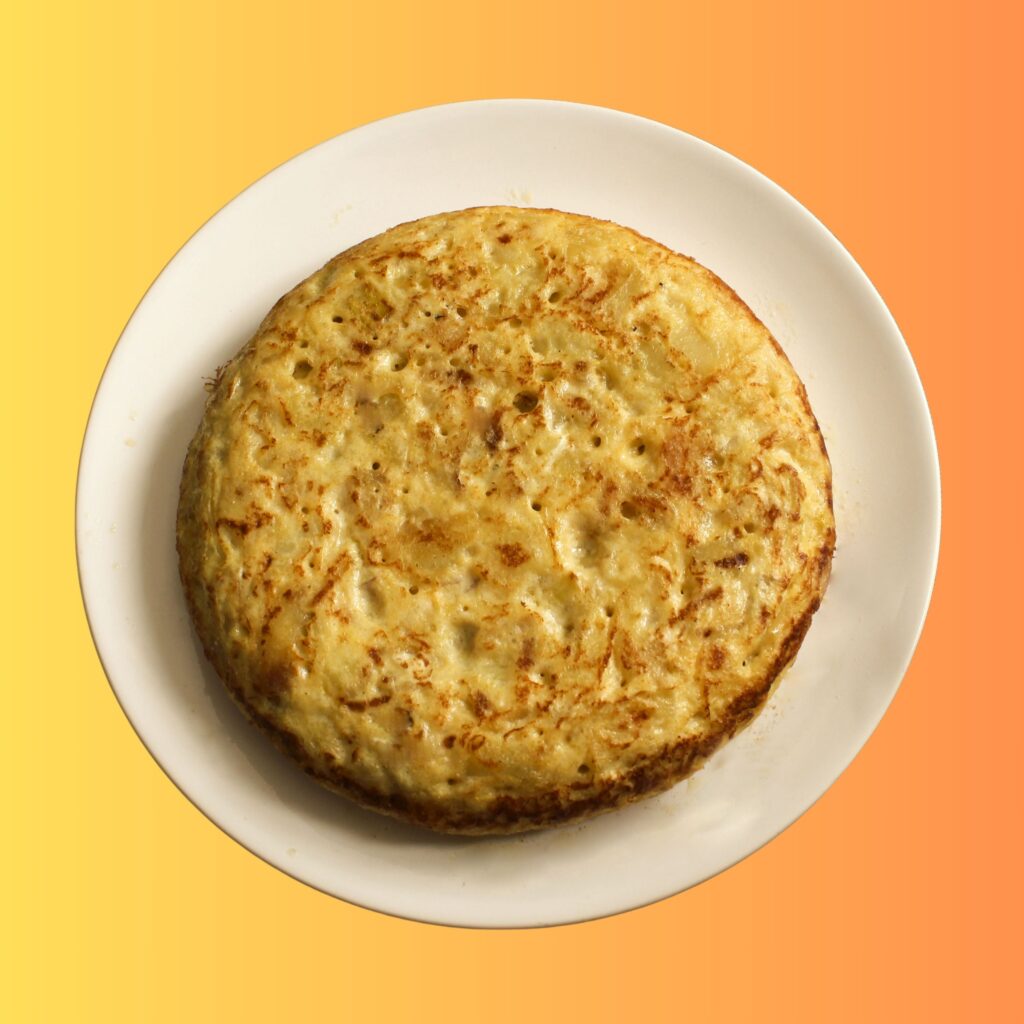
What it is: Also known as Tortilla de Patatas, this is a classic Spanish omelette made with eggs, potatoes, and onions. It’s a staple in Madrid’s food scene, served either warm or cold.

The History: The Tortilla Española, or Spanish omelette, is a humble masterpiece with disputed origins. Some say it was a cost-effective recipe during the Carlist Wars, while others claim it was a creation of a humble housewife. Regardless, it has been a part of Madrid’s culinary soul since the 19th century.

The Tradition: In Madrid, the tortilla is a ubiquitous presence at family gatherings, tapas bars, and even picnics in the Retiro Park. It’s a dish that unites, a common denominator in the city’s diverse food scene.

Where to eat it: Juana La Loca in La Latina neighbourhood offers a modern twist on the traditional tortilla, with an oozing centre that is the source of much debate in the capital.


Huevos Rotos – The Comfort Food Classic

By bhofack2 via Canva

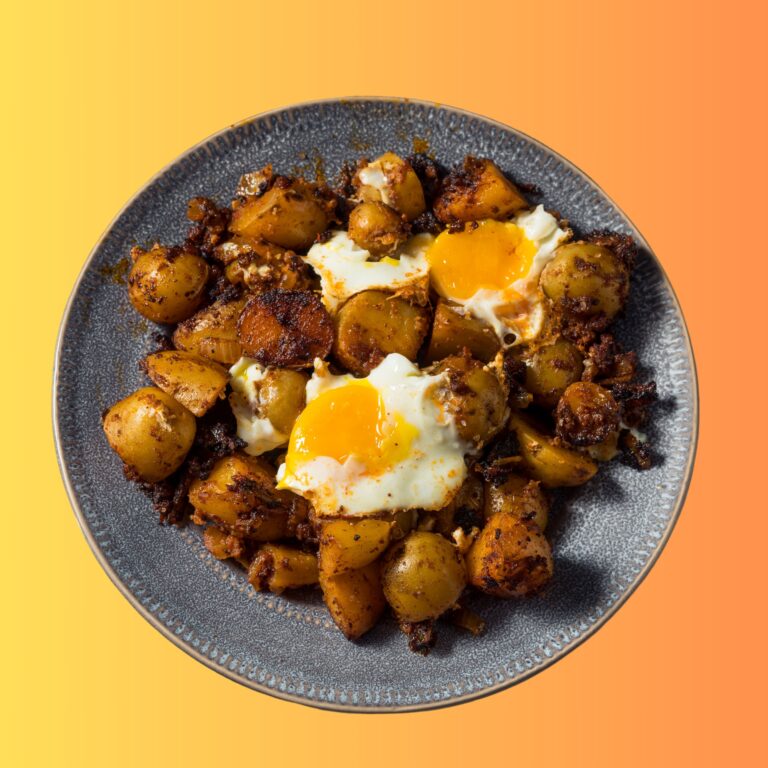
What it is: Huevos Rotos or ‘broken eggs’ is a dish consisting of fried eggs over a bed of potatoes, often accompanied by ham or chorizo. It’s a simple yet satisfying meal.

The History: Huevos Rotos is a relatively modern invention, a dish that gained popularity in the mid-20th century. It’s said to have been a happy accident, a dish born from the necessity of using leftover potatoes and combining them with eggs to create a filling meal.

The Tradition: Today, it’s a staple in Madrid’s casual dining, a dish that’s both comforting and adaptable, often topped with luxurious extras like Iberian ham or chorizo.

Where to eat it: Casa Lucio is famous for its Huevos Rotos, attracting celebrities and food lovers to this day. The key to their success is the quality of ingredients and the perfect runniness of the eggs.


Oreja a la Plancha – For the Adventurous Palate

What it is: Grilled pig’s ear is a delicacy in Madrid. Usually seasoned with salt and paprika, it has a unique texture and more-ish quality that makes it the perfect beer snack.

The History: Oreja a la Plancha has its roots in Madrid’s working-class neighbourhoods, where nothing went to waste. Pig’s ear, a byproduct of the matanza (pig slaughter), became a popular tapa, showcasing Madrid’s no-nonsense approach to food.

The Tradition: Served in old-school taverns and modern gastrobars alike, the dish represents Madrid’s no-waste philosophy. Grab a toothpick and get eating!

Where to eat it: Casa Toni is a no-frills bar in the Sol neighbourhood where locals go for the best Oreja a la Plancha. It’s crispy on the outside and tender on the inside.


Callos a la Madrileña – Elevating The Humble

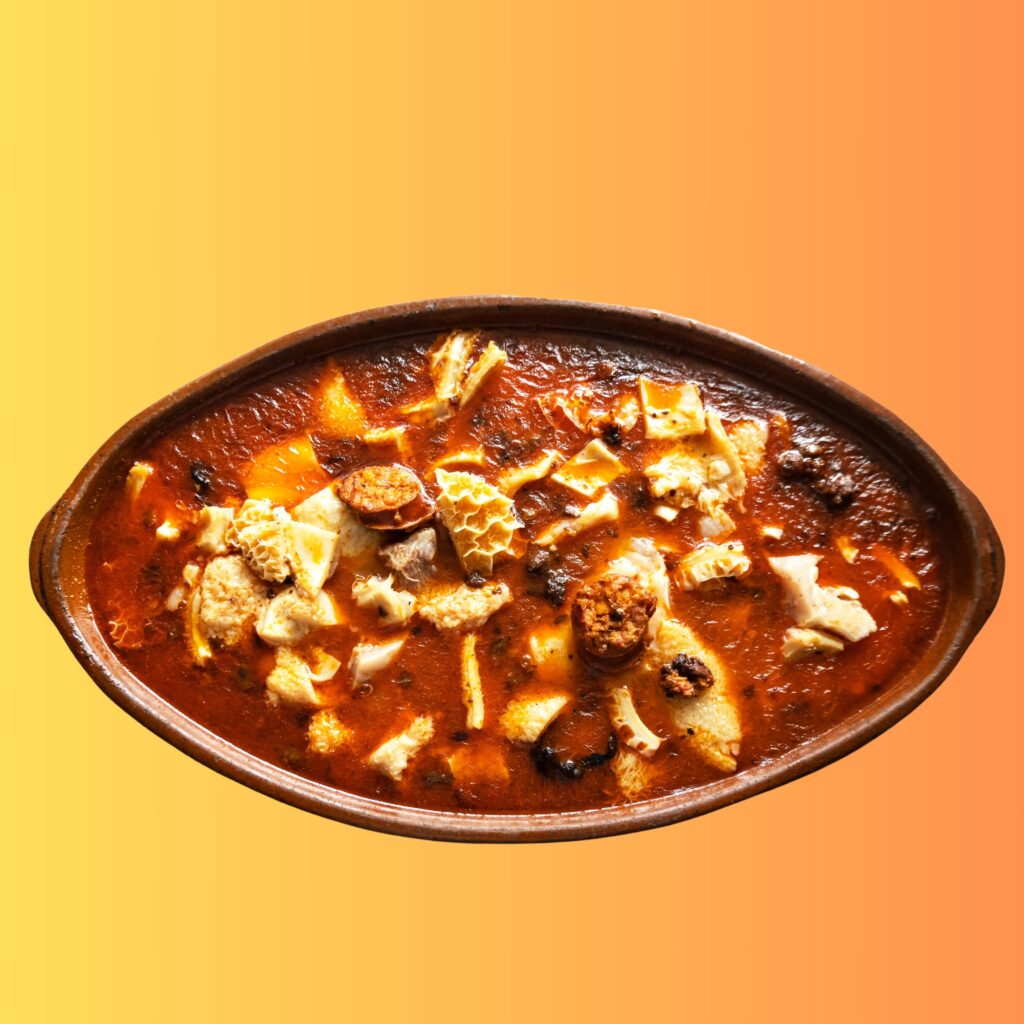
What it is: This is a traditional tripe dish cooked with chorizo, morcilla (blood sausage), and bell peppers. It’s a rich and spicy dish that reflects Madrid’s love for bold flavours.

The History: Callos a la Madrileña dates back to the 16th century, a time when offal was often the only meat available to the poor. Over time, it became a symbol of Madrid’s resilience and ability to create rich, flavourful dishes from humble ingredients.

The Tradition: This tripe stew, simmered with chorizo and morcilla, is a winter favourite, a dish that has warmed the bellies and hearts of Madrileños for generations.

Where to eat it: Taberna de la Daniela serves a superb Callos a la Madrileña, staying true to the recipe that has been passed down through generations. You’ll find four branches in Madrid now, owing to its undeniable quality.


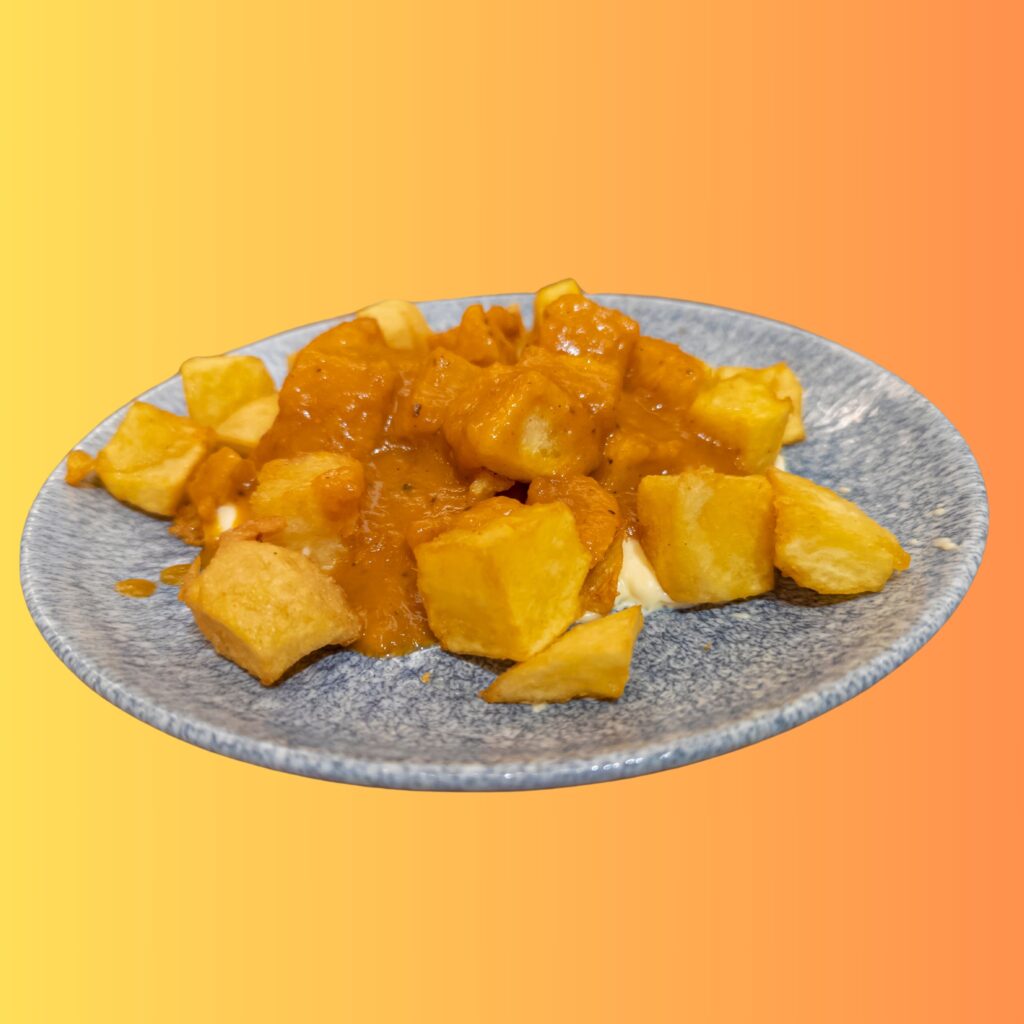
Patatas Bravas – The Spicy Tapas Favourite

By Fernando Cortes via Canva

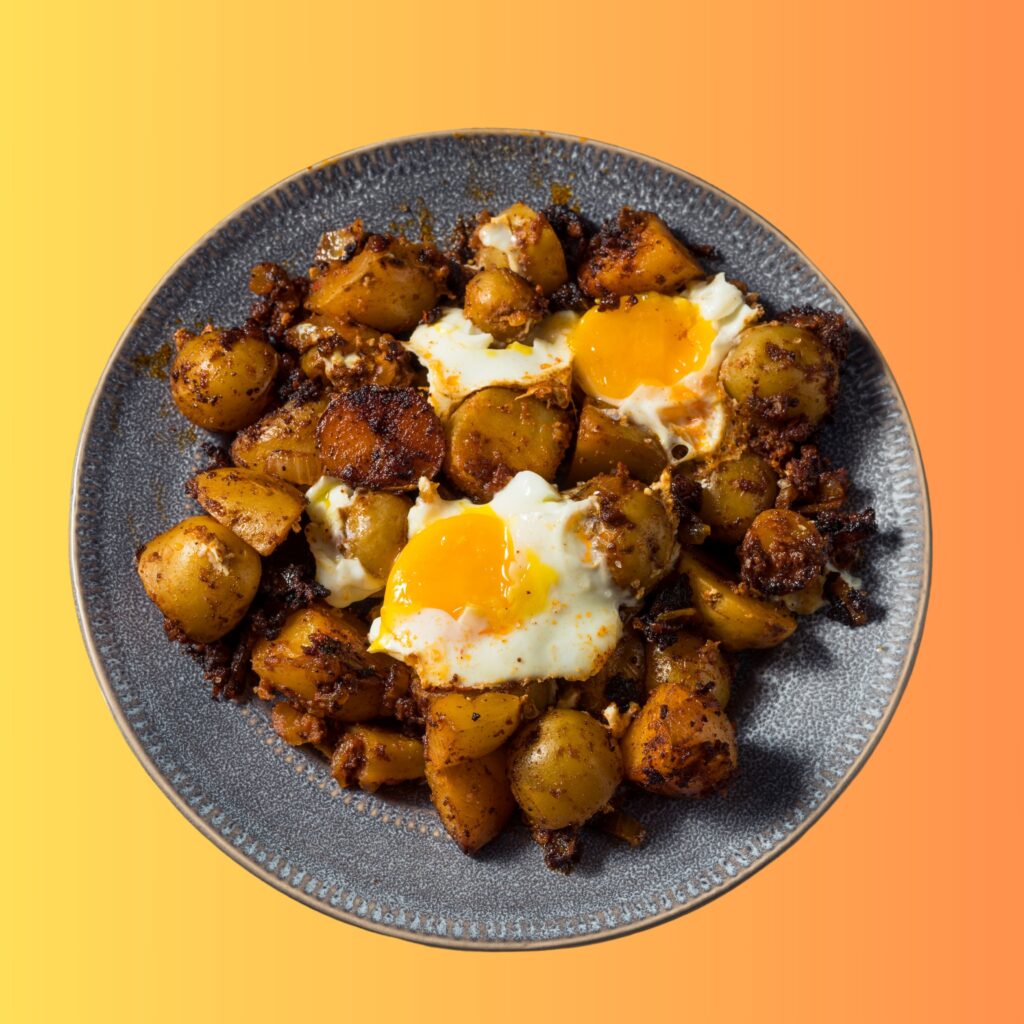
What it is: Patatas Bravas are fried potato cubes topped with a spicy tomato sauce and sometimes aioli. It’s one of the most common tapas dishes, found throughout Madrid and beyond.

The History: The exact origins of Patatas Bravas are murky, but it’s widely accepted that this dish emerged in the mid-20th century. It was a time when Madrid was looking to assert its identity, and the bold, spicy sauce over simple fried potatoes became an instant classic.

The Tradition: Patatas Bravas are now a staple of Madrid’s tapas scene, a dish that embodies the city’s love for life with its punchy flavours.

Where to eat it: Las Bravas is said to be the birthplace of this dish, offering their secret sauce recipe that has remained unchanged since 1933. There are now several branches across the city.


Besugo a la Madrileña – The Celebratory Fish Dish

What it is: Besugo a la Madrileña is a baked sea bream dish typically seasoned with garlic, olive oil, and vinegar. It’s a festive dish often served during Christmas.

The History: Besugo, or sea bream, was historically a luxury, reserved for special occasions. The dish became associated with Christmas in Madrid, a centrepiece at celebratory meals.

The Tradition: Besugo a la Madrileña, baked with a marinade of garlic, olive oil, and vinegar, continues to be a dish that signifies celebration, family, and the joy of shared meals.

Where to eat it: Casa Benigna is renowned for its oven-baked fish dishes, including the Besugo a la Madrileña. The fish is sourced daily, ensuring freshness and quality.


Churros con Chocolate – The Sweetest Final Indulgence

What it is: Churros are fried-dough pastries, often enjoyed dipped in thick, hot chocolate. They are a typical Madrid treat, especially after a night out or for breakfast.

The History: The origin of churros is a tale steeped in legend and lore. Some say they were brought to Europe by the Portuguese from China, while others believe Spanish shepherds created them as an easy-to-cook bread substitute in the mountains. What is certain, however, is that by the 19th century, churros had found their way into the heart of Madrid’s culinary scene, becoming a beloved treat for all social classes.

As opposed to the traditional dulce de leche sauce served in Mexico, the addition of chocolate to the equation is a uniquely Spanish twist, with Madrid laying claim to this indulgent pairing. The thick, hot chocolate served in Madrid is not for drinking through a straw but rather a rich concoction designed for dipping, turning the humble churro into a luxurious treat.

The Tradition: Churros con Chocolate has transcended its origins to become a symbol of Madrid’s gastronomy. It’s a social ritual, a reason for friends and families to gather and share moments of joy. Whether it’s for breakfast, an afternoon snack, or a late-night treat after a night on the town, churros con chocolate is a Madrid staple.

In the chill of the early morning, Madrileños might stop by a ‘churrería’ for a serving of freshly made churros, their crisp golden exteriors giving way to a tender, airy inside, perfect for soaking up the velvety chocolate. It’s a moment of simple pleasure, a sweet pause in the rush of city life.

Where to eat it: Chocolatería San Ginés is a historic spot that has been serving churros since 1894. Open 24/7, it’s the perfect place to satisfy your sweet tooth at any hour.


The Bottom Line

Whether you’re savouring Cocido in a historic tavern or biting into a Bocadillo de Calamares under the Madrid sky, you’re partaking in a tradition that has been shaped by centuries of history. So, when in Madrid, eat as the Madrileños do, and let the city’s culinary heritage become a part of your own story.

Remember, the key to enjoying Madrid’s cuisine is to do as the locals do: take your time, savour each bite, and immerse yourself in the convivial dining culture of Spain’s capital. ¡Buen provecho!

The Best Restaurants In Perth, Australia

Not only the opening track on Bon Iver’s self-titled masterpiece but also the sun-soaked capital of Western Australia, Perth isn’t purely about stunning beaches and a thriving, forward-thinking arts scene. It also boasts a flourishing food culture that is both traditional and far-reaching, grounded but innovative. 

With a whole host of dining options in Western Australia’s capital city, from casual bakeries masquerading as small plates wine bars masquerading as, erm, bakeries, all the way to high-end establishments on the highest of floors, Perth can be all things to all people and then some.

Of course, in a city of ever burgeoning culinary ambition, the paradox of choice grows stronger in tandem, and a little guidance is needed to ensure you’re making the very most of every single meal here. We are that guidance; here are the best restaurants in Perth, Australia.

Long Chim, CBD

Ideal for fiery, funky Thai flavours in a buzzy dining room…

For those with a penchant for the complex, exhilarating flavours of The Kingdom, Long Chim is a must-visit. Located in the heart of Perth’s CBD, this Thai eatery is the brainchild of renowned chef David Thompson, often called ‘the Godfather of Thai cooking’. 

The menu is a tribute to the street food of Bangkok, with dishes that pack a punch in terms of spice, sure, but also in the myriad other ways Thai food can be so intricately seasoned, from fermented shrimp pastes and the ubiquitous fish sauce all the way to caramel-like palm sugar.

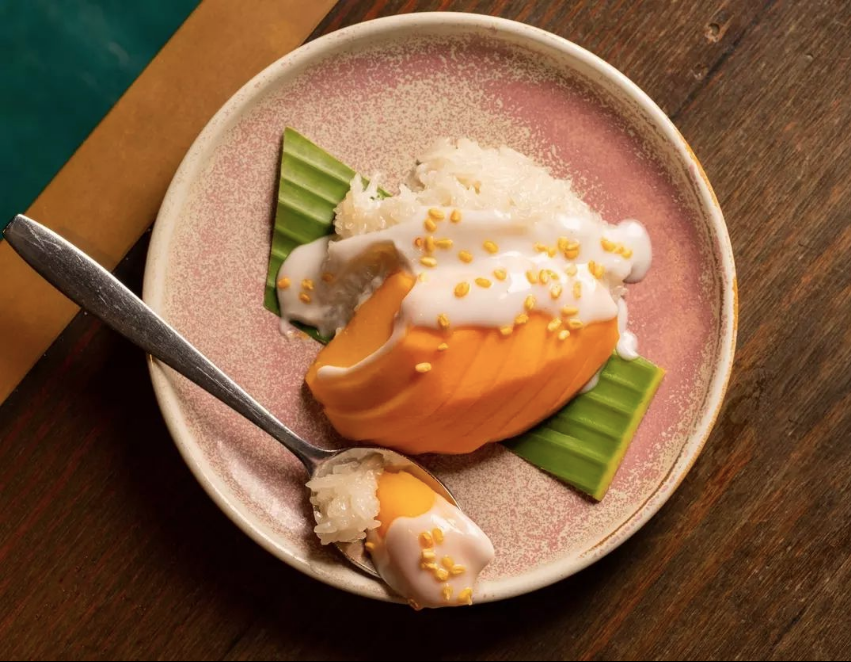
Don’t miss out on the sour orange prawn curry here, puckering and twisted from both lime and tamarind, and as invigorating as it comes. Pair it with something mellow, sweet and coconut-heavy – the minced prawn curry, say – as a counterpoint, and plenty of freshly steamed jasmine rice, and you’re onto a winner. Finish with a classic mango sticky rice for the ultimate indulgence.

With a buzzing, bustling dining room that seems to sprawl further than the Bangkok skyline, and an open kitchen where woks clatter and flames lick tall from the grill, Long Chim is the ideal spot for a casual yet lively dining experience.

We’ve featured David Thompson’s Aksorn on our list of the IDEAL 22 restaurants in Bangkok, by the way. This man certainly knows what he’s doing.

Address: Corner of Barrack street &, St Georges Terrace, Perth WA 6000, Australia

Website: longchimperth.com


Wildflower, CBD

Ideal for a celebration of Australia’s six seasons…

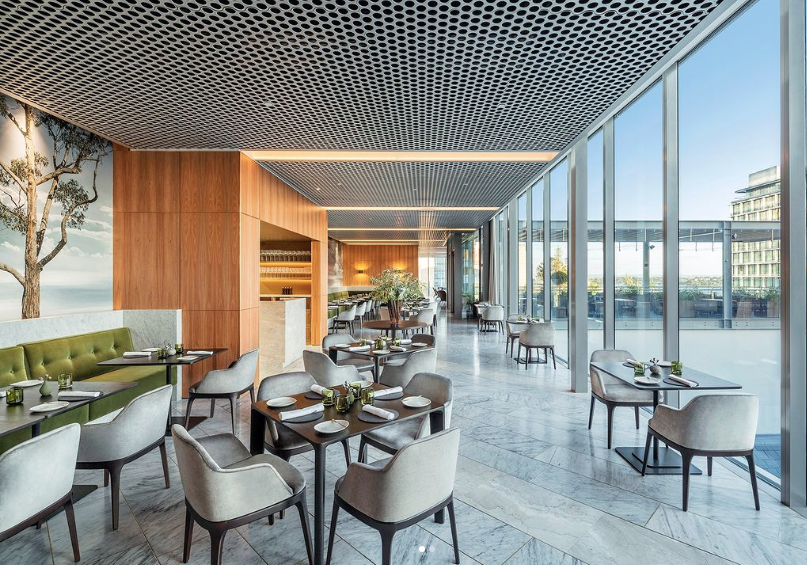
Just seconds from Long Chim (you’ve still got an appetite? Impressive!), and perched atop the COMO Treasury hotel, Wildflower is a fine dining establishment that showcases the best of Western Australia’s local produce without being overly stuffy or stiflingly formal.  

The menu is inspired by the indigenous ethos of six seasons and changes with accordant frequency, offering a unique dining experience with each visit. Right now, Wild Flower is celebrating Djeran, the season of adulthood, with a six or eight course tasting menu (priced at $180 and $230 per person, respectively) that features dishes like crayfish from Pemberton paired with sandalwood nut and blood lime, and macadamia custard with mango, lemon aspen and Geraldton wax, a flowering plant endemic to Western Australia with distinctive citrus notes.

The dishes are artfully crafted, combining traditional techniques with modern flair and plenty of foraged ingredients, and a wine list that’s meticulously curated to complement the seasonal menu, leaning heavily on Western Australian wineries in the process. With sweeping views of the city, Wildflower is not just a meal; it’s a celebration of Western Australian culture and cuisine.

And the best part? Wild Flower is right in the mix, with East Perth accommodations like the popular Ibis Styles, the Wyndham and the COMO itself all within walking distance (the latter perhaps even crawling distance after such a big feast!).

Address: COMO The Treasury Level 4, 1 Cathedral Ave, Perth WA 6000, Australia 

Website: wildflowerperth.com.au 


Lulu La Delizia, Subiaco

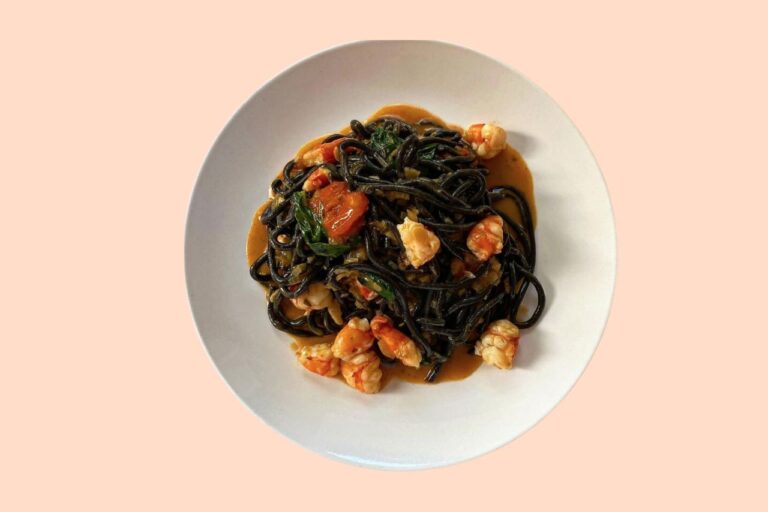
Ideal for sublime seafood-heavy pasta dishes…

We can’t only dine in the Central Business District while exploring the best restaurants in Perth; there’s so much to discover a little out of the centre, too.

Tucked away in the charming suburb of Subiaco, Lulu La Delizia pays homage to the rich culinary traditions of Italy, with a particular focus on the delights of the Friuli Venezia Giulia region which borders Austria, Slovenia and the Adriatic Sea. 

This laid back, intimate pasta bar, led by the passionate chef Joel Valvasori-Pereza, offers a menu that is both comforting and gently adventurous, with the fresh pasta dishes the obvious stars of the show, hand-rolled daily and served with sauces that burst with flavour.

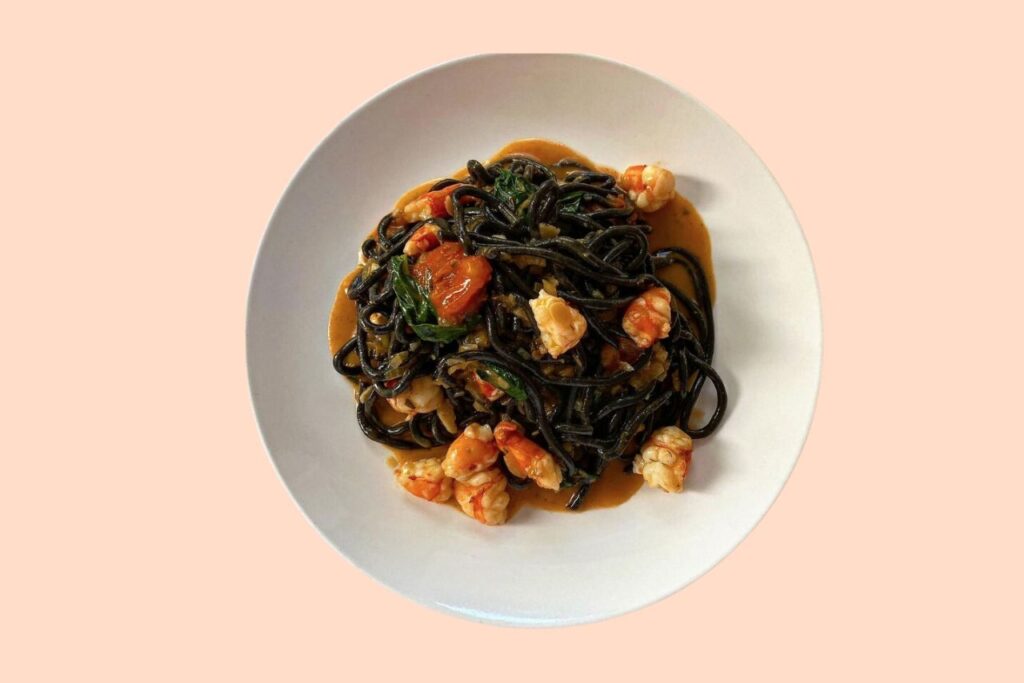
The spaghettini with clams and broccoli is particularly good; a glorious marriage of briny and irony (horrible rhyme, that one) flavours. In fact, Lulu La Delizia has a wicked way with seafood across the board. The saffron cured kingfish is the perfect opener, and the squid-ink blackened bigoli with sweet chunks of king prawn a truly exemplary bowl of pasta. 

The wine list is equally impressive, featuring Italian varietals that you won’t find anywhere else in Perth. Yep, this is one of our favourite places to eat in all of the city, make no mistake.

Address: 5/97 Rokeby Rd, Subiaco WA 6008, Australia 

Website: lululadelizia.com.au


Nobu Perth, Burswood

Ideal for celebratory extravagance and that miso black cod…

Part of the extravagantly appointed Crown Perth complex, the Perth branch of Nobu does its Japanese-Peruvian cuisine with the usual style and aplomb. Under the all-seeing eye of the legendary chef Nobu Matsuhisa, the upscale restaurant serves up once-innovative but still delicious dishes that are both visually stunning and satisfying to eat. The signature miso black cod remains a crowd favourite after all these years, while the chicken anticucho skewers are caramelised and gnarly in all the right places. 

Nobu’s sleek interior, open kitchen and panoramic views of the Swan River create an ambiance that is both sophisticated and welcoming, making the restaurant the ideal choice for a special occasion when celebrating in Perth.

Address: Crown Metropol Perth, Great Eastern Hwy, Burswood WA 6100, Australia 

Website: noburestaurants.com


Bread In Common, Fremantle

Ideal for fresh, vegetable-led plates of perfection…

From the gaudy to the grounded… In the heart of Fremantle, Bread in Common is a rustic eatery that combines the simplicity of a bakery with the warmth of a neighbourhood restaurant. It’s a match made in heaven. 

The wood-fired bread, baked on-site, is the foundation of the menu, which features a variety of dishes designed for sharing (and tearing). Seasonal ingredients are treated with real respect here, resulting in honest and flavourful food that’s bolstered by an impressive roster of house pickles, ferments and preserves. 

The deceptively simple woodfired bread with lamb gravy for dipping is as good as it sounds, whilst a plate of house cured bresaola with grilled, barmarked nectarines pairs so well with the restaurant’s creamy ricotta, that’s also produced inhouse. Add a plate of grilled courgette, grains and feta to the menu, and you’ve got a wonderfully light, fresh spread. Yep, order right, and this can be the kind of nourishing but delicious meal that feels as if it could cure all ills. 

The industrial-chic space invites in plenty of light, and with its open kitchen and communal tables, the dining experience at Bread In Common is as convivial as the name suggests.

Address: 43 Pakenham St, Fremantle WA 6160, Australia

Website: breadincommon.com.au


Monsterella Pizza, Wembley

Ideal for Perth’s best pizza…

Still on our bread thing, and next up we’re on our way to Wembley and to Monsterella, our favourite place to eat pizza in Perth. Here, the pizzas are proudly Neopolitan in style, with well-judged, restrained adornment and digestible, woodfired bases. That dough has been proving for 48 hours, by the way, leading to a light and puffy finish that blisters just right.

The La Regina is our go-to order here. Boasting a San Marzano tomato base, and topped with nduja, fior di latte, basil and fresh shavings of pecorino, it’s a salty, spicy joy. For those not in thrall to all things pizza (who are you?), Monsterella also does a small selection of pasta dishes. The meatballs are ace.

Address: 46 Grantham St, Wembley WA 6014, Australia 

Website: monsterella.com.au


Balthazar, CBD

Ideal for low lit, languid lunches in Perth’s Central Business District…

An absolute icon of the Perth dining scene, Balthazar has been serving exquisite, ‘European-inspired dishes’ for over two decades in this part of town. Located at the base of an Art Deco apartment block and only accessible through an unmarked door (look for the word ‘Lawson’ above it), the restaurant exudes charm and elegance. 

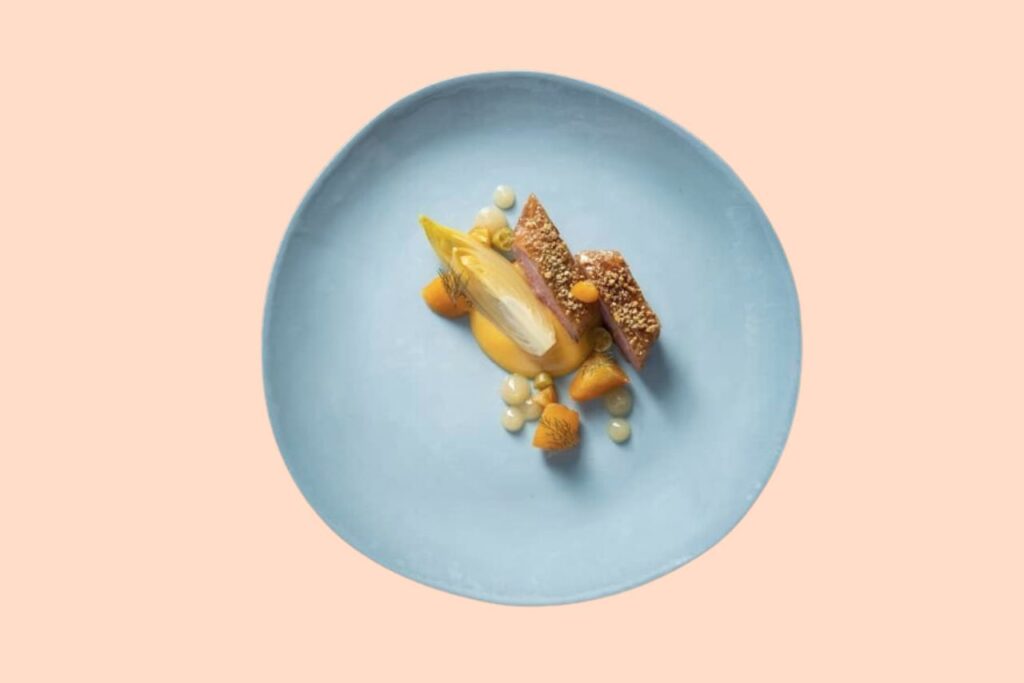
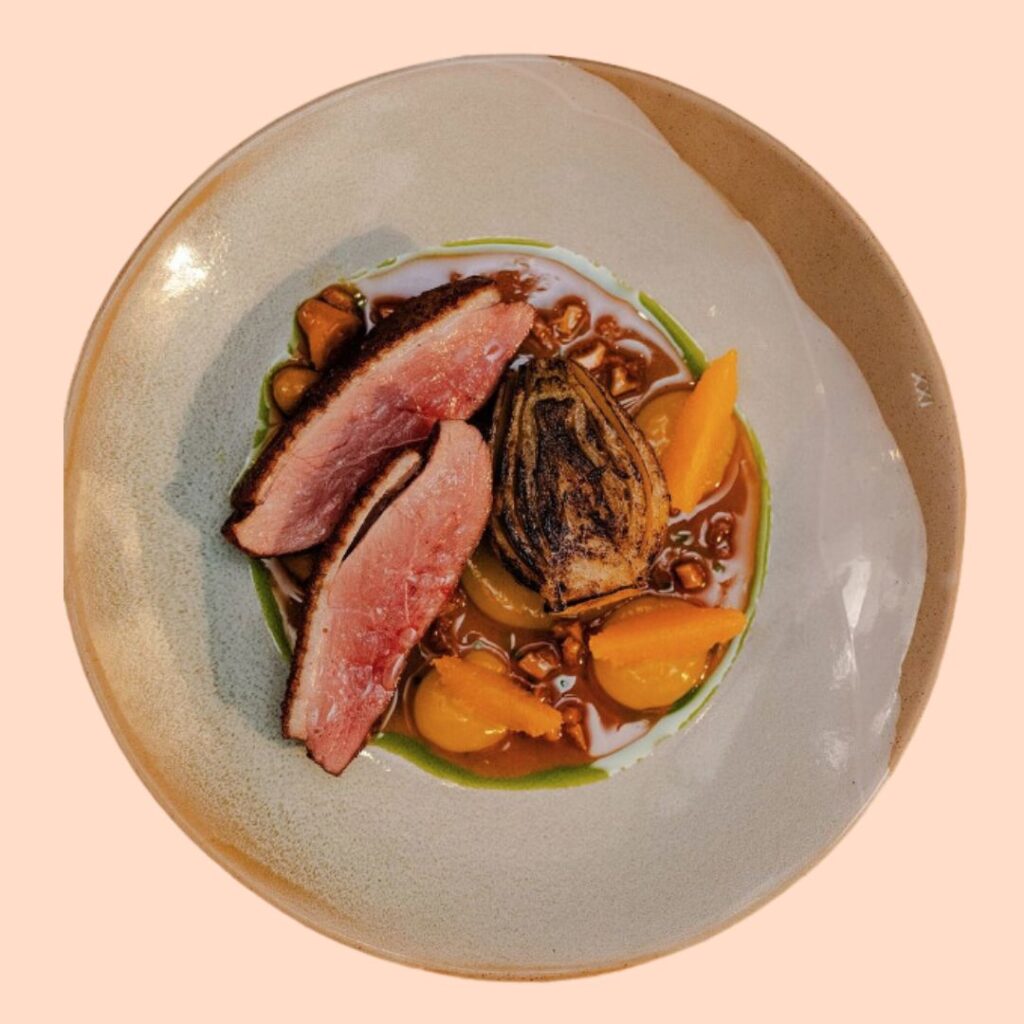
The menu brings with it a contemporary take on classic European cuisine, with the perfectly pink duck breast, grilled fennel and segments of orange a recent highlight. For a dish definitely not found on many menus on the continent, try the kangaroo steak, here elegantly paired with goat’s curd, macadamia nut and blueberries. Arriving blushing, it’s a sophisticated balancing act that manages to marry sweet, sour and salty with poise and precision.

The extensive wine list is a treasure trove for oenophiles, featuring both local and international selections. Balthazar’s intimate setting, low lit trattoria-vibes and impeccable service make it a timeless choice for fine dining in Perth, and is one of the city’s truly cherished dining spaces

Address: 6 The Esplanade, Perth WA 6000, Australia

Website: balthazar.com.au 


The Shorehouse, Swanbourne

Ideal for fresh fish seasoned with a sea breeze…

From a space shrouded in a fair amount of darkness to one blessed with brilliant sunshine, it’s off to The Shorehouse we head next.

Perched on the coastline of Swanbourne Beach, The Shorehouse offers a dining experience with a view that is as memorable as its cuisine. The menu is a celebration of Western Australia’s coastal bounty, with a focus on fresh seafood and the vibrant, zesty flavours with which stuff from the ocean works so well.

The yellowfin tuna ceviche and the grilled octopus are standout dishes that showcase the kitchen’s ability to let the ingredients shine, whilst the pan fried market fish fillet with tomato vinaigrette is always a winner.

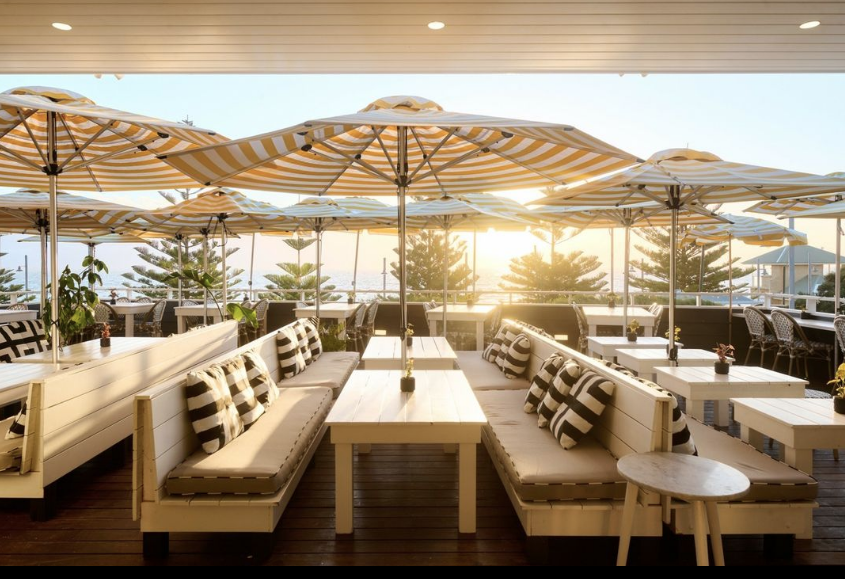
Indeed, there’s almost always a welcome spritz of citrus on the dishes here, seemingly in keeping with the restaurant’s bright and airy decor, its iconic yellow and white striped umbrellas making The Shorehouse the perfect spot for a leisurely brunch or a romantic sunset dinner. 

Address: 278 Marine Parade, Swanbourne WA 6010, Australia

Website: shorehouse.com.au


Little Creatures Brewery, Fremantle

Ideal for beers, beers and more beers (oh, and some beer food)…

For an even more laid-back vibe, Little Creatures Brewery is a must-visit. This iconic Fremantle spot is not just a brewery but also a lively restaurant serving up a range of delicious, beer-friendly fare. The menu features everything from wood-fired pizzas to some seriously addictive french fries, all perfect for pairing with their house-brewed beers (the staff here are more than happy to offer their ideal pairings). 

The waterfront location (once a crocodile farm, incidentally) and raucous atmosphere make it a real favourite for those looking to settle in for a leisurely afternoon-into-evening kind of feast.

Address: 40 Mews Rd, Fremantle WA 6160, Australia 

Website: littlecreatures.com.au


Shadow Wine Bar, Northbridge

Ideal for a well-judged marriage of Italian and Australian culinary sensibilities…

We end at Shadow Wine Bar, in the hip and happening Northbridge, which offers a modern Italian drinking and dining experience given a decidedly Australian twist. 

It’s about the wine here, first and foremost, with a food menu designed to complement their extensive Italo-Australian wine selection rather than the other way round. Start with a plate of Coffin Bay oysters. Served with an intriguing burnt onion vinaigrette, they’re as expertly shucked and pleasingly plump, and pair perfectly with a glass of Clare Valley Riesling. 

Move on to a plate of thick cut pappardelle with veal shin ragu and a bottle of something big and bold, perhaps the local Fervor Nuvo Movo Mourvedre, and luxuriate in just how exciting and diverse Perth’s food scene has become.

Address: 214 William St, Perth WA 6000, Australia 

Website: shadowwinebar.com.au 

Not sufficiently satiated, we’re heading to the opposite side of the country now, and to the bars, vineyards and wineries of New South Wales. Care to join us? Of course you do…

What Local Delicacies Is Crete Known For?

Crete, the largest of the Greek islands, is not only a haven for sun-seekers and history buffs but also a paradise for food lovers. The island’s culinary offerings are as diverse as its landscapes, with a rich tapestry of flavours that tell the story of Crete’s history, culture, and tradition. 

From the bustling streets of Chania to the tranquil villages of Rethymno, every corner of Crete boasts regional specialities and local delicacies to discover. This article does, too. Here, Roadcrete, who offer car rental in Crete, helps you explore the island and discover its top dishes. Seatbelt on? Let’s go.

Dakos: The Cretan Bruschetta

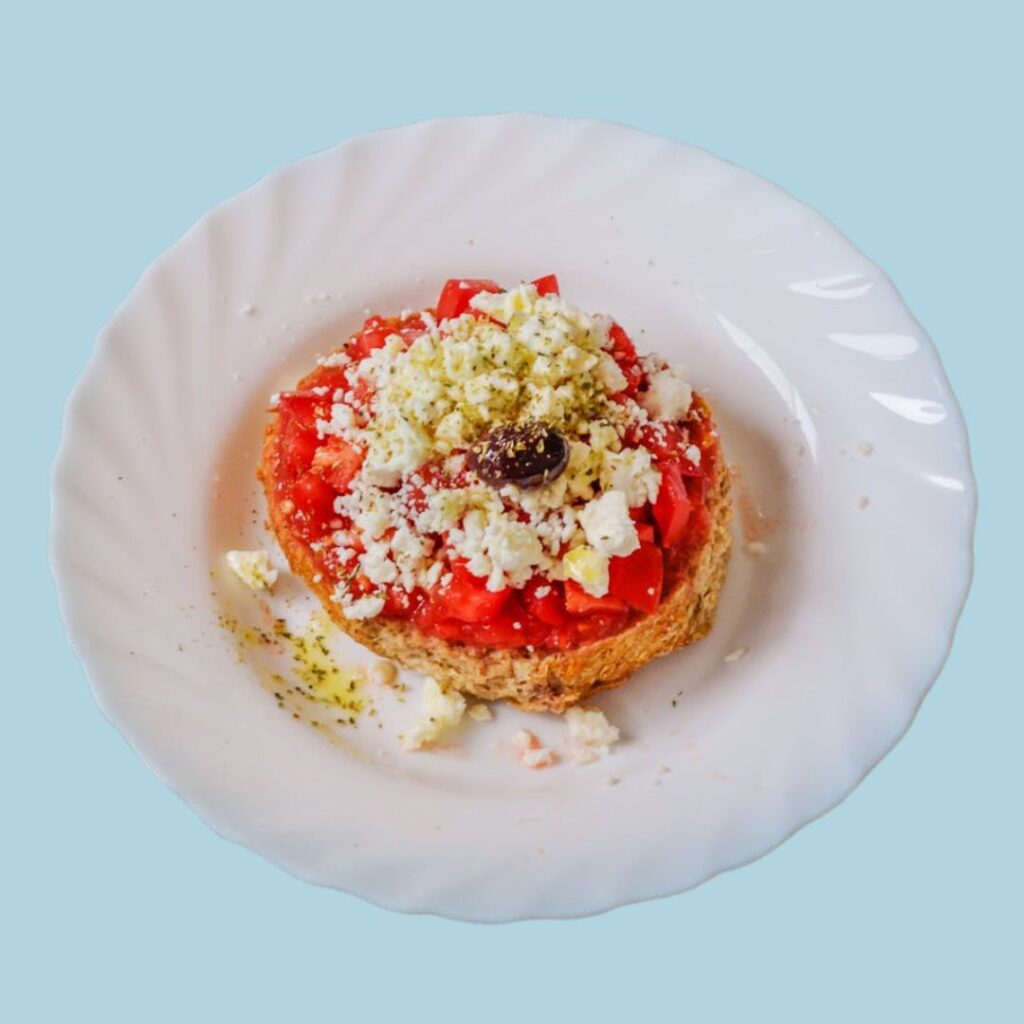
One cannot talk about Cretan cuisine without first mentioning Dakos. Often (well, perhaps not that often) referred to as the Greek bruschetta, Dakos is a simple yet flavourful dish made from barley rusks topped with grated fresh tomato, crumbled mizithra or feta cheese, a drizzle of Cretan extra virgin olive oil, and a sprinkle of oregano. This dish is a testament to the Cretan diet’s emphasis on fresh, locally sourced ingredients.

Where to Eat: To enjoy Dakos in an authentic setting, visit To Stachi in Chania. This family-run vegetarian restaurant, a slow food staple of the island, prides itself on its organic ingredients and traditional recipes.


Kalitsounia: Sweet & Savoury Treats

By BaileysTable from Getty Images

Kalitsounia are small cheese or herb pies that can be found throughout Crete, but each region has its own variation. These delightful pastries can be sweet, filled with mizithra cheese and honey, or savoury, filled with wild greens and herbs.

Where to Eat: For the best Kalitsounia, head to Kafeneio o Platanos in Anogeia. This quaint café offers a variety of Kalitsounia, made with the freshest ingredients and a generous dose of Cretan hospitality.


Chochlioi Boubouristi: A Boldly Flavoured Dish Using Snails

By Nejron via Canva

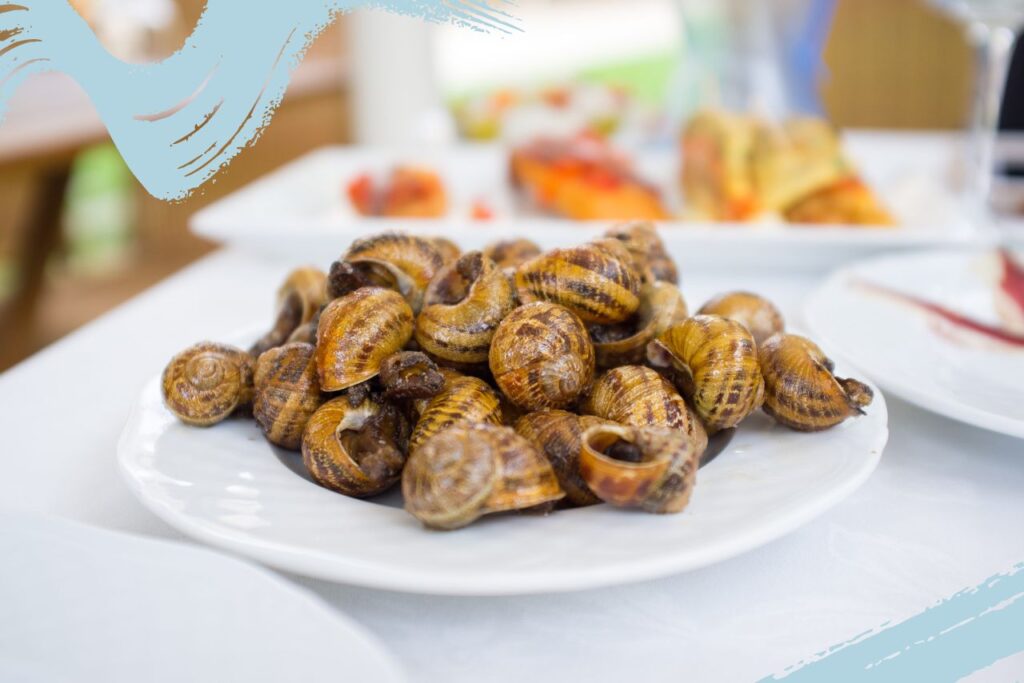
For the more adventurous foodies, Chochlioi Boubouristi (fried snails) is a must-try. This traditional Cretan delicacy is prepared by frying snails with flour and hot olive oil, then seasoned with vinegar and wild rosemary. It’s a dish that encapsulates the boldness of Cretan cuisine, and the spirit of wild and foraged ingredients..

Where to Eat: To sample this daring dish, make your way to the aptly named Snails House in Plouti. Here, snails have been hand picked, wild, offering a truly authentic Cretan experience.


Apaki: Smoked Pork 

Apaki is a smoked and cured pork delicacy that is full of flavour. The pork is marinated in vinegar and herbs, then smoked using aromatic herbs and wood from the island. It can be enjoyed on its own, in salads, or as part of a meze platter, slovaki style.

Where to Eat: Avli tou Defkaliona in Chania is renowned for its selection of Cretan cured meats, including the exquisite Apaki. Their meze platters are an excellent way to sample a broader variety of Cretan specialities than you might get elsewhere.


Loukoumades: Honey Puffs

By bit245 from Getty Images via Canva

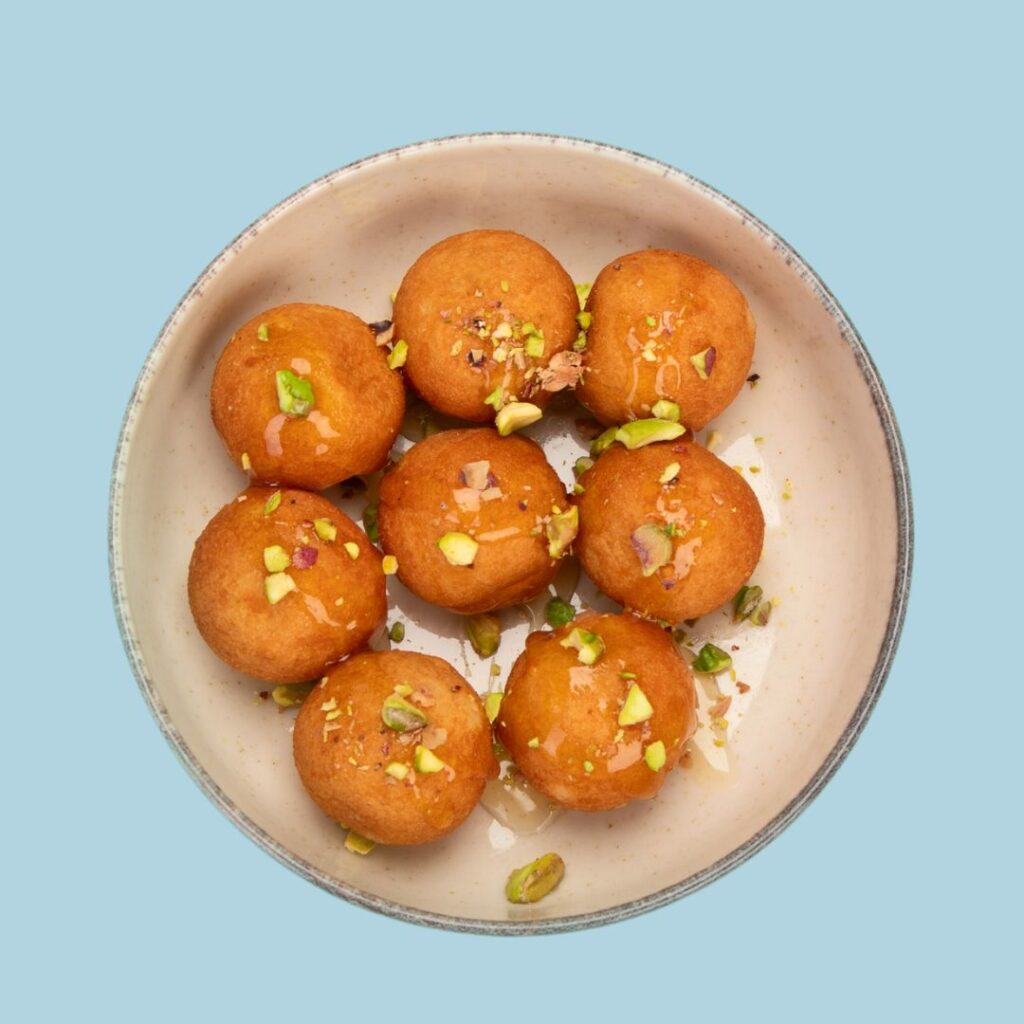
No culinary tour of Crete would be complete without indulging in Loukoumades. These deep-fried dough balls are soaked in honey and sprinkled with cinnamon and sesame seeds. They are the perfect sweet treat to end a Cretan feast.

Where to Eat: For the best Loukoumades in Crete, visit Lukumades Me Meli in the capital Heraklion. Their Loukoumades are crispy on the outside, fluffy on the inside, and drizzled with the finest Cretan honey.


Gamopilafo: A Wedding Rice Dish

Gamopilafo, often served at traditional Cretan weddings, has made its way into the hearts and menus of local restaurants who aren’t celebrating anything but being alive another day. This rich and creamy rice dish is cooked in a meat broth, usually from lamb or goat, and then stirred with stakovoutyro (a butter made from sheep’s milk) to give it a distinctive, luxurious flavour.

Where to Eat: Go get yourself invited to a Greek wedding. The films are right; they’re a lot of fun!

Read: Where to eat in Mykonos Old Town


Sfakiani Pita: A Pie That Straddles Sweet & Savoury

Sfakiani pita is a unique pie from the Sfakia region of Crete. It’s a thin dough filled with mizithra cheese, fried lightly, and often served drizzled with honey. This dish perfectly balances the salty cheese with the sweetness of the honey, creating a delightful flavour combination.

Where to Eat: Dounias in Drakona is a traditional farm and taverna that prides itself on its Sfakiani pita. Nestled in the mountains, this eatery offers a rustic experience where dishes are cooked over an open fire, and most ingredients are sourced from the surrounding countryside.


Marathopita: The Fennel Pie

By Максим Крысанов from Getty Images

Marathopita is a savoury pie filled with wild fennel and other greens. It’s a testament to the Cretan way of using an abundance of wild herbs and greens available on the island, showcasing the foraging tradition that is still very much alive in the Cretan way of life.

Where to Eat: To Maridaki in Chania is a charming spot to try Marathopita. This family-owned taverna serves up a variety of traditional Cretan dishes, but their Marathopita is particularly noteworthy for its foraged fennel, which boasts a sophisticated flavour.


Staka: A Rich Dairy Dip

Staka is a rich and creamy dip or sauce made from the residue of clarified butter that’s been cooked with flour and milk. It’s a traditional Cretan product that’s often served with bread or used to top off dishes like the Gamopilafo from a few paragraphs previous. Best of all, though, is when it’s added to fried eggs, a dish called staka me ayga that’s just gorgeous for breakfast.

Where to Eat: To Antikristo offers a traditional Cretan dining experience where you can try Staka me ayga. This family run establishment get the important things just right.


Raki: The Spirit of Crete

Finally, to wash down all these delicious dishes, you must try Raki, also known as Tsikoudia. This potent grape-based spirit is often served at the end of a meal and is a symbol of Cretan hospitality.

Where to Eat (or Drink): Almost every taverna in Crete will offer Raki, but for a special experience, visit Rakadiko tou Kamari in Heraklion. Not only will you get to try Raki, but you can also learn about its production and significance in Cretan culture.

The Bottom Line

Crete’s culinary landscape is as rich and inviting as its azure seas and rugged mountains. Each dish tells a story of the island’s past and present, a narrative woven with the threads of flavour and tradition. Whether you’re a food connoisseur or simply a traveller with palate curious about Greek cuisine, Crete’s local delicacies are sure to leave a lasting impression. 

Where To Eat The Best Khao Soi In Chiang Mai

Chiang Mai, Northern Thailand’s religious and cultural hub, is a very different proposition to the country’s heaving, hectic capital. It’s laid back, slow paced, with high rises at lower volume and, whisper it, a fair amount of green space and shade. The food of the city and surrounding region reflects this; herbs take centre stage, the immediacy of penetrating chilli is dialled down, umami rules.

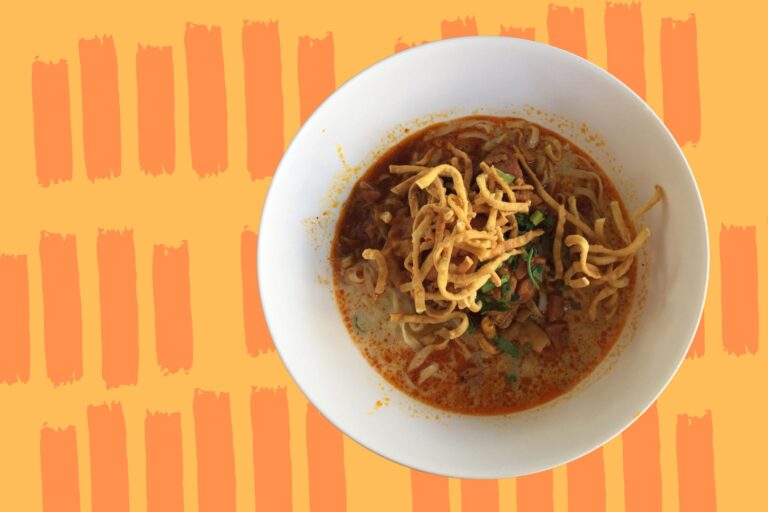
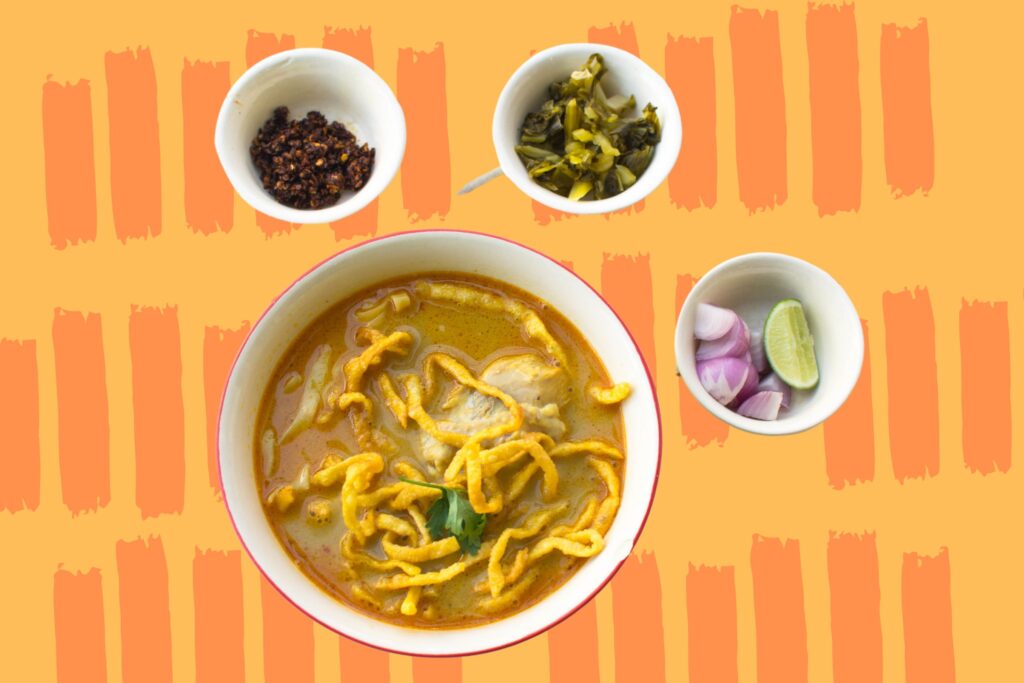
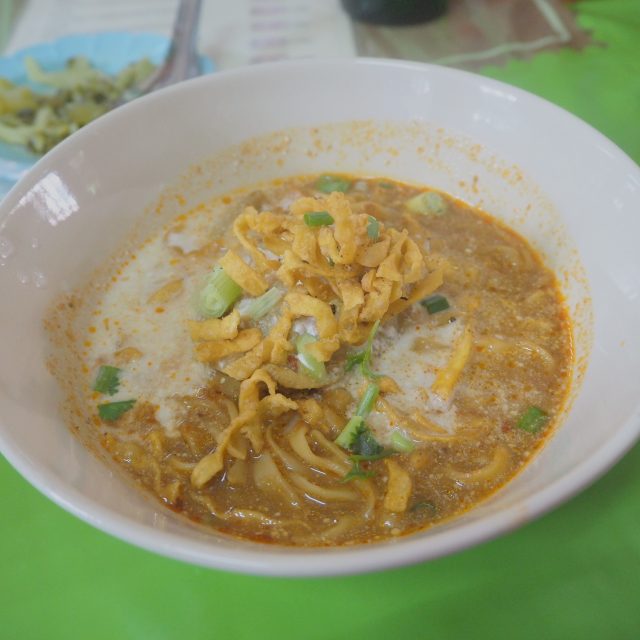
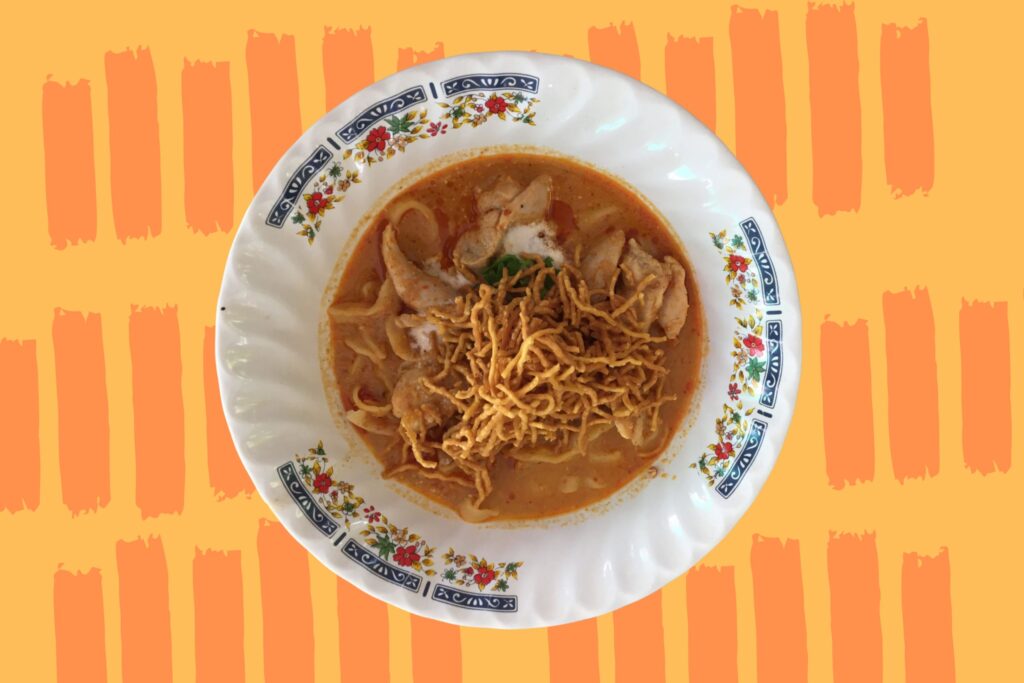
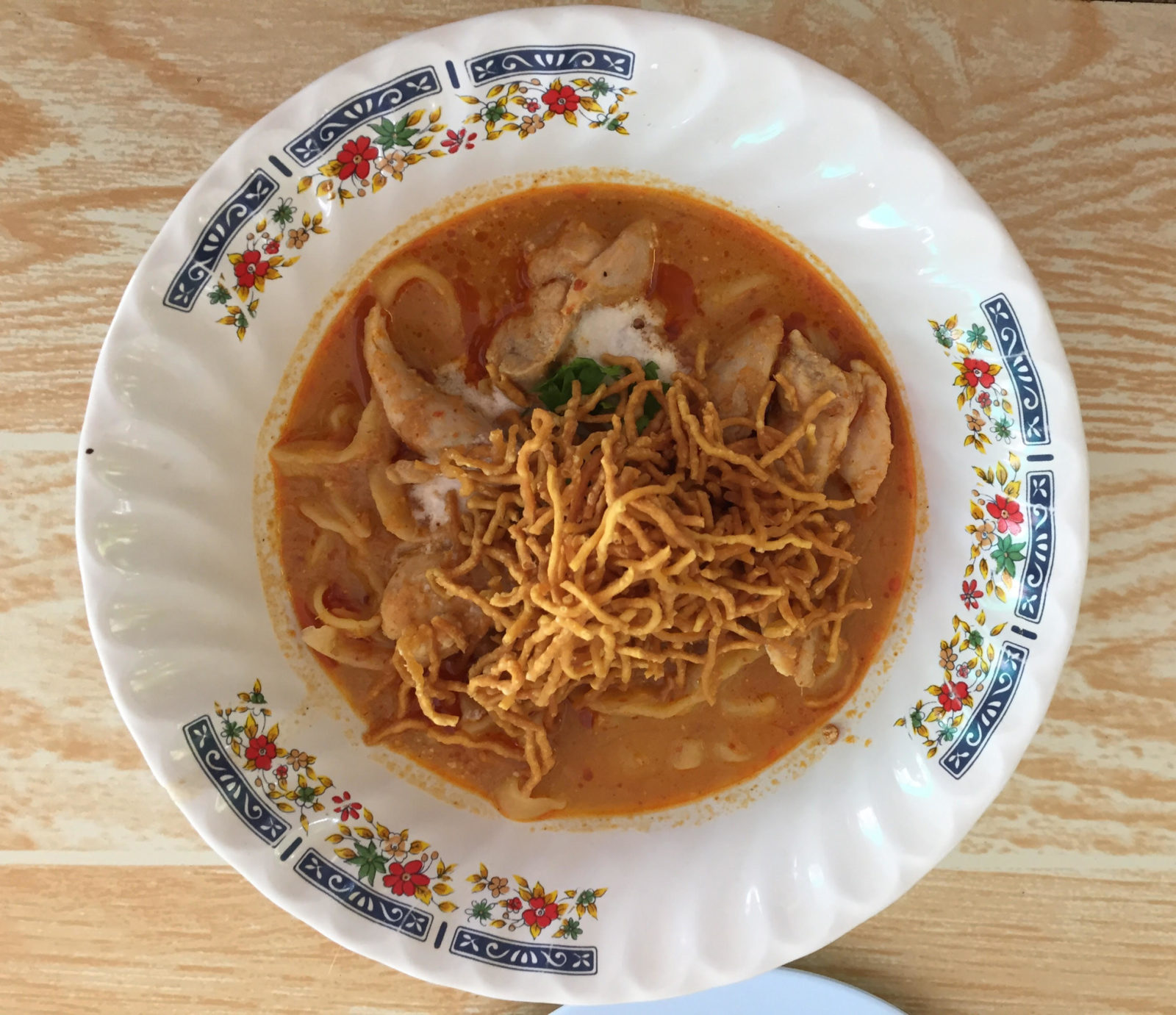
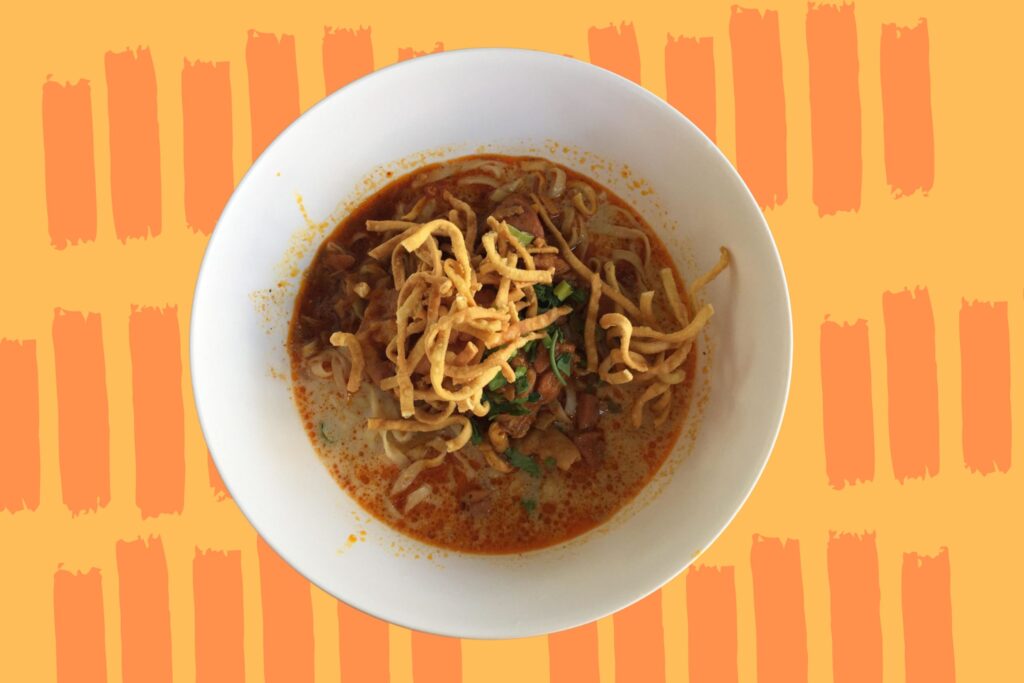
The North’s national dish, though, diverges on this theme. Khao soi sees coconut milk (not native to the region) take centre stage. A heady dry spice mix evokes the rustic red of the Silk Road well travelled by Yunnanese Muslim spice traders. And egg noodles, fresh and deep-fried, reflect the influence of both China and neighbouring Burma. 

© Bavorndej VIA CANVA.COM

All of this results in a rich, deep yet surprisingly mild curry broth with tender braised meat and noodles of contrasting texture and give. The ubiquitous accompaniments of pickled mustard greens, chilli oil and sliced shallots seal the deal, as if we needed any more convincing.

Though you”ll see khao soi on menus all across the city, from coffee shops serving it alongside croissants all the way to deconstructed fine dining versions that are gone in a couple of bites, you really want to seek out the very best khao soi here, as standards can vary hugely.

Avoid disappointment. Without further ado, here are some of the best places to eat khao soi in Chiang Mai, Thailand.

Khao Soi Lam Duan

Ideal for a rich, sweet bowl of khao soi alongside other Lanna classics…

Khao Soi Lam Duan is a hugely popular lunchtime spot just a 10 minute drive northeast of the old town, on Thanon Faham. This road is locally known as having a small collection of the best khao slingers in the city, but Lam Duan, still going strong after 70 years and rumoured to be the first restaurant/shophouse to serve the dish, stands head and shoulders above the rest.

Huge pots of broth bubble at the entrance and an assembly line construct bowl after bowl of the good stuff. On the richer, sweeter end of the spectrum, the ratio between tourist and local shifts as the day progresses; residents of Chiang Mai know to come later, when the broth has properly matured into the best version of itself. Other Lanna classics are available here, too; their gaeng hung lay (a sweet, sour and salty Northern curry of pork belly) is decent.

Oh, and order a side of satay. You’ll be happy you did.

Address: 352/22 Charoen Rat Road, Chiang Mai, Thailand


Khao Soi Khun Yai

Ideal for Michelin-approved khao soi in Chiang Mai’s Old Town…

Grandma’s Khao Soi’, as the name translates, is on the north edge of the old town, in a spot of barren space right next to Wat Khuan Khama. A queue generally forms at the gate well before the 10am opening, and it remains busy until they shut up shop for the day after lunch. Order at the counter, then await one of the best bowls in the city; a broth which isn’t overly rich, a deep rouge in complexion, and redolent of dried spices. It all adds up to a moreish, less cloying version of the Northern Thai classic.

A must try, and no wonder it’s one of our choices of the very best places to eat in Chiang Mai. It would be rude not to…

Address: Sripoom Road, directly after Sripoom soi 8, Chiang Mai, Thailand


Khao Soi Islam

Ideal for a thinner, lighter and more delicate Muslim-style khao soi…

Common sense dictates that a place filled with locals is where the best food is found. Common sense dictates, then, that Khao Soi Islam is up there with the best of them in Chiang Mai. Here, it arrives a little underseasoned and underwhelming; a blank canvas, if you will, which you can pimp to your own specifications with the array of seasonings on the table. Once you’ve given it a tickle with chilli jam, soy sauce and sugar, it really sings.

Alongside is a supporting cast of Southern Thai dishes which deserve their own listicle; think beef massaman curry, chicken satay and best of all, a rollickingly good byriani, Thai style. This joint closes at 5pm, so don’t have your heart set on here for dinner. Go early, go often, we say.

Address: Thanon Charoenprathet Soi 1, Chiang Mai, Thailand


Khao Soi Prince

Ideal for Chiang Mai’s best bowl of the good stuff..

You’ll have to travel a little out of town for this one, but you’ll be truly rewarded. Following a tip from Austin Bush’s meticulously researched and lovingly crafted book, The Food of Northern Thailand, we headed half an hour north of the city centre to San Sai district in search of the good stuff. What lies in wait down a quiet side street is probably our favourite rendition of the dish, ever, the beef (neua) version in particular offering a savouriness sometimes found lacking elsewhere. As Bush puts succinctly, it’s the best khao soi in Chiang Mai, and thus, by default, the world”. Quite right, too.

Address: 79 Moo 9, Ban Thung Min Noi, Chiang Mai, Thailand


Khao Soi Lung Prakit Kad Kom

Ideal for a a bowl of khao soi made famous by Netflix…

Owing to its appearance on the always jovial Somebody Feed Phil, Khao Soi Lung Prakit Kad Kom has been nicknamed ‘Khao Soi Netflix’, perhaps less of a mouthful than the original name, but also less fun to say to a Grab driver.

Back to mouthfuls of the food rather than the phonetic kind, and really Khao Soi Lung Prakit Kad Kom has been cherished in Thailand’s second city long before the cameras came rolling into town. It’s been in the same spot for over four decades, and the prime product has remained remarkably consistent; it’s rich, it’s creamy, and the beef base differs from the chicken one, with the former much moodier and more redolent of dry spices. It’s that attention to detail that keeps the punters coming back, not an appearance on international TV!

Address: 53 Suriyawong 5 Rd, Tambon Hai Ya, Mueang Chiang Mai District, Chiang Mai 50100, Thailand


Khao Soi Mae Sai

Ideal for the best khao soi within walking distance of the Maya shopping centre…

In Chiang Mai’s up and coming Santinam neighbourhood, and just a ten minute walk from the massive Maya shopping centre, Khao Soi Mae Sai is doing some of the best khao soi in the city, perhaps a little spicier than the baseline, and no the worse for it.

For those feeling a little trepidatious, the ordering process at Khao Soi Mae Mai is a breeze; peruse the picture menu of nine dishes before ticking the appropriate box and taking your piece of paper up to the counter. Job done..

Whilst you’re at that counter, you’ll no doubt notice a stack of banana leaf parcels. Follow your curiosity on this one; this is khao kan jin, a dish of rice mixed with blood before being steamed. It’s then topped with crispy garlic, garlic oil and deep fried chillies. It’s a revelation.

Though there’s a big, complimentary vat of water and cooler of ice to soothe that undulating chilli heat, the iced tea here is excellent and well worth forking out a few Baht for.

Address: 29, 1 Ratchaphuek Alley, Tambon Chang Phueak, Mueang Chiang Mai District


Khao Soi Mae Manee

Ideal if you’re up for a scenic motorbike drive to work up your appetite…

Next to a huge golf course, a good twenty minutes drive north of the old town, lies Khao Soi Mae Manee. It’s tough to find and a little rough around the edges, but (you know what’s coming right?) it’s well worth the effort seeking this place out.

The curry noodle soup arrives in a uniquely shaped, elongated bowl, with the equally intriguing option for a pork rib or pig’s eat version a nice divergence from the standard menu. It’s a sublime bowl, whichever protein you’re in the mood for. Here they cook only over charcoal and that subtle smokiness is definitely there in the finished article. This one’s done, too. Happy hunting!

Address18 Soi Chotana 24, Tambon Chang Phueak, Chiang Mai, Thailand

Eating Your Way Around The Maldives: 12 National Dishes You Have To Try

The Maldives, a small tropical nation of over a thousand islands located in the Indian Ocean, is known for its breathtaking beaches, crystal-clear waters, and diverse marine life. 

What people may be less familiar with, however, is that the Maldives also has a rich culinary scene, full of vibrant, energetic dishes that reflect its unique history and geography. 

Indeed, over the centuries, the Maldives has been influenced by a whole host of cultures, including Indian, Sri Lankan, and Southeast Asian, which has resulted in a fusion of flavours and spices that are distinct to this island nation. 

Photo by Amd Creation on Unsplash

The frequent use of coconut milk and curry powder is a clear indication of the Indian and Sri Lankan influence on Maldivian cuisine, while whole spices like cloves and cinnamon in many of the dishes also reflects the Arabic influence. Elements of African influence can also be seen in the use of cassava and other starchy vegetables. It’s an amalgamation of inspirations that all come together into a cohesive whole on the plate.

The country’s cuisine is heavily influenced by its geography. The Maldives consists of over 1,000 coral islands grouped into 26 atolls, with seafood naturally being a staple in most dishes. Today, we’re exploring the best dishes to try in the Maldives, highlighting the diverse range of flavours and spices that make Maldivian cuisine a must-try for any food lover. Join us; we’re getting hungry.

Garudhiya – A Clear, Classic Fish Soup

Design by IDEAL image © Lcc54613

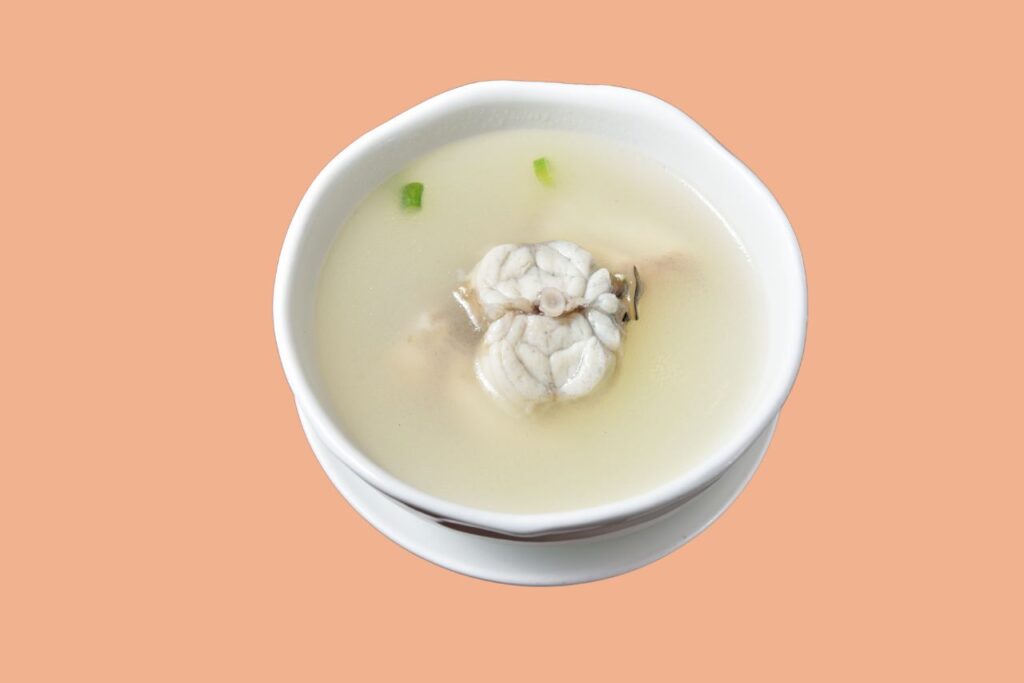
Though holidays to the Maldives usually focus on luxurious resorts, fancy five-star meals and expansive adventures, there’s plenty of pleasure to be found in the homestyle cooking of the country, too. This traditional Maldivian fish soup is a case in point. Made with fresh tuna, chilli, onion, and lime, the simplicity of the ingredients allows the natural flavours to shine through, its clear broth reminiscent of the archipelago’s crystal waters.

Culinary tourists should head to the lively, cosmopolitan island of Maafushi for an authentic taste of this delectable dish at the family-run restaurants along the shoreline. Maafushi is renowned for its exquisite seafood cuisine. Besides traditional Maldivian fish soup, you can also find grilled fish, octopus curry, and fish cutlets here. The island’s family-run restaurants have been serving these delicacies for generations, using only the freshest ingredients caught from the surrounding waters.

Mas Huni – The National Breakfast

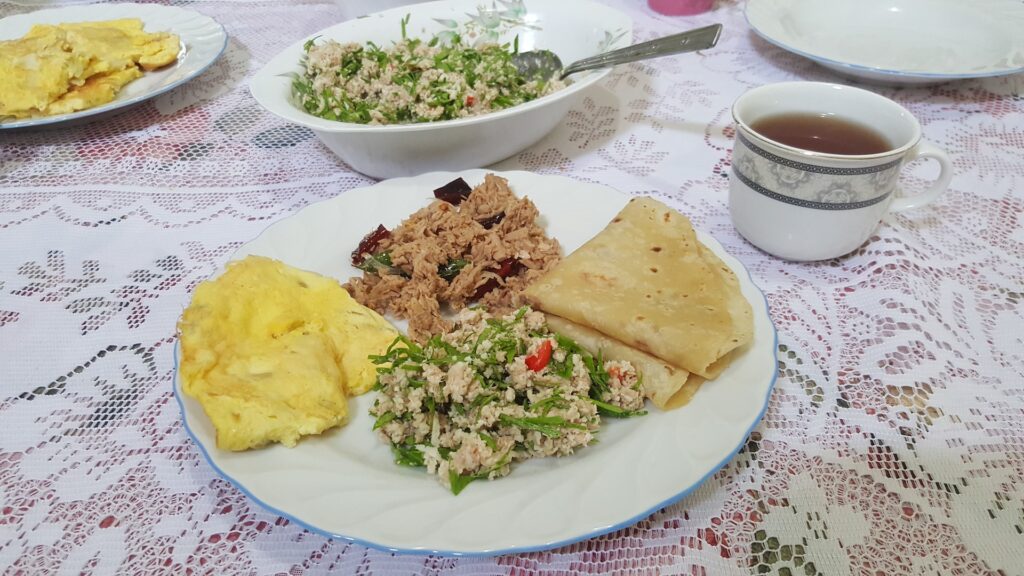
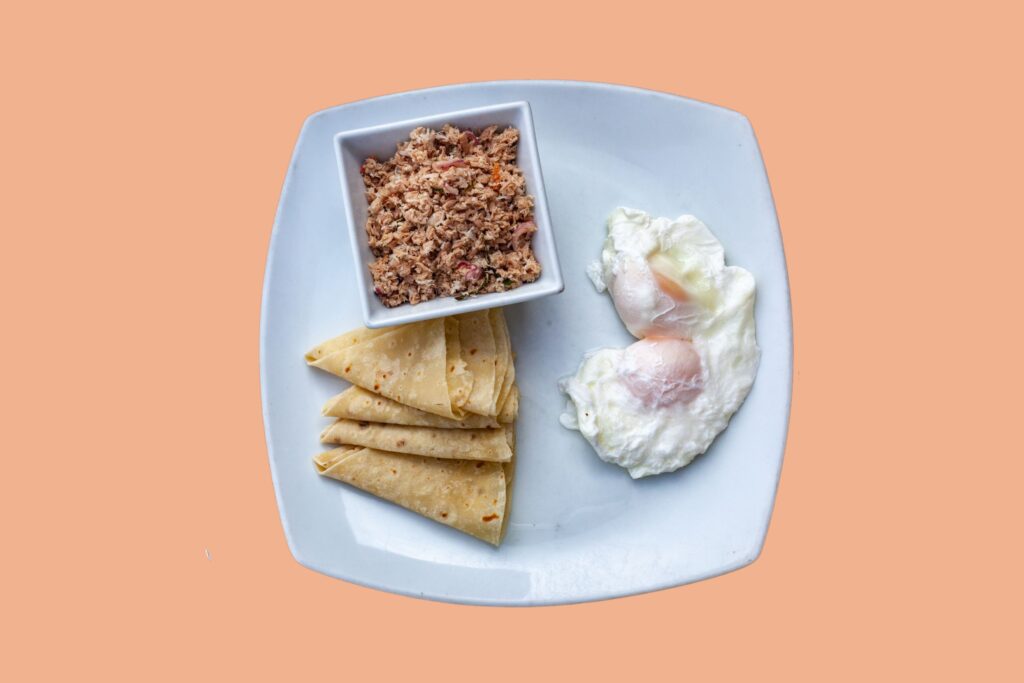
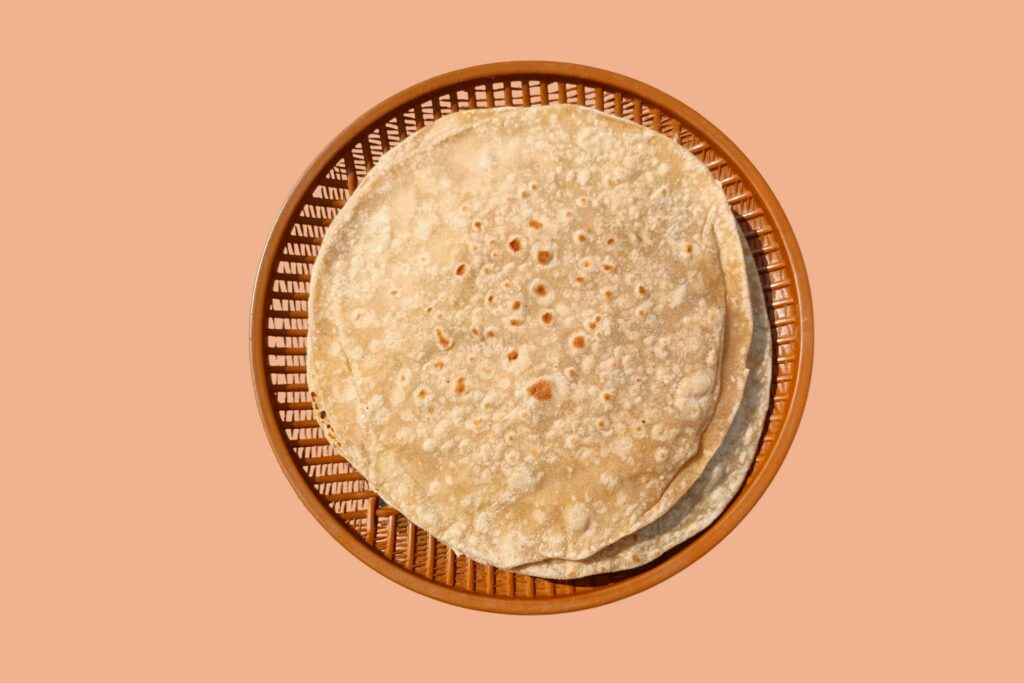
A typical Maldivian breakfast and considered to be the national dish, Mas Huni consists of finely chopped tuna, coconut, onion, and chilli, served with roshi (a type of chapati-adjacent flatbread). Though you’ll find upmarket versions served in Maldives resorts and more traditional takes in the nation’s many street food markets, for a unique twist on this classic dish, visit the island of Thoddoo, known for its agricultural abundance, where seasonal fruits are often added to the mix.

Another unique version of Mas Huni is found on the island of Hulhumale, where some local restaurants add avocado to the traditional recipe. The creamy texture of the avocado complements the tuna and coconut perfectly, creating a delicious and nutritious breakfast option.

Design by IDEAL image © Arthur Enselme via Canva

Huni Roshi – A Sweet & Spicy Coconut Stuffed Bread

A variation of the classic Mas Huni, Huni Roshi sees the roshi this time filled with a mixture of grated coconut, onion, and chilli. This snack is perfect for a midday pick-me-up and can be found at local cafes and eateries throughout the Maldives.

For a unique Huni Roshi experience, head to the island of Fulidhoo, where the dish is served with a side of freshly caught reef fish. The combination of the crispy bread, spicy coconut mixture and succulent fish dances across the palate almost provocatively. It’s bloody delicious.

By Wirestock from Getty Images via Canva

Kulhi Boakibaa – Spicy Fish Cakes

This spicy fish cake is made from smoked tuna, coconut, rice, and an assortment of spices. Often served during special occasions, Kulhi Boakibaa is best enjoyed at the local markets on the island of Hulhumalé, where vendors prepare it fresh daily.

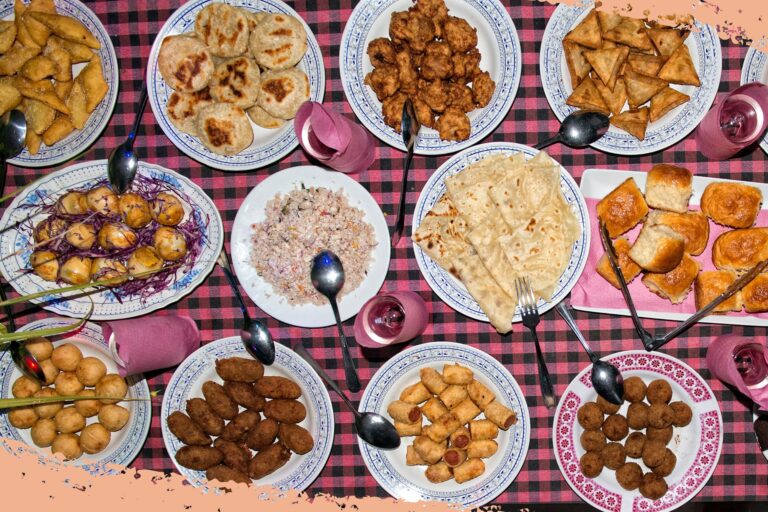
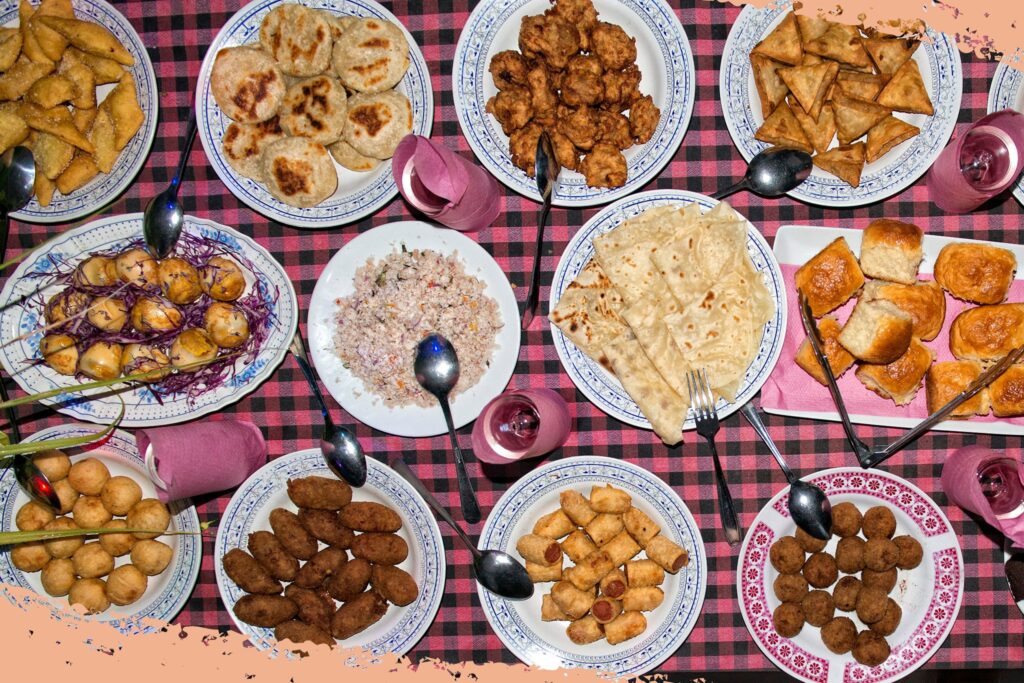
Hulhumalé is also well known for its street food scene, and you can find a variety of other Maldivian delicacies here. Try the masroshi, a crispy version of roshi filled with tuna and spices, or the ubiquitous hedhikaa, a platter of deep-fried snacks that includes fish rolls, bajiya (spicy doughnuts), and keemia (fish cutlets).

Read: 4 IDEAL things to do on your romantic getaway to the Maldives

Bis Keemiya – Maldivian Samosas That Pair Beautifully With Tea

These Maldivian samosas are filled with a mixture of sautéed cabbage, onion, and hard-boiled eggs. Crispy on the outside and flavourful on the inside, Bis Keemiya can be found at local tea shops throughout the capital city of Malé.

The ideal drink to enjoy alongside Bis Keemiya is a cup of black tea with a dash of ginger. This spicy tea is a popular beverage in the Maldives and is believed to have numerous health benefits. The warmth of the tea pairs perfectly with the savoury flavour of the samosas, making for a delightful snack any time of day.

Design by IDEAL image © Andrea Lzzotti via Canva

Rihaakuru – An Umami Rich Fish Condiment

This traditional Maldivian condiment is made from boiled and smoked tuna, mashed and mixed with salt. While it might not sound appetising to some, Rihaakuru is an essential ingredient in many Maldivian dishes, adding depth and umami to stews and curries in a similar vein to Malaysian belacan or Thai gapi.

For the best Rihaakuru experience, head to the island of Thulusdhoo, where you can watch the process of making this pungent condiment at the local factories. The island’s restaurants and cafes also offer a variety of dishes that feature Rihaakuru as a key ingredient, including a popular version of Garudhiya, that spicy fish soup from a few paragraphs prior that incorporates the condiment.

Alternatively, visit the fishing village of Gemanafushi to witness the age-old process of creating this flavorful paste and sample dishes that showcase its versatility.

Fihunumas – Spice-Rubbed Fish, Baked In Banana Leaf

Fihunumas is a popular Maldivian dish made with fish that is baked in the oven. The main ingredient used in this dish is a large fish, usually a reef fish called kanneli or masimas (red snapper).

To prepare fihunumas, the fish is first cleaned, scaled and the insides removed. Then it is rubbed with a mixture of salt, turmeric, chilli powder, and sometimes garlic and ginger paste. The fish is then stuffed with a mix of onions, garlic, curry leaves, green chilies, and grated coconut.

The fish is then wrapped in banana leaves and baked in the oven until the flesh is cooked and the skin is crispy. The banana leaves help to keep the fish moist during the baking process and impart a delicious flavour to the dish.

Fihunumas is often served with steamed rice or roshi, and accompanied by a side of spicy chilli sauce or vegetables. It is a flavourful and aromatic dish that showcases the fresh seafood that is abundant in the Maldives. Find it grilling on just about any beach; just look out for the smoke signals!

Bambukeylu Hiti – Breadfruit For Breakfast

This dish, made from breadfruit, is a staple in Maldivian cuisine. Sliced (and sometimes deep-fried), the breadfruit is then simmered in a coconut curry, the resulting dish, Bambukeylu Hiti, a gently bitter, invigorating affair. Enjoy, as always, with steamed rice, roshi or both.

Dhonkeyo Kajuru – Deep Fried Fruit Fritters

Dhonkeyo kajuru is a traditional dessert from the Maldives that consists of deep-fried banana or jackfruit fritters coated with sugar. The dessert is made by slicing banana or jackfruit and mixing it with a batter of flour, coconut milk, sugar, and cardamom. The mixture is then deep-fried until it is crispy and golden brown. Once fried, the fritters are coated with sugar to give them a sweet and crunchy exterior.

The influences of dhonkeyo kajuru can be traced back to the Indian subcontinent, where similar types of fritters are popular. The Maldives has been a crossroads of trade and cultural exchange for centuries, and this has resulted in a cuisine that is influenced by the surrounding regions. The use of coconut milk, cardamom, and banana or jackfruit in the dessert is a reflection of the ingredients commonly found in Maldivian cuisine.

Design by IDEAL image © Ika Rahma via Canva

Aluvi Boakibaa – Snack-time, Maldives-Style

Aluvi Boakibaa is a popular Maldivian snack made with boiled cassava, boiled potato or both, alongside grated coconut, onions, chilli, and spices, which is then grilled until crispy and golden brown. This savoury snack, which comes in squared slices, is a must-try for any food lover visiting the Maldives, and there are many places where you can find it across the country.

One of the best places to try Aluvi Boakibaa is at the local markets and street food stalls in Male, the capital city of the Maldives. Here, you can find this delicious snack being prepared fresh on the grill, giving it a smoky flavour that is hard to resist. Some popular places to try Aluvi Boakibaa in Male include the Hulhumale’ fish market, the local market in Male, and the street food vendors near the Islamic Centre.

Havaadhulee Bis – Smoked Fish, Spice & All Things Nice

A combination of smoked fish, grated coconut, and spices including cumin, ginger and turmeric, all stuffed into a dough and deepfried, Havaadhulee Bis is a must-try for seafood (and donut!) lovers. The island of Kulhudhuffushi, with its thriving fishing industry, offers an unparalleled opportunity to taste this dish prepared by skilled local chefs.

Saagu Bondibai – A Sweet, Intoxicating Maldivian Dessert To End The Day On

A Maldivian dessert not to be missed, Saagu Bondibai is a creamy pudding made from sago pearls, coconut milk, and condensed milk, flavoured with pandan leaves, cardamom and rose water. The island of Fuvahmulah, known for its lush vegetation, offers an exceptional version of this sweet treat, incorporating locally sourced ingredients and bringing them to a heady conclusion.

Design by IDEAL image © Best Of Melbourne Life via Canva

The Bottom Line

The Maldives is truly a paradise for seafood lovers, especially those who relish fish and shellfish, offering a diverse range of flavours and dishes that showcase the islands’ rich culinary heritage. With each island offering its unique take on traditional recipes, a trip to the Maldives is not complete without embarking on a gastronomic adventure through its azure waters and palm-fringed shores.

Pedal Through Portugal: The Best Cycling Holidays In Portugal

Portugal, with its stunning coastlines, rolling vineyards, and historic towns, offers an unparalleled experience for cyclists seeking both adventure and relaxation. From the sun-drenched Algarve to the lush Douro Valley, Portugal has something for every cyclist, and exploring it on two wheels is arguably the best way to soak in the country’s diverse landscapes and rich culture.

Today, we’re delving into some of the best Portugal bike tours, providing recommendations on routes, journey lengths, sights to see, and accommodation along the way. Put your helmet on, consider some naff but totally protective knee pads, toy with the idea of lycra, and let’s get started…

When Is The Best Time To Go On A Cycling Holiday In Portugal?

The ideal time to visit Portugal for a cycling tour is between the months of March and October when the weather is warm and dry. However, the peak summer months of July and August, as well as June and September, quite honestly, can be quite (see: very) hot, especially in the southern regions, so consider planning your trip for the early spring or later parts of autumn when temperatures are more moderate.

Portugal’s climate is generally temperate, but it’s always wise to pack a light rain jacket, especially if you’re cycling in the northern regions where rain is more common.

Whether you’re renting or bringing your own bike, understanding the options can help you make the best choice. Bikes are typically categorised into three types: city bikes for urban exploration, mountain bikes for rugged trails, and road bikes for long-distance rides on paved roads.

Portugal has embraced cycling culture, and you’ll find numerous rental shops in cities, especially Lisbon and Porto, as well as tourist areas, offering a variety of bikes to suit your needs.

Now, let’s saddle up and explore some of our favourite cycling routes in Portugal.

The Algarve Coast

Ideal For: Sun-seekers and coastal adventurers

One of the most popular cycling routes in Portugal is the Algarve Coast. This 155-mile route stretches from the Spanish border to the southwestern tip of Portugal, offering breathtaking views of the Atlantic Ocean, golden beaches, and charming fishing villages.

Cyclists can expect a moderately challenging journey, typically taking around 7-8 days to complete. Along the way, you’ll pass by stunning cliffs, hidden coves, and historic towns like Lagos and Sagres.

Accommodation options are plentiful, ranging from quaint guesthouses to luxurious resorts. One notable stop is the Vila Vita Parc Resort & Spa, which offers stunning ocean views and top-notch amenities.

Culinary Specialties Along The Way: The Algarve is famous for its fresh seafood, particularly grilled sardines, cataplana (a seafood stew), and the sweet Dom Rodrigo dessert made from egg yolks, sugar, and almonds.

The Douro Valley

Ideal For: Wine enthusiasts and scenic route lovers

For those looking for a scenic and leisurely cycling holiday, the Douro Valley is an excellent option. This 125-mile route winds through Portugal’s famous wine region, from Porto to the Spanish border, and can be completed in 5-6 days.

As you cycle along the Douro River, you’ll pass by terraced vineyards, historic quintas (wine estates), and picturesque villages. Wine enthusiasts will enjoy visiting the many wineries along the route, where you can sample the region’s renowned port wine. For many, Quinta do Bomfim is considered the premier destination for that most famous of fortified wines.

For a comfortable stay, consider booking a room at the Six Senses Douro Valley, a luxurious hotel set in a beautifully restored 19th-century manor house.

Also of note, and if you enjoy exploring on foot, then some of the best walking tours in Portugal focus on the Douro Valley. The bonus, of course, is that you can enjoy a drink without the danger associated with getting back in the saddle afterwards!

Culinary Specialties Along The Way: The Douro Valley is known for its port wine, but also offers delicious regional dishes such as tripas à moda do Porto (tripe stew), and the sweet pão-de-ló de Ovar (a moist sponge cake).

Read: Portugal’s very best walking holidays

The Alentejo Region

Ideal For: History buffs and rural explorers

If you’re interested in exploring the rural beauty of Portugal, the Alentejo Circuit (a loop starting and ending in Évora)  is the perfect choice. This 200-mile route takes you through rolling hills, olive groves, and medieval towns, offering a unique glimpse into Portugal’s agricultural heartland.

The journey typically takes around 8-9 days to complete and offers a chance to experience the region’s rich history and culture. Highlights of the Alentejo Region include the UNESCO World Heritage city of Évora, the ancient Roman Temple of Diana, and the stunning Marvão Castle.

Accommodations along the route are varied, with options including charming rural hotels like the Convento do Espinheiro, a luxurious hotel set in a 15th-century convent.

Culinary Specialties Along The Way: The Alentejo is renowned for its hearty cuisine, including dishes like porco preto (black pork), migas (a kind of stuffing that uses breadcrumbs, garlic and pork), and the region’s excellent wines and olive oils.

The Silver Coast

Ideal For: Beach lovers and cultural explorers

For another scenic trip, consider cycling the Silver Coast. This 150-mile route runs from Lisbon to Porto, passing through beautiful coastal towns, sandy beaches, and historic sites. With relatively flat terrain, this route is suitable for cyclists of all abilities and can be completed in 7-9 days.

Points of interest along the Silver Coast include the medieval town of Óbidos, the stunning beaches of Nazaré, and the vibrant city of Coimbra, known for its historic university.

For a memorable stay, book a room at the Praia D’El Rey Marriott Golf & Beach Resort, a luxurious hotel set amidst lush gardens and offering stunning ocean views.

Culinary Specialties Along The Way: The Silver Coast offers a variety of seafood dishes, including caldeirada (fish stew), and the famous pastéis de Tentúgal (crispy pastry filled with egg cream).

The Azores

Ideal For: Nature lovers and volcanic landscape enthusiasts

For something truly unique, the Azores archipelago is a must-see (and must-cycle!) destination. The islands are renowned for their dramatic landscapes, volcanic craters, and lush greenery, making them a paradise for cyclists.

There are several routes to choose from, but one of the most popular is the São Miguel Loop, which covers approximately 80 miles. The route takes you through charming villages, past stunning lakes, and offers breathtaking views of the Atlantic Ocean. Cyclists can also explore the island’s rich history, with sights such as the Sete Cidades and the Furnas Valley. Be warned, this is one challenging ride.

Accommodation options in the Azores include everything from campsites to luxury hotels, with something to suit every budget.

Culinary Specialties Along The Way: The Azores are known for their unique dishes such as cozido das Furnas (a stew cooked underground using volcanic heat), fresh seafood, and the local pineapple and passion fruit.

Doing All of These Destinations in One Epic Biking Adventure

For the truly adventurous, combining all these incredible destinations into one epic biking adventure is a dream come true. This grand tour of Portugal will take you through the diverse landscapes and rich cultural heritage of the entire country, from the sun-soaked Algarve to the lush Douro Valley, and even the remote beauty of the Azores.

This epic journey would cover approximately 1,000 miles on the mainland, plus additional travel to the Azores. Here’s a suggested route and timeline:

  1. Start in the Algarve Coast: Begin your journey in the sunny Algarve, cycling the 155-mile route over 7-8 days.
  2. Head North to the Alentejo Region: Continue north to the Alentejo, covering 200 miles in about 8-9 days.
  3. Move to the Silver Coast: From the Alentejo, head towards Lisbon (perhaps stopping off at one of its nearby beaches on the way), and start the Silver Coast route, cycling 150 miles over 7-9 days.
  4. Travel to the Douro Valley: Make your way to Porto and begin the Douro Valley route, covering 125 miles in 5-6 days.
  5. Fly to the Azores: After completing the mainland routes, take a flight to the Azores. Spend about 7-10 days exploring the São Miguel Loop and other islands, covering approximately 100 miles.

Total Duration: This epic adventure would take around 40-50 days, allowing for rest days, travel between regions, and time to soak in the local culture and cuisine.

The Bottom Line

Portugal offers a diverse range of cycling holidays for adventurers of all levels. Whether you choose to tackle the challenging Algarve Coast or meander along the gentle Douro Valley, you’re sure to create lasting memories as you pedal your way through this enchanting country. And for those seeking the ultimate adventure, combining all these destinations into one epic biking journey will provide an unforgettable experience of Portugal’s natural beauty, cultural richness, and culinary delights. We can’t wait to see you on the road.

How To Measure & Analyse Your Social Media’s Campaign Performance: A 10 Point Plan

With social media’s immense capabilities, interactive features and ever-evolving trends, a strong online presence has shifted from being a luxury to an absolute necessity for businesses aiming for success. 

Measuring and analysing your social media campaign performance is crucial to understanding the effectiveness of your strategies and making data-driven decisions for future improvements. Here’s a detailed guide to help you effectively measure and analyse your social media efforts:

1. Define Key Performance Indicators (KPIs)

Establishing clear Key Performance Indicators (KPIs) is the first step in measuring the success of your social media campaigns, as they provide specific metrics to track and evaluate.

  • Engagement Metrics: Track likes, comments, shares, retweets, and mentions to gauge how well your content resonates with your audience.
  • Reach and Impressions: Measure the number of unique users who see your content (reach) and the total number of times your content is displayed (impressions).
  • Follower Growth: Monitor the increase or decrease in your follower count over time.
  • Website Traffic: Use tools like Google Analytics to track the number of visitors coming to your website from social media platforms.
  • Conversion Rates: Measure the percentage of social media interactions that lead to desired actions, such as signing up for a newsletter, downloading a resource, or making a purchase.
  • Click-Through Rates (CTR): Track the number of clicks on your social media posts, ads, or links divided by the number of impressions.
  • Customer Acquisition Cost (CAC): Calculate the cost of acquiring a new customer through social media marketing efforts.
  • Return on Investment (ROI): Measure the revenue generated from social media campaigns relative to the cost of running those campaigns.

2. Utilise Analytics Tools

Leveraging analytics tools is essential for gaining in-depth insights into your social media performance, enabling you to make data-driven decisions.

  • Platform-Specific Analytics: Use built-in analytics tools provided by social media platforms, such as Facebook Insights, Twitter Analytics, Instagram Insights, LinkedIn Analytics, and YouTube Analytics.
  • Third-Party Tools: Leverage third-party analytics tools like Google Analytics, Hootsuite, Sprout Social, Buffer, and SEMrush for more comprehensive data and insights.
  • UTM Parameters: Use UTM parameters in your social media links to track the effectiveness of specific campaigns and posts in driving traffic and conversions.

3. Track & Compare Metrics Over Time

Consistently tracking and comparing your metrics over time helps you identify trends, measure progress, and refine your strategies for better results.

  • Benchmarking: Establish benchmarks for your key metrics to compare performance over time.
  • Trend Analysis: Identify trends and patterns in your data to understand what types of content and strategies are most effective.
  • Seasonal Variations: Consider seasonal trends and how they impact your social media performance.

4. Analyse Audience Insights

Understanding your audience’s demographics and behaviors allows you to tailor your content to better meet their needs and preferences.

  • Demographics: Understand the age, gender, location, and interests of your audience to tailor your content more effectively.
  • Behavioural Insights: Analyse how your audience interacts with your content, including the times they are most active and the types of content they engage with the most.

Read: How to turn your culinary tastes into a social media enterprise 

5. Evaluate Content Performance

Evaluating the performance of your content helps you determine what resonates with your audience and drives engagement and conversions.

  • Top-Performing Content: Identify which posts, videos, or campaigns received the most engagement, reach, and conversions.
  • Content Formats: Compare the performance of different content formats (e.g., images, videos, stories, live streams) to determine what resonates best with your audience.
  • Message Effectiveness: Assess the effectiveness of your messaging and calls-to-action (CTAs) in driving engagement and conversions.

6. Monitor Competitor Performance

Keeping an eye on your competitors’ social media activities can provide valuable insights and highlight opportunities for your own strategy.

  • Competitive Analysis: Track and analyse the social media performance of your competitors to identify opportunities and areas for improvement.
  • Benchmarking Against Competitors: Compare your metrics with those of your competitors to understand your relative performance in the industry.

7. Gather Qualitative Feedback

Collecting qualitative feedback from your audience offers a deeper understanding of their sentiments and experiences with your brand.

  • Customer Feedback: Collect and analyse feedback from your audience through comments, messages, and surveys to gain insights into their preferences and pain points.
  • Sentiment Analysis: Use sentiment analysis tools to gauge the overall sentiment of your audience towards your brand and content.

8. Report & Share Findings

Regularly reporting and sharing your social media performance findings ensures that your team stays informed and aligned on your progress and goals.

  • Regular Reporting: Create regular reports (weekly, monthly, quarterly) to track your social media performance and share insights with your team.
  • Visualisations: Use charts, graphs, and dashboards to visualise your data and make it easier to understand and communicate.
  • Actionable Insights: Highlight key takeaways and actionable insights from your analysis to inform future strategies and decision-making. 

Read: How to boost brand awareness without spending a fortune

9. Adjust & Optimise Your Strategy

Continuously adjusting and optimising your strategy based on data and insights is crucial for maintaining and improving your social media effectiveness.

  • Continuous Improvement: Use the insights gained from your analysis to continuously refine and optimise your social media strategy.
  • A/B Testing: Conduct A/B tests to experiment with different content, formats, and posting times to determine what works best.
  • Adapt to Changes: Stay agile and be prepared to adjust your strategy based on changes in social media algorithms, audience behaviour, and industry trends.

10. Integrate Social Media With Overall Marketing Strategy

Integrating your social media efforts with your overall marketing strategy ensures a cohesive approach that maximises the impact of your marketing activities.

  • Cross-Channel Integration: Ensure your social media efforts are aligned with your overall marketing strategy, including email marketing, content marketing, and SEO.
  • Unified Messaging: Maintain consistent messaging across all marketing channels to reinforce your brand identity and values.
  • Holistic Analysis: Analyse the impact of social media on other marketing channels and vice versa to understand the full scope of your marketing efforts.

The Bottom Line

By taking on these proven social media strategies, you can enhance your brand presence and achieve the business objectives you set out to reach. Suppose you’re looking to elevate your social media efforts further. Why not consider partnering with a social media marketing agency that can provide expert guidance and tailored solutions to meet your unique needs?

Ideal Eats: Pizzeria Mazzie, Bangkok

Ideal for a New York and Neapolitan hybrid pizza that’s the best in Bangkok…

Sometimes, after all the spice and citrus, a distinctive craving comes a’calling in this part of the world; for tomato sauce, for bread, and for cheese. Fortunately, Bangkok’s pizza scene has never been in finer fettle, with the city occupying several spots in the upper echelons of the latest addition of the 50 Top Pizza in the Asia-Pacific list

One of those spots has been taken by Pizza Mazzie, a pizzeria run by New Yorker Jon Spearman, which serves a delicious hybrid of American and Italian pizzas, all delicately refined toppings and bases with admirable structural integrity.

The oven here is the revered ‘low dome’ Acunto, built in Naples, and the dough is light and airy, owing to its super slow-fermentation process. It arrives blistered and burnished in all the right places, with Spearman’s refined approach to toppings (he believes that there should be no more than three, as a rule) meaning the pizzas at Mazzie are surprisingly delicate and insanely delicious. 

Biodynamic wines and craft beers complete the package, making Pizza Mazzie an incredibly convivial place to spend an evening. And spend many evenings here we have…

  • When is Pizza Mazzie open? Pizza Mazzie is open everyday except Monday, from 5:30pm to 10pm, with the pizzeria opening for lunch, too, on Saturdays and Sundays.
  • Do I need to book in advance? Though you can make a reservation over the phone or on Line, Pizza Mazzie saves space for walk-ins.
  • How much should I expect to spend? A Classic Cheese is currently priced at ฿410 (£9).
  • Closest BTS/MRT? Ekkamai BTS is a 5 minute walk from the pizzeria.

Address: 17 Park Lane Soi Sukhumvit 63 Road, Khwaeng Khlong Tan Nuea, Watthana, Krung Thep Maha Nakhon 10110

Website: pizzeriamazzie.com

7 Essential Items You Need In Your Home Gym

The home fitness revolution shows no signs of slowing down. What started as a necessity has evolved into a lifestyle choice, with millions discovering that working out at home offers unbeatable convenience, privacy, and cost-effectiveness. No more battling rush-hour traffic to make that 6pm spin class, no more waiting for equipment during peak hours, and no more hefty monthly membership fees that drain your bank account whether you show up or not.

In 2025, the home gym has become as common as the home office. Smart fitness technology, streaming workout platforms, and increasingly sophisticated equipment have made it easier than ever to achieve professional-level results from your spare bedroom, garage, or even living room corner. Whether you’re a fitness enthusiast looking to supplement your gym routine, a busy professional squeezing in early morning workouts, or someone who simply prefers the comfort and flexibility of exercising at home, having the right equipment is crucial.

But here’s the thing: you don’t need to spend thousands on fancy machines or dedicate an entire room to create an effective home gym. With just a handful of versatile, space-efficient pieces, you can build strength, improve cardiovascular fitness, and maintain flexibility – all without leaving your house.

The key is choosing equipment that offers maximum versatility and durability while fitting both your space and budget. After all, the best home gym is one you’ll actually use consistently.

With that in mind, here are 7 essential items you need in your home gym.

Kettlebells

Kettlebell workouts are excellent for developing strength without necessarily bulking up excessively. They help you develop a lean and muscular physique by enabling you to exercise various muscle groups and are particularly adept at building forearm strength, a much neglected area, because the kettlebell handle is significantly thicker than a dumb or bar bell’s.  

Kettlebells are also great for burning calories; an intense workout with one can help you burn up to 400 calories in just 20 minutes, according to Web MD

Kettlebell workouts are designed to be easy on your joints while focusing not just on building your strength but also your balance. Some of the most effective exercises you can include in your routine include kettlebell goblet squats, kettlebell deadlifts, kettlebell swings, and thrusters. 

And the best part? Kettlebells are some of the easiest home gym items to store, taking up minimal room. For equipment with this much variety and muscle reach, that’s a very rare thing.

Dumbbells

When it comes to strength training, dumbbells are amongst the most dynamic pieces of equipment you can invest in. They are small, inexpensive when you consider their longevity, and can be used to target a wide variety of muscle groups.

Your home gym is incomplete without a good set of dumbbells, whether you’re looking to build muscle mass or get toned. Not only do they help you increase your strength, but they also improve your flexibility and strengthen your bones, muscles, and connective tissue. 

For a home gym, adjustable dumbbells are ideal as they require little storage space and allow you to gradually increase the difficulty of the exercises by adding more weight plates to the dumbbells as you get stronger and more disciplined in your approach. 

Most sets come with a range of weight plates in different configurations – say 2x 1kg, 2x 2.5 kg and 2x 5kg, allowing you to mix and match your workout regimes accordingly. 

Though the initial outlay on dumb or bar bells does feel quite high – the perennially popular Pro Iron 20kg Cast Iron Adjustable Dumbbell Set will set you back £139.99, for instance – rest assured that, due to their durability, such iron sets lose little value over time. This means they command a high resale value should you decide to move on or move back to the gym. Should you find that after working out a while, your strength exceeds your set, weight plates in larger kilogram configurations are available online as single units.

However, even though adjustable dumbbells require smaller storage space compared to fixed dumbbells, in some situations, the latter may be a better option. For instance, if you wish to perform a drop set, fixed dumbbells are your go-to home gym equipment.

Resistance Bands

Bodyweight training is an excellent way of toning your muscles, targeting multiple muscle groups at the same time, and building strength without the risk of injury. Storage wise, they require next to no space, and need no extra equipment, either. The only issue is that as you progress and build your strength, bodyweight exercises using resistance bands may start to feel less challenging. This can limit your development. 

By using resistance bands during your bodyweight workouts, you can increase the intensity of the exercises. In addition to supplementing your training, there are various dedicated exercises you can perform using resistance bands. A set of resistance bands generally comes with 4 bands, each with different levels of stiffness, allowing you to diversify the intensity of your workouts. 

On top of that, these bands are compact in size, so you can easily fit them in your pocket should you choose to take your workouts outside when the weather warms up.

Read: A personal trainer’s top tips on building muscle without weights

Ergometer

An ergometer is any machine that can measure the amount of effort exerted during exercise. It provides details such as distance covered, calories burnt, speed, workout duration, and intensity. Some of them even measure your heartbeat and blood pressure, allowing you to target the cut and thrust of your workouts according to your needs.

Generally speaking, an ergometer’s two most popular forms are stationary bikes and indoor rowing machines, depending on your preference and the space you have available to you.A stationary bike is excellent for completing cardio routines without adding stress to your joints. On the other hand, a rowing machine is not only great for cardio but also helps you build your strength by providing a full-body workout.

Either of these would be a great addition to your home gym, though exercise bikes do tend to be easier to store, particularly if space within your house or flat is at a premium. You can find a decent range of foldable, indoor exercise bikes for around £150.

Power Racks

Ask any keen bodybuilder or weightlifter what they missed most about the gym during the lockdown days, and nine times out of ten, they’ll say the power racks. 

Power racks provide safety and support for those looking to increase their range of motion, improve their strength and up their resistance, and can help the user perform more advanced weight training exercises while ensuring proper posture and form are maintained. 

Safety is at the heart of a power rack’s design (look for dual mounted safety bars with ‘J’ hooks) and this should be super reassuring for the home gym enthusiast without gym buddies to spot them. 

Using a power rack, you can perform squats, deadlifts, bench presses (you’ll need a bench, however) and heavy rows, amongst many other routines. Those with pull up capabilities are a real bonus – goodbye dodgy, dangerous pull-up bar slung between your bedroom door frame! 

These racks (sometimes referred to as cages) needn’t cost you a fortune; you can find some very capable ones in the region of £400. Look for those which come with a bench included if you’re keen to diversify your range from home.

Medicine Ball 

Nightmares of secondary school PE aside, medicine balls offer a wide range of benefits and have no specific storage requirements. Essentially weighted balls that come in different sizes, they can be used as weights to develop strength and stamina, and are particularly useful at targeting your hamstrings, adductors and glutes, as well as giving you a good ab workout, to boot. Actually, don’t boot a medicine ball; you’ll do yourself an injury.

What sets them apart from other workout aids is that a large number of exercises that involve medicine balls work on improving your balance. This is because medicine ball workouts engage your core muscles, helping develop your balance, posture, and coordination.

Yoga Mat

While yoga mats are primarily used for yoga, they also come in handy during bodyweight exercises and warm ups and warm downs. Furthermore, they require little storage space and can be easily rolled up and propped against a wall.

Oh, and yoga’s not exactly bad for you, either! Check out these tips on how to choose the best yoga mat for more.

The Bottom Line

The best equipment for your home gym are those items that allow you to target multiple muscle groups and perform various types of exercises, as these make the most sense financially, as well as in terms of space versus efficiency. 

If you’re tired of doing endless press-ups and sit-ups on your living room floor and want to take your home workouts up a notch, these are the items you need!

5 Ideas For Bringing Your Favourite Travel Destinations Into Your Garden This Year

Whether it’s because of the increasing cost of living, a perceived rise of incidents in the sky, or worries about the sustainability of travel, it’s been reported that Brits are feeling ‘holiday deprived’.

Indeed, as the Mirror reported last year, “Levels of vacation deprivation – where people work too much and go on too few holidays – worldwide have reached a 10-year high as adults navigate work and personal travel barriers.”

But that doesn’t mean you can’t enjoy some escapism from the comfort of home. Or, rather, the comfort of your garden…

As we contemplate a potentially lowkey end to summer 2024, we’re bringing some of our most beloved holidays into our backyard to help us make the most out of our garden. Here are 5 ideas for bringing our favourite travel destinations into your garden this year.

South Of France: Terraces, Herbs De Provence & Lots Of Lavender

Want to bring the sun-drenched Provencal countryside to your home? Who doesn’t? You’ll be pleased to hear that the essential elements of a true garden of Province are quite easy to replicate, even in grey, rainy England. 

Gardens in the South of France cope with a dry climate and lots of sunlight, and this is reflected in the things that grow there. As such, drought-tolerant plants like Slender Cypress pines flourish here. Other plants typical of the region include climbing wisteria and jasmine, rose bushes and olive trees, the latter of the three being tough to grow in a British climate, though certainly not impossible.

The lavender fields of Provence are one of the region’s most defining features and you can’t capture the essence of a Provencal inspired garden without this plant. While not French, English Lavender is ideal for our climate and will scent your garden beautifully. Another way to capture the ambience of Provence is by growing your own culinary herb garden. Think thyme, savory, rosemary, basil, marjoram, and the aforementioned lavender, which all work together to make Herbs de Provence – a hallmark of the region’s cooking. 

When it comes to traditional elements of Provencal garden design, an elegant terrace, ideal for enjoying long, languid afternoons is key. A large wooden table surrounded by wooden chairs is a must and consider a typical white varnished metal French garden set, too.

Crunchy gravel underfoot via meandering gravel pathways and patios is another essential design element popular in Provence. Adding a beautiful natural stone paving pathway to your garden would mimic this, not only visually, but aurally too!

And finally, to evoke that French je ne sais quoi, if you have plenty of space and the time to care for one, consider a peacock. Be warned, they are quite a handful to look after. On second thoughts, settling on an ornamental peacock will suffice – a special sculpture that makes a simple statement. 

Read: 4 of the best weekend city breaks in the South of France

The Netherlands: Windmills & Tulips

The first thing that enters anyone’s head when thinking of the Netherlands (other than gouda, Cruyff and wooden clogs, perhaps) is surely tulips. Indeed, the national flower of the Netherlands is world famous, and no Dutch inspired garden would be complete without them. If you’re keen to relive holidays spent in the Low Countries, plant plenty. 

Tulips are available in nearly every colour of the rainbow so you can play around with your favourite colours and create a unique colour scheme. Consider planting a coral garden for your very own peachy paradise.

To create this garden, think a mixture of coral, pastel salmon, peach and yellow-orangey apricot. For inspiration, look to Keukenhof, also known as the Garden of Europe, which showcases the very best of the Dutch floral design. There are over 800 varieties of tulips, all shapes, all colours, all heights. Other flowers typical to a Dutch garden include daffodils and hyacinths. 

If you don’t have much room in your garden, look to the canal boats of Amsterdam for inspiration. Many have roof or container gardens – you can easily emulate your own container garden or make one on top of your shed, even in a fairly compact space. 

Other Dutch icons to welcome into your Netherlands inspired garden include decorative clogs which you could use as plant pots and some minute windmills for good measure. For something a little more sophisticated, consider some kinetic windmill sculptures that channel the look of a traditional windmill, instead. 

Bali: Tropical Touches Galore

If you want to bring the essence of Bali into your home and out into your garden, then start with plants. The serenity that the green, tropical foliage brings to your home can be soothing and rejuvenating in equal measure, especially in the relative drab of Britain. 

While it’s hard to replicate Bali’s lush tropical landscape, you can create a convincingly verdant paradise with plants that have a tropical-like appearance. Hardy palm trees like the Windmill palm or Trachycarpus fortunei do well here, as does the Wagnerianus, often affectionately called the ‘waggie’.

Go further. Nothing says island life like furniture and gardenware made from rattan and bamboo canes. To ramp up those tropical vibes, consider a pond showing off the lilies so beloved of the island, if you’re to push the boat out as far as it can go! 

Finally, Balinese architecture channels the power of pavilions beautifully – build a Balinese baronial in the garden, adding a cabana frame to really emphasise the structural integrity of the project. And don’t forget a hammock! 

Spain: Mediterranean Vibes & Mosaics 

Because of the warm climate, the Mediterranean people live an outdoor lifestyle where alfresco dining happens daily; long, lazy meals outdoors and siestas in the shade to finish certainly sounds ideal to us!

Generally speaking, Mediterranean gardens are generally defined by gravel and paving instead of grass, which will be a relief to those not blessed with a lawn.

While you may not be able to grow the same exotic style plants and flowers that you would in the Mediterranean, consider adding a Mediterranean herb garden, allowing you to add the smell of the region to your garden and its fresh flavours to your cooking. 

Terra cotta pots in warm pinks and reds and also plenty of clay ornaments are essential for evoking that Mediterranean aesthetic. If you’ve the space, then a long communal table under a pergola is another hallmark of a great Mediterranean outdoor space. And of course, no Spanish garden would be complete without mosaics.  

Read: 9 of Summer 2024’s biggest tile trends

Photo by Leslie Yu on Unsplash

Japan: Structure & Symbolism 

According to Goodhousekeeping, “when making a Japanese style garden the aim should…be to create a mood of mystery, calm and tranquillity and capture something of the essence of nature where you can restore your inner harmony”.

We couldn’t have put it better ourselves. 

No Japanese garden would be complete without an ornamental or fruit bearing tree. If you have a larger garden, we think Japan’s unofficial national flower, the Cherry Blossom, is just the thing. Japanese maple trees are also traditional and as the RHS points out, are ”well suited to the restricted space of modern suburban gardens, whether planted in the ground or in containers”.

Plum trees are another popular addition to Japanese gardens, and grow abundantly in Britain from August to October. 

When it comes to invoking the essence of a Japanese garden, and if space permits, paths, pagodas and ponds should be incorporated into the design. Japanese gardens are a place for meditative reflection; a pond, with the trickling sound of water, is an integral part of a Japanese garden, and is said to carry qualities conducive to relaxation and reflection.

 Sora Sagano on Unsplash

If your pond is large enough, consider a small bridge over it, to evoke a Japanese pagoda garden. Go further and introduce Koi carp to the pond, known as living jewels in Japanese culture. Finally, stones play a huge role in Japanese culture gardens and moss is used extensively. For a decorative touch, a traditional Japanese garden lantern made from stone completes the aesthetic.

Need more garden inspiration? Check out our article on  5 IDEAL ways to make your garden a sanctuary in time for Spring.

7 Tips For Making A Seamless Move Abroad

So, you’ve decided to relocate to another country. And who can blame you? This one hasn’t exactly been giving the best account of itself lately. What we’d give to pack our bags, spin a globe and see where our finger lands; in a world currently so uncertain, spontaneity is the only way forward right now. 

We’re assuming you’ve already decided on your destination, but in the rush to escape the UK for pastures new, there are several other key considerations you might neglect in haste. This should cover it; our 7 tips for making a seamless move abroad.

Neighbourhood Know-How

Though it can offer a decent level of peace of mind, choosing your accomodation (both the neighbourhood and actual premises you’ll be living in) prior to arriving in your new city is, frankly, an error.

Instead, it’s best to give a few neighbourhoods a ‘trial run’, as it were, to find which best suits your unique needs. In any big city, boroughs, districts, even blocks, are hugely diverse, with each a completely different proposition to the next. Within every neighbourhood lies a hugely diverging, unique personality and local pride. With the makeup and manoeuvring of each area forever in a state of shapeshifting, deciding from afar where you want to settle before you actually spend time there is a foolish move indeed. 

It’s best practice to arrange a short term lease (sublet) in the city for a couple of months to get your bearings and figure out which ‘hood best chimes with your expectations. AirBnb is useful for this, though you should check if it’s actually legal in the city you’re heading to prior to arrival. Many major urban centres, including Barcelona, Paris, New York and San Francisco, have placed major restrictions on, or outright banned, the platform. Hotels, hostels, or even Couchsurfing, might be a better bet.

Work & Money

If you’re not moving specifically for a new role you’ve landed, then you have two options; find a job once you arrive in your new city, or work remotely. Fortunately, there are loads of jobs you can do while travelling or transient, which could keep you going as you settle in somewhere new. These include teaching English as a foreign language, working as a translator or interpreter, or even embarking on a career as a flight attendant.

What’s more, with remote working now enforced in many countries globally, now seems like the ideal time to continue with your current job, ‘working from home’, but that home is somewhere abroad. Perfect!

If you’re interested in how to save money whilst working remotely, do check out our 5 IDEAL tips for managing your finances as a digital nomad for more.

Moving Costs

The costs of moving to a foreign country can be high. If you intend to take the contents of your house with you, then things can get expensive. That said, the home comforts of having your worldly possessions with you can really help with the settling in process, and for many, the cost is worth it.  

To reduce the inconvenience, seek a relocation firm in your area. The best companies will not only help you transport your stuff in one piece, but will also be able to help with the packing and unpacking. Talk about taking a load off!

As the moving experts at Coleman Worldwide Movers tell us, this usually takes the form of an LLC shipment via sea or air freight, which can also help you avoid unnecessary bureaucracy at your destination, which can be a pain when all you want to do is unpack your cherished possessions as quickly as possible.

Legal Documents

There are a few documents which you’re going to need to enter, work and live in another country, as well as gain access to medical care there, too.

The most obvious legal document is the visa, which allows you to visit or stay in that country for a specified period. Another document is a work permit if you will be doing any work to sustain yourself; this will usually require a contract with a company registered within your new country, so many remote working jobs won’t grant you this. Check out this extensive list of places where Britons can and can’t go without a visa, but do be aware that the rules will change drastically after Brexit.

Other important documents that you shouldn’t leave behind include your identification card, passport, copies of any insurance you might have and medical cards. These documents vary from country to country, state to state, but are vitally important if you’re to settle in properly in a legitimate way.

Read: Moving to London? Some considerations before you relocate

Find Ways To Settle In

Life abroad can be lonely if you don’t take proactive steps to meet new people. This is particularly true if you’re working remotely, on your laptop from home or a coffee shop, where opportunities to socialise are even more limited.

There are a few different ways you can settle into your new location and meet people, regardless of which country you’ve chosen to live in. Joining a gym or sports club, taking language classes, or attending community events will help you find people with common interests. 

Alternatively, as is the case with so much in the modern world, there’s an app which can help; meetup.com is similar to a platonic Tinder, and can help you connect with like-minded individuals in your new city. Bumble BFF serves a similar function, and the community based, neighbourhood platform Next Door can also earn you introductions to people close to you.

Language Learning

One of the most effective ways to integrate into a new country is by learning the local language. Not only does it help in daily interactions, but it also shows respect for the local culture and can open up more opportunities for socialising and employment.

  • Apps & Websites: Utilise language learning apps like Duolingo, Babbel, and Rosetta Stone. These platforms offer structured lessons that can help you get a good grasp of the basics before you even arrive.
  • Local Language Exchange Groups: Once you’re in your new city, join language exchange groups through platforms like Meetup.com or Tandem. These groups often organise meetups where you can practice the local language with native speakers in exchange for teaching them your language.
  • Community Classes: Check out local community centers or universities for language classes. These are often more affordable and provide a structured learning environment. Websites like Coursera and edX also offer online courses in various languages.

Healthcare Preparedness

Understanding the healthcare system in your new country is crucial for your well-being. Different countries have different healthcare structures, and being prepared can save you a lot of stress.

  • Health Insurance: Ensure you have comprehensive health insurance that covers you in your new country.
  • Local Healthcare Registration: In many countries, you need to register with a local doctor or healthcare provider. Research the process and complete it as soon as possible after your arrival. Websites like Expatica provide detailed guides on how to navigate healthcare systems in various countries.
  • Emergency Numbers & Services: Familiarize yourself with the local emergency numbers and services. Apps like ICE (In Case of Emergency) can store your medical information and emergency contacts, which can be crucial in an emergency situation.

Anyway, that’s enough admin; it’s time to get excited. Good luck with the move – you’re gonna be just fine!

7 Exterior Design Ideas For A Stunning, Standout Home

Ideal for giving your home’s kerb appeal the wow factor…

With so much focus falling on the size of your sofa, the colour of your kitchen and the comfort of your toilet seat, sometimes your home’s exterior design can get overlooked. But the kerb appeal of your property counts for so much, whether you’re intending to sell up and move on in the near future, or you simply relish that warm welcome a manicured front garden and neatly paved driveway can bring as stroll towards your front door.

For those tired of looking inward and keen to cast their gazes expansively to their gardens, driveways, facades, walls and windows, then read on; here are 6 exterior design ideas for a stunning, standout home, IDEAL for giving your home’s kerb appeal the wow factor.

Master Your Front Garden

If you’re blessed with a front garden, then for heaven’s sake, make the most of it! This is one area of your property which is on display to the world, which makes it a prime candidate for some TLC and attention. Doing so can distinguish your property from other similar offerings in the neighbourhood, and makes a statement about your stylish yet effortless taste.  

So, endeavour to get any green space you’re lucky enough to have looking pristine, primed and ready. Let’s face it; an overgrown, unloved front garden tends to speak volumes about the state of the property as a whole, don’t you think? Because if the owner can’t be bothered to take care of the small patch of land out front, we dread to think what’s lurking within.

Keep this mantra in mind when you trim back shrubbery and weed diligently, mulch flower beds, prune, and make sure the whole area is ready for some finessing. They’re dirty, tiresome jobs, but someone’s got to do them! Then, you can set about introducing hanging baskets, window boxes, and planting new flower beds.

Not all front gardens offer acres of space to work with. If you’re working with a compact plot, thoughtful planning becomes even more critical. Maximizing every square meter through clever zoning, vertical planting and multi-functional features can transform even the smallest frontage.

If you have a lawn, do make sure that you’re watering it deeply and diligently, preferably early morning or late evening to reduce the opportunity for evaporation and taking care not to overdo it. Doing so will guarantee a verdant green. 

Mow regularly but not so obsessively; you don’t want your lawn to look like it’s balding, but you do want it suggestive of a fresh trim. Once a year, make the effort to dethatch your lawn, using a specialist rake, aerating the grass and giving it a clean run at growing healthily. Experts suggest early Spring as the best time to do so.

It’s All About The Driveway

One of the most prominent yet overlooked areas of your home is the driveway. When selling a property, a well-laid driveway design can add value to your home and attract potential buyers and the roving eye of passersby, equally, with understated but reassuring quality a must. 

Landscaping your driveway with kerbs or plants can really make your driveway ping. Decorative kerbs, in particular, are ideal for edging your driveway and can add that finishing touch adeptly.

A driveway isn’t just functional, it sets the tone for your entire property,” says Scott MacColl of MacColl & Stokes Landscaping. “We always advise clients to think about how their driveway connects to the rest of the garden. Proper edging, planting borders, and drainage all contribute to a finish that looks good and lasts.

The driveway sets the tone and character of your house. Therefore, you want to make sure it matches the overall aesthetic of the exterior of your home. To not consider this would be to risk a jarring effect. And let’s face it; first impressions count.

Adding a border of plants or grass to your driveway will frame it succinctly, too. Foliage and flowers can also work well at lifting the facade of your house tenfold and will soften any boundaries between your driveway and home. Moreover, it’s better for the environment; purely hard driveway surfaces can contribute to floods whereas rainfall on grass or plants will soak it up. 

Read: 5 purchases to bring both functionality and flair to your driveway

Illuminate Your Pathway

Lighting plays a crucial role in enhancing the exterior appeal of your home, especially during the evening and night hours. A well-lit pathway not only ensures safety but also adds a touch of elegance and warmth to your property. As EBD Studios suggest, solar-powered path lights are an eco-friendly and cost-effective way to light up your walkway. They are easy to install and come in various designs, creating a welcoming glow that guides visitors to your front door.

For a contemporary look, consider installing LED strip lights along the sides of your pathway. These lights can be embedded into the ground or attached to the edges of your walkway, providing a continuous line of light that highlights the path. Motion sensor lights are another excellent option, adding an element of security to your home by automatically turning on when they detect movement, ensuring safe navigation even in the dark.

For a more traditional and charming look, lanterns or wall sconces can be mounted on posts or walls, providing a soft, ambient light that enhances your home’s aesthetic. Uplighting trees or large plants along your pathway can create a dramatic effect, adding depth and dimension to your garden with a beautiful interplay of light and shadows.

String lights are a versatile and festive option, perfect for draping along fences, pergolas, or across the pathway to create a magical ambiance. If your pathway includes steps, step lights are essential for safety, providing subtle yet effective illumination that prevents trips and falls.

By thoughtfully incorporating these lighting ideas, you can transform your pathway into a captivating feature that enhances the overall kerb appeal of your home, making it more inviting and ensuring it stands out beautifully, day or night.

Paint A Mural

Can I really paint my house any colour, we hear you ask? Well, environment lawyer Alison Ogley tells The Guardian that “if you want to paint your house a particular colour, then you have particular development rights to do so, but local authorities can remove those rights. Everybody has to check for themselves that there isn’t what’s called an article 4 direction in place in their area. If there is, the rights to paint your house any colour you want has been taken away.”

Of course, there are certain rules which apply for listed buildings and you may end up falling foul with your neighbours and the local council. However, painting the facade can really make it pop – you’re here for exterior design ideas for a standout home, after all. If painting your whole home is a bit too bold and brash for the overall attitude of your street, then have fun with the colour of your door, instead.

If you’re keen to avoid breaking planning law or annoying your neighbours, then why not sling up something that’s still quirky and colourful, but a little more transient? Out front, you could introduce a statement sculpture, erect some bunting, or even hoist your family’s own flag. If the latter sounds like your sort of thing, then rest assured that you can now buy flagpole parts that are large and sturdy enough to survive the unpredictable nature of the Great British weather, rather than buckling at the first sign of a strong gust.

Think Foliage

Though a manicured look in the front garden certainly speaks volumes about the conscientiousness of the owner, a little organised chaos can also appear stylish in the right hands.

The key here is to add plants that don’t need much maintenance. Choose a combination of plants that flower in every season and ensure that the plants won’t grow too tall, blocking natural light from entering your windows.

Consider a flower that smells wonderful, like lavender, jasmine or honeysuckle for a really welcoming, refreshing burst of aroma when you come home. How lovely that sounds.

Adding a pergola to park your car under that’s made with climbing plants is great for providing shade for your vehicles in the summer months. Climbing or rambling roses offer a timeless while certain species of flowering Clematis can give you colour throughout the year. 

Hanging baskets can bring some colour to your garden, too, and fast, if you don’t have the time to plant flowers and tend to them, and can look natural, rugged but totally beautiful!

To perfect your hanging basket displays in time for the summer months, you should ideally be planting them in April. However, be prepared to protect them from any potential frost well into May. Calibrachoa is a good choice to add to your basket, alongside blue petunias – a flower which is known for being weather resistant.

If you’re looking for a more expansive look, consider creepers. Though some believe these are bad for your exterior walls, other horticulturalists are less convinced, suggesting these climbing plants are harmless, and may even offer a layer of protection against the elements. Either way, a climbing plant which covers the facade of your property can look gorgeous.

A More Seasonal Approach

It’s only July, but December will come back round before you know it. We’re sorry we even said that. 

But when it does, it’s best to be prepared. So, get ahead of those neighbourhood turf wars while you can and start planning your Christmas decorations as soon as possible. Not only does it give you something to look forward to, but you’ll also get a head-start on the purchasing rush, maybe even bagging some savvy savings in sales along the way. 

Decorating the exterior of your home with seasonality in mind shouldn’t only be confined to Christmas, however. You can deploy seasonal plants and flowers all year round, with the emergence of apple blossom, daffodils, orchids and tulips all just around the corner. We can’t wait!

Summer sees chrysanthemums, daisies, marigolds and sunflowers come into their own, and speaks of the optimism and vibrancy of the warmest season. Harness that energy with a seasonal outdoor display and you’ll create a truly inviting vibe for your property.

In Autumn, that creeping, climbing plant we recommended earlier will turn the most gorgeous shades of amber, auburn and crimson. And repeat next year!

Deck The Walls

If you’re looking for a way to revitalise the outward appearance of your home, rendering might just be the answer you’re looking for. 

An easy way to breathe new life into your home’s exterior, it’s the perfect solution to an unsightly façade of aged or cracked brickwork. This can add a neat, tidy finish to the front of your home; consider the overall aesthetic and its appropriateness for rendering before moving forward.

Meanwhile if you’re the artistically-inclined type, the walls of your home might just be the perfect canvas for a flourish of creativity. Consider creating a mural on the front of your home, as we mentioned, or even try spray-painting your garage door for that suburban-cool look. Fair warning though – be wary of setting your teens loose with a spray can unless you’re up for some eyebrow-raising designs.

The Bottom Line

Though they say that you should never judge a book by its cover, we think it’s fair to say that you can learn a lot about a property from its facade, front garden and even its driveway. As such, we hope you’ve found some inspiration on how to make those first impressions of your home count.