
Home Blog Page 202

6 SURPRISING WAYS TO DE-STRESS

A little stress in life – whether you’re watching Gareth’s boys beat Italy on penalties in the Euros final or waiting to take an important exam – is an inevitability. 

It’s simply impossible to go through life without experiencing it at all, and frankly, a little stress can even be good for us, in the right measures and when channelled appropriately.

But when stress becomes more pervasive, permanent and difficult to handle, it can lead to discomfort and further health problems, such as anxiety, depression, high blood pressure and cardiovascular issues. 

If you feel as though your stress levels are getting the better of you, it’s important that you have some healthy coping mechanisms that allow you to wind down, take your mind off the pressures of everyday life, and your foot off the pedal. 

Sure, you probably already know about the benefits of meditation and the power of exercise, but here are a few strategies that you might not have considered; our 6 surprising ways to de-stress.

KEEP YOUR HOUSE TIDY

A clear mind starts with a clear space. 

And if your house is cluttered from head to toe – or rather, floor to ceiling – then it’s unlikely you’ll be able to think with the clarity required to keep stress and worry at bay. 

It’s great to have a daily or weekly routine that helps you keep on top of things, but occasionally you may need to invest in a little extra help. For instance, you can probably sort out that pile of clothes in your room (you know the one) by yourself, but that wine stain that’s hiding underneath? You know, that reminder of a messier time in your life? The experts at Advanced Chem-Dry recommend a carbonated carpet solution, which ‘’effervesces and the bubbles penetrate deep into the carpet pile’’ – sometimes, professional solutions are the only way when cleaning.

They say that your home is your castle, your oasis of calm and where the heart is, but if those arteries are clogged, that oasis dry and that castle crumbling, then it’s no surprise you’re seeking stress relief tips online. Keep your place tidy, and a clarity of thought and perspective will naturally follow.

STOP TRYING TO GET AHEAD

You’re stressed with work, so you do a little extra to try and get ahead, right? Sure we’ve all been there. But do you really need to be clocking an extra four hours’ overtime on a Friday night?  

Not only is overworking simply not good for you, but sitting in front of the TV with your laptop isn’t making you any more productive – oh, unless you’re reading IDEAL magazine from your sofa, of course.

Free time is essential for proper rest and relaxation, and without it, your brain is constantly running on burnout mode without reprieve. It’s why you must never cheat yourself out of your much-needed wind-down time – you’ll be all the better for it.

SELF LOVE

Now that the calendar is cleared, there’s no shame in enjoying the pleasure of your own company. Yep, we mean that you should avail yourself of some of the stress relief benefits of regular sex by practicing self love, in both the most euphemistic and literal sense. Indeed, masturbation releases dopamine and oxytocin, which can reduce stress causing cortisol levels, and as such, many include it in their ‘self care routines’

RECONNECT WITH THE NATURAL WORLD

The UK’s leading mental health charity, Mind, recommend reconnecting with the natural world in order to reduce stress and improve your wellbeing. And honestly, after a year of largely being stuck indoors, this is music to our ears.

They go on to list several ways in which nature can benefit your mental health, including mood improvement, reduction of stress and anger, and helping you feel more relaxed. And that’s what you’re here for, right? 

Reconnecting with the natural world needn’t mean undertaking an outward bounds, 7 day hike which Bear Grylls would struggle to complete, but rather, simply making the time to spend a few moments outdoors each day. Now the weather is warming up and the evenings are getting lighter, why not endeavour to take your lunch break in a park or enjoy a brisk walk after work through some greenery? Research published by Cornell University in 2020 found that even 10 minutes in a natural setting can lessen the effects of both physical and mental stress. Every little helps!

A HEALTHY DIET & VITAMIN SUPPLEMENTS

Your diet also plays a crucial role in mindset management, and there are several foods which have been linked to stress reduction. According to the National Center for Complementary and Integrative Health, via Everyday Health, foods containing Omega-3 have been shown to reduce stress and anxiety when enjoyed as part of a balanced diet. Avocados, oily fish such as salmon and mackerel, nuts and seeds all contain generous amounts of the stuff. If you feel like you’re not getting enough Omega-3 in your diet, through conventional means, supplements are available.

Fermented foods high in probiotics and healthy gut bacteria, such as kimchi, sauerkraut, yoghurt and miso, may also help relieve stress; no wonder they call your gut the ‘second mind’. Again, supplements are available should you not relish the rich, complex tang of such foods.

Read: 6 tips for managing stress through food

THE BOTTOM LINE

Though tried, tested and GP recommended stress relief strategies are still the best way to manage feelings of pressure and tension, we hope you’ve found some inspiration for a holistic approach to managing your mood above.

5 OF THE BEST CARAVAN HOLIDAYS IN CORNWALL UPDATED FOR 2021

Caravans, Cornwall, the coast, cod, cakes (and scones)…has there ever been a more perfect set of ingredients for a holiday?

With the fresh sea breeze in your hair and a Cornish sea shanty in your heart, there’s no better place to enjoy the spoils of the British countryside and the charms of its quaint towns than Cornwall. And there’s no better way to enjoy these spoils than in a caravan.

Not only does this give you the chance to sleep out under the stars, but nothing beats the community spirit and sense of camaraderie you get to experience while on a caravan holiday. In Kernow (the Cornish term for the county), you’ll never get bored…with activities and adventure available at every turn, and well appointed caravan parks a feature of the South West Peninsula.

If you’re looking for a staycation later this year and this sounds like your sort of thing, then here are 5 of the best caravan holidays in Cornwall updated for 2021.  

STREAM VALLEY HOLIDAY PARK, PENZANCE

Stream Valley Holiday Park is a one-of-a-kind destination that you should visit this year. The park is well-kept, as are the roads that connect the park to its many adjacent attractions. You don’t have to be concerned about negotiating unkempt paths here.

Water hook-ups, properly serviced plots, and hard standing are all available at the park, too, ensuring that your caravan stands level. 

With the Cornish coastline just a short walk away, the town of St. Ives 8 miles from the park and Flambards Theme Park a half hour drive, there’s no chance of getting bored here.

NEWQUAY HOLIDAY PARKS

If you want to be close to popular tourist locations, you will be spoiled for options in Newquay. When looking for the best destinations for caravan holidays in Cornwall, Newquay is arguably top of the list. It offers a range of incredible entertainment options, from beaches to well appointed resorts, and parks with pretty much anything you would want for a complete caravan holiday.

Newquay Holiday Park is one of the nicest spots because of the numerous amenities available. Some of these include three outdoor heated swimming pools and a 9-hole pitch and putts course. As if that wasn’t enough, there’s also Costa Coffee, a bar and grill, an ice cream parlour, and, of course, poolside beverages. One of the pools includes a 200 ft water slide that will amuse kids and adults alike! 

A 10-minute drive will take you to the famed Fistral Beach. As a result, after you’ve got your fill of the camp, you can drive down to the beach and have a stroll or recline on the sand. When it comes to everything you could need as a caravan owner, the park provides it all. Because of this, you should make reservations as soon as possible because this location is highly sought after.

QUARRYFIELD CARAVAN PARK, CRANTOCK

If you’re planning a tour of a few caravan sites, then Quarryfield Caravan Park, in Crantock near Newquay, should definitely be on your list. The site sits on a graceful headland overlooking Crantock Beach and the Gannel Estuary, with superb views of the ocean from on high.

Its location close to several beaches around Cornwall’s north coast is among the things that make the site one of the best this year. If you’re keen to explore the surrounding area, Newquay is about a 10-minute drive from the caravan site. If you’d rather remain on site, that’s fine, too; there’s plenty to do, including a boathouse where you can row yourself across the estuary. Simply gorgeous.

When visiting Crantock, you should have your camera with you to ensure that you capture every moment. There is no need to be concerned about whether your type of caravan is catered for; the park welcomes all types. There are also static caravans on site for hire. 

PENTEWAN SANDS HOLIDAY PARK

Are you a fan of opulence and refinement? Not two words commonly associated with caravan holidays, we realise, but then Pentewan Sands Holiday Park is anything but common. 

You’ll find the Pentewan Sands Holiday Park in southwest Cornwall, located right on the beach – hence the ‘sands’ in the name. There are over 150 pitches in the park, all of which are nicely spaced to give you plenty of room to have fun and appreciate everything the park has to offer. The Park contains a privately owned beach that is only a three-minute walk away, one of its unique features and not something you’ll find at many campsites and caravan parks in the UK.

When you go to the beach, there are plenty of things to keep you engaged. In fact, Pentewan beach is known for its provision of water sports. For starters, you can enjoy water skiing, kayaking, paddle boarding, and swimming. You can take a boat for a more intimate experience with the water, or simply rent bikes and travel the shoreline at your leisure. 

In terms of your day-to-day caravan living, there are bathrooms, a laundromat, and Wi-Fi, among other amenities, all of which are available for you to use as you see fit.

PADSTOW TOURING PARK AND HOLIDAY VILLAGE

Padstow Touring Park and Holiday Village is distinguished by its sense of elegance; it’s a very classy affair indeed. Carrying 5 star holiday park status, the facilities are spotless and pitches well spaced, with the grounds groomed and tidy. 

On site, there’s a children’s play park and sandpit, and just a ten minute drive away is Hawker’s Cove, a gorgeous beach just beyond Padstow town. Alternatively, Trevone Bay is equally stunning, and is a pleasant 45 minute walk away. Pack your walking boots and savour the scenic stroll!

In Padstow town itself, you’ll find some superb restaurants, including Rick Stein’s flagship Seafood Restaurant. If you’re looking for a fine dining experience, then Paul Ainsworth at Number 6 is simply superb. 

THE BOTTOM LINE

Though the recent global pandemic has rendered international travel tricky this summer, the UK, and more specifically, Cornwall has so much to offer those with itchy feet who are keen to travel once again.

6 THINGS YOU NEED TO PACK FOR A WINTER HOLIDAY IN NEW YORK

We all have images of NYC as a sunny, vibrant place, where the sunglasses are always on and the guns are always out. Banish this assumption from your mind at once. Though summers in the Big Apple can certainly be sweltering, come winter, the cold in New York City is real.

For a first timer, these extremities can be pretty shocking, and from December to March, the weather can bite hard, owing to the city’s position so close to the North Atlantic Ocean via the Upper and Lower Bay. This is particularly accentuated through strong, bracing winds, which can get lodged in your bones even through the thickest of jackets. 

Yep, we realise it’s summer now, but after so long without a holiday, now that things are opening up again, we’re playing the long game. Should you be planning a Christmas getaway or a New Year’s treat in the City That Never Sleeps, then it’s essential that you get your packing right to ensure it’s a comfortable, shiver-free experience. To help you with that, here are 6 things you need to pack for a winter holiday in New York.

A THICK COAT

For us, a hooded coat is non-negotiable on a cold weather trip to New York, essential for protecting yourself from the elements. That said, hoods can be annoying at times, so go for a coat with a detachable hood, allowing you to customise your coat according to the weather.

New Yorkers are known for their stylish fashion choices, so you’ve got to make sure your coat is street style ready. Bubble coats or puffer jackets are the coats of choice for many locals – you’ll see all types of styles, patterns and colours in New York, from traditional black to shiny metallic, leopard print to striped. Not only do they look cool, but they’re one of the more adept jackets at keeping that biting wind at bay.

Fangyaun, manufacturers of a particularly fine wholesale bubble coat, tell us to look out for a jacket that gives you great insulation while being breathable. They recommend prioritising a quilted interior. 

Uniqlo is one of our favourite places for an affordable down-hooded coat, with the Japanese clothing brand offering remarkable quality for the price.   

A CROSS BODY BAG OR BELT BAG

Carrying a bag around with you on a winter city break is a pain. Massive jackets are not natural bedfellows with big bags slung over the shoulder, and it’s hard to comfortably rest one on your shoulders should you be all wrapped up. 

If you do need to carry around a bag, we think a crossbody bag is perfectly suited to winter wear. Bigger bags are also a pain on the subway, causing consternation from fellow commuters and potentially leaving you prone to theft. Instead, a crossbody bag helps you sashay between commuters with elegance.

Bum bags, fanny packs, belt bags…call them what you will…but they represent another ideal choice of bag for carrying around New York in the winter. You can wear it under your jacket, crossways around your chest or clinched in the middle. You can even look pretty stylist when doing so. According to the Zoe report, “The trendiest way to style a sporty sling bag right now is around the outside of your puffer coat. It’s an easy-access option that makes the bag the hero of your outfit”. We couldn’t agree more.

SENSIBLE WALKING SHOES 

Salt trucks and snow plows are a common sight during the deepest recesses of New York’s winter. The city’s frigid temperatures mean that slippery ice patches can be found at every turn of the heel, and if it’s snowed, then muddy puddles will likely follow in its footsteps.

If you’re planning on exploring New York on foot, you’re going to need a good pair of sturdy shoes to avoid any sidewalk slips. Fortunately, walking shoes that keep things light, such as those made by North Face, Vega Venturi or New Balance, are currently very much on trend, meaning you don’t have to sacrifice style when seeking slip-resistance.

If you’re dressing up, wear a pair of low block heels, helping you cope with those infamous New York sidewalk grates with ease. Alternatively, Hunter’s original block heel Chelsea wellies manage to strike that balance between a protective wet weather shoe and something you’d actually feel happy to be seen in.

Whatever you go for, be sure to break your boots in so your feet remain comfortable and blister free. 

ALL THE WINTER ACCESSORIES 

If you’re looking to step out in style in New York but remain warm, you’re going to need some stylish winter accessories to help you do just that. 

For a fashionable jaunt in the cold, we’re fans of faux fur bucket hats, which bring a playful air to the sometimes serious streets of the city. And a pair of leather mittens never go out of fashion, don’t you think? 

BASE LAYERS 

The layout of New York, with its huge skyscrapers and streets which stretch for miles, creates a phenomenon called the ‘wind tunnel effect’. As Architecture Lab explain, “The wind tunnel effect in New York City is basically a situation where air is being converged into a very small space and that leads to stronger winds.” 

In other words, the wind seems windier and feels colder because of the makeup of the architecture in the city, and will cut right through even the cosiest of coats.  Don’t be complacent in the Big Apple; be prepared for these winds by wearing some base layers underneath that quilted coat we recommended.

Indeed, a good set of thermals is essential for a winter in New York, working by trapping warm air close to your body and providing much needed insulation to keep things toasty from within. 

TOILETRIES FOR DRY SKIN 

With freezing temperatures outside and the central heating turned up to the max in shopping malls, restaurants and theatres , cases of chapped lips,  dry hands and dehydrated skin are inevitable on a winter holiday to New York. 

Pack your toiletries with this in mind. Remember to use an SPF moisturiser, as winter sun is just as capable at burning you as the brighter summer version. We’re massive fans of Elizabeth Arden Eight Hour Skin protectant on cold weather holidays – a cold weather skincare classic that restores, calms and helps relieve chapped, cracked and dry skin. Oh, and a decent supplier of gentle, hydrating, organic moisturiser is a must on any winter trip where you’ll be swapping cold conditions outdoors for central heating within. 


If you’re considering making your visit to the Big Apple a little more permanent, then check out these 5 IDEAL tips for adjusting to life in New York City.

HOW TO PREP AND DESIGN YOUR GARDEN OASIS IN 5 STEPS

Gardens are essential green spaces that are private, and in some cases, even intimate. They can reflect how you want to engage with the outdoors. You can transform them into a wild garden that brings in the best of natural beauty, or you can curate an outdoor space perfect for dining and partying. Regardless of what approach and what you want out of your garden, you need to go in with a smart plan. 

There are many ways to save when it comes to landscaping and gardening. If money is no object, you can hire a professional who will design ideas based on what you want and then work to bring that vision to life from start to finish. However, if you are on a budget, this guide will help you learn how to prep, design, and transform your garden into the oasis you deserve in 5 steps. 

FIRST, PREP YOUR SPACE 

The first step is to remove what is currently there. If there are some elements, like the patio or trees, that you want to keep, simply avoid these areas and remove the rest. The amount of work necessary to prep your space will depend entirely on what is currently there. If it is some old construction materials, or even just weeds, then your work is going to be significantly less than if there is a rotting shed in the back that you need to get rid of, or if the space had previously been used as a disposal area instead of hiring a skip. 

Understand the scope of your project, and then choose the right removal service. Small amounts of waste can be taken away with a skip, and large amounts require a waste clearance company to come and collect it, load it, and then sort it. If you do have professionals do this work for you, then make sure that they are registered with the Environmental Agency and that the waste from your garden will be properly sorted, so you don’t need to worry about separating compostable waste from things like old building materials yourself.  

NEXT, TAKE MEASUREMENTS 

Once the area is clear, it’s time to take measurements. Measurements will help you design the space to scale on a piece of paper or even with a design software tool. You don’t need to be too precise, of course, because the general layout is often enough to help direct your own gardening efforts and is a good starting point if you intend to hire experts for certain jobs. 

YOU MAY NEED A SURVEY 

If you intend to keep building to a minimum and are primarily looking to upgrade your garden space with plants, you often don’t need to survey the area. However, if you intend to add things like a pool, an in-ground fountain, or a shed, you will. This isn’t just to make sure that you are adhering to building codes; it is also to ensure that there is nothing underground you need to work around. 

Even when it comes to planting, you need to be careful. There is leeway, of course, but always check what the rules are and what will apply to your property before you start investing in big-budget plant purchases. 

FOCUS ON STRUCTURAL ADDITIONS NEXT 

If you intend to add a patio, a shed, or any other structural elements like a tiered garden, first. Plants can grow and be chosen far easier when you have this framework already in place. 

In most cases, you will not be the one who will be handling the construction unless you have a background in it. However, you need this done right, and you need it done safely, which is why you will need to bring in the experts. 

You will have saved by doing the clearing work and the design work yourself. From thereon you can save by finding suppliers of your own, especially if the materials you want are not standard. Do all this, and you have a very clear project for the builders and contractors to take over and bring to life. 

Read: 8 IDEAL tips for making your own allotment at home

A FEW FINAL TIPS FOR PLANTING 

When it comes to planting and growing your garden, there are a few key things to remember. The first is to primarily, if not solely, plant species that are native to the UK. Invasive species can completely throw off your garden’s ecosystem and can be a nightmare to remove if you are not careful. 

You will also want to plan with the thought of growth in mind. Plants grow, so if you plant them initially too close together, then they can choke themselves out. 
Always ask for advice from the experts at your local nursery for advice or go online for tips and suggestions from those who are also designing their own garden step by step. Or, instead, check out this super useful guide on 6 plants you need to have in your garden this summer.

6 POTENTIAL ALTERNATIVE INCOME STREAMS FOR TRAVELLERS

There’s no doubt that regular travellers will have suffered significantly since the emergence of the coronavirus pandemic, with international borders either closed or at the mercy of sustained restrictions.

However, the same borders are now beginning to open up, and while some restrictions remain in place, some of the world’s most far-flung and exotic locations are taking tentative steps towards normality and welcoming tourists once again.

With the recent unstoppable rise in remote working, many keen travellers with particularly itchy feet are hatching plans to head abroad, see the world, and make some extra money while doing so. If you’re keen to do the same, here are 6 potential alternative income streams for travellers.

THE BENEFITS OF EARNING AND TRAVELLING

Ultimately, it can be hard to plan for international trips, especially if you like to enjoy extended visits abroad or relatively unstructured excursions.

The reason for this is simple; most travellers operate on a restricted budget that may not be able to sustain those truly epic trips abroad. If you’ve got your heart set on a truly ambitious travelling experience, then making moves to make a little money on the side can facilitate a trip even more spectacular in scope.

One of the best ways to achieve this objective is, ideally, by creating viable, passive streams of income that enable you to earn cash without compromising your overall travelling experience.

Something that can be done via a laptop, then, or a transient role adaptable to your chosen destination, is perfect. 

With that in mind, here are 6 potential alternative income streams for travellers.

TRAVEL PHOTOGRAPHY

As the National Geographic writes “when traveling, you’re likely to encounter all sorts of situations and subjects”. This unrefutable fact makes you ideally placed to become a travel photographer.

Photography is, after all, a job that requires you to travel in order to create content. But who will you sell your snaps to? According to Wanderlust, “big online stock libraries are always looking for fresh images, and want to offer as much as variety as possible”. Start by selling your photos on these stock sites, and perhaps this will open up your work to a wider audience. One can dream, right?

Read: 5 IDEAL travel tips for amateur photographers

BECOME A TRAVEL VLOGGER

In case you’ve been living under a large, undocumented rock in recent years, the term ‘vlogging’ is a mashup of the ‘video’ and ‘blogging’. Like blogging, vlogging is a creative way to connect with an audience, and it has seen a huge rise in exposure as video-sharing platforms become more ubiquitous.

Some people start travel vlogging as a hobby or a way to keep far flung family members up-to-date. But others have found that their pursuits can generate enough income to become their full-time profession. Those in the latter category make unique, captivating content which draws viewers in quickly and don’t let them go until the video ends. 

Should your YouTube channel or travel vlog have enough viewers, you can actually monetise your popularity via a thing called drop shipping, by offering custom merchandise to your followers, such as T-shirts, custom printed hoodies, sweaters, mugs or posters showcasing your travel photos or catchphrases.

Doable on the go without any geographical attachment, you could, for example, sell personalised apparel designs and let others handle the production, inventory management, and logistics. When an order is placed, the print-on-demand service prints the design on the product and ships it directly to the customer. You don’t have to worry about inventory, printing or shipping, and you earn from the price difference between the cost of production and your selling price.

MONETISE A PERSONAL SKILL IN THE GIG ECONOMY

The so-called gig economy remains a significant and fast-growing entity, and one that employs approximately 4.4% of the UK population.

This equates to around 2.8 million people. While the gig economy traditionally calls to mind Deliveroo drivers and Amazon deliverers, in reality, it is dominated by digital roles such as social media marketing, web design and copywriting.

These jobs are in particularly high demand in the modern age, as the world moves the vast majority of their business (and pleasure) into the online sphere.

RENT OUT YOUR EMPTY SPACE

If you have space available in the home that you’ll be leaving empty while you travel, then you can also monetise it by listing that space for use on sites such as AirBnB. This enables you to create a genuinely passive stream of income, and one that can be sustained for the duration of your trip.

Of course, some caveats do apply; it’s extremely unlikely you’ll be able to sublet a room should you be renting your property. And if you’re a homeowner, you’ll likely need to employ someone to take care of the checking in/out, cleaning and maintenance of your property while you’re not in the country. Dedicated Airbnb management services might be your best bet if you’re using that platform, whilst there are more generic property management services available, too, if you’re not. 

Read: 8 IDEAL tips for preparing your house for AirBnb guests

TEACH ENGLISH

If you’re reading this, you likely speak English with a fair degree of fluency. Sometimes that’s all you need for a rewarding career abroad. Or, if you’re looking for something less committal and more transient, teaching English as a second language can help you with that, too.

Of course, it’s not as simple as rocking up to a school and doing your A,B,Cs. You’ll need training and qualifications before you can stand up in front of a class and explain the past perfect continuous tense with confidence.

Some companies require you have TEFL, CELTA  or equivalent certification, but it should be noted that some organisations will actually pay for you to take the required courses once you’re installed in your new location. 

Whether you plan to travel widely or live in one place for a set period, teaching English is a great way to make decent money while seeing a new country. Depending on where you go, you may need to get a qualification like a TEFL (Teaching English as a Foreign Language), so you should look into this first.

VIRTUAL ASSISTANT

The past 18 months have seen businesses large and small move the majority of their operations online. As a result, many companies have been motivated to hire virtual assistants to help them stay organised and not fall behind on administrative tasks. A virtual assistant is not much different from a traditional office assistant, except for the fact that they do most of their job remotely, from a distance. You get where we’re going with this one, right?

Tasks virtual assistants may have to complete include managing social media accounts, responding to emails, creating, organizing and sharing business-related documents and scheduling meetings or trips. They are simply not stationed in the same building as their company or manager…in other words, it could be you, from a beach in Barbados, ducking and diving in your boss’ Google Calendar.

There are even dedicated Virtual Assistant platforms that offer short, one off tasks to complete, rather than a more immersive role. Check out Fancy Hands for this. Or, if you’re keen to focus only on Social Media VA roles, then 99 Dollar Social might be your guy. 

Should you be looking for Virtual Assistant hiring platforms that cover all degrees of time commitment and experience level, then check out Zirtual and Virtalent. 

Good luck, and we’ll see you on the beach, sandy laptop in hand?

5 REASONS WHY FOOD TRACEABILITY MATTERS FOR YOUR BUSINESS

Over the years, due to globalisation, advances in food preservation techniques and refrigeration, and increased consumer demand for esoteric, exotic ingredients, the global food supply chain has become increasingly intertwined and complex.

As such, ingredients and meals come to the UK from all four corners of the globe, and go through several stages, pass through many hands, and endure plenty of air miles, to get here.

This is where a food traceability system comes in. For a food business to be profitable, accountable and responsible, it’s essential that they know exactly when, where and how their food has travelled. To explore a little further, here are 5 reasons why food traceability matters for your business.

FIRSTLY, WHAT IS FOOD TRACEABILITY?

First of all, let’s get familiar with what food traceability is. The term simply refers to having the ability to find out detailed, clear information about the origin of any ingredient or food product, as well as the steps it has taken in its journey to your food business, your fridge or your plate.

This is achieved through advance recording on inventories and keeping proper documentation. In recent years, technological advancements have made food traceability much more intricate – in the not too distant future, it’s predicted that by simply scanning a price or identification tag, the consumer or buyer will be able to access a wealth of information regarding the origin of an ingredient. 

The world, it seems, is our ever more traceable oyster.

WHY FOOD TRACEABILITY IS IMPORTANT

Let’s take a closer look at why businesses should be prioritising this and investing in a quality food traceability system to ensure they’re keeping up with the times and are able to access the most up-to-date information on their ingredients.

ENSURES FOOD SAFETY & ACCOUNTABILITY

Research by the Food Standards Agency (FSA) published in 2020 estimated that there are around 2.4 million cases of foodborne illness in the UK each year

It’s vital, then, for consumer safety, that dates all along the supply chain are clear, correct and quantifiable. This enables the endpoint in the process (the restaurant, chef, baker) to understand just how long the ingredient or food product they’re intending to serve has been in circulation. This ensures safety for the consumer.

Food traceability also matters for a restaurant’s accountability should a customer fall ill, helping to identify what may have possibly caused the illness (and more importantly, ruling out who/what didn’t cause it), and offering evidence that due process and health and safety procedures were followed by the establishment in question.

Finally, food traceability can help food providers send back expired, out-of-date or damaged goods and receive a refund without a fractious dispute with suppliers. 

REDUCES FOOD WASTE & SPOILAGE

This more intricate tracking of precisely where your food has come from, who has handled it, and, decisively, when it was shipped, helps a food business reduce their waste in several ways.

Firstly, restaurants and other food providers are able to better time their orders to ensure ingredients and other food products arrive at their peak (or even slightly before that time). 

Secondly, by being able to track exactly where an ingredient is along its delivery journey, restaurants and other food providers can write menus that best make use of what’s already in stock and anticipate what’s going to be in stock soon with greater precision. 

Finally, by knowing precisely what’s arriving and when – now possible through technological advances in food traceability – a food business can ensure that they don’t over order, thus reducing food waste and protecting the business’ bottom line. 

ENSURES TRANSPARENCY FOR THE CONSUMER

We’ve all encountered the term ‘farm to table’. But what if that farm doesn’t actually exist, and is instead a form of deception used by multinational corporations?

Several recent exposés in the UK have revealed that many of our high street stores and supermarkets use ‘fake farms’ to give the impression of British, artisan operations rather than mass-produced, battery farmed products.

This is why food traceability is vital for the discerning consumer keen to enjoy food products that have been raised properly and kindly, and sourced ethically.

Precision within food traceability also reassures the consumer that the human rights of producers, farmers, growers and more have been respected along the food supply chain.

The demands of consumers have changed over recent years, and for food businesses, offering this transparency will likely lead to brand loyalty later down the line.

ENHANCES CREDIBILITY AND OVERALL BRAND

When you are honest and transparent with customers, this is something that is going to boost your brand overall. You become a trusted brand that allows consumers to learn more about your processes through having a food traceability system.

In doing so, they become more engaged with your product, as well as gaining an appreciation for your supplier relationships, efforts to source sustainably and your premise’s potential close proximity of the farms, growers and suppliers you use. 

All of this can lead to the overall image of your offering as being a premium product, helping you extol the benefits of eating more locally, and, in turn, leading to the potential for higher prices. Everybody wins.

5 OF THE BEST PLACES TO ENJOY THE FULL AFTERNOON TEA EXPERIENCE IN ENGLAND

Whether you’re a tourist visiting London for the first time or a born and bred Brit looking to fill the football and tennis free afternoons later in the month, finding an afternoon tea experience full of spectacle and splendour in England can be surprisingly difficult.

Sure, nearly every English town boasts a quaint tea room serving up a pot of lukewarm Earl Grey and a couple of scones, and there’s certainly nothing wrong with that, but sometimes, only the full experience will do – dress code, rituals, savouries, sweets and all. 

It’s said that afternoon tea was first served to the 7th Duchess of Bedford, Anna, in 1840. Perturbed by the fashionably late serving of dinner in her household (8pm, if you’re asking), she conceived of a way to fill the hunger and boredom during the long stretch after lunch. And with it, afternoon tea was born! Nowadays, you neither have to be royalty nor impatiently awaiting dinner to enjoy this very British tradition. 

If you’re looking for an afternoon tea experience that keeps tradition intact with every sip and slice, then you’ve come to the right place; here are 5 of the best places to enjoy the full afternoon tea experience in England.

THE RITZ, LONDON

A Michelin starred afternoon tea experience at one of London’s most revered fine dining institutions? Yes, please.

Made for royalty, at £55 per head (rising to £60 in October of this year), afternoon tea at the Ritz certainly isn’t cheap, but if you’re looking for class and tradition, this is the one. The experience comes with a selection of 18 premium loose leaf teas and freshly made cakes, scones and sandwiches from their Michelin starred kitchen, all enjoyed under the glittering chandeliers of this most famous London establishment.

Though you won’t be chastised here for adding your cream before your jam (or vice versa), the Ritz does require some traditional afternoon tea etiquette is observed; gentlemen should wear a jacket, and shorts, with jeans and trainers not permitted. 

Interestingly, in their Great British Guide to Afternoon Tea, the guys at Age Co tell us that there is no correct order regarding that jam and cream – it’s purely down to personal preference! Unless you’re in Cornwall, that is, but we’ll get on to that a little later. 

That said, the utensil you use for cream and jam application does matter; always use a spoon to add the cream and jam to your plate (using a clean spoon for each) and a knife to apply the cream and jam to your scone in your preferred order thereafter. Interestingly, a freshly baked scone should be broken in two with your hands, rather than by using a knife. If it’s baked perfectly through, it should separate neatly into two even halves.

LUTON HOO HOTEL, BEDFORDSHIRE

We had to come to Bedfordshire, to where it all began, for a traditional afternoon tea. Though you won’t be sharing a pot with Anna, the 7th Duchess of Bedford, you can enjoy the full afternoon tea experience at Luton Hoo Hotel, a gorgeous 5 star luxury hotel and spa in Bedfordshire.

In this most regal of settings, the full afternoon tea experience will set you back either £35 or £40, during the week and at weekends, respectively. In the hotel’s elegant dining room, do remember that afternoon tea etiquette dictates that when lifting your tea cup, the saucer should remain on the table if you’re sitting. Should you be standing, the saucer rises with you as you sip. Phew, glad we got that one covered.

THE SAVOY, LONDON

Regularly voted as the best afternoon tea in the country, the afternoon tea experience at the Savoy will amaze you even before any tea has passed your lips. This is because it all goes down in the world famous hotel’s Thames Foyer, a glass domed atrium that boasts incredible natural light and a convivial spirit to match it. In the centre of the room, a pianist sets the elegant yet playful tone beautifully.

At £65 per person, the full afternoon tea experience at the Savoy is the most expensive on our list, but with over 30 teas and an impressive selection of intricately conceived pastries, scones and cakes, you won’t feel short changed.

FOWEY HALL, CORNWALL

Though we said that the ol’ ‘jam or cream first’ debate is purely down to personal preference, this isn’t the case in Cornwall, where scones originated. Indeed, local Cornish tradition dictates that cream should always be added second, and since they invented this most beloved of British bakes, we think we’ll follow their lead from now on…

With views of the sea, the luxurious country house hotel Fowey Hall is thought to be the inspiration behind Toad Hall, the fictional home of Mr. Toad in Wind in the Willows. Because of this, the afternoon tea experience at this whimsical location is a little different, following a Wind in the Willows theme. What fun!

For £27 a person, you can enjoy Ratty’s lemonade posset and Badger’s chocolate and berry Swiss roll alongside more traditional treats.

BETTYS CAFE TEA ROOMS, YORK

Did you know that sticking your pinky finger out whilst drinking tea is considered impolite, and you should try to avoid it whilst enjoying this most traditional of afternoon teas at Bettys Cafe Tea Rooms in York. Or, anywhere else for that matter…

Anyway, the full afternoon tea experience at Bettys, which has been open since 1936, is an absolute steal at just £19.95. For that, you’ll enjoy a selection of four traditional sandwiches, their iconic ‘Yorkshire Fat Rascal’ sultana scone with strawberry jam and clotted cream, and three miniature cakes. Oh, and a pot of tea, too, of course. 

Recently, Bettys was featured on the BBC Two show Remarkable Places to Eat. On the program, host Fred Siriex and national treasure (and Bake Off winner) Nadiya Hussain visited the tea room…do check it out for an insight into this beloved Yorkshire institution!

And although we don’t think we need to say this, etiquette and tradition dictate that the tea should always come before the milk. This is so the consumer can gradually add the milk to reach their desired colour and taste. That’s that one settled, then!

If you’d rather host your own event, then check out our 7 IDEAL tips for throwing the perfect afternoon tea party. Oh, and save a space for us at the table!

5 FACTS ABOUT THE IMPORTANCE OF BEES TO OUR PLANET

The roles of bees in the upkeep of our planet simply can’t be overstated. These little guys pollinate plants, provide food for animals, and produce honey that we can eat. Bees play a vital role in our ecosystem and without them, life would be very different. It might even be non-existent, quite frankly.

Bees are not only essential to us as humans but to the whole earth and all its inhabitants. Though many of us are most concerned about bees when they’re buzzing about our barbecues, it is, conversely, their dwindling presence we should be worried about, rather than them showing up to our summer garden parties uninvited. 

If you’re keen to learn more, then here are 5 facts about the importance of bees to our planet.

BEES ARE RESPONSIBLE FOR POLLINATING ABOUT ONE-THIRD OF THE FOOD WE EAT

During their lifetime, a bee may visit as many as 80 different flower species and collect nectar from each to make honey or gather pollen grains to feed baby bees. Yep, not only do they look adorable, but they’re great parents, too!

These incredible, intellectual creatures use a combination of sight, scent, and chemical signals to identify flowers’ locations, possessing a very special type of colour vision that can see ultraviolet patterns on flowers where nectar is often located at depths inaccessible to most insects.

Because of these unique abilities, more than 100 crop species worldwide, including apples, almonds, onions, carrots, broccoli and squash, are pollinated by bees, accounting for a whopping $30 billion a year in crops. To put it bluntly, if bees went extinct, we would struggle to feed the global population. 

Bees also contribute to plant life by transferring pollen among plants which helps them reproduce—but they don’t just do this for one type of flower or plant; in fact, many types benefit from their work!

THE BEE POPULATION IS DECLINING AT AN ALARMING RATE

The bee population is declining at an alarming rate due to pesticides killing them off, habitat loss (such as deforestation) destroying their homes, and climate change making it difficult for them to live comfortably in different areas. 

What’s more, increasing urbanisation is changing environments that used to be safe havens for bees into something less hospitable. 

On a more micro level, bees are in increasing danger as they are consistently attacked by the Varroa destructor mite, which originated from Asia and is spread through honey bees – not to be mixed up with mining bees, incidentally, who make their nests underground. Nonetheless, they are equally important to our planet, just like all other types of bees.

It’s been estimated by some experts that if no action is taken against this problem there could be up to 40% fewer bees in the world by 2020. And with their decline, so too will the world’s abundance of food crops drop, too.

To enact change, it’s essential we take a holistic approach to our planet, making efforts to tread more lightly and demanding that major corporations do the same. Consumers can endeavour to only use companies who don’t use dangerous pesticides that kill these amazing creatures off. 

You can also make moves to ensure your garden is as wildlife friendly as possible. Read more on how to do just that – including how to build a hotel for bees in your garden – here

HONEY HAS BEEN USED A NATURAL MEDICINE FOR CENTURIES

Bees fly to and from their hives with pollen about 40 miles per day, which is then used by other bees and stored as honey. Amazingly, honey isn’t only a delicious natural sweetener; it’s also been used as a medicine for centuries. 

It’s able to sterilise and reduce the size of wounds, promote healing and even reduce pain, all because of its antibacterial properties. Owing to these antibacterial and antiseptic qualities, honey is often used as part of organic, all natural skincare routines, too.

BEES LEND A HELPING HAND TO A WHOLE HOST OF PLANTS & ANIMALS

Bees also provide help to the environment by distributing seeds. In addition to that, they produce wax that can be collected from hives or sometimes found on logs where people find them nesting. 

Bees produce honey so that they can eat when flowers aren’t blooming – a period of time known as “Winter Quarters.” Pollen from plants during these periods becomes scarce due to a lack of sunlight or rain. Bees will use up all their stores of nectar if there isn’t enough pollen available at the hive. This means no more royal jelly produced and no new bee larvae being born, leading to eventual colony collapse!

Bees don’t just affect farms though; they provide much-needed services that improve our homes as well as those of other animals such as birds, bats, butterflies, and hummingbirds that eat their nectar, particularly during these winter hibernation periods. These insects offer us shelter from rainstorms when trees lose their leaves in autumn, too! 

Without bees, there would likely be significantly more pests, disease, and even starvation. Bees not only pollinate food plants but they also pollinate crops that provide feed for livestock.

BEES HELP MAKE SO MANY OF THE PRODUCTS WE USE EVERY DAY

Bees also produce wax that is used by humans in candles, crayons, furniture polish, and other products. They are the source of honey, beeswax, propolis (a natural antibiotic), royal jelly (an excellent supplement for the elderly), bee pollen, and many other products. 

THE BOTTOM LINE

The bees have been a part of our lives (or rather, we’ve been a part of theirs) for over 120 million years. They are responsible for pollinating about one-third of the food we eat and produce honey which has many benefits, such as being used as medicine since ancient times and is also being a natural sweetener. Take care of them before they’re gone…the results of which would be catastrophic.

If you’re keen to make a difference, check out these 8 IDEAL plants that will make your garden more bee friendly.

7 OF THE BEST RESTAURANTS CLOSE TO BRIGHTON PIER

A new series looking at the best dining options within walking distance (1 mile) of city landmarks worldwide. Here we offer our 7 IDEAL restaurants close to the Brighton Pier.

A stroll along Brighton seafront, skimming pebbles and checking out cheesy souvenir shops, tub of pickled cockles in one hand, plastic pint of flat lager in the other and sand between the teeth; if there’s a more quintessential British day out, we haven’t found it.

Neither have we looked very hard, as a day out at Brighton beach is too perfect to merit further exploration inland. This day of clichés should culminate in Brighton Pier, maybe on a fairground ride, maybe with a go on the teddy picker in the arcade.

We wouldn’t however, want this glorious day to be tainted by an overpriced hamburger, eaten on the hoof, or a meal of rock and candy floss, just for the sake of the memories. Nostalgic seasoning can only get you so far, for it is food confined to cliché for a reason.

But with Brighton now carving out its own food identity and staking a claim as one of South England’s finest dining destinations, there are restaurant options aplenty; varied, unique and, most importantly, downright delicious. Here are our 7 IDEAL restaurants close to Brighton Pier.

TERRE A TERRE (0.2 miles)

If the idea of fish’n’chips on the beach lacks the sophistication and lightness of touch you’re after, Terre a Terre may just be the place for you. This vegetarian restaurant, a Brighton institution which has been standing in the same spot for the best part of a quarter century, and the cooking has remained consistently fantastic for all of that time.

Inspiration is drawn from all corners of the globe – there’s plenty of need for google (or a helpful, knowledgeable waiter) when perusing a menu utilising this many unheard of ingredients – but this makes the experience fun and exciting, which can’t always be said of meat free restaurants.

Address:  71 East St, Brighton BN1 1HQ

Website: terreaterre.co.uk

KINDLING (0.2 miles)

Kindling opened in late 2019, and due to that pesky pandemic, has only been open in fits and starts since. That doesn’t mean the restaurant hasn’t found it’s feet. In fact, they were recognised in the latest Michelin Guide and we weren’t at all surprised; their celebration of local produce and open fire cooking has won them plaudits fast and we are very much among them.

At Kindling, the cooking is deft and done the lightest of touches, with plenty of pickled and fermented notes. The chef’s respect for ingredients is clear; no plate is crowded or overworked and the focus falls as much on fresh vegetables as it does meat or fish. All of this leaves you room for pudding, which is superb here. A chocolate and olive oil cake with fig leaf ice cream was the highlight of our last meal, and it should be yours, too.

One of the most thoughtful, delicious additions to Brighton’s dining scene in recent years; let’s just hope Kindling gets a clear run at showing their strengths from here on in!

Address: 69 East St, Brighton BN1 1HQ

Website: kindlingrestaurant.com

PLATEAU (0.3 miles)

Plateau has fast become one of your favourite Brighton restaurants. Well, it’s nominally a natural wine bar, but the small plates and snacks are certainly no warm up act for the admittedly excellent wine list, much of which is available by the glass.

Nope, the food here is stellar, with a focus on rustic French fare. Their bread, pâté, rilettes, cheeses and pickles are particularly fine with a glass of the good stuff, but Plateau also have a light touch with fish, which is always welcome so close to the coast. On our last visit, a plate of raw wild sea bass with pink peppercorns and gooseberry was top notch.

It’s an effortlessly stylish place to hang out, and with the recent addition of a few tables spilling out onto the street, there really is nowhere we’d rather sip some natty juice than here.

Address: 1 Bartholomews, Brighton BN1 1HG

Website: plateaubrighton.co.uk

64 DEGREES (0.3 miles)

64 Degrees ticks all the boxes that a hip, seaside restaurant should, with a fantastic buzz any day of the week, an abundance of fresh seafood on the menu and booking an absolute must.

The restaurant is from chef Michael Bremner, who recently achieved success on the BBC’s The Great British Menu. To say that this brought more custom would be flippant and ill-informed though, as it was consistently rammed to the rafters before his two stints on prime time television, and remains just as much so after.

The space and menu are tiny, refined and sophisticated, with only 27 covers and a recent shift into a tasting menu only format. The intricacy of the food explains both. The vibe focuses on freshness and invention, which the open kitchen helps to showcase – you can watch preparation of dishes from cosy bar seating as you imbibe. Each plate is thoughtfully composed, with exotic and unheard of ingredients jostling with the familiar. All end in beautiful friendship rather than ruckus.

Address: 53 Meeting House Lane, Brighton BN1 1HB

Website: www.64degrees.co.uk

Read our full restaurant review of 64 Degrees here

THE FLINT HOUSE (0.4 miles)

From the team that brought you the Ginger Man, Ginger Pig, Ginger Fox and Ginger Dog comes the Flint House, the only wing of the burgeoning restaurant group without a carrot-topped calling card.

If you’ve been to any of those four East Sussex stalwarts, you’ll know that the cooking in any and all is reliably confident – big on flavour and with minimal frippery – and the Flint House continues in that vein, albeit with a more expansive menu and a smaller, sharing plate format.

From the snacks section, the restaurant’s fried bread, parmesan cream and anchovy is an absolute winner. Recently, it’s been replaced by a whipped cod’s roe and smoked eel version that’s no less delicious, and the perfect match for their superb cocktails. You won’t regret ordering the Rhubarb Negroni, in particular. We didn’t; until the next day, that is.

The Flint House is the kind of restaurant where you can be assured that whichever route your ordering takes you, you’ll find yourself satisfied. There are crowd pleasers all over the menu, but they have a particularly wicked way with potatoes. The confit sort is immense here.

If you can, leave room for dessert, with the doughnut’s various guises having earnt cult status in the city since the restaurant’s opening in 2019. Alternatively, the restaurant are more than open to you popping in for just a dessert and one of those cocktails we mentioned. A fine end to a beautiful day on the beach, don’t you think?

Address: 13 Hanningtons Lane, Brighton, BN1 1GS

Website: flinthousebrighton.com

THE CHILLI PICKLE (0.5 miles)

Not your average neighbourhood curry house, that’s for certain. The Chilli Pickle raises the bar so high on the cooking front that it’s almost unrecognisable from the Balti triangles and Curry miles of many cities of Brighton’s size.

For a start, the colour scheme and décor is more reflective of a street side Bangkok eatery than anywhere on the Indian subcontinent, and certainly a long way from the opulent gold drapes and plush sofas of our Anglo-Indian renditions.

The cooking is precise and assertive, with the manipulating of sharp notes (from, amongst others, the aforementioned pickle) bringing freshness and vivacity when all too often ‘curry’ translates as something sludgy and homogenous. We love this place, and judging by the queues, Brighton does too.

Address: 17 Jubilee St, Brighton BN1 1GE

Websitethechillipickle.com

THE SALT ROOM (0.6 miles)

The Salt Room is the kind of place that all seaside towns should have, but for some reason, rarely do. It’s a place of simple, respectful fish cooking of the freshest catch, but with that extra touch of flair and attention to detail to raise the level skyward.

The fact they have their own Josper grill (an industrial indoor Barbie, in essence) certainly does them no harm, as this type of ingredients-led cooking responds very well to smoke and flames. This is the place we’ll keep coming back to, again and again, when we want to taste the sea.

Address: 106 King’s Rd, Brighton BN1 2FU

Website: www.saltroom-restaurant.co.uk

7 OF THE BEST PLACES TO EAT IN BRIGHTON WITH BEACHFRONT, OUTDOOR SEATING

After more than a month of fraught al fresco dining spent battling wantaway serviettes, hailstones in your soup, and so many layers you’re moving like the Michelin man, the forecast finally looks a little brighter for the weeks ahead.

So it should be, with June just around the corner. But when the weather does decide to warm up and settle down, there’s no place we’d rather be dining outdoors than Brighton seafront. The city is blessed with some superb eateries as close to the pebbles as possible, from some old stalwarts of the scene all the way to several new openings with heaps of ambition. Here are 7 of the best places to eat in Brighton with beachfront, outdoor seating.

MURMUR

The restaurant with the best location in all of Brighton and Hove? In our humble opinion, yes. Sitting just a few yards back from the beach and directly in front of the old pier’s iconic 24-pillar Golden Spiral, Murmur is the second restaurant from chef Michael Bremner, who is chef/owner of the exemplary 64 Degrees in Brighton’s Lanes.

Named after Brighton’s famous starling murmurations, the food here is more down-to-earth and hearty than its older sibling, with a signature of lobster croquettes always a winner and the market fish of the day, grilled simply with greens and French fries, represeting great value for around £20 (weight dependent, of course). There’s even a kid’s menu and space out front for them to play. Idyllic scenes, indeed.
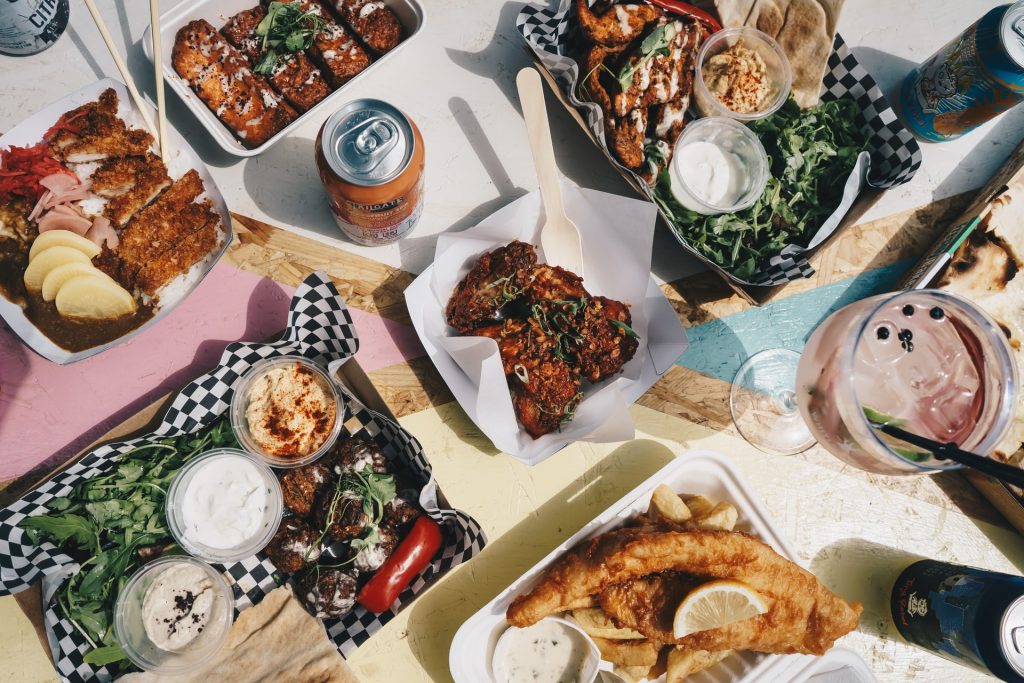
Best of all? The beachfront, outdoor seating is walk-ins only; simply leave your name and number if there’s no tables, have a wander along the promenade or a beer at one of the nearby pubs, and the call always seems to come in promptly. Cheers!

Address: Kings Road Arches, 91-96, Brighton BN1 2FN

Website: murmur-restaurant.co.uk

BRIGHTON SMOKEHOUSE

Head towards the big blue from the city’s famous Lanes, get to sea level and next to the pebble beach you’ll find a collection of tables and chairs, a statue of a portly, bearded fisherman, and Brighton Smokehouse. 

With the mise en scene set so succinctly and the smell of smoked fish permeating the outdoor seating area, it’s time to refer to the specials chalkboard for what’s good. For us, nothing beats a smoked kipper roll and a freshly squeezed orange juice from the adjoining shop on a crisp, sunny day. We’ve also heard good things about the fish finger sandwiches from a neighbouring diner. It’s that kind of place; convivial and relaxed, and the perfect seaside brunch.

Address: Kings Road Arches, Brighton BN1 1NB 

Website: brighton-smokehouse.business.site 

SALT ROOM

The Salt Room’s website claims it as ‘Brighton’s best seafood restaurant’; a bold claim, indeed, but it’s not far off. Part of a group of three – the Coal Shed in Brighton and one of the same name in London – this is a place which ticks all the boxes for great fish cookery; sustainable sourcing and simplicity. The menu resists the urge to globe-trot, and this time, we think that’s welcome.

Inside, it’s a surprisingly cavernous space with a good buzz and young, enthusiastic staff. The restaurant is compartmentalised neatly and cleverly, with lots of different spaces and areas, so the buzz carries through the restaurant and acoustically it works.

But we’re sitting outside for our supper today, and the terrace, despite its location next to a busy road separating beach from restaurant, still boasts fine views of the ocean which seem to enhance those saline notes in the food.

The grill is used liberally here, which is particularly good news for the whole fish destined to be blistered and burnished on it. Saying that, perhaps the best thing on the menu is the fish tempura with seaweed ‘Samurai’ mayonnaise – the batter remarkably crisp and the mayo supercharged with umami. Alternatively, the seafood platter – grilled and steamed – with French fries, lettuce and a superb aioli, feels like a steal at £30.

Though nominally a fish restaurant, there’s plenty for the carnivores in the group to enjoy, including dry-aged rib eye cooked over coals and a superb chicken and leek terrine.

Address: 106 Kings Rd, Brighton BN1 2FU 

Website: saltroom-restaurant.co.uk 

SHELTER HALL

Seven restaurants in one? With ample outdoor seating right next to the beach? What, and live music you say?

Sorry, what did you say? We can’t hear you over the music.

Anyway, count us in!

The global pandemic has meant Brighton’s first food hall had a stop-start opening, with Shelter Hall Raw popping up last summer to fill the gap before the real thing opened in April 2021. 

Just a month in, and it’s already hit its stride. 2018 Masterchef winner Kenny Tutt’s Ox Block is here for his first Brighton venture, serving meat sourced from local farmers and cooked over a robata grill. Under the same roof, local favourite Lost Boys Chicken are doing what they do best; fried chicken slathered in hot sauce – just don’t wear your best white t-shirt for this one. There’s also VIP Pizza, Crab Shack and many more, as well as a dedicated bar doing local craft beers.

The vibe here is reliably, resolutely boisterous and the service prompt and efficient. What’s not to love? Make sure you book in advance if you’re looking for the best seats (first floor balcony, if you’re asking) at the weekend, but during the week, it’s easy enough to simply rock up and enjoy yourself. 

Address: Kings Road Arches, Shelter Hall, Brighton BN1 1NB

Website: shelterhall.co.uk

ROCKWATER

An even fresher addition to the Brighton and Hove dining scene is Rockwater, on Hove’s Western Esplanade. There’s been huge excitement about this newcomer and it’s easy to see why; the location is amazing with a rooftop terrace offering panoramic views of the beach and sea, and a walk-in only beach deck untroubled by the crowds of the Brighton end of the beach.

The opening hasn’t all been smooth sailing, with proposed £750 membership scheme being met with uproar locally, but the restaurant’s location has so much promise that a few teething problems are easily overlooked. Open from early morning, this is the perfect spot for a serene early bird breakfast before the people of Hove wake up and flock here.

Address: Western Esplanade, Hove BN3 4FA

Website: rockwater.uk

LUCKY BEACH CAFE

If you’re up for a spot of brunch on the beach, then Lucky Beach Cafe is your guy. Finalists in the National Breakfast and Brunch Awards last year, the menu is full of crowd pleasers, from their famous Full English using local butcher’s sausages all the way to a pimped up avocado on toast. 

Coffees are particularly excellent, provided by the restaurant group’s very own roastery Red Roaster, and the location is enough to bring cheer to even the most severe of hangovers. The cafe displays its sustainability stripes with pride, with Lucky Beach rated as one of the country’s 20 most sustainable restaurants by the Food Made Good Awards for five years in a row. There really is no reason not to visit.

Address: Kings Road Arches, 183 Kings Rd, Brighton BN1 1NB

Website: luckybeach.co.uk

BRIGHTON SHELLFISH & OYSTER BAR

Brighton Shellfish and Oyster Bar isn’t a ‘bar’ in the sense of cocktails and blokes wearing loafers with no socks, but rather a beach shack doing lots of traditional British seaside treats which every seafood lover lusts after.

All shellfish is laid out and visible in tubs and on ice, and the place feels as old school as it gets. Just lovely. Accordingly, dressings sit on a metal table to the side of the till, with Tabasco, vinegar, gherkins et al for dressing your oysters to your own requirements. You did order the oysters right?

Equally, the £7 lobster roll or bap with gherkin and cayenne pepper mayo is an absolute steal. They have seats to the left, perched on the pebble beach, making this a great choice for a picnic with a cool (not cold) beer in a plastic pint glass from nearby pubs seeming the perfect accompaniment. Or, do an IDEAL and bring a cold bottle of prosecco procured from a nearby offy. Bliss.

Address: The Fishing Quarter 199 Kings Road Arches, Brighton BN1 1NB

Website: www.brightonshellfish.co.uk 

THE IDEAL TRAVEL GUIDE TO CHIANG MAI: WHERE TO EAT

Chiang Mai is a foodie’s paradise. The North’s unique take on the food of Thailand – bringing in influences from Laos and Myanmar along the way is, in our view, the best of a very delicious bunch of regional cuisines across the country. The city is great too, large enough to be thoroughly occupied and entertained, but small enough to be manageable. Were you to rent a scooter, you could plausibly eat at all of these places over one joyous, filling weekend. Here are our IDEAL places to eat in Chiang Mai.


SP CHICKEN

sp chicken chiang mai©Author’s Own

SP Chicken is a marvellous little chicken-over-charcoal joint in the old town of Chiang Mai. The chickens are brined, marinated, stuffed with an aromatic filling of lemon grass and garlic and cooked over charcoal. You have the option of a half or a whole bird – though the idea of a half seems plenty, you’ll find yourself licking the plate and your fingers and considering ordering a second half.

Cut your losses and go for the whole chicken first time round. Order it with papaya salad and sticky rice – the holy trinity of Isaan cooking, add a couple of Singha beers, position yourself near the grill where the cook is happy to swap stories and cooking tips, and stay the afternoon there. Heaven.

Address:  Samlan Rd Soi 1, 

Google Maps: SP Chicken

SORN CHAI

SORN CHAI CHIANG MAI©Author’s Own

It’s a pig’s ear to find and a pig’s ear to find open. Funnily enough, you can find pig’s ear on the menu here. That’s if you’re lucky enough to catch one of the sweet spots where their doors are flung wide and the sisters in-charge are at the stove. But man, it’s worth the effort. Their curried pork belly Hung Leh is sensational, their larb bitter and punchy and sour (and amazing) and the northern sausage is aromatic and oh so fragrant. So good, and so infuriating if it’s shut.

Address:  Si Phum, Mueang Chiang Mai District, 

Google Maps: Sorn Chai

HUEN PHEN

Huen Phen is nestled in the old town, near the bars which sit on every corner providing respite for weary travellers from the hot sun. At this atmospheric indoor restaurant you’ll find some interesting Thai furniture and decor, replete with chunky wooden tables and the odd touches of opulence – a nod to the royals. You’ll also find a good chorus of Northern Thai dishes, with lots of the classics done very capably here. The Gaeng Hung Leh is a good version, and larbs of the Northern style. Huen Phen is a great choice if you fancy sampling a range of dishes – you certainly won’t leave hungry.

Address: 112 Ratchamanka Rd

Google Maps: Huen Phen

CHANG PUAK GATE NIGHT MARKET

CHANG PHUAK GATE NIGHT MARKET©Author’s Own

This is a great little roadside market on the way into the old town. It’s easy enough to find and is a haven for freshly cooked, fiery food. The best dish is the pork knuckle over rice. Although an odd proposition at first, taking influences from German beer food, it works. So well. The knuckle is cooked for hours in a sweet, umami-rich sauce, until tender and tasty.

It’s served over rice with plenty of cooking juices ladled over it, accompanied by a hard boiled egg, some whole chilis and raw cloves of garlic. These are inspired, adding a refreshing, piquant crunch against all the sweetness. Look out for the woman in the cowboy hat, she’s something of a legend around these parts and reputedly serves the best version.

Address: Chang Puak Gate

KHAO SOI LAM DUAN FAH HAM

Khao Soi Lam Duan Fah Ham©Author’s Own

Khao Soi Lam Duan Fah Ham is an institution, with the usual secret family recipes legend to go with it. It’s finest dish, the one which gives the place its name, is Khao Soi. With origins in Burma, this is one of Northern Thailand’s most iconic dishes.

It’s a deep, sweet, salty and fragrant curried noodle soup that uses coconut milk and is topped with crispy noodles. It’s hard to describe the flavour of this, it’s familiar yet unlike anything we’ve ever tasted before. Once you’ve tried it, you’ll want to eat it again and again. The restaurant is the first place we ate in Chiang Mai, so will always have a special place in our hearts. It has a place in the heart of the locals too – certainly a more ringing endorsement than ours.

Address:  352/22 Charoen Rat Road

HUEN MUAN JAI

More restaurant than street food, if you fancy a bit more of a sit down vibe, without sacrificing flavour, then this could be the place for you. The menu is long and getting lost in it happens, but focus on the Northern classics and you can’t go wrong. There’s a page or two devoted to Nahm Phrik, the excellent Thai dip, so focus on that if the paradox of choice grips you. They also do some excellent fish wrapped in banana leaf and some sour curries from Central Thailand. The variety, and quality, is welcome.

Address: Chang Phueak, Mueang Chiang Mai District,

Google Maps: Huen Muan Jai

MIDNIGHT STICKY RICE

midnight sticky rice

A great experience, and one made famous by Andy Ricker and Anthony Bourdain on the latter’s Parts Unknown T.V show, Midnight Sticky Rice is a great spot for post-booze feasting. It’s an order by pointing affair, but trust that everything will be spicy, friend and tasty. Perfect for soaking up, and continuing to drink, an evening’s beers.

Address: Kamphaeng Din Alley, Thesaban Nakhon Chiang Mai

Google Maps: Midnight Sticky Rice 

LAAP KAO CHAM CHA

LAAP KAO CHAM CHA

One for the purists. This roadside place a ten minute drive from Chiang Mai’s old town specialises in grilled food and minced salads. It’s best/most notorious dish is its raw pork larb. The meat is served minced and topped with crispy shallots and bitter greens. It’s a breakfast dish and bracing for the time of day, but darn delicious nonetheless. If you’re not feeling brave, there’s meat getting grilled and garlicky, lightly fermented sausage to send you on your way full if raw pork is a step too far. Staff are one big family and super-friendly; always willing to steer you in the direction of the best dishes of the day.

Address:  Near intersection of Soi Bamrung Rat and Rattanakosin Road

7 IDEAL TRAVEL TIPS FOR THAILAND

Without wishing to be complacent, we’re not going to insult your intelligence here. You probably already know that you should practice safe sex, anywhere. It’s pretty obvious that in a foreign land, you shouldn’t be mouthing off about heads of state. Yep, drugs are bad news, as is glugging out of the tap with wilful abandon. Buddha tattoos are naff and disrespectful and smiling at people will definitely ensure a smoother trip than acting like an arse. Now that’s all out of the way, let’s get to the really useful stuff, with these; our 8 IDEAL travel tips for Thailand.  

HANDBAG ESSENTIALS

There are a few things which you should carry with you if you’re straying far from your hotel or off the beaten track. While not an exhaustive list, these include proper, deet heavy mosquito repellant (not the weak stuff available in 7/11s), toilet roll (the spray gun of public toilets takes some getting used to) and a spoon (delicious, tightly wrapped bags of takeaway food don’t always come with utensils).

Getting your phone unlocked and having a Thai sim card – there are some ridiculously good deals like AIS’ traveller packages – will also save heaps of headaches. Doing so will give you smooth access to Google Translate, Maps and our favourite app out there…

GRAB TAXI

Uber doesn’t operate in Thailand but Grab Taxi is available and running efficiently in all of the big cities. It’s remarkably cheap and reliable, with a trip across town rarely coming in at more than a couple of quid. Using Grab also negates the often trying issue of explaining your desired destination to taxi drivers. Your pronunciation may be poor and drivers in Thailand often can’t read; a simple pin drop on a map will be your saviour.

CITY FOCAL POINTS

Thai cities and towns often have a sprawling, unfocused quality which makes it difficult to pinpoint the centre. Because of this, knowing where to hang out and base yourself is often difficult. Your hotel may have appeared to be amongst the action when you booked it, but you may find when you arrive that nothing is within walking distance. And due to the heat and traffic of the country, walking isn’t much of a popular pastime anyway.

To identify where the hustle and bustle really is, and where the Thais like to have fun, do your research about where to find the biggest night markets and walking streets of a city; a failsafe indication of where it’s at. Lakes also host much of the early evening entertainment, with food stalls, family’s strolling and wildly enthusiastic exercise classes all offering the opportunity for some excellent people watching.

MAKE BACKUP PLANS

So you’ve painstakingly done your due diligence about the most esoteric, authentic street food vendor in the city, and you’ve schlepped across town in the sweltering heat to hunt her down. It’s not unlikely that when you arrive, the place is closed. Thai eateries, especially small family run shophouses and those on the street, don’t operate with particularly predictable opening hours. Go out with two or three places in mind. Always having a backup in the same area up your sleeve will avoid crushing disappointment.

LEARN THE FOOD LINGO

Even in Bangkok and Chiang Mai, the best street food joints don’t often have English menus (or menus at all for that matter). It’s essential if you want to eat at some of the cooler, less commercial spots that you know the names of a few key dishes. A simple ‘khun mee + dish + mai ka/krap?’ will help unlock the world of amazing dishes otherwise unavailable to the trepid traveller. We love the advice of Thai food enthusiast and all-round great guy Mark Wiens on his website dedicated to the good stuff. He’s got extensive information about some of the best street eats in the country, and very usefully, the Thai names for dishes which you can have a stab at pronouncing.

WATER-WISE

Be warned; the amount of plastic used and abused in Thailand is astonishing. Do I really need a double bag and straw (and spoon?!) for that bottle of water? Is it really necessary to triple wrap my grilled naem sausage? Make a positive impact on the plastic problem by always refilling your water bottle at one of the many, cheap-as-chips water filling stations located across Thai cities and towns. A simple ‘mai ao ka/krap’ (I don’t want) is also useful when offered plastic at every turn.

BARTER RESPONSIBLY

Yep, we all know that bartering is part of the fun of shopping in Thailand, and the Thais love nothing more than a bit of friendly banter and back’n’forth. It’s important, though, not to let your pride get you carried away. Does that extra 20p saved really matter? Tone the competitiveness down and give a fair price rather than damaging the face of both you and the shopkeeper.

After some more travel tips for Thailand? Here are to help with your island-hopping itinerary, here are 5 of the most popular islands in Thailand for travellers – see you there!

5 FULFILLING, ENERGETIC JOB IDEAS IF YOU FEEL YOUR CAREER IS STUCK IN A RUT

A 2017 study into the most important factors when choosing a job revealed some surprising findings. Rather than naming a steady income or job security, respondents unanimously agreed that ‘meaningful work’ was the key contributor to job desirability. 

Since then, the global pandemic has had many people looking inwards, at their life and career satisfaction, and many have found that their priorities have shifted. Increasingly, people decided that it’s a job that will pique their interest and keep their enthusiasm alive that matters most. 

Unfortunately, many people lose interest in their chosen profession when it becomes monotonous. So, if you’re considering a change and are searching for a job that will keep you on your toes, here are 5 fulfilling, energetic job ideas if you feel your career is stuck in a rut.

MEDICAL PROFESSION

The last 18 months have called into sharp focus the wonderful work that our medical professionals do, from surgeons to cleaners and those in administrative roles; we should be equally grateful to all of them.

If you’re looking for a job where no two days are the same, then work within the medical field could be for you. With distinctive, demanding challenges emerging every day, the sector certainly fits the brief of being fulfilling and demanding, and looks great on your CV, too.

Sure, a sudden career shift to general practitioner or surgeon might be out of reach, but you can still apply for a variety of jobs in the medical profession that will place you in amongst the action and helping people each and every day. There are opportunities in medical administration, technicians, and even therapists that don’t require years of training. Talk about meaningful work!

TATTOO ARTIST

Though the demand for artists, painters, and sculptors ebbs and flows with the tides, and as such, doesn’t always offer job security, if you’re passionate about art and want to pursue a career in that sector, becoming a tattoo artist might be your calling. 

Not only do you get the chance to design incredible and intricate tattoos for your wall displays, but you have the pleasure of bringing these ideas to life in the form of tattoos on appreciative customers! 

You’ll also have the chance to design tattoos on behalf of your customers, and no doubt you’ll come across some weird and wacky designs that will keep you inspired, creative and on your toes. Tattoo supplies are easy to come by these days, and you don’t need to spend years in training to become a tattoo artist! All that’s needed is a keen eye for detail, an artistic sensibility, stamina and a steady hand. Have you got what it takes?

CATERING INDUSTRY

The catering business is a profession where the days are unpredictable and unique, and in the best possible way. Whether you wanted to work in a 3-star Michelin restaurant or a small diner, with customer whims and wants needing to be catered for and constantly changing seasonal ingredients providing fresh inspiration and challenges, this is a job to keep you on your toes, make no mistake.

Smiling woman at the wooden bake house counter with digital tablet

Quite literally, actually. It should be said that cooking for a living isn’t easy work; it’s physically demanding and the hours are long, but it’s also hugely rewarding to create something from scratch each day. Are you ready to be creatively inspired?

YACHT WORK

If you’re keen for those toes to be kept on deck, then have you considered the diverse, fulfilling world of yacht work?

If you love being on the water, with the wind in your sails and enjoying a sense of freedom only brought on by the open waves, then working on a yacht or boat is a great way to travel and earn money at the same time.

Many yachts, cruise ships and ferries require an onboard crew and staff for everything from maintenance to deckhand stewards, waiters and cheffing. Yacht life can be an exciting way to experience a bit of luxury while seeing some amazing sites that are off the beaten track, and if you’re committed and confident, career progression awaits.

PHOTOGRAPHER

Finally, learning to become a photographer will almost certainly lead to a job that you will enjoy, with variety and appreciation for the beauty of the natural world the only prerequisites for the job. That, and being able to take a mean photo of course.

There are several options in this field, whether you want to shoot landscapes, weddings, or even drone shots from up on high. The fantastic thing about being a photographer is that there are several revenue streams that keep things interesting and the money coming in. With the world at your finger tips (and the click of the shutter), you’ll never get bored!

Alternatively, you could learn to code, and in doing so, open up a whole host of job opportunities. Before doing that, check out these 5 IDEAL programming languages that pay well.

IS SORRENTO OR AMALFI THE BETTER CHOICE FOR A HOLIDAY?

The Sorrentino Peninsula, in Italy’s south, presents some of the world’s most striking vistas, vantage points and a veritable feast of local flavours guaranteed to satisfy all manner of voracious appetites.

No surprise, then, that the Amalfi Coast, located on the peninsula’s southern side, is a UNESCO World Heritage site, with pastel villages, verdant mountains and sheer drops ready to spill into the ocean…it all adds up to one of the most picturesque places on the planet.

A short drive west from the Amalfi Coast – though not actually part of it – and to the peninsula’s north, you’ll find Sorrento. With quick, convenient connections to Capri, Naples and Pompei, Sorrento offers a more accessible and somewhat more peaceful experience than the sometimes crowded, less well-connected Amalfi Coast.

Today, we’re taking a look at two of main towns on the Sorrentino Peninsula and Amalfi Coast, and consider which is the better bet for a holiday. With that in mind, here we explore whether Sorrento or Amalfi is the better choice for a holiday.

CROWDS

It should be noted from the off that though Amalfi is famed for its beauty, it’s also notorious for its crowds, particularly in the high season, which runs from May to mid September. August, which is the Italian school holidays and also the hottest month here, is particularly prone to overcrowding.

The shoulder seasons (the short period of time between the low and high season) represent the best time to visit – in Amalfi, these are in April and late September to mid October. If you’re planning on enjoying a drive along the Amalfi Coast’s famous winding roads, then be warned that in the summer, traffic will render that road trip a frustrating and often fruitless experience.

Though Sorrento follows the same high season, it’s generally less busy, though it has to be said, it still gets crowded, with many using the town as a launchpad for the Amalfi Coast and Naples.

ACCOMMODATION & DINING BUDGETS

According to budgeting expert the Champion Traveller, the average cost of a couple’s holiday to Sorrento is between $188-$541 per day whilst in Amalfi, that figure rises to $373-$677.

The largest difference in average cost is down to the disparity in accommodation rental, primarily because holiday apartments to rent in Sorrento are considerably more affordable. It’s estimated that a room in Amalfi is around $50 more a night than Sorrento.

You’ll pay less for meals out in Sorrento, with Budget your Trip estimating a $20 discrepancy between restaurants there and in Amalfi. 

BEACHES

The town of Sorrento does have beaches just a pebble’s skim away, but they’re compact and, as a result, often incredibly crowded. Generally speaking, the beaches in and around Sorrento aren’t the golden-sanded kind either and are often rocky underfoot. The neighbouring towns of Positano, which incidentally is one of the best places to drink wine in Italy, the tiny fishing village Erchie, and Cetara all boast significantly more hospitable stretches of sand.

It’s a similar story in Amalfi, with the town’s main beach Marina Grande packing them in like sardines in the summer. Better to head a little out of town, either to Santa Croce by ferry or Duoglio by car, which are only a kilometre away and significantly less crowded.

Alternatively, a 15 minute drive or 30 minute bus ride away is the town of Maiori, which boasts the longest stretch of sand in the region.

HISTORICAL & CULTURAL SITES

Amalfi Cathedral, in the town’s Piazza del Duomo, is well worth braving the crowds for. Its seemingly precarious perch at the top of a grand staircase bang in the centre of Amalfi town means the cathedral hovers majestically over the popular square below. Its relatively new facade (restored and reimagined in 1891 after the previous one collapsed) is stunning; striped stone and marble frames open arches; simply coming to admire the exterior is reason enough to visit. Inside, the crypt, holding the remains of St. Andrew (to whom the cathedral is dedicated) is full of aesthetic intrigue. The Baroque murals are particularly striking.

In Sorrento, the main focal point of the town is Piazza Tasso, and this is where locals and tourists alike come to enjoy a little passeggiata, the beloved Italian pastime of strolling and socialising. Close by is Chiesa di San Francesco, which was built in the 14th Century and boasts a peaceful cloister. If you’re keen to admire the town’s history and architecture further, then the Basilica Di Sant’Antonino and Cathedral Di Sorrento both have intricate facades.

THE BOTTOM LINE

If cost is your number one concern, then Sorrento town represents a more affordable way to see the Amalfi Coast, as well as offering a convenient launchpad to explore some of Southern Italy’s most famous sites. Should you wish to experience Amalfi and its coast, then it’s eminently possible to do so in a day from Sorrento, though if you’re keen to explore more exhaustively, it might be worth staying on the southern side of the Sorrentino peninsula.

If you’re thinking about making this thing more long term, then check out our 5 IDEAL tips for moving to Italy from the UK.

4 TOP TIPS FOR ENHANCING YOUR SUMMER OUTFIT

Summer is a time of opportunity, especially when it comes to your wardrobe. Not only can your outfits feel more comfortable, flowing and free, but they can also possess a more dynamic quality guaranteed to catch the eye. 

After 18 months spent largely locked down, as a period of freedom begins, it feels like now is the perfect time to try out some new styles and aesthetic flourishes. After all, popular fashion brands have used the pandemic as a chance to recalibrate things, so why don’t you follow suit? Though not necessarily in a suit, of course.

Just because summer may be on a smaller scale in 2021 doesn’t mean the brakes have been put on stylish fashion choices entirely. Keep reading to discover our 4 top tips for enhancing your summer outfit.

WEAR ACCESSORIES

Naturally, the first place to start when enhancing a summer outfit is with your accessories. We’re all wearing a little less in the warmer months, and trinkets and flourishes truly come into their own during this period.

Should you be trying to pair your sunglasses with jewellery, you want to ensure they complement each other. Angular cat eye sunglasses are very much on trend this season, and should be paired with equally acute earrings. Alternatively, try semi-subtle rimless sunglasses matched with a necklace in an overblown, statement style as a challenging counterpoint.

From chunky headbands to women’s leather bags, there are plenty of options to consider here, and all of them can be stylish and unique choices in the right hands.

To channel a very much in vogue, DIY sensibility, you could even make your own quirky accessories for the summer. For instance, you could craft yourself a cute daisy crown or some beaded bracelets…you might even manifest a third summer of love in the process!

COMPLEMENT COLOURS STRATEGICALLY

Some colours can clash rather than complement, whereas others can mix for the perfect combination, sometimes unexpectedly. Finding the perfect balance here is almost a science, and as such, it might be prudent to consult the experts for their view…

The Leather Satchel Co. have written this blog post here on the 2021 summer trends for accessories, telling us that the “forecast for summer is looking very colourful…think both vibrant neon and pretty pastel shades of pink, yellow, orange, green, and blue”.

They add that by “injecting some brightly coloured statement accessories into your wardrobe” you will add that sense of joie de vivre we’re all so craving right now.

When it comes to mixing colours, you do run the risk of creating a clash. To play things on the safe side, it’s best to match colours based on their shades and type, having a thematic through line of colour threading your look together. 

That said, unpredictable and accidental combinations made a resurgence in fashion last year, with trends in design and textiles following a somewhat disruptive pattern. A dedication to traditional colour palettes has increasingly been viewed as a touch passé, with designers now experimenting with more organic processes, such as by using bacterial dyes, to achieve more out there colour combinations. An interesting development, for sure, and one that could influence how you shape your summer outfit.  

Perhaps a more chaotic approach with colour could do wonders for that statement outfit you’re contemplating? Following this might mean your outfits are more eco-friendly, too. After all, fashion shouldn’t stagnate, and it needs to innovate as an expressive industry and art form. Your use of colour may help honour that notion.

Read: 8 seasonal staples to pull your summer outfit together practically but stylishly

COORDINATE WITH YOUR FRIENDS

If you are going out in the summer with friends (restrictions permitting), then it could be an idea to plan your outfits ahead of time with them. Reasons for doing this could include: 

  • Making sure you don’t wear the same thing: With what’s considered ‘on trend’ sometimes remarkably narrow in its scope, it can be quite common for friends to wear almost identical outfits. If you look the same, you may not stand out, both as a group and an individual.
  • Ensuring you don’t clash: If your outfits do not complement each other in style, theme, or colour scheme, it might create some awkward moments as you navigate parties and the cache of Instagram snaps the morning after.
  • Collaboration opportunities: Different people can bring fresh fashion ideas to the table. Who knows what your group could come up with?
  • Lending each other accessories: It could be that your friends know the perfect accessory of theirs that will go with your outfit.

Friends and fashion go hand-in-hand. Whether you’re swapping tips or lifting each other up with encouraging remarks, you can create a positive energy around your summer outfits together. 

WORK YOUR CONFIDENCE

A summer outfit will pop so much more when the wearer is sure of themselves and their style. 

Remember, fashion can really help people find their confidence and develop their sense of self. Why not let it do the same for you? Try to use your summer outfit to express your inner beauty! Once you have that level of self-love and confidence, any outfit you wear will be right at home on you. 

Explore fashion beyond the reaches of your comfort zone, too. Have you always wanted to rock a distinctive style but never felt brave enough to try? Life’s too short to be tepid about these things, and after a flat 2020, the summer of 2021 is the perfect time to start reinventing your look. Good luck!