

Home Blog Page 241

5 OF THE BEST PLACES TO VISIT IN MADAGASCAR FOR WILDLIFE LOVERS

Via Canva

Madagascar, the world’s fourth largest island which sits in the Indian Ocean just 400 km off Africa’s east coast, is a wildlife lover’s paradise. Considered to be just one of a select few countries in the world labelled as ‘megadiverse’, Madagascar was only colonised by humans in approximately 500AD, and its this relatively untapped quality, along with its geographic remoteness, which has led to huge biodiversity in the country. Perhaps most startlingly, according to the WWF, Madagascar boasts at least eight plant, five bird, and five primate families that live nowhere else on Earth.

Though one of the world’s poorest countries, it’s also one of its most blessed for flora and fauna, and if you’re a wildlife enthusiast, a holiday to Madagascar is one of the most thrilling you can make. To narrow down your itinerary just a little, here are 5 of the best places to visit in Madagascar for wildlife lovers.

ANDASIBE-MANTADIA NATIONAL PARK

Arguably Madagscar’s most famous residents are its lemurs, the unique primate which calls the island, and the island alone, home. Famed for its trademark sitting position, which looks akin to a meditative posture, there are over 100 species of lemur in the world, all of which are native to Madagascar. Incredible!

Though they’re comfortable in many different habitats, from rainforests to wetlands, mountains and beyond, to see some of these lemurs up close and personal, Andasibe-Mantadia Natinal Park, in the country’s east and just a three hour drive from the county’s capital Antananarivo, is perhaps the world’s premier destination. 

This 150km² park is home to the largest lemur around, the Idri-Idri, as well as at least 13 more lemur species. There’s also more than a hundred endemic bird species to found in the park, and a gorgeous, gloriously diverse landscape of dense forest, orchids, bamboo and so much more. If you’re a wildlife lover (and we’re assuming you are since you’ve got this far) then Andasibe-Mantadia National Park should be your first destination.

lemur in Andasibe-Mantadia Natinal Park

RANOMAFANA NATIONAL PARK

Not to be outdone in the lemur spotting stakes, Ranomafana (meaning ‘hot water’ in Malagasy) National Park has its own incredibly famous resident; the rare bamboo lemur. Actually, the park is home to 12 species of lemur, as well as chameleons, snakes and mongoose, but the golden bamboo lemur (discovered in 1991) is certainly the ‘main event’. Having a guide here is obligatory, to keep the park preserved and protected, and the presence of an expert is most certainly welcome, as seeking out the rare species of Ranomafana requires detailed knowledge of their movements and habitats. Do make sure you book a Madagascar group tour in advance if you’re keen on travelling with company, as they do tend to sell out months ahead. 

The park offers five different treks, ranging from an easy four hours to a seriously dedicated three day circuit, with Ranomafana’s hot springs and thermal baths are also a major attraction, ideal for rejuvenating even the most weary of legs following that epic trekking! For added intrigue, camping is available in Ranomafana National Park, with several dedicated sites offering basic facilities. You’ll never see clearer skies than when nighttime falls over the park. Just beautiful.


waterfall in Ranomafana
Via Canva
reptile on tree in Madagascar
Via Canva

NOSY BE

After all that trekking through dense vegetation and thicker humidity, it’s time to head to Madagascar’s most picturesque beach. Actually an island just 5 miles off Madagascar’s northwest coast, Nosy Be is easily reachable from the mainland and is the country’s most popular, developed resort. 

The beaches are picture-perfect, and well worthy of a recline, but we’re here for wildlife, and you’ll be excited to hear that Nosy Be doesn’t fall short in this respect. The island is particularly famous for having one of the world’s smallest frogs, but the real action occurs in the surrounding waters. Here, you’ll regularly see the ocean’s most gentle of giants, the humpback whale, in the months between July and September, as well as bottle-nosed dolphins and more. Boat trips for whale spotting are available from the shore, as well as scuba diving. Dive in!

woman on nosy be beach

THE AVENUE OF BAOBABS

For an absolute guaranteed sighting of something spectacular, why not seek out something stationary? The incredible, ancient Baobabs trees are one of Madagascar’s most stunning sights, standing at over 30 metres in height, and incredibly, some 2’800 years of age. In short, they’re not going anywhere.

The best place to see these trees in all their proud glory is the Avenue of Baobabs, a 250 metre stretch of road in the Menabe region, west Madagascar. Here, crowds gather at sunrise and sunset to appreciate the Mother of Trees in its most enigmatic light; we’d highly recommend you do the same.

sunset stroll Avenue of Baobabs
Via Canva

ISALO NATIONAL PARK

Finally, we’re heading to Madagascar’s southwest, and to Isalo National Park. It’s certainly not a low, but rather a high point for any nature lover, and is the perfect place for hiking enthusiasts visiting the country. At first glance, it’s reminiscent of the Great American West, and more specifically, Utah’s famous arches; here in Isalo, the land takes on the same arid, bronzed hue, and the Isalo Window wouldn’t look out of place when trekking the Arches National Park, we think.

Endemic bird species and, of course, lemurs all call Isalo home, and during a hike along the famous Namaza Circuit and Cascades des Nymphes trails, you’re sure to encounter some of Madagascar’s unique species. The natural swimming holes which pepper the route are ideal for cooling off if your hike gets a little steamy.


6 ESSENTIAL TIPS IF YOU’RE MOVING TO SYDNEY

Ideal for those making the move down under…

If you come from a land down under, firstly, thanks, now we’ve got that song stuck in our head all day. But more importantly, there’s nothing for you here. Move on. Because this one’s for those who are moving in.
Hmmm. There have certainly been better segues into an article, but here we are. And it’s to Australia we’re moving, or specifically, Sydney. While you may have heard rumours about the high cost of living, the chock-a-block traffic, and the curiously early closing hours, we’re sure you’re also aware that this is one of the most beautiful, welcoming cities in the world. Get the basics right, don’t fall into the tourist traps, and you’ll settle in just fine. Here are 6 essential tips if you’re moving to Sydney, IDEAL for those making the move down under. 

GETTING AROUND SYDNEY

Here’s the thing about Australia; it’s a fantastic driving country, full of some of the most beautiful stretches of road around. In fact, a road trip from Melbourne to Sydney ranks as pretty much the best in the world. 

Here’s the other thing; Sydney most certainly isn’t fantastic for driving. The traffic is terrible, with the average commute lasting 71 minutes in the city. To make things even less hospitable for cars, most inner city flats don’t have parking. If your heart is set on driving here, there are certainly inconveniences.

On the flipside, public transport is varied, wide ranging and wide reaching to cater for this. With ferries running directly to Circular Quay and stopping off at harbourside attractions and Sydney’s suburbs, the water represents the best way of getting around if you’re keen on seeing some sights and you’re not in a rush.

Otherwise, regular buses and trains in the metro area are clean and reliable. Buses are pretty much 24/7, and trains only take a brief pause in service between midnight and 4am. In Sydney, the Opal card is equivalent to London’s Oyster, and will get you around town, no fuss. You can also use the Opal to go further afield, for days of exploration into the gorgeous Australian countryside. Do make sure you visit Central Coast, the Southern Highlands, Illawarra and the Blue Mountains, in particular. 

SUBURB SAVVY

Sydney’s suburbs are distinct, unique and all offer something different and exciting as somewhere to live. It’s a massively spread out city, defined by its harbour, and to get acquainted with Sydney first hand when you arrive, it’s to Bondi where you should first head. Of course, the beach is the main draw here, but the area is packed with hip bars and boutiques, too.

If you’re moving to Sydney with family, Darling Harbour and Coogee are the most kid friendly feeling neighbourhoods, with loads to do for the little ones. While Darling Bay is the entertainment hub, the beach at Coogee is gorgeous, with calm waters for the kids and great snorkelling opportunities at nearby Gordon’s Bay. Superb scuba diving options are available in Australia, too, a little further out of Sydney. 

Should you be seeking the Shoreditch/Brooklyn vibes, then Surry Hills has its hipster thing down and is particularly well known for its coffee culture, which is huge in Sydney, and Australia, as a whole. You’re going to have to get conversant in your bean and grind if you’re going to fit in here! Newtown is another trendy borough, though a little less grungy and a touch more bohemian than Surry Hills. Or, if you’re after a raucous party, Kings Cross packs in the most clubs and bars per square mile. Or, as they say here, kilometer. 

WHERE TO SHOP FOR YOUR HOME

If you’re moving to Sydney, one of the first things you’ll want to do is fill your cupboards with food. While the big Australian supermarkets offer an obvious convenience, if you’re after more esoteric ingredients, then you’ve got to look beyond the Coles and Woolworths supermarket chains. Sydney is a massively multicultural community, and you’ll find many independent grocery stores offering all sorts to suit any taste. There are lots of Chinese grocers in Sydney, but locals recommend the New Yen Yen and the Tong Li stores most enthusiastically. If you’re after Indian, then UDAYA Supermarket carries the widest range of ingredients for this cuisine. If you’re after wine or a few ‘coldies’, then your best bet is to head to an independent bottle shop, known colloquially as bottle-os.

You’ll also be after some furniture to help you settle into your new home. Fantastic Furniture, which originally started as a market stall at Sydney’s Park-lea Markets back in the ’80s, now has 14 stores across the city offering affordable pieces for the entire house. Similarly, Freedom which also has stores all over the Greater Sydney region, offers an extensive collection of furniture and homeware. And of course, there is always IKEA if you’re in the mood for meatballs and flatpack furniture.

If you want to start a collection of houseplants, then your best bet is to head to one of Sydney’s leaf laden markets such as Kingscross or Marrickville market. For online delivery, head over to Leaf Supply and for bloomin’ beautiful bouquets, Pearson’s offers personalised flower delivery in Sydney all over.

Do you have friends who just turned into first-time parents? You can order some baby flowers and have them delivered by Pearsons’ as well.

WEATHER WISE

Sydney boasts a warm, sunny climate all year round, though winters are significantly cooler than the summer months. Due to the city’s position on the water, the sea breeze means extremes of temperature are less common.

Summer runs from December to February and sees average temperatures ranging from the late teens to mid-twenties. Water temperatures are warmest in the late summer; the perfect time to see Bondi, Coogee et al. It can get a little humid during this time, however, with the preceding Spring months (September, October and November) only slightly cooler but significantly less sticky.

Winter – from June to August – sees the most rain and coolest temperatures, though things still remain pretty mild (compared to British winters, that is!). You’ll need a jacket in July, though, make no mistake.

Autumn, from March to May, is mild and comfortable, and many Sydney residents say this is their favourite season. An added bonus are the humpback whales arriving in the city’s surrounding waters from May onwards for a couple of months!

Between December and February is Sydney’s ‘high season’, so expect greater crowds during this time. Low season is considered May to August. 

MEDICARE

Whilst we hope your time in Sydney is spent healthily, we’re in the middle of a global pandemic, so it’s best to be aware of the medical infrastructure in Australia. Here, the system is defined as medical ‘insurance’, and aims to guarantee low cost or free care for all. It’s called Medicare and as long as you have permanent residency (which will get you a Medicare card) you can get doctor’s appointments for free, as well as subsidises on other care, up to a point. If not, you’re going to have to pay, and medical care in the country is expensive. 

As a British expat, you’re entitled to a Reciprocal Medical Card, which means emergency treatment at public hospitals will be covered by the government. Be aware that this doesn’t cover pre-existing conditions. Australian expats living in the UK can expect the same treatment. Do make sure you apply for both cards as soon as you arrive, and you’ll need your passport with you, and NHS card should you have one. 

That said, getting medical costs covered by Medicare can be complex, with tax levies, upfront payments which are reimbursed, and caps on assistance all coming as a shock to Brits used to the simplicity of the NHS. Many Aussies and expats choose to also take out basic health insurance to cover for complications and discrepancies in Medicare’s service, and to supplement any losses.

SLANGUAGE BARRIER

Finally, a little fun. Though English is, of course, Australia’s first language and spoken in the home of 72% of the population, you should be aware that the Aussies love a bit of slang and wordplay, their breezy, laid back humour suiting it perfectly. 

You’ll have heard ‘barbie’ and ‘arvo’, no doubt, but there are a few more niche items you should probably get under your belt before arriving. If someone asks you the way to the ‘dunny’ or the ‘bottle o’, they’re looking for the toilet and off licence, respectively. Should they be looking to buy a ‘slab’ at that bottle o, it’s a 24 pack of beer they’re after. If someone is ‘devo’, they’re devastated and if something is ‘ripper’, it’s brilliant. Are you keeping up? 

In fact, much of the Aussie parlance is now used in England, too, and the Australians are an expressive bunch; if you’re not sure of the slang’s meaning, you’ll easily guess by the facial expression. Oh, and one more thing; you’re moving to ‘Straya. Good luck!

LOCKDOWN LOVE: HOW TO REKINDLE A HEALTHY RELATIONSHIP WITH YOUR PARTNER

The statistics are in and it doesn’t make for pretty reading for the UK’s couples. According to research by Relate, because of the extra strain put on domestic harmony because of lockdown, nearly 10% of respondents have decided to end their relationship, with another 28% anxious about how their relationship will change once lockdown ends.

Indeed, there’s a fear amongst experts that ‘lockdown may trigger a surge in couples splitting’, and it looks like things are only set to get more strained for the nation’s lovers in the coming months.   

That said, it would be madness to throw in the towel here, to raise the white flag to a global pandemic after all the hard work you and your partner have put into your relationship. Instead, why not implement some proactive measures to keep love alive? With that in mind, here’s how to rekindle a healthy relationship with your partner.

CULTIVATE TRUST AGAIN

The first task for two individuals when in a relationship is to trust each other without holding back. Trust is the basis on which not just romance, but all kinds of relationships flourish. Having spent so much time together during lockdown – or, on the flip side, none at all – extremes of emotions are bound to have come to the surface in an unannounced, unwelcome way regarding openness and trust.

But, beware, mistrust might cause severe problems in your relationship, amounting to isolation and loss of intimacy between partners. So, do endeavour to work on these emotions should they arise.

KEEP YOUR INDIVIDUAL INTERESTS ALIVE

All that time in each other’s company, without extracurricular activities or engagement with others, has likely left your relationship feeling insular. This isn’t helpful, and can foster both a deep co-dependence and resulting resentment.

Now we’re permitted a little more freedom, to go outside and interact with others once again, it’s crucial you step out on your own on occasion, to nurture your individual interests and sense of self. Keep your identity by socialising with friends on your own terms, and by preserving your own hobbies and interests. This seeming selfishness will almost certainly feedback positively into your relationship.   

TAKE A TECH BREAK

Hands up who has sunken deep into their screens a little too often during lockdown? Oh, I notice a smartphone in that hand you raised. Not to worry.

Indeed, those uninvited Screentime Reports we keep getting sent have made for pretty shocking reading; those were some serious hours wasted to Tik Tok, Twitter et al. We’ve all been guilty lately of seeking solace in our devices, since they provide a sense of control over our lives. But really, being glued to your screen is almost certainly an obsession to the detriment of good, honest conversation with your partner, which is the foundation of a solid and loving relationship.

Try to spend some quality time together without allowing technology to interrupt proceedings in the coming weeks, and cherish those moments spent together. You’ll be surprised at what a positive difference it makes. And while you’re here, check out our tips on ways to beat mobile phone addiction for some advice on taking that tech break.

TRY NEW THINGS

Remember the honeymoon period of your relationship? Everything seemed fresh, with each passing day bringing a new memory. Christ, how the monotony of lockdown has rendered those heady, early days in sepia coloured tones, a distant but glorious nostalgia attached.

Rekindle that fresh, exciting period of your relationship by actively seeking to create new memories. Take your partner out on dates, watch films together, enjoy picnics and even head off for short staycations. And especially for married couples, never miss an opportunity to celebrate your lasting commitment to love, particularly your anniversary if it’s approaching. Be sure to surprise your spouse with a wedding anniversary gift, at the very least!

LEARN TO LISTEN AGAIN

You’ve heard so much of your partner’s voice in recent months, with both of you spending all your time in the house. We certainly know we’re sick of the sound of it (sorry if you’re reading this, darling).

Because of this, a tendency once in a while to switch off when your significant other’s talking is inevitable. But when one half of your team starts to feel ignored more often than listened to, that’s a serious problem right there. Indeed, one of the best ways to improve your relationships and rekindle that spark is to really work on your listening skills. 

A healthy relationship is all about reframing how you think about conversations; we’re all waiting for our turn to speak and so often don’t pay enough attention to the details up to that point. But there’s so much value to be gained from taking a moment and really, truly opening your ears. You don’t always have to provide the answers – in fact, feeling you need to is the opposite of being a good listener. Instead, it’s that ear you’re offering which is most important.

THE BOTTOM LINE

This turbulent period in all our lives has taken no prisoners when considering our relationships. Instead of succumbing to the issues which have affected so many post lockdown, use the ‘new normal’ as an excuse for a fresh start and reason for renewed effort and vigour. Good luck!

HOW TO DESIGN THE IDEAL EXERCISE ROUTINE FOR YOURSELF

0

It goes without saying that we all come in myriad shapes and sizes. We’re all unique and individual, and that’s what makes each and every human so special. 

But enough of that Kumbayah stuff. Though comfort in one’s skin is, of course, a wonderful place to be in, many of us simply don’t feel satisfied with the way we look. When this is the case, there’s nothing wrong with wanting to make a change, whether it’s for purposes of health, fitness or even working out to help build self-esteem. 

And it’s because we all have different physiques, statures and fitness levels that those shape-changing exercise routines will need to take on a different look and level of intensity, tailor-made to suit each individual and their specific needs. This is often best designed by the professionals, but sometimes, financial or time constraints prevent access to a personal trainer. In those instances, here’s how to design the IDEAL exercise routine for yourself. 

DIFFERENT TYPES, DIFFERENT GOALS

It’s just not realistic to expect that you can implement the same type of exercise to every physical goal that you set for yourself. While some types of exercises, like cardio, for instance, are designed to kick your heart rate up a notch and have you burning calories, this is not something that you want if you are looking to bulk up. Not only that, but the type of exercise and the number of reps matter too, as well as the time between reps spent resting and more. 

So on that note, let’s divide things up into the most common exercise goals and the best workout regimes associated with them…

LOSE WEIGHT

If you want to lose weight, you are best off looking into cardio routines as a matter of priority. The most on-trend cardio discipline right now is High Intensity Interval Training. These routines usually comprise exercises that will continuously keep you on the move and in motion, and are done in multiple rounds consisting of a 10-second break and a 20-second or more burst of super trying exercise.

The most common exercises in HIIT tend to target as many muscle groups as possible simultaneously. For instance, you’ll start with jumping jacks, and exercises that activate your core like planks, chest and arm exercises like push-ups, abs exercises, and finally squats to work your legs. These routines usually last for around 20-30 minutes per day in total, which is ideal if you’re looking to shed a few pounds without taking long runs daily which tends to eat into your time considerably.

BUILD MUSCLE

If your goal is to bulk up and build muscle, you will probably want to stay away from high-intensity training, since you don’t want to lose your weight. On the contrary, you want to gain. While training routines that are intended to help you lose weight can be done pretty much everywhere and don’t necessarily require all that much equipment, routines intended for muscle gain are better off done in the gym, or at home but with proper specialized equipment.

The reason for this is that in order for your muscle groups to grow, it is not enough only to do regular push-ups and work on your biceps and chest; it’s better and more sustainable to focus on achieving a certain sense of balance and equilibrium by working on your triceps and back, too, avoiding disproportionate gains or worse, injury. For reliable info on useful equipment, check reputable fitness magazines online or consult an assistant in the gym. It is also worth mentioning that if you want to work on building up your mass, your diet is just as crucial as your exercise regime.

THINK OF IT AS A HOBBY 

If you are going to start exercising because you want to be generally healthier, you probably don’t need high-intensity training or obsessive bodybuilding to achieve that. In fact, if you take pleasure in exercise and don’t necessarily treat it with goal orientation in mind, you might actually find you get more out of your workouts.

For hobbyists, consider daily jogs, yoga, or even a simple stroll each morning. This wholesome, gentle approach is ideal for those looking to enjoy the mental health benefits of exercise but aren’t so concerned about a particular target being reached.

THE BOTTOM LINE

The exercise plan you pen for yourself should be largely dependent on the goals you have in mind. Should you be hoping to shed a couple of pounds, then cardio, aerobic and high intensity interval training are best. If you’re focused on getting stacked, gym equipment and free weights are a better bet. 

That said, diet and enjoyment also play a huge part in developing a fitness plan you actually stick to. Check out our tips on maximising the effectiveness of your workout for more get-fit inspiration.

5 WELLBEING BENEFITS OF TAKING UP A NEW HOBBY TODAY

Do you sometimes feel like you’re living life a little too much on cruise control? Without some surprises and stimulation, the daily grind can get pretty monotone, and whilst small doses of boredom can actually be good for you, once life has completely lost its colour, you leave yourself in danger of lacking inspiration or worse, developing low mood. 

This is even more true considering recent events, which left so many confined to their homes for months, longing for some spontaneity. With the post-COVID new normal making global travel less accessible (and advisable) we’re going to all need to start finding colour and diversity closer to home.

Here’s where taking up a new hobby comes in. From knitting and painting to cycling or even a getting into a new sport you’ve always wanted to try, hobbies can have a hugely positive effect on our mental health.

Indeed, studies have shown that they can help relieve stress, make us happier and give us a new sense of purpose with our leisure time. So, banish the boredom today and give your mood a lift; here are 5 wellbeing benefits of taking up a new hobby today.

LOWER STRESS

Research has shown that spending time on an activity that you enjoy helps to lower stress levels and can even alleviate the symptoms of depression and low mood. This is particularly true of activities that encourage us to spend time with others, such as team sports, as these improve our relationship-building skills and can help us communicate more effectively, too. And the great news is that there is a hobby to suit everyone, from solitary activities to athletic, academic and creative.  u

If your new hobby is one which is proven to lower stress in its own right, such as yoga or meditation, then you’re onto a supercharged stress reliever right there.

BUILD BRIDGES & CONFIDENCE

Yep, one of the most brilliant things about taking up a new hobby is that it increases your social circle, helping you form new friendships and build bridges with different cultures and communities. Considering loneliness is one of the key causes of depression worldwide, this wide, varied approach to interaction is a great way to boost wellbeing.

When considering community and diversifying your horizons in order to meet new people, it seems that hobbies around Europe are incredibly varied, with different countries favouring a range of activities from cooking to photography and beyond. In the UK, for example, the most popular hobbies include painting and puzzles while our French neighbours prefer athletic pursuits such as going to the gym. 

During our recent, lengthy period of social distancing and lockdown, trending searches for hobbies around Europe have been indicative of more time spent at home. From gardening in the Czech Republic to podcasting in Germany and even astronomy in Finland, it seems like this recent period of unprecedented turmoil has at least ignited our curious dispositions. So, should you be wanting to boost your wellbeing by engaging with folk from various walks of life, why not take up a new hobby?

CHERISH SOME ‘ME’ TIME

In trying out something new and learning a new skill, hobbies give us the opportunity to make time for ourselves, free from the distraction of our phones and work, which can do wonders for our mental health. It’s a great chance to put our focus onto something other than our jobs, chores or the mindless scrolling of social media, and really nurture that sense of self. This simple act of self-care, of treating yourself to some ‘me’ time through a new hobby, can really boost life contentment and your sense of worth. 

A SENSE OF PURPOSE

Studies have shown that hobbies which require plenty of mental stimulation have the biggest impact on our wellbeing. This is because one of the biggest hindrances to wellbeing is a feeling of boredom and that life has become too routine, which has only been exasperated by this troubling time caused by a global pandemic. 

Trying something new allows us to think creatively once again and expand our horizons, granting that all important sense of purpose and meaning which is crucial to living a contented life. Whether you choose to try your hand at songwriting, attempt a knitting project or relive your childhood through skateboarding, a hobby can be the perfect way to add colour back into your life post-COVID and boost your happiness. 

NURTURE SELF-DISCIPLINE 

Learning a new skill such as playing a musical instrument can refine your wellbeing by giving you more focus and self-discipline. The daily practice aspect and problem solving necessary when studying a new skill encourages dedication to your craft, and this, in turn, helps to affect a more general attitude of rigour and discipline which can boost wellbeing. With your mind focused on more wholesome areas of life, the temptations and vices which we all fall prey to sometimes (and which affect our mental health negatively) will be much easier to resist. 

*This article is not intended to replace medical advice, diagnosis or treatment given by a qualified health professional. Instead, this article only provides information, not advice. For any medical enquiries, always consult your GP first*

BEGINNER’S TIPS FOR DECORATING A BOUTIQUE FASHION STORE

Ideal for budding designers and entrepreneurs looking to begin or diversify. 

Starting out as an entrepreneur represents a great leap of faith in any industry. Pouring your effort and resources into a business and hoping it is well-received can be anxiety-inducing. Sink or swim? You never really know what will come of it until you try, and potentially come out dry. 

The fashion industry is particularly perilous, full of fickle consumers, trends which change appearance more often than a Kardashian chameleon, and a pressure to keep one foot in the vintage section and one eye on the future at all times. That’s a stretch by anyone’s standards.

Whilst the internet has of course completely changed the way we shop and sell, ‘fashion’, more than nearly any other industry, requires a physical presence. Customers want to see, feel and, of course, try on items, and this means the boutique fashion store is most successful when it’s a tangible thing.

If you’re considering entering this challenging, chaotic but ultimately inspiring industry, then you’ll first want to consider these; our beginner’s tips for setting up a boutique fashion store, IDEAL for budding designers and entrepreneurs looking to begin or diversify.

BRANDING THROUGH DECOR

Aside from the items hanging on the rails, decor is the foundation of any fashion store, able to capture a brand’s identity and make a promise to its consumer without saying a single word. As a retailer or designer, you are asking your clients to trust you to make them look beautiful. They would be hard-pressed to believe you if your shop is anything but appealing. 

CHOOSING THE LAYOUT

A boutique has different segments, all devoted to particular functions. The front end is fully customer-related. It comprises the display, the merchandise, fitting rooms, and a check-out counter. Whatever room is left in the back can be secluded and used as an office for business operations.

Premises differ in terms of design and measurements, with most start-up boutique stores erring on the ‘cosy’ side. The kind of space you are working with will determine what kind of layout you choose. However, accommodating customers’ interests and making them feel comfortable enough to both engage with your brand and hopefully make a purchase should be the primary focus of your design. 

A POP OF COLOUR

When choosing a colour scheme, prioritise a bold colour which catches the eye. Remember that your store is a representation of your brand so you should choose to incorporate brand colours in the overall design.

Glossy paint, wall art of your logo, and some tasteful plants or flowers are all mediums you can deploy to provide additional pops of colour. Consider keeping the floor neutral; one of the trade secrets of retail is to keep the client’s line of sight on the merchandise. 

LIGHTING

There is a reason the Monalisa was not painted under fluorescent lighting; it’s totally unflattering. Using softer tones of light gives a warmer and more welcoming feel to a room which will cast an illuminating glow over your products. Warm lighting can still be sufficiently bright to light the room without being harsh or overbearing; channel it.

Positioning light fixtures correctly is also key in highlighting the parts of the store you want to attract particular attention to. Display areas, for instance, are easily accentuated with the aid of lighting. For a touch of class, recessed lights are always great additions.

PUT ON A SHOW

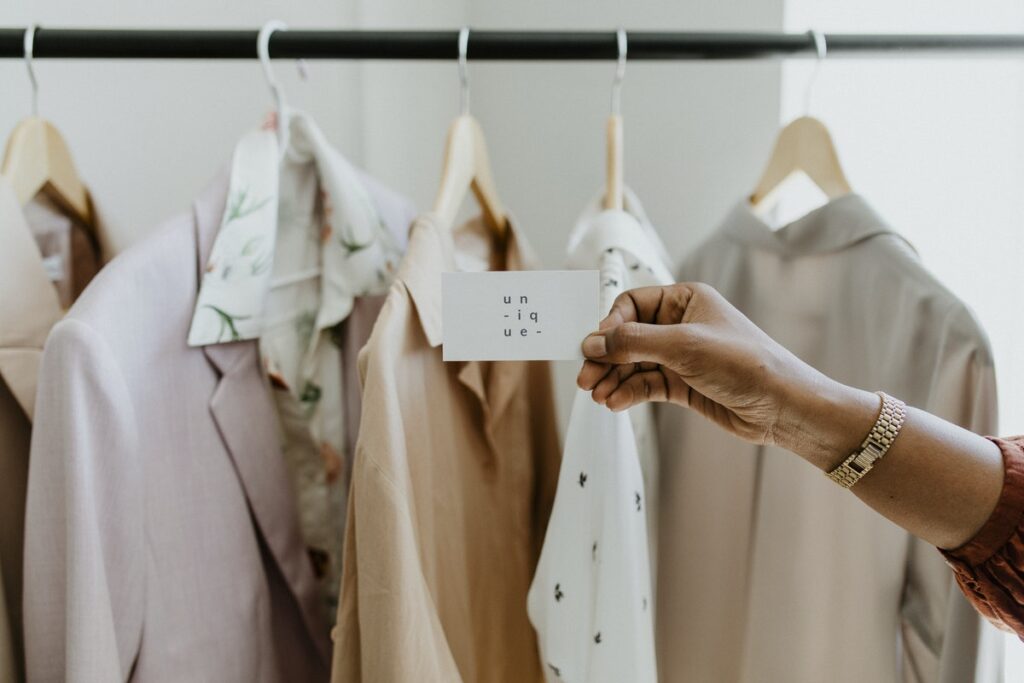
No clowns are necessary for this show but you might need some mannequins. One of the most important parts of any shop is the display area. You want customers to be drawn visually and emotionally to what they see in your store, and act impulsively on that desire with a purchase. This isn’t a case of calling upon the ‘dark arts’, rather, drawing on an artistic sensibility so your products are displayed to their full potential.

The set up of a display is just as important as what you intend to show. Plain walls in the background are ideal to avoid pulling attention away from the merchandise, and attention paid to vertical zoning (for instance, having each item on sale at a slightly different height via podiums and plinths) certainly does no harm either.

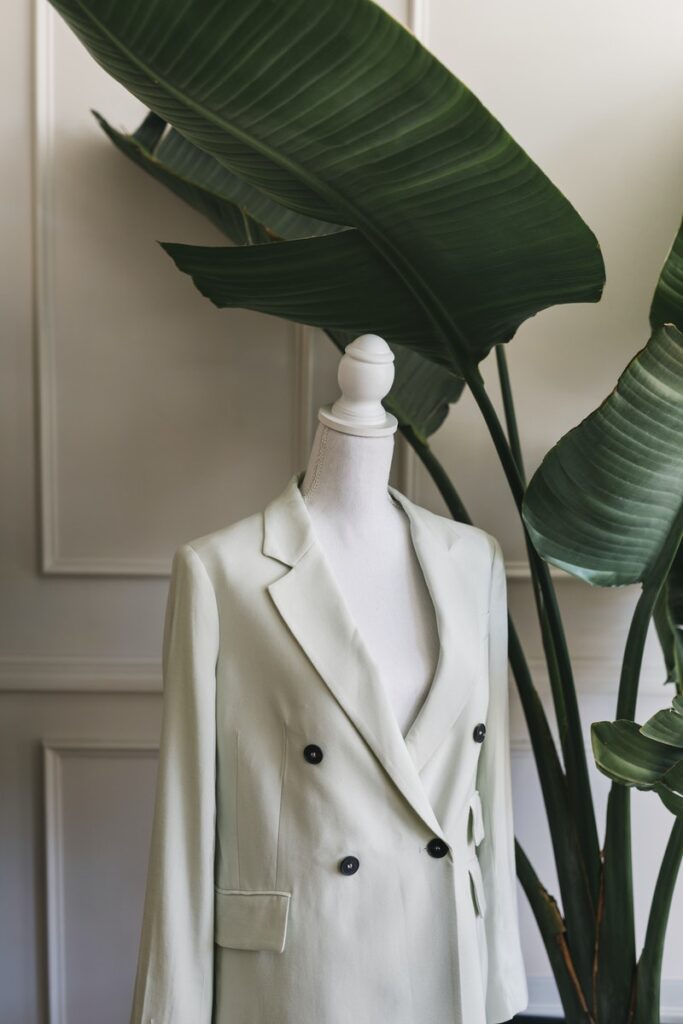
If you choose to use mannequins, as is common for clothing stores, do make sure they appear elegant rather than creepy, the latter of which they can sometimes tend toward. A great tip would be to dress it as you would a real-life model, complete with accessories, rather than simply showing off the top half, for instance, whilst the bottom is left nude.

This right here is your advertisement, your TV commercial, your billboard, your radio jingle, all rolled into one, in physical form; make it count.

SEATING 

No customer wants to feel rushed, and to evoke that sense of luxury which results in a bigger spend, you want to give visitors to your boutique fashion store the illusion of time. This can be done through your seating, carefully positioned to give the consumer a rest and a ponder, or more likely, allow their bored significant other a chance to check their phone.

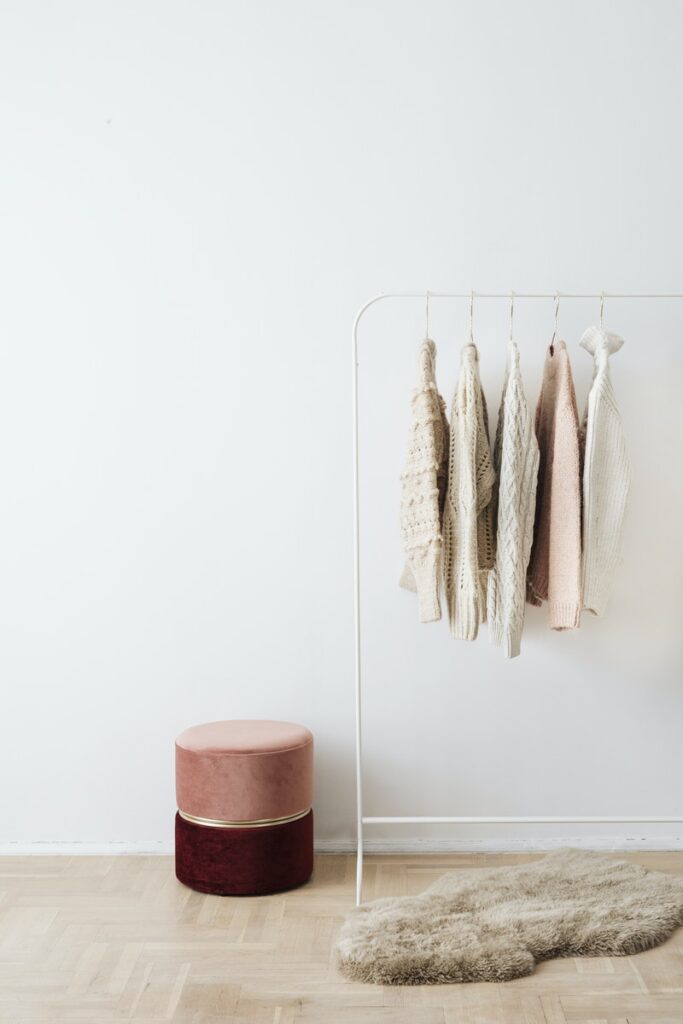
Pouffe seats and ottomans are great choices for seating, as they are stylish, compact, and aren’t so comfortable that customers sink into them for too long. Ottomans can double up as discreet storage units, too; ideal for those stores on the smaller side.

Of course, seating is a necessary courtesy towards elderly people, expectant mothers, or shoppers with special needs, and it’s your duty to install some.

STORAGE

For storage on the front end of the store, a mirror glass chest of drawers adds elegance and provides you with the easiest way to display items clearly. The top of the chest can double up as the check-out or even a display surface when space is at a premium, too. 

You may need to have storage units custom-made for your space. Do insist on quality work since having wonky shelves or needing to fight drawers open in front of clients can be embarrassing and damage your brand’s efforts at harnessing that sense of luxury we spoke about earlier.

In fact, for bespoke drawers, it would be advisable to consult drawer slides manufacturers for custom slides that fit right. Every physical interaction with your space should be seamless, smooth and graceful, to imbue every single movement with trustworthiness and strengthen loyalty.

THE LITTLE THINGS

You can tell a cheap suit from its stitching. In the same way, if you use inputs that are below par to hold your store together, it will show. The point is not that you should splurge unnecessarily but rather, insist on quality work and good finishes on all of your boutique’s functional items. The finer details count, and a screw loose here, or some paint chipped there, contributes to a consumer’s overall impression of your offering, however subconsciously. These details really matter in a boutique store which isn’t able to evoke class and luxury via larger-scale marketing campaigns.

THE BOTTOM LINE

When setting up and decorating your boutique fashion store, you’re not only selling your products. You’re also selling an experience, an aesthetic and ultimately, the quality of your work. Get things right in the early stages, and you’ll guarantee customer loyalty later down the line, which in the end, translates to bigger profits for your business.

6 CLASSIC GAMES YOU CAN PLAY DURING YOUR STAYCATION

Ideal for bringing out your inner ‘kidult’ or entertaining your actual kids on holiday.

The coronavirus pandemic and social distancing may have put a damper on some of our usual summer plans with family and friends this year. Even if that is the case, there is one social activity you can still engage in, at arm’s length but very much involved – games. 

Yep, sales of board games have soared in the past few months and have been bringing households together in a wholesome but frivolous way. What sounds better than that? Indeed, in an era of self-isolation, it seems that we’re remembering how fun it is to spend quality time with other people, sitting around the kitchen table, nattering and being (just a little bit) competitive. 

And when better to engage in some entertaining games then on holiday? 

But with so many board games out there, where do you begin? While some people are playing pandemic, where players work together as a team to treat infection around the world, we’re turning our hands to some more traditional ones, with these 6 classic games you can play during your staycation, IDEAL for bringing out your inner ‘kidult’ or entertaining your actual kids on holiday. 

SCRABBLE

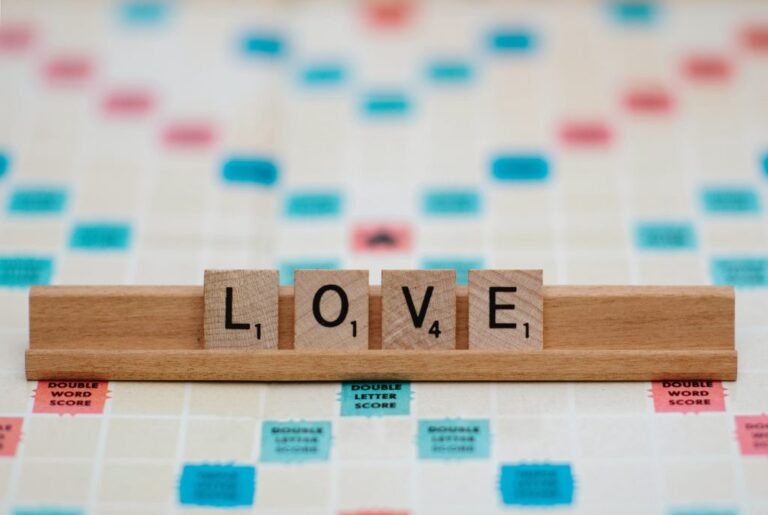
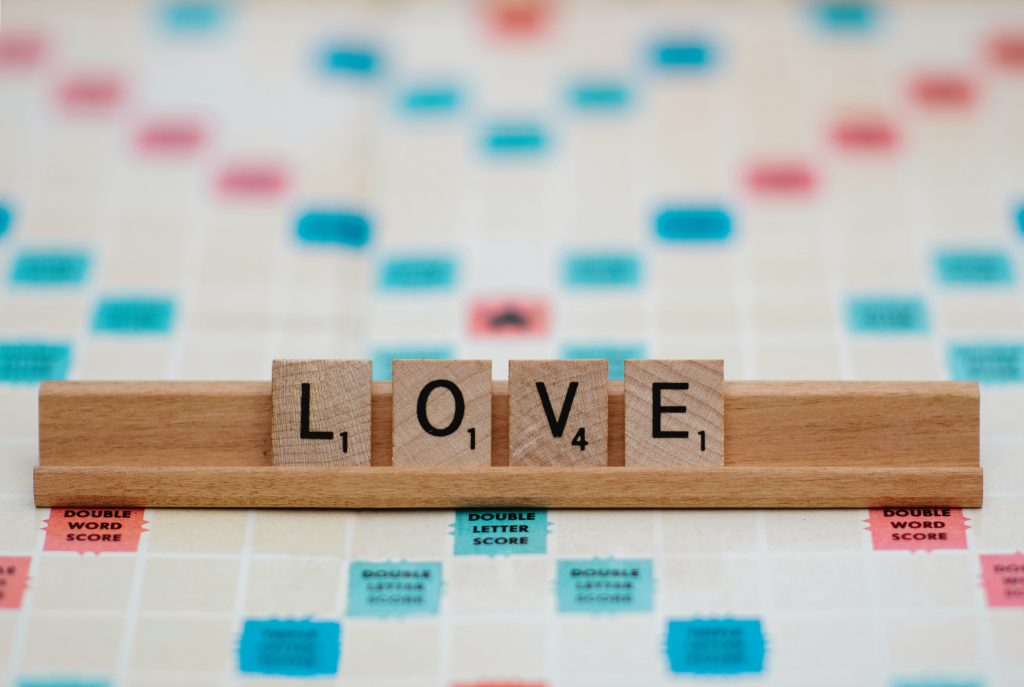
Scrabble is a beloved word game the world over, popular in 29 different languages globally. It’s pretty much like a giant word jumble with endless possibilities. The game starts, the players are given seven wooden letter tiles to begin, and each letter is assigned a different point value, with less commonly found letters like Z, X, Q and J given higher numerical value than ever presents like A and E.

But we didn’t have to explain that right? Perhaps you didn’t know, however, that ‘Caziques’ is the highest scoring Scrabble word of all time, netting an incredible 392 points.

But why play Scrabble? Scrabble is not only a mental exercise, but it’s also a social game. It lets people discuss the language while competing, which brings an enjoyable conversational aspect, particularly for linguists and those interested in the English language. 

Sometimes, the game can descend into farce, however, with players creating words whose existence in the dictionary is a little debatable. It’s best, then, to always to have a dictionary at hand to check words, and for an additional fun element, use this website to analyse the highest scoring hands available. Not that we’re encouraging cheating here – where’s the fun in that? – but rather, retrospective action so you can imagine what might have been on the board.

PICTIONARY

Worried that you’re not artistic enough to pull this off? No worries. This game is actually a lot more fun if you can’t draw. Get ready for loads of laughter when your team can’t decipher if what you’re drawing is a banana, an airplane or, erm, something else entirely.

If you’re running a little low on holiday funds and don’t want to fork out on the actual game, you can create your own game set with a whiteboard and some fun words to draw written on small pieces of paper. All in all, this simple, expertly crafted game represents stress free holiday fun for all the family.

CLUE

Clue is a suspenseful murder mystery game that basically turns everyone into a detective. Here’s how it works – there’s been a murder in the Boddy Mansion, and it’s up to you to find the culprit. There are only six suspects, and you are one of them (darn, we thought this would be easy!). You have to move your game pieces through the rooms and secret passageways of the mansion depicted on the game board to look for clues. 

The goal here? To find out who has bodied poor Mr. Boddy, of course. You also need to discover what weapon was used and where the incident took place. The more clues you find, the more you’ll be able to narrow down the many possible answers to those questions; a glorified game of ‘process of elimination’ but an intriguing one nonetheless. 

Or, you could play the version more popular on this side of the pond, Cluedo!

To add an extra element of excitement to your game nights, you can try using the Yes or No tool at pickerwheel.com, which allows you to create customisable spinners that can add an element of unpredictability to your board game sessions.

PUZZLES

Puzzles are not only fun and aesthetically pleasing. They’re also an ideal way to build up your problem-solving and cognitive abilities without too much actual effort exerted; we are on holiday, after all, and this thing’s meant to be fun. 

Piecing a puzzle together with your holiday companions will give you a good opportunity to talk and catch up with family and friends instead of only discussing what is going on in the game. And if you’re on holiday with folk who only want to discuss piecing some puzzles together, perhaps it’s time to start looking for new friends? 

RISK

If there is a game that can make you imagine what it might be like to rule the world, it’s definitely Risk. In this game, a map of the world is spread out on the game board, and all of the continents are broken up into territories. The end goal is for one player to conquer all 42 territories and eliminate the other players along the way. 

But first, a little diplomacy is required to get there. Make alliances (and then break them) as you slowly start to conquer more territory, but be cautious—if you’re willing to break an alliance, then you know your opponents will be, too. We should add a time warning on this one, as a complete game of Risk lasts a few hours, at a minimum. Sometimes, the board remains on the table for the duration of a holiday. Nobody ever said total world domination would happen quickly!

CHECKERS

Don’t let the simple looks of this game fool you. There can be a lot of excitement in a game of checkers, not to mention the game’s incredible history. You and your opponent are each responsible for 12 uniform game pieces, which you are allowed to move diagonally across the 8×8 checkerboard. Manoeuvre a piece all the way across the board and you get to crown a king; jump an opponent’s piece, and capture it to remove it from play. 

To win, seize all of your opponent’s checkers, or position your pieces in such a way that there are no available moves for the other player. Checkers is relatively easy to learn, making it a great way to introduce even the younger players to games of strategy, and is said to be excellent for developing both logical and lateral thinking skills. 

THE BOTTOM LINE

Games are a healthy, wholesome and affordable way to interact with friends and family while creating lasting memories. Should you be taking a staycation as a group soon, these are just some of our favourite classic board games around. Good luck!

6 CONSIDERATIONS TO THINK ABOUT BEFORE YOU GET MARRIED

Getting married is a life-changing event, for better or for worse. For richer or for poorer. In sickness and in health…Yep, with statements this seismic, it’s in your best interest to think through the details and logistics of marriage very carefully before diving in and saying yes.

We’re sorry if this falls on the practical rather than romantic side of outlooks, but these things matter. Indeed, there are some key aspects you’ll want to mull over and think about before you get married, and there’s certainly nothing wrong with being a bit cautious and ensuring it’s the right path for you before you say “I do.” The last thing you want is to be thinking ”I don’t want to’’ later down the line.

So, with our realist hat on before we wear our wedding one, let’s be honest; marriage and civil partnerships aren’t just about love and wedding bells, you’re also entering into a major contract for life. With that in mind, here are 6 considerations to think about before you get married.

YOUR EXPECTATIONS & VALUES

Your wedding is one day, but your marriage is forever. Therefore, you’re going to want to think about your future before you tie the knot. For example, consider your finances, where you’ll live, and how you’ll divide up household responsibilities; all the not-terribly-exciting-stuff, but the stuff which will have a huge bearing on how smoothly your life runs. 

Another significant matter you’ll want to discuss ahead of time is if you want to have kids and how many. There may also be other vital conversations you need to have, such as shared or divergent religious beliefs and career goals, and really, nothing should be off the table here. These are all areas and topics that can impact a marriage and if it lasts – and while you don’t necessarily have to be on the same page about everything, what is important is that you respect each other’s values and beliefs. 

IF YOU’RE HAPPY

Before you get married, think about if you’re truly happy now, rather than excepting things to change immediately just because you’ve a new ring on your finger. Sit down and review your relationship, and if your potential life partner will bring you joy. Marriage isn’t going to solve your underlying problems, both in your relationship and your own, or make them disappear.

Marriage can be challenging, and some days will be more difficult than others. You need to make sure that your partner is a team player and that you two are on the same page and will both be willing and able to give equally to the relationship. If you love the person but aren’t happy, then it may be a warning sign that there are issues you two need to work out before you commit. 

CAN YOU AFFORD IT?  

Weddings are notoriously expensive – the average cost is over £30,000, which is more than the UK’s average salary. It’s therefore wise to ask yourselves, as a couple, if you can truly afford a wedding and if the money might be better off directed elsewhere. 

Do consider a low-key ceremony as an affordable alternative. Bear in mind that rules surrounding weddings are in a state of flux currently, and are constantly changing, with only small ceremonies currently allowed. At the time of writing, a maximum of 30 people were permitted. Check the government’s website for COVID-secure wedding guidance and an updated list of rule changes. 

THE JEWELLERY

Speaking of costs, the engagement and wedding ring also contribute hugely to these. For many, if you’re serious about getting married, then an engagement ring will symbolise this promise to each other. As such, many Brits decide to spend a huge amount on one, with one study revealing an average spend of £1042

However, couples today also care about quality and provenance over cost prioritising sustainability and ethics over cost. Many conscious bride and groom couples opt for a recycled diamond which are many jeweller’s standard conflict free-diamond option. That, or lab grown diamonds, which are increasing in popularity. 

To ensure you’re buying from a trustworthy store, be sure to ask for the diamond’s certification – this is an important document that contains information about the diamonds quality (cut, colour, clarity and carat weight). Buying documented engagement rings with GIA certified diamonds will give you peace of mind. Moreover, The GIA Diamond Origin Report can help you determine a diamond’s geographic origin, to help you make an ethically sound buying decision.

In a more aware, awake world, the ethics of your diamond ring looks likely to be a key consideration in years to come.

THE FINANCIAL BENEFITS

While it may be outdated, and potentially raises questions about the institution of marriage, there are several financial benefits to getting married which should be considered in the lead up. As such, marriage can leave couples better off over time.

In short, marriage means you can transfer money and assets between each other, tax-free, reducing your tax bill. Morbidly, many of the financial rights involve death, including that you can potentially get a bigger state pension if your spouse dies, as your spouse won’t pay inheritance tax. ”As long as you both shall live’’, indeed. 

IS MARRIAGE RIGHT FOR YOU? 

Most importantly you need to consider if marriage is right for you. Marriage is a commitment you’re making to each other to spend the rest of your lives together. Therefore, think through the fact that you’re going to be with your partner each day going forward. Consider how you currently handle and resolve conflict, and if you feel there’s honest and open communication between the two of you. Picture yourselves blending your lives and families and what interests you share that you think will help you build a solid foundation for marriage. Be realistic and honest with yourself if you can see you spending your future days with this person.

5 REASONS TO GO GLAMPING FOR YOUR NEXT STAYCATION

Life’s been a bit of a challenge recently, hey? Furloughed, locked down, socially distanced and quarantined; a whole host of new terminology has entered the collective vernacular, and it’s been a lot to take on board.

We all deserve a break right now, but for safety’s sake, it’s looking likely to be on terra firma for the time being. Not that we’re complaining; even a weekend break can do wonders for our state of mind, allowing us to reconnect with nature, and shed some of the day-to-day stress we tend to accumulate and carry around. And hey, maybe reconnecting with the UK in the form of a staycation might be good for the country’s collective consciousness right now. 

What better way to enjoy the Great British outdoors and to bask in its spectacular scenery than through glamping? Glamping is a relatively new way to experience nature at its finest, but it has already gained serious popularity, and there are some incredible glamping sites in the UK popping up all the time. To the initiated, that’s not surprising.

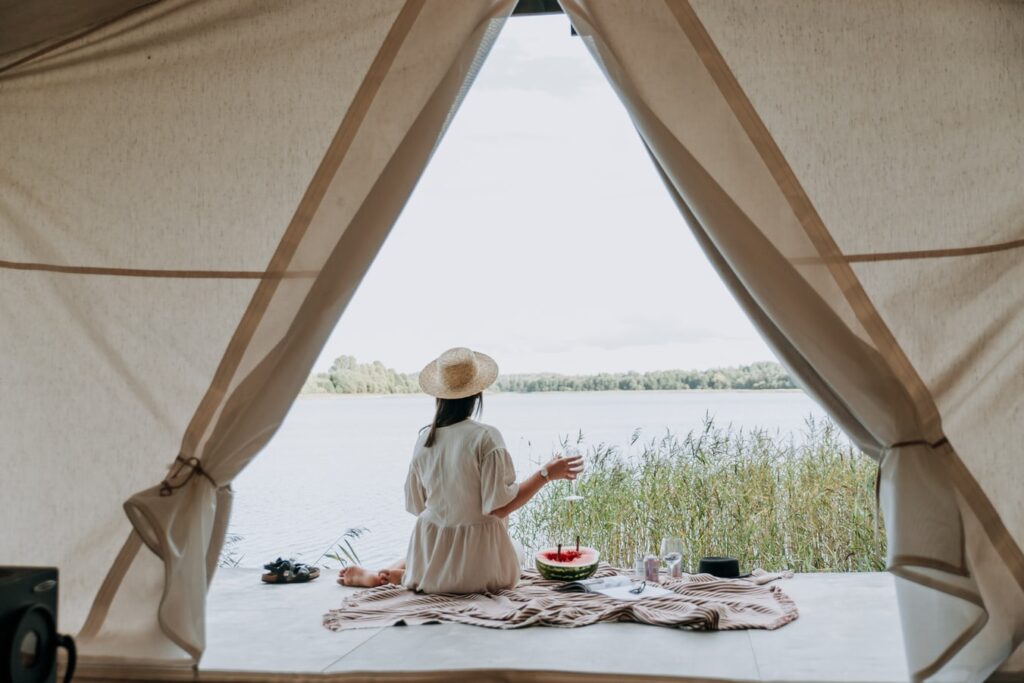
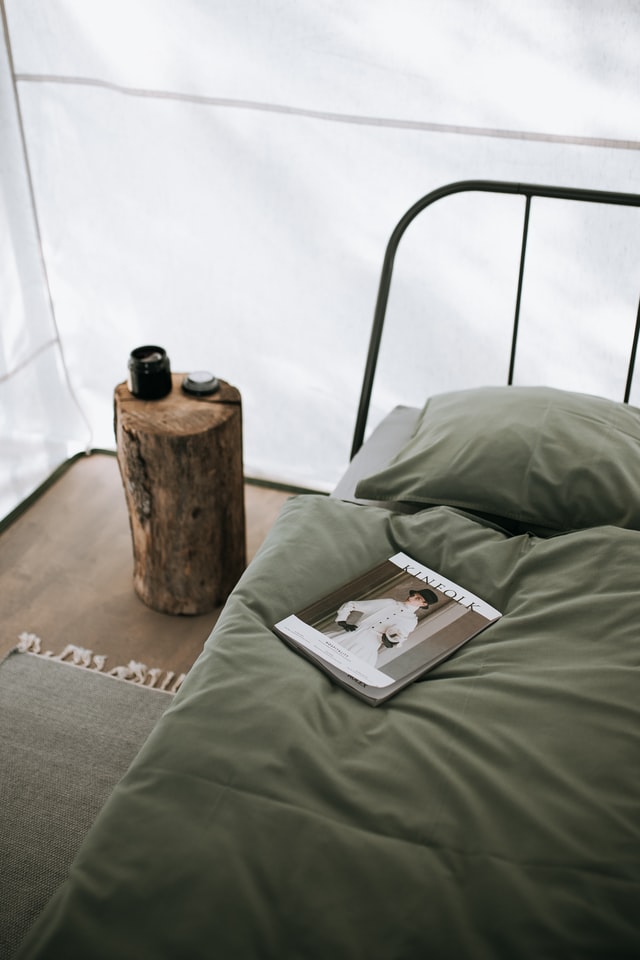
For those who have been living under a hastily erected rock these last few years, glamping is a combo of two words: glamorous and camping. In essence, it allows you to experience the serenity of nature whilst still maintaining a few home comforts. Unlike traditional camping, in tent and under appointed, glamping finds the best of both worlds; yep, that means a proper mattress, running, hot (!) water, wifi…you name it. 

Anyway, if you’re still not convinced and want to dive a little deeper, here are 5 reasons to go glamping for your next staycation.

IT OFFERS VARIETY 

Glamping gives you an utterly unique experience, and anyone who has ever gone glamping will attest to this. There are various glamping breaks offered across the country, and this unique type of holiday can provide a surprising amount of variety – from a fully-catered, romantic couple’s tent to elaborately-designed tipis and even full rustic bungalow retreats. 

There are some incredible makers of luxurious and bespoke safari tents UK who are forever dreaming up new, lavish elements to add to their structures to ensure everyone feels at home in nature. And it’s this attitude of constant evolution which is bringing great diversity to the glamping market’s offering. As long as you’re keen on getting amongst nature and you love a little side of luxury, you’ll find something to suit your tastes in the glamping industry.

‘ROUGH IT’ YOUR WAY

Glamping offers guests the opportunity to bask in nature without having to surrender their creature comforts. But that doesn’t mean a glamping trip represents a cop out from that sense of getting back to a more simple way of life which traditional camping brings. Instead, you have the choice here about how ‘back to basics’ you want to go. 

You can choose whether you want to keep your wide-screen television, for instance, or a gorgeous bathroom and bathtub, or even a washing machine. Or, you can simply settle for a larger tent which boasts a decent mattress and not many more mod-cons. That’s the beauty here. How you strike the balance between living in nature and retaining life’s little luxuries is entirely up to you.

AN UNBRIDLED SENSE OF FREEDOM

The freedom granted by traditional camping – of sleeping out under the stars, of cooking local produce over an open flame, of relieving yourself in a bush – can be somewhat tempered by downpours, a barbeque that won’t light, and stinging nettles getting you in the most unwelcome of places.

Glamping manages to grant access to both that unbridled sense of freedom which outdoor living provides, and the home comforts which make everything run a little more smoothly. And during a UK staycation, that’s all you want, right?

YOU DON’T HAVE TO PREPARE FOR THE TRIP EXTENSIVELY

When you go on a regular camping trip, there are a lot of aspects you have to think about – how are you going to cook on that propane stove? Is that sleeping bag going to be warm enough? Will there be any facilities? If you forget something, your camping trip may well be ruined. Or at least, the amount of ‘stuff’ you have to pack can rather temper that unbridled sense of freedom we previously extolled. 

Not so with glamping – there’s as little preparation as possible required as you essentially just have to show up. When you arrive at a glamping site, the tent is already set up, the bedding has been arranged, the facilities are more akin to what you are used to at home, and there can be some extra amenities as well, depending on the kind of glamping tent you choose. You can enjoy a day outdoors and an evening under the stars, hassle-free, and happily cohabiting with nature. 

LOVE THE UK, LEAVE NO TRACE

Glamping also represents one of the most environmentally sustainable holidays out there, with little trace and few footprints left in nature from your visit. This sense of a ‘greener’ holiday extends past a general idea of reconnecting with nature. 

Glamping structures are reliably made from sustainable materials, such as reclaimed wood, and heating often comes from natural sources such as logs. The fact you’re doing this within the UK also cuts back drastically on your carbon footprint. What’s more, the tidy up operation after your stay can be backed up by dedicated glamping site staff after your departure, who will have recycling procedures in place.

THE BOTTOM LINE

Glamping offers everyone the chance to feel pampered in the heart of nature, without the difficulties a truly ‘wild’ experience can bring.

MAXIMISE YOUR HOME’S WORTH: GETTING THE MOST FOR YOUR PROPERTY SALE

Ideal for getting the most from your property sale.

Though the housing market is a little topsy turvy at the moment, the wheels keep turning. And here’s a statistic to bring those looking to sell some optimism; on average, 1.2 million houses are sold in the UK every year. Is yours going to be one of them?

For those keen to be part of that statistic, it’s certainly sensible to make sure you’re getting the maximum value for your property sale, and that you’re doing all you can to ensure your home is at its full potential for viewers.

So if you’re wondering how to make sure you’re getting the best value for your property sale and want to know some insider secrets on selling your home, you’ve come to the right place. Indeed, if you’re looking to sell your home and want to make it stand out among the rest of the properties on the housing market right now, then read on; here’s how to maximise your home’s worth, IDEAL for getting the most from your property sale.

IT’S ALL ABOUT TIMING

In the words of Tolstoy; ”the two most powerful warriors are patience and time’’. And while it’s doing War & Peace a serious disservice to apply this sage advice to the contemporary housing market, he would’ve kinda had a point. Indeed, knowing if it’s a good time to sell, and resisting the urge to hurry, can have a significant bearing on the price you command.

If there aren’t many houses like yours up for Property sale in your area, then embrace this blessing; it’s a seller’s market in this instance, and this gives you the upper hand. So, do endeavour to check out your competition before you decide to sell.

If you’re in a hurry to sell, you probably aren’t considering any major updates to your property, but some small changes can still have a big impact.

SET THE RIGHT PRICE

As well as checking asking prices in the area, you should check how much similar houses have actually sold for. Be realistic when making comparisons, as overpricing your property may put people off. 

Compare the market (without resorting to singing that song) and ask yourself some searching questions. A similar property may have the same number of rooms, but is it decorated to a higher standard? Does it have something your property doesn’t? Be honest with yourself here.

MAKE YOUR HOUSE SHINE

Try and figure out who you are selling to and make your property appeal to those people. For example, if you have a rental property for sale, make sure you can provide a good history of tenancy. If you have an investment property for sale, the buyer will want to spend as little as possible on bureaucracy, so make sure this element is quick and manageable from your end. 

Make sure your house is spick and span, too, putting extra effort into the areas you usually forget about. Remember to look up, get down, and inside places you don’t normally go. 

Go the extra mile and consider staging your home inside; viewers want to see a place they can imagine living in. If your home would be perfect for a family, consider putting a bed or a cot in the spare room. Making the home feel homely by baking bread or putting a pot of coffee on just before they come round is a classic estate agent trick, sure, but it really does work. 

Bear in mind that anything with the potential to negatively detract from viewers being able to see themselves living in your house is a bad thing – so remove clutter and think about moving the furniture around (or even removing it) so the house looks bigger. Should you have photos of you and yours all over the house, it will be hard for anyone to imagine living there themselves, so pack up your personal belongings and put them out of view. The secret here is treading the line between personal and impersonal.

IMPROVE THE KERB APPEAL 

The first place which comes under scrutiny is the home’s exterior. As such, the facade needs to be faultless so the first thing you should do is check your kerb appeal and make adjustments where you find it wanting. 

What is the first thing people see when they arrive at your home? The front garden, the front door, the state of the front windows…make sure it’s all looking perfect.

Tidy any rubbish, clean your front door, repair anything which has seen better days. Consider making minor improvements like repainting woodwork or fixing that wonky door handle; it all counts. 

NEGOTIATING THE BEST PRICE FOR YOUR PROPERTY SALE

Finally, be bold but smart when negotiating. Don’t be afraid to decline the first offer and ask for a little more, but equally, know when the price is right.

Maybe there are items you don’t really need that you could include in the property sale which give you an edge over competing properties? Do your homework here and you stand yourself in better stead of maximising your home’s value. 

Do try to be flexible with your moving dates and have somewhere lined up. If your onward purchase is all set, you’ll be more appealing to potential buyers. 

Most importantly, ask yourself, what is my house worth? And don’t be afraid to hold out for exactly that. 

5 GADGETS TO HELP YOU WORK FROM HOME BETTER

Ideal for those looking to make working remotely work for them.

Whilst almost every aspect of our lives has changed in recent months, our professional responsibilities remain. That’s not to say roles and duties haven’t shapeshifted and adapted – and will continue to evolve – at a fast pace. Nope, this is a period of cosmic change, and those who adapt, survive. 

What’s definitely clear is that our hastily assembled home offices, now we’ve had a moment to recalibrate, have prompted us to explore new software, devices and organisational skills that promise to save us time and improve overall efficiency. Of course, this is no easy task and some explorations have led us to dead ends.

Nevertheless, there’s no need to be disheartened – trial and error, and all that – as there are a number of gadgets that can, and have, proved a huge benefit for personal productivity and increased efficiency in the home office environment. If you’re not sure where to start, then check out these; our 5 gadgets to help you work better from home, IDEAL for those looking to make working remotely work for them.

A SMARTWATCH

Smartwatches have been on the market for a while now, but often they aren’t marketed to professional industries, rather to tech geeks and competitive exercisers. But in our opinion, they can add real value to the working day, too.

Research has found that prominent distraction for many workers is, predictably, their smartphones, first and foremost. With one small device, we can access news from around the world, communicate with our loved ones and explore never-ending social media feeds. Simply put, we can ignore our work for hours on end and decrease our productivity and efficiency, even when unintentionally, because of the distraction of smartphones.

Modern smartwatches can similarly provide us with some of those features, but they also tend to minimise the risk of distraction. Home workers can keep an eye on any important notifications that may warrant a quick break, but lessen the frequency of non-urgent breaks as the smartwatch interface isn’t so immediately addictive. In fact, they tend to have a clinical feel more conducive to concentration. So, put your phone in the other room, and delegate to your wrist instead.

NOISE-CANCELLING HEADPHONES 

If your household has multiple people working in the same space, or if you have any children or dependent loved ones at home, it can be difficult to concentrate without distraction. Over time, this can prove a disaster for maintaining our work-life balance and structure – especially when making those all-important client calls which don’t benefit from interruption (yep, we’ve all laughed at the videos of kids crashing their parent’s Zoom meetings, but we perhaps wouldn’t want the same fate for ours).  

In this instance, it’s a good idea to consider noise-cancelling headphones which can allow you to focus your attention on the one task at hand, without interruption. Of course, make sure someone’s keeping an eye on the kids before you put the headphones on!

A QUALITY DESK LAMP

Now, working in your kitchen, living room or spare room can be an all-round tricky task, and more often than not this is due to the physical conditions – whether this is a crowded setup, noisy environment or an uncomfortable chair. Yet, whilst some of these elements can be difficult to fix, ensuring a good quality light source is relatively simple.

Dim or generally dark lighting can prove counterproductive to home working as it causes our brain to produce more melatonin which leaves us feeling sleepy. Of course, it can be difficult, if not near impossible, to complete our work to a high standard when we feel this way. So whilst we’re not suggesting that you re-do your lighting fixtures, it’s a good idea to purchase a desk lamp at the very least.

AN ALARM CLOCK OR SMART SPEAKER

Taking too many breaks can severely decrease our productivity, but we all know what it’s like when working from home; the washing needs hanging up, the fridge is calling your name, you need to go get milk…

On the flipside, a common pitfall when working from home is forgetting that we should still allocate ourselves usual breaks or lunch periods – and whilst motoring on and working without one might feel productive, it can be harmful to our mental and physical wellbeing if we neglect a regular stretch of the legs and rest of the eyes. 

By introducing a regular alarm, either via a digital clock or smart speaker, you’ll be able to ensure that a healthy schedule is maintained through reminders to take a break from the screen from time to time. Bear in mind the 20-20-20 rule here, which recommends that you look at something 20 feet away for 20 seconds every 20 minutes, to prevent overexposure to your screen without pause, as well as medical advice that getting up every 30 minutes may cut your risk of death, too. A smart speaker which reminds you to do so sounds absolutely perfect here!

SLEEP TRACKERS

Managing a healthy, balanced attitude to sleep hygiene is important for all aspects of our lives and it’s not hard to understand why. A consistent sleep schedule allows us to wake up with more energy and a subsequent positive outlook, whilst a poor one can leave us feeling run-down and unmotivated. Yep, they say that waking up at the same time each day is the quickest path to all sorts of benefits, like improved concentration and stronger immunity. 

To ensure that you’re reaping those benefits, it’s important to take an active role in your resting habits. Now, if you heed our prior advice on investing in a smartwatch then you’ll likely be able to enjoy the device’s built-in sleep tracking software, however, if a smartwatch isn’t to your taste, then there are some great alternatives available.

For example, sleep monitors are electronic mats that sit under your mattress and investigate your sleeping patterns. As morning rolls around, they’ll be able to provide you with an analysis of how you slept, an overall health report and inform you as to whether any sleep apnea was detected. When synced with apps like Sleep Cycle, you can ensure you wake up at exactly the right time to maximise the potential of that all-important REM sleep, ensuring you’re at your most well rested and ready to take on the day when you wake.

Creating a professional space in our homes will never be simple. However, by investing in a few choice gadgets we can begin to see some clear structures take root. Of course, to ensure that this thriving working environment is maintained, and your investment is protected, it’s vital that you consider a quality insurance policy.

5 HOME OFFICE PURCHASES TO MAKE THIS SUMMER

Ideal for those looking to increase productivity and comfort as they continue to work from home.

This week marks a return to the office for many in the UK, with mixed emotions about the safety and efficiency of such a decision. Others, though, look set to continue #wfh for the foreseeable future, and while we’d love to say it’s all PJs and PM pinacolodas, actually working from home can be stressful and woefully inefficient. 

A lot of this is down to the fact our home office spaces aren’t war ready. Hell, they’re not even fit to host a Zoom call, let alone day a day of deadline meeting and decision making. Fortunately, there are a few simple adjustments to your space and routine that you can enact to make things as comfortable and cooperative as possible. Here are 5 home office changes to make this summer, IDEAL for those looking to increase productivity and comfort as they continue to work from home. 

LEVEL UP YOUR DESK

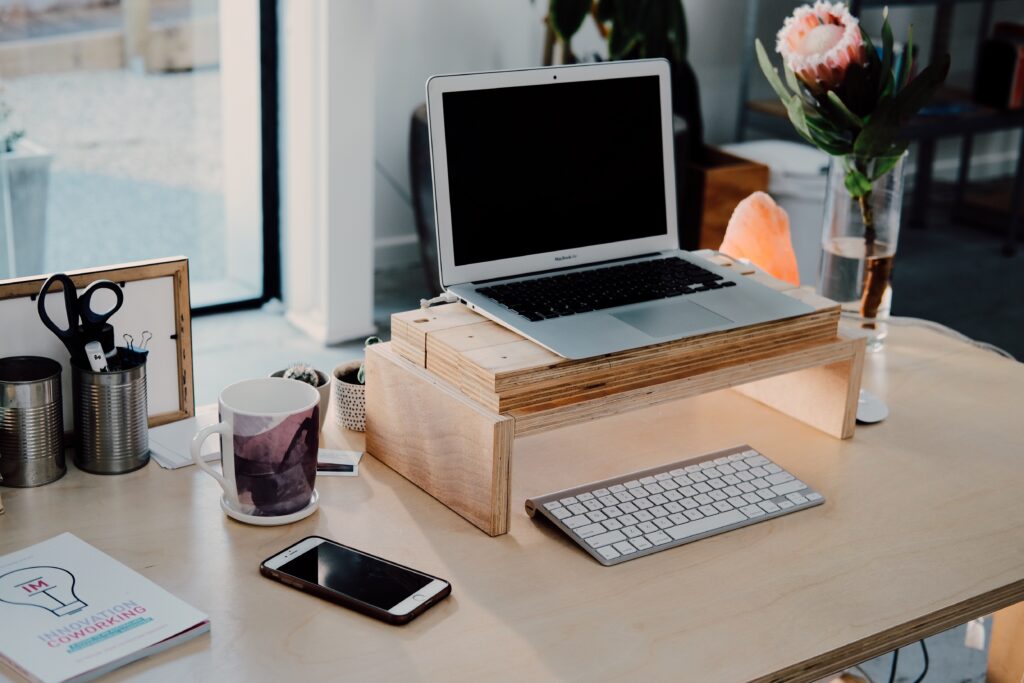
First things first, let’s take a look at the hub of the action, where the magic hopefully happens, or at least, will happen soon. Your desk needs to be a devoted workspace, at the correct height and with good back support from an upright, sturdy chair. We’ve seen too many images of makeshift desks assembled on stacks of books or workers perched on the side of their beds, laptop actually in their lap…and we’re concerned. 

Instead, consider investing in an ergonomic stand-up desk and an adjustable desk converter. This may provide you with better flexibility and enable free movement while working, and is increasingly believed by scientists to be massively beneficial to those at risk from an overly sedentary working day.

LAPTOP STAND

If you’re working from a laptop rather than desktop, as most of us have been, then there are three affordable purchases you should make the ensure your typing and mouse manipulation isn’t causing eye, back and wrist strain. 

For most, it’s not feasible to work standing for the whole day, and a mixture of standing and sitting to work is recommended by ergonomics experts. When you are completing tasks at your desk, on a chair, it’s still essential your laptop is at the correct eye height. 

Firstly, a laptop stand which raises your screen to the appropriate height – and stops you hunching over or straining your eyes – is essential. This means the screen should be at least 50 centimetres from your eyes (around arm’s distance) and slightly below eye level.

BLUETOOTH KEYBOARD

Once your device is elevated appropriately, you’ll be able to sit back in your chair properly, bottom and spine against the chair’s back at a right angle, which affords you far better levels of comfort throughout the day and reduces the risk of injury. 

Typing, then, needs to happen from a manageable distance away from the computer, so you’re also going to need a portable, Bluetooth keyboard. You can find an excellent Bluetooth keyboard on the market for under £30, and having one allows you to rest your wrists on your desk a couple of inches in front of your keyboard and at right angles (or slightly below) to your elbows, which is the best position to avoid repetitive strain injury to your wrists. 

The beauty of this purchase is that once you’ve got a durable Bluetooth keyboard running on batteries, you can even use it to complete work with your smartphone acting as a word processor on flights, trains and in coffee shops. Just watch that hunching and squinting!

BLUETOOTH MOUSE

Finally, for efficient and productive laptop work, you’ll need a Bluetooth mouse. Using one without a wire works well in the home office setting, as you can position the mouse fairly far from your body (half a forearm’s length on the desk is ideal, wrists supported, or around 5 cm from your keyboard), meaning your shoulders aren’t scrunched up when working.

Of course, a wired mouse is suitable here, too, but a Bluetooth version affords you more freedom. What is certain is that if you’re in this #wfh for the long haul, it’s time to ditch the touchpad on your laptop; it’s woefully inefficient and ergonomically unsound.

MIRRORS OR AN ARTIFICIAL LIGHT SOURCE

We hate the say these words, but the days are getting noticeably shorter now. That’s tragic, as no one has enjoyed the summer to its full potential this year. It’s vital, then, to ensure your home office is getting a decent amount of sunlight while working. It goes without saying that natural light fosters productivity and efficiency, as well as promoting well-being, so do endeavour to allow some into your office.

This can be achieved by hanging a couple of mirrors to bounce the light around the room, or by always having a window open to feel more connected with the outside world – provided, of course, that there is a source of light and fresh air in the first place. If there isn’t, it’s probably a wise move to find a new home office space or be sure to supplement your current one with artificial light. 

You should, however, make sure the natural light source is controlled; align your workspace such that the sunlight doesn’t disrupt your work by being too bright or creating shadows. Having a light source directly behind, overhead, or in front of the screen creates a glare on it, which only leads to strain. Instead, position your screen in such a way that the light source comes from the sides or below. 

YOU DESERVE A BOUQUET

If you’re missing the appearance and aroma of summer flowers on your daily commute, then you should introduce some floral arrangements or bouquets to your home office space. 

Whilst the air-purifying, productivity-boosting effects of a few houseplants is debated, what can’t be denied is the mood-boosting quality of that natural aesthetic in the home. This is even more pertinent since we’ve all been seeing less of the outside world during this weird sort of semi-lockdown-limbo.

If you’re new to the houseplant game and are looking for something low maintenance, then turn to aloe vera or cacti, which only require weekly watering during spring and summer and monthly in the colder months. That said, they need abundant natural light, so if your home office space is dark and dingy, perhaps go for something else. Speaking of which, Devil’s Ivy is incredibly adaptable to low and high levels of sunlight, and is a better bet for something manageable in a less bright room. 

Or, how about the spectacular looking Red Aglaonema, which boasts gorgeous leaves bordered in bright pinks and reds, a colour, incidentally, said to stimulate productivity. This guy responds best to plenty of natural light, but can cope with lower levels, too. 

THE BOTTOM LINE

Whether you’re keen to continue working from home or are simply still not permitted to return to your office which isn’t covid safe yet, remote working in home offices looks like a trend that’s here to stay. That shouldn’t mean it’s an uncomfortable, distracting experience. Instead, embrace a few small purchases and adjustments, and you’ll find this #wfh thing isn’t so bad after all.

5 IDEAL WAYS TO GET HEALTHY & LOSE WEIGHT POST LOCKDOWN

Did you spend lockdown in a malaise of Tiger King binging, TikTok viewing and urges to raid the fridge with an enthusiasm usually reserved for 5* hotel breakfast buffets?

You aren’t alone.

48% of people gained weight during lockdown. That’s a huge number, for sure. And whilst we’re inclined to look on the bright side, and say that means over half of folk maintained or lost weight, we’ll hold back on being contrary right now. We’ve an article to write, and wrongs to right. Our inner Brandon Flowers can wait…

Anyway, stress has certainly played a considerable role in perhaps our recent greater propensity for comfort eating, as has a lack of access to facilities like gyms, swimming pools, fitness classes, and sports clubs. The Nation’s PE Teacher can only do so much, right?

But as lockdown eases, and the new normal is cautiously welcomed, it’s time to shake off those extra quarantine pounds and return to your happier, healthier self. 

So how do you get healthy and lose weight post lockdown? Here’s a start; our 5 IDEAL ways to get healthy and lose weight post lockdown.

DON’T CRASH DIET 

Crash diets, sometimes called fad diets, are notoriously popular. 

Why? 

Well, at first, they might show results quicker than more sustainable diets. But here’s the thing; they only ever work briefly. Temporarily. For a short time. And we’re here for wholesome, reliable solutions, only.

The problem is, a crash diet just isn’t sustainable. It’s going to induce a cycle of hunger and cravings that invariably leads to rebound weight gain and a potentially unhealthy relationship with food. Crash diets can also slow your metabolism and put your body into starvation mode. Not good for weight loss — or for your health.

A SUSTAINABLE APPROACH TO DIETING

A government drive against obesity and a government drive to have us eating half priced McDonald’s three days week…what could possibly go wrong? It all feels a bit extreme and a lot haphazard, don’t you think? Instead, and in contrast with our leaders, let’s take a measured approach to our meals.

The best way to diet is instead to focus on the positive aspects of food and drink, rather than on denial and self-loathing. Find foods you love to cook and eat that are also healthy, and embrace an attitude of relishing in fresh produce, its preparation, appearance and the eating of it! 

Sure, these are just words, and it’s action that you need. Do yourself a favour, then, and check out our tips on the best, most sustainable ways to stick to a healthy diet for more inspiration. 

DEVELOP YOUR HOME GYM

Gyms and leisure centres are starting to open their doors, and that’s great for some people. But for many, for now, exercising outside or at home is preferable.

If you’re confident in getting back to the gym, then these places need your support. But what if, in our post-lockdown world, you aren’t ready to head back to the gym yet?

Well, it’s time to stock up on home gym supplies. 

During lockdown, the cost of home gym equipment skyrocketed. The lack of supply vs intense demand meant it became unaffordable to buy home gym supplies. But now as lockdown eases, and demand lowers, newfound availability of products means you can start to deck out your home gym for a reasonable price. Once the nights draw in and the days get a little gloomier, you’ll relish the fact you kitted out your living room with dumbbells, a pull-up bar and the rest. 

Or, you can even create a free home gym with items you already own; result!

FIND AN EXERCISE ACTIVITY YOU LOVE

High-intensity interval training (HIIT) is a powerful calorie burner and great for endurance. Swimming is also a fantastic option for weight loss, and tennis is known to help shed the pounds. 

But what if you hate HIIT, swimming and tennis?

Well, just like with fad diets, if you commit to an exercise schedule you dislike, your attitude to working out becomes negative. And fast. You learn to dread that part of the day, and there’s a danger you’ll take every opportunity you can to avoid it.

This isn’t going to get you back into shape or improve your health. 

It’s essential, then, to find an exercise routine you truly enjoy. Fortunately, there are so many options out there to help you get active. You can do team sports, take up martial arts, you could try gymnastics, go kayaking, rowing, or take cross-country walks. ‘Getting fit’ isn’t all about hitting the treadmill with a manic glare in your eye.

Everyone is different — they have exercises they love to take part in, and those they despise. Common options, like jogging or cycling, tend to be the ones most people go for. But jogging and cycling are also quite unengaging as activities — particularly if you use a static machine — which makes them difficult to stick with long term. Instead, find your motivation and cherish it!

Know what you hate but not what you love? Experiment with exercise. Try different activities until you stumble across the kind of thing you like to do. The goal is to find an exercise you’re excited to be a part of and look forward to as part of your weekly routine. 

GET YOUR PROTEIN FIX

Once you start exercising, you’ll begin to feel great. That is practically guaranteed.

Exercise produces so many benefits for both mind and body, from helping to lower your resting heart rate to releasing the happiness-chemicals called endorphins. 

But to really reap the benefits of exercise, you’ll need to make sure you’re giving your body the fuel it needs to improve. There is nothing more frustrating than trying to follow the couch-to-5K program but not making any progress or starting to lift weights but not growing bigger muscles.

The thing about working out is that progress follows the 80/20 rule: It’s 80% diet, 20% exercise. To see benefits to your exercise programs — to grow and improve — you need to be consuming the right fuel in your diet.

When you exercise until your muscles hurt, your body is breaking down muscle tissue. Following your workout, it starts to heal those muscle fibres and make them stronger so you can work out harder next time. This is how you increase your ability to lift weights and up your endurance.

To achieve ideal results, your body needs protein. Protein is what’s used to repair muscle. Most of us don’t get enough protein from our diet to heal our bodies well enough to see maximum progress.  

We’re sure you know what’s coming next; you’ll need to adapt your protein intake. There are a few ways you can do this. You can opt to increase your intake of protein-rich foods — meats, fish, nuts, beans and dairy products. You can take protein supplements like protein bars or protein shakes. Or you can do both!

But how much protein do you need?

Weightlifters tend to follow the rule of at least 2.2g per kilogram of body weight per day. So an 80kg person would need to consume 176 grams of protein per day. Research says this is quite high, and you can see progress on as little as 1.6g of protein, which would be 128 grams per day for an 80kg individual. But that’s still a lot, which is why so many people opt to supplement their diet with protein shakes or bars. 

5 IDEAS TO MAXIMISE SPACE IN YOUR LIVING ROOM

Ideal for those spending more time at home during lockdown and beyond.

Believe it or not, but the UK is still officially in lockdown. Actually, we could think of a better L word to describe the current situation; limbo. So many folk right now don’t know if they’re coming or going, whether they should be eating out or dieting in, hitting the high street or hibernating at home…

In fact, another L word we’re all too familiar with recently is ‘living room’. Yep, we know it’s two.

For sure, we’ve been seeing a lot of our living room lately, and the more we seem to be using it – for work, for lunches, for kicking back when locking down – the more the space becomes cluttered and full of ‘stuff’.

When you’re spending so much time in one room, that’s the last thing you need. Instead, you want your living room to feel well-decorated, spacious, light and bright. Here’s how to make it just that; our 5 ideas to maximise space in your living room, IDEAL for those spending more time at home during lockdown and beyond.

REMOVE THE CLUTTER

If you’re looking to maximise space, then first it’s essential to minimise clutter. Living rooms can accumulate so much ‘stuff’ at the best of times, but now, since so many of us are also using these rooms to #wfh from, the amount of debris has gone through the roof. Actually, we wish it had gone through the roof, and into the attic. There, it could be stored safely and out of sight.

But we digress. Clutter can easily make a room look disorderly and smaller than it is, bringing the walls and corners in, and tripping you up at every turn. A recipe for injury and irritation, for sure. To help you better organise your clutter, you could try using the following household apps:

Decluttr App: With Decluttr, you can sell games, books, DVDs and more. The best part is that you can send all of your items free of charge. The app offers users plenty of support to help them manage their orders and make some extra cash, too. If you don’t want to lose any of your old books, DVDs or music in the process, you can first make digital copies of them to save space.

Tody App: Tody helps you to organize your household chores; it’s the perfect solution for organising your clutter, creating to-do-lists, and ensuring your home is nice and tidy.

Camscanner: This works as a scanner, but using your smart phone’s camera, and enables you to digitally store all of your documents (and rogue papers, certificates, recipes…you name it) on your phone. Do note that some iPhone’s ‘Notes’ app has a similar feature, if that’s easier for you.

ADD MIRRORS 

One super-easy way to achieve at least the illusion of space is to use mirrors. Be careful not to choose something too big for the room, but rather something that’s in proportion to how much space you have. Grand mirrors are beautiful, and excellent for creating space, and though they’re expensive, they are a worthwhile investment to add a touch of luxury. Or, something smaller, but placed cleverly to reflect natural light around the room, is also a way to maximise space.

ONE LARGE ART PIECE

If you’re looking to maximise space in your living room whilst keeping the room’s aesthetic artistically intriguing, it is better to choose one large scale art piece as opposed to lots of smaller pictures. A cluster of smaller decorative pieces can make a room seem fussy (unless you have ample space) and overblown, and we’re here to encourage the opposite, right? 

Remember to take measurements before you start shopping around. Looking for affordable artwork from local artists? The following resources are ideal for choosing artwork for your home:

Saatchi Art: Another platform for artists to sell their pieces and keen folk like you to buy them, but with an added twist. Here, you use the app’s ‘augmented reality’ feature to picture how the artwork would look in your living room. Wow!

Vango: The Vango app allows you to browse a range of art from affordable to expensive. With the view feature, you can even preview what it will look like in your home, just like the Saatchi app.

Wydr: The Wydr app is a little bit like Tinder, but for art, swipe left or right to find the art piece of your dreams!

TRY LOW-SLUNG FURNITURE 

To make a room feel bigger, try purchasing furniture that’s slung low to the ground. Low furniture helps to create the illusion of vertical space, as eye level interruption is minimised. Futons are ideal for this, as they sit on the floor without much elevation, and are super comfy and versatile to boot. Though it’s a little studenty, beanbags serve a similar purpose. Do make sure you supplement all this low slung furniture with a couple of higher standing pieces – perhaps a small but proudly standing coffee table – otherwise things are going to look, well, a bit weird.

Another savvy space saving tip is to prioritise furniture items which double up as a storage space, such as a footstool or poof with storage inside, or an ottoman which is both a bench and a chest to stash larger items. 

SMART STORAGE

Smart storage space is vital if you want to make a room appear bigger. Choose storage solutions that add a sense of elegance and style to the room, as well as being functional, to cover all bases, physically and metaphorically. For some beautiful storage, take a look at the chest of drawers on tylko.com for inspiration; a sleek, modern piece which fits upright against a wall, not taking up any more space than it needs to stand. 

Floating cabinets are also a great way to create more space. As the name suggests, these are cabinets which appear to be floating, (because of how they are mounted to the wall) and as such, are great space savers and a cheap, healthy path to some low level hallucinations. 

THE BOTTOM LINE

Just because we’ve all decamped to the living room for lockdown and beyond doesn’t mean this space should become crowded, cluttered or claustrophobic. Instead, via some simple storage solutions, unobtrusive furniture choices, tactical placement of mirrors and with the help of technology, we can enjoy a spacious feeling space from here on in. Good luck!

5 CHEF’S WORKFLOW HACKS TO MAKE COOKING AT HOME EASIER

Though some might argue that the bedroom has its fair share of earth moving experiences, we think it’s safe to say that the kitchen is both the most important and the most volatile part of the house. 

Hear us out. It’s the engine room of the home and family, and where the magic truly happens. In most homes, the kitchen is its hub and a hive of activity, bustling with delicious food and the most meaningful of interactions. However, it’s also a combustible place, full of danger posed by sharp knives, open flames, cross contamination and the rest.

Sometimes we’re ashamed by the amount of destruction we cause in the process of cooking a meal. For the sake of our sanity, our kitchen, our health and the deliciousness of our dinner, we’ve consulted the professionals on this one; here are 5 chef’s workflow hacks to make cooking at home easier.

SECURE YOUR CHOPPING BOARD

First things first and before we get slicing, dicing, julienning and brunoise-ing – let alone before any food is actually cooked – it’s essential we set up our workspace correctly so cooking is easy, simple and safe.

This all starts with securing your chopping board correctly. Much like the ritual of putting on your apron, this represents a statement of intent at the start of the cooking process before each meal, and signifies you’ll be doing things properly. All you need to do is divide a jay cloth or piece of kitchen towel into four, wet them a little, and place each piece under the four corners of your board. Alternatively, you can place a folded dishcloth underneath. All this means is that when you’re wielding a sharp (also essential for safety reasons) knife, your board won’t slip and slide around beneath you. No professional kitchen chef would do without securing theirs.

PLACE A PORTABLE BIN CLOSE TO HAND

Cooking cleanly, safely and efficiently is all about economy of movement. The fewer movements you can make to fetch ingredients, chop them, cook them, season them or dispose of them, the better. Every second counts in a professional kitchen, and those who stay grounded, with everything an arm’s reach away are the ones who cook best. It’s as simple as that.

When preparing your ingredients for a meal, have a large bowl or plastic tub right next to your board, so you can dispose of items easily without having to move. Once it’s full, take a short trip to the bin and repeat. Though it seems like the most minor change to your habits, the accumulative time saved really makes a difference. Suddenly, with efficiency improved, cooking starts to feel fun.

TIDY AS YOU GO

We’ll put this plainly; you need to tidy and wash up as you go. No one wants to see clutter and debris everywhere as they plate up their meal, knowing a huge cleaning up job awaits them when they’re full and satiated by dinner. There’s no more demoralising feeling. Do your best then, to wash up, clean and tidy as you go – pan by pan, spoon by spoon, spatula by spatula – to ensure there’s a minimal amount left at the end of your cooking. Sure, in a professional kitchen this is often done by a Kitchen Porter – the absolute heroes of the kitchen – but here, we’re afraid to say, it’s all down to you.

Though dishwashers (the appliance kind) are a godsend, if you’re cooking for one or two people, you should only have a few pans to wash, and doing this by hand is sometimes more time coherent. Water is a breeding ground for bacteria so do make sure you keep them in a dish drying rack or over a dish drying mat to dry completely. 

Aesthetically, a clear, tidy space equals an even tidier mind, and your cooking is sure to benefit.

MISE EN PLACE MASTERY

Mis en place – in French loosely meaning ‘everything in its place’ – is a phrase every professional chef will be familiar with. 

All this means is that you approach cooking in a meticulous, precise way. Lists are made, all ingredients and tools collected ahead of time, and you get as much of your slicing, chopping, marinating, mincing and the rest done in advance, too, in the most time-efficient manner possible. 

Then, everything is boxed up and put in its optimum position for ‘service’ – the salt is to the left of the stove, you’ve several tasting spoons in a tub of warm water, your pans are all lined up so their handles are facing the same way – making cooking as effortless as possible. Or rather, as effortless as it can be with twenty checks on the rail and a head chef demanding several simultaneously.

Master this mindset and the delicious dinners will come. 

COMPARTMENTALISE & CONDENSE

Speaking of boxing up pre-prepped ingredients, our final tip is one of space saving, both in cupboards and fridges. Do yourself a massive favour and invest in several sizes of plastic tub with corresponding lids; one litre and two litre, as well as the traditional takeaway size, are industry standards. Then, you can box up ingredients, both raw and prepped, in a way which slots into your fridge and cupboards with seamlessly and with ease. Simply label them up for easy access, particularly if they’re placed on open plan kitchen shelves, and, once again, you’re nurturing that meticulous mindset so important for safe, delicious cooking.

Should levels of a particular ingredient be depleting in its box, transfer everything into a new sized tub which corresponds to the amount you have left. Then, you can instantly recognise what ingredients are running low and what you still have in abundance.