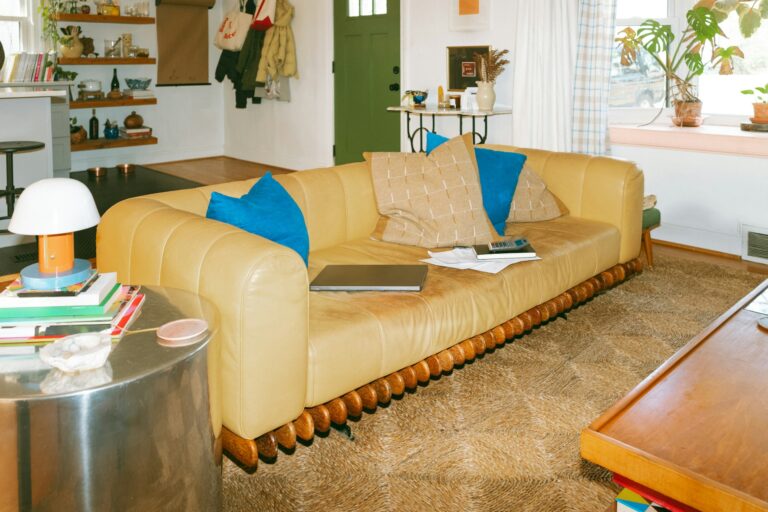
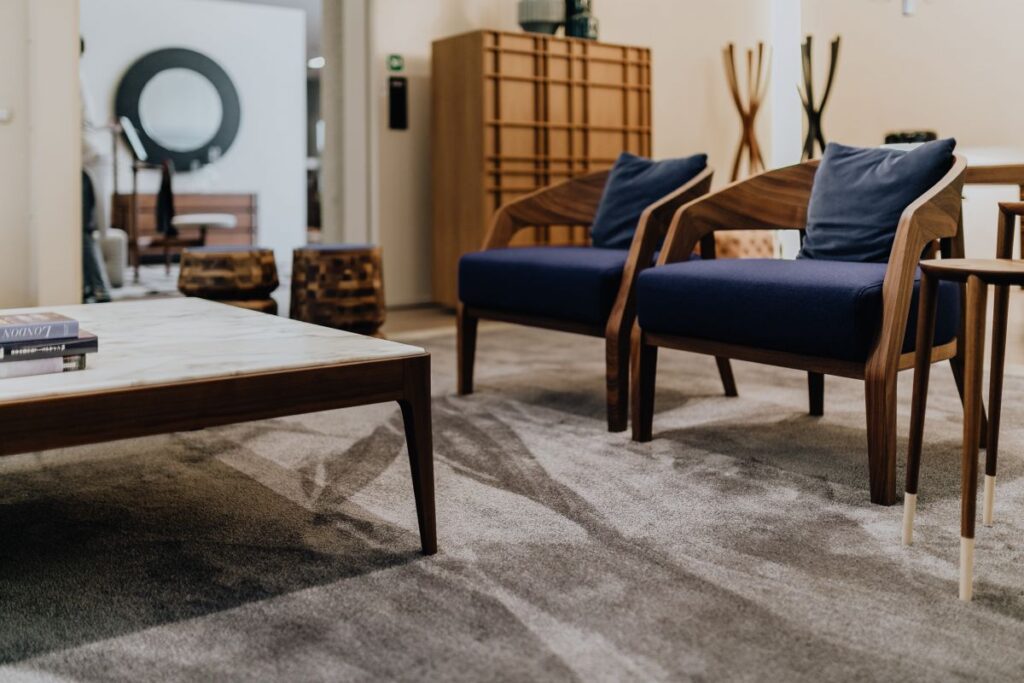
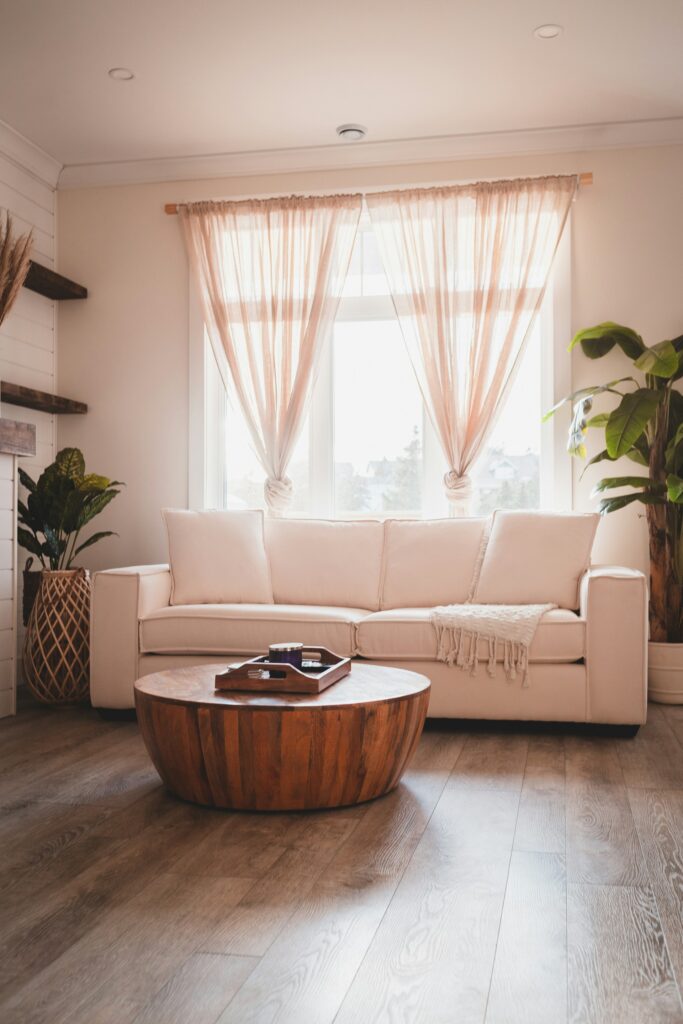
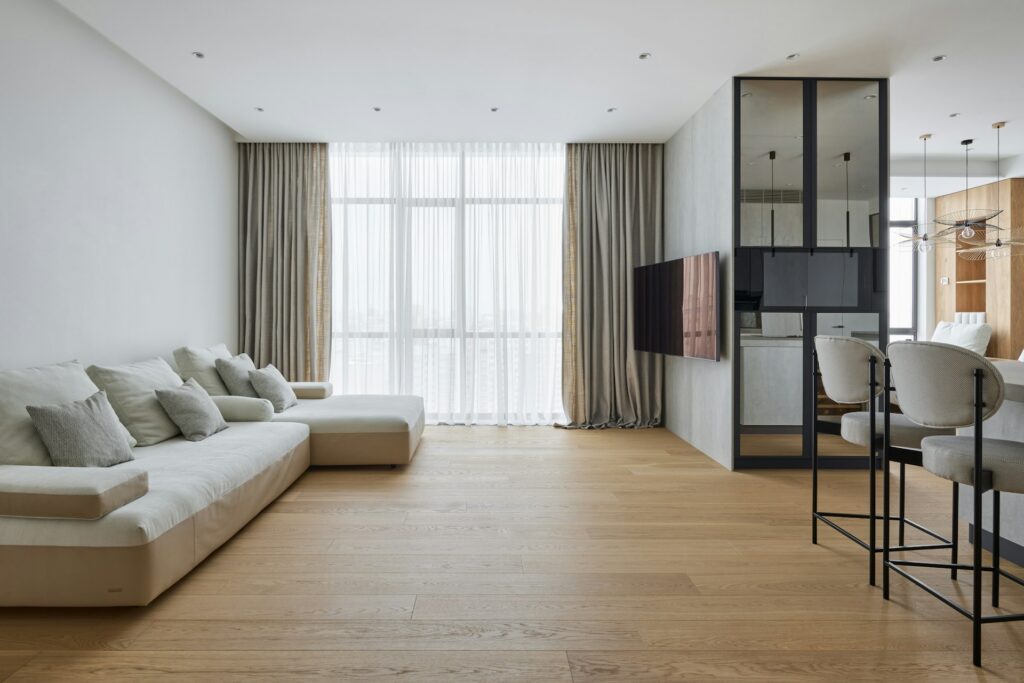
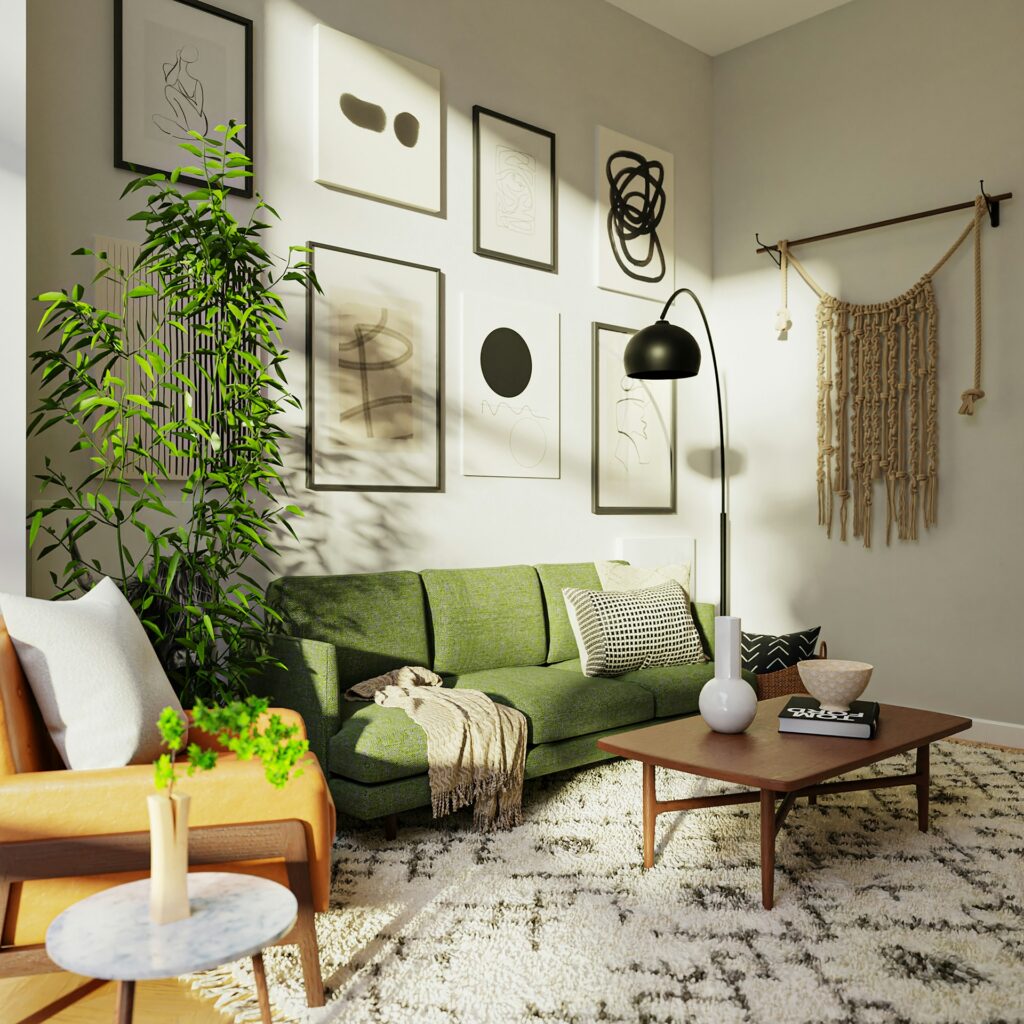
Your living room is a place where relaxation meets activity and entertaining. It’s a room for kicking off your shoes, cosying up on the couch, sitting on the floor with a cushion or sprawling out completely on it. And if you have kids, the living room is a place for playing and jumping around.
Yep, it’s where the ‘living’ truly happens, and since it’s one of your home’s hardest working floors, it needs to not only look good but be durable too. With that in mind, here are 7 practical flooring options for your living room.
More Than Just A Carpet
Tactile and comforting, carpets have been a mainstay of living room floors since forever, and possess the unique ability to add texture, warmth and visual intrigue.
If your home gets cold in the winter, with that unmistakable feeling of a rising draught from below, then carpet is probably your best choice for living room flooring. A plush carpet, heavy on the pile, can insulate your home and is guaranteed to bring a cosy feeling to your living room. Now, where’s my pipe, hat and slippers?
What’s more, a whole host of different types of carpet are quieter underfoot than hard floors – great for relaxing and softening the volume of children’s excitable pitter-patter. Living room carpet needs to be hard wearing – 80% wool and 20% man made fibre is ideal – and a good level of soft yet able to stand up to everyday foot traffic.
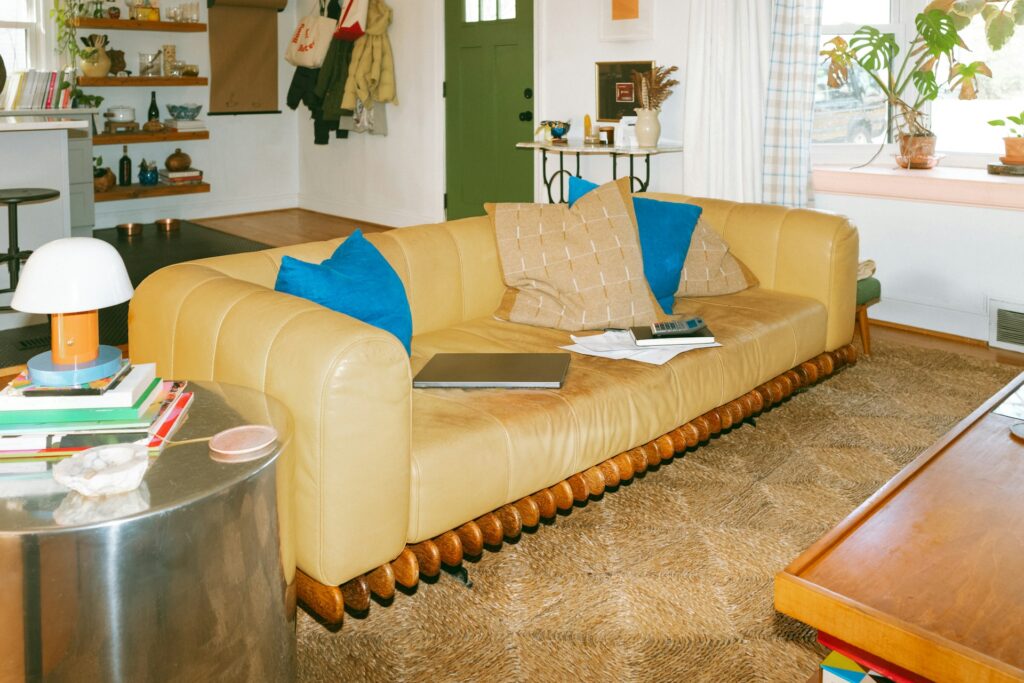
Natural carpet in materials like sisal and coir are becoming increasingly popular. Perhaps our favourite natural carpet is seagrass, which is less susceptible to watermarking than other similar materials and ideal for those accidental spills that are bound to happen in your living room.
Polypropylene carpets have also seen a rise in prevalence across living rooms in the UK recently as it’s stain-resistant, fade-defiant and is an affordable option.
Wooden Flooring
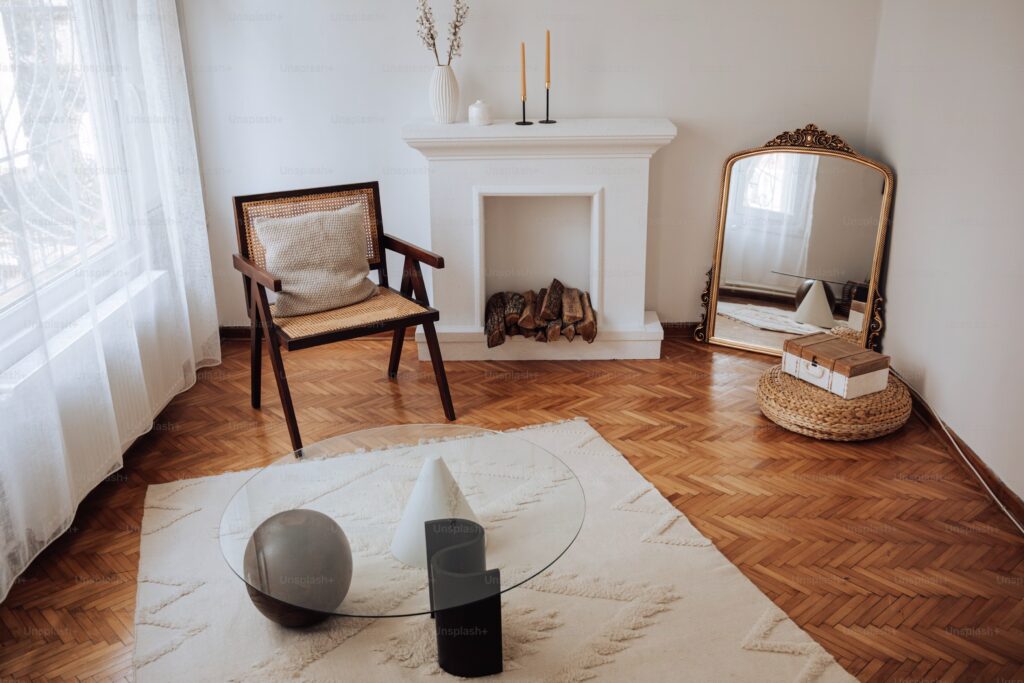
A beautiful, wooden floor can lend just the right balance of lightness and warmth to your living room, and make it feel bright and open. Moreover, they can be used as a backdrop to show off colourful furniture or a carefully chosen rug. That said, if you’re prone to causing spillages (hey, who isn’t?) then you’ll need a floor that is quick and easy to clean, or that wooden flooring of yours may start to look like a Jackson Pollock piece worryingly fast.
When considering the installation of solid wood flooring, there’s a pretty daunting spectrum of choice on the market, from old fashioned period reclaimed boards to modern vinyl, laminate, parquet, and solid and engineered hardwood flooring, to name but a few. That said, if you’re lucky enough to have original hardwood floors, then embrace them.
You also need to consider the wood species or variety, which determines the grain, colour and pattern. When it comes to choosing the right type of wood floor for your living room, sealed flooring surfaces or anti-static joints which not only prevent dust from sticking to your floor, but also allow for swift cleaning, allowing you to make the most out of your relaxation time.
There’s so much to consider when choosing wooden flooring, in fact, that we’ve written a whole other article on it here. Do check it out, and sorry we only just mentioned it!
Go Contemporary With Concrete
Concrete flooring has a reputation for being hard and cold, both physically and aesthetically, and as such, isn’t always the first choice that springs to mind when discussing living rooms. However, there are some benefits of concrete floors for the living room.
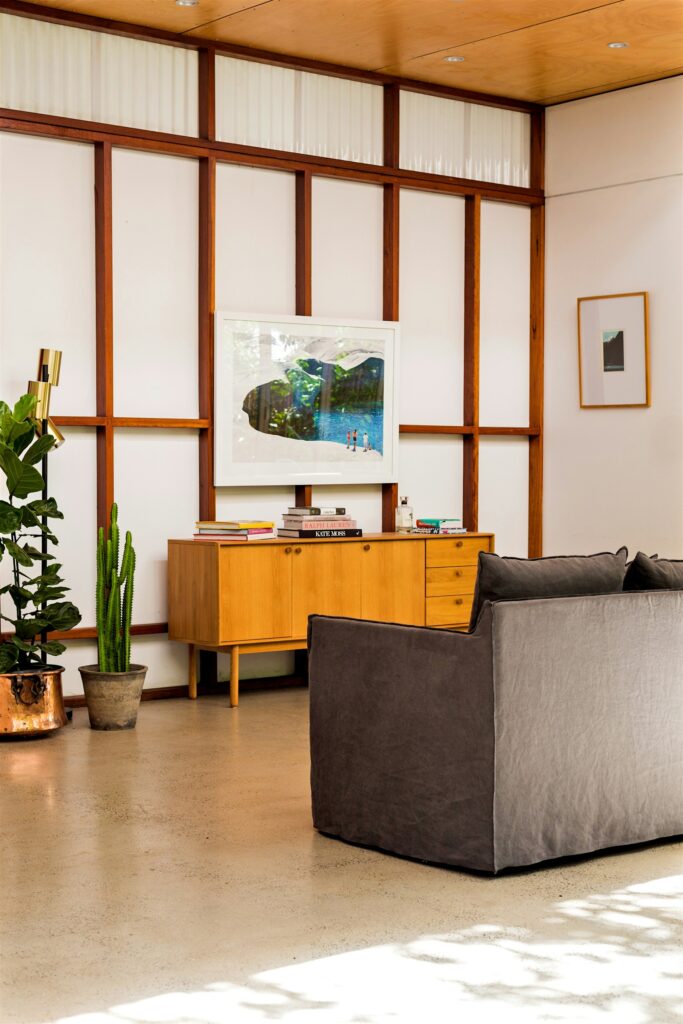
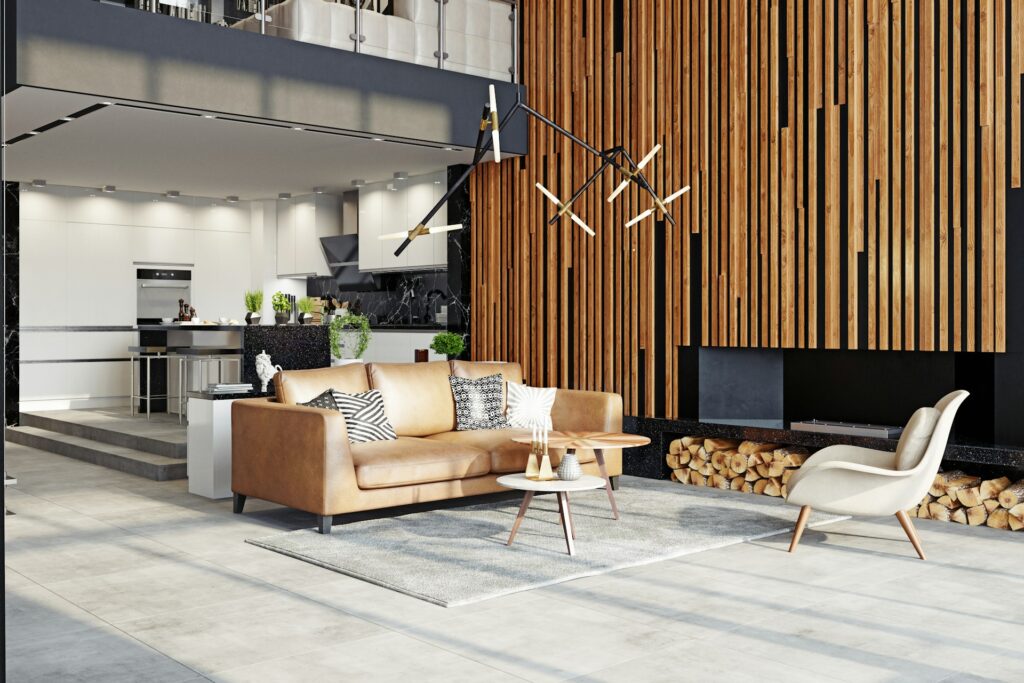
The most obvious is the unique, hip visual appeal such a floor can imbue, the industrial vibe bringing a trendy, industrial and modern edge to your home. Easy to maintain and beautifully nuanced, you also don’t have to worry about heavy sofas and other furniture damaging it as they are resilient and durable as anything.
However, one of the biggest drawbacks of concrete is that it’s going to be cold underfoot in winter (concrete is a conductor so can heat up in the summer quickly) which brings us to our next point…
Sustainable Cork Flooring
While perhaps not the first material that springs to mind for living room flooring, cork is experiencing a renaissance in British homes, particularly among environmentally conscious homeowners. This sustainable material, harvested from the bark of cork oak trees (which regenerates every nine years), offers a unique combination of benefits that make it particularly well-suited to living spaces.
Cork’s natural properties include excellent thermal insulation, making it warm underfoot even during Britain’s notoriously chilly winters. It’s also remarkably sound-absorbent, helping to create a quieter, more peaceful living environment. The material has a subtle spring to it, making it comfortable to stand on for extended periods and forgiving should little ones take a tumble.
Available in a variety of styles and colours, from traditional warm honey tones to contemporary whitewashed or darker stained options, cork flooring can complement any interior design scheme. Modern cork flooring comes in both tile and plank formats, with some designs incorporating intricate patterns or textures that add visual interest to your living space.
Luxury Vinyl Tiles (LVT)
Gone are the days when vinyl flooring meant cheap-looking sheets that peeled at the corners. Today’s luxury vinyl tiles have revolutionised the flooring industry, offering a premium alternative that’s both practical and aesthetically pleasing. Modern LVT can convincingly mimic natural materials like wood, stone, or ceramic tiles, but with added benefits that make it particularly suitable for living rooms.
The key advantage of LVT is its exceptional durability combined with comfort underfoot. Unlike ceramic tiles, which can be cold and unforgiving, LVT maintains a more comfortable temperature and provides a slightly cushioned feel when walking. It’s also significantly more water-resistant than laminate or hardwood, making it an excellent choice for homes with young children or pets where spills are frequent occurrences.
Installation has become far more accessible too, with most flooring supplies companies now offering click-lock LVT systems designed for straightforward DIY fitting, meaning you can refresh a living room floor over a weekend without calling in a professional.
What’s particularly brilliant about LVT is its acoustic properties. Unlike hard flooring options that can create echoes and amplify footsteps, quality vinyl tiles absorb sound effectively, creating a more peaceful living environment. Many modern LVT options also come with built-in underlay, adding extra comfort and insulation.
Underfloor Heating
Picture this – you’ve just cosied up under a blanket, but you’ve left your cup of tea in the kitchen or the remote is on the other side of the room. Sure, you could sashay over there barefoot and gather the goods you need for a snug and intimate evening. But those wooden floorboards or that concrete floor are absolutely freezing. Enter underfloor heating, which grants a radiant yet gentle heat.
The choice here is either electric or wet system, the former being easier to fit as it’s simply a network of wire elements on a mesh placed below the flooring, while the latter uses water pipes below the floor. Retrofitting an electric system is relatively straightforward, all the more so if you’re laying new flooring. Wet systems are a little more complex, and are more appropriate if your home is undergoing a more all-encompassing renovation.
Fortunately, both are appropriate for concrete or wooden floors, though wooden flooring isn’t the best heat conductor, so you might not get quite the bang for your buck you’d hope for.
Zone With Rugs
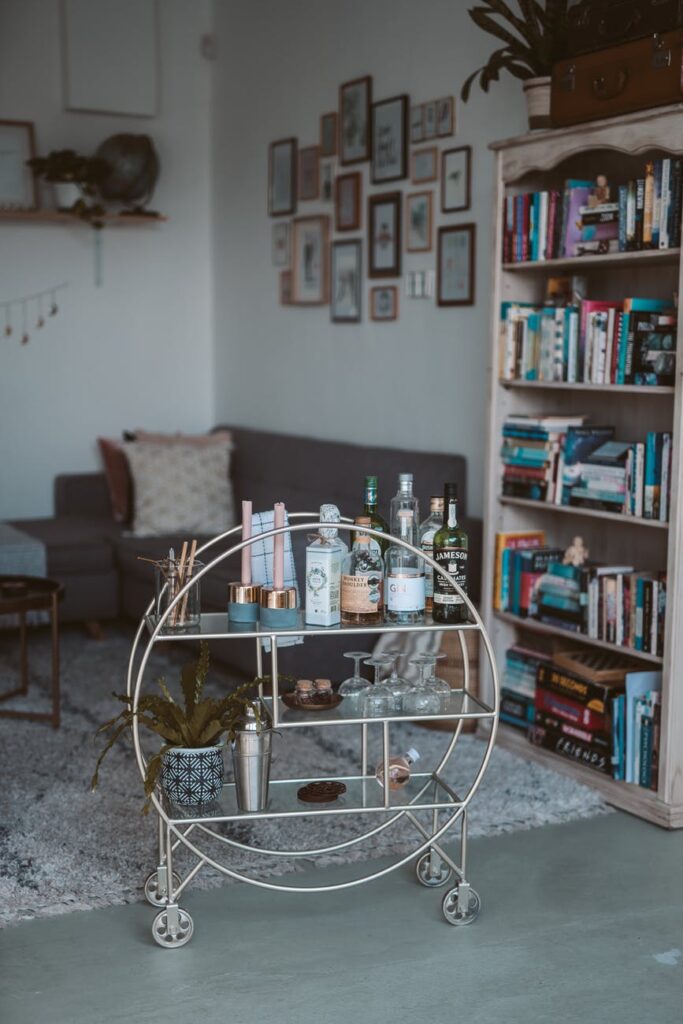
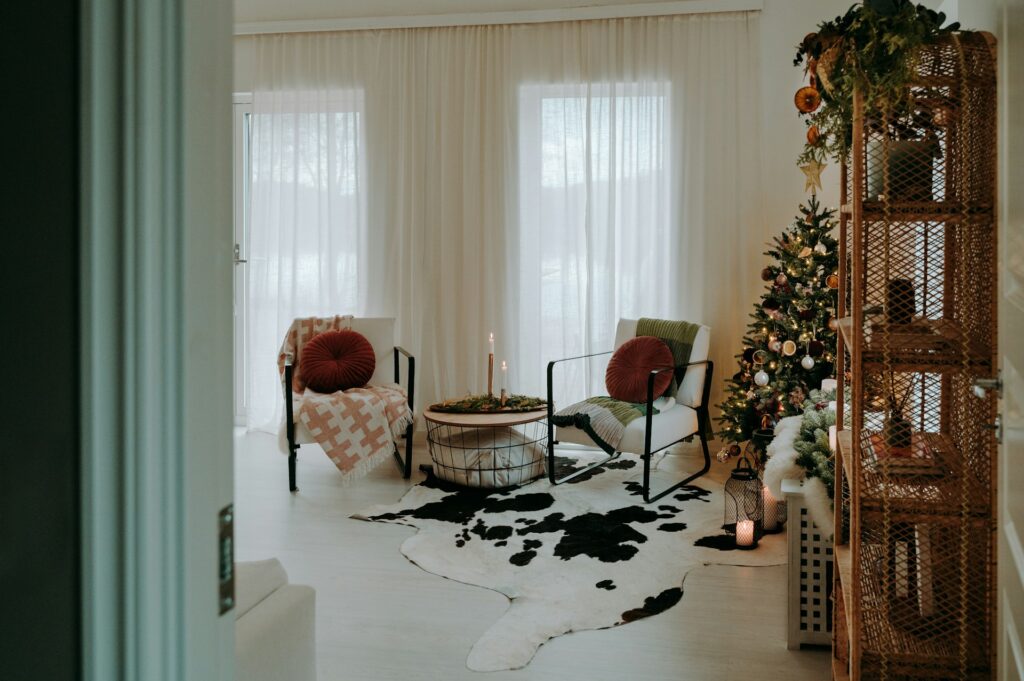
Whether you have wooden floorboards or a carpet, rugs and living rooms go together like that tea and cake so often given to guests in the living room setting. Not only do they add some personality into the room, but they also add warmth and texture.
Placing a rug in the middle of the room can offer an obvious balance and symmetry to proceedings, however, zoning your living room into separate spaces with rugs can really impact its sense of space and are especially ideal for open-plan living rooms which require a little sense of order here and there.
Consider framing different furniture areas with rugs of different shapes and sizes, creating a multifunctional space and highlighting areas you wish to become a focal point. While patterned rugs can be the most forgiving, hiding those split teas and enthusiastically eaten TV dinners, the trick is to choose similar style rugs to create a more unified and cohesive space.
Create A Feature Centrepiece
For those looking to make a bold statement with their living room floor, creating a permanent decorative centrepiece can transform an ordinary room into something extraordinary. This approach essentially creates a permanent ‘rug’ effect using hard materials, offering a unique way to anchor your living space and create visual interest from the ground up.
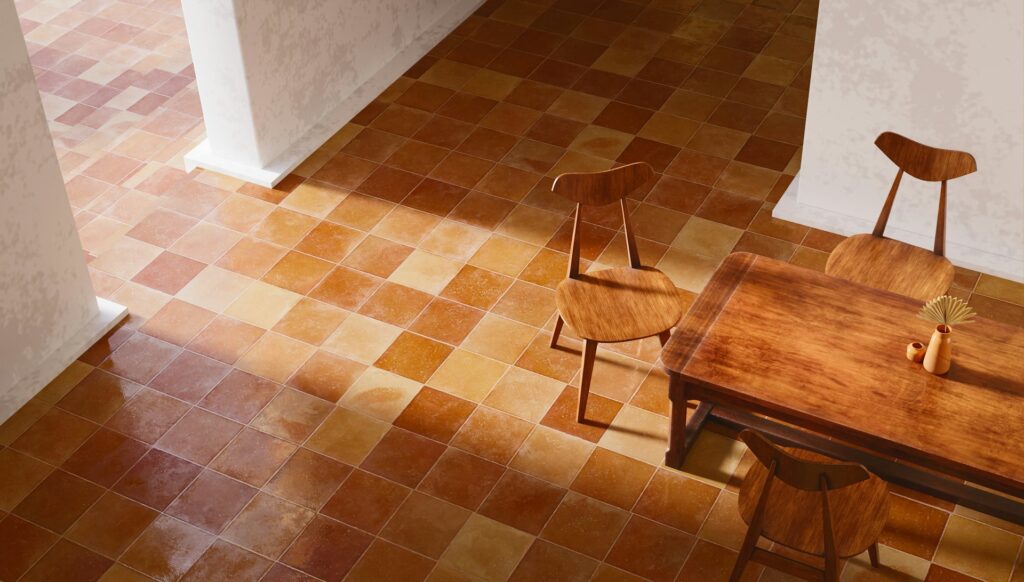
Consider using encaustic tiles to create a medallion design in the centre of your room, surrounded by more understated flooring like neutral timber or carpet. These handmade cement tiles, with their rich colours and intricate patterns, can be arranged in circular or square formations to create stunning focal points. Alternatively, geometric tiles in contrasting colours can create a more contemporary look, while natural stone patterns using marble or limestone can add a touch of luxury.
For wooden floor enthusiasts, parquet patterns offer excellent possibilities for creating distinctive centrepieces. A sunburst pattern or a square of intricate parquetry surrounded by plain boards can provide sophisticated central features that honour traditional craftsmanship while fitting seamlessly into modern settings. Whatever material you choose, remember to use appropriate transition strips between your centrepiece and the surrounding flooring for a clean, professional finish.
The taxi driver slowed, squinted, and doubled back. Google Maps had deserted him, deserted us both. He pulled two U-turns and we were back at the start, both dizzy somewhere above Layan Beach on Phuket’s north-west coast, climbing a road that kept promising a turnoff it never quite delivered. When the entrance to The Pavilions Phuket finally revealed itself, low and unmarked between two walls of green, the driver chuckled wryly, shrugged and turned in, the reassuring click-clack of an indicator confirming progress at last.
What followed was the kind of hotel arrival that recalibrates the nervous system before a single member of staff has even said hello. A thick canopy parts in front of you and then seals shut once you’ve driven through, troubles left behind, snagged in the hedges and unable to follow you in. A seated Buddha watches over the entrance, gracing those passing through.
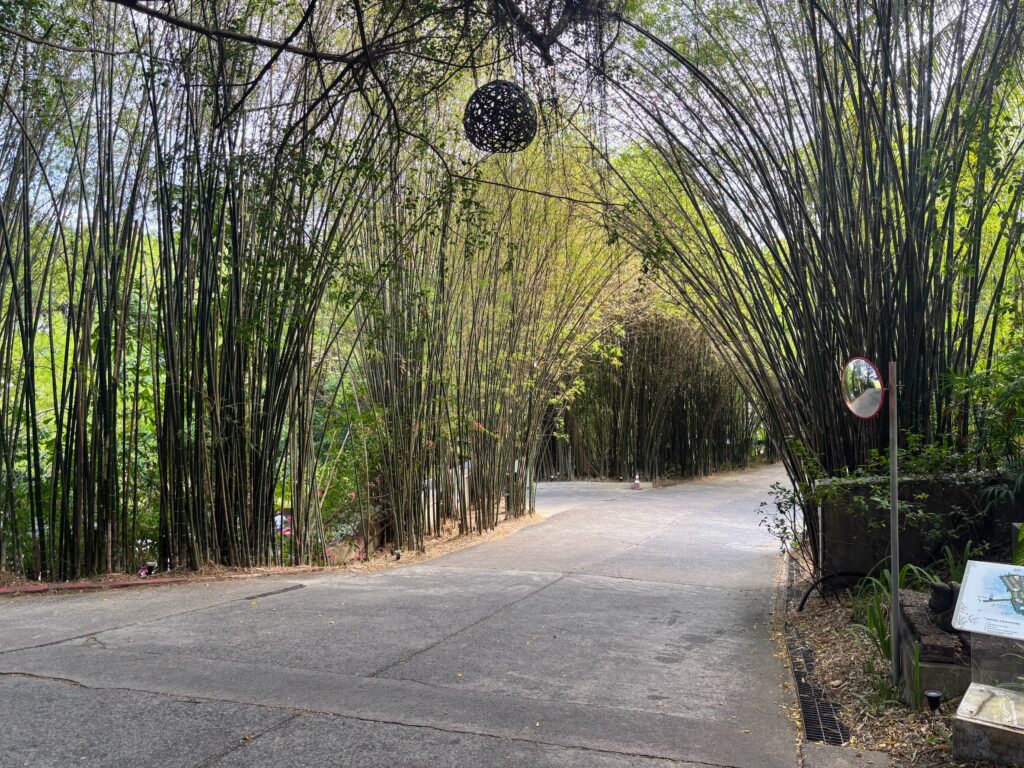
Past him, a bamboo-lined lane climbs from the gate towards the lobby, the stalks arching overhead into a tunnel so complete that the Andaman sun drops into a green half-light. Somewhere up ahead, a pair of hawks circle the thermals rising off the hillside. I imagined them watching guard over the hotel, as if part of the choreography. The airport, thirty minutes and a world away, ceased to exist.
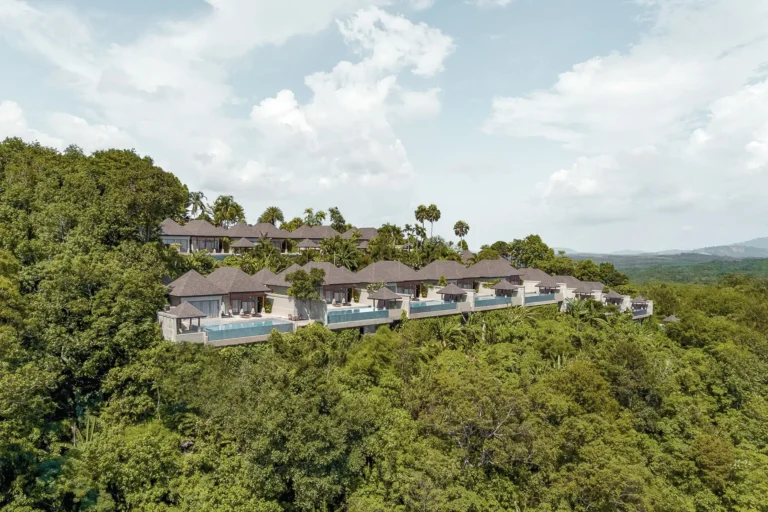
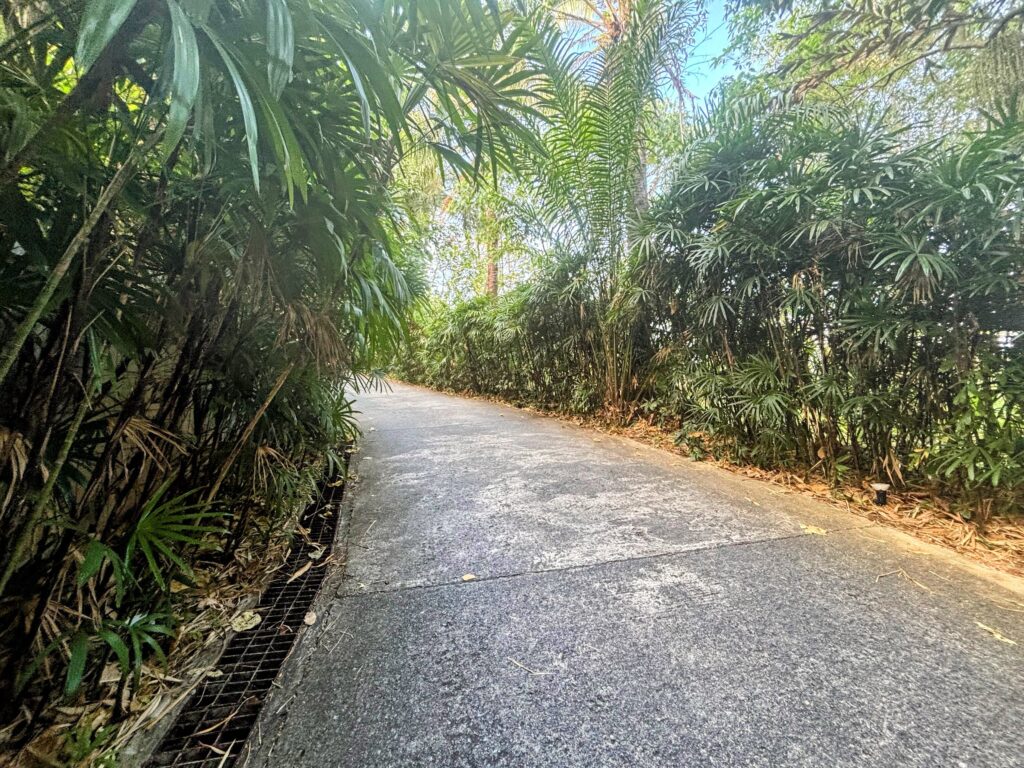
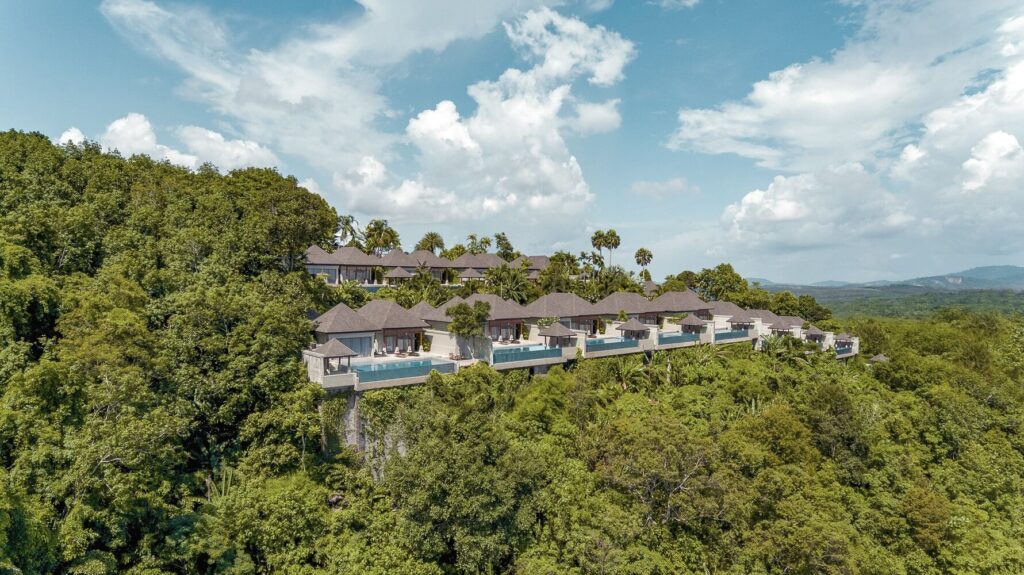
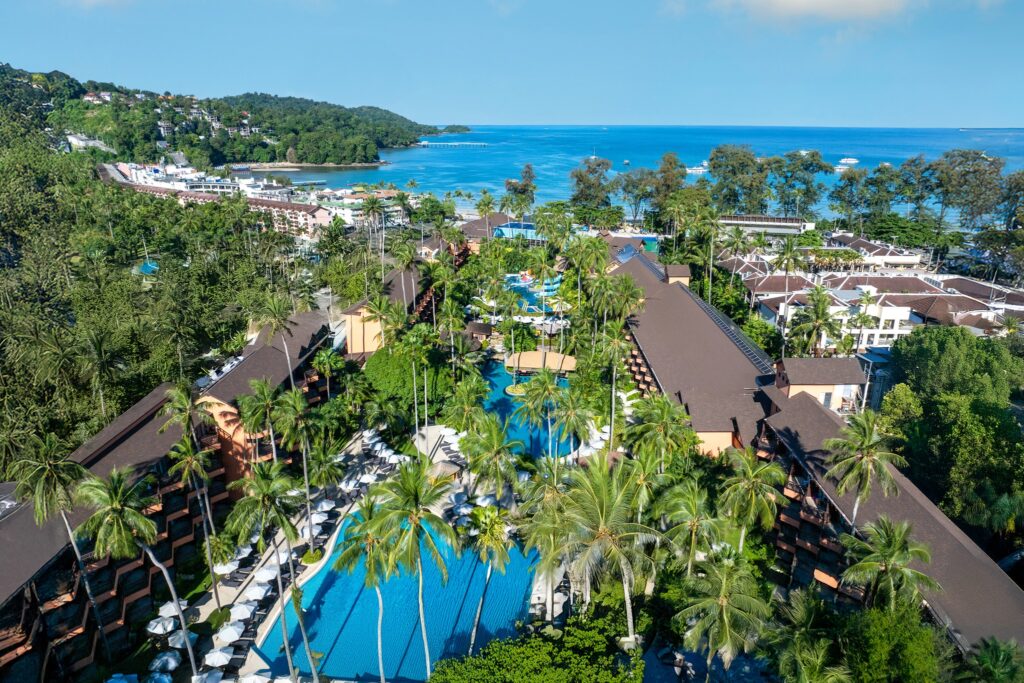
None of this happened by accident. The Pavilions Phuket, now in its third decade, is one of the island’s quieter, more deliberate propositions. It does not sit on the sand. It does not court day-trippers or the beach-club set. Its villas are scattered across a hillside vast enough that golf buggies are not a gimmick, just the only sensible way to get around. In a corner of Phuket where resorts have multiplied to the point of indistinguishability, it has spent the last twenty years doubling down on privacy, seclusion and the kind of slow, thickly upholstered hospitality you’d forgotten to miss until now.
The Location
Up on the hill, people never stare They just don’t care Chinese music under banyan trees Here at the dude ranch above the sea
Up on the hill, they’ve got time to burn There’s no return Double helix in the sky tonight Throw out the hardware, let’s do it right
Becker and Fagen weren’t writing about The Pavilions Phuket, but they could have been. It’s a song that comes to mind once you’ve spent time ensconced in your villa’s seclusion. Or it does if you consider yourself a Danimal, at least.
The Pavilions Phuket sits at the top end of Phuket’s sleepier north-west coast, an area that has increasingly become the island’s luxury stronghold. Trisara, Anantara Layan and the massive Laguna Phuket resort complex are all within a few kilometres. Patong, bearing the cumulative effect of several decades of mass tourism, is around 45 minutes south, its fallout not troubling this peaceful corner.
Layan itself is the kind of beach Phuket used to be better known for. It falls within the boundaries of Sirinat National Park, which gives it a degree of protection most of the island’s shores no longer enjoy. That said, a stay at The Pavilions Phuket isn’t really about the beach.
Practically, Phuket International Airport is around 25 minutes north. Cherngtalay, the nearest village proper, is a five-minute drive and worth a wander for its local restaurants and morning market. Porto de Phuket and Boat Avenue, the two main shopping and dining clusters in the area, are both inside ten minutes by car or buggy.
Character & Style
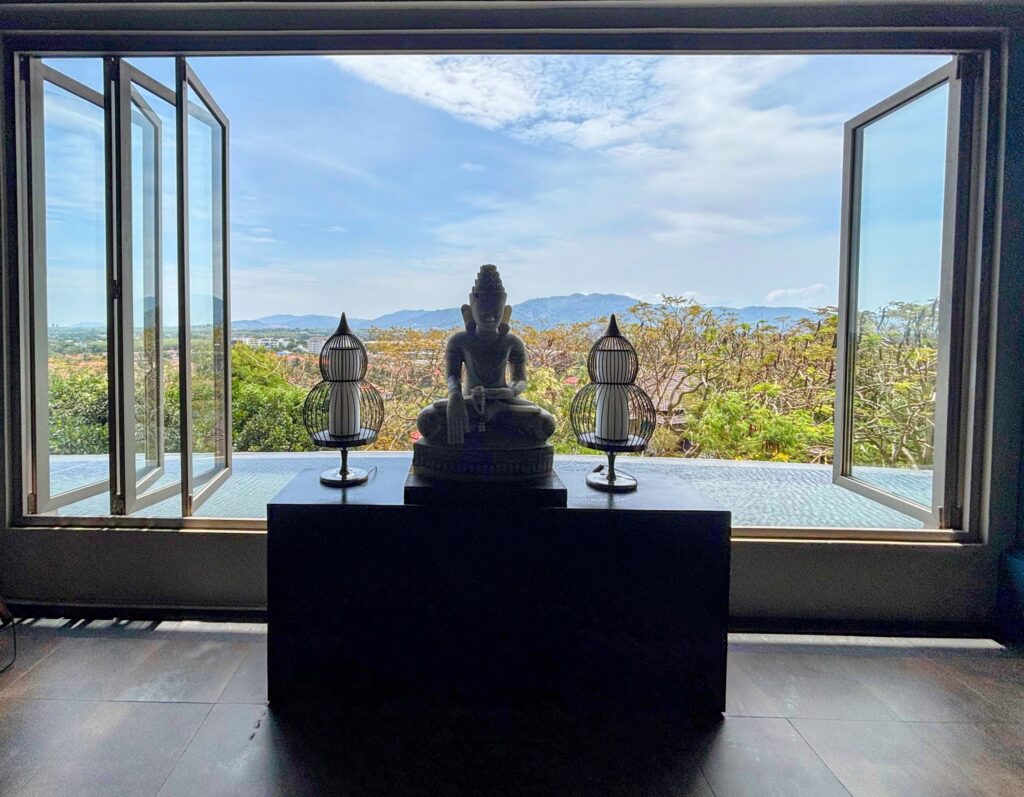
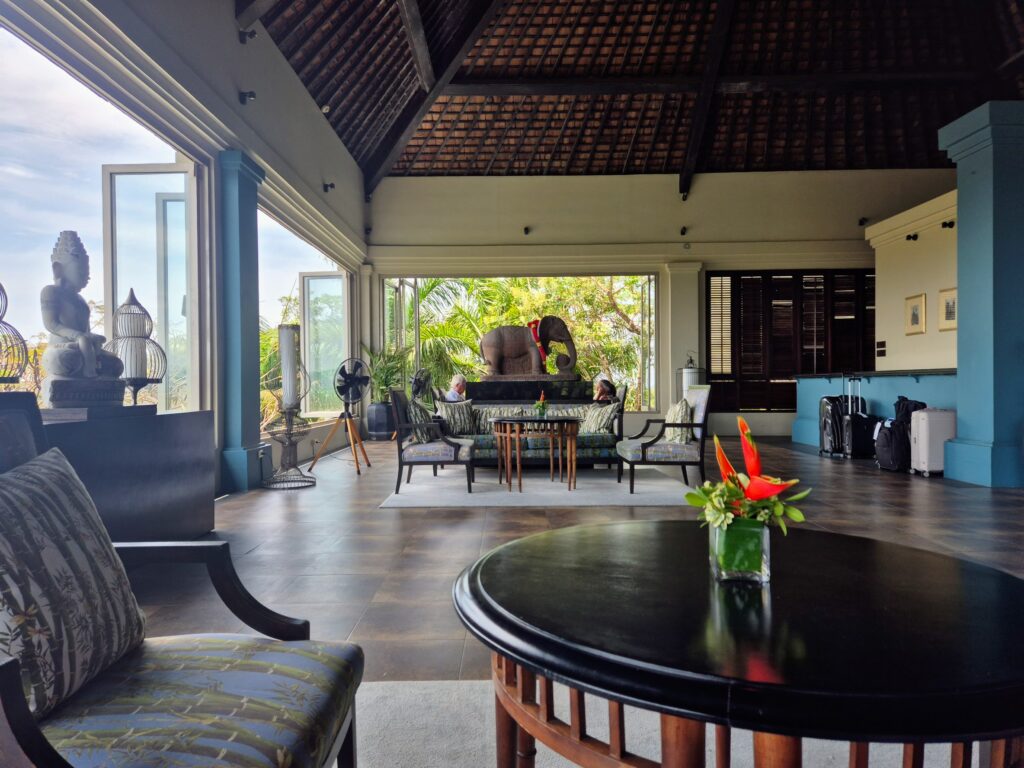
Scene safely set, and we’re pulling in. The lobby is gorgeous, a stone Buddha presiding from the centre, and those hawks still overhead. For a moment we wonder if they’re drones, flown by a skilled member of staff just off camera. That suspicion is allayed when one swoops down and kills a squirrel somewhere on the absolutely vast vista. Tropical upholstered chairs make you resent your living room for all its sad beige, and there are tastefully judged elephants. I’m sure one’s trunk moved. I start wondering if there was something in the brownie I had at breakfast.
Guests here are handed a gong mallet on arrival and asked to strike it three times, the resort’s take on Thai temple tradition, to mark the start of the stay. A nice touch, and a useful one: it gives you a moment to pause before the check-in paperwork starts, to truly take in that view, which is breathtaking. Genuinely so; though that shortness of breath might be the altitude. The gong strikes seem to reverberate across the whole skyline through huge open windows. It’s quite the entrance.
You’re encouraged to download the Pavilions app at this stage, and despite it bringing you back down to earth somewhat, it’s well worth doing. More on why shortly.
From the lobby, the resort sprawls across an expansive hillside complete with widescreen ocean views at the back, so golf buggies whizz between villas, restaurants and the spa, driven by staff who know the place inside out. One driver had been here more than a decade. He said he knew every bump and turn of the grounds with his eyes closed, and after several journeys in his care, the claim checked out. Yep, he drove with his eyes closed. There’s also a doorless car knocking about on shuttle duty, which lends a bit of rustic charm to a place that could otherwise tip into corporate polish. Sure, the temptation is strong to roll out the side and do a big military roll all the way down to Cherngtalay, but that would be silly.
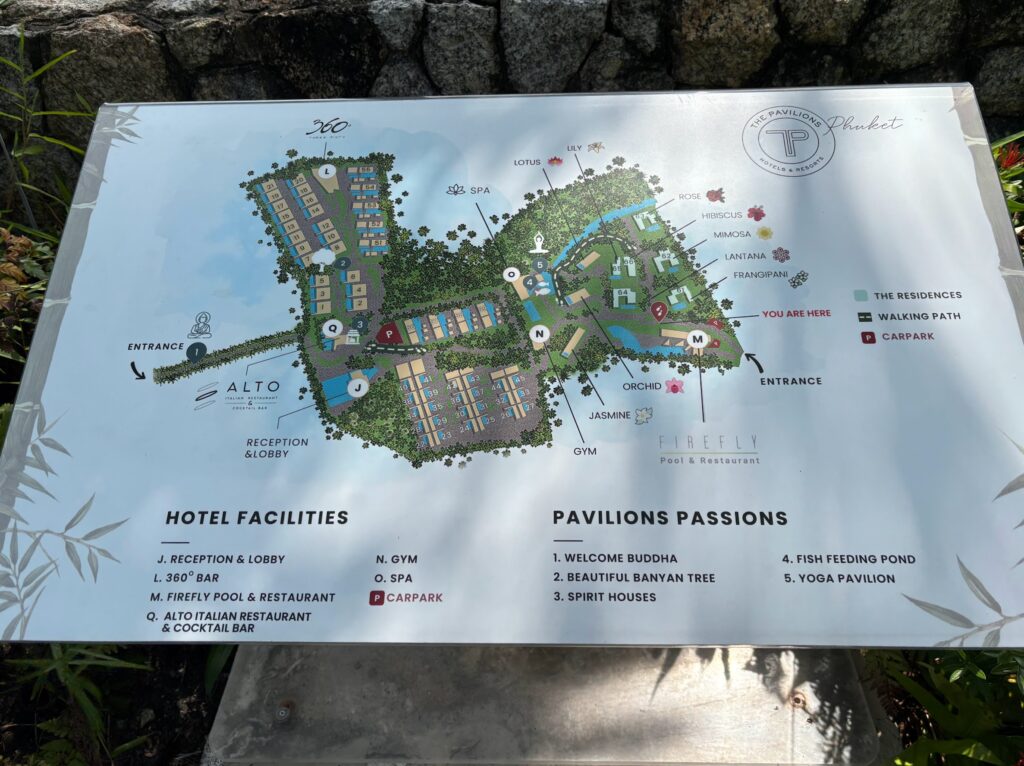
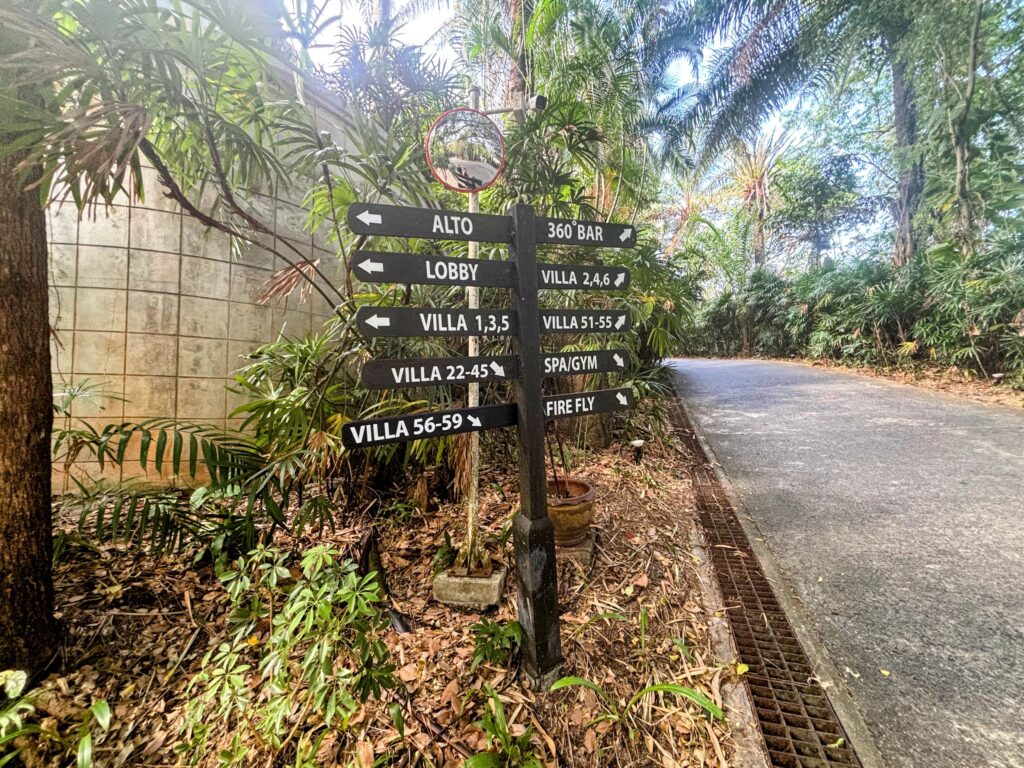
One side effect of being whisked about: the resort feels larger than it actually is. You lose your bearings. On our third day we realised we were just a five-minute walk from the Alto bar after all, not the other side of a mountain, and had been calling for a chariot for every trip. Worth orienting yourself on day one, if only to feel less sheepish about it on day three.
Architecturally it’s all low-slung buildings with palm and bamboo pressing in from every angle. More private estate than hotel, which is very much the point. There’s a backstory worth knowing here. The Pavilions was founded by Gordon Oldham, a British lawyer based in Hong Kong who, before hotels, ran his own publishing house, launched MTV Asia and set up the adventure travel company Action Asia Events. The first Pavilions opened in Bali in 2000, more or less as a hobby; Phuket followed a couple of years later, originally with just 25 ocean-view villas on the Layan hillside the resort still sits on. There are now nine properties in the group, across Asia and Europe.
The vintage shows. The Phuket property sits in direct conversation with the design language that defined Asian boutique luxury in the early 2000s. Generous villas, a handsome helping of outdoor living, and total privacy ahead of pageantry. Two decades on, the place still feels like its founding intent, and that’s its strongest asset: not the biggest hotel on the island, not the flashiest, just the most committedly private.
The Rooms
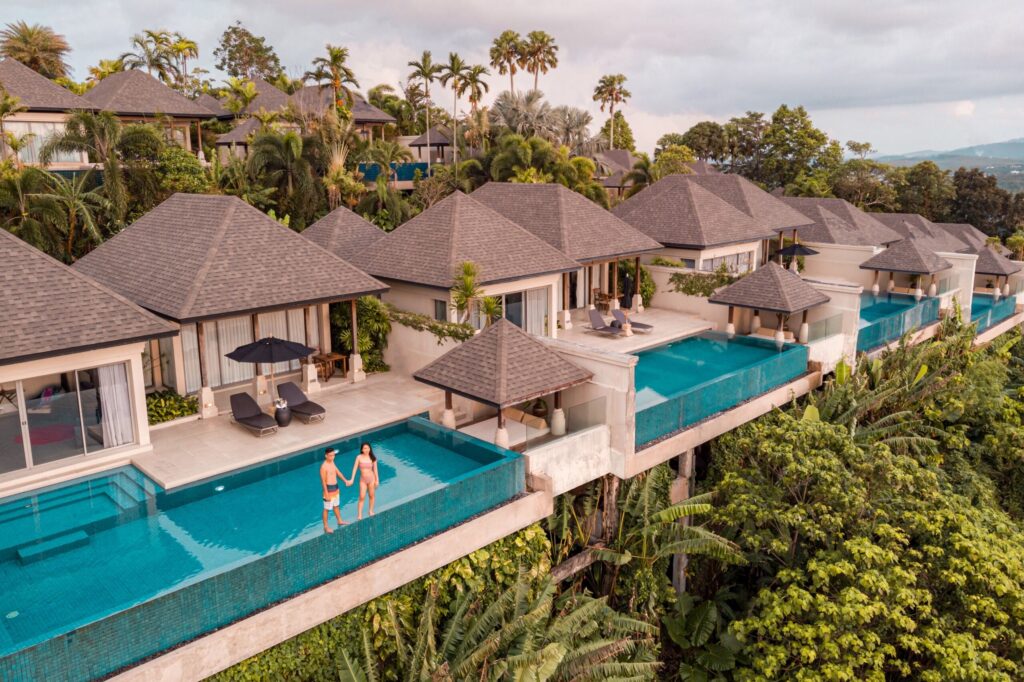
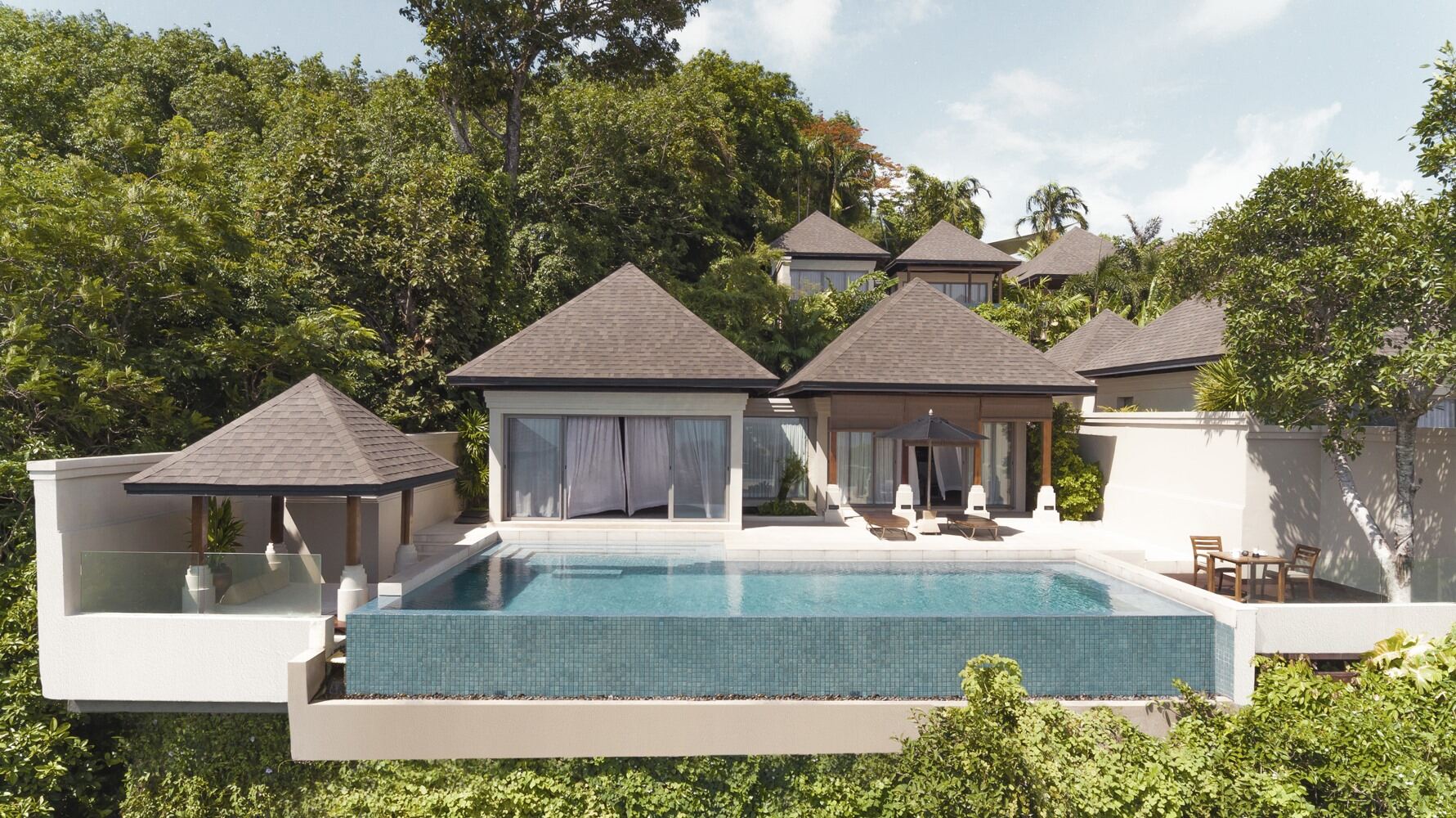
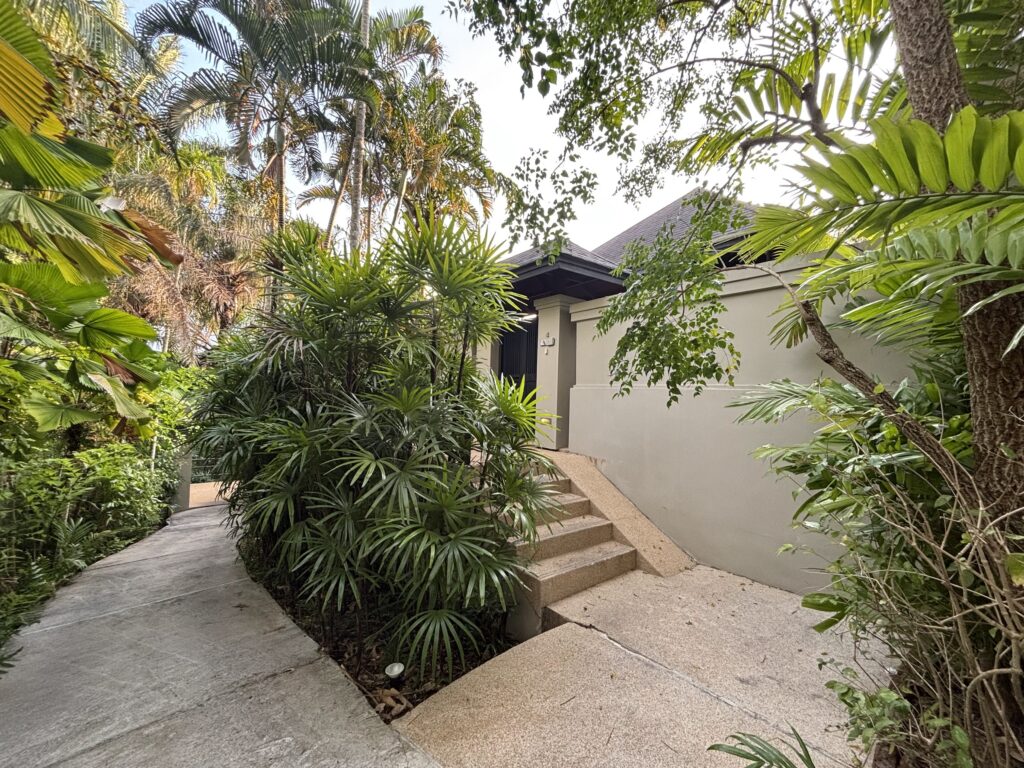
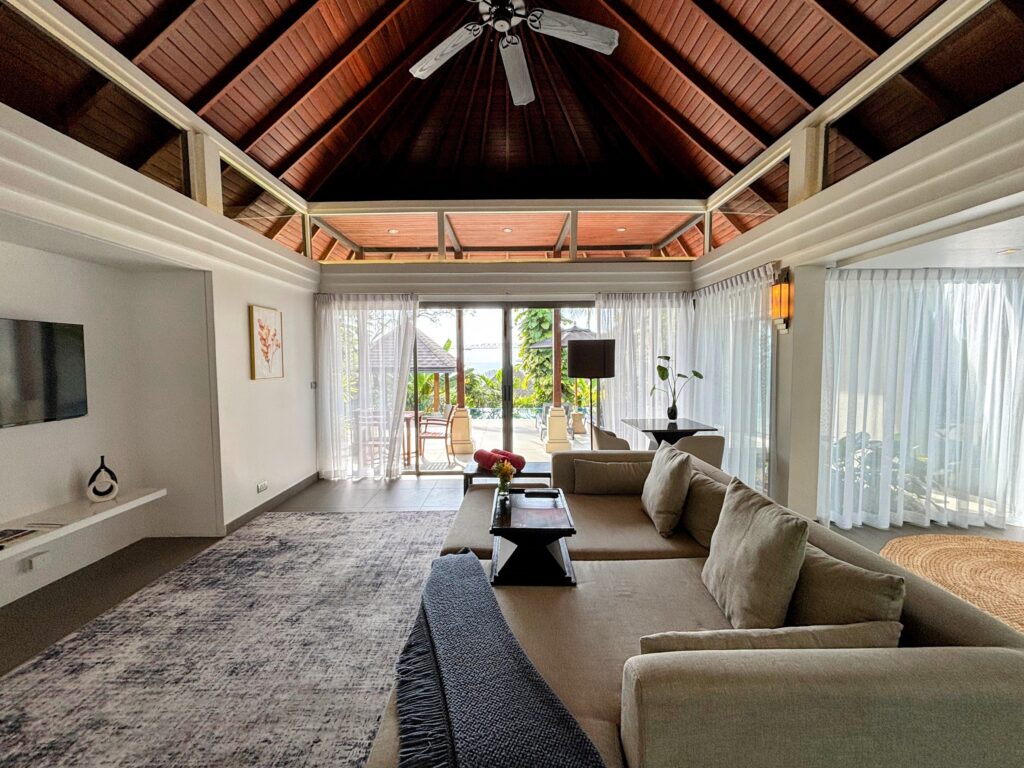
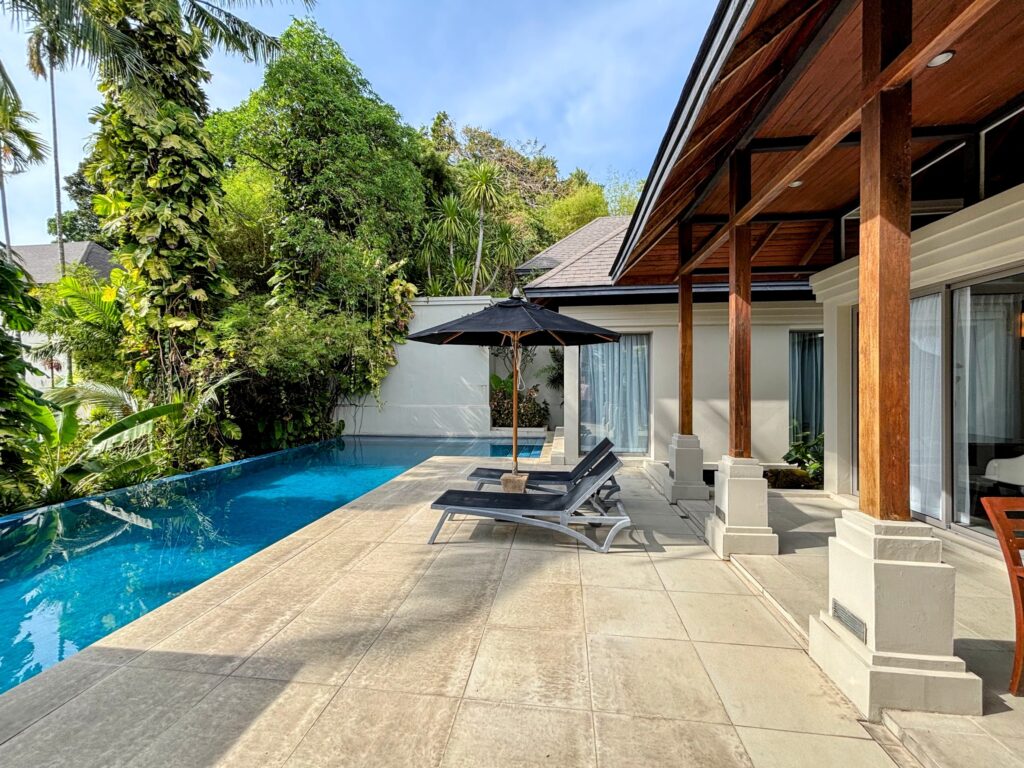
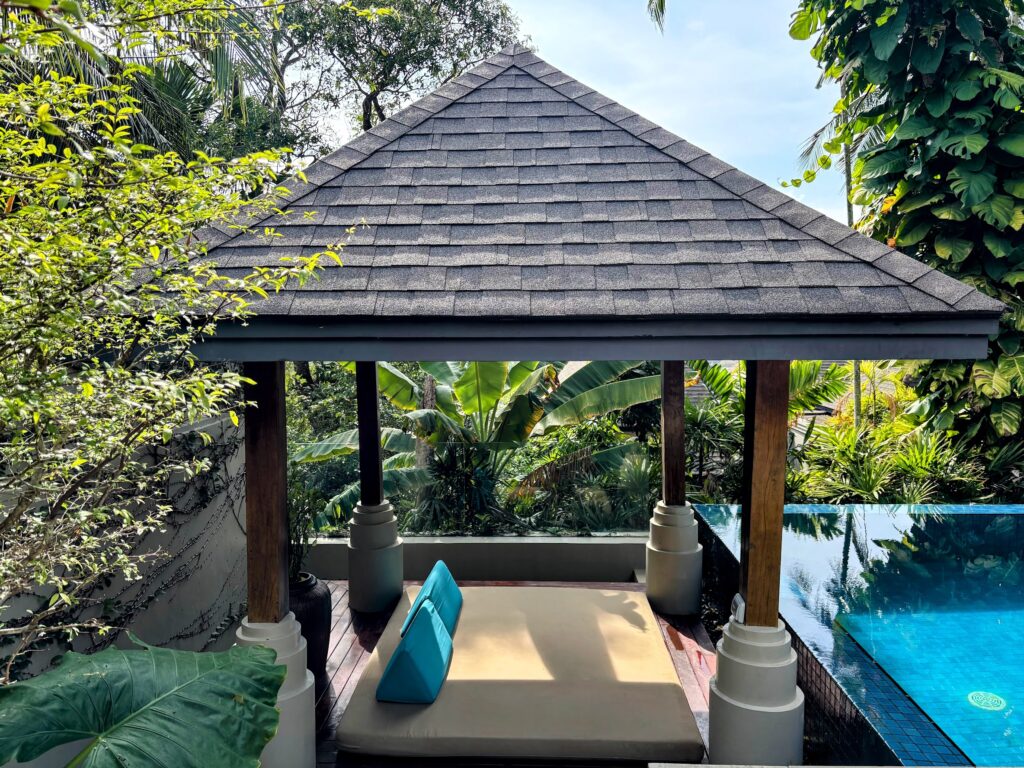
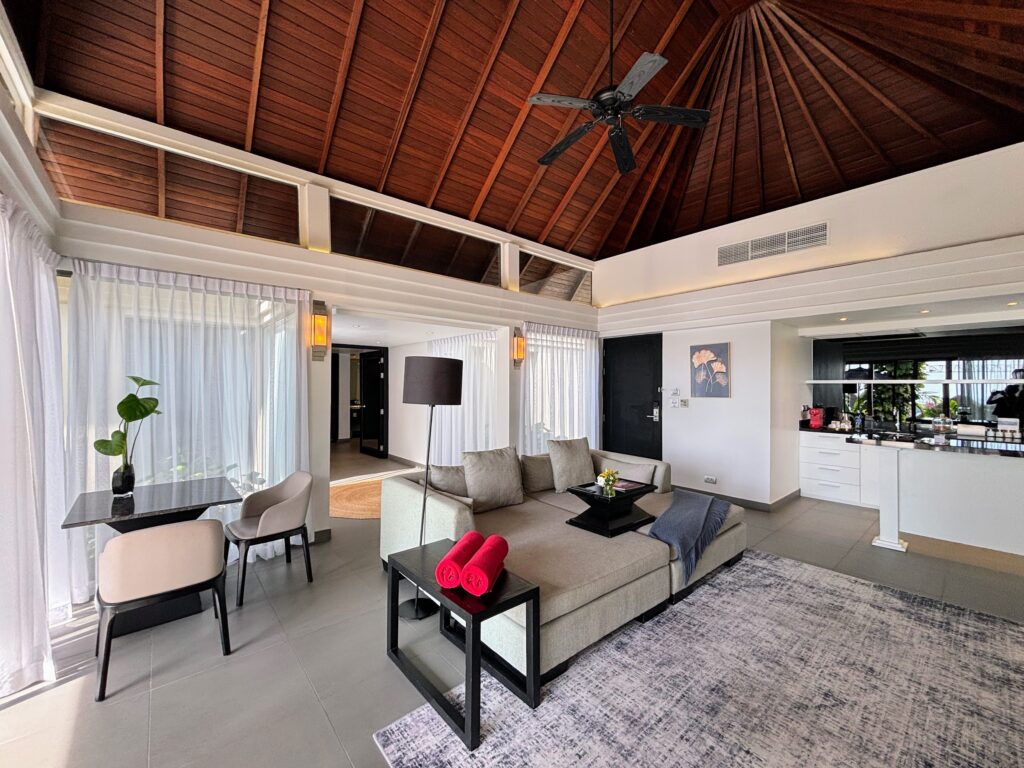
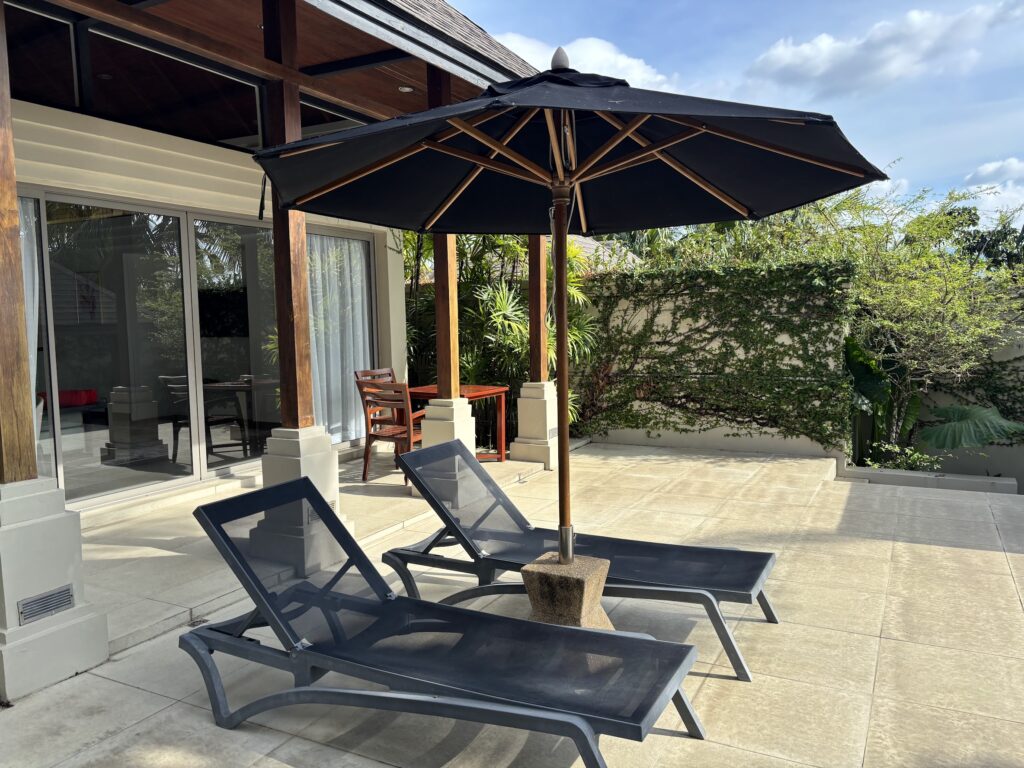
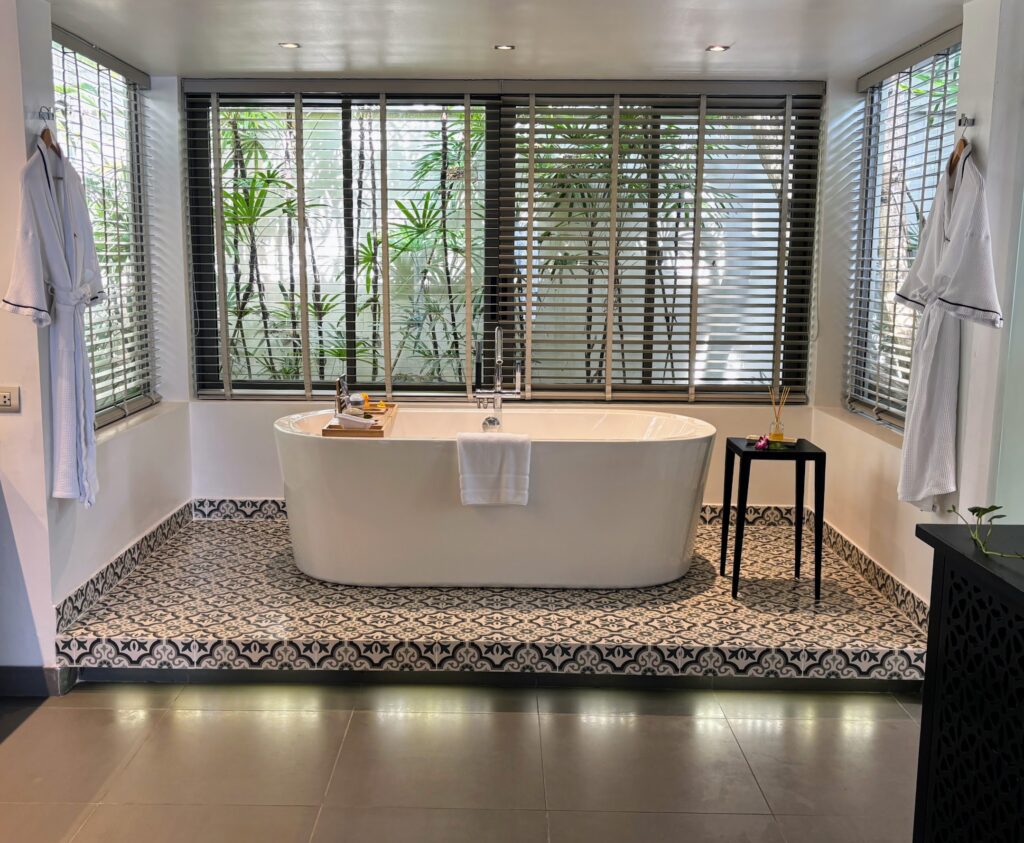
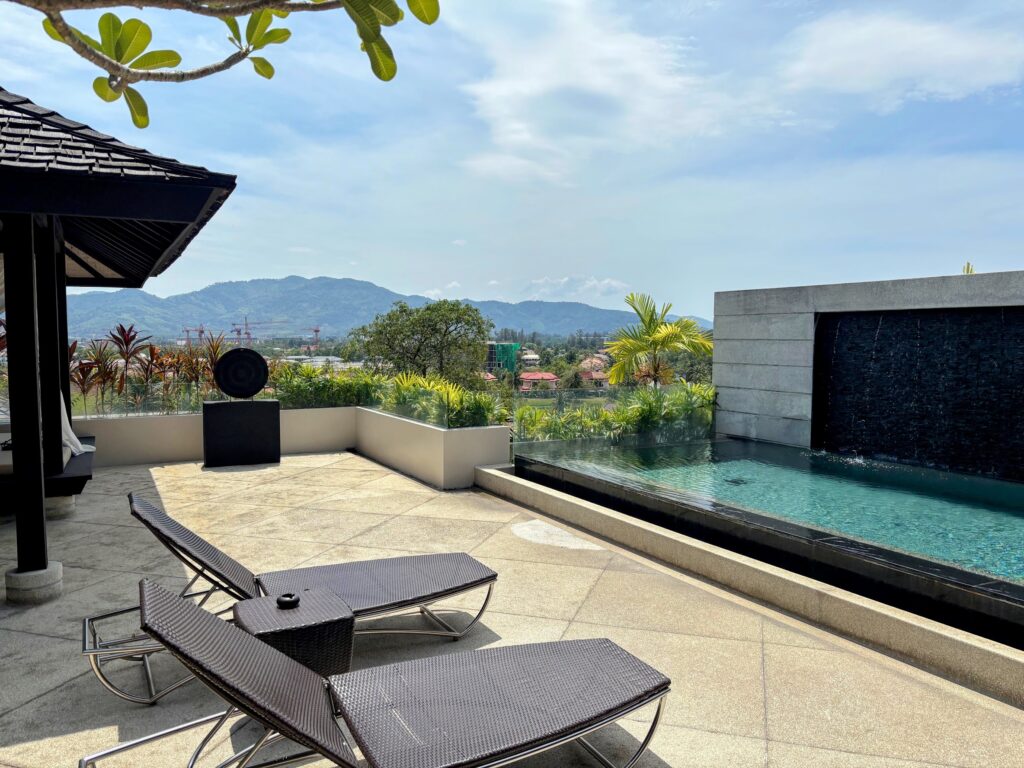
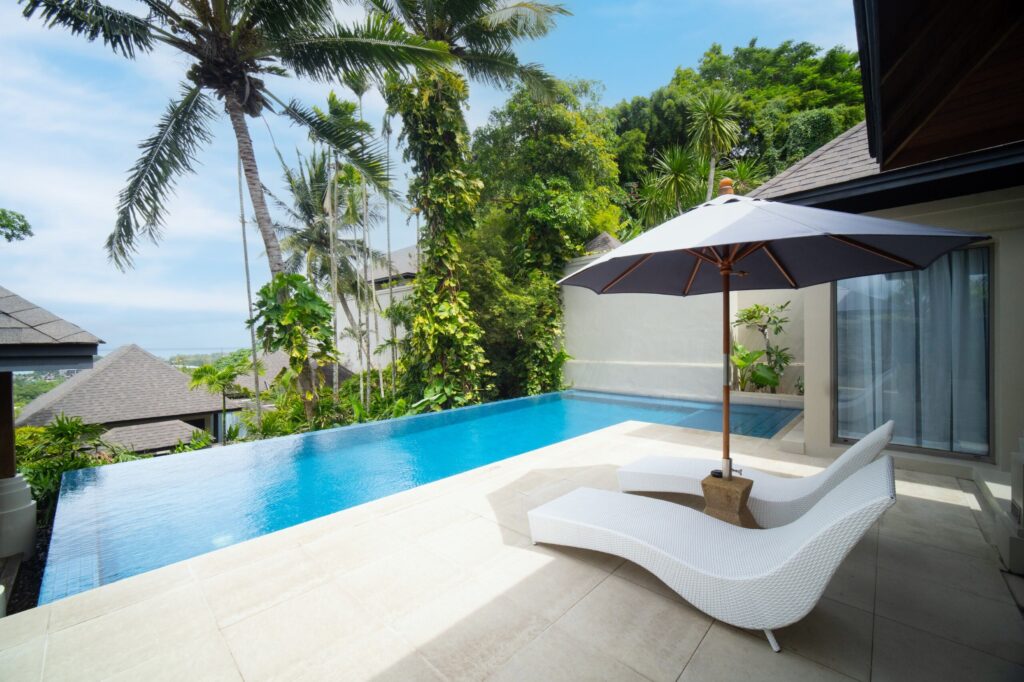
We stayed in a Tropical Pool Villa, and the word that keeps coming back is ‘space’. Indecent amounts of it. This isn’t a hotel room; it’s a house. In fact, it’s a house bigger than mine back in Bath. The bathroom alone could probably swallow my kitchen whole and have enough room for dessert. There’s a lounge, a kitchen, a separate bedroom, a bathroom with a soaking tub on its own proud plinth, a standalone shower room, a WC, and a whopping outdoor area with a private plunge pool and sala.
Some setups even have their own dedicated spa. Therapists enter via their own doorway, which is a thoughtful bit of design: you can have a two-hour massage without anyone in the wider villa being disturbed. Mind you, when you’re complaining about a massage disturbing you, you’ve probably had enough luxury for the rest of your life.
The villas are built on a working assumption: that given enough space, enough privacy and a plunge pool a few paces from the bed, a guest will eventually stop performing the small, constant courtesies of being seen and just be. Which, surely, is what you came for.
What the villa really offers isn’t luxury, exactly. It’s permission. Permission to stop checking the time. Permission to eat breakfast in the pool, lunch on the sala, and dinner wherever feels closest. Permission to let the day shape itself around small, private pleasures rather than any plan you’d arrived with. Three days in and the outside world starts to feel like something you can take or leave. Mostly leave. Your energy is instead spent imagining what it would be like to live here, investigating property prices on the complex (a handful of the villas are sold as residences), and then retreating into fantasy when you see the number of zeros.
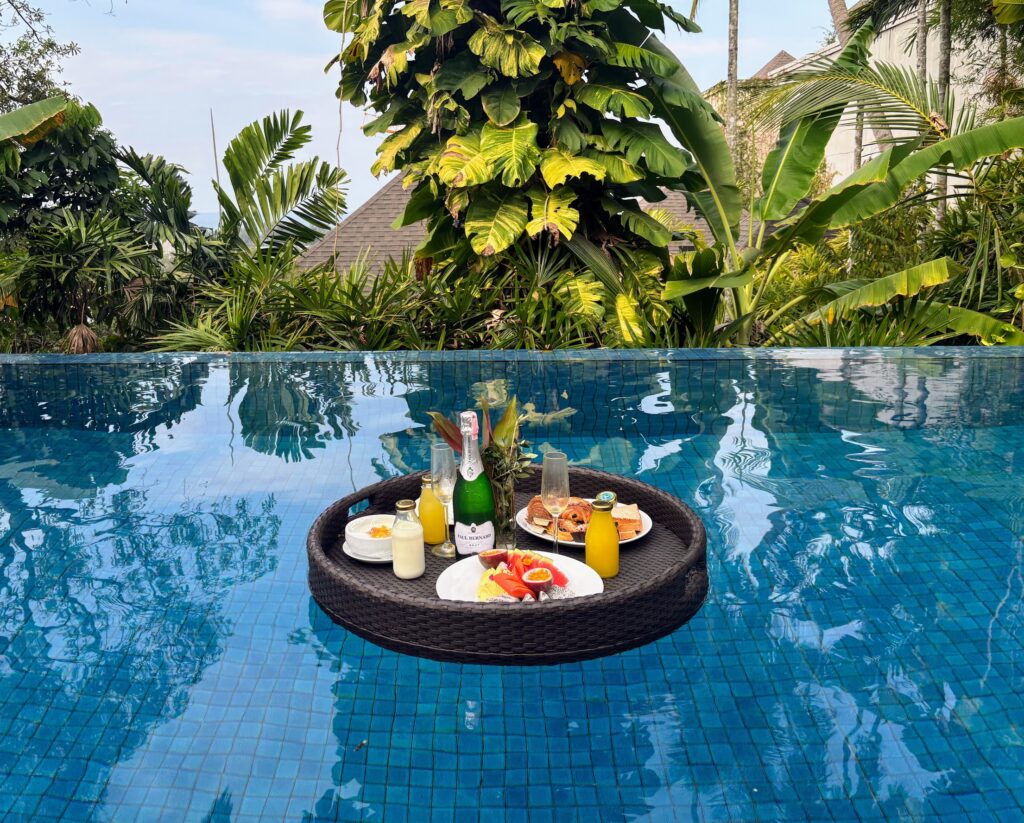
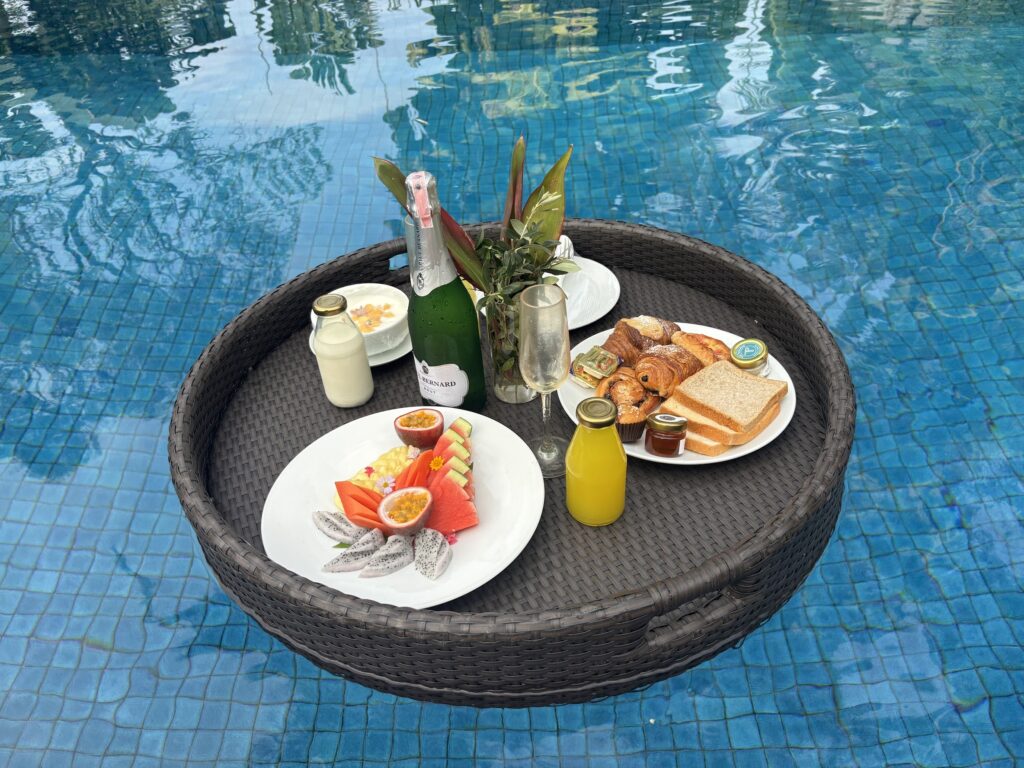
Breakfast can be of the floating variety, if you like. Picture this: a tray of tropical fruit, pastries and coffee floated out onto your private pool, drifting between you and your partner, the Andaman sun filtering through the palms, the water cool against your skin. You don’t have to picture it; it’s right there below.
It is the antithesis of the buffet shuffle. Just be careful not to drop your pastry; chlorine and croissants don’t mix.
It’s absolutely worth doing at least once. A ludicrous, wonderful thing. Miraculously, the tray doesn’t sink under the weight of the feast, though it does float off to the far end of the pool unless you keep it anchored. Not to worry, get a photo and take the rest of your meal to the table, where it belongs.
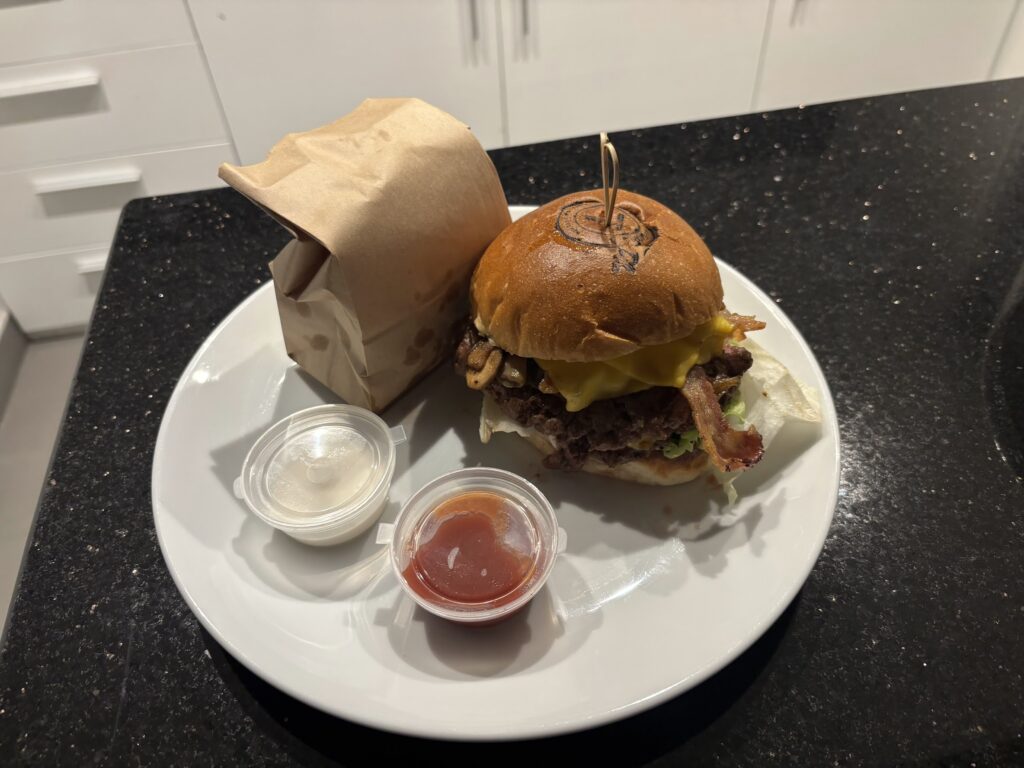
That’s the morning, and evenings have their own gravitational pull too. One night we stayed in, ordered a burger, and watched a film. Overhearing conversations at dinner the following night, I gathered other guests were planning the same thing. This is not a hotel that pressures you to explore, or will judge you for not getting out of your pyjamas for the whole weekend. The rooms are comfortable enough that choosing to stay put feels like the right decision, which is no small feat in a place with a 60-metre pool and three restaurants onsite.
Room Service
Curious (nosey, to be honest), we asked for a tour of the other categories, and they confirmed the pattern: these are houses, not hotel rooms. A giddy peek into how the other half live. The impression you’re left with is less hotel, more celebrity real-estate viewing. Cribs, essentially, which is fitting given the founder’s MTV past.
The lineup runs from 81m² Tropical View Suites in the main wing (the only category under £100 a night) up to 595m² three- and four-bedroom pool villas with their own 14-metre infinity pools. In between sit the Spa & Pool Pavilions, the Tropical and Ocean View Pool Villas, and a two-storey Pool Loft with a full kitchen. Roughly half the categories are 12+ only, so families should check room type carefully before booking.
Facilities & Spa
The Pavilions app is the unassuming, omnipresent hero of the stay. You book restaurants, buggy pickups, activities, spa treatments and excursions through it, and the messages are written by actual humans on-site rather than a chatbot. During the visit, a friendly note came through reminding us it was mayfly season and worth dimming the villa lights unless we wanted to host a full entomological convention. We dimmed the lights, and we’re sure the all-seeing app would have known if we hadn’t.
Through the app you can arrange transport to Phuket Town, Big Buddha, Layan, Patong, Kamala, basically any beach on the island, plus Tesco Lotus runs and a visit to Wat Pra Thong, the temple of the half-buried golden Buddha. The weekend market and the nearest Villa Market (at Porto de Phuket, part of the Central Group, one of Thailand’s largest retail conglomerates) are also on the list. There’s a complimentary scheduled shuttle to Layan Beach three times a day each way, and a separate one to Villa Market.
The app also surfaces further afield excursions: day trips to the Phi Phi Islands and the Similan Islands, a hike at Bang Pae waterfall, and the rainforest trails of Khao Phra Thaeo National Park. Khao Phra Thaeo protects Phuket’s last remaining virgin rainforest, with barking deer, langurs, gibbons and around 100 bird species, and is well worth a visit to see a different side of the island.
Complimentary daily activities rotate through the week: Thai sweet making, animal towel folding (admit it; you’ve always wondered how it’s done), herbal compress workshops, cocktail classes, cultural sessions. The clever thing is the scale. Sweet making isn’t a two-hour production; someone shows you how to prepare kluai buat chi (banana in coconut milk), you make it in fifteen minutes, and you eat it. Same with the cocktail class. You make one drink behind the bar, you drink the drink. It’s not some massive, enduring commitment, but a short, sharp shot of fun.
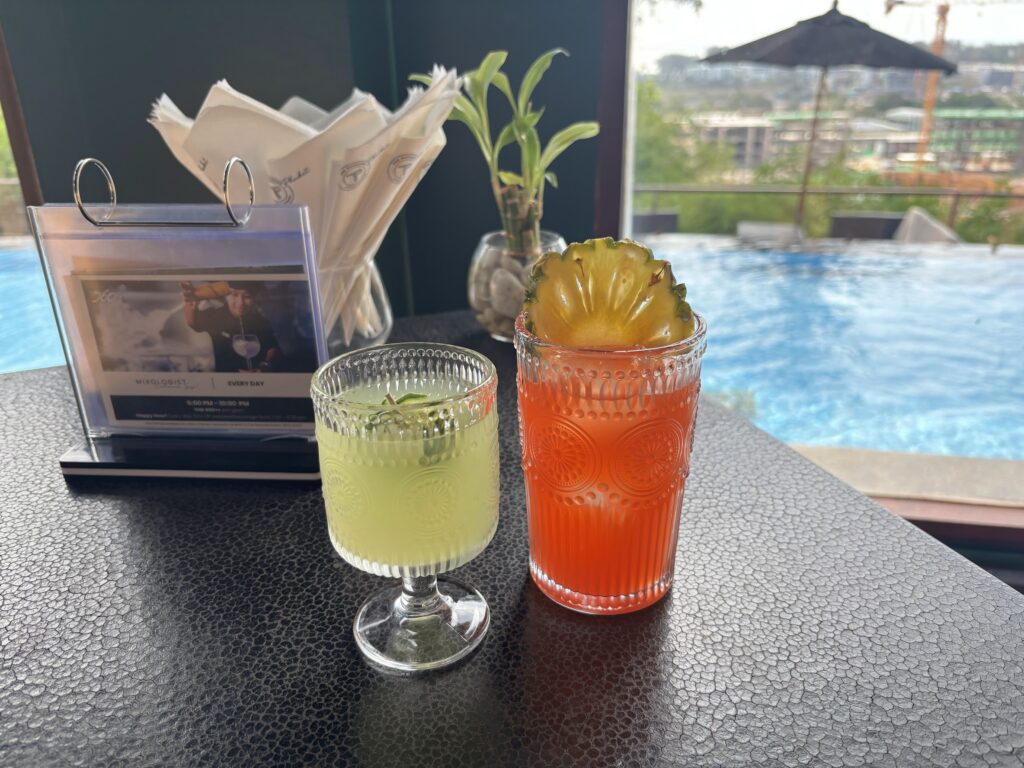
Anyway, if you want the recipe for The Pavilions Phuket house cocktail, here it is, verbatim from the barman, who was a bloody friendly fella, we should add:
30ml cucumber syrup
50ml sugar syrup (less if you want it drier; you can always adjust upwards)
45ml gin
30ml lime juice
Shake hard over ice, top with a dash of tonic, garnish with cucumber. It’s bracing, herbal, skilfully balanced. I’d drink it in Bath. Or, indeed, in the bath.
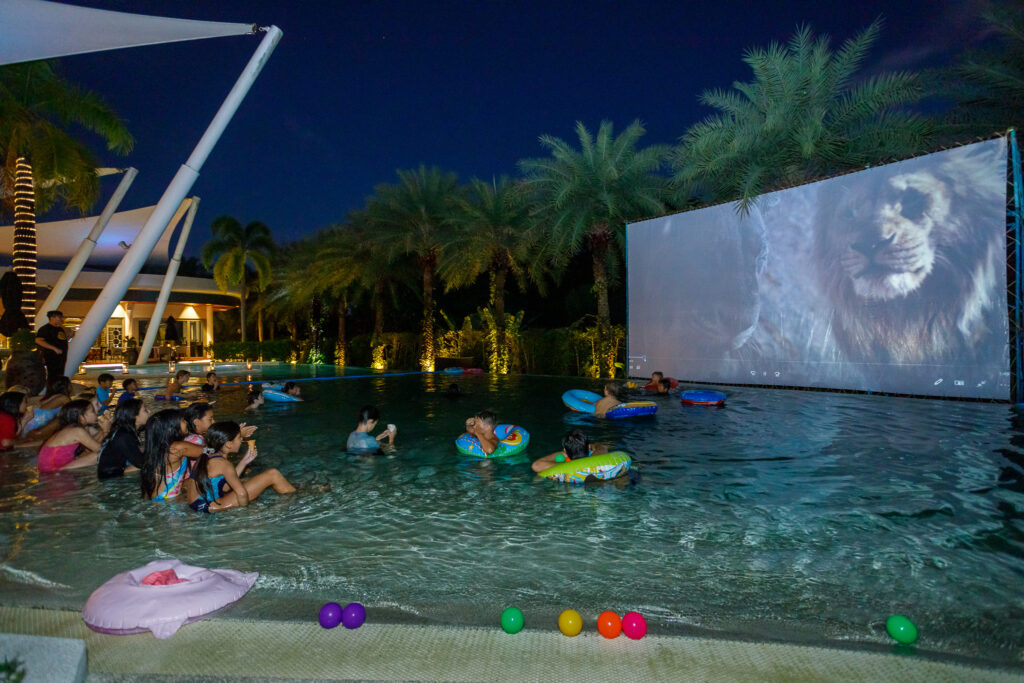
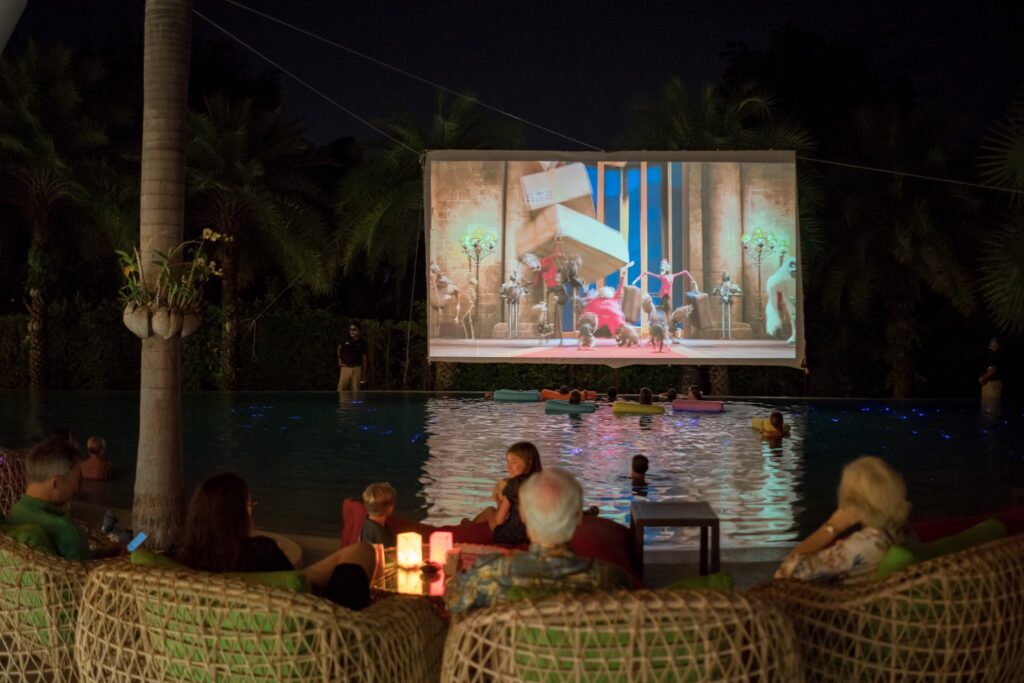
Elsewhere on the grounds, there’s a pond with koi you can feed, a weekly cinema night at Firefly, the main restaurant and its adjacent pool, where you can enjoy the screening whilst bobbing about in the water. That’s a new one on us, and really frivolous, too. Also, quite wrinkly, but there you go.
Cooking classes are run from Firefly too, and start at 2,800 baht. You can choose from four menu options: Ayutthaya, Rattanakosin, Southern Thai and Sukhothai. You can also book an in-villa barbecue where a chef comes to you and cooks on your terrace, if you truly don’t want to get out of your PJs.
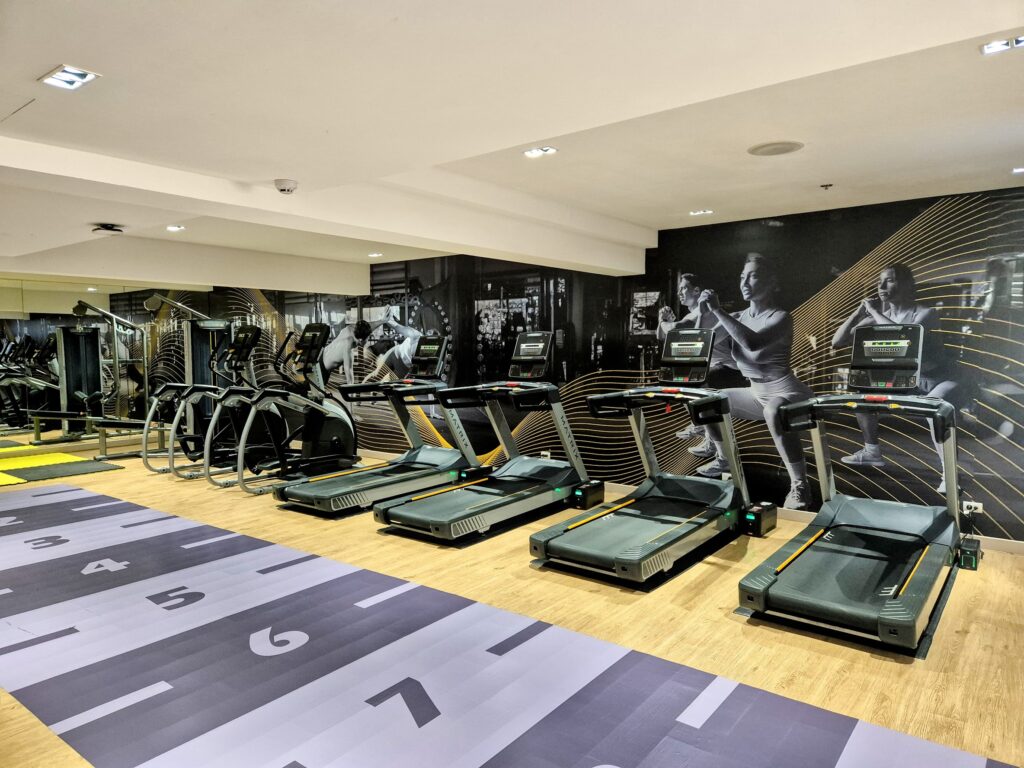
The gym is perhaps the one weak note. The kit is serviceable but the space is a little dated, and worn in places. If your holiday depends on a state-of-the-art weights floor, this isn’t the place. If you’re happy with a treadmill, some free weights and the option of a Thai massage afterwards, you’ll be fine.
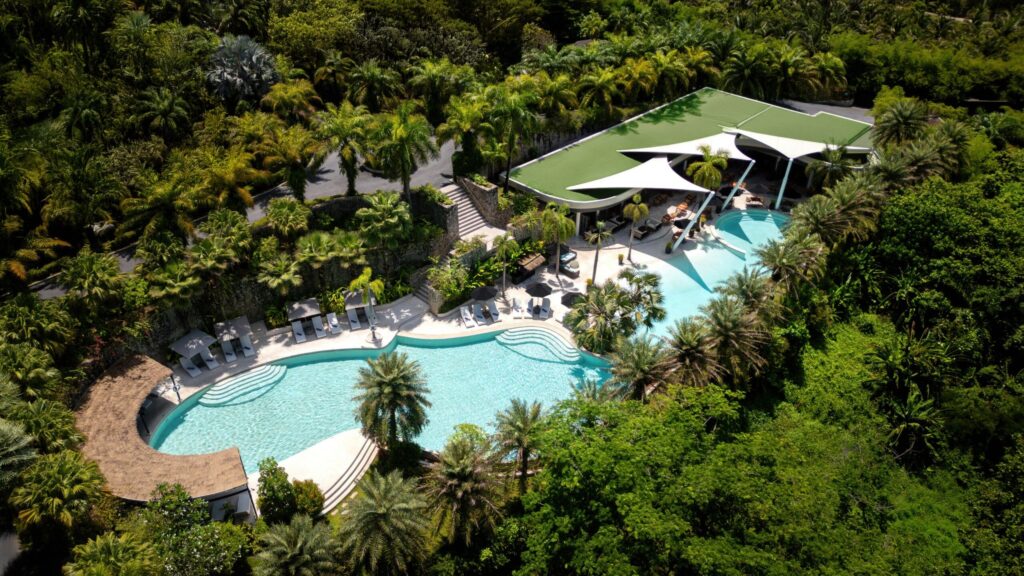
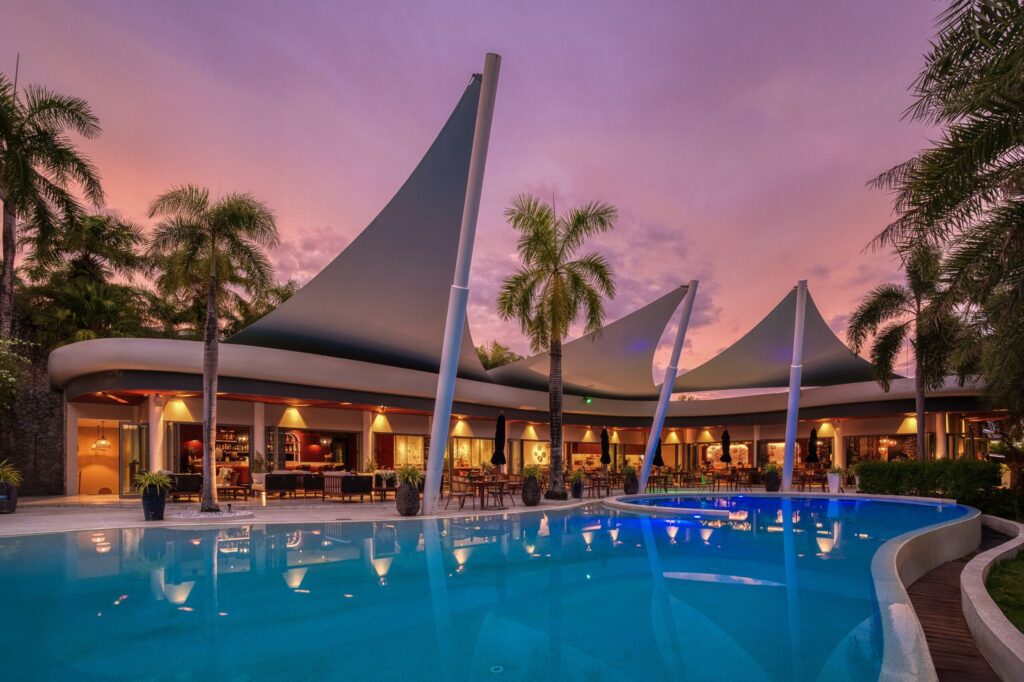
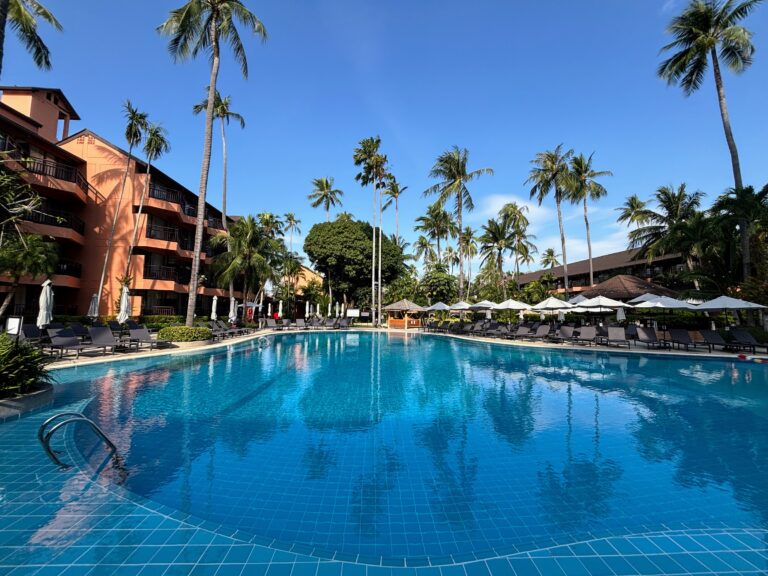
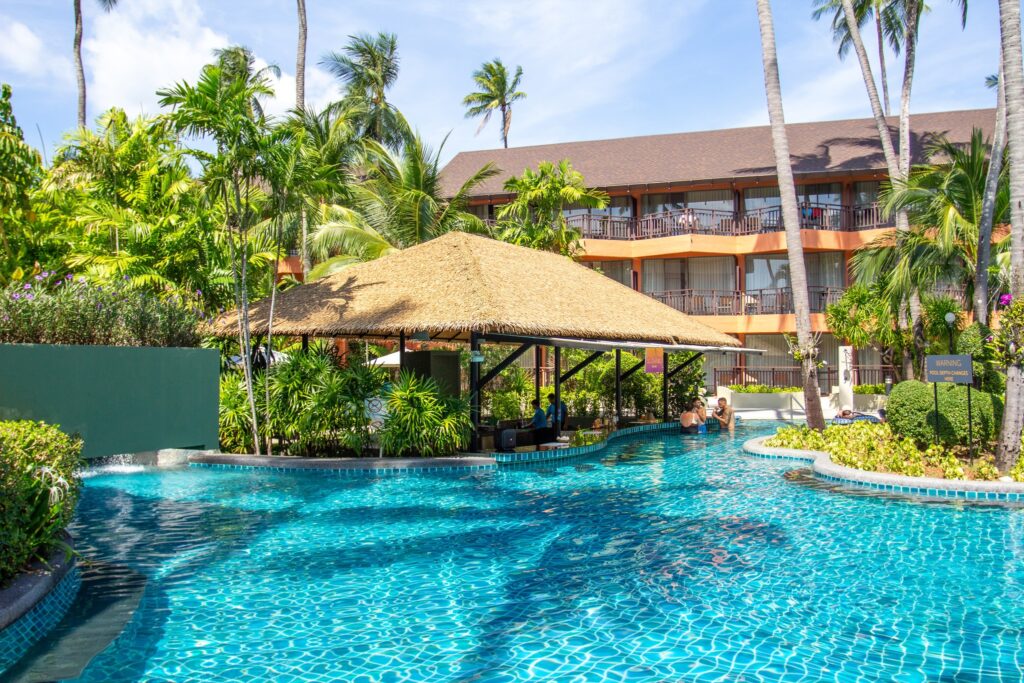
There’s also a 25-metre lap pool attached to the fitness centre, which is where to head if you want focused swimming. The villa plunge pools are beautiful but designed for wading rather than lengths; the lap pool is where you’d actually clock some distance. Back to splashing and sprawling, the Firefly Pool is a vast 60-metre freeform body of water that sits pretty next to the restaurant. It has pool club vibes, and is a focal point for guests who have settled on being sociable.
Food & Drink
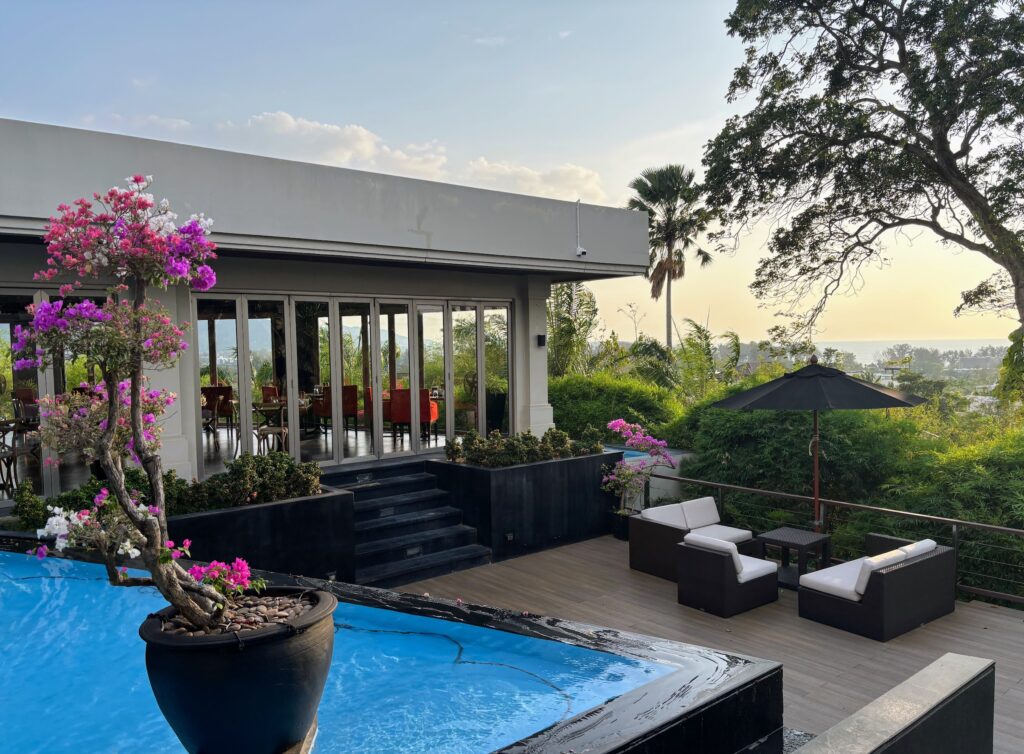
The resort has three restaurants and bars to play with: 360° Bar at the hill’s summit, Firefly Pool & Restaurant at the centre of the property, and Alto Italian Restaurant & Bar for the more committed foodies in the squad. There’s also those in-villa options.
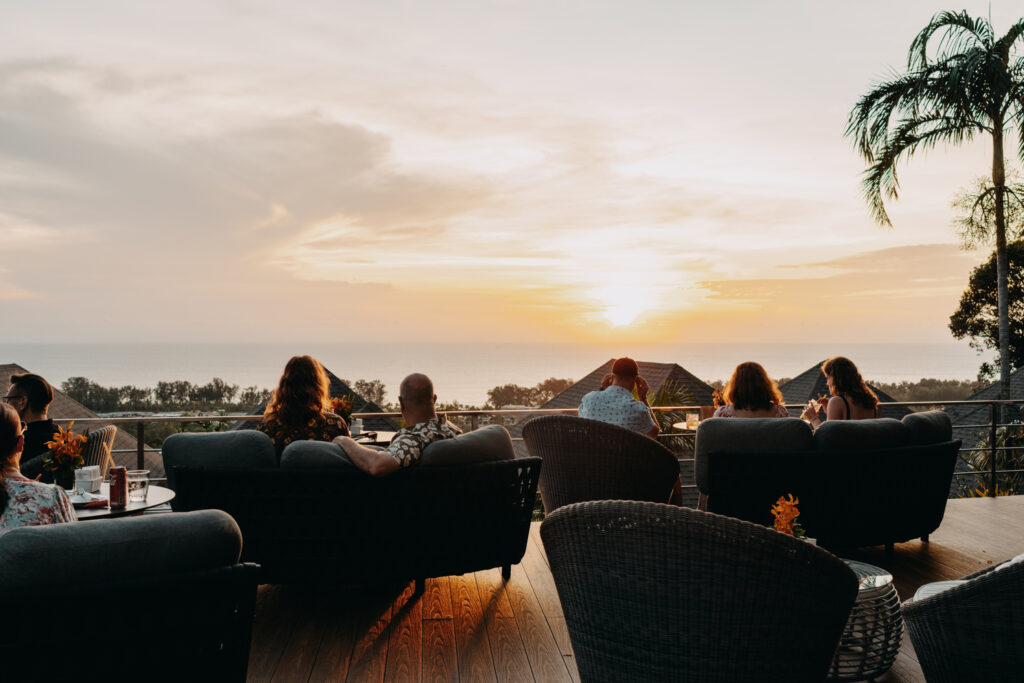
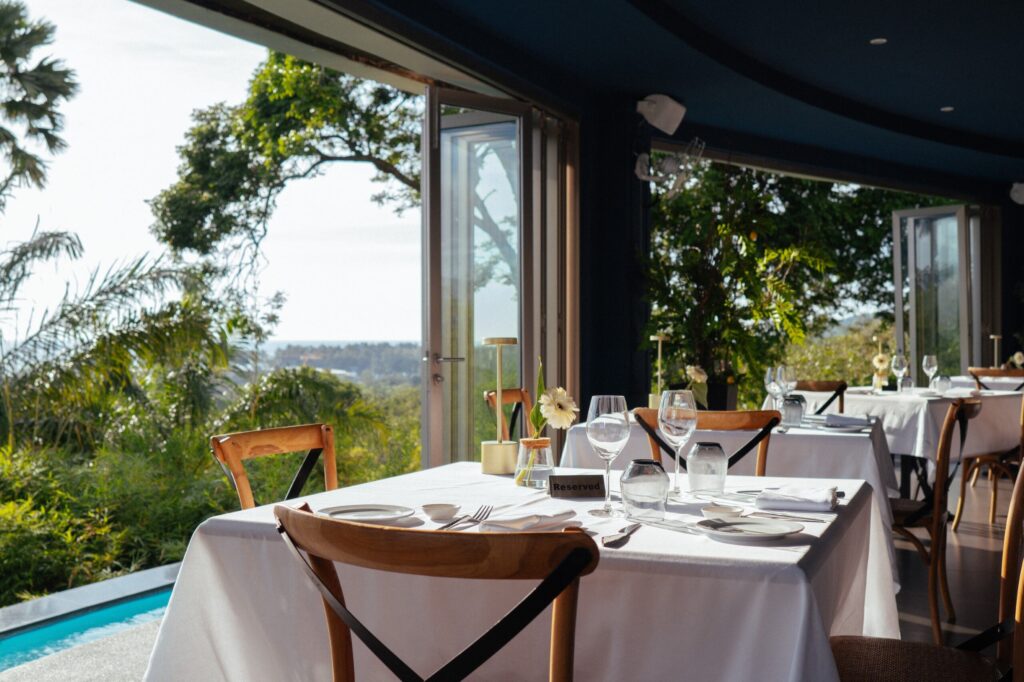
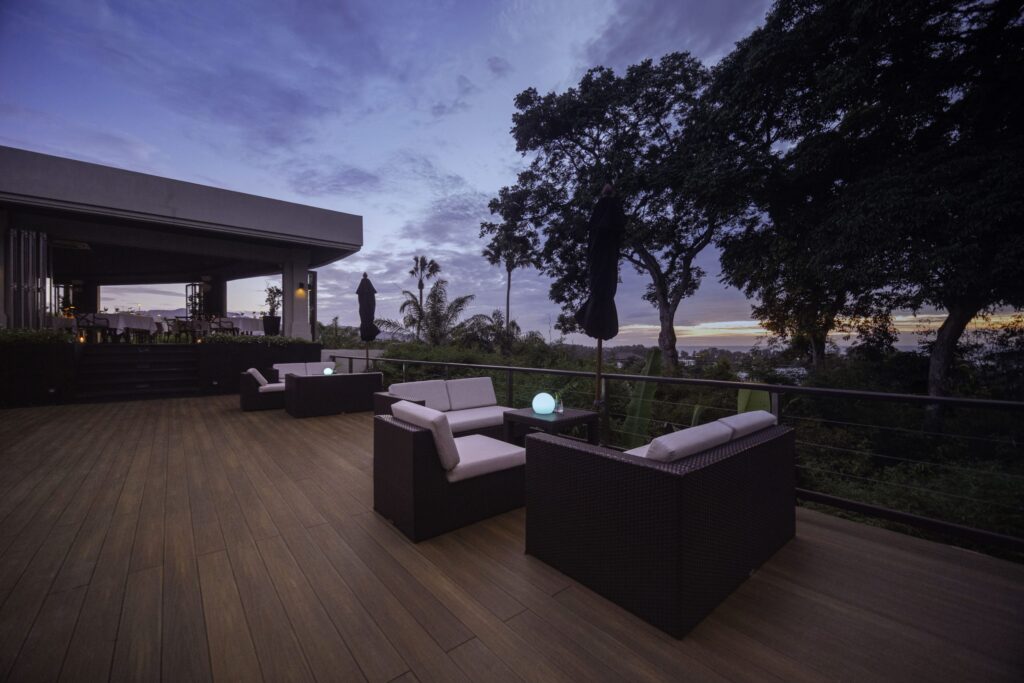
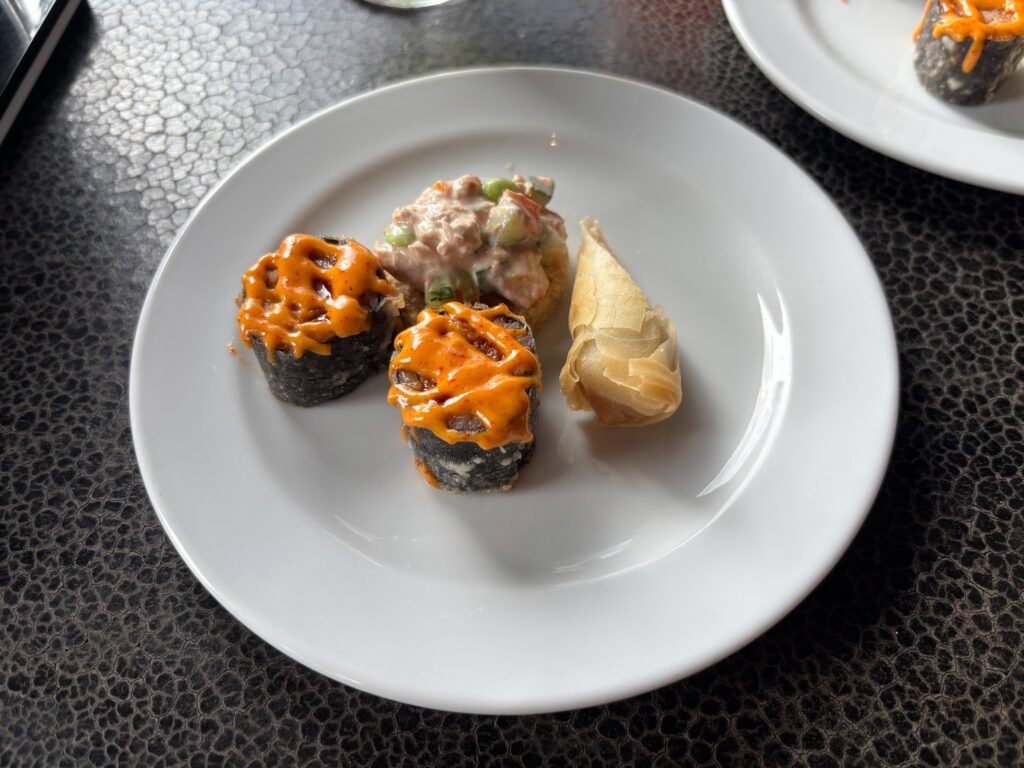
360° Bar is the headline venue, quite literally. Perched at the resort’s highest point, it looks out over the Andaman towards Layan and Bang Tao, with the sun dropping directly into the sea most evenings. One evening we went, a tropical storm kicked up, which was even more dramatic than the sunset. The lightning forked over the sea, the rain clouds pressed in, and the rising chorus of crickets was deafening in the best possible way. The cocktails are creative, the Japanese sharing plates are a smart fit for the setting, and the whole thing feels several cuts above the usual resort rooftop. Book ahead, as sunset slots go first.
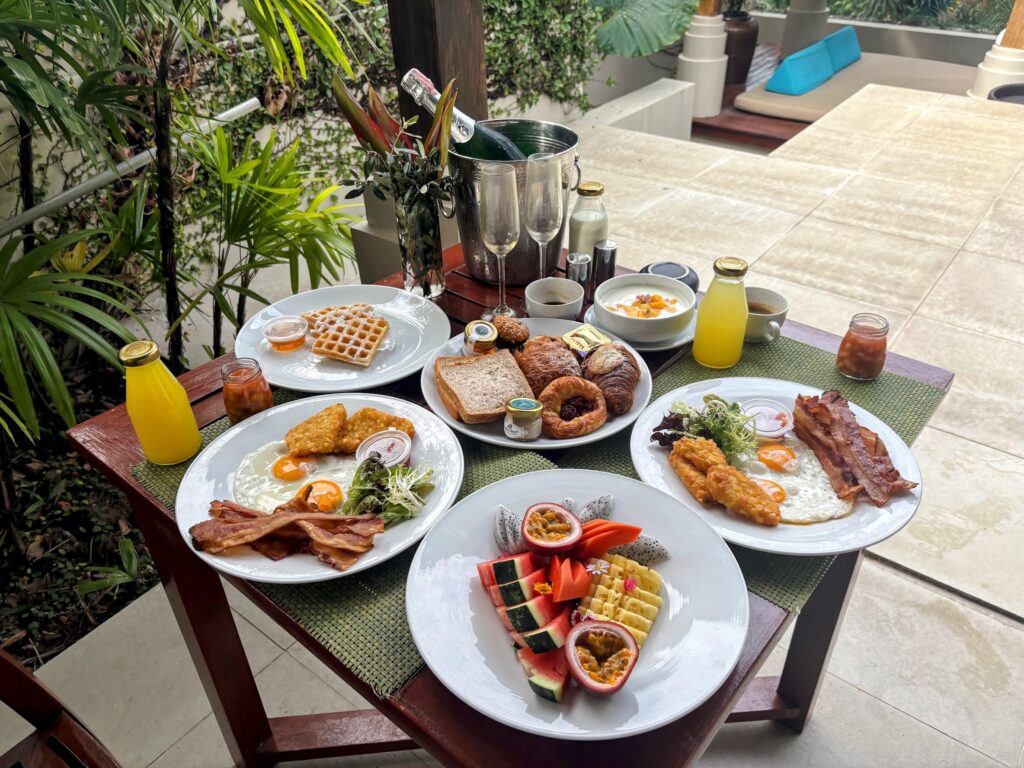
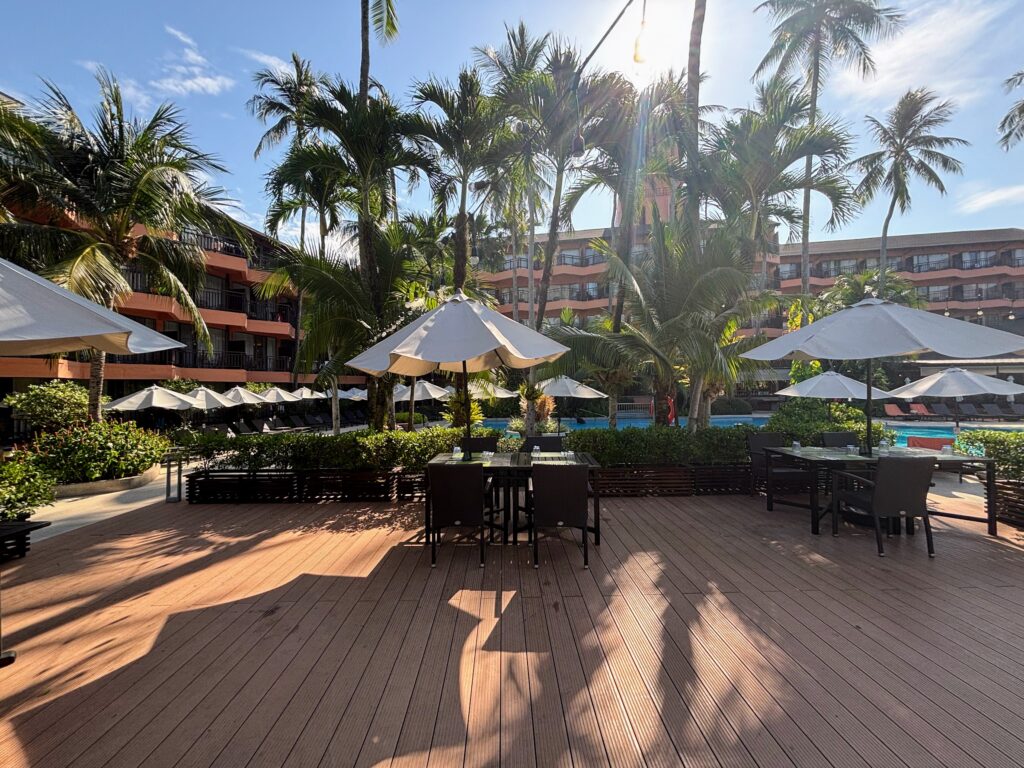
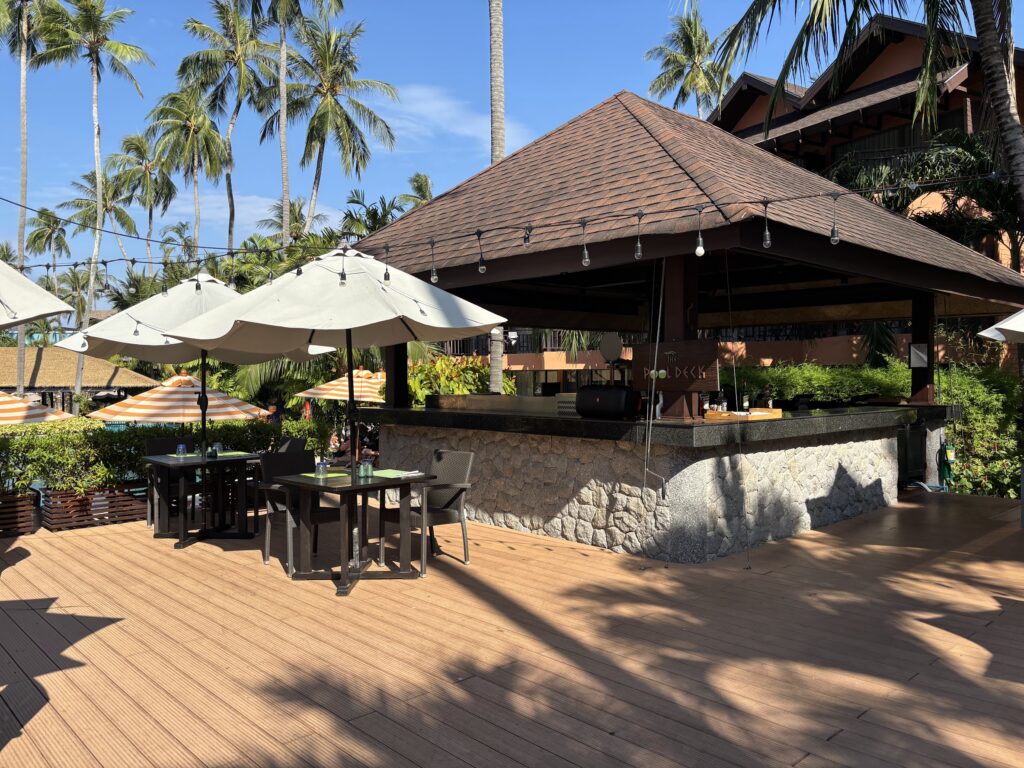
Firefly borders the resort’s 60-metre freeform pool, and in the evening the whole space lights up like its namesake. This is also where the breakfast buffet is served. It’s not the most extensive spread you’ll find at a five-star in Southeast Asia, but it covers the key bases and throws in a couple of lovely surprises, chiefly ice cream for breakfast (the standout being a lod chong Thai dessert turned gelato, properly good), and pancakes that are thick and eat like clouds. Come early for a seat outside, and take a coffee back to the villa when you’re done; takeaway cups are provided.
A customer relations manager floats around at breakfast, not overstaying her welcome when you’re bleary-eyed and tired, but a useful touchpoint in case you have any questions or need help with anything. Otherwise you could go the entire stay without seeing a single staff member. Hang on, we realise that sounds like she was bobbing about in the pool dispensing advice…
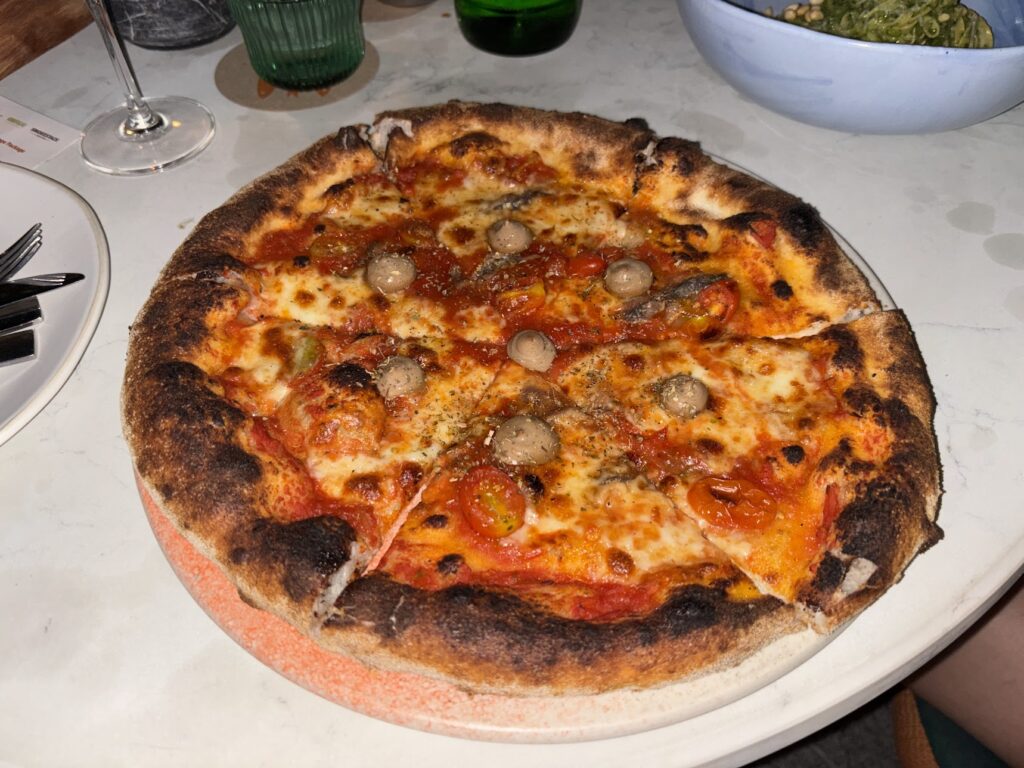
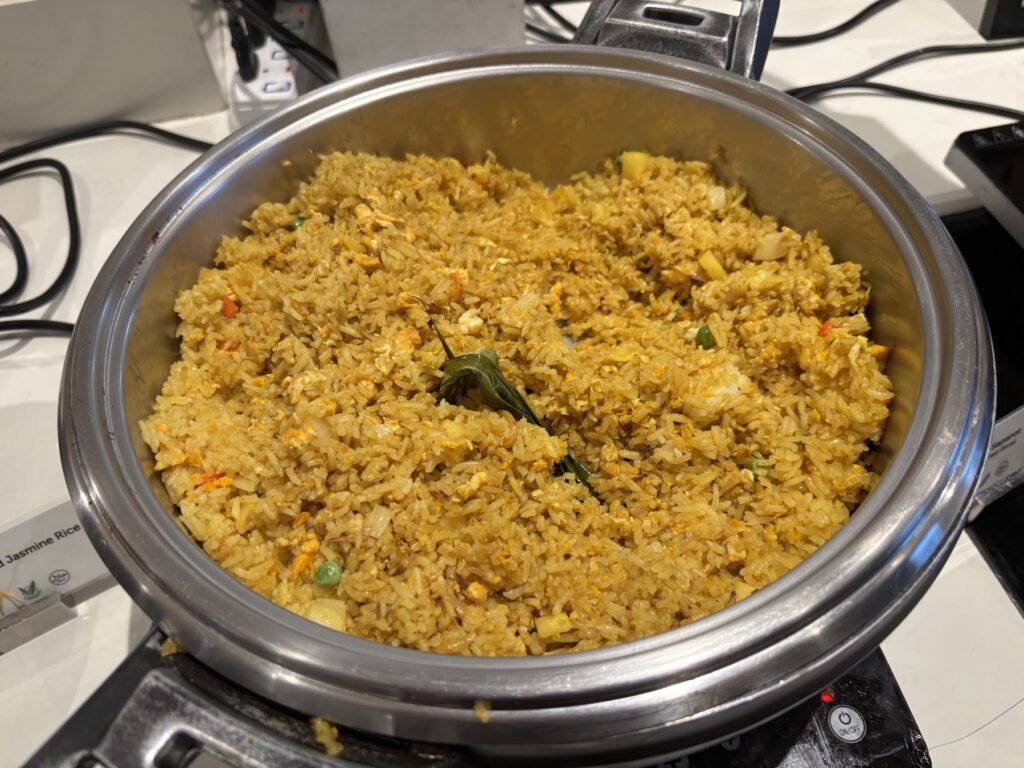
At lunch and dinner, the menu splits into a Thai Corner and a Western Corner. If this were a Muay Thai bout, I’d be in the Thai Corner every time. The local specialities are the reason to eat here: moo hong, the southern Thai pork belly stew braised with black pepper and garlic that’s particular to Phuket; Phuket pineapple fried rice; and gaeng poo bai chaplu, a southern blue crab curry with wild betel leaves that’s a regional classic. From the Western side, the pasta section delivers (the Italian training at the company’s sister property in Rome is evident), and there’s a wood-fired pizza oven turning out solid margheritas and more. Sandwiches and burgers handle the crowd-pleaser duty.
Alto is the quieter, more grown-up operation, twinned with the award-winning Alto in Rome. It has earned a spot on our list of the best Italian restaurants in Phuket, and rightly so. The cooking is contemporary southern Italian with a serious commitment to local sourcing – organic Phuket heirloom tomatoes, Thai wagyu from Nornuea Farm, and the striking seven-coloured Phuket lobster all feature on the menu. If Alto is fully booked for dinner and you want really good Italian, Five Olives is just a ten-minute Grab away and does arguably the best pizza on the island.
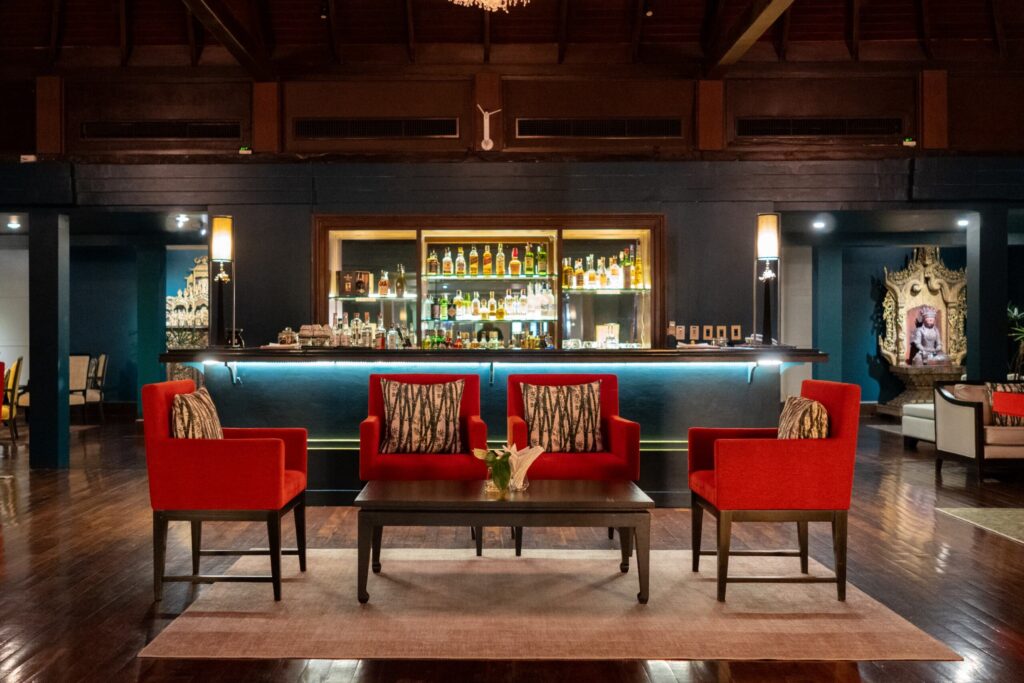
You can also take an à la carte breakfast at Alto for a more refined start to the day, and the adjacent Alto bar is also where the complimentary afternoon tea and evening cocktails are served when 360° is full, which turns out to be a clever bit of operational planning.
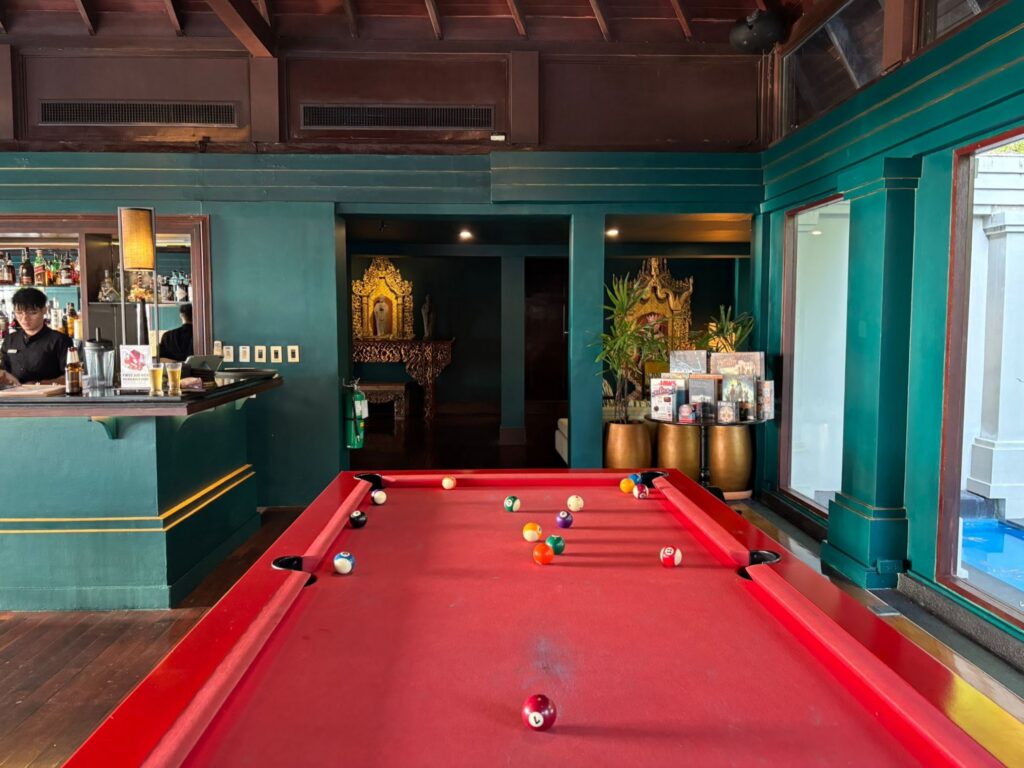
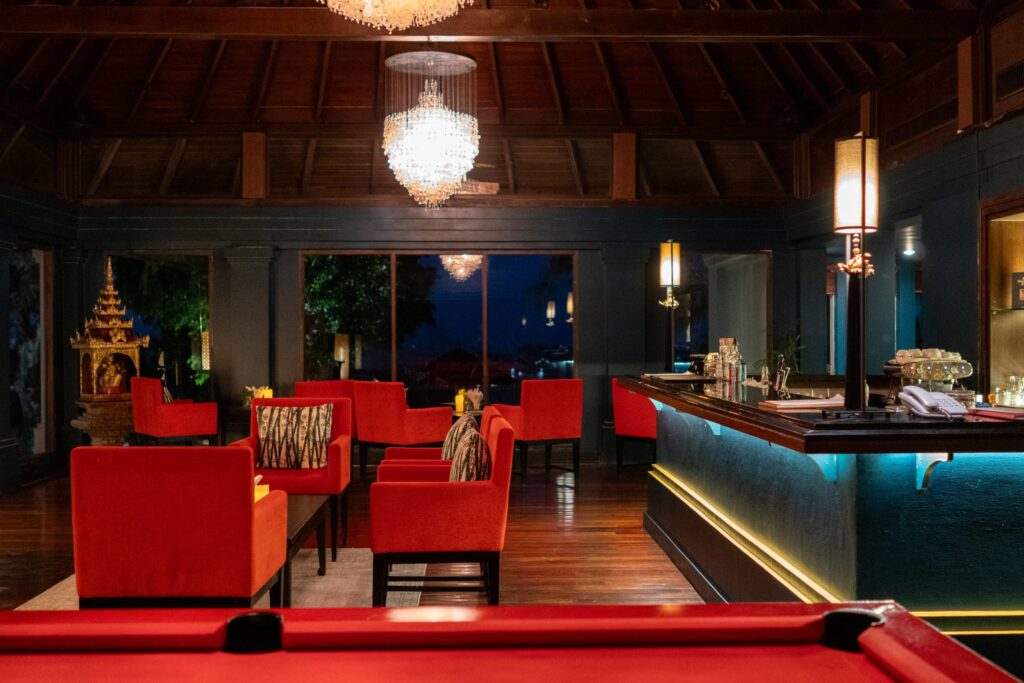
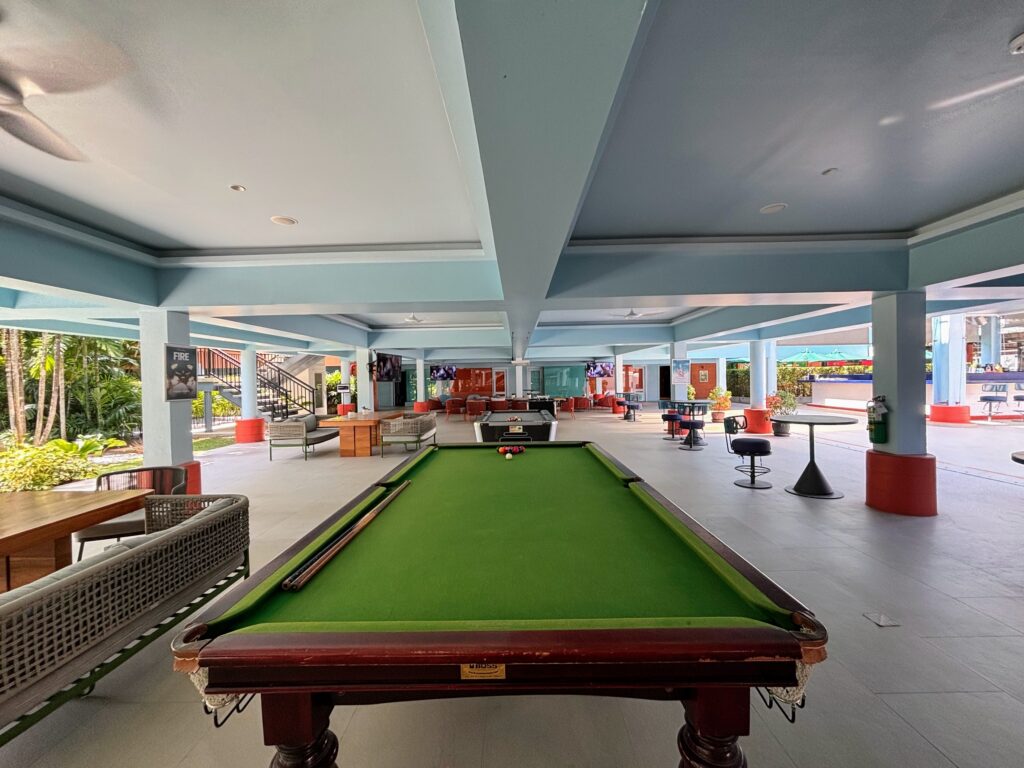
One of the standout features of staying in a villa here is the daily villa benefits: complimentary afternoon tea, followed by free-flow drinks and tapas each evening. For a hotel at this price point, these feel genuinely generous rather than tokenistic, and they bring structure to the day in a pleasing way. There’s also a pool table and a space for board games, and we spent most afternoons here, shooting pool and drinking house cocktails. Heaven, really.
For the final boss of room-service, The Pavilions Phuket offers an in-villa barbecue. A chef arrives at the villa with the grill, the marinades and the sides, and cooks in front of you while you sit with a cocktail. It’s the logical extension of the “do you even need to leave the room?” philosophy that runs through the whole resort. The option is also there to give the chef the night off and take the tongs into your own hands. A lovely touch, we think.
Ideal For…
Privacy-first, couples-oriented and slow-paced by design, The Pavilions Phuket fills a specific gap in Phuket’s hotel market: it’s for people who want the island’s beauty without the beachfront crowds, and who’d rather spend their days in a villa than at a beach club.
Couples and honeymooners. Over half the villa categories are adults-only, floating breakfasts are built for two, and the daily villa benefits pace the day in a way that encourages lingering rather than rushing.
Travellers who prize privacy over scene. Villas are scattered across the hillside and you can go most of a day without crossing paths with another guest. The app lets you book everything from spa treatments to excursions without the rigmarole of speaking to anyone at a desk.
Slow travellers and long-stay guests. Three or four nights feels short here; a week is about right. The villas reward settling in rather than ticking off sights.
Food-focused visitors. Alto is one of the best Italian restaurants on the island, Firefly’s Thai Corner covers Phuket’s regional specialities with care, and 360° handles sunset cocktails and Japanese sharing plates. You could eat well here for a weekend without repeating yourself.
It’s perhaps less suited to anyone after a beachfront resort with direct sand-between-toes access, as Layan is a ten-minute shuttle away. Families with young children will want to check room type carefully, as roughly half the villa categories are 12+ only. And the gym is functional rather than flashy, so fitness buffs might feel a touch bereft.
Why Stay?
Because The Pavilions Phuket does something surprisingly rare in Southern Thailand’s high-end hotel market: it commits fully to seclusion. There’s no pretence that you’re five minutes from a bustling beach club, no strain to be all things to all travellers. It’s a hillside hideaway for couples, honeymooners and anyone who wants their Phuket week to be more about the villa, the plunge pool and the view than about nightlife and crowds.
One of the most genuinely relaxing stays I’ve had in Phuket, and a resort that understands its own assignment. Come for the villas, stay for the view, and don’t be surprised if you find yourself cancelling half your excursions in favour of another afternoon at the pool.
Suites from around 4,080 THB (approximately £95) per night, villas from around 12,750 THB (approximately £300), rising significantly in peak season.
It’s certainly a surprise to say that, despite it being the capital’s second busiest station, London Waterloo is somewhat bereft of great dining options.
Sure, the clarion call for your 18:38 to Surbiton may ring out crisply, and instructions to ‘mind the gap’ remain insistent, but when the culinary conductors come a calling, this most bustling of transport hubs often falls silent.
You could, of course, seek solace between the buns of Burger King or scoff a sausage roll on the station concourse if you’ve got a train to catch, but if you’re blessed with an hour or two to spare, then rest assured; just outside of London Waterloo station there are some fantastic places to have lunch or dinner. With that in mind, here are the best restaurants near London Waterloo.
Lasdun at the National Theatre
Ideal for old school yet modern British brassiere style plates that sing with seasonal produce…
You’d think that the area surrounding London’s National Theatre would be positively teeming with smart, creative places to eat pre and post show, but that simply isn’t the case. Or rather, wasn’t the case until Lasdun opened.
In a rather barren stretch of the South Bank in terms of eating options, where chain restaurants rule supreme, the 2023 opening of this stylish restaurant within the National Theatre building has caused quite the stir, garnering several positive reviews in the weekend papers before its first chicken, leek and girolle pie had even been polished off.
You don’t have to be an avid consumer of the Real Housewives Of Clapton Instagram account or a Hackey resident to be familiar with the East London pub the Marksman, with its Fergus Henderson inspired plates of austere perfection, and the Ladsun, from the same team, continues with this tradition.
Named after the renowned architect Denys Lasdun, who designed the iconic National Theatre building in a similarly flinty fashion, this restaurant is a testament to his legacy. A collaboration between co-founder of Lyles John Ogier, KERB, and the team behind the Marksman, Jon Rotheram and Tom Harris, there’s a commitment to seasonality and simplicity here that you’d expect, with a knack for finding beauty in the seemingly old-fashioned.
Their menu is a comforting blend of traditional dishes with flourishes of luxury, like fish cakes in mussel sauce, devilled eggs topped with caviar, and a glazed beef, barley and horseradish bun, all crafted with a touch of surprise and restraint. The menu also takes inspiration from London itself; that that aforementioned pie is now on the menu.
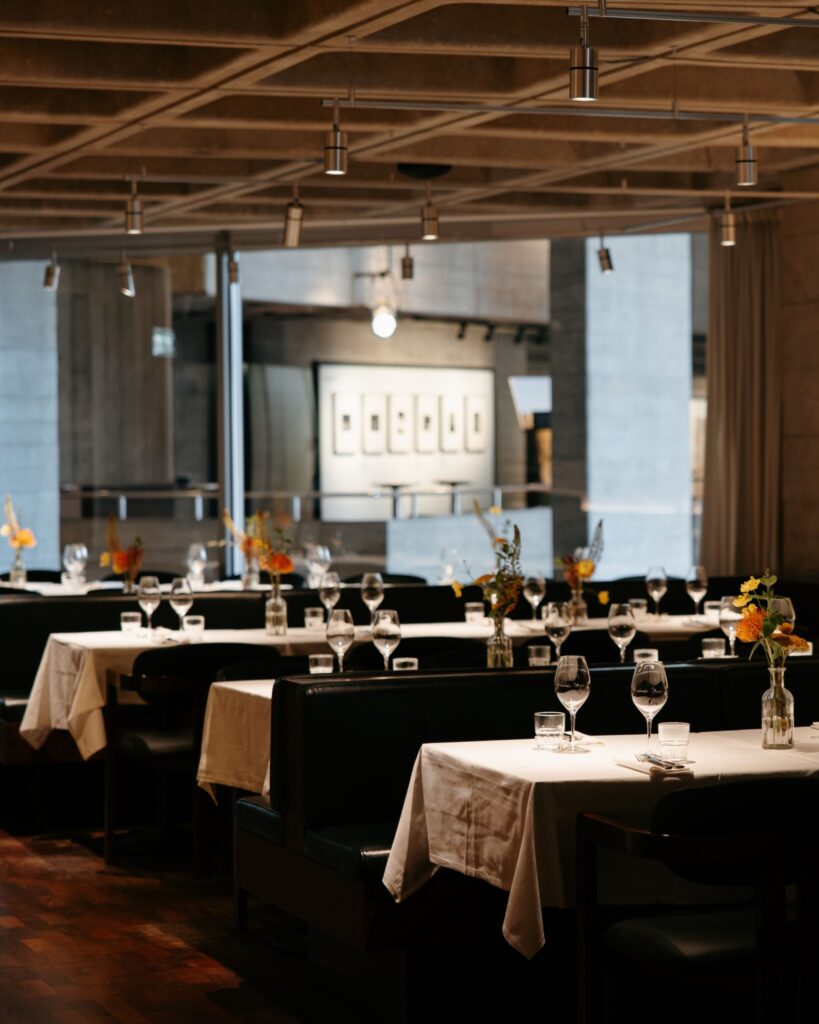
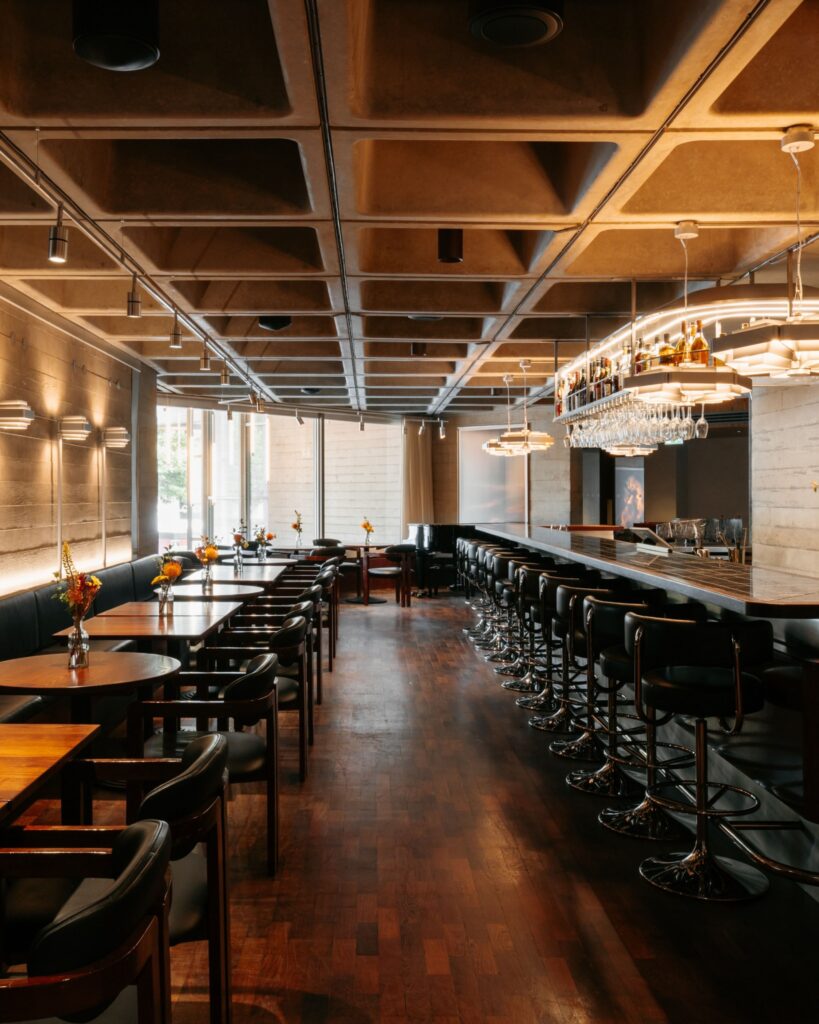
Lasdun’s interior design pays homage to its namesake, featuring dramatic uplighting, a marble bar, and chrome lighting fixtures that echo the Brutalist architecture of the theatre. It’s a gorgeous, inspiring place to spend time.
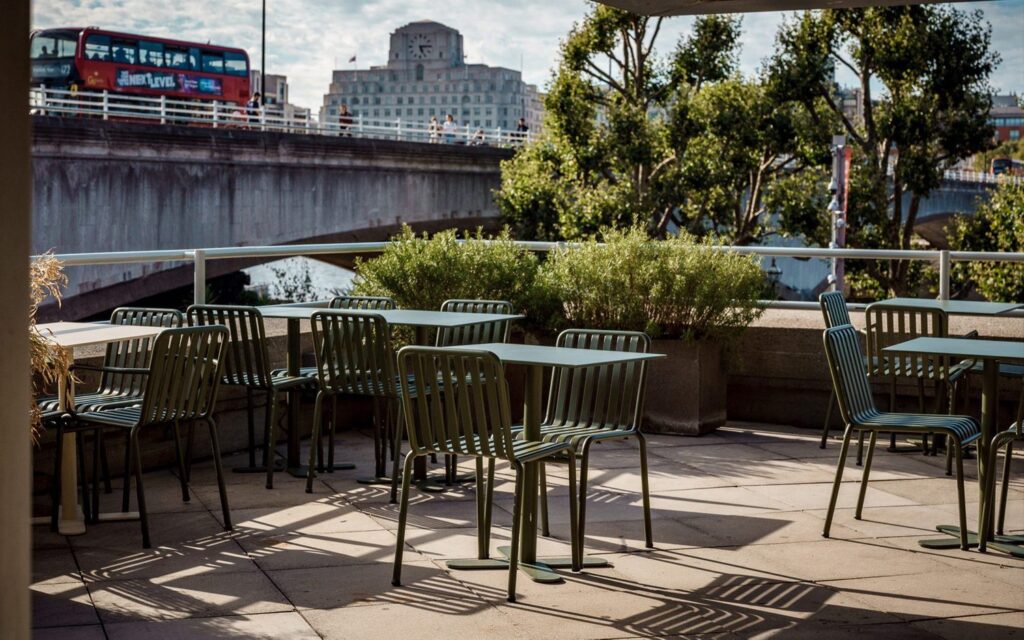
Though it feels somewhat sadistic to mention this in the bleakest bit of winter, Lasdun has a gorgeous summer terrace, offering guests the chance to enjoy signature seasonal British fare in a sun-soaked setting (if it would bloody stop raining for a minute, that is).
The terrace, directly accessible from the Southbank, seats 60 people and is open from midday until dusk, running through summer until late September. The alfresco menu is a light and breezy affair, with a heavy emphasis on buns – both a Dorset crab and mayonnaise and a treacle-cured Tamworth ham and Lincolnshire Poacher version are available. Sign us up for both!
Super refreshing drinks such as the Lasdun Summer Cup and an elderflower infused Tom Collins seal the deal. We’ll see you out there? Don’t forget your sunnies.
Also found in the iconic National Theatre, Forza Wine brought their ‘Italian-ish’ (thought we were calling it ‘Britalian’?) cooking to the South Bank via Peckham in the latter part of 2023, and have already firmly bedded in.
Perhaps ‘bedded’ is the wrong phrase here, as the top floor dining room is positively lauding it over the South Bank below, with wraparound riverside terrace seating and views of the Thames thrown in for good measure.
Better warn your ma who’s suspicious of ‘small plates’ and modern day dining’s obsession with sharing; the menu is one clustered, singular piece of copy. There are no starters or mains here, not even snacks and sharing plates – just a list of a dozen dishes plus soft serves and a custardo, the latter of which is a bloody delicious espresso-thickened-with-custard concoction that the lads from Off Menu have regularly eulogised.
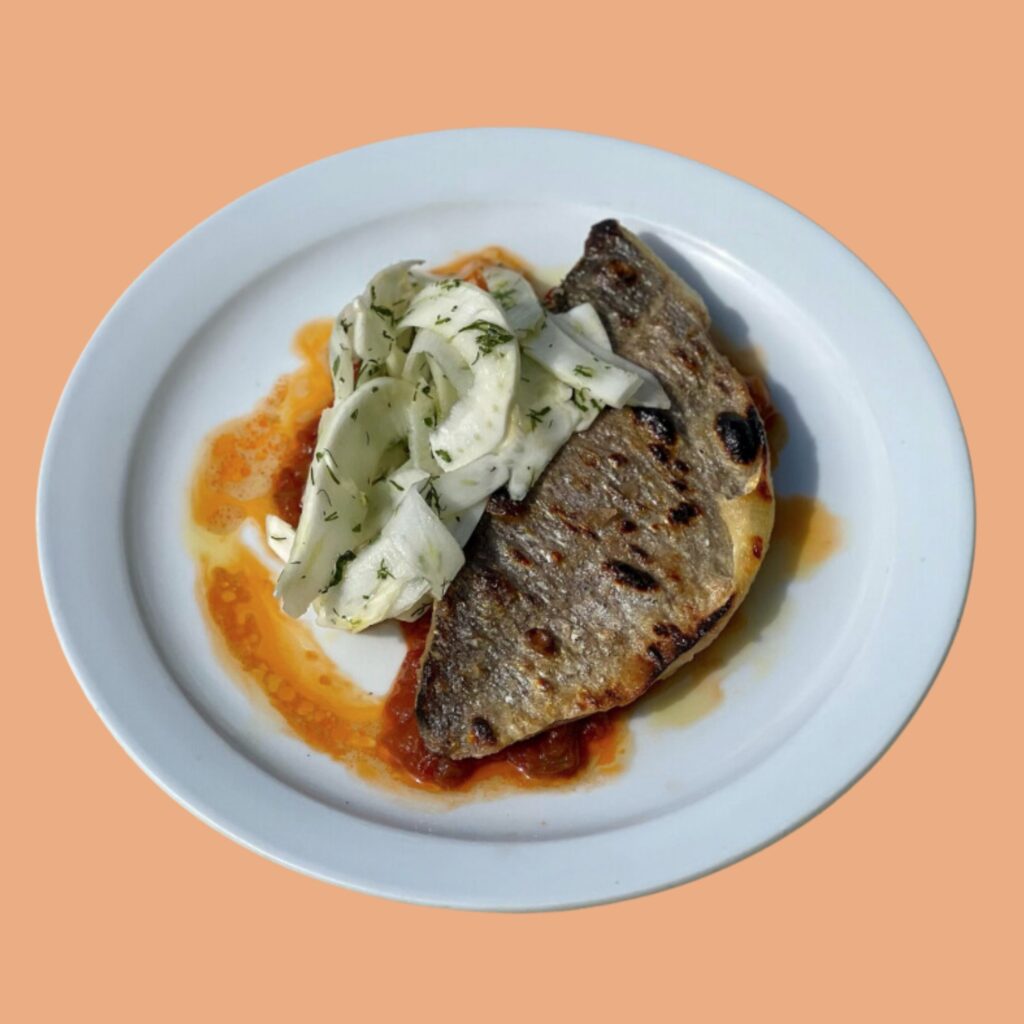
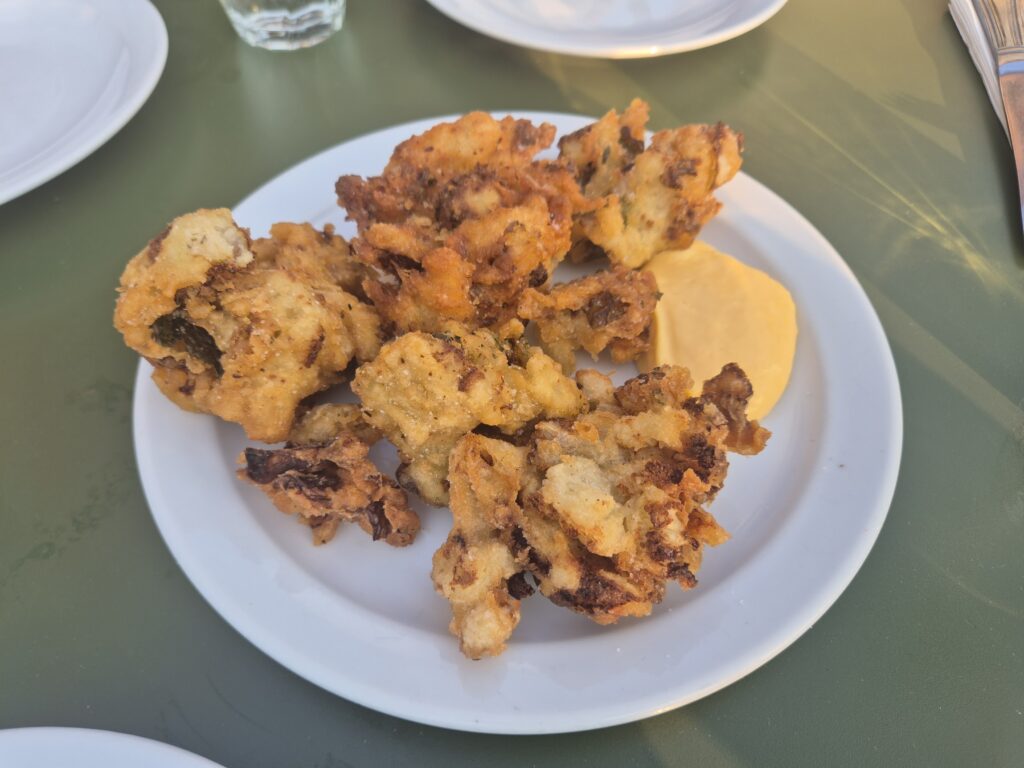
Don’t worry; the larger dishes from that rundown will have even the biggest menu pedants cooing. Generous, fully formed plates, a recent dish of sea bream fillet – blistered and blackened from the grill – with a tangle of shaved fennel and tomatoes roasted until sweet and collapsing was superb. Pair it with a little sourdough toast and confit garlic butter, and perhaps some of the restaurant’s superlative, golden cauliflower fritti and aioli, and you’ve got yourself a beautifully rounded (and admittedly rather pungent) meal.
True to the conviviality of the place, Forza Wine at the NT is an all day affair, open from midday until 11pm daily, except on Sundays when it’s closed. Due to it being a massive, 160-cover space, you could, theoretically,just drop in for a Custardo or two, if you’ve got a wait before your train departs from Waterloo.
There’s also a very good weekday lunch deal, sporadically announced via their Insta in true Forza style. For £15, you might get a roast chicken leg, crispy spuds and a kind of riff on a Caesar salad, plus a glass of house wine. You really can’t argue with that value.
Ideal for Osakan soul food in an intimate setting…
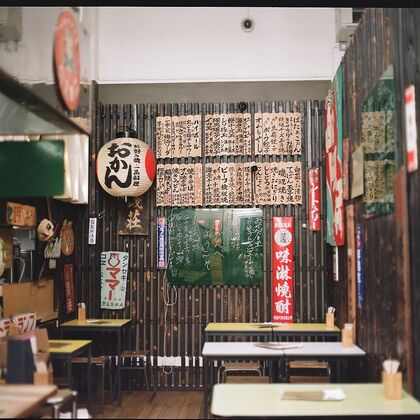
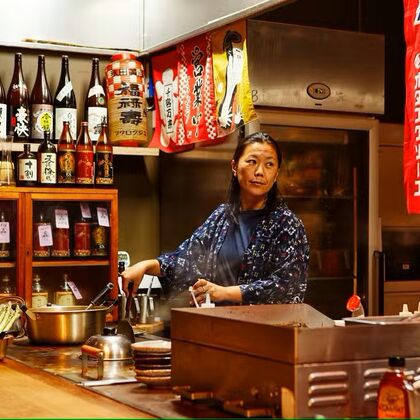
If you’re yearning for a genuine taste of Japan’s kitchen capital without boarding a flight to Kansai, Okan’s tiny, atmospheric space in County Hall delivers in spades. For the uninitiated, County Hall is that imposing Grade II-listed building on the South Bank that once served as the headquarters of London’s government – these days, it’s home to a rather eccentric mix of tourist attractions and, thankfully, some properly good Japanese restaurants (it’s owned by Japanese company Shirayama Shokusan Ltd).
At the stoves is chef Moto Priestman, who arrived from Osaka in 1998. This intimate spot has been converting Londoners from their sushi-centric view of Japanese cuisine since 2018. Their signature okonomiyaki (ranging from £11-15) arguably offers perhaps the best value authentic Japanese cooking in the area.
The restaurant perfectly captures the essence of Osaka’s back-alley dining culture – the air is perfumed with smoke from the open kitchen, whilst diners huddle around closely packed tables, clinking beers and diving into steaming bowls of curry rice. It’s steamy and kinetic in the best possible way.
At the heart of Okan’s menu lies okonomiyaki, Osaka’s beloved savoury pancakes. These properly crafted specimens arrive sizzling hot, with the tofu and kimchi version being a particular highlight – expect a crispy exterior giving way to a tender centre, finished with generous zigzags of Kewpie mayo. The spicy miso udon and yakisoba also deserve special mention, offering the kind of soul-warming comfort that makes you forget you’re sitting in the shadow of the London Eye.
The success of this County Hall original has spawned two equally snug siblings over in Brixton and another in food truck form in Coal Drops Yard, but there’s something rather special about this 20-seater space. Perhaps it’s the counter seats overlooking the open kitchen, or maybe it’s just the sheer incongruity of finding such an authentic slice of Japan nestled behind the tourist traps. Either way, it works.
Ideal for a global feast with London’s best skyline views…
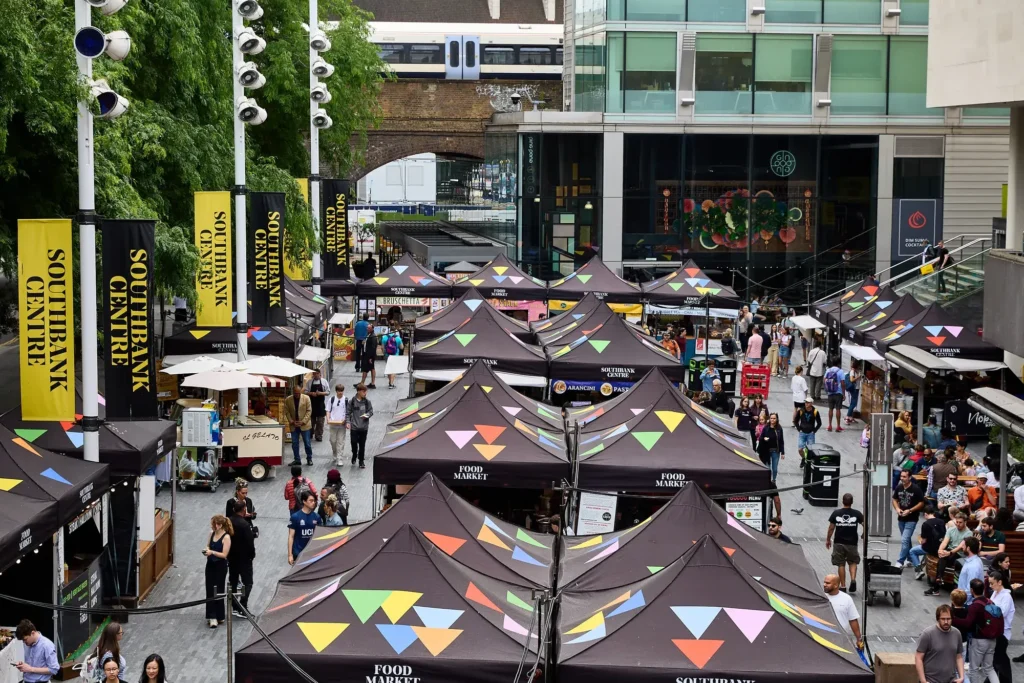
Forget the tourist-trap chains that populate much of the South Bank – a different kind of gastronomic action happens behind the Royal Festival Hall, where the Southbank Centre Food Market springs to life every weekend. This small but perfectly formed marketplace transforms an otherwise ordinary space into a bustling hub of international cuisine that’s worthy of your time if you’re in need of a quick bite close to Waterloo. You are; that’s why you’re here.
With over 30 independent traders setting up shop Friday through Sunday, this is street food done properly. The line-up reads like a culinary world tour: from Horn OK Please’s vibrant Indian dosas (from £8) to Ethiopiques’ wholesome vegan fare, and Nobiani’s contemporary takes on Korean BBQ. The Polish Deli’s artisanal sausages sit comfortably alongside PAD + SEN’s authentic pad thai, proving that good food knows no borders.
image via Southbank Centre
The market’s particular strength lies in its ability to balance established favourites with exciting newcomers. Whilst The Hop Locker keeps the craft beer flowing (pints around £6.50) and Honest Folk mix seasonal cocktails, you’ll find traders like Two Als bringing proper New York-style chopped cheese sandwiches to curious Londoners.
The beauty of dining here lies not just in the food itself, but in the experience – grab your chosen delicacy and head to Jubilee Gardens for an impromptu picnic with views of the London Eye. The market welcomes hungry visitors from noon until 9pm on Fridays, opens an hour earlier on Saturdays, and runs a slightly shorter service on Sundays, wrapping up at 6pm. Just remember to bring a backup plan for those inevitable British weather moments.
Ideal for some of the best pizza close to Waterloo…
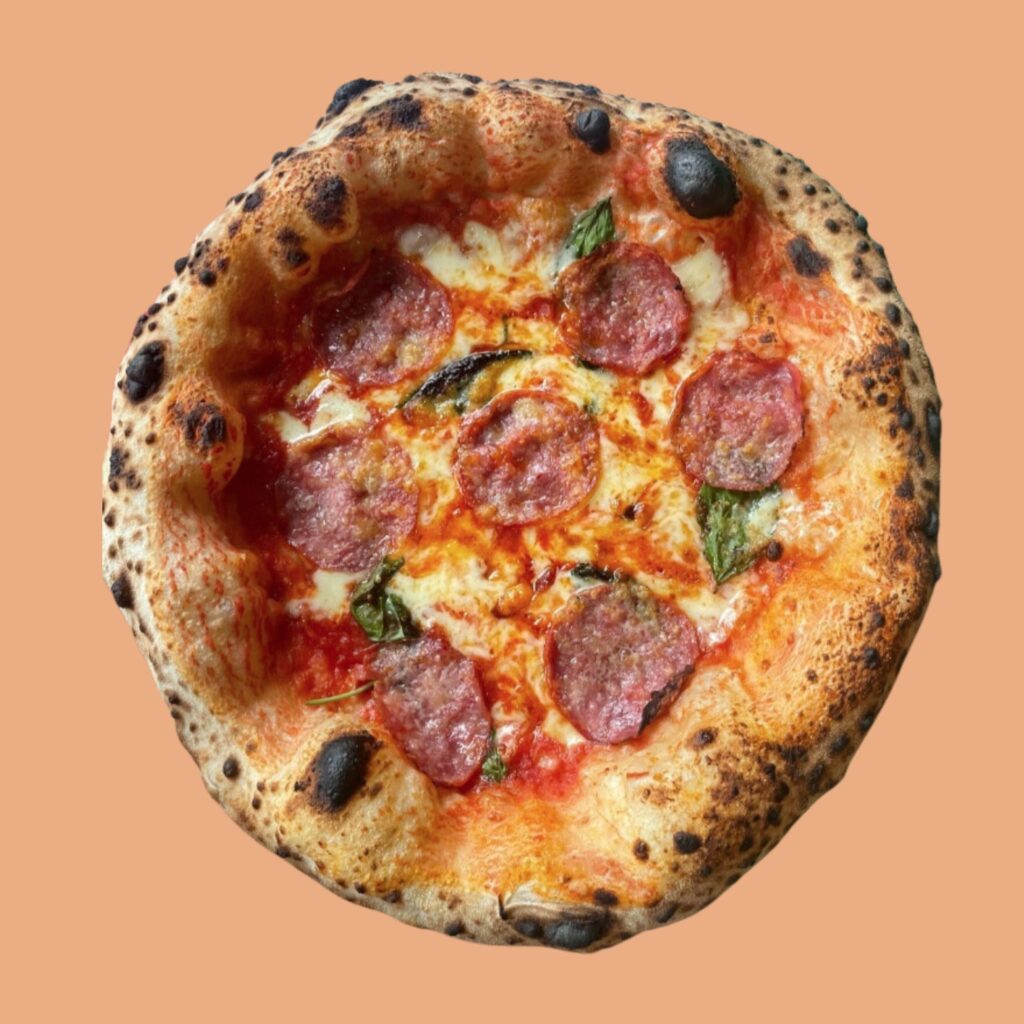
Just a few minutes walk from Waterloo and with a pizza that’s bubbling on the paddle within a minute or two of being ordered, Crust Bros is the ideal place for a quite bite before catching your onward train.
Despite the eponymous name, it’s not just the crusts that define the main event here; these are fantastic pizzas which exact an admirable level of restraint in terms of toppings, a few choice elements bringing the best out of that dough rather than weighing it down and overwhelming it.
You can also create your own pizza from scratch (no, they don’t let you go in the kitchen and get busy) using the menu’s flow-chart layout and a few flicks of the wrist, which adds a bit of fun. Hey, could we borrow a pen, by the way?
Ideal for eating bang-in-season grub at any time of year, all in a striking 19th-century drawing room…
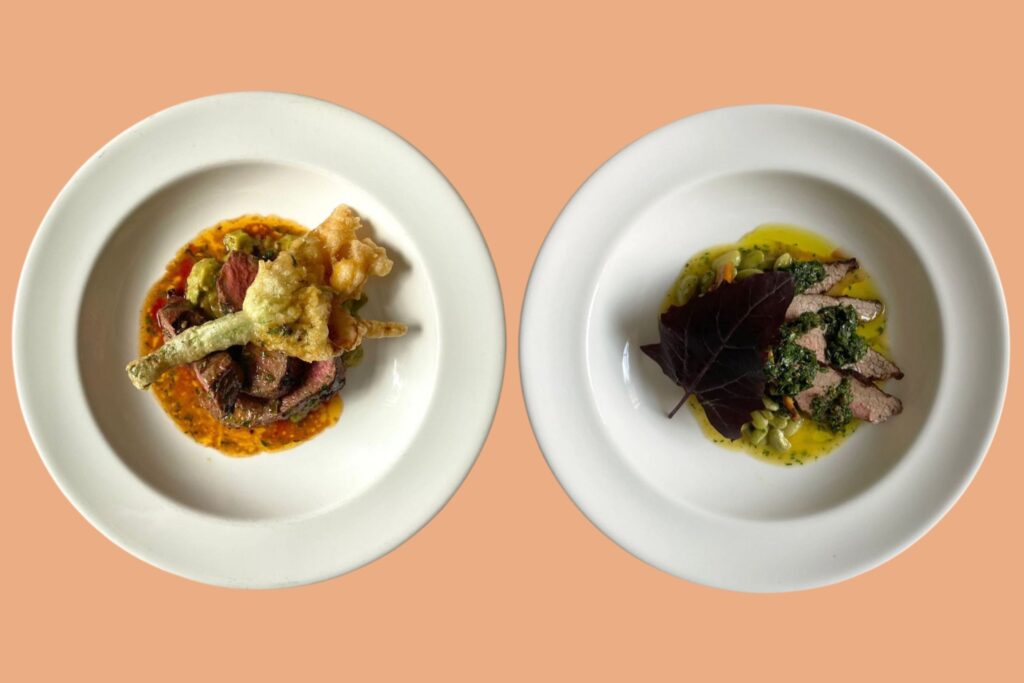
Spring Restaurant, located in the iconic Somerset House in London, is a culinary gem that deserves a spot on any ‘best restaurants near London Waterloo’ list, despite you having to cross the Thames to get there.
Not to worry; there’s pedestrian access over Waterloo Bridge, and whilst perhaps not long enough to properly build up an appetite, on a crisp, effervescent evening, the stroll can be kind of beautiful.
Spring is the work of the late Skye Gyngell, the Australian-born chef who passed away in November 2025 at the age of 62. Gyngell first gained recognition on these shores in the early 2000s at Petersham Nurseries in Richmond, where her fresh, seasonal cooking style earned a Michelin star and left a lasting legacy on London about how simple, ingredient-led Italian cooking can be served in a more relaxed setting.
She opened Spring in 2014, and it quickly became considered one of the best places to eat near Waterloo and the Southbank. The restaurant’s interior was designed by Gyngell’s sister Briony Fitzgerald, creating a gorgeous, inspiring space in which to spend time. On the plate, that same sense of care prevails, with just a few bang-in-season ingredients gracing each dish.
The set menu remains excellent value, with three courses currently clocking in at £39. Even more compelling is Gyngell’s innovative Scratch menu, which features dishes made from ‘waste’ produce. Running from Tuesdays to Saturdays between 5:30pm and 6:15pm and limited to 30 guests each service, it was a pioneering, thought-provoking approach to fine dining sustainability.
A case in point: the remilled coffee cake dessert, using grounds from post-meal espressos previously served to guests, served with an ice cream made of ‘spent’ figs. Three courses are yours for £40, and it remains a fitting way to experience a chef whose influence on British dining will be felt for generations.
Ideal for Syrian home cooking in a Somerset House setting…
Just a few doors down from Spring in the South Wing of Somerset House, Aram marks Syrian-born chef Imad Alarnab’s latest venture. If the name sounds familiar, it’s because Alarnab has already won over much of London with Imad’s Syrian Kitchen in Soho, a restaurant that began life as a crowdfunded popup and now regularly fills with customers curious about a cuisine still underrepresented in the capital. They leave no longer curious but wholly convinced, and so it is at Aram, too.
Aram operates as a café and deli, a slightly more casual affair than its Soho sibling, though the cooking is no less considered. As of February 2026, the place also opens for dinner, with a cocktail list and a mezze-leaning evening menu that shifts the mood as the light drops over the river terrace. The mudakhan ghanam is the star of the show here; a generous plate of slow-roasted lamb shoulder over delicately perfumed basmati rice, the meat tender and giving, scattered simply with cashews for texture.
Lighter appetites will find plenty to pick at, which is fitting for the deli-leanings here. A roasted aubergine salad arrives cool and smoky, the flesh collapsed and folded through with chickpeas, red pepper confit, and a scattering of pomegranate seeds that pop against the earthiness of it all. It’s zigzagged playfully with a warming tahini dressing. Of course there is hummus, too. And of course, it’s gorgeous. This one comes topped with urfa chilli and crunchy chickpeas. Warm pita makes short work of both.
There’s a sweetness to the place that extends to dessert: the pistachio yoghurt pairs Greek yoghurt with hibiscus-poached pear and a slick of chocolate, straddling the line between pudding and breakfast.
There’s a handful of cocktails but there’s something so nourishing and calm about the place that we went for the mocktail instead, a refreshing pomegranate spritz that pairs well with the food. It leaves you invigorated for an afternoon exploring the Courtauld. Or, indeed, for that short walk back to Waterloo.
Ideal for sophisticated pub grub with a Mediterranean bent…
From the restaurant group behind the acclaimed Canton Arms in Stockwell and Oxford’s Magdalen Arms comes the Anchor & Hope, one of the best places to eat in the vicinity of London Waterloo station.
Though this is a pub first and foremost, the menu here carries plenty of intrigue and a decidedly Mediterranean bent, whether you’re enjoying a simple snack of creamy, spreadable calf’s brain on crostini or a something altogether heartier like blushing fallow deer done in a Provencal style and draped over wet, parmesan laden polenta.
Even the ‘worker’s lunch’ here, a snip at £18 for three courses, is far removed from your pub Ploughman’s. Recently, a quail, roast on the crown, was paired with couscous and a tzatziki positively humming with garlic. Very delicious indeed, and remarkably well-suited to a freshly poured pint.
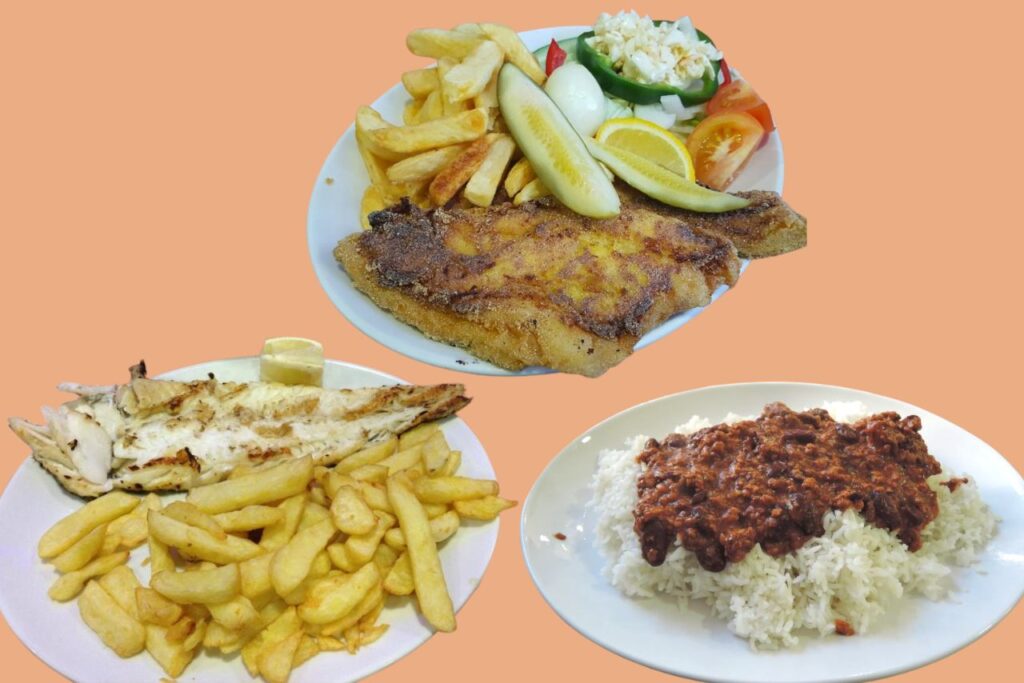
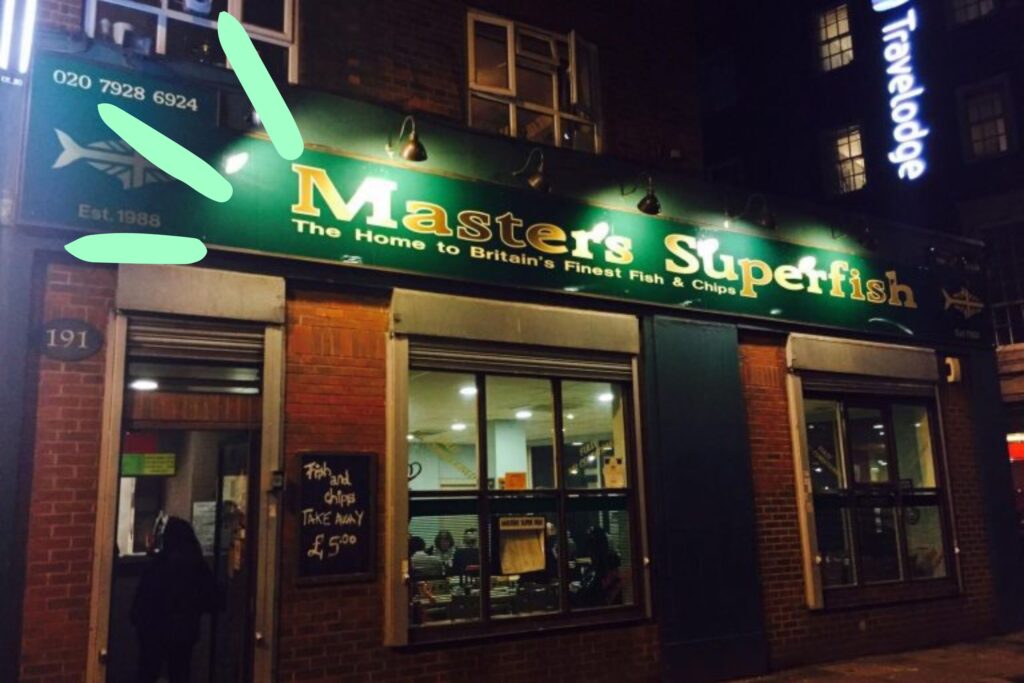
Should you be keen for more traditionally ‘British’ fare just a short stroll from the station, then Masters Superfish has been dunking the good stuff in bubbling vats of fat for generations.
Here, the fish is sourced from Billingsgate daily, the chips are the kind to render a sheet of newspaper translucent, and the pickles are bottomless and full of bite. What more could you want from a chippy?
Though you can enjoy your fish and chips in the Masters’ canteen-like surrounds, you could of course head back to Waterloo with a takeaway the size of a baby under your arm, and make the whole train carriage jealous as you embark on your onward journey. Decisions, decisions.
Ideal for some of the best Trinidadian food in the city…
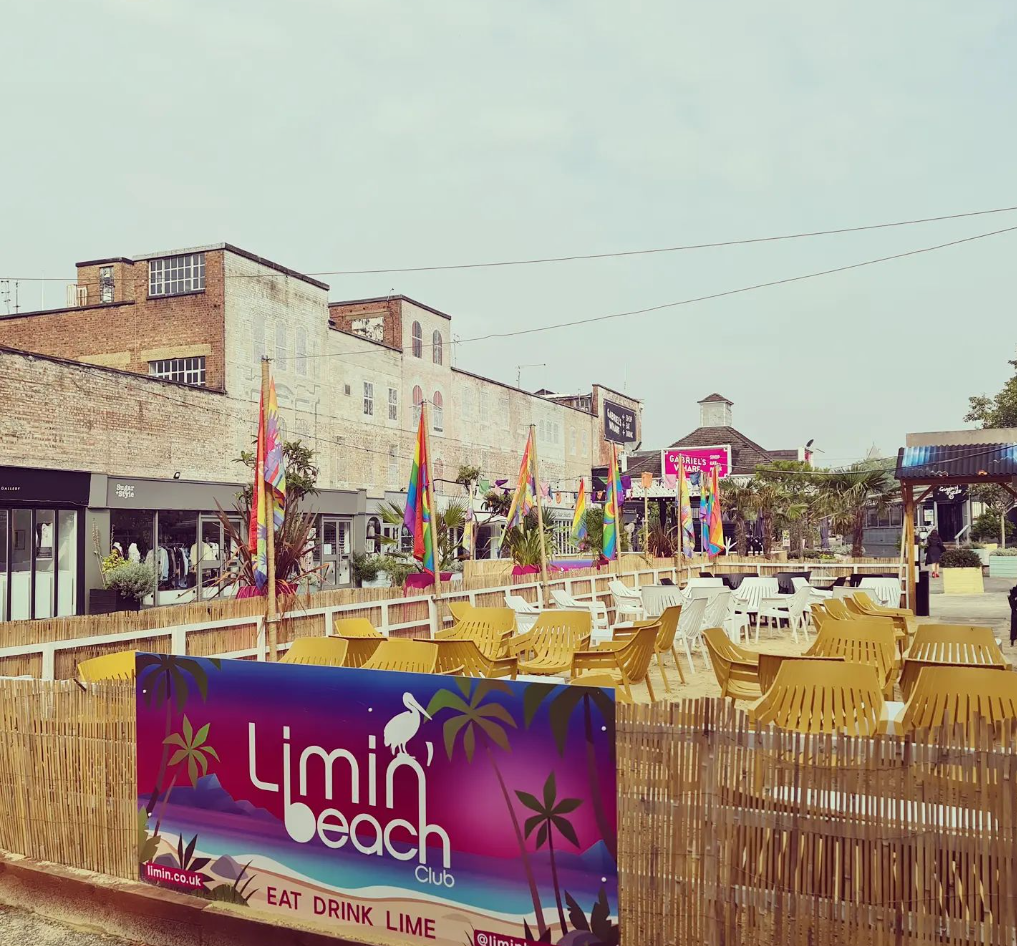
Image via Limin Instagram
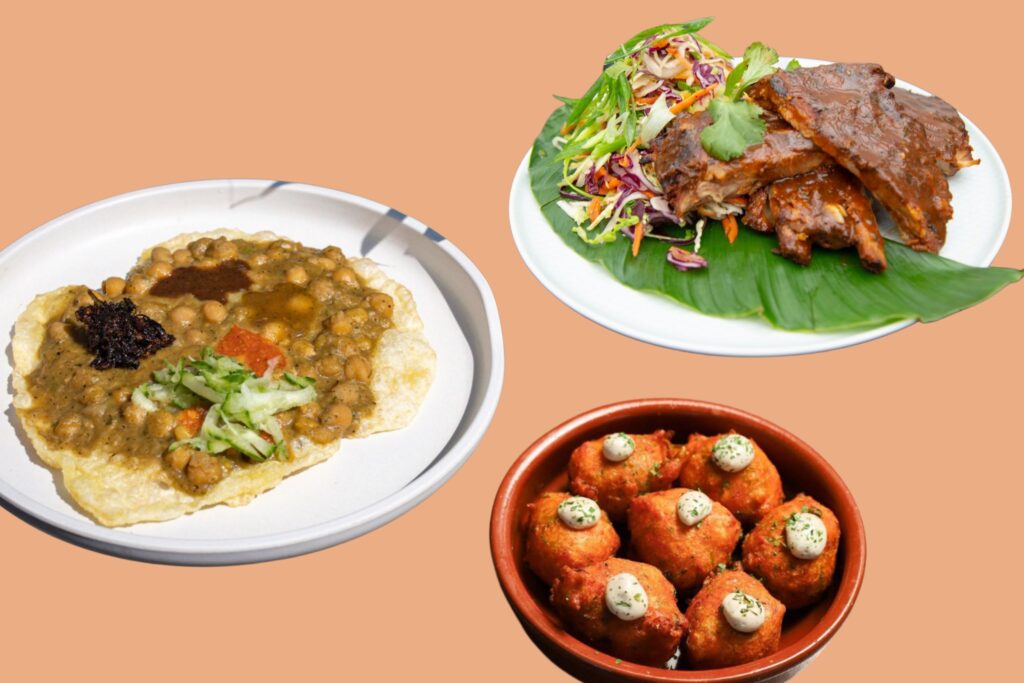
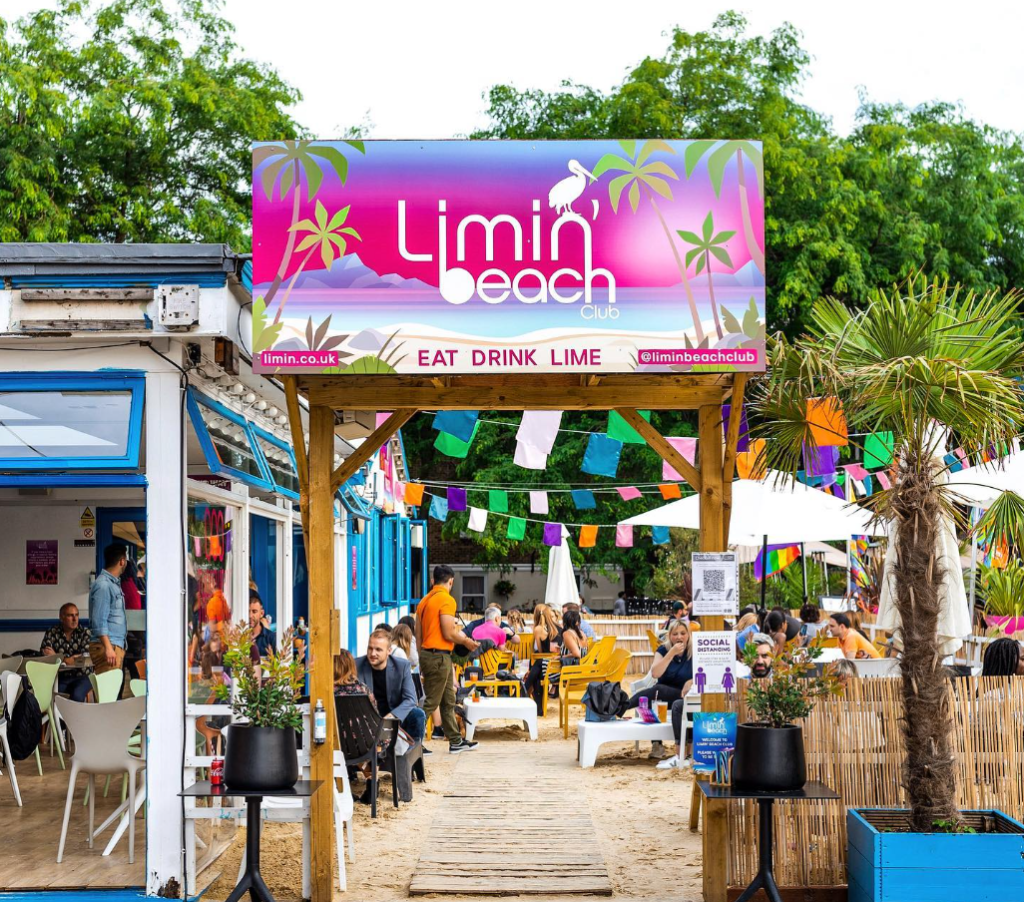
If you were going on GPS only, you might assume Limin’ Beach Club has found something of an unlikely home at Gabriel’s Wharf, just off the South Bank’s main drag. But visit this ode to the beloved Trinidadian pastime of limin’ and you’ll quickly understand why it’s settled into a soca-soaked rhythm here; on a stretch of sand adjacent to the Southbank Centre, chef Sham is slinging out some of the best Trinidadian food in the city, all from a nautically-coloured beach hut.
Here, cooked to order roti is simultaneously flakey and crisp, and is served alongside either curry (a choice of oxtail, sea bass or chickpea on our last visit), or a leg of chicken properly blistered and burnished on the restaurant’s massive charcoal grill.
Of course, you’ll want to order some doubles while you tuck into a rum cocktail or two. Trinidad’s national dish, at Limin’ it’s an intricately spiced affair of dangerously sloppy channa (chickpea curry) sandwiched between two bara (fried flatbreads) which are then folded and consumed as tidily as is conceivable. Fortunately, if you make a mess here, you can just sweep it under the sand!
Don’t actually do that, of course…
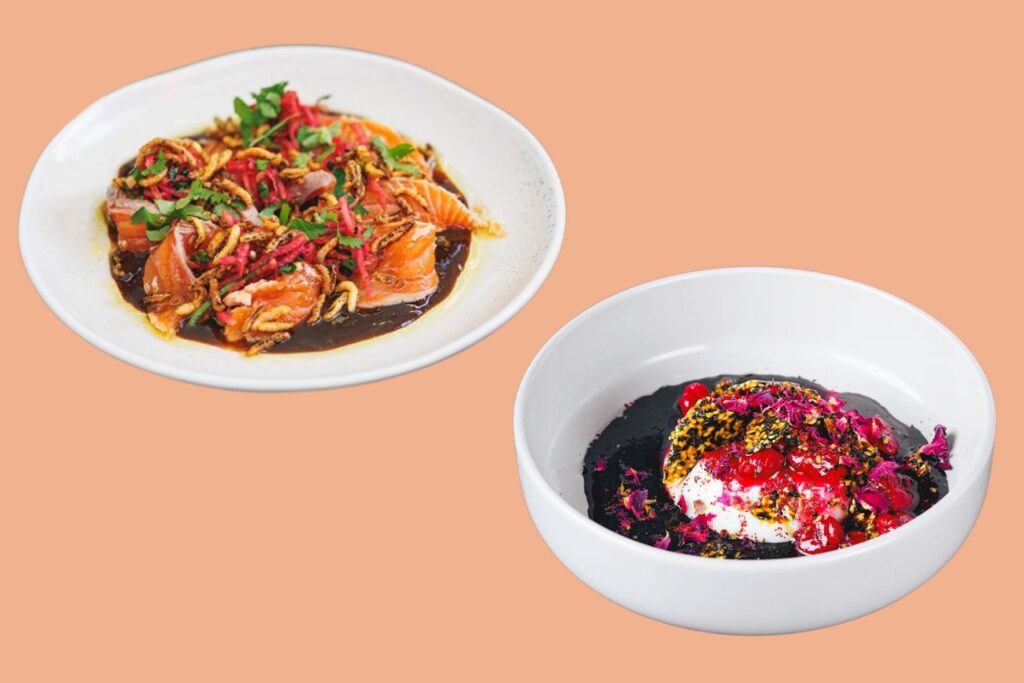
Since our last visit, Limin’ has been stacking up the silverware. Chef Sham’s operation was named the UK’s Best Caribbean Restaurant at the 2024 UK Caribbean Food and Drink Awards, before following it up with the People’s Choice Restaurant of the Year gong at the Be Inclusive Hospitality Awards in 2025. For a spot that started life as a pop-up in Spitalfields Market, that’s quite the trajectory.
Ideal for the flavours of Tel Aviv with plates full of verve and vibrancy…
Head back beyond London Waterloo station and into Bankside’s Old Union Yard Arches, and you’ll find a thriving little courtyard of culture and culinary intrigue.
Nestled in here is Bala Baya, a restaurant inspired by the smells, sights, sounds, and, of course, flavours of chef Eran Tibi’s upbringing in Tel Aviv.
The celebration of the multi-sensory is apt, as it’s noisy in this lively yet functional space, with large groups descending on Southwark for plates full of verve and vibrancy. This is food built for sharing, make no mistake, with long and leisurely lunches of feasting and frivolity very much encouraged here.
The prawn baklava is something of a signature here (certainly in our eyes), coming with piquant notes from lime syrup and cream, and given an aromatic edge with a dusting of pistachio and rose. Just fabulous, and served to allow every member of the squad a portion.
Ideal for some stunning Southern Vietnamese flavours…
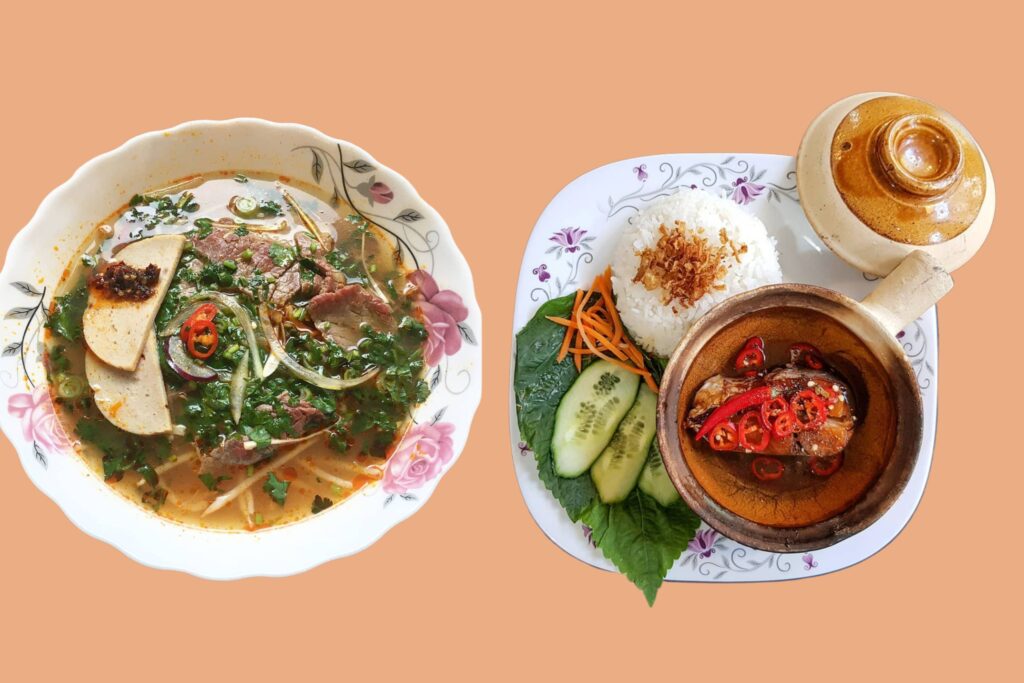
Whilst the majority of genuinely great Vietnamese food in London is found in and around Shoreditch’s Kingsland Road, you can still find a few gems south of the river, and one of those is Union Viet Cafe.
A ten minute walk from the station and one of the best places to eat near London Waterloo, Union Viet Cafe swings more Southern Viet in its delivery, with the dishes generally sweeter and spicier than their more austere Northern counterparts.
Here, the Ho Chi Minh City streefood staple bo la lot – minced beef wrapped in vine leaves and grilled – is bang on the money, served alongside lettuce, herbs and dipping sauces so you can make your own wraps, just as it should be.
The delicate, smoky bun thit nuong, which sees thin slices of pork belly grilled and served over fermented rice noodles and loads of herbs, is a real winner for a swift light lunch. Or, you could settle in for something heartier; the restaurant does a range of noodle soups, including pho, bun bo hue and more.
Ideal for proper Japanese home cooking that won’t break the bank…
We’re tucked away in the tourist honeypot of County Hall again – that grand Edwardian Baroque building which once housed the London County Council and later the Greater London Council that we realise as we finish this aside that we’ve already introduced – in search of great Japanese food.
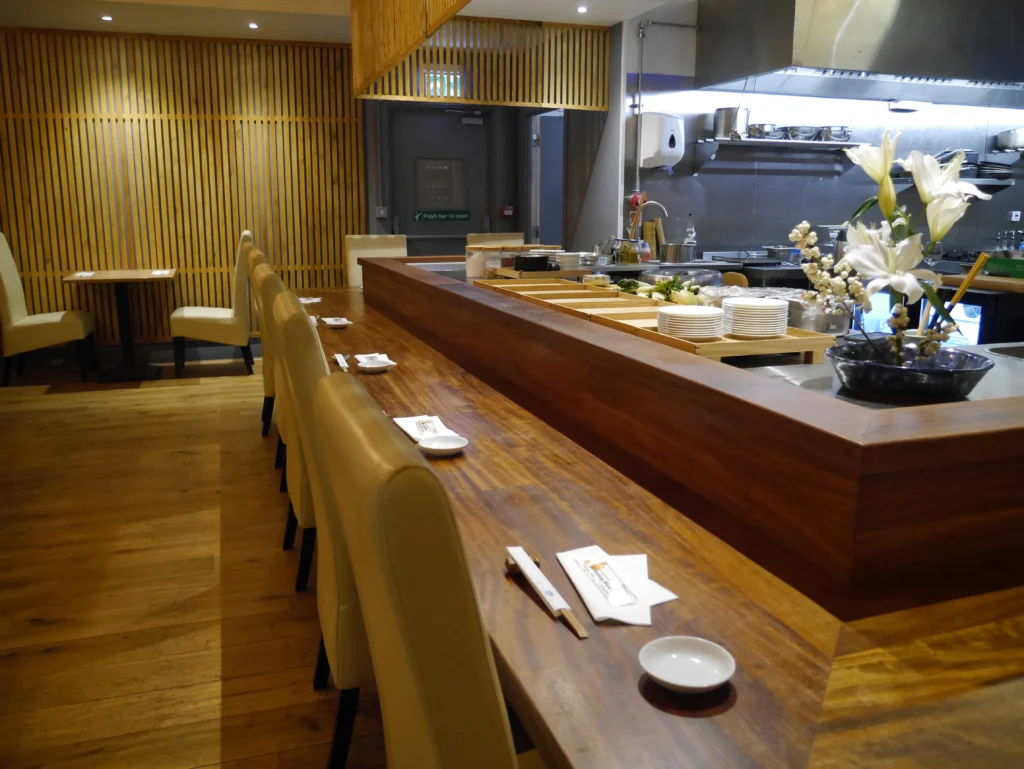
That said, Sagamiya feels like stumbling upon a secret. This husband-and-wife operation from Kanagawa Prefecture offers the kind of authentic Japanese dining experience you might expect to find in a Tokyo side street rather than steps away from the London Eye.
The restaurant’s strength lies in its pitch-perfect execution of Japanese comfort food classics. Their chirashi bowl is a masterclass in gentle (as in; not tweezered) precision – pristine slices of akami, chutoro, yellowtail and salmon arranged with artistic flair over perfectly seasoned rice, completed with plump prawns, scallops and unagi. The salmon belly teriyaki bento (£15), meanwhile, arrives with skin crisped to perfection and flesh cooked just so, accompanied by proper miso soup that tastes like it’s been simmering since dawn.
The space itself is refreshingly unpretentious – a handful of tables and counter seats facing the open kitchen create an atmosphere that’s more neighbourhood favourite than tourist trap. It’s the sort of place where City workers loosen their ties over steaming bowls of home-style cooking and play at being salary men, and solo diners find themselves nodding along to Japanese rock whilst tucking into impeccably made tamago.
Evening services bring additional treats, with warming oden and homestyle cabbage rolls making occasional appearances. You’ll find them doing their thing Tuesday through Saturday, with a neat split between lunch (noon until 2pm) and dinner (5:45pm until 9pm), taking a well-deserved rest on Sundays and Mondays. Just don’t expect to show up with your entire office in tow – like the best things in life, Sagamiya works best when kept intimate.
If you haven’t found anything in and around Waterloo to satisfy your hunger, then why not take the train a little further south to Battersea, and check out some of the great places to eat near Clapham Junction. A tour of London’s train stations never tasted so good!
No matter who you invite over for a divine dinner party – and even if you’re dipping into nothing more spectacular than fish and chips – the right dining room can transform any meal into a fancy affair.
For many years, formal dining rooms at home fell very much out of fashion, with laid-back, open plan spaces particularly popular. However, as reported by Apartment Therapy, lately “there has been a significant increase in the demand for dining room design.” And we’re not surprised.
The dining room is a room with a focused, bona fide purpose; you come here to relax, converse, eat well, and enjoy a room and table curated to maximise the pleasure of conversation and eating. As such, it should be one of the finest rooms in your house, and with that in mind, here’s how to add a touch of luxury to your dining room.
A Sophisticated Dining Table
Unquestionably, the centrepiece of any dining room is the table itself, so it’s wise to choose a bespoke piece for this most elegant of rooms. Let’s just put it this way; even a takeaway pizza would feel highfalutin on a sophisticated centrepiece. That sense of occasion starts with choosing a table built to last, rather than one destined for replacement in a few years’ time.
Paul Silk, General Manager of Steve Bristow Furniture, says there has been an emerging pattern in dining table shopping lately: “There’s a very recognisable customer now: someone who has bought cheap two or three times and made a deliberate decision to stop. Many describe being on their third or fourth dining table before finally deciding to invest properly. They’re not just thinking about quality any more. They’re thinking about permanence. They want something made for their specific room, from material they’ve actually chosen. The warehouse-floor approach simply doesn’t speak to that.”
Elegant Dining Chairs
Some people believe that comfort is the ultimate form of luxury, and we couldn’t agree more. While we’re fans of those picnic bench dining tables and chairs beloved of a certain farmhouse kitchen aesthetic, they have no place in a dining room, especially if you’re looking to host long, languid dinner parties.
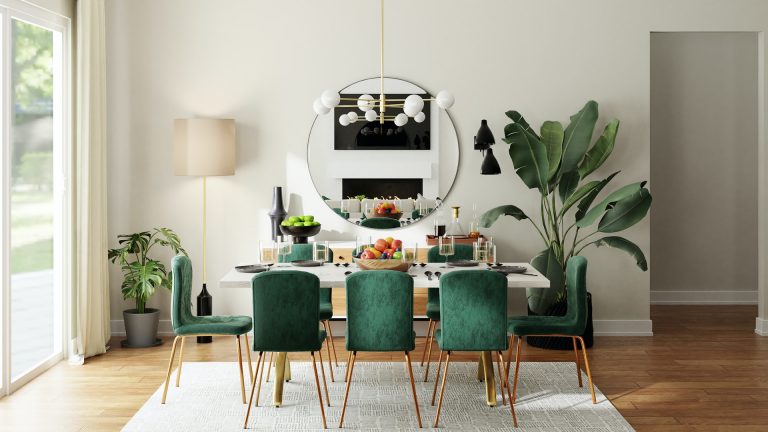
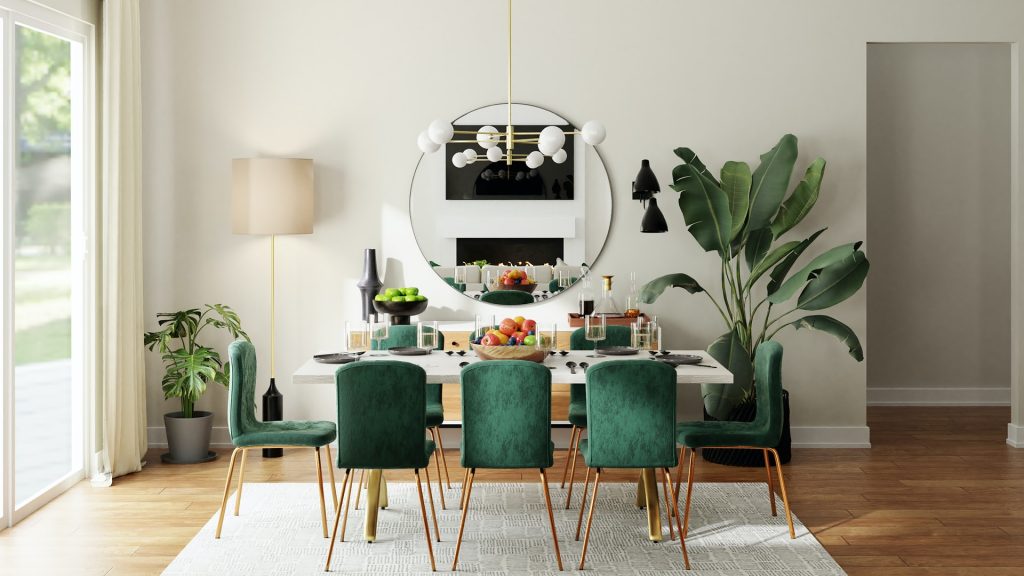
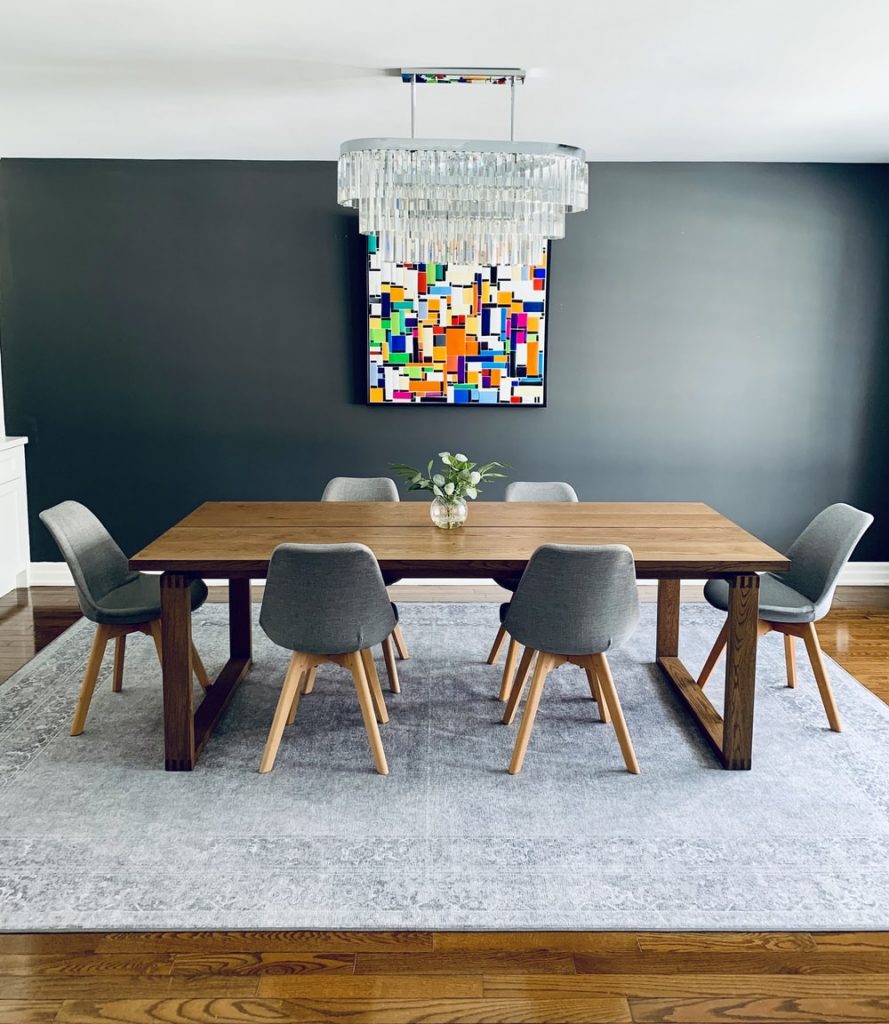
Instead, go for elegant dining chairs, upholstered in a dark shade, preferably in regent style if there’s plenty of texture to the rest of your dining room. Alternatively, a wooden side chair, dressed up with a cushion, of course, works well.
The Velvet Curtain
If you’re looking to decorate your dining room like a Michelin star restaurant, then why not add a theatrical entrance to your dining room with a heavy velvet curtain at the entrance and to your windows? This adds that touch of mystery; moving the curtain aside reveals a room of wonder and promise, and what could be more luxurious than that?
Add A Rug
We think adding a rug under your dining table brings texture and warmth, and is a must. The design experts at Houzz recommend erring on the side of too big and suggest that “a dining room rug should have at least 60cm of extra room on all sides of the dining table to allow enough space for guests to pull out chairs without tripping over the rug.“
Indeed, area rugs are the unsung heroes of dining room design, anchoring your space while absorbing sound and creating a more intimate atmosphere. When selecting the perfect rug, consider materials that can withstand inevitable spills while still feeling luxurious underfoot – wool blends with stain-resistant treatments offer the ideal balance of practicality and comfort.
Consider A Chandelier Or Statement Lighting Piece
Lighting is a crucial element to dining rooms and can make or break that feeling of luxury.
Take a design tip out of chef Alain Ducasse’s restaurant empire and add some sparkling chandeliers to your dining room to bring that sense of glamour to proceedings. Though you might not be able to cook like the renowned chef, your room will certainly feel the part.
Introducing statement lighting can also bring a unique, eye-catching touch to a dining room, amping up the luxury factor at the flick of a switch, so hang a glamorous chandelier or a unique mixture of ceiling fixtures, table lamps or pendants. This gives you the opportunity to play around with the lighting options and create a different ambience depending on the time of day and level of formality of your meal.
Another idea for lighting which will glam up any room instantly is to install mounted wall-hung lights – as far as we’re concerned, this type of lighting adds the wow-factor to any room.
Choose Cutlery & Ceramics Carefully
Every good dining room has a beautiful sideboard, and on top, carefully curated crockery and ceramics designed to chime with the overall aesthetic of the space.
As Elle Decor highlights, “The days of classic china in fine-dining restaurants are long gone. Chefs now work directly with makers to create tableware that adds high drama to the story of food.”
And while you might just be a humble home cook, you can still channel this sensibility, and source local, handcrafted pottery and glassware for your dining room.
It’s also worth considering food psychology when choosing your ceramics. As NPR explains “The shape and color of the dinnerware can affect taste as well. In general, round, white plates tend to enhance sweet flavors in food, whereas black, angular plates tend to bring out more savory flavors… and serving food on a red plate tends to reduce the amount diners eat.”
A conversation starter when the chatter runs dry; every good dining room should have some art. Art has a transformative effect in any room and evokes powerful emotions. As such, different pieces can instantly change the atmosphere of a room and wrestle back control and intrigue from a dinner party in danger of turning stale.
For example, abstract art featuring geometric forms and bold colours can add vivacity and character to a room while impressionistic pieces can add a whimsical, tranquil vibe. Also bear in mind the psychology of colour when it comes to choosing your piece as different colours evoke certain feelings and elicit certain reactions. Yellow, for instance, is uplifting and associated with happiness and sunny dispositions while blue is known to soothe the mind because of its cool, calming effect.
Choosing great art for your dining room can be a tricky, risky balancing act. Subjective, of course, but there is a very fine line to tread between subtle steps of sophistication and a clumsy tumble onto the carpet.
Embrace Minimalism
It might seem counterintuitive, but the first thing you’ll notice about most Michelin star restaurants these days is that minimalism defines their idea of luxury. Yep, in many cases, less really is more.
Sure, you’ll require signature pieces and focal points, but always add with restraint in mind; a surefire way to a sophisticated aesthetic, we think. On the flipside, cramming in loads of furniture will only make the space look congested and untidy. Keeping the décor simple with a few signature furniture pieces like that chandelier and piece of art we spoke about earlier will add pizzazz to your living room without unecessarily adding to the clutter
There is a moment, somewhere between the entrance and your tent, when the present tense loosens its grip. Something shifts. The movement of canvas fluttering gently in the breeze, the brass fittings catching the afternoon light in a place rendered in immaculate, hazy sepia, the low hum of cicadas tuning up for the evening: it is the set of a story from another era, a world of slow, soundtracking ceiling fans, letters written by hand, and expeditions that have not yet acquired an itinerary.
If you have watched Out of Africa with Meryl Streep and Robert Redford and found yourself coveting a certain vintage safari style, nostalgic for the golden age of travel, you are not alone. The romantic notion of this kind of adventure has held travellers in its grip for the better part of a century, and shows no sign of letting go.
In the wrong hands, it can feel trite, as if every luxury hotel PR deck from Botswana to Rajasthan has borrowed the same mood board. But when it’s pulled off with real conviction, it works.
Twinpalms Tented Camp, an adults-only retreat that opened in December 2024, is one of the most convincing attempts to pair modern comfort with old-world charm we’ve encountered, in actual Africa or, erm, out of it, borrowing the romance of the safari lodge but blessing them with Thai touches. It also marks the Twinpalms group’s first foray into the luxury tented-camp concept, and it exists because of one man’s obsession.
Olivier Gibaud has run Twinpalms as General Manager since the group’s Swedish founder Carl Langenskiöld opened the first property on Surin Beach in 2004. A trip to South Africa and India had left him with a specific preoccupation: luxury tented camps. During Covid, with nowhere to go and time to fill, he ordered a tent from Dutch design studio Escape Nomad and put it up in his garden near Phuket Town (sounds a bit like my Covid, but swap Phuket Town for Stockwell, and garden for living room, pretending it was Glastonbury). One tent became five. He named the project Aladdin Luxury Camp, handed it to his son Sebastian to run as a separate business, and it still operates today near Royal Phuket Marina.
But the idea didn’t stop there. Gibaud’s enthusiasm for the format eventually won over the Twinpalms group, which originally opened its first five tents on Bang Tao Beach, and added a further 24 around a purpose-built lagoon shortly afterwards.
The Location
The first thing you notice once you’re through the gate is the stillness. Not the absence of noise, because the crickets see to that, a wall of sound so appropriate for the setting it almost feels piped in. Rather, it’s the absence of a particular noise that follows you around Phuket’s west coast: the low-grade drone of a place that has been packaged for consumption, the nondescript ‘tropical vibes’ playlist, both aural and aesthetic. The tented camp isn’t that.
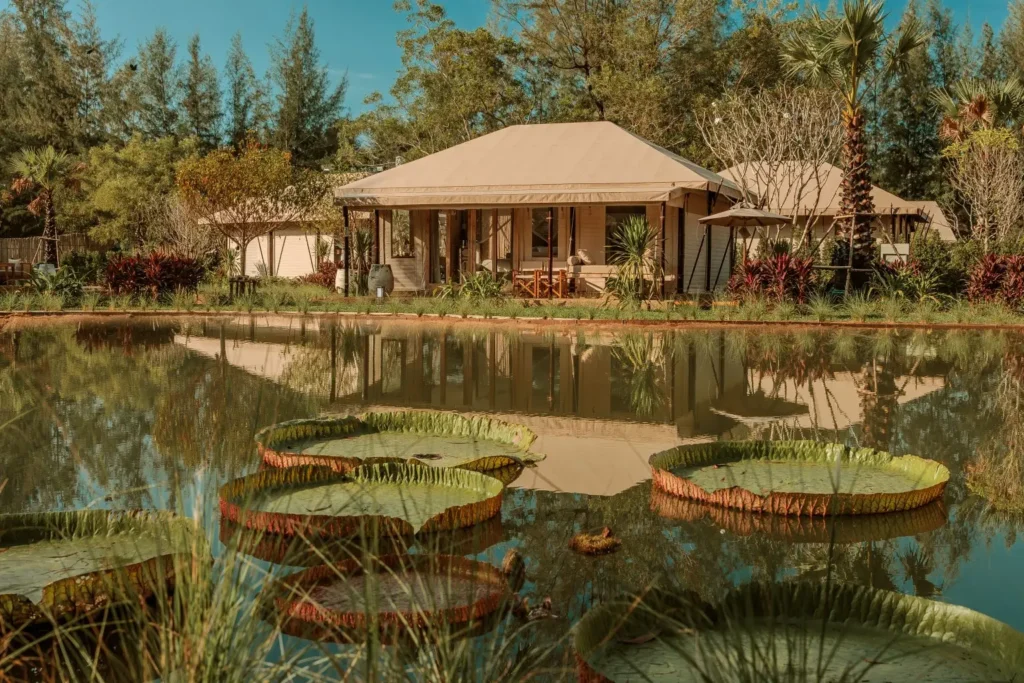
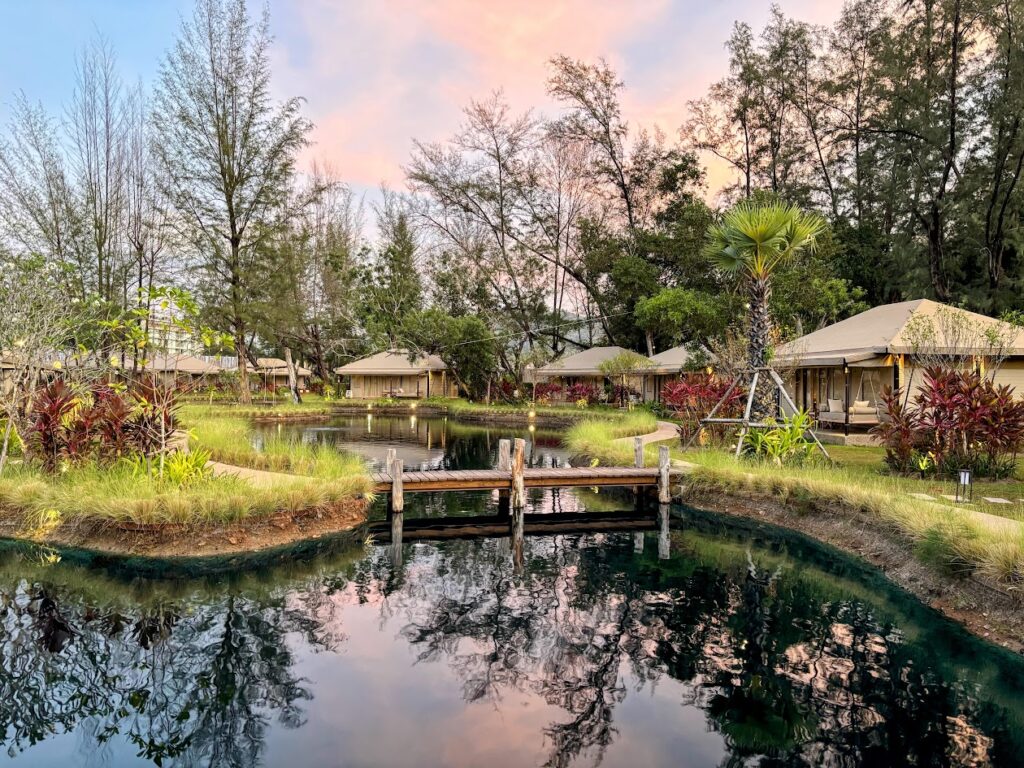
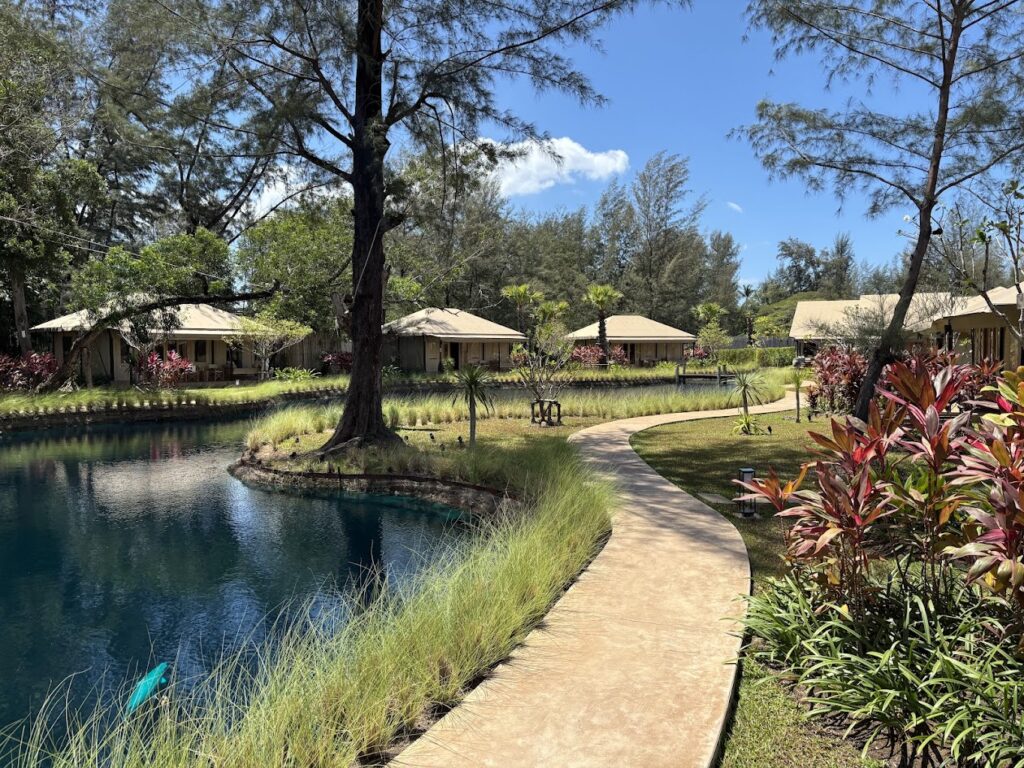
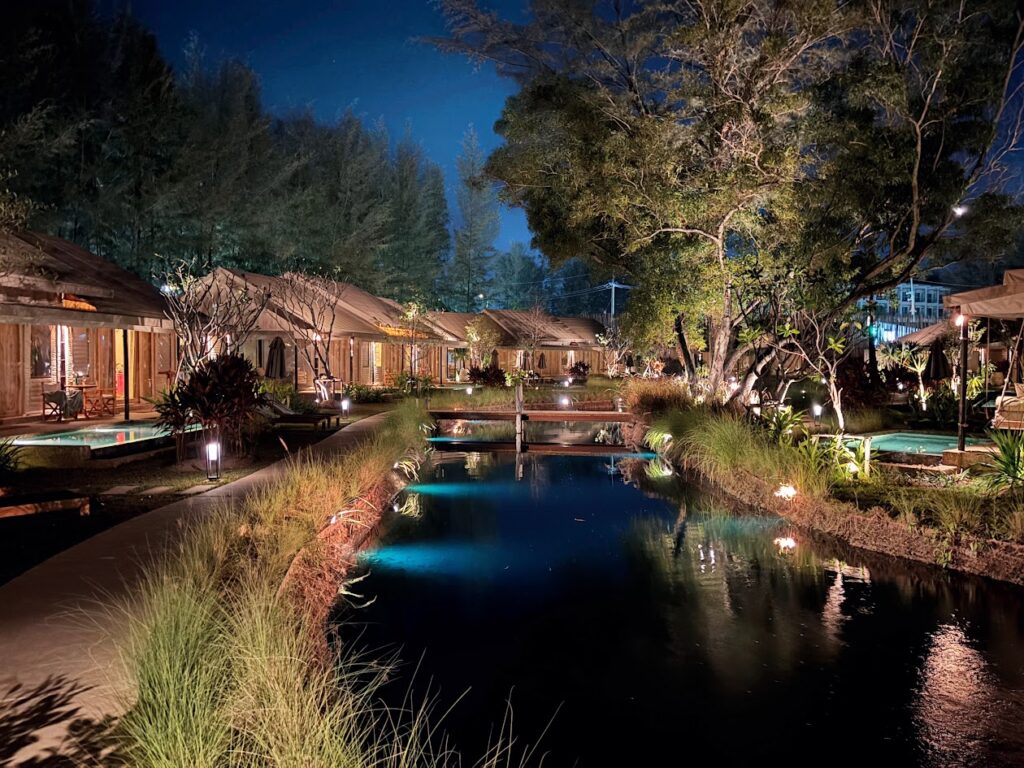
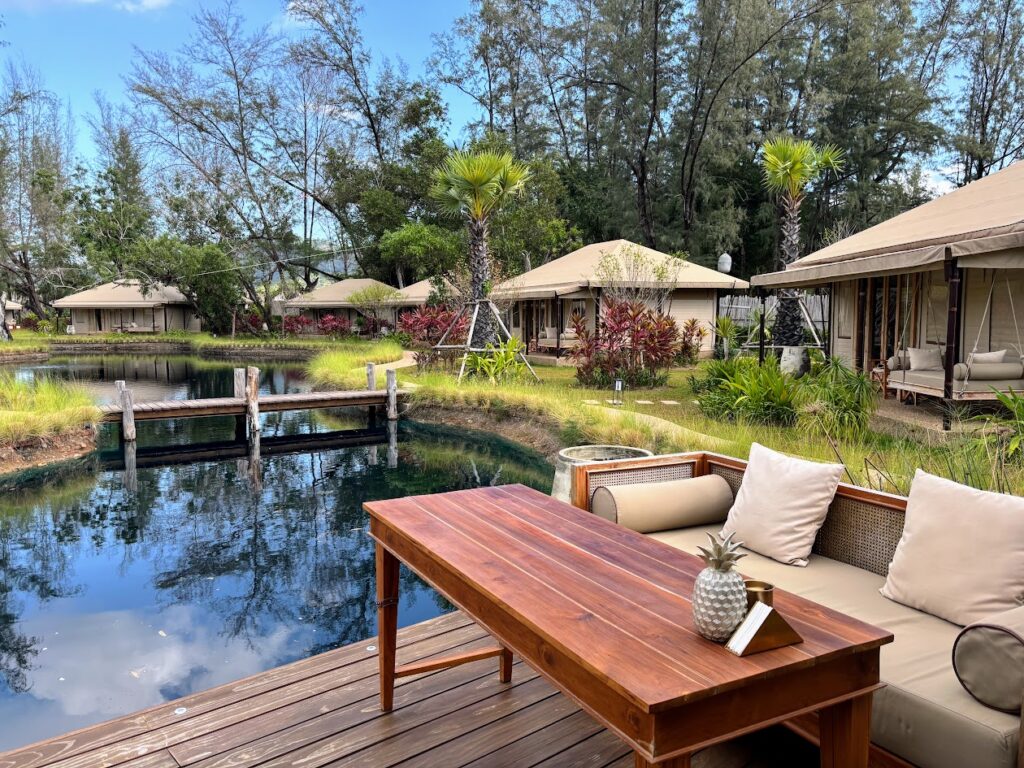
Sitting pretty around a purpose-built lagoon, the camp occupies a strip just back from Bang Tao Beach, set apart from it in a way that most of Bang Tao’s west coast properties are not. Across from the site, livestock graze open land, a reminder that this part of Phuket still has a rural hinterland that the tourism boom has not entirely consumed.
Buffalo grazing opposite the groundsBang Tao Beach
The world outside feels considerably further away than it is. The beach itself is a two-minute walk from the lagoon tents, though nobody here expects you to walk. This is still five-star luxury after all, just dressed up a little differently. There is no neighbourhood to wander here, no street food strip a short walk away. The camp sits on Bang Tao Beach Road, which is functional rather than characterful, and guests without a scooter or taxi are largely dependent on the Twinpalms network for eating and drinking.
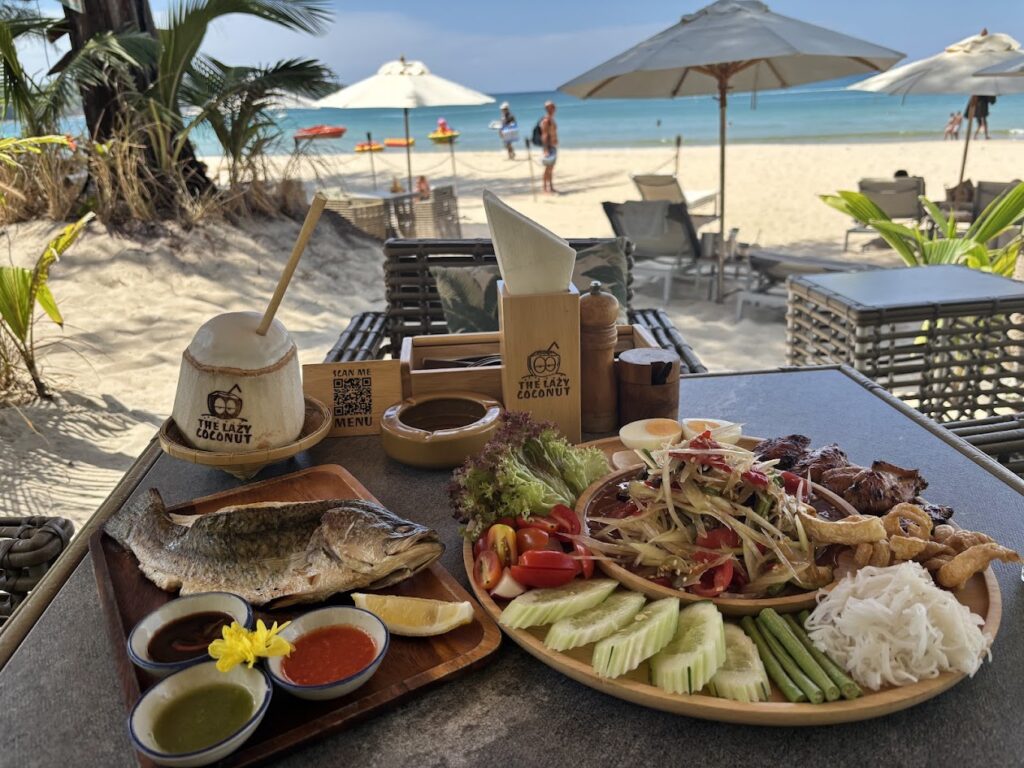
Given the quality of what that network offers, this is less of a limitation than it sounds. A buggy is on hand whenever you need it, shuttling guests between the tents and Twinpalm’s Catch Beach Club and Lazy Coconut a few minutes up the road. A separate shuttle connects all other Twinpalms properties (we told you that no one expects you to walk), including Wagyu Steakhouse at the Twinpalms Surin and Shimmer at Twinpalms MountAzure.
A bit further out, Boat Avenue and Porto de Phuket are around three kilometres inland, with the best concentration of international restaurants in the area and a well-stocked supermarket. Surin, a smaller, more boutique stretch of sand with its own strong café and dining scene, is just over two kilometres south. That trusty shuttle will take you there if you get itchy feet.
Character & Style
But why would you, unless the mozzies have feasted on your ankles, of course? This is the kind of place you come to switch off, to digitally detox, to linger…
…but not to do any actual animal spotting, we should add. If you came expecting an actual safari, you’re in the wrong place. But you didn’t, did you? Because you did your due diligence and read this first. The most exotic wildlife you will encounter at Twinpalms Tented Camp is a handful of buffalo grazing across the road, the occasional soi dog sniffing around, some carp doing lazy laps of the lagoon, and a rotating cast of brightly coloured birds.
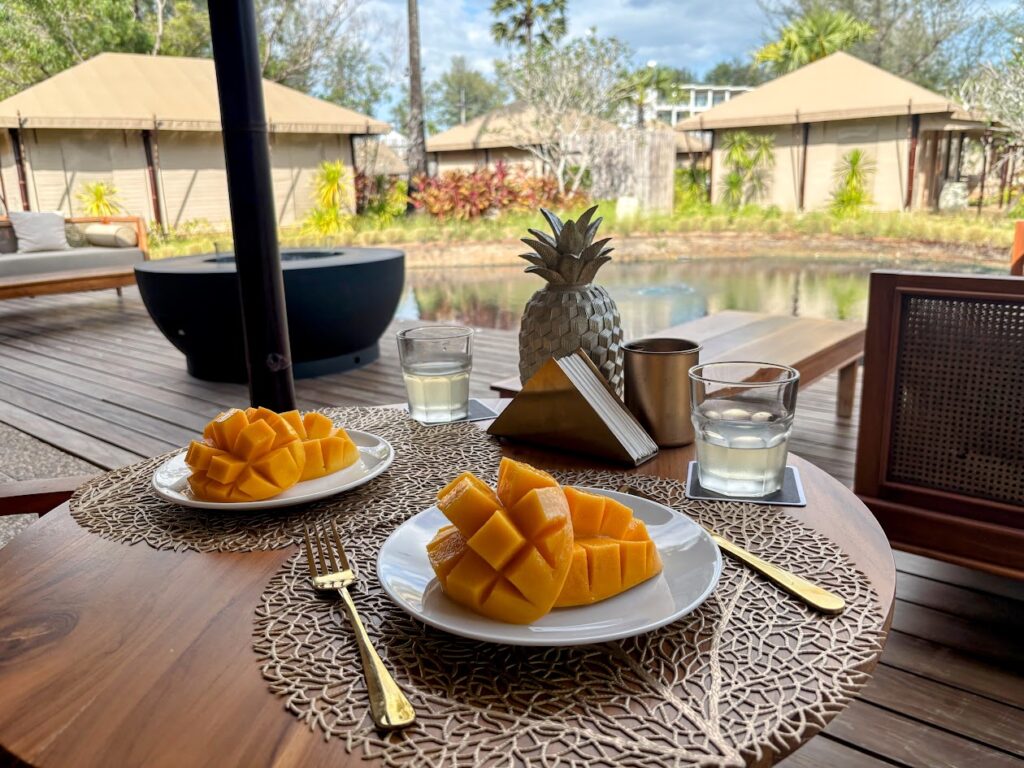
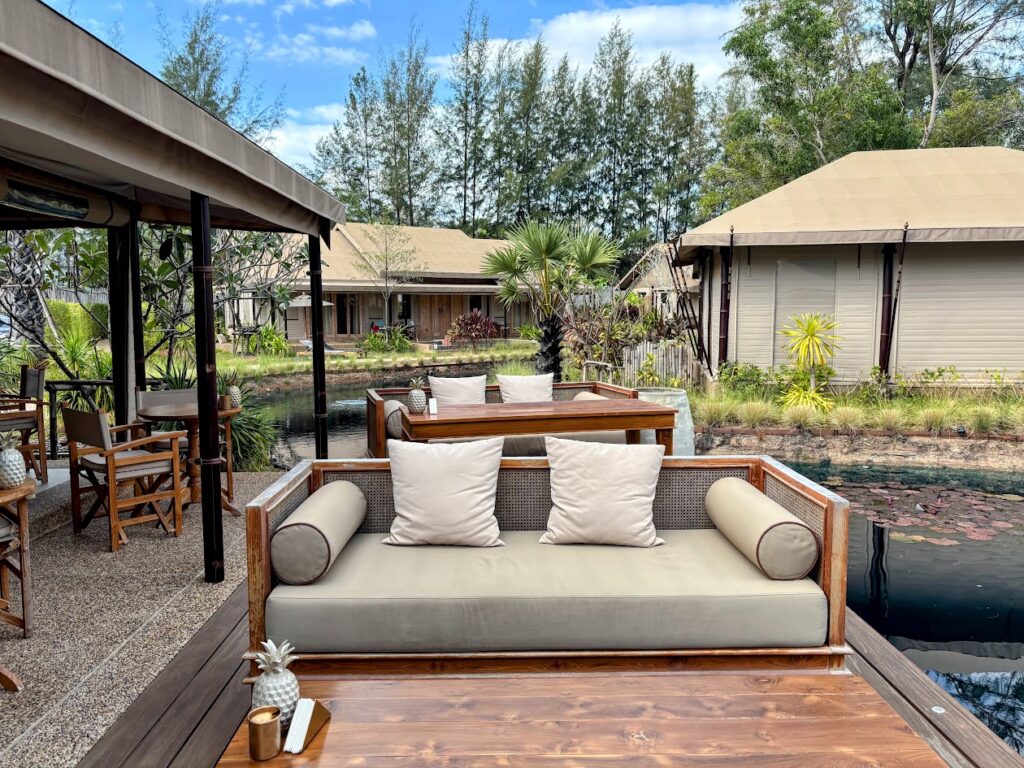
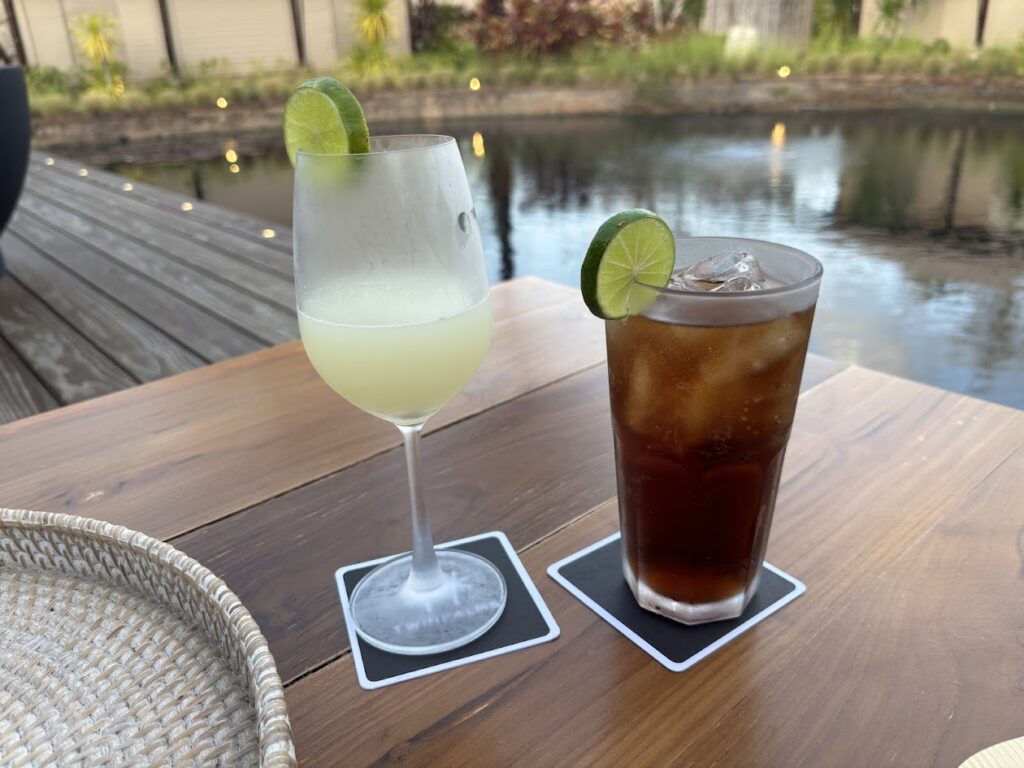
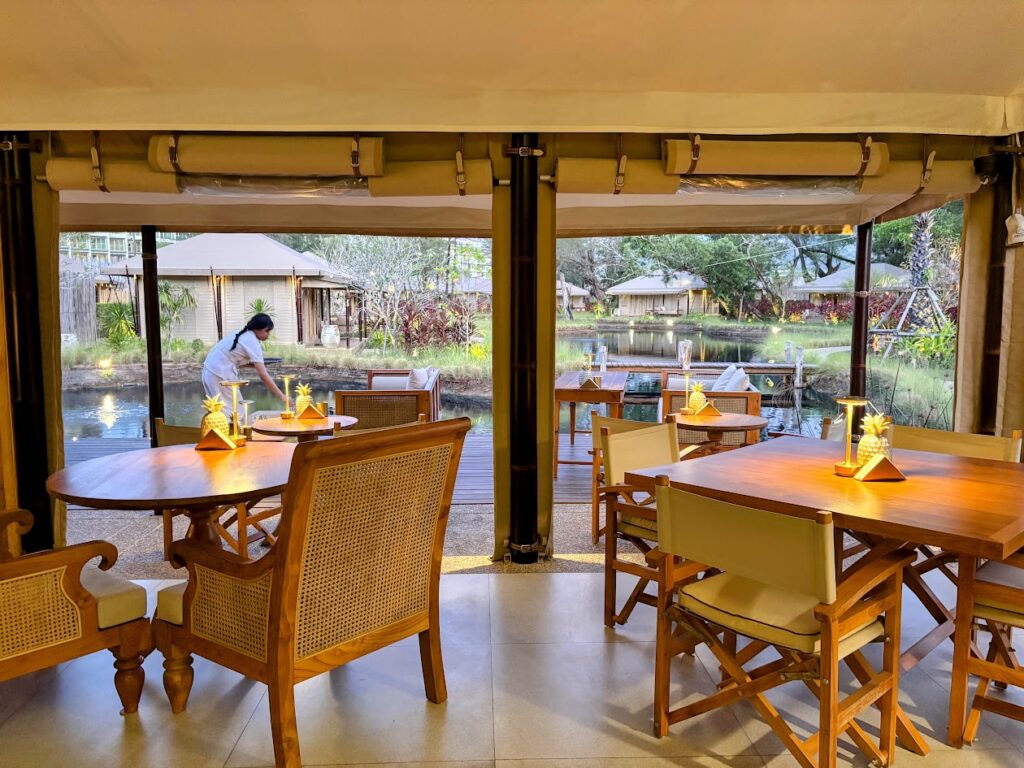
It is not safari, not remotely, but the sensibility is there, and it works in setting a tone. In the evening, the camp takes on a different character entirely. Sitting in the main lodge makes you feel weightless and timeless, especially out on the deck with a sundowner in hand, watching the day soften and the sky’s reflection settle on the water. You could be anywhere, at any time, in any century, the decorative silver pineapples on your table and the real thing in your cocktail the only clue you’re at 7.88° N latitude. Try plonking yourself here and guessing the decade without context; you’d struggle.
The tropical garden is still in its infancy, but there is enough lush planting to give the camp a real sense of seclusion, and the curling lagoon lends a stillness to the communal areas that the beach itself cannot. There’s a meditative quality to the whole setup that encourages you to breathe deeper, further reflected in the eco-sensibility of the operation. The tents have been designed to keep their environmental footprint minimal, and once the lease on the land expires it can be returned to nature far more easily than a concrete resort could manage. Build lightly, leave lightly.
Service is excellent in the particular way that only the very best hospitality is: things get done before you realise you need them, your tent turned down and your sundowner topped up, a buggy appearing without you signalling that you wanted one, all of it happening in the background.
The Tents
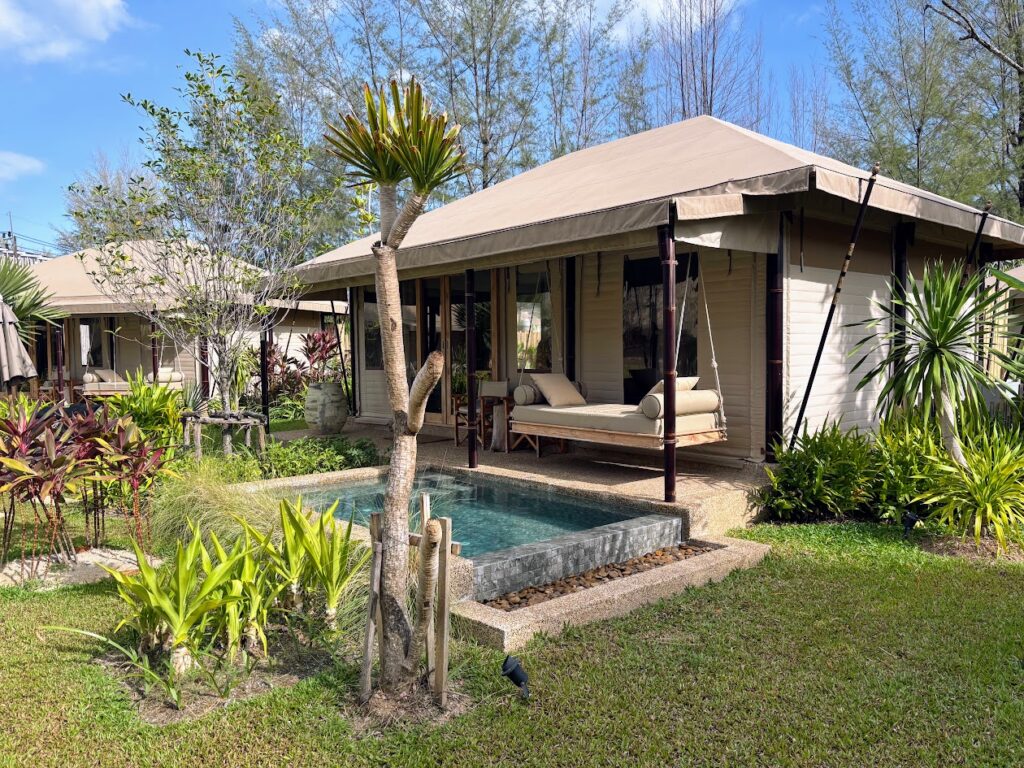
The camp is a member of Small Luxury Hotels of the World, increasingly something we look out for when choosing a hotel, a real marker of quality. Twenty-nine canvas tents are split between two distinct settings: five by the beach, and twenty-four arranged along a lagoon designed by Bangkok-based landscape architect Martin Palleros. Some tents come with private plunge pools, and there are two-bedroom configurations for groups.
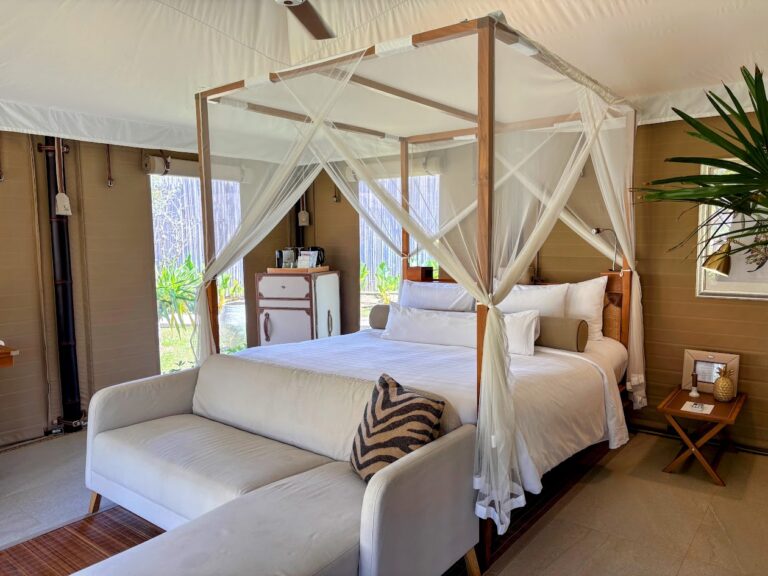
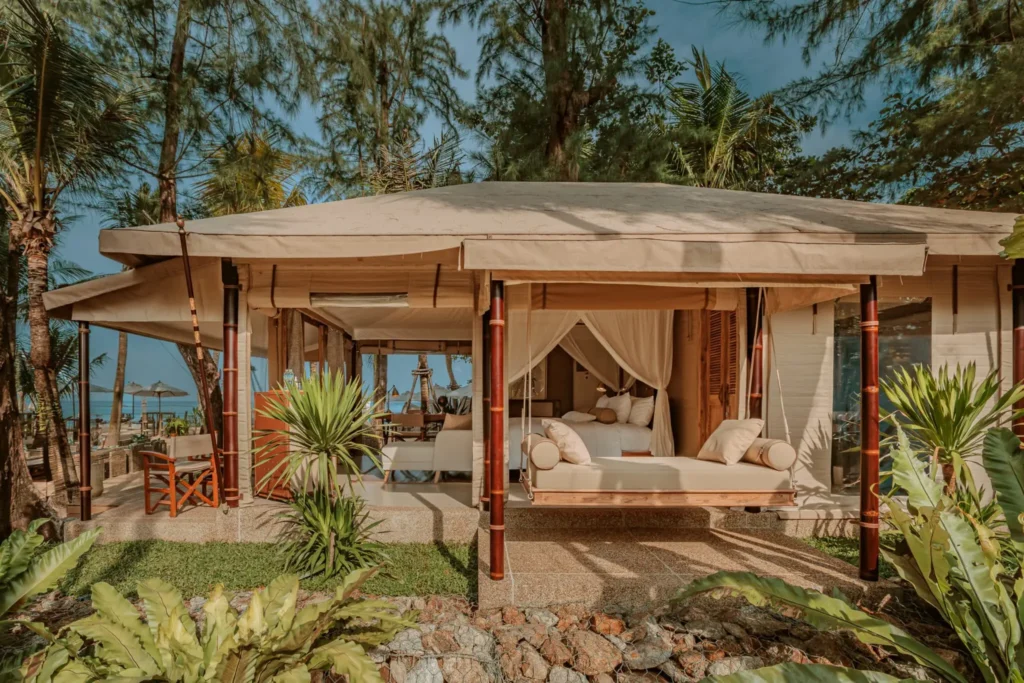
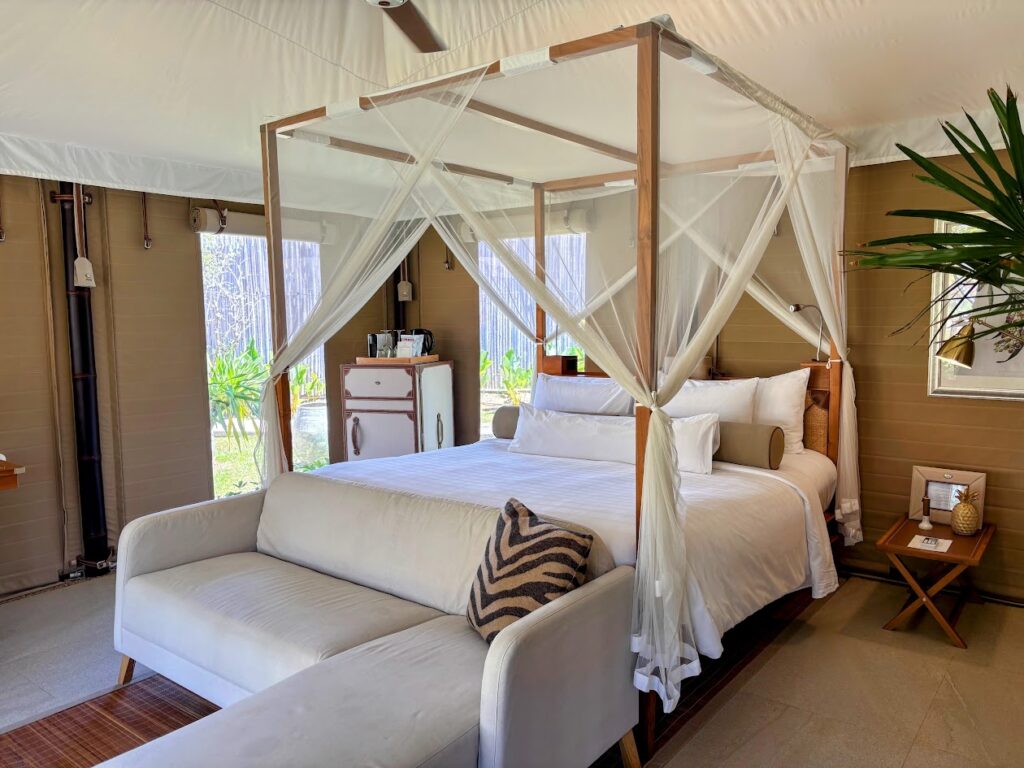
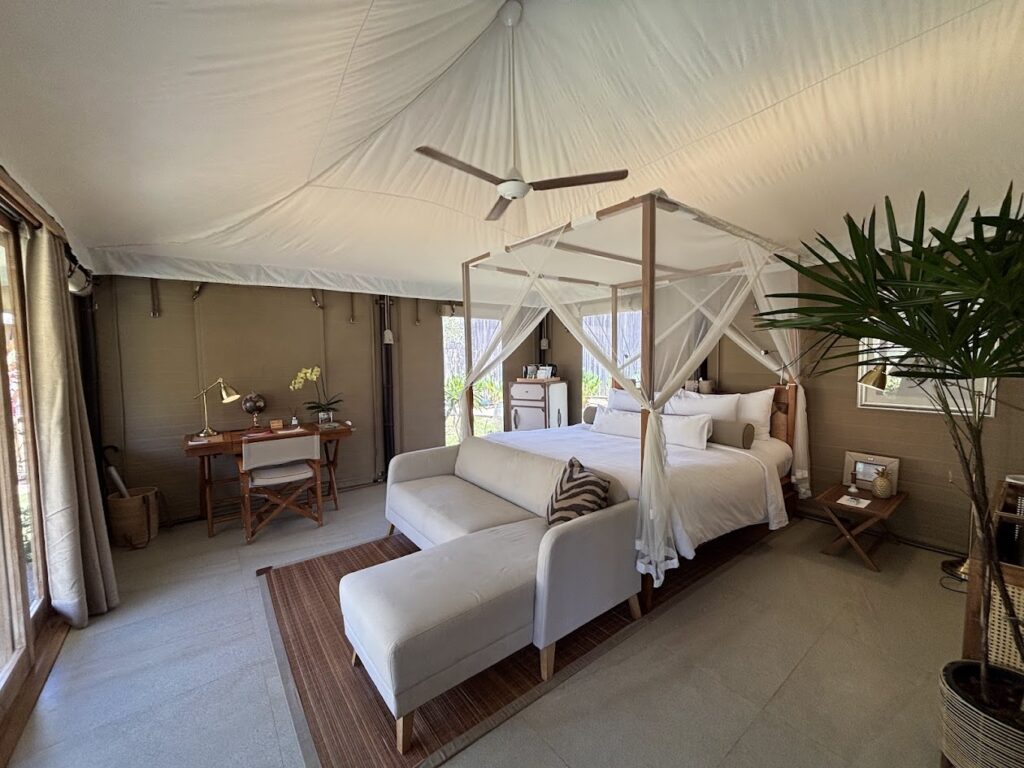
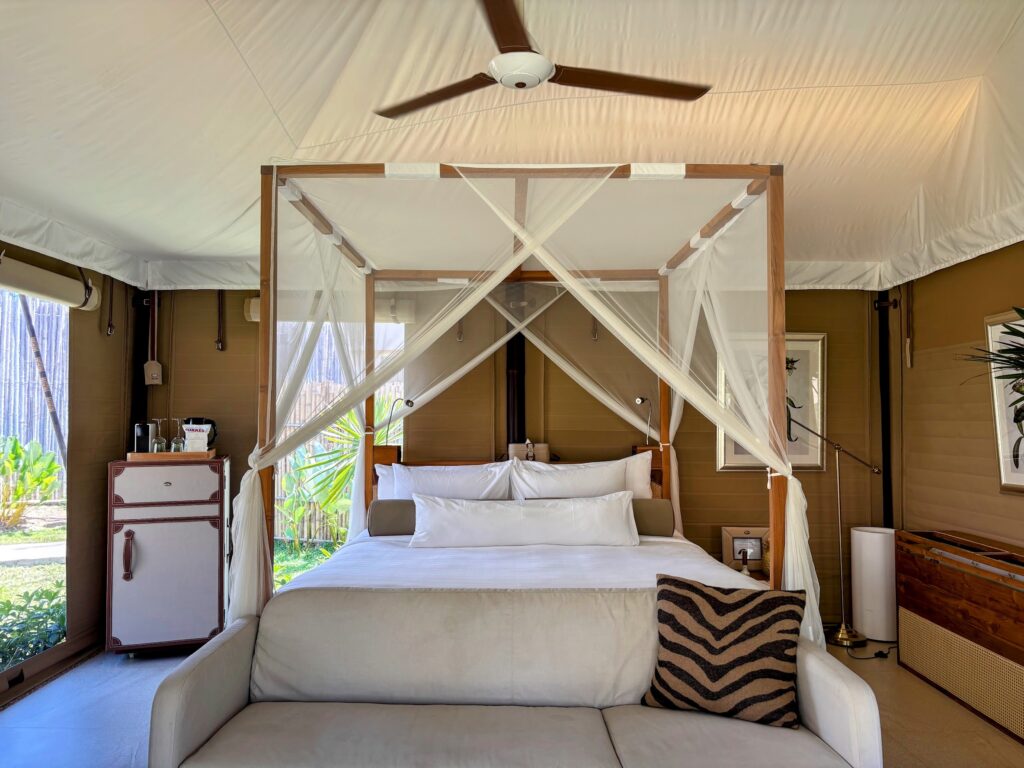
The tents themselves were designed by Anneke van Waesberghe of Escape Nomad, the Dutch studio behind properties such as Indonesia’s Sandat Glamping Tents. Step inside and the canvas rises to a peaked canopy that gives the space a surprising sense of height, a breathability, while the wooden frame of the four-poster bed echoes that upward geometry.
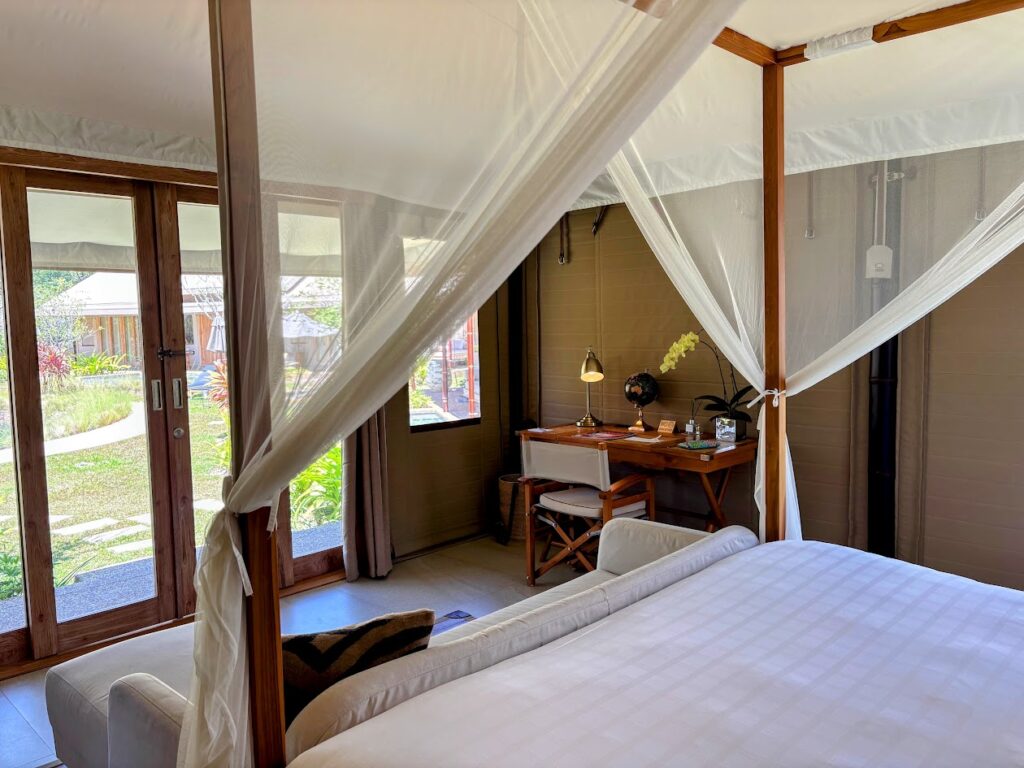
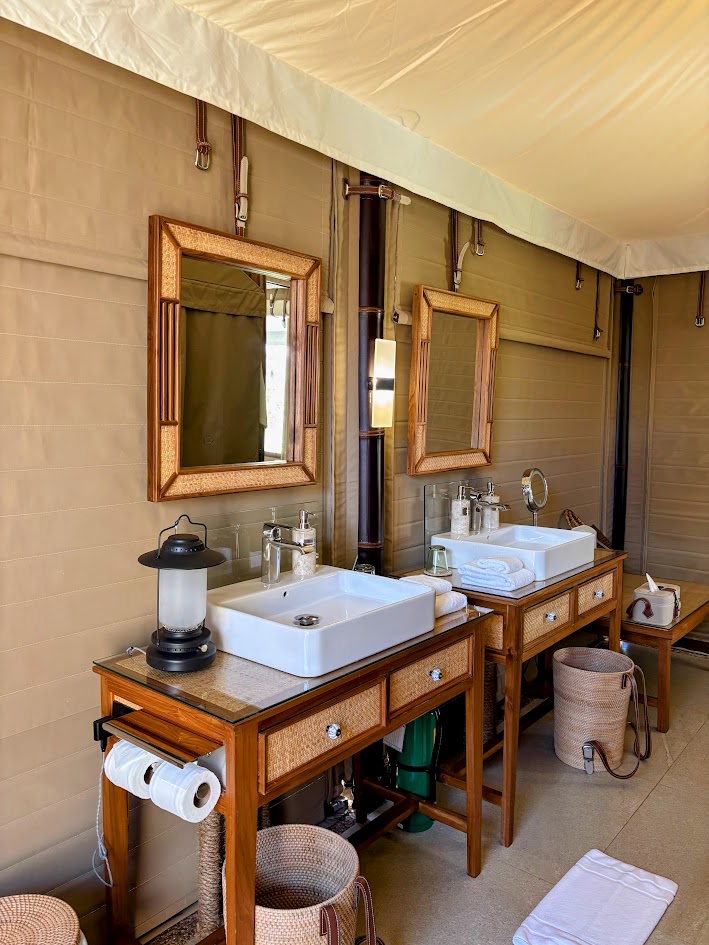
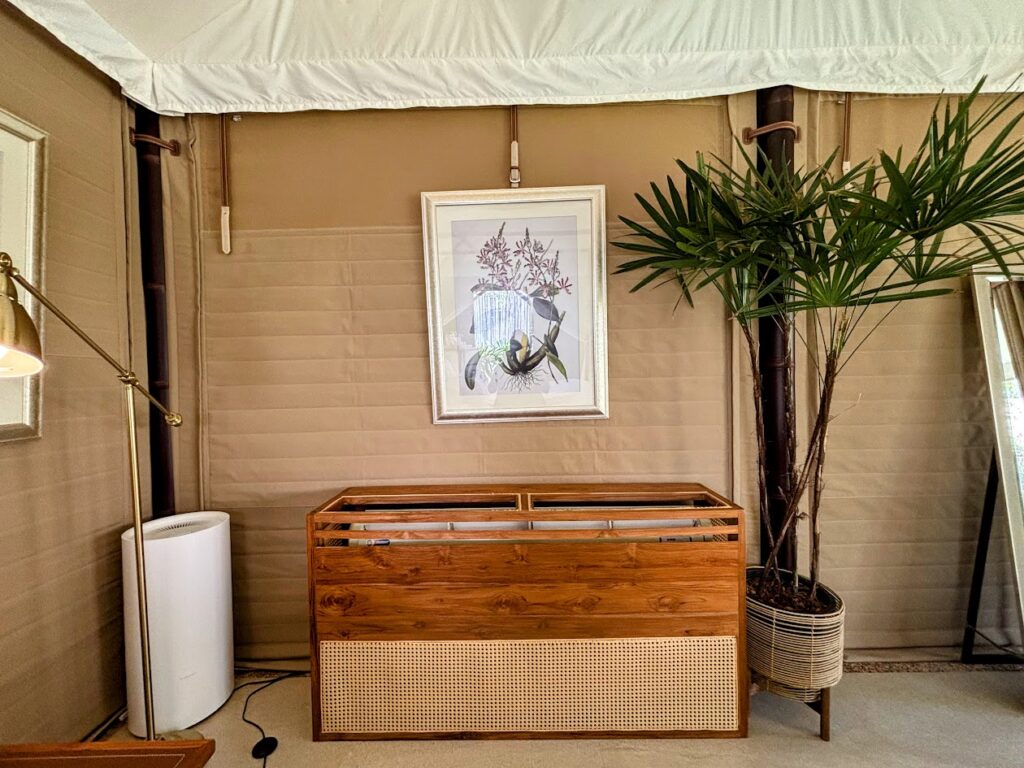
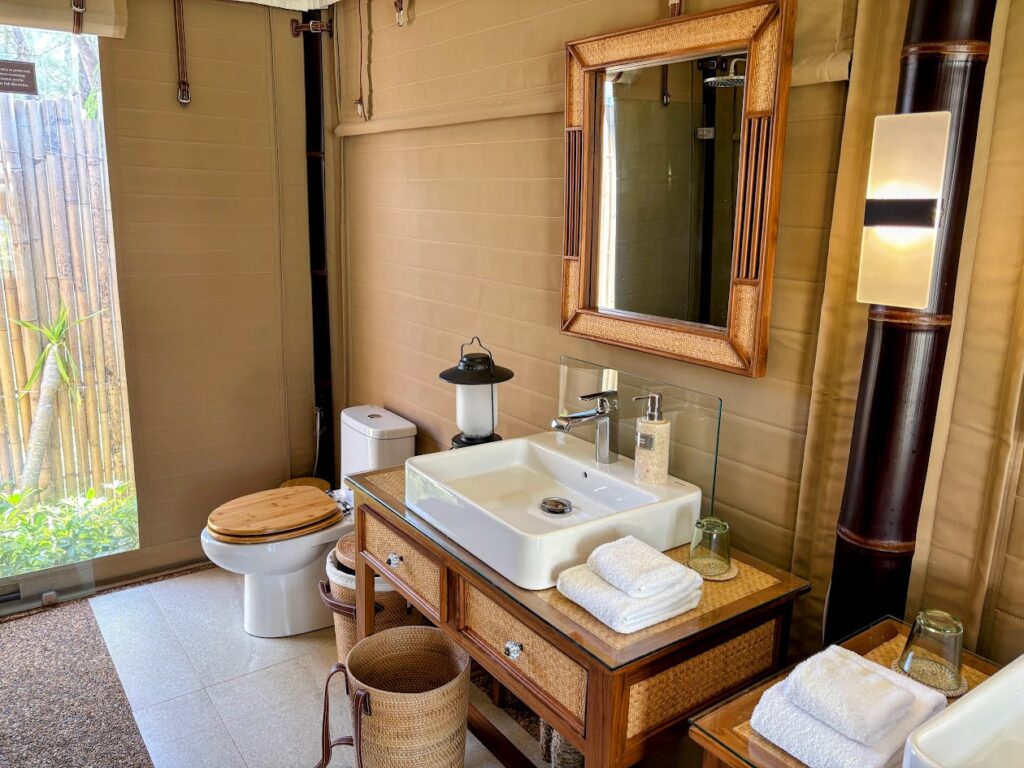
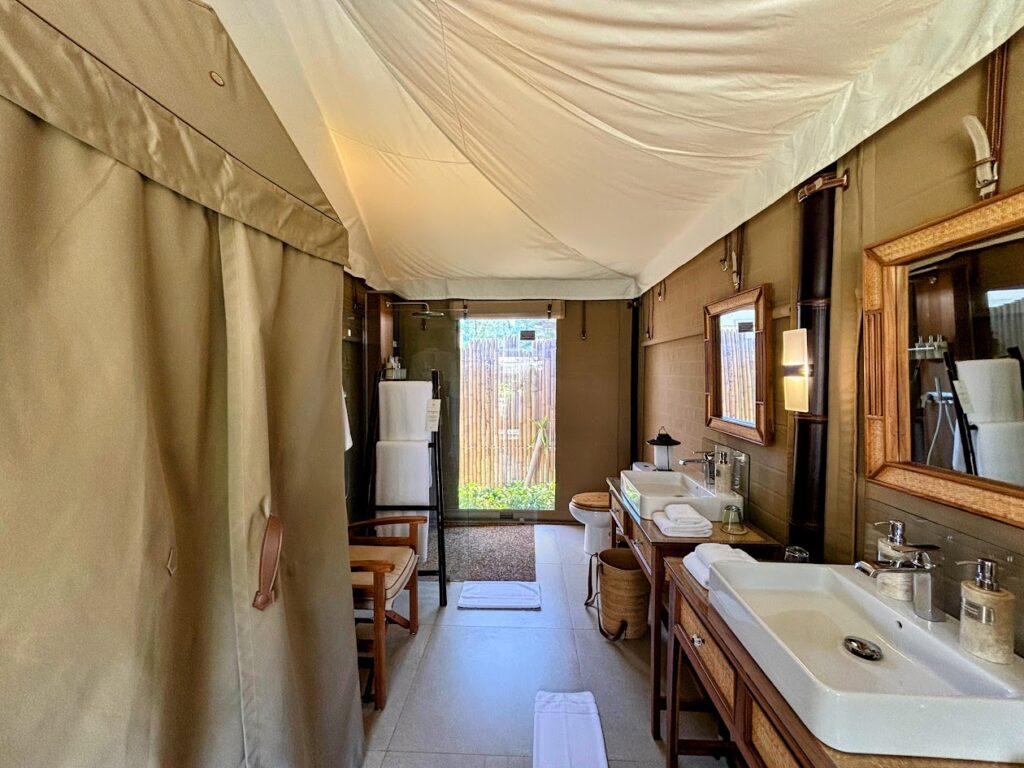
The palette is restrained: muted neutrals, beige canvas walls, dark wood, white linen, polished concrete underfoot, fabric blinds that roll up completely to open the tent to the garden. Zebra-print cushions on the sofa at the foot of the bed are an obvious nod to the safari concept, pitched at exactly the right level of wink. Everything else is warm and unshowy. The effect is not minimalism so much as careful editing. It feels comforting to settle into a space that’s clearly had so much consideration.
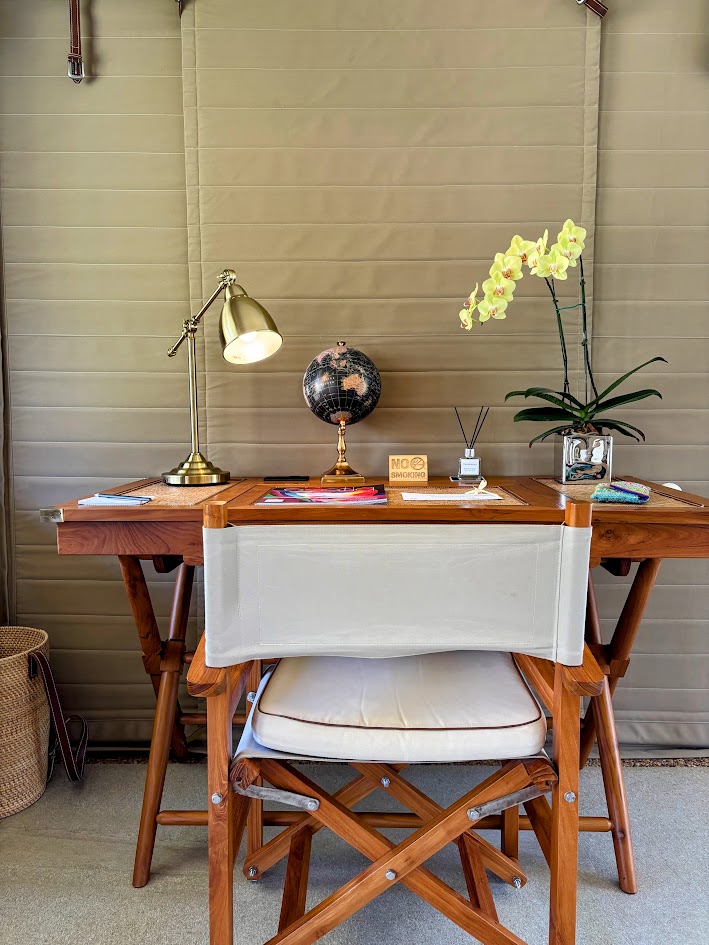
The desk looks like it belongs in the study of someone who writes letters by hand: director’s chair, brass reading lamp, a decorative globe for good measure. Spin that thing to your heart’s content, playfully pretending to randomly choose your next destination (just us, then?). Despite the period-piece atmosphere, the modern conveniences we have become accustomed to all abound: air conditioning, rain showers, a Nespresso machine with the owner’s bespoke blend of coffee in the pods, complimentary Wi-Fi. Yes, there is Wi-Fi.
There is not, however, a television, and that absence is one of the best things about the place. Most hotel TVs the world over offer one English-language channel, and it’s the news, so you end up watching the world’s various catastrophes unfold from the comfort of your holiday, which rather defeats the point of being on one. Sometimes it’s better to have the option removed entirely. The Wi-Fi does mean you could, in theory, doomscroll from bed, but doing so in a luxury tent feels perverse. The building is gently encouraging you to put the phone down, and it’s a credit to the place that most guests are more than willing to take the hint and oblige.
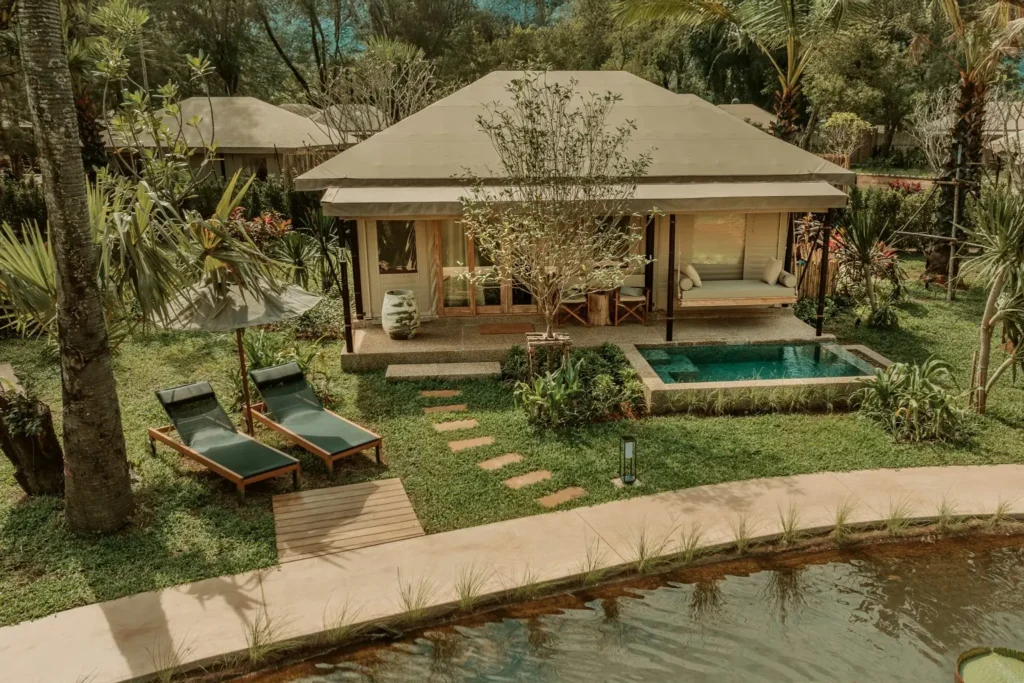
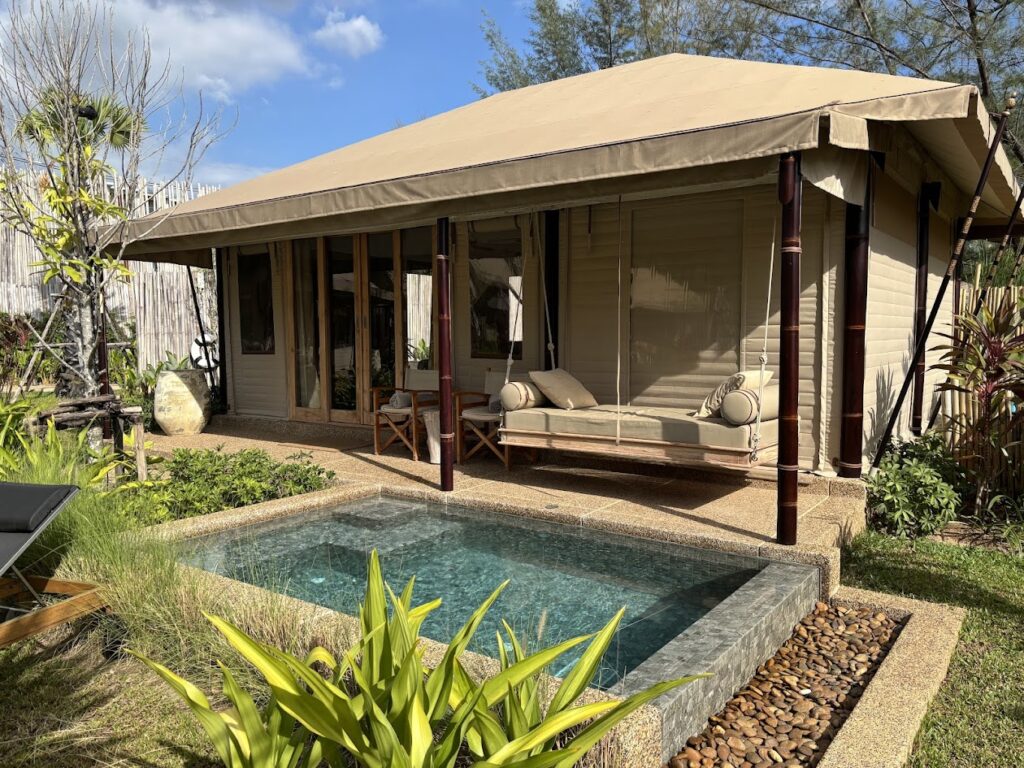
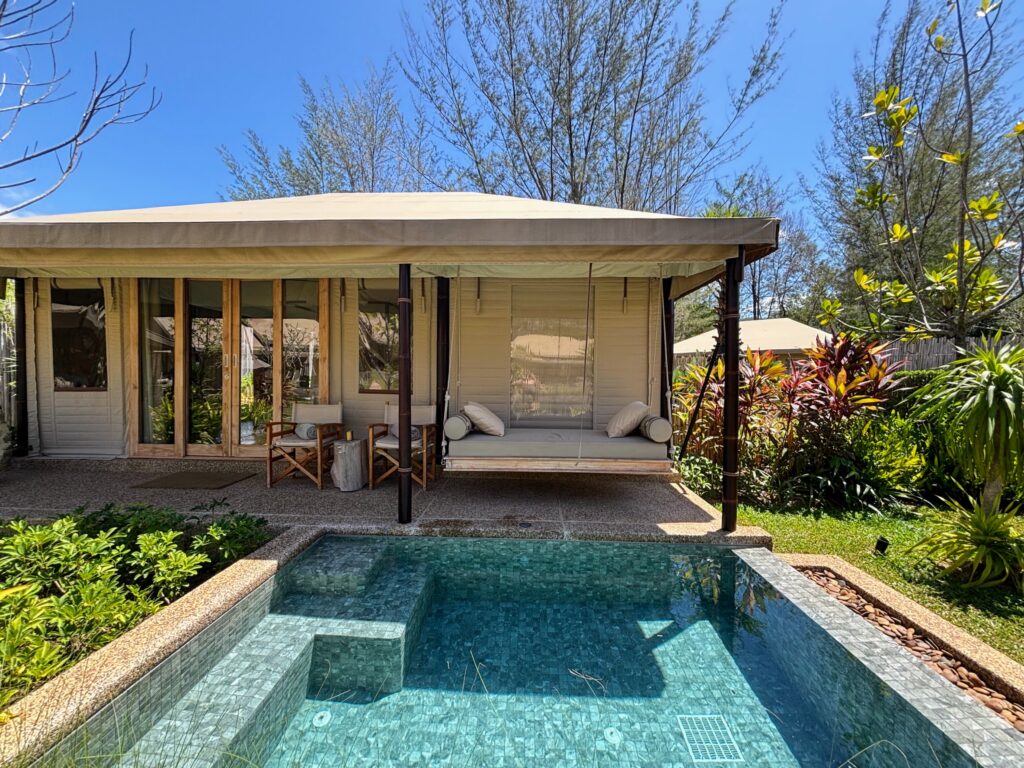
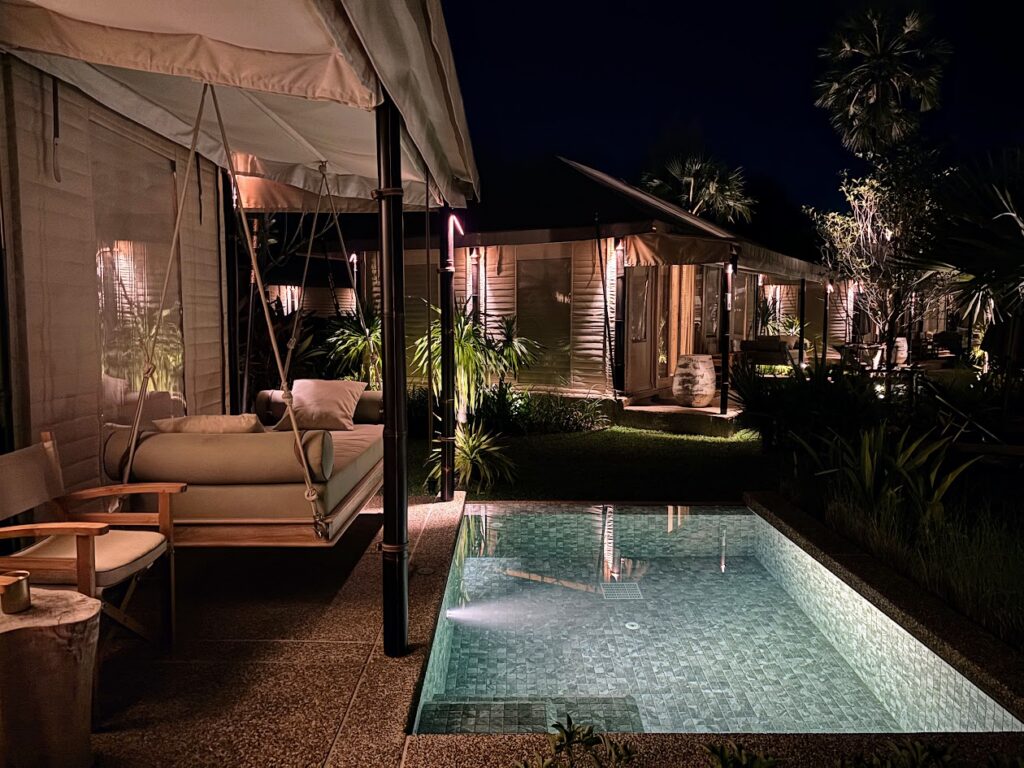
Outside, a cushioned daybed swings beneath a covered terrace, and beyond it, the plunge pool. This, more than the bed or the sofa, is where the days actually happen. Guests drift from one to the other and back again, a book open on the daybed, a half-finished drink on the edge of the pool, the afternoon softening around them. The whole setup lets you move from bed to sofa to daybed to pool without ever feeling like you have left one continuous, cohesive space.
That indoor-outdoor fluidity is the thing the tents do best, and it is also, not coincidentally, very Scandi. Friluftsliv, literally ‘open-air life’, is the Nordic idea that being partially outdoors, consistently, is better for you than being either fully indoors or fully exposed. The tents are an architecture built around that idea.
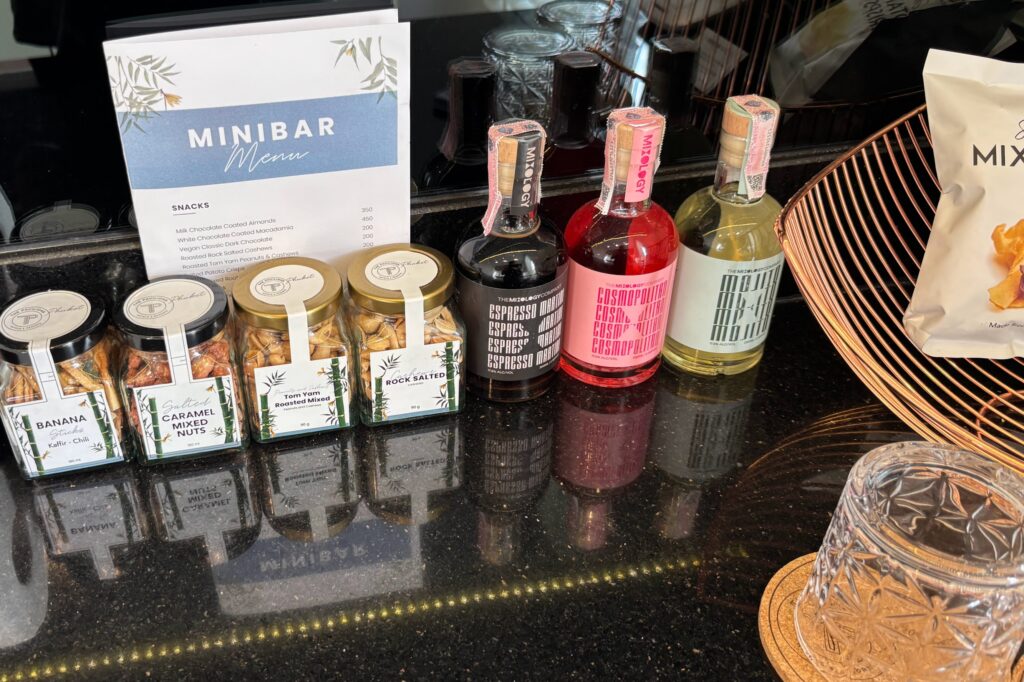
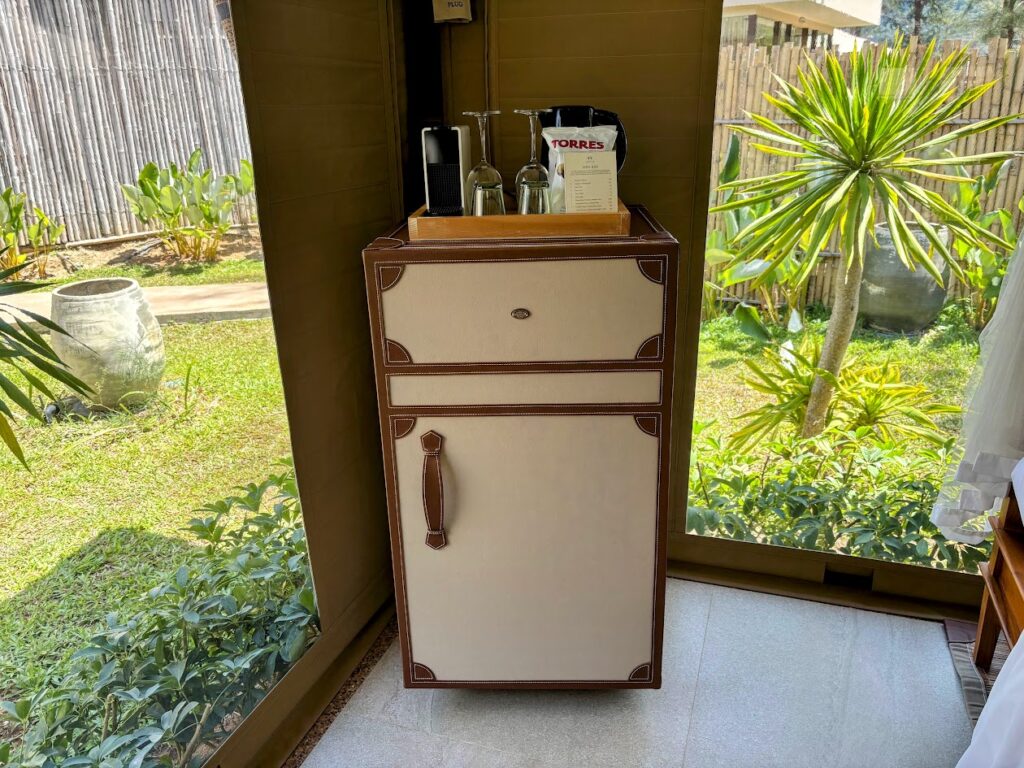
Back inside, and the minibar menu card lists prices that suggest it is there for convenience rather than profit (two Singha clock in at a reasonable 130 baht, £3, for instance). The fridge itself is a thing of beauty, a retro trunk-style unit in cream with tan leather trim that looks as though it has just come off a 1930s expedition. It is one of those details that tells you the people who designed these tents were thinking about every object in the room, not just the big pieces. A subtle reminder that this is still luxury; crisps come in caviar or black truffle flavour, both the esteemed Torres brand.
The mosquito net was not strictly necessary during our stay, but we drew it anyway. There is something about being cocooned under a gauzy canopy that makes you sleep better, even safer. Twinpalms provides a beautifully scented citronella spray too, which is a nice touch. It’s an aroma that always brings a nostalgia for holidays in this part of the world, and I’ll now forever be reminded of staying in this handsome tent when I smell it.
After dark, a few more buildings in the surrounding area light up, and the thump of music from a neighbouring venue carries on the breeze. The tents on the lagoon side are well insulated by distance and planting, and the noise barely registers.
The beachfront tents offer something different, sitting closer to Catch Beach Club, which plays music from mid-morning until around midnight and tends toward the bass-heavy end of the spectrum. Earplugs are made available for light sleepers, and they are worth accepting. If peace and quiet is the priority, ask for a lagoon tent at the northern end of the camp. If the beach club scene and rolling into bed after a decent party is the draw, the beachfront tents put you close to the action, though be aware that the beach itself is a short walk through the Lazy Coconut café rather than directly in front of your tent.
As a member of Small Luxury Hotels of the World, certain energy-saving measures are in place, such as the air conditioning pausing when the doors are left open. Worth knowing if you like to throw the blinds up and let the garden in without running the AC at the same time.
Facilities & Spa
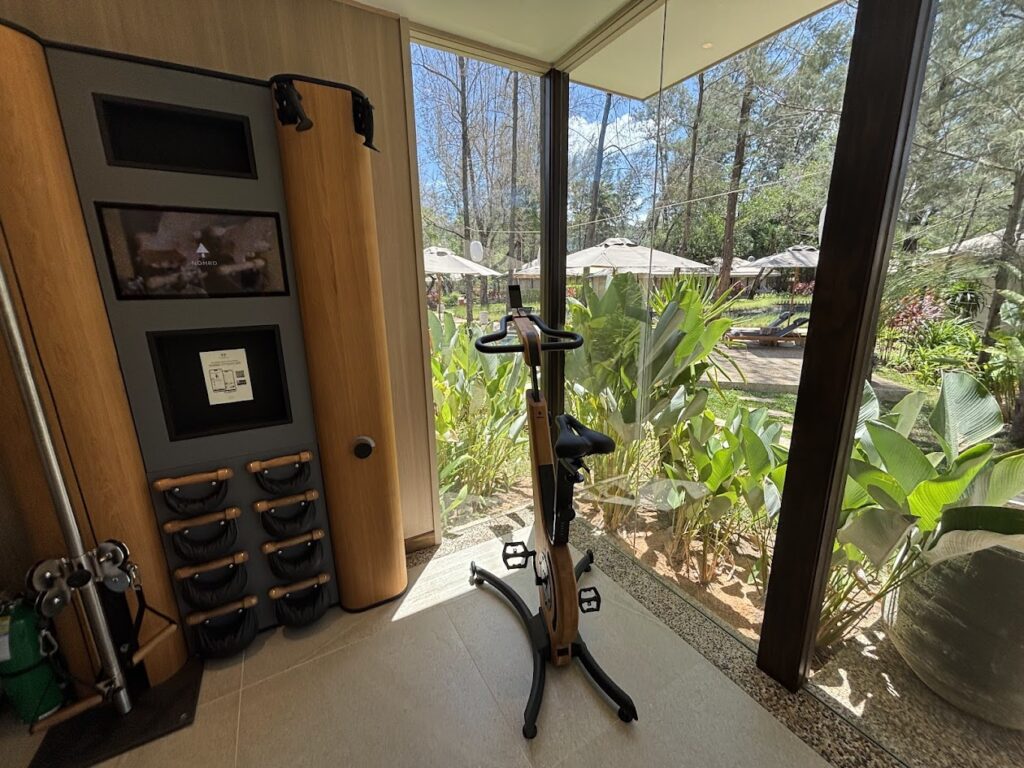
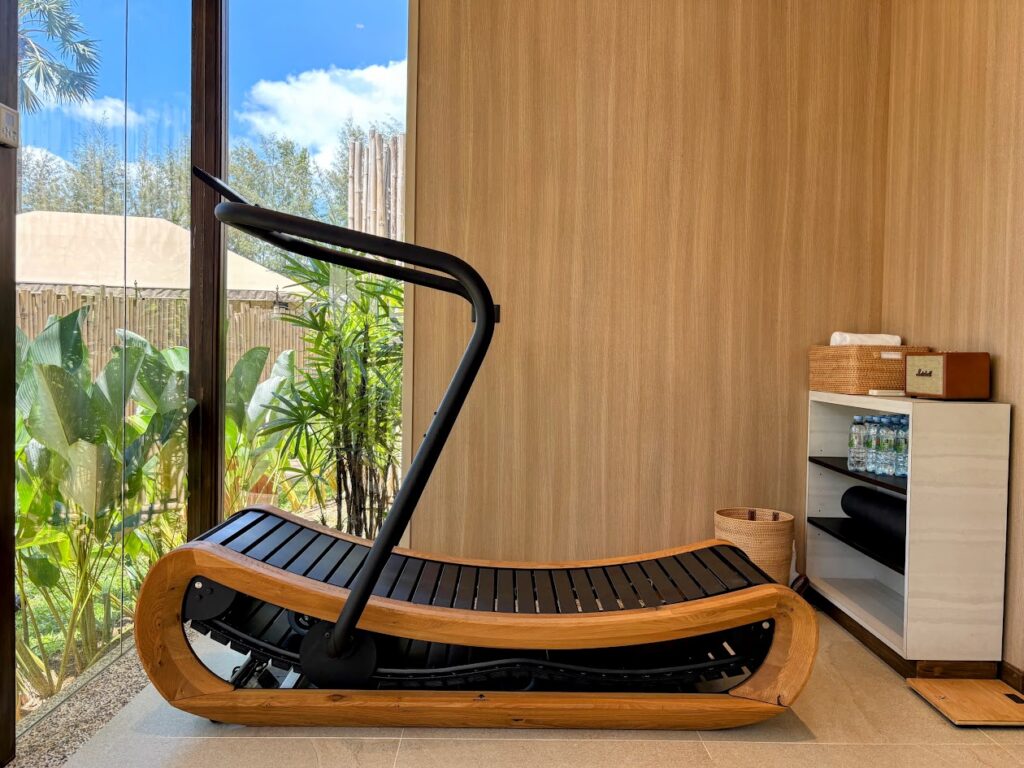
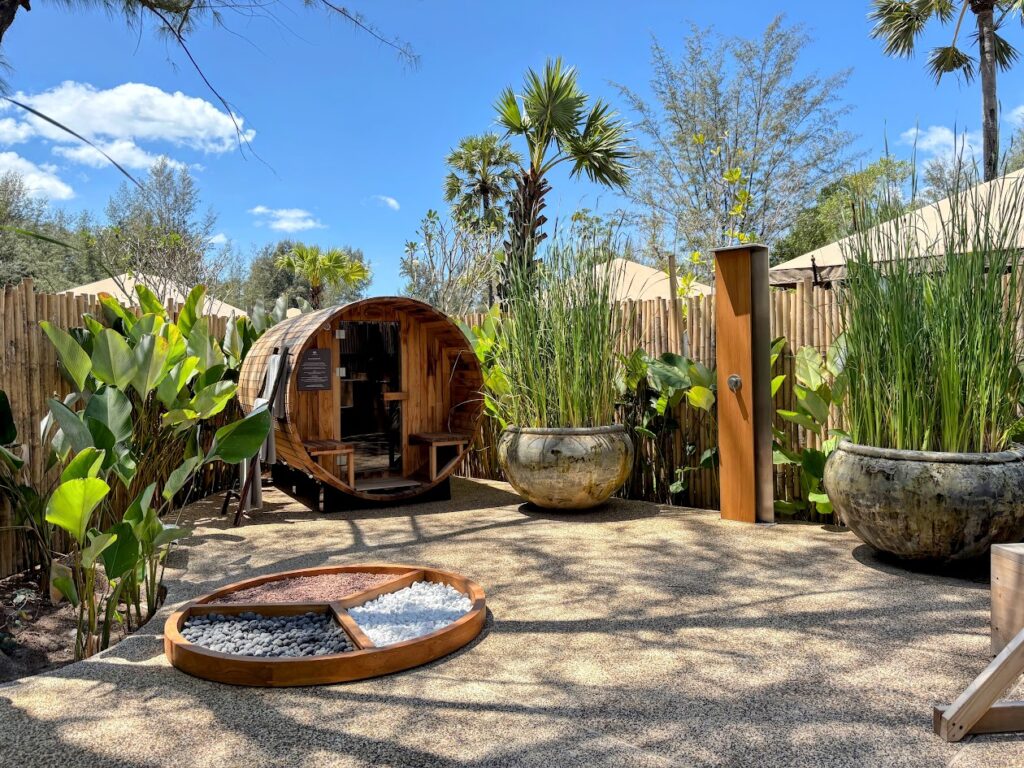
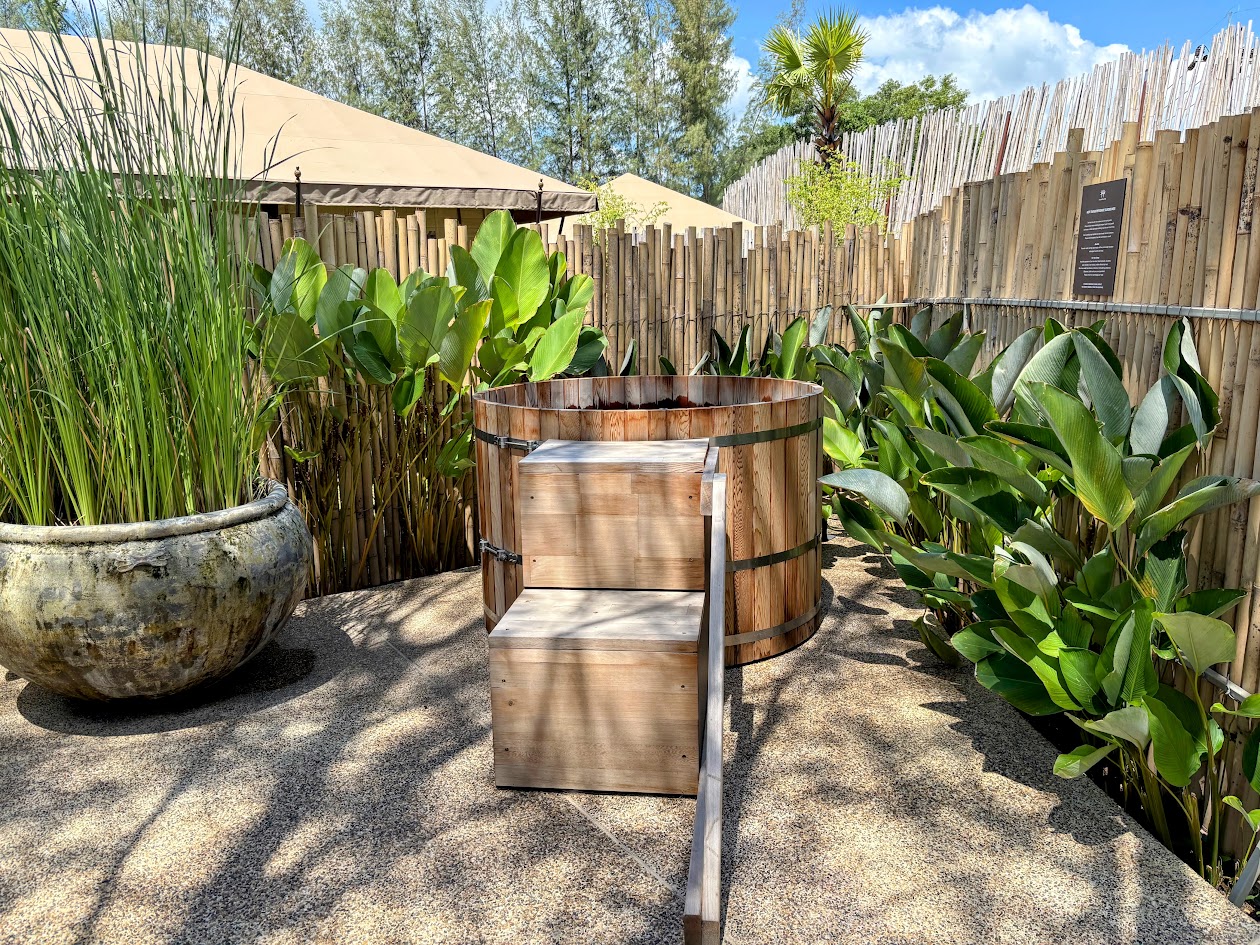
The camp’s wellness and fitness facilities are designed as intimate amenities rather than sprawling resort-style operations, in keeping with the scale and style of the place. A gym studio with gorgeous handcrafted NOHrD equipment (compact enough that one or two people is the realistic capacity), a four-seat sauna, a couple’s hot tub and an ice bath are all there for guests to use freely. Bikes are available for hire, and morning yoga is offered in the communal area.
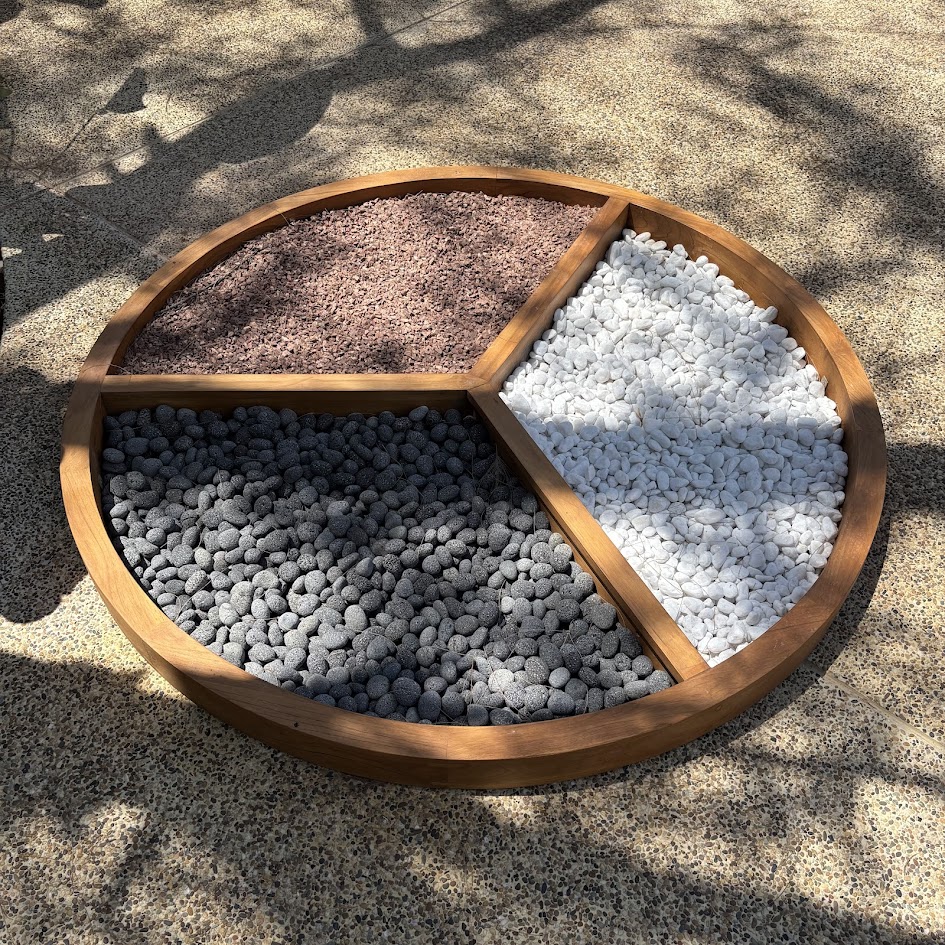
In the wellness garden, a sensory reflexology circle called the Three Paths of Peace invites you to step in barefoot and walk three surfaces in turn: smooth stones for grounding, textured stones to wake up awareness, and sand to encourage balance and release. It’s the kind of small, deliberate ritual the camp does well, and you leave it walking a little slower than you arrived.
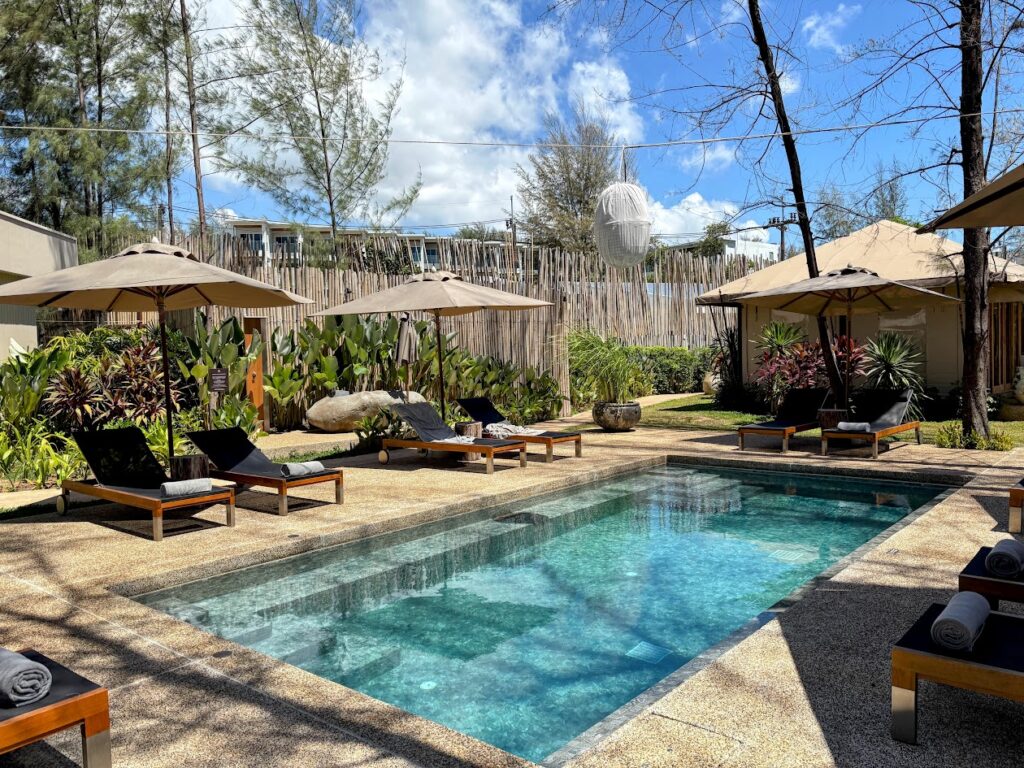
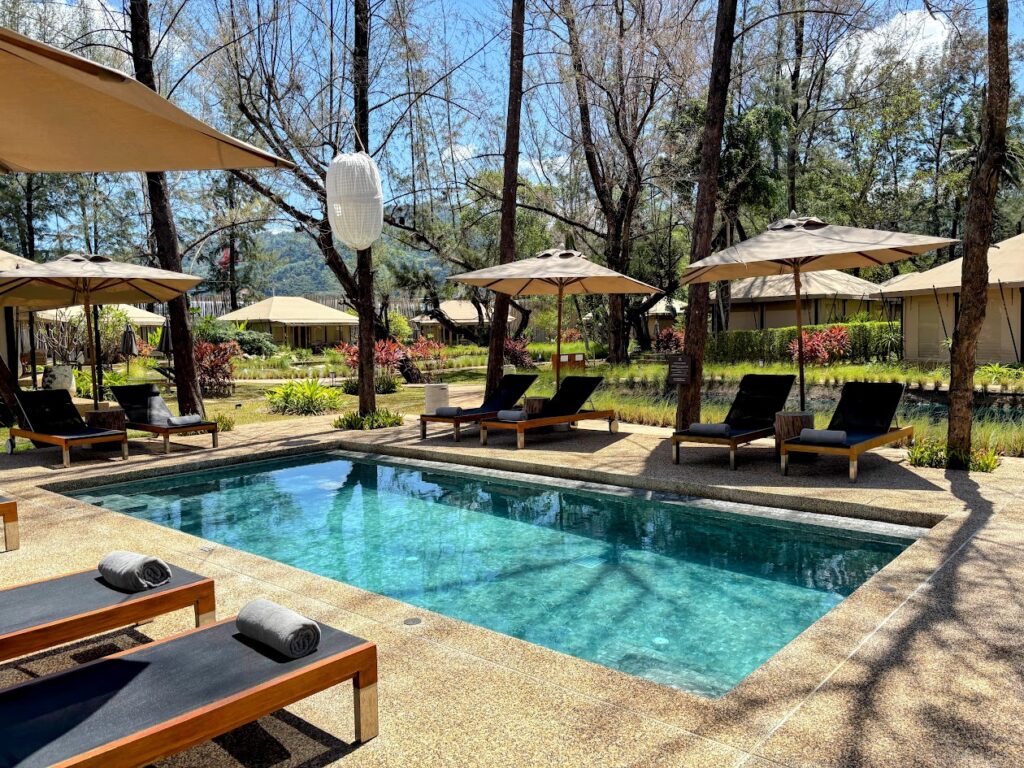
The tropical pool, which overlooks the lagoon, is a relatively new addition. It arrived in July 2025, roughly eighteen months after the camp first opened, and was introduced so guests could swim without having to head to Catch Beach Club or The Lazy Coconut every time the mood struck. It’s not a swim-laps-at-dawn size, but it doesn’t need to be. A dip between spa treatment and sundowner, shaded by palms and with the shimmering water just beyond, is exactly the register the camp is pitching at.
On arrival you are handed a glass of fresh coconut water, and it is the best we’ve had in twenty years of drinking the stuff in Thailand. I asked for another. And then another. I then realised it was available on tap at the other side of the reception desk.
There was originally a dedicated spa tent on site, but demand for rooms was such that they converted it into another guest tent, and now the spa comes to you. This is actually the better arrangement. A massage in the privacy of your own tent, with the garden or beach just outside, beats navigating the grounds in a robe, and the post-massage drift off across the bed with nobody to disturb you makes it more restorative too.
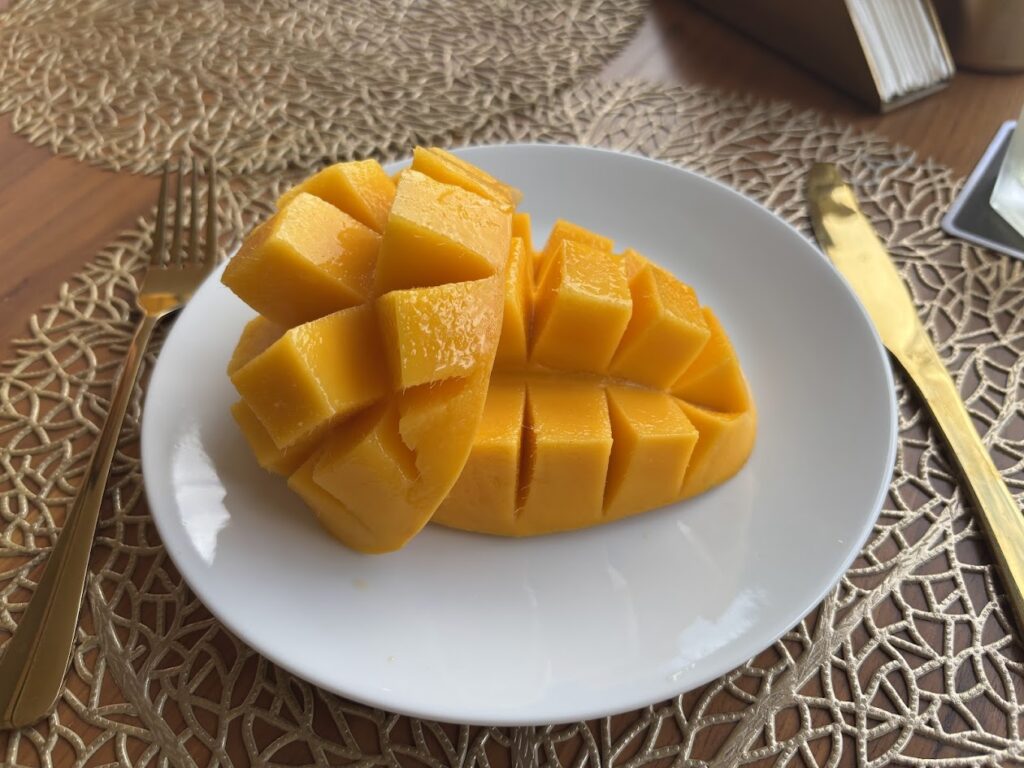
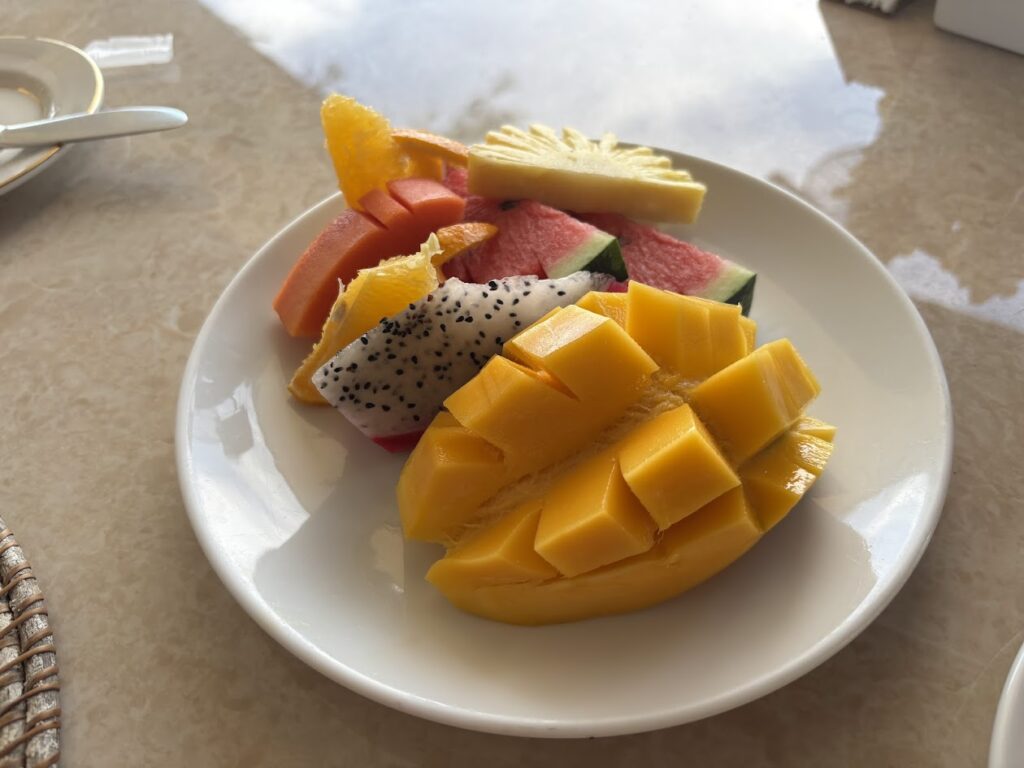
The camp runs what it calls ‘daily moments’, small experiences slotted into the day’s rhythm. One afternoon it was a mango tasting. Thai mangoes are one of the reasons to come to this country in the first place, impossibly honeyed, buttery, so pleasurable they verge on the obscene. Nam dok mai at peak season, eaten off a plastic tray from a street cart for forty baht, is better than most desserts served in most Michelin restaurants. The one served at the tented camp, splayed open so each cube was perfectly bite-size, was genuinely the nicest mango I’ve ever eaten. Just look at that deep colour, and its juicy dappling!
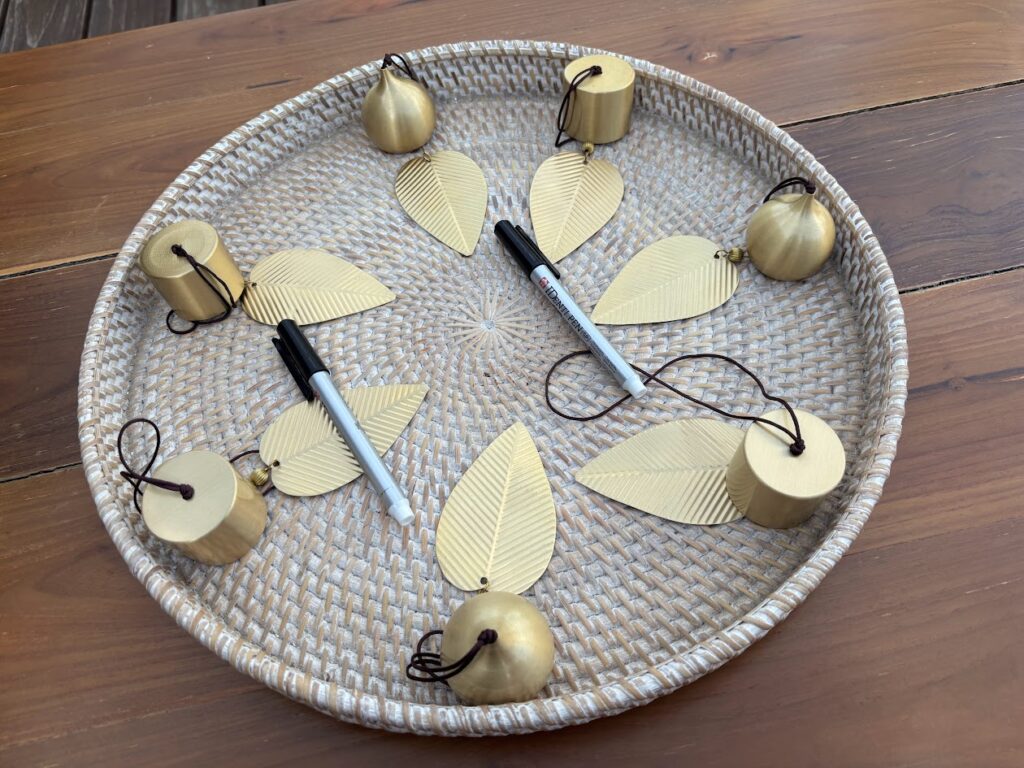
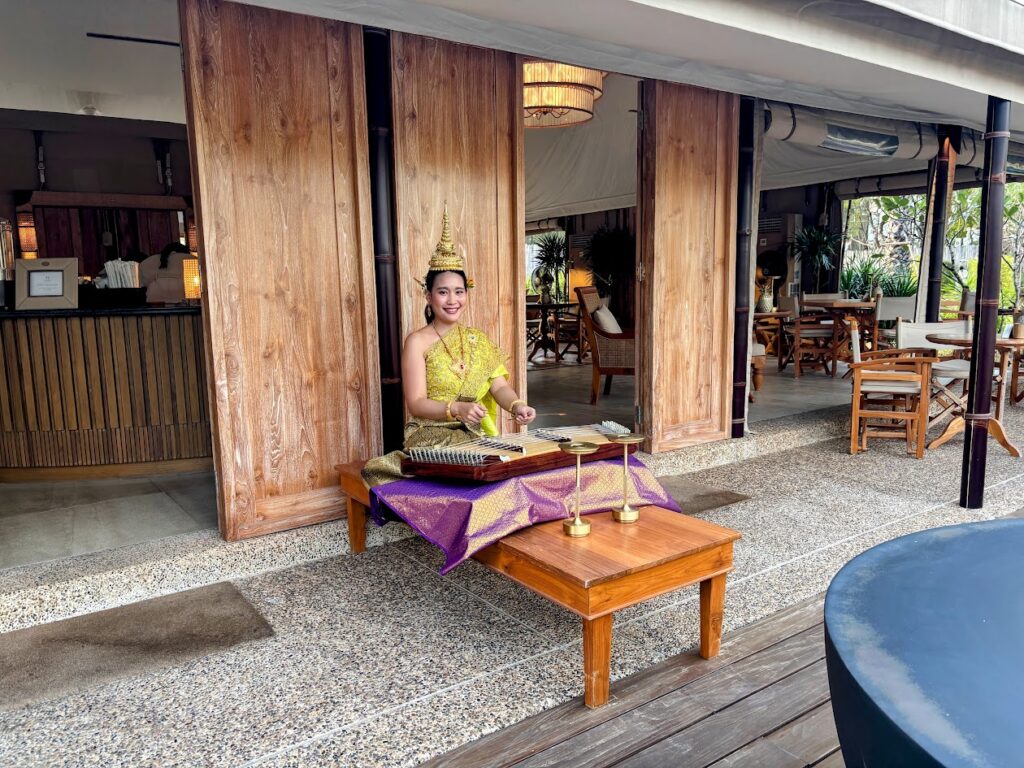
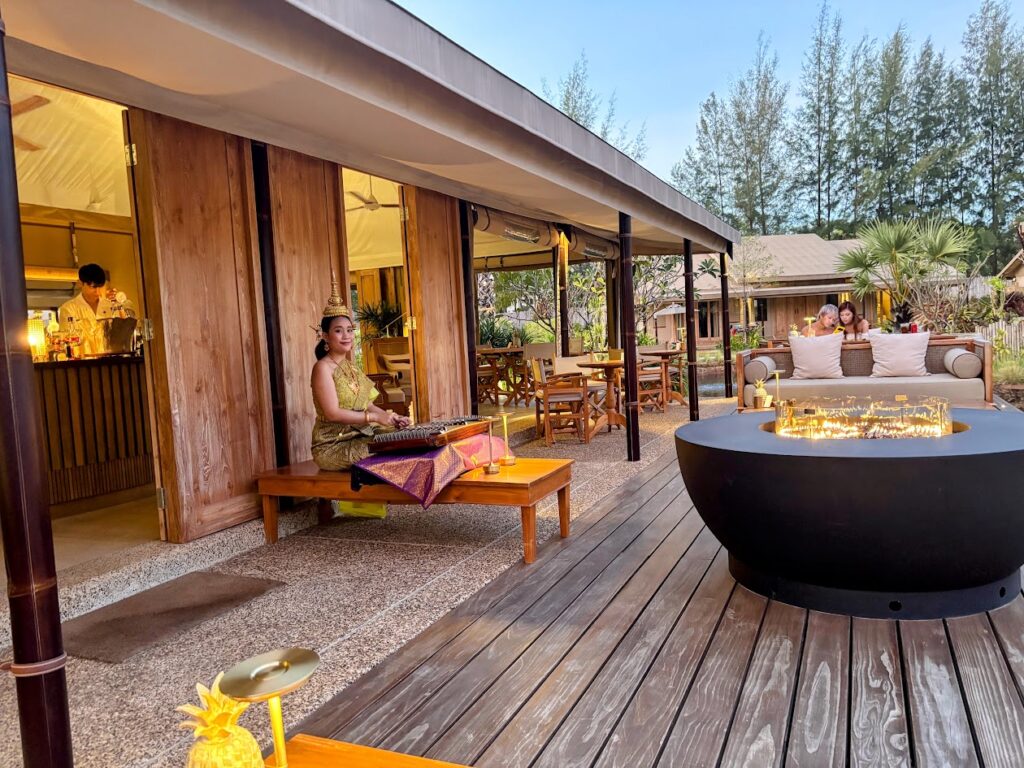
Another of the daily moments is the chime hanging at five o’clock. You are given a small brass chime and a pen, write a wish on it, and hang it on a designated tree with the others. I wonder how many folk wish for another night here? We did ours by the lagoon with a cocktail, while a woman played traditional Thai music a few feet away and the sky changed colour over the grounds. The Romans called them tintinnabula and hung them for good fortune, which is more or less what the camp is doing here. A lovely thing, but boy do you realise your handwriting has got sloppy.
Guests get access to Catch Beach Club and The Lazy Coconut, with two passes offering a 50% discount on sun lounger reservations. Worth knowing that a day bed at Catch runs to around 1,500 baht per person at full rate, which is steep even by Phuket beach club standards. The 50% discount takes some of the sting out, but it’s still worth factoring in if you’re planning full beach days.
One small note on the in-tent beach bag: it looks like a complimentary gift, but it is in fact for sale at €65. Worth clocking before you unpack it.
Food & Drink
There is no restaurant on site, and this is by design. A small menu is available via the camp’s app, though food is not permitted inside the tents given the open canvas and the wildlife it would otherwise attract. You can eat at the main lodge, or have a table set up just outside your own.
The menu splits cleanly down the middle. On the Thai side, it’s a tight run of the classics: mango sticky rice, pad thai, khao soi, pad grapao. Nothing you haven’t seen on a hundred menus across the country, but executed with the kind of care that reminds you why these dishes earned their ubiquity in the first place. The khao soi is particularly worth ordering, rich without being cloying, and complex in its dry-spicing. On the Western side, the register is more club-sandwich-and-chips than fine dining: caesar salad, a cheeseburger, a margherita pizza, a roast chicken. Comfort food for when you do not want to think, and all the better for not trying to be anything else.
The main lodge has a bar, and is a lovely space to spend time in the evening, when a fire is lit, a musician plays traditional Thai instruments, and guests drift in for a drink and a game of chess under lamplight. The conversation is lively, dovetailing with the crickets, neither competing, both complementing.
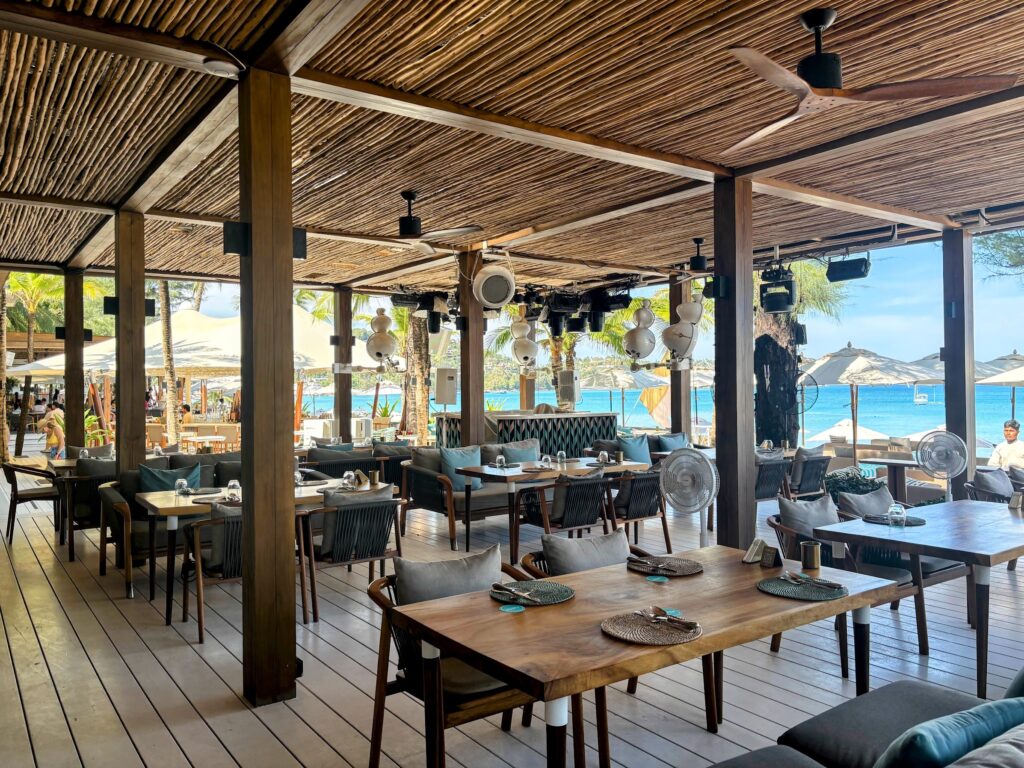
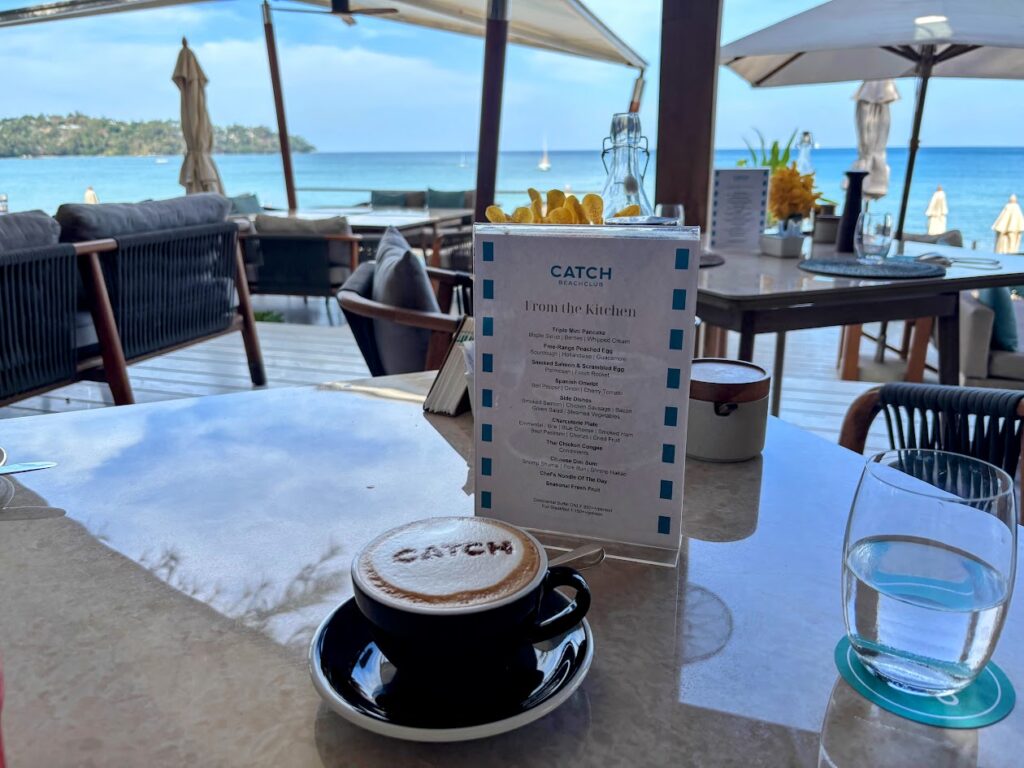
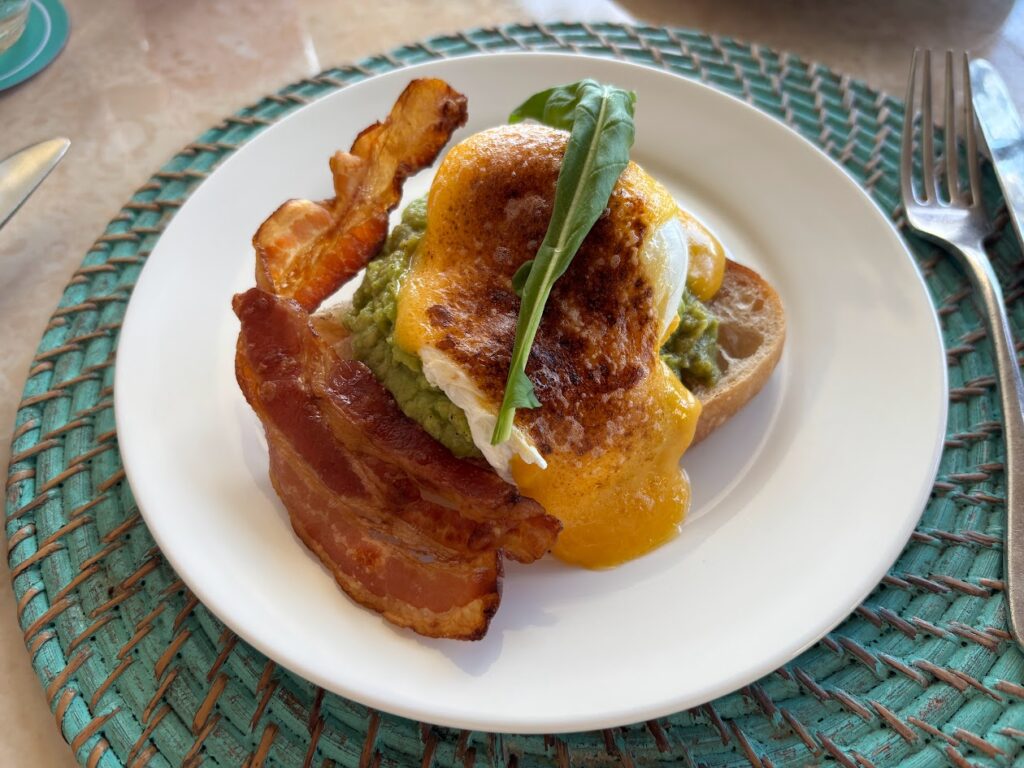
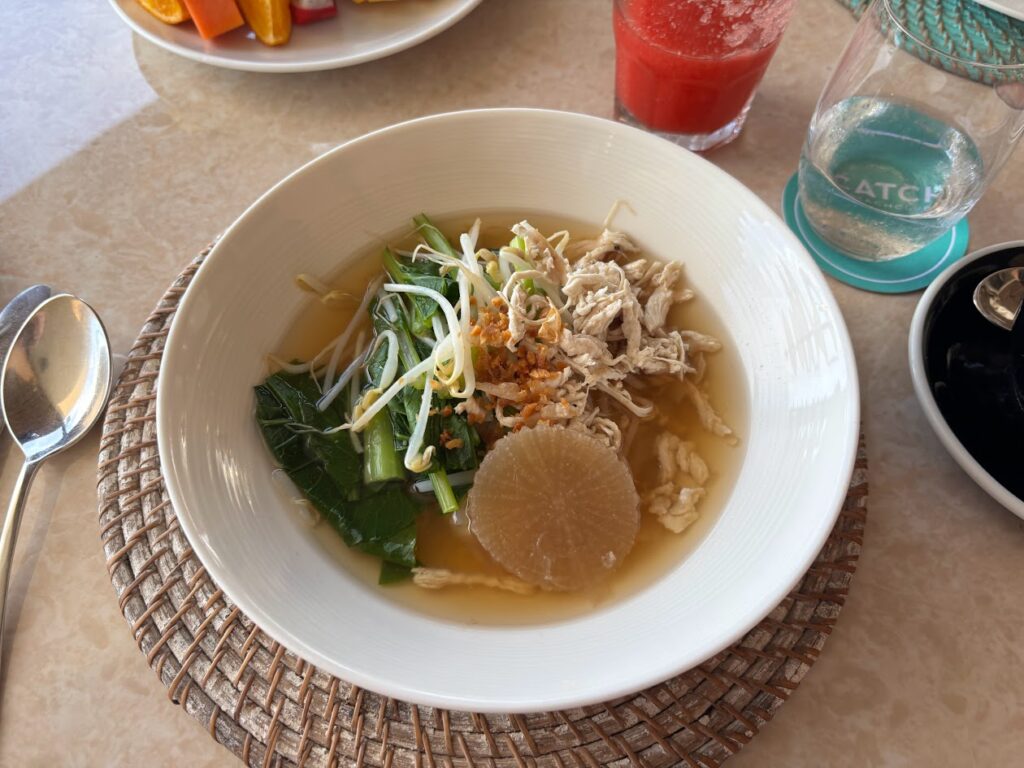
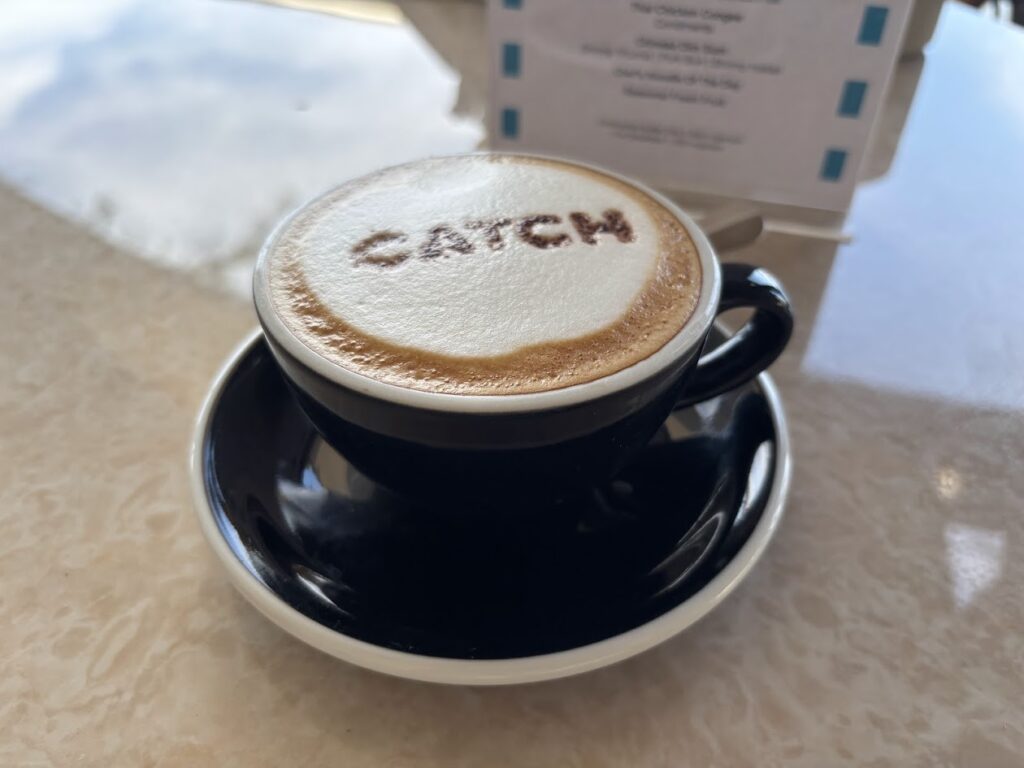
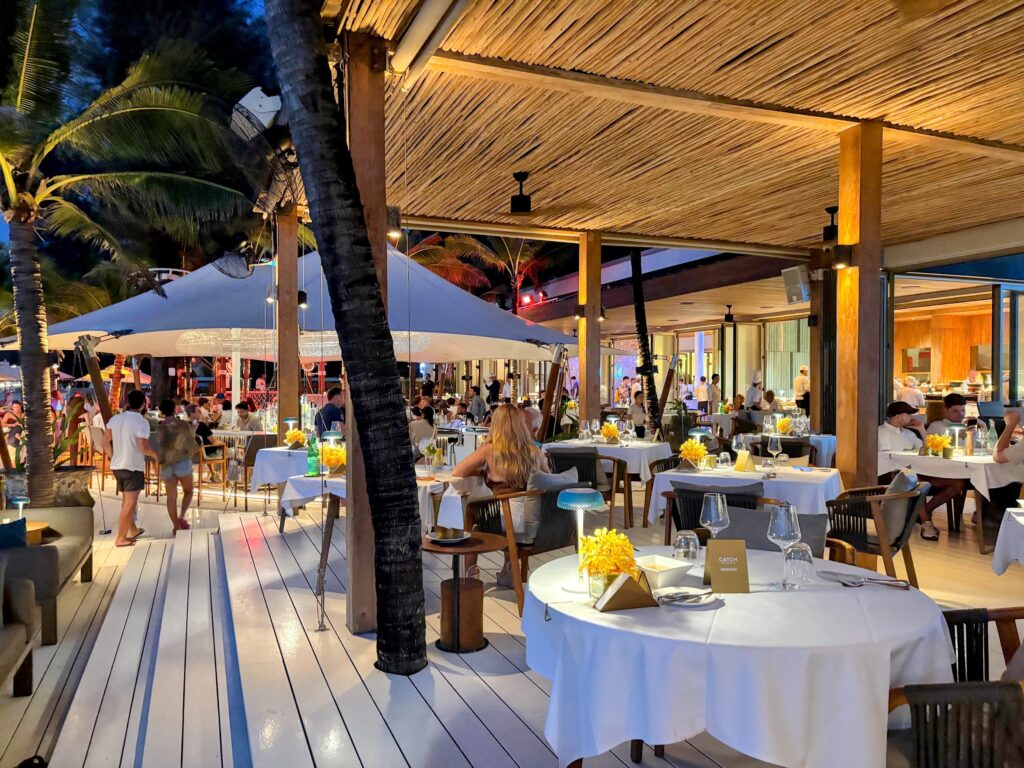
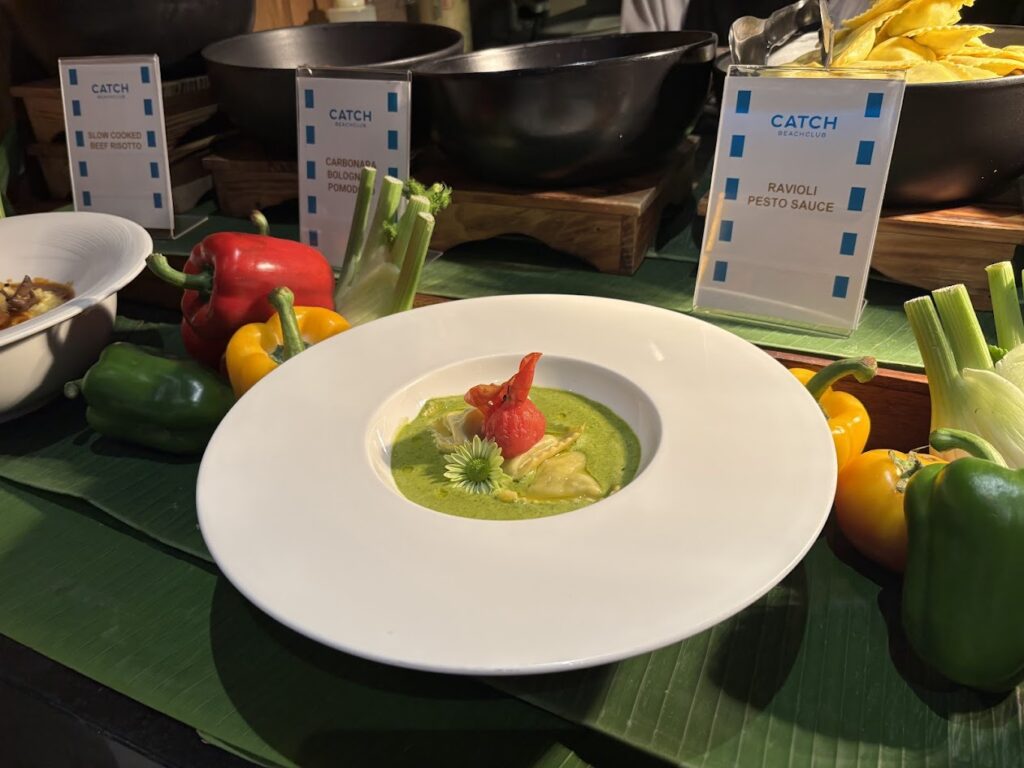
If you’re keen to surrender the shade of the palms, then you’ll be pleased to hear that you’ll be well fed through the wider Twinpalms dining network. Breakfast is served at Catch Beach Club, a glamorous beachfront venue overlooking the ocean with a part-buffet, part-à-la-carte setup. It’s one hell of a view.
Catch Beach Club, Bang Tao
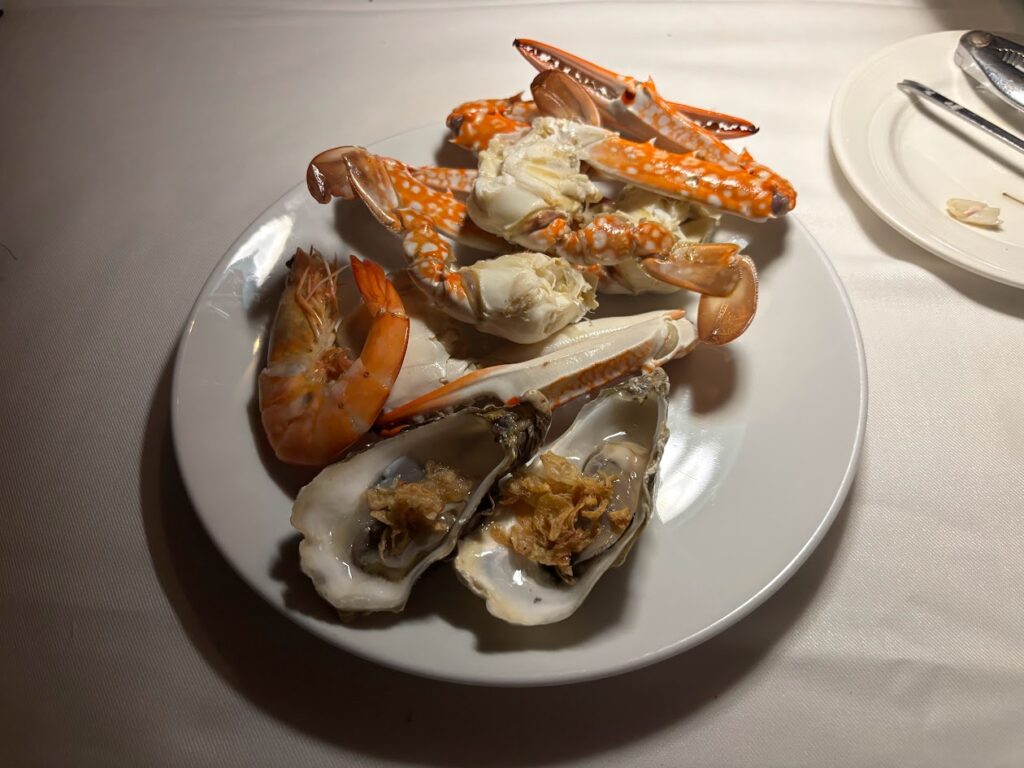
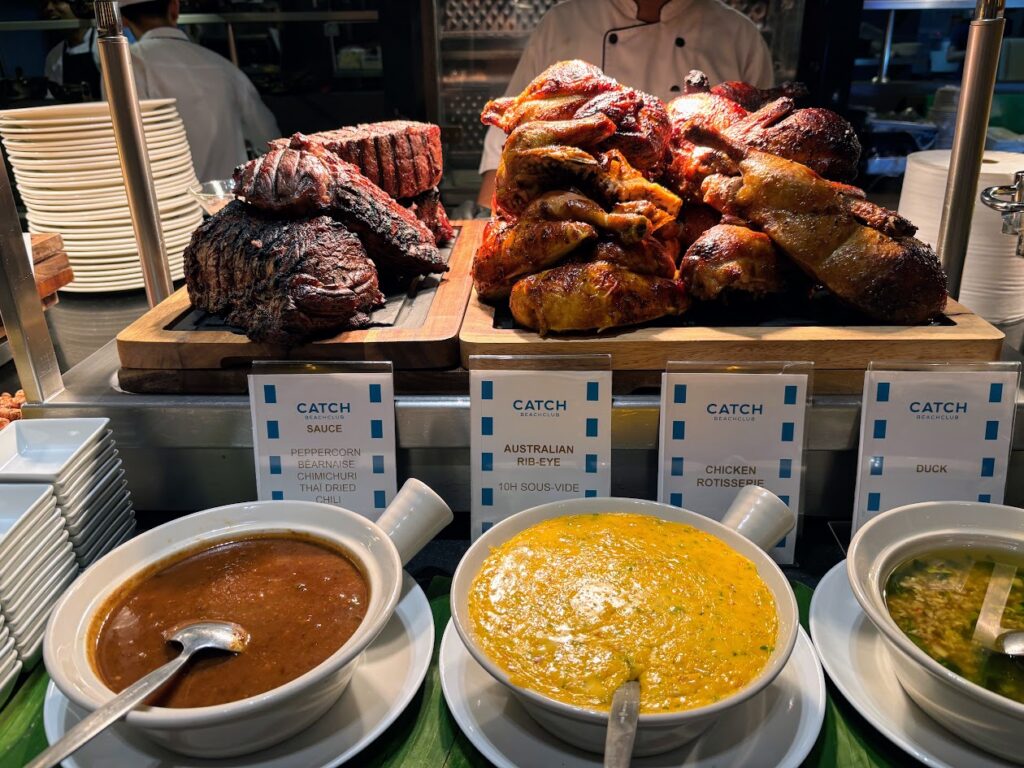
Catch takes on different guises throughout the day. “Start slow, stay for sunset, end up dancing” is their tagline, but that rather downplays the depth and breadth of the food on offer. Food spans the globe. Since you’re here, a Phuket rock lobster salad is a good shout – served with tzatziki, cherry tomatoes and a lemon sauce. The blue swimmer crab salad with mango and tobiko roe and asparagus sounds like an ambitious combination, but works well.
The Friday seafood barbecue is another proposition entirely, befitting of a beach club in the pursuit of being a decadent destination. A step up from the standard hotel buffet, and then some. Unlimited crabs and oysters, sushi rolled to order, an Australian ribeye carving station, a whole chicken rotisserie turning slowly in the corner. A pasta station dishing up made-to-order plates: squid-ink fettuccine, osso bucco, a slow-cooked beef ragù rich enough to stand up in dining rooms several rungs more formal than this one. Proper, grown-up cooking, served on a beach. It draws a crowd, and deservedly.
There is a fire show on buffet nights too, and before you roll your eyes and shield your eyebrows, this one is a cut above. Your standard beach-resort fire twirler typically performs a few competent spins with a flaming staff before retreating. Catch has other ideas. The choreography is tighter, the scale bigger, and the finale sees the Catch logo itself emblazoned in flame on the sand. It is the sort of thing that could feel naff and somehow doesn’t, carried through on the sheer conviction of it all.
Oriental Spoon and Wagyu Steakhouse, the group’s restaurants at the flagship Twinpalms Surin resort, are another option, along with Shimmer on Kamala Beach. A shuttle runs between all venues, though it isn’t strictly necessary as Catch and Lazy Coconut are a short walk along the sand.
Lazy Coconut is a real sand-between-your-toes type of place, the pick of the bunch. If you want to get straight to the beach with snacks and drinks, come here. We went for a grilled fish and a som tam platter, and it was generously spiced and then some. Thai spicy all the way, just as it should be. Do be warned that due to the open-air nature of the setup, it gets rather hot in the shacks. You’ll want to bring a portable fan to help beat the heat, or use what god gave you (the sea) for intermittent bouts of cooling off.
Ideal For…
With its lagoon stillness, beautifully realised tents and access to the wider Twinpalms network, the camp fills a gap for adults-only travellers who want the romance of canvas without the compromises that usually come with it. Whether you’re here for a few nights or a longer stay, it works as both a retreat and a base.
Anyone in need of a proper digital detox. The absence of a television, the gentle encouragement away from screens, and the sheer pull of the daybed, plunge pool & lagoon all conspire to get the phone out of your hand.
Romantics and honeymooners. Adults-only, candlelit, with in-tent massages, a plunge pool a few steps from the bed, a safari-style tent that feels lifted from another era, and a lagoon that turns gold at sundown. Few places on Phuket’s west coast handle romance like this.
Couples who disagree about holidays. One wants the beach club, the other wants silence. The camp splits the difference cleanly: lively Bang Tao is a few minutes away, the lagoon tents are a world apart. The best of both worlds.
Writers and readers. The director’s chair, the brass lamp, the daybed: it’s a room that gently asks what you’re going to do with the day. Bring the manuscript, the sketchbook, the half-read stack.
It’s perhaps less suited to families with children (as it’s adults-only), to also those who want a full-service resort with a concierge, a kids’ club and multiple on-site restaurants, or light sleepers booking a beachfront tent unaware that Catch Beach Club will be part of the soundtrack until midnight.
Why Stay?
Despite its proximity to one of Phuket’s liveliest beach strips, there’s a stillness to Twinpalms Tented Camp that is genuinely hard to find on the island’s west coast. The tents are a feat of careful, considered design, the service is exceptional without being showy, and the Twinpalms network around it takes care of everything the camp deliberately does without. Come for the romance of canvas and brass; stay for the fact that it’s backed up by a group that knows how to run a hotel properly.
Tents at Twinpalms Tented Camp start from 12,000 THB (around £275) per night in low season (April to October), rising to 20,000 THB (around £460) in high season (November to March).
London, a city steeped in its own unique sense of opulence, is home to some of the world’s most luxurious hotels. For those seeking a truly extravagant experience, the capital’s 5-star stalwarts offer more than just a place to rest your head. They provide a gateway to the pinnacle of hospitality, where every detail is meticulously crafted to ensure an unforgettable stay. Here, we explore 7 of London’s most lavish hotels, each with its own unique brand of grandeur and all offering a truly 5 star stay.
Claridge’s, Mayfair
Ideal for art deco splendor that meets contemporary luxury…
Claridge’s, the art deco jewel of London, has been a favourite of the elite since the 1850s. Situated in Mayfair, this hotel is a perfect blend of history and modernity, known for its old-world glamour and avant-garde amenities.
5 Star Flourishes: The Foyer & Reading Room at Claridge’s serves up one of London’s most sought-after, aesthetically pleasing dining experiences, with its striking Dale Chihuly sculpture providing a dazzling centrepiece.
Fine Dining: After the closure of both Michelin-starred Fera and Davies and Brook in recent years, Claridge’s Restaurant is back – named eponymously for the first time in twenty years – and serving classic British dishes elevated with luxury ingredients. Think buckwheat crumpets finished with black truffle or wild garlic stuffed breast of Norfolk chicken. Yum.
Event Spaces: Claridge’s English Heritage-listed Ballroom, accessed via its own private Brook Street entrance, has hosted society weddings, state banquets and grand balls beneath a rediscovered three-tiered ceiling, handcrafted chandeliers and re-gilded columns.
Insider Tip: The Davies Penthouse, with its private terrace offering views of the London skyline, is a hidden gem. For a special experience, book this suite and enjoy a private butler service. Alternatively, The Brook Penthouse, with its wraparound terrace, offers a panoramic view of London’s rooftops. It’s a perfect choice for those who appreciate outdoor space in the city.
The Connaught, Mayfair
Ideal for a fusion of contemporary chic and classic sophistication…
In the heart of Mayfair lies The Connaught, a hotel that effortlessly blends contemporary style with traditional English charm. With its artful design, Michelin-starred dining, and a world-class art collection, The Connaught redefines modern luxury while paying homage to its storied past.
5 Star Flourishes: The Aman Spa at The Connaught is the first Aman Spa to be built outside the renowned Aman resorts, offering an exclusive sanctuary of tranquillity.
Fine Dining: Hélène Darroze at The Connaught, with three Michelin stars, offers an unforgettable dining experience. The restaurant serves up exquisite French cuisine with a focus on the finest British and French produce.
Insider Tip: Request a room on the Carlos Place side of the hotel for a serene view that overlooks the quiet, tree-lined cul-de-sac, and for a higher chance of receiving a complimentary upgrade, consider booking during the off-peak seasons.
The Ritz, Mayfair
Ideal for timeless elegance in the heart of Mayfair…
Since its opening in 1906, The Ritz London has been synonymous with the high life, attracting royalty, celebrities, and discerning travelers. Nestled in the prestigious Mayfair area, this iconic hotel is the epitome of timeless luxury, with its Louis XVI-inspired interiors and impeccable service.
5 Star Flourishes: The Ritz is renowned for its Afternoon Tea in the Palm Court, an experience so quintessentially British that it has been awarded an official Tea Guild accreditation.
Fine Dining: The Ritz Restaurant is not only one of the most beautiful dining rooms in the world but also boasts two Michelin stars. Under the helm of Executive Chef John Williams, the menu features British classics with a modern twist, using the highest quality seasonal ingredients.
Insider Tip: For a chance at an upgrade, book a room categorised just below a suite. The hotel often favours these reservations for complimentary upgrades when available, especially if you’re celebrating a special occasion.
Please be aware that following enforced closure during the global pandemic, the hotel’s famed casino, the Ritz Club, hasn’t reopened.
The Savoy, Westminster
Ideal for a landmark of luxury on the River Thames…
The Savoy, standing proudly on the banks of the River Thames, has been an icon of elegance since 1889. Known for its Art Deco and Edwardian styles, the hotel has played host to royalty, celebrities, and leaders, offering an unmatched blend of history, sophistication, and charm.
5 Star Flourishes: The Savoy is home to the famous American Bar, the oldest surviving cocktail bar in London, which has been serving patrons since 1893.
Fine Dining: The Savoy Grill, operated by the Gordon Ramsay Group, offers a classic British Grill menu with a French touch and has a history of serving famous patrons, including Sir Winston Churchill. There’s also Restaurant 1890 by Gordon Ramsay under this hallowed roof, which was awarded a Michelin star in 2024.
Event Spaces: The Lancaster Ballroom – designed in 1910 by René Sergeant after an 18th-century Parisian salon, with its own stage, bespoke banquet chairs and Edwardian opulence intact – has hosted everything from Anna Pavlova’s costume balls to the British premiere of Gershwin’s Rhapsody in Blue, and provided the press conference setting in Notting Hill.
Insider Tip: For a room with a view, ask for a high-floor River View Suite. These rooms offer stunning vistas of the Thames and the London Eye. Booking directly through the hotel’s website or over the phone can sometimes yield better room placements or complimentary benefits. Perhaps even more luxurious, The Royal Suite offers a stunning view of the Thames, is the epitome of luxury. Guests can enjoy a personalised service with an option for a Savoy butler.
The Dorchester, Mayfair
Ideal for quintessential luxury overlooking Hyde Park…
The Dorchester is one of London’s most exclusive hotels, offering guests a taste of the high life in a prime location overlooking Hyde Park. With its classic English residential design, the hotel exudes a comfortable, albeit luxurious, homeliness.
Fine Dining: The Grill at The Dorchester offers a modern take on British cuisine, while Alain Ducasse at The Dorchester, with three Michelin stars, presents contemporary French cuisine at its finest.
5 Star Flourishes: The Dorchester Spa brings an element of 1930s art deco glamour, providing a stylish retreat for guests to indulge in beauty treatments and relaxation.
Event Spaces: The Dorchester’s 1930s Ballroom, with its private Park Lane entrance, listed ceiling restored in white gold leaf and Murano glass chandelier, has hosted everyone from Prince Philip’s stag night to Elizabeth Taylor’s White Diamonds perfume launch, while the adjoining Holford and Orchid rooms played host to the Beatles’ first press conference.
Insider Tip: For a unique experience, book the Harlequin Suite, where Elizabeth Taylor received a marriage proposal from Richard Burton.
Rosewood London, Holborn
Ideal for a sanctuary of elegance in the heart of the city…
Rosewood London combines English heritage with contemporary sophistication. Located in High Holborn, the hotel is housed in a restored Edwardian mansion, providing a luxurious retreat from the bustling city.
Fine Dining: Holborn Dining Room serves up British classics with a twist in a grand brasserie setting, and features London’s largest Gin Bar with over 500 gins. For a more delicate experience, the Mirror Room is a stunning, mirrored salon offering breakfast and an immersive Art Afternoon Tea, with rotating themes inspired by celebrated artists.
5 Star Flourishes: The Manor House Suite is the only suite in the world to have its own postcode, a testament to its exclusivity and grandeur.
Insider Tip: Guests looking for a quiet stay should request a room facing the inner courtyard. These rooms are known for their peacefulness in the heart of London.
Shangri-La Hotel at The Shard, London Bridge
Ideal for sky-high luxury with breathtaking views…
Occupying the 34th to 52nd floors of Renzo Piano’s iconic Shard building, the Shangri-La Hotel offers an unrivaled perspective of London with floor-to-ceiling windows providing 360-degree views of the capital.
Fine Dining: TĪNG restaurant, located on the 35th floor, offers modern British cuisine with an Asian twist, all while providing guests with spectacular views of the London skyline.
5 Star Flourishes: The infinity Skypool on the 52nd floor is the highest hotel pool in Western Europe, offering swimmers a serene escape with a side of stunning city vistas. Alternatively, at ground level there are some excellent restaurants close to the Shard, too.
Insider Tip: For a truly special experience, book the Shangri-La Suite, located on the 39th floor for unparalleled views of St. Paul’s Cathedral and the Thames.
The Bottom Line
Each of these seven hotels offers a unique slice of London’s 5-star luxury scene, complete with fine dining, exclusive flourishes, and insider tips to enhance your stay. Whether you’re in town for business or pleasure, these establishments promise to deliver an experience that is as grand as it is unforgettable.
The Brexit vote didn’t end the British love affair with France. If anything, it sharpened it. Those who’ve made the move now do so with a clearer sense of what they’re signing up for: a long-stay visa, a carte de séjour, healthcare registration, the whole bureaucratic ballet that EU citizenship once spared us. The UK government’s Living in France guidance is the obvious starting point for anyone serious about the move, setting out the visa requirements that now govern British nationals staying beyond 90 days in any 180-day period.
But the paperwork is only half the battle. The bigger question is where. France is enormous and varied, and the wrong choice can be expensive to undo. Forget the obvious Riviera fantasies and the chocolate-box Provençal villages everyone has already heard of; the British expats who settle well tend to pick places where day-to-day life genuinely works, where there’s a community to plug into, and where the trade-offs are honest. Here are six of our favourites, from a proper city to a fishing village on the Spanish border.
Montpellier, Hérault
The Mediterranean south without the Côte d’Azur price tag, the city of Montpellier is young, with roughly a third of its population studying at one of Europe’s oldest universities, and that gives the place an energy you don’t get in more obvious sun-belt cities. The historic core, the Écusson, is medieval and walkable; the four-line tram network is excellent and cheap; Montpellier-Méditerranée airport puts you on a Stansted, Gatwick or Edinburgh flight in under two hours.
For families, the École Internationale Montpellier offers a proper bilingual programme from maternelle to lycée, and the British Section at Lycée Jean Monnet runs the OIB (Option Internationale du Baccalauréat) for older children. CHU Montpellier is one of France’s larger teaching hospitals, so specialist healthcare is on your doorstep.
Property is meaningfully cheaper than Bordeaux, particularly in residential quartiers like Aiguelongue or Hôpitaux-Facultés away from the centre. EasyStart Relocation, which handles end-to-end relocation paperwork for international expats across France, points out that processing times vary significantly depending on local préfecture capacity, so factor that into your timeline rather than assuming the speed of a Paris-pace process.
Summers are punishing (35°C-plus is normal in July and August), and rental supply tightens every September when students return. If you want sunshine, sea access, and a city that still feels like a city, Montpellier is the strongest all-rounder in the south.
Bordeaux, Gironde
Bordeaux underwent a long, expensive facelift over the past two decades and emerged as one of France’s most liveable cities. The wine economy buys it a level of polish you don’t see in other regional capitals, but the real draw for British expats is practical: a two-hour TGV to Paris Montparnasse, a working international airport, a proper job market for those still earning, and Atlantic beaches an hour west.
Property prices climbed sharply post-renovation but have softened since 2024. According to data published by the Notaires de France, median prices for older apartments in Bordeaux now sit at around €4,087 per square metre, with houses around €4,460. The Chartrons and Saint-Pierre districts push higher; the surrounding villages of the Médoc and Entre-Deux-Mers offer the rural option for considerably less. Bordeaux International School covers ages 3 to 18 on a British and IB curriculum, and there are well-regarded sections internationales britanniques at Lycée François Magendie. CHU Bordeaux handles complex care, and English-speaking GPs are reasonably easy to find through the Doctolib platform.
The food, predictably, is excellent. Confit duck, cèpes in autumn, and oysters from the Bassin d’Arcachon are the local religion.Be aware that the city fills up around two key wine-trade dates: Vinexpo, the international wine and spirits fair held in June, and the September vendanges (grape harvest), when buyers, journalists and visiting château owners descend on Bordeaux. Book restaurants and travel well ahead if you’re moving or visiting around either.
Uzès, Gard
Often called the most beautiful small town in southern France, and for once the description holds up. Uzès has a perfectly preserved arcaded square (the Place aux Herbes), a Wednesday and Saturday market that’s a genuine destination, and a position that puts you within an hour of the Cévennes, the Camargue, Avignon and Nîmes. It attracts a slightly older, more affluent British contingent, and the town has adapted accordingly with English-speaking notaires, immobiliers and accountants.
Property is the catch. Uzès has been comprehensively discovered, and prices reflect it; expect to pay considerably more for a habitable village house in town than you would for the equivalent in less fashionable corners of the Gard. The surrounding villages (Saint-Quentin-la-Poterie, Arpaillargues, Montaren) offer better value while keeping you within a short drive of the market square. The nearest international school is the École Internationale Bilingue in Nîmes, 25 minutes away, and many families opt for the standard lycée system supplemented by private tutoring.
Healthcare is the practical concern. There’s no major hospital in Uzès itself; the CHU Nîmes is your reference centre for anything serious, and Avignon has good private cliniques. Nîmes airport handles seasonal Ryanair routes, and Marseille Provence is 90 minutes by car for year-round connections.
Sarlat-la-Canéda, Dordogne
If you want the Périgord properly, Sarlat is the obvious answer. The medieval centre is one of the best-preserved in Europe, the Wednesday and Saturday markets are worth planning your week around, and you’re in the heartland of duck, walnut, truffle and cèpe country. The British community here is well-integrated rather than enclaved (Eymet, an hour west, is where the bowls-club crowd gathers if that’s your scene).
Property is genuinely affordable by UK standards, and stone longères in the surrounding countryside still come up regularly, though renovation costs are rarely modest and the work itself can take years longer than you’d plan. Bergerac airport (50 minutes) handles Ryanair and easyJet routes to several UK cities seasonally. For schools, the local collège and lycée are solid; for international curricula you’re looking at boarding at Bordeaux International School or the British School of Toulouse, both of which take weekly boarders.
Healthcare is the honest caveat. The Dordogne is one of the départements explicitly targeted by the French government’s 2025 mission de solidarité territoriale to address rural GP shortages, with nine of its communautés de communes identified as priority zones. The nearest large hospital is CH Sarlat for everyday matters or CHU Bordeaux (two hours) for anything specialist. Tourism is intense in summer; September through May the town is calm and beautiful.
Collioure, Pyrénées-Orientales
For those willing to go further south than seems sensible, Collioure sits on the Côte Vermeille where the Pyrenees fall into the Mediterranean, ten minutes from the Spanish border. Matisse and Derain painted here; the light is genuinely different. It’s a working fishing port that became an artists’ colony and is now a small, intensely beautiful town with anchovy smokehouses, a Templar castle in the harbour, and Banyuls vineyards stacked on the hills behind.
Be honest with yourself about scale and seasonality. Collioure has around 2,500 residents, doubles in summer, and goes properly quiet from November to March. There are no international schools locally; Perpignan (30 minutes) has the École Internationale and several sections européennes. The CH Perpignan handles most healthcare needs, with Barcelona two hours by car for anything more specialist (many residents register with Spanish private clínicas as a backup).
Property in Collioure itself is expensive for what it is, with the villages immediately inland (Banyuls-sur-Mer, Port-Vendres, Argelès-sur-Mer) offering significantly better value. The Catalan influence runs through the food and the festivals, and the cross-border life is a genuine feature rather than a quirk; many residents shop weekly in Figueres or La Jonquera and treat Barcelona as their nearest major city.
Strasbourg, Bas-Rhin
A wildcard for the list, and the one most British expats overlook. Strasbourg is technically French but functionally Franco-German, with a quality of life routinely ranked among the highest in France. The European Parliament gives it a serious international footprint, which means strong Anglophone schools (the École Européenne de Strasbourg in particular, free for children of EU institution staff and fee-paying for others), a multilingual professional environment, and an unusually well-funded public transport network.
Property is reasonable for a city of its calibre, with the Neustadt offering grander options and the suburbs (Robertsau, Schiltigheim) providing better value for families. CHU Strasbourg-Hautepierre is one of the better teaching hospitals in northern France, and proximity to Germany means many residents cross-border for certain specialist treatments. Strasbourg airport handles direct UK flights, though many residents use Frankfurt-Hahn or Basel-Mulhouse for cheaper routes.
Winters bite (this is not the south, and January regularly drops below freezing), but if you want a city with international institutions, easy access to Germany and Switzerland, and a properly different cultural register, nowhere else in France quite matches it. The winstubs serve choucroute and Riesling rather than cassoulet and red, which is part of the appeal.
The Bottom Line
There’s no single right answer, but there is a wrong way to choose: viewing properties before you’ve understood the visa route, the healthcare registration, the carte de séjour timeline and the tax implications. Pick the town that fits the life you actually want, then sort the paperwork around it. The six places above all work; what matters is matching the trade-offs to your honest situation, and giving yourself enough time to do the move properly.
Ideal if you’re looking for top tips on how to make paella
Though there are countless regional variations, global mispronunciations and quarrels over a whole host of celebrity chefs’ erant additions, the origins of paella are somewhat less debated or contentious.
Indeed, it’s generally accepted that the dish emerged in the rice growing areas of Spain’s Mediterranean coast and the Valencian countryside, with the Moors in Muslim Spain introducing rice to the country over a 1000 years ago through ports like Valencia’s. This also explains the presence of the essential saffron in the dish.
Just half an hour south of Valencia, in the small hamlets on the freshwater lagoon Albufera, is where it’s believed paella originated. With the lake’s fertile marshlands ideal for rice plantations and an abundance of wild game attracted to Albufera’s topography, the ingredients for paella were close to hand; the dish a natural product of what was available and abundant.
Fast forward to 2026, and to name all of the modern day variations of the dish would take you down something of a rabbit hole; somewhat appropriate considering rabbit was the original protein used in Paella Valenciana.
Nowadays, seafood versions are also common, with the town of Alicante and its surrounding fishing villages two hours south of Valencia specialising in Paella de Marisco, whilst black paella (Arroz Negra) coloured with cuttlefish fish ink is another popular rendition.
As with most regional specialities of humble, proud origins, paella is not a dish to be deconstructed or a recipe that should be ‘refined’ or modernised; its humble majesty doesn’t benefit from such cheffy flourishes. Instead, it’s a dish that shines most brightly in its simplicity.
Should you be wondering how to approach this fantastic dish, then here are 9 steps to a perfect, traditional paella.
Traditional Paella Valenciana Ingredients
Let’s first deal with a sometimes contentious topic; the ingredients that define paella.
Valencians believe that once you start adding chorizo, potatoes or any other unwelcome guests, then the dish shouldn’t be called paella at all, but rather, ‘rice with stuff’, and that’s a useful point to remember.
Even more useful, and owing to a long and inglorious history of paella deviating so far from the norm that it becomes unrecognisable, an ingredients list for Paella Valenciana has been standardised.
The standardised recipe for Paella Valenciana sits under the Denominación de Origen Arroz de Valencia, the protected designation covering rice grown in the region. In 2011, Valencia’s Conselleria de Agricultura worked with Valencian chefs to publish an official list of ingredients for paella valenciana tradicional, establishing what does and doesn’t belong in the pan. It’s a standardisation similar in spirit to France’s AOC system for regional cheeses and wines, or Italy’s DOC recipe for Neapolitan pizza. Accordingly, the essential ingredients that make up a traditional Paella Valenciana are:
Extra virgin olive oil
Rabbit
Chicken (though not the breast)
Garrofó and ferraúra beans (though runner and broad beans are viable equivalents more readily available in the UK)
Tomato (usually grated, though puree is also acceptable)
Water
Saffron
Salt
And most importantly, round rice (for example, bomba) with D.O. Arroz de Valencia status
The Council of Agriculture have also declared that the following additional ingredients are fine to use in Paella Valenciana:
Garlic
Parsley and rosemary
Artichokes, especially in winter
Pimentón powder (paprika)
Duck, particularly from Albufera
Snails, which along with rabbit were the proteins for the original version
The ingredients for Alicante style Paella de Marisco are similar, although rabbit and chicken are subbed out for prawns (shell on, ideally), mussels (again, shell on…that’s where the flavour is) and cuttlefish or squid, cut into ringlets.
Perhaps even more importantly in Paella de Marisco – yep, we realise that sounds crazy when seafood is the defining feature – is the addition of a salmoretta base. This is similar to an Italian soffrito, and sees garlic, diced onion, tomatoes and paprika sweated down for quite some time until they reach a jam-like consistency. This is often done in large quantities ahead of time and then stored in the fridge, ready to be used when the craving for Paella de Marisco hits.
Sometimes labelled as Rice de Valencia, Bomba rice is considered the ideal grain to use for paella. That said, many aficionados believe that rice grown in Spain’s Calasparra region is even better. Either way, you certainly don’t want to use any rice that isn’t round, and medium-to-short or short grain.
Bomba, in particular, is so perfect for paella because it’s able to absorb three times its volume in water (the average grain of rice can only absorb two), meaning it can take on all the flavour of the stock and other paella ingredients without turning to a clumpy, homogenous mush.
At a push, if you can’t find Bomba or Calasparra in the UK, you can substitute them for Arborio rice, which is used for risotto, though this would likely no longer be considered a traditional paella. If you are going to risk risotto rice, it’s essential that you wash it thoroughly first to remove the starch, as a creamy texture isn’t what paella is prized for.
The Pan
As Tasty Paella, a Spanish-style paella catering in Melbourne, tell us, the name ‘paella’ actually comes from the Valencian for ‘pan’, highlighting both the origins of the dish and the importance of the vessel it’s cooked in.
Traditional paella pans are made from carbon steel, which conducts heat well, and are circular, shallow and wide. This shape allows the cook to control how much water evaporates, leading to the highly prized ‘socarrat’, that crust of crisp rice left on the base of the pan that is, to many, the very best bit. More of that later, by the way…
A paella pan should also have two handles. Paella is a celebratory dish, often cooked at festivals, family events, and other large gatherings. As such, the two handles are needed to bring the pan to the table ceremoniously, making it a glorious centrepiece in the process. In fact, true Valencian tradition dictates that paella should be eaten straight from the pan, using only a wooden spoon.
Smoke Signals
Traditionally, paella was cooked over an open wood fire, imparting the dish with a delicate smokey flavour and covering the entire surface area of the expansive pan’s underside evenly. Put bluntly, this method can’t be beaten. That said, for many, it’s simply not practical, but it’s important you try to replicate that heat initially coming from the bottom upwards, so you can achieve that socarrat we mentioned earlier.
In a modern kitchen, you can begin your paella on the stovetop, moving it into the oven for the final ten minutes of cooking. Make sure you check if your paella pan’s handles are heatproof and not made of plastic beforehand!
If you’re up for the traditional experience and taste, you should endeavour to make your paella on an open fire or barbeque. Though the dish needs constant attention when cooked over flames, the results are incomparable, with the umami flavour imparted by the smoke the essence of a great paella.
To Stock Or Not To Stock?
As a general rule, you should be using a ratio of three to one, water to rice, for paella, owing to the nature of the Bomba grain’s ability to absorb liquid. Should you be using a different type of rice, you’ll have to be more scrupulous when cooking your paella, topping up the pan with new water as you see fit.
Generally, water is preferred to stock in a Paella Valenciana, as the flavours of the rabbit and chicken are easily overwhelmed. Some cooks may be tempted to use chicken stock, but this detracts from the rice’s delicate, nuanced profile. And this thing is all about the rice, after all.
When making Paella de Marisco, it’s more common to use shellfish stock, made by simmering prawn shells in traditional fish stock or water for around half an hour, skimming off any scum that rises to the surface and straining it once ready.
A wise man once said that you can tell if a paella has been made well by its colour. The bright yellows and vivid oranges of glossy magazine pages indicate a lack of attention (or, a rogue hand with the photoshop) has gone into the cooking of paella.
A great paella will be deep golden, not yellow, with the colour not only dependent on the presence of saffron, but also on the depth of flavour (and resultant colour) imparted by slow cooking of the tomatoes or salmoretta, as well as the licks of smoke from the open fire, and the rice catching – though not burning – on the bottom of the pan, forming that much desired crust.
That is what brings the depth of colour, not just saffron. And certainly not turmeric.
Don’t Stir
Jamie Oliver caused a stir (sorry) a few years back with his paella recipe, both for its addition of chorizo but also because he instructed readers to stir the paella. This is a big mistake, as stirring agitates the starch in the rice, causing the dish to become luscious and creamy. Whilst this is the aim of a risotto (hence the necessity for constant, vigorous stirring), it’s not a desirable texture in paella. Instead, you want your rice to be dry and very much separate when the dish is served.
Instead, the rice is cooked in liquid, first vigorously boiled, then simmered, then barely bubbling, over the course of around half an hour, with the chef constantly tinkering with heat in order to achieve the perfect amount of absorption just as the rice finishes cooking. Paella rice should neither see the direct heat of a dry pan or the back of a spoon or spatula during the cooking process.
In Search Of Socarrat
We’ve mentioned the all important socarrat so many times it’s developed an almost onomatopoeic quality, calling to ear the sound of a spoon scraping off the final, delicious caramelised crust of rice from the bottom of the paella pan.
This is achieved, firstly, by maximising the amount of rice that is touching the pan. This is done by using a proper paella pan and cooking the dish for a large party of people, as it was intended to be.
Next, an even spread of heat from below (best achieved on an open flame) will guarantee an equally even blanket of socarrat.
Finally, when your paella is done – the rice is cooked to al dente, the stock absorbed, and the protein and vegetables cooked just so – you should turn up the heat high (or find the hottest part of your barbeque or open fire) and wait until you hear a hiss and crackle, indicating that socarrat is in motion. Result!
You can use a spoon at this stage to test if a crust has truly formed, running it gently along the bottom of the pan to identify a rough resistance that’s different in texture to the rest of the paella.
Valencia Room Temperature
We’re still not done! Before you tuck in, you should let your paella rest a while, to allow for all the flavours to fully absorb and mellow. Five to ten minutes should do, or, more poetically, once the paella has reached Valencia room temperature – warm, balmy and beautiful – it’s ready. Bon profit!
London Bridge may be falling down, but its options for dining are well and truly on the up. Formerly a busy commercial centre dedicated to the production of leather, felt, pottery and soap (as well as a few more illicit activities), the area around London Bridge is now arguably most well known for its restaurants and food markets.
But with such wealth of options comes the paradox of choice, which can grip you so hard in this neck of the woods that you suffocate.
We’re here to ease the pain. We’ve slurped every strand of spaghetti, put away several tons of pilaf and got through our weight in guac, to bring you this; our guide on where to eat in London Bridge, and the best restaurants in the London Bridge area.
Legare, Tower Bridge
Ideal for ingredient-led Italian cooking in an intimate space by the Thames…
Just a stone’s throw from Tower Bridge or a pretty 15 minute stroll along Queen’s Walk from London Bridge, Legare (meaning ‘to bind’ or ‘connect’ in Italian) lives up to its name, bringing people together over thoughtfully crafted Italian cuisine. Founded by ex-Trullo chef Matt Beardmore and Jay Patel, formerly of Barrafina and Koya, this intimate neighbourhood restaurant opened in late 2019 and has quickly established itself as one of the area’s most compelling dining destinations, earning recognition from Michelin with a Bib Gourmand in its first year.
The 35-cover restaurant occupies a minimalist space in the Cardamom Building, with white-washed walls and an open kitchen that allows diners to witness the daily pasta-making ritual. This transparency isn’t just for show – all pasta is made fresh each morning, with shapes and fillings changing based on what’s best at the markets that day.
The menu here changes frequently, dancing to the rhythm of the seasons, but certain gems remain constant. Their chicken liver crostini with plum and Madeira jam is a masterclass in balance – rich, sweet and utterly moreish. The kitchen naturally shows particular prowess with pasta (we’d be fucking worried if they didn’t); their fazzoletti – those delicate ‘handkerchiefs’ of pasta – might come dressed with Cornish mackerel and pangrattato, whilst their Sicily-adjacent gnocchi with sausage and saffron ragù demonstrates that sometimes the simplest combinations yield the most satisfaction. Both were priced in the early-twenties on a recent-ish visit.
Beyond pasta, the secondi show equal confidence. Pork cheek with mashed potato, Dijon mustard and watercress is comfort food done properly, while Dorset monkfish with agretti and bottarga nods to the Italian coast without ever feeling like pastiche. The burrata, naturally, comes from Puglia, and the Piemontese roasted peppers with anchovies are a thing of briny, sweet beauty.
The wine list is a love letter to Italian viticulture, with particular attention paid to small producers and indigenous varieties. There’s plenty to explore by the glass from £7, from crisp Sicilian Catarratto to structured Piemontese Barbera, making it all too easy to while away an afternoon sampling different regions. Bottles start at £38, and natural wine enthusiasts will find a dedicated skin contact section featuring the likes of COS from Sicily. The broader list spans everything from everyday drinking to aged Barolo for when the occasion demands it. Hey, it’s cheaper than a flight there, maybe…
In 2025, Patel and team opened Luna, a neighbourhood wine bar, bottle shop and restaurant on Shad Thames, directly opposite Legare.
Ideal for a theatrical, two-Michelin-starred journey through contemporary British cuisine…
In the decade since Tom Sellers first opened Restaurant Story in 2013, this sophisticated spot just 300 metres from London Bridge Station has evolved into one of city’s most compelling gastronomic narratives. Sellers, who started his culinary journey at just 16 and honed his craft under culinary giants including René Redzepi at Noma and Thomas Keller at Per Se, opened Story at the age of 26 – earning his first Michelin star within just five months of opening, one of the fastest achievements of this accolade in British restaurant history.
Now boasting two Michelin stars (the second awarded in 2021) and aesthetically upgraded from a £2.5 million refurbishment to mark its 10th anniversary in 2023, Story continues to push the boundaries of modern British cuisine while maintaining an unwavering commitment to precision and creativity. The renovation included the addition of an upstairs dining area with outdoor seating, offering new perspectives on both the restaurant’s culinary theatre and its Tower Bridge location (from some tables, The Shard is visible, if you care)..
The restaurant’s philosophy is embedded in its name – each dish tells a story, crafted with theatrical flair and technical mastery. The experience begins the moment you’re seated; there’s no menu presented, just a carefully orchestrated progression of dishes that unfold like chapters in a compelling narrative. The eight-course tasting menu (£275 per person) runs for both lunch and dinner service, though a shorter five-course lunch (£175) is also available. There’s an excellent vegetarian version of the menu, too.
Recent highlights from the kitchen have included an English pea custard with charred spring onion that captures the essence of early summer, and a technically accomplished dish of Jersey Royals with morels and chervil velouté. The kitchen shows particular skill with vegetables – a dish of celeriac with barley ragù and garlic panade demonstrates how humble ingredients can be elevated to star status.
Those ordering from the main (as in, meat and fish) tasting menu won’t be disappointed, either; there’s a pleasing heft to each plate here – nothing too dainty, and you’ll certainly leave full. In fact, it’s surprisingly refreshing to eat in a two-star and ‘only’ have nine courses. It allows for proper platefuls rather than a 20-plus string of canapes. The squab pigeon dish with watercress and Madagascan pepper is the absolute highlight of the recent menu – a beautifully composed, alluring plate that we’d go back for in a heartbeat.
Story’s commitment to innovation extends to dessert, with the end of the meal here currently a take on a rum baba. It’s as pretty as a picture, the cake soaked in champagne and topped with a delicate. It demonstrates Seller’s ability to offer something that’s technically impressive, sure, but also massively satisfying.
Wine pairings are taken as seriously as the food, with options ranging from a classic selection (£125) to a fine wine pairing (£175). For those avoiding alcohol, the non-alcoholic pairing (£90) shows the same creativity as the cuisine. The wine list itself is extensive and impressive, with by-the-glass options starting from £9 for the Muscadet Sèvre-et-Maine Sur Lie and bottles beginning at £40. While the list spans an impressive range of prestige bottles, including various vintages of Château d’Yquem and rare finds like the 1969 Colares Reserva Viuva Gomes from Lisboa, there’s still value to be found in their selection of regional French wines. The restaurant maintains a particularly strong selection of Burgundies and Bordeaux, with notable depth in vintages from prestigious producers.
The dining room, following that 2023 renovation, has nurtured a more elegant space than its predecessor (which was a bit like a cross between a sauna and public toilet, let’s face it) blending natural materials with subtle references to Mediterranean, Japanese and Nordic design – a reflection of Sellers’ culinary influences. The interior strikes a balance between elegance and understatement, creating a canvas where the bits on the plate can take centre stage.
Ideal for wood-fire Mexican cooking and a mezcaleria upstairs…
There’s been plenty of discourse in recent months about the state of Mexican food in the UK, made all the more fervent by a poorly-pitched episode of Great British Bake Off ‘celebrating’ the country’s cuisine.
But to be dismissive of the standard of Mexican restaurants here would be to do a disservice to Santo Remedio, a boisterous, beautiful place to enjoy some of the best food in the vicinity of London Bridge Station.
The first thing that hits you when you walk through the door is the noise, in the best possible way, of course. This is a restaurant where big groups congregate, converse animatedly and put away quite a few margaritas; if you ever want to witness the restorative nature of a busy, buzzing restaurant, you should head here, make no mistake.
Husband and wife team Edson Diaz-Fuentes and Natalie Feary have leaned further into what this site does best, rebranding the London Bridge original as Santo Remedio Asador to reflect the kitchen’s focus on wood-fire grilling. The group is now celebrating its 10th anniversary, with three sites across the capital, each doing something a little different. Tooley Street is the asador proper, a smaller café-style taqueria sits in Shoreditch, and Marylebone brings a casona serving regional dishes alongside a dedicated mezcal and tequila cantina.
At the Asador, the signature dish is the whole butterflied seabass a la Talla, cooked over the open flame and served with two distinct marinades; a fresh parsley adobo and a smokier red Guajillo version, alongside pickled red onion, coriander, grilled lime and warm corn tortillas to assemble your own tacos at the table. It’s a genuinely fun way to eat, and the fish itself is beautifully handled. The grasshopper-topped guacamole and tempura soft-shell crab taco are still here, still excellent, and still reason enough to book a table.
Two newer heavy hitters have joined them. The smoky barbacoa lamb cutlets are cooked low and slow until the meat yields to the lightest pressure, while the 12-hour beef short rib comes draped in Mole Xiqueño, a complex sauce of dried fruits, chilli, nuts and chocolate that sits somewhere between savoury and sweet without quite committing to either. Both arrive with tortillas for the DIY treatment.
Head upstairs and you’ll find the Mezcaleria, a dedicated bar with one of the better curated selections of mezcal and tequila south of the river. The spicy margarita remains the go-to, though a slow sipping session through a few different mezcals is the more rewarding approach if time allows.
At the weekend between 12:00pm and 4:30pm, Santo Remedio runs a 90-minute free-flowing brunch, which sees classic margaritas, cava, sangria, Mexican wines and beer freely flowing alongside two courses, for £50 a person. Go on then, you’ve twisted our arm.
Ideal for Portuguese plates and wine set inside an azulejos-tiled dining room…
It feels like London Bridge and Portuguese food have a natural affinity, with the beloved peri-peri chicken joint Casa do Frango (more of that later) and superlative (though now sadly closed) Londrino both finding their feet here. That should come as no surprise, with London’s very own Little Portugal just a 15 minute tube ride south to Stockwell.
London Bridge, Little Portugal or Leytonstone, our favourite Portuguese place in the whole of the city is Bar Douro, the superb small plates restaurant nestled under a railway arch in London’s vibrant Flat Iron Square.
This charming eatery boasts a stunning blue-and-white azulejos-tiled dining room, transporting you to the heart of Lisbon or Porto and those instantly recognisable streets. Pull up a pew at the counter here and enjoy the show; Executive Chef Neuza leads his meticulously drilled team in a kitchen that throbs with almost as much energy as the plates. Almost…
Of those plates, we’re enamoured with the grilled ox tongue, served with a piquant salsa verde positively humming with garlic (insert joke about ‘not eating this one a first date’ here). Even better is the luxurious arroz de pato malandrinho – a brooding little number of rice cooked in both duck stock and fat, served with slices of duck breast and a funky chouriço that’s closer to Toulouse sausage than a Spanish chorizo. It’s comfort food at its finest. Oh, and the salt cod fritters – let’s just say you’d be a fool not to order them. One of the best things to eat in all of London Bridge? We certainly so.
Following a 2025 refurbishment, Bar Douro now hosts an annual Portuguese street festival on its terrace each June. Put it in the calendar; this one is a fabulous time!
Address: 35B, Arch, 85B Southwark Bridge Rd, London SE1 0NQ, United Kingdom
Ideal for contemporary Thai cuisine and creative cocktails inspired by the bars of Bangkok…
Meaning ‘eat and drink’ in Thai, the restaurant’s name is a gentle, straightforward invitation that seems to translate to the wholesome plates, plant tonics and general easy-going vibe at Kin + Deum.
It’s a family-run affair. Led by three stylish Thai siblings from the Inngern family, there’s a real focus on nutrition and balance here; the restaurant doesn’t use refined sugars or MSG (for better or worse) and it’s a 100% gluten-free affair to boot. The paired back but gorgeous interiors of the restaurant further reflect this.
The recipes here are nominally based on dishes heralding from Bangkok, though really the menu spans the whole country, with laap salad from the North East, khao soi curry noodle soup from the North, and panang from the deep south of Thailand. Hey, there’s even a katsu curry, Kin + Deum style, if you’re hankering for it.
Regardless of origin, the cooking here is fantastic; though there’s a lightness of touch in the dishes, that isn’t in the name of sacrificing chilli heat or punchy acidity. Nope, it’s all here, and it’s all very delicious, indeed, making it one of the very best choices for great food in London Bridge, Thai or otherwise.
When it comes to the ‘deum’ side of the menu, you’ll find Thai Tea’s and terrific tonics like the their beautifully blue butterfly pea drink. If you’re after creative cocktails, then this is the place to come. The menu is inspired by the owners’ favourite cocktails found in Bangkok’s buzzing bar scene, and their coconut lychee mojito is excellent.
Speaking of Bangkok’s bars, we’re hoping that the owners will read this and try the ‘Go Nuts’ cocktail at BBK Social Club, which draws on the uniquely fragrant aromas of pandan infused whiskey, lemongrass and nutty hazelnuts – it’s worth flying to BKK for, but we’d rather hop on the train and try a version at Kin + Deum… Just sayin’!
Address: 2 Crucifix Ln, London SE1 3JW, United Kingdom
Ideal for a subtle, seasonal and sophisticated tasting menu with influences from Korea…
One of London’s most interesting restaurant openings of recent years, Sollip is a subtle place in every way. From its unassuming location on Melior Street – a street that London Bridge estate agents will tell you is one of the most sought after in the area – all the way to the refined dining room and sophisticated cooking coming out of the husband-and-wife led kitchen, this is a place that oozes class.
Here, it’s a no-choice, tasting menu affair which blends ingredients and influences from the the owners’ homeland South Korea with French cooking sensibilities, with dishes regularly changing to reflect the seasons.
At £152 a head, it’s certainly not cheap, and though that price-point certainly falls into the ‘premium’ category, there are some seriously top-notch ingredients on that menu, with a pairing of wagyu beef – on our last visit, served Tteokgalbi-style, minced and in a patty – and Orkney scallop treated with real deftness.
A savoury daikon tarte tatin remains something of a menu mainstay, and for good reason; the pastry is delicate as you like and the daikon texturally alluring.
Awarded a Michelin star in 2022 – which it has retained each year since – Sollip is a special occasion kind of place, for sure, but what a place it is.
Address: Unit 1, 8 Melior St, London SE1 3QP, United Kingdom
Ideal for some of the best tapas you’ll find this side of Punta de Estaca de Bares…
There’s a heap of tapas options in and around London Bridge and Borough, but for us, Jose, in Bermondsey, takes the galleta. Jose Pizarro is something of a London celebrity, a chef of great geniality and generosity, and this translates itself into the warm welcome at any of his London joints.
Jose has the feel of a San Sebastian pinxtos bar, with plenty of standing and bar stools, and chalkboard menu to match. You wouldn’t feel out of place dropping in here for a glass of wine and one plate. Equally, you can have a feast of tapas classics and a few larger, ingredients-led plates, all detailed on the restaurant’s blackboard.
If there are clams on the menu, order them. Here, they’re often done in the ‘marinera’ style; that is, in light, acidic sauce made from white wine, chopped tomatoes, smoked paprika and plenty of garlic. Perhaps even better are when it’s served as those from the Basque country do, with salsa verde. Either way, it’s a reliably fantastic order at Jose, one of London Bridge’s best places to eat.
In 2024, José Pizarro celebrated his 25th anniversary in London and received the Cross of the Order of Isabella the Catholic from King Felipe of Spain. He also opened Lolo, his third restaurant on Bermondsey Street, an all-day spot serving sandwiches and Spanish classics.
Address: 104 Bermondsey St, London SE1 3UB, United Kingdom
Ideal for Portuguese plates and a true taste of the Algarve in a light, bright room…
You’ll find a Nandos just a five minute walk away from London Bridge Station on Clink Street, sure, but even closer (and quite possibly, better) is Caso Do Frango, whose grilled chicken qualifies as truly top notch. Considering half a chicken is only a couple of quid more here than the cost of a ‘cheeky’ one, Caso Do Frango feels like a fairly thrifty treat, too.
At the restaurant, chickens are grilled over wood-charcoal, ensuring a smoky finish and blistered skin, with their secret Piri-Piri blend providing a satisfying kick of chilli.
It’s not all about the chicken, though; the supporting acts and side dishes are fantastic, too, particularly the rice with crispy chicken skin and chorizo, rounded off with plantain, which is an inspired touch. We’re also big fans of their charred cauliflower, which is marinated in honey, lemon and piri-piri, and served smothered in coriander yoghurt and topped with pistachios.
Housed in a converted 19th-century industrial warehouse, the dining room at Casa do Frango is a feast for the eyes as well as the palate. Vaulted ceilings, arched windows, and exposed brickwork create a warm and breezy atmosphere, while greenery draped skylights add a touch of whimsy to the space.
That said, it’s a dining room where you can often feel a little exposed. For a more intimate experience, venture into The Green Room, a speakeasy-style bar hidden behind an unmarked door. Here, you can indulge in creative cocktails infused with Portuguese spirit; the properly pert Piri-Piri Margarita is excellent.
Casa do Frango’s commitment to authenticity extends beyond their food, with an entirely Portuguese wine list featuring rich reds from the Douro Valley and effervescent Vinho Verde from Monção. For those with a sweet tooth, the dessert menu celebrates national culinary icons like Pastéis de Nata, made fresh on-site daily and wonderfully wobbly in all the right places.
Two more (in Victoria and just off Oxford Circus) Caso do Frangos offer the same superb value grilled chicken, though arguably, in a less striking venue.
Address: 32 Southwark St, London SE1 1TU, United Kingdom
Ideal for gourmet pizzas made with premium ingredients…
Would you like some seawater with your pizza, sir? Rather than being poured by the glass by a very confused sommelier, ‘O Ver’s USP is that they are the first restaurant in the UK to use 100% seawater in their dough, with the stuff imported from the Bay of Naples to hammer home those authenticity chops.
That seawater is said to lead to a light, digestible dough, and whilst we can’t speak with authority on why that might be the case scientifically, from a diner’s perspective it’s hard to argue with the claim. These are wonderfully airy – and yes, digestible – pizzas, hitting the table with a canotto that seemingly inhales and exhales whilst the requisite photos are taken (why have people started saying “the phone eats first” quite so much, by the way?).
Pizza is meant to be eaten fresh and hot, so fuck the phones. Ours has come from the ‘gourmet pizzas’ section of the menu, which is a joy. Rather than experimental affairs, it’s simply a roll call of some of the finest ingredients that could be imported from Italy, with the spaccanapoli pizza brimming with the sweet, bitter minerality of only the best Vesuvio tomatoes and the milkiest burrata straight from Puglia. What a joy this pizza is, and so it should be for £20.
Though there are two branches of ‘O Ver, one in London Bridge and one in St James’s, it’s the former that’s the original, and the outpost that has previously been named in the top 50 pizzerias in Europe. It’s easy to see why.
Sitting south of the river in London’s Southwark lies a food lover’s paradise – Borough Market. With a history dating back over 1,000 years, this bustling market is not only one of the oldest but also one of the largest and most renowned food markets in London. From artisan prepared food to fresh organic produce, Borough Market has something for everyone.
The origins of Borough Market stretches back to at least the 12th century when merchants first started trading grain, fish, vegetables, and livestock near the riverside. Over the centuries, the market thrived and even survived an attempt by Parliament to shut it down in 1775, fearing it had become too lawless.
We’re so glad they did, as today there’s so much to love about the food being sold and served here. Interestingly, Borough Market-as-culinary powerhouse is a fairly recent development, with its current incarnation having roots in the revival of interest in artisan foods that took shape across the UK in the 1990s. The market now mainly sells speciality foods to the general public, attracting tourists and locals alike, with many of the market’s great restaurants opening up in the last few years as footfall increased and savvy restaurateurs took note.
With all that in mind, we’ve done the hard work of eating around, across, through and even over the market to bring you these; our favourite places to eat in Borough Market. Let’s dive in…
OMA
Ideal for sophisticated Greek-Mediterranean dining with theatrical flair…
If Borough Market needed further proof that it’s evolved beyond its tourist-heavy past into one of London’s most exciting dining destinations, OMA provides it in spathē. The latest venture from David Carter (the man behind Smokestak and Manteca) occupies an elegant first-floor space, where floor-to-ceiling windows offer diners (who are standing up, it should be said) sweeping views across the historic cobbles of Bedale Street.
The name ‘OMA’ – Greek for ‘raw’ – perfectly captures both the restaurant’s understated aesthetic and its culinary philosophy. The kitchen team, led by the talented Jorge Paredes (formerly of Sabor) and with a menu overseen by Greek-born Nick Molyviatis, former head chef of Kiln, orchestrates an impressive show from the open-plan kitchen, creating dishes that honor Greek traditions while embracing influences from across the Mediterranean.
The menu reads like a love letter to contemporary Greek dining, and it’s pretty impossible to resist ordering basically everything. Steady yourself, and begin with their exceptional breads – pillowy laffa flatbreads and aromatic açma verde (green-flecked Turkish-style buns) at £3.50 each, served alongside their already-famous labneh topped with rich salt cod XO sauce (a string of words we feel a little frisson reading over).
The crudo bar offers pristine seafood preparations, including a stunning gilt head bream ceviche with bright notes of green tomato and apple aguachile (£13), while the black figs with mizithra cheese and almond salata provides a perfect study in texture and balance.
The kitchen truly shines with their heartier dishes. The wild red prawn giouvetsi arrives in traditional Cretan clay pots, the orzo glistening with intense shellfish butter, while the squid ink version comes alive with punchy aioli. There’s also an oxtail rendition for the carnivores in the crew.
Perhaps the highlight of the whole meal, though, is OMA’s ingenious take on spanakopita, which transforms the classic pie into a luxurious gratin of sheep’s and goat’s cheese with spinach, accompanied by delicate malawach bread. Don’t miss the charred lamb belly either, its richness perfectly tempered by hummus and a bright shallot and mint salata.
The bar matches the kitchen’s creativity – try the Retsina Spritz with its clever combination of retsina, tsikoudia, and mint soda (£10.50), or the Chios Martini, which gives the classic cocktail a Mediterranean twist with dry mastiha.
The wine list is a journey in itself – more than 450 bottles strong and over 12 months in the making, it takes drinkers on a coastal voyage from Greece’s sun-kissed shores to South Africa’s dramatic coastline. By-the-glass options start at a reasonable £5.50 for their house pour. There’s particular emphasis on ‘island wines’ which they poetically describe as “salty, savoury, electric. Often wind-beaten and sun-reared, or smokey and volcanic.”
The list includes gems like Victoria Torres Pecis’s sought-after Canary Island wines and Frank Cornelissen’s volcanic Etna expressions. Though bottles largely sit above £40, the experience justifies the investment.
Though the colder months are in full swing, during summer the OMA terrace, with its 60 or more seats, is a fine place to sun yourself indeed.
Ideal for laid-back Greek street food with serious culinary credentials…
Below OMA’s refined dining room, AGORA offers an equally compelling but more casual approach to Greek cuisine. The space buzzes with energy, anchored by an impressive two-metre charcoal souvla and wood-fire oven whose flickering glow is visible through industrial Crittall windows, creating a seamless connection with the market’s atmosphere.
The kitchen team sources whole animals from select farms in Somerset and Cornwall, transforming them into exceptional grilled dishes and wasting not a kidney or trotter in the process. From the skewer selection (most hovering around £4-5), the pork souvlaki arrives fragrant with oregano, while whole sardines sing with za’atar. Vegetarians aren’t forgotten – the slow-cooked chickpeas with green zhoug and the chard borani topped with crispy garlic prove that meat-free dishes can be just as satisfying.
The AGORA flatbreads deserve special mention, particularly the indulgent version topped with confit lamb, spiced tomato and cooling garlic yoghurt. For the adventurous, don’t miss a creative number that calls to mind a classic Hawaiian pizza with its spicy pork sausage, spit-roast pineapple and hot honey. The rotisserie section doesn’t stop at spinning pineapples; it offers a broader study in patience and technique – the middle white pork belly and spit-roast Cornish lamb (both £17) both demonstrate the kitchen’s mastery of fire and smoke.
The bar keeps the mood light with creative cocktails all around £9, including a herbaceous cucumber and elderflower spritz and a kiwi sour that cleverly combines gin with lemongrass and white vermouth. For those seeking something with more kick, the basil daiquiri with dry mastiha offers an intriguing Greek twist on the classic.
Featured in the 2026 edition of the UK Michelin Guide, AGORA operates primarily as a walk-in venue, though their virtual queue system helps manage the inevitable wait during busy periods. Together with OMA upstairs, these two distinctive venues represent an exciting new chapter in Borough Market’s culinary story, offering different but equally compelling new reasons to visit this historic food destination.
There was little doubt that Kolae was going to be a smash. The second restaurant from the team behind the hugely popular Som Saa in Spitalfields, all the ingredients were there for a hit: chefs with some serious pedigree; a PR blitz of influencers entering the restaurant shouting about that pedigree; strong, inventive cocktails that straddle the far-flung and the familiar; and an Instagrammable, eponymous headlining dish.
And so it has turned out, as Andy Oliver and Mark Dobbie’s second act has garnered rave reviews in pretty much every national newspaper (as well as a Michelin Bib Gourmand for 2026), and for good reason; the food here, this time with a firmer focus on the flavours of Southern Thailand specifically, is laughably delicious. Really, you will be laughing, involuntarily, capsaicin-fuelled endorphins rushing over you as you drag a frilly Shrub radicchio leaf through the pungent, addictive shrimp paste relish.
Turn to the headlining dish to soothe you. Kolae is a method of grilling with origins in Thailand’s predominantly Muslim Pattani province close to the border with Malaysia, where, traditionally, chicken or seafood is marinated in a coconut and turmeric-heavy curry paste before being grilled low and slow, the curry paste catching and caramelising invitingly as more curry is used to baste.
At Kolae, the coconut cream for the dish – here most commonly done with skewers of mussel, chicken and squash – is handpressed daily, and you can taste that freshness in the final dish, which is a complex, rich, deeply satisfying affair. Pair it with the even more Instagrammable crispy prawn heads, showered with deep-fried turmeric and garlic in the style of Southern Thailand’s pla tod kamin, a salad and a stir fry, and you’ve got yourself a sharing spread that you won’t actually want to share a single bite of. And beer, of course. Plenty of beer…
Though the restaurant is spread over three floors, you’ll want to take a seat at the counter if possible, and watch the chefs working the woks and grill. Just watch out for our eyebrows while you’re here – there are some serious flames licking up. It’s all part of the fun though!
Ideal for casual yet sophisticated West African dining…
Speaking of second-acts that have recently opened in Borough Market and have already received a string of fawning national restaurant reviews, Akara has, well, done all of those things too…
Indeed, the British Nigerian entrepreneur Aji Akokomi has already tasted huge success with his inaugural restaurant Akoko, the recent recipient of a well-deserved Michelin star, and here he is aiming to shake up London’s West African dining scene further with Akara.
This new(ish) venture located in the not-quite-there-yet Borough Yards brings a casual yet sophisticated dining experience that pays homage to traditional flavours of the region while embracing modern culinary techniques. The restaurant’s namesake dish, akara – a delectable fritter made from blended black-eyed peas, seasoned and fried to golden perfection – is a testament to Akokomi’s commitment to celebrating the essence of West African food culture, and forms the backbone of the menu.
Here, the approach to akara is distinctive in that it pulls from both Nigerian akara osu and Brazilian acaraje, resulting in a crisp exterior and generous, premium fillings. The barbecued prawn akara is perhaps the highlight, a gorgeous looking thing that arrives with bun splayed open in the style of a Roman maritozzi, but instead of an obscene amount of cream, the filling is blushing red prawns, pickled pink onion petals and chives. It’s picture perfect and tastes even better than it looks. You’ll want to order several.
From the larger plates section of the menu, the picanha suya is the main draw, a blushing piece of rump steak with the kind of bark that only expert grill work can coax out, its suya rub having caught beautifully on the coals. A sweet pepper sauce soothes out the rough edges and sees the dish on its merry way. This one paired well with a glass of fresh, elegant rosé (a Volubilia Gris from Morocco), though the scotch bonnet cordial from the softs section also caught our eye. Next time, next time…
Ideal for Tehran-inspired plates in the heart of London…
The second iteration of the celebrated restaurant Berenjak remains faithful to its aim of reinterpreting the classic hole in the wall eateries lining the streets of Tehran, but somehow, this Borough Market rendition manages to be just as good (if not, whisper it, better) than the first.
Housed in the building that used to host Flor, the rooms, both upstairs and down, are gorgeous; sumptuously dressed and opulent whilst still maintaining a sense of subtle sophistication.
You could describe the food in much the same way, quite frankly. Though the kebabs that come complete with freshly grilled bread are no doubt the headlining act, it’s in the starters that the sumptuousness and opulence truly stands out. A black chickpea and walnut hummus, in particular, is so rich and silky that it could easily be mistaken for chicken liver parfait. It’s absolutely gorgeous.
Image via Beranjack Instagram
From the carnivore’s section of the menu, the chelow kabab chenjeh (marinated, barbecued Herdwick lamb fillet) is given hum and throb by a grilled garlic salad, which is the perfect foil for the surprisingly delicate meat.
Sadly, the Soho branch’s iconic baklava ice cream sandwich hasn’t made the jump south of the river, but the napeloni – puff pastry with an orange blossom custard – is a very capable finisher regardless.
This is a place we’ll be returning to, time and time again.
Since opening Borough in 2022, founder Kian Samyani has taken the brand global with outposts in Dubai, Sharjah, Doha, Lusail and Los Angeles, plus a third London location in Mayfair which is opened last month.
It’s easy to see why. There’s something about Rambutan, from it’s open fire kitchen and warming terracotta walls all the way to its intoxicating, sometimes scorching small plates, that’s just so enveloping, the heat of service and the warmth of hospitality here creating something akin to thermal energy in the dining room.
Rambutan’s menu reads beautifully, filled with punchy dishes that celebrate ingredients sourced from both Sri Lanka and Borough Market, creating a synergistic sense of place and time, of locality and authenticity, whether it’s in the already iconic creamy coconut, lemongrass and pandan dal or the piquant, pert, powerful red curry with prawn and tamarind, which hails from Sri Lanka’s north. We’re big fans of her cashew curry; a luxuriously creamy, marvellously nutty affair, and a lesson in Sri Lankan cuisine’s mastery of texture.
Image via Rambutan Instagram
Despite what a thousand fire emojis might have you believe, it’s certainly not all chilli heat here. The signature black pork curry, in fact, gets its rasping, back-of-the-throat heat from black pepper, and its intrigue from a heady roasted spice mix that features coriander, clove and much more besides. Taken just to the edge of bitterness, and visually alluring in its moody depth, it tastes both complex and familiar, the pork belly’s fat smoothing out the rougher edges.
Even more alluring is the deep fried roti with anchovy katta sambal, which eats as well as it reads, that sambal fresh and vivacious from plenty of pounded red chilli. Indeed, as you step into Rambutan, you’ll be greeted by the sound of chefs skilfully slapping roti at the open kitchen counter, with that vantage point offering a front-row stool to see the action unfolding.
Make sure you ring in several of those rotis – cooked over small, portable aduppu grills – for pulling through the silky red curry from two paragraphs prior. It’s already one of the single most satisfying bites in the city.
Cool it down with a round of Rambutan’s thoughtfully composed soft drinks (the ceylon and lime ice tea is particularly good), finish with a scoop of that delectable soft serve, and leave happy.
Idealfor the usual superlative Taiwanese small plates, with a side order of karaoke thrown in for good measure…
Bao Borough is one of only two outposts found south of the river (the other’s in Battersea) of the cult London restaurant group Bao, whose success has been founded on serving Instagrammable, insanely good steamed gua bao buns and other contemporary takes on the street food of Taiwan.
The inspiration here comes from the late night grill houses of Taiwan, with the speciality of this particular house the 40 day aged beef over butter rice, which is as obscenely indulgent and umami-rich as is physically possible in a single small plate.
This particular branch only takes bookings too, but if you do just show up, service is prompt and the food fast; as such, you’ll likely land a coveted seat pretty quickly if you walk in.
Oh, and there’s even a bookable private karaoke room, with a capacity for 14 people and plenty of delicious snacks brought to you mid-song.
Just across the road from Borough Market is El Pastor, a re-imagining of a traditional Mexican taqueria from Harts Group, the restaurateurs behind Barrafina.
This is a convivial, carnival-like space, make no mistake, and one of the best places to eat in Borough Market. The food is excellent, particularly the beef short rib and bone marrow wraps, served to be shared in an assemble-it-yourself style. If you want to walk on the lighter side of the menu, don’t miss the tuna tostadas. Mezcal washes everything down and sends you on your way a little wavier than when you arrived.
Ideal for modern British cooking enjoy from a vintage vantage point…
Visitors to London’s Borough Market should all be well trained in the art of feigning interest in the name of garnering a tiny sample of something – whether it be a truffle infused Old Spot salami, Davidstow cheddar or Forman & Son’s smoked salmon.
There comes a point though, when the legs get weary, the bluffing half-hearted and the crowds too obstructive to cultivate any sense of brio, when you’d really love someone to take the great British produce of the market and beyond, and cook you a damn good meal. Roast, housed above the market, uses the best of the country, season and location to do just that.
London Bridge’s Tapas Brindisa, open since 2004, was the first branch of this all-conquering restaurant group, and was serving up delectable, gossamer-thin slices of jamón ibérico de bellota and its iconic chorizo rolls long before London became well-versed in tortilla española, pimientos de padrón, and the rest.
Interestingly ,this inaugural Brindisa has recently started taking reservations (in line with all its other branches), but you can also enter their queue ‘virtually’ via their website, which means, if you time your arrival just right, you won’t have to wait around. If you do find yourself at the back of the queue with a spare few, there’s a pub opposite, as well as a Brindisa Shop in Borough Market itself.
Ideal for a protein-led take on Mexican streetfood…
Tacos Padre, a stall inside Borough Market slinging out some truly superb tacos, is the second most recent opening on our list, but one which has felt right at home in this corner of London right from the off.
Chef Nick Fitzgerald has some serious credentials within the world of Mexican food; he’s previously worked at Mexico City’s Pujol, consistently named the best Mexican restaurant in the world, as well as London’s excellent Breddos Tacos.
At Padre, the tortillas are made fresh daily- a must if you’re to call yourself the ‘daddy’ – with tacos generously adorned with slow-braised, super-unctuous meaty fillings (or should that be ‘toppings’? Who knows).
Yep, it really is all about the meat here, with the beef suadero spun through with aged beef fat bringing so much mouthfeel it’s a vaguely erotic experience. The pork cochinita is similarly arousing.
Though it’s a largely stand-and-lean affair at lunchtimes, with a reduced ‘taqueria’ style menu holding people upright, in the evening Tacos Padre spreads its wings a little, with tables set up outside the stall and a fuller spread on offer. Whichever time you choose to rock up, you will be fed very well here.
Ideal for a seafood extravaganza on the outskirts of the market…
Finally, you’ll find us dining with the Wright Brothers (also in Borough Market), whose dedication to seafood, and particularly oysters, marks the restaurant out in a field crowded with great dining options.
Just last November, Wright Brothers celebrated 20 years since opening their very first restaurant in the heart of Borough, and the menu is as refreshingly simple today as it was back then; a list of specials, nearly all fish, sensitively cooked with great respect for the premium product at hand. This is the only way to cook fish this fresh, and we love it.
The best seat in the house is, conversely, not in the house, but rather, out front, perched around one of the restaurant’s barrel tables, with a plate of half dozen oysters and crisp glass of Albariño balanced precariously, watching the world go by. In fact, we think we might stay here a while…
Ideal for fresh, hand rolled pasta that makes up some of London’s most iconic dishes
Step out of London Bridge Station in search of good food, and you’ll be delivered from your tube trip and into Padella’s massive queue with barely a blink in between.
The queues snaking round the block tell you two things about Padella; firstly, you can’t reserve a place at this London Bridge hotspot. And secondly, the food is worth the wait.
Counter top seating overlooks enthusiastic young cooks caressing fresh pasta and charming punters in tandem, and everything feels right in the world. The bowls, fresh and ever so simple, celebrate the pasta first and foremost, with the pappardelle with beef shin ragu a rich and ribald affair.
The signature pici cacio e pepe, a riff on the Roman classic pasta dish but here using an unusually squat version of pici, is as good as when Padella first opened, not diluted an iota by the restaurant’s continued success, though it should be noted that its price has almost doubled (a sign of the times, no doubt) in just a few years.
Anyway, that continued success has led to a second branch in Shoreditch if you can’t get a seat at the mothership. Up across the river (take the bus to Curtain Road, leaving from London Bridge Stop M, if you’re asking), they even take bookings.
The name Patong has long functioned as a warning. Among British holidaymakers especially, it conjures shorthand for chaos: neon-soaked, beer-sodden, the sort of place that exists in a permanent state of 2am.
Parents, understandably, tend to give it a wide berth. Instead they head for Kata, Kamala or somewhere else quieter on Phuket’s western coast. What they miss is that Patong, particularly its southern end, can work brilliantly for families, provided you pick the right base. The Courtyard by Marriott Phuket, Patong Beach Resort is that base.
There’s another side of Patong that you don’t often hear about, and even at sundown it’s a surprisingly wholesome scene. Walk down towards the beachfront and you will see families strolling the streets with ice cream, kids in buggies, the odd toddler grooving to music from a passing bar. It is lively without being confrontational. What happens on Bangla Road after midnight is another story entirely, but it doesn’t have to be the whole story.
Bangla Road functions as a sort of magnet for the carry-on, sucking the worst excesses into its orbit and keeping them concentrated along a single strip. Walk two streets back and you’d barely know it existed. The Courtyard sits further from the epicentre still, giving you the option of dipping in and out of the nightlife on your own terms.
And it’s not just families who’ll find the balance appealing. Couples who want to be on the periphery of the pub crawls, the disco dance and the debauchery, preferring to view it voyeuristically from a responsible distance, will find the Courtyard delivers for them too.
The Location
Part of the all-conquering Marriott group, the Courtyard sits on a 21-acre site at the southern end of Patong Bay, directly across the road from the beach. On a strip where most hotels are stacked tight against the road with barely enough room for a pool, let alone a botanical garden, that footprint is properly unusual.
The land was acquired around 40 years ago by the Thai-owned Merlin Group, back when Phuket’s tourism industry was just starting to find its feet. For decades it operated as the Patong Merlin Hotel, a name that long-term Patong visitors will know well.
Some guests had been returning yearly since the early 2000s, drawn by the sheer scale of the resort and its mature tropical gardens, around 10 acres in total. Marriott took over in late 2023, soft-opening with 300 rooms before completing the full 445-key renovation by the end of 2024. We met a group of those long-timers during our stay here, grandkids in tow, and they told us the renovation had been handled sympathetically. The place, to their minds, remained as charming as ever.
Despite being so close to Patong’s legendary nightlife scene, any collateral noise is drowned out by the hotel’s thick 40-year foliage, anyway. For those who want to feel the beat of the place without being immersed in it, this location is ideal. You can sit at the bars with a drink and watch the promenade come to life as the sun drops, then walk back through the resort’s palm-shaded pathways to your room without encountering anything more raucous than a sunburnt Brit demanding Mr Brightside from no one in particular.
Character & Style
Do a lap of the grounds and you can see how lightly the renovation has trodden on the bones of the place. The building facades retain their terracotta-pink render, a colour typical of Thai resort architecture from the 1990s carried over from the Patong Merlin. Room blocks are low-rise, four or five storeys, spread wide around the central pool area in a courtyard layout. Staggered balconies jut out at geometric angles, each one giving its room a private outdoor space without the flat uniformity of a standard hotel block, with dark wood railings that contrast against the pink. It is a distinctly Southeast Asian resort vernacular, and it gives the buildings far more personality than you might expect from a global hotel chain.
The name survives in the Merlin Ballroom, a newly built event space where high ceilings meet teal louvred shutters, gilt accents and exposed wooden trusses, all seemingly lifted straight from Phuket Old Town.
Back outside, and the diversity of the greenery is impressive, where the old Merlin’s 40-year head start really pays off. Narrow lanes wind through dense tropical planting: coconut and traveller’s palms, red ginger flowers, and low hedging that softens the structural lines of the room blocks. You can’t buy this kind of mature garden overnight, and it does more for the resort’s atmosphere than any amount of interior styling could. Someone had some serious foresight all those years ago.
Walking through the grounds in the early evening, past the Chef’s Herb Garden, lush with Thai basil, lemongrass, makrut lime and more, this place has a charm absent in most Patong hotels. The low-rise layout helps too. Nothing here is overwhelming.
There is a neighbourly feel to the place, too. Families sharing snacks on their balconies, older couples reading in the last of the afternoon light, a pair splitting a beer with their feet up on the railing. It’s a scene you associate more with a residential block than a hotel, and it speaks to how comfortable people get here. This is where the hotel’s appeal for families and older couples comes into sharpest focus.
The resort is longer than it is wide, allowing for distinct hotel zones. It seems to accommodate two entirely different holidays under the same roof. Closer to the road, the energy picks up: the flagship beach club Endless Summer and the hotel’s restaurants Smokestack and Goodfellas line the beachfront strip, DJs play into the evening, and the pulse of Patong feels close enough to touch. Walk further back into the resort and the atmosphere is a different beast entirely. The pathways narrow, the canopy thickens, and by the time you reach the inner pool areas and the garden-wrapped room blocks, you could forget Patong exists at all.
You can experience this place as a family compound: kids tearing around the gardens, poolside snacks, early dinners at Goodfellas followed by a stroll through the OTOP Night Market and bed by nine. Or you can treat it as a launchpad for the livelier side of Patong. The hotel does not force you into either mode, and that flexibility is rarer than it sounds on a strip where most places pitch themselves firmly at one audience or the other.
When we visited it was nearly at full occupancy, but the Courtyard seems to be a bit of a secret that everywhere else but the UK has cottoned onto. It’s full of French, German and Chinese families who have been coming here for years. It’s time we follow their lead.
The Rooms
The Marriott renovation refreshed the interiors into something cleaner and more contemporary than the pleasantly old school exterior suggests: open-plan bathrooms with privacy blinds, day beds on the balconies, and the kind of functional, unfussy layout that Courtyard by Marriott does well across its 1,200-plus properties worldwide. Understated, comfortable, modern, and nothing to complain about.
The usual niggles of older hotel rooms don’t exist here: there’s a dedicated slot for suitcases, plug sockets all in the right places, and a layout that doesn’t trip you up at any turn. In-room amenities come from Nirvae botanicals; bergamot and tea tree for the hair, grapefruit and mint in the shower.
The geometric design of those staggered balconies pays off inside as well. Rooms with pool access feel more like a private porch than a hotel terrace, with enough separation from the walkways to give a welcome sense of seclusion. You find yourself hanging out on the balcony as if it’s your own flat.
All rooms come with 55-inch Smart TVs loaded with Netflix and YouTube, a detail that will earn its keep on rainy afternoons with restless children. We did find ours buffering badly one evening, which we suspect is a bandwidth issue when 445 rooms are all streaming at once. Might be a good idea to download a few films to cast before you head out for the day, just in case.
Nine room categories cover a wider range than you might expect from a Courtyard, starting at 31 sqm for the entry-level Guest Rooms and scaling up through Premier, Pool Access and Premier Pool Terrace options to an Executive Suite with a separate living area. The 50 sqm Family Rooms include two separate bedrooms (one king, one twin) plus a living space, which for families travelling with young children is the difference between a holiday and an endurance test. One thing to flag: Pool Access Rooms carry a minimum age of 13, so families with younger children will need to book a standard or Premier category instead.
Facilities
Four pool areas is a lot for any hotel, and on paper it sounds overwhelming, but the sprawling site absorbs them easily. The largest curves in free-form shapes that loosely reference the Andaman coastline, with two swim-up bars positioned along its edges.
For families, the thoughtfulness shows in the details: a dedicated nursery pool for the very young. The kids’ pool sits in the middle of the resort, cleverly screened by shrubs and planting so it feels like its own contained world. A waterslide and splash zone keep younger children occupied for hours. The Serene Pool is the smallest of the four, and has its own swim-up bar. It’s the quieter, more grown-up option when the main pool fills up.
Patong Beach is directly across the road, and it’s a busy but agreeable stretch. For something quieter, hire a longtail boat to Freedom Beach, a short ride south.
The facilities are more considered than you might expect from a hotel operating at this price point. The spa runs a full treatment menu, and the gym is equipped enough to cater to dedicated routines. A large covered outdoor games area with ping pong, foosball and snooker tables is positioned next to the beach bar so parents can stay in sight without surrendering their sundowners.
On the practical side, the taxi stand at the front of the hotel is worth flagging. Phuket’s taxi situation is notoriously chaotic, and having a reliable rank on-site removes one of the more persistent headaches of getting around the island.
Open daily from 9am to 7pm, The Kids Club takes children aged 5 to 12 for supervised activities; arts and crafts, balloon making, mask making, interactive games and a reading nook, with staff on hand throughout. Under-fives need a parent present, but for families with older children it functions effectively as a drop-off, giving parents a stretch of uninterrupted time by the pool. For family holidays, a facility like this changes the entire texture of the trip.
There’s a gift shop on site too, should you want a rubber dinghy for the kids or something glam to wear to the beach club. Speaking of which, the Endless Summer Beach Club is a big draw, its facade shimmering like the sea, its pool overlooking the beach. We visited on a Tuesday evening and caught DJs, a fire show and live music heavy on the Oasis covers, which seemed to go down well with the international crowd. Should you want to feel the energy of Patong’s nightlife without being swallowed whole, it’s a good option.
It earns its keep during the day as well as after dark. Sandwiches and salads make for an unfussy lunch between pool sessions, with a menu that covers several continents. It’s got some unnecessarily attractive toilets, too, with beautiful tiling and arches. The perfect excuse to order another Singha then, just for a reason to stretch your bladder…
Food & Drink
The Courtyard is home to nine restaurants and bars in total, which sounds like corporate excess until you spend a few days here and realise how well the variety works, particularly for families with different appetites and attention spans.
Indeed, the food operation at the Courtyard is, by any measure, more serious than it needs to be. Smokestack, Goodfellas and the aforementioned Endless Summer Beach Club all sit side by side on the beachfront, with ES Café tucked just behind Smokestack, forming the kind of setup where you could easily spend an entire evening without leaving the resort.
Smokestack BBQ and Grill is the headline act. Chef Christopher Tuthill, a California Culinary Academy graduate with 17 years spanning San Francisco’s farm-to-table scene and Hong Kong’s restaurant circuit, runs a wood-fired operation that produces slow-cooked beef short rib, house-rubbed brisket and grain-fed wagyu tomahawk of a quality rarely encountered in a hotel restaurant on this stretch of coast. It’s one of the best restaurants in Patong, hotel dining or otherwise.
Goodfellas earns more respect than its wiseguy branding might suggest. Chef James Gargiulo, raised in Reggio Emilia and trained in classic trattorias, turns out Italian-American-style pies from a brick oven. The marinara, stripped back to tomato, cherry tomatoes, garlic confit and oregano, is a reliable litmus test and passes it cleanly. The anchovy emulsion number hit the spot too.
The stronger case for Goodfellas, though, is made away from the pizza menu: meatballs in a deeply reduced tomato sauce, pesto pasta with a generosity of pine nuts that would bankrupt a restaurant back home, aubergine parmigiana that is carefully layered rather than hastily assembled. It’s excellent Italian food by the island’s standards. They deliver to your room, which on a lazy evening is hard to argue with.
Worth flagging too: the Courtyard offers an all-inclusive package for around £115 (5,000 baht) per night extra, and unusually for the format, it covers Smokestack and Goodfellas as well as the buffet at The Phuket Eatery. A meaningful upgrade if you’re booking that tier.
For casual dining, The Phuket Eatery serves a mix of local and international dishes, and is also where breakfast is served. Phuket specialities like khao phad saparot (pineapple fried rice) and a khanom jiin-style setup with rice noodles and green curry are worth seeking out, and the pad see ew had a noticeable wok hei to it.
Miso soup and dim sum sit alongside a salad section with yum mamuang (mango salad). There’s also a kimchi and fermented foods station, and yoghurt nearby; useful if your stomach has been feeling unsettled. Kids get their own station with potato smiley faces and chicken nuggets, as well as dedicated children’s cutlery, which will either delight or horrify you depending on your parenting philosophy. The standout, though, was a young coconut bread pudding, ostensibly for the children but colonised by the adults by mid-morning.
The egg station comes with a tick-box order card left on your table: choose your style, your additions, and your condiments, and it arrives cooked to order. The Tom Yum Goong Eggs Benedict was a highlight, a gentle aromatic kick that works surprisingly well first thing in the morning.
The pastry section is generous, and the fruit is served in brass woks traditionally used to cook coconut curries, a nice Thai touch. Outside, noodle, egg and pancake stations are set up like street food vendors, giving the whole thing a livelier feel than a standard hotel buffet. When we visited, watermelon was in season, served by the wedge and unreasonably sweet.
Breakfast at The Phuket Eatery is the only time you’ll see how busy the hotel really is. For a quieter affair (though with a little less choice), you can also take breakfast at Smokestack, overlooking the beach.
Coffee lovers will appreciate the ES Café, the resort’s Starbucks-branded space tucked into a beautifully air-conditioned corner of the grounds. It makes an ideal first stop before an early morning walk along Patong Beach, before the watersports touts and sunlounger crowd arrive.
The hotel’s restaurants are genuinely the strongest options on this particular stretch of beachfront, but walk five minutes to Phra Metta Road and you will find Mae Mee Khao Kaeng Pak Tai, a curry rice shop specialising in Southern Thai food and full of local workers at lunchtime. For late-night Isaan food, Saeb Raeng Saeng Khong on the same road is worth knowing about. Sai Kor Buffet MooKaTa Seafood is a popular locals’ choice for Thai-style barbecue.
Ideal For…
Not every hotel in Patong suits every traveller, but the Courtyard’s combination of scale, facilities and location gives it an unusually broad appeal.
Families with young children. The kids’ club, dedicated family pools, waterslide, family rooms with separate bedrooms, and children’s breakfast station make this one of the most genuinely family-oriented resorts on the island. The 21-acre site means children have room to roam without parents feeling hemmed in.
Families who want a base, not a bubble. The OTOP Night Market at the back, Phra Metta Road five minutes away, and Patong Beach directly opposite mean you can engage with the real Phuket as much or as little as you like.
Couples who want proximity to the action. The southern end of Patong Bay gives you access to the nightlife without being in the thick of it. Endless Summer, Smokestack and Goodfellas are all strong enough to anchor an evening without leaving the resort.
First-time visitors to Phuket. The on-site taxi rank, nine restaurants and bars, four pools and beachfront location remove most of the logistical friction of a first trip to the island.
Older couples or groups. The Serene Pool, Smokestack at breakfast, and the general calm of the resort grounds give adults plenty of breathing room even when the hotel is running at full occupancy.
It’s perhaps less suited to anyone looking for a remote, untouched stretch of coastline, or, conversely, to party animals wanting to roll out of the lift and straight onto Bangla Road. Patong is Patong, but the Courtyard sits at one remove from both extremes.
Why Stay?
There are more scenic parts of Phuket if what you want is a serene, empty beach. The Courtyard by Marriott Phuket, Patong Beach Resort is not trying to be that kind of hotel. It is a place with many hats: a family-friendly base with genuine space to breathe, a comfortable landing pad for couples who want proximity to Patong’s energy without the chaos, and a surprisingly characterful property whose Merlin-era bones give it more soul than the Marriott branding might suggest. The 21-acre footprint remains its greatest asset. In a town where hotels are squeezed into ever-tighter plots, all that mature tropical garden is worth the price of admission alone.
Rooms at the Courtyard start with the Guest Room 1 King, a 31 sqm room with balcony and garden views, from as little as 5,200 baht (£118) per night in low season, rising to around 10,900 baht (£247) in high season.
If you’re heading to Thailand with family in tow but find Patong too much, you might also want to consider Khao Lak. Our review of Le Méridien Khao Lak Resort & Spa covers another Marriott property two hours up the coast, where the pace is slower and the beach is quieter.
The south coast city of Brighton is many different things to many different people. A place for Pride, pebble skimming, thrift shopping, heavy partying, eccentricity, environmentalism, and a traditional British seaside holiday, all rolled into one, you can be anyone you want to be in this so-called London By Sea.
When it comes to the best restaurants in Brighton and Hove, they are thrilling places full of eclectic tastes, with just about every cuisine, price point and sense of occasion catered for. The arrival of Maré’s Michelin star in February – the first in Brighton & Hove in nearly 50 years – is proof of just how far the city’s dining scene has come, but with cafes and restaurants on just about every corner, separating the good from the great can still be tough.
Well, we’ve done the hard work, traversed the lanes and the beaches, and gained several (and lost hundreds of) pounds in the process, to bring you this; our rundown of the best restaurants in Brighton.
Bincho Yakitori, Preston Street
Ideal for some of the best yakitori this side of Okinawa…
A bright and lively Brighton road leading down to a pebble beach isn’t exactly the first place you’d expect to find a properly dark and grungy, backstreet Japanese izakaya. But then, this city never ceases to surprise you.
So, here we are; perched at a bar, sipping warm sake, and taking down plate after plate of grilled skewers. Whether the latter is Bincho’s moreish crispy chicken skins, the restaurant’s delectable cubes of pork belly, their chicken hearts, or a simple half cob of sweetcorn, you can be assured that everything off the yakitori section of the menu will have been kissed by coals.
In fact, the restaurant’s name comes from the type of coals used here and in izakayas all over Japan, binchō-tan, which is famed for its ability to burn long and bright, keep temperatures consistent, and not give off any unwanted smoke or odours.
Should you be keen to get stuck into some bits not off the grill, mind, then the specials board can always be relied upon for some treats; the tempura fried sea bream with a dollop of pert seaweed mayo is particularly good.
And once you’re done, the good news is that just opposite Bincho you’ll find one of Brighton’s best cocktail bars, Gung Ho. Kanpai!
Ideal for inventive takes on the food of the Indian sub-continent…
Not your average neighbourhood curry house, that’s for certain, The Chilli Pickle certainly raises the bar when it comes to British interpretations of street food from the Indian sub-continent.
The cooking here is precise and assertive, with the manipulating of sharp notes (from, amongst others, that namesake pickle) bringing real freshness and vivacity. This is perhaps most apparent in the superb gol gapa from the starters and small plates section, which is lifted to dizzy heights by both tamarind and coriander chutneys.
If you eat meat, you’d be a fool not to order the Nepali Chicken Wings; a cumin and salt rub gives the dish texture, Szechuan pepper creates a lingering, intriguing backnote, and the accompanying chilli sambal is nuanced and complex.
The menu here changes regularly, but if it’s on, a recent addition of beef keema is another must-order; the roasted bone marrow that arrives alongside (scoop, mix and groan) makes it impossibly hard to resist. The tandoori butter chicken, admittedly a safe bet, is, here, pleasingly nimble, with a good dose of lemon juice lightening things up.
We love this place, and judging by the queues, Brighton does too, as do the restaurant inspectors at Michelin, who awarded The Chilli Pickle a Bib Gourmand for several years on the bounce. More importantly, The Chilli Pickle has been part of our best restaurants in Brighton list for just as long.
Please note that Christmas Eve 2024 saw the restaurant’s final service – cue Nick Cave voice – on Jubilee Street. As of the start of 2025, The Chilli Pickle returned to its original home on Meeting House Lane. The menu remains broadly the same, with many of the old favourites making the journey to the new restaurant intact.
Ideal for Spanish-inspired tapas with Michelin-recognised pedigree…
When former Michelin-starred chef Ian Swainson, once of The Samling and Amarillo (RIP), joined forces with Ali and Mo Razavi (the team behind Halisco and Anakuma) to open this intimate 20-cover Spanish restaurant in late 2024, Brighton’s food scene naturally took notice.
So, it turns out, did the Big Red Guide. Just nine weeks after opening, Amari had already secured a coveted spot in the 2025 edition – a testament to the kitchen’s exacting standards and Swainson’s adaptability in hitting his stride quite so soon after landing here on Baker Street. The restaurant was also included in The Good Food Guide in early 2026.
The menu here is a focused affair of Spanish-inspired small plates designed for sharing, executed with the technical precision you’d expect from Swainson’s fine dining background but delivered in a refreshingly unpretentious setting. This is what the team calls (to be honest, we’ve heard this one a little too often recently) “fun dining rather than fine dining” – a tired but still apt description for both food and vibe here.
The croquetas are a masterclass in the form – sublimely creamy with a delicate crisp shell – while the beetroot salad with Seville orange and sherry vinegar dressing showcases a deft balance of sweet, sharp and earthy notes. Don’t miss the Manchego stuffed manzanilla olives with quince purée, a kind of riff on a gilda that we’ll be stealing for our next dinner party. With that first round of dishes, you’ll want to order the house Botivo Spritz – a non-alcoholic aperitivo with elderflower, orange blossom and tonic (though you can add Cazcabel Reposado tequila if you fancy something stronger).
It’s not all tapas and sharing. Selfish diners who hate to see that roving fork approaching ‘their plate’ will find glory in dishes like the slow-braised Ibérico pork loin with truffled celeriac purée and Amontillado sherry sauce, or the red wine braised rib of beef with chickpeas. The fried Jerusalem artichoke hearts with lemon oil are perhaps our favourite thing on the menu, providing a vegetable-forward option that’s no less enjoyable, and a flatulence bordering on the troubling.
With Swainson’s partner Justyna Maria Ciurus, formerly of Hove’s renowned Little Fish Market (appearing a little later on this list, by the way), leading the front-of-house team, the service is pitch perfect, too.
A hugely popular backstreet boozer/chef residency that makes our list of the best restaurants in Brighton is Easy Tiger at the Hampton, a pub that’s, incidentally, just a short hop from the station. Yep, Brightonians are getting seriously spoiled here!
Easy Tiger is a riff on the Great British tradition of the desi pub, where curries and pints combine to beautiful effect. The restaurant is helmed by Chef Sabu Joseph, who brings his extensive experience and passion for authentic Indian cuisine to the table.
Originally from Kerala in southern India, Sabu has had a distinguished cooking career in both Brighton and London, doing time at Brighton’s two most acclaimed Indian restaurants The Chilli Pickle and The Curry Leaf Cafe (now sadly closed, RIP), as well as a stint at the five star Jumeirah Carlton Tower Hotel in central London. Yep, that’s some serious pedigree, and it shows in Easy Tiger’s enticing, easygoing rundown of Indian streetfood classics, the perfect accompaniment to one of the locally brewed IPA beers on tap at the Hampton, a proper local boozer that has been tastefully updated while retaining its authentic charm.
Do not miss out on the Kerala Fried Chicken, a crispy boneless chicken thigh coated in garlic, ginger, spices and rice flour, before being hard fried ‘till crispy. Could there be a better combination in the world than a basket of these and a pint of Cloak and Dagger Hazy Pale? We certainly haven’t found it.
A decade after the inaugural Fatto a Mano opened on London Road, the team now boast two more pizzerias in Hove and the North Laines, and a further five in London, in Covent Garden, King’s Cross, Bethnal Green and Tower Bridge. With each branch (yep, we’ve visited them all) seemingly packed every day of the week, world domination seems the only next logical step.
Wood fired within the requisite 90 seconds at the requisite 450°C, Fatto a Mano’s pizzas are pillowy affairs. Give that canotto a prod and watch it bounce back up at you. That response promises a beautifully digestible dough, and so the pizzas here deliver it. Toppings are – on the most part – refined and reverential, with just a handful of the freshest ingredients treated sympathetically. The margherita buffalo is the finest realisation of this humble vision; a light, natural pizza that sings of simplicity.
We say ‘on the most part’ as there are a couple of more divisive pizzas in the lower reaches of Fatto’s menu. The lasagna pizza, it should be said, has split the Brighton crowd since its addition to the menu late last year. Some have cried heresy. Others have stuffed it into their faces with abandon. We fall very much in the latter camp, with the smattering of ragu well judged in its restraint, leading to a pizza that’s nowhere near as heavy as it sounds.
The name translates as ‘handmade’ in Italian, and that’s certainly the vibe here; everything is made from scratch and with love, and it shows. Even if pizza isn’t your thing, Fatto has some excellent starters and sides to keep the picky eaters satisfied; their nduja arancini, in particular, truly hit the spot.
Though all three Brighton and Hove branches are excellent, we’ve chosen the North Laines outpost for our roundup of Brighton’s best restaurants, as it’s close to the station, and super convivial. Of course, the London Road and Hove versions are ace, too.
Ideal for Brighton’s first Michelin star in nearly half a century…
In February 2026, Maré became the first restaurant in Brighton & Hove to hold a Michelin star since 1985. Arguably, it’s the speed of it is the real story: chef Rafael Cagali opened the doors in mid-2025 and had the star within nine months. You know what some restaurateurs say about their places feeling like a baby? There must be a joke in here somewhere…
Chef-patron Rafael Cagali, who holds two stars at Da Terra in London, opened the Church Road site in September 2025 with head chef Ewan Waller, a Da Terra protégé, running the kitchen day to day.
The menu draws on Cagali’s Brazilian-Italian background and borrows freely from Mexico and Japan along the way, structured around snacks, small plates and larger dishes designed for sharing. A lobster rice with ox tongue has had half of Brighton talking about it since autumn, the ox tongue stirred through fried rice in a combination that sounds odd on paper but lands with real conviction. The baba au cachaça, a riff on the classic rum baba using Brazilian sugarcane spirit, is another dish the kitchen is rightly proud of, and one Michelin’s inspectors specifically name-checked.
The dining room is pared back, with an open kitchen and a zinc bar where you can eat from a separate small plates menu if the full tasting feels like too much of a commitment. Jake Garstang, the sommelier, previously worked at Ynyshir and Restaurant Story and has put together a list heavy on smaller European producers, with several Sussex sparkling wines from Rathfinny and Langham given deserved prominence.
The tasting menu is £90. A set lunch at £55 offers a shorter route in, though availability can be patchy, so it’s worth confirming when you book. Tables have been hard to come by since the star was announced, and that’s unlikely to ease up any time soon.
Consistently named as Brighton’s best restaurant in local and national lists, though actually in Hove, chef and owner Duncan Ray has created a glorious homage to everything seafood in this small but sophisticated 20 cover restaurant. Be warned; it’s purely a dinner affair, Tuesday to Saturday, and you’ll need to book well in advance to secure a coveted seat, but the effort is well worth it.
That’s because it’s only the finest, freshest fish, sourced as locally as possible and cooked with the respect it deserves. It’s a no choice tasting at around the £85 mark, but the price tag is fair; this is a set-menu, several hour affair offering a tour of some of Britain’s very finest seafood. And if you’d like to sample the cooking here at a more approachable price tag, then the LFM has recently announced a three course lunch menu, priced at an eminently reasonable £35 a head. A proud owner of 3 AA rosettes, a Michelin star still eludes them, much to the chagrin of regulars.
And though the restaurant specialises in fish, do keep your eye out for the occasional ‘Little Meat Market’ events, where chef Ray cooks a menu of – you guessed it – meat dishes with his usual elegance and precision.
Ideal for confident, classic French cookery in the heart of Hove…
Wild Flor is one of the most acclaimed (relatively) recent additions to Brighton and Hove’s thriving culinary scene. Settling into an evening with their confident, classic French cookery and superb wine list is one of Brighton’s biggest treats; you’ll always leave squiffy and extremely well-fed.
In a city somewhat in thrall to ‘casual’ dining, it’s so refreshing to settle into a more serious spot, which has recently changed to a straightforward a la carte offering, with starters keenly priced in the early teens, and mains not topping £30.
On our last visit, we were particularly enamoured with a dish of rabbit loin, wrapped in wild garlic and gently pink, which was served with a medley of spring veg that still had plenty of bite, its mustard and hogweed dressing pulling everything together. Even better, golden sweetbreads that pulled off the tricky balancing act of being both crisp and tender within, sat beautifully with a pool of glossy chicken jus and the first of the season’s asparagus.
I don’t know about you, but spring has only truly arrived when the toilet smells of sulphur.
For the pescatarians around the table, gorgeously pert salt cod agnolotti with a sharp, lemon-spiked emulsion and sourdough pangrattato hit the high notes, too.
Wild Flor are also currently offering a spring set menu which is laughably good value at £25 for three courses. Treat yourself to the trio, as it would be criminal to miss out on the restaurant’s pastry work, the section cooking with a breezy conviction and generosity more in tune with a Paris patisserie or the bouchons of Lyon than a Hove thoroughfare. Emblematic of this sensibility and keeping with the seasonality of Wild Flor’s cooking, a spiced pear served with hazelnuts and a stout custard sounds absurdly good as that Brighton chill continues to blow.
Though you can’t walk for more than the length of a fettuccine in London without stumbling into a pasta bar, in Brighton & Hove you’ll be much harder pressed to find a place slinging freshly rolled strands of the good stuff.
In fact, to our mind, Cin Cin are the premier pasta purveyors here, and a more than capable match for any of London’s top pasta restaurants (in 2021, Cin Cin decided to test this theory, and their Fitzrovia branch opened to immediate national acclaim).
Though the restaurant’s original location in Brighton’s North Laines (and the London outpost) has now closed, the newer, the larger branch on Western Road, just seconds before you reach Church Road, is just as delicious.
Here, a horseshoe counter and a handful of barstools overlook Cin Cin’s open kitchen, where seasonal small plates, fresh pasta dishes, and a couple of grilled bits are lovingly prepared in full view of the diners. This is dinner and a show, Hove style, and if your dinner starts with an order of the restaurant’s ever-changing, always-popular arancino (brown crab on our last visit), followed by a pasta dish from the special’s blackboard, you’re sure to be calling for an encore.
Fortunately, Cin Cin’s desserts are responsive to the seasons and always stellar – whether it’s a festive panettone bread and butter pudding with marmalade ice cream or a summery Amalfi lemon tart, there’s no chance you’re leaving disappointed. The restaurant retained their Bib Gourmand award at the 2026 Michelin ceremony, a testament to their continued class and consistency.
Another belter with a blackboard, Plateau is all about pouring up the city’s best and most thoughtful selection of low-intervention wines. They just happen to serve some pretty special sharing plates made with seasonal ingredients from in and around Sussex of a largely French persuasion to complement their natty juice.
Their bread, pâté, rillettes, cheeses and pickles are particularly fine with a glass of the good stuff, but Plateau also have a light touch with fish, which is always welcome so close to the coast. On our last visit, a dish of hake, barbecued until the skin was pockmarked, came served austerely with leeks and hazelnuts; it was beautiful.
For something a little heartier but with a sense of playfulness in its soul, wild venison pierogi with fermented chilli is technically pitch-perfect, the dumplings having the much-sought after bounce, and the iron-rich venison’s flavour shining through. You also can’t go wrong with the unctuous beef tartare which is always on their ever changing seasonal menu for good reason.
All in all, Plateau is an effortlessly stylish and hip place to hang out, and with the recent addition of a few tables spilling out onto the street, is now even closer in style to a classic Parisian wine bar. Last year, it was added to the Good Food Guide, with inspectors reporting that ”for more than a decade, Plateau has been the place in Brighton for natural wines and inventive cocktails. While that still holds true, it’s now firmly established as one of the best places for creative small plates too.”
Ideal for savouring the flavour of the grill in every bite…
Pitched as a ‘a grownup hangout for Brighton’, Burnt Orange is the third restaurant from local restaurateur Razak Helala, who also presides over the Coal Shed and the Salt Room (also on this list).
The Michelin Bib bit indicates ‘good value and good quality’, and in terms of Burnt Orange, these rather prosaic, automated descriptors do the restaurant a disservice. The quality of the output, led by a huge wood fired oven and grill, is fantastic, with the menu taking on a vaguely Middle Eastern bent. Charred flatbreads, grilled prawns with herb Zhug, fire-roasted chermoula monkfish, smoked lamb shoulder cigars…. If there’s a word that indicates the wood-fired grill has been used, it’s on this menu.
The restaurant used to do a fine weekend brunch, too, further extending their welcome to the people of the city. And as everyone knows, the way to a Brightonian’s heart is through brunch. Though the dedicated brunch menu has now gone, Burnt Orange opens at midday and some of the flat bread and dip combos are decidedly brunch-y, if you’re keen to pretend it isn’t lunch.
A restaurant in the Lanes that specialises in wood fire cooking with a vaguely Middle Eastern bent to proceedings (Zhoug? Check. Labneh? Check. Dukhah? Check) and some truly excellent cocktails? With Burnt Orange just around the corner and only a paragraph previous, Brighton’s culinary cognoscenti might be forgiven for wondering whether this was all strictly necessary when Embers opened in 2023.
But scratch the surface just a little and you’ll find a very different proposition here, and one that’s refreshingly unique from its peers in close proximity. The work of two well known faces on the Brighton culinary scene, ex-terre à terre head chef Dave Marrow and former chef-patron of Isaac At, Isaac Bartlett-Copeland, here everything is cooked in a specially designed multi-rack grill which sits pretty in the centre of the dining room, bringing a touch of theatre to proceedings as its glowing embers crackle and flare up as fat and glaze drip invitingly.
It’s one fiery hell of a statement, the grill’s racks constantly being manipulated by a soot-covered chef, all controlled by a pulley mechanism in the style of Etxebarri. The huge stack of logs under the pass only serve to hammer the point home.
All of this would be a little performative if the food didn’t taste thoroughly seasoned by wood, smoke and fire, but at Embers, there’s a genuinely masterful control of the flame, and this is reflected in some truly stunning dishes, the best of which are big sharers, billed ‘centrepiece dishes’. An apt epithet, as the smoked spatchcock chicken (there’s grilled brill or mushroom parfait, too) arrives splayed and smouldering, very much making the table its bed whilst the phones come out for a photoshoot. Tear off a leg – properly blistered and burnished from those embers – drag it through the throbbing, fluorescent honey and mustard mayo, and get all caveman about things.
It feels patronising – perverse, even – to spend a paragraph or two introducing the idea of terre à terre, such is the stalwart status of the restaurant in this city. A Brighton institution serving the good stuff since the early 90s, terre à terre is arguably the premier dining spot for vegetarians in Brighton, if not the country, its menu eclectic and its vibe lively.
Though the restaurant name translates as ‘down to earth’, the only thing grounding the menu here is the vegetarian part; inspiration is drawn from all corners of the globe, with plenty of heft and punch to the dishes.
In fact, it sells terre à terre short to give it the ol’ ‘’you don’t even miss meat’’ line. You’ll eat very well here, however you define your dietary choices. Sure, the menu descriptors are pretty verbose, sometimes running into a paragraph of prose, but the flavours boast remarkable clarity and comfort.
Just last week, terre à terre was voted Best Restaurant in Brighton at the BRAVO Awards for the second time in three years, polling first out of 724 nominated venues. After more than three decades, the restaurant remains the one to beat.
Ideal for ridiculously good Neapolitan pizza and the warmest of welcomes…
The restaurant formerly known as Nanninella has a new name. At the start of April, Sergio and the team rebranded to Ventisei Pizzeria Napoletana, a natural evolution given the restaurant’s home at 26 Preston Street. Ventisei means twenty-six in Italian, and in the Neapolitan tombola the number 26 represents Nanninella, a symbol of family, protection and tradition. A rebrand, yes, but also a homecoming of sorts.
The restaurant has been through many guises in its seven years on Preston Street. From authentic Neapolitan pizzeria to takeaway-only operation, then a post-COVID pannini peddler all the way to a traditional trattoria, and now this latest iteration under its new name. What’s remained true and consistent the whole way through is the quality of the food (not to mention the reliably warm welcome from Sergio and family), with premium, imported Italian ingredients shining through in everything they do.
The kitchen is now led by new head chef Giovanni Affinito, a serious dough specialist who’s currently finalising a full menu; a temporary offering is running until then, though the core of what made this place brilliant remains intact. The pizzas are gold-standard; blistered, burnished and traditional, just as they should be. The vibe inside, all brightly coloured tiles and a view into the hot glow of the pizza oven, frames a hospitable, enjoyable place to spend time. What’s more, the staff are lovely.
Our favourite pizza here, and in the whole of Brighton, is the provola e pepe at £13.50, which uses smoked mozzarella and freshly ground black pepper to great effect. Any pizza featuring their fresh burrata is equally wonderful. Put quite simply, Ventisei is our favourite pizza restaurant in Brighton.
Ideal for a Gallic gastronomic getaway in Brighton…
Unashamedly Gallic, Petit Pois is arguably the number one purveyor of traditional French fare in the city, and one of Brighton’s best restaurants, period.
Expect, then, to be wowed by snails swimming in a pungent pool of garlic and parsley butter, followed by the famous fisherman’s stew bouillabaisse, here replete with fish, shellfish and even sea lettuce from surrounding Sussex waters.
Whilst seafood certainly feels like the right thing to do considering Petit Pois is just a pebble’s skim away from Brighton beach, our favourite dish here comes from the ‘Légumes’ section of the menu, in the form of baked Crottin du Perigord. This mini-wheel of goat’s cheese is baked until gooey and served with a salad of beetroot and candied walnuts high on the sweet notes as a perfect counterpoint to the potent cheese. It’s a smartly judged, confident salad in keeping with the poise of the restaurant as a whole.
With a popular Sunday lunch menu and an extensive wine list, no wonder Petit Pois is one of Brighton’s best-loved neighbourhood French restaurants.
To say that the opening of Palmito felt brave would be something of an understatement. Not content with setting up shop in the tough economic climate of mid-2022, the restaurant opted to do so in a space that estate agents would charitably call ‘cosy’, on a nondescript stretch of Brighton and Hove’s Western Road. They also elected to serve a menu not much tried and tested in this part of town; a kind of fusion between the coastal cuisines of India and Ecuador.
To say the risk paid off would be something of an understatement. That shoebox dining room is packed out from the moment the doors swing open at 5pm on Tuesday until Saturday’s last orders at 11pm.
Perhaps it should come as no surprise that Palmito has been a roaring success, the chef-owners here have both spent time at revered Brighton restaurants the Chilli Pickle (also on this list, of course) and Easy Tiger, and there’s a similar breezy charm to proceedings here, with the shellfish dishes particularly good.
For such a small restaurant, Palmito is already making big waves on the Brighton shore; the restaurant has already earned a glowing national review in The Times, and an entry in the most recent additions of both the Good Food and Michelin guides.
Interestingly, chef Kanthi, one of the main brains behind Palmito, has recently opened The Spice Circuit Kitchen in Hove, a small chef’s table that features homegrown recipes from South India and Sri Lanka. We can’t wait to check it out!
Ideal forexpertly cooked Italian food from everyone’s favourite Brighton restaurant group…
Tutto, the modern Italian restaurant that’s part of Brighton’s all conquering Black Rock restaurant group (Burnt Orange and the Salt Room from this list are also in that roster) felt like a shoo-in for success from the start.
But things didn’t quite go according to plan, with building delays and issues with the overall vision of the restaurant leading to an opening that was more fits-and-starts than firing-on-all-cylinders.
Fortunately for the pasta-loving throngs of Brighton and Hove, things have picked up considerably since those early jitters, with Tutto now cooking a freshly configured menu with confidence and precision. Unsurprisingly for a place in such close proximity to the sea, the restaurant has a wicked way with fish, the woodfired gamberi rossi with paprika the kind of dish that feels so right in late summer, ditto the grilled sardines with fried bread and salsa verde.
The theme continues into the pasta courses; a bowl of pert agnolotti filled with a keenly diced mix of lobster, crab and scallop, served swimming in a rusty bisque, is spectacularly good.
Finish with Tutto’s chocolate and hazelnut torte, served with maraschino cherries and vanilla ice cream, which has become something of a signature dish here, and, in our view, is the ideal end to this – or any – meal.
Taquitos Casa Azul, Brighton Open Market, Marshall’s Row
Ideal for Brighton’s best tacos…
For great independent vibes in a city some fear is losing its soul to chains, a visit to Brighton’s Open Market, tucked away off London Road, is a must.
While you’re here, it’s pretty much obligatory to duck into Taquitos Casa Azul, a family-run joint led by local hero Gabriel Gutierrez, and tuck into some truly superlative tacos, freshly pressed and adorned with delicately spiced, deliciously spicy shredded pork cochinita or chicken tinga. Pull up a pew at their sole table outside the shopfront and get stuck in.
Oh, and before you settle that bill, do not miss out on Gutierrez’s Salsa Chipotle which is sold on the shelves directly to the left of the till. Heady with hibiscus and dried apricot – you’ll be hooked. We add it to everything now; incredible stuff, indeed.
We end our list of Brighton’s best restaurants at Bonsai Plant Kitchen, the work of Dom Sheriff and Amy Bennett, who met while working at Brighton vegetarian institution Food for Friends. With Amy’s background as a head pastry chef and Dom’s experience as head chef, the pair decided to combine their culinary talents and passion for vegan cuisine to create Bonsai Plant Kitchen, an imaginative plant-based restaurant whose menu is broadly South East Asian inspired and always super exciting to eat.
A huge part of the draw here is the cooking-over-coals philosophy that drives things forward, with several of the dishes cooked on a Binchotan grill. Accordingly, there’s a suave smokiness running through proceedings, whether that’s in the sweet potato skewers doused in miso butter, lime juice and wisps of parmesan, or the barbecued napa cabbage that arrives properly, comprehensively blackened. All of this would be overkill in the wrong hands, but here, those campfire flavours are perfectly poised. The restaurant’s excellent selection of pickles help things along and lighten the mood nicely.
The cocktails are fantastic here too, with all syrups and infusions created in house, a veritable celebration of ingredients preserved at their peak. We love it.
The Salt Room, Kings Road *as of April 2026, temporarily closed*
Ideal for a taste of the sea in spirited, sophisticated surrounds…
The Salt Room’s website claims it as ‘Brighton’s best seafood restaurant’; a bold claim, indeed, but it’s not far off. Part of a group of four – The Coal Shed in Brighton and one of the same name in London, as well as the aforementioned Burnt Orange – this is a place which ticks all the boxes for great fish cookery; sustainable sourcing and simplicity. The menu resists the urge to globe-trot, and, this time, we think that’s welcome.
It’s a surprisingly cavernous space with a good buzz and young, enthusiastic staff. The restaurant is compartmentalised neatly and cleverly, with lots of different spaces and areas helping the buzz carry through the restaurant without being acoustically intrusive.
Anyway, we’re here to talk about fish, right? The grill is used liberally and it’s all the better for it; good news for the whole fish destined to be blistered and burnished on it. Saying that, perhaps the best thing on the menu is the fish tempura with a tartare sauce flecked with seaweed; as saline and savoury as it sounds. A shared surfboard comes brimming with grilled and steamed prawns, squid, scallops and more, and the aioli alongside, whilst a little loose, is seriously good.
We look forward to seeing what the team has in store when the doors reopen later this year.
*The Salt Room is currently closed for a refresh and is expected to reopen later in spring. We’ll update this entry when they’re back.*
And with that, we’re done exploring Brighton and Hove’s best restaurants. It might be time for a sit down after all that! Or, maybe an ice cream, seeing as we’re by the sea. Here’s a guide to the best ice cream in Brighton and Hove. Mine’s a blueberry and ricotta!
Camberwell has never been the easiest place to get to. No tube station, buses that seem to take the scenic route, and a general sense of being just off the beaten track. But that’s part of its charm, and today this corner of south London has become one of the capital’s most exciting places to eat. Time Out recently named it one of the coolest neighbourhoods in the world, and once you’ve experienced the Camberwell Church Street dining scene (affectionately dubbed the ‘Camberwell Riviera’ by the same magazine), you’ll understand why.
The presence of Camberwell College of Arts means there’s a creative energy here that’s reflected in the food: bold, experimental yet (at its best, anyway) decidedly unpretentious. Even the Michelin Stars come without airs – when The Kerfield Arms on Grove Lane was awarded one in February 2026, the team promptly announced that nothing would change, not even the £12 lunch deal. It’s that kind of place.
From hand-pulled Xinjiang noodles to British gastropub classics, Kurdish kebabs to Ethiopian feasts, Camberwell’s restaurant landscape is refreshingly diverse. Here are the best restaurants in Camberwell.
Zeret Kitchen
Ideal for sharing enormous platters of Ethiopian food with friends…
Zeret Kitchen serves Ethiopian food the way it’s meant to be eaten: in large groups, from shared platters, using torn pieces of injera – floppy and featherweight – to scoop up various stews, relishes and sauces. The spongy sourdough flatbread has the right texture and that distinctive sour tang from fermentation, thin enough to be pliable but with enough structure to hold the food. The food here is beautifully traditional, bright, and distinct, and it’s all carried forward in handfuls of that wonderful injera.
The stews themselves are beautifully balanced. The misir wot, a red lentil dish with berbere spice, brings warmth without overwhelming heat. The doro wot features chicken that’s been simmered in a rich, complex sauce built with layers of flavour. Everyone’s hands get messy, everyone reaches across the table, and the shared format creates an instant sense of both occasion and connection.
Ideal Tip: Order the Zeret surprise – a sharing platter for two which features a good array of must-try dishes. It’s just £29.99.
Ideal for reminding yourself why British gastropubs are having such a moment…
The Camberwell Arms is a gastropub in the best sense of the increasingly over-used term: serious cooking happens here, but the atmosphere stays relaxed and the pretension stays at zero. The menu shifts with the seasons, though certain dishes have become fixtures because locals won’t let them go.
The scotch bonnet pork fat on toast is both Insta and, you know, dining room-famous, delivering exactly what it promises: rich, porky, spicy, and completely satisfying on a thick slice of good bread. It makes you wonder why more places don’t serve food this direct and objectively delicious.
Everything here is cooked with care and confidence. Fish gets treated with respect (a recent barbecued whole brill with Bearnaise was a showstopper), meat gets cooked to the right temperature (the Sunday lunch beef and bone marrow sharing pie is as good as it gets), and vegetables actually taste of themselves, the ground, and their careful seasoning.
The room buzzes with conversation, the wine list offers plenty by the glass, and the beer’s kept well. Don’t overlook the cocktail menu here – on a previous visit, a horseradish gibson delivered a real kick, which was just what we needed on a particularly grim Sunday hangover, quite frankly. They do a mean martini too. What more could you want?
Book ahead, especially for weekends when the whole of London seems to descend. It’s one of the finest meals you’ll get in the whole of London, let alone just in Camberwell.
FM Mangal sits directly across from the Camberwell Arms and has built its reputation on quality Turkish cooking with a focus on the charcoal grill – just as it should be. Unsurprisingly, then, the grilled meats are excellent, as you’d expect from a mangal, but there’s one item that’s become even more legendary among regulars.
That is the FM special onion dip. Here, complimentary flatbread is painted with spices and MSG, and comes to the table warm with a bowl of charred onions swimming in pomegranate molasses. It’s an incredible combination of sweet, savoury, smoky and umami that sets the tone for everything that follows. If you only order one starter, make it this.
The lamb dishes showcase meat that’s been marinated and grilled with real skill. Everything has that charcoal char and the kind of dusty, gently rasping seasoning that makes you immediately reach for another bite. The Adana kebab – fatty minced lamb that’s been hit with what initially feels like too much salt but quickly becomes addictive – is our go-to here.
Service has that inimitable Turkish hospitality where you’re made to feel looked after from the moment you walk in. It gets busy on weekends, so advance booking is sensible.
Ideal for a Michelin Star that still comes with cask ale and a £12 lunch deal…
In February 2026, The Kerfield Arms became only the second pub in London to hold a Michelin Star, joining the Harwood Arms in a very small club. It had been open for less than nine months. The team’s response to the news was telling: nothing would change, not even the £12 midweek lunch special, which might just be the cheapest Michelin-starred meal in the country.
The pub occupies the old Crooked Well site on Grove Lane, a big corner building full of natural light, stripped back and painted a muted racing green. It’s the second venue from Adam Symonds and Rob Tecwyn, whose first pub, The Baring in Islington, sits at 17th in the Estrella Damm Top 50 Gastropubs. Chef Jay Styler, previously head chef at The Baring, leads the kitchen here.
Taramasalata with fried pizza dough has become a signature, and rightly so. Beyond that, the menu moves with the seasons: tempura mackerel with hen of the woods and dashi one week, grilled octopus with chorizo, pink firs and mojo verde the next. Mains are generously proportioned and not absurdly priced, hovering around £30 on all occasions – beef, Guinness and oyster pie with smoked mash; Rhug Estate venison with smoked beetroot and walnut ketchup; Cornish pollock with Jerusalem artichoke and warm tartare sauce. You get the picture.
On Sundays, roasts come with flamboyantly blossomed Yorkies, and a Highland sirloin for two at £78 anchors the table. Chips and garlic mayo are on every menu. There’s a rhubarb and custard doughnut for desserts at the moment.
The wine list is European-leaning and thoughtful, with glasses from around £7.50 and some genuinely interesting bottles beyond that. Keeping that inclusivity thing going all the way to the end of the entry, half the room is kept for drinkers and walk-ins – cask ales on the handpumps, a blackboard of specials – so you can come for a pint without a reservation. If you want to eat, book ahead.
Ideal for sandwiches during the day and something more interesting at night…
An absolute stalwart of TikTok, you’d think that Cafe Mondo only existed in reel form. But it’s here, it’s genuine, and it’s actually damn good.
The place shifts identity as the day progresses. During daylight hours, it’s all about the sandwich operation: quality ingredients between bread, coffee that’s been made with care, and a steady stream of locals popping in for lunch. The fish finger sandwich has rightly earned its reputation. It’s not trying to be clever or deconstructed; it’s just a very good version of exactly what it claims to be. Sadly, it was recently, unceremoniously culled from the menu, but we’ve got our fishfingers crossed for its return.
Come evening on Thursday to Saturday, the place becomes something more like a neighbourhood bar that happens to serve excellent food. The patty melt is outstanding: two thin beef patties, melted cheese, caramelised onions, all pressed between buttered, griddled bread until everything melds together. The MSG martini is exactly as described and unsurprisingly delicious. There are mini martinis for the indecisive, Murphy’s on tap, and Bailey’s slushies for those feeling bold or simply hot.
The whole operation has a relaxed confidence that comes from knowing what they’re doing, and it actually lives up to the hype, which is a mean feat in and of itself.
Ideal for experiencing fine Xinjiang cooking from one of London’s most cult restaurants…
When Silk Road closed briefly in 2023, Camberwell’s denizens were worried. That worry was assuaged in early 2024, when it finally reopened just down the road on the same ol’ Church Street, with a refreshed space but the same commitment to Xinjiang cuisine that’s made it a south London favourite for years.
The hand-pulled noodles are mesmerising to watch being made: the dough gets stretched, folded, stretched again, slapped against the work surface, then suddenly you’ve got dozens of strands ready for the pot. Once cooked, they have a bouncy, substantial texture that cheap machine-made noodles can’t touch. There’s something about that slapping sound that turns us into Pavlov’s dog, to be quite honest…
But the real signature dishes here are the dapanji (big plate chicken) and the lamb ribs. The dapanji features tender chicken pieces in a sauce rich with Sichuan peppercorns and dried chillies, served over thick belt noodles or potatoes. The lamb ribs come heavily spiced with cumin and chilli, fatty in the best way, and charred from the grill.
The lamb shish skewers off the charcoal grill are equally essential, well-seasoned and generous. Order a mix of dishes, get some noodles, maybe add some dumplings, and you’ve got a feast that’ll cost much less than you were braced for, helped, of course, by the fact it’s BYOB.
Ideal for Kurdish home cooking that feels warm and welcoming…
Pary Baban runs two Kurdish restaurants in Camberwell, with the Church Street Nandine site offering the full evening experience and one on Vestry Road that’s more coffee-focused. The cooking draws on Pary’s experiences travelling through Kurdistan after being displaced in the 1990s, and the food has the confidence that comes from deep knowledge of a cuisine.
The Kurdish dumplings are unlike any dumpling experience in the area. Kubba feature a crispy rice exterior wrapped around spiced mutton, whilst tirshak sit in a spinach, tomato and split chickpea broth, topped with fried leek and garlic aioli. Both demonstrate real technical skill and deliver comfort in different ways. We could eat the tirshak every day, ad infinitum and never get bored.
For larger plates, the chicken shish at £21 is generously portioned: charcoal-grilled, seven-spiced chicken skewers, served over flatbread with blackened vegetables alongside. It’s a whole meal, and is strikingly good value when you see the size.
Staff are helpful in explaining dishes; they tend to recommend you order either one kebab and one small plate per person, or go for two to three small plates. There are cocktails with Kurdish influences, some interesting wines from Lebanon, Turkey and beyond, and plenty for vegetarians and vegans to savour.
Theo’s Pizzeria is run by Theo Lewis, who previously honed his skills at Pizza East, the popular Shoreditch pizzeria whose cornicione game is unmatched in the capital.
The pizzas at Theo’s demonstrate exactly the kind of skill and attention you’d hope for, with all the classic Neapolitan markers: blistered, leopard-spotted crusts with a dinghy for a crust, high-quality toppings that don’t overwhelm, and that balance between chew and crispness that only comes from good dough handling and a very hot oven.
But here’s the move: come at lunchtime and order a panuozzo. These filled pizza dough sandwiches cost just £7 and are incredibly satisfying, basically giving you all the pleasure of pizza in a handheld format. They’re stuffed with quality Italian ingredients and grilled until everything’s molten and unified. There’s no better lunch in the immediate orbit of Theo’s, which is actually saying something when you consider just how stacked Camberwell’s restaurant scene is.
If you’re settling in for the evening, don’t sleep on the burrata and mortadella sharing plate, which comes with crescentine, those little fried dough pieces that seem designed only for scooping up creamy burrata. A couple of beers facilitated by charming Danny out front seal the deal.
Every neighbourhood deemed one of the world’s 39 coolest needs a reliable spot for inexpensive, ultra-gratifying food, and in Camberwell it’s Falafel & Shawarma. The operation is straightforward: falafel and shawarma, a little mezze and a few fruit juices, done well, without fuss.
The falafel has a pitch-perfect crust-to-interior ratio, staying crisp on the outside whilst remaining light and fluffy inside. It comes in flatbread with plenty of salad, pickles, and tahini. You can add extras like spicy potato or aubergine to bulk things up. Standard wraps start under a fiver, with larger options and mezze platters reaching the lofty heights of £7.50.
The shawarma is equally good; well-seasoned grilled chicken packed into a wrap with generous accompaniments. Nothing here is trying to reinvent the wheel – it’s just executing the fundamentals with clarity, consistency and a deft touch with the spices. Sometimes – quite often, in fact – it’s all you need.
If you want to sit and eat rather than grab and go, the mezze plate option gives you a spread of dips, falafel, salad, pickles and bread for not much more money. The space itself is basic, but that’s fine. Sometimes the best restaurants are the ones that know exactly what they are. Because who needs some gold-plate cutlery, brass plates and ornate glassware to enjoy a gold-standard falafel wrap and some mint lemonade, anyway?
Ideal for coffee, lunch, and then a pleasant time admiring the fresh produce…
Gladwell’s is technically a greengrocer, deli, butcher and bakery rather than a restaurant, but you can eat exceptionally well here so it deserves inclusion. The morning sees laptop workers and book readers settling in with excellent coffee and pastries. By lunchtime, the focaccia sandwiches and daily soups draw a different crowd.
The produce on display is genuinely beautiful. You find yourself genuinely admiring vegetables, thinking about seasonal cooking, and building elaborate fantasy dinner party menus that may never materialise. The focaccia sandwiches use those ingredients from the deli counter and are substantially filled. Soups change based on what’s in season and are consistently hearty and well-made. The big wooden tables create a communal dining area that has a lovely continental feel, and the flat whites are taken seriously. It all feels so right.
But the real pleasure of Gladwell’s is the browsing. The shelves hold interesting bottles, unusual ingredients, and the kind of deli staples that make you want to cook something ambitious. It’s a place that encourages you to think more carefully about what you’re eating and where it comes from.
Ideal for Xinjiang food as good as you’ll find anywhere in London…
Lao Dao opened in late 2023, from Tim Pan of Silk Road fame, occupying the Grade II-listed former Kennedy’s sausage shop on Walworth Road. The restored Art Deco interior, with its original tilework and neon glow, is now home to Xinjiang cooking that carries the same DNA as its Camberwell sibling, but with Pan’s own spin and, notably, a natural wine list. The restaurant has been getting steadily busier as word spreads, but it hasn’t yet reached the point where booking far in advance is mandatory.
The cooking is bold and intensely flavoured, showcasing the distinctive spice profiles of the region. Lamb ribs come coated in a spice mix that makes you immediately reach for cold beer, specifically Tsingtao, which is kept ice-cold and pairs brilliantly with the rich, spiced meat. The hand-made noodle dishes show the same expertise you’d expect from someone trained at Silk Road, with excellent texture and generous portions.
Nothing here is precious or over-refined. Regional cooking executed with skill and integrity, the kind of food that satisfies deeply without needing to be fancy about it. The place won’t stay under the radar forever, so get there whilst booking is still relatively easy.
The idea of biological age has well and truly entered the public discourse recently, with farcical stories about tech tycoons spending millions trying to reverse it. But fortunately, for those without quite such deep pockets, there are still things that can be done to tackle the ageing process.
Biological age is a concept that defies the traditional age-measuring system, presenting a more accurate reflection of an individual’s true physical age. The concept measures how quickly our bodies are ageing due to various lifestyle factors, genetic predispositions, and environmental factors, all of which can inform us on how to live a more healthy life.
With that in mind, here are 10 affordable, effective ways to reduce your biological age.
A Balanced & Nutritious Diet
The first and foremost step in reducing your biological age is to adhere to a balanced, nutritious diet. Antioxidant-rich foods such as fruits, vegetables, nuts, and seeds delay the ageing process by fighting off free radicals that cause cellular damage. Include lean proteins, whole grains, and omega-3-rich foods that nourish your body, enhancing the regeneration process.
While there isn’t a specific food that can directly reduce your biological age, a healthy diet can contribute significantly to overall health and longevity which could in turn impact your biological age. These include:
Fruits and Vegetables: They are rich in antioxidants and phytonutrients that help protect cells from damage and support cellular health and repair.
Omega-3 fatty acids: Foods rich in omega-3 fatty acids like oily fish, flaxseeds, and walnuts help reduce inflammation, a key contributor to ageing.
Whole Grains: They are high in fibre, which aids in digestion and heart health.
Lean Protein: Foods like fish, chicken, tofu, and beans contain essential amino acids needed for cell repair and maintenance.
Legumes: Beans, lentils, peas and chickpeas are full of fibre, protein and antioxidants.
Nuts and seeds: They are a rich source of healthy fats, fibre and antioxidants.
Green Tea: It is high in antioxidants, which can protect against cell damage and inflammation.
Fermented foods: Foods like yoghurt, kefir, sauerkraut, and kimchi, support gut health and immunity.
Blueberries: These are high in antioxidants known as flavonoids, which may delay brain ageing and improve memory.
Turmeric: Its active ingredient, curcumin, has been shown to have significant anti-inflammatory effects.
Dark chocolate: It is rich in antioxidants like flavonoids.
Olive oil: Known for its heart benefits, olive oil has been shown to lower risk of chronic diseases.
An active lifestyle is vital to reduce biological age. Regular aerobic exercise, strength training, and flexibility workouts keep your body agile and your biological age low.
Though it is recommended that adults get at least 150 minutes of moderate-intensity or 75 minutes of high-intensity exercise every week, along with muscle-strengthening activities on two or more days a week, it should be mentioned that even incorporating moderate activities like walking, cycling, or yoga into your daily routine can have a significant impact on your biological age.
If you’re looking for structure without the cost of a personal trainer, apps like Nike Training Club offer free guided workouts across strength, mobility and cardio, making it easier to hit those weekly targets consistently.
Intermittent Fasting
Intermittent fasting has gained significant attention for its potential anti-aging benefits. This eating pattern alternates between periods of eating and fasting, which may trigger cellular repair processes and activate pathways that could slow aging. Research suggests that intermittent fasting can improve metabolic health, reduce oxidative stress, and promote autophagy – the body’s way of cleaning out damaged cells to regenerate newer, healthier cells.
Popular approaches include the 16/8 method (fasting for 16 hours and eating during an 8-hour window) or the 5:2 approach (eating normally for 5 days and restricting calories for 2 non-consecutive days). Unlike expensive anti-aging treatments, intermittent fasting is free to implement and can be adapted to suit individual lifestyles and preferences.
Tracking apps like Zero can help you stay consistent by logging your fasting windows and showing trends over time, taking the guesswork out of building a sustainable routine.
Adequate Sleep
Sleep is a fundamental restorative process for the body, allowing cells to regenerate, which is crucial for maintaining overall health and slowing the ageing process. Lack of quality sleep can lead to elevated stress hormones and inflammation, accelerating cell ageing and contributing to health issues often associated with ageing.
On the flip side, a good night’s sleep is a powerful anti-ageing tool. It allows your body to refresh and repair itself, playing a crucial role in reducing your biological age. Establish a regular sleep schedule, ensure your sleeping environment is peaceful and dark, and avoid screens before bedtime to enhance your sleep quality.
Red light therapy has also emerged as a promising tool for improving sleep. Exposure to red and near-infrared wavelengths before bed can support melatonin production and help regulate your circadian rhythm without the disruptive effects of blue light.
Cold Exposure Therapy
Regular exposure to cold temperatures – through cold showers, ice baths, or winter swimming – may have significant benefits for biological aging. Cold exposure activates brown adipose tissue (brown fat), which burns energy to generate heat and may improve metabolic health. It also triggers a mild stress response that can strengthen cellular resilience through a process called hormesis.
Studies suggest that cold exposure can reduce inflammation, improve immune function, and enhance mitochondrial health – all factors that influence biological age. Starting with just 30 seconds of cold water at the end of your regular shower can provide benefits without any financial investment.
For those who prefer their cold exposure on the move, taking your runs outside through autumn and winter is another accessible route in. A decent thermal base layer keeps your core temperature stable, and wearing proper running gloves helps you maintain warmth in the extremities, so you can stay out longer and reap the cardiovascular benefits alongside the cold-induced ones.
Alcohol overconsumption and smoking significantly increase your biological age. These habits lead to oxidative stress, promoting inflammation and accelerating the ageing process.
Limiting alcohol intake and eliminating smoking from your lifestyle can considerably reduce your biological age.
Regular Health Check-ups
Routine health check-ups can identify any potential health problems at an early stage. Regular assessments can provide crucial insights into your biological age, which can be beneficial in designing preventative measures to slow down the ageing process. There are also targeted biological age tests currently available, but their reliability is still debated in scientific communities.
The importance of social relationships for longevity is often underestimated. Research consistently shows that people with strong social connections live longer and healthier lives. Chronic loneliness and social isolation increase stress hormones and inflammation, potentially accelerating biological aging.
Making time for meaningful social interactions – whether through community activities, regular family gatherings, or maintaining close friendships – can have a powerful impact on biological age. This could be as simple as scheduling weekly video calls with distant loved ones, joining community groups based on shared interests, or volunteering. These activities typically cost little to nothing but yield significant returns for both mental and physical health, potentially adding years to your life.
Stress Management
Chronic stress can speed up the biological ageing process in several ways:
It can cause our protective chromosome caps, called telomeres, to shorten faster, affecting cell lifespan.
It can lead to inflammation which can damage healthy cells and organs.
It can cause an imbalance in hormones that can lead to health problems.
It weakens our immune system, making us more vulnerable to diseases.
It can lead to unhealthy behaviours, like poor diet and lack of exercise, which contribute to ageing.
In short, chronic stress accelerates ageing at a cellular level. It’s crucial to incorporate stress management techniques like meditation, deep breathing exercises, yoga, and mindfulness into your routine. Regularly practising these techniques can help control your stress hormone levels, thus reducing your biological age.
Wearables like the Whoop band can also help by tracking heart rate variability, sleep and recovery metrics, giving you a clearer picture of how stress is affecting your body day to day and whether your management techniques are actually working.
Mindful Living
Mindful living encourages a holistic approach to health, fostering better mental, emotional, and physical wellbeing. Paying attention to your body’s needs, staying positive, and maintaining healthy social relationships can lead to a meaningful, fulfilled life, thus reducing your biological age.
*This article is not intended to replace medical advice, diagnosis or treatment given by a qualified mental health professional. Instead, this article only provides information, not advice. For any medical enquiries, always consult your GP first*
Heading off on holiday? Your jewellery collection deserves just as much consideration as your wardrobe. Yet packing jewellery often becomes one of those last-minute tasks that causes unnecessary stress. A tangled necklace, a missing earring back, or a scratched bracelet can quickly dampen your holiday spirit before you’ve even left home.
The good news is that with proper planning and the right techniques, travelling with your favourite pieces can be completely hassle-free. Here’s your comprehensive guide to packing, protecting, and styling your jewellery for any getaway.
Plan Ahead: Avoid The Panic Pack
If you’re like most travellers, jewellery packing tends to be relegated to those frantic final hours before departure. You’ve spent days deliberating over which shoes to bring, yet your jewellery selection gets tossed together in a rush. This panic packing inevitably leads to poor decisions—bringing eight pairs of earrings when four would suffice, or cramming everything into the bottom of your suitcase where pieces can tangle, scratch, or disappear entirely.
Instead, plan your jewellery selection alongside your outfits. Lay everything out a day or two before you travel, allowing time to make thoughtful choices rather than impulsive ones. This approach ensures you pack purposefully rather than desperately.
Match Pieces To Your Holiday Wardrobe
They say the less you pack, the less you have to untangle later…
The golden rule of travel packing applies to jewellery too: less can indeed mean more. However, this doesn’t mean limiting yourself to just basic studs and a simple chain. After all, accessorising your holiday outfits is one of the pillars of smart packing.
Rather than following generic advice to pack only “versatile basics,” consider your actual holiday itinerary. Are you planning beach days, evening dinners, cultural visits, or adventure activities? Each occasion may call for different pieces. The trick is striking the right balance – bringing enough variety to enhance your outfits without overpacking.
A word of caution – it’s all about balance when it comes to styling. Go with one hero piece to set off an outfit and style around it with smaller pieces so as not to distract. That said, accessorising for holidays should be fun and freeing, so wear what makes you feel good.
Say It With Souvenirs…
Consider this – when choosing what to bring, could that fourth pair of earrings be replaced by something special you discover during your trip?
Remember that packing light leaves room for souvenirs and spontaneous purchases. There’s always a charming market somewhere selling beautiful jewellery pieces that capture the essence of your destination.
Jewellery, we think, makes the best souvenir for several compelling reasons. Unlike clothing that may not suit your home wardrobe or trinkets that gather dust on shelves, jewellery becomes part of your personal story. Every time you wear that pair of silver earrings from Morocco or the delicate bracelet from a Tuscan artisan, you’re transported back to those precious holiday memories.
Moreover, from a practical standpoint, jewellery travels well, takes up minimal luggage space, and rarely has customs restrictions.
Embrace Holiday Jewellery Trends
There’s no such thing as being overdressed on holiday. When else will you have the perfect opportunity to wear those statement coral hoop earrings or that bold snake bracelet you’ve been saving? Holiday jewellery has a distinctly different energy from everyday pieces – it’s your chance to be more adventurous with your style choices.
Current trends favour maximalist approaches, making holidays the ideal time to experiment with layered necklaces and statement pieces. Double-strand necklaces with elegant charms offer an effortless way to elevate beach attire, whilst chunky bead necklaces and bracelets perfectly complement the bohemian aesthetic that’s particularly popular for warm-weather destinations.
This year marks the year of the snake in fashion, and serpent-inspired jewellery has made a powerful comeback. Snake bracelets, in particular, offer the perfect blend of ancient symbolism and contemporary style. Traditionally associated with protection, rebirth, and transformation – feelings that resonate perfectly with the holiday mindset – these pieces channel a distinctly Hellenistic aesthetic that feels both timeless and thoroughly modern.
Pearls are also having a major moment this year, but not in the traditional sense. Modern pearl designs are breaking away from classic string formations, instead appearing in unexpected asymmetrical arrangements, bold baroque shapes, and mixed-metal settings. Pearl earrings in particular are making a statement – think oversized baroque pearls, mismatched pairs, or contemporary designs that combine pearls with gold or silver elements. These pieces bring sophistication to holiday looks whilst feeling fresh and current.
Don’t overlook the power of dramatic earrings for holiday styling. Whether you choose shell-inspired designs for coastal trips or geometric shapes for city breaks, statement earrings can instantly transform a simple outfit.
Jewellery requires careful handling during travel. Simply tossing everything into a single pouch is asking for trouble – you’ll likely arrive at your destination with scratched metals, tangled chains, and potentially broken clasps.
A compact travel jewellery case with individual compartments is essential. Look for soft-lined organisers that prevent pieces from knocking against each other. If you’re travelling with a luxury jewellery collection, invest in a sturdy, padded case designed to shield delicate pieces. Investing in proper storage is a simple step that offers peace of mind and keeps your finest accessories in top condition.
Preparation Is Key
Before packing, take time to clean your jewellery properly. Daily residue from lotions, perfumes, and natural oils can cause tarnishing if left unaddressed during travel – nobody wants to arrive looking like they’ve been wearing their necklaces in a chemistry lab! This is particularly important for silver pieces, which have an unfortunate tendency to throw tantrums and oxidise at the first sign of neglect.
Fasten all necklace clasps before packing to prevent tangling. For longer chains, consider threading them through small pieces of cardboard or using individual pouches – think of it as giving each piece its own first-class seat rather than cramming them all into economy together. Pack a lightweight polishing cloth for quick touch-ups during your trip – this is especially valuable in humid destinations where metals react more readily with moisture in the air.
Extreme temperatures and humidity can affect certain materials. Research your destination’s climate and pack accordingly. Some gemstones and metals are more sensitive to environmental changes than others – they’re basically the divas of the jewellery world.
Salt water and chlorine can be particularly harsh on certain metals and gemstones. Pack pieces specifically chosen for water activities – think waterproof options or inexpensive alternatives you won’t mind exposing to harsh conditions. Save your precious metals for evening wear.
Security Considerations
Never pack expensive or sentimental pieces in checked luggage. These items should always travel with you in your carry-on bag, where you can keep them secure and monitor their whereabouts. If you’re planning on bringing wedding rings or other pieces with significant emotional or financial value, this is non-negotiable. A small zipped pouch tucked into your hand luggage is far safer than the unpredictable journey of the hold (though you may well be wearing them, of course!).
Airport security can be a bit of a faff when you’re laden with jewellery. Make life easier for yourself (and the security staff) by keeping your metal pieces in an easily accessible pouch. If you’re channeling your inner Elizabeth Taylor with multiple statement pieces, consider removing them before you reach the scanner – nobody wants to be that person holding up the queue whilst frantically removing seventeen bangles.
For your valuable pieces, double-check that your travel insurance actually covers jewellery – you’d be surprised how many policies have sneaky exclusions. A quick photo session before you travel isn’t just good for the Instagram memories; it’s solid documentation should you need to make a claim. Think of it as a jewellery passport!
The Bottom Line
Your jewellery should enhance your travel experience, not complicate it. With these strategies in place, tangled necklaces and lost earrings will become a thing of the past, leaving you free to focus on what matters most – enjoying your well-deserved holiday.