

Home Blog Page 236

5 SOUTH AMERICAN ADVENTURES THAT WILL LEAVE YOU BREATHLESS

0

Ideal for exploring some of the continent’s most beautiful spots.

From the Amazoinian rainforest to the Andean peaks and the Patagonian Glaciers, the South American continent is full of natural wonders so breathtaking you’ll be left gasping. That said, it’s a vast, sprawling continent, and to see them all on a single trip would be pure fantasy.

Instead, some focus is required. If you are planning a South American adventure and don’t know where to start, here are 6 South American destinations that will leave you breathless. 

VOYAGE DOWN THE AMAZON

Everyone knows the name of this great river, but how many of us can say we’ve sailed down it? Running through Brazil, Peru and Colombia for more than 4,345 miles, the Amazon is the world’s second longest river, with so much going on along it.

For a real adventure, many tours allow you to glide through and hop off the Amazonian backwaters by kayak, so you can get up close and personal with the rainforest, the river and their many fascinating inhabitants. You also have a chance to meet the ribereños, whose life revolves around the river.

In terms of timing, it rains as much as 200 days a year here to sustain its luscious greenery. In other words – there will be heavy rain, even in the ‘dry’ season. If you want to see predators, low water from June to October is the best season to go, while from November to May, many areas of the forest get flooded. In all honesty, it’s better to plan such a trip with just one area of the Amazon in mind; there’s simply too much to see and do here to take it all in on one trip.

RIDE THE MACHU PICCHU TRAIN IN PERU

Memorable, magnificent and mystical, this is a destination that needs little introduction – hidden in the Andean Mountains of northwestern Peru near the town of Cusco, you’ll find Machu Picchu. The ruins include over 150 buildings and more than 3,000 stone steps of pure wonder, and for avid hikers, this UNESCO World Heritage site will not disappoint in terms of trajectory, climbs and thrilling views, either.

While trekking is perhaps the most gratifying way to reach the ancient ruins, not everyone wants to hike the entire way up.

Enter a train adventure that climbs most of the way to the spectacular Incan Citadel. It’s also the quickest way – ideal for those short on time still wanting the full experience.

Departing from Poroy, Urubamba or Ollantaytambo stations, the train to Machu Picchu is an unforgettable journey through the Sacred Valley of the Incas to Aguas Calientes (Machu Picchu Pueblo). Depending on which station you depart from, you can either catch a train run by Inca Rail or PeruRai. If you’re feeling flush, both offer a luxury service where you can enjoy a gourmet meal alongside the verdant views. Once the train reaches Aguas Calientes, you can take a shuttle bus or hike the rest of the way. 

Once there, prepare to have your mind blown. The Incan citadel high in the Andes mountains is cloaked in mist, cloud and mystery, with lush vegetation surrounding and enclosing the ruins and making for some spectacular views. Watch out for mosquitos here and book every aspect of the trip (entry tickets, transportation and hotels in Aguas Caliente) well in advance; Machu Picchu is hugely popular and stuff sells out, fast.

BEHOLD THE IGUAZU FALLS IN BRAZIL (OR ARGENTINA) 

TLC couldn’t have been more wrong when they sang their hit song ‘don’t go chasing waterfalls’. Waterfalls are a force of nature, one the most magnificent natural sights to exist on this planet, and well deserving of being chased. Iguazu Falls takes it to the next level with two miles worth of unmatchable beauty. 

Touted as one of the most awe-inspiring sights in the world, and made of some 275 cascades, falls and drops, Iguazu boasts the world’s largest waterfall system. The falls lie between Brazil and Argentina in the Iguazu National Park and it’s not only the vision of straddling waterfalls which will appeal here, but also the butterflies and greenery that surround the falls. Awe inspiring.

The experts at SouthAmerica.travel who tailor-make authentic Brazil trips recommend flying to Iguazu Falls and tell us the best time of year to visit is between March and April or from August to September. This is one time it’s wise to trust the experts; the rest of the year at Iguazu can be pretty inhospitable to visitors. 

WALK ON CLOUDS AT SALAR DE UYUNI IN BOLIVIA

Yes, we’ve all seen the photos of our lucky mates or those Instagram travel bloggers, playing with notions of scale and size or giving the illusion that they are walking on clouds at these salt pans in Bolivia. It’s the world’s largest of its kind, and when a film gathers on its surface, it also acts as a mirror; doubling the weirdness factor of the great natural wonder.

If you want to join all those photographers messing with perspective and your mind, or better yet, you want to put your phone down and revel in the natural beauty of the place, then the most popular way to get there is from the nearby town of Uyuni. The rainy season, from December to April, is the best time to visit if you want to witness the breathtaking mirror effect of Salar De Uyuni. And while the salt flats alone are worth a visit, consider enjoying a longer tour of the volcanoes, geysers and hot springs that this region of Bolivia also has to offer. 

STARGAZE WITH FLAMINGOS AT SAN PEDRO DE ATACAMA IN CHILE

If you are a fan of wildlife and the idea of stargazing sounds appealing to you, firstly, are we soulmates? But seriously, taking a trip to Chile’s San Pedro de Atacama might be the perfect adventure for you. The dry desert is almost entirely isolated, but at night you can enjoy the beauty of its skies while flamingos casually go about their business around you. You can also take hikes during the morning to capture the vast, glorious serenity of it all in panoramic wonder.

The nearest airport is Calama El Loa Airport, which to reach, you’ll have to get another flight from Chile’s main airport Santiago International. You’ll be rewarded with one of the most serene settings around.

THE BOTTOM LINE 

South America combines natural beauty with vivid history across all its countries. If you are looking for a unique adventure on your next vacation, it is definitely a continent worth visiting. Bon Voyage!

5 THINGS YOU SHOULD KNOW BEFORE BUYING HAIR REMOVAL TOOLS

You’d think it would be easy; notice erroneous hair in need of action, buy a one-size-fits-all piece of equipment and bingo! Hair removed. 

But just like so many facets of modern life, particularly where technology is concerned, there are way too many variables, and such a diverse range of specification, to simply settle on the first item you see.

Indeed, there are varieties of hair removal procedures that are better suited to the needs of the user than others. Plucking, waxing, and shaving can eliminate most unwanted hair, but the outcome can be diverse, with the result dependent on the area you’re targeting and the equipment you chose.

Since the pandemic started, salons and wellness have been hugely restricted when it comes to that kind of ‘up close and personal’ treatment, and as a result, DIY hair removal has seen a rise in popularity. One of the most popular tools used these days is what you call an epilator. It is the same as an electric shaver but instead of blades, it pulls hair with rotating tweezers. Epilators come with different accessories and features, and are generally convenient to use and time-saving.

Before buying such a tool, there are a couple of things to consider in order to maximise its potential. With that in mind, here’s our hair removal need-to-know; 5 considerations before buying an epilator. 

AREA OF THE BODY YOU PREFER TO EPILATE

Epilators come with variations of head attachments for different areas of the body. Usually, people use an epilator on the legs, but different attachments are also specifically designed for use on more sensitive areas such as the face, underarms, and bikini. These epilators have more tweezer heads and are more strongly built in order to be safely used to manage thicker hair.

So, when selecting an epilator, first check if the body area you’re wishing to target is indeed covered in the attachments provided by the manufacturer.

CONSIDER THE AMOUNT OF PAIN YOU CAN ENDURE

Using epilators can be painful since it involves removing hair from right down at the root. Fortunately, some brands have developed devices which aim to make the process less painful via special attachments which adjust the ferocity of the blade rotation. Most of these come with two-speed settings and the slower option is better for sensitive areas of the body. In this way, you can easily adjust and set the speed depending on the level of pain that you can deal with.

If you can find a device on the market which provides more than two speed settings, prioritise it, as you will grant yourself more autonomy over the pain involved.

EPILATOR PREFERENCE

Each epilator is designed with a different number of tweezers. Generally speaking, having more tweezers makes the epilation faster, but this can lead to a more painful finish. 

Usually, a standard epilator ranges from twenty to forty tweezers depending on the epilator that you choose. It should be noted that a higher number of tweezers attached doesn’t automatically lead to a more effective result; quality and performance of the brand that you use also determine this. 

The two most popular brands for grooming and personal care in this field are Braun and Philips. For decades, both of these two have been recognised for providing an advanced service. If you’re in doubt when shopping for an epilator, it’s wise to stick with a tried and tested brand such as these. 

You also have the option to choose whether you prefer a corded or battery-operated epilator. The corded option is generally cheaper and significantly more powerful than cordless epilators. On the other hand, the cordless option is far more efficient in showers and generally less painful (owing to its relative lack of power). Food for thought, indeed.

WET OR DRY?

Choosing the right epilator to respond to your needs also involves a decision about the wet or dry options available. In short, epilation works much better on dry skin and dry epilators are less expensive, too. What’s not to love? Well, for people with greater pain sensitivity, wet epilation is a much kinder option as it can be used underwater or in the shower, thereby reducing pain levels significantly.

PERMANENT HAIR REMOVAL

If you’re thinking of going for a more permanent solution than the epilator, laser tools for hair removal could well be your best bet, helping save time and money if done correctly. Today, laser hair removal is one of the most popular cosmetic procedures in the world. This method works by emitting a gentle beam of light that passes through the skin to the hair follicle. The light is then absorbed and damage is caused, which results in a reduction of unwanted hair.

These procedures are safe only when done by the right professional with precision and care. There are different types of lasers used for the procedure, and some are more efficient than others. But before you opt for this method, make sure to consult a professional who can evaluate your skin type and hair colour to determine which laser would be most effective for you.

THE BOTTOM LINE

Let’s not split hairs here; epilation might just become your favourite hair removal technique if you heed our advice and consider every aspect before making your purchase. If you want a long-term solution to your unwanted hairs, it’s the perfect choice, as it gradually reduces hair growth and thickness over time. Hair today, gone tomorrow? We think so!

6 IDEAL HOLIDAY DESTINATIONS INSPIRED BY THE MOVIES

0

Or were the movies inspired by the holiday destinations? It’s a chicken or egg situation we’re keen to examine today…

Are you looking for inspiration for your next holiday from the comfort of your socially distanced sofa, staring at the TV screen and gushing over places far flung? Yep, Hollywood has certainly done some serious globe-trotting over the years, revealing exotic destinations to audiences who at one time could only dream of visiting, and shedding light on some truly stunning landscapes via their sets.

Fortunately, the world has since shrunk somewhat, and now these places are open and accessible to so many. Should you be wondering which film could give you inspiration for your next trip, then fire up the Skyscanner, keep a tab open for IDEAL, and turn on your television; here are 6 IDEAL holiday destinations inspired by the movies.

KOH PHI PHI, THAILAND

We had to start here, on the group of islands off Thailand’s Andaman Coast know as Ko Phi Phi. The two main islands, Phi Phi Don and Phi Phi Le, are characterised by their gorgeous golden sounds surrounded by photogenic limestone cliffs, and the long tail boats which populate the waters.  

The 2000 film The Beach, starring Leonardo Di Caprio, was largely filmed here, and attracted some criticism for damaging the pristine landscapes of the islands. A rebuilding effort following the devastating tsunami of 2004 has led to further influxes of tourism, and sadly, Maya Beach, made famous by The Beach, has had to be closed by the Thai authorities, due to overcrowding and environmental damage. A cautionary tale of too much exposure perhaps, but we hope that Koh Phi Phi can regain some its charm in the next decade.

SKOPELOS, GREECE

Here we go again! Skopelos, a gorgeous Greek island in the Aegean Sea, is famed for its superb dining options, feral cat population and beaches. But perhaps more than that, it’s well known throughout popular culture as the main set of Mamma Mia, referred to as Kalokairi in the movie. We also loved the episodes of British comedy The Trip to Greece which occurred here, revisiting some of the tavernas and sandy stretches which Pierce Brosnan, Meryl Streep et al sang, danced and made merry along.

Mamma Mia’s famous wedding scene was filmed here, at the Agios Ioannis Chapel near Glossa, a small village on Skopelos’ northeastern peninsula. Should you want to retrace the steps of the actors during their stay on the island, The Skopelos Village Hotel was a popular choice for the stars to bed down during the filming of Mamma Mia. Altogether now, ‘how can I resist you?’

THE HIGHLANDS, SCOTLAND

Scotland’s rural scenery is some of the most striking in the world, with the country’s famous Highlands the very highlight. The sparsely populated, vast and dramatic mountain ranges have been the scene of many of the Harry Potter franchise’s most famous moments, and to this day the film is one of history’s leading movies based on merchandise sales.

Perhaps the very most iconic setting of all is the Victorian Railway Bridge over the Glenfinnan Viaduct, where the legendary opening scene from The Chamber Of Secrets occurs. Amazingly, you can actually relive the iconic scene on the Jacobite Steam Train, which takes you on a nearly 100 mile round trip, beginning at Britain’s highest mountain Ben Nevis and taking in the incredible scenery of the Highlands. 

Other famous moments filmed along the train route include the Death Eaters’ attempted kidnapping of Harry Potter in The Deathly Hallows I, which occurs near Rannoch Moor, as well as Harry’s first meeting with a Dementor, which happens at the head of Loch Shiel. Wow!

MATAMATA, NEW ZEALAND

Unless you’ve been living in a hole in the ground – not unlike a Hobbit, now we come to think of it – you should already know that a visit to New Zealand means a visit to Middle Earth itself.

The director of Lord of the Rings and The Hobbit, Peter Jackson chose New Zealand to host so many of the iconic moments and sprawling, glorious shots of desolate vistas for the movies, and perhaps the most iconic location of all is Matamata, on New Zealand’s north island.

The town, which sits in the shadow of the incredible Kaimai Mountain Range, is where you’ll find Hobbiton, the 1250 sheep farm which became the hobbit’s home for the movies. It is now the only remaining film set location still fully standing from the Lord Of The Rings and Hobbit series. Guided tours range from around £50 to £150; not a bad price for the chance to bring out your inner Bilbo Baggins, we think!

AÏT BENHADDOU, MOROCCO

A hair raising, humbling three hour drive from Marrakech through the Atlas Mountains Gladiator will find you at Aït Benhaddou, a UNESCO World Heritage Site, ksar (a fortified, medieval, pre-Saharan village) and the site of several memorable scenes in Gladiator and Game Of Thrones. It’s an absolutely stunning archaeological site, all rendered in red clay and impressively well maintained houses. 

Gladiator’s famous scene where Maximus yells ‘are you not entertained?’, made even more iconic by Jay-Z on the Black Album, occurred in Aït Benhaddou, as well as Daenery’s conquering of Yunkai in GoT. Care to create your own scene? Aït Benhaddou is well worth a visit.

NOTTING HILL, ENGLAND

If you don’t have the time, money or inclination to take several flights to reach New Zealand or the Thai islands, you can still visit the scene of some truly famous movie moments a little closer to home. Yep, Notting Hill was filmed (though not exclusively, we should add) in the London neighbourhood of the same name, with Will and Spike’s flat and its famous blue door located on the affluent Westbourne Park Road. Number 280, if you’re asking.

The travel bookshop which plays host to several of the film’s key scenes is on 142 Portobello Road while a whole load of other local locations are the set for other scenes. Sadly, the brilliant Notting Hill Carnival doesn’t feature – surely a massive oversight – but all it takes in a hop on the tube, and you could be touring the streets and sets of Notting Hill in no time!

6 MAKEUP TIPS FOR GLASSES WEARERS

If you wear glasses and love makeup, you may feel like your brow beauty options are limited, especially if your frames obstruct your eyebrows or beautifully blended eyeshadow. All it takes is some astute decisions at the counter, and clever application in the mirror, and you’ll find that makeup can actually complement your frames, and vice versa, rather than detract from them. 

Creating makeup is much easier if you choose a pair of glasses to suit your face, as you’ll know what space you have to work with, and what works best within it. As eyewear experts Designer Glasses recommend, you should pick a frame colour that complements your skin tone or hair colour — the same can be said for your makeup — or frames in a bolder, brighter colour, which can even make you look younger. Building on this wisdom, and helping you put your best brush forward, here are 6 makeup tips for glasses wearers.

PLAY WITH EYESHADOW CAREFULLY

Eyeshadow can easily lose its impact if it isn’t applied properly, or if the shades don’t suit your frames. Remember that your eyeshadow colour shouldn’t compete with your glasses, but rather, complement them. If you do want to match them, try using a base hue that’s a shade lighter than the frames, and go a few shades darker for the crease colour to accentuate your eyes.

Using a shadow in a lighter, pearlier shade will make your eyes look bigger and brighter, as it helps them to stand out, which is ideal if you’re nearsighted and wear glasses which minimise the size of your eyes. 

Conversely, farsighted individuals should wear dark, matte eyeshadow in colours like brown, grey and green, which will minimise how big your eyes look as a result of your frames. Generally, you should avoid applying eyeshadow above where your glasses sit, as it may clash and look disjointed.

CONSIDER BOLD EYEBROWS

Glasses frame your face, but your eyebrows also frame your glasses, making them an essential part of your makeup routine. Having groomed eyebrows will instantly make you look polished, with no makeup look complete without primed brows, in our humble opinion. 

Start by brushing your brows upwards with a spoolie to help you see if there are any long hairs. To trim, only tidy the front area of the brow, and do one hair at a time at a downward angle. Once trimmed, pluck any stray hairs, and fill in any gaps with your favourite eyebrow products.

CHOOSE VOLUME OVER LENGTH WITH YOUR MASCARA

You should choose a volumising mascara instead of a lengthening one, otherwise your lashes will touch the lenses of your glasses, leaving black marks and smudges. A volumising mascara will keep your lashes full and separated without getting in the way.  

Before applying the mascara, curl your eyelashes to further help prevent them from touching the lens while also making your eyes pop. Then, when applying, build intensity at the roots of your lashes. However, if you find that your mascara looks clumpy or falls into your eyes, pick a product with a comb-like wand applicator to help separate your lashes more thoroughly.

ADJUST EYELINER TO MATCH THE THICKNESS OF YOUR GLASSES

Your eyeliner should match the thickness of your glasses for maximum effect. For instance, a softer eyeliner will work for thin frames, while a thick line to the upper lash line is necessary with thicker glasses to make your eyes stand out. 

You should try to strike a balance between the definition of your eyes and your frames — use a darker liner than your natural eye colour as this creates a perfect contrast and defines the eyes. For an extra lift, use a shade that picks up any colour in your frames, or black eyeliner to improve the appearance of deep set or sunken eyes. 

To determine what will work best for you, don’t be afraid to try out different eyeliner styles. Flicks, for example, can help balance out the lens and frames, while the cat eye style can “completely change the shape of an eye and just the whole expression of the face”, suggests makeup artist Grace Ahn. This will make your eyes appear bigger behind your glasses, as the outward flick will accentuate them.

USE CONCEALER

Using a concealer will instantly remedy the problem of frames casting shadows under your eyes, and will lift and brighten your face. Make sure it’s the right under-eye product for your skin tone, though. 

A warm concealer with a peachy undertone is ideal for medium skin tones, and a skin-tone correction formula one or two shades lighter than your foundation will help lighten any darkness. This should be applied under the eye, up to the lash line and in the inner corner of your eye. Blend with your finger and press the formula into your face, being sure to never rub or drag your finger across your skin.

CHANGE THE FOCUS

You may want to use makeup to draw attention away from your eyes, and lipstick is the perfect way to do this. A bright lipstick is a must for your makeup bag anyway, but if you wear glasses, choosing the right lip colour is essential. Whether it’s for daytime or evening, the goal is to make sure your lipstick matches or complements your frames, especially bold, bright colours like pink, purple and red.

5 WAYS TO MAXIMISE FAMILY TIME

Ideal for those looking to redress their work/life balance in favour of living.

It’s easy to get caught up in the hustle and bustle of everyday life. Tougher still is building a routine and sticking to it, juggling the expectations of work and family with dexterous, delicate hands.

In recent times of crisis, it’s become startlingly apparent that so many of us have been doing it all wrong, prioritising hours in the office when time spent with family means so much more. If you’re like us, and want to skew things in favour of intimacy, love and quality time, then you’ve come to the right place.

We’ve been recalibrating, researching, and reading articles like these which give the example of actress Abigail Burdess and her actor husband, Robert Webb, who emphasise the importance of family time in their day-to-day lives, whether that’s through watching television programs they all enjoy or eating together, and we’ve come to a few realisations. 

With that in mind, here are 5 ways to maximise family time, IDEAL for those looking to redress their work/life balance in favour of living.

INVOLVE THE KIDS

In modern society, when children would much rather spend time on the iPad or PlayStation, it’s important to encourage them to unplug. And the best way to coax them away from their screens is by involving the little ones in everything you do, making the mundane meaningful.

While they’re young, teach them about such things as organising their toys, helping with the cooking, and maybe partaking in bigger projects like making the bed. Regardless of what it is, these activities will not only teach them how to become independent, but will also grant you some shared family time when, usually, it might just be you solitarily completing these chores. It might take some time to get into the habit of involving your kids in everyday activities, but there’s no reason it can’t be fun!

UTILISE TECHNOLOGY

Yep, we acknowledge the irony of writing this just after we implored you to spend less time on screens, but technology has become incredibly diverse in recent years and can be used to encourage family time when deployed astutely. 

From digital calendars with built-in alarms for scheduling appointments, to having your groceries or even medications delivered to limit the number of trips you have to take, there are technological solutions to many time-consuming problems. Harnessing the power of the click’s convenience will give you more time to spend with the family. 

As any parent will know all too well of late, technology can also serve as a means of education. Activities like finding recipes online to try making together, or learning something as part of a school project, are a great way to maximise family time and keep your kids engaged. 

DEVELOP BOUNDARIES WITH WORK

It’s good to be ambitious with your job, to be the go-getter and a team-player, but you have to set boundaries on yourself to ensure you’re giving your kids the attention and nurturing they deserve. If you don’t enact this self-discipline, you’ll end up sacrificing time with your family in the name of ‘getting ahead’. What a tragic scene that is. 

If you have planned and scheduled commitments with the family, make sure your boss understands that you can’t always work late. Also, ensure overtime doesn’t become a regular thing; there really are more important things in life, as the recent global pandemic has surely taught us all. 

Whilst we’re not saying you should jeopardise your job, do make sure you set boundaries so you’re able to have a balanced life between work and your family.

DESIGNATE FAMILY TIME AWAY FROM DISTRACTIONS

Even within the same family, everyone will have different interests. So, setting designated family time and doing the same activities together can be a great bonding experience. Some activity ideas include: 

  • Watching a movie together
  • A trip to the museum
  • Playing a board game
  • A new activity like rock wall climbing or biking
  • Going to the fair or a theme park
  • Having a picnic
  • Taking a scenic drive

Really, any activity that’s designed to bring you together and have fun, without any motive other than enjoying each other’s company, is suitable. The key here is to ensure this time is free from distractions like mobile phones, so you can genuinely connect.

TEACH YOUR CHILDREN TO BE KIND

If there’s one key skill to instil in your children during family time, it’s kindness. Teaching your children to be kind—not just to others, but to themselves—is something that will serve them well beyond your family, and later in life. 

You can communicate these values through family-time activities like volunteering, baking for the homeless, sorting through old toys to donate to charity, and other actions which are altruistic and beneficial to the community.

In recent years it’s become ever more pressing to educate your children about climate change, too. Endeavour to make this a shared family activity through trips to botanical gardens, inner city farms and conservation areas. The ultimate fusing of education, the great outdoors, and family fun, we think.  

4 WAYS TO MAKE AN ASSISTED LIVING FACILITY FEEL LIKE HOME

0

Assisted living is a great option for those elders who may struggle to live on their own, but who don’t require constant care and supervision. An ideal move for those who also want to maintain some independence and dignity, it’s a decision which needs to be handled delicately. Of course, when first moving to assisted living, you may feel uprooted from your home, and what is considered to be a ‘normal’ way of life. Therefore, some provisions should be put in place to make this transition as seamless as possible. 

Assisted living does not have to represent a huge shift in lifestyle, and in fact, there are things you can do to make the change feel less drastic and make your new place of residence feel more homely. With that in mind, here are 4 ways to make an assisted living facility feel like home.

USE FAMILIAR FURNITURE PIECES

A new extra-care housing resident doesn’t have to throw out all the belongings that they’ve built up over a lifetime just because they’re moving. In fact, one of the best ways to get comfortable in such spaces is to bring along some of their favourite furniture pieces with them. Items like chairs, coffee tables and dressers can all be used to make the room feel more familiar to the new resident. 

Be sure to consider the finer details as well, such as bed placement, to make it mimic what the new resident is used to and comfortable with, as accurately as possible, as this can really aid with the settling in process. If a new resident is unable to bring any of their own furniture, there are many great facilities that already come with homely and fashionable rooms, perfect for a warm welcome. The experts at signature-care-homes.co.uk suggest ‘’welcoming gifts flowers and personalised arrangements for any occasions’’ can help further in making that transition particularly special.

USE BLANKETS, BEDDING AND THROWS TO MAKE IT MORE COMFORTABLE

Getting some nice bedding can be a great way to make the accommodation much more comfortable and cosy, especially if you use the resident’s favourite colours, patterns and thread count. Some of the best hues to channel include both green and orange as these promote feelings of calmness and brain activity, which can be of benefit to new residents. These are great ways to add personality to a new living space, and simple touches such as this can really help make them feel settled. 

CONSIDER MUSIC 

There is nothing more welcoming than being able to fill your home with your favourite songs and melodies. Indeed, studies have suggested that patients suffering from Alzheimer’s or early onset Dementia gain great emotional and behavioural benefit from hearing their favourite music. Helping a resident to access music through radio, a CD player or even vinyl is a great way to help them get more comfortable with their surroundings. 

Furthermore, music helps reduce feelings of anxiety, which can be really beneficial during such a seismic transition and can also help dementia sufferers recall more memories that may be more associated with the songs. Lovely stuff.

DISPLAY ARTWORK AND PHOTOGRAPHS 

Most assisted residencies have more than enough wall space for residents to put up some of their favourite artwork, with tastes and pieces accrued over a rich and varied life. Doing so can really help make the room feel less bare and more homely. Photographs of family, pets and other loved ones can help create an immediate sense of familiarity and can also spark some fond memories which can help improve mood, making residents more agreeable to the change. 

If the wall space is at a premium, another great option is to compile photo albums as these are much easier to store, and also gives residents the opportunity to present these to carers or other residents which allows them to introduce themselves and integrate among the community better. 

8 Of The Ultimate Domestic Decluttering Tips for a Minimalist 2026

The cycle of accumulation and clearout has become a familiar rhythm in modern life. We buy, we store, we reorganise, and yet somehow the clutter always seems to return. Those impulse purchases, the gadgets that promised convenience, the items we were certain we’d use “someday” – they all end up competing for precious space in our homes and minds.

If you’re someone who constantly finds themselves reorganising, donating, and still feeling overwhelmed by possessions, perhaps it’s time to consider a more fundamental shift in approach. The answer isn’t about finding more storage solutions or even just doing another round of decluttering – it’s about reimagining your relationship with the things you own.

Rather than seeking a bigger space or renting a storage unit, the path forward might be simpler: adopting a genuinely minimalist mindset towards your belongings. If you’re ready to embrace a clearer, more intentional living space, here are 8 of the ultimate domestic decluttering tips to transform your home for a minimalist 2026.

Start With A Small Area

The first thing that you need to do is hone in on areas which have typically accumulated the most clutter. We all have them; that chest of drawers next to the bed which is brimming with year old shopping lists, or that kitchen cupboard full of fifty types of flour…those are the places which focus should first fall on. 

Giving most attention to those small areas which have fallen into disarray will give you a structure and ultimately, a sense of satisfaction in the process. Starting small, building momentum and getting a taste for decluttering and organising your belongings is a good way to start your decluttering journey. 

Be Ruthless

Tidy home, tidy mind, as the old saying goes, and there’s certainly a modicum of truth to be found there. ”Tidy home, tidy new year’’ sounds even more agreeable, don’t you think?

But it’s impossible to be efficient in your clear-out when sentimentality takes over. Go into the decluttering process with a mentality of ruthlessness; anything which doesn’t immediately have a place or purpose should be consigned to the scrapheap (or the charity shop, or eBay). As a guide, if you haven’t used the item in over a year, then it’s time to part with it.  

Take a note out of Marie Kondo’s book – if it doesn’t spark joy, it’s time to say goodbye. You’d be amazed at how much stuff you uncover which hasn’t been used for years and therefore, has brought no value to your life for some time but which could bring value to others. Some (yes, us) might even call it ‘transformative‘.

Out Of Sight, Out Of Mind, Out Of Need

Should you find it hard to be ruthless, put the things that you are umming and ahhing about in a box, out of sight. If after a month or so you’ve forgotten about everything in said box, then it’s time to chuck it away and rub your hands clean of all the belongings within it.

Setting things aside to get rid of at a later date may also help you resolve any feelings of cognitive dissonance many of us experience when decluttering. We’ve all had that gut reaction of regret when we hastily chuck something out. A two step process of removing before giving away will help you come to terms with things and find contentment with your decluttering decision.

Keep Everything Sustainable

Sustainability and a deep regard for our environmental impact has never been more vital. Simply commiting items to landfill in the name of a clearout, in the current climate, can feel pretty callous and irresponsible. 

Instead, embrace what some have coined a ‘circular’ attitude to goods, and donate anything and everything you can to a charity shop or sell it on at a carboot sale. In doing so, you’ll reduce the demand for new stuff. We know it’s only a small gesture, but every little helps, right? If you’re donating or selling your items, then look into shipping costs in advance so you can save money when sending them out.

Set A Timer

Let’s face it, decluttering isn’t exactly a fun job. To make the process less of a chore, many expert declutterers swear by a methodical, time-constrained approach. As such, it might be wise to set a timer for a set period; for instance, 30 minutes. 

Knowing that you have a time limit for each task or room in the house means you work practically and proficiently, moreover, you don’t dwell on disparate elements and instead enact that steely focus we keep encouraging. When the timer goes off, finish up and move on. Items that remained might be items worth keeping.

Consider Professional House Clearance For Major Projects

Sometimes the scale of decluttering required can feel overwhelming, particularly if you’re dealing with an entire property, inherited belongings, or years of accumulated items. In these situations, hiring a professional house clearance service can be invaluable. These specialists can efficiently sort, remove, and responsibly dispose of large volumes of items, often recycling or donating what they can.

As the team at House Clearance London report, these services are particularly helpful during major life transitions – downsizing, bereavement, or preparing a property for sale. They bring not just the physical labour but also the emotional distance sometimes needed when parting with belongings. Many reputable companies will work with you to identify items of value or sentimental importance before clearing. Whilst it’s an investment, the time saved and stress reduced often make it worthwhile for substantial decluttering projects.

Adopt The One In, One Out Rule

Prevention is better than cure when it comes to clutter, and the ‘one in, one out’ rule is brilliantly simple yet effective. Every time you bring something new into your home – whether it’s clothing, kitchenware, or decorative items – commit to removing something similar. Buy a new jumper? Donate an old one. New coffee mug? Time to retire that chipped one you never use.

This principle helps maintain equilibrium in your possessions and forces you to be more intentional about purchases. Before buying something new, you’ll naturally consider what you’re willing to part with, which often reveals whether you truly need the new item at all. It’s a sustainable approach that prevents the gradual accumulation that leads to future decluttering marathons, keeping your minimalist goals on track throughout the year.

Everything In Its Right Place

One of the fundamental principles of maintaining a clutter-free home is ensuring every item has a designated spot. When belongings have a specific home, tidying becomes almost effortless – you develop an automatic routine where items naturally return to their proper places without much thought.

This approach requires being strategic about your storage systems and organisational methods. Consider how you use different items and group them logically. Frequently used items should be easily accessible, whilst seasonal or occasional pieces can be stored in less convenient spots.

The beauty of this system is that it prevents the gradual accumulation of random items on surfaces and in drawers. When everything has a clear destination, you’ll quickly notice when something doesn’t belong, making it easier to maintain the minimalist space you’ve worked to create. Investing in proper storage solutions – whether simple boxes, drawer dividers, or shelving systems – will support this approach and help you maintain order long-term.

5 IDEAL KINDS OF TIMELESS BOHEMIAN JEWELLERY

Boho jewellery, originally derived from the region of Bohemia, in the Czech Republic, who people developed garnet gemstones. But, the concept of ‘Boho’ is so much more than that. Grown out of a counterculture, and formed through styles adapted and reinterpreted, Boho jewellery has since evolved into a whole movement symbolic of individualism and a collective mentally, equally.  

While the Boho aesthetic feels personal to an individual, there is also a heightened sense of being part of a bigger collective running alongside that heightened sense of individuality. And this, we think, is what makes this stylistic statement so special. 

Today, boho blurs the lines between countries and cultures and while the bohemian aesthetic continues to grow and change, certain pieces of jewellery are enduringly popular. Here’s 5 IDEAL kinds of timeless bohemian jewellery. 

GEMSTONES 

If you’re looking to capture the essence of bohemian chic, then look no further than gemstones.

Gemstones that aren’t polished or cut to a specific shape, and instead kept in their natural shape, are the defining feature here. Favouring moonstones, birthstones and crystals, these rings are evocative of a free-spirited, alternative ethos we just love. 

We say ‘alternative’, but in all honesty, gemstones and mood rings, so popular in the 1970’s, have since become mainstream, with couples now sometimes opting for them as engagement rings. If that’s your thing, it represents an inexpensive option. Most boho pieces will include inexpensive, semi-precious stones like amethyst, quartz, lapis lazuli and even labradorite.  

The beauty of gemstones is that they all have a different meaning and a history behind them. Take moonstones which are believed to be comprised of solidified moonbeams and is a stone for “new beginnings”.

Or, consider amethyst, a stone of spiritual protection and purification; it’s thought if one wears it, their energy field is cleansed of of negative influences and attachments while amber is associated with electricity and light. To find out more about your favourite gemstones like labradorite, which takes its name from the fjord laden region of Canada, read more here.

CELESTIAL PIECES & SPIRITUALITY 

Astrology, star signs, horoscopes and all things luna have long been associated with a bohemian lifestyle. Embracing occult traditions and metaphysical practices further encapsulate the esoteric tastes so favoured by bohemia. And for luna lovers, an astrology necklace is the perfect way to pay lip (or should that be neck?) surface to the bohemian lifestyle. A zodiac pendant displaying the appropriate symbol is an ideal place to start.

THE INFLUENCE OF NATURE 

Free loving, free-spirited with an adoration for the natural world, being at one with nature is a key component of the bohemian lifestyle. As such, the jewellery often incorporates natural elements into its design. Shells are a popular choice here, whether it be a single one on a chain or a cowrie shell choker. Animal amulets and pieces with feathers in them also harness the power of the Earth in wearable form.  

We also love festival-style braided bracelets that can be worn effortlessly when in and amongst nature, whether that’s when you’re swimming, surfing, snowboarding or simply lounging on the beach. Of course, you need to make sure you buy braided bracelets that are waterproof if you’d like to get several glorious summers out of this simple piece of jewellery.

AZTEC & TRIBAL DESIGNS 

A dramatic boho statement, Aztec, geometric and tribal designs have seen a massive rise in popularity in recent years, redolent of a free-spirited, spiritual sensibility. We’d suggest going subtle rather than showy here; an overblown tribal design on jewellery risks looking tacky. Instead, a small flourish or elegant feature, rather than a piece completely dominated by the design, works best.

ANKLETS, HEAD CHAINS & TOERINGS 

Traditionally speaking, jewellery is worn in the ears, around the neck or wrists, or on the fingers. But why should your ears, hands and neck get all the attention?  The beauty of bohemian jewellery and that rebellious spirit of the wearer is to think outside the box and the body. Therefore, anklets, head chains and toe rings are all adept at conjuring up that bohemian vibe, breaking free of the norms of jewellery and hinting at a more extemporaneous ethos in those who sport them. Add an arm cuff and a body chain to that too.  If they make a small sound to signify your arrival, then all the better!

THE BOTTOM LINE

Boho style is a mindset and a lifestyle, in outfit, accessories and even Bohemian interior design. The wearables which identify you as one of the collective are a great way to show your love for this way of life. The best part about bohemian jewellery is that there are no rules. The counter-culture as born out of a commitment to personal expression, with Jane Brikin, Yoko Ono, Grace Jones all encapsulating the look. That said, take inspiration from yourself, first and foremost, and you won’t go wrong!

THE IDEAL RECIPE FOR BANANA FRITTERS

Ideal for turning any bananas on the turn into a truly delicious treat.

We all deserve a little treat right now. And since we’re all trying to be thriftier, and letting nothing go to waste, should you have any bananas going brown, this is the perfect recipe for using them up. The beer based batter makes for a light, crisp finish, and the coconut cream brings a luxurious mouthfeel. So, alongside our pals at Waitrose, here’s a cracking recipe for Banana Fritters. 

  • Preparation time: 10 minutes
  • Cooking time: 40 minutes
  • Total time: 50 minutes
  • Serves: 6

WHAT YOU’LL NEED

100ml Singha Beer
50g Bart Creamed Coconut (mixed with 100ml boiling water)
145g rice flour 
2 tbsp black sesame seeds
1 lime, finely grated zest plus cut into wedges
3 tbsp light brown soft sugar 
1 tsp baking powder 
1.5 litres sunflower oil, for deep frying 
6 bananas, each cut into about 5 pieces  
Clear honey, for drizzling 

WHAT YOU NEED TO DO

1. In a large bowl, mix together the beer, creamed coconut mixture, rice flour, sesame seeds, the finely grated zest from the lime, sugar, baking powder, and a pinch of salt. 

2. Put the oil into a large high-sided saucepan and warm over a medium heat. When hot, dip a few pieces of banana at a time into the batter and then very carefully lower into the oil. Fry the bananas, in batches, for about 5-7 minutes turning from time to time until golden and crisp. Keep warm. If the batter begins to set before all the fritters are cooked, simply warm the mixture in the microwave for 10 seconds to loosen it again.

3. Serve drizzled with honey and the lime cut into wedges to squeeze over.

5 MAINTENANCE MUST DO’S FOR YOUR HOME’S EXTERIOR

A scrub here, a polish there. Does this plant look better on this windowsill or that? We should really look into changing our accent wall from pantone to living coral…

The domestic discussions of the everyday seem to focus on the design of the interiors so often that the home’s exterior gets neglected more than nurtured. But we think a property’s facade deserves just as much love as what lies within, particularly when it comes to the routine maintenance which keeps things ticking over and functioning properly. With that in mind, here are 5 maintenance must do’s for your home’s exterior. 

GET YOUR CHIMNEY SWEPT IN WINTER

Chimneys need sweeping in late Autumn or early Winter for several reasons. In the UK, this is traditionally the time when the nights draw in, the temperature drops, and the allure of the open fire rises in tandem. A Winter sweep ensures that no birds have made their homes in your chimney over Spring and Summer, before the first flames lick upwards. It’s also essential for the removal of other blockages, such as cobwebs or soot build-up, which would impede the escape of fumes. 

DRAUGHTPROOFING

Oh, these summer months have been kind to us, papering over the cracks of our home and disguising issues currently lying dormant. Those cracks, though, will soon be exposed once again to gusts of cold air. Indeed, this is a long winded, poetic (if we do say so ourselves) way of saying that you should consider draughtproofing this Autumn, in term for an inevitably chilly Winter.

Yep, draughty floorboards aren’t an issue simply solved with ever thicker pairs of socks. Indeed, a draught from below, as well as from the door and window frame, and even your letter box, can leak expensive heat, causing your boiler to work harder and costing you money on your energy bills. Draught proofing isn’t massively expensive but can make a massive difference to your home’s ambience; consider it before Winter bites.

HAVE YOUR GUTTERS CHECKED IN AUTUMN

Continuing in Autumn, another essential annual maintenance is to have your gutters checked. However symbolic those fallen leaves may be, representing a change in the seasons and mood, they’re also a threat to your property’s gutters. Therefore, regular cleaning of your gutters is recommended by experts, but especially in early Autumn, when the frequency of debris is greatest. If you ignore this necessity, you risk damaging the exterior of your home, as blocked gutters can result in water build up and leakage from above. And no one wants that.

If damp makes its way into your home through water running down the exterior wall – because of those leaves causing blockages – your home might endure damage to its structural integrity. Best to have those gutters checked in Autumn, by experts such as GM Roofers Manchester, and carry out regular decluttering missions up there, too.

MOSS REMOVAL

Moss (as opposed to algae, we should add) on your home’s exterior isn’t just ugly, it can also cause structural damage. This is because rogue moss can take on a lot of water following a downpour and store it, which can, in turn, cause damage to your property’s brickwork and roof. Much feared structural damage may follow. For something so seemingly innocuous, it truly doesn’t pay to simply ignore moss. 

Instead, some essential maintenance is required to remove the moss. Firstly, it should be noted that moss grows best in shade, so you should prune any trees, bushes and shrubbery which are casting shade on your home (more of that later, by the way). You can then use a water pressure gun to remove the moss. A solution of vinegar and bleach can be used if it’s particularly stubborn.

TREE & PLANT CARE

Finally, as we mentioned, you should endeavour to make a bi-annual effort to prune trees, remove dead branches and generally keep the shrubbery surrounding your home ruly and obedient. This will prevent unwanted shade, undesired build up of water and keep a general appearance of wear and tear at bay. Good luck!

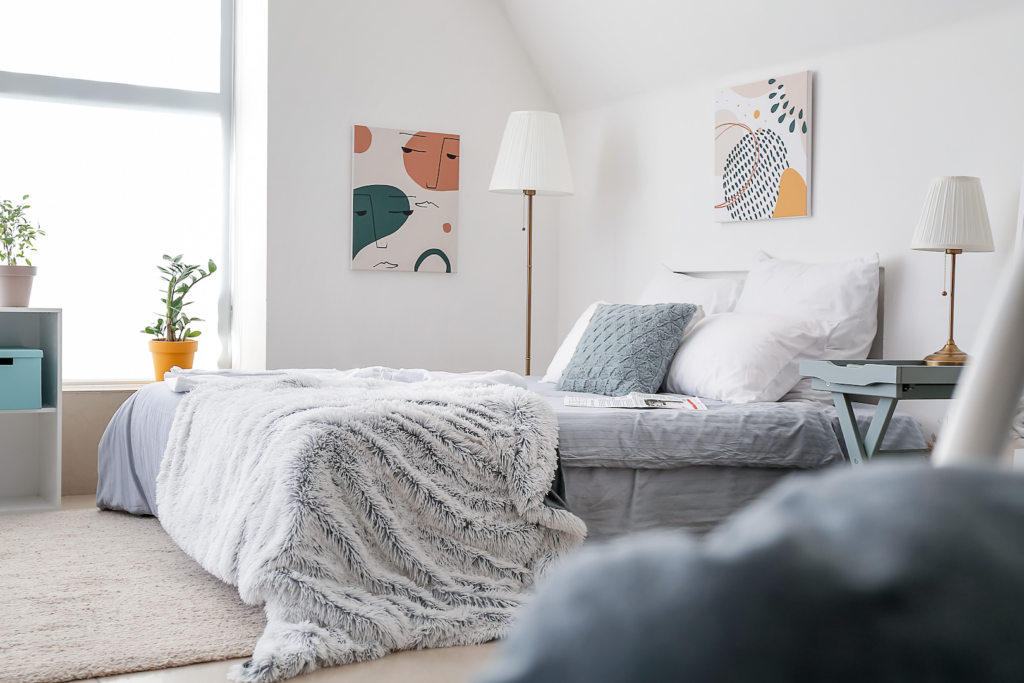
STYLE & SPACE: 5 IDEAS FOR SMALL BEDROOMS

Small is beautiful, as the old saying goes. But when small means cramped, compact and what estate agents would generously describe as ‘cosy’, then ‘beautiful’ isn’t the first adjective that comes to mind. 

If you do happen to have a small bedroom at home, whether it’s your own, a child’s or even a guest room, all is not lost. The space can still be stylish and accommodating with just a few simple hacks to get the most out of the square metres you do have. We’re here to shed a little light and create a little space, with these tips on style, space and 5 IDEAS for small bedrooms.

STORAGE

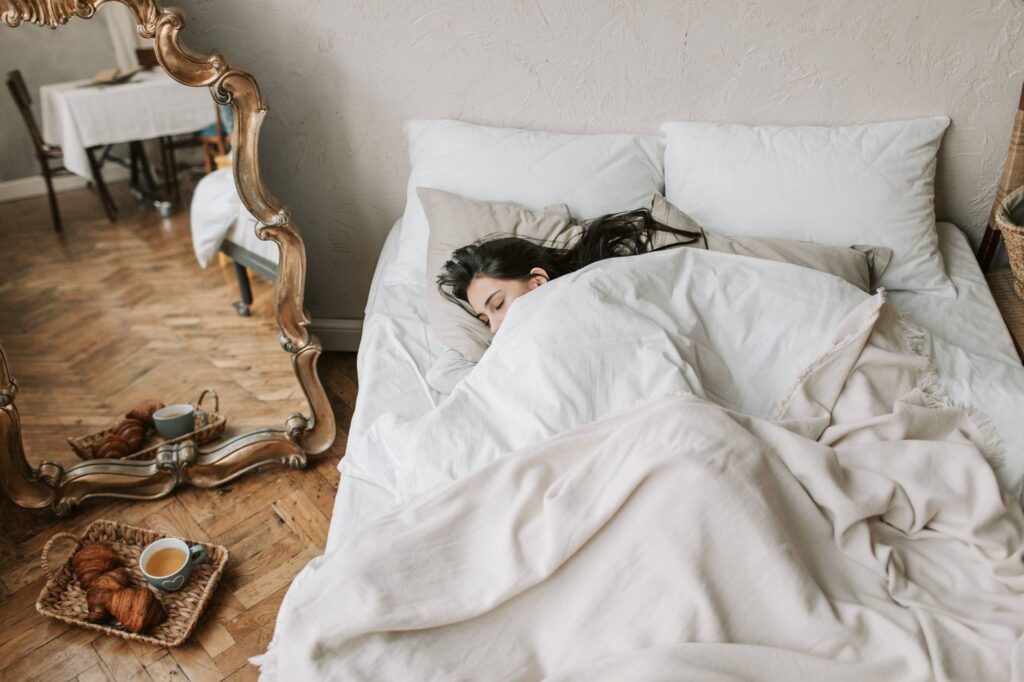
First things first, maximising the space of a small bedroom is most easily realised with savvy storage solutions. Fortunately, the bedroom boats possibilities for this in spades, regardless of the size of the room. 

Of course, there’s all that space under the bed you can make use of, particularly if you deploy vacuum clothing storage bags, which can be shrunk to eliminate any air from inside. The foot of the bed is also a prime location for storage, perhaps consider a beautiful trunk or ottoman which is hollow within? Double it up as a seat to pull on your shoes, put out your clothes for the next day or display something.
MADE TO MEASURE

Plenty of storage exists to occupy awkward spaces, with some great fitted furniture options out there which can be designed bespokely to fit in a nook, cranny or alcove and double up as storage. This kills two birds with one stone, as you’re making use of every available spare centimetre by having made-to-measure furniture, and you’re guaranteeing additional storage space to boot.

A particularly neat trick we’ve seen recently is the combination of a cupboard and shelf, designed to fit succinctly over the precise measurements of a bedroom radiator, offering shelf space above and cupboard space adjacent to the source of heat. Or, you could commission a company to build you drawers to fit snugly underneath your bed, making the most of the room here. Tall staircase-like shelving which extends all the way to your ceiling can also be made made-to-measure and maximises the space. Which brings us to…

SAY IT WITH SHELVING 

When your bedroom is small, every bit of wall space counts. But all too often, interior design is a touch pedestrian when it comes to shelving. Don’t be; there’s so much potential here (and higher) for storage solutions and space saving. 

Aside from the staircase shelving we already mentioned, you can also exploit the negative, oft-overlooked space higher up, towards the ceiling and along the bedroom wall’s perimeter. You could even stack several layers of shelving this way. Also consider using your bed’s headboard as additional shelving, as well as adding more shelves inside your wardrobe. And though we realise we’ve said shelves so many times in this article, floating shelves are also wonderful for making use of otherwise abandoned space. 

PLAY WITH PROPORTIONS 

We’ve spoken about practical solutions for creating more space and minimising wasted areas, but there are also visual tricks you can employ to make everything appear more spacious, too.

Layering a bed with cushions and extra, varying sized pillows, adding rugs and introducing an upholstered bed frame, and harnessing the power of diverse textures, can all amplify a sense of space in your small bedroom without actually taking up much more of it. It’s all about adding visual intrigue here, and an accent wall behind your bed is a wonderful way of doing so. Another smart move favoured by interior design experts is to harness light and shade in terms of wall colours, to offer contrast and a sense of motion within the room.

CLEVER WITH LIGHTING

Speaking of light and shade, the actual lighting you choose for your room can emphasise space brilliantly, casting illumination on areas you wish to highlight. Smart lighting choices can also be save saving, physically, with pendant lighting, in particular, requiring no floor space. Wall sconces on either side of the bed are ace, too, and are perfect for night time reading. 

Think bigger and consider a ceiling fan with lighting too – this way in summer you’ll be cool without a fan taking up room you simply can’t afford to squander. And finally, never underestimate the power of tactfully placed mirrors, which can amplify a sense of space savvily without taking up any room on the floor at all. Perfect!

THE BOTTOM LINE

A small room can boast big ideas, with only a few minor tweaks. Be particularly smart with your storage, arranging bespoke drawers, cupboards and shelving to be made to measure. What’s more, think about colour and light, and the ways you can emphasise space in your bedroom via the contrast between light and shade. In harnessing these simple interior design tricks, you’ll physically and visually maximise the potential of your small bedroom. Good luck!

4 ESSENTIALS OF ANY HOME ENTERTAINMENT ROOM

Once the preserve of Cribs episodes, the home entertainment room has seen a real boom in popularity in recent months. With staying in very much the new going out, homeowners have been focusing on making their domestic lives as entertaining and appealing as possible, and rooms dedicated to r’n’r have been the natural progression of this focus.

Your home entertainment area can be a sanctuary from the chaos of everyday life and allow you somewhere to relax and unwind; something we all need right now, don’t you think? Whether you want to sit back and watch the big game, enjoy a romantic night in with your partner or have a family cinema night, having a room devoted to the art to unwinding will provide the perfect framework for this.

To create the perfect home entertainment area, you will need to give some careful consideration to how you use the space you have available. Don’t worry if you only have a room which estate agents would generously term ‘cosy’; you can still make this thing happen. All you need is a little investment and a lot of imagination, to make the most of these 4 essentials of any home entertainment room. 

THE SCREEN

No matter how big or small your entertainment area is going to be, the focal point of the space, undoubtedly, is the screen. We’re here to watch movies and sports, not have a civilised conversation! That is reserved for the rest of the house. Here, we’re talking entertainment and escapism, so the screen needs to be right.

Whether you choose to purchase a large flatscreen TV and place it on a TV unit, or you go for the full projector and screen experience, a good quality screen in HD is an absolute must. Whilst you wouldn’t want to dwarf the room excessively and look gauche, remember that this room has been declared a space of viewing pleasure; your screen needs to be a statement or family members will just retire to the safety of their other screens in protest.

A good rule of thumb is to measure the distance between where you’ll sit and the TV in inches. Then, divide that number by two. The result is the maximum size of TV you should buy for your apartment. Or, you could opt for a projector; many are no bigger than a TV remote, so do little to daunt a room, and you could use your blank wall space or hang up a bedsheet to give you the best viewing options. 

SEATING CHOICE

The type of seating you choose will depend largely on how much space you have and how many people you plan on entertaining at any one time. While some homeowners opt for a standard living room sofa, others will add recliners for that additional theatre-feel. Personally, if you’ve got the money and room, it has to be the latter option; there’s something about settling into that comfy chair and reclining which really puts you in the right mood to relax.

Should you be short on funding but still want a space high on comfort, another popular option is on the floor seating, using a selection of beanbags, large cushions, and blankets. This is a great option for large groups, kids parties and family movie nights. 

REFRESHMENTS AND SNACKS

No home entertainment area would be complete without a selection of refreshments and snacks; you don’t want to be constantly pausing your film to fetch another cold one or crisp, right? Your home entertainment area should be a place where you can relax and enjoy yourself, only emerging at the end of a long evening to hit the hay, and this means plenty of food and drinks. 

Consider installing a small fridge to keep your drinks cold, or if you are an ice-cream fan, why not add a small freezer to accommodate your treat of choice. Popcorn makers are also a popular addition and help to add that unmistakable movie theatre smell that we all love. Just imagine the nostalgia you could evoke!

SOUND SYSTEM

Nowadays, you can have a sound system for your home entertainment system that would rival any small venue. On the other hand, a simple soundbar or wireless speaker setup can be more than sufficient should you have a tight budget to work towards. Choosing the right sound system relies on a clever balancing act between space available, funds at your disposal, and how much emphasis you want to place on sonic pleasure. 

Personally, we believe a home entertainment system would be nothing without sound; it’s amazing what a crisp, clear sonic environment can do to your viewing experience, and much of the quality of aural input depends on the layout and positioning of your speakers. 

When it comes to sound, there are generally two main options: 5.1 surround sound and 2.1 surround sound. The former means you’ll need five additional speakers spread out around the room while the second calls for just two. To go layman on you, in a smaller space, two speakers do the trick perfectly but in a large room designed specifically as an entertainment space or dedicated completely to film watching, a 5:1 will do that dedication justice.

Alternatively, a soundbar does a similarly good job of projecting music around the room in an immersive way. One of the most affordable for its quality on the market right now is the Majority Snowdon ii soundbar, which we just love. With an output of 120 watts, it can even be hung on the wall, making it an ideal choice for those short on flat surface space in their home entertainment room.

THE BOTTOM LINE

There is no one-size-fits-all solution when it comes to creating a home entertainment system. Everyone has a different amount of space to work with, a different budget, and different intended uses for the room. To create your perfect home entertainment room, be sure to carefully consider the space you have to work with, how you will maximise that space and your budget. With these things considered, you will be able to choose the best screen, seating, sound system and refreshment area for your needs, and the rest will simply fall into place.
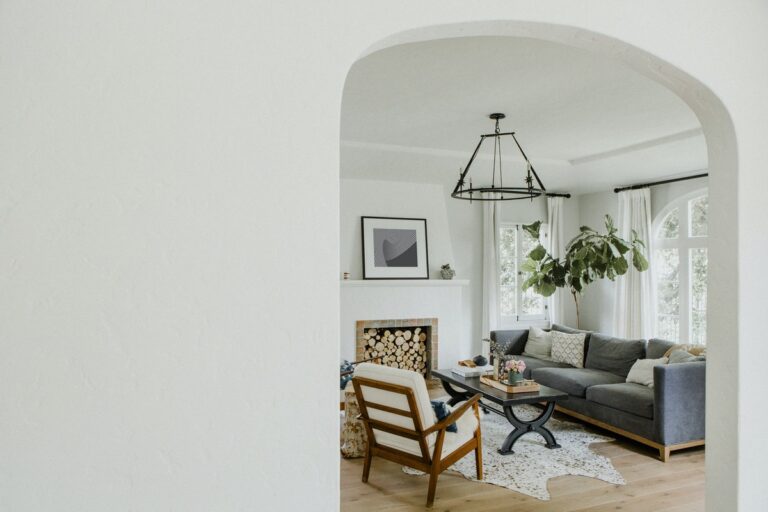
4 SAFETY TECH FEATURES TO CONSIDER WHEN RENOVATING YOUR PROPERTY

Ideal for those looking to add an extra layer of security to their home.

Renovation stations! All hands on deck, best foot forward and eyes on the prize…

But in the rush to glam up the bathroom, update the kitchen and enhance the kerb appeal, sometimes additions which would improve the safety and security of a property get sidetracked. Ask yourself this; what’s the point in having a modern, newly renovated home if it’s lying prone to burglary and damage?  

Sure, homeowners usually take burglar alarms and smoke detectors into consideration, perhaps even install brand new fire doors and sturdier locks, but the world of home security has long surpassed these basic services. Nowadays, you have several extra blankets of security available at your fingertips, if only you do your research. We’re assuming that’s why you’ve landed here…

Ranging from smart home electronics to biometric verification, what was once the realm of science fiction is now a couple of clicks on Amazon away. If you enjoy being on the cutting edge, here are 4 safety tech features to consider when renovating your property, IDEAL for those looking to add an extra layer of security to their home.

SMART STOVE TOP

Heralding the end of the old ‘’did I leave the stove on?’’ panic, the smart stove brings all the benefits of IoT straight to your kitchen. It’s a wonderful technology for improving your cooking, sure, but our interest today in these types of stovetops lies in their connectivity and its contribution to security. 

Should you be having a moment when you’re not sure if you’ve left the hob burning, you can quickly check that all the burners are off with a simple app on your smartphone. ”For all the slow-cooking enthusiasts out there, the ability to control the temperature is a real game-changer,” comments Ruban Selvanayagam of homebuying company and auctioneer Property Solvers. We couldn’t agree more.

But that’s not all; you can also track usage and theoretically cook an entire meal remotely, but we’re not quite sure of how they envision that working. We suspect we will need to wait for the cyborg butlers before that becomes a genuine option. 

BIOMETRIC ACCESS CONTROL 

Don’t be put off by the futuristic-sounding terminology; biometric access control is one of our absolute favourites in the home security tech sphere. 

Once installed, the days of scrambling for lost keys will be a distant memory. To enter your home, all you need is your fingertip. There are variations of the technology that use different access control measures to ensure safety, such as a USB key and facial recognition, too. To our mind, a USB key is just another one to lose, and since we are all mask bound, facial recognition is a hassle.

The standard door lock with fingerprint sensor and a code input panel (for when your neighbour needs to feed the pets for example) is the ultimate in BAC for the home. It’s also surprisingly affordable to install; smart locks are currently available on Amazon (other providers are available) for less than £250.

MULTIPURPOSE SMART DETECTORS

Modern technology sees a lot of emphasis on merging existing tech into more convenient multipurpose gadgets, and we’re all here for simplifying and amalgamating in the tech world. 

Coming back to the smoke detector, this technology, along with motion and audio sensors, have all been combined into one single device; the smart detector. There are various brand names with multiple additions and selling points, but the primary purpose of these nifty little gadgets is right there in the name. Having all your detectors connected via IoT, you can receive any emergency notifications regardless of where you are and irrespective of what the issue is that’s been detected. Streamlining never sounded so advanced.

SMART CAMERAS

Home security and surveillance is a key tool in keeping your home and your family safe in the domestic setting. As with all technologies, it is not the tech itself which is particularly impressive or helpful to the user, but the way it is used and the additional app based controls which define it.

Smart cameras for the home have far more capability than a simple security camera, since they are complemented by artificial intelligence systems. The advent of machine learning means that camera systems can process and ‘understand’ relevant information; install one today and get a true insight into any threats on your property. Here, foresight takes precedent over hindsight; prevention is better than cure after all. And all this ultimately leads to a safer home and improved peace of mind.

A smart camera is now more than capable of facial recognition, allowing it to alert you immediately to the presence of any strangers in or around your home. There is even work being done where smart cameras are used to call emergency services if they spot someone in need of medical assistance. Incredible!

5 IDEAS FOR YOUR CONTEMPORARY KITCHENS

Ideal for your carefully curated hashtag ‘home’.

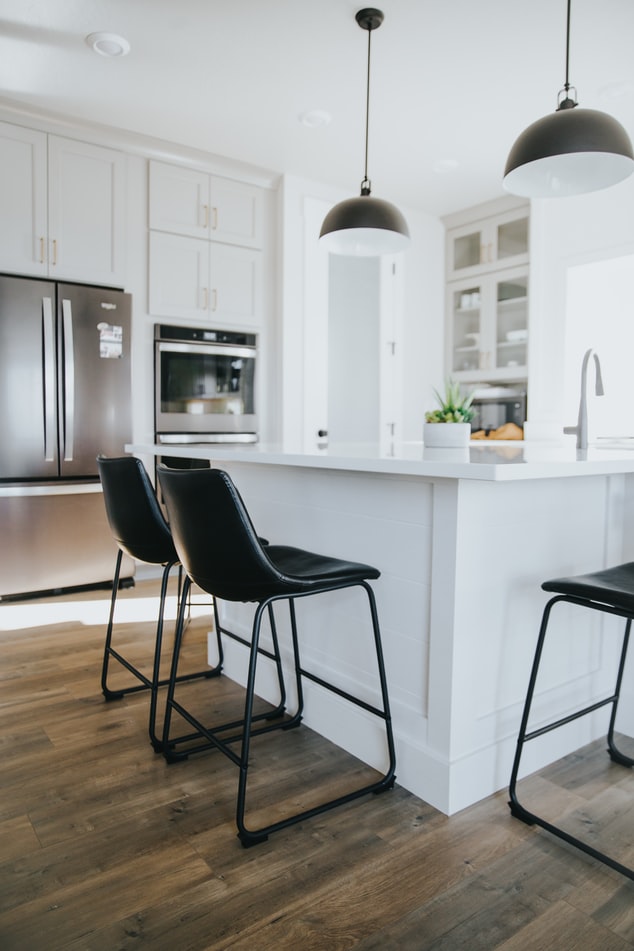
Current and sleek, clean, effortless and minimalist, contemporary kitchens are where the magic happens. Sure, there’s a romance in the old school kitchen, with the smell of bread baking and old fashioned recipe books on the shelf. But wouldn’t you want to do things in a modern manner, with all the conveniences and comforts that brings? 

Should that sound like your sort of thing, then read on; here are 5 ideas for your contemporary kitchen, IDEAL for your carefully curated hashtag ’home’.

CONCRETE GOALS

Modern, practical and built to last, concrete complements a contemporary kitchen design brilliantly. Indeed, this utilitarian material has become a mainstay of a modern kitchen, adding a trendy industrial edge to kitchens far and wide. 

Concrete surfaces, no matter where you use the material, have characteristics that are always unique, creating a bespoke feel. Moreover, the great thing about concrete is that it can be used for worktops, floors, backsplashes, kitchen islands and everything in between.

However, you have to get the balance of concrete right, or you run the risk of it being cold and unwelcoming. Consider accenting your concrete kitchen with contemporary pops of colour via lighting fixtures. Chairs can also give a pop of colour against a muted contemporary concrete backdrop. 

CONTEMPORARY COLOURS 

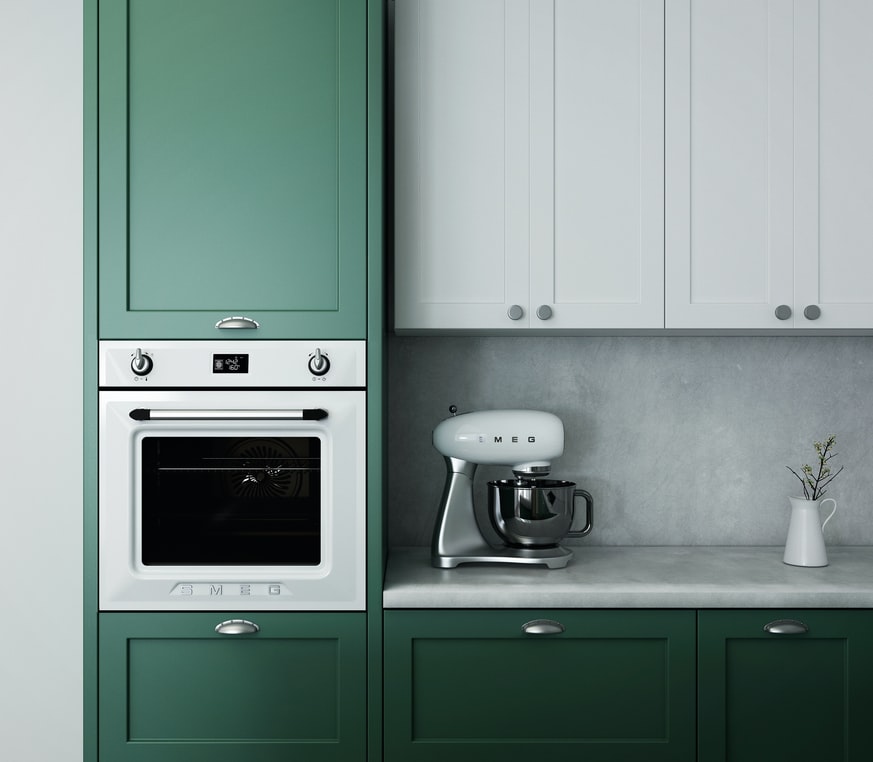
Contemporary kitchens are all about brave yet tasteful colours. Rich forest greens and dark blues are popular for modern kitchens alongside serene shades of dusky pink and soft greys. Take contemporary cues from Pantone’s playbook of colours and refresh a tired kitchen cabinet to give it a new lease of life with nothing more than a lick of paint. 

The experts at Born of Wood, who create modern bespoke fitted kitchens, recommend basalt, a combination of contemporary oak and graphite grey, or a rustic cosmos black as the most en vogue colours of the new decade.

For the finishing touch, complement your fixtures; your lighting fixtures in Matt brass could match your door handles in a similar finish, for instance.

SEATING THAT SPEAKS STYLISH 

Set foot into any modern bistro that does breakfast and brunch and no doubt you’ll find sophisticated upholstered dining chairs in sleek modern styles. And don’t you just love to sink into them? We certainly do. Usually in a velvet finish, with medium high backrests and soft armrests to ensure maximum comfort, this level of comfort shouldn’t be reserved for eating out; you can channel the same chilled out vibes in the home setting, comfortably. 

Go further; outfitting your table with the right seating can transform your dining room into something current and fashionable. Or, consider moving away from the traditional dining table altogether. A thick-cut picnic bench for casual dining, with a bench on one side and those upholstered dining chairs on the other, offers a contemporary take on the traditional, and we just love it.

CONCEALED STORAGE

When designing your contemporary kitchen, concealed storage solutions are where it’s at. Contemporary kitchens mean minimising clutter, and ensuring everything is sleek and functional, with excellent kitchen workflow and no frippery. 

This includes using cabinets to hide all your white goods and discreet storage for all your countertop appliances. No one wants to see a collection of toasters, rice cookers, pots and pans in a space which lays claims to being modern. 

Concealed storage can be further achieved through bespoke storage solutions. Think elements like pull out larders, pop-up shelves and built in appliances. 

STATEMENT LIGHTING 

When it comes to illuminating your kitchen who says you need to have exactly the same boring task lighting throughout the room, all synergised and matching? Not us. Funky lighting fixtures, elegantly and deliberately mismatched, can enhance the contemporary design of your kitchen, illuminating the areas you want to and leaving the corners which don’t require attention in the shadows, as it were. 

Think statement pendant lights over a kitchen island here. We’re also huge fans of multicoloured cluster pendants and globe chandeliers – that sense of organised chaos from above, we think, can be a good thing when done right. 

Textured metallic and brass shades and fixtures offer a contemporary finish – remember how we were planning to match those with your door handles? Well, now’s your chance. Or, if you want to add a pop of colour, consider an exterior shade in the colour of your choice with contrasting metallic inner copper detailing. 

Simply put, the right lighting can give a beautifully bespoke finish to your kitchen.

TECH IT UP

When it comes to contemporary kitchens, modern technology can’t be overlooked or ignored. Indeed, modern kitchens now include a wealth of technology designed to keep up with the demands of the modern homeowner. 

Smart kitchen technology allows you to control nearly everything in your kitchen, from your stove to your refrigerator. You can talk to your microwave and get it to whip you up a soup, or switch off your stove from another city, when you realise you left it on accidentally! Being able to manage appliances remotely saves you energy, money and time, and also brings your kitchen’s aesthetic bang up to date. 

THE BOTTOM LINE 

Irrespective of trends, the kitchen is a place which benefits from high levels of functionality and minimal cutter. A synergised, succinct space is the best way to achieve that sense of the contemporary, and this organisation and modernisation will likely make you a better cook, too – result!

4 BASIC POWER TOOLS NEEDED FOR HOME RENOVATIONS

Anyone who has worked at least a little in the construction industry knows how important it is to use the right tools. From the necessary foundation to the roof installation, every step has its designated tool, and the right one for the job is so important.  

Indeed, there’s a phrase about a bad workperson blaming theirs out there somewhere, but on the flipside, an efficient one makes work easier, cheaper and quicker. There really is no reason not to source the right equipment, we think.

DIY specialists hunker.com suggest that “building a house requires a vast array of tools, and you will find yourself needing specific tools as you make your way through the long process. A handful of basic toolbox items like pliers, hammers, and screwdrivers are going to be necessary nearly every step of the way. Make sure you have these essential tools on hand before you move from architect’s drawing board to your piece of land.” 

And honestly, we’re not here to argue with them. If you’re wondering where to begin, here are the absolutely entry level equipment you need when doing work on your home; our 4 basic power tools needed for home renovations. 

POWER DRILL

There are two types of power drills: brushless drill and hammer drill. The first one goes better with soft materials; the second one works better if you need to handle bricks and precise cuts. That said, if you’re looking to tackle tasks requiring shaping or removing material with great precision, a milling machine becomes essential.

When it comes to electric drills, you should look for either a cordless drill or a battery-powered one, ideally. One which requires a cord can be awkward at best and, at worst, dangerous.

According to Saws Hub, the ‘’right drill sharpener makes this entire process more effective and efficient and provides better results than sharpening using your hands. Dull drill bits are dangerous to work with as they can ruin your projects”.

This basic tool helps you make holes quickly and correctly and turn screws and bolts with precision and speed. You can find usage of it for numerous applications around and inside your house, and this versatility means the power drill should be the first on your power tool shopping list. 

TABLE SAW

The table saw is generally used to cut large pieces of materials, such as panels, sheet goods, like plywood or MDF. The tool has a sliding table on the left of the blade, usually attached to a folding arm-mounted, that is used for cross-cutting more extensive materials. 

Even though the table saw is helpful in construction, it’s a tool which requires sensitivity and discipline in its use; it’s a dangerous item when handled complacently, make no mistake. So, do endeavour to get familiar with the manual before you start working. Remember to always wear safety glasses and gloves as a matter of course. One careless step and you may end up without a finger or an eye. 

NAIL GUN

Another necessary tool you need is a nail gun – a device designed for a specific reason that the name suggests; to drive nails into materials (such as wood, bricks, concrete walls). It’s a smart replacement for manual hammer and nails, and when used dexterously will significantly speed up your work and make it far more time-efficient.  

CIRCULAR SAW

The circular saw it is one of the most common tools builders use in construction and renovations. If you need to cut through material quickly and accurately, this is the item for you. 

Before you start, it’s standard procedure to set the depth of the cut via the length of the blade sticks out from the base of the saw. This allows for precision sawing and this accuracy is why the circular saw is favoured by the professionals. To avoid damage, always cut the material with its good side facing down. In this case, you will get a smooth top surface.  

WHY POWER TOOLS?

Compared to regular tools, power tools can significantly speed up house building and renovations, not to mention the enhanced standard of the work. Indeed, one power tool is good enough to replace, for instance, a whole set of saws easily. Equipped with battery or electricity, these tools run with far enhanced power than manual ones. 

THE BOTTOM LINE

Power tools can perform numerous complex tasks which aren’t easy to complete manually, making it easier for builders and home DIY enthusiasts to complete work more precisely and efficiently. Do remember to work safely and always consult the manual first. Good luck!