
Home Blog Page 239

8 Of The Ultimate Domestic Decluttering Tips for a Minimalist 2026

The cycle of accumulation and clearout has become a familiar rhythm in modern life. We buy, we store, we reorganise, and yet somehow the clutter always seems to return. Those impulse purchases, the gadgets that promised convenience, the items we were certain we’d use “someday” – they all end up competing for precious space in our homes and minds.

If you’re someone who constantly finds themselves reorganising, donating, and still feeling overwhelmed by possessions, perhaps it’s time to consider a more fundamental shift in approach. The answer isn’t about finding more storage solutions or even just doing another round of decluttering – it’s about reimagining your relationship with the things you own.

Rather than seeking a bigger space or renting a storage unit, the path forward might be simpler: adopting a genuinely minimalist mindset towards your belongings. If you’re ready to embrace a clearer, more intentional living space, here are 8 of the ultimate domestic decluttering tips to transform your home for a minimalist 2026.

Start With A Small Area

The first thing that you need to do is hone in on areas which have typically accumulated the most clutter. We all have them; that chest of drawers next to the bed which is brimming with year old shopping lists, or that kitchen cupboard full of fifty types of flour…those are the places which focus should first fall on. 

Giving most attention to those small areas which have fallen into disarray will give you a structure and ultimately, a sense of satisfaction in the process. Starting small, building momentum and getting a taste for decluttering and organising your belongings is a good way to start your decluttering journey. 
Be Ruthless

Tidy home, tidy mind, as the old saying goes, and there’s certainly a modicum of truth to be found there. ”Tidy home, tidy new year’’ sounds even more agreeable, don’t you think?

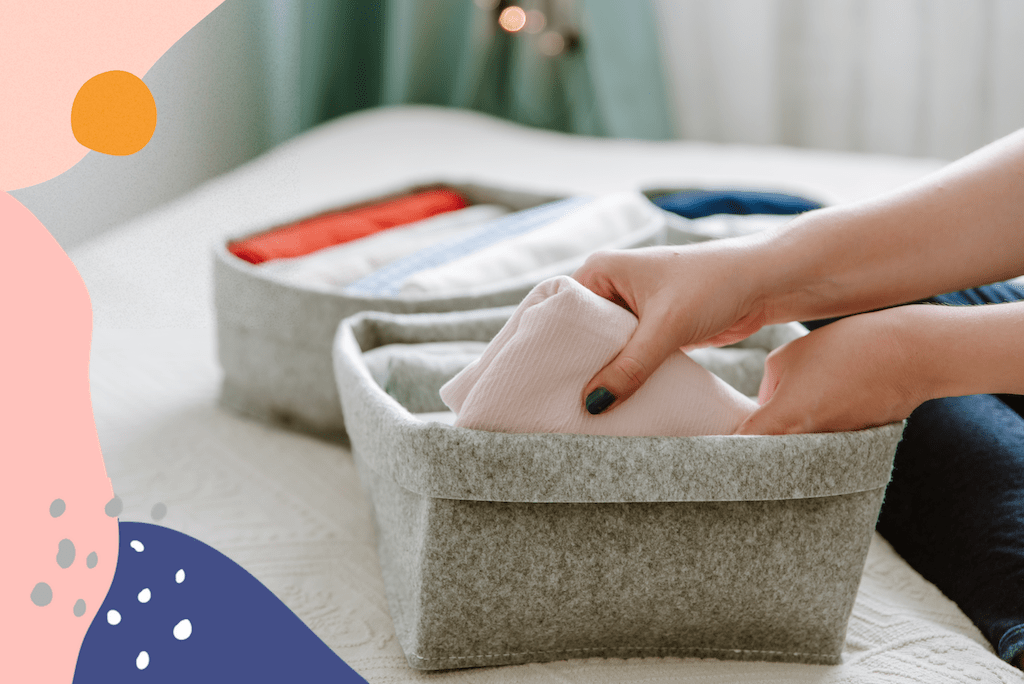
But it’s impossible to be efficient in your clear-out when sentimentality takes over. Go into the decluttering process with a mentality of ruthlessness; anything which doesn’t immediately have a place or purpose should be consigned to the scrapheap (or the charity shop, or eBay). As a guide, if you haven’t used the item in over a year, then it’s time to part with it.  

Take a note out of Marie Kondo’s book – if it doesn’t spark joy, it’s time to say goodbye. You’d be amazed at how much stuff you uncover which hasn’t been used for years and therefore, has brought no value to your life for some time but which could bring value to others. Some (yes, us) might even call it ‘transformative‘.

Out Of Sight, Out Of Mind, Out Of Need

Should you find it hard to be ruthless, put the things that you are umming and ahhing about in a box, out of sight. If after a month or so you’ve forgotten about everything in said box, then it’s time to chuck it away and rub your hands clean of all the belongings within it.

Setting things aside to get rid of at a later date may also help you resolve any feelings of cognitive dissonance many of us experience when decluttering. We’ve all had that gut reaction of regret when we hastily chuck something out. A two step process of removing before giving away will help you come to terms with things and find contentment with your decluttering decision.

Keep Everything Sustainable

Sustainability and a deep regard for our environmental impact has never been more vital. Simply commiting items to landfill in the name of a clearout, in the current climate, can feel pretty callous and irresponsible. 

Instead, embrace what some have coined a ‘circular’ attitude to goods, and donate anything and everything you can to a charity shop or sell it on at a carboot sale. In doing so, you’ll reduce the demand for new stuff. We know it’s only a small gesture, but every little helps, right? If you’re donating or selling your items, then look into shipping costs in advance so you can save money when sending them out.

Set A Timer

Let’s face it, decluttering isn’t exactly a fun job. To make the process less of a chore, many expert declutterers swear by a methodical, time-constrained approach. As such, it might be wise to set a timer for a set period; for instance, 30 minutes. 

Knowing that you have a time limit for each task or room in the house means you work practically and proficiently, moreover, you don’t dwell on disparate elements and instead enact that steely focus we keep encouraging. When the timer goes off, finish up and move on. Items that remained might be items worth keeping.

Consider Professional House Clearance For Major Projects

Sometimes the scale of decluttering required can feel overwhelming, particularly if you’re dealing with an entire property, inherited belongings, or years of accumulated items. In these situations, hiring a professional house clearance service can be invaluable. These specialists can efficiently sort, remove, and responsibly dispose of large volumes of items, often recycling or donating what they can.

As the team at House Clearance London report, these services are particularly helpful during major life transitions – downsizing, bereavement, or preparing a property for sale. They bring not just the physical labour but also the emotional distance sometimes needed when parting with belongings. Many reputable companies will work with you to identify items of value or sentimental importance before clearing. Whilst it’s an investment, the time saved and stress reduced often make it worthwhile for substantial decluttering projects.

Adopt The One In, One Out Rule

Prevention is better than cure when it comes to clutter, and the ‘one in, one out’ rule is brilliantly simple yet effective. Every time you bring something new into your home – whether it’s clothing, kitchenware, or decorative items – commit to removing something similar. Buy a new jumper? Donate an old one. New coffee mug? Time to retire that chipped one you never use.

This principle helps maintain equilibrium in your possessions and forces you to be more intentional about purchases. Before buying something new, you’ll naturally consider what you’re willing to part with, which often reveals whether you truly need the new item at all. It’s a sustainable approach that prevents the gradual accumulation that leads to future decluttering marathons, keeping your minimalist goals on track throughout the year.

Everything In Its Right Place

One of the fundamental principles of maintaining a clutter-free home is ensuring every item has a designated spot. When belongings have a specific home, tidying becomes almost effortless – you develop an automatic routine where items naturally return to their proper places without much thought.

This approach requires being strategic about your storage systems and organisational methods. Consider how you use different items and group them logically. Frequently used items should be easily accessible, whilst seasonal or occasional pieces can be stored in less convenient spots.

The beauty of this system is that it prevents the gradual accumulation of random items on surfaces and in drawers. When everything has a clear destination, you’ll quickly notice when something doesn’t belong, making it easier to maintain the minimalist space you’ve worked to create. Investing in proper storage solutions – whether simple boxes, drawer dividers, or shelving systems – will support this approach and help you maintain order long-term.


5 IDEAL KINDS OF TIMELESS BOHEMIAN JEWELLERY

Boho jewellery, originally derived from the region of Bohemia, in the Czech Republic, who people developed garnet gemstones. But, the concept of ‘Boho’ is so much more than that. Grown out of a counterculture, and formed through styles adapted and reinterpreted, Boho jewellery has since evolved into a whole movement symbolic of individualism and a collective mentally, equally.  

While the Boho aesthetic feels personal to an individual, there is also a heightened sense of being part of a bigger collective running alongside that heightened sense of individuality. And this, we think, is what makes this stylistic statement so special. 

Today, boho blurs the lines between countries and cultures and while the bohemian aesthetic continues to grow and change, certain pieces of jewellery are enduringly popular. Here’s 5 IDEAL kinds of timeless bohemian jewellery. 

GEMSTONES 

If you’re looking to capture the essence of bohemian chic, then look no further than gemstones.

Gemstones that aren’t polished or cut to a specific shape, and instead kept in their natural shape, are the defining feature here. Favouring moonstones, birthstones and crystals, these rings are evocative of a free-spirited, alternative ethos we just love. 

We say ‘alternative’, but in all honesty, gemstones and mood rings, so popular in the 1970’s, have since become mainstream, with couples now sometimes opting for them as engagement rings. If that’s your thing, it represents an inexpensive option. Most boho pieces will include inexpensive, semi-precious stones like amethyst, quartz, lapis lazuli and even labradorite.  

The beauty of gemstones is that they all have a different meaning and a history behind them. Take moonstones which are believed to be comprised of solidified moonbeams and is a stone for “new beginnings”.

Or, consider amethyst, a stone of spiritual protection and purification; it’s thought if one wears it, their energy field is cleansed of of negative influences and attachments while amber is associated with electricity and light. To find out more about your favourite gemstones like labradorite, which takes its name from the fjord laden region of Canada, read more here.

CELESTIAL PIECES & SPIRITUALITY 

Astrology, star signs, horoscopes and all things luna have long been associated with a bohemian lifestyle. Embracing occult traditions and metaphysical practices further encapsulate the esoteric tastes so favoured by bohemia. And for luna lovers, an astrology necklace is the perfect way to pay lip (or should that be neck?) surface to the bohemian lifestyle. A zodiac pendant displaying the appropriate symbol is an ideal place to start.

THE INFLUENCE OF NATURE 

Free loving, free-spirited with an adoration for the natural world, being at one with nature is a key component of the bohemian lifestyle. As such, the jewellery often incorporates natural elements into its design. Shells are a popular choice here, whether it be a single one on a chain or a cowrie shell choker. Animal amulets and pieces with feathers in them also harness the power of the Earth in wearable form.  

We also love festival-style braided bracelets that can be worn effortlessly when in and amongst nature, whether that’s when you’re swimming, surfing, snowboarding or simply lounging on the beach. Of course, you need to make sure you buy braided bracelets that are waterproof if you’d like to get several glorious summers out of this simple piece of jewellery.

AZTEC & TRIBAL DESIGNS 

A dramatic boho statement, Aztec, geometric and tribal designs have seen a massive rise in popularity in recent years, redolent of a free-spirited, spiritual sensibility. We’d suggest going subtle rather than showy here; an overblown tribal design on jewellery risks looking tacky. Instead, a small flourish or elegant feature, rather than a piece completely dominated by the design, works best.

ANKLETS, HEAD CHAINS & TOERINGS 

Traditionally speaking, jewellery is worn in the ears, around the neck or wrists, or on the fingers. But why should your ears, hands and neck get all the attention?  The beauty of bohemian jewellery and that rebellious spirit of the wearer is to think outside the box and the body. Therefore, anklets, head chains and toe rings are all adept at conjuring up that bohemian vibe, breaking free of the norms of jewellery and hinting at a more extemporaneous ethos in those who sport them. Add an arm cuff and a body chain to that too.  If they make a small sound to signify your arrival, then all the better!

THE BOTTOM LINE

Boho style is a mindset and a lifestyle, in outfit, accessories and even Bohemian interior design. The wearables which identify you as one of the collective are a great way to show your love for this way of life. The best part about bohemian jewellery is that there are no rules. The counter-culture as born out of a commitment to personal expression, with Jane Brikin, Yoko Ono, Grace Jones all encapsulating the look. That said, take inspiration from yourself, first and foremost, and you won’t go wrong!

THE IDEAL RECIPE FOR BANANA FRITTERS

Ideal for turning any bananas on the turn into a truly delicious treat.

We all deserve a little treat right now. And since we’re all trying to be thriftier, and letting nothing go to waste, should you have any bananas going brown, this is the perfect recipe for using them up. The beer based batter makes for a light, crisp finish, and the coconut cream brings a luxurious mouthfeel. So, alongside our pals at Waitrose, here’s a cracking recipe for Banana Fritters. 

  • Preparation time: 10 minutes
  • Cooking time: 40 minutes
  • Total time: 50 minutes
  • Serves: 6

WHAT YOU’LL NEED

100ml Singha Beer
50g Bart Creamed Coconut (mixed with 100ml boiling water)
145g rice flour 
2 tbsp black sesame seeds
1 lime, finely grated zest plus cut into wedges
3 tbsp light brown soft sugar 
1 tsp baking powder 
1.5 litres sunflower oil, for deep frying 
6 bananas, each cut into about 5 pieces  
Clear honey, for drizzling 

WHAT YOU NEED TO DO

1. In a large bowl, mix together the beer, creamed coconut mixture, rice flour, sesame seeds, the finely grated zest from the lime, sugar, baking powder, and a pinch of salt. 

2. Put the oil into a large high-sided saucepan and warm over a medium heat. When hot, dip a few pieces of banana at a time into the batter and then very carefully lower into the oil. Fry the bananas, in batches, for about 5-7 minutes turning from time to time until golden and crisp. Keep warm. If the batter begins to set before all the fritters are cooked, simply warm the mixture in the microwave for 10 seconds to loosen it again.

3. Serve drizzled with honey and the lime cut into wedges to squeeze over.

5 MAINTENANCE MUST DO’S FOR YOUR HOME’S EXTERIOR

A scrub here, a polish there. Does this plant look better on this windowsill or that? We should really look into changing our accent wall from pantone to living coral…

The domestic discussions of the everyday seem to focus on the design of the interiors so often that the home’s exterior gets neglected more than nurtured. But we think a property’s facade deserves just as much love as what lies within, particularly when it comes to the routine maintenance which keeps things ticking over and functioning properly. With that in mind, here are 5 maintenance must do’s for your home’s exterior. 

GET YOUR CHIMNEY SWEPT IN WINTER

Chimneys need sweeping in late Autumn or early Winter for several reasons. In the UK, this is traditionally the time when the nights draw in, the temperature drops, and the allure of the open fire rises in tandem. A Winter sweep ensures that no birds have made their homes in your chimney over Spring and Summer, before the first flames lick upwards. It’s also essential for the removal of other blockages, such as cobwebs or soot build-up, which would impede the escape of fumes. 

DRAUGHTPROOFING

Oh, these summer months have been kind to us, papering over the cracks of our home and disguising issues currently lying dormant. Those cracks, though, will soon be exposed once again to gusts of cold air. Indeed, this is a long winded, poetic (if we do say so ourselves) way of saying that you should consider draughtproofing this Autumn, in term for an inevitably chilly Winter.

Yep, draughty floorboards aren’t an issue simply solved with ever thicker pairs of socks. Indeed, a draught from below, as well as from the door and window frame, and even your letter box, can leak expensive heat, causing your boiler to work harder and costing you money on your energy bills. Draught proofing isn’t massively expensive but can make a massive difference to your home’s ambience; consider it before Winter bites.

HAVE YOUR GUTTERS CHECKED IN AUTUMN

Continuing in Autumn, another essential annual maintenance is to have your gutters checked. However symbolic those fallen leaves may be, representing a change in the seasons and mood, they’re also a threat to your property’s gutters. Therefore, regular cleaning of your gutters is recommended by experts, but especially in early Autumn, when the frequency of debris is greatest. If you ignore this necessity, you risk damaging the exterior of your home, as blocked gutters can result in water build up and leakage from above. And no one wants that.

If damp makes its way into your home through water running down the exterior wall – because of those leaves causing blockages – your home might endure damage to its structural integrity. Best to have those gutters checked in Autumn, by experts such as GM Roofers Manchester, and carry out regular decluttering missions up there, too.

MOSS REMOVAL

Moss (as opposed to algae, we should add) on your home’s exterior isn’t just ugly, it can also cause structural damage. This is because rogue moss can take on a lot of water following a downpour and store it, which can, in turn, cause damage to your property’s brickwork and roof. Much feared structural damage may follow. For something so seemingly innocuous, it truly doesn’t pay to simply ignore moss. 

Instead, some essential maintenance is required to remove the moss. Firstly, it should be noted that moss grows best in shade, so you should prune any trees, bushes and shrubbery which are casting shade on your home (more of that later, by the way). You can then use a water pressure gun to remove the moss. A solution of vinegar and bleach can be used if it’s particularly stubborn.

TREE & PLANT CARE

Finally, as we mentioned, you should endeavour to make a bi-annual effort to prune trees, remove dead branches and generally keep the shrubbery surrounding your home ruly and obedient. This will prevent unwanted shade, undesired build up of water and keep a general appearance of wear and tear at bay. Good luck!

STYLE & SPACE: 5 IDEAS FOR SMALL BEDROOMS

Small is beautiful, as the old saying goes. But when small means cramped, compact and what estate agents would generously describe as ‘cosy’, then ‘beautiful’ isn’t the first adjective that comes to mind. 

If you do happen to have a small bedroom at home, whether it’s your own, a child’s or even a guest room, all is not lost. The space can still be stylish and accommodating with just a few simple hacks to get the most out of the square metres you do have. We’re here to shed a little light and create a little space, with these tips on style, space and 5 IDEAS for small bedrooms.

STORAGE

First things first, maximising the space of a small bedroom is most easily realised with savvy storage solutions. Fortunately, the bedroom boats possibilities for this in spades, regardless of the size of the room. 

Of course, there’s all that space under the bed you can make use of, particularly if you deploy vacuum clothing storage bags, which can be shrunk to eliminate any air from inside. The foot of the bed is also a prime location for storage, perhaps consider a beautiful trunk or ottoman which is hollow within? Double it up as a seat to pull on your shoes, put out your clothes for the next day or display something.

MADE TO MEASURE

Plenty of storage exists to occupy awkward spaces, with some great fitted furniture options out there which can be designed bespokely to fit in a nook, cranny or alcove and double up as storage. This kills two birds with one stone, as you’re making use of every available spare centimetre by having made-to-measure furniture, and you’re guaranteeing additional storage space to boot.

A particularly neat trick we’ve seen recently is the combination of a cupboard and shelf, designed to fit succinctly over the precise measurements of a bedroom radiator, offering shelf space above and cupboard space adjacent to the source of heat. Or, you could commission a company to build you drawers to fit snugly underneath your bed, making the most of the room here. Tall staircase-like shelving which extends all the way to your ceiling can also be made made-to-measure and maximises the space. Which brings us to…

SAY IT WITH SHELVING 

When your bedroom is small, every bit of wall space counts. But all too often, interior design is a touch pedestrian when it comes to shelving. Don’t be; there’s so much potential here (and higher) for storage solutions and space saving. 

Aside from the staircase shelving we already mentioned, you can also exploit the negative, oft-overlooked space higher up, towards the ceiling and along the bedroom wall’s perimeter. You could even stack several layers of shelving this way. Also consider using your bed’s headboard as additional shelving, as well as adding more shelves inside your wardrobe. And though we realise we’ve said shelves so many times in this article, floating shelves are also wonderful for making use of otherwise abandoned space. 

PLAY WITH PROPORTIONS 

We’ve spoken about practical solutions for creating more space and minimising wasted areas, but there are also visual tricks you can employ to make everything appear more spacious, too.

Layering a bed with cushions and extra, varying sized pillows, adding rugs and introducing an upholstered bed frame, and harnessing the power of diverse textures, can all amplify a sense of space in your small bedroom without actually taking up much more of it. It’s all about adding visual intrigue here, and an accent wall behind your bed is a wonderful way of doing so. Another smart move favoured by interior design experts is to harness light and shade in terms of wall colours, to offer contrast and a sense of motion within the room.

CLEVER WITH LIGHTING

Speaking of light and shade, the actual lighting you choose for your room can emphasise space brilliantly, casting illumination on areas you wish to highlight. Smart lighting choices can also be save saving, physically, with pendant lighting, in particular, requiring no floor space. Wall sconces on either side of the bed are ace, too, and are perfect for night time reading. 

Think bigger and consider a ceiling fan with lighting too – this way in summer you’ll be cool without a fan taking up room you simply can’t afford to squander. And finally, never underestimate the power of tactfully placed mirrors, which can amplify a sense of space savvily without taking up any room on the floor at all. Perfect!

THE BOTTOM LINE

A small room can boast big ideas, with only a few minor tweaks. Be particularly smart with your storage, arranging bespoke drawers, cupboards and shelving to be made to measure. What’s more, think about colour and light, and the ways you can emphasise space in your bedroom via the contrast between light and shade. In harnessing these simple interior design tricks, you’ll physically and visually maximise the potential of your small bedroom. Good luck!

4 ESSENTIALS OF ANY HOME ENTERTAINMENT ROOM

Once the preserve of Cribs episodes, the home entertainment room has seen a real boom in popularity in recent months. With staying in very much the new going out, homeowners have been focusing on making their domestic lives as entertaining and appealing as possible, and rooms dedicated to r’n’r have been the natural progression of this focus.

Your home entertainment area can be a sanctuary from the chaos of everyday life and allow you somewhere to relax and unwind; something we all need right now, don’t you think? Whether you want to sit back and watch the big game, enjoy a romantic night in with your partner or have a family cinema night, having a room devoted to the art to unwinding will provide the perfect framework for this.

To create the perfect home entertainment area, you will need to give some careful consideration to how you use the space you have available. Don’t worry if you only have a room which estate agents would generously term ‘cosy’; you can still make this thing happen. All you need is a little investment and a lot of imagination, to make the most of these 4 essentials of any home entertainment room. 

THE SCREEN

No matter how big or small your entertainment area is going to be, the focal point of the space, undoubtedly, is the screen. We’re here to watch movies and sports, not have a civilised conversation! That is reserved for the rest of the house. Here, we’re talking entertainment and escapism, so the screen needs to be right.

Whether you choose to purchase a large flatscreen TV and place it on a TV unit, or you go for the full projector and screen experience, a good quality screen in HD is an absolute must. Whilst you wouldn’t want to dwarf the room excessively and look gauche, remember that this room has been declared a space of viewing pleasure; your screen needs to be a statement or family members will just retire to the safety of their other screens in protest.

A good rule of thumb is to measure the distance between where you’ll sit and the TV in inches. Then, divide that number by two. The result is the maximum size of TV you should buy for your apartment. Or, you could opt for a projector; many are no bigger than a TV remote, so do little to daunt a room, and you could use your blank wall space or hang up a bedsheet to give you the best viewing options. 

SEATING CHOICE

The type of seating you choose will depend largely on how much space you have and how many people you plan on entertaining at any one time. While some homeowners opt for a standard living room sofa, others will add recliners for that additional theatre-feel. Personally, if you’ve got the money and room, it has to be the latter option; there’s something about settling into that comfy chair and reclining which really puts you in the right mood to relax.

Should you be short on funding but still want a space high on comfort, another popular option is on the floor seating, using a selection of beanbags, large cushions, and blankets. This is a great option for large groups, kids parties and family movie nights. 

REFRESHMENTS AND SNACKS

No home entertainment area would be complete without a selection of refreshments and snacks; you don’t want to be constantly pausing your film to fetch another cold one or crisp, right? Your home entertainment area should be a place where you can relax and enjoy yourself, only emerging at the end of a long evening to hit the hay, and this means plenty of food and drinks. 

Consider installing a small fridge to keep your drinks cold, or if you are an ice-cream fan, why not add a small freezer to accommodate your treat of choice. Popcorn makers are also a popular addition and help to add that unmistakable movie theatre smell that we all love. Just imagine the nostalgia you could evoke!

SOUND SYSTEM

Nowadays, you can have a sound system for your home entertainment system that would rival any small venue. On the other hand, a simple soundbar or wireless speaker setup can be more than sufficient should you have a tight budget to work towards. Choosing the right sound system relies on a clever balancing act between space available, funds at your disposal, and how much emphasis you want to place on sonic pleasure. 

Personally, we believe a home entertainment system would be nothing without sound; it’s amazing what a crisp, clear sonic environment can do to your viewing experience, and much of the quality of aural input depends on the layout and positioning of your speakers. 

When it comes to sound, there are generally two main options: 5.1 surround sound and 2.1 surround sound. The former means you’ll need five additional speakers spread out around the room while the second calls for just two. To go layman on you, in a smaller space, two speakers do the trick perfectly but in a large room designed specifically as an entertainment space or dedicated completely to film watching, a 5:1 will do that dedication justice.

Alternatively, a soundbar does a similarly good job of projecting music around the room in an immersive way. One of the most affordable for its quality on the market right now is the Majority Snowdon ii soundbar, which we just love. With an output of 120 watts, it can even be hung on the wall, making it an ideal choice for those short on flat surface space in their home entertainment room.

THE BOTTOM LINE

There is no one-size-fits-all solution when it comes to creating a home entertainment system. Everyone has a different amount of space to work with, a different budget, and different intended uses for the room. To create your perfect home entertainment room, be sure to carefully consider the space you have to work with, how you will maximise that space and your budget. With these things considered, you will be able to choose the best screen, seating, sound system and refreshment area for your needs, and the rest will simply fall into place.

4 SAFETY TECH FEATURES TO CONSIDER WHEN RENOVATING YOUR PROPERTY

Ideal for those looking to add an extra layer of security to their home.

Renovation stations! All hands on deck, best foot forward and eyes on the prize…

But in the rush to glam up the bathroom, update the kitchen and enhance the kerb appeal, sometimes additions which would improve the safety and security of a property get sidetracked. Ask yourself this; what’s the point in having a modern, newly renovated home if it’s lying prone to burglary and damage?  

Sure, homeowners usually take burglar alarms and smoke detectors into consideration, perhaps even install brand new fire doors and sturdier locks, but the world of home security has long surpassed these basic services. Nowadays, you have several extra blankets of security available at your fingertips, if only you do your research. We’re assuming that’s why you’ve landed here…

Ranging from smart home electronics to biometric verification, what was once the realm of science fiction is now a couple of clicks on Amazon away. If you enjoy being on the cutting edge, here are 4 safety tech features to consider when renovating your property, IDEAL for those looking to add an extra layer of security to their home.

SMART STOVE TOP

Heralding the end of the old ‘’did I leave the stove on?’’ panic, the smart stove brings all the benefits of IoT straight to your kitchen. It’s a wonderful technology for improving your cooking, sure, but our interest today in these types of stovetops lies in their connectivity and its contribution to security. 

Should you be having a moment when you’re not sure if you’ve left the hob burning, you can quickly check that all the burners are off with a simple app on your smartphone. ”For all the slow-cooking enthusiasts out there, the ability to control the temperature is a real game-changer,” comments Ruban Selvanayagam of homebuying company and auctioneer Property Solvers. We couldn’t agree more.

But that’s not all; you can also track usage and theoretically cook an entire meal remotely, but we’re not quite sure of how they envision that working. We suspect we will need to wait for the cyborg butlers before that becomes a genuine option. 

BIOMETRIC ACCESS CONTROL 

Don’t be put off by the futuristic-sounding terminology; biometric access control is one of our absolute favourites in the home security tech sphere. 

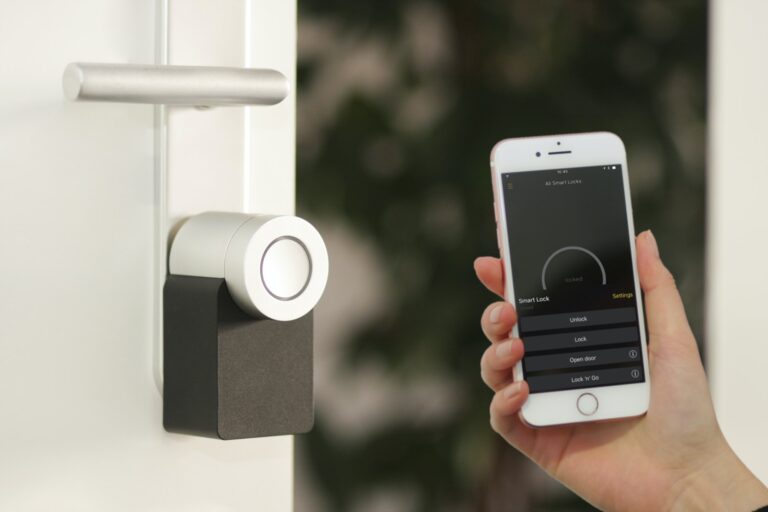
Once installed, the days of scrambling for lost keys will be a distant memory. To enter your home, all you need is your fingertip. There are variations of the technology that use different access control measures to ensure safety, such as a USB key and facial recognition, too. To our mind, a USB key is just another one to lose, and since we are all mask bound, facial recognition is a hassle.

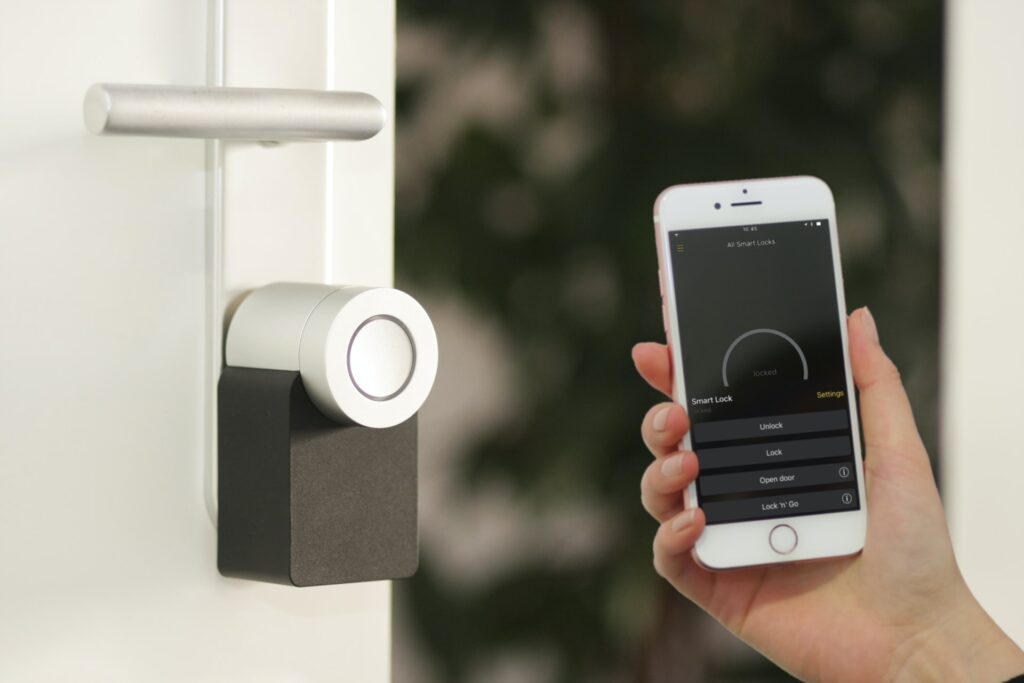
The standard door lock with fingerprint sensor and a code input panel (for when your neighbour needs to feed the pets for example) is the ultimate in BAC for the home. It’s also surprisingly affordable to install; smart locks are currently available on Amazon (other providers are available) for less than £250.

MULTIPURPOSE SMART DETECTORS

Modern technology sees a lot of emphasis on merging existing tech into more convenient multipurpose gadgets, and we’re all here for simplifying and amalgamating in the tech world. 

Coming back to the smoke detector, this technology, along with motion and audio sensors, have all been combined into one single device; the smart detector. There are various brand names with multiple additions and selling points, but the primary purpose of these nifty little gadgets is right there in the name. Having all your detectors connected via IoT, you can receive any emergency notifications regardless of where you are and irrespective of what the issue is that’s been detected. Streamlining never sounded so advanced.

SMART CAMERAS

Home security and surveillance is a key tool in keeping your home and your family safe in the domestic setting. As with all technologies, it is not the tech itself which is particularly impressive or helpful to the user, but the way it is used and the additional app based controls which define it.

Smart cameras for the home have far more capability than a simple security camera, since they are complemented by artificial intelligence systems. The advent of machine learning means that camera systems can process and ‘understand’ relevant information; install one today and get a true insight into any threats on your property. Here, foresight takes precedent over hindsight; prevention is better than cure after all. And all this ultimately leads to a safer home and improved peace of mind.

A smart camera is now more than capable of facial recognition, allowing it to alert you immediately to the presence of any strangers in or around your home. There is even work being done where smart cameras are used to call emergency services if they spot someone in need of medical assistance. Incredible!

5 IDEAS FOR YOUR CONTEMPORARY KITCHENS

Ideal for your carefully curated hashtag ‘home’.

Current and sleek, clean, effortless and minimalist, contemporary kitchens are where the magic happens. Sure, there’s a romance in the old school kitchen, with the smell of bread baking and old fashioned recipe books on the shelf. But wouldn’t you want to do things in a modern manner, with all the conveniences and comforts that brings? 

Should that sound like your sort of thing, then read on; here are 5 ideas for your contemporary kitchen, IDEAL for your carefully curated hashtag ’home’.

CONCRETE GOALS

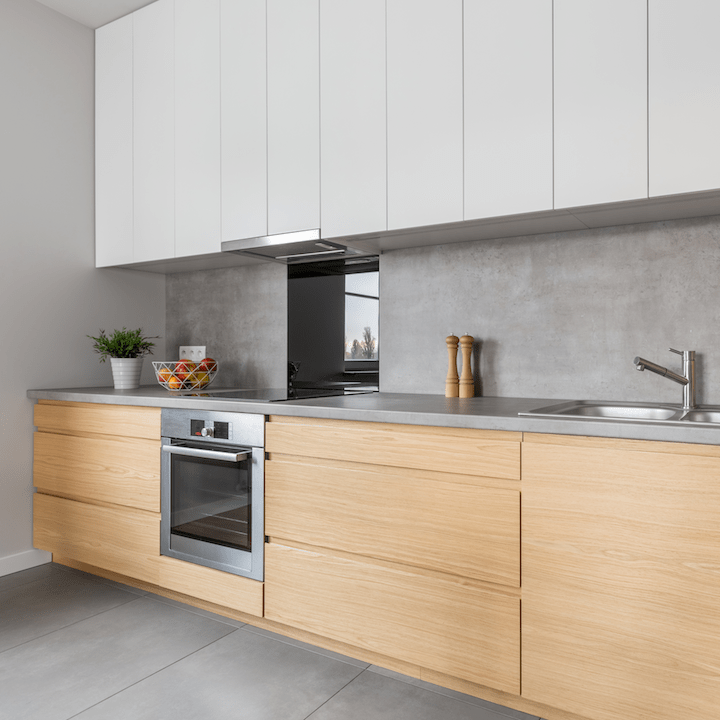
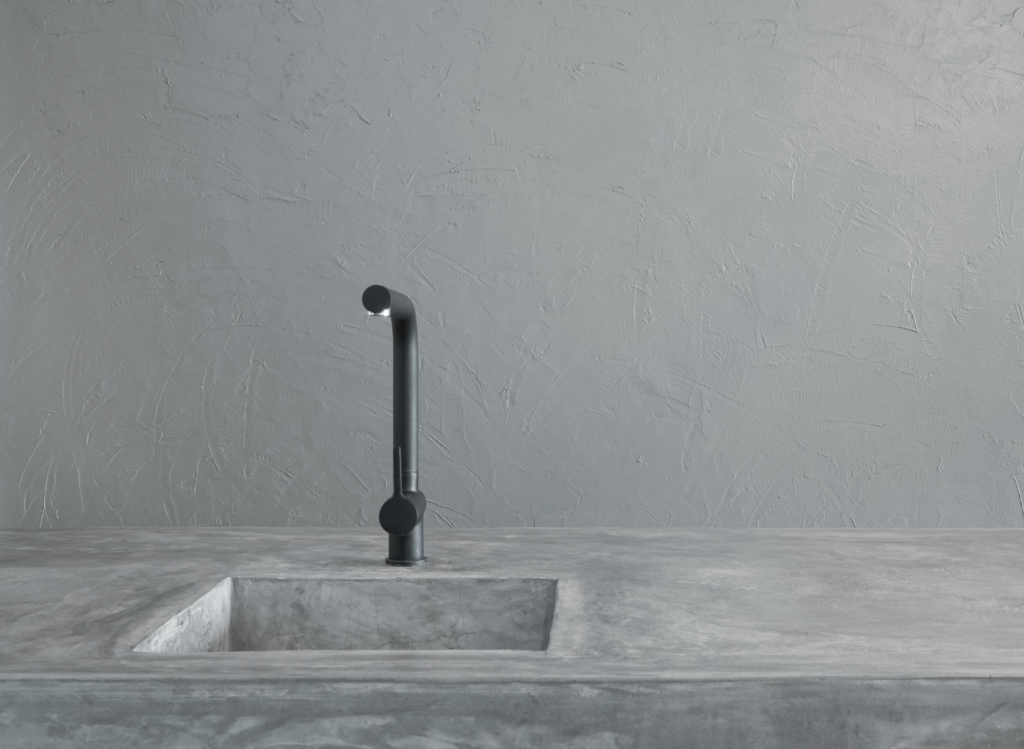
Modern, practical and built to last, concrete complements a contemporary kitchen design brilliantly. Indeed, this utilitarian material has become a mainstay of a modern kitchen, adding a trendy industrial edge to kitchens far and wide. 

Concrete surfaces, no matter where you use the material, have characteristics that are always unique, creating a bespoke feel. Moreover, the great thing about concrete is that it can be used for worktops, floors, backsplashes, kitchen islands and everything in between.

However, you have to get the balance of concrete right, or you run the risk of it being cold and unwelcoming. Consider accenting your concrete kitchen with contemporary pops of colour via lighting fixtures. Chairs can also give a pop of colour against a muted contemporary concrete backdrop. 

CONTEMPORARY COLOURS 

Contemporary kitchens are all about brave yet tasteful colours. Rich forest greens and dark blues are popular for modern kitchens alongside serene shades of dusky pink and soft greys. Take contemporary cues from Pantone’s playbook of colours and refresh a tired kitchen cabinet to give it a new lease of life with nothing more than a lick of paint. 

The experts at Born of Wood, who create modern bespoke fitted kitchens, recommend basalt, a combination of contemporary oak and graphite grey, or a rustic cosmos black as the most en vogue colours of the new decade.

For the finishing touch, complement your fixtures; your lighting fixtures in Matt brass could match your door handles in a similar finish, for instance.

SEATING THAT SPEAKS STYLISH 

Set foot into any modern bistro that does breakfast and brunch and no doubt you’ll find sophisticated upholstered dining chairs in sleek modern styles. And don’t you just love to sink into them? We certainly do. Usually in a velvet finish, with medium high backrests and soft armrests to ensure maximum comfort, this level of comfort shouldn’t be reserved for eating out; you can channel the same chilled out vibes in the home setting, comfortably. 

Go further; outfitting your table with the right seating can transform your dining room into something current and fashionable. Or, consider moving away from the traditional dining table altogether. A thick-cut picnic bench for casual dining, with a bench on one side and those upholstered dining chairs on the other, offers a contemporary take on the traditional, and we just love it.

CONCEALED STORAGE

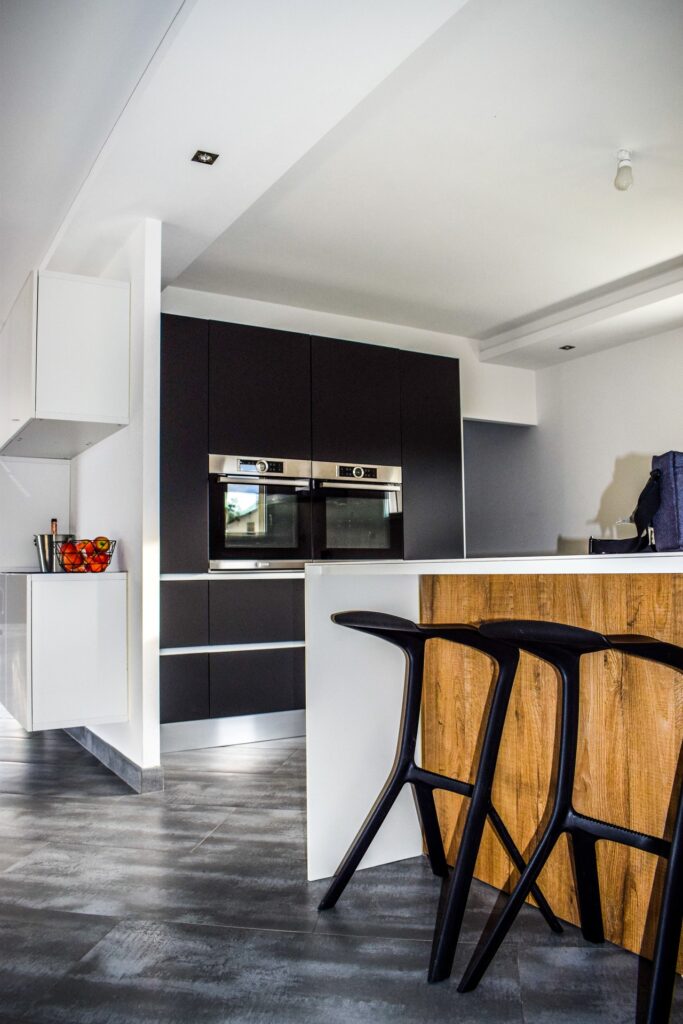
When designing your contemporary kitchen, concealed storage solutions are where it’s at. Contemporary kitchens mean minimising clutter, and ensuring everything is sleek and functional, with excellent kitchen workflow and no frippery. 

This includes using cabinets to hide all your white goods and discreet storage for all your countertop appliances. No one wants to see a collection of toasters, rice cookers, pots and pans in a space which lays claims to being modern. 

Concealed storage can be further achieved through bespoke storage solutions. Think elements like pull out larders, pop-up shelves and built in appliances. 

STATEMENT LIGHTING 

When it comes to illuminating your kitchen who says you need to have exactly the same boring task lighting throughout the room, all synergised and matching? Not us. Funky lighting fixtures, elegantly and deliberately mismatched, can enhance the contemporary design of your kitchen, illuminating the areas you want to and leaving the corners which don’t require attention in the shadows, as it were. 

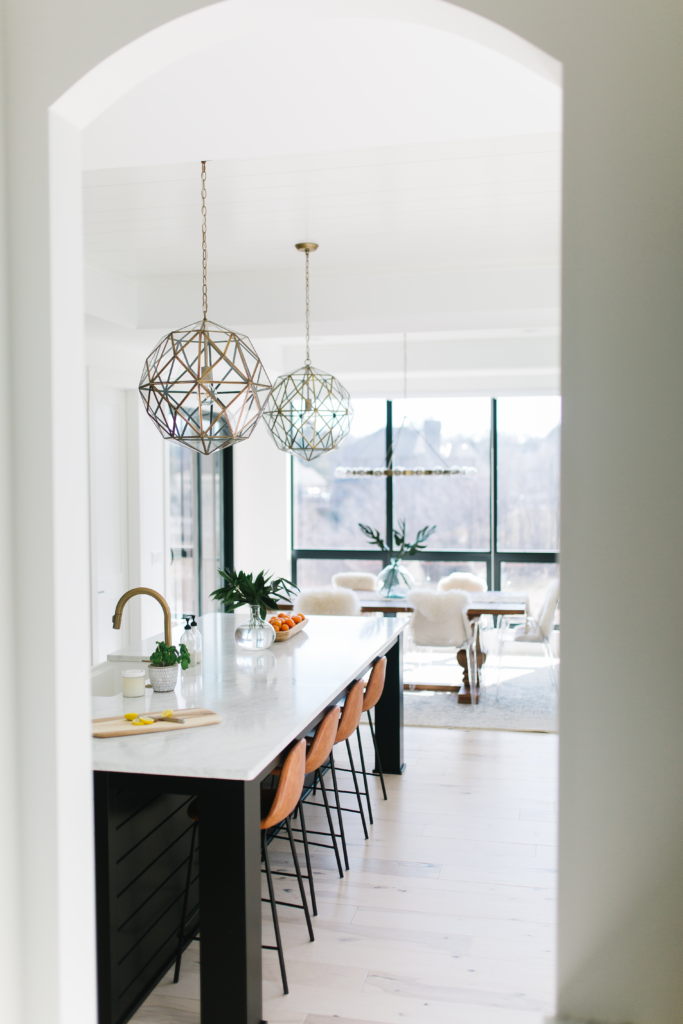
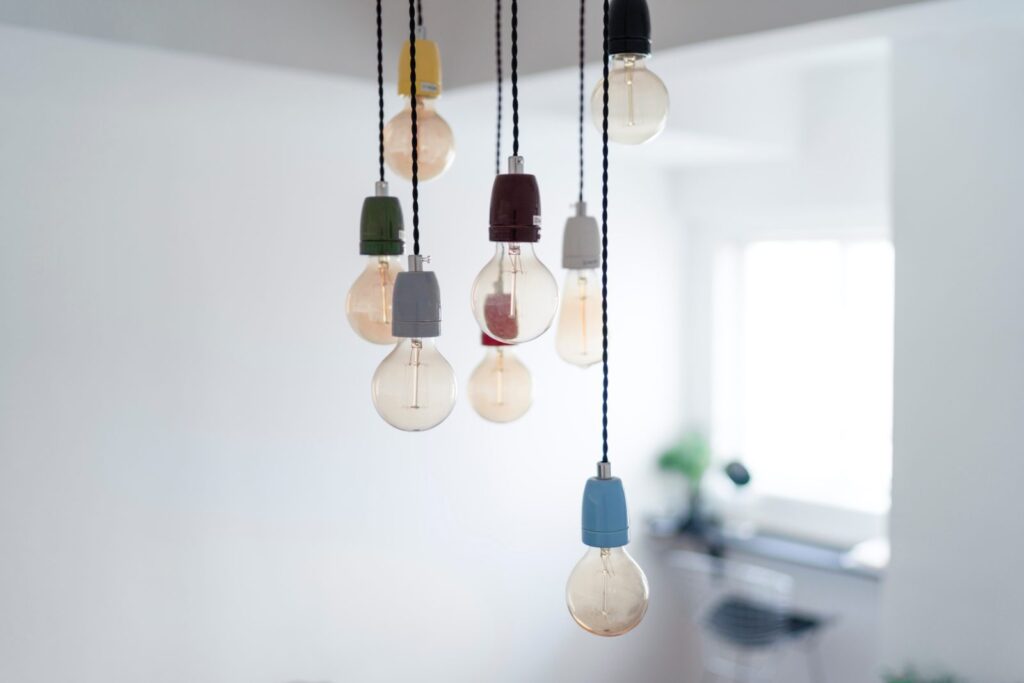
Think statement pendant lights over a kitchen island here. We’re also huge fans of multicoloured cluster pendants and globe chandeliers – that sense of organised chaos from above, we think, can be a good thing when done right. 

Textured metallic and brass shades and fixtures offer a contemporary finish – remember how we were planning to match those with your door handles? Well, now’s your chance. Or, if you want to add a pop of colour, consider an exterior shade in the colour of your choice with contrasting metallic inner copper detailing. 

Simply put, the right lighting can give a beautifully bespoke finish to your kitchen.

TECH IT UP

When it comes to contemporary kitchens, modern technology can’t be overlooked or ignored. Indeed, modern kitchens now include a wealth of technology designed to keep up with the demands of the modern homeowner. 

Smart kitchen technology allows you to control nearly everything in your kitchen, from your stove to your refrigerator. You can talk to your microwave and get it to whip you up a soup, or switch off your stove from another city, when you realise you left it on accidentally! Being able to manage appliances remotely saves you energy, money and time, and also brings your kitchen’s aesthetic bang up to date. 

THE BOTTOM LINE 

Irrespective of trends, the kitchen is a place which benefits from high levels of functionality and minimal cutter. A synergised, succinct space is the best way to achieve that sense of the contemporary, and this organisation and modernisation will likely make you a better cook, too – result!

4 BASIC POWER TOOLS NEEDED FOR HOME RENOVATIONS

Anyone who has worked at least a little in the construction industry knows how important it is to use the right tools. From the necessary foundation to the roof installation, every step has its designated tool, and the right one for the job is so important.  

Indeed, there’s a phrase about a bad workperson blaming theirs out there somewhere, but on the flipside, an efficient one makes work easier, cheaper and quicker. There really is no reason not to source the right equipment, we think.

DIY specialists hunker.com suggest that “building a house requires a vast array of tools, and you will find yourself needing specific tools as you make your way through the long process. A handful of basic toolbox items like pliers, hammers, and screwdrivers are going to be necessary nearly every step of the way. Make sure you have these essential tools on hand before you move from architect’s drawing board to your piece of land.” 

And honestly, we’re not here to argue with them. If you’re wondering where to begin, here are the absolutely entry level equipment you need when doing work on your home; our 4 basic power tools needed for home renovations. 

POWER DRILL

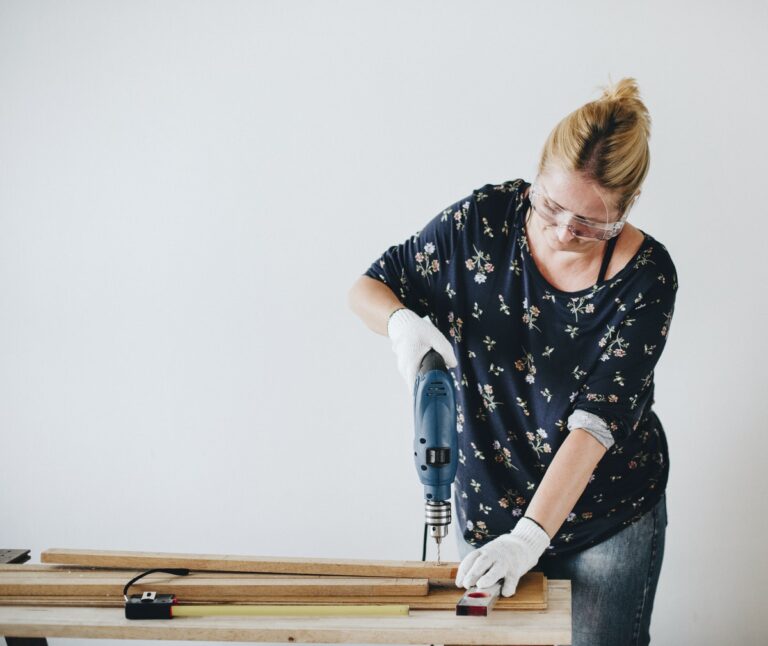
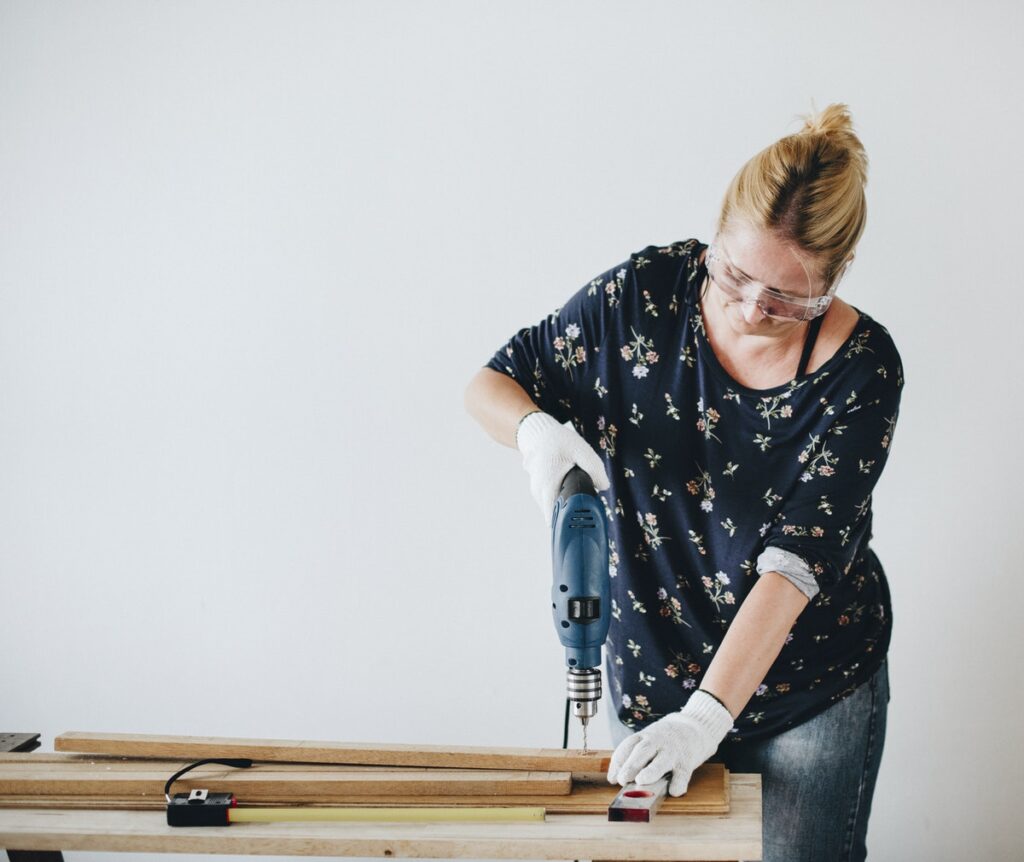
There are two types of power drills: brushless drill and hammer drill. The first one goes better with soft materials; the second one works better if you need to handle bricks and precise cuts. That said, if you’re looking to tackle tasks requiring shaping or removing material with great precision, a milling machine becomes essential.

When it comes to electric drills, you should look for either a cordless drill or a battery-powered one, ideally. One which requires a cord can be awkward at best and, at worst, dangerous.

According to Saws Hub, the ‘’right drill sharpener makes this entire process more effective and efficient and provides better results than sharpening using your hands. Dull drill bits are dangerous to work with as they can ruin your projects”.

This basic tool helps you make holes quickly and correctly and turn screws and bolts with precision and speed. You can find usage of it for numerous applications around and inside your house, and this versatility means the power drill should be the first on your power tool shopping list. 

TABLE SAW

The table saw is generally used to cut large pieces of materials, such as panels, sheet goods, like plywood or MDF. The tool has a sliding table on the left of the blade, usually attached to a folding arm-mounted, that is used for cross-cutting more extensive materials. 

Even though the table saw is helpful in construction, it’s a tool which requires sensitivity and discipline in its use; it’s a dangerous item when handled complacently, make no mistake. So, do endeavour to get familiar with the manual before you start working. Remember to always wear safety glasses and gloves as a matter of course. One careless step and you may end up without a finger or an eye. 

NAIL GUN

Another necessary tool you need is a nail gun – a device designed for a specific reason that the name suggests; to drive nails into materials (such as wood, bricks, concrete walls). It’s a smart replacement for manual hammer and nails, and when used dexterously will significantly speed up your work and make it far more time-efficient.  

CIRCULAR SAW

The circular saw it is one of the most common tools builders use in construction and renovations. If you need to cut through material quickly and accurately, this is the item for you. 

Before you start, it’s standard procedure to set the depth of the cut via the length of the blade sticks out from the base of the saw. This allows for precision sawing and this accuracy is why the circular saw is favoured by the professionals. To avoid damage, always cut the material with its good side facing down. In this case, you will get a smooth top surface.  

WHY POWER TOOLS?

Compared to regular tools, power tools can significantly speed up house building and renovations, not to mention the enhanced standard of the work. Indeed, one power tool is good enough to replace, for instance, a whole set of saws easily. Equipped with battery or electricity, these tools run with far enhanced power than manual ones. 

THE BOTTOM LINE

Power tools can perform numerous complex tasks which aren’t easy to complete manually, making it easier for builders and home DIY enthusiasts to complete work more precisely and efficiently. Do remember to work safely and always consult the manual first. Good luck!

6 TIPS FOR SETTLING INTO YOUR NEW HOME QUICKLY

Moving into a new house is exciting. The prospect of settling down in a different place and starting fresh is enough to inspire butterflies in the stomach, enthusiasm about new beginnings and, of course, a touch of trepidation. 

Yep, moving house can be tiring and let’s be honest, pretty overwhelming – enough to temper even the most optimistic of outsets if not done with proper planning and preparation in place. 

The first few weeks in your home can feel pretty foreign, and if you’re to settle in smoothly, there are a few things you can do to help this process go without a hitch. Here’s the essentials; our 6 tips for settling into your new home quickly.

GIVE IT A DEEP CLEAN 

Giving your home a clean from the get-go is one surefire way to help you settle in quickly, freshening up the property and resetting it for new occupation. Indeed, there’s nothing quite like giving a new house a good scrub from top-to-bottom yourself to make it feel like your own. As the guys at Modern Maids, providers of Houston house cleaning, tell us, washing off the remnants of previous tenants, even if it has been given a thorough end-of-tenancy clean, feels symbolic.

It’s also a good idea to ensure your home is completely free of pests before you start unpacking, too, to eliminate any risk of lurking issues whilst all your possessions are still boxed up. Look specifically for a pest control company who can service residential buildings, rather than just commercial.

START WITH YOUR BEDROOM

On the day of your arrival and after a long day of trying to settle in, you will want to have a comfortable place to rest. No one wants to tumble into their new, unmade bed amongst dusty boxes; you’re going to need a solid sleep to finish your unpacking the following day. 

So, do endeavour to create a calm atmosphere in the bedroom as a matter of priority, by setting up your bed with fresh sheets and pillows and minimising the clutter in here for your first night. Bring in your bedside table and lamp, add your softest rug, and if you’re still up to it, you may want to do a little decorating. Nope, we’re not suggesting getting the walls painted, but perhaps hang a photo to make yourself feel at home. Light some candles, plug in a speaker, and picture life here in a favourable light. Then, the likelihood of a restful night’s sleep is improved.

Being well-rested for the next day’s activities is crucial.

ONE ROOM AT A TIME 

As you progress throughout your new property, try to focus on one area of the house before moving on to the next. Multitasking is the enemy of productivity in almost every scenario, and that’s certainly true for the inevitable headache of moving house and the subsequent settling in process.

Flitting from one place to another is not as efficient as you may imagine. Instead of saving time, you are left at the end of the day with several half-finished rooms. Try to complete the arrangement of one area before moving onto the next for best results. Before you know it, everything is in place and exactly how you want it.

TAKE YOUR TIME 

You may be tempted to put everything away as quickly as you can to make your home look neat and tidy. But in all honestly, it’s more prudent to collect your thoughts and decide on the arrangements you want with precision and foresight prior to unpacking everything in haste. 

There really is no need to rush. Consider the storage spaces, cabinets, and closets and think of what you want to put where. This is an excellent way of getting organised from the start and avoids storage issues later down the line that you might feel too burdened to remedy.

Similarly, take your time when choosing energy and internet providers. If you want a fiber internet plan, research providers carefully to find the best option for your needs, ensuring you have a reliable and fast connection for your home.

WAIT TO DECORATE

We’ll reiterate here; don’t rush. And aside from unpacking, this also applies keenly to decorating. Instead of jumping in with the paintbrush and slicking your walls a vibrant shade, or hanging all of your art in the first spot you identify, wait to decorate your house for a short while after moving. The ‘natural’ place for things will only become clear over time; don’t box yourself into a corner the moment you move in.

MAKE SOME MEMORIES

The simplest way to make a new house feel like a home is to invite your family and closest friends over soon after moving in to create a happy atmosphere in your home. Indeed, the sound of good conversation and laughter accompanied by good food is a surefire sign that you are home, rather than simply in a house. And that’s precisely why you’re here, right?

Hey, if you’re keen on more of the same kinda content, then we’re reversing back in time from the settling in process, and directing you to our IDEAL guide to moving house, stress free. Go on, check it out.

5 TIPS FOR SUSTAINABLE INTERIOR DESIGN


Ideal for creating an environmentally friendly and ethically sound home

We’re all aware by now of the importance of environmental responsibility when it comes to interior design. Indeed, we’d all love to tred a little lighter and leave no trace during our short time on this earth. 

Sustainable interior design is all about creating beautiful interiors, but with a focus on people and the planet. Because if the world keeps burning up, there won’t be anywhere hospitable to dwell anyway, right? 

Fortunately, when designing your own interiors, you have an immense amount of buying power, and can use that authority to select the precise materials and processes you desire, to be efficient and economical in your output. Anyway, let’s get into it; here are 5 tips for sustainable interior design, IDEAL for creating an environmentally friendly and ethically sound home.

WINDOWS WARMTH

When designing your climate-conscious interiors, energy consumption should be at the forefront of every decision you make. With some clever hacks, not only can you make your home more energy efficient, but when done right you can also add aesthetically pleasing accents to your room. 

Since the majority of heat escapes through windows, it’s of course important to ensure that your windows are up to scratch and have proper insulation. With the help of curtains and drapes, you can warm the room and keep the cold air out, saving the necessity of having heating on full blast, 24/7 in the winter months. 

Made of thick, heavy materials, thermal curtains can prevent cold air from entering, or hot air escaping from your home. Look for some that have at least two layers and made from triple woven fabric. Be sure to get the right size curtains for your home; too small and short, and they won’t do their job. Curtains, drapes and blinds can also help keep the sun’s heat out, meaning less use of any air conditioning or fans when it gets hot.

CARPET WISE

You can also add comfort and style to your living space with cosy carpets, which retain a huge amount of room heat, too. If you have wooden floors, a well chosen rug can add colour and character to your home and take serious money off your energy bill and output, too. You can even layer up an already carpeted space to further keep the heat in, with an option for stripping it back from summer, if you live somewhere which tends to get stiflingly hot in the warmer months.

We’re fans of natural wood flooring with an attractive rug offering draught protection in winter, bringing warmth in the colder months, but never feeling stuffy when the sun comes out, too – making it ideal for year round comfort. 

THE RIGHT COLOURS 

When it comes to saving energy on lighting, it’s all about picking colours and believing basic science. Bright colours reflect more light and negate the need for bulbs being on during the day. As such, having lightly coloured walls, as well as reflective surfaces like mirrors, increase the amount of light in a room by bouncing it around. Dark colours and rooms with dark walls need more artificial light, which takes its toll on your energy consumption, your bills and the environment. So, when designing your house or redecorating, consider the colour of the walls in a new, erm, light.

THE RIGHT MATERIALS

Low environmental impact is the buzzword when furnishing a home with sustainability in mind, and it’s vital to incorporate materials into your interior design scheme that have the lowest environmental impact possible. While organic materials are the obvious choice, if these natural resources aren’t available, then prioritise materials which renew and regenerate quickly. 

Bamboo is generally agreed to be the most sustainable material used in construction, as it regenerates incredibly quickly, and its lightweight nature means its transportation is less energy intensive than most. Cork also grows quickly, and can be harvested efficiently from trees which then regenerate more via their bark. For insulation, straw bales are superbly sustainable.

Recycled materials have a lower environmental impact, still, so do prioritise recycled plastic and metals where possible. If you are to use wood, make sure it’s sourced from a carefully managed forest and is FSC certified and/or PEFC certified. As the bespoke flooring experts at Arlberry suggest, ‘’both organisations promote the dedicated management of the world’s forests to ensure their ongoing future. Each operates using the three pillars of sustainability: sustainable forest management creates outcomes that are socially just, ecologically sound and economically viable’’.

LONGEVITY & FLEXIBILITY

You also have to think about the lifespan of the material, as well as your home’s design in general, if you’re to ensure minimum environmental impact from your property. 

A durable material not prone to damage, erosion or destruction is going to mean your home’s demand for resources is significantly reduced. Some of the most long-lasting materials in construction include wood (again, ensure it’s FSC certified), brick, iron and steel. Should you be able to find these materials in recycled form, it’s a no brainer, right?

4 PLACES TO ENJOY SHISHA IN LONDON

0

Though shisha smoking has been popular for centuries, the focal point of many an animated discussion and burgeoning romance gathered around the pipe, its prevalence in the UK has taken a little longer to ignite. 

But in recent years, shisha bars have entered the mainstream, and you’ll now find one in most cities in the UK. Made more popular still by celebrity fans enjoying on Instagram and famous faces frequenting them regularly, we just love this chilled out past time.

People tend to smoke shisha for relaxation and similarly use fruity flavours to enhance the experience. However, smoking shisha or Hookah is done in social settings with conversation and merry making the focus. Today we’re in the capital having a puff, at these 4 places to enjoy shisha in London.

CAFE  CAIRO, CLAPHAM 

Bringing the vibes of the famous Cairo bazaar Khan el-Khalili to this Clapham hotspot, Cafe Cairo is a cafe, bar and club all rolled into one, with excellent shisha defining the experience along with a cocktail and wine list, Turkish coffee and Morrocan tea. This alternative venue with eccentric interiors will put you at ease and on an imaginary plane to North Africa. 

To finish, bring your sweet tooth and order some baklava, Turkish delight and some chocolates. 

Address: 88 Landor Road, SW9 9PE London 

*Sadly, as of September 2022, Cafe Cairo is now closed*

DAR MARRAKESH 

There’s a wonderfully multicultural stretch along Edgeware road, known to many Londoners variously as Little Cairo, Little Beirut and Little Arabia because of the large number of Middle Eastern eateries here. That’s where you’ll find Dar Marrakesh, a brilliant place to smoke shisha and soak up some excellent vibes. 

‘’Come for the food and stay for experience’’ – what it says on the menu here and that’s certainly true. The kitchen here cooks up traditional Moroccan dishes with a modern twist. Book for dinner, followed by shisha in the lounge – close your eyes and you could be in Marrakech. Here, our tipple of choice is Casablanca beer which works so well within the setting, but the tea is also reliably excellent. 

Address: 422 Edgware Rd, Marylebone, London W2 1EG 

Website: dar-marrakesh.co.uk  

LE COMPTOIR, KENSAL RISE 

Another one straight from the souks of Marrakesh, with great snacks, tea and shisha setting the scene so perfectly. Indeed, the decor is inspired by the souks of Morroco, with decorative tagines and the aroma of dried spice filling the air, and a vibrant colour scheme of opulent golds and royal blues really setting a scene. Enjoy shisha in Le Comptoir’s secret garden, which boasts a retractable roof and outdoor heating, complete with furniture sourced directly from Marrakesh’s souks. Finish with a gloriously refreshing mint tea.

Address  20 Station Terrace, Kensal Green, London NW10 5RX

Website: www.le-comptoir.uk


DRUNCH, MAYFAIR 

Yep, we’re thinking this would be a good name for a bottomless brunch spot too, but nope, Drunch is a shisha joint in Mayfair which caters to a fashionable, diverse clientele. Expect to see supercars out front, and the cloud of sweet shisha within.

There’s an eclectic, world-travelling menu to enjoy, with the sweets, including excellent doughnuts and pancakes, particularly good. But we’re here for a different flavour, and Drunch offers a wide selection of shisha to suit all tastes. We particularly enjoyed the Al Fakher, comprising gum cinnamon, on our last visit. 

Address: 1 Woodstock St, Mayfair, London W1C 2AA 

Website: drunch.co.uk

5 WAYS A SMARTWATCH CAN MAKE YOUR LIFE EASIER

0

People often think that buying a smartwatch is a waste of money – after all, you have a phone, you have a normal watch, why introduce a third element? The assumption here is that ‘if it ain’t broke, don’t fix it’.

Nothing could be further from the truth. Indeed, wearable technology has exploded in popularity over the last five to ten years both as a technology and a fashion statement. Receiving texts, making calls, and tracking sophisticated fitness metrics are just a few of the major functions that smartwatches do.

There are many ways in which a smartwatch can make your life easier, including some that people are unaware of. If you want to find out more about it, all you have to do is keep reading, perhaps on your watch’s screen.

What that in mind, here are 5 ways a smart watch can make your life easier.

BE YOUR TRAVEL BUDDY

Most probably, you have GPS on your phone. However, using it when you are driving can sometimes be dangerous, even if you have a special phone holder. The Apple Watch has the option of sending you different vibrations, depending on whether you have to turn left or right – this is especially beneficial during a ride in a place you haven’t been before. Instead of looking at the phone and trying to figure out the directions, you can admire the scenery around you and focus on staying safe, too.

Don’t think you have to compromise on style when travelling with your smartwatch. Many such devices, such as Fitbit Sense bands, offer interchangeable easily intergrated, quick release straps in a variety of colours. You can even turn your tracker into a statement pieces with stunning stainless steel options.

HELP YOU FIND A LOST PHONE

Have you ever lost a phone or another device? If you have, then you probably know that feeling of frustration when you cannot find it, no matter how many times you checked its previous whereabouts – and it almost always seems to be happening when you are in a hurry or have a meeting you cannot be late for. Well, most smartwatches that can be connected to your phone have a “Find a phone” option, which allows you to call it through your watch.

HELP YOU STAY IN SHAPE

If you are a fitness freak or just someone who likes to stay in shape, then you will definitely appreciate this feature, as it allows you to keep up with your fitness goals. A smartwatch can count your steps, the distance you walked, calories you burnt, keep track of your heart rate and sleeping pattern, and so much more. So, if you were considering getting a fitness tracker or a pedometer, consider purchasing a smartwatch instead.

STAY ACTIVE LONGER

One of the arguments people use when trying to suggest that a smartwatch is a waste of money is that you already have a smartphone. Well, truth be told, smartwatches have a battery that is much more powerful than a smartphone, which means that they work for much longer stretches. This is especially important if, for example, you are going on a longer trip where you will not have the chance to charge your phone. You will still have a way of contacting others in case something happens.

PAY FOR YOUR SHOPPING

Smartwatches have made paying for things more convenient than ever. You can make contactless payments in shops and restaurants worldwide with just a tap of your smartwatch. No need to worry about forgetting or misplacing your wallet ever again – now that’s an easy life we’d love to be part of.

THE BOTTOM LINE

There are many things that people can say about watches, and perhaps even more about smartwatches, but one is certain – they definitely make your life easier in many ways. In reality, almost every daily activity can be made at least slightly easier with a smartwatch. ”Killing several birds with a single watch shaped stone” comes to mind.

5 ESSENTIAL SUPPLEMENTS FOR SENIORS TO CONSIDER

0

Let’s preface this a little; the best way to gain all your daily nutrition is through a varied, balanced diet. That said, for some, getting your five-a-day and then some isn’t always possible, particularly for seniors who may not be able to head to the shops for fresh produce so regularly or have the volition to cook each night.

And that’s where dietary supplements come in, providing daily recommended doses of essential nutrients, many of which can be very beneficial to those over the age of 50 to support healthy ageing. But which are the most effective and necessary? Here’s a start; our 5 essential supplements for over seniors to consider.

SPECIFICALLY FORMULATED MULTIVITAMINS

Multivitamins are designed to help fill in gaps in nutrients created by consumers’ diets. Since nutrient needs vary by age, gender, and stage of life, it’s important for consumers to purchase multivitamins that are specifically formulated to meet their needs.

When they look at health supplements to take, seniors should consider not just their genders and ages, but also any underlying health conditions or individual risk factors for developing nutrient deficiencies or potentially serious diseases. Of course, the GP should be the first point of contact here for advice.

Don’t expect conventional multivitamins to have all the nutrients needed to meet each individual consumer’s requirements. Multivitamins may be formulated for older adults, but most don’t contain sufficient amounts of vitamins to make up for deficiencies or reduce disease risks. Seniors should look at their multivitamins as staple supplements, but they shouldn’t stop there. Instead, they should schedule appointments with their primary care providers to have blood work performed that will determine whether they have any serious nutrient deficiencies.

Those who struggle with multiple nutrient deficiencies will need to purchase specialised supplements. These can usually be taken alongside multivitamins. Just make sure to check the ingredients list of the multivitamins to avoid overdoing it with individual ingredients that can be found in other supplements. And above all else, prioritise healthy eating for easiest access to all those vitamins.

VITAMIN B12

B12 deficiencies can occur at any age, and can cause fatigue, weakness, anaemia, and even peripheral neuropathy, which can make life especially difficult for seniors. That’s because vitamin B12 assists in everything from red blood cell formation to DNA synthesis, metabolism, and neurological function. Without sufficient amounts of it, active seniors will find that they are unable to perform tasks that would otherwise be relatively easy. 

Vitamin B12 should be considered an essential nutrient for consumers of all ages, but it’s especially important that seniors consider taking supplements because older adults are often unable to absorb sufficient amounts of vitamin B12 from food sources. 

Most experts recommend either incorporating fortified foods into the daily diet, taking supplements, or both. Vitamin B12 can often be found in speciality formulations designed for seniors, especially those intended to boost energy levels and maintain neurological function.

CALCIUM

Older women often suffer from calcium deficiencies post-menopause, which can lead to problems with bone health. Calcium supplements have been shown to reduce the risk of fractures (particularly of the vertebrae) in both men and women, and it is rarely found in sufficient quantities in general multivitamins, even those formulated specifically for seniors. It can, however, be found in supplements designed to support bone health.

Those who choose to supplement calcium separately have two options. They can take either calcium carbonate or calcium citrate. Calcium carbonate must be taken with food, but it contains more calcium. Calcium citrate can be taken on an empty stomach and is easier to digest, which may make it a better option for older consumers with digestive problems. Just make sure not to overdo it because too much calcium supplementation can increase seniors’ risks of developing serious health problems like kidney stones and strokes.

VITAMIN D

Around one billion people across the globe struggle with vitamin D deficiencies. This is particularly serious because the body requires vitamin D to absorb calcium properly. Vitamin D deficiencies are also associated with an increased risk of osteoporosis, diabetes, asthma, rheumatoid arthritis, depression, and other serious diseases and disorders.

Vitamin D supplementation doesn’t just improve bone health. It also reduces inflammation and can help to decrease seniors’ risks of having heart attacks and strokes. Those with allergies or asthma will also find that maintaining healthy vitamin D levels can reduce their symptoms.

Current medical expertise recommends that adults over the age of 50 should take 600 IU of vitamin D per day. Those over 70 should increase their consumption to 800 IU per day. Before adding new supplements to their regimes, older adults should consider how much vitamin D they are getting from other sources, such as fortified foods, multivitamins, and joint health supplements, which often contain vitamin D along with calcium and other nutrients.

EYE HEALTH SUPPLEMENTS

Eye health is really important for all ages, but it becomes a more pertinent a concern in later life, without doubt. Older adults often suffer from age-related macular degeneration (AMD), a degenerative disease that can eventually cause total blindness. AMD is not reversible, so it’s important that seniors take preventative measures against its development. That should include taking a targeted eye health supplement containing vitamin C, vitamin E, lutein, zeaxanthin, and zinc.

Supplements designed to support ocular health are often marketed as “AREDS” formulas, named after the Age-Related Eye Disease Study sponsored by the National Eye Institute (NEI). However, supplements that have this label are not endorsed by the NEI or the FDA in the States and are not necessarily any more beneficial than other commercially available eye health formulas. The most important thing when looking for an eye health supplement is to find a reputable vendor that offers transparency regarding its formulation and performs third-party testing to ensure quality.

Older adults often suffer from vitamin and mineral deficiencies, and may do so without even realising. This can increase their risks of developing serious age-related diseases like AMD and can also increase the risk of heart attacks, strokes, diabetes, and other issues. 

THE BOTTOM LINE

The best way to stay healthy well into old age is to combine a targeted daily supplement regime with a healthy diet, plenty of exercise, and routine visits to the doctor for testing and screening. Make sure to discuss all supplements with a doctor before starting a new regime, as some of them can create medication interactions or produce other unanticipated side effects, and only purchase supplements from a reputable vendor.

5 BENEFITS & USES OF OREGANO ESSENTIAL OIL

0

Oregano essential oil’s usage for the treatment of several health conditions dates back thousands of years. Indeed, its application has, in the past, been used to help those dealing with asthma, colds, skin sores, aching muscles, cramping, and fungal and bacterial infections, amongst others. The components of oregano oil include antioxidants such as thymol, terpinene, limonene, carvacrol, caryophyllene, and ocimene, all of which have great healing properties.

With such a roll call of benefits, oregano oil is used for diverse purposes. Here are the most mainstream; our 5 benefits and uses of oregano essential oil.

BACTERIAL AND FUNGAL TREATMENT

One of the most well-known uses of oregano oil is in the treatment of bacterial and fungus infections. Since the essential oil is loaded with antifungal and antibacterial properties, it is a useful treatment option for fungus infections such as nail fungus.

Nail fungus is one of the most common nail problems, and leads to issues including nail discolouration, nail thickening and cracked nails, as well as the inflammation of the nail bed and surrounding skin. 

Prevention is, of course, better than cure and firstly, poor nail hygiene should be addressed. Following that, oregano essential oil is a useful external treatment option for nail fungus. Despite the difficulty common to the treatment of nail fungus, consistent and proper use of essentials oils such as oregano oil, coconut oil and other home remedies, in addition to observation of general nail health, will effectively likely eradicate nail fungus and restore nails to their healthy state, with little or zero chance of recurrence.

The antibacterial properties of oregano oil become exceedingly important in the light of the increasing concerns among professionals about the tendencies of diseases becoming resistant to antibiotics. Some of the infections caused by candida are toenails and fingernails fungus, oral thrush, athlete’s foot, and yeast infections, and thymol found in oregano is proven to be an effective destroyer of common candida fungal infections.

ANTIOXIDANT QUALITIES

When combined with more traditional, medically approved remedies, oregano oil is also sometimes used for the treatment or management of many other issues because of its antioxidant properties. Antioxidants in oregano include vitamin E, vitamin C, vitamin A, lysine, arginine, tryptophan, and valine, and because of this, the essential oil can assist in ridding the body of free radicals that are responsible for several health issues.

NUTRITION

Oregano is rich in nutrients such as calcium, potassium, phosphorus and fibre. Therefore, the essential oil can be used to make up for dietary shortfalls and promote good gut health. Of course, it should be observed that a rich, varied diet is essential to proper nutrition, and oregano oil should only be used to supplement a balanced diet, rather than replace any component of it.

TREATMENT OF SMALL INTESTINE BACTERIAL OVERGROWTH (SIBO)

Chronic bacterial issues such as SIBO are sometimes relieved by the use of oregano oil hence helping to stem gastrointestinal problems caused by the overgrowth of some bacteria in the intestines. Thymol and carvacrol are key elements in herbal remedies of these intestinal problems.

ANTI-INFLAMMATORY PROPERTIES AND PAIN RELIEVER

Oregano oil is said to have great anti-inflammatory properties and when applied topically can have soothing effects on the user. Carvacrol is the key player in the anti-inflammatory effects of oregano, and interestingly, can also be found in thyme oil and wild bergamot oil. A 2013 study also suggested the possible effectiveness of oregano oil at relieving pain; food for thought, indeed.

HOW TO USE OREGANO ESSENTIAL OIL

Oregano oil is sold both as a liquid or in capsules. Both work effectively for specified purposes. However, some people do not like the taste of the oil, and in such cases, they should go for the capsules. It can also be used externally for example in the treatment of skin problems and nail fungus.

IS OREGANO ESSENTIAL OIL SAFE?

Like most essential oils, oregano essential oil is highly concentrated and can elicit varying reactions when used directly. Therefore, it’s recommended that the user dilute the oil properly with a carrier oil before usage. You should also do a skin patch test to check your body’s reaction to oregano essential oil prior to use.